

Well, I wrote this section and then decided it was, well, destined to visit the trash, so here’s the second. And I’m not at all sure that this will be the final version, either. Not yet. Too many intersecting vectors, if you catch my drift.
Music? Are you serious? Try Spirit, I Got A Line On You for a start. And in the same spirit, let’s check out Nature’s Way just for grins. And, yes, it’s time to fall back on a cliché time once again, so enjoy the trip.
Okeedokey, get your tea on and settle-in for a nice round of airplane jargon. Off we go!
5.8
Aboard Kestrel 4-2-8
24 May 1941
Denmark Strait, North Atlantic Ocean
Approximate location: 63°20′N 31°50′W; 580 feet AGL; speed 287 knots
“What was that?” Lieutenant j.g. Judy Abramson said as Knight, his left hand pushing the throttles to 97% N1, put the Boeing P-8 Poseidon into a max power climb; within seconds they were well beyond the maximum effective range of any anti-aircraft weapons on either German warship, if indeed any had been manned and ready.
“As far as I can tell,” Knight said, his voice still calm, though guardedly so, “those were two German warships, the Bismarck and the Prinz Eugen.”
“So, two NATO ships?”
Knight rolled his eyes and shook his head. “Did you, like, ya know, sleep through your lectures on World War Two? Ever, by any chance, read anything by Samuel Eliot Morison?”
“What?”
“Those two ships down there, Lieutenant, only sailed together once, in May, 1941…”
It took a moment, but then his words hit home. “Sir?”
He reefed the P-8 into a steep left turn as they climbed through twelve thousand feet, and now Abramson had a spectacular eagle’s-eye view of the two warships slipping through ice flows on the sea below. “The lead ship down there is the Prinz Eugen, a heavy cruiser,” Knight said offhandedly. “She actually ended up a commissioned US Navy ship after the war, and was sent to Bikini atoll during the atomic tests there; she eventually turned turtle at Kwajalein. She’s in clear water there, supposed to be a dramatic wreck, but I reckon she’s still a radioactive mess.”
“Sir?”
“WEPs,” Knight said over the intercom, “give me a bearing to the second group of ships, would you?”
“Aye, sir. Stand by one.”
“Commander, what’s going on?” Abramson whispered nervously, a passing tremor now shaping her words.
He looked at her and shook his head again. “You ever read about the Battle of the Denmark Strait, or maybe, you know, like watch the movie?”
“The movie?” she cried, her voice suddenly bordering on hysteria. “Sir, what are you talking about?”
He growled under his breath as he returned the aircraft to level flight. “WEPs, sorry, set full safeties on the Harpoon, and check safeties on all weapons. You got me a bearing yet?”
“WEPs, full safeties, aye. Now tracking several ships to the north and northwest of our current location, in addition to the three ships we just overflew. Bearing to nearest is 3-5-5 degrees, 27 miles, but I have an intermittent contact almost under us.”
Knight engaged the autopilot when the Boeing reached flight level 2-0-0, then set 3-5-5 on the heading select panel. “Okay WEPs, you should have low power radar emissions on the uh…let’s see, Suffolk was west of Bismarck, so WEPs, check for radar emissions to our west, maybe almost southwest of our position now. Uh, the contacts ahead, designate the closest group as Contact One. The two largest will be the HMS Hood and HMS Prince of Wales. Designate the group of six smaller ships behind them as Contact Two, that’s six light destroyers, and you ought to be picking up a medium sized return…uh, that’ll probably be the one just ahead of us.”
“Okay, Skipper, new contact firming up. I’m picking him up at 0-3 miles, dead ahead.”
Knight nodded and grinned, satisfied with his recall of the day’s events. “Okay, Designate that one as Contact Three, HMS Norfolk.”
“Got it.”
“Designate the ships we just overflew as hostile, Contacts Four and Five, and set up tracks on both, then get their tracks into the computer. Contact Six, the German tanker, should start heading for Norway.”
“But…we haven’t even seen those ships yet,” Abramson whispered, her voice overflowing with disbelief. “How could you possibly know they’re friendly?”
“The first ship, the lone tanker, was the Spichern, a fleet refueling tanker dispatched to refuel those two German ships. If I’m right about all this, the first two ships ahead of us are screening ahead of the main force. Those should be the Royal Navy’s light cruisers Norfolk and Suffolk; Contact One will be the battle-cruiser HMS Hood and the battleship HMS Prince of Wales…”
“You mean…wait a second…you were – said all this happened in World War Two, right? But all that, well, what you’re saying is that all this has already happened, right? So, where are we and why are those ships down there?”
“”Wrong question, Lieutenant. The correct question is, When are we. And the answer to that, by the evidence we have down there in front of our noses, is 24 May, 1941, and if you want to get even more precise, it’s probably around 0500, okay? So, before our entry into the war. But, from the looks of things, I’d say the main event is about to get underway.”
“That blue sphere…” she sighed, her voice trailing off.
“Yup, that blue sphere,” Knight replied, his mind now in overdrive, searching for – not answers, but a possible reason for their being right here, right now. “So…whatever the hell is going on right now…well,” he muttered, thinking out loud, “…this sure as shit ain’t no accident…”
“Sir?” Abramson sighed.
“Someone wants us here, Lieutenant. Now we need to figure out why…”
+++++
Aboard the M/V Amaranth
10 April 2031
East of Nantucket Island, North Atlantic Ocean
GPS location: 41°54′24.48″N 67°45′23″W
Amaranth is now leading a small flotilla heading towards the far side of the Georges Bank. Behind her are two guided missile frigates, a fleet replenishment tanker, a fast attack submarine – as well as the newest American nuclear powered aircraft carrier, CVN-80, the USS Enterprise. Amaranth is pushing her twin MTU diesel engines hard, yet the little ship was designed for range, not speed, so she is struggling to make fourteen knots in the fairly smooth seas the group is dealing with now.
Turner and Callahan are on Amaranth’s bridge, Valdez is down in the galley trying to make her mother’s chili rellenos, browning a mix of ground meats with finely chopped raisons and walnuts to stuff inside the large poblanos she’d just roasted under the broiler. She loved to cook, loved to bring her mother’s creations back to life, back to life among the living, and she hummed and sang the familiar songs her father used to sing as she smiled and worked in the galley. Two other recently retired ratings, Machinist Mates Jamie Rutan and Denise Shelby are down in their cabin, off watch and sound asleep, while Master Chief Dale Evans, down in the engine room, is working on a balky fuel transfer pump. Ralph Richardson and Dana, his daughter, are in the large stateroom on the main floor, while Sumner Bacon is asleep in his cabin on the lower deck forward. Blue spheres no larger than gnats roam freely throughout the little ship, still analyzing every nook and cranny, every piece of machinery, while tiny probes roam the circuit boards of every electronic device. The spheres listen to everything said by everyone everywhere onboard, and have been doing so for weeks, while patient listeners very far away recorded and analyzed each and every human utterance for hidden meanings concealed by subtle vocal inflections. None of the humans on Amaranth are aware of this one simple fact.
+++++
Callahan felt a deep sense of loss, almost grieving after the apparent loss of Sara – as well as her near twin Eve. As far as he could tell, he’d been asked to join this little “expedition” to assist Sara deal with Peter Weyland, or whoever Weyland had sent to interfere with the Titanic’s final moments. But now she was gone – and he had not the slightest idea what was expected of him now, by anyone – which had not dulled the pain he felt and had in fact left him feeling more confused than he had in years.
It had been more than fifty years since that day. Five decades…since he’d first met her – but now she was going by a different name – Sara, not Devlin – and all he knew was that the name change had something to do with her interactions with Dr Peter Weyland. But that one day they’d spent together had been perfect, and that afternoon on Weyland’s sailboat had, for Harry Callahan, become the one magic song of happiness in an endless symphony of crime-filled urban melancholy. But as precious as that day had been – and whatever future there might have come of it – all of that had been ripped away after he and Frank and the team of divers they’d assembled ran across that sphere deep under the bay.
Yet his memory of those first few moments on the bay, and those memories of Devlin, had been chemically encoded within his brain, and all of the resulting neuro-chemical coding deep within his brain simply could not be erased. The original timeline had been ripped askew, yet the retrieval mechanisms within the brain are timeline dependent, so when the timeline is altered the means to retrieve those specific memories are lost.
Yet the awful consequence of that chemical alteration had become apparent the moment Harry first saw Devlin once he was finally onboard Amaranth. The floodgates of encoded memory had been ripped open when his brain rediscovered the means to retrieve this stream of consciousness, and then everything about that day had returned in a dizzying rush. The sights, the sounds, even the smells of the sea and the food they’d shared – those all came back to him. But most of all…his feelings for her returned. And for a few brief moments he’d felt time shifting underfoot, just like when he played Schwarzwald’s Fourth.
Only…he hadn’t been playing – anything. He hadn’t even been near a piano when he felt the shift.
So had he, however inadvertently, stumbled upon something new? Something important?
From the personal log of Admiral James MacKenzie USN, retired
Aboard the USNSF Research Vessel Hyperion, docked at Lunar Gateway Alpha
10 April 2112, 0600 GMT
Approximate location: currently 223,000 miles from Earth, in lunar synchronous orbit 60 miles above the crater Tycho
I can’t for the life of me get a grip on life up here in orbit, and floating up and down the endless corridor the crew calls Main Street fills me with uncertainty. No, let’s be honest. It fills me with dread. Up and down are relative terms up here, which means port and starboard are too. After almost a week up here I’m beginning to realize that there was a very good reason why I never put in my application for astronaut training. Sitting on my back strapped into a block one shuttle knowing that there was about a kiloton of explosive stuff under my can would have been a walk in the park compared to weightlessness. You don’t walk anywhere – you float. You make like a pinball and aim at a point you want to hit and bounce off of – just to turn a corner. I stick my head out of this box they call a cabin – and one look down Main Street is like looking at a dozen pinballs ricocheting off the walls. The overalls everyone wears ups here have pads in the knees and elbows. Replaceable pads, mind you. It’s insane.
I miss Earth. I miss walking on solid ground. I look at the crew on this ship and I guess on all the other crews on all the other ships out here, and they’ve spent so many years in space their bodies will never be able to readjust to the gravity on Earth. Their bodies absorb so much radiation they’re lucky to live fifty years; living sixty years is unheard of. What happens to them then? Put them out to pasture in a retirement home on the moon? And thirty five is old in this service. Thirty-five! So yes, I miss Earth, but more than that and I miss my Amaranth. It’s impossible to put this into words, but sometimes I feel like I’ve poured so much of my heart and soul into that boat… Well, there are times when I can’t tell where the line between that thing I call me ends and that machine begins. Or maybe there is no line. I am the machine. Cogito ergo sum, ya know?
My cabin on Amaranth is my space, my design, and it was scaled to fit me; this cubicle on Hyperion is the exact opposite, so couldn’t be more different. Everything is painted robin’s egg blue up here, except the wide velcro strips you can theoretically walk on, which are navy blue. The sheets and blankets are held in place with velcro, too, and they’re navy blue, too. Uniforms, the skintight coveralls everyone wears up here, are royal blue, at least in this part of the ship.
They gave me (they being Admirals Nimitz and Spruance) a pile of briefing papers to read through while I’m here, and these papers are kind of a crash course in an alternate history that started unfolding long before the second world war got underway. And talk about redacted! There must be a thousand pages of redactions!
I just finished a real fun one, nicely titled String Theory and Dendritic Refraction, which is supposed to outline how structures within the brain can interface with quantum particles, so now I’m beginning to think there’s no such thing as The Present. Marty McFly and Doc Brown were on to something.
As far as I can tell, the year – here, now – is 2112 – yet as far as I can tell I really do not belong here. Then again, neither do Franklin Delano Roosevelt, nor Chester Nimitz, nor Ray Spruance. This boat’s captain, Denton Ripley, does belong here, yet the realities of his present command are staggering. If WWII was a chess game, what Ripley has been dealing with is more like 3-D chess played in a vacuum. Langston Fields and Alderson Drives? Starships traversing hundreds, even thousands of light years in the blink of an eye – by diving into stars? The whole thing is absurd. Just the thought that such technology was developed less than forty years after I retired…well, no, all this is beyond absurd.
But I keep thinking about Gramps, my father’s father. And maybe all this is absurd in the exact same way my grandfather’s life was. I can remember sitting with Gramps, who’d always been a curious person and so a natural born engineer, and he was born in the late 1880s, yet we were watching TV together – when Neal Armstrong took one small step for man. And I hate to remember it now, but it was just a few years later when I was watching his casket being lowered into the Earth when the absurdity of Gramp’s life hit me. All the things Gramps had seen and done in his lifetime – all that was just as absurd. He had grown up around horses, right? He rode a horse about ten miles a day, which was his daily roundtrip to school and back. When he took his first big trip to St Louis when he was still a kid, he’d done so on a train pulled by a huffing steam locomotive. He’d read about Orville and Wilbur Wright’s flying contraption when he’d just started high school in Michigan, and he’d decided then and there he wanted to learn everything there was to learn about these new machines. By the 1930s Gramps was in Seattle helping design the very first airliners, and then even bigger bombers with the Boeing brothers. He’d wrapped up his career working on the 707 airliner, so in the span of his totally absurd life on Earth he had gone from five-or-so miles an hour on horseback to about fifty miles per hour behind a steam locomotive to more than 500 miles per hour at 33,000 feet – above that very same Earth – in a jet airliner he’d helped design. Now I’m sitting in a starship just a few miles above the surface of the Moon after making an eighty year jump through time, and I have to admit that all through my life the pace of change has been just as relentless – so fast it has been…absurd. Again.
And I guess all that was just fine and dandy until I met Pak, a splendid, ten foot tall, white as a cue ball gentleman from heaven only knows where, and who also just happens to be on real chummy terms with Captain Ripley – and President Roosevelt, too.
Okay, fine, it’s absurd. I read through the after-action report Ripley put together after the first Hyperion mission, about how he met Pak somewhere out there in the general direction of Capella or maybe it was Betelgeuse – only now they’re best buds, or something like that. But now everyone up here is – “concerned” – about another group of “male supremacists” that apparently not only kicked Earth when it was down but is “currently (but really, what does that even mean?)” spreading a virulent form of their pseudo-scientific hatred to a half dozen planets that we humans are “currently” colonizing. But then, as I understand things, it was this colonization that brought us to the attention of a few other space-faring civilizations, and it had turned out that more than one of these groups had, well, more than a passing acquaintance with various ways of bending, if not outright breaking, the laws of physics. Ripley’s new best friend, this Pak character, represents a civilization that’s blown right past the speed of light, and did so half a million years ago. Now Pak’s people are firmly established on a few thousand worlds, so tell me what’s absurd and what isn’t….
But here’s the kicker: until we came along Pak’s civilization had been considered the new kids on the block. The young upstarts of the local neighborhood, brash and overconfident. And so successful that older civilizations were beginning to resent them.
One of these groups, whom Ripley calls the Short Grays, are going to be troublemakers. Their thing is commerce, but it turns out they aren’t real big on competition, and many in this group aren’t real happy about having to compete with humans somewhere down the road. Some in this group are in favor of our outright extermination. Now.
The Owls are problematic, too. Divided into competing, sometimes warring factions. One faction, the Pinks, have apparently favored getting to know us, while another faction (the Reds) have seen enough and wants us out of the picture. The Blues and Greens have been content to study us, learn what they can and then take steps to make sure we don’t move out onto their turf. The Reds, however, are the Owl’s leadership caste, so dealings with us by one of the other factions can be vetoed by these Reds. And the Reds could form an alliance with the Short Grays.
These two groups, the Pinks and Blues, have been watching current events on Earth for quite some time, and I hear numbers like a few thousand years being mentioned, but about a hundred years ago one of the Pinks learned of a troubling new development: a truly ancient group, one that roamed galaxies – galaxies! – was on their way to our neighborhood, and this group is considered to be something akin to intergalactic oncologists. They seek out and find new civilizations that pose a threat to the peace and prosperity of whatever they consider important – and then remove them. Simple as that. As in, they act almost like almost tree surgeons pruning away bad limbs and, apparently, making sure that the offending planet – or planets – are saved in the process, then put to good use, by whoever. And these assholes, Ripley told me, are due to arrive in the immediate neighborhood almost any day now. Which, as Pak explains it, means anytime between tomorrow and a few hundred years from now.
So…three dimensional chess, anyone?
If I understand the situation correctly, these three groups started taking a real interest in us because a few – but growing – number of people on Earth were starting to bend the Laws of Time. Musicians in Poland and Germany had, apparently, and almost two hundred years ago, stumbled upon a crude way to move back and forth through time – not physically, but as I understand it, psychically. Then, the way I hear it, a cop named Harry Callahan had inadvertently started using the technique for police purposes and suddenly timelines were being corrupted. Such incidental travel, which according to Pak moves through time at the Speed of Thought – whatever the Hell that means, left discernible distortions in the existing timeline that were easily observed by the Owls – and then, after Callahan started jumping around all over creation…well, that’s when alarm bells started going off in other parts of the galaxy. Soon enough the Small Grays picked up on the distortions, too, and they became upset.
So as I see it, the Owls and the Grays were the first to arrive on scene and there was nearly a fight between them, and, after an uneasy truce was negotiated, for a few years both had been content to rummage around through our recent past while they tried to ascertain both the extent of our abilities and the damage we were inflicting on certain pre-existing timelines. Then Ripley returned from his second expedition with news that Pak’s civilization is divided into two factions, Scientists and Warriors, and in his second After Action Report he detailed what he had seen firsthand: to wit, just how potently effective this Warrior faction’s weaponry was against our current level of technology. Pak’s group, however, is in the relatively peaceful Scientist camp. Ripley’s report details how a single Warrior ship decimated a combined Sino-soviet fleet in a brief engagement out beyond Orion, and that’s when FDR and his admirals arrived. Then Pak learned that rumors were circulating about an alliance between the Warriors and this new Macho-dude supremacist group, so when Pak advised that no combination of forces any group might put together would be enough to defeat these Warriors, Ripley believed him. And neither FDR nor I see any reason to doubt that assessment.
More to the point, while Ripley says he’s seen the results of this encounter, Nimitz and Spruance say they have come up with a plan.
But every instinct I have is screaming now. We need to be forming stronger alliances with any friendly group willing to help us, and obviously that means both the Owls and Pak’s scientific faction. Still, on a gut level there’s something in Ripley’s report that makes it clear neither the Grays nor Pak’s Warrior faction will ever be our allies, and to tell you the truth I’m not real sure about Pak. I don’t trust him. And the Owls? I don’t know what to think, and won’t until we meet them, but Spruance says they’re reclusive to the point of being paranoid. They’re apparently hanging out at one of the Earth/Sol Lagrange points in a ship so large it dwarfs anything the mind can grasp, but here’s the thing. These Owls, or whatever they’re called, have been in contact with humanity for centuries. They just have to have a motive for coming here, too, or why else would they be hanging around.
What about Callahan? Could we use him to help make contact? We need to know if the Owls have made any alliances, or if they might form one now – with us.
I spent two hours with Ripley earlier this “morning” – morning still being pegged to Greenwich, England – but then, towards the end of our meeting I mentioned Sara and Eve and Ralph Richardson’s Autonetics company. At first Ripley claimed ignorance, though he eventually came clean, told me they’re part of a secret Roosevelt project. Very hush-hush. He did say that he’d overheard once that there are seven of these girls, and that they jump using blue spheres…
I told him that may be true, but that they can jump without using those spheres, too, and that seemed to interest him. Maybe a little more than it should have. But right now, what bothers me most is how little interest anyone is showing about Callahan. They know something that I don’t, and it’s beginning to bother the Hell out of me.
+++++
Aboard the Amaranth
14 April 2031
East of the Georges Bank, North Atlantic Ocean
Exact location: 41°43′32″N 49°56′49″W
The seas were, according to Jim Turner, blowing like snot.
“And just what the hell is that supposed to mean?” Callahan said as he finished bouncing up the stairs and scuttling across the bridge before he settled into an open helmsman chair.
Turner shook his head and grinned at the flatlander. “See them waves,” he said, pointing off to the ship’s left, or port, side. “Waves are getting farther apart, and see how the whitecaps break apart and that foam starts streaking? That’s called spindrift, and those streaks point out the direction of the wind. Sailors rate this a Force 8 wind, around 35, up to 40 knots.”
“Swell. What’s considered gale force?”
“Thirty four knots, Harry.”
“Fucking swell.”
“See that barometer?” Turner said, pointing to the old fashioned instrument pegged to the wall behind the bridge. “You’ll keep an eye on that now, follow the trend. It’s still falling, by the way.”
“And that means?” Harry asked, feigning ignorance.
Turner shook his head again. “It’s gonna start blowin’ like stink, next.”
“Do I even want to know?”
Turner grinned. “I kinda doubt it, Callahan. But at least we’ve got stabilizers…”
Harry looked at all the various readouts on the central chartplotter: their speed over the ground was still 18 knots, even though their speed through the water was down to 11, and as Amaranth slammed into these 12-to-15 foot seas their speed would probably continue to fall. About every minute or so they’d crash into a wave that would send great sheets of green water high into the air. Of course, then all that water slammed into the windshield, sending all five windshield wipers into another frenzied dance – that Turner paid close attention to. The outside air temperature was 48 Fahrenheit, but the seawater was now almost 60, then he remembered Turner telling him about the Gulf Stream and how they were running with the current.
He looked at the radar, saw that the Enterprise was still half mile behind, but now her escorts were more widely dispersed. Prudent, given the conditions, and if Callahan had learned anything at all on this tub it was that professional mariners were prudent. The old salts down in the engine room didn’t wait for things to break, either. They went from engine to engine, pump to pump, keeping everything lubed and maniacally clean. Chief Evans was always walking around with rags hanging out his pockets polishing everything in sight, but Harry soon learned there was a reason for that, too. You could spot leaks or chafe sooner when such evidence was seen against a clean background…
So in a way, he was beginning to appreciate what MacKenzie had put together on Amaranth. Part of that plan resembled a weird kind of retirement community set up along naval ranks, yet in another way there was another hierarchy onboard, and Callahan couldn’t help but think this was almost a feudal set-up. Amaranth was MacKenzie’s boat and, literally, as the Ship’s Master his word was law, at least within the constricted legal framework of maritime law, and that only reinforced the whole feudal hierarchy vibe he’d felt going on since he’d first arrived. Harry’d had a taste of that when he’d been helping with the day-to-day operations at CAT, his helicopter operation that had eventually turned into a minor feeder airline. He’d been, as the owner and CEO, the boss – but he’d never really felt comfortable in that role. MacKenzie, on the other hand, absolutely reeked of manifest power…his sense of belonging at the top of the pyramid seemed to ooze from the pores of his skin, and his crew had long since grown accustomed to his place among them.
Now, with MacKenzie gone for days, Callahan could feel the edges of this little fiefdom beginning to come unglued, to fray around a few suddenly exposed and raw nerves. Everyone on board was a Chief of some kind. Turner was a Senior Chief Petty Officer, a very rare bird indeed, but all the other crew members were CPOs too, just in different fields, and they were all used to having an officer around. With MacKenzie gone that had created a vacuum.
“So, Callahan,” Turner continued, apparently wanting to continue his lecture about the weather, “you were in ‘Nam?”
Harry nodded as he watched the formation of ships behind Amaranth on the radar. “That’s a fact,” he muttered.
“So, that makes you…what? In your 80s?”
Callahan looked at Turner as he squinted. “Not quite. Nineties,” he growled.
“Shit, man, what is that even like?”
“You learn to like your prunes,” Harry sighed, “and to hate your proctologist.”
Turner chuckled. “I hear that. You a Warrant Officer?”
“I ended up cashing out as a Captain,” Callahan said, but by the time the words passed his lips he saw it was already too late – because in an instant he’d seen the change come over Turner. Callahan was an officer, and now that there wasn’t an officer onboard didn’t that put him, Callahan…in charge? And, Harry thought, the whole idea struck him as funny…funny, as in an odd kind of funny. Once people grew adjusted to a hierarchy they had an almost impossible time making the switch to another type of structure, but then again Callahan had seen the same thing in the department, both in Homicide and Patrol, and yes, he experienced that in his dealings with the guys in Traffic. Especially in Traffic, where being a motorjock put you within a whole new hierarchy within a hierarchy. But it hit him then, he’d seen this same need for hierarchies out at San Quentin – between the staff and the inmates, of course, but especially within the inmate population. There were hierarchies in the cockpit and between the cockpit and cabin crews, and even more hierarchies in corporate…
“I hate to say this,” Turner continued, his voice quiet, now almost deferential, “but I’m starting to feel uneasy about all this.”
“I know, Chief.” And that was all it took. Callahan, in three words, acknowledged the hierarchy and his new place in it – and as suddenly Turner felt comfortable again. Harry could feel the man’s tension evaporate by the tone of his reply. “We have our orders, Chief. Let’s just stay focused and do what the Old Man would want us to do.”
“Aye, sir.”
Aboard the MV Šamšīr
14 April 2031
South of Iceland, North Atlantic Ocean
Approximate location: 63°15′N 31°48′W
Nuri Metin, the nominal captain of the Motor Vessel Šamšīr, looked at his Rolex then checked their position on the yacht’s main chartplotter; when he was satisfied he looked at the young helmsman, a man named Caius Crispus, and nodded his approval. According to the encrypted message Metin had just received, the operation was unfolding as planned, and the people chosen to make it happen appeared both well trained and ideologically sound.
Peter Weyland had been quietly planting seeds of doubt for weeks, and now it appeared as if his efforts had succeeded. Not only was the Amaranth heading for the location of Titanic’s demise, their naval escort was plodding along right behind, removing those formidable assets from interfering with their plans in any meaningful way.
The Persian Šamšīr translates as scimitar, the broad killing sword of the ancient Turks, the original lion’s claw of Anatolia – and while Metin understood in general terms what the assembled team was planning, he had no idea why they were going to Iceland. And neither did Metin know anything of blue spheres; indeed, the assembled team had no idea whatsoever that anything so unusual was even possible. The team gathered below, and Metin, had only been told to expect the unexpected – and to put their faith in the hands of Allah.
Šamšīr was an older Feadship, the storied Dutch superyacht builder, launched in 1985 and constantly upgraded ever since. Her lines were modern – for the period – yet looked curiously dated now. A raked bow and boxy superstructure with odd looking 45 degree angled skylights, she had been built to Lloyds of London specifications out of steel, and had proven to be a strong, able explorer for her almost fifty years. Her original owner, one of Hollywood’s most dashing leading men – had cruised her from the Med to the Seychelles many times, but as his popularity waned she spent more and more of her life consigned to the charter trade in and around the British Virgin Islands – and that was where Ted Sorensen – her current owner– had found her.
Currency restrictions being what they are, Sorensen had found it far easier to move vast sums to offshore accounts by private jet, where customs and secret service enforcement was more relaxed, and Sorensen continued to move large sums of money around long after he retired. Šamšīr became a trusted and valued part of that conduit because large sums of cash could easily be pulled from accounts in the Caymans or Antigua and dispersed onboard, and the authorities were never aware of these types of illegal transfers. And that’s why the whole arrangement was euphemistically called ‘laundering…’; such transfers were ‘clean’ – they left no trace.
In the late 2020s, when civil wars raged in America and France and before the climate warmed so dramatically, Šamšīr remained a viable means to launder these funds, but after the brief nuclear exchange between the United States and Russia the entire global financial order had remained in a state of almost perpetual change. Exchange rates were no longer based on a country’s GDP or debt, but by government fiat, and with that change the global dollar economy had disappeared almost overnight, replaced by, so far…nothing. A few countries had tried banding together in customs unions but these efforts failed. Millions of barrels of oil sat in storage facilities all around the Middle East as there was no longer an effective medium of exchange, though the United States had maintained some semblance of energy independence – for a while.
Supercharged hurricanes and typhoons had literally wiped out the network of Caribbean financial redoubts used by the super-wealthy, but all that mattered less and less as dollar accounts were seen as increasingly meaningless instruments for even the most basic international transaction. Then, within the span of five years, the Amazon River basin literally began the process of desertification and Central America became almost uninhabitable due to a never-ending drought from the ‘heat domes’ that lingered over the eastern Pacific for years at a time. Civil unrest spread from Venezuela to Mexico, eventually causing waves of mass migration northward; predictably, this wave crashed into a network of walls erected by the United States over two decades, and which were now heavily fortified – not to mention militarized. Air conditioned guard towers, most standing thirty feet above a second set of barriers located 20 meters inside the original primary wall, had been erected as the first waves approached, and soon these towers were manned by heavily armed troops 24 hours a day. The resulting 20 meter wide stretch along the southern border had literally, and almost overnight, become a ‘no man’s land,’ a zone where a presumed armed response was met with a shrug on both sides of the border – reinforced by an official no questions asked policy in Washington and Mexico City. Few people dared to cross now, and those who tried, died.
All of these policy actions had been cheered on by Sorensen’s Eagle Networks; indeed, some said these draconian laws were crafted by the network’s global team of lobbyists, most being retired politicians long supported by the network. It was assumed by the global political class that few of their citizens would have expressed surprise if they were to learn that the network was largely behind many of the recent destabilizing events happening around the world, and that was probably true. With food scarcity and the collapse of basic systems of public infrastructure accelerating in the Third World, most people in the cooler, wetter, industrialized north were more concerned with making ends meet than with what might or might not be happening to people on the far side of the world. Some people in the EU were, however, surprised when similar walls and guard towers began appearing in the Balkan states, but protests were few and far between. Public attitudes and expectations were easily massaged by the network’s affiliates in the EU and the Near East.
This was Nuri Metin’s world, and he grown up seeing and hearing about the world through the tales he heard from the wealthy people who came on their yachts to Sığacık, the town of his birth. Located on Turkey’s southwest coast, Sığacık had been an idyllic place to come of age: the harbor was gorgeous, the waters of the Mediterranean were a clear, sparkling blue, and his life had been simple here, his days moved at the slower pace of an earlier age. And once the marina was enlarged it was almost assumed he would end up working on the foreign yachts that came to linger in this more benevolent world.
Yet soon enough his horizons began to expand. Nuri was a gifted student and, as he loved the sea, a teacher at the local school recommended he apply for admission to the Naval Academy in Tuzla. Once admitted he became an engineering student, though he excelled in the required ship handling and navigation syllabus during the academy’s first two years. But of more importance, for the first time in his life Nuri began to experience the full force of modern life in early 21st century Turkey. So, in addition to the world he learned about through his classes at the academy, he also learned even more by simply watching the daily programming on the local cable news station in Istanbul. Nuri, of course, had no idea this station was the wholly owned subsidiary of a media group with close financial ties to the Eagle News Network. Few people in the country shared or were privileged to such information, because the network operated around the world in what amounted to financially secured anonymity.
After graduation, Nuri reported for duty and further training aboard the TCG Göksu, a domestically manufactured guided missile frigate designed to operate in close coordination with NATO surface units. With his engineering background, he went straight to CIC and began learning the ins-and-outs of the GENESIS combat command and control system, and two years later he was promoted and joined the bridge crew on the TCG Yavuz, an older, German designed and built guided missile frigate. Within three years he became the ship’s XO, and four years later he became her captain.
Nuri Metin considered himself an honorable officer and indeed, a gentleman, and his superiors regarded him as a true patriot, willing to put the needs of the state over his own hopes and dreams. His jacket, or service record, was unblemished, and NATO considered him more than merely competent, and had, over the course of multiple exercises, consistently rated his performance excellent, and in one evaluation, superior.
Not long after his promotion to Captain of the Yavuz he began dating an astonishingly beautiful woman, a woman who had frequently starred in television productions – before making the jump to the broadcast news division of the second largest network in the country. The network that was the unofficial Turkish affiliate of the Eagle News Network.
But there is a weak link in every chain, no matter how strong the chain may appear.
For Nuri Metin, that weak link would soon be uncovered in his hometown of Sığacık.
© 2024 adrian leverkühn | abw | adrianleverkuhnwrites. com | this is fiction and nothing but, plain and simple.
Oh come on, you know you want some more. Try this for a little extra added relief.
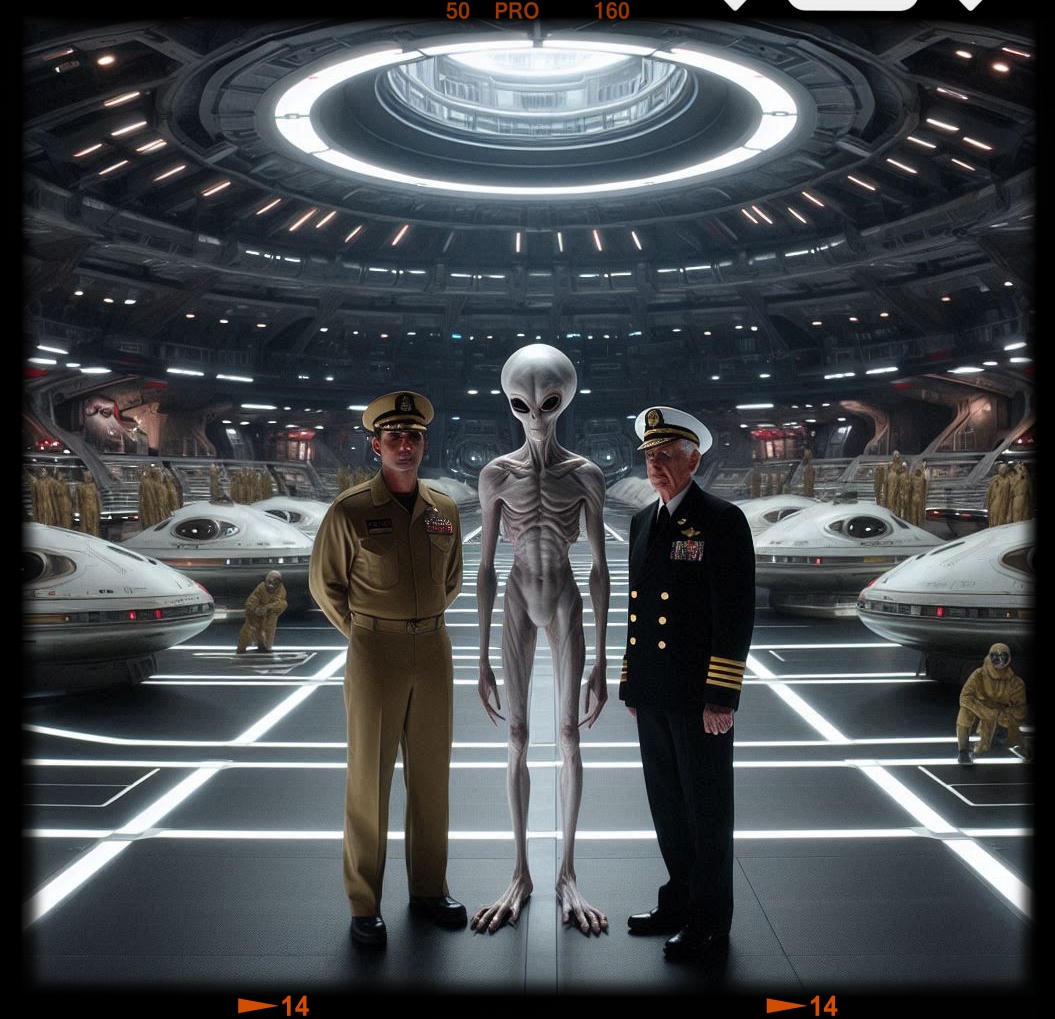
Smile for the camera, and don’t forget to look into the lens.
 Adrian Leverkühn Writes