
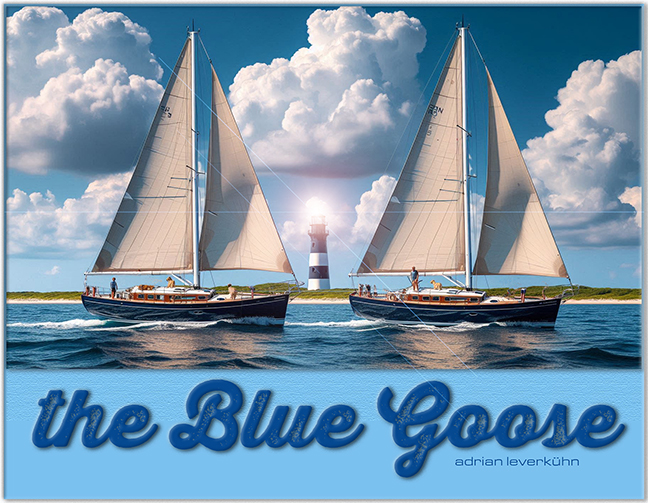
Sorry to do this, but instead of one long chapter I’m going to break it into two. Hell, maybe even three. We’ll get there, I promise, but I just may take the long way around to get there.
New Year’s Eve here. Quiet night in Wisconsin, snow and about 7 degrees F. Cold, in other words. Too cold for champagne and fireworks. Maybe a hot buttered rum? Or how bout an Irish coffee…? 20 minutes to go…
Music? I was wandering along the back corridors of the memory warehouse once again and I ran across John Nitzinger’s One Foot In History. Then I took a side trip to Buffalo Springfield, with a short stop in a song called Expecting to Fly. Then I got to thinking about Three Dog Night’s Out In The Country, but then I got hung up on Mama Told Me Not To Come. And it had been a while since I made a stop in the land of Spirit, so I had a listen to Natures Way, from their last album. Spirit always seems to lead me back to Cat Stevens, and tonight was no exception. Who can’t listen to Teaser and The Firecat and remain unmoved? The Wind, If I Laugh, and the immortal Morning Has Broken. My personal favorite has always been Bitterblue, but that’s just me being me.
Time for Tea, or maybe Tea for The Tillerman, but a short chapter awaits – so read on, dear reader, read on.
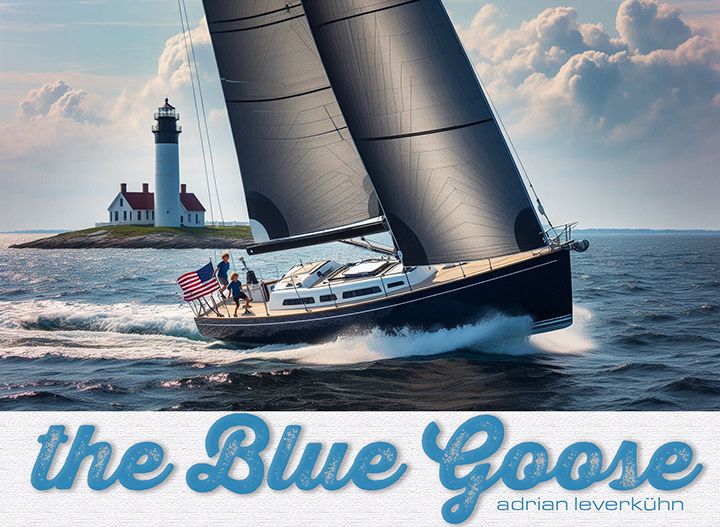
Part Six
She renamed her Langston 28 ‘The Untold Want.’ Few knew exactly what that meant, fewer still what that meant to Judy Reitman Stone, M.D.
She had always been a reader, teachers considered her an avid reader, and her interest in literature never abated, not even in medical school. As much as she had loved emergency medicine when she’d been an intern, psychiatry had called out most distinctly to her, and perhaps because literature has so often been grounded in the psychological development of the characters within poems and novels, going all the way back to Homer – and beyond. Psychology and literature were concerned with the human in human nature, whether the story concerned fear or tragedy or comedy, and while she had always known she’d study medicine, psychiatry would allow her to pursue the two great intellectual loves of her life.
The Untold Want was just one poem within Walt Whitman’s sprawling Leaves of Grass, from part of the cluster known as the Songs of Parting. All of two lines in length, The Untold Want is among the richest, most influential two lines in American literature, and they had resonated with Judy from the moment she first crossed paths with them. Perhaps more so after staying up late one night to watch the Bette Davis film Now, Voyager, which – she felt – described the circumstances of her life almost perfectly. The film derived core elements from both Whitman’s poetry and Freud’s work on dreams, and remained one of her favorite films even through her psychiatric residency.
And it seemed oddly humorous to Judy that, of all people, Bud Langston’s eyes lit up when she told him that she planned to rename her new sailboat The Untold Want, to just those three specific words. She had wanted to ask him why he reacted that way, but, then again, she now regarded Bud as something beyond ordinary classification. He was a man of infinite contradictions, a man who streaked between mature reflection one moment and a withering churlishness the next, a perplexing manner that often left her feeling unsettled, but he was also a learned man, and she respected that. Of course she had fallen in love with ‘Henry the first’ for those very same reasons, so these feelings only made sense.
The Untold Want was moved into the paint shop when the boat first arrived at the Langston Boat yards, and her hull given a fresh coat of navy blue Awlgrip. The nonskid on her decks were refreshed, the standing rigging and chainplates replaced, the fuel tanks, too. The electronics were gutted and replaced with exactly the same units Hank had now on his L-28, The Blue Goose. She decided to replace the engine and transmission, including the drivetrain, from the shaft to the propellor, because she didn’t want any failures along the way – and the engine was, after all, almost 32 years old. The refrigerator compressors were pulled and replaced, as were the bilge and sump pumps. All new cushions were made, both inside and out, and these completed the list of big items; Bud’s team finished the work in six weeks, leaving her a month to prepare for departure and to iron out all the inevitable little issues that remained to be discovered.
And she spent that month with Hank and Huck, when their schools permitted such nonsense, anyway, and when the boys weren’t available Bud would go out with her. A local L-28 owner, an older man who was more than willing to help her learn the lines, taught her small boat seamanship and the finer points of impeller changes in a heaving seaway. After a long weekend out with the boys she decided to get new sails and to have the conventional mainsail replaced with the same Forespar LeisureFurl unit that was on Hank’s -28, and that meant an electric winch had to be placed on the coachroof. She liked that so much that she had electric winches added to handle the jib sheets, so Hank’s Goose got those too. Bud thought electric winches were overkill and just shook his head when she made the request, but he installed them on both boats with a straight face.
When The Untold Want was finally ready to go, Judy went out one morning with the boys – who remained on The Blue Goose – and they sailed like two jet fighters, side-by-side all the way across the Sound to Block Island. They anchored in the Great Salt Pond then inflated their Zodiacs and motored over to the marina and walked across to the Mexican place for lunch. An hour or so later they went back out to their boats and raised anchor, then sailed home, arriving long after sunset – which had been the point of the exercise. Sailing at night is tough on the mind and the body, and seasickness thrives on susceptible people in the dark. Bud needed Judy to truly understand just how hard and fast seasickness hits so she could come prepared both mentally, as well as medically.
Their planned departure date was now one week off, yet the long range weather forecast wasn’t looking good. There was an early season hurricane brewing off the west coast of Africa and the models showed it starting across the Atlantic but then veering hard north for Bermuda, then the Canadian Maritimes, so right into their projected course north along the coast of Nova Scotia and on to Cape Breton Island. After traversing the Bras d’Or Lake and gaining Cape Breton’s north coast, they’d dash across to St John’s, Newfoundland, and wait there for the next weather window to open. Right now their departure hinged on the path of the current hurricane.
Bud, Henry, and Emily planned to meet up with them Newfoundland, more for moral support than anything else, but Bud wanted to go over both boats before the next leg of the journey, as well as the weather. This next leg might be the most treacherous part of their voyage, a 1400 mile slam across the North Atlantic to Reykjavik, Iceland, which also meant about a thousand miles of icebergs and almost instantaneous death to anyone who fell overboard. Once in Iceland, they planned to rest for a week or so, and Bud alone was planning on coming to check-out both boats once again.
Next stop after Iceland: the Faroe Islands and another 500 miles of open, and often treacherous, North Atlantic Ocean. The last 550 miles of their voyage, south along the east coasts of Scotland and England to Hull, would be made in the North Sea, one of the most volatile bodies of water on the planet. Rogue waves and gale force winds are the norm, and as mild conditions were a rarity in the North Sea, Bud wanted ‘his’ boats in top shape before making the attempt.
This almost 3,500 miles of open ocean can, however, only be crossed in a narrow window of time, as weather conditions make crossings from early-September through mid-June almost impossible for small boats; the remaining window, from late June through late August, is only barely possible if the weather cooperates and ideal conditions persist through the weather window. In years with hurricanes that hit the Maritimes, it is clearly not advisable to even make the attempt, and in years with excessive sea ice drifting south off the east coast of Greenland, conditions are marked by millions of small icebergs hiding inside dense fog. Equipment failures here are often lethal, not only because of the remote location but also because of the inclement weather that prevails along the route. Rescues are difficult, not least because a sailor can survive in the water for a few short minutes. Survival after a five minute exposure is complicated and usually requires a hospital’s intensive care unit to pull-off, and there just aren’t hospitals like that floating around in the middle of the ocean.
Yet while hundreds of sailors in small boats take the North Atlantic route to Europe every year, only a relatively small number perish. Equipment failures, on the other hand, are the norm, so being prepared is the key ingredient to a successful crossing.
That statistic was of no comfort to Emily Stone, or to Henry Langston. For Carter Ash, nothing about this trip seemed logical or in the least desirable, though now he considered it inevitable. They thought the trip unnecessarily risky, but Henry at least understood where Hank was coming from. Emily Stone, however, simply had no idea what was running through Judy’s mind. She felt isolated and lonely, and resented the distance Judy had placed between them.
But what bothered Emily most about this trip had remained a constant ever since she’d first learned of Judy’s desire to make the crossing: Judy seemed lost in some kind of dream, searching for something that no longer existed. Emily was sure Judy would never concede that, or even try to understand Emily’s fears, which she found vexing. And yet even more troubling, Emily was sure Judy wanted it that way.
+++++
Two almost identical Langston 28s were tied off on either side of the pier at the bottom of the lawn under Bud and Ellen’s house, and both were laying low on their waterlines. Both boat’s tanks were full, their drawers and lockers were packed with food and supplies, their chart tables loaded with the most up-to-date charts and cruising guides available. StarLink antennas were facing the southern sky, up to the minute weather forecasts were loaded and ready to go.
Bud and Ellen were standing on the pier, looking at their grandson with something akin to wonder in their eyes. Hannah and Jennifer were jealous, but only because the attention had shifted to Hank recently and both were furious about that. Carter Ash looked wan, like he couldn’t believe what his eyes were trying to tell him. Huck’s mother had come down for the occasion, and even though Judy Stone was a coworker of hers, she cared not the slightest what happened to Judy Stone, only to her son. She had never thought this trip possible and still couldn’t believe her own eyes, but right now her baby boy was coiling lines in the cockpit of a tiny sailboat and getting ready to set out across the Atlantic Fucking Ocean – without her. Maybe it was his dream, she sighed, but right now it felt like a nightmare.
Henry was onboard the Blue Goose, down below with Hank, going over a few last minute details with him. Hank had a bright yellow duffel he kept under the quarter-berth, purposely placed right beside the life raft. This was his ‘ditch bag,’ the bag he had to grab before abandoning ship and getting into the life raft – if shit hit the fan and the Goose was sinking.
“I’m putting this envelope inside the ditch bag, and you’re not to open it unless you wash ashore someplace without facilities and need money. It’s just cash and a few gold coins, but they’re there if you really need them. Understand?”
“Yessir. Understood.”
“Okay, son. This is it. No change of heart? No second thoughts?”
“No. Nothing like that, Dad.”
“But?”
“Why couldn’t Mom come down?”
Henry sighed. He knew this was going to come up but he still didn’t know what to say. “Your mother had to go back to Boston, Hank. She’s not doing well.”
“What happened? I thought with that new medicine she was getting better?”
“The medicine is experimental, and Judy was concerned that it was hurting your mom’s liver. Turns out the medicine was hurting her badly.”
“Dad?” he asked, his eyes filling with tears. “Are you saying she’s going to die?”
Henry shook his head. “If I thought that was a possibility I would’ve told you, and I’m not sure I’d let you leave. But Hank, her doctors think they have everything under control, and that she should be home in a few weeks. If something changes, do you want me to email you?”
Hank nodded. “If something happens…I should be there with her, don’t you think?”
“I do, yes.”
“Okay.”
“Are you going to go up and say goodbye to your Grandmother. She’s really having a hard time with this, Hank.”
“I know she is.”
“And she needs a hug. A big one.”
“You know what, Dad? I could use one too.”
“From her?”
Hank shook his head. “No. From you.”
Henry smiled, then stood and grabbed his son and pulled him close. “You can do this, Hank. You know it and I know it, so go out there and show the rest of ’em what you’re made of.” He held onto his boy and shook his head, lost in images of Hank when he was a baby. “You know, I never saw this coming, Hank, but I’m so proud of you I could bust.”
Hank squeezed his father hard. “You know what’s weird, Dad?”
“Hm-m, what?”
“I’m taller than you are now.”
Henry chuckled. “Shit happens, kiddo, but if you find yourself in my shoes one day, well, you’ll understand what all this means to me right now.”
Hank went up to the dock and went to his grandmother and ran into her waiting arms and they hugged for a lifetime or two, then he pulled back and looked into her eyes. “The best thing that ever happened to me is you.” She held him in her eyes and couldn’t let go.
He turned and shook hands with Bud, then gave him a hug too. Words between them weren’t necessary now, but Bud felt a surge of excitement as he watched his grandson hug and shake hands with his little brother. Ben was in a walking cast now, his knee still on the mend.
“I can’t believe you’re really going to do this, man.” Ben said to him.
“You and me,” Hank said. “Let’s do the Pacific together one day, okay?”
“You got it, bro.”
Judy walked down from the house with some last minute necessities in a small duffel, and she hugged Emily then shook hands with Henry and Bud before hopping on The Untold Want. Emily gave her a hug then stepped back onto the dock, still shaking her head. Judy started her checklist, checked her engine temp and charge state, then double checked her chartplotter to make sure all the local tides and currents were displaying properly. When the wind app came up on her iPad she turned to Hank on The Blue Goose and nodded. Daisy Jane hopped off the Goose and ran over to Ellen, leaving Gertrude alone with Hank in the cockpit.
“You ready to do this?” Henry asked his first-born son. The word were a ritual between them now, and both smiled at the import of the moment.
“As I’ll ever be,” Hank replied, in keeping with the moment.
Bud took the line from the cleat nearest him, Henry the other, and they handed the lines over to Huck. Bud gave a little push and the Blue Goose drifted away from the pier for a moment, then Hank put the transmission in forward and turned towards Newport. Huck turned and saw his parents standing arm-in-arm for the first time in years and he nodded, then waved at them. Bud whistled once and Gertrude alighted from Hank’s shoulder and flew to Bud’s shoulder, and Judy wasn’t in the least surprised by that. Not now.
Emily leaned over and handed Judy an envelope while Henry and Bud untied her mooring lines and tossed them on deck, and Bud pushed her free and watched her drift away. He swallowed hard as their eyes met, but he understood her now, and what she was setting out to do. He didn’t agree with her, but that didn’t matter. She’d left all her important papers with him – just in case.
Henry and Bud stood side by side at the end of the pier, watching Hank steering a confident course towards Newport, and Huck was coiling lines like a seasoned old pro.
But this was Hank’s journey, even though he was carrying all their hopes and dreams on his shoulders right now, and Bud seemed to drift away on the currents of other dreams for a moment before he waved at his grandson one last time.
And then he watched as The Untold Want followed dutifully in his grandson’s wake. Gertrude settled her neck on his and he heard her sigh, and he saw Daisy Jane was sitting quite still now, not at all sure she liked what she had seen. Bud reached out and touched Daisy’s head and she looked up at him; he saw she was crying, tears were forming in the corners of her eyes.
“He’ll be okay, girl. Don’t you worry. He’ll be okay.”
Bud felt Gertrude turn and look at Hank again, now almost a half mile away, but he knew she understood.
Bud turned around and walked slowly up to his house…with Ellen’s arm in his, and once inside he went to his computer. Both boats were pinging on his AIS display and he smiled.
+++++
Hank’s first executive decision concerned their passage around Martha’s Vineyard and Nantucket Island. Once the two boats cleared Brenton Reef and Seal Ledge off Newport, they could turn towards Vineyard Sound and then work their way through Nantucket Sound, but if he chose that route they’d hit the Main Channel just after midnight and neither he nor Judy had traversed this minefield before. Better to head south far enough to clear the area around Nantucket Shoals before making the turn north. Once free of the minefield of rocks and ledges south of Nantucket, they’d be able to sail direct to Lunenburg, Nova Scotia, and check into Canada.
So he set the course on the chartplotter to carry them well south of Nomans Land, off Squibnocket Point on the southwest corner of Martha’s Vineyard, which they’d pass around six that evening.
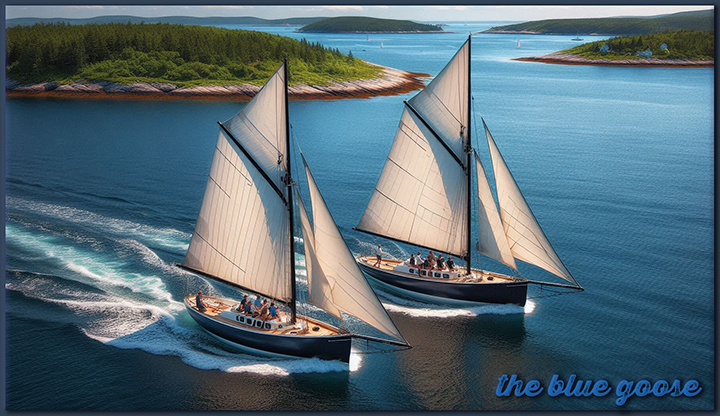
They’d agreed two use their handheld VHF radios for ship-to-ship communications, and to transmit on the low-power setting while using channel 72, and he called her as the afternoon wore on.
“How’re you doing over there?” he asked Judy when she answered his call.
“I’m seasick,” came her reply, “and I’m afraid if I put a patch on I’ll fall asleep.”
“Okay, got it, we’ll pull alongside and Huck can take this watch. You put on a patch and get some sleep; you’ll need a clear head tonight.”
“Okay. Thanks, you guys.”
So Hank maneuvered close to Judy’s port-side rail and Huck literally just stepped across the small gap between the two boats. Judy went below and found her stash of Scopolamine patches and put one behind her left ear, then grabbed a blanket and lay down on the pilot berth she’d made-up in the main cabin. She was sound asleep within a minute. Huck shot Hank a ‘thumb’s up’ soon after that, and Hank increased the space between them again.
They cleared Nantucket Shoals a little before sunrise, so made their turn to the northeast into the dawn. The wind picked up to a steady 23 knots out of the west-southwest, and they broad reached across Massachusetts Bay under the most benign conditions imaginable: sunny skies, the wind almost at their backs, and the sea putting on a benevolent display for them. Hank cooked breakfast and then crashed, as he’d stayed up all night, but he woke up four hours later and sailed over to Judy’s so she could sleep for a few uninterrupted hours. She cooked them some lunch before she went down and slept for seven hours.
This first passage passed quickly and easily; their first weather window had been perfect despite the looming hurricane, and the weather forecasting tools they had onboard were making things look easy.
They had pre-cleared into Canada so only had to call and check in with the harbormaster in Lunenburg, and after they received clearance they motored up to the fuel docks, fighting for space among the fishing boats and lobstermen for their turn at the hoses. There were no marinas here, just an anchorage for transient sailboats, but they spent two days there anyway – mainly just walking around the town and eating ice cream and going – once – to the worst Mexican restaurant on the planet. They tied off at the pier behind the supermarket for an hour while they replenished their stores, then literally raced away from the town, hurrying to beat the turn of the tide.
Their next planned stop was St Peter’s on Cape Breton Island, and the canal that literally separates the Bras d’Or Lakes from the sea. This was also the first set of locks that any of them had attempted, so Hank was spending a lot of time reading up on the subject of line handling and lock protocols, and even after reading several accounts he was not feeling any more confident about the endeavor. No, not at all.
So when they approached the locks and Hank hailed the keeper on the VHF, Hank advised them of the situation. And so, of course, a half dozen people were on hand to help out when The Blue Goose pulled into the lock chamber. More were standing by when The Untold Want entered and tied-up just behind the Goose, so in the end all that worry had been for nothing.
They spent several nights at anchor on the main body of the lake, pulling into tidy little inns for lunch or a shower, and spending one luxurious night ashore, draining the hotel’s hot water heaters after the boys ate their weight in lobster. They stopped in Grace Bay to refuel and to make a grocery run, then they set out for St John’s, Newfoundland, 370 miles further north.
No one wanted to admit it, but despite the fact that it was the middle of summer they were now wearing their winter jackets – over down vests. The temperature was, in a word, cold, and the further north they went the colder it was getting. Numbers weren’t needed now, knowing just how cold it really was only seemed to make it worse. And of course it was humid so the mood onboard both boats was turning cold, too, and perhaps because the magnitude of the crossing just ahead was finally dawning on them. They were about to set off across the far North Atlantic, and the way ahead would be lined with icebergs. No one dared mention the name of the ship…that ship…that had tangled with the bergs out here – and lost. And certainly no one mentioned the fact that the Titanic’s lifeboats were a lot bigger than their sailboats.
So Hank texted Bud.
“The temps onboard are getting too cold for comfort. Got any ideas?”
“I’ll take care of it,” came the instantaneous reply. “See you in St. John’s.”
When he told Huck and Judy about the exchange they seemed ecstatic. Judy in particular was not enjoying the colder air, but at least she’d thought to bring insulated ski gloves, which was more than either of the boys could say. Handling salt-encrusted lines in 38 degree wind just wasn’t fun.
But as they pulled into the docks in St John’s, Newfoundland, there saw an entourage on the docks waiting for them, including work crews to install Espar diesel-fired forced air heaters and Dickinson solid fuel cabin heaters – that burned either coal or wood. Burning wood in the wall-mounted Dickinson also dried out the main cabin in minutes, eliminating condensation and humidity down below, and because the flame was visible the cabins took on a cheery ambiance when the wood-fired heaters were going. The boys and their fathers went shopping for better insulated foul weather gear, and then they spent several afternoons just walking around town – while keeping an eye on a powerful storm coming from the northwest – and not a hurricane from the south. This deep arctic low pressure system was generating 25 foot waves, a few reported to be much larger, as well as gale force winds. Attempting the crossing under these conditions was simply not possible, so now Hank had to confront a new, more pressing reality.
They’d already spent two weeks ambling up the coast, and now they only had a few days left in the month of July. If they left and pushed hard to Iceland and then cut their time in Reykjavik down to the bare minimum, maintaining a fast enough pace to the Faroe and Shetland Islands, in three weeks, might see them reach Hull in the last week or so of August. Twenty-eight foot boats with twenty four foot waterlines simply could not cross at the greater speeds larger boats can attain, and coaxing six knots out of their boats was often not simply challenging, but also uncomfortable. Throw in the near-arctic conditions of the seas, and racing across the Atlantic in a month was going to prove a herculean task – unless they departed St John’s soon. Really soon. And walking around while waiting out this storm was cutting into their safe passage making window.
And though the storm raged for another day and a half, the wind prediction apps they had on their iPads were telling them a very interesting story. High pressure was going to fill in behind the storm, temperatures were going to rise into the 60s and the wind would fill-in from the northwest at a steady 15 to 20 knots – and these forecasts said it would remain like that for almost ten days. In other words, conditions were going to be ideal for the crossing.
“The choice is yours,” Bud told Hank and Judy. “You are the captains of your vessels, and so the captains of your fate, and now you must decide. The choice is as simple as it is stark: leave tomorrow or turn around and head back to Rhode Island before autumn sets in.”
“What about me?” Huck cried. “Don’t I have a say in this?”
“Of course you do, but if Hank decides to return that choice will have been made for you. On the other hand, if Hank decides to press on, you are under no obligation to continue. You can return with us if you want.”
Huck turned to his friend, the question in his eyes clear for all to see. “Well? Are we doing this, or what?”
Hank nodded, then he turned to Judy. “You feel like going on?”
“Me? Well hell, Hank, I wouldn’t miss this for the world.”
Emily listened to this exchange and turned away, devastated and suddenly feeling nauseated; Carter Ash seemed to fall away, as if he too knew now that someone he dearly loved would be well beyond his reach. Beyond the range of help should the worst happen.
But when Carter had first laid eyes on the boys, as The Blue Goose approached the docks in St John’s, Carter had been the first to realize that the boys had changed during the course of the first part of their trip together. Huck looked leaner and much more confident, his voice was turning and when he spoke now he almost sounded like a man, like the words he spoke no longer seemed to be coming from a little boy. Hank, already a born leader, seemed confident in his ship, and in Huck – which hadn’t been the case before they left Rhode Island. Yet after the rescue off Block Island, Hank had begun to appreciate Huck’s virtues, his strength and athleticism, and the bond between was growing stronger by the day.
And as he watched the second little ship in Hank’s flotilla, Carter began to wonder what role this psychiatrist was playing in these changes. The boys were in constant contact with her by radio, or so he assumed, yet in truth he had little idea how often Huck was hopping over to The Untold Want and lending a hand when Judy simply needed some sleep. Both fathers would have been surprised to learn that their boys were hopping over simply to talk with Judy, to listen to her and to learn from her. About all kinds of things, too, but literature and psychology for the most part. Judy had been a gifted student of life and was an avid listener, and she recognized a fellow traveler in these two. The boys could not have been in finer, or more patient hands, but the fact remained that, yes, without question, Hank also wanted to learn more about what was happening to his mother. He wanted to understand her pain, and what he could do to help, and Judy explained what she could, under the circumstances.
Bud had watched these new dynamics taking shape before the three of them left Rhode Island, yet he had seen this ‘coming together’ in all the many voyages he had made with his forebears, trips that were now lost in time, trips that had, perhaps, only happened in some other frame of reference, but he had learned most of all that voyages made shipmates of the most unusual characters. People who would not have, in any other circumstances, been friends or even acquaintances. But once you were on a ship together, any ship, what soon became most apparent was one simple aspect of life at sea: a chain is only as strong as its weakest link. Henry the First had taught him that, and Bud suspected Henry had imparted that upon Judy, too. Maybe that’s why she was proving to be so valuable to the boys right now, despite what Emily thought.
Now, as the parents and grandparents – and one wife – looked on, this unity of purpose was apparent to them all. The three of them were shipmates now, each caring for the other, pitching in and helping to carry the load when one of the others flagged, and now sharing a knowing glance or answering questions from reporters.
Yes, reporters.
Because the CBC had learned of the boys’ trip from the harbormaster, and that two 12 year olds were crossing the North Atlantic on a 28 foot sailboat, and this was News. Then the CBC learned that the boys on the Blue Goose had rescued an incapacitated boater on Long Island Sound not two months before, and after that the boys and their story didn’t simply spread, it was soon being mythologized. Here were two boys turning their backs on modern culture and a way of life dominated by sedentary dreamers who seemed to care of nothing else but video games and their social media presence. Two boys who were not content to simply dream, but who were determined to act on their dreams. Yes, this was News!
As the storm broke and the weather began clearing a Canadian Broadcasting Company van approached the dock and soon a reporter and camera crew were setting up lights and microphones in front of the harbormaster’s office. Local fishing boat captains were being interviewed about the dangers of the sea in general, and this part of the North Atlantic in particular. One skipper mentioned that the boys would soon be sailing almost exactly over the location where the Andrea Gail, the fishing boat from Gloucester, Massachusetts featured in the movie The Perfect Storm, had been lost. Another skipper talked about rogue waves and how rapidly, and unexpectedly, they formed, and the passage between Newfoundland and Greenland was as treacherous as the so-called ‘roaring forties’ in the southern ocean. Henry and Carter were interviewed, lending the piece a parent’s perspectives, but Bud and Emily declined the invitation to appear before the camera.
The CBC had, so far, dwelled on the idea that this voyage represented nothing less than blatant parental irresponsibility, a point the harbormaster echoed when it was his turn before the camera, then a public affairs officer from the Canadian Coast Guard was interviewed, saying only that they would be monitoring the situation as far east as Greenland.
When Huck walked up and to take a seat opposite the reporter, who, unfortunately was gorgeous – in the extreme – his eyes seemed to focus on the young lady’s legs, which were, of course, spectacular. She asked him a question, something innocuous about what had gotten him interested him in sailing.
So Huck did what Huck usually did when confronted with a gorgeous woman. He leered, he grew provocative, and he was soon almost drooling. “You’re cute,” Huck said at last, grinning. “Wanna grab a Coke after we wrap this up?”
The reporter’s eyes twitched. “Excuse me?”
Huck turned to his father and grinned. “Dad? Would you look at the legs on this one?”
Carter Ash seemed to shrivel up and disappear in a puff of gray smoke.
“Just how old are you?” the reporter asked – as steam and sparks started fuming out of her ears.
“How old do I need to be?”
“Excuse me…what did you say?” she gasped.
“How old do I need to be…to get in your pants?”
Carter leapt forward and grabbed his son by the arm and pulled him away from the roar of laughter that greeted this response, then Hank realized it was his turn, and he also recognized that with the harbormaster’s and the Coast Guard’s attention now focused squarely on them, he needed to tread carefully and present an image of the prudent mariner.
The reporter opened a bottle of water and took a long pull, then someone put some more powder on her forehead. She took a few minutes to compose herself, then she turned to Hank, who was now sitting across from her, staring into her eyes.
“Do I know you?” the reporter asked, clearly still flustered.
“I don’t think so,” Hank said, smiling easily.
“Strange, I could’ve sworn we’d met before.”
Hank shrugged, then held out his right hand and leaned forward. “Hank Langston,” he said formally. “Nice to meet you.”
And when she took his hand in hers the connection was instantaneous, and direct. Hank saw the girl on Pegasus, in the lagoon at Tarawa, only she wasn’t 14 now. “No,” the reporter sighed, “no, something isn’t right. I know you. I know we’ve met somewhere before today…”
Hank smiled. “Yes, I know.”
“You do? Really?”
The cameras were rolling. Both cameramen was making sure their audio levels were in the green.
Hank nodded. “Did you have a question for me now?”
“Yes, I uh, yes, I do. I wanted to know why you’re doing this.”
Hank nodded, then he shrugged. “I think maybe I’m doing this for my mother.”
“Your…mother? Really? How so…?”
Hank’s smile softened. “Yes, I’m sorry, but that’s the best thing I can come up with for you right now.”
“Why? I mean, why your mother?”
“Yes, well, my mother has been sick for a while, and I think there’ve been times when she wanted to give up, to let go, and maybe because she began to think that all her hopes and dreams had never meant anything. And I wanted to show her that that’s not true. Sometimes dreams are all we have, but our dreams are meaningless unless we act on them, and no one can make their dreams come true if they give up. So this trip is about making dreams come true, but not just mine, and probably not even Huck’s. It’s about my mom, too, and her dreams. I want her to fight, to fight and make her dreams come true.”
The reporter looked around at the people crowded around the pier, watching the boy as he spoke from the heart about his mom, and right then and there she threw away all the hard questions she’d planned to ask about responsibility and foolhardiness and risking life and limb for something so frivolous as this. “She must be a very special lady to inspire such devotion. If she was here right now, what would you tell her?”
Hank looked puzzled by the question, then he looked at his father, then his grandfather.
“Words don’t matter much, Ma’am. It’s what you do that counts.”
She nodded, then turned to the camera and spoke her prepared remarks about two young boys sailing across the Atlantic, and she simply omitted any talk of Judy and her following along. Judy wasn’t a real part of their story, just a footnote, and CBC executives in Toronto decided right then and there that they would be following the boys’ progress all the way to England. And they decided to find out all they could about the boy’s mother, too.
+++++
Their water tanks were full, their fuel tanks as well. Their new forced air heaters worked so long as they had electric power and fuel to burn – which was fine when tied up to the docks – but now the boys were loading sacks of coal and wood pellets, and even small 3 inch logs in burlap sacks, to burn in their new solid fuel fireplace – which required no electricity or diesel to operate. Their lockers were crammed tight with even more food, mainly canned goods but also plenty of fresh produce from the local supermarket. Local fishermen dropped by to wish them luck, and to give them loads of fresh salmon and shrimp. Both the Canadian Coast Guard and Navy were standing by just offshore to send them off with a fit and proper salute.
Emily knew this was it. She could feel it, her intuition was screaming as she watched the boats cast off and sail away from the docks. She watched until the pain became unbearable.
The CBC crew stood nearby recording the scene, the reporter haunted by her encounter with Hank stood there lost in a haze of doubt.
Henry and Carter watched in silence, lost in thoughts of their own childhoods.
While Bud alone among them seemed understand the enormity of the challenge awaiting the boys and the psychiatrist, but there was nothing he could do now but watch.
Because The Blue Goose and The Untold Want would soon be beyond his help. But at least they had StarLink, and if the worst came to pass he would at least know where to look for his grandson’s body.
+++++
“Henry? Do you know where Hank is?” Liz asked as Henry followed the Interstate north out of Boston.
“He’s been down in Rhode Island a lot this summer, but he’s taking a trip right now.”
“I had a dream about Huck, about Carter’s son Huck. He was with Hank. On a boat.”
Henry nodded. “That wasn’t a dream, Liz.”
“What?”
“They left last month, from Newport.”
“What? Henry…where are they going?”
Henry sighed. “Their plan is to sail from Newport to Newfoundland, then press on.”
“Press on…press on to where, Henry?”
“Reykjavik, in Iceland, then on to Tórshavn. That’s in the…”
“I know where Tórshavn is, Henry. Why? Why did you let them do it?”
“I didn’t. This was their plan, their dream, and their decision.”
“And your father’s too, I bet.”
Henry nodded. “Probably. He gave Hank the boat for Christmas.”
“But of course he did,” she sighed as waves of sarcasm flooded her thoughts, crossing her arms protectively over her chest. “And that means he’ll go to Bergen after that, then Lübeck…”
“Probably, sooner or later.”
“I can’t believe you let him do this. Henry…he’s just 12 years old…?”
Henry looked at her and shrugged. “True, but he’s older than you think, Liz…older than his age. Besides, he has a buddy boat going along with him. Along for the ride, I guess you could say.”
“A what?”
“A buddy boat,” Henry said with a smile. “Someone who’s going to follow along, so if something happens to his boat there will at least be someone nearby to lend a hand.”
“Oh no, don’t tell me…your father is going to make that trip again?”
“Well, no…no he isn’t.”
“Well then…who is he with, Henry?” But when her husband sighed and shrugged she only grew more restive. “Dammit Henry, who’s going to be out there – out there with our son?”
And still he smiled, because he was sure he’d heard these very words a few weeks before…when Huck’s mother blew a fuse and came unglued.
“Well, Liz, he’s with your psychiatrist. It seems they’ve become good friends this year.”
She looked out the window, but the reflection she saw in the glass got in the way. The tears, however, were real enough.
+++++
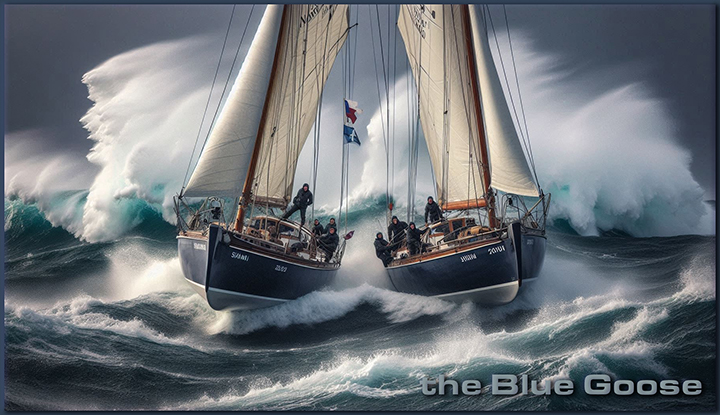
“This is good weather?” Huck cried. “Hank! Look at those fuckin’ waves!”
Hank didn’t need to look. He’d been fighting them all night and all day and the smallest were 20-footers. The boats were taking them right on their port beams, their left sides, and the larger waves, the waves that crested and broke, were getting close to knocking them down. And now the sun was setting. A small storm raged 10 miles ahead.
“The Hydrovane seems to be handling the waves a little better now,” he said, “so just fix a sandwich and try to keep out of the wind. I’m going to call Doc Stone and see how she’s doing.”
“Yeah, you do that. If she’s making dinner tell her I’ll be right over.”
Hank laughed at that then held on tight as he tried to get down the companionway ladder without breaking his skull. A big wave broke and The Blue Goose lurched to the right, heeling about 50 degrees before righting again, and he used the lull to get down to the chart table and braced in the seat behind the desk before the next wave hit.
“Goose, Want, you listening?”
“Yup,” Judy said. “How’re you two doing over there?”
“Huck says he’s coming over for dinner.”
“Good. Tell him while he’s at he can clean up the barf on the galley countertops.”
“Will do. Did you manage to sleep any?”
“A little, but I’m holding my own. How about you?”
“Sleepy. Going to take a nap.”
“Might be hard if these waves keep at it.”
“The wind is supposed to drop to ten knots after the sun goes down, but I didn’t see anything about wave heights.”
“I did. Not going to let up until tomorrow afternoon, then we might go to zero wind for a few days.”
“Then tonight is going to be bad. No wind and rough seas. Might be time to heave-to and deploy the parachute-drogues.”
“Let’s see how it goes first. I want to keep moving while we still have wind,” she said.
“Okay. I’ll keep the radio on stand-by. Goose out.”
“Want, standing by on 72.”
+++++
Bud finished cleaning up after their supper, then went to the library.
He was rummaging through the logbooks around the time of Henry the First’s last voyage when he noticed something wrong. Something out of place. Then he realized one of the logbooks was missing, but he wasn’t sure which.
Then he remembered Judy, right before they left she had gone up to the house to get some things she said she’d forgotten. She’d come back with a duffel. He had thought nothing of it at the time, but now he knew what she’d gone back to the house for. Now he had to find out which logbook she had taken…and quickly…
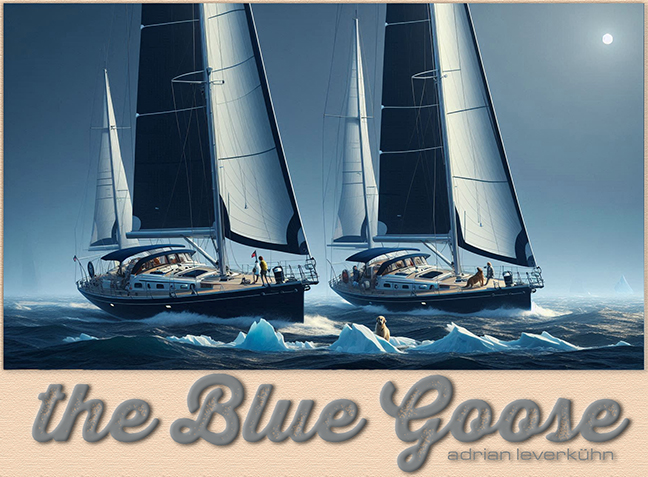
© 2025-26 by adrian leverkühn | abw | adrianleverkuhnwrites.com | and this is a simple work of fiction, as plain and simple as it always is, which means no real people or situations were involved in the creation of this story. As always, thanks for stopping by and having a read. Be safe and have a good New Year. AL/abw
 Adrian Leverkühn Writes
Fabulous as always…. looking forward to continued installments….BTW, I think you’re getting all our weather….60’s in Denver and only 24″ total snow in Steamboat. Glad you’re still writing!
LikeLike
We’re cold here, really cold, but not much accumulation. Maybe 4 inches on the ground. Perfect for Vince Lombardi and Bart Starr and all those guys, but not me. The cold is beginning to bug me this year.
Glad you’re still reading! Thanks for dropping by!
LikeLike