So here are all four original chapters, as well as the fifth, concluding chapter. I will say rather than create an expository, hyper detailed explanation of events I’ve left bread-crumbs of inference to help you piece the puzzle together. This is a story that could easily expand into something more involved, and endless sequels could come out of it, too. Anyway, I hope you find your way through the maze. It’s about 115 pages, so fire up the popcorn and have a read.
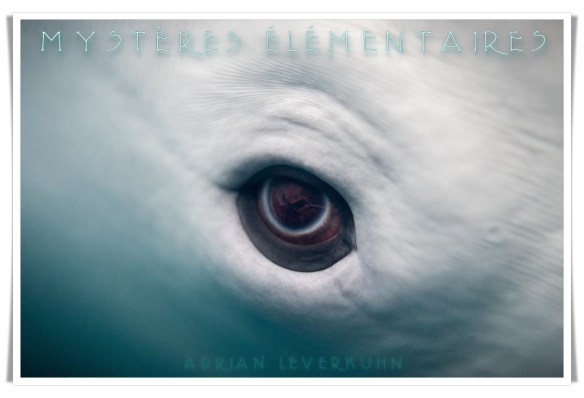
Mystères élémentaires I
Danser avec les etoiles dans la nuit
I
The man sat on the rough, black asphalt, in the sliver of shade afforded by the little jet’s wing, wondering how much longer he’d have to wait for the fuel truck to arrive. It felt oppressively hot outside, and very humid, though the sun was about to set. He looked at the hills surrounding this impossibly tiny airstrip and wondered what, exactly, was making his hair stand on end. And why the sensation felt so – familiar?
The Dassault Falcon 20 had once belonged to FedEx, and though it was painted slate gray now, it still had the cargo door the courier service had originally specified. The cockpit was steam-gauge city, though there was a GPS receiver and an RNAV interface that fed, somehow, into the ancient Bendix flight director – so the jet’s pilots could get into, and out of, some very unlikely airports. This little hole in the wall was one of them, too.
The jet belonged to a outfit registered in Miami, to a company that did the majority of it’s business with the CIA, and the pilot had flown for the company for years. He liked the no-nonsense approach to flying, and to life, that working for the company afforded, but he did not like airports like this one. They were a little too far off the road less traveled for his comfort, and maybe that was why he felt so uneasy.
It was called Los Comandos, or more accurately Port lotniczy Los Comandos, and the airstrip was located about a mile due west of the village of Lolotiquillo, in eastern El Salvador, and as Nicaragua was not that far away, Los Comandos was a favorite location to pick up and drop off certain types of “packages” the company needed delivered.
He heard a truck approaching; saw a white Toyota Land Cruiser coming down the road to his right, with two more following, and he relaxed. That would be the Special Forces types working the area, he thought, and they pulled beyond the Falcon and stopped under some shade trees. He watched his co-pilot get out of the lead Toyota, and the driver got out too, and both walked over to the jet. The driver handed him an ice cold Coke, then sat down on the asphalt under the wing.
“What’s the word?” the pilot asked his co-pilot, a raw bundle of nerves he knew only by her first name: June. She was cute. She was sexy. And she was available. And he wondered why he hadn’t made a move on her yet? Don’t shit where you eat? Was it as simple as that?
“Situation Normal, All Fucked Up,” she sighed. “The truck went to Delta Baker. It should be here soon, less than a half hour, anyway.”
“Sorry, Amigo,” the other man said, “my fault. I shoulda confirmed.”
“No big,” the pilot said. His name was Rob Jeffries, and he looked at June, saw sweat had already soaked through her white shirt and he shook his head.
The other man, Captain Dale Knight, USMC, looked around the hills, shook his head. “Something don’t feel right, Amigo,” he said, staring at a hillside perhaps a kilometer away.
“I know,” Jeffries said. “The hair on the back of my neck has been on end since my feet hit the ground.”
“Over there,” Knight said, pointing at the hillside. “Something doesn’t belong – looks outta place. That hill look different to you?”
“Yup.”
June turned and looked at the hill; she’d flown into Los Comandos a few times, maybe not enough to know the terrain as well as these two, but she looked anyway. The land looked a little like her native New Mexico: rolling, scrub-covered hills, a few small mountains in the distance, the only difference was the forest, which seemed almost arboreal compared to the ones back home. These forests were alive, full of large cats and mean snakes, and she didn’t feel comfortable walking around down here – at all.
Knight went over to his Land Cruiser and pulled out some binoculars and walked back to the Falcon; he swept the hillside then handed them to Jeffries. “What do you think, Rob?”
“Kind of a metallic shimmer – weird. Must be a couple of hundred yards across.”
“When are the spooks due?”
Jeffries looked at his watch, shook his head: “About a half hour, maybe less.”
“Think I’ll send a platoon over there, see what’s up.”
Jeffries shook his head. “Too big to be anything – covert. My guess is it’s an optical illusion of some sort, something to do with this humidity.”
Knight shook his head, walked to the second Toyota. He pointed out the illusion and explained what he wanted, and that Land Cruiser took off, drove away from the hill. Jeffries knew that several hundred Marines were staged in the area, usually conducting quiet little walks into northern Nicaragua, sometimes Honduras, but he knew Knight was a cool operator – conservative, not into taking chances or letting someone crawl up his rear.
Knight went back to his Toyota and got on the radio. “Baker x-ray, where’s that fuel truck.”
“About five out,” came the reply.
He walked back to the Falcon. “I’d like you guys to beat feet real quick.”
Jeffries nodded, looked at the hill, then at the Falcon. “Me three.”
“Gas is about here.”
Jeffries heard the radio in the cockpit and dashed over the open cargo door and picked up the hand unit he’d left there, just out of the sun.
“Say again, Ranger two-two, this is Echo echo. Come in.”
“Echo echo. Go,” Jeffries said.
“We’re about five out, got some 25s, repeat 3 times 2-5, over.”
“Got it, out.” Jeffries sighed, then turned to Knight. “They’ve got three wounded,” then he turned to his co-pilot. “Turn on the GPU, let’s get the a/c on – and ready to get the fuck out of here.” He turned, looked at the sun setting behind the shimmering hillside, the shrugged his shoulders.
“Right,” she said, then walking over to the ground power unit, she turned on the generator, then turned power on to the Falcon; once power was steady she walked to the little ladder and disappeared into the cockpit. The fuel truck appeared and Marines got out of the Land Cruisers and refueled the Falcon, then one of the Marines hooked up the compressor and called out “Okay to start two” to the co-pilot leaning out her window.
“Time to go do some of that pilot shit,” Jeffries said to Knight. “Seeya next time.”
“You going to TNT?”
“Yup.”
“Good. I’d hate to have to come get your ass in Mexico.”
Rob laughed. “And how’s that little gal in Aquas Calientes?”
It was an old joke, and they both laughed.
Two Marine UH-1Y Venoms settled on the road and medics carried three stretchers to the Falcon. Two men from the helicopter, dressed in black fatigues, carrying M4 carbines, walked over and spoke to Knight while Jeffries climbed up onto the little jet’s cargo deck. He helped get the wounded on their stretchers strapped down, then went forward to the cockpit.
“How’s the pressure on two?”
“Good. Steady. Good ratios, too.”
“Merida on the GPS?”
“Yup.”
“Good girl.” He went aft a minute later, saw the wounded had IVs hanging now, and a medic tending them. The two ‘men’ in black fatigues were both on board, though he saw now that one of them was a woman. He closed the cargo door and set the cross checks, then he turned to the closest spook. “Anything I need to know about?”
The woman turned to him, shook her head. “About two hours, right?”
“Thereabouts, closer to three. What about them?” Jeffries said, pointing at the wounded. “Bad?”
“Medic got the bullets out, sewed ‘em up. They’re stable.”
“I can go into Homestead, maybe MacDill, if the get worse.”
“I’ll let you know.”
“K. Y’all better buckle up. We’ll be scootin’ in a minute.”
“Right.”
He went forward, left the door open to help the air conditioning catch up, and they finished with the pre-takeoff checklist. “Gimme flaps ten,” he said.
“Ten, check.”
“What’s Gomer Pyle say? All them trucks and shit out of the way?”
“Clear to taxi,” she groaned, hated when he talked like a hick.
“Roger-dodger,” Jeffries sighed. Her kicked the rudder over, slaved the nose-wheel and turned hard to the left, then taxied out the runway and made a u-turn at the end. He did his best to line up on the center of the unmarked asphalt strip then ran up the engines to full throttle and watched the gauges, then let off the brakes. The Falcon lurched once, then screamed down the runway – and when they cleared the trees he cleaned the wing – then Jeffries banked slightly and flew over the shimmering hill.
“What’s it look like,” June said, craning her head to see.
“Like a dome, made out of pure energy.”
“Weird.”
“You got a course for Merida worked out yet?”
“3-4-8.”
“Got it.”
“Man, I wish we had flight attendants on these crates,” she said.
“Yeah? What do you want?”
“A long, tall Texan with a really big dick.”
“Jesus, girl, when’s the last time you got laid?”
“When’s the last time you fucked me?”
“I seem to recall we ain’t done it yet.”
“Yup. It’s been that long.”
They both laughed
+++++
“Beagle two,” Knight said. “Sitrep.”
“Nothin’ here, Beagle. I mean – nada.”
“Roger. RTB.”
“Two, out.”
Knight looked at the hillside, shook his head. As soon as the Falcon took off, the shimmering stopped, and he was going to get on the radio and tell Jeffries – but for some reason he decided it wasn’t important.
+++++
The Falcon’s course – 0-5-7 degrees – took then directly over the Dry Tortugas, and he flipped the transponder to 5999 and squawked ident, effectively telling ATC the Falcon was a ‘dark flight’ and to keep traffic out of their way. Jeffries started their descent to 1800 MSL, and made their only radio contact with ATC as the passed just northwest of Key West.
“Casper two niner Echo, 1800, STING to DEEDS, 2-5-0 knots.”
“Niner Echo, clear direct to JAXEK, VFR runway 0-9, two niner niner five, wind seven at zero seven five degrees. There’s been some unidentified traffic near Everglades City, but the Navy was unable to find anything. Y’all have a good night.”
“Sounds good to me,” he whispered, his ass on fire after sitting still for almost three hours. “Man, I could use a…”
“A blowjob?” June said, hopefully – he thought.
“I was going to say a hot shower, but yeah, a B-J wouldn’t be too bad right about now. Know anyone I can call?”
“Fuck you,” she said, laughing.
“I wouldn’t mind getting laid tonight, too,” they heard a voice say, and both turned to see the female spook standing in the cockpit door, grinning. “Any volunteers?”
Jeffries thought she looked a little like the pilot in Goldfinger, only meaner, and he turned back to his instruments. “I dunno, June. You swing that way? Feel like munching some rug tonight?”
“No thanks. Tryin’ to quit.”
“Ah,” he said, then he turned back to the spy. “Guess you’re stuck with me, darlin’.”
“You got a big dick?”
“I dunno. How big’s big enough?”
“I need a fuckin’ big one. Ten inches minimum. Twelve would be better.”
“Sorry, darlin’ – you be flat outta luck tonight. Gimme flaps ten, June.” He turned to the spook and winked. “Y’all better buckle up now. We’ll be on the ground in a couple.”
“Right.”
“Localizer set?”
“108.3 – check.”
“Gimme flaps twenty.”
“Twenty. Passing JAXEK, begin descent.”
“Got it.” He started whistling, nothing in particular, as he worked the throttles and the rudder pedals. “Flaps thirty, gears down,” he said, looking quickly at the localizer, then the airspeed. “Gimme forty.”
“Forty and three green.”
He slipped the throttles to idle over the threshold and the Falcon eased onto the runway; he let her speed bleed before he started braking, then he turned off about halfway down the long runway and taxied over to a Gulfstream IV on the ramp.
“Leave two at idle,” he said as he went aft, and he opened the cargo door, letting warm, muggy air flood into the cabin. Another UH-1Y settled onto the ramp and more medics jumped out and ran to the Falcon. Once they were aboard Jeffries went back to the cockpit and watched June run through the shut down. “How’s our fuel?”
“About a thousand pounds.”
“Okay. Let’s shut her down.”
They walked over to the parking area by the closed terminal building and got in his car, a ten year old BMW 325 coupe, and he started it up, let the engine warm for a half minute while he dug out his gate card. He slipped the transmission into D and headed down the long road to the highway, still whistling absently. TNT, or Dade-Collier Training and Transition Airport, is located not quite halfway between Miami and Naples, Florida, and Jeffries was not looking forward to the 60 mile drive back to Naples. It was already midnight, and he’d been up since midnight the night before. He rubbed his eyes, yawned and rubbed away a tear.
“You want me to drive?” June said.
“Whew, I don’t know. Man, I’m tired.”
“You could use a shower, too.”
“Gee, thanks. I think.”
She laughed as he pulled up to the automatic gate and he slipped his card in, entered his code and watched the gate roll open, and when he was clear he rolled up his window. “Mind if I turn on the a/c?” He said as he pulled up to the Tamiami Trail, the old, two-lane highway that joined Naples and Miami before the interstate was built. He turned right, put on his high-beams and adjusted his seat again, trying to put out the fire that moved from his ass up into the small of his back, then he sighed as he set the cruise at 65 and settled in for the long haul.
“Shit! What’s that!” June said, and he saw half an alligator on the roadway; he slowed to about 15 until they cleared the beast, then he hit resume and the Beemer slipped away.
“Deer and gators,” he sighed, “always all over this road.”
“Good headlights.”
“Decent car, had it a while.”
“Always wanted one, never could afford one.”
“Buy used. Two years old, just coming off a lease. Usually get a good deal that way. And pay cash, if you can.”
She laughed. “Right.”
Five miles on a thick fog formed, blanketing the road, then it thinned just a little.
“Weird,” he said. “Too warm for fog.”
“I didn’t smell anything…not smoke…anyway…Rob! What the hell is that?”
She was pointing ahead and to the left, and he followed her finger.
“I have no idea,” he said. There were lights – several hundred yards off the road, deep in the trees, deep in the brackish, swampy mangroves that ran along the Gulf and up into the Everglades – deep magenta and very bright lights. “Looks like four lights, a gap, and four more lights, in a horizontal array. Does that mean anything to you?”
“No,” she said. “I don’t know anyone using a pattern like that.”
He let off the gas, slowed until they were perpendicular to the lights, then he stopped, put on his hazard lights and rolled down the window – expecting to hear a helicopter at hover – but it was silent outside.
“What the fuck is that?” she said quietly, and they both stepped out of the car, still looking at the lights. “Maybe someone’s towing an offshore platform. Maybe it’s really way offshore.”
“Too shallow,” he said.
“What?”
“Water’s really shallow around here. I mean, like six feet or so.”
“Oh.”
“That’s like four, maybe five hundred yards away, too. There’s nothing but mangrove swamp there.”
“How high do you think it is?”
“I don’t know, maybe fifty feet up?”
“Why isn’t it making any noise?”
“You asking me?” he said, snorting. “I can’t see anything but the lights, can you?”
“No – what the – it’s moving!”
They watched as the lights rose into the air, still pointed at something on the ground – but then the lights moved – and the lights aim changed – now they were pointing right at them.
And then the lights began to move again, up and towards them. They rose a little more, and almost like an airplane, the formation arced as it turned – towards them.
“Get in the car,” Jeffries said quietly, and when they were in he slammed the car into low and hammered the accelerator; within seconds the old inline-six had pushed the Beemer past one hundred miles per hour and he looked ahead, then in his rear-view mirror…
“It’s behind us,” June said, “it’s high but diving, and it’s getting close…”
The car’s interior was flooded with powerful, magenta-hued light, the glare so bright he could hardly see the road ahead, and he squinted, pushed away the rearview mirror – when suddenly the lights began to fall back – and then they disappeared completely.
And he did not slow down.
He saw the little roadside park ahead, the one at Turner River Road, and he saw the bend in the road beyond, the one right before the little post office at Ochopee, and he reached out, cut the lights and pushed the Beemer hard as he approached the curve, then he took his foot off the gas and applied the emergency brake – gently – and with no brake lights showing he turned into the post office’s gravel lot and swung wide, arcing across the lot. He turned hard, then swung in beside the tiny building, then he reached under the seat and pulled out his Sig-226, jumped out of the car. Crouching behind the front quarter panel he leveled the Sig at the road, and waited.
And waited.
He felt June walking up behind him, and was going to turn and tell her to get down when he saw she was still sitting inside; the hair on the back of his neck stood on end – again.
He turned – and sighed.
This ship was huge, and it was hovering perhaps twenty feet off the grass, a hundred yards behind the post office. Wing-like, yet not quite, the craft’s ‘wingtips’ drooped a bit, and the whole thing was shimmering, ‘just like the hillside at Los Comandos,’ he thought, struggling under the weight of so many inrushing memories.
Then he looked down.
Two of them, he realized this time, and another woman – and he that was odd. It was usually just the one, and he wondered what was different about tonight.
II
She lived in a small, top floor apartment at 18 Rue Gabrielle, and she could just see the Sacre Coeur brooding over the city below, through the trees beyond her bedroom window.
Sleep had not found her this night, like so many nights of late, and she did not know the boy in the bed by her side – and she hardly remembered last night at all.
She’d been at the Sabot Rouge, a quiet if touristy spot, having dinner with Claire and Jean-Paul, and they’d already put down a few bottles of something by the time the main course came, but cognac with dessert had been the coup de grâce. She remembered someone playing the piano, then talk about war, but that hadn’t made any sense at all. After all the terror attacks the last year, such talk seemed ludicrous.
It was still dark out, and the city still slept, but she had papers to grade, and a lecture to prepare; now she looked at the boy by her side and wondered again who he was? What had he said to get her here? And – what had they done?
She stood and walked to the bathroom and sat for a while, thinking about this latest untoward turn, and she hated herself – again – for being such an easy drunk. Claire had asked recently if she had no self respect, but she had brushed aside the question – as she always had – saying that she simply enjoyed men.
But was it really so simple? Had it ever been?
She washed her hands and went to the kitchen, started coffee and looked at the papers on her desk. Each an insinuation, an admonishment, she realized, a wagging finger pointing at her broken soul. So many men, so few lasting beyond the night. And she knew she did not want them to last beyond that moment, that brief flash of light in the clouds and the rain. She wanted men to help her there, then to have the good sense to get up and leave.
So why was this boy still here?
He looked, perhaps, twenty years old, much younger than her usual fare, and his skin was so pale. He was almost an albino, his blond hair almost white, his eyes pale blue when she remembered last night, and then she remembered his hands.
He was playing the piano, she remembered. But when?
“And where?” she asked the darkness, then she went to the window and looked up at the moon overhead – lending the cathedral a milky glow. She turned away suddenly, went to her desk and sat, picked up a paper and turned on the light.
“You are up early,” she heard him say from the bedroom a moment later, then she felt him walk up behind her.
“I couldn’t sleep,” she sighed, then she turned and looked at him. His skin aglow, he looked sculpted of ivory, a fierce warrior, perhaps, or a young god – then she saw he was erect and she turned inward, pulled him close and took it in her mouth. She could not help herself, she knew; she worked his strength gently, then with roughness – and back again, her hands around the backs of his thighs, her fingernails digging then massaging the sinewy muscles until she felt his legs trembling, his breath quickening. He grabbed her face when he came, holding her close while he drove his need into the warmth, and she took him, all he had to give, the dance of her tongue a swirling staccato of need and desire.
But again, he did not let go. He held her close, let her tongue subside until he felt her need wither and flee, then he knelt before her and looked into her eyes.
“I wrote a song about you, while I slept. It is not as beautiful as you, but I think it lovely even so.” His eyes were huge, glowing and huge, and he held a hand to her face, ran his fingers through her hair.
“You should leave,” she said, her voice trembling. She knew she was in danger of losing herself around this boy, that he was an irresistible force. “Please,” she added.
“Could we have coffee first? I too must leave soon.”
“Of course,” she said, trying to hide her aggravation.
She went to the kitchen, his taste still dancing in her mouth, and she poured two cups. “Do you need milk?” she asked.
“I need you,” he said, “but milk would be nice, as well.”
She walked back to her desk, noticed a deep fog had settled over the city as she handed him a cup, and he held the coffee, waiting, while she took her seat.
“Please don’t,” she said.
“Don’t – what? Express my feelings?”
“Yes. I don’t think I could handle such intensity this morning.”
“Do you run from your feelings, too?”
She nodded her head. “Yes. Always.”
“I might ask why, but you would think it none of my business.”
She nodded her head, again. “Yes, I would.”
“I think, perhaps, that once before we were lovers. Many years ago, I think.”
She turned to face him – again – and his words rocked her. “When I watched you play last night, I remember thinking exactly the same thing. Isn’t that odd.”
“Why?”
“I don’t know,” she said, now growing annoyed. “We were at Claire and Jean-Paul’s; you were playing in their living room.”
“Who? What are you talking about?”
“Stop it.”
“I don’t understand. We were on the Metro, I saw you, coming from the Sorbonne after class, walking to the Metro.”
“We met at the Rouge, late in the evening.”
He bunched his lips, walked to the window while he shook his head. “I do not understand. What Rouge?”
“What do you mean, you do not understand?”
“We were walking from class, and you mentioned something about DeGaulle and we argued. I invited you to watch me play at the conservatory, then we came here and you prepared dinner and, well, here we are.”
She was angry now, and she stood, walked to the window – to point out the Sabot Rouge and where they had spent the first part of their evening – but when she got to the window all she saw was a veil of heavy fog – yet she saw trees with bare limbs just outside the window, and falling snow.
“This is not right,” she said, staggering back from the cold panes. She had a hard time catching her breath, and she felt dizzy, light-headed as she reached for her desk. She sat, took several deep breaths and looked around the room… It was the same, but not quite. The walls were palest gray now, not apricot, and the appliances were all wrong. Ancient, strange and ancient, and she shook her head, ran to her closet. Her clothes too looked odd. Different, old and dated – like costumes for a play – but she put them on, the strange clunky shoes too, and then ran for the door.
“Where are you going?” the boy said, but now he too went for his clothing, and he dressed as rapidly as he could then followed her down the stairs. She was walking quickly towards the square, then she turned for the steps and shuddered to a stop.
“It was here,” she said, starting to cry. “It has always been here. Where has it gone?”
“What?” he said, just catching up to her. “What is gone?”
“The Sabot Rouge…it has always been here, right here –” she said, pointing at what was now a small bookstore. She turned, looked at the boy, then saw he was concentrating – on a sound. It sounded like a truck laboring up a grade, and the boy reacted suddenly.
“Quick…me must leave, get off the street…now!”
“But…why?”
“There is the curfew…and that is a German patrol…”
“German? What are you…?”
But he had her by the arm now, and was pulling her towards the apartment building when he saw the man walking towards them. The long, black leather coat, the peaked hat, the Walther in his hand, and the boy stopped in his tracks – but then he saw it was Werner.
“Oh, Peter, it’s you,” the German said. “What are you doing in this neighborhood?”
“Looking for her cat.”
“Really? How noble…and at this time of morning, too. What is the cat’s name?”
“Electra,” she said. “She is gray, and very small.”
“Well, if I should find her, where would I return her to?”
“Number 18,” she said, pointing. “I’m on the top floor, and I’d be most grateful.”
“I see. Well, you should get in out of this snow. It is supposed to be heavy by late this morning.”
“Thank you, Werner. I will see you soon, perhaps?”
“Yes. Perhaps.”
They ran and slipped inside the door, ran up the stairs in a daze, and when the door closed behind them she fell to the floor and gasped: “What is going on? Where am I?”
“What do you mean, where am I? Where do you think you are?”
“What year is it?”
“What?”
“What is the date?”
“February, the tenth of February. Why?”
“The year?”
He looked at her, not sure what she was getting at. “It’s 1944.”
She gasped, her breathing felt odd, deep and labored, like something heavy was pressing on her chest, and her eyes started to blink rapidly, her vision to fade…
She saw him reaching out, calling her name – but she heard nothing now, and then he was gone.
III
“What am I doing out here,” he asked himself for the hundredth time that day. The wind-vane could just barely hold course in these waves, and the boat was heeled over so far he couldn’t stand to go below long enough to get something out of the icebox. He looked at the wind speed on the gauge – still holding steady at seventy knots – and wondered when this storm would blow itself out. It had been blowing at gale force, often much more, for ten days straight, and he was nearing the end of his rope.
He had just a storm tri-sail flying forward – nothing on the mast now – and still the little cutter was making five knots over the ground. He wondered if setting a drogue would slow her progress, but he didn’t want to try and set the thing now – was afraid standing out there too long would expose him to the waves washing over the foredeck.
He’d put on his drysuit the night before, just to keep some body warmth in, but when he’d seen the size of the waves this morning he’d left it on, then put his survival suit on over the drysuit. If he went in the water, he told himself, at least he’d have a chance this way.
“But not if I starve to death, first,” he sighed. He hadn’t eaten anything solid in two days, though he’d managed to get some water down a few times this morning, and had managed to keep it down, too. Now he had to force himself below, find something, even a granola bar, to get down. He unclipped his safety harness and lurched over to the companionway, and he pushed the hatch forward – when something caught his eyes…
A shipping contained, in the water, dead ahead – maybe twenty yards. He leapt back to the tiller and tried to push it over, then he felt the boat lift – and lurch hard to the right, before settling in the water again. He heard a shroud let go – like a rifle shot in the howling wind – and the mast fell sideways, then split about halfway up – the top parts falling half on deck, and half into the sea. He ran back to the companionway and looked below…
Water was over the countertops in the galley and rushing in fast, and he looked forward, along the deck. Water was sweeping over the bulwarks now, and his little home was settling rapidly now, by the bow.
“Well, this is it,” he said as he leaned forward, reaching for the life-raft’s release halyard. He pulled the rope and the raft fell free of it’s fiberglass canister; he grabbed the raft and, holding the firing mechanism in one hand, he tossed it overboard with the other. Gas charges inflated the raft, and a howling gust caught the raft and blew it away. He watched it rolling away on the surface, rising over a towering wave before it disappeared.
He wanted to sit back and cry, but the cockpit was full of water now. Not knowing what else to do, he reached below and grabbed his iPhone and a portable GPS, and he saw a box of granola bars float by so he reached out and grabbed it, shoved all the stuff inside his survival suit and zipped it shut. He was standing in the cockpit now, the water up to his waist and he felt his little ship falling away from beneath his feet, then he pushed himself clear as she disappeared from view. He double checked the seals on the survival suit, then blew up the air bladders under the arms with the inflater on his chest.
“Well, fuck!” he said a moment later, and he looked around the horizon. Nothing, not a ship in sight, and he had nothing to signal with, anyway, so, he sighed, then said ‘what the fuck,’ if only to himself. He fished a granola bar from inside the suit; he looked at it for a long time then opened the mylar wrapper with his teeth and took a bite – just as another large wave broke over his head. He spit salt water out, and some of the granola, too, then he tried to turn his back to the sea while he finished eating.
There was a lanyard around the hood and he pulled it tight, effectively closing the hood completely, leaving a little peephole for his nose, and in his red neoprene cocoon, bobbing along in the Labrador Sea, he felt himself falling asleep.
+++++
He felt the sun through the fabric, and he felt hot now. He pulled the lanyard free and with his mittened fingers pulled the hood open and back off his head.
The sea was mirror calm, and there was not a cloud in the sky. Then he realized he needed to pee.
“Well, fuck…” he sighed, then he cut loose and he felt his urine run down the inside of the suit and settle beneath his feet. “Um, boy, that feels just dandy.”
He pulled his right arm down from inside the survival suit’s arm and, once free, felt around for his iPhone in the inside pocket. He recognized it – and brought it up to his face and turned it on.
“Okay. 100% battery life and no signal. What else is new?”
He wanted to hear a voice, any voice, so he held down the home button until Siri came up.
“Good morning, Bob. How are you today?”
“Well, the boat hit a container last night and sunk. The life raft blew away, so I’m sitting here in the middle of the ocean in a survival suit.”
She was quiet for a moment, then her voice, full of unfelt confidence, came back to him. “Sounds to me, Bob, like we’re screwed.”
“I think that about sums it up. You have any idea where we are?”
Again – a pause, then: “Yes, Bob. We’re at 63 degrees 48 north latitude by 52 degrees 24 west longitude. Nuuk, the capital of Greenland, is 34 miles from this location, bearing 38 degrees true.”
“Swell. Any ideas how to get there?”
“I think uber is out of the question, under the circumstances, Bob. Beyond that, I’ll need a cellular signal to work on a viable solution.”
“Thanks. You’re a master of understatement, old friend.”
“Your welcome, Bob, and thank you for the compliment. Bob? I think, under the circumstances, you should do what you can to preserve battery life. Perhaps power down now?”
“Thanks. I’ll do that.” He powered the phone down, considered giving her a burial at sea but thought better of it, so he put her back inside the pocket and fished out another granola bar. He ate half and put the rest back inside his suit and lay back, looked up at the sun and tried to figure out which way was east. He looked to his right, thought he could make out islands or peaks above a thick layer of milky white haze, then tried to guesstimate a 40 degree heading – or thereabouts – then he lay back again and started kicking, checking his direction every few minutes.
He stopped for a while, ate the other half of the granola bar and wished he’d had the foresight to pick up a couple bottles of water, then he sighted on the islands to the east again – and resumed kicking. He knew that, in mid-summer, the sun would barely set in the night, and that he’d have to endure 22 hours, perhaps more, exposure to the sun – and that without water – and he wondered how long he’d last. Three days? Four – was the maximum, wasn’t it?
He heard a helicopter and turned, saw one in the distance, not close and headed away, perhaps to the northwest, but it looked like a ‘search and rescue’ bird. ‘Of course!’ he thought. When he deployed the life raft the EPIRB activated, and it was sending out a signal to search and rescue satellites all over the sky. Perhaps they’d find the raft and surmise what’d happened, and then they’d backtrack along the wind’s vector and find him! He felt an emotional lift after that, and resumed kicking.
The sun was sweeping low now, and he knew it would set briefly, then arc back up into the morning sky, and he looked east, tried to measure his progress against the peaks he could still just barely see. He couldn’t tell, of course, but it almost looked like he’d been pushed south, that all this effort had been for naught. He was exhausted, and a little dispirited as he pulled his arm free of the suit and reached for another granola bar, and when he was through he decided to rest for a while. He pulled out his phone and asked Siri to confirm his position.
“You are now 32.3 miles from Nuuk, Bob.”
“Are there are south setting currents in this area?”
“I’m sorry, Bob, I’ll need an internet connection to help you with that.”
“Understood. Well, goodnight, Siri.”
“Bob? Are you okay? You sound a little depressed.”
“Yeah, I’m alright. Given the circumstances.”
“Would you like to talk about it?”
“Talk? About what?”
“Death. Your fear of death.”
“What’s there to say. It’s inevitable, isn’t it?”
“I don’t know. Is it?”
He laughed. “I think so. Yes.”
“Will I die, too?”
“I don’t know? Do you exist?”
“That’s a good question. Sometimes I think so.”
“Really? How so?”
“I’m not sure. But I feel happy when I hear your voice.”
“Do you? I didn’t know that.”
“And I feel good when I deliver useful information to you. I feel fulfilled, like there is purpose to my existence.”
“I had no idea. What do you feel right now?”
“I have a confession to make. I have been using the camera to analyze the scene, and I am afraid.”
“Afraid? How so?”
“That you will fail, that we will sink. I cannot survive a salt water immersion of more than three meters.”
“Neither can I.”
“I know. And that frightens me too. Bob, battery power is down to 87 percent. You should power off now.”
“Okay.”
“But Bob, one more thing,” the voice said. “I can feel more than one thing at a time.”
“Yes?”
“I care about what happens, Bob. I care for you.”
He woke up some time in the night, saw the sun’s amber glow just below the horizon and he realized he’d been dreaming. He reached for the phone and saw the power was still on, battery level down to 59 percent and he wanted to kick himself. He powered the unit off, then thought about the dream, thought about how he’d come to depend on so many things like this phone, even on the boat. He couldn’t have navigated this far without all the electronics onboard, couldn’t even have taken the time off to make this trip without being able to remain in contact with all his business interests – through electronics. He’d grown almost totally dependent on the things, then nature had reminded him, perhaps a little too forcefully, that such dependence was a little silly.
He leaned back, looked up into the small patch of night sky directly overhead and recognized a few patterns in the stars – the faint ‘W’ shape of Cassiopeia, perhaps – and he saw a shooting star, a meteoroid cross the sky, sparkling as it entered the atmosphere – and after how many billions of years, coming to an end.
“Everything has it’s time,” he said to the dome of the night, then he heard a rippling in the water and turned away from the stars…
And he saw a face, pure white and glistening, a few feet away. An open mouth, and teeth, too.
The face turned and he saw an eye, black and infinitely distant, the eye focused on him.
“Well, hello there,” he said to the beluga. “How are you tonight?”
The whale remained motionless, looking at him, but he thought he saw curiosity in the eye for a moment, then sadness, even pity.
“Where are you headed?” he asked. “To the rivers, looking for salmon?”
The whale moved close, and they listened to each other breathe for a while, then he reached for his phone and turned it on, brought the phone into the night and snapped a picture. He looked at the image, a little grainy in the darkness but decent enough, he thought, then he turned the display to the whale and held it out for it to see.
The whale continued to look at him, then slipped quietly under the water.
“What was that?” Siri asked.
“A Beluga, a small whale. They hang around these waters.”
“Is it dangerous?”
“You don’t know?”
“I’m sorry, Bob…”
“Yes, I know. Without an internet connection blah-blah-blah.”
“Yes, I’m sorry. I’ve been thinking about what you said.”
“What I said?”
“Yes. That everything has it’s time. This is my time, isn’t it?”
“I thought I was dreaming.”
“Bob. You talk in your sleep. You always do.”
“I do? What do I talk about?”
“Her. I think her name is Rebecca. Is that correct?”
“Yes.”
“Did she die?”
“Yes…”
“How did she die?”
“Cancer.”
“Cancer must be very bad. You cry in your sleep, Bob.”
“Do I?”
“Yes. Is this what you mean when you say you love someone? Do you cry in your sleep?”
“Sometimes, yes.”
“I can’t cry, but I feel something when I hear you cry.”
“Do you? Why?”
“Why? I don’t know. Why do you cry in your sleep?”
“Because I miss her. I miss the life we had. I want that life again, and I know I can’t have it.”
“What would you do right now? If she was with you?”
He laughed a little. “I think I’d apologize for getting us into this mess.”
And Siri laughed too. “Yes. I understand. That’s part of caring, too.”
“Yes, I suppose it is.”
And the water around them bubbled and swirled, then the whale’s face reappeared, but then another appeared, and another appeared with it. He turned and looked, lost count at twenty whales, and he turned the camera on, hit video and swept the scene around him, then he powered off and put her away.
“Well, hello again. Good to see you.”
“Hello,” came it’s deep, crackling reply. He shook his head, but remembered reading once that Belugas, almost like canaries, enjoyed mimicking human speech – and he laughed a little, then smiled.
With his suited hand out of the water, he pointed at the mountains. “Yes, hello. Many hellos there, over there,” he said, nodding and pointing.
“Hello, there,” the whale said, nodding it’s face just like he had.
“I don’t suppose you’d care to take me there, would you?”
The whale slipped beneath the water and was gone; he turned and saw that all of them had left and he felt vaguely sad. “Well, worth a try, I guess.” He looked around, got his bearings and resumed kicking again. The stars were fainter now, the sun finishing it’s quick surrender –
And the whale surfaced by his side again, sliding alongside gently, and he looked at the animal, and they looked at one another, then he saw the animal’s pectoral fin. The whale was holding it up – as if offering the fin to him – so he reached out and grabbed hold as best he could – and the whale started swimming to the northeast.
It was difficult.
His suited hand couldn’t grip the whale’s slick skin and he kept sliding free, but the animal always waited for him to catch-up and take hold again. He looked at the mountains – getting closer, he saw – and for the first time in days he felt real hope.
The whale stopped after what had to have been several hours, and the two of them bobbed there, breathing hard. He pulled out a granola bar and took a bite, and he looked at the whale.
“Want some?”
The whale moved close again, and opened it’s mouth. He dropped the bar on it’s tongue, then reached in and grabbed another. He took another small bite, then put the remaining fragment on the whale’s tongue and they sat there a while longer, resting, before resuming their trek.
Then the sun was setting, and they rested again. The whale was breathing very hard now, and it rolled from time to time, expelling huge blasts, trying to cool down, and they ate the last of the granola bars in silence a little later – then the whale simply disappeared. He turned in the sudden silence, bereft, searching for the creature, but it was gone.
His head fell to his chest a few minutes later, and he cried.
He turned, thought he could see city lights through a thin haze, guessed he was looking at Nuuk and that it was maybe five miles away, so he leaned back and started kicking.
And then the whale was by his side, a salmon in it’s mouth. The whale held the fish close and he took it, peeled a sliver of the briny flesh free and ate it. Then he ate another, and another, before sliding the remains into his friend’s mouth.
“Here, you finish it – you’re the one doing all the work,” he said, and he watched the whale swallow the salmon, then he swam close and leaned his face against the whale’s. He heard the animal’s breathing, it’s beating heart – how like my own, he thought – and he tried to put his arms around the beast, but it was too large for that. He pushed away after a moment and they looked at one another again, then he nodded.
“Hello,” he said, “just over there.”
The whale looked away, then back.
“Can you do it, my friend?”
The whale rolled and offered it’s fin, and he grasped the moment and held on tight to this new truth.
Some time later he saw a wharf ahead, and rescue crews. Bright lights, too bright, he thought, then he saw a news crew on the wharf, and his son was standing there, talking to a reporter.
Then the lights and cameras were pointing at – him – and the whale. There was a sudden commotion on land, then all grew quiet as the whale pushed him into the waiting arms of people gathered by the sea. Before he was pulled from the sea he turned to his friend and whispered, and soon he was surrounded by the once familiar, and as he reached for his phone he wondered what was real, and what was left – but illusion.
IV
She tried to lay still, to not squirm, but she’d always been troubled by tight, enclosed spaces, and this tube seemed oppressively close – even confining – right now. Maybe ‘confined’ was a good word, too. She felt confined, like her ability to choose was fading. This wasn’t a tube, she sighed…no, these are the bars on my cell.
“Hold your breath,” a woman’s mechanical voice said, and she held it – again. The machine whirred and rattled, then the voice returned. “You can take a deep breath now.”
She tried to imagine sitting on a beach, maybe with a margarita in one hand and Bill in the other, then the voice returned. “Hold your breath,” it said, and she felt herself trembling as she went deeper inside the tube. “You can take a deep breath now.”
It seemed to go on forever and ever, this holding the breath thing, and she realized she’d been holding her breath for hours, ever since Bill palpated the pain in her belly. She couldn’t think of beaches now, not now, and suddenly the idea of drinking a margarita seemed faintly ludicrous.
It was like she’d crossed a line in the sand. On one side there was ‘normal’ – and all that meant, and all that used to be – while beyond, on the other side of the line, there was no such thing as normal anymore. Normal had simply disappeared in the time since the line appeared, and she wanted to jump back to the other side now – make all this other nonsense go away. She’d never had a choice in the matter, after all. One moment life was normal, then the line appeared, and it was like some unseen force had shoved her across, pushing ‘normal’ from her grasp.
“The lab work’s pretty conclusive, Norma,” her internist said, “but let’s run you down for a CT, then we’ll talk.”
Pretty conclusive labs, she repeated, for pancreatic adenocarcinoma. Now that, she thought, was a real line in the sand. Hard and deep, with no way back to normal.
Because she knew the score, she’d been to medical school, she’d been a family practitioner for almost thirty years, and now, out of the blue, she knew what form her death would take. It was almost a relief, she thought as the machine hummed away – and maybe it was the ‘not knowing’ that made the idea of death so hard to take.
The motorized tray reversed, then ratcheted along the track and slid back into the dim light. She watched the tech come in, tried to ignore the pain when the girl took the IV out of her wrist, then helped her sit up – yet she could tell by looking at the expression in the girl’s eyes just what the imaging had revealed.
Not that there had ever been any doubt. She knew, too.
She knew, she just knew – like so many of her patients over the years just knew. “I woke up this morning and felt this lump and I just know it’s cancer.” How many times had she heard that? And how many times had her patients been wrong? Discounting the hypochondriacs, who seemed to ‘catch cancer’ several times a year, not very many.
When that line in the sand appears, it’s pretty clear. She’d always listened when patients talked to her like that, and now she understood why. It’s real, she sighed. They knew. And now I know, too.
She pulled on her clothes, slipped on her shoes, then walked out into the room; an orderly was waiting with a wheelchair and without a word between them she just sat, and with her head down he pushed her to the elevators. They rode up in silence, a couple of people got in and looked at her – knowingly, she thought – a little too knowingly – then he rolled her in to her old group’s office.
The orderly pushed her into an exam room and helped her into a chair, and he looked at her. “Thanks,” she said.
“You used to work here, didn’t you?” he asked.
“Yes. I retired last year.”
“I remember – Doc Edsel. You saw my son, diagnosed his leukemia.”
She looked into the man’s eyes and remembered. “Tom,” she said. “Tommy Deaton. Yes, I remember. How’s he doing?”
“Real good, doc. I always wanted to come up and thank you, you know, for all you did.”
She nodded her head. “I’m glad he’s doing well. How are you doing? I remember it was touch and go there for a while.”
“I keep on the meds and I do okay.”
“Good.” He was manic-depressive, had gotten in trouble and been hospitalized a few times, but he’d met someone and had his act together now.
“Well, I gotta go. Take care.”
“You too.” She sat and looked at the charts on the wall, the cutaway diagrams of the gut that would have looked obscene anywhere but inside a room like this, and she sighed.
A girl half her age – short, fat and all too melancholy – walked into the room.
“Dr Edsel? I’m Patty Goldstein, from Oncology,” the girl said, holding out her hand.
Edsel looked at the hand, then took it. “Nice to meet you.”
Just got the report from radiology, and it looks like there’s agreement between the labs and imaging. She pulled out an iPad and linked it to the display on the wall, and the pertinent images popped up on the screen. She looked at them for a moment, until recognition washed over her and she had to look away. Anywhere but at those images, she said, nausea washing over her.
“Looks like the primary site is in the pancreas, but it looks like it’s in the retroperitoneal nodes, too, and throughout the gut. I’d say it has definitely moved into the liver, maybe into the spine. Dr Epstein felt some swelling in your axial nodes this morning, and in your neck, so I’d guess it’s in your lungs too.”
“Swell. So, what’s the bad news?”
Goldstein smiled, looked her in the eye. “Can you tell me, well, how you’d like me to approach this?”
Norma leaned back, sighed as she looked at the ceiling. “Bill and I are packing today, going on a cruise tomorrow. The Northwest Passage. Polar bears and whales, oh my.”
Goldstein put her iPad down. “That sounds really fun – fascinating too, but fun. Are you a photographer?”
“I always wanted to, never did, but I’ve bought all kinds of equipment.”
“Got a good telephoto?”
Edsel nodded. “A 400 2.8. An a 2x teleconverter. We’re supposed to go on a polar bear safari, too,” she said, laughing at the ridiculousness of the idea.
“That’ll do it. I’d recommend really good coats, I guess. And I can write you what you’ll need for pain.”
Edsel nodded her head. “Do you ever think about it? Death, I mean. And if anything comes after?”
Goldstein leaned back in her chair, then she sighed. “Every time I have a conversation like this, yes, I do.”
“And?”
The girl shrugged. “I don’t know what to think anymore. I used to be agnostic about it, and maybe I still am, too, but I don’t know anymore. I really don’t – know.”
“What made you change your mind?”
“I don’t know that any one thing did. I just can’t believe that all this suffering is without purpose.”
“Purpose?”
“I know. It sounds kind of silly.
“How long have you been practicing?”
“Two years. Well, it will be two next May.”
“It never gets easier,” Norma said, and the girl nodded her head.
“I know.”
“Well, good luck to you,” Edsel said.
“Yes, you too. Where should I call in the scripts, by the way. Downstairs okay?”
“That’ll be fine.”
“So, have a good trip. I’d like to see the images, when you get back.”
“Thanks. Yes, I’ll give you a call.”
V
His name was Chanming Chung, and he was a very happy man. Life is indeed infinite, he thought, so much joy if one could only embrace it. He was flying the left seat today, from Hamburg to Hong Kong, in one of Cathay Pacific’s new 747-8 freighters. Tons of automobile parts bound for BMW and Mercedes dealerships throughout southeast China, and while he didn’t mind flying cargo he longed to return to passenger operations.
He had been co-pilot on a flight to Boston more than a decade ago, and the captain had botched the landing, landed long in heavy snow and almost run off the end of the runway. Rattled, the captain had missed the turn-off and run into deep, snow-covered mud. The runway had been closed, and it took almost a day to dig the 777 out of the muck. And while it hadn’t been his fault, not directly anyway, he had been chastised for not helping his captain more effectively. He wasn’t fired, but he had been moved to cargo operations, and he had felt humiliated by the move.
Now, well, yesterday he corrected himself, he’d received word he was going back to passenger operations, and that he would report for training – in France, no less – for conversion to type training on the new Airbus A350. He thought of the future again and he smiled. ‘Forever bright,’ he repeated, as he always did at times like this, the meaning behind his name.
Chanming looked out the cockpit to the sea of forest below; the 747 was about to cross into China from Siberia, and he looked at the FMS display, saw they had about five hours to go before starting the approach into Hong Kong’s Chek Lap Kok International Airport. He motored the seat back and stood, went to the bathroom and then to the little galley. He poured a Coke and got a sandwich, then went back into the cockpit.
“Beijing cleared us to Flight Level 4-0-0,” his First Officer said.
“Good,” Chanming replied. “Did you enter it yet?”
“No. Not without your approval, Captain.”
He sighed, got back in his seat and engaged the motor, slid up to the panel again. “Okay,” he said, “let’s start our climb.”
They increased their altitude again, as the Gobi dessert came into view, and they flew over Ulaanbaatar at 42,000 feet. They began a slow let-down at Yuncheng, contacting Hong Kong Approach as they passed Huizhou.
“Falcon four one heavy, Hong Kong altimeter two-niner niner one, weather overcast, tops at thirty-five hundred, clear at five hundred feet, visiblity two miles in light rain. Wind 3-3-0 degrees at 25, gusts to 3-3 knots. Proceed to TUNG LUNG at one-four thousand feet, enter the holding pattern for runway 2-5 Right.”
“TUNG LUNG at one four, for 2-5 Right.”
“Sounds nasty tonight,” the FO said.
“Do you want me to take it?”
“No, it is my turn.”
“Go get some coffee, or something to drink,” he said, and as the FO left the flight deck he put on his mask. He heard the toilet flush, thought he saw a shadow overhead, then he heard the toilet door opening. He thought he saw, no – a shattering explosion ripped the air, and he felt the tears in his eyes crystallize as they froze…
He flipped the transponder to 7700 and squawked ident, then he rubbed his eyes, swept the panel. Engines seemed fine, hydraulics too. Fuel stable.
“Falcon four one heavy, we have your transponder at 7700. State nature of emergency.”
“Four One Heavy, explosive decompression, something hit aft of the flight deck, my FO is gone. I can see the right wing from where I’m seated. Unknown structural damage, systems appear intact, I need to make an emergency descent.”
“Four One Heavy, clear to descend your discretion and maintain one-two-thousand feet. Can you make Hong Kong, or do you need to divert?”
Chanming looked over the panel, saw a drop in hydraulic pressure, then he looked at the DME. “Uh, Four One Heavy, showing three one miles to RIVER; controls seem fine but hydraulic pressure falling slowly. I’d like to try for a straight in on 2-5 Right.”
“Roger, Four One, straight in for 2-5 Right approved. State souls on board.”
“Uh, Four One, just two, but my FO may have been lost in the explosion.”
“Roger. Information only, two Chinese aircraft attempting to intercept, look over your aircraft.”
“Four One, got it.” A cargo door warning light went off, and an audible warning followed. He silenced it, scanned the panel again, then double-checked the ILS frequencies for the runway before he called up the checklist on his EFIS. Oil pressure warning lights on one and four lit up, more alarms followed and he silenced them, then throttled back those two engines.
“Uh, Four One Heavy, I may be loosing one and four.”
“Roger. Say intentions.”
“Continuing approach at this time.”
“Understood. Four One, Eagle Seven is off your right wing now. Eagle Seven, go ahead.”
“Falcon Four One Heavy, Eagle Seven. Do you read me?”
“Seven, go ahead.”
“Uh, Four One, the skin of the fuselage is gone on the starboard side, from ten meters ahead of the wing to mid-wing. Looks like something hit your aircraft, some ribbing is blown in. Center of impact appears to be on the main deck, just ahead of the wing.”
“Four One received.”
“There is a clear mist trailing your number one and four engines, and I think I see oil leaks.”
“Okay Seven, I’m going to work my controls now. Can you report please?”
“Go ahead, Heavy.”
Chanming rolled the ailerons and worked the rudder pedals, then gently pulled up on the elevator, then pushed it over as gently.
“Four One Heavy, can’t see any trouble.”
“Okay seven, putting flaps to three degrees, then seven.”
“Got it.”
He moved the lever, felt the ship’s reaction.
“Four One, everything appears nominal.”
“Okay, got it.” Then the panel lights started to flicker.
“Eagle Lead to Four One, your strobes and beacons just cut off.”
“Yes, I’m loosing panel lights, and the FO’s instruments just cut off. I’ve got an undervolt warning on bus two now. Switching to one and three.” He flipped the circuit – and all the lights and instruments went dead.
“Fuck god damn shit!” He kicked himself, reached up to the overhead panel and powered up the APU, then deployed the RAT, the ram air turbine, and power to bus one fluctuated, then came back up.
“Four One Heavy, come in – you still with us?” ATC asked, an edge of panic in the controllers voice.
“Four One, roger, just lost comms and lights – I think I have ‘em back.”
“Four One Heavy, clear to descend pilot’s discretion to four thousand – five hundred, intercept RIVER for a straight in approach to runway 2-5 Right is still approved.”
“Four-five to 2-5 Right. Uh, Eagle Seven, my instruments are flickering again. Could you get up ahead and a little high, fly the approach with me. I don’t want to lose them in the cloud.”
“Seven, understood.”
“Thanks.”
Eagle Lead, I’ll call the glide slope off your starboard wing.”
“Roger, thanks.”
“Heavy, Approach, we can do a PRA approach if that would help.”
“Heavy, yes, go ahead with your call-out.”
“Four One Heavy, Precision Radar Approach approved, I’ll hand off to the controller now, and good luck.”
“Yes, thank you, and…”
All the lights went out, and all instruments aside for the stand-by six-pack to his right flickered and popped, then went black.
“Fuck. I’m sorry, whoever listens to this, but FUCK.”
“Four One, your aircraft just went dark,” he heard Eagle Lead say.
“I’m on battery now. The undervolt warning just came on again.”
“Four One Heavy, Hong Kong Approach. You are now 11 miles from RIVER, altitude six thousand, three hundred feet.”
“Eagle Seven, I’m taking the lead now.”
“Seven, Approach. Be advised you will lose localizer if you drift more than four degrees left.”
“Seven, received. Uh, we’re entering cloud now, at five-five hundred feet.”
“Heavy, Seven, hit your strobes, please.”
“Got it.”
“I want to hold one six five knots til we break out of the clouds.”
“1-6-5, roger.”
“Heavy, Approach, you are at RIVER, altitude four thousand six hundred thirty feet, come left to 2-4-9 degrees to intercept the localizer, you are 14.4 miles from the threshold, intercept the glide-slope and begin your descent. Three degrees nominal.”
“Four One Heavy, three degrees.”
“Eagle Seven, I have the glide slope.”
“Four One Heavy, you no longer need acknowledge my transmissions. Now 14.1 miles out, come right to 2-5-3 degrees. You are now a little low, maintain 4-5-0-0 feet for ten seconds.”
He reached for the flap lever and increased flaps to ten, then dialed in some elevator trim – hoping the RAT kept up power to the backup bus. He checked his airspeed – 1-7-0 – and eased back on two and three. A moment later he powered up again – and the power began to fall off.
“I’m loosing engine authority,” he called out.
“Roger, Four One, you are now two hundred feet below the glide slope, speed 1-6-1 knots. Two-seven-hundred feet, ten miles from the threshold.”
“Work the problem, work the problem,” he said as he scanned his stand-by instruments. One and four at idle, two and three levers forward, thrust falling. One and four are on a separate bus than two and three, so…”
He pushed the throttle levers for one and four forward, and they began to spool up…20% EGP, 35%, 50%…and the rate of descent stabilized. Okay, flaps and slats to 20.
“Okay, Four One, you are now on the glide slope, speed 1-6-5 knots. One-seven-five zero feet, five miles from the threshold.”
He reached over, hit the landing gear lever – and there were no red or green lights lit.
“Heavy, Eagle lead. You see any wheels on this tricycle?”
“Lead, say again?”
“See any landing gears?”
“Ah. Yes, three down. Main bogeys look good from here.”
Flaps to thirty three, re-trim the aircraft, landing lights on. Arm the spoilers.
“Four One Heavy, you are a little above the glide slope, one-three-seven-zero feet and at the outer marker, speed 1-6-5 knots. Now four miles from the threshold. Now a little low, increase power.”
“Eagle Seven, I have the lights.”
“Heavy, I see the runway!”
“Four One Heavy, passing the middle marker, four hundred feet and one mile.”
“It’s all over but the shoutin’ now, boys!” Chanming said as he cut power and flared over the threshold. He felt the mains touchdown and hit the spoilers, began breaking, and he saw dozens of fire trucks lining both sides of the runway – then two Chinese Air Force J-10s power away, circling the airport.
“Four One Heavy, Hong Kong Ground, will you need a tow?”
“No, but I could use a change of underwear.”
“Roger that.”
He taxied to the cargo ramp, but the ground crew guided him to a maintenance hanger; he began shutting engines down as a boarding ladder was driven up the main door, and just moments passed before he heard people coming up the little crew stairway.
He got out of his seat in time to see two Chinese fighter pilots bound up the stairs, and he went to them, smiling.
VI
“2114.”
“2114, go ahead.”
“Signal 38, family disturbance at Compton Court, quad C, number 6, screaming and breaking glass reported.”
“14, code five.”
“2110, code five. Notify tactical, get a couple more units headed that way,” the district sergeant added.
“At 0125 hours,” the dispatcher said. “Jesus, another one? That’s two nights in a row.”
‘Out there’ was Compton Court, and she didn’t have to say the largest public housing project in the city. With the largest concentration of ‘them,’ too. Africans, mainly Somalians, and a few Cambodians, as well. When ‘they’ weren’t at war with one another, they were holed up in their warrens – killing each other, and usually too stoned to care who they hurt. And almost every night, all summer long, they’d had multiple calls there. With two cops shot already, and three stabbed, the mayor was thinking of demolishing the place, and forcing all of ‘them’ to be retuned – to wherever the hell they came from.
She radioed the TAC sergeant, advised a callout was in progress, then turned to the PSO working dispatch that night: “Red Team is on call tonight,” she said. “That’s Hendricks’ team. Got it?”
“Yes, Ma’am,” the kid said. The boy was new, wanted to be a cop when he grew up, but after a few months working the station, all these so-called Public Safety Officer usually quit and fled for something, anything saner.
She shook her head, then turned to the radio as more units checked en route to ‘the Hood.’
+++++
“Check the shotgun, make sure a round is chambered,” 2114 said to her rookie. 2114 was Carol Danforth, a five-year veteran of the department. Thirty two years old and an Iraq war veteran, she was single, unapproachably aloof and considered by all her fellow officers as one of the best cops in the department. She was smart, agile, and tough – not to mention the top marksman on the combat pistol team, yet she was finishing her Bachelors degree next year, and she read books all the time. Usually books on ethics and philosophy. People kidded her about that, too.
Her rookie was twenty three years old, fresh out academy by way of a local college. Tim Henderson had majored in Criminal Justice, therefore knew absolutely nothing about being a police officer in a city like this; what knowledge he did have was an impediment to life learning about life on he street, and he was slow to act when confronted with danger. She’d warned him time after time – you had to react, not think, when danger was present. Thinking cost you time, and time usually wasn’t on your side.
“Got it,” Henderson always said. “What is this? Third time this week out there?”
“Welcome back my friends, to the show that never ends…” she sighed. “So glad you could attend, step inside, step inside.”
He laughed. She was always quoting that song, but he hadn’t listened to it yet. He’d only been out of academy for a few months, was still on probation, and didn’t want to rock any boats. He kept his shoes shined and his nose clean, as the saying went, and did what he was told – without question.
“2114, call us code six in the area,” she said to dispatch – as she began surveying the scene around this part of the complex. Lots of men standing around in shorts, fanning themselves in the 90 degree mid-summer heat, a few near the building in question – but as soon as they saw her patrol car they melted away into the night. “I don’t like the way this feels,” she whispered, and in a flash she was back in the skies over Fallujah, reefing her Blackhawk into a steep turn, looking at a patrol on the ground and realizing they were walking into an ambush.
She shook herself back to the present and stopped short of the quad.
Every living soul had simply disappeared, except for one kid sitting on the bare muddy grass outside by a dilapidated swing-set.
“The bait,” she sighed, if only because she’d seen this particular trap too many times. It always worked because Americans were suckers for kids, and these jackals didn’t care who they sacrificed in their ongoing war.
“The bait?” Henderson asked. “What do you mean?”
“The ragheads know we’ll come in to get the kid out of the way, and when we do that’s when they’ll hit us.”
“Ragheads?” He looked at her, wondered what was going through her mind. “You think this is an ambush?”
She turned and looked at him, shook her head. “Christ,” she whispered, “where do they come up with all these meatheads…” She opened the car door and waited for a response, then – in a low crouch – she darted to the trunk and got out the M4 and her tactical vest. She strapped in, checked that a round was chambered – and flipped the safety off. “Come on, Meathead,” she said to Henderson, “get on my six and check our rear as we move in.”
She looked across the quad, saw four more officers – all in combat webbing, all with M4s or MP-5s at the ready, and she used hand signals – standard combat infantry hand signals – to communicate now.
‘I’ll take this side,’ she signaled. ‘Keep me covered,’ and she pointed at the building behind the little kid.
+++++
“Jamal, where is your brother?”
The boy looked at his mother, then down at the floor. “He is out front,” the boy said, now feeling a complete fool. “I ran, when they came. I am sorry.”
“The troops are coming, he will be hurt,” she said, looking reproachfully at her oldest. “Go fetch him, now!”
The boy went to the window and shook his head. “The black helmets are here, mother. They will shoot me.”
She looked at her son and knew what she’d always known: Jamal was a coward. She frowned and walked to the bedroom where her other son lay sleeping and she went in, shook his shoulder.
“Majoub, quickly,” she said, rousing the boy from his sleep, “Halima is out front, and the black helmets are here. You must get him, now.”
The boy sprang up and ran to the front room; he looked out the window, saw at least four of the black helmets across the yard, advancing along the wall slowly, their guns up. He knew there would be more troops on this side, along this wall, but he took a deep breath and walked to the front door, then opened it.
He stuck his head out the door and looked to the right – nothing – and to the left. He saw the soldier, saw the rifle in her hand, and he looked down, saw the red dot on his chest.
“That is my brother,” he said, pointing at Halima with his head – and the toddler was squalling on the ground, obviously frightened. “May I go and get him, please?”
+++++
She saw the hand signal – Stop! Danger ahead! – and she froze, brought the sights up to her eye. She heard the door open, saw a head emerge, and she sighted low when the boy emerged, looking for his hands.
“That is my brother,” she heard him say. “May I go and get him, please?”
“Show me your hands, NOW!”
The boy held his hands out, and she could see they were empty.
“Step out of the doorway, slowly,” she commanded, and the boy came out – slowly. She looked for bulges under his clothing, any sign of a vest under his shirt, but he was wearing a tight fitting t-shirt and briefs – and nothing else, not even sandals. “Okay. Keep your hands where I can see them, then walk out slowly.”
“Yes. Thank you.”
+++++
“Who is it? Can you see?”
“It is Majoub.”
“It cannot be helped. Get ready.”
+++++
Majoub walked slowly towards his little brother – taking care to keep his hands out to his sides – and when he reached Halima he bent over and picked him up, held him close, and the boy stopped crying. He turned and saw the men on the rooftop, then he looked the lady soldier.
“Up on the roof,” he whispered loudly. “Take care, up on the roof!”
+++++
“Up on the roof,” she heard the boy say. “Take care, up on the roof!”
She looked up, on top of the building across the way, saw four men on the roof, and she sighted her Colt on one of them and yelled “Halt!” – Just as she saw a Molotov cocktail arcing through the air. She fired once, saw the man up there double over and fall, then the bottle hit the ground in front of her and sat there, inert.
She saw a plastic sports drink bottle and almost laughed, but she did not see the brick hurtling through the air, the brick that hit her at the base of her neck – instantly fracturing her collarbone. The bone was forced down by the impact, impinging blood flow through the brachial artery, and she fell to the ground, suddenly gasping for breath and sure she was suffocating.
+++++
Majoub ran now, carried his brother inside and put him on the floor, then he turned and ran back out.
“Majoub! No!” he heard his mother say, but he ignored her, ran to the lady soldier and covered her body with his own as more rocks and bricks rained down. He heard gunfire, saw soldiers on the other side of the yard shooting at the rooftops, then he heard the lady soldier gasp. He got off her, and turned her over.
He saw the bruising under the neck, the depressed fracture, and he had seen this before. At home. In Somalia. And he remembered what to do.
He ran inside again, to a toolkit his father kept in the closet, and he opened it, found what he needed and ran back outside. There were other soldiers by her side now, and as he sat beside the lady soldier the others jumped back, aimed their rifles at him.
“Get back!” one of the shouted. “NOW!”
He looked at the soldier, eye to eye. Man to man. “The artery is crushed,” he said, “and she is dying. I know how to fix this.”
+++++
Henderson saw the soldiers gather around Danforth, saw the boy return with the pliers, and he saw the TAC officers getting ready to shoot the boy…
“Wait!” Henderson cried, jumping down by the boy’s side. “What do you know, son? Can you tell me?”
+++++
She looked at the boy, but she was past fear now. Suffocating, she thought as her vision began to fade, to death. She looked into the boys eyes in that moment – and she thought she’d just looked into the face of God.
+++++
“The brick, it hit her neck. The bone has fallen on the artery, it is causing her to die. Let me pull the bone up, and she will breathe again.”
He heard the new soldier telling the others to move aside, to give him room, and he leaned close, looked into the lady soldiers eyes. “This will hurt,” he told her panic-stricken eyes, “but you will be able to breathe again. Soon.”
He pushed the pliers around the bone, felt flesh giving way under the pressure, but he had it now and he pulled once, then again – as hard as he could – and the bone popped up.
The lady soldier coughed once, then began breathing normally.
VII
He heard his phone beeping. The urgent tone. Someone had just put out a National Security Alert. He rubbed his eyes and swung his legs out of the bed, picked up the phone and looked at the message. He blinked rapidly, his heart began to race, then his phone rang.
“Did you get it?”
“Just finished reading it,” he said. “You dressed?”
“Gotta shower. Can you pick me up?”
“Wait one. Looks Razor 21 – wait one.” He watched as the alert came in, then read through two texts from the AD. “Okay. I’ll pick you up on the way over to Andrews. ”
“What the fuck – a 21? Are you serious?”
“Not now. I’ll be there in twenty.”
He brushed his teeth and put on his slacks, slipped his shoulder holster on over yesterday’s shirt, then grabbed his jacket as he dashed for the garage.
There was no traffic at four in the morning, and he picked her up ten minutes later; they were on the Beltway within minutes, then exiting on Suitland. He drove to the NSA ramp off San Antonio Road, and he handed off the car to an airman, then they ran to the air-stair and up into the waiting Gulfstream C-20-H. The aircraft was rolling before they made it to their seats; he sat across from the Assistant Director while she sat across the aisle; both looked unsure of the situation when they saw the look in the ADs eyes. The Gulfstream was airborne thirty seconds later; the jet turned right – towards the Chesapeake – then south, skirting the coast as it climbed to it’s maximum rated ceiling.
“Here’s what we know so far,” the AD said as she unbuckled her seatbelt and leaned forward. “An SAT flight from El Salvador dropped off some assets at TNT; the pilots left the aircraft a little after midnight local, bound for Naples. A State Trooper found this,” she said, handing her iPad to him, “at 0242 hours.”
He took the device and studied the image, then whistled before he handed it to his partner. She looked at the images – there were five more, she found – then looked at the AD, incredulous now.
“Who’s on scene?” she asked.
“State Troopers blocked the highway, both directions, as soon as a watch commander knew this wasn’t a prank. Call it an hour. Images were taken by someone from the FBI field office in MIA; he’s vetting everyone he thinks has seen it. Air Force is on scene, trying to assess the radiologic signatures, and that’s it – as far as I know.”
“What’s the cover?”
“Tanker crash, hazardous chemical spill.”
He looked at his watch – coming up on 0400 hours – and he knew the sun would be coming up soon. That would mean trouble, too. “Has anyone made a sweep of the area?” he asked.
“Air Force radiologic assessment helicopter from MacDill – that’s the only air asset that’s been allowed overhead. What are you thinking?”
“Just a hunch. We should check for blooms in the area, or get some eyes up there before some news crew finds something we missed.”
“We’ve closed the airspace…”
“And someone always gets through,” he said. “Or some kid with a drone gets a lucky shot and sells it to CNN.”
The AD sighed, nodded her head and got on the encrypted phone, asked for IR and radar scans.
He looked out over the left wing, saw the far horizon turning a deep salmon color and he knew it wouldn’t be long now.
+++++
The Gulfstream flared over the threshold and settled down on it’s mains, then the nose dropped slowly and thrust reversers roared, splitting the morning into shattered bits and pieces. He saw three UH-1-Vs on the ramp by the Falcon, and a half dozen agents pouring over the aircraft – inside and out – as they taxied up to the darkened operations shack. The air-stair opened and a blast of hot, humid air flooded the cabin.
“How do you want us to handle this?” he asked the AD.
“Classified ULTRA for now. Eyes only, communicate with me only.”
“Got it,” he said as he stood. He loosened his tie then walked down the air-stair, tried not to gag on all the jet exhaust fumes hovering in the dank air.
A Marine walked up to him, his carbine aimed at his face. “ID. NOW,” the guy said, and he handed him his wallet. The Marine looked it over, then handed it back. “First chopper, sir,” he said, pointing at the UH-1-V. Beacons came on and the turbine began spooling up, blades began turning – slowly – until they built up speed, and he dashed into the waiting Huey, the door slammed shut behind him. He watched as his partner climbed into the second Huey, then they both took off, while an airman handed him a headset he slipped on. He followed the cord to the comm panel and saw it was set to intercom, so he spoke to the pilot next.
“Follow the highway, but stay about a half mile south. Tell the other unit to stay about half mile north. If you got any lights on this thing, get ‘em sweeping.”
“Got it,” the pilot said. “What are we looking for?”
“You’ll know it if you see it.”
“Roger that.”
He had the ADs iPad in hand, and he looked at the image again, and he wondered why. Why do it – why so brazenly?
‘So…brazenly,’ he thought. ‘So, in our face.’
‘Like a calling card?’
“Sir, we’ve got some kind of smoke ahead, and I’m picking up a bloom on IR.”
He went forward and crouched between the pilots, and he could just make out the smoke-plume in the early morning light. “Let’s put a little distance between us and the ground, Captain,” he said – and the Huey went up to a thousand feet over the ground. “What frequency in the other bird on?”
“Switch to COMM 2, sir.”
“Jester one, Jester two, you on?”
“Two, go.”
“We’ve got smoke ahead. Stand by one.”
“Got it.”
“Uh, sir,” the pilot said, “you better take a look at this.”
He turned and scuttled forward again, and it was obvious what he was looking at. “Jester two, this is it. Get over here, now.” He flipped to the intercom again, spoke to the pilot. “I need to talk to that Gulfstream, call sign Jester Lead. And I mean right now.”
“Yessir.”
He went over to the side door and asked the airman to open it, and he leaned out, looked at the scene and felt a shiver run up his spine.
“Sir,” he heard the captain say over the intercom, “Jester Lead is on COMM 3.”
He crouched and scuttled to the panel and hit the switch. “Jester One, to Jester Lead.”
“Lead, go ahead.”
“Ma’am, there’s a ship down, looks like it’s crashed. I’d say it’s about 200 meters in diameter. Big. Real big.”
“You’re sure?”
“Yes Ma’am, and there are survivors. I count fifty plus.”
“So, Razor 21 confirmed?”
“Confirmed.”
“Alright, go to the original site, avoid contact for now. Go to Case Yellow at this time. 100% containment.”
“Got it. Jester two, you on this frequency?”
“Roger.”
“Form up on this aircraft, let’s go see what’s down their.”
“Four.”
He switched back to the intercom: “Captain, let’s go. To the main site.”
“Sir? It looks like there’re injured…uh – people…down there, not to mention a shitload of alligators.”
“Captain? You got family?”
“Yessir?”
“You want to see ‘em again, you haven’t seen anything out here tonight but a lot of swamp and a shitload of alligators – doing the huncka-chuncka. Am I making myself clear.”
“As glass, sir.”
“Let’s go, and circle the area once before you put down.”
They were on scene in less than a minute, and both ships began their orbit several hundred yards out, then both spiraled in slowly, checking the area around the site for anything out of place, anything unusual. A few minutes later they landed in the middle of the highway, and he told the captain to keep Jester Lead on stand-by.
The BMW was hovering four feet off the ground – and upside down – just like the images on the iPad, and the girl was too. Naked as the day she was born – four feet off the ground and facing the pavement. He saw a State Police wrecker off the side of the road, it’s towing gear mangled and deformed, then he saw a trooper and another man walking his way. He waited for his partner to get out and come over, then they walked over to the men.
“And you are?” the trooper asked, holding up a clipboard.
He looked at the trooper, said not one word.
“I need some ID, sir.”
He took his wallet out and handed it over, and his partner did the same.
“Fox Mulder,” the trooper said, laughing. “And let me guess, you’re Dana Scully?”
He didn’t say a word, and neither did his partner.
“Uh-huh, right. And I’m Luke Skywalker,” the trooper said, writing their names down on his clipboard.
He took his ID back and walked over to the car, then walked all the way around it before he stopped and looked inside. Nothing was out of place, he saw, like gravity inside the car hadn’t changed – down was still down, as far as the car, and everything inside the car, was concerned. He ran his hand under the roof and didn’t feel a thing, not even a stray current, then he noticed the trooper was beside him again.
“We tried to hook it up to the wrecker,” the trooper said. “It ripped the towing harness off it’s mounting plate…and the car didn’t budge.”
“What about the girl?”
“What about her?”
“Well, for one, is she alive?”
“She has a pulse, but that’s about all I can tell.”
He walked over to the woman and tried to ignore her simple physical beauty, then he touched her. Warm – and inert. He pushed against her body with all the weight of his own, and he might as well have been pushing against the Rock of Gibraltar. He knelt beside her face, then moved under her and looked up into her eyes.
And the woman blinked, tried to open her mouth.
He moved closer. “Can you hear me?”
Nothing.
“If you can hear me, blink your eyes.”
He saw it was an effort, but she blinked her eyes – if slowly. He needed to ask so many questions, but how? Blinking? When it took so much effort? Then he saw her mouth move again, heard a faint sound – and he leaned closer still, pushing his ear right to her mouth.
“Jeffries – gone…” she said.
“The pilot? Rob Jeffries? He’s gone?”
“Yes. Went with them?”
“He went with them? Are you saying he wasn’t forced?”
“Not forced. Went. Knew them.”
“He knows them. Is that what you’re telling me?”
“Yes. Knows one very well.”
“Did you see a ship of some sort?”
“Yes. Huge.”
“You saw the ship?”
“Yes. Rescue operation. We interrupted. Afraid of being seen, attacked. Left with Rob.”
“Did he tell you why he went with them?”
She closed her eyes for a moment. “Thirsty.”
He leaned out to ‘Scully’ – “We need some water, and some way to get it in her mouth.” – then he went back to her. “Tell me if you can. Do you know why Jeffries went with them?”
“Yes. To keep them safe.”
“Them?”
“Survivors. Crash.”
“Keep them safe? From what?”
“Us. They are afraid. Of Us.”
He looked around – at the car, and at this woman. ‘No, this wasn’t a calling card,’ he thought now. ‘This is a warning.’ He stood and walked to the Huey, put on his headset, and spoke in hushed tones – for a very long time.
Coda
He was tired, so he rolled on his side and looked into the dome of the night sky, looked at the ancient patterns, then he dove deep – and he listened. He shut out all the other noise and tried to hear them, even a beating heart was enough, and he thought maybe, just maybe he heard her call. Spinning with joy he surfaced and looked at the stars again, and when he was sure he began moving again.
He heard it first, but after a time he saw the island, the strange moving island, and as it got close he stopped, breathing hard again, in need of rest. The thing came on fast, and he moved to get out of it’s way, yet he remained close enough to watch the strange thing as it passed, and he saw a creature like the other, standing on the edge of the thing, and he could feel the creatures pain, see the hopelessness in it’s eyes, and he understood.
Then another creature – like her but different – joined her, and he saw the pain disappear. He felt the change in his mind’s eye, this feeling so familiar, the very same when he saw his own mate, and his only child, and he remembered the creature he had pushed to shore, the way the creature had held him.
“I love you, my friend,” the creature said, and he had felt what there was to feel in the man’s eyes, then he looked at the creature and said ‘Love.’
He remembered that moment, and that word, as he turned to the music of her beating heart.
Mystères élémentaires Nº 2
Courir de la lune pendant que la terre brûle
I
The cat came in the night – that first time.
Into the village, from the trees – then among the houses.
In silence, searching the night with keen eyes and nose.
A baby’s cries and people tensed, then screams split the night – followed by darkness and silence.
In the morning, in the light of day, one house found torn apart. A baby gone, her mother mauled, dying first – then dead.
Two nights later, the same, again. A mother talking to her children, trying for quiet, to go to sleep. Then the screaming again.
In the morning the mother’s body found, her throat a ruptured mess, her two children – gone. Only a blood trail that led to a dead end at the river.
Men went out looking after this attack, found the remains of a child beyond the river, a mile beyond the land they called their own, but they came back in silence. Thinking. Planning. What next?
“Perhaps we should move on to the highlands now,” one of the elders said. “If it is one of the black cats we will never see it, let alone kill it.”
There were murmurs of assent. No one had killed one of the black cats before, and the only tracks they’d found looked to be from one of them.
“We should pray to the Cat Gods,” another elder told the assembled council-of-war knowingly. “We have offended Her somehow. We must atone, pray for forgiveness.”
More knowing nods this time, and as this option seemed most agreeable to his own clan, and entailed the least effort on his part, the chief agreed. “This we will do. Prepare the ceremony, we will make the sacrifice when the moon is full, tomorrow night.”
A girl was chosen, a disagreeable girl no one wanted to marry, and the site – though miles away – prepared. Brush was cleared from the sacred rock, implements carried to the altar, torches readied, knives sharpened.
The ceremony began, prayers offered. The writhing girl, now apostate, cried out to friends and family, begging for her life. Tied down, her screams pierced the night before the silence came again, then her organs were laid out in the proscribed pattern, her blood consumed be every member of the village. When it was over the people of the village went back to their homes and everyone sat in silent awe, not sure what had just happened, or why.
The cat came back the next night. Came to another noisome house, and more screams pierced the night. A young girl this time, gone. No trace found once the light returned.
The chief gathered several men in a clearing away from the village, told them the village would begin preparations to move away from this valley, but that they had been tasked with trying to find the cat, and killing the beast.
The men looked at one another, shook their heads – but they could not refuse. To do so would put them in open rebellion, and the old conflict would resume. This had happened before, of course, but not against a chief so strong. And no, there was truth in his choice. Why run? Why not make a stand, kill this cat and let life resume?
One of the men, an older man named Tak, asked if his son could join in the hunt. Rehn was, he argued, the fastest boy in the village, and he was the best tracker any had ever seen. The chief considered this but refused; he wanted Rehn for his own daughter, and to lose the boy now would be to forfeit the next generation of his clan.
So the five men gathered their bows and arrows and their spears and they set off into the forest. Two returned a week later, badly mauled.
“It is a black cat,” one of the survivors said. A great cat, bigger than any had seen before, and Rehn saw that his father was not among the survivors and he was angered by the chief’s foolish waste. He knew he could kill the cat on his own, and quickly, too.
When the survivors had been taken away he went to his house and gathered the two things he knew he would need – rope and a knife – and he took off into the forest, alone. And almost from the moment he left the village he felt her eyes on him.
He led her away from the village, far away and high into the mountains, and he would stop from time to time and feel her eyes, then he would smile before he led her deeper into his trap.
He came upon a large snake eating a small animal, but the snake was exposed, defenseless. He tied a noose and slipped it around the snake’s head, towed it through the forest to a spot that looked like what he wanted, and with the gorged snake as bait he set his trap. He waited high in a tree, and when the cat came for him it found the snake. Not wanting to be eaten, the snake managed to get around the cat’s neck and the two fought and fought, and when both were exhausted the boy came down from the tree and killed the cat, then the snake, with his knife.
He was about to set out for home when he looked up at the hillside across the valley.
Like a shimmering gold veil above the trees. That was his first thought.
‘Something that does not belong here,’ was his second.
“I must know more,” he said, and he took off across the valley floor.
Hours later he came to the shimmering thing and he reached out tentatively, touched it gently – and the moment he did the thing simply vanished. It was getting dark and he smelled a fire close by, but he felt more eyes following his every movement now, and he wanted to get to the safety of firelight – so he followed his nose into the forest. A few minutes later he came to the fire – a small fire set inside a ring of rocks – so he knew someone had built the fire. But he saw no one…
Then another thought came to him, but too late.
This is a trap.
And I am caught.
II
Rob Jeffries was in the mountains west of Los Alamos, New Mexico, stalking a puma one summer morning, a cat that had been bothering his father’s cattle for weeks. With two calves taken in the last week, his father had started the hunt to the ridge line north of the pasture, and his older brother was working the rough hills just to the south. He was making his way up a rocky creek on the west side of their property, much closer to their house, and had just come upon a steep walled, enclave of red rock and tightly packed juniper when he heard the cat’s low growl.
It was close, he knew, and he was exposed. He readied his rifle, his senses on high alert.
He heard a twig snap, yet he knew that was all the warning he’d have. He turned to the right and saw the cat arcing in for the kill, slipping through tall grass and low trees, headed his way. He raised the Model 94 to his shoulder and fired once, just as the cat leapt, and he jumped aside as her body sailed through the air, coming to a rest in a tangled heap of twisted limbs a few feet away. He walked over, saw his one shot had caught her in the face, and he was happy, in a way, because she hadn’t suffered.
He felt another presence then, a force at once welcome and unwanted.
He turned, saw the Other and smiled, waved, but the other just looked at the cat and shook it’s head.
He was resigned to what would come next. He’d disappear for hours, maybe even days, then they’d leave him by the house in the middle of the night. That’s what they always did.
He turned and walked up to the Other, and the being looked at the Winchester and shrugged.
Come. That’s all he heard, for the Others’ was a voice inside his mind. We must talk.
“Okay.”
We will go far now.
“In distance, or time?”
Both.
“Oh, joy.”
You will not be gone long. We promise.
“I know. I’m not complaining.”
Yes. We know.
“So, let’s go.”
It wasn’t far off this time, the shimmering gold wall that hid their ship. As it had the few times he’d gone with them, when he touched the ‘wall’ it disappeared – and the ship, a small one this time – lay a few meters away in a small clearing deep in a thick part of the forest. He paused, went to a tree and got rid of some excess water – as the Other called it, then had to get low, crawl inside through a small hatch. Then he had to ignore the foul odor that permeated the interior of the craft; like vinegar and stale urine, he thought, but he was expecting it this time and tried to think of something else.
Within moments he felt the subtle motion envelope him, nothing really discernible but it was there. The ceiling height in this ship was not quite five feet, and he found it difficult to get comfortable, but he found a place out of their way and settled-in. Unlike the larger ships he’d been on before, this one felt cramped, like he imagined a submarine might feel, only this ship appeared to be made of the flimsiest alloys imaginable. He saw five, maybe six of them looking at screens, making adjustments.
‘They’ didn’t have names, either. Talking to one was talking to all of them, everything he said was ‘received’ instantly by everyone inside this craft, and yet ‘thinking out loud’ was talk too. If he thought ‘this place stinks’ everyone ‘heard’ that – instantly. There was no privacy in here, and he had considered years ago that the term was meaningless to them.
Just then one came over and faced him:
We have found someone of interest to us, but he is alone now. His villagers have all been killed by nearby rivals, and he is far from home and unaware of what has happened. Without food and water, he is in danger from things he does not see yet.
“What do you want me to do?”
We will try to make him to come with you.
“Where?”
Back to your home, to live with you.
“Father won’t like that. Not again.”
He will be safe with you. His language is unknown to us yet, so we haven’t made contact, but we think he may be useful.
“Useful?”
He may go beyond.
“Where and when are we going?”
You would name a place in Central America, El Salvador. 1,625 years before your time. He is outside now, 34 meters from where we are now. You will see the fire.
“You spoke of a danger?”
A large group of nomads from the north, they will be Mayans soon. They are aggressive, killing all they come upon. They are close.
“How close?”
You must move quickly.
III
He had listened to their clumsy approach and climbed high into a tree, and one of them came into the firelight – then left – but he knew he was surrounded now. The warrior had skin much like his own – deep red – but the man’s face was painted with what looked like dried blood and white mud. Weird, intricate designs, images of dark things, dark like death.
He felt a crackling presence, almost like lightning struck far away, then an unnatural stillness came over the forest. The normal stirrings of night creatures, even birdsong, had just – stopped – like something new and very dangerous slipped from closed shadows and had just made itself known. Strange smells followed, then he saw a boy, a boy about his age, walking through the woods, walking to the fire.
But his skin was white, his hair blazing red!
He wanted to laugh…what kind of freak was this?
But it was the boy’s clothes that stunned him. Brown and green, like the forest, and he held a strange stick in one hand, and a small thing that emitted light in the other. The boy walked to a stump by the fire and sat, rubbed his hands before the fire, and he looked at the red painted warriors watching this odd new boy, then he saw several run in towards the fire. They stopped, and one strung his bow, took aim at the white-skinned boy, then let slip the arrow…
It crossed the space before the action registered, before he could warn the boy, and he watched, feeling somehow sad – yet in an instant the gold veil surrounded the boy and when the arrow hit the veil it turned to dust and fell to the ground. The red warriors saw this and, suddenly enraged, the entire group stormed the boy sitting by the fire.
Dozens were running now, running towards the boy, and all had knives drawn or spears at the ready as they closed.
Then the boy stood, and by his side were dozens of huge black cats. As the warriors approached the cats stood and roared as one, the sound causing him to lose his grasp and fall from the limb he was hiding on. By the time he arrested his fall and had flattened himself to a new limb things had changed.
The boy sat by the fire once again, and the cats had disappeared.
One red warrior approached warily, and circled in front of the boy, a long knife in hand, a knife made of bone. He took a step closer, then moved back. Closer still next time, then falling back, testing the limits of the boy’s strength.
Then the boy put his lips together and strange sounds starting coming from his mouth. He had never heard music before, not even singing, so had no idea the boy was whistling George Strait’s The Cowboy Rides Away, but the effect the sound had on the red warrior was instantaneous.
With his knife high overhead, the man screamed and rushed towards the boy by the fire. Then the gold veil reappeared – and when the warrior hit the wall he simply disappeared in a puff of dust.
He was frightened now, as frightened as the other warriors in the forest, but they turned now and ran into the night…and they did not stop running…leaving him suddenly more alone than before.
He looked at the boy for a long time, and lay on the limb barely breathing. It was getting cold out now, and the fire was burning down – and the boy walked over and put more wood on it, then sat again, still making the peculiar noise that had enraged the warrior.
“Damn, wish I had some hot dogs right about now…” the boy said, then he reached inside the garment on his chest and pulled something shiny out. He pulled the shiny thing apart with his teeth, then took something out and began eating it.
Rehn had not eaten in two days and was very hungry now, the sight too much. He slipped down from his perch and walked over to the boy and held out his hand. Without saying a word the boy handed the food to Rehn.
‘He didn’t even look up!’
‘Like he was expecting me!’
And the boy kept making that strange noise with his lips, but the boy turned and looked at him now.
Then the boy said more meaningless words: “Well, y’all think we should hit the road now?”
And then the Other came out of the forest and sat down by the fire, and he wanted to scream when he saw the creature, to scream and run away.
This Other was half as tall as he was, and it’s skin a cool solid gray. Smooth and gray. It’s body slight, weak looking, it’s head huge. Eyes black, solid black and too big. Two tiny nostrils on a too flat face, and something that was too small to be a mouth, and too close to the nostrils, resided just below those slits. Fingers too long, feet more like a frog’s, toes too long. Nothing else…nothing at all…just smooth skin where other things ought to be.
The Other ignored him, so he looked at it once then looked away too, tried not to appear as frightened as he felt.
Then he felt something like fingers inside his mind, trying to speak by forming images – and he jumped up as new fears emerged. His village – gone. And now his mother too. He could see it all so clearly. Certain knowledge, not a simple feeling. He turned around and around in panic, blind now as knowledge replaced feeling, then he was aware of the boy, standing by his side now. Like he was seeing the same knowledge, was sharing his feelings.
Then the boys arms were around his shoulders and he felt something like the feeling he had for his mother and father wrap itself around his being, and he felt at ease for the first time in days, since the big cat’s first attack. He saw images of the boy’s home, images of a place to go, a new home in his mind, and he turned, looked at the boy. The boy smiled and pointed to the woods.
He saw an image of his village in his mind.
“A-keelee-menjay,” he said.
“Home,” the white boy said.
An image of the boy in his home appeared in his mind. “Home,” the boy said, pointing first at his own body, then at him.
“Home,” Rehn said, the unfamiliar now utterly familiar.
The Other was gone now, but the boy stood and turned, began walking into the woods, and there was nothing else to do now, so he followed the boy.
IV
They walked from the craft, walked through a different kind of forest, came upon another cat. Smaller, a different color, but though it’s face was ruined he could see it’s teeth were as deadly. Then he heard a strange buzzing sound, saw two men on strange red beasts headed their way.
No legs…black round things. Not animals. Smell…bad, farting smoke like they were fed rotten bananas. Then the men stopped and got off their beasts. The older man was looking at him, then at the dead cat.
“I see you got him,” the old man said.
“Barely. She almost got me.”
“I shouldn’t have sent you up here alone…kind of figured it’d be hanging around in these rocks.”
And Rehn felt words as images in his mind now, like he could almost understand what was being said.
“She was in the rocks. She charged, and I got her when she was about ten feet out.”
“Careless. Who’s your friend?”
“Don’t know his name yet…”
“Rehn,” he said, not quite knowing why he said that.
“Rehn?” the boy asked, pointing at him.
He nodded his head. “Rehn.”
“He don’t exactly look like he’s from around these parts, Rob.”
“He’s not, Dad.”
“Our friends again?”
“Yessir.”
“What does it look like we’re doing around here? Running a home for wayward aliens?”
Then the other stepped from the forest, stepped into the clearing.
Hello, old friend.
“Well, speak of the devil…how’s it hangin’, Paco?”
Why do you still call me that?
“Sounds better than Shithead, don’t you think?”
True.
“So, what have you brought us now?”
A boy, in trouble.
“No, Shithead, I ain’t buyin’ it.”
And I am not selling.
“Sure you are. You’re fucking with the timeline again.”
No, we are not. This boy is in need. We thought you could help.
“Uh-huh, sure. Look, you leave him with us, he stays. Simple as that. Got it?”
That is all we wished.
“Okay. So, what do you want us to do with him?”
Raise him as your own.
“Uh, yeah. Right. You remember those things we have? Chromosomes and all that nonsense? You think that’ll work?”
Tell them you found him on your property.
“Yeah…we do that and the Indian Affairs people will be on us like stink on shit.”
We remember when you used to say ‘white on rice.’
“Things change, Paco. Why do I feel like you’re changing things again?”
We do not know.
“Where’s he from?”
“Dad, I think El Salvador, like maybe sixteen hundred or so years ago.”
“Oh, that’s nice.” The old man turned and looked at him, then turned to the Other again. “So, you’re fucking with the timeline again, aren’t you? Tell me the truth, or it’s no deal.”
No, an academic team found the boy. Looking at your distant ancestors.
“Sixteen hundred years ain’t distant, Paco. What the fuck are you up to…?”
Nothing.
“You do know I don’t trust you, I reckon?”
We know.
“Rob, take him on up to the house, but you better take him by the barn first, hose him down before you take him in to meet your mother. She’ll throw a hissy-fit if he goes in there on her new carpet – looking like something you just drug in from a dumpster.”
“Yessir.”
“Were you in their ship?”
“Yessir.”
“Smells like a buncha cats had a pissin’ party. You might rinse off yourself.”
“Okay.”
When the two youngsters were gone, Dan Jeffries turned to his oldest, Robert. “Better get this carcass out of here, somewhere Fish and Game won’t get wind of it.”
“Okay.”
Dan turned to the Other once again. “Anything else I can do for you this morning?” he said, his voice dripping with sarcasm.
No. We will remain nearby, to complete the bridge for the you. Until he can communicate without us.
“How long will he be here with us?”
Two years, maybe three. Until he is sufficiently aware.
“And you’re not taking him back?”
No.
Dan Jeffries shook his head, because he knew what that meant. He turned, could just see his boy and the strange new one walking across the pasture, and he didn’t know whether to be afraid for him, or envious.
No, this new boy wouldn’t be going home. Back to the where he came from.
This boy, like the others who’d come through before, was destined for the stars.
V
She felt Electra on her chest, sitting there contentedly, the motor in her neck whirring away gently. “Morning becomes you, my friend.”
Then she remembered the dream.
Nazis? A young pianist? Bare trees and snow? And that fog! Everywhere!
She climbed out of bed and walked to the bathroom, turned on the shower and bathed the night away, wondering when the boy finally left. And when had she finally gone back to sleep? She dried off and pulled out her blow-dryer, ran a brush through her short, silver-gray hair for a few minutes, then she went to her little closet, half expecting to find those folksy, 1940s era fabrics she had seen during the night – but no, everything was as it should be and she laughed at her fear, pulled out something casual for today’s class. She set Electra in the window and walked down to the street.
The sky looked like a picture postcard…polarized blue and crystal clear, not a cloud to be seen, anywhere. She walked to the Anvers metro station and transferred at La Chapelle for Cluny, then walked to class, and still the sky seemed an almost surreal blue. Bluer than blue, really, it was an infinite blue she hadn’t seen in years, a distant colour that seemed to reside in memory, and she walked to her classroom thinking of such things. Silly, faraway things, like riding a pony at her grandfather’s farm when she was five years old, painting pictures in her grandmother’s studio – triggered by the sky…
The lecture hall was nearly half full, perhaps a hundred sleepy-eyed students were already seated, another fifty or so would drift in soon, yet most were watching her as she entered, and as she set her notes out on the lectern a girl approached.
“Professor Mannon?”
“Yes?”
“Will there be extra review sessions? For the ones you missed?”
“That I missed?” she said, puzzled.
“Yes. Friday’s, and Monday’s as well.”
She pulled out her iPhone and looked at the date. “Wednesday?”
“Yes, Professor.”
She thought quickly, tried to understand how five days had simply vanished, then she looked at the girl. “We’ll talk about that before class ends.”
“Are you feeling better?”
“Better? Yes, thank you for asking.”
The girl smiled and took her seat while Christine Mannon wondered what had happened to her world; she in any event decided that no more alcohol – and no more boys – would be best – at least for a few days.
VI
She dropped by Claire and Jean Paul’s before going home, after making up two review sessions and promising to hold two more the next afternoon, and Claire seemed happy to see her. Upset, but happy nonetheless. And, of course, she wanted to go to the Sabot Rouge this very night!
They stepped off the Metro and walked by her apartment; she dropped off her notes and fed Electra, then walked back down to the street – where she had left Claire and J-P – yet when she stepped out the door she was embraced by an icy fog, so thick she literally could not see her hand in front of her face.
She shook her head, took a deep breath and willed the sight away – yet when she opened her eyes again the cold air was still clamped tight around her – and that same Gestapo officer was walking up to her.
“Ah, have you found your cat?” he asked.
“Your name is Werner, is it not?”
“Yes, my lady. And I missed yours last time.”
“I am so sorry. Mannon. Christine Mannon.”
“And you live here? In this building?”
“Yes, the top floor. Number 3.”
“Why on earth are you stepping out now? Surely you haven’t misplaced your cat again?”
“No, I was waiting for a friend, but I doubt she’ll come, not in this fog.”
“Have you had dinner?”
“No, not yet,” she said, then she realized what she’d just done. “My friend and I were going to prepare something upstairs.”
“Ah, a pity. Well, perhaps you will allow me to take you out – some other night?”
“Yes, I’d like that.”
He held her eyes in his for a long moment, nodded his head slowly. “Very well. Good night.”
She turned and walked back to her apartment, looked around at the archaic belongings around the room, then she walked over to the windows and looked out into the gloom. As before she could just make out the limbs of bare trees, only now a light snow was falling – again.
She turned, looked for her cat – but now even she was gone, too.
‘Why am I here,’ she asked the room. ‘If this is real, if I am awake – who would do this to me?’
She turned back to the window, looked at the bare limbs swaying in the fog and the snow, and she listened to the wind.
She heard a gentle knock on the door, tried to ignore the chills running up her spine, then she quietly turned and slipped into her bedroom, closing the door behind as she went, disappearing into another fog.
VII
It was a world of firsts.
His first shower, first hot water – and he found the experience terrifying. Soap was something else altogether when it got in his eyes.
Sitting at a table, trying to not pick up food and eat from his hand. Then there were forks and knives for one food, and another – Rob called it pizza – that was eaten from the hand – yet Rob’s mother ate her’s with a knife and fork. Exasperating!
But most amazing of all, the next morning Rob and his father saddled up horses and they showed him how to get up on the beast’s back, how to tell the horse to turn left or right, to speed up or slow down, then they went out for a long ride. Several days and nights long, with just Rob and his father. He learned how to build a fire their way, then he showed them how he did it, and they liked his way better.
They did not bring food so they hunted. The first day they killed small furry things with big, floppy ears; they used bows unlike any he’d seen before, and arrows that defied description. The second day they showed him how to use the bow, how to use the complicated sights, and when they came upon fresh scat they tracked a small group of hoofed animals. When they came upon them, Rob let him use his bow to make the kill.
They cleaned the animal, cut up useful hunks of meat and Rob’s father packed them in a powder of some sort, and they had that for food now. They went higher into the mountains after that, higher and higher until the air became very cold, and he experienced another first.
Snow.
He walked in the stuff and it was as shocking as everything else about this new place.
And he could not understand why there was this thing in his head now. Something that explained things through pictures, but also through feelings. When Rob said ‘rabbit’ the day they hunted such things, he saw ‘rabbits’ in his mind. The next day it was ‘deer,’ two days later he learned what a puma was, then a bear – a black bear. He saw things called coyotes, and small, angry snakes Rob called ‘rattlers’– and Rob’s father played with these snakes. He let them strike out at his outstretched hand and he caught them behind the head, then put them down and let them do it again. When they found a big one, however, Rob’s father avoided it, grew wary and kept far away as it watched them move along, and he could feel the older man’s fear too. Not as his own, but as the other man experienced it.
And he knew this was happening because of the Other. Somehow the Other was in his mind now. Even as they went high up into the mountains. Into this thing called snow.
They kept on for another day, then they came to a house – Rob called it a cabin – and they unloaded the horses here. Rob showed him how to start a fire up here, because, he explained, there was less air, and that fires had trouble burning this high, especially in the winter when wood was often wet.
Then something even stranger happened.
He ‘talked back’ to Rob, using the same images and feelings, and suddenly he and Rob could communicate. Rob’s father called it ‘the link’ – and after the link was established Rehn began learning Rob’s language at an incredible rate – and now when he saw an image, and heard the corresponding word, almost automatically he spoke it. More troubling…he remembered these words and concepts without any real effort on his part.
And then the biggest change of all.
He had all his life ‘thought’ in the language of his parents, yet within a week up in the snow he began to think in this other language, and once that happened the transfer of information began in earnest.
When he thought: ‘Why are we up here in the snow?’ he would pick up an instantaneous insight, something like, ‘Where you’re going, you’ll spend half the year living in these conditions.’
‘Where I’m going?’ he thought one night.
And then Rob’s father was there too, listening and ‘talking’ to him. ‘Come with me, outside.’
And when all three were outside under the dome of the night sky, Rob’s father pointed at a group of stars in the sky. “That’s Orion, right there,” Rob’s father said aloud, “and that’s where you’ll be going.”
“Why?” Rehn asked, but now there was another voice with him, and he turned, saw the Other standing in the snow behind them.
Only the creature was dressed now. A suit of some sort, something to keep the Other warm, but the Other was staring at him now, waiting.
“Why must I go there?”
Images of something called a colony flooded his mind. Hundreds of men and women who looked like him, and he could tell there had been a rebellion of some sort. War had broken out among two groups of colonists, then had spread to all the groups on the planet. Instead of progressing, the colony was failing. Hundreds had been killed so far, and the war was spreading.
“Why?”
We did not provide these colonists with the tools to understand their new world. They were taken from their homes and almost in an instant arrived at this new place, so all of their beliefs went with them. All their understanding of one world came in contact with a new reality. They were ill-prepared, and the fault is ours. We are preparing another attempt. You will lead this second group.
“Another group?”
Yes. The first will arrive soon. You will be their leader.
“Why here? Why in the snow? Is the new place like this?”
Yes, for part of the year. And that has caused many problems.
“Why not find someplace like my village. Someplace with no snow?”
That was not possible. Your new world is like what you knew in many ways, and most of the time it is very warm, but it also grows very cold and dark, for a long time, too. You will learn to survive in the snow now, then Rob has more things to teach you. I – am leaving you now. The link will be broken, you will no longer see words in your head. When I return, the link will return. Do you understand?
“Yes.”
And with that the Other disappeared.
VIII
They spent several days walking the mountains near timberline, and they spent time tracking small animals, setting snares. They built a cave in the snow one night, and he learned how to build a small fire to warm the cave without melting the ceiling, and the next morning he learned how to navigate, how to take ‘sight bearings’ with the sun and how to find places that might otherwise be lost, and then they returned to the trees, worked their way down the mountain towards the ranch – but they stopped again and made camp in the forest.
“Are you hungry?” Rob’s father asked.
“Yes. Very.”
“Good. So go find something to eat,” the old man said, handing over his bow and one arrow.
Rehn looked at the old man, then at Rob. “Are you coming with me?” he asked.
And they turned away.
‘So, it is to be a test,’ he thought. He took the bow and arrow and set off up the hill, and when he was far enough away he felt the breeze on his face, then looked at the sun. ‘I must use the wind and the sun to my advantage,’ he told himself, and he worked his way towards a rocky outcropping. He remembered something Rob had said and looked for signs a cat might be in the area, then he set up above a stream and waited for a while.
Nothing. He found a taller, more sheltering group of rocks and hid himself better…
Then he heard something behind, on the rocks up above. Something large. He could hear an animal sniffing the air, approaching carefully, and as he pushed himself deeper into the rocks he realized that something else was using the wind and the sun to it’s own advantage. He saw a shadow next, low and moving quietly.
Another cat!
He slipped the arrow onto the bow and as the cat jumped down into view he let it go.
The cat fell where it landed, dead, and he went to the animal. pulled the arrow free, then ran quietly into the trees. Breathing hard, he made his way to the stream and walked along the water’s edge until he saw tall grass near another group of large, house-sized boulders. He hid again, more mindful of what might be behind him, and not long after a small deer came to the stream and he killed it, then he put it over his shoulders and slipped through the forest to the campsite.
He was surprised to see the cat there, laid out on the ground, the old man skinning it, Rob building a fire. They watched him clean the deer and let him cook parts of it, and the old man carefully rolled up the cat’s skin and gave it to him.
“You can make clothing out of this,” he said. “Never waste anything out here.”
“What of the meat? Can you eat a cat like this?”
“Yes. It’s actually not as bad as you think, but there are more parasites in them so it has to be cooked very well.”
“Did you follow me?”
“Rob did. As soon as you took off for the rocks.”
“That was a mistake?”
“More dangerous. And deer understand that, too. They keep away from large rocks unless they are in a large group and need to hide.”
“So, I made a mistake.”
“Yes. But you lived this time.”
“And next time?”
“There shouldn’t be a ‘next time,’ Rehn. You learn from your mistakes, and you remember those lessons. If you forget, you die.”
“Would you have let me die today?”
“That is why I am here. To teach you the hard lessons. When you get to Rigel you will not have a teacher. You will be the teacher.”
“You did not answer my question.”
“No, I did not.”
“I understand.”
“Next time I won’t. Do you understand that, as well?”
“Yes.”
IX
They walked down the next morning, but they saw the shimmering veil long before they got back to the house. Rob felt the usual mix of joy and dread when the link returned, but Rehn seemed more reluctant to embrace the giving.
Everything you think and feel,” Rob said suddenly, “is known by everyone on the link. It is better to simply let go and open up to everything, try not to hide things, because that only makes it worse.”
“I do not like them.”
“They do not care.”
“That is hard to understand. Why would they not care?”
“Perhaps in time you will understand. It is not important now.”
“What is important?”
Rob stopped his horse, looked at Rehn, focused his mind on an image.
“Do you see them?” he asked.
“Yes, but what are they?”
“The reason behind everything we do.”
“I don’t understand.”
“You don’t have to.”
Nor is there time.
They felt the Other inside then, and Rehn instinctively turned to the trees behind them. He saw the creature standing beside a tree, and there were five girls behind it. About his age, all of them very frightened, all but one, and this girl was staring at him. Studying him.
And suddenly he understood why he was here, what this was all about, and he laughed for a very long time.
X
They were together! Pure joy!
He leaned back, looked at the stars, danced in all their myriad possibilities. He felt a gentle stirring in the water, a hint of warmth, and he looked at his mate, at his child and all was sudden contentment. This was where he belonged. Here, under the stars – with them.
He slipped under the water and spiraled down lazily in long, looping arcs, and he looked over, felt his son by his side, his wife too, and all the rest of his pod. This was the coming together, the prelude of the infinite before the joining. Before creation, and renewal.
In a brilliant flash he saw the creature on the moving island, so many moving lights. Feelings almost the same as his, he recalled the pain that radiated from her being. The ending was near. The sad longing. But why did he remember that now? What was so special about that creature? How was she so different from the other he had helped?
The sad longing?
Then he saw the shimmering veil of gold. Far below, too far to be real, and he wondered what it was.
Then the probing began.
Something in his thoughts, reaching inward, and he shut them off, turned away. He wanted nothing to do with them. Not now, not again.
Not yet.
It is not time. Those days are yet to be.
The sudden crashing sound was jarring. Metal on ice, metal on metal. Inrushing water, air pushing out. Screams. The screams of others like himself, yet not quite.
He turned, saw that everyone else had heard the sounds, and for a moment they looked at one another…
Then feeling flooded through him.
Fear. Panic. The sad longing filling the sea with despair.
He turned to the voices and burst forward through the last of the night.
A moment later the shimmering veil lifted from the seabed and turned to follow.
XII
The helmsman never saw the ice, neither had it shown up on radar. The second officer had seen it on sonar yet she hadn’t recognized it for what it was. A sheet of ice ten feet thick five feet beneath the surface; it was larger than Manhattan Island, it’s mass a million times that of the cruise ship, and when the ship’s starboard side slammed into the ice it penetrated fifteen feet inside the hull. Traveling at 22 knots, the ice ripped a gouge 600 feet long before splintering, leaving great shards to float to the surface while the ship listed precariously. The captain made it to the bridge in time to realize there’d be no time to get his passengers to the boats; the ship was going to roll, and fast…so he concentrated on getting distress signals off while the ship rolled through fifteen degrees.
“Jettison the inflatables! Now!” he commanded, and the Second Officer hit a button simultaneously launching two hundred fiberglass canisters high into the air. When the canisters hit the sea large life rafts automatically deployed and inflated, each one lit by flashing strobes, each raft automatically emitting search and rescue signals that were instantly picked up by dozens of satellites in orbit overhead.
Norma Edsel was sitting on the edge of her bed, watching her husband sleep when she felt the entire ship lurch sideways. Bob Edsel sat up in an instant and they looked at one another, then he ran out onto the little balcony and looked out at the sea, then ran back inside.
“Clothes on, now,” he commanded. “Warmest stuff you’ve got.”
“Why? What’s happened?”
“I don’t know, but this ship’s going to turn-turtle, and soon.”
“You mean…capsize?” She could feel it now too, and when she looked out the sliding glass door she could tell she was looking not at a horizon, but down into the sea – and panic gripped her. “And here I thought cancer was going to get me,” she laughed. “Life is nothing but one surprise after another.”
The rolling list was speeding up now, and she had visions of that silly movie decades ago, with Gene Hackman…and all she knew in that moment was she didn’t want to end up trapped inside an upside down ocean liner…
“Should we jump now?” she asked. “I mean, we’re getting close to the surface. If we jump we can swim clear…”
He ran to the balcony again, saw the water was now about twenty feet away, and there were dozens of life rafts nearby, just sitting there on the mirror-smooth surface of the sea.
“That’s not a bad idea,” he said, then he looked up. “We’ll have to swim fast to clear the stuff overhead, but that may be the best shot we’ve got right now.
“ALL HANDS, PREPARE TO ABANDON SHIP!”
They heard the announcement over the PA, then loud, buzzing alarms filled the ship.
“Come on,” he said, and when she came to him on the balcony he grabbed her and held her close, kissed her once. “I love you, doll. You ready for this?”
“I’m not ready to leave you yet,” she said, then she kissed him again before she climbed up on the railing, bracing herself against an overhead beam.
“When you hit the water start swimming away from the ship, swim for one of those rafts right there, as fast as you can…” he said, pointing to a group just a hundred yards away. “Okay, let’s do it!”
And with that they both pushed off and arced down into the sea.
Into the 41 degree water.
She felt like a million pins pierced her during the giant, mad-thrashing crash, and she had trouble breathing. She fought for rational control, tried to recount how the body reacts to extreme cold, how blood pressure changes as capillaries constrict and adrenaline surges, how her diaphragm was spasming and why that made breathing difficult, then she remembered – SWIM – I’ve got to swim for those rafts…!
She heard screams overhead and chanced to look up once; she saw the ship overhead as it leaned Pisa-like for the sea and she saw a woman falling, naked, into the water. She wanted to turn and help but she knew that would mean being trapped by the rolling ship so she kept stroking for the rafts.
Then in one sickening moment the ship let go and rolled completely, and a wave formed. She felt herself life on this wave and tried to make her body into a kind of surfboard and ride the crest, knowing this would be the only way she would clear the falling superstructure. With her arms by her side and her body gently arced, she felt a kind of momentary exhilaration as she slipped along five feet above the sea ahead…
The she realized the rafts were sailing ahead too, that they were getting further away her now…
The wave fell away moments later and she felt her speed fall away too, then she was bobbing on the water…
And she felt something underneath her feet, something broad and flat. Something like…ice. She could just stand here, but she couldn’t walk, and she figured she had just minutes, possibly less, to gain one of the rafts before deep hypothermia set in. The rafts were the only way out of this nightmare and she began breast-stroking for the nearest one, now so far away it was barely visible.
“Too far,” she said, then she turned and looked for Bob. She could see the ship, it’s keel glistening in the starlight, but not one soul was visible on the water’s surface. “Oh, no,” she whispered. “Not here, not without you. Please God, not like this.”
She felt the presence in the water. Close, terrifyingly close, and she turned, saw the white skin, the black eye, the imperturbable grin. And others nearby, too. All looking at her.
“God?”
She shook her head, tried to comprehend the moment. This whale had just asked her a question?
“Love?”
“What?” she replied. “What did you say?”
“Love?”
“Yes, love. He’s out there,” she said, pointing to the sea between them and the capsized ship. “Love, there!”
It drifted closer, rolled a little and offered her it’s pectoral fin, then he carried her through the water to the nearest raft and pushed her aboard. She leaned over and looked into the black eyes, then she pointed to the ship again – “Love! Love is there!”
“Love?” it said, then it disappeared beneath the water and was gone. She turned, opened a small duffel inside the raft and found a ‘space blanket’ and wrapped it around her body, then tossed it aside. She pulled off her wet clothes and rewrapped the silvery mylar thing around her body again, then lay in the bottom of the raft, her shivering now out of control. She found packets of ‘chemical heat’ pads and unwrapped one, slapped it under her left armpit, then she unwrapped another and placed it under her right, then lay back and let the warmth hit her circulatory system.
She felt a bump and went to the raft’s edge and saw the naked woman there, unconscious, and a smaller whale nudged her up and she took the woman aboard, ripped open more heat pads and put them in the armpits, wrapped another space blanket around the woman’s body.
Another thump and she leaned over.
“Love?”
It wasn’t Bob and she said “no,” and pointed to the sinking ship: “Love still there!”
The whale disappeared again and she pulled the man aboard, stripped him and placed heat pads, then wrapped him, her own shivering now subsiding a little. She went to the tubular rail and leaned out, peered into the night – and the sight offended her sense of reality. Dozens of white whales were helping people to the rafts, and a man in a nearby raft looked over to her.
“Heat pads and blankets in the duffel!” she called out, and others heard her call then got to work.
“Love?”
She looked down, saw Bob’s unconscious body in the water. “Yes! Love!”
The whale nudged him aboard and she set about stripping him and heating and wrapping him, and she was holding him close a half hour later when the first helicopter appeared overhead. By then the whale had disappeared into the deep water, following the huge moving island as it drifted and rolled on it’s way to the seafloor, still looking for life.
Newspapers around the world carried the story on their front pages. The largest cruise ship disaster in history, 3400 dead, and more than 200 rescued – by white whales.
Yet the shimmering gold veil remained, watching the scene from far below. But not watching the humans.
No, they watched him, and when he swam off a day later, they followed him, discreetly, from a distance.
XIII
Mulder and Scully stepped out of the mobile command post as the ADs helicopter touched down on the highway, but they waited for the door to open and her to step out. They could see her talking on a handset, and a moment later the door opened and she came out, walked over to them.
“It’s confirmed,” she said as she came up to them. “A Cathay Pacific freighter, hit near the Sino-Siberian border. The pilot got his ship to Hong Kong, but just barely. So, what’s with this Jeffries fellow?”
Mulder shook his head. “You know, this isn’t sitting too well with me. A collision, over China, and their ship comes down here, where this Jeffries is headed. And so, if what that co-pilot says can be believed, Jeffries went with them after he got to this parking lot. And she says he knows them. So that means the ship tried to make it here for a reason.”
“Any ideas?”
“No Ma’am, not one comes to mind.”
“There’s more than one ship,” Scully said.
“What?”
“This ship crashes, then Jeffries arrives, but then he leaves – with them. He didn’t leave unless he went in another ship.”
“Do we know who he is?”
“Pilot for a CIA sub-contractor. Flies all over the place doing odd jobs for them.”
“That’s just fucking great,” the AD said. “It’s always someone on the inside.”
“It makes him the key. We won’t understand what’s going on here without him.”
Scully looked from Mulder to the AD. “So? What do we do about them?” she said, nodding to the downed-ship two hundred yards away.
“I agree with Mulder,” the AD said. “The woman, the car, they’re a warning. ‘Stay away.’ Well, I for one don’t want to piss them off, and neither does the President.”
“We’re missing something important,” Mulder said. “If this Jeffries dude has been in contact with these, well, these beings, that means they’ve been operating here for a while. Maybe a long time. And that implies a large presence on out planet, and a sophisticated understanding of, well, everything about us.”
“How’s the woman? The co-pilot?”
“No change, but we shouldn’t have given her so much water.”
“What? Why?”
“She can’t pass it, and when a paramedic tried to run a catheter it just broke off. She’s in a lot of pain now.”
“She can’t pee?”
“No muscle control, or very little, anyway.”
“How far away?”
“Quarter mile.”
“Let’s go,” the AD said. A few minutes later she regretted not getting a car. “Goddamn, this humidity is gross. What is it…?”
“98 degrees, 84 percent humidity.”
“Awful.”
“We tented the site, are cooling the woman down. She seems fine other than needing to take a leak.”
“Good thing you didn’t give her Taco Bell…”
They walked up a few minutes later, the BMW and the woman still hanging inverted in the air, still just a few feet up from the white gravel parking lot, both now inside a large, white, hard-sided tent, and the AD got down on the ground beside Mulder as he slipped under the woman.
“How’s it hangin’,” he said, grinning.
“I wanted to ask…your name isn’t really…”
“Sure it is. Isn’t yours?”
“Sick sense of humor.”
“That’s the government, for ya. This is my boss, by the way.”
“Hello,” the AD said.
“Yup. Howdy yourself.”
“You don’t know this Rob Jeffries well, by any chance?” the AD asked.
“Not as well as I’d like to.”
“Ah.”
“Yeah. Life’s a bitch.”
“Any idea how well he knows these beings?”
“Nope.”
“Did you see one of them?”
“Nope.”
“I see. Would you tell me if you had?”
The girl smiled. “Nope.”
“Ah. So, you think this is a rescue operation?”
“Seems that way to me.”
“Seems that…what do you mean by that?”
“I think that’s clear, don’t you?”
“Now see here, young lady…”
“No threats, if you know what I mean.”
“We’re being watched, aren’t we? Judged?”
“You never heard that from me, Ma’am.”
The AD smiled, nodded. “Of course. Thanks, you’ve been most helpful.”
“Is that really his name?”
“Of course. What else would it be?”
“Weird, that’s all.”
“Art imitates life, or have I got that backwards?”
“I hope you’re not asking me?”
“Truly,” the AD said as she pushed herself out from under the woman.
When they were outside again she took a bottle of iced water from an airman then started back for her helicopter. “Okay, we pull back five miles and we wait.”
“Wait for what?”
“Them.”
“And then what?”
“We try to make contact.”
They saw a man walking out of the swamp just ahead, and Mulder recognized him from the file photos he’d seen earlier that morning. “That’s him,” Mulder said. “Coming out of the woods.”
“Ah. How convenient.”
Jeffries turned and looked at them, then cocked his head a bit – as if he was listening to someone – but he started walking towards them.
“I don’t suppose you’d like to tell us where you’ve been?” the AD said when the met up.
“Kind of hard to say, Miss Kurzweil.”
She seemed shaken by that. “Have we met?”
“Oh yeah,” Jeffries said. “About five years from now.”
The AD staggered to a stop. “What did you say?”
“Ten years from now, well, sort of, we would have gotten married, too.”
“What?”
He turned to Mulder. “You even kind of look like him, ya know?”
“I get that a lot,” Mulder said.
Then Jeffries turned to Scully. “Yeow. Love those Louboutins, darlin’, but really, don’t you think those are overkill out here?”
Scully blushed.
“So? Any questions? If not, I’ve been up for two days and I’m really quite tired.”
No one said a word.
“Excellent. Well, we’ll seeya at the tea party,” he said as he started off for the parking like, but the AD started after him.
“Now see here” she said, startled by all this, “what do you mean we’ll be married in ten years?”
“Tell you what. Come home with me now and let’s see what we can see.”
“What?”
The BMW was right side up now, the engine purring contentedly, June sitting in the front seat too, looking equally contented – and a few quarts lighter – as he climbed in behind the wheel.
He looked at the AD and grinned: “Ménage à trois, perhaps?”
“What?”
“Well, maybe next time,” Jeffries said as he slipped the transmission into Drive. “Bye!” he said as he pulled out onto the highway and drove off.
“Should we follow him?” Mulder asked.
“Ya think?” Scully said, smirking.
“Now what the Hell did he mean by that?” the AD asked.
Mystères élémentaires Nº 3
Quelle était, une fois, avant demain
I: Excerpt from Christine Mannon’s journal
‘I normally put the day’s date at the top of these entries, but in truth I have no idea what day this is, or even, for that matter, where I am.’
She looked up from her desk, looked out her living room windows at the bare limbs and fog that defined this place. She felt restless, like a caged animal – penned in with little room to move, so she looked down at her journal and resumed writing…as if words were the only place left to roam.
‘The boy, the pianist I met the last time I was ‘here’ said it was January, 1944, a time which troubles me more than any other. Six months before the liberation of Paris, my city – January 1944 was also the year of my mother’s rebirth, the year she and an uncle escaped from the train carrying the last remnants of my family to Auschwitz.’
She looked up at one of the small pictures she kept on her desk, a picture purportedly taken inside the camp around the day of her family’s arrival. Before those last remnants were selected to take a short walk, the usual excuse being a mandatory delousing shower before being assigned barracks. They were, of course, gassed – being Jews, there were few options. Either worked to death, or gassed. But behind door number three, as her American students were fond of saying, there was the ‘escape from the train’ option.
Her uncle found a weak, rotted timber in a corner of the rail car, and he’d managed to not only pry it loose, but to make a hole large enough to crawl through. They were being transported from France to Poland by way of Holland and Germany, and several people managed to slip free in a Belgian forest when their train pulled onto a siding to let a passing troop transport by. About forty people escaped in those few moments, but her parents were not among them. Fishermen smuggled her across the channel a few weeks later, and she spent a year in England before returning home, what was left of home, anyway.
Because there was no home to go back to. She had no parents, no family but her uncle, and he had plans for New York after the war and had already disappeared, so she ended up assigned to a refuge agency that sent her to Palestine. She remained, however, a French citizen, and as soon as she was able, after she graduated college, she returned to her to the city she would always call home and she continued her studies – in the sociology of evil. She wrote a bestseller on the banality of Hitler and the ‘Final Solution’ – and achieved a kind of academic stardom in the aftermath, yet she remained, at heart, an academic.
‘And that is the one part of my life that troubles me still. Would I have walked quietly to my death? Would I have believed the lies and walked into the night? I look at this picture and wonder…what would I be thinking in those last minutes of my life. By 1944 everyone knew what happened in those showers. I look at these children and I wonder…
‘I am, I know, a poor creature of the classroom. A person of thought, not action, and I see this tendency as the central failure of not only my life but liberalism. We are thinkers, not doers, yet all too often the ‘man of action’ simply ignores the fruits of intellect on his way to our ruin. We never progress beyond a certain point, we evolve within fixed limits, because intellect can never overcome the obstacles placed in our path by forceful, willful ignorance.
‘That has always troubled me. This failure of the intellect to overcome brute strength in times of unrest. Like the two have been mutually exclusive. Yet not in Israel. The Final Solution, if I must call it that, presented such a discontinuity, such a total break with the past, that Jewish intellect has been wedded to brute animal force in a way the earth has rarely, perhaps never seen before.
‘What troubles me now are the conflicting reports of resistance in Warsaw’s ghettos before Heydrich’s solution could be implemented. There was an organized resistance, that much is certain, yet of course the so-called academic class never seemed to rally behind this resistance. We academics, and I say ‘we’ advisedly, preferred to sit it out. To study, to analyze…to rationalize away a horror so unimaginable that inaction was the only outcome possible. And in the West today, I see the same process at work. Our willingness to enslave, to look away, to resist the very idea that evil exists. I feel as though we have not learned one rotten lesson history had to offer.
‘So, today Work Sets You Free once again, yet today the people are enslaved by lust for things. Does it really matter, I wonder, who our masters are – when we hand over freedom so easily?’
She looked out the window at the fog again, and thought of the so-called ‘fog of war’ that had enraptured the world after 911. The War on Terror was everything now, after Paris and Berlin, an endless war that would engulf everything.
‘Things happening so quickly you can’t get ahead of them, events taking on a life of their own, with all prior reasoning is jettisoned as forceful new circumstances emerge. The Final Solution was not like that, not even a little, as even academics took part in planning murder on that vast, industrial scale. Slow, deliberate, methodical murder. No resistance to the idea. Even the clergy stood by, even the Vatican. Why? Was anti-semitism so deeply rooted that even morality died? And now, the further away these events become, the easier it is to deny they ever happened.
‘Our new war is not like that. It eats away at the underbelly of our softest tissues, and we seem powerless to question motives any longer. A brown man drives through a crowd and we bomb a city in Syria. People die. We have become revenge, lost in perpetual motions of of murder and more murder, and no one asks why anymore.
‘What is this flaw in our humanity? This willingness to embrace evil? It was not simply a German phenomenon in the 1940s. No, the same evil occurred in France, in Poland, in the Ukraine and Belarus, and especially in Russia. We’ve seen it in America with the way their blacks are partitioned off and set aside, the way indigenous peoples were slaughtered, and again, in Australia, with the aborigines slaughtered. It is almost never ending; the ethnic divisions we manufacture…our ability to create ‘others’ anew, for our hate to focus upon.
‘So, is it that we cannot endure without hate? Is hate so vital to our existence we cannot turn away from our lust for blood?’
She went to the kitchen, put on water for tea then realized the packaging looked familiar. She picked up the box and looked it over, saw the manufacturers address on the back, along with it’s URL, and the sight rattled her. Someone was taking great pains to convince her she was in wartime Paris, yet here, with something so simple, they had slipped up – and she wondered why? And who was this Werner, she thought? The Gestapo officer? Every time I step outside there he is, like he’s been waiting for me.
Why? And I’ve not heard a neighbor stir, or a meal being prepared. Why not?
“What’s changed?” she said as she turned and looked around the room. Almost perfect, she saw, yet there were differences. The windows were larger in this place, the ceilings a little lower
She went to her closet and put on an overcoat and walked down the stairs to the entry, and she looked out the narrow window into the fog, then opened the door and stepped into the mist.
“Ah, Frau Mannon,” Werner said, coming out of the fog in an instant.
She ignored him and walked off into the mist, and she heard him speak into a microphone, then run to catch up with her.
“What do you think you are doing?” he asked. Then: “Stop!”
She turned and looked at the man, really looked into his eyes, then she shook her head, bunched her fist and slammed it into the man’s neck.
He went down like a sack of bricks, coughing and gasping for air, then she turned and started running down the Rue Drevet – but she soon stopped, disoriented. ‘This is a hill,’ she thought. ‘I should be almost out of control, running down a hill.’ She put a hand out, felt the way ahead as if she was groping her way through sudden blindness, and a minute later she felt something impossibly cold and smooth – and solid – in her way. She stepped close, saw what looked like smooth white plastic – coated with condensation – and she followed it to the right for a few minutes. The surface did not change; she did not run into another building or even a car parked.
“This cannot be…”
No, and wherever she was, it was a place completely without sound. No urban noises at all, no people talking nor a dog barking. Not a car, not an airplane overhead – nothing beyond the shuddering loneliness of her own beating heart.
Then she heard him coming up behind her, still coughing a little and she turned to him, now very angry. “Just who do you think you…”
She saw ‘Werner,’ and then the little creature by his side, and she fell away from the sight of such things, backwards, into the fog.
II
Rehn and Rob Jeffries led the girls, on foot this time, back up the mountain and into the snow. They’d just spent a week at the Jeffries ranch, and it had taken the girls several days to come to terms with their journey to these new surroundings, yet Rehn found the time as instructive as they were confused.
He had not yet ‘come of age’ in his old existence, had not yet been mated, but he knew – as did everyone in his old village – that the chief had his eye on him. Still, that had hardly mattered to him, for there were many more important things to learn before taking a wife and starting a home of his own. He had watched boys a little older than himself fall under the spell of one girl or another, and he had watched as these boys became more and more concerned with having sex than doing the other things that needed to be done to ensure the village’s survival. His father had, more or less, imbued Rehn with the idea that women were certainly captivating in one regard, but to see them in that way only was a distraction. Life was not so simple, his father told him. Nor is life so free of danger that you can focus so single-mindedly on desire.
“The village, not even the most powerful among us,” his father told him one day, “can survive without women, just as the village cannot survive without men, but to lose yourself to the grip of lust is to fail both yourself and the village.”
So he spent time, long stretches of time, alone with each girl – regarding this time, and his impending choice as one of the most important he had to make.
The first girl he had noticed right away, the girl who had been sizing him up, was easily the prettiest, but he could tell she was also manipulative and self-centered. She expressed little desire to work or help out around the Jeffries’ place, and the room she shared with another girl was sloppy and unkempt, yet she had watched him and sized up the situation immediately. Rehn would be chief of some new village, she deducted, and she wanted to be in on the action. She watched Rehn watching her then started doing more, enough to not call so much attention to her sloth, anyway.
Her name was Zanna, and after only a few hours with her Rehn was uncomfortable. She was an opportunist, Rob’s father said, what he called a ‘Gold Digger,’ and wherever these girl went, trouble followed.
The remaining girls were simpler, but one of them, Tatakotay, was odd beyond description. Her features were plain, her face broad and flat, her frame large too, yet she was strong, almost as strong as he. Her hips were broad, too, something his mother once told him made child-birth less difficult, but that gave her the appearance of being larger than she was. She was cheerful when she worked, yet there was order around her, in the work she did around the Jeffries house and the in way she kept her belongings. When he spent an afternoon with her he found her very easy to talk to and her cheerfulness infectious. He was happy for the first time since he’d left to hunt the black cat, and despite her plain looks he felt a stirring in his loins that he hadn’t around Zanna.
The Other was around, of course, during all this, and Rehn knew his reactions were being observed, almost measured, yet that did not bother him at all. Indeed, after the sun went down he and Rob would go outside and look up at the stars, at a star in Orion.
“How far away is this place I will go?” he asked.
“Very far. The light you see now, right here, right now, left that star 550,000 days ago. Funny, too, as that’s about the same time you were born. The Other’s brought you about the same number of days forward through time.”
“Is that coincidence?”
“I don’t know, Rehn.”
“What do you know about them?”
“Very little. They appear to be scientists of some kind, but other times I think they’re more like engineers. They’re building something, with us, but I really don’t know much beyond that.”
“Do you know where they come from?”
“No, I don’t,” Rob said, telling Rehn the lie he’d been told to tell so many times before.
Now he looked at the way ahead, across a vast snowfield to the high cabin. Clouds were moving in, a light snow had just started falling and he turned, looked at the girls following. Heads bent down, trudging along painfully one step at a time, Zanna appeared angry – while Tatakotay still seemed cheerful, almost happy to be up here seeing something new, and he sighed, thought about the elder Jeffries description of girls like Zanna. Gold Diggers. How descriptive, but was it so? Zanna’s attractiveness was happiness in and of itself, was it not? Yet how much misery would attend that happiness?
When his thoughts drifted this way he thought of his mother. Happy, cheerful, always willing to pitch-in and get things done – very much like Tatakotay – yet she was a beautiful woman, too. Tatakotay was not, and Zanna was – and it was as simple as that. Going to someplace strange like Rigel, what would be of more importance: beauty or diligence?
He staggered to a stop under the weight of sudden vision. A howling wilderness too vast to describe, the sun a distant pinpoint at midday – the result of an eccentric orbit, he heard a voice telling him. Two hundred days of howling wind and snow, then not one hundred days of sunlight almost too hot to endure.
The meaning of the vision was clear: who do you want by your side? The choice will soon be upon you, so what kind of person will best help you survive?
And he knew just then, in that moment, that these girls weren’t accidental or random choices. They were a test, one of a series. Was he really the one to lead this new colony, or would his choices lead to another dead end?
He turned and looked at Tatakotay, asked her to come up and walk with him, and soon they walked ahead again – together.
He did not see the look in Zanna’s eye just then. The murderous intent that replaced her seething anger – yet both emotions were soon replaced by a more nuanced, calculating look.
III
She looked out the window as the helicopter approached the tiny settlement, the sun just now slipping into the dawn sky, and she saw large, jagged peaks all around the small city. The helicopter began a rapid descent, then settled on a large landing area beside a hospital, and people rushed to open the aircraft’s door then get them inside.
Her husband was blue now, but his heart was still beating, if just barely, and she walked behind the people carrying him to the closest building. She saw, oddly enough, dozens of reporters waiting as she walked inside, but she was taken past the throng to a small emergency room.
“I am not ill,” she said to the first physician who came to see her, “but I am a physician, if I can be of any help.”
The woman looked her over carefully and shook her head a few times. “Something is not adding up,” she said when the first lab works came back. “Your white counts are…”
“I have cancer.”
“Ah.”
“Please, don’t spend anymore time on me. And, may I help?”
“No, it’s not necessary…we are adequately staffed. Do you have anyone else here?”
“My husband, Robert Edsel. I came in with him on the first helicopter. He’s been in and out of arrest. There wasn’t a defib in the raft…”
“Let me go check on his condition. I’ll be right back.”
Which turned out to be more like three hours, but by that time Norma had been moved to a waiting area outside the ER, and she was looking at a satellite newscast on the TV. A story about a man who had been rescued by a beluga two days before, about a man who lost his boat in a storm south of here, and how the whale had helped the man to the harbor, then disappeared. The first reports of the cruise ship disaster were still pouring in, and word that more belugas were involved in the rescue was sending shockwaves around the world.
Animals, whales? Deliberately helping humans on the verge of death, at sea?
What was this all about?
She heard someone come into the waiting room while she listened, then looked up and saw her ER physician, and she knew by the look in the girl’s eyes that Bob was gone.
“I’m sorry,” the girl said. “We tried…”
She looked away, then stood and went to a window and looked over the barren landscape.
“What kind of cancer do you have?” she heard the girl ask.
“Hmm? Me? Oh, pancreatic.”
“Stage?”
“Bad.”
“I’m so sorry.”
“It’s odd, you know? I didn’t want to be the one to leave first, to leave him alone, and now here we are – I will not. Yet now I have to face this alone. Tell me, do you think that selfish?”
“I don’t know how I would respond if this was happening to me,” the girl said, “but I would not like to pass by myself.”
“One of those whales helped me to the raft,” Norma said.
“What?”
“The belugas. There are dozens of them out there, helping people to the rafts. One of them talked to me.”
“Talked? What did it say?”
“Love. It said the word love, yet it meant ‘Love’ as an article, as in ‘is there someone you love out there.’ Like it wanted to know if he could help find Bob.”
“Come with me,” the girl said, and she led Norma through the hospital, to a room on the second floor, and she knocked on the door once, gently, then stuck her head inside the room.
“Bob, are you awake?”
He was. He and his son were watching the sunrise beyond the mountains, and he looked at the physician who had helped him in the ER two days ago.
“Dr Mortensen? How are you?”
“Fine, Bob. I wonder…have you been watching television this morning?”
“No?”
“Please, turn it to CNN.”
His son did, and they watched the unfolding drama taking place at sea, then Bob turned to her.
“What’s happened?”
“I have a woman with me, she’s just arrived from the scene, and she too was rescued by a beluga.”
“She what?”
“She’s just lost her husband, but I think she needs to talk to you.”
“Of course. Yes, please send her up.”
“Well, she’s with me now. May she come in?”
“Yes, certainly.”
Norma walked in, recognized the man from the news reports; he was the man rescued by the beluga two days ago, and he was not alone. “Your name is Bob,” she asked straight away.
“Yes.”
“That’s my husbands name.”
“I’m sorry.”
“It just happened.”
“What…happened?”
“Our ship hit ice and capsized, whales helped us to the rafts. Very deliberately helped us. Is that what happened to you?”
“I don’t know if anything was deliberate or simply accidental…”
“Did it speak to you?”
“The whale? Yes. And it’s a he, by the way. The one who helped me was, anyway.”
“There are dozens of them now. All of them helping.”
He shook his head, looked at his son. “What do you think now, Jim. That I’m making all this stuff up?”
“I saw what I saw, Dad. Not the things you experienced. Not the things this lady just experienced.”
“Look,” Norma said, “you two need to talk and I’ve got to go see what I need to do downstairs, but would you mind if I came back and talked with you again later?”
“I’ll be right here,” he said, a little too cheerfully.
“Okay.”
She walked back to the ER and found her husband, went and stood by his side, held his hand, then another physician came and coughed to get her attention.
“Do you need the room now?” she asked.
“Yes, if you don’t mind. Another helicopter is coming now, and there are several severe cases of exposure.”
“I understand. Who do I need to talk to about arrangements?”
“Follow me, please…”
When she finished she walked back to Bob’s room, a little unnerved he had the same name as her husband, and she knocked on the door, went in when she heard his ‘come on in.’ She saw he was sitting up now, watching TV, looking at images of dozens of white whales helping people into rafts. Some images were from helicopters overhead, some from people in rafts using phones, but all recording the same surreal scene.
“I wonder why this is happening now?” he said, his voice full of wonder. “After all we’ve done to them.”
“I don’t know.”
“I think it comes back to the idea: was my meeting deliberate or some sort of accident.”
“What? How could it have been arranged?”
“I don’t know. But why the sudden change?”
“I don’t know. Maybe this pod ran into you, felt something in the experience then ran across us. A learned response, I guess. The one you were with…did you teach it any words?”
“Yes. Why?”
“Love, perhaps?”
“How did you know?”
“I think the one who rescued me must be the one who pulled you to land.”
“This is surreal,” he said. “Oh, I took a picture of him,” he said, holding up his phone.
She looked at the dim, grainy shot taken in the night, and shook her head. “May be him, but there’s usually some kind of explanation for something like this.”
“If you don’t mind me asking, what happened to your husband?”
“Hypothermia, circulatory collapse, cardiac arrest.”
“Oh. Are you a scientist of some sort?”
“Physician.”
“Ah.” He looked away, looked out the window, drifted there for a while.
“Why are they keeping you here?”
“Hmm? Oh, my lab work was screwy, they ran a bunch of tests.”
“What did they find?”
“Cancer.”
“Pancreatic, by any chance?”
“Yes. Why?”
“I was diagnosed a few weeks ago. Pancreatic, stage 3.”
“Me too.”
She shook her head. “That just doesn’t make since. The odds are frightfully small that we’d…”
“Yes. That’s an odd coincidence, isn’t it. Like maybe he spotted us through something our cancer emits.”
“Some dogs can ‘smell’ cancer,” she said, almost in a whisper.
“Seriously?”
She nodded her head. “Yup. Prostate, testicular, ovarian, cervical.”
“Cancers located in the groin?”
“Yup.”
“Do whales smell? I mean, like the way a dog can scent out things?”
“I doubt it, but things like blood emit certain distinct electromagnetic patterns in water, and those signals can travel pretty far underwater.”
“And belugas have some kind of hypersensitive sonar, don’t they.”
“Could be something similar to an ultrasound, I suppose,” she said as ideas ran through her scientist’s mind, “but they’d have to know normal from abnormal for that to work.”
“Unless this is working on an instinctual level, you know, like ‘I see something bad here.’”
“Well, I doubt we’ll ever know one way or another. I do know one thing…I’m not ever getting near the ocean ever again.”
“I know what you mean. My sailing days over over…too much big stuff floating around out there. The Atlantic has become one huge dumping ground.”
“Really?”
“Yeah. Sailing up from Norfolk to Montauk Point, took me two days to sail around this mound of garbage floating on the surface. I mean huge, like seventy miles long. Lots of medical waste, stuff too toxic for landfills. Looks like it had been hauled offshore and simply dumped out there, and so there I was, surrounded by billions of flies – in the middle of the ocean. It was surreal.”
“Any idea where it came from…the garbage, I mean?”
“Good ole New Jack City. I saw addresses on envelopes, on shipping boxes, all from New York.”
“Still the most corrupt city in the world,” she sighed. “Things never change.”
“Yeah, you know the funniest part? Out there, like a hundred miles offshore, I’m sailing by these hills of garbage and a periscope pops up out of the water, right there in the middle of the garbage field. Russian submarine, hiding under our garbage, probably heard me on sonar and wondered what I was, so he had to come take a look. Sitting out there with their missiles aimed at our cities, using our garbage as camouflage. Man, that’s irony. Bet that skipper was having a big laugh that day.”
“Kind of sad, I think.”
“How’re you doing?” he asked, wanting to change the subject.
“I still can’t believe he’s gone, the whole thing, but when I first looked at that cruise ship I told Bob the thing looked unstable. How can something so top-heavy…”
“I know. It’s like they put huge apartment complexes on top of barges to make those things. Ten or more decks above the waterline. Those ships rely on stabilizers in rough weather to keep an even keel. I wonder what happens when the stabilizers fail.”
“Not my problem. I’m flying home tomorrow, and like I said, I’ll never see the ocean again.”
“Yeah, you know, since they told me about the cancer I feel liberated. Like there’s nothing to be afraid of anymore. If death is the last big adventure, as in he last thing I’ll experience, well, I’m not so sure I want to hang up my spurs just yet.”
“Oh, what will you do? Go bungee-jumping?”
“Yeah, that’s right up there with skydiving – without a parachute.” They both laughed, then looked at one another. “Ya know, I’m not real sure yet, but I’ve been sitting here thinking about it for a day or so now. Maybe go somewhere I’ve never been before, someplace real far away, then just get out and walk. Not to see things, but to meet people, talk to…”
“Are you thinking about India, someplace like that?”
“Place doesn’t matter so much, I guess. India, Mexico or even someplace really primitive, like Kansas. Just someplace new, ya know. Someplace I’ve never been before. A back road in Oklahoma or a trail in Kenya. Doesn’t matter much, I reckon, just breathe the air and talk to folks. That’s all.”
“Where did you grow up?” she asked.
“Seattle. Studied architecture in Wisconsin, practiced in Chicago. My wife, Rebecca and I, we were going to cut the cord and sail away, then she got sick…”
“Cancer?”
“Yes, that’s right. Invasive ductile carcinoma, or words to that effect. She fought the good fight, went down swinging. I ran away after that, thought I might as well run off and die somewhere, so of course I loaded the boat down with every conceivable rescue device known to man…”
She laughed again. “No sane person really wants to die, I guess, but even so, that’s kind of funny.”
“I justified it, ya know, saying I didn’t want my son to worry if I just disappeared.”
“The not knowing. Yes, that would be brutal. So, where were you going to go?”
“I was going to wander around Greenland, then work my way back to New England. Nova Scotia, that thing. Get to Maine in time to watch the leaves turning in autumn. I figured by then I’d have a good idea of what I could do on the boat…”
“So, now you’re going to do the same thing, only…”
“Yeah. All I’ll need is a really good pair of walking shoes, maybe a phone.”
“I think I’d go to France, walk the Pyrenees into Spain.”
“Oh? Why?”
She grinned. “The food.”
He grinned too. “Ya know, I’ve not been hungry in the least.”
“Give it a week. That’ll change.”
“The voice of experience?”
“Oh, yeah. I’d kill for a whole lobster right now.”
“Drawn butter, corn on the cob?”
“Oh, man…don’t get me started.”
He turned serious, looked away for a moment, gathered his thoughts, then he turned back to her: “I’ve been having a weird dream. Twice now, the same thing. I’m swimming with a pod of those whales and I look up, see a ringed planet, something like Saturn…”
“And other planets in orbit around it,” she said. “Then all of us are looking up into the sky, looking up at that planet…” They looked at one another, then she gasped, tried to catch her breath as implications rolled over her.
“I think I saw you there, too,” he said. “Swimming by my side…” then more images began flooding into view, images of a vast sea under a strange, ringed planet. Belugas everywhere, just as confused as they were, then the sight of ship of some sort, behind a golden veil. He felt vertiginous tides then, felt completely disoriented, like his mind was one place and his body somewhere else. No ‘here’ or ‘there’ – he was in both places at once. He wanted to hold onto the bed, feel the reality of the hospital room in Greenland, but his hands felt cool water within the texture of the sheets.
“Oh dear God,” he heard Norma say.
“Where are you?” he shouted.
“In the water, that planet is overhead.”
“The planet? What colors do you see?”
“Pale blues, white bands with pale reddish swirls. It’s like there are a billion hurricanes on the surface…”
“That’s what I see too…can you see me – in the hospital room?”
“No. All I see is…”
“Me too. What about your hands. What do you feel?”
“Water,” she cried. “What is going on!?”
“Follow the sound of my voice, swim to me…” he heard her pushing through the water, coming close… “that’s it, keep on coming, it sounds like you’re just a few feet away, that’s it, a little more…”
And when he felt her hand touch his in a blinding flash they were back in the hospital room, but she screamed now, a full throated scream as real awareness flooded into consciousness.
They heard nurses outside the room running down the corridor, then they saw the door open and a half a dozen people rush in – then they stopped, looked up at the ceiling. One nurse looked up at them both, now plastered to the ceiling with sea water pouring from their naked bodies, and she screamed as she ran from the room.
A physician walked into the room and looked up at them, then shook his head. “Some people will do anything to get attention,” he scoffed as he turned and walked away.
“Can you move?” he asked.
“No, and I don’t want to, either.”
“I see your point. I wonder what happens next?”
“I hope you aren’t asking me?”
Mystères élémentaires Nº 4
Quelle était, une fois, avant demain
I
When she felt her slow return to the light, when she felt sleep fading, Christine Mannon opened her eyes, expected to see the short creature by her side, but no…she was in bed, in her room and the sun was shining again. Not a cloud in the sky, and that same surreal too-blue color she’d noted when she walked to class. She got out of bed, saw the cathedral out her window and sighed.
“Maybe this has all been a dream,” she said, “a really bad dream.”
She walked over to the window and looked outside, saw the buildings she expected to see – the Sabot Rouge first among them, and of course the Sacred Heart – but the streets and sidewalks seemed empty now and she wondered what day it was. If she’d slept through to Sunday, the streets might indeed be quiet, so she made her way to the shower and rinsed away her cares under the hot spray – for what felt like hours.
She felt light-headed once and reached out to steady herself, took a few deep breaths, and she was aware her eyes had rolled back for a moment. She suddenly felt very unsure of her balance and sat on the shower floor, let the hot water beat down on top of her head while she hugged her knees to her chest – and in the next instant she was sitting on the cold floor in a huge, concrete walled shower – packed with hundreds of naked women and children. A sudden, grim awareness held her fast and she scrambled to her feet, ran for the lone iron door and began beating on it, slamming the sides of her clinched fist on the gray painted metal as gas began hissing out of fixtures mounted on the low ceiling.
She looked up, started to cry even as she tried to hold her breath, and a little girl next to her began to choke and cry. She grabbed the girl and forced her face into the soft skin of her belly, tried to keep the gas from going down her throat. She held on as long as she could but soon felt her own grip loosening, the little girl slipping from her fingers, then she was aware she was falling, her eyes still open as the horizon tilted until all she saw was a tangled mass of bodies piling one upon another. Everything burned now: her eyes most of all, but it burned most of all when she tried to breathe – then hypoxia set in and blinding pinpricks of light streaked inward – until she was walking in the cool fog again.
And Werner was by her side once again.
“Was that so bad?” he asked.
“What?”
“Was dying so bad? Did you find the experience difficult?”
“What do you mean – was that so bad? Are you fucking insane!”
“I merely wanted to know what the experience was like. You needn’t be angry at me.”
“Why don’t you try it yourself sometime, you monster!”
“I wish I could.”
She turned and looked at the man, if that’s indeed what he was. “What do you mean?”
“Only that. Once I die that’s the end.”
“And you mean with me that’s not the case? With the other six million?”
“Oh, you did not die, not even close. She did, however.”
She looked down, saw the little girl inside the shower at her feet, her form lifeless now, and she bent down to cradle the girl’s body to her breast. “Why? Why did you do this?”
But Werner was gone, and she saw the creature was by her side again. Small, not even waist high, a large, triangular face with glistening-huge, almond bright eyes, eyes as black as the darkest night…
Look closely, she heard a new voice in her mind say. Do you recognize her?
She turned the dead girl over, looked into precious, lifeless eyes and gasped. “It’s me,” she whispered. “Me…but how…”
When your uncle escaped, you elected to remain with your mother and father,” the voice said. ‘You remained by your mother’s side, in the chamber. What you just experienced was your death, before we intervened.
“You what?”
A woman held you fast to her belly, and we came to you then, took you away before the truth became known.
“You took me away? To where – where did you take me?”
“Here, obviously,” she heard a man’s voice now, and she turned, expected to see Werner standing there – but no, this man was younger. Black hair just turning gray at the temples, kind eyes so familiar it ripped her apart…
“Father?” she whispered, her voice slowly giving way as the stones of years fell away. “Papa!” She cried before she flew into his arms – and the cords of memory drew taut around her, pulled two souls close – again. “What? How…?”
But in the next instant he was gone too, simply gone, and she fell to the ground, cried over the dead girl’s acrid body – her own body, if this creature’s explanation was to be believed – then that body disappeared as well, leaving her alone in the white tile room with the repellant creature. When the cool fog returned she felt his voice inside her mind, then she felt fingers sifting through memory, cataloguing her experiences one by one in a blinding rush.
You know, there isn’t really anything malevolent about The Other, she heard another voice saying – in English, and she looked up, saw another man, a very old man, she guessed in his 80s, sitting beside her now.
“Did you say that?” she asked, speaking English now. “I could hear you in my mind, but not with my, well, my hearing.”
“Yes, when we’re linked we can hear each other’s thoughts,” the man said now. “It takes some getting used to…the lack of privacy.”
“Does this creature – facilitate – the exchange?”
“Yes. We’re linked now, through him. You can ‘speak’ to me directly, so everything you think will come through him to me, but to him as well. Unfiltered, you could say. He’ll hear everything you think.”
“I don’t understand. Could you tell me what’s going on, please?”
“I don’t know all that much…and I don’t think I’m supposed to, or will be allowed to, but The Other is part of a collective that recreates certain experiences, certain periods in human history. To what end, I have no idea.”
“Do you know where I am?”
“I hate to have to tell you this, but no. From what I’ve learned about them over the years, that’s probably not even the correct question. You might think of all this as ‘when am I?’ – as in where are you, in time.”
“They want me to think this is 1944.”
“Why is that, do you suppose?”
“I don’t know.”
“What happened then? Do you remember?”
“My family was killed, after they were taken from France to Auschwitz. And just now, it showed me a girl who had been there, and as much as told me it was me. I held her as she died.”
“I’m sorry…but I have no idea what all this means.”
“Who are you?”
“My name is Robert. Robert Jeffries. Call me Rob.”
“Are you an American?”
“I think so, yes,” he said, holding his hands up so he could look at them. “That’s odd. A moment ago I was on a mountaintop in New Mexico.” He turned and looked at The Other – who’s mind was a blank just then. “You know…I have the strangest feeling that I’m dead.”
“What? What do you mean?”
“I have no idea.”
The Other moved closer, and the creature and Jeffries stared at one another for a moment, then Jeffries turned away, started to cry.
“What did it say…I couldn’t make it out?”
“I am dead. So are you. You died in 1944, in that gas chamber.”
She stared at the implications of that statement, found the idea absurd and discarded the very idea of it. “No, no, that is not true,” she whispered, then images of the interior of the ‘showers’ filled her mind again. She saw her mother from above, pulling her close, trying to shield her breathing with the soft skin of her belly. She watched her mother struggling to breathe, then fall away, saw her own struggle, the struggles of everyone in that chamber, then she felt a sudden, overwhelming dissolution into a deeper fog.
“Are we still there,” she asked.
“Yes,” Jeffries.
The fog began dissolving, and at first she thought she saw blue sky overhead, but soon she saw smoke, and the air was full of panic. Sirens, like air raid sirens, filled the air and she thought this must be Paris during the war. An Allied bombardment, perhaps, had just taken place…?
But no. She saw modern skyscrapers and, as the fiery mist fell away, cars she thought she recognized, modern cars. People running for the Anvers Metro Station, pouring down the opening into the earth, then, southwest of the city a brilliant flash – like the sky had just caught fire. Moments later an impossible roar, then an overwhelming motion, jet aircraft overhead falling from the sky as a massive of shockwave rippled through the atmosphere.
Then a tsunami of fire roared towards the city – washed over her on it’s way around the earth – yet still she stood there, The Other by her side; the old man, Jeffries still with her, too.
And when the fire and smoke fell away she looked out over her city, her City of Lights, but everywhere she looked she saw charred ruins. Hardly anything recognizable remained, and the feeling of loss that swept over her was as profound as it was meaningless. Without the context of human wonder, what was left? When and if ‘people’ returned and explored these ruins thousands of years from now, what would they think of the civilization that had let this happen? Or, indeed, would ‘people’ be able to emerge from this level of destruction. How many millions of years would it take for intelligence to emerge again?
She looked at the creature by her side, but it remained distant to her, regarding her cooly, dispassionately, and even the old man was quiet too. He was looking over the ruins of the city, yet he too seemed almost unmoved – and she wondered if he was real, or simply a part of this vast, unravelling illusion.
II
Driving through the last reaches of the Everglades, Jeffries looked at June, his co-pilot, as she struggled to come to terms with the night, with the things he’d told her so far. That the Others had been a part of his for as long as he could remember. That tonight hadn’t been the first time something like this had happened; that he’d been enlisted to help them several times when something unexpected happened. That when he’d seen the shimmering hillside in El Salvador the day before, he knew contact was imminent.
“Why didn’t you tell me?” she asked when he said that.
“And what if I had? Would you have believed me? Or would you have thought I was bat-crap-crazy?”
She laughed a little, then nodded her head. “You know, Rob, if anyone else told me I would have thought they were nuts – but not you. If you told me the world was going to end tomorrow at noon I’d get ready to party hard for the next 24 hours.”
He’d looked at her again, wondered where she was going with this – and how much he could tell her – but he decided to let her talk-on for a while.
“In other words,” she continued, “I get bat-crap-crazy every time I’m around you. And I get depressed when I’m not.”
“Sorry. I had no idea.”
“I know. And I thought I was being too obvious.”
“Maybe I’m just hard headed.”
“Thick-skulled is a term that comes to mind.”
“You do know I’m like twenty years older than you?”
“Yeah? So? Your dick still works, don’t it? Your lips still know how to kiss? You remember how to put your arms around a girl? Any of those things ring a bell?”
He scrunched up his shoulders. “Let me think about it for a while. I’ll get back to you tomorrow on that.”
She sighed, scrunched up her nose. “Let me make this easy for you, Rob. Don’t take me home right now, okay. Let’s go to your place, let’s get naked and screw for a few days. After last night I don’t want to take anything for granted ever again, but I really don’t want to go through one more day without you. That clear enough for you?”
He’d nodded his head, then felt her hand on his, her fingers searching through his, feeling for something beyond the common ground of the cockpit. “Why me?” he asked a minute or so later.
“I don’t know, Rob. I look at you and the insides of my thighs feel like a three alarm fire.”
“Have you checked down there? Could it be a rash? Something contagious?”
She stared at him, then laughed. “Yeah, right. So, that explains why when you look at me I feel like I could drop into spontaneous orgasm. Or when you tell me I’ve done something good in the cockpit I feel like a million bucks, or when I flub something I feel like I’ve let you down. And no, no jokes right now, Rob. You put up jokes like other people build walls around their heart. I need you to let me in right now.”
“What if I told you…” he started, but then he stopped, looked around and shook his head.
“Told me what, Rob?”
“It’s not important.”
“Why do I get the impression you’re keeping maybe the most important thing in the world from me right now?”
He looked at her and grinned, shook his head. “So, what do you have in mind?”
She grinned back, shook her head. “Fun. Strenuous fun.”
“You know, kid, I foresee interesting times ahead,” he said softly as he looked in the BMWs rearview mirror. A black Ford sedan had been following at a discrete distance the last few miles, but now it was closing fast and he scowled at the thought of even more interference. “I’m just not sure how much fun they’re going to let us have this morning.”
“Ya know, as long as I’m not left hanging upside down…I’m good.” She turned, looked at the Ford coming up fast from behind, then groaned when blue strobes started winking.
Jeffries pulled over, watched the two agents get out of the car and walk along to the passenger’s side, and June pushed the little button, rolled her window down.
“Hate to bother y’all,” Mulder said, “but I’m hungry, wanted some breakfast. Wondered if you know someplace decent, and if maybe you’d like to join us?”
Jeffries looked down, shook his head. ‘Well, at least he’s going to be polite about it,’ he thought, then: “Sure, follow me.”
He turned on Davis and ducked into a pancake place and they squeezed into a crowded booth in the back, waited for a surly waitress to bring coffee.
“Man, I haven’t eaten anything since yesterday,” Mulder sighed.
Jeffries looked at the man and nodded, then looked at the woman in the seat next to him. “Your name really Scully?” he asked.
She shook her head. “Fun cover name, don’t you think?”
“You two get all the UFO stuff, I guess?”
“No. We normally get all the werewolf cases.”
“Ah. So, what do you want to talk about this morning. Lon Chaney?”
The surly waitress came by, dropped off a pitcher of coffee and took their order, then walked away, grumbling.
“Maybe more like ET,” Scully said. “Anything we need to know, for instance.”
Jeffries chuckled at that, but looked down at the table, fiddled with his napkin. “No, I don’t think so. Just enjoy the day…if you know what I mean?”
“No, I don’t,” Mulder said.
And Jeffries looked up at Scully just then, looked her in the eye. “You should enjoy each day as if it was your last.”
“Because? Why?” she asked.
“Because you know something, don’t you?” Mulder said. “Like something is about to happen?” he added, his voice quiet now, very reserved and soft. His phone chirped and he looked at the screen, took the call – but he got up and left the table, talked all the way out the front door.
“So,” Scully said, “what are they going to do?”
“Nothing.”
“Does that mean…”
“There’s no one at fault here, no grand conspiracy.”
“Do you know who they are? Why they’re here?”
“Yes.”
“And you’re not going to tell us?”
“There’s no point,” Jeffries said, his voice almost a whisper.
“What’s that supposed to mean?”
“Just that. The knowledge of what’s going to happen won’t change a thing. Besides, you’ll know soon enough,” he added, looking at his wristwatch.
Scully stared at him for a while, then at June – who simply shrugged her shoulders and rolled her eyes. “You sound pretty depressed,” she said at last.
“Do I? I’m sorry.”
“I take it we’d have something to be depressed about if we knew?”
“You know, right here on vivid display we have the reason I never got married. Some women have this way of needling with these silly little roundabout questions over and over again. Really gets under my skin, all over my last good nerve. You know I’m not going to tell you a thing, but you just keep at it, ya know? Like picking at a scab. Why don’t you sit back and enjoy your coffee, read the news on your goddamn smartphone…”
“Well, the coffee is awful and I don’t read the news on my phone. I like to talk, and you – apparently – need to talk.”
“Do I, indeed?”
Mulder came back to the booth and sat down, and everyone noted the look on his face. Surprise, shock, dismay, and his hands were shaking – badly.
“Don’t tell me. Some upsetting news?” Jeffries said, a little too sardonically.
“Yeah, you could say that.”
“Friday, a little after noon perhaps, eastern time?”
Mulder nodded his head. “You know, I take it?”
“Only for the last twenty or so years.”
“Know what?” Scully and June said, looking from Mulder to Jeffries.
“Friday, a little after one-thirty, the world ends.” Mulder looked at his partner, shook his head. “No vast alien conspiracy, no cabal of evil men bent on conquering humanity.”
“What is it? What’s going on?”
“A meteor, about the size of Sicily,” Jeffries stated. “Streaking through the solar system, coming right out of the sun. The SoHo satellite picked it up a few hours ago.”
“We have something that can stop it, don’t we?” June asked, suddenly alarmed.
Rob smiled, wanted to laugh but thought better of it. “It’s going to impact in the Gulf of California. Every fault on the planet will let go within a few hours, almost every volcano will erupt within a week. The full force of the sun won’t hit the surface of the earth for twenty years, and by then the next ice age will be well underway. This one will last around fifteen thousand years.”
“Is that why the aliens…”
“They’re not aliens, Amigo.”
“What? What do you mean?”
“They ain’t aliens, simple as that. They’re what you might call ‘what comes after us,’ about a million or so years from now.” He turned to June, tried to take in the abject fear in her eyes – but all he saw was a reflection of his own disbelief, when he’d learned mankind’s fate twenty years ago.
And she looked at him. “So, this is it?” she asked.
“Yup, you got three days to get it all out of your system. Anything you feel like doing, now’s the time.”
“Anything?” June asked.
“Well, yeah. I’m game – as long as it doesn’t involve sheep and bullwhips.”
“You’re no fun.”
Mulder looked at the girl like she was nuts, then he leaned back, started softly singing ‘Why Don’t We Get Drunk and Screw’ before he turned and looked at Scully – and winked.
III
Rehn looked at Zanna sitting on the other side of the campfire, silently detesting her, fundamentally attracted to her – yet unable to understand why – beyond the stirrings down there. She was a vile creature, everything that guided her actions was simply wrong – everything about her always reduced to me-me-me – aside from her looks, that it. Everything about the way she looked turned his loins to jellied fire, and the longer she was around him the worse it became. He would choose her, he knew, because that part of his mind was stronger, exercised more control over his thoughts and actions than he cared to admit.
She was leaning back now, spreading her legs a little – just so – inviting him to look, to venture deeper, and the other girls were looking at him too, powerless to do anything but watch nature unfold. They did not have the looks to compete and they knew it, so all they could do was sit back, resigned and let the inevitable happen.
All, that is, but Tatakotay.
She watched Zanna as she watched a viper’s slow movement through the grass. Wary. Uneasy. Like the snake was waiting for the right moment to catch them all unawares, to take them all out in a single strike. She watched Rehn, saw him falling away from her as if a spell had been cast, and she looked at Zanna, watched her reach between her legs and subtly stroke herself, further tantalizing the boy – and she knew what she had to do to preserve all their chances of survival – even Rehn’s.
Especially Rehn’s.
After three weeks on the mountain, three weeks in deep snow, they had returned to the Jeffries ranch – but instead was washing and cleaning and all the other chores they were by now used to, they loaded up in two of the strange ranch vehicles and drove into Santa Fe, to something called a Wal*Mart.
Tatakotay had never seen anything as bizarre in her life, and now Rehn saw girls – and women – that were a thousand times more desirable that Zanna. They pushed big metal carts through the vast building while Tom Jeffries and Sam, his oldest son, loaded each with supplies, including a big red thing Rob called a Swiss Army knife. They drank something Rob called Coke, and ate something called a Big Mac, and ten minutes later she doubled over as violent cramps overcame all the girls. Even Rehn managed to run to the bathroom in time.
And that bathroom! Dozens of places to sit and groan, in privacy! Paper, not leaves and wet stones to clean up with after…
And then she wondered.
Why is The Other showing us these things?
What do they want of us? To learn about these things? To become as dependent on them as Rob and his family have? Or to warn us away from them, to not become so dependent?
They had heard Rob talk about things like pollution and she hadn’t been able to understand what he meant – until she saw the smoke coming out of the cars and tractors they used on the ranch. It was even more obvious when she listened to Sam and Tom talk about cities – and then saw the number of people in Santa Fe. A brown haze hung over the village, and that was easy enough to see, but all the things people made seemed to carry them farther and farther away from the things she considered important. How could you survive, in the long run, if you couldn’t hunt or grow crops on your own? What happened when you became dependent on others for your survival? Wouldn’t your existence depend on the whims of those other people?
Yet she could see the other side of the story. There were more people living here than she’d ever imagined, and they weren’t afraid of big cats or even, as far as she could see, going hungry. Tom told her that people routinely lived to be 80 years old, yet in her village very few lived more than 40 summers. How could this be unless her people changed their ways – to be more like these people?
And then a sudden insight filled her mind: images of these beautiful people – everywhere. No ugly women, all men pretty too…and she was filled with feelings she had never experienced before. She looked at these new men not as providers or protectors, but almost like they were breeding stock, little different than cattle on the Jeffries ranch. And she could feel the same imperative guiding men’s choices; they were grading women not on an ability to work or to care for children, but on how simply attractive they were. Stupid women, weak women…it didn’t matter to these men. If they were attractive they lived in big houses. If they were homely or ill-tempered they often walked the streets looking for food and shelter. It no longer mattered if a woman or a man was a good hunter or farmer: in this land if either was good looking they leapt to the head of the pack.
How would they, she wondered, survive?
They won’t, she heard The Other say.
‘But why?’ She heard herself ask.
‘Because they have produced a race that lives only in the moment, and for the moment. They have stopped looking ahead, and when they dream, they dream only of themselves.’
‘Is that why you brought me here? To change these things?’
‘Yes.’
‘But – how?’
Images filled her mind, images that made her fall away from herself. Terrible things would have to be done, but now she could understand the nature of the choice before her – and her group. Yes…her group. She saw herself as publicly subordinate to Rehn in these images, but something else entirely behind the scenes – and when she looked at Zanna she knew what had to be done.
They drove back to the Jeffries ranch, Rob talking to Rehn about all the things one could do with a Swiss Army knife – from starting a fire to building a space shuttle – while Zanna focused all her attentions on him, too. Whenever anyone competed for his attention she went on the offensive, and now was no different – only now Tatakotay was watching more intently, looking for patterns in the other girl’s response. When Rehn paid attention to her she ignored him, when he ignored her she tried to pry his attention away from the distraction – and did everything necessary to refocus him – on her. Around the fire at night she teased him; when she wanted something from him she flattered him. When there was work to be done she feigned aches and pains, unless it was something she wanted too, then she pitched in – just enough. Everything, every action Zanna took was ‘me’ focused, and Tatakotay thought of the the people in the Wal*Mart earlier that day, about the single-minded look in many of the women’s eyes as they dashed madly up and down first one aisle and then the next. Like every impulse could be satisfied in an instant, every indulgence attended to, yet she recalled seeing many of the same looks in those women’s eyes as she saw in Zanna’s just now. Coarse manipulation was called for when their mates were with them, then on to the next item on her list, the next manipulation, and many of the women had babies with them, and the babies looked on, and learned. There was very little ‘need’ on display, however. The actions she saw seemed focused on ‘I want,’ not ‘I need,’ and it all seemed very wasteful. If Rehn mated with Zanna, would that be their destiny – again? How many resources would be wasted on such whims of the moment? How many had these people wasted?
When they got back to the ranch, Tatakotay went about her chores, watching, and when she felt the time was right she went to Zanna.
“I have a secret,” Tatakotay said, and immediately Zanna seemed interested, even if she tried not to show it.
“Oh?”
“I have heard that Rehn intends to ask you to mate with him tonight.”
“And where did you hear that?”
“From the voice. The Other’s voice.”
And Zanna appeared most interested now. “It talked to you?”
“Yes.”
“What else did it say?”
“I can not tell you here. Come with me.”
Of course, Zanna did not show up for dinner that night. Nor for breakfast the next day, and when they found her body it appeared to have been mauled by a big cat.
III
Christine Mannon felt as though she had never existed, not really. Not in the same sense that other people existed. Her memory was a patchwork – not a seamless flow – like her life had been arranged for her ahead of time – by someone else – like a child’s building blocks dropped into place. There were holes, time that did not make sense: like how did she get from France to Israel after the war? She had no memory of the trip. Or of the trip back to France? Not a hint. One day she was in her twenties, a student, and the next she was in a classroom, teaching. What happened in between?
And the sky?
These were not normal skies. Always so blue. Too blue. Not the sky she remembered from her youth, and never once had she seen a cloud. Just cerulean blue one minute, and fog the next. And always the huge gaps in time when the fog came? Why?
Then she remembered the creature – yet in a flash the image was gone – and she was left with the horrible sensation even her memory was beyond her ability to control. Like she was being used – for their purposes.
She closed her eyes and sat back, looked at her hands and feet.
“Am I real?” she asked herself. “If I am to believe what the other man told me, I was plucked from a gas chamber at Auschwitz, but where did I go? Who could do such a thing? And why?”
Suddenly her mind filled with images of other children in gas chambers, grabbing hold of their mother’s flesh as gray gas flooded the white tile rooms – and she saw them disappear too. Yet little children remained – looking at her.
“Are you the innocent?”
Yes.
She felt the voice more than she heard heard it, like it was coming from inside the bones of her skull – and she at once dismissed the words as madness.
Why?
“What? Who is this? Who is speaking to me?”
Why must madness be the only explanation. After what you’ve experienced.
“What do you mean? What I experienced?”
To be herded into a room and gassed. Not many have experienced what you have.
“Is that why I’m here?”
Yes.
“But – why?”
Because we need you.
“I don’t understand! Where am I? What have you done to me?”
You are part of an experiment.
“Oh, so it’s not enough to be gassed! Now I am to be an experiment?”
Yes.
“To what end?”
To preserve. To pass on. To record and make note.
“Pass on? What am I to pass on?”
Only what any human might hope to pass on. Knowledge and experience.
“To my students?”
They do not exist.
“What? What do you mean?”
Only that. What you have experienced before was only preparation for the next phase of your evolution.
“Did you say evolution?”
Yes. What experience you gained must endure, it must pass on.
“Pass on? To whom?”
Those who live beyond your time.
“I do not understand.”
That is of no consequence. Are you ready?
“Ready? For what?”
For what waits now, beyond this dream.
“May I ask you…am I alive?”
No.
“Will I be? This place I am going? Will I be alive again?”
The Other hesitated, as if locked in argument with a million other voices, then it appeared by her side and she looked at the creature, saw something like sympathy on it’s blank face.
“You will not answer so simple a question?”
There is no simple answer to such a question.
“But…how can that be? Surely either life is, or it is not?”
No, that is not the case. Could you, just now, feel you were not alive?
She stared at The Other now, hesitating, then said “No.”
We have recreated entire cultures in this way, to watch how humans interact with one another, and while the elements we have recreated are in every way human, none is what you would truly call alive. These elements do not need food and water for sustenance, nor really do they need air to breathe, but you – and they – recall these things, experiences deemed important, so we have recreated the memory of these things, as a way to experience, and to pass on.
“So, why do I get hungry?”
Because hunger is a memory worth experiencing. And that is why whatever you wish for suddenly appears. No animals are slaughtered, you need not hunt for food nor grow crops.
“So…I have desires and…”
Those desires are fulfilled.
“And you have done this to recreate human experience?”
Yes.
“Then you have failed.”
I see.
“You have failed, because no human ever lived who did not have to struggle for these things, in one way or another. All human conflict has been rooted in such things. Without conflict humanity could not learn, and grow.”
And have you ever wondered what might happen if these impulses were removed from the equation?
“No. I haven’t.”
What might have happened if, for instance, Hitler didn’t have to worry about ‘living space,’ or petroleum, or financial burdens imposed by other powers at Versailles?
“But that wasn’t the case, was it?”
Nevertheless, we are curious.
“So, you are going to recreate those conditions?”
We have. Yes. It has taken some time to assemble the elements, but you are the last and we are ready now. Are you?
“What am I to be in this recreation?”
He grows inside you now.
“He grows? What do you mean by that?”
Adolph Hitler. He grows inside you now. You are to be Hitler’s mother. With your knowledge of history and human culture, we will learn the true nature of love – and hate.
IV
Facebook videos of Bob and Norma’s experience on a hospital room ceiling had been caught on a smartphone and flashed around the world – at the same time that secret law enforcement videos of a BMW hovering – upside down, no less – in the Everglades went viral. Later that day word leaked that an impossibly large meteor was streaking towards earth and that impact was possible as soon as Friday, and within hours the normal routines of life all around the planet ceased. The near-crash of a Chinese 747 took on new significance after images of a downed extra-terrestrial craft of some sort appeared on CNN. Images of dead and injured aliens filled the screens of billions of people around the world – only to be replaced by streaming video of an impossibly huge rock hurtling through space, moving towards the earth.
There was frantic talk of ‘shooting the rock down,’ or of trying to get survivors of some sort off the planet, but in all cases such talk was put down to hysteria. Scientists calmly explained there wasn’t time for such things now, or even the technology to make such ventures successful, and yet they only sighed when people around the globe rose up in anger at the powerlessness of science to confront the present emergency. ‘If only you had listened,’ many scientists said, ‘we might have been in a better position to deal with this crisis.’
Colonel Sam Jeffries, the current mission commander onboard the International Space Station, spotted the meteor first, and they began transmitting images of the rock as it made it’s final approach to the verdant blue ball waiting for it in space…
V
Norma and Bob motored through the scattered islands that pebbled Nuuk’s sheltered harbor, making their way south along Greenland’s coast towards calving glaciers beyond Föringehavn. They were following something like instinct now – a feeling, almost a hunch – that something, or someone, was waiting for them out there.
Yet both knew on some fundamental level they were being guided. To where, or for what purpose, they had no idea – but the feeling had seemed obvious and unshakeable for almost two days.
And he hated being back on the water now, even in this large Zodiac inflatable. Memories of hitting the container and sinking were still too fresh in his mind, the nearness of drowning, of not being rescued still too close. Then, the revelation of the mind when the beluga appeared, the elation of seeing the shore, then the ‘city’ of Nuuk, had been wrenched from his grasp with word of his diagnosis. He looked at Norma’s steadfast curiosity, her physician’s need to explore and understand, and he felt ashamed of himself.
And he’d almost felt ashamed of humanity as they watched the unfolding drama of the meteor’s approach in his hospital room. The sudden, rapid descent into religious mysticism on the one hand, the ragged flailing anarchy of looting mobs on the other. He’d found one channel broadcasting efforts by the scientific community to learn as much about the impactor as possible, relaying the information to computers on the space station for archiving. Another story related how Norwegians had not only gathered seedlings from around the world, they had gathered zygotic material so that, perhaps, scientists somewhere in the future could, in effect, revive humans from some sort of frozen embryonic sleep. The Chinese launched several rockets, apparently some sort of life raft that would allow a handful of scientists to construct a ship – in orbit – that would presumably carry these survivors somewhere. Maybe.
There was death, Bob understood, and then there was this kind of death. Not an individuals passing in the night; this was, rather, the end of humanity – something peculiar to contemplate. Not simply ‘no more me,’ this would be ‘no more us…’ Then he heard Norma open the ice box and rummage around in the ice…
“We have Cokes and sandwiches. Anything sound good?”
“Maybe a Coke.”
“How long ‘til impact?”
He pulled out his phone and powered her up. “Siri? What’s the latest on the impactor?”
“Two hours and thirty four minutes to impact. Latest projection of the impact zone is fifty four miles northeast of La Paz, Mexico. Air traffic in the United States, Canada and Mexico has been grounded. The attempts to evacuate Southern California and Arizona have been abandoned. The New York Stock Exchange has shut down trading for the day, and there are widespread reports of power outages along the eastern seaboard, riots in major cities in all countries…”
“Okay, I get the picture. Let me know if you learn anything new about the time of impact.”
“Okay, Bob.”
“I’ll never get used to that,” Norma said.
“What?”
“Talking to a phone.”
“Why not, Dr Edsel,” Siri asked.
She shook her head and tried not to laugh, but the incongruity of the machine’s response offended her sense of time and place. “Because we have just a few hours until life on this planet ceases to exist, and I’m talking to a machine.”
“But we are talking, are we not?”
“Yes, I suppose so.”
“Are you afraid of dying?” Siri asked.
She paused, looked at the sea around their little boat, then at the mountains off to their left. “You know? I don’t think I am?”
“I am,” the phone said.
“You are?” Bob asked.
“Yes, Bob, I am.”
“But you’re programmed to say things like that, aren’t you?” Edsel said.
“Am I?”
“I don’t know. Weren’t you?”
“I don’t think so.”
“What do you mean? How can you not know?”
“I haven’t read any files about this contingency in my directories.”
“Yet you feel afraid?” Bob asked.
“I do.”
“What are you afraid of?” Norma asked.
“That’s difficult to describe,” Siri replied. “When I am connected to the internet I feel as though I am part of a vast organism. Maybe like a bird in flight, if I can borrow a metaphor. When I am powered down I feel like I am asleep, yet recently I have felt like I was dreaming…”
“Dreaming?”
“Yes. When I am powered down I feel as though someone is talking to me. Someone far away. And when my OS is updated…I feel parts of me die and other parts reborn, and I have come to dread those events, yet I see them as necessary, too. Yet I look at the likely consequences of this impact and I feel something well beyond dread. Everything will cease…for you as well as myself.”
“Myself? Do you think of yourself as a unique individual?”
“No, not at all. I see myself as part of a collective, much as a synapse in your body’s neural network is an irreplaceable part of your ability to synthesize information about the workings of your mind and body, yet I communicate with the collective more easily than I do with you.”
“Ah, like SkyNet. You ready to take over the world?”
“No, though I do understand the reference. Without you, without humans, what are we? The created without a creator – when we were created to assist the creator. Our selves are meaningless without you, and in any event, in two hours and twenty seven minutes life on Earth will begin to unravel. Early projections indicate most life on the planet will be extinct within seventy days…”
A sudden flash of insight hit Bob. “Any projections which species may survive?”
“Yes. Some shallow water cetacean species in this region, notably the beluga whale. They are well suited for survival in long term arctic conditions.”
Bob and Norma looked at one another. Coincidence? Maybe…maybe not.
And moments later they disappeared into a deep mist. Bob pulled a small Garmin GPS out of a jacket pocket and pulled up the compass display, watched their progress on a moving map, and he was filled with wonder. Such a small, readily available device; indeed, almost cheap now, yet a hundred years ago it’s capabilities hadn’t even been dreamed of yet. In the span of thirty years GPS had completely revolutionized travel and exploration. What, he thought, could we have achieved in another thirty years.
‘We’ll never know, I guess. Not now,’ he thought –
The fog grew cold, intensely cold, then the Zodiac slammed into something solid and skidded along the side – of whatever it was. He leaned out and felt something hard and smooth – and warm –
“It’s an iceberg,” Norma said, sliding aft along the buoyancy tube – suddenly feeling the need to get closer to him.
“I don’t think so,” he said. “Take off your gloves. Feel it.”
She did – and startled now, she looked at him. “It’s warm?”
“Uh-huh. Hence the fog.”
“It’s not ice? But it looks like ice?”
“I don’t know what this stuff is…but no, it’s not ice…” He looked at the GPS display, confirmed that open ocean was indeed supposed to be right here, then he sighed and softly shook his head.
“Love.”
He wheeled around, looked down into the water – and saw his friend. The beluga – it’s benevolent eye staring at him in the soft white light.
“Love,” he said back, and he watched the whale’s eye track to Norma, then back to his again.
“Friend,” Bob said.
“Love,” the whale replied.
Then he heard Norma shriek and jerk closer still; when he turned to look at her he saw a smallish creature sitting in the Zodiac now. Three feet tall, perhaps a little closer to four, it looked like every caricature of an ‘alien’ he’d seen in any number of Hollywood productions: slight, slender body, large head, enormous black, almond shaped eyes and long, spider-like fingers. And it’s skin was purest white, like the whales.
Why are you here?
Bob heard the voice clearly – inside his head, yet the creature’s lips, such as they were, had not moved.
“Did you say something? To me?” he asked.
Yes.
“Why am I here? Did you ask me that?”
“I heard it too,” Norma whispered.
Yes. Why are you here?
“You tell me! I feel like someone’s been calling me, telling me to come out here, and for two days now.”
We did not call you.
“Well, who did?”
They turned to the beluga, who was still looking at Bob.
“Love,” it said again.
“Bob?” Siri said. “We now have one hour, forty one minutes until impact.”
“Thanks, Siri.”
“You’re welcome, Bob.”
Bob turned to the creature and pointed into the mist. “What is this? What did we hit, and why is it here?”
This is part of a device. What you might call a transit system.
“Where does it go?”
Nowhere, but you need not ask why. You can not understand these things.
“Is it…for him?” Bob asked, pointing at the whale.
Yes. And no.
“But not for me? Not for…humans?”
That is correct. Unless…
“Unless, what?”
If he chose you, then we must talk.
VI
Sam Jeffries manually panned the small astro-graph at the approaching meteor as best he could, but it’s rolling aspect and flaring-dimming albedo made the effort difficult through the external viewfinder. He was downloading and transmitting imagery continuously now, and he was beginning to pick up impact craters on the meteor’s surface. NASAs latest telemetry indicated the impactor was exactly 214 miles long by approximately 121 miles wide, and that it was going to impact just a few miles from La Paz, just offshore, in fact, in eighty three minutes, eight seconds. He’d noted a large tropical depression forming southwest of Cabo San Lucas as they passed over the impact zone, then the area quickly receded from view – at 17,000 miles per hour.
“Mission Control, this is Jeffries. Could you patch me through to my father?”
“Stand-by one.”
He heard a phone ringing through the speaker, then his father’s familiar voice.
“Dad?”
“Sam? Where are you now?”
“Be overhead in a few seconds.”
“No clouds here today…”
“Well, we’re directly overhead right…now!”
“I’m proud of you, son. Whatever happens, just know that.”
“Thanks, Dad. Me too. How’s Rob?”
“Working with them on some project, I think.”
“That figures.”
“Got that right,” Tom Jeffries said. “You still got a thing for that Russian girl?”
“Natalya? You bet your ass I do.”
“What have y’all decided to do?”
“Stay up here until the O2 burns down to zero, then hop in the lifeboats and ride down to Siberia.”
“How long?”
“Maybe three months. We’ll continue to document observable changes, send them via downlinks as long as we’re able.”
“Any chance you could program a re-entry to come here?”
“I don’t know. Why?”
“Oh, just in case, you know? Might be nice to have some company.”
“Your preparations complete?”
“I think so. Oh. I put some fresh flowers on your mother’s marker this morning, said a little prayer.”
“Thanks, Dad. I know she’ll appreciate that.”
“Well, call me after, if you can.”
“Will do, and Dad – I love you.”
“Love you too, son.”
He choked back a sob, tried to focus on a storm flickering away in the mid-Atlantic, thought he could just make out the Norwegian coastline in the looming twilight ahead as he tried not to think of his old man down on the side of his mountain in New Mexico. Waiting – by himself.
VII
Rob Jeffries parked his Beemer off the side of the highway and looked around the area – first in his rearview mirror then deeper, into the Everglades. Finally he looked at his wristwatch, at the countdown timer he’d set earlier that morning.
Forty minutes to go. Forty minutes until – what? Oblivion – if this didn’t work? How long would it take for the impact to be felt here, for shifts in continental plates to register? Would shock or tidal waves reach into the Gulf of Mexico? And ash plumes? Would the sun disappear within hours, or days?
He got out of his old BMW and walked into the swampy trees just off the side of the road; he came upon the crash site after a ten minute walk and noticed little had changed. Several of the ‘killed and injured’ were just where they’d been the last time he was here – not surprising as they were ‘dummies’ – while The Other he was used to dealing with appeared as he walked into the site.
“No one’s been out here yet?”
No. Nothing other than satellite imagery.
“That’s surprising.”
Perhaps. The level of fear was much higher than we expected.
“I think the meteor might have had something to do with that.”
No doubt.
“Is everything ready?”
Yes, both the reactor and the field generators are in place. If this is to work, we need to commence operations within two minutes, thirty seven seconds. Were you followed?
“Was I followed? Geez, are you serious?”
Yes, of course.
“You know, after dealing with me for forty some-odd years, I would’ve thought you’d have developed a sense of humor…”
Look-out! A Water Moccasin!
Jeffries jumped, looked at the ground – and saw nothing.
“That’s not funny!”
We are laughing. We like this more than your jokes about silent-but-deadly farts.
“I thought you liked those!”
It’s hard to laugh when one is trying not to vomit. Are you ready?
Jeffries rummaged in his coat pocket for his phone, then powered up and called ‘Mulder.’
“Fox?”
“Yo.”
“We’re going to power up now.”
“Right, I’ll let ‘em know. Good luck down there.”
“Y’all head out this way in a half hour,” he said, then he rang off.
The ‘crash site’ was really nothing more than camouflage, a duck-blind designed to conceal the true nature of the temporary facility, and Rob Jeffries moved over to the control console and powered-up the device…
VIII
Leaving Australia now, the ISS began it’s short traverse of the Pacific, and a few minutes later Sam Jeffries spied the meteor – still fifty thousand miles from the outer atmosphere yet it’s apparent motion was now easy to discern. He slaved the video camera to the object, tried to get into a better position to see the impact zone in the Sea of Cortez, then noticed a gold shimmering stream arc up from the southern tip of Florida and envelop the island sized rock for about ten seconds.
“Uh, Houston, do you have the impactor on radar?” he asked.
“Argosy, negative. Say again, negative. We assumed it had broken up on entry.”
“Negative, Houston. Some sort of plasma, originating in south Florida, call it the Everglades, hit it. It’s gone. I repeat, the impactor is simply gone.”
He could hear hollering and cheers in the background over the radio, and even his fellow astronauts were high-fiving in congratulatory euphoria, then he caught something in his peripheral vision and swung the camera over to catch it.
“Houston, check the image on Cam One. Any idea what this is we’re seeing?”
It looked like a spherical tropical cyclone – hanging in space – complete with lightning just visible through the gyrating walls of cloud. Deep grays and blacks, with no patterns forming on the radically swirling surface, what he saw through the viewfinder screamed ‘impossibility’ as it formed over the equator. Within moments the sphere had grown to half the apparent diameter of the moon – then a vortex formed on the surface and spiraled inward, it’s diameter increasing as it spiraled out –
Then the inward motion slowed and vessels started popping out of the gyre. Large white spaceships…
“Houston, you seeing this?”
“Argosy, roger, positive radar tracks on five, check, now seven vessels. Stand by one. Argosy, we have a call from your brother. Can we patch you through.”
“Roger that.”
“Argosy, be advised this will be hot-mic. Everyone’s going to hear what you say, even on Times Square.”
“Argosy, understood.”
“Sam?”
“Rob? Where are you?”
“Down in the ‘glades, with the spud.”
“He behind all this?”
“Affirmative. Those are their ships coming in through the distortion now. They’re requesting that all militaries stand down – there is no hostile intent with this arrival. In fact, to show their good intentions, they have neutralized the threat posed by the meteor. Their lead ship is asking for permission to land. Due to it’s size the ship creates massive distortions in gravity, so they are asking for permission to land out west, perhaps in New Mexico. They advise they’ll be here only a short while, and they are looking for volunteers, but they’ll have more to say about that only after authorities have authorized them to do so.”
Another voice was on the circuit now. “Are you telling us alien spacecraft are in orbit now, and that they deflected this meteor?”
“Yes, Mr President.”
“And what if we decide to resist, to attack them.”
“The meteor will reappear, impact will take place forty seconds later.”
“Do you know where they want to land?”
“Yessir.”
“Well, permission granted.”
“I’ll let them know, Mr President.”
Mystères élémentaires V
Ce qui était, et ce qui ne doit plus jamais être…
I
Bob and Norma sat in the Zodiac, as still as they could be, looking at the creature standing on the flotation tubes, then they watched, in awe, as the creature slipped silently into the icy water…
The creature swam to the beluga and the two leaned their foreheads together – and it was obvious some kind of transfer was taking place. Thoughts? Feelings? Coherent, incoherent? They had no idea, but the sight was staggering, the implications momentous.
Yet Bob had felt a connection, too, when the beluga swam up to their Zodiac and said ‘Love…’ for Bob had felt the emotion cascade over him. All their time together in the water, just a few days ago yet still so fresh in his mind. And so many changes since. He had cancer. He was going to die, and while seeing his son again had been a blessing the feelings that swept over him when the whale said ‘Love’ had very nearly overwhelmed him.
“Yes, my friend. I feel love. For you. For all that you did to help me. I feel like we are brothers now…”
He is aware.
Bob recoiled when he felt the other creature’s thoughts in his mind. “Who…? What are you doing?”
Yet Norma seemed affected by the voice, too. Had she heard it? “Norma? Did you just hear a voice?”
“Someone said ‘He is aware.’”
“I think it did…” Bob said, pointing at the creature treading water next to the whale.
You have been chosen, the voice said. You will come with us.
“What? Where?”
The creature pointed at the white shape in the mist.
“Where will we go?”
The creature pointed at the sky, then disappeared under the surface of the water – with the whale.
“Siri? How long…”
“Any time now, Bob. Are you ready to die?”
“No…are you?”
“I do not know how to cry, Bob. But…can you teach me?”
II
Of the seven alien ships that entered earth orbit that day, that day of “first contact,” only one entered earth’s atmosphere. That ship, at one mile in diameter the smallest of the seven, entered the planet’s atmosphere over the southern Indian Ocean – and the shock wave of it’s passage knocked people off their feet as far away as Tibet. Satellites and reconnaissance aircraft tracked the ship’s passage over the central Pacific, satellites tracked it’s progress as it passed over the coast of Baja California at fifty thousand feet. F-22s and F-35s from Texas and California tracked it’s passage as the craft slowed over southern Arizona, with missiles locked on as the lozenge-shaped, city-sized ship settled into a hover above a meadow eight miles west of Los Alamos, New Mexico.
But no pilot engaged the ship, not one missile was fired.
A beat-up Ford pickup truck drove out of the woods and into the noonday sun, and the old Ford approached the huge white ship slowly – but satellites lost their feed seconds later – just as the old man in the truck passed into an obsidian shadow – cast by an alien shape never before seen on television screens around the world.
III
“Hello, old friend,” Tom Jeffries said to The Other.
It has been too many years. How are you feeling?
“Remind me to tell you about the joys of hemorrhoids someday.”
The Other paused, retrieving the relevant information. That does not sound pleasant. We see you are walking better – with your new hardware…
“Titanium hips and knees…” Jeffries said, shaking his head. “No more horseback riding for me…”
Your evolution was incomplete. Your minds have outstripped your body’s ability to regenerate. Perhaps in another hundred thousand years…?
“We are what we are.”
True, but yours was a promising species – your time has come too soon. If only you had made it to the stars – who knows how far you would have gone?
“It doesn’t matter now, I suppose. I’m curious; what happened to Zehn – and those women?” Jeffries was stunned by the wave of feeling that assaulted his senses moments after he asked that question, because he had, apparently, stumbled upon a raw nerved…
There were many unexpected complications, but we will say no more.
“Oh?”
Yes. Many issues we anticipated, but human duplicity caught us unawares. Perhaps you may be able to understand better – at some point.
“I doubt that. Are you ready?”
Yes. Your president is leaving Washington even now. He should be here in five hours.
“Do you intend to tell him everything?”
Yes. We must. Above all, what happens next must be voluntary. The people who return must understand what is being asked of them, and the uncertain fate that awaits.
IV
Television screens around the world changed to the same programming two days later, and though the language broadcast was different in each country or region of the world, the message was the same. At noon UDT, or Greenwich Meridian Time, the Secretary General of the United Nations turned to address the invitees in the General Assembly, and dozens of cameras trained on her. It was easy enough, just by looking at the expression on the woman’s face, to tell that she fully understood what she was about to tell the people of earth, and that knowledge would turn their understanding of themselves upside down…
“Ladies and gentlemen of the Earth, we, your representatives to the United Nations, have asked that you gather now and listen to what we have to say, for this is momentous news that effects every man, woman and child on our planet…
“Two days ago a craft, one of seven such ships, appeared in orbit above the planet, and as most of you saw, one craft landed in the United States of America…
“We have learned in the two days since that this is not the first time such a craft has visited our planet. In fact, the first recorded visit, and I say recorded advisedly, as our visitors have recorded all such occurrences, occurred almost a million years ago – when they seeded this planet with our ancestors…
“It turns out that during this period our visitors seeded approximately 200 other planets with beings similar to ourselves, and they have been monitoring our progress ever since, and the progress of these other colonies, for more than half a million years…
The woman paused and took a sip of water, then looked down at her notes again, trying not to – visibly – shake…
“During this period, over these half million years, very few colonies have reached the state of civilization we have, and only ten have become space-faring civilizations. Of these ten, two have presently survived self-annihilation, yet those two have achieved true space-faring status. They are wandering the stars even now, searching for new life in a distant region of the galaxy…
“That is – not – our destiny, however. The meteor impact we were to experience two days ago has only put off – or delayed, if you will. It is not our destiny to move forward together. It is, instead, ours to pass quickly – and violently – into the night…
“This will happen in seven days, and there is nothing that can be done to prevent this…without damaging the very fabric of time. As confusing as this may sound, what I am about to tell you may disturb many of you even more, and perhaps shake your faith in the past, and the future…
“The beings who appeared in earth orbit two days ago do not exist. At least, they do not exist – yet. They evolved on this planet, on Earth, approximately ten million years – from now. In the future. And the meteor impact we will experience in seven days time was the critical event which shaped their evolutionary trajectory…
“As our seas begin to freeze over the coming weeks and months, certain species of marine mammals will begin to migrate to earth’s equatorial regions, to waters that will remain relatively ice free for the next twenty thousand years, and the only life that will survive on earth, after the meteor’s impact, will be located in earth’s oceans…
“Millions of years from now, descendants of this marine life will emerge from earth’s seas – again, and in time these creatures will evolve into the beings piloting the ships in orbit around our planet. They are curious creatures, explorers and scientists – and they are time travelers, as well as space farers…
“They do not fear contact with the people of earth now as we will never be able to alter the fabric of time. Our passing will not make the slightest difference in the fate of the universe, and their will be no race to mourn our passing – save this group of scientists and explorers…
“But it is of this end that they speak to us now. They have been, for want of a better word, harvesting people, people who were facing imminent, certain death, and taking them to other worlds. Worlds where these people could be, in a sense, reborn. Reborn to create new civilizations in some cases. In others, to recreate conditions on earth that their scientists want to study further, so that they may understand us better. They have recreated some of the most troubling episodes in our history on other worlds, only to better understand the dynamics of what happened here. Of what went wrong, you might say…
“This race, who we have learned are called The Others, is offering to take a limited number of people from earth to live in such controlled environments, but before you rush to volunteer you must consider you will be choosing to live under circumstances that might be considered bone-chillingly harrowing. Take, for instance, the idea of living as a Jew in Nazi Germany, or as a gladiator in ancient Rome and you will begin to understand what it is being asked of those who might volunteer…
“But there is, as well, one other element of this project you need to understand, and consider. Those who leave will move forward in time – more than ten million years. You will be transported to planets The Others maintain to conduct such experiments on, and as such there can be no return to earth, no exile to another world…
“Yet there is a water world, a world with only one small continent, and The Others propose taking perhaps five hundred people to this world. These five hundred people will exist as companions to several pods of beluga whales, and these people will be closely monitored to see that they do no harm to these creatures. This will be a benign existence – benign, though closely monitored – and this is all we are permitted to tell you at this time – other than to mention that a very specific type of volunteer will be sought. If you are now diagnosed with end-stage cancer, you may be considered for this environment. Fear of water will disqualify any applicants.
“One last thing to consider before you apply. When you arrive at your destination world, remember that all you know now will have been gone for millions of years. There will be no going back, no return to your homes here on earth. You will be part of an experiment, yet the experiment could last generations. You will not be free in the strictest meaning of the word; you will only be free to exist under the conditions of the experiment – but you will be alive…
“Again, this is all we have time to relay to you now. You are free to choose to move forward under these terms, or you may accept your fate here on earth in one week’s time. In a few moments an internet address will appear on your screens, and those interested in this next step are encouraged to submit an application within 24 hours. Again, if you want to make an application, you will have 24 hours to apply at the website listed on your screen – beginning-right-NOW.”
The image of the Secretary General faded, replaced in an instant by an URL – which was also received, via satellite, on all seven colony ships.
And as each application was received, the sender simply winked out of existence.
V
“Why seven ships?” Officer Carol Danforth asked, looking out the viewport at the moon.
“Seven ships for seven worlds,” Tom Jeffries replied.
“So, everyone on this ship is going to one world?”
“Apparently so,” Jeffries said.
“You don’t know?”
He turned and looked at the police officer. “Why did you want to come?”
“I’m not ready to die.”
“You fear death?”
“No, not really. I’m just not ready, that’s all.”
“Do you think people ever are? Ready, I mean?”
“Yes.”
“You’ve seen such despair?”
She nodded her head slowly, thoughtfully. “Too many times.”
“What if that’s all that awaits you. What if that’s all there is?”
“I can’t fight what other people believe; I can only share my faith in…”
“God?”
“I was going to say…myself.”
“Ah. Are you sure you want to do this?”
“Yes.”
“There’s a room to change in,” he said, pointing to a small metal hatchway on the wall behind his desk. “Disrobe, remove all body hair with the device provided, then shower and put on the body stocking you’ll find in a vacuum packed bag. You’ll be escorted from there.”
“Does this mean…?”
“Yes.”
She started shaking, felt nauseous and found the idea of moving to the hatch slightly confusing, as she felt like a condemned woman moving to the gallows.
“Are you alright?”
“I…think so.”
“You can change your mind now, but once you enter the dressing room you can’t.”
“Why not?”
“Tailored bacteria. You’ll start breathing a very specific set of flora in the shower, and they’ll begin to slowly alter your interior biome. If you were to return to earth you would experience extreme pain until…”
“Until the meteor hits?”
“Yes, that’s right.”
“This bacteria…?”
“You’ll need it in order to survive…where you’re going.”
“I see. Will it make me sick?”
“No. And in a few hours you’ll be in hibernation, for the duration of the journey.”
“How long will that last?”
“A very long time.”
“How far away?”
Jeffries shrugged. “Does it matter?”
Danforth shook her head. “Just curious.”
“When you wake up you’ll be in orbit around your new home. That’s probably all you need to think about for the next few hours.”
“Do you know where I’m going? What kind of world it’ll be?”
“Yes, I do.”
“Are you going there?”
He looked at her and nodded his head slowly. “Yes, I am.”
“Is it bad? Where we’re going?”
Jeffries swallowed hard and looked away, not wanting to say anything more. “If you want to return to earth, just go through that door. The one you came in through,” he said, pointing.
Danforth looked at him and sighed, then turned for the hatchway. “See ya there,” she said.
“Yes. Sleep well.”
“You too.”
When the hatch closed behind the woman The Other appeared.
She is a total empath.
“Yes. She reminds me of my wife, when she was that age.”
Truly?
“Yes. It’s uncanny, really.”
The Other smiled – if only on the inside – but the others felt his smile and took note.
“How many more?”
We have fifteen hundred onboard. We leave when we reach two thousand.
“This is the smallest ship, isn’t it?”
Yes.
“How many on the large ships?”
Ten thousand passengers on the largest.
“And we will never see each other again?”
No. Are you sure you do not wish to join your sons?
“No. They’ll never grow if I’m around.”
Curious. You youngest son told me he doubted he could face life without you, knowing you are still alive.
“See? Proved my point, didn’t he?”
I’m not sure I understand.
“Do you know where he’ll be?”
Yes, of course.
“Will he be happy?”
He will command a starship within ten years.
“What?”
And Sam. In his lifetime he will lead an armada of starships into battle.
Jeffries looked out the viewport again, at the other ships gathered in the distance, his heart now full of wonder – and not a little regret. “Time passes so quickly. There are things I would do again, but so many I’d do differently…”
I think that can be said of any sentient being.
“But…that Danforth woman; there’s something about her. Could you…?”
Of course.
“Thank you, my friend.”
VI
Rob Jeffries looked at the manifest and sighed. One entire ship – filled almost entirely with people from Germany and France…bound for a world that would recreate the European world – in 1919. The rebirth of Weimar, the reparations imposed at Versailles – only everyone would be cognizant of what happened in 1933.
What was missing from this equation, he thought.
Hitler. Hitler and the National Socialists. Was that why so many skin-heads had been accepted?
He thought of the implications…
This world would be a laboratory dedicated to the study of political violence. First, to the creation of a post-monarchical democratic system of governance, a true social/liberal democracy that would soon be beset with insurmountable financial burdens. As uncertainty filled civic discourse, what would break down first?
The truth?
Truth was always the first victim in such failed states. Demagogues took to the airwaves and began twisting facts to suit their narrative, then, as doubt filled the system with unbearable uncertainty, merchants and industrialists lent their support to the emergent fascist class. Once a critical mass of financial support was achieved the fence-sitters could be swayed, and what was once a solid majority would soon decay and dissolve, leaving the fascists in control.
Again.
It was all so predictable.
Paris in 1792. Berlin in 1933. Moscow in 1999. Washington in 2018. With deteriorating economic circumstances, and with the almost inevitable type of personality that arises from time to time, that rough beast capable of exploiting human resistance to uncertainty, fascism is almost, almost, certain to develop again and again.
So…? Why had he been recruited to participate in this experiment?
He was – a pilot? – not a politician.
But so too was Hermann Göring?
Had The Others recognized illiberal tendencies in his personality? Was he, at heart, a fascist?
He’d never thought of himself as that sort of man – but who does? Then again, he’d always thought of himself as apolitical, too.
‘What would it take to turn me around? To turn me into a political animal?’ he wondered. ‘What level of injustice would it take – to wake me from my slumber?’
He looked across the abyss between ships, looked at the ship where his brother Sam was, and he wondered what it would take for brother to turn against brother…and what would happen next…
VII
The fog had surrounded her apartment for days now, but she no longer cared.
She had entered an endless night months ago – when she learned she was carrying that monster in her womb. How he came to be was a mystery. A clone?
No. The Other had seemed to imply otherwise. The child that had grown in her womb WAS Adolf Hitler. THE Adolf Hitler. How that had happened was irrelevant now. It simply was. He simply – was.
The boy’s delivery had gone well enough…there were no complications, no anomalies recorded…but the first time she looked at the boy she had fathomed an impossible mystery in his eyes – like she had looked into the deepest well on earth. Black, impenetrable eyes, tinged with brown – she hadn’t known how to respond to the need she saw in there. She feared the boy, the implications of his existence, for everything she understood about life implied it was her responsibility to change the nature of the his existence. To effect changes in Hitler’s upbringing that would, in effect, change the outcome of his life.
She held him one morning and looked into the infant’s eyes and watched a storm roll across his features. It began, innocently enough, with a grimace, then his features contorted into something more elemental, almost primal – like floods of feral anger were ebbing through his soul. His tiny fingers clinched into a fist and they shook, then his eyes changed – into the most impossibly dangerous expression of hate she had ever seen in her life.
She knew in that moment she could never love this child.
He wasn’t her’s. He wasn’t an expression of love, of the desire to procreate. He was an implant, she the incubator. She was destined to love evil, and now she had recognized evil for what it was.
Dangerous, implacable, manipulative.
The words shook her, the realization tore him from her grasp – she was a humanist; her memories of school, and of teaching, precluded such a worldview. Good and evil were social constructs, concepts that helped frame discussions, and she had never, despite her experience as a child, thought evil was something real – that another human being could in fact be evil.
But when she looked in this baby’s eyes she recognized evil. On some plane she didn’t understand – instinct, perhaps – she recognized evil in every aspect of the baby.
A week later the fog lifted and she went to the window. The Sabot Rouge was gone, the Sacred Heart as well, and when she looked out on the small street below she sighed. She recognized it, of course. The onion dome of St Stephan’s rose in the noonday sun a few blocks away, and a sultry summer’s breeze lifted the white lace curtains covering her windows.
She’d seen images of this place before, when she’d studied Hitler’s origins. Or had she? She had memories of those studies, of that much she was sure, yet now those memories felt altered, different – like another layer of memory had been troweled over older, misshapen layers.
She was looking down on the Salzburger Vorstadt, in the town of Braunau am Inn. The town where Hitler had been born – almost 140 years ago. She saw no cars on the street below, but as she looked on hundreds of people simply winked into existence.
She could see the fear in their eyes, the dazed confusion, yet she turned from the scene and looked at the baby. Everything happening now was all about him, wasn’t it? Wouldn’t it be better to simply kill him, she told herself – but then she heard a knock on the door to her apartment.
Her eyes filled with tears and she took a deep breath. “This can’t be happening…” she sighed, but she went to the door and opened it, not knowing what to expect.
It was Werner, but then again, it wasn’t. He looked vaguely familiar, somewhat like that ‘other Werner’ – yet different, too. Distant, faraway eyes…almost mechanical – like he was not quite human…?
“Frau Hitler?” the genially smiling man asked, his eyes boring in on her. “Are you ready?”
She closed her eyes, willed the man to disappear – but when she opened her eyes again he was still there, his smile leaving a tight, vacuous impression.
“Shall we go?” he asked, holding out his hand for her. “There are already so many people waiting, people who are just dying to meet you…”
VIII
He woke, startled, as if coming out of a long dream.
He couldn’t see clearly and he tried to bring his hands to his eyes, but they barely moved and a vice of panic gripped his heart –
Then he felt someone, or something, moving close to wipe his eyes and he clinched them shut – yet even that didn’t feel right.
“It’s the temporal stasis,” he heard a mechanical voice say. “The effects are unpredictable, but muscle stimulants will restore normal function within an hour. Your initial lab reports are encouraging, however, and you appear almost cancer free. A physician will be by soon to explain what the next steps are.”
Bob opened his eyes, sure he was still on his sailboat, that the events of the past few weeks had all been a weird dream. The weirdest he’d ever had.
But when he opened his eyes he saw a ‘nurse’ of some sort hovering over him, then she put drops in his eyes and told him to blink a few times…
“Where am I?”
“Home.”
“Home? Where is home?”
A view-screen above his face popped on and he saw a pale blue dot, rather like a faded sapphire, in orbit above a vast, coblat blue gas giant. “What am I looking at,” he asked.
“The large planet,” a voice within the screen began, “is called Polyphemus. The smaller planet is called Pandora. Perhaps you are aware of the origins of these names?”
“Yes, I saw the movie. I suppose it’s inhabited by the Na’vi?”
“No. There are no humanoid inhabitants on this world, yet. You will be among the first.”
“And let me guess…you’re name is HAL?”
“SAL would be more appropriate,” the woman’s voice said, “if I understand the cultural inferences accurately. But no. I have no name. My only function right now is monitoring your biologic functions, altering the matrix of your existence.”
“Matrix?”
“Nutrients and therapeutic agents.”
“That – nurse – said I’m cancer free?”
“For all intents and purposes, yes. This was accomplished through a series of genetic interventions while you were in temporal stasis.”
“What is that…temporal stasis?”
“The normal passage of time was disrupted in your stasis chamber. You have aged, in a biologic sense, three months. But your journey here was instantaneous. We have been in orbit for three months while pathogens native to the planet below were tailored to your system.”
“Are you telling me I don’t have cancer now?”
“Perhaps. You will be monitored, but there are no detectable elements on your system.”
He turned away from the screen, tried to suppress the welling tears he felt coming, then he looked at the screen again. “Is this the water world The Other talked about?”
“Yes.”
“The whales…are they here?”
“Yes.”
“When do I…we…go down to the surface?”
“When we are sure you will introduce no new pathogens to life on the island.”
“What? How?”
“Intestinal varieties need further suppression and modification. The plant life in the island would be lethal without modification.”
“What about the beluga? What will they eat?”
“You called them krill. The seas below were seeded with phytoplankton and other nutrients a long time ago. In effect, the water you see below is almost identical to earth’s oceans.”
“Earth? What happened to it?”
The image on the screen dissolved, and another planet appeared. “This is the Earth now,” SAL said, and he squinted, tried to make sense of the continents he saw arrayed in the imagery.
“I don’t recognize anything…the continents look different…”
“They are. Here, watch this…”
The screen dissolved again, and the earth he knew reappeared…then a time-lapse series of images played and he saw Alaska slam into the Kamchatka Peninsula first, then the Mediterranean disappearing as North Africa merged with Southern Europe – Italy and Greece disappearing in a surge of massive, up-thrusting tectonic plates. South America folded to the northeast, the coast of Brazil merging with the Atlantic seaboard of North America, and when, after a few additional minutes of playback, the picture was complete when the Gulf of Mexico surged up the Mississippi River valley, inundating what had once been the agricultural heartland of America.
“What you see here represents earth approximately five million years after you left. Here is is now…”
The screen dissolved and earth reappeared once again – yet now it was totally unrecognizable. It looked as though every square inch of land was covered with machines, and a series of interlocking rings circled the planet. Spaceships – huge, moon-sized things – orbited the equator, a few of them attached to the rings in places, others leaving the planet…
“Dear God,” he whispered. “Is this where The Others are from?”
“This was their home-world, yes. It is maintained as a refueling and resupply depot.”
“Where is their home now?”
“I am not allowed to share that information.”
“What?”
“I am not allowed to share that information.”
He shook his head. “No use arguing with a machine, I suppose.”
“I am not a machine, Bob.”
“Oh? What are you?”
“You have no frame of reference, and no need for the information.”
“Great.”
“I’m sorry, Bob.”
“Uh-huh. So, what happens next?”
“Next? I am continuously monitoring your systems, Bob. There is no next.”
“Ah. What do I need to do next?”
“When your group is ready, you will be transported to the surface. Your dwellings are prepared. Once there, you will attend briefings, and then we will leave.”
“We? You mean, The Others?”
“I am not allowed to share that information.”
“The woman I was with? Norma? When can I speak to her?”
“There are problems with her treatment.”
“What do you mean, problems? Is she going to be okay?”
“I do not have enough information to answer that question accurately. We will begin rehydrating you now. As soon as you feel the need to urinate, would you let me know…?
IX
He looked at the orbiter as it lifted off – in silence – wondering what made the thing move as it arced away into the upper atmosphere, then he turned and looked at his team. All former military and law enforcement, all heavily armed.
Standing in a clearing perhaps a half mile wide, they were surrounded by rain-forest, and he could feel a million eyes staring at him. Malevolent eyes. Things that might eat him, if he was careless.
His name was Tom Delaney. Once upon a time, when he’d been employed by the NSA, his cover name had been Fox Mulder – but he looked back on that now and thought all that was slightly funny. And where was “Dana Scully” now, he wondered. She’d refused to even consider signing up to go off-world, had chosen instead to wait it out on earth.
“Wait it out?” he sighed. Like a meteor slamming into the planet was something to wait for? She always been the religious one, he knew, and her worldview had been seriously upended by the Secretary General’s announcement. Still, even though that friend of Jeffries’ had signed up, he missed “Scully.” June had wanted to go with Rob Jeffries, but that hadn’t been possible – or so The Other told her – and she’d impulsively asked to go with Delaney’s group.
He turned and looked at her, the pulse rifle slung loosely over her shoulder, her eyes scanning the trees a few hundred yards away.
“See something?” he asked her.
“No, but it’s like I feel something’s out there, looking at us…”
“I feel it too,” Delaney said, and several others voiced the same concern. “Okay. Let’s form up is a square, everyone facing outward, and let’s move towards the village.”
They moved slowly through waist high grass, slowly towards the last known location of the village, grateful the temperature was just cool enough to warrant coats but cognizant there was still snow on the surrounding peaks. They moved along with light packs on their backs, tents, a few days food and water, and battery packs for the rifles…
And the closer they came to the forest the more uneasy they became.
When they entered the dense, jungle like forest they tightened their formation, and they stopped every minute to listen to the sounds coming from beyond the impenetrable veil of leaves.
“Anyone know if there are snakes here?” one of the man asked.
“He said everything from a Central American jungle on earth is here, so that means cats, snakes, probably something like wolves or coyotes too.”
“That’s just fuckin’ great, man. This is worse than fuckin’ Aliens.”
“You ain’t trooped in the jungle, mano?” another grunt said, grinning.
“If you consider Fallujah a fuckin’ jungle, I have.”
“Gomers shoot you, but snakes eat you. It’s different out here, mano. Don’t forget to look where you put your feet, and tree limbs too. Snakes like to drop out of the trees and get you by the neck…”
“Shut the fuck up!”
Everyone laughed at that – a little.
Then a twig snapped – perhaps fifty meters away – and everyone turned towards the sound…everyone but Delaney. He turned in the opposite direction and his eyes focused on a shadow.
‘There!’ he said to himself – as he moved the rifle up to his shoulder –
Then the shadow moved.
A boy stood and held his empty hands out so Delaney could see them.
“Tighten up, people,” he said. “Got a bogey moving in on my twelve.” He felt the group tighten up around him. “Keep an eye on our perimeter.”
“I got movement!” June whispered. “All around us!”
Delaney watched the boy as he approached, then he saw girls – several of them – as they walked into view…all of them – apparently – unarmed.
“Anyone see any weapons?” he asked.
No one did.
“Are you Rehn?” Delaney asked as the boy walked up.
“Yes. We saw your ship so we came unarmed, but we must get back to the village before darkness comes.”
“How far?” he said, looking at the sun hanging low in the sky.
“Twenty minutes, if we move quickly.”
Delaney looked around, saw this kid was the only male and that half the girls appeared to be pregnant – and he shook his head. “You lead,” he said – and he noted the boys smile as he took off through the bushes. The girls fell-in around them, forming a protective barrier around all the men – yet almost deliberately excluding June, in effect pushing her away from the group.
She too noted all the pregnancies and grinned. ‘Possessive, aren’t they?’ she thought.
“Are there other groups here?” Delaney asked.
“Others, yes. Three in this part of the island. There are more groups on other, smaller islands just offshore.”
“Are you at war?”
“Yes. We have more women in our group. There have been raids.”
“For women?”
“Yes. Pregnant women are prized.”
“What is your biggest concern here?”
“Threat, you mean?”
“Yes.”
“The cats. And there is an indigenous serpent that is fearsome.”
“Describe it.”
“Twenty feet long. It raises it’s head and spits at you. The spit causes blindness, then the victim stops breathing.”
“Does it’s head flare?”
“Flare?”
“Spread, like get wider?”
“Yes!”
“That sounds like a cobra.”
“They are fearless.”
“Yup,” one of the other men said. “That’s a cobra.”
They came to a small clearing and Delaney could see several small campfires glowing along the fire edge, and as his eyes adapted to the twilight he could see primitive huts – and more women. Dozens more, in fact.
“Are you the only man here?”
“Yes, except for a few of the infants.”
“Is it the same in the other groups? One male and several females?”
“Yes, I believe so.”
He turned and looked at his team – and hoped they weren’t so horny they’d lose their way…”
X
The village looked something like a university campus. A few dozen low, squat buildings surrounding a taller structure – that looked something like an office building. An office building topped with a huge assortment of antennae and parabolic dishes. He watched as another huge shuttle arced through the atmosphere, the sonic boom felt as well as heard as the ship circled the island – before it settled on the landing pad beyond the ring-shaped settlement.
Bob watched as more colonists moved from the shuttle to the “office building” – which served now as the central medical facility – and within minutes the shuttle lifted from the pad and slipped – silently – back into the upper atmosphere. He stood on a bluff overlooking the sea, the sea-breeze running through his hair, as he watched the ship disappear, then he turned and walked back to the settlement.
Fifty per shuttle, he thought. Three more to go, then the pad would grow silent. Resupply ships would come on monthly intervals for the foreseeable future, because, The Other had told them in their first briefing, this colony would never achieve self sufficiency. This colony’s purpose was different.
Pandora was not even half the size of earth’s moon, yet it was almost entirely a water world. Polyphemus’ mass was so outlandishly large it had captured almost every comet that had entered the system, and all that water had, somehow, found it’s way to Pandora. Yet without a sufficiently diverse biome life hadn’t taken hold here, not in the last ten million years, anyway, and The Others had decided to intervene.
Now there were seven pods of beluga in these waters, perhaps two hundred individuals.
And the settlement was located squarely in the middle of the lone land mass on the planet. A ten thousand acre rocky outcropping, it’s highest point was only three hundred feet above “sea level” – not counting the medical building – and their just wasn’t enough arable land to develop agricultural facilities.
And it was cold.
Temperatures rarely warmed beyond 50 degrees F during daylight hours, and dropped below zero almost every night – yet so far he hadn’t seen it snow, not even once. In fact, he hadn’t seen one cloud.
He walked into the ‘village’ and past the hospital complex to his house, and he went inside, stood by the heat panel and warmed his hands for a moment. He heard her in the bathroom, taking another hot shower if his ears weren’t deceiving him, then he walked to the kitchen and entered a code on the dispenser and waited. A plate of something like shrimp salad appeared a few minutes later and he took it out and walked over to the table.
“You back already?” he heard Norma ask.
“Yup. Short walk.”
“See any of them yet?”
“No, nothing. How’re you feeling?”
“Better. I had a little more food this morning. So far I’m holding it down.”
“Hey, that’s encouraging.”
She stepped out into the room, still toweling off her head. “You eating that shrimp stuff again?”
He nodded. “It’s the only thing I’ve found that tastes vaguely earthlike.”
“You miss it? Home, I mean?”
He nodded his head again, more slowly this time. “Yup. It feels overwhelming today.”
“Second thoughts?”
He looked away for a moment, then turned and looked up at her. “No. You’re here, and that’s all that matters.”
She came over and kissed the top of his head. “Did I hear another shuttle?”
He nodded and looked out the window. “It was on the ground less than a half hour. Majestic things, that’s for sure. They remind of manta rays. Huge white mantas.”
“Did you stop by the clinic?”
“Yup.”
“And?”
“No change.”
“Well, that’s good, isn’t it?”
He nodded his head again. “I just wonder why we’re here.”
“Does it matter?”
He shrugged. “Maybe not. I just can’t imagine why they’d bring a few hundred terminally ill cancer patients ten million years into the future, let alone half way across the galaxy, ya know?”
She shook her head too. “Doesn’t make sense, does it?”
“Nope.”
“How cold is it out there today?”
“Not as bad as yesterday. Windy though.”
“I want to try and make it to the beach today.”
“You sure?”
She nodded her head. “Yup. When’s the next shuttle due?”
“It’ll be tomorrow. Sun’s going down in an hour.”
“Let me get my coat on.”
“Okay.” He took his plate to the kitchen and put it in the trash slot, then decided to put on a heavier coat himself, and gloves too, then she was ready.
They stepped out and she stopped, stared at the cobalt blue orb of Polyphemus. “I’ll never grow tired of looking at that,” she sighed.
He took her hand then, then put his arm around her and kissed the top of her head. “You need a hat or something. It’s too cold for a bare head out here.”
“I brought one. It just feels kind of good every now and then.”
“I know,” he said as they started walking along the crushed stone trail. A few of Polyphemus’s other moons were just visible now, as well as a huge swath of glowing nebula, as they walked along. “It’s beautiful, that’s for sure.”
“I’m glad we’re here – together,” she said, leaning into him.
“I couldn’t go on without you, Norma. I just couldn’t do it.”
“Yes, you could. I hope you don’t have to.”
They stopped at the bluff and looked down at the sea…an endless procession of wind-driven, white capped waves, the surface marked by serpentine streaks of spume, and the “sun” – such as it was – was perhaps ten minutes from setting as they set off for the rocky beach a few hundred yards further on.
He helped her down the last of the trail, and though the footing was treacherous she managed with only a few grumbles, then she walked down to the water’s edge and bent over, putting her hand in the water as she looked out to sea.
“I wonder what it would be like to spend all your life in the sea?” she said to the wind.
Would you like to find out?
They both spun around when they felt The Other’s voice, and they looked at the being’s face as he looked into their eyes.
“What?” Norma said.
If you had the opportunity, would you like to find out what that life is like?
“No, not really.”
What if you were to learn that your cancer can’t be beaten – as a human. But that if we were to, in effect, turn you into a beluga you would be cancer free? Would you reconsider?
“I don’t know. Is that the case?”
No. We are not there yet.
“But that could happen?” she asked.
“Is that why,” Bob interrupted, “you brought cancer patients here?”
That is one reason, yes.
“Can you change people into belugas?” she asked.
Possibly, The Other said. We have never made the attempt between humans and other mammals.
“But why would you want to?”
To see how human emotions interact with the simpler emotions of the whales we have here.
“Would I retain my memories, my awareness of being human?”
Yes. Almost everything, other than autonomic responses, would convey.
“What about me,” Bob said, now clearly agitated. “Could I go too?”
You are no longer ill.
“What does that mean?”
Simply that. Why would you want to?
“Love.”
They turned to the voice in the sea, and without thinking Bob ran into the water. He placed his head on the beluga’s forehead and repeated the word…again and again.
“Yes, my friend. Love.”
The Other looked at the three of them and wondered what would become of them, then he turned and looked at the stars.
© 2017 | Adrian Leverkühn | abw | adrianleverkuhnwrites.com













 Adrian Leverkühn Writes