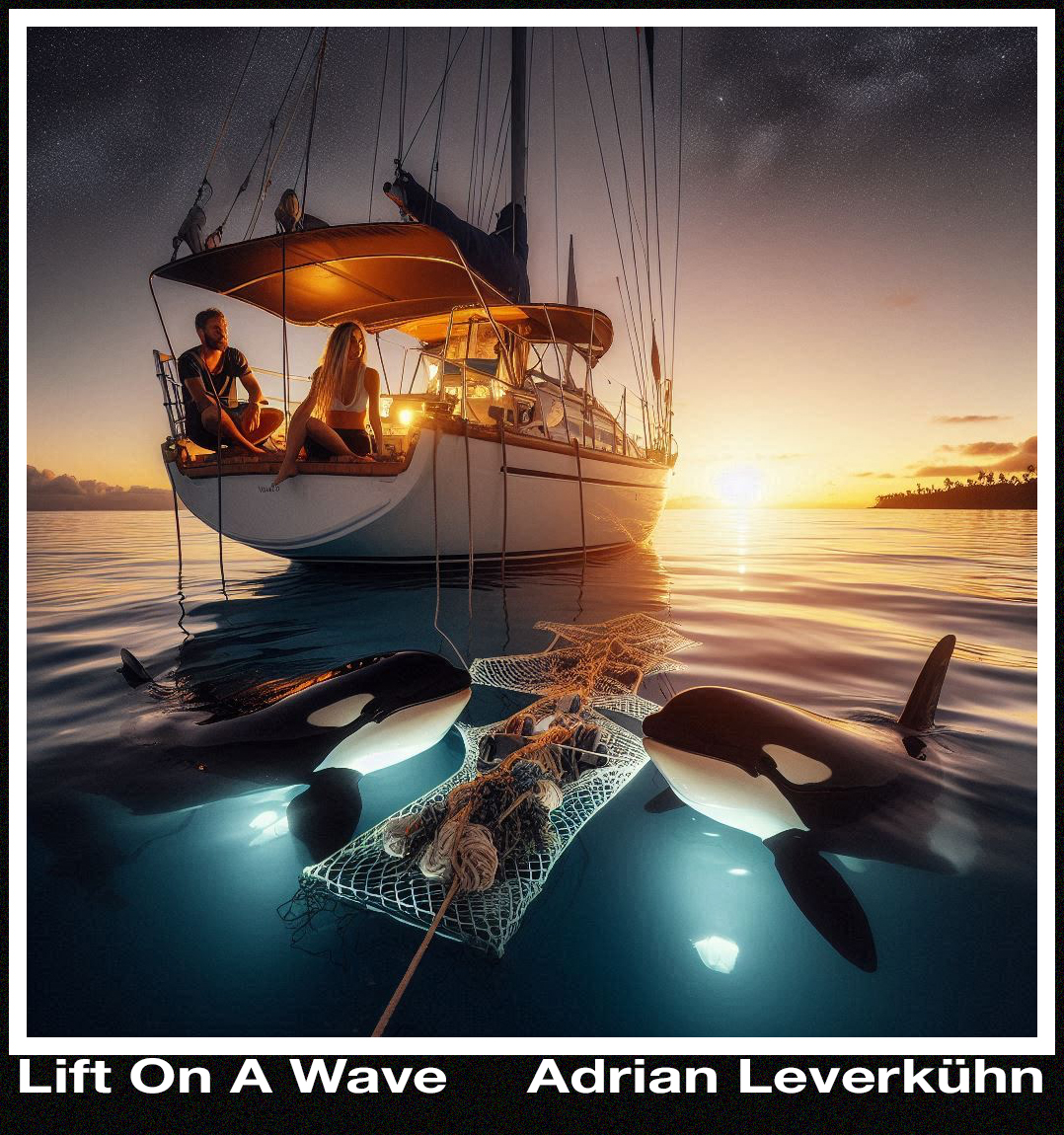
River Man

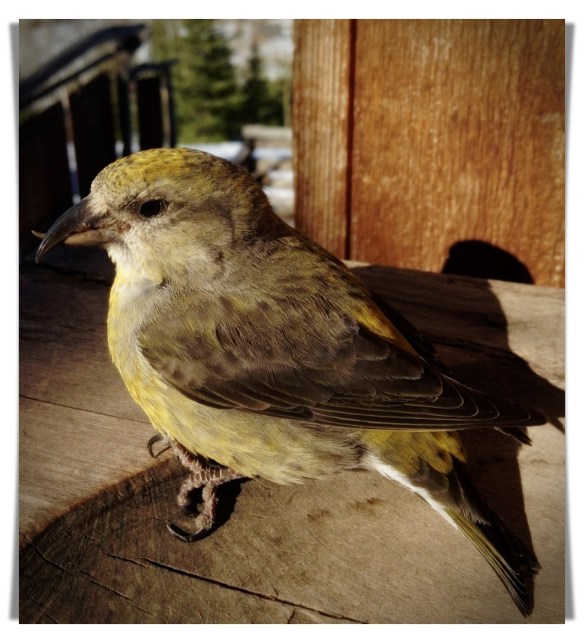
Bird on Hill

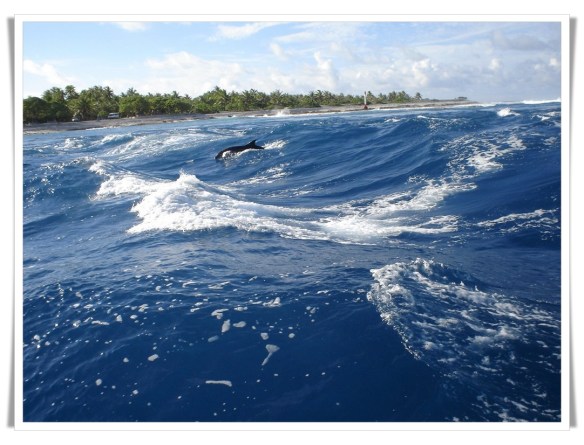
I worked my way through this story in 2006-7, a few years after I lost my best friend, a year after my dad passed. I was a wreck. One of the first stories I wrote about our time sailing together, if obliquely referenced. Maine through the Cape Cod Canal…I recall we stopped there once, pulling out of the main channel into a small clam shack not too far in from Mass Bay. Eating fried clams and boiled shrimp in the shade. Funny what you remember. The day before we had been sailing from Boothbay Harbor to Boston and we ran across a small whale all tangled up in gill nets. I called it in then dove in, cut a bunch of it free. Guess that made it into another story.

One comment on this story at Literotica asked if this story was ‘true’ and, in a few minor ways it is. I’ve sailed the sounds in NC a few times, Beaufort and New Berne were favorite haunts of ours.

Oh, the little guy above? He dropped by one day last winter, tired as could be, near death’s door as far as I could tell. I fed him, got some water down too, then picked him up and carried him to one of the vacant bird houses I have near the porch. He hung around ’til summer, then was gone. Called him Spud, and I’d like to think he knew the score.

Oh, yes, River Man. Title comes from the song by Nick Drake, one of my all time favorites. If you’ve not heard it before…ahem…it goes with the story pretty well. Duncan Sheik’s She Runs Away does too, as does his Rubbed Out. Never heard of Steven Wilson? Try Drive Home and The Pin Drop, from The Raven That Refused to Sing. These all go along nicely with this story.

Hope you enjoy this rewrite. Cleaned up, a little more detail in the finish.

+++++

River Man

Betty came by on her way
Said she had a word to say
About things today
And fallen leaves.

River Man  Nick Drake

I’m not sure when it hit me; this was almost the same trip we’d made the year before, but really, when does one journey end, and the next begin?

Then – as now – I had spruced up the boat, loaded her up with fuel and provisions. Then – as now – I’d left Down East Maine and sailed across Massachusetts Bay, bound for the Cape Cod Canal. Then – as now – we sailed south onto Buzzard’s Bay, then across Long Island Sound to Hell’s Gate. Waiting for a good tide, then – as now –  I recalled how we motored under a vast parade of jets landing at LaGuardia, and eventually, ran the slack tide and slipped into the East River. Then – as now – I’d wanted to stop in New York City, but frankly, the place scared Ruth. Everything scared me now. Life, love…all of it.

A year had passed,  and this was a different trip. No, trip isn’t quite right. Journey? No, not the right word at all…too open ended. Too many memories to make on a journey, and I didn’t like that past. There are too many unexamined corners in the darkness on the kind of journey we’d shared, too many choices best left undisturbed. So not a trip, not a journey. What the hell do you call running away from memory?

Nothing comes to mind, really. Kind of a void waiting for me in there.

Anyway, with Manhattan behind me I slipped into the Atlantic, made the quick sail down the Jersey coast to Cape May; we cut through the Onion Patch that guards Delaware Bay and Ruth and I fought jig-saw tides to the C&D Canal and sailed into the Chesapeake – passing Baltimore and making our way to Annapolis a few hours later. After a rest in that cloistered harbor, we sailed up the Potomac to D.C., and all-in-all that part of our trip was just as we had imagined it might be. Full of so many places we had been to before, seen now from a radically different perspective. When you approach a place from the water for the first time, even the known becomes a very different place. You can’t take anything for granted.

This year was – in some ways – no different than the last, but then again everything was different. Life on board was different now, and in so many ways that every little routine felt odd – it was as if I felt out of place – like time was – now – somehow an old, foreign land I had been to many times before, yet I was a trespasser – now. It wasn’t the boat that felt different – no, this was my world, my unmoved mover. Yet the one constant in my universe was gone, my North Star had vanished. I was adrift in a sea of stars – I couldn’t recognize. The patterns I saw in this sky were obscure; I looked at everything and saw nothing, and I now felt very, very small.

It was, you see, my first trip without Ruth.

We’d made that first voyage together almost a year ago, finally getting a taste of the life we’d scrimped and saved for, starting a new journey years in the making. To sail, to cruise, to explore all those hidden byways we’d always passed by – to keep one step ahead of memory, for as long as we could. Together.

I’d have to say now, and this is just a guess, but all that wasn’t meant to be.

We were walking from the Gangplank to the Smithsonian on a hot July morning, walking to stretch our legs, or so I thought. I heard her say ‘oh’, and that was it. She fell to the ground in silence. Someone, a physician I think, told me a few hours later she’d had a massive stroke. One minute she was alive, holding my hand as cars crawled by, frazzled commuters drumming fingers on steering wheels, and then in an instant she was gone. No goodbyes. No tears. Just a lightning bolt out of the blue, and that was that – Ruth was gone. Gone. Unimaginably gone, a forever type thing. Very seriously unfair, but I seemed to be the only one that cared.

When I left the Potomac that next September, she had been gone five weeks. I don’t know, maybe I should have sold the boat but it was our dream; I didn’t want to turn my back on our dream. I didn’t want to let her down but I returned to Maine, to our little hideaway outside of Camden. And I hid. From everything.

Somehow I started again, late that next summer. The Cape Cod Canal, the East River…all of it. I found it wasn’t too hard to sail alone, but I was lonely. Once I left New York City I understood if I stayed out to sea I would have to make changes in the way I rested, would have to remain diligently on guard for ship traffic, so as a practical matter I decided to keep to the Intra-Coastal Waterway as much as possible, to the rivers and canals that lead from the Chesapeake to the Texas-Mexican border.

The plan I had in mind was simple: I would stop at night in dusky river channels and drop anchor, or pull up small town docks and tie up for the night. Maybe a marina from time to time, in order to do laundry or make a grocery run. Eventually, after the hurricane season ended, I would – if all went according to plan – slip across the Gulf Stream from South Florida and head to the Bahamian Out Islands. Maybe venture further south. Who knew, really, what I’d do, where I might end up? Did anyone besides me care? Hell, did I care?

No, I sure didn’t. And it surprised me to realize that I simply didn’t give a damn about anything anymore.

+++++

I made my way from Norfolk, Virginia through the Great Dismal Swamp Canal and arrived in North Carolina just in time for the first cold front of the season. The temperature plummeted from the high 80s to – perhaps – the low-40s or thereabouts overnight. As I rubbed my dry white hands I tied up at the town dock in Elizabeth City and swore I’d try to take it easy for a day or three.

Because I’d been moving down the coast quickly. Why? Why so fast?

What was I running from? Why couldn’t I enjoy myself, enjoy this precious time? This time I’d stolen from Ruth. What was the point of making this journey if all I did was fly by life in a blind rush, if I didn’t get out and explore those hidden creeks and little out of the way places we’d always passed? Would I spend the rest of my life in all the dark corners I was, apparently, so afraid of? Could I accept that their was purpose in my life beyond that which had been given to us, to the time beyond what Ruth and I had, by mutual consent, shared?

So, guess what I figured out, all on my own?  Well, it’s hard to ask these kinds of questions when you know the answers don’t matter anymore.

+++++

There was a boat next to mine at the docks, and I heard a man and woman talking as I stood in the cockpit of my boat. I was coiling lines, wiping down teak, filling the water tanks. All the little things Ruth and I used to do together.

“Listen, I don’t care anymore! I’ve had it with you, with you and this silly goddamned boat! I’m going to my sister’s; you do what you’ve always done, you do what you goddamned well please, because I don’t care anymore…”

It sounded a lot like a one-way conversation to me.

“Tell you what, Hank. I’ll have my lawyer call your lawyer. Maybe then you’ll say something…maybe someone will even listen…”

More rumbling down below, then I watch as a suitcase flies up and lands in their little cockpit with a sobering thud; this followed by footsteps and the emergence of a truly mean looking woman.

“What the fuck are you looking at, asshole!”

Really, I hadn’t been aware I was looking at her. Usually I don’t like to look at such profound ugliness, but by that time I noticed there were a few dozen people gathered ‘round the docks, looking at all her commotion. I gave her a polite smile and looked away. She jumped down on the dock and the whole structure shook and thundered from the impact, then she wrestled her bag off the boat and walked toward the ramp.

I think I heard a collective sigh of relief as she walked up and disappeared from our lives.

I heard more sounds from the boat next to mine. “Hallelujah and goddamn it all to hell! Free at last…free at last…God almighty, free at last!”

I heard dancing over there. I swear to God I did.

+++++

After a while a head popped up through the companionway hatch and looked around. It looked just like a turtle, but it had on eyeglasses. I stared at the apparition mutely for a moment, in shock really, as the turtle-man scanned the dock for signs of his recently departed – dare I say – friend? Surely not wife?

“I think she’s gone,” I finally said. “You can come out now.”

Turtle-man turned to the sound of my voice. He blinked slowly, took in my form, working out in his mind, I suppose, if I was a threat or not.

“Fuckin’-A. Uh, sorry, man. About that bullshit.”

I shrugged my shoulders. “C’est la guerre,” I had managed to say; the Turtle-man blinked again, lost. Then the man walked out into the cockpit of his boat and stretched, walked over to the lifelines and leaned over toward mine.

“Hi. Name’s Hank Peterson. And thanks.”

I stood, took his hand. “Hank? Nice to, uh, meet you.”

“You gotta name, by any chance?” he asked.

“Yes, Hank, I do.” I smiled at him. He looked expectantly at me as I sat back down in shade of my awning. I picked up the tea I’d just fixed and took a tentative sip.

“Man-o-man,” this Turtle-man said, “it’s a little early in the day for scotch, isn’t it?”

I turned my back to the guy, hoped he’d get the message and move on.

“Well, I gotta run into town and pick up some groceries. Need anything, just yell!”

“Will do, Hank. Have a nice time.”

+++++

I slipped away a little later that afternoon and walked into town. There was a little museum, a couple of nice little knick-knack shops among the usual commercial storefronts, but I just wasn’t into it and walked over to what looked like a wine and cheese shop. There was a nice looking woman behind the counter and I picked up some Riesling and cheese and was walking the two blocks back to the docks when Turtle-man appeared from behind a row of buildings, walking my way.

“Hey, ship-mate! Find the wine store?” He stopped, clearly expecting me to as well.

With a newspaper in hand I walked right by him and never said a word. I think I heard him laugh a little as he faded away.

+++++

I got my stuff down below and into the refrigerator, then hopped into the shower. I couldn’t remember the last time I’d showered, and I thought if I was slipping like that maybe it was time to check-out the local funny farms. I looked at myself in the mirror, didn’t like what I saw so put on fresh clothes and shaved, just generally cleaned myself up a bit, then moved to the galley. I opened up the wine I’d just bought, sliced some cheese, then set the stuff out in the cockpit and took a seat as afternoon gave way to evening, and sat there feeling kinda like ‘all dressed up and no place to go’ was playing on a jukebox somewhere on the far side of my gorgeously blazing sunset.

“Hey partner! Man, you sure made some kind of impression on that lady at the cheese shop!”

I turned, looked at Turtle-man. His almost bald head really was kind of turtle-like, I saw, and the sudden impression was instantly hysterical. I choked on some wine and tried to regain a smattering of composure as my eyes watered, but it was pointless, futile, and I broke out laughing.

“Hey, buddy, get a hold of yourself, wouldya?! I told her you were in the boat next to mine and she got all interested, asked if she could come down and meet you. I said ‘why not’! She’s going to be here in a half hour or so.”

“You know something, asshole? You really should mind your own fucking business!” Suddenly as pissed off as I could be, I grabbed my bottle and my cheese and ducked down below, slamming the companionway hatch shut and sliding the barrel-bolt in place.

There, I was safe now! Just like a turtle, in fact, slipping back into his little armored world. Man, did I ever know how to run away.

+++++

I woke the next morning and tidied up the boat, went into town to pick up some new charts and a newspaper, then came back to the boat and fired up the diesel. As the engine warmed-up, Turtle-man poked his head out his hatch and it looked at me.

“You taking off?” he asked.

“Yes, Hank, I am. Sorry.”

“You headed south?”

I grunted nonsensically while I cast off my lines and backed out of the slip, then moved off down the Elizabeth River. I looked back once to see Turtle-man working on his boat, and suddenly felt happy to be free of the guy.

Free at last, indeed. God almighty.

+++++

The Waterway south of Elizabeth City crosses open sounds and traverses swamp and marsh land as it arcs south and west across North Carolina. Rivers traverse the waterway; the rivers have to be constantly dredged to keep them from silting up the channel, and storms can always be counted on to drop trees into the water. These things tend to lurk just beneath the surface, where your basic, happy wanderer can run afoul of invisibly jutting stumps and soggy limbs.

Which is exactly what I did about three hours after leaving the dock in Elizabeth City. I felt something bang up against the keel and corrected course back toward what I thought was the center of the channel, then heard the prop smacking something quite solid; as the boat shuddered from the impact I felt the keel knifing into nice thick ooze.

I had run aground. Right where my chartplotter showed a nice, solid nine foot depth; I was stuck in what had suddenly become less than five feet of chocolate-coffee colored water. Then, just to make things more interesting, the water alarm from the bilge pump went off, indicating that there was a leak down below.

Oh, yippee! This was why I bought a boat, wasn’t it?

I jumped below and whipped open the bilge inspection port and saw a nice healthy flow of that very same chocolate-coffee colored water now running into my boat. I ducked into the engine compartment and saw water running along the propeller shaft, and traced the flow back to the shaft packing gland; I slipped a wrench around it and tightened it up; the water slowed to a trickle, then stopped altogether.

Good. Problem one solved. Now on to number two.

I poled around the boat with a boat hook and felt solid mud from the middle of the boat forward, and open water behind me. Good news there, too. Now all I had to do was back out into the channel, assuming the propeller was still in good shape.

I restarted the engine and put the boat into reverse. Nothing happened. I retried the process, and once again the engine turned up – and nothing happened. Either the transmission was damaged, or the prop had come off the shaft. Knowing the waters around here were full of alligators – and an interesting variety of truly foul snakes – I wasn’t about to go in and take a look, so I inflated the Zodiac, mounted the outboard, and ran out with some line and began to pull on the boat – see if I could dislodge it from the mud.

It didn’t budge. Not one bit, but you already knew that, didn’t you? But, and this is interesting, who do you think popped into view right about then?

Yes. Turtle-man. The one and only. I was the one running, wasn’t I? And here he came, slow and steady, like a tree under the surface.

+++++

“Looks like you’re having some real fun this morning,” he said.

“Yes indeed, Hank. A fucking blast,” I managed to say, wondering where my beta-blockers were.

“Need a hand?” No guile on his face, just a steady hand.

“It wouldn’t hurt.” Ah, this rabbit’s gonna get his comeuppance today, isn’t he?

Hank dug around in a locker and pulled out a huge towing bridle and coiled it up.

“Here, come run this to your stern,” he said as he stood up and moved to the rail. I motored over and picked up the bridle, then moved over to my boat and rigged it up.

“Alright!” I yelled across the water.

“You pull in that direction,” he said as he pointed off to my right. “I’ll pull in that direction,” indicating my left side.

I motored over to the indicated angle and looked back at Turtle-man; it really was amazing, the guy looked just like a big brown turtle as he moved behind the wheel of his sailboat. He looked over to me as he drifted away from me, then…

“You ready!?” he shouted, and I gave him the ‘thumbs up’. I twisted the throttle and felt the back of the inflatable dig into the water as the tow-line went taut, and I looked across the water to see the water behind Turtle-man’s boat churning away. After a few moments I felt we were making headway, and sure enough my boat popped free of the mud, and I raced over to keep it from flying across the narrow channel and running aground on the other side. Turtle-man moved along side too and I tossed him a line. Soon we were rafted together, making way slowly down channel.

“What happened,” he yelled across to me – shouting to be heard over the sound of his motor.

“Hit a stump, ran aground. Something wrong with the prop!”

“What’s it doing?!”

“Put it in gear, nothing happens!”

“Transmission linkage! Did you check that?!”

“Not yet! But I had a big leak from the stuffing box!”

“Go check the linkage; I’ll hold us in the channel!”

I went below, squirmed my way into the engine compartment and with my flashlight in one hand felt the link with my other. Seemed intact to me, but I knew it would have to be checked under power. I backed out of the cramped space and went back up into the light.

“Seems tight!” I yelled, but then I noticed we were drifting quietly in mid channel. “Maybe I should try again.”

“Don’t bother. I can see your strut and shaft; the prop’s gone. Got a spare?”

“Yeah, but Hank, these waters are full of big-bad monsters, if you know what I mean.”

“Well, Belhaven ain’t too far ahead; I can tow you there.”

“You headed that way?”

“Yeah, come on, let’s hook up a tow line. Maybe we can get to the marina in time for someone to take a look at it…”

+++++

We did just that, too. It turned out the prop had indeed come off, something very rare indeed. Probably corrosion on the retaining nut, the mechanic said. We mounted my spare prop and checked the transmission linkage, and the mechanic adjusted that, too, after he tweaked the stuffing box again. We were back in the water by sunset.

Hank was already tied up in the little marina, and I motored over and tied up beside his boat. He had his charcoal grill set up on the stern rail of his boat and was grilling steak.

“Did they get it done?” he yelled out.

“Yes indeed. Thanks again, Hank. Couldn’t have done it without you.”

“You hungry?”

I looked at him for a second, realized I hadn’t eaten all day and was indeed very hungry. The steak smelled good, too, goddamn it! “Sure.”

“Well, I got two steaks on, and a salad ready to go. Come on over.”

“Yeah, well, thanks Hank. Let me wash up. Can I bring anything?”

“Got any more of that Scotch?”

“No. No Scotch. How ‘bout some iced tea?”

“Well, if that’s all you got…”

I laughed and went below, came up a few minutes later with a pitcher of tea and some ice.

“You got ice?!” he cried when he saw my little ice bucket.

“Hell yes, Hank. There are some things you can live without. Ice ain’t one of ‘em.”

“You put away all that Scotch the other night?”

“It was tea. Sorry.”

“No shit? Well, like your steak about medium?”

We sat in his cockpit and put down a pitcher of tea with the steak and salad, talked about the day’s fun and games, and I thanked him once again for the helping hand. We talked about his wife – he wanted to talk about her, as it turned out – and about the commotion she’d made. Then he asked about, well, me.

“So, you traveling alone?”

“Yes.”

“Divorced, huh?”

“No.” I could feel myself tightening up, bracing for the inevitable.

“Ah. When did she pass away?”

That question rattled me; not just the question itself, but the prescience behind it.

I looked away.

“So, I got some carrot cake at the grocery in Elizabeth City. Want some?”

I shook myself back into the present, looked around, remembered where I was. Hank was clearing dishes and climbing down below. He came up a few minutes later with a bottle of rum and a couple of shot glasses, then poured a couple of stiff ones.

“Here. Try this,” he said as he tossed back the glass. I looked at him and did the same. It burned, but it felt good, too. He poured another, and another. Pretty soon I couldn’t feel my feet. The knees went next. I think.

“So, what’s your name?”

“Oh, yeah. We never got around to that, did we? Uh, Ghent, Martin Ghent.” I held out my hand. “Pleased to meet you.”

“Yeah. Likewise.” We shook hands. Again. “So, when did your wife die?”

I guess I was drunk enough by that point to not give a tinker’s damn. “Not quite a year ago,” I managed to get out, but with that admission the dam broke; I started crying. Hanks response was to pour another drink, which he slid over to me.

“Might as well get it out of your system tonight, Marty. It’s like poison, it’s killing you.”

+++++

When I woke up the next morning my head felt like a latrine. My eyes burned and my teeth hurt. God, rum is vile stuff, which is of course why I drink it – on occasion to excess. The night before must’ve been one of those occasions.

I was in my boat, and didn’t have the slightest idea how I got here. I like those sudden epiphanies. Very good way to get the eyes open.

I put on some coffee, moved forward to take a shower, then went up into the cockpit to eat some fruit and look over the weather charts before the day’s run.

“Ah, It lives!” I heard Hank say from the dock beside me.

“What the hell did you give me last night?” I asked as he stood there in the sun. “Battery acid?”

“Nah, nothing so tame. Just some rum, then a little of Mr Cuervo’s finest.”

“Oh, God! Not Tequila! How much did I puke?!”

“I don’t know, Marty,” he said as he pointed at the side of my boat, “but I’ll bet the fish around here were pretty well fed.”

That wasn’t an altogether happy thought. My stomach was still rumbling as I leaned over and looked at the garp all over my otherwise pristine hull.

“So, where you off to this morning,” he asked, obviously still impressed with last night’s performance.

“New Bern, I think. Want to hole up there before this weather blows through.”

“What weather? Oh, you got a weather-fax in there too?”

“Yeah. Tropical depression moving up the coast. Might strengthen.”

“Shit. I was thinking of hanging here for a few days, but not if something like that’s brewing. New Bern sounds like the best place for that. Mind if I tag along.”

“Hell no, Hank. I’ll buy you a steak tonight!”

“You’re on!”

+++++

I beat Hank there by an hour or so, and tied up at the huge marina that belonged to nice looking waterfront hotel, and the marina there was filling up with folks looking for a secure spot to ride out the approaching storm. While I was signing in, I asked the harbormaster if there was room for one more boat.

“How big?” he asked.

“I think it’s an Island Packet 29.”

“Yeah, right there by the pool. It’ll be tight, but it’ll be fine for a 29.”

“Well, let me sign him in. There a good place for a steak around here?

“Well, the hotel is good, and you don’t have to walk far!’ he said with a sly grin. “They’ll even bring it down to the boat – you know, like room service!”

As I was walking back to the boat I saw Hank’s boat coming under the big highway bridge, and jumped down into the cockpit and flipped on the radio.

“Hanky-Panky, this is Liebestod , go to 23.”

“Marty? That you? This place looks full?!”

“Come on in. I got a slip for you; just turn in the breakwater and come down this first pier to the right – right past my boat. I’ll wait for you by the spot, have your lines ready for a starboard side docking.”

“Ten-four, Marty! Thanks!”

+++++

“Hey Marty, hope you don’t mind, but I called that woman in Elizabeth City. She came by last night, wanted to meet you.”

Marty had docked his boat and thanked me again, and grabbed his shower stuff and ambled off to the marina’s shower facilities without so much as a peep. Now I knew what he was up too, and I was a little angry.

“Listen, Hank, I don’t mean to be rude, but I’m not ready for that kinda thing just yet, and I don’t need anyone pulling this kinda crap on me, okay?”

“Yeah, Marty, whatever you say. She’s bringing a friend, too, so don’t fuck this up for me, OK? Been a long time since I got laid, alright?”

I shook my head, let slip a little laugh as I walked back to my boat while I wondered just what the hell he’d gotten us into.

+++++

There was a knock on the side of my hull.

“Martin! You there?”

I trudged back up the companionway. The sky was full of dark, menacing clouds.

“You got that weatherfax on? Guy up on the dock said that storm has been upgraded to a hurricane.”

I looked around. No women.

“No, I’ve had it off all afternoon. Come on down; I’ll fire it up and print one off.”

“No, that’s alright,” he said, then turned when he heard someone calling out his name. I looked down the dock and saw two women walking our way. “That’s them,” I heard him say. “Come on, Marty,” he whispered conspiratorially.“Please, don’t fuck this up for me!”

I climbed up into the cockpit in time to hear raindrops falling on my cockpit awning, and looked up to see the women running the final few yards toward the boat. Shit! One of ‘em was wearing high heels! Not on my teak decks! No!

That’s what I remember thinking! Their shoes killing my decks!

“Shoes off!” Hank yelled as the women pulled up short. “Shoes off and hop on!”

+++++

We were sitting down below. I had the weatherfax on and the VHF set to NOAA channel one. The hurricane, now a Category Two monster – and building – was predicted to make landfall somewhere between Myrtle Beach and Cape Hatteras tomorrow, about noon. We were right in the middle of the bullseye, so to speak, but in a well protected spot if ever there was one. Not much to do, anyway, but warp out some extra lines in the morning and lay out all my fenders.

“Isn’t this exciting!” Susan Cooke said. Susan was Hank’s date. “Mine” was one Betty Hutton, and she hadn’t said much since coming aboard. She just looked around at everything like she was taking inventory. Very weird, very disconcerting. Very paranoid.

“Yeah? I’ve never heard hurricanes being described as exciting!” Hank said. “I would think coming from this area you might have been through one or two.”

“I’m new here,” Susan said.

“I’m hungry!” Hank said.

“And I don’t want to go out in the rain!” Susan said.

“Oh hell, Susan, it’s not going to hurt you!” This from Betty Hutton.

“Well, there’s always Room Service!” I said, and everyone thought that uproariously funny. “Uh, no, I’m serious. We’re guests at the hotel, and they have room service. The guy at the harbormaster’s office gave me a menu, and we’re hooked up to the hotel’s phone system”

Everyone looked at me like I’d just grown another head. It was beginning to look like this was going to be an evening for wine, so I went and fetched a bottle from the fridge and popped the cork.

“Ooh, I love Champagne!” bubbled Susan, but Betty looked at her with motherly concern.

“It’s not the best in the world, but it’ll do,” I said as I poured four glasses. I went back into the salon and passed around the glasses. I watched as the women took a sip.

“Nice, very nice,” Betty said appreciatively.

“Ooh, I love it,” Susan said as she tossed it down. “Could I have some more?!” Betty winced as I took Susan’s glass and walked back to the galley. I didn’t hear Betty get up and follow me.

“What is that, Martin? Dom Perignon?”

She looked at the bottle and gasped as I poured Susan another glass, this time filling it to the rim.

“Don’t do this. Don’t do this, Martin.” I saw Betty’s mouth moving, but I heard Ruth’s voice.

“I bought it for an anniversary. Won’t be needing it anymore, so just let me get rid of the stuff, okay?”

Betty turned – clearly exasperated – and walked back to sit by Susan, and I saw Betty whispering in Susan’s ear as I returned with the full glass. Susan’s eyes went wide, and she frowned as I put the glass down. I put some music from the fifties on the CD player, and sat back to watch the festivities. The Moonglow Theme from the movie Picnic – one of our all time favorites – filled the boat with overwhelming memories, and I sat back and looked at the ceiling as my eyes filled with tears.

I heard people leaving the boat; footsteps on wet teak – then the companionway hatch sliding open, followed by a blast of warm, storm-driven air – and they were, I assumed when I heard the hatch slide shut, gone.

“Sorry Hank,” I said through my tears to the emptiness grabbing me by the throat. “Sorry to let you down like that.”

“Oh, somehow I think Hank and Susan can take care of themselves.”

I jumped at the sound of her voice. ‘Ruth? Ruth? Is that you?’

I looked around the boat; the lights were now turned down very low, music continued to play softly – Dianne Reeves singing I’ve Got My Eyes On You – and I saw Betty sitting there in the gloom, right where she had been all evening. She was looking at me. Looking just like that physician who told me Ruth was gone.

+++++

“Tell me about her.”

I heard her voice, but she wasn’t real, this couldn’t be real. This couldn’t be happening…

“Martin, listen to me.” It was Betty again. “Hank’s told me a little bit about . . . about your wife, on the telephone. You can’t hang on to this stuff. At some point you’ve got to let go.”

I looked at the woman – this stranger, really – telling me what I needed to do, about how I should handle my grief, and all I wanted to do was show her the way out, be rid of her, be alone with my memories of Ruth. Oh, Ruth! Why?

“Listen, uh, Betty. I don’t really feel up to this tonight, you know, so, if you’ll please just excuse me.”

“Martin, sit down.”

I could see this wasn’t going to be easy. I remember thinking I probably looked like her Sugar-Daddy savior, come riding through town on his yacht-yuppie sailboat with big bucks in his back pocket and just ready to carry her away to the bright lights of her favorite big city.

You know, after jumping to conclusions so many times those past few days, you’d have thought I was getting kind of tired by then.

No way. I had a couple more lessons to learn.

And little did I know I had just run into the teacher.

+++++

Once upon a time, when I was an impressionable young man and still in college, I had been an unconscionably optimistic person. I believed in people, in the joy people were capable of feeling in the company of others, and in the joy I was capable of passing along to others. I had, again – once upon a time – taken a philosophy class. Now that in and of itself is no crime, though of course I know a strong argument can be made to the contrary, but in any case, my motives for taking the class were pure in the extreme. The prof was a total babe.

Fresh out of graduate school, she was an untenured radically hip-chic that half the guys on campus had the hots for. Her classes were packed with jocks and all the other Big Men On Campus who were out to drown her classroom in testosterone and Aqua-Velva; pretty soon it was apparent that while Hip-chic (kind of) enjoyed the attention she was getting in class, she wasn’t interested in guys that came to class wearing big gold chains around their necks and drove around campus at fifty miles per in their orange Corvettes – still in first gear, mind you. Just too many people moving around in circles, I suppose, and she was a straight down the middle of the road type.

Her name was Ruth Jorgensen, and seven years after I took that class we got married.

She used to talk a lot about the geometry of the heart, about the diametric opposites that define how humans experience the, well, the human. These opposites insured, she maintained, that human affairs tended to the cyclical, that humans moved from one experience to it’s polar opposite in endless cycles. Intellectual progress was almost impossible; as a species we were and always would be locked in a tooth and nail struggle for dominion over other humans because, she said, people couldn’t learn from their mistakes. We were narcissists through and through. Egoists to the bitter end. In a Freudian sense, we were so blindly consumed with the playing out of our own death wish we couldn’t make out the broad contours of the effects our lives cycles had on others. People everywhere, and endless profusion of intersecting cycles, never ending collisions. Being and becoming. The endless enigma, running through our lives like a river.

Now I know when people start quoting Freud it’s time to run screaming from the room, but there was something about this professor’s hopelessness that touched me. I went to her office in the faculty building one day after class was over, presumably to ask her a question about a point she had made in that day’s lecture, and as it happened no one was waiting in line at her office door (and I think it reasonable to add here that by mid-semester the jocks had given up all hope of nailing her, and so had dropped the class).

She looked up when I knocked on her door, and seemed surprised to see me.

I think I asked her about rule utilitarianism – or some such deontological bullshit – and that really threw her for a loop. I think by that point the poor girl had been propositioned by every pretender on campus, and I watched her eyes blink a few times as it registered that I was (shock! gasp!) actually asking her a question about – holy shit – something we’d covered in class. I’m not saying the girl fainted dead away, but you could have heard a mouse fart in that office for the next thirty or so seconds.

Anyway, we talked for an hour or three and, to make a long story even longer, after a while she chided me about being overly optimistic about human nature. I asked her if it was possible that she was being – again, possibly – overly cynical. Again, a flatulent mouse floating air muffins would have made either of us jump in the silence that followed.

She pointed to a framed poster behind me on the wall, and asked me to turn and read it.

The poster was a photograph of Friedrich Nietzsche, with one of his more delicate aphorisms nicely printed along the bottom, under his nicely scowling face. It summed up her point of view quite nicely: ‘In the consciousness of the truth he has perceived, man now sees everywhere only the awfulness or the absurdity of existence, and loathing seizes him.’

When you really get your head around a saying like that, you can kinda see why the Nazis had such a thing for Nietzsche. And see, the thing is, I married this girl.

Anyway, I wasn’t buying it that day, and after thirty years of marriage, I still didn’t buy into it.

Only after Ruth sighed ‘Oh!’ and dropped dead to the asphalt like a sack of rocks did I buy into it; only then did Nietzsche become my patron saint.

+++++

As we sat in the darkness below, the storm drew strength from the chaos of life on earth and an ill wind began to moan in the rigging. It’s almost a cliché, I know, but unless you’ve heard wind in the rigging before, you really have no idea how deeply rooted that sound is in our – all too human – consciousness. And like the wind, as I sat down below telling my story to Betty Hutton, I drew strength from the chaos of my life, and the song of my sorrow bathed the womb of that night in tremulous decrescendos.

Ruth continued to work in academia for twenty five more years, and we met again, quite by accident, when I came home from Vietnam a few years later, just before I started flying for Braniff. We lived in Chicago most of our lives; even after Braniff went bankrupt I got on with a small airline, and eventually, with United. We had a boy, he loved to fly and followed my footsteps into the Navy.

He managed to get killed flying a peace-keeping mission in Somalia.

It’s those little ironies that give Nietzsche his punch. Take my word for it, would you?

We worked hard after that, worked hard playing our roles. Me, the perpetual optimist, Ruth the cynic who had turned her back on the basic assumptions of her life when she said ‘yes, I’ll marry you.’ As we grew into the reality that life did in fact go on, as we accepted the basic preconditions of living in a completely absurd state, we decided to go after the one shared dream we had both harbored for many years.

We’d buy a sailboat and explore our world. It was audacious, and we knew it, but it was our shining beacon. That dream kept us alive. One day, the dream became our shared reality, and we held it close.

Then my wife, the one love of my life, let go of my hand as she said ‘Oh’ – and that was it. That was me, in a turtle’s shell.

When I finished my tale I looked over to see Betty Hutton in tears. Quiet tears, quiet sighs of understanding. She knew where I was, what I was confronting.

She told me she had never been married, never experienced having a child. She had worked in D.C.; worked for her uncle. He happened to be in Congress – had been for as long as anyone could remember, too. She’d gone to Georgetown Law and straight on her uncle’s staff; she had managed her uncle’s one very unsuccessful run at the White House, and had remained on-board long after all the political hacks and wannabes had moved on to greener pastures. Her uncle had passed away a few years ago, and the old man had left her more than a little money. She took some of it and opened up an antique shop in Elizabeth City, and when that didn’t work out, she opened up the wine and cheese shop. She had wanted, she said, to live a quiet life near where she had grown up, and never wanted to see Washington, D.C., ever again.

Many of the people who frequented her shop were sailors passing through on the Waterway, and frequently she asked these patrons about their vagabond lives. She found these stories fascinating, and had recently begun to think about buying a boat of her own, about maybe taking a trip or two on her own now and then.

She said when I walked into her store that she knew in an instant our lives had intersected. All things, she said, happen for a reason.

She was, she said, an eternal optimist. There was, I saw, a lot of lightning along the southern horizon.

+++++

The wind continued to build through the night while Betty Hutton and I stayed up talking, and I think it fair to say we were creating a little storm our own.

“So, why do you think you feel this connection?” I asked her at one point.

“I don’t know.”

“Fair enough. What do you want from me?”

“I don’t know. But I don’t think that’s the right question, Martin.”

“Alright. What’s the right question?”

“Why did you walk into my shop the other night?”

“I don’t know. I wanted some Riesling?”

She smiled at that. I had to give her that, she was tolerant of my warped sense of humanity.

“You’re being obtuse, Martin.”

“Thank God!”

Another smile. This time I smiled back. Was I flirting with her?

“Sun’s coming up. Did you say you needed to do something with the lines?”

I stood and walked over to the chart table, tapped the barometer: 28.82 and falling. Not good. I cued up the weather-fax and waited for the query to load. A moment later the paper started to roll from the machine and a map of the weather system dropped into my hand. The hurricane looked like it was going to come ashore right over Cape Hatteras, much less than a hundred miles from here, and it had been upgraded to Category 3. Still, the forecast said it looked like it might weaken as it drove north during the morning and I looked at the clock: it was seven in the morning! It should be light out, I said to myself, but it still looked like it was pitch-black outside.

It was time to go up for a look see, so I put on a jacket and headed up the companionway steps. I stepped out into the middle of a maelstrom. Rain whipped my face, and I saw a couple of loose lines flaying about on the boat next to mine, banging my teak decks as they danced around. I ran to secure them when I saw it.

A waterspout. Oh…joy.

The sky was purple-black and pewter-green, yet the waterspout looked like a pale white snake writhing in the air as it danced along the water. I couldn’t say for sure, but it looked as though it was headed right for us. I tied off the errant line and ducked below, turned on the radar and waited impatiently while the unit warmed up.

“What’s wrong?” Betty Hutton said.

“Here,” I said as the radar came alive. She moved over to me while the glow from the radar screen filled the space around us with red and green shadows. “A waterspout. I want to get a track on it.”

“Isn’t that like a tornado? Where is it?” She sounded more than a little alarmed.

“There,” I said as I pointed at the screen. Right on cue a Civil Defense siren went off. “It’s about a half mile from here, headed up river.”

“Is it going to hit us?” Now their was some tension in her voice. I looked at the screen, held a little transparent ruler up to it and watched it for a moment.

“No. It’s going to hit on the far side of that bridge,” I said with more confidence than I felt.

“You seem so sure of yourself. Do you get that from flying?”

“Hmm? Oh, no, I got that from being married to the biggest pessimist that ever lived.”

+++++

After the waterspout moved away from the area, I went back up and began to lay out extra lines to every cleat I could find on the dock. I – like every one else now moving about frantically on the dock – assumed that the breakwater and dock would keep the storm surge away and hold us securely in place. I figured if the surge was so bad it might swamp the marina we’d just make for the hotel and have a margarita or two. Hell, it was just a hurricane!

I walked over to Hanks boat; still no extra lines out so I knocked on the hull, called out his name. A couple of minutes later Hank’s turtle head popped up from the companionway.

“You alright down there?” I asked him. Hell, who knows. Maybe I was grinning.

He smiled and flashed a thumbs up. “How ‘bout you?” he said, eyeing me with concern.

“Better get on up here; I’ll help you lay out some lines. You just missed all the excitement.”

“Excitement?”

“Yeah. Waterspout just blew by, right there by the bridge.”

Hank’s eyes went wide and he dropped from view. I heard some bumping around down below, and a moment later he popped back up the companionway and jumped onto the dock.

“Got any extra line,” he asked.

“You gotta be kidding me!” I said, the disbelief in my voice clear. I went back to my stern locker and pulled out two extra anchor lines I kept in reserve and moved to help him tie them off to the pier.

“Betty still with you?” he yelled as a strong gust whipped through the marina.

“Yeah. That other one still with you?”

“Yeah. Miserable bitch!”

“Maybe we can talk about this later,” I yelled over another particularly vicious blast. “Better get below!” I patted him on his wet shoulder and ran for my boat. When I looked around, he was still out there looking at the sky. I swear to God he looked more and more like a turtle with each passing day.

+++++

I turned on the sailing instruments and looked at the wind speed. Unfortunately, the gauge topped out at a hundred miles per hour, and the needle was pegged at the maximum. I flipped on the VHF and listened to NOAA weather radio. Wind speed at the Cape was one twenty and rising, but the storm was moving rapidly now to the east, moving rapidly out to sea.

“I think we just dodged a bullet,” I said to Betty. I had a chart out and began plotting the storm’s center. Once she saw what I was laying out on the chart she grasped the implications immediately.

“Do you think we could go to bed now?” she said, a twinkle in her eye.

“Surely, Ma’am, not on the first date!” I said with feigned outrage dancing across my face.

But that’s exactly what we did. Several times, as a matter of fact.

Then as the winds outside subsided in the afternoon, she got dressed and left. She didn’t even say goodbye, but that wasn’t entirely unexpected. Not in my little corner of the darkness.

+++++

So, two hurricanes in one day.

One hurricane moved out to sea; there wasn’t even any storm surge in the marina the rest of that day. All of us moved around the piers that evening clearing up the tangled mess of dock-lines we’d stretched all over the place that morning (in our frenzied desire for security), and it was all very fun. A sense of community builds after shared experience that intense, and there was almost a party atmosphere in the evening that followed. But not for me.

For you see, I had had a close encounter with Hurricane Betty.

She came to me in my hour of need and – like a hurricane – completely tore my world apart. I went to bed that evening – exhausted from the effects of her winds – and slept so soundly I didn’t dream. And that may have been a good thing; I’d probably have only been able to dream of Ruth, yet I already felt guilty enough for having enjoyed Betty so. I didn’t need that much guilt in my dreams, I reckoned.

We had – Betty and I – walked our own geometry of the heart through that day, experienced our own diametric opposites as we moved from our first tentative explorations to what had felt like sybaritic abandon. She was indeed a skillful interrogator, and pretty mad in the sack, too.

I woke the next day to a world sunny and cool; there was an autumnal snap in the air, and the rains and winds had swept the world clean.

Hank was on the foredeck of his little Island Packet running some sealant along a hatch.

“Hey partner!” he called out when he looked up and saw me. “Did you sleep through the party?”

“Party?”

“Yeah, up by the pool. Started about eight, went to God only knows how late. Hell, everyone in town was here!”

I just looked at him blankly and shook my head.

“What the hell happened between you and Betty?” he asked.

“I don’t know. It was nice, and . . .” And what? How could you describe what happened?

“She came over, seemed lost. She and Susan took off about four.”

“Did she say anything to you?” I asked. I wanted to know. Really. Hell, maybe I needed to know.

“No, not really. Like I said; she just looked lost. What happened?”

I shook my head. “I don’t know, Hank. She ripped my world apart, then just walked out.”

“Hey buddy, I may not know up from down most days, but I’d say if anyone’s world was ripped apart, it was hers.”

“Yeah? Well, what are you working on?”

He looked at me for a second, then down at the hatch he was working on. “I don’t know, man; something came down on the plexiglass and whacked it. Nice hairline crack in it. You think silicone will seal it?”

“Well, it’ll seal it until the first time someone steps on it, then it’ll split and leak again.”

“Fuck.”

“Nothing for it but to replace the thing, especially if you plan on going offshore.”

“Bahamas,” he said.

“Gulf Stream,” I said. “Come on, we’d better head up to the store and see if we can find a replacement. If not, you’ll have to call IP.”

“Yeah, guess so. Let me grab some shoes.”

We walked up the pier to the harbormasters office and went in to get directions to a marine supply store. There were a couple in town, and we got addresses.

“Ah, you Mr Ghent?”

“Yes.”

“Got a note for you here,” the man said as he dug an envelope out from under a pile of papers on his desk. “Woman dropped it off here yesterday afternoon.”

I took it from him. The envelope was hotel stationary; the handwriting unfamiliar. I slipped it in my pocket and Hank and I walked out into the afternoon, looking for a taxi.

+++++

As the sun set, Hank and I finished installing his new hatch and I invited him over for his steak. I did it, I called Room Service and had them bring down a raft of t-bones and shrimp cocktails and – well – a bottle of Dewars. I set the CD to play Ella Fitzgerald in the cockpit, and put up the cockpit table just as the white-jacketed waiter rolled our cart to the side of the boat.

We – Hank and I – sat in the afterglow of a really magnificent sunset and wolfed down shrimp and steak, then picked at cheesecake for a while as we sipped Scotch.

“So, what happened with that – er, with you and Susan?” I asked as the night settled in around us.

“Oh, you know . . .” he said quietly, and his voice trailed off into the night.

“No, I don’t know. That’s why I asked, Hank.”

“Oh, well, I think it turned out she wanted a go at you and was kinda pissed off at Betty for moving in on you so fast.” I looked across at Turtle-man – not the best looking guy to come along, that much was certain – and I felt kinda sorry for him. “So, you never said, how was Betty? She work out OK for you?”

“Hmm? Oh, yeah, Hurricane Betty. Yeah, Hank, she’s something.”

“Was that letter from her, the one from the harbormasters’.”

“Shit!” It was still in my pocket, unopened, and I reached for it.

“You haven’t read it yet?!” Hank asked incredulously.

I pulled out the envelope and held it up for him to see.

“Prick,” I think he said.

‘Martin,’ the note began. ‘I know we shared something special, maybe even something beyond special, but I don’t know if you’re ready to face the consequences of the moment yet. You have a choice to make. Let me know. I think I love you. Betty.’

“Well?”

“Seems I have, according to her, a choice to make.”

“What?”

“Very serious, this one is, Hankster. Very serious indeed.”

“My advice to you? Run like the wind, Marty. Turn and run like the fucking wind!”

Maybe life is that simple for some people. Find someone, and like a bee in a forest of petals, land and spread your seed and move off into the breeze, toward the next flower, always moving toward that next epiphany. Always moving…never satisfied…always…lonely and looking.

You have a choice to make.

It’s always about choice, isn’t it? Forget about right and wrong, good and evil; those aren’t relevant or even helpful constructs to hold onto when confronting choices dripping with implications of fate and destiny.

Like Nietzsche said, there is no objective right or wrong, only what men choose to make right.

You have a choice too make.

I could leave the marina in the morning, head down the river to the ICW, and make my choice there.

Turn right, head south, away from Elizabeth City and Betty Hutton, or turn to the left and return to her, see what future I could build in that woman’s arms.

Is that what I wanted? It always boils down to being and becoming, doesn’t it?

Did I want to fall into the arms of the first woman I ran into? Wasn’t that emotionally childish? Did I really feel an attachment to her, or had she simply read me like an open book, understood my need and acted on it? She was a lawyer, right?

And just what can you say about a woman who claims to have such a profound understanding of the future that she can divine a connection between two people?

Do you mock that? Walk away from an assumed gift?

Or do you respect that person’s gift, as incomprehensible as it may seem to you in the moment, and follow her intuition?

“What about you, Hank? Was that woman causing all the ruckus in Elizabeth City your wife?”

He looked down at his feet. “Yeah. I’ve been running from her all my life, Marty. I used to think I loved her, but you know, it’s hard to love someone so mean it hurts all the time.”

“So, why did she leave?”

“I guess she thought if she had me trapped on a boat, in such a confined space, she could murder my soul one inch at a time. When that didn’t work out, when I started in on her, I guess she decided she’d had enough. Serves the bitch right!”

I looked at Turtle-man as he said that and for the first time in my life I knew what it felt like to really pity another man.

“Oh? Why would she want to do that, Hank? Murder your soul, I mean?”

“She’s evil, Marty, an evil, blood-sucking hell-bitch!”

It wasn’t too hard to see it, in the end. Two people diametrically opposed in want and desire, locked in endless struggles for dominion over the other, each never bothering to understand the impulses driving the other until in narcissistic rage they pummeled each other figuratively to death. Nothing in common, in the end, but hate for one another. That was all too human.

How many people settle for that? Settle for such easy dominion when there is so much beauty out there waiting to be explored? Yeah, I know. My hypocrisy is boundless, isn’t it? Me, speaking from my dark little corner of hell.

Hank would continue to search for another woman just like his wife, for another woman to bully, and who would bully him, until they self-destructed again and again. So futile, yet so human. Round and round we go. But why pity the man? He’s just running through his program, the lines of code written eons ago.

Had Ruth and I not done the same thing? Was Turtle-man just a mirror of my soul?

Hadn’t Ruth and I been diametrically opposed in outlook? Why, then, had we ultimately been so compatible? Had we been secure enough in our own world-view to accommodate the other’s? To turn away from bludgeoning the other with our own singular truthes?

What was there in Betty, I wondered, that made her so like Ruth. I wasn’t conscious of anything, but if I held to the view that people make the same mistakes in their relationships over and over again, then surely there was something similar, something fundamentally the same about Betty and Ruth.

Is that what Betty saw? Was that the connection she touched in the air between us?

Isn’t that what we’re all looking for?

Even a Turtle-man like Hank? No, I didn’t pity him. I had to admit, even, he was growing on me.

+++++

The engine was warming up the next morning while I coiled dock lines and stowed shore-power cords; Hank was up on deck admiring his new hatch, dreaming of all the far-away places he could, no doubt, or even run to. Well, walk to, or whatever turtles do.

“So Marty, where you heading? Made up your mind yet?”

“Oh, hell Hank. I never know what I’m doing from one minute to the next. What makes you think I know what I’m going to do about that woman?”

“Man-oh-man! If you don’t know, then who the hell does?!”

“You have a point, Hank. You have a point. How ‘bout you? Still going south?”

“Yeah, I’m gonna stay inside all the way down to Florida; maybe November or December I’ll slide across the stream to Grand Bahama.”

“What are you gonna do about your wife?”

“She wants a divorce, so by all means I’ll let her do it!”

“You’ll probably lose your boat, Hank.”

“Not if they can’t find me, amigo.”

“Hank, that’s the wrong thing to do, and you know it.”

“Yeah, well, I tried the right way all my life, and that didn’t work out so fuckin’ great. Time for something new.”

“Your choice, amigo, and your life, but if I were you – if that’s the choice you’re gonna make – you better leave the country now, and don’t plan on coming back.”

He looked at me thoughtfully for a minute, then shook his head. “Yeah, maybe.”

That was all he could say.

Maybe that was what separated the Hanks of the world from me, from people like me. Maybe he didn’t have the courage of his convictions, the courage to face his own shortcomings, or worse still, the courage to accept his desires and act on them.

“Well, Hank, keep it slow and steady. Who knows, you might get there.”

He looked at me quizzically while I backed out of the slip and drifted into a turn; I slipped the transmission into forward and gave the beast some throttle. I looked at Turtle-man standing on the deck of his little boat, alone, running and afraid of his future. That was no way to live, running never is.

The boat arced out into the river and turned downstream; I had several miles to go to rejoin the Waterway, a few hours to think about the choice that lay ahead.

The sky was still clear, not a trace of the hurricane remained and the cool breeze out of the north was already stirring up a few whitecaps on the river. There would be a tough headwind back towards Elizabeth City, a hard ride to return to Betty Hutton if that was the choice I made.

I unfurled the headsail and sheeted it in, and as I pulled the main out from the mast the boat took off like a demon possessed. She kept pulling to weather, moving to the north, like she knew what course I should steer. A gust slammed into us and she heeled over, and with the wind deep in her now we slammed into wave after wave; soon we were rolling along at close to eight knots, and I was burying the rail as I drove her hard abeam to the wind. We were charging into a newborn swell, huge walls of spray erupted as I buried the bow in them, and I yelled as the exhilaration of the conflicting forces overtook me.

Oh, yeah baby, we were running now…

I am running…now…

Running, still. Always. Becoming.

Then, I could see the channel buoy ahead that marked the waterway – that marked the locus of choice. We were making incredible speed over the ground. Ten more minutes to decide. Ten more minutes to challenge fate, to acknowledge Betty’s sense of connection, or to keep running, running…

One mile to go…a half mile…a quarter mile…then I stood by as we passed the red buoy marking the channel intersection.

Left, right…what would it be…?

Left, right, left, right, the ticking of a clock, the beating of one human heart. Yes, no, yes, no…

+++++

I hate to paraphrase Nietzsche, but to forget one’s purpose is the commonest form of stupidity.

Of course I turned to the south, of course I turned away from Betty Hutton. But please, let ole Fred Nietzsche speak for me again, if you’d be so kind: ‘To predict the behavior of ordinary people in advance, you have only to assume that they will always try to escape a disagreeable situation with the smallest possible expenditure of intelligence.’ Come to think of it, didn’t I mention somewhere along the way that I was now the apostate eternal optimist? So let’s just dispense with all talk of an assumed native intelligence from here on, okay?

So, yes, I turned toward Beaufort. In order to see the truth, you need to listen with your heart.

And no, that’s not Nietzsche.

That said, I set my course for Red Nun Number 2 at the entrance to Adams Creek, and as I looked over my shoulder I vowed to never look back. The main channel turned south then west, then south again, and narrowed to a width little wider than necessary for two boats to pass. The miles passed as the sun arced overhead, and with each passing mile my heart began to ache a little more. No sense of the ironic…that’s always been my problem…

So no, I didn’t listen. Not with my heart, anyway. Maybe with my ass, but that conjures up all sorts of unpleasant images I don’t want to deal with. Maybe I wasn’t any good at listening anymore. Take it for granted – I wasn’t listening to my heart; I wasn’t listening to Turtle-man, either. And I hadn’t listened to Betty Hutton. Why should I trust her? Why?

Couldn’t, not really…

Wasn’t ready…yet…

No time now, gotta run…

Any number of excuses running through my mind, always running…

Another hour passed and I was at Core Creek, then the Newport River, and as I passed a little airport I turned left down a narrow channel and waited for a bridge to open, then motored into Beaufort. During that last stretch, before I docked on the waterfront, I watched as the engine temperature began creeping up and I hastily shut it down right as I pulled into the slip the dock-master indicated.

Fine. So that’s the way it was going to be. Even the boat knew I’d made a great choice -and now it was pitching a hissy-fit. What the hell, she was Swedish. What can I say? My boat knows me better than I do.

So, I hopped off the boat, trudged up to the Harbormaster’s to pay dockage, then asked where a good diesel mechanic might be found. There was another fellow in the office putting a business card on the bulletin board by the door, and the Harbormaster indicated here was my man, that he was the best in the area. I walked over, detailed symptoms. He listened attentively, looked intelligent. Name was Sven. Hey, is that instant karma, or what?

“I can get to it in the morning if you’re in a hurry. Or I can wait ‘til Monday. Save you on the overtime that way. Mind if I come down now and take a quick look at it?”

“No, not at all. Ready when you are.”

“Which one is it?”

“The white Hallberg Rassy down on the end. Liebestod is the name.”

“Holy shit, a Wagnernite. Don’t see that name around much these days, you know. Pretty fatalistic, don’t you think, for a boat.”

“It was my wife’s idea.”

“Oh, she down on board?”

“Only her ghost,” I said as I slipped out of the Harbormaster’s Office. Just like a ghost, I was getting pretty good at this slipping away thing…

+++++

The mechanic clunked and thumped around in the engine room for a few minutes, then came up topside for some air.

“A Volvo diesel? Don’t see many of those anymore. Everything these days is Japanese.”

“Swedish boat, ya know.”

“Yeah. What is she, forty, forty-two feet?”

“Forty three. A little over a year old.”

“Pretty wood down there.”

“Well, it’s my home now. I didn’t want to live in a Clorox bottle.”

“Know what you mean. Well, I think I know what’s wrong. It shouldn’t take more than an hour or so to fix. See ya first thing Monday.”

“Well, we’ll be here.” The mechanic took off and I went below and turned on the heat. After a quick shower I steamed an artichoke and fixed some Earl Grey, then pulled out a cruising guide to the Carolina coast and flipped through the pages before settling on the section detailing the area around Beaufort. Where was the section on running away from your destiny?

But…doesn’t your destiny always catch up with you…?

I was reading when I heard a familiar knocking on the hull.

“Marty? You down there?”

Turtle-man.

Oh, JOY. Not exactly what I had been hoping for…

+++++

“Howya doin’, Hank? So, you decided to head south too.”

“I was about a mile behind you when you cleared the second bridge, and holy shit, Martin, your boat took off like it had been shot out of a cannon. Man, ain’t you ever heard of reefing the main? I never seen a sailboat on it’s rail like that!”

“Some days, Hank, you just gotta say ‘what the fuck’; this was one of ‘em.”

“So, no Betty Hutton for you, huh. Kinda surprising.”

I looked down as he said that, wondered why his talking about it bothered me. Actually, thinking about Betty made me hurt inside, and that’s when I finally realized I hadn’t been obsessing about Ruth for most of the day.

“I’m still not sure what I’m going to do about that, Hank. I had a temperature problem, you know, with the engine, show up, and thought there’d be better mechanics down here.” I hated the lie, but there it was. I was making excuses, covering my ass. Hank looked at me knowingly.

“Sure, buddy. You had dinner yet? Smells weird down here.”

“Artichoke. Tea.”

“My God in heaven; you trying to poison yourself? There’s a great, I mean great burger place up the road a piece. Good honky-tonk music, too.”

“No way, Hank. Not tonight. I got way too much sun today.”

“Really? Too bad, cause you’re coming with me.”

“Shit, Hank, what is it now? You found more women?”

“One in every port, Marty. One in every port.”

+++++

We walked into town and found Hank’s honky-tonk, and I sat with him and had a beer while he ate his cheeseburger. The place was quiet, and I could see an air of quiet desperation on Hank’s face. Alone only a few days and he was desperate. I could just imagine: he and his wife hadn’t touched one another in years, and from what I’d seen and heard I couldn’t blame him, but that’s the trouble with making snap judgments like that. You never know until you hear both sides. Again, ole Fred said it best: Judgments, value judgments concerning life, for or against, can in the last resort never be true: they possess value only as symptoms, they come into consideration only as symptoms – in themselves such judgments are stupidities.

The trouble with being a cynic, I was learning, was how totally stupid I had become.

But, I digress.

+++++

I called Betty later that night, after I walked a dead-drunk Hank back to his boat and made sure he found his way down below without breaking his neck. It was late, and I hoped I wouldn’t be waking her, but I figured by this point I owed the woman at least an explanation of my recent movements. She picked up on the third ring.

“Hello?” Her voice sounded tired, anxious, sleepy.

“It’s me. Martin.”

“Where are you?”

“Beaufort. Engine trouble.” I wanted to get that out there before I changed my mind. Anyway, I figured it would ease her sense of rejection.

“Oh?”

“Yeah. Mechanic will fix it Monday morning.”

“Uh-huh. So, what are you doing after that? Headed for South America?”

“I’ve been thinking. You said you were curious what it’s like, what it’s like to live aboard, go sailing. Did you mean it?”

“Yes, I did.”

“You want to come down next week? Spend some time here, maybe go out a couple of times and get a feel for it?”

There was a long silence. Too long.

“I don’t know, Martin. Let me think about it, would you?”

“Sure thing. Take your time.” I hung up the phone, disgusted with myself.

+++++

I woke up the next morning feeling completely stupid. I was a total Nietzschean now, if the way I felt was an accurate indication of my new station in life. What did he say about women? Ah yes, women: They make the highs higher and the lows more frequent. I reckon he said that after getting the clap from that hooker in Köln. Wonder how high he got with that one?

+++++

The mechanic was true to his word and was there first thing Monday morning; I had coffee going when he tapped on the hull, and invited him down for a cup before he got started. We sat in the cockpit as the sun rose over the dockside buildings and talked about sailing for a while, then Turtle-man stuck his head out of his shell and squinted at the world before he walked on up into the light of day. He saw me sitting in the cockpit and waved, then walked over.

“That coffee? Got any more?”

“Sure Hank. Help yourself?”

“Where you keep the cups and stuff?”

I excused myself and went below – fuming as I went – and fixed another cup for Hank, then went back up and handed it to him.

“You gonna head out today, Marty?”

“We’ll see what the doc here says, then figure out the next move.”

“Oh, you’ll be good to go by ten at the latest.”

I heard my phone ringing; it was down on the chart table so I ducked back below and flipped it on.

“Martin?”

It was Betty.

“Martin? You there?”

“Ah, yes, I am.”

“You planning to stay in Beaufort?”

“Ah, yes, for now.”

“Could I take you up on your offer?”

My heart skipped a beat.

“Martin?”

“Ah . . .”

“Martin, I know. I’m sorry. You reached out to me and I hurt you. I’m sorry, alright?”

“You don’t have to apologize.”

“Well? I want to join you for a . . . Look, I’ve got someone looking after the shop for a week, a close friend. Could we try it for a week?” The reception faded for a moment while she talked, but it came back strong.

“Where are you?” I asked.

“In Beaufort.”

“I see.”

“And I see you.”

I turned and looked up to the boardwalk above the docks; there between a host of radio antennae and sailboat masts I could just make her out. She waved at me, and my heart about leapt from my chest.

“Excuse me,” I said to Hank and the mechanic as I jumped from the boat, and I walked hurriedly toward the gate by the Harbormaster’s Office. She watched me, then started to walk toward the gate, and we met there and I kissed her. I kissed her hard.

“Stuff’s in the car,” she said when we finally came up for air. “I didn’t bring much. Hope that’s okay.”

“You’re here. That’s all that matters.” We held hands as we walked. We walked for what felt like hours. All truly great thoughts are conceived when walking.

+++++

“Hey, y’all,” Turtle-man said as we walked up to the boat an hour later. “Mechanic said you could pay his bill at the harbormaster’s office; he had to take off. I think he finished all the coffee, too.” Funny how you can tell someone’s lying – you know, the way they can’t make eye contact, the way they look somewhere else – and not at you – when they lie.

“Yeah, thanks, Hank. Hope you enjoyed it.”

He hopped down to the dock and scuttled away while I helped Betty board.

“So, where you wanna go?” I asked.

“Doesn’t matter.”

“OK, well, how about Tahiti? Bermuda? Maybe the Sandwich Islands?”

“The what?”

“Never-mind. I promise, you don’t want to go there.”

“Well, think in terms of a week.”

“Well, we could duck outside, sail around the Outer Banks and up to Norfolk, then come down through the Dismal Swamp, back to Elizabeth City. You really ought to see the docks from the water, if you haven’t already.”

“Sounds good to me, Martin. Could we leave the car here?”

“Don’t see why not, but I’ll ask up at the office. What kinda clothes you bring?” We inventoried her stuff. She had everything but offshore foul-weather gear, so we ran up and bought her some basic gear, then stowed her stuff below. We had to re-park her car, but that was it – that was all she had to do to cut the ties that bind us to land and that sense of place we take for granted.

And yet, I think she found that disconcerting.

By noon we backed out of the slip and sailed from Beaufort and regained the Morehead City Channel, taking Fort Macon to the right and Shackleford Point to our left, and with that we turned around and looked at land slipping away like memories we both no longer needed, or wanted.

+++++

You can question the wisdom of taking someone who’s never sailed before into the waters off Cape Hatteras all you want, but if you pay attention to the weather it’s not all that bad. The waters near shore aren’t terribly deep, and consequently quite rough; not so if you plot a course well offshore and steer northeast past Ocracoke and the Cape itself, then head north along Currituck Sound overnight until your radar turns it solid mush. Confusing? When the radar goes wonky you know you’re close to Norfolk; as you approach these waters every naval vessel on the east coast turns on it’s radar jamming equipment, and you keep a steely-eyed watch out for mammoth-sized floating islands called aircraft carriers as they lumber in-to or out-of Chesapeake Bay via the Thimble Shoal Channel. Quite a sight, really. Unless you get in their way.

With the weather perfect, this would make a decent introduction to sailing for anyone.

We covered all the basic stuff, trimming sails and how to steer, and she seemed to enjoy herself as she walked the boat over swells and danced her across mounting waves as the afternoon passed and the breeze picked up. She began to take a beating from the wind and the sun so I lathered her up and cooked dinner while she steered us into our first evening at sea. I set up the cockpit table and carried chow up and we ate as the sun set.

I was looking ahead – thought I could just make out a hazy speck on the northern horizon – then I watched in horror as the speck grew insanely fast into flaming streak. I just had time to say ‘watch out’ when two Navy jets went silently by a few hundred feet off our right side, then their sonic boom hit.

It hit like a physical blow. The boat – all 45,000 pounds of her – heeled over sharply to port as the concussion slammed into us. Food flew off plates as we listed, and I grabbed Betty as she slipped from her seat toward the water. The boat righted itself after a moment, and I cussed at the now invisible jets. And there, about a mile behind us, I saw a U S Coast Guard cutter steaming towards us. Oh, this was just ducky!

_____________________________________

“Liebestod, Liebestod, stand-by to be boarded. Liebestod, this is the U S Coast Guard Cutter Hamilton, please acknowledge.”

“Coast Guard, this is Liebestod. Understood.”

“Roger, Liebestod, maintain present course and speed. Out.”

Presently a huge inflatable boat with about five or six uniformed – and heavily armed – sailors began to crash through the swell on it’s way to our position, and as they pulled alongside I opened the boarding gate in the lifelines on the left side of the boat and stood back as the first of four armed coasties jumped on board.

“Just stay where you are and keep your hands where we can see them!” the first one aboard said.

“Not a problem,” I said to the hawk-faced young man. His eyes flicked about the boat, taking in possible threats as he did, but his hand never left the sidearm he carried. “What can I do for you men, today?” I said.

“Just shut up, sir.”

“I beg your pardon?”

“Just shut up! We’ll ask the questions!”

“I see. Could I speak to your Captain, please?”

“Just move out of the way, sir, while we search the boat.”

“Help yourself,” I said as politely as I could manage. Hawk-face ducked below; another machine-gun toting lad followed. Two more remained on deck; one of them walked over to me.

“Sir, hope you’ll excuse Cargill. He’s just out of Academy, takes things a little too seriously, if you know what I mean.”

I looked at the two on deck; they were sweating and looked ill-at-ease.

“You men like a Coke or something?”

“Not allowed, sir.”

“Fun job, huh?”

“Has it’s moments, sir.”

“Captain!” came the call from below. “Need to examine ship’s papers!”

I went down the companionway, but not before asking the sailor to keep an eye on the helm. I slid into the seat behind the chart table and pulled out my papers and Ship’s Registry, and passed them to the young officer. He flipped through the pages quickly, then passed the books back to me. He, too, looked hot and sweaty.

“Can I get you and your men a Coke?” I asked.

He looked around furtively, said ‘yes’, and I went to the icebox and pulled out a couple and tossed them to his men.

“How ‘bout the men topsides?” I asked.

“Hardesty! Miller! Grab a Coke, but keep ‘em outta sight. The old man will scream if he see’s ‘em!”

“Yessir!” came the topsides reply, and I tossed up a couple more.

“We’ll need to go over your safety equipment, sir, then we’ll be gone.”

“What were those two jets doing out here, if you don’t mind me asking?”

“Couldn’t say, sir. Need to see your man-overboard gear now.”

I took the officer and his men around the boat and showed them the requested items. The officer seemed genuinely disappointed that he couldn’t uncover a safety violation.

“Nice boat, sir. We’ll be off now. Appreciate your courtesy.”

“Right. You might keep in mind that people out here would appreciate a little courtesy too, now and then. Good day to you, too, by the way. Keep safe.”

The men jumped off as quickly as they’d come, and buzzed off in their inflatable.

Betty looked pale and upset.

“Martin, you’d better sit down before you have a stroke!” she said.

“What . . . why?”

“Martin, you turned as red as a beet when that young officer popped off at you.”

“Shoulda thrown his ass overboard!” I said.

“Glad you didn’t,” she rejoined. “Hate to spend the rest of our first trip sailing this thing back in by myself.” She smiled as she said that, but still looked ill-at-ease.

“Yeah, well, how ‘bout you? Want a Coke?”

“Sure. I could use one.”

I went back below and reached into the fridge. No Coke left.

That felt about right. Just ducky, as a matter of fact.

_____________________________________

We got the dinner mess cleaned out of the cockpit and I brought up some fresh fruit just as the sun dropped below the horizon. I could just make out land on the radar, out at it’s maximum 24 mile range. Occasionally the radar would fill with pencil line beams as some destroyer or aircraft jammed every radar signal in the area, then just as quickly it would clear. All very weird.

I opened a bottle of port and we had a glass, and I began to settle down. The air cooled down after the sun disappeared and we put on jackets, then I steered by the soft red glow of the compass. By that time I cared not one bit about malignant Navy jets or disingenuous Coast Guardsmen. I could only listen to the music of the spheres and wonder at my place in scheme of things. And…Betty’s place with me.

But those kinds of questions could wait. The wind picked up, a large swell too, and suddenly the night looked very long indeed.

+++++

We slept the next night at a marina in downtown Norfolk, Virginia, and we slept the sleep of the dead . . . Oh, we were tired, but Betty seemed right with things.

We had raced a line of thunderstorms into the Chesapeake, then taken refuge in the first marina we could duck into as thunder and lightning rumbled and crashed all around this harbor full of aircraft carriers and weary looking warships. Too tired to cook, we had showered and slipped under the sheets even though the sun was still up.

I woke sometime during the night. Betty was sleeping with her back to me, and the world below decks was a smooth pastiche of gray-shaded memories, each calling me back to Ruth. I lay looking at Betty’s neck, the smooth line of her shoulder, the curve of her neck. There was a taste of the familiar in those lines. Were they too familiar, I wondered?

It was as though I could see Ruth floating over the scene, looking down on me – and Betty – as if she was taking stock of all my recent choices. Here in these shades of gray, the morality of chance was an ambiguous construct, but Betty didn’t seem to believe in chance.

Was it too soon, I thought once again? Too soon to embrace the company of another woman, another future? Or does one simply hold on to love when it finds it’s way to your heart? Is love – true love – really that precious, truly so rare?

What was this, this affair with Betty? An infatuation? La forza del destino? Un voyage du coeur? Still, the more I thought about her the closer to the precipice I grew. Was I really ready for this leap of faith, or had I found myself in a slow-motion act of contrition? Had I crawled on my belly to the edge, only to stare down into an abyss?

When you look into an abyss, the abyss also looks into you. So sayeth Fred, anyway. Maybe we face the truth in that moment, or perhaps we just make amends. The guilt is always there, no matter what you tell yourself, no matter how you sugar coat your lies.

+++++

Love is an endless enigma, an exploration of the workings of the head and the heart, certainly, and as such beyond the understanding of mere mortals. I woke up with that thought piercing my skull, and it left me feeling unsure of my footing all that next day.

We refilled the water tanks, then motored across the harbor to a fuel dock and topped off the tanks. We were going to take the Great Dismal Swamp Canal today and tomorrow, so it would be necessary to motor the next two days . . . an unnatural activity for a sailboat, but one all too often unavoidable in a world so divided into parcels of ownership and outposts of oblivion. In this world, sailing becomes a metaphor of avoidance.

Topped off, we made our way down the Elizabeth River to the Deep Creek cut-off, and as we left behind the suburban sprawl of Norfolk and it’s environs we entered another world. A primeval world. Reptiles of every kind swam in the iron-colored water beside us, and none seemed friendly, or gently inquisitive. Trees hung over the water as we approached the Deep Creek Lock, and we motored slowly, reluctantly in. Once inside the lock, we were as held captive in a mysterious world cut off from the normal freedoms of the sea, we would be held in the embrace of a world distinctly out of the normal ebb and flow of time.

The gates shut and the water began to rise, and as we bobbed and shook in the rising flow my sense of isolation grew.

What was it? Could it be that I was now completing the first circle?

I had not two weeks ago transited this very lock, headed into this very same canal. The lock-keeper came alongside as we entered the confined space, and he looked at me strangely, like – ‘what are you doing here again, mate?’ – and as I tossed him a line, he eyed me suspiciously.

“Weren’t you just here last week?” he asked. “Headed south?”

“Ah, yes.”

“Oh, well, just wondering.”

Yes, me too.

Most voyages are circles – in one way or another – just as life tends to the circular, just as human history is cyclical. How do we keep focused, I wondered, within the ever changing music of repetition?

Against boredom, even gods struggle in vain. Eh, Fred? What’s that you said? Surely you weren’t thinking of me when you said that?

Shades of gray?

Who? Me?

+++++

Betty Hutton was a contradiction in terms.

In terms I could barely comprehend, too, as it turned out.

A lawyer, living in the political world – what I knew as a world of lies and false promises -and now she was running, too. Running from the ruins of her own shattered illusions, staking her claim with a chance inheritance – and finding the need to keep running from her past now an undeniable need.

She steered the boat with pure concentration, like her life depended on the precision of the course she held. I looked at her as we exited the lock and motored down the canal, her hand holding the wheel tightly, her eyes squinting into the morning sun. She seemed to want to be in my element, wanted to impress me. It was a funny feeling, really, that she wanted to fit in, wanted to belong to these nomadic wanderings.

Was the calling she heard last week, this chance voice she stated had connected us, really so strong she felt compelled to join me? Had the past unravelled her present so completely? Leaves floated from trees like snow that morning, and…

…we drifted through time, into that afternoon, perhaps drawn by an urge so primitive it was beyond comprehension. My past dissolved into hers as dying leaves coalesced in our wake, and in this weeping dissolution came a union – or was it reunion? That’s the thing with eternal returns. It’s hard to tell what is from what was, but it’s there if you look for it.

Somewhere in that time we came to rest deep in primeval forest, fast in the grasp of denial and understanding, and she came to me. Birds flew overhead in dense overhanging limbs now bare of leaves, and dark shapes slid silently under the black water. Betty found her way to my need again, as we met within nature’s womb – and we kissed within leaves as they drifted by – and somewhere in that darkness I told her that I loved her.

I looked into her eyes; there was only love, sweet love, in that moment. She let go in my arms when she heard those words, tension dropped from her as words drifted over her, through her, and she climbed on my lap and dropped into that comfortable union that now felt so much like home, so much like the love I had known in years past, and as afternoon gave way to evening once again we rocked gently in those waters, her face on my neck, her tears on my soul.

Maybe, I thought, maybe when we run away from things . . . maybe, just maybe . . . are we running towards something? Maybe something unseen and undefinable, but forever real nonetheless? Are we running from emptiness, running from the emptiness that will too soon claim us, running to find love and hold on to love – and in the end – to know love as the respite it gives our soul?

What were we without love?

Falling leaves, waiting for the touch of earth?

+++++

We pulled up to the town dock in Elizabeth City just before noon the next day, and Betty jumped ashore. I told her that I loved her, again, and she said she loved me. I watched her as she said those words, but she never looked at me as she spoke them, and she walked away without saying another word. Without ever turning to look at me.

I took a hose and washed the tobacco-stained water from the hull, and rinsed sea-salt from the decks of the boat while the sun beat down on the warm teak, and I thought how empty my world felt without that woman beside me. Was it really so simple?

Is life really so simple?

Without union, must life really feel so pointless? Like salmon swimming upstream to spawn, all life pointless without the moment. And in that blinding revelation, do we only then to pass into night?

_____________________________________

After an hour Betty hadn’t returned. I felt anxious.

Two hours later, and she wasn’t back.

Then three hours. Four hours.

I walked to her shop. The door was locked, the sign said they were closed.

I walked back to the boat, to my home, and suddenly my world was truly empty again. She was gone. I went below, cooked dinner for both of us, but she didn’t come back. I knew she wasn’t coming. Not all returns are eternal.

As the sun set that evening, I felt as bereft as I had only months before. I knew Betty Hutton had decided against our future. Decided against her own voice. Her own counsel. I turned the oil lamps down low and the boat below was suffused in honey-warm glows that I hoped would keep the chill from my heart, and I listened to music as I drifted into dark, familiar corners.

This honied world, her illusion of permanence had all felt so real. Maybe that was what drew Ruth and I together. Maybe we had created an illusion so strong, so enduring, that even time couldn’t rip it asunder. But maybe we can create illusions so powerful, so compelling but once in this life.

The song changed, and I heard Nick Drake’s River Man join me in the fading warmth…

Had Betty come to me in a word, as hope wrapped in a promise of the new? Hadn’t she believed? Believed in her own perception? Oh, what had we lost? In the end, wasn’t she bound to the illusions she had crafted throughout her life, just as I was bound to mine?

Had she unable to connect? Connect, to that geometry of our hearts, to the geometry of chance, and in the end unable to accept that my dark skies might blow away?

Another time, perhaps? Another man . . . another River man, perhaps . . .

“Oh, how they come and go . . .” 

Maybe Turtle-man had been right: maybe I should have run.

+++++

I guess it’s what happens when you hate Nietzsche, but find yourself living in his world, or at least in the world he hated. There’s just no getting past the cycles that come to our lives unbidden. Do they intrude, or are we not then joined in forever spreading ripples in time? Joining in the chaos of becoming, never the oneness of simply being.

Drake’s song echoed in my head that night.

What had I missed? Had Betty been so damaged by her years working with her uncle in the political world? Had she had lost faith in herself – in her premonitions – or had she seen something new – some new insight, perhaps – while out on the water with me?

Had I done something wrong? Had the Coast Guard encounter been so disconcerting? Had she constructed a romantic’s longing for a dream – only to find the reality far less interesting to her? Or had she been seduced by my dream, felt compelled to make it her own?

Can you find satisfaction in the dreams of distant dreamers?

We had made such beautiful music together, so why had that connection so easily discerned, which had grown so palpably in our hands, dissolved so easily?

Indeed, had it?

Where was she? And why was she running? If there is something to pardon in everything, there is also something to condemn. I know that’s true, cause Fred said so that night.

Yeah. You heard right. Nietzsche – that bastard – joined me in my quest to find the truth. I found his appearance very disconcerting. What can you say to a man who’s been dead for over a hundred years.

‘Hi! How’s it hangin’?’

No, I didn’t think so either.

So, anyway. What had I missed about Betty?

And why the hell wouldn’t that old bastard let me sleep???

___________________________________

I walked back to her shop the next morning. It was still closed, or so said the unturned sign inside the door. No lights on. No one working in the shadows.

I returned to the boat and – now feeling completely despondent – cast off my lines, backed away from the dock and drifted into the channel. I unfurled sail and let soft breezes from the north carry us where they might. Carefully, quietly, I sat and watched sails as they filled and luffed in the capricious breeze; I worked them softly, squeezed as much speed as I could from each passing eddy. Fred sat by me in the sun, feeling free, I suppose, after being dead for a hundred years, but mumbling in German all the while, and looking very irascible.

Soon our morning gave way to a higher sun, and I found I was forgetting her. I was losing myself in the constant dance of being and becoming, wondering why I had consented to play this game again. Wasn’t I too old for this nonsense? Hadn’t I had my one great love? Was I being a little churlish to ask of life that I might have another great love? Or was I indulging in a contradiction in terms?

A few hours later we passed the spot where I had run over the stump and subsequently run aground, and I kept a wide berth as I passed the spot, and all the while Fred and I talked about Hank and the vagaries of friendship. I felt a branch run along the keel, not a subtle warning that failing to heed life’s mistakes often only leads to a none-to-subtle recurrence.

Clearing the spot, I eased sail and we cruised along happily through the afternoon. As the sun set, I saw a full moon clearing the eastern horizon and decided to push on through the night. Fred – him being dead and all – didn’t seem to mind, and we stayed up through the night talking about Wagner. Take my word for it – that was one weird night.

By morning I was predictably exhausted as we drifted into Beaufort, and I saw Turtle-man walking down the dock from the showers toward his boat. He looked up and saw me, gave me a little wave and walked down to the space next to his and took my lines as I slowed to a stop neatly in the slip.

“Didn’t think you’d make it here ‘til this afternoon,” he said as I furled the main into the mast.

“Ah. So I was expected?”

“Yeah. They came down last night, picked up her car.”

“I see.”

“Left a note with me. For you. She said you’d probably get here today, so I figured you’d get in tonight. You made good time.”

“Full moon. Sailed all night.”

“No shit! In the Waterway?”

“Was erwarten Sie von einem Idioten zu erwarten,” Fred said, and Hank shook his head in disbelief.

“You had breakfast yet?” he said.

“No, not yet. You?”

“Let me get some shoes on. Then I’ll let you buy me breakfast.”

Ah, yes, just what I’d been hoping for. All night with Nietzsche, and now – breakfast with a turtle.

+++++

We walked up to a diner that had a nice breakfast menu and sat in an old booth with a worn formica top and greasy red vinyl seats, and two cups of strong, black coffee magically appeared before burned bacon and runny eggs. Hank seemed quiet, unnaturally quiet, really, as he sat there – his head just out of his shell – basking in the mid-morning sun that slatted through dusty blinds. After a while he handed me Betty’s note.

I looked at the crumpled paper on the old white formica. The paper looked full of malevolent purpose sitting there, like the paper knew it was destined to cause pain, and even relished the thought.

Wit is the epitaph of an emotion, Fred said to me with a smile on his face, his eyes focused on the letter. What was there left to do now but read Betty’s note, then toss out a witty aside to cover the useless expenditure of feeling.

‘Martin,’ her note began, ‘I wanted to thank you for an unforgettable five days. I will never forget them, nor your generosity of heart. I will never forget you, and will love you forever, and would stay with you as your friend and soul-mate if it was in my power to do so, but it is not. Please don’t ask me to explain. Love, B.’

+++++

I felt numb inside as I looked at the paper. There was one piece missing from this puzzle, and it filled my heart with dread to even consider the possibility.

“Hank, can I ask you a question?”

“Sure, Marty. Fire away.”

“You said, when she came to pick up her car, you said ‘they came.’ Uh, Hank, who’s ‘they’, do you think?”

“Betty and her husband.”

Ah. Yes, that had to be the missing piece, right?

Fred was laughing so hard he almost spit out my coffee.

+++++

Hank told me about him. How it was apparent he knew what had happened, told me about the bruise on her cheek, about her black eye. How her husband had wanted to wait, to wait for me to get there, no doubt to give me more of the same. I was devastated. The betrayal sat in my heart and filled my soul with grief. I didn’t feel witty at all. Fred backed off, too. No pithy comebacks were needed now.

This just couldn’t be, I told myself, but all the pieces I had now fit comfortably together with solid precision. Fred just looked at me now, cracking his knuckles. Fucking philosophers.

How could she have done this? And why? But, what would he do to her now? How much more could he do to her?

Swallow your poison, for you need it badly, Fred reminded me once again.

Why would you say such a thing, Fred, to someone so confused. Didn’t you love someone, once upon a time? And did Betty deserve this, did she warrant this husband of hers . . . what could she have done to deserve such abuse?

Is it really any of our business? Fred looked at me with black, pinprick eyes.

No. No, a million times no. But here we are…this is one of those big life moments. Isn’t it?

Which is precisely why I walked back to Liebestod and filled her water and fuel tanks up, coiled her lines as I backed out of the slip, and set my course for Elizabeth City.

I never looked back. Not even once.

Fred did, though. He looked back almost the whole trip, yet he remained quiet. I’d even go so far as to say he was ignoring me.

If I’d asked him, maybe he would have told me about Hank talking frantically on the dock to a woman, then he might have related that he watched them as they ran to Hank’s boat and backed out into the channel. I might then have noticed that they were following in my wake, and that Hank was pushing his little boat as hard as he could to keep up with me.

Really, you never can tell about these things.

But Fred? No, for once in his life he kept quiet.

+++++

Down through Carolina’s sounds – and up again, without sleep – in the course of a couple of days was an insane undertaking, and I was by this point exhausted. I powered up Adams Creek Canal once again; I think I turned my head once to check for other traffic but didn’t notice Hank and the woman back there among all the other traffic.

I think Fred was napping in the sun, bless his heart.

I navigated through buoys into the Neuse River, and turned northeast toward the Pamlico, then northwest toward the Pungo; as the afternoon sun burned my shoulders I turned into the Pungo River, then the Pungo River Canal. By that time, as far as I knew, no one trailed me; there was no way Hank’s little 29 footer could have kept up with my 43. Out into the Alligator River, finally, and one last mad dash to Belhaven, where I tied up in the marina and collapsed in my berth.

I left Fred to take the night watch, which is why all my rum was gone the next morning. The dead are such drunks.

Sometime in the middle of the night I felt someone jump on deck, and I reached for the little Walther P5 I kept handy for such encounters, and I went into the passageway between the aft cabin and the companionway and listened . . .

“Marty? You awake?”

“Fuck, Hank, you trying to get yourself killed? What are you doing here?” I opened the bolt securing the companionway hatch and trudged up into the cockpit, and I saw…

…Betty, standing beside Hank in the glaring light of a full moon. I couldn’t tell in the gray shadowed moonlight, but it looked like her face had been beaten black and blue, and she wore a weary face over her tattered clothing. I stumbled when I recognized her, and they both reached out for me, kept me from falling back down into the boat.

“What the,” I managed to say.

“Hey, dick-head!” Hank bellowed. “Anyone ever tell you to keep your goddamned radio on?”

“What?!”

“We’ve been calling your sorry ass for about the last twelve or so hours, hotshot! God damn, but this mother fucking boat of yours is one fast-ass mother fucker!”

I had been sailing all day without my radio on? Shit, I’d been more tired than I realized.

“Say, Marty,” Hank said as he looked at the pistol in my right hand, “you gonna shoot me with that thing, or maybe put it away somewhere?” I think Fred coughed a little at that one, as he pointed at the VHF radio by his side.

“Fuck, sorry!” I put the pistol in the binocular rack by the wheel as I turned to look at Betty. I held her face, examined it as best I could in the pale light. “You alright, or do we need to get you to a doctor?”

“Martin, I’m so sorry…” and in an instant she was crying, clearly now a lost soul. Or a soul, lost in the moonlight.

“Hey, Marty, I don’t know about her old man. He was chasing her back toward Beaufort when she got to the marina. I think I saw him running out on the docks as we cleared the turn to the bridge. He’s probably checking ports for her, looking for her.”

“Have you called anyone?” I asked. “I mean, what happened, Betty?”

“We got the car,” she said between alternating fits of tears and stuttering shock, “he followed me, said he’d kill me if I tried to do anything but drive home. We stopped for gas and while he was in the rest-room I took off. He’s like gone completely crazy, Martin, over the past couple of years. I didn’t know what to do? Where else to run…”

“Yeah, well, we can talk about this later. What about the police; have you called them yet?”

“No, Marty,” Hank said, “she’d just got there, just as you were pulling into the channel. Two minutes earlier and she’d have made it to your boat.”

I was shaking my head in a blind rage, as now – finally – all the pieces of this puzzle were sliding into place one by one, and I didn’t like the emerging picture one bit. Fucking Fred, why hadn’t he said anything?

“We’d better call the police,” I said. “Betty, does he have a gun? Did he threaten you with a gun?”

“He said he’d kill me, and yes, he’s got at least one.”

“What kind of car is he in; do you know the tag numbers?”

I went below for my phone and dialed 911. A State Police dispatcher answered, and I filled her in as quickly as I could. She told me to stay where we were, that a Trooper could get to our location within about a half hour.

“Hank? Stay up here, keep an eye out while I put on some coffee.”

“Yeah? Lot’s of cream and sugar for me, huh?”

“Betty,” I said aloud, trying to sound annoyed at Hank despite the laugh I felt brewing, “come on down. Get out of this damp air.” Fred walked up behind her, clearly interested now.

She walked down the steps, Fred right behind her, down into the warm honied glow of my nether world, and she sighed as she sat on the settee.

“Oh my God, Martin, you have no idea how good it feels to be back down here. With you.”

“Listen, Betty, I don’t know if I can filter through all this now, okay? Let’s just take it one step at a time.” I moved to get the coffee on.

“I know, Martin. I really messed things up again, I know I have. I’m sorry, but there’s an inertia here I can’t understand anymore.”

Again?

Why did she keep apologizing? And Fred? He was looking at me with his narrowest, most serious eyes, and I could see he was trying his hardest not to speak.

The water heated and soon the smell of coffee filled the boat. I poured her a cup and she held it, let the warmth flow through her hands as she smelled the brew, and I handed a cup up to Turtle-man.

“Car coming.” he said a few moments later.

I tensed, remembered the pistol in the cockpit, and went up to get it.

“Think it’s a cop,” Hank said, and I could see outlines of overhead lights on the patrol car in the marina parking lot and relaxed a little. “Marty!” Hank said as he watched me with pistol in hand, “put that thing up, would you, or you’ll get us all killed!”

I ducked down below and returned the Walther to it’s resting place, and soon heard the trooper walking down the wood planked marina toward my boat.

“Y’all call about a disturbance?” the trooper asked.

“This is the place,” Hank replied. Then: “Martin? The cavalry has arrived!”

I came up into the cockpit, flipped on the cockpit lights and indicated the way up for the trooper. Bless his heart, he saw my teak decks and almost took his shoes off! He climbed up, handing me his clipboard as he negotiated the lifelines, and came into the cockpit.

“What’s the problem?”

“Let’s go below?” I said as I dropped down the companionway hatch. “You want some coffee?”

He followed me down, and turned to see Betty. He whistled when he saw the bruises.

+++++

The Trooper took the information for his report, asked if she wanted paramedics to come look at her wounds, and finished up by taking pictures of her face and arms. He radioed in Betty’s husband’s information, and we heard an all points bulletin go out a few minutes later. He thanked me for the coffee, told us to be careful, and walked back out into the night.

We were alone again. Naturally.

+++++

“Alright, gang,” I said – suddenly sounding a lot more on top of things than I felt. “I guess we take off at first light. Head back to Elizabeth City.”

“You want company?” Hank asked.

“Hell yes, Hank. You’re a part of this now. Couldn’t do it without you, buddy.”

He puffed up a little at that, gave an ‘aw, shucks’ look while he examined his bare feet, and he nodded in the affirmative when I asked him if he needed some shut-eye. I told him to go forward and get some sleep, then sent Betty back to my cabin to sleep. I took the Walther back with me and went up into the cockpit. I looked at the moon for a while, before it hid behind the western horizon, and I felt sleep chasing me again, felt my head nodding, my eyes closing…

+++++

I heard tires crunching on gravel, jerked up to see the first rays of the sun shooting between amber-orange morning clouds. Then I saw Betty’s husband’s car inching into the marina parking lot – with it’s headlights off – and I watched him move slowly to a parking space. He got out of the car, walked down toward the line of boats berthed at the tiny marina, and walked over to Hank’s boat. He looked down into the little boat, then jumped on-board and poked his head down below. Satisfied no one was aboard, he looked around until his eyes fell on me.

“Hey there,” he said as he walked over, “I’m looking for some friends of mine. They were on that boat there yesterday. Know where they might be?”

“There was some kind of a ruckus with them,” I said, “and the police came. They went with them to give a statement.” I could see the man’s eyes turn to steel; he was turning something over in his coat pocket.”

“Which way you headed,” the man said.

“Oh, south, probably. Down Florida way.”

He looked me over, and his eyes walked along the lines of the boat.

“If you want to leave a message, I think the marina office opens soon.”

“No, no thanks. I guess I’ll be going along. When you headed out?”

“Oh, me? I was just about to, soon as I finish my coffee. Wanna help me with my lines?” But he didn’t answer me; he turned and walked back to his car.

I started the engine, and let it warm up for a while, then let slip my lines and began to back out of the marina. The man stood by his car all the while, and I waved to him as I put the transmission into forward and motored back into the main channel. I looked down below for the first time and saw both Hank and Betty huddled at the base of the companionway ladder, and I held my hand out slowly and mouthed ‘stay’ to them. Betty nodded.

I looked back. The man was looking at me through binoculars. Suddenly he threw them into his car and jumped in; he backed out in a hail of gravel then tore out down the road.

Had he seen my hand signal to Hank and Betty? Fred was watching the man; clearly he didn’t like him much.

I watched as the man sped down the road toward a waterside park; there was no other way out of the channel than to go right past this park. His car left a cloud of white dust as it careened down the road, and he turned into the park. He was about a half mile ahead of us now, off to our left.

“Hank, better get on to the Coast Guard and give ‘em a sit-rep. Ask ‘em to call the State Police for confirmation of the assault.”

“Roger-that, boss.”

“Hank?”

“Yes?”

“Don’t talk like that. We’re not on television.” He looked sheepishly at his feet as he slipped behind the chart table and flipped on the VHF radio. I heard him talking on the radio for a minute or so as I watched the man up in the park. He was out again, now standing by the open door of his car with the binoculars at his eyes, looking right at me.

The channel widened a bit by the park, to maybe three hundred yards, so I cheated over to the far right side of the channel. I guess that clinched it for him. He slammed the car’s door shut and walked toward the water; I could see a black pistol in his right hand.

“Stay below!” I said to Hank. “He’s got a gun out, and walking for the bank.”

“Should I tell that to the Coast Guard,” Hank asked as I slowed the boat down and threw her into a slow turn.

“Ah, yes Hank,” I said, trying to keep the exasperation out of my voice. “Do that, would you?” The man knew I was stalling, and started to run down the riverbank towards us. I wasn’t sure how long I could keep out of range, but I kept moving back toward the marina in slow circles. Soon I could hear the thump-thump of a helicopter in the distance – the man heard it, too – and he brought the pistol up and shot at the boat. Once, twice, three shots…

“Hank! Tell the Coasties that the bastard is shooting at us!”

I felt the rotor blast of a huge helicopter as it thundered by overhead, and by the time I looked up and saw the huge orange striped beast slowing near the far side of the channel, I also saw the man running to his car, then driving back down the road for the main highway. The helicopter hovered overhead for a moment, and I heard Hank telling them that we were alright, and they took off after the car.

“Alright, y’all can come up now,” I said as I swung the boat into a one-eighty. I steered for the marina, and docked where we had laid not a half hour ago. Hank helped me with the lines, and I could tell he was rattled by the way he was chattering away.

“I think I’m going to go change my underwear,” he said after a brief pause in his diatribe.

“Not a bad idea,” I said, then looked up as two State Police patrol cars came tearing into the parking lot. The officers jumped out of their cars and jogged down to us on the pier.”

“Y’all alright?” one of them asked.

“So, the guy shot at you?” the other asked. This one had taken the report earlier that morning.

“He did at that,” I said.

“Did he hit the boat?” the first one asked.

“You know? I haven’t looked?” I jumped aboard and leaned over the left side of the boat. Didn’t see anything, though.

“Here it is,” the second officer said, digging with a pencil at the teak coaming surrounding the cockpit. I looked at the impact point, guessed that the angle the man was standing relative to us when he fired. If the bullet had been a few inches higher he would have hit me. I felt dizzy, and sat down.

“Well, well,” the officer said as he dug the radio out of the holster on his hip, “we got us an attempted homicide!”

“I think I need a fucking drink,” I said to no one in particular. Fred was laughing now, but he turned to look at the sunrise.

+++++

Betty never left the inside of the boat that day. I think she was terrified her husband would show up at any moment, though I don’t know what staying below would have done to help that. I began to put pieces together again, and began to understand that Liebestod and I must have come to represent safe harbor for Betty.

I didn’t know a lot about battered women back then. That would change over the next few days.

+++++

A Trooper came ‘round later that day and told us that Betty’s husband was still at large. He didn’t know what had happened, only that police had lost him in a crowd of people out on the Cape somewhere, and that they had recovered his car. It was assumed he was still armed. I heard Betty gasp down below, and walk back to the aft cabin.

I looked at a map. He could hitch a ride or steal a car, be here inside of two hours if he was resourceful enough. There was now no doubt the man was crazy enough to try anything, and I wondered just how the hell Betty had gotten involved with such a character. She seemed pretty intuitive and insightful about people, so I assumed something had changed. But what had gone wrong? Me?

Whatever, we couldn’t stay here, couldn’t stay linked to land whatever we did. I looked at charts of the surrounding area and saw a million places to hide, literally an infinity of anchorages where we could hole up and wait for this thing to blow over, but I thought about Betty and her face, how I really should get her to a medical facility and get her jaw x-rayed, and to check her left eye. The white was streaked with blood, and a hard black ring circled it now. Maybe the orbit was fractured?

We could go back to Elizabeth City, but that might not be comfortable for her. We could head to New Bern, where we had ridden-out the hurricane. Or we could return to Beaufort, which had a nice hospital nearby. That was my choice, and I went below to ask her what she wanted to do.

She was huddled up in the aft cabin, sitting in a corner with her knees pulled up tightly to her chest, and she was staring blankly into nothingness, rocking back and forth to a forgotten lullaby.

“Betty?” I said. Nothing. Not even a flicker of recognition.

I sat by her on the bunk and put my hand on her shoulder; she flinched, drew more deeply inward and began to shiver.

Alright, I said to myself. That’s it. Time to move.

I went up and rousted Hank, and we got both boats warmed up, our lines cast off, and we backed out into the channel again. We motored side by side at a sedate four knots until we cleared the tightly packed buoys marking the approach channel, then I yelled across for Hank to take the lead, that we’d retrace our route back to Beaufort and get Betty to the hospital there.

It was mid-afternoon now, but we’d all had at least a little rest so Hank and I decided to keep moving together through the night. I opened up the hatch in the aft cabin while down below – to let some fresh air in – and could just lean over the cockpit coaming and look down into the stateroom; Betty was still balled-up on my bed, staring into the abyss.

“You need anything, Betty, just call out, OK?”

Nothing. Not a flicker.

Fred leaned over and looked down at her, too, then just nodded his head. He understood all there was to know about where she was. He’d been there for a hundred years, after all.

+++++

We sailed downwind with a light norther at our back all through the night; Hank and I had separated a bit to avoid bumping into each other, but I kept him ahead of me all through the night so I wouldn’t lose him again. At one point I set the autopilot and went below to help Betty go to the bathroom, and I brushed her teeth as best I could and helped her get under the covers. She closed her eyes and went right to sleep while I rubbed her head, and when her breathing grew deep I returned topsides and resumed steering by hand for a while, looking at the stars in their courses. So many circles…

I kept thinking about one thing Nietzsche said once: All credibility, all good conscience, all evidence of truth comes only from the senses. I had, Fred seemed to be reminding me now, to trust my senses on this one. I could see his scowling face sitting by me in the cockpit, and I could hear a voice – his voice? – telling me to trust my senses. I could fill in the blanks later, he told me, but there wasn’t anything devious about Betty that he could see or feel, and I had to trust him on that score. She had somehow gotten herself into a mess, he said, and had been looking for a way out when I’d come along. The question then became a simple one. Was I a victim of circumstance – Betty’s circumstances, really – or had Betty indeed reached out to me, out of a real sense of connection. If the former, then Betty was an opportunist, and I was her mark; in the latter case she was the victim, and I had come along when I had for a reason. She was reaching out to me, and something had guided her. Helping her reach out, for her very survival. I could feel Nietzsche in the air beside me – coaching me, reassuring me – and I could feel it in the way he looked at me, feel it in the dialectic collision our lives represented. He was, really, an interesting old fart, and as I thought of that an image of Ruth rained down on me.

Sometime the most important moment of your life comes at you in moments of brief insight, and perhaps we’re lucky enough to grasp those fleeting ideas as they dance in the air in front of us. Precisely the faintest whisper, the softest, lightest sigh, a lizard’s rustling under dry leaves, a breath, a flash, a moment – a little flash makes way in the night.

So little light.

It takes so little to see love for what it is. An asking, an offering, a sharing of hands in the night, two lost souls, reaching…

It takes so little effort to hold onto someone who reaches out for you.

And hadn’t it been easy to run away from her, too? Fred said this as he laughed out loud. I wanted to hate the fucker, but couldn’t bring myself to do it.

+++++

After sailing through the night, we turned down Adams Creek once again, just as the sun slanted through the trees, and we made our way south towards the final canal before entering Beaufort. It was all downhill now, I thought to myself. I poked my head down below, heard Betty bouncing around down there, then I saw her walking on her own to the head. A minute later she came out into the light of day.

“Howya doin’, sport?” I said as she popped out of the open companionway.

She jumped at my voice, then looked up at me. She smiled, and I knew then it would be alright.

“Thirsty,” she said. “I’ve got cotton-mouth.”

“Well, help yourself. I can’t leave the wheel right now.”

“You want anything?” she asked, nodding her head, understanding our need.

“Oh, yeah, some cold water sounds good. Maybe an orange.” She nodded and padded off in her bare feet toward the galley, and a moment later popped up and passed a glass up to me. Some more thumping down below and she came up with an orange and sat next to me in the cool morning air. She peeled the orange and handed me a slice, and I took it from her fingers with my mouth and lingered a bit, kissed the tips of her fingers.

She smiled, accepting my love. Not running, not running away from me.

Oh! Is there hope? Fred sighed, a little too sarcastically.

The channel was wide here, still maybe a few hundred yards wide as it narrows towards the canal, but once in the canal proper the waterway narrowed to a hundred feet, or less, and the way was lined with thick trees and intermittent rolling farmland. After an hour of motoring down the straight confines of the waterway, I made out the overpass that marked the end of the canal. It was sixty five feet up in the air, and an occasional car rumbled over. The canal was a hundred and twenty feet wide as it went under the bridge, and a grim industrial gravel pit lined the way there.

And I saw him.

Standing at the crest of the bridge, looking down on us.

+++++

“Hank! Hank” I yelled, and I saw Hank react to the man on the bridge by shutting down the throttle and turning hard to port. I was too close behind him, as he turned in front of me, and I evaded by turning toward the riverbank on the right side of the channel, and in a nauseating instant I felt the boat slice into thick, soft mud. The bow of my boat was then crunching up through thick grass and trees, and came to a rest hard on the gravel banks of the canal, and I started cussing as I saw Betty’s husband take off at a dead run down the bridge toward our side of the canal. We had maybe a quarter mile between us – five minutes at most in this terrain – before he would reach us.

Betty looked at the man on the bridge with detached dread registering on her face, and I dropped below to get my Walther from it’s hiding place. I came up just in time to hear Hank’s towing bridle to slam down aft of the cockpit; he was backing down on us, indicating I should tie off and start to back out of the mud. I jumped to secure the lines, dropping the Walther in the cockpit as I did.

I was tying the bridle on the port side aft mooring stanchion when I heard Betty moan, and I turned around to see him thrashing through the brush above us on the canal walls. His eyes were full of black hate, and I saw him looking right at me. He jumped the last few feet and landed on the bow of my boat, the gun in his right hand pointed right at me, and then he smiled – at me.

I watched that smile form on his face even as I watched his finger tighten on his gun’s trigger. It would be a close thing, this whole living and dying thing.

I ducked just as he fired; I heard the round sizzling through the air above my head, then heard Hank screaming that he’d been shot, and I heard him hit the water beside his boat.

The I heard another shot, then another, and another, and I heard a body falling on the deck in front of me. I stood and saw Betty standing in the cockpit, my pistol in her hand, and I saw her husband lying on the foredeck of my boat, a vast open wound in his forehead spilling blood all over my decks. Fred looked stunned. The abyss had, what? Blinked?

I turned and looked for Hank; I could only see a red slick on the water and dove in. I swam around under water for a moment, then felt him and pulled him to me and swam for the surface. We burst into the light and I dragged his inert form to the bank; I could see his eyes flinching in pain, and he gasped for breath in ragged bursts; I tied him off then jumped for my boat and ran to the radio.

I saw then that Betty was down below, too; she was bleeding from a gunshot wound in her belly, and was now very pale – breathing in quick little gasps.

+++++

The Coast Guard and State Police had roped off the crime scene, and had taken both Hank and Betty by helicopter away from the canal. I remained on-board Liebestod – still stuck in the mud; we weren’t going anywhere, and the authorities hadn’t let me leave the scene. They needed witness statements, and paperwork always takes precedence over human misery and suffering, doesn’t it?

I recounted what I knew, even drew a little sketch for the police, and eventually a bright yellow tow-boat pulled me from the mud. A Coast Guardsman remained on Hank’s boat and steered her in to Beaufort, and I took Liebestod on to the town docks and berthed her where she had been not so long ago. A State Policeman came by wanting even more information, and kindly drove me to the hospital where Hank and Betty had been taken, and we talked about the incident at length before finding that both were in surgery – and would be for hours – and he drove me back to Beaufort.

I’d heard rocks and stumps tearing into Liebestod’s belly during her grounding, and called my trusty engine mechanic – Sven – to come down and assay possible engine damage before moving her to a shipyard for examination. He arrived a few hours later.

“So all that stuff up on the canal was you, huh?”

“Yeah. None other,” I said.

“Been all over the news. Did you know she was married?”

“No. No idea. She told me – told me she never had been; didn’t wear a ring, either.”

“Whoa. Man, you sure got lucky.”

Now that was an odd bit of irony, I thought as Sven watched me. Just how, I wondered to myself, had anything about this situation been – lucky? That I’d lived? I’d flown jets all my life, walked away from a few landings that would have made most folks piss their pants, but I’d never once considered calling that luck. Skill, training, not losing your cool; maybe all those things – but luck? What role had luck played here, in this amusing series of misadventures.

Is there really such a thing? And if Luck is a real thing, if life is indeed shaped by something as ephemeral as Luck, after all was said and done, had I really been – lucky?

And what was I going to do about Betty? Assuming she lived, that is.

+++++

Indeed, Betty was alive, if only just.

I called the hospital later that evening, wanted to get an update on both Hank and Betty’s condition, and learned that both were out of surgery. Hank was stable and in ‘guarded’ condition, while Betty was in ICU and was listed in ‘critical’ condition. I gave the person my telephone number and ask that I be called if there was any change in condition, then I fell into bed.

+++++

And I dreamed that night.

I dreamed I was flying again, flying a 777 from O’Hare to Tokyo like I had so many times before, watching the sun set over the North Pacific like I had a thousand times before, and I felt nauseatingly bored out of my mind as waypoint after waypoint slid by as the miles reeled off behind us. Off the Russian coast warning lights flared, and unreal noises erupted from behind me. Fire warning lights, hydraulic systems failures, losing altitude, watching the cold sea reach up through the clouds for me . . .

And there was Ruth, sitting beside me in the cockpit, watching me as I hit switches and adjusted power, all to keep the airplane in the air where she belonged. I was losing control. Losing control.

And Ruth sat there, watching me, a soft smile on her face.

“I’m losing control,” I said to her.

She smiled.

“It’s not funny, goddamn it! I’m losing her, losing her, I’m losing control!”

“You can’t control everything, Marty,” I heard Ruth say. “All you can do is keep trying, keep doing what you know best, then trust in yourself, Martin, believe destiny and fate aren’t just words. That only your belief in yourself will see you through all this.”

“I don’t believe in all that horse-shit!” I yelled over the screaming engines. I could see the water below now, could see the waves cresting clearly as they reached out for me. I turned to her as the jet slammed into those black waters, and the last thing I remembered seeing was her smile, but then I heard her as she said “Oh!” once, and my world turned black again, too, as we slid beneath those black waters.

+++++

I rented a car the next morning and drove to the hospital, managed to find my way to Hank’s room. He was up, staring wide-eyed at the television, and his wife was there, too. Why was that not surprising, I thought. I said hello to her, asked how Hank was doing, but she seemed coarse and ugly, didn’t want to talk to me. I looked at Hank and he just shrugged his shoulders and winced.

But he winked at me when I said I’d look in on him later.

+++++

Betty was up, and conscious, when I came to the ICU and asked the nurse to see her. She gowned me up and put a mask over my face and led me into the suite. Betty was indeed awake, and she looked at me knowingly as I came over to her.

“Is he…did I…is he dead?” she asked.

I nodded my head and she began to cry, softly at first but then more painfully. Tears ran down her face, her nose was running…

“Oh, Martin,” she said inside a long, breath-like sob.

“It’s over, Betty. Over.” I held her hand. I knew inside, however, that things like this never go away, they never just leave us in peace.

“Oh why, God! Why? Why? Why?”

‘She hasn’t heard yet, has she?’ Fred said to the room as he stood by my side. ‘God is dead.’

“God is dead?” I asked the room, and Betty looked up at me, the question in her eyes plain to see.

“Why would you say that?” Betty said between gasps.

I didn’t have an answer to that question, but somehow, I knew it was true.

+++++

Hank’s wife left again a few days later, though Hank said he thought someone had ticketed her broomstick in a handicapped parking space out front. Turned out she wanted him healthy enough to sign a divorce agreement that gave her everything; Betty looked it over while recouping in her room and told Hank to tell the bitch to go to hell, and told him she’d represent him if he wanted – for free.

I got Liebestod straightened up, and worked on Hank’s boat some when I could. I was surprised at how messy I found his boat, then realized he had spent that last week running after Betty and myself, in more ways than one trying to save our collective asses from death and mayhem. I asked Sven to come down and give me a hand getting her cleaned up and get some long overdue maintenance done on his little ship’s systems. I even dropped in a new chartplotter and weather fax; now Hank could keep himself away from danger, at least while out on the ocean. He’d have to stay away from Betty’s old flames to avoid getting shot again, I reckoned.

Sven and I picked him up at the hospital on a chilly November morning and we drove him down to the dock and helped him back on his boat. Of course he saw all the improvements we’d made right away, and Sven gave him a run down on all the new toys he had at his disposal. I could see that Hank was touched by the gift, by the way, I guess, his head popped up out of his shell.

It was December before Betty was cut loose from the hospital, and she asked if she could move aboard with me. She put her shop up for sale, and took care of Hank’s legal troubles in short order. Once she made it to Beaufort she spent her days at the town library, her evenings with me, and as she got better we tried to do some sailing now and then. We put up a little Christmas tree down below, and I managed to cobble together a few presents to put under the tree. The three of sat around the tree on Christmas Eve, the cabin all aglow in reds and greens and a strange kind of acceptance. We had a supper of crab bisque and cheese fondue; not really a Christmas thing but there was something kind and warm about that night. One I’ll never forget, anyway.

Hank took off after Christmas. Haven’t seen him since, but heard through the grapevine that he’d managed to get arrested down in the Bahamas. Something about making too much noise – in the middle of the night. I like to think of him getting it on hanging upside down from the top of his mast just as the mounties pulled up to his rail.

Somehow I know the turtle-man will keep at it – slow and steady – while my life will fly by at an unreconcilable pace. Maybe God died, for me anyway, when Ruth died, but I don’t know anymore. I really don’t. Maybe I’ve been given a second chance to make the dreams Ruth and I had about exploring the world come to pass.

Maybe this is the way she’d want things. Maybe it’s what God would’ve wanted.

As winter’s chill moved to the rivers and islands around Beaufort, Betty and I talked long into many nights about where we might pick up and go. She’d never dreamed these dreams before, so all this was all kind of new to her. Turns out that was how she spent her days up in the library; she looked through old books, read about faraway places told by dreamers who had long ago passed into the night, and she saw that world as my world. And it was her’s now too.

She was ready to let go. Ready to let go of the nightmares, the blank stare that held her still. If Ruth’s dreams had been mine, Betty was now a part of a new triptych. The three of us were united by a desire to wander away the remaining hours of our lives. It really was as simple as that.

Hard as I tried, I couldn’t forget Ruth. Maybe I wasn’t supposed to, for like the memories of my boy she had been a part of me. The best part, I have to say.

Besides, Fred wouldn’t dare let me forget those first few minutes, when I first walked into Ruth’s office. He’d brought us together, after all, and he’d been having way too much fun, or so he told me, to ever let us go.

(C)2007-2016 Adrian Leverkühn | abw | adrianleverkuhnwrites.com

A Walk by the Sea (v1.0?)

This is one of those quick short stories that grew out of a piece of music I cobbled together many years ago (and as soon as I figure out how to upload the audio file I will). I think music often tells a story like this much better than words, but for now I think this might suffice.

+++++

A Walk by the Sea

Never seek to tell thy love,

Love that never told can be;

For the gentle wind doth move

Silently, invisibly. 

Love’s Secret William Blake

He had felt this heart’s storm coming for so long he failed to pay heed to the meaning of his fear. In the end, he knew, he had failed to understand the terms of their contract, the bargain they had struck, all rendered meaningless by time. For years now, her hand in his had been a bittersweet thing – yet nothing now was as it had been. The sound of her voice this morning had – left him quiet, wary. He came to their kitchen and turned away from memories spread out on the table, his appetite for such wanderings at an end. His love was, if not dead, dying. He had killed it, just as surely as she had killed him.

He heard the screen-door slam shut after his gathering footsteps, heard her despair take flight and drift away on errant sea breezes. He cut across his overgrown lawn, making for the trail he had cut years ago, the trail that led down to the sea. To the trail that had been cut, he could see now, for just this moment in time.

He stopped at a white skinned birch and looked up at it’s narrowing branches, at it’s autumn finery now long spent, waiting for the next storm for an end. He reached out and placed his hand on the tree, feeling it’s strength, it’s sorrow through the coolness of the tree’s eternal return. He turned and reached out to the house on the hill, to the amber-hued grief so casually concealed behind lace-curtained shadows. He looked at the weathered, gray shingles, so at home in this landscape, worn out and cold – like his heart, he knew.

Nothing. He felt nothing beside the burning in his arm, and he wondered why. Why, after so many years love could be reduced to such a wretched, withered thing. His wife, his friend, the mother of all that had gone wrong with time, the womb of his every hope and dream. A thing to be pitied, now, in this autumn’s faded glow.

He turned to his trail, turned to face the seas ahead. A gathering storm, wind slicing through trees. They sway to life’s eternal rhythm and he watches as a dry leaf give up it’s hold on life and falls to the wind’s careless embrace, and he feels a breathless kinship for a moment – as it flutters away.

He can smell the sea, if faintly, beyond the faint echoes of a fireplace casting smoke to the sky. The first fires of coming winter. Coming once again to bring memories of faraway time for another visit, for one more look back at his life, and the idea causes him to turn once again from his house, their home, because he has seen her pacing in the kitchen and he wonders how, because that shouldn’t be possible. There is a suitcase by the door, waiting, and he feels decisions not yet made beating the air with vulturine patience.

He shakes his head, looks at gray clouds gathering overhead as he resumes his way to the sea. Through a deeper wood now, shadows cast in blue ahead and lost, with their arms all around him. He hears a cracking branch and smiles; he thinks death would be a fitting end to this day, but he knows there are no easy answers waiting in these shadows. No, he has another trail to walk.

He remembered her, as she was – in the beginning. Another autumn evening, walking under storm-tossed skies much like these. Blue shadows along tree lined streets, deep autumn in Cambridge – walking up Holyoke Street from her dorm to the music lab amidst a sea of swirling leaves. His senior year. Her thesis loomed. Debussy’s Prelude to the Afternoon of a Fawn. Stacks of notes caught by a gust, joining leaves in a flurry down that windswept, cobbled lane, frantic searching, how he’d joined her rounding up notes before they took wing on the next gust. How she cried, how he had helped her pick up the pieces, even then.

The afternoon of a fawn. Indeed, his entire life, the entire score, had been little more than foreshadowing. Such a gentle piece, sun-warmed and infinite. So like her smile. So unlike what had come of it. He remembered watching her play later that winter, viola or piano, it didn’t matter. Profound genius. That was what they said of her, that was what he knew when he felt her play. She was gone, only a few chance sightings after that breezy autumn afternoon, until one snowy evening somewhere between Thanksgiving and Christmas. On Holyoke Street once again, walking in shifting drifts, he saw she was just ahead – walking his way, in the amber light of a streetlight. Snow falling on her shoulders, brief flight caught in domes of light. He could see her lips, feel her smile even then.

And then she stopped when she drew near, and she looked at him, snowflakes on her brow.

“I’ve seen you,” she said slowly, almost – was it uneasily?

“Excuse me?”

“In my dreams. I’ve seen you, in my dreams.”

Her eyes were far-away, this side of her dreams, like she had just come from sleep, and he didn’t know what to say to the expression in those blue pools.

“You were walking, holding a deer. A fawn, I think…and then you slipped away from us.”

And as suddenly she started to slip away.

“Excuse me? I’m sorry, but you don’t walk up to someone and tell them you’ve been dreaming about them, and then just – leave.”

“You helped me that day, in the wind, when my papers blew away. Do you remember?”

“Of course. You were doing research, on Debussy.”

“That’s right,” she said, smiling. Such an unbelievable smile, so unexpected and, he suspected, so very rarely seen. “Have you had dinner yet?”

“No, not yet,” he remembered saying as he took in her eyes, and her lips. The gentle sweep of them, the warmth within meeting frost, the vapor that formed and was lost. “Would you like to…?

“Someplace quiet. I’d like to go someplace quiet,” she said slowly, “someplace I can watch your eyes, and not be distracted.”

“My eyes?”

“Yes. I’ve thought about them, since that day. A fireplace. I want to see your eyes, in firelight.”

He hadn’t known why, but he took her hand in his and they walked over to a place near the Yard, across from the Coop, an old pub with a red brick fireplace in the back, it’s hearth blackened with time, too many winters. They drank coffee and smoked cigarettes, and when their waitress looked annoyed, they ordered dinner and ignored the food when it came. They talked and talked until lights went out, then hand in hand he walked her back to Holyoke Street to her dorm. The drifts had been very deep then, the night bitter cold, yet he could not have cared less.

They walked into the courtyard and she pulled out her key, opened the door; they looked at one another in the light of a bare light, unsure but sure what would happen next. She pulled him inside her world and they snuck up to her room, and they both missed classes the next morning, but by then everything had been decided. She wanted him to come home with her for Christmas; she wanted, she said, for him to know everything.

They sat side-by-side, Logan to LAX in a shiny new 707, and they talked all the way to California. Her kid brother picked them up and drove them north on Sepulveda to Sunset Boulevard, and from there to Foothill Road, to a garage behind a hideously large house. There was a suite above the garage, he remembered, and he’d slept there that first time, but what he remembered most was the backyard, and the absence of snow.

There was a pool set in an emerald field, not acres of white so cold it hurt, a pool with water so clear it had astonished him. Avocado trees stood sentinel beside one side of the house, and he saw squirrels running along their limbs, pausing to eat before jumping to another limb, to another avocado. Orange trees, and lemon too, and birds of paradise basking under a benign afternoon sun. A lawn that looked like a putting green, little flagstone patios scattered about, secluded islands lost in a sea only Hollywood could fathom. Palm trees, high and swaying in the breeze lined the house’s perimeter and dotted the backyard, and he watched, dazzled, as a coconut fell to the ground and bounced into the pool.

Her mother sat in the shade of one of the avocado trees, her  tanned legs stretched out for miles. She was watching him, measuring his every move behind opaque walls of glass perched on her nose. She watched as her daughter let go his hand and dashed to her side, and he walked up to this woman as she took her sunglasses off.

Of course he recognized her. There wasn’t a man in the world who dared not, and he was sure she approved of his reaction, of the surprise and approval she saw on his face.

Introductions were made, smiles and knowing glances passed between them. He remembered looking at her eyes as he said something inanely banal, and he’d watched that smile again, the same lips he’d admired on the silver screen. She smiled again at an awkward complement – his unease clear for all to see, yet the woman was gracious – she did her best to make him feel at home. Perhaps she even licked her lips.

Would they mind going to Burbank, she asked, as she had to tape a segment with Johnny Carson at five-thirty. They were expected for dinner at The Bistro, joining her husband there, hopefully, he remembered her saying that word cautiously. He rode with them in the limousine the studio had sent, and watched the taping as if he had disappeared down a rabbit hole – and taken a wrong turn.

Had he – taken a wrong turn?

He could smell the sea now – and the wind. Was it stronger? Hard to tell in trees so deep, wasn’t it?

Their wedding, not a year later at the Beverly Hills Hotel. Friends and roommates arrived at the hotel the night before, his parents, too, but they disappeared under the glare of so many imposingly strange people. He remembered Hank, his best friend from distant childhood looking around at the beautiful people and wanting to run far away, but he met his wife that night too, for the very first time. He moved to LA, and nearly died in a car accident a few years later.

So the worm turns.

The trail he’d cut now danced between an almost dry brook and a mass of house-sized granite boulders, a few pine here and there but still mainly somber white birch his only companions. There’d been bear here – perhaps a hundred years ago – but deer and squirrel owned this forest now. Benign…these woods were benign. Devoid of danger, like his life – until this day. He had money enough to live a thousand years without worry, yet perhaps that was the problem. Nothing to overcome now, except another tomorrow.

He could hear that first song of her’s now, the one she’d penned while still in high school. The song, a love song of course. Who had she loved back then? Who inspired those words? Lust and longing, so common, yet so bitter and fierce. She had formed a group with four friends, four other girls right out of college, before their divorce. That first album went platinum with her anthem front and center, while their second went nowhere – like their marriage. She fell into an abyss, psychedelics lit the way ahead and one day he was served with papers, his third year of medical school.

And that night, after he’d moved his things to a small apartment in Westwood, her mother had come over, distraught. Her mother, in a red 450SL, the top off, her legs so goddamn glorious it hurt. She was distraught about her daughter, she said, afraid this shadow of herself was making all the same mistakes she had. A startling admission. She stayed the night as it turned out, and while that wasn’t the only time the memory of those first sweet hours had remained a bright spot in his life. No one else had ever come close, even if he never understood the reason why.

But she called him once, a few years later, to tell him her daughter, his ex-wife, was now in rehab and wanted to see him. He was a resident then, in oncology at a clinic near San Diego, and though he’d forgotten all the glitz and glamour of those years, even though he’d even forgotten the swirling leaves on Holyoke Street – it all came back in a rush, memories leaving him cold – and alone. He drove up the next weekend, picked her up on the way to the hospital.

Nothing had changed, not even her legs.

He heard the sea now, angry – disturbed by the coming storm. Waves breaking on rocks, the deep rumble an animate thing, alive, fearsome, waiting in the distance. The wind more insistent now, clawing through the wood, impossible to ignore as he came to a final clearing. There was green grass here, a few windblown pines standing like gnarled old gnomes, guarding the cliff – and the rocks below – from careless souls.

He came to a favorite rock, one with a view of the water and the woods lining the shore as far as the eye could see. He leaned on his rock, felt his heart beating and he checked his pulse, felt his carotid. Too high, he sighed. Too high…and thready.

He saw her in the dayroom, or so someone called it, and she was in a wheelchair, and he wondered what had happened to put her there.

Anti-psychotics, her physician told him. She had suffered a break. Schizophrenia, but she was medication compliant, she wanted to fight the disease. He went to her, held her as she cried. As she apologized time and time again, as she breathed her desire for him, her desire to be with him always. He didn’t know what to do, what to say, but he told her that he loved her because that was his truth, and that he always would. He felt her resolve grow under the shape of his words, and when he told her he would come back next week the strength he saw in her eyes filled him with joy.

Her mother, too, had expressed support in the only way she knew how, in a bungalow at the Beverly Hills Hotel. She was older now, her career on the wane but still very much the desirable leading lady. She had held on to him that night with a fierceness that had left him certain, yet when she whispered in his ear that she loved him his heart had tumbled, because he knew he loved her too. Impossible not too, he told himself, when he looked into those eyes.

When he spoke those words she fell apart in his arms. She’d played the part a thousand times, yet still the moment had all felt so real and good. He loved this woman, he loved her daughter, and it was all so impossible. This palm-lined dream life, this make believe world where anything was possible – and nothing was real.

He returned to the hospital every Sunday afternoon until she was released, and when he moved to Boston, when he took a fellowship at Mass Gen, she followed a few weeks later. He felt safe again in Boston, safely away from Beverly Hills and all the baggage he’d accumulated there. They remarried a few weeks after her return, and he became all too aware that she was anything but well. She was clean, however, and he helped her stay the course with her meds, but he well knew that would be a life long struggle. She knew it, too.

They lived in a high-rise condo along the banks of the Charles; their living room looked across the water to the college where they’d met, now more than ten years distant, and he remembered even then thinking he could only wonder at the changes they’d faced together – so far.

He looked out at the sea, at writhing white-caps and wind-driven spume, then he looked down at his hands, the wrinkles and spots so foreign, yet so inevitable. All those hands had done, the life they’d allowed him to live, all so taken for granted – once. He knew the nature of death better than most; he had, after all was said and done, after he held his father while his cancer eaten body passed, battled death all his life, and even though he understood why most people took life for granted, he knew too that somewhere between that first gasping cry and the last night’s dream there was a moment when every human grasps the finite. God thrives in the moment, even as reason pales.

Her mother was in his office one morning, just after he’d completed rounds, and she had a file folder in her lap. She wanted a second opinion, or so she said, but he knew better. She was alone now, her last leering husband gone and she’d visited once, his love for her still intact, on the face of things anyway. But the physical attraction was absent on that first visit, and there had been times he wondered why. Still, when he took them to dinner he appreciated her beauty, the timelessness of her smile, the gestures she made a minor symphony of elegance. There was a quality to the woman that had vanished from the earth over the years. A serenity that came, he guessed, from perfecting her craft. It had been almost five years since she’d been in a film, and that had been a supporting role in a disaster epic; her characterization had been best and most charitably described as a valedictory of sorts. And now?

He saw that in her eyes that morning in his office, felt it when he looked up from her file, tears in both their eyes. He asked her what she wanted to do.

“I want to be here, with both of you,” she said, and he remembered the pleading look in her eyes. “I want you to take care of me.”

“I always wanted to take care of you,” he told her, and the honesty of those words hit them both.

And yet, so he did. He watched over her as she came back into their lives, he managed her descent as she fell back to starlight. One night he was called in, and he slipped out of the house in silence and lay with her as she passed, holding her hand, looking her in the eye, telling her that he would always cherish her, that he would take care of her daughter until the end of time. When she left him he cried for hours, then signed her paperwork and walked away in silence.

There was no silence now, only the wind. He watched as a ship at sea struggled against the storm, making for Portland perhaps, or Boston, and he stood and walked along his trail, looking at the ship and the waves. The wind in his hair felt wild, untamed, and the force of it buffeted his soul as he thought about the years after her death.

His wife had started playing the piano again, but something was different now. Her memory was a game of chance, the biochemical sequencing of the flow of memory altered by her disease. Her conscious mind commanded one note, while memory served up another, so she had to relearn all she’d learned – and lost. Then one evening he’d come home to Chopin’s Nocturnes and her smile was an impossibly radiant thing to behold. They moved to a house he had built north of the city, a large room overlooking the river below held her piano and she lived there, there in that room with her music for company.

He remembered the first time it happened, speaking in old French to the voices in her head. She was begging, pleading not to be hit again, then her tormentors were cutting her with knives and she was sobbing on the floor, holding her bloody hands up for all of them to see. He remembered going to her, holding her, feeling her pull away, her balled-up fists flailing away, warding him off until he gave up and called a friend, a psychiatrist at Brigham and Women’s. She came out and sedated his wife, then they drove her into the city. He carried her home – a year and a half later – and life resumed, if on a more tentative, cautious note, and as such the years reeled by. The voices never left her completely, and the medications she took tore away at her ability to play the piano, yet still she struggled on.

There’s had become a separate peace, a solitary place where he helped her take her meds before he went into the city to fight the good fight, and then he would force himself into his car for the drive home, where he would see to her medications and help her into bed. The new medications made it easy for her to gain weight, and she struggled with the results until the last vestiges of their desire faded. Soon, physicians added insulin to her daily regimen, then beta blockers.

With that thought he turned from the trail and walked to the edge of the cliff and he looked down at the sea, at the colossal waves breaking below, the spray lifting into the air. blowing upward to the sky. He stepped back from the torrent, wiped salt from his eyes as he continued to look out to sea, at the ship pushing against mountainous swells.

Would these storms never end, he asked the wind. Might his winds and waves ever grow still?

She had good days, though rarely, and the voices came for her at odd times. In the middle of the night. Sitting in the car, looking out the window. She would be sitting quietly at a Sunday brunch with friends, then scream out as her tormentors returned, warding off blows with her arms to the astonishment of onlookers. In time there were fewer and fewer brunches, and only a few good friends left to share them with, and the weight of her fear overcame him some days.

He saw a coppery glow behind the clouds – the sun setting, he knew instinctively, and he remembered the girl’s hair. Red, a coppery red. A nurse. She had appeared one morning in the exam room, helping with patient histories, taking vitals and drawing blood. She was gorgeous, he remembered, and she had a heart of gold, though he soon understood that too. She was from Maine, Winter Harbor, Maine, from a family of boat builders and he knew on some level they were destined to come together. He wasn’t all that surprised when it happened, if only because he knew he was all too human. Still, in time only bitterness remained.

Because he had thought this girl different. She was an empath, she’d felt his pain, and when he told her about his wife her first instinct had been to help. She asked to help out on weekends, help him with her meds, help him take care of her, and he’d welcomed that if only because he was blind to more concealed forms of ambition.

The three of them drove north to downeast Maine one summer weekend, and on that trip they found the land they would call their own. His wife walked down to the sea, through a tidy birch forest to the cliffs where she’d looked over the waves below, and she’d proclaimed her love for him then and there, an eternal love time would never rip asunder. He saw his wife looking at this nurse, wondering, perhaps, when her universe would be pulled from her grasp and their love find an inglorious end.

He found the spot he wanted their new home to rest upon, and he engaged an architect to draw up plans. His nurse approved, of course, and did all she could to show her approval, but the act was wearing thin by then. The house took shape the next summer, and they drove up on weekends, just the two of them, his wife now his only companion. There was a huge, bow-shaped piano room that looked out over the sea, and a new Steinway resided on those mighty oak floors – pure, unfiltered light pouring through two story windows. She went right to the piano every time she walked in the door, and she played the random notes her disease commanded, the notes of a symphony only she could understand.

When he was down to working two days a week he put their house just north of the city on the market, and he found a small condo near the hospital to call his own after they moved to Maine, ostensibly forever. His first night alone, she, the nurse, came over. She stayed for breakfast, he remembered, then he drove the five hours north to their new house on the coast. Lost, in clouds of confusion.

He found her on the kitchen floor, sitting in feces, warding off blows that he knew now would never stop. He helped her shower then drove her back to the city, and there they would remain for another year. Through another round of anti-psychotics and anti-depressants, until she was lucid and – just – ambulatory. This time, he knew, the drive north would be one way.

He retired, and though he was obligated to teach at the medical school for the next five years he wasn’t sure how he would pull that off. He wasn’t sure he wanted to anymore. There were mornings he wasn’t sure he wanted to wake up, not ever, not again, so he busied himself cutting a trail to the sea, walking with her to the cliffs and eating picnic lunches under the summer sun. She professed a desire to paint and he guided her along that path; what emerged were howling portraits of madness and despair that left him breathless at the thought anyone might see them.

Of course when her teacher saw her work she loved them and arranged a showing; all of them sold in one weekend and his wife set about producing even darker sketches of pain – until she couldn’t see her way clear of the images in her mind anymore. Her hallucinations had been given a new lease on life in the imagery she conjured, yet too soon they came and consumed her once again. Another six months in Boston, another summer shot to hell.

He started teaching that fall, second year students, their clear bright eyes an antidote to the madness waiting at home. He learned he enjoyed teaching by feeling his way through his interactions with young minds, and he occasionally enjoyed casual dalliances with the red headed nurse as well, because he found himself once again wanting more out of life than his wife’s howling madness.

He was sitting, alone, in his condo overlooking the Charles one night, wondering if he should sell the new house and move back to the city, put his wife into an assisted living facility – then quietly divorce her. Perhaps start a new life, have a kid, maybe two. He might be able to pull that off, he thought, then he considered what kind of father he would be. Seventy years old, pushing a three year old in a stroller? Pushing his mid-eighties, if he lived that long, at that child’s high school graduation?

No, he said to himself as he laughed out loud, that was folly. He had a wife. He was married to his soulmate and that was that, his cross to…what? No, she had never been that kind of burden; he had, when all was said and done, loved her from the start. More than that, he had always cherished her smile, and he would never walk away from all that truly meant to him.

Or would he?

The last few years at the house in Maine had been trying, she was becoming more violent, more withdrawn. Dementia and Alzheimer’s were mentioned with more frequency these days, long term inpatient care loomed. Or so he was told.

Perhaps. Was that his future?

But with time had come acceptance. He would take care of her – until he couldn’t. He had been content with that decision, too.

Until this morning.

The violence he’d experienced was beyond anything his imagination had ever seen. The withering verbal assault, the cold fury in her eyes. He had, in her madness, become her tormentor – then she had attacked him. First with her fists, then with a knife, cutting the sleeve of his jacket, or so he thought. When she’d seen blood running down his arm she had screamed in feral agony, fallen to the floor and curled up in a fetal ball. He had dressed his wound with Betadine and Steri-strips, then called her psychiatrist in Boston.

She was a danger now, the woman told him, to herself and others, and that was the end of the line. The time had come.

He looked out the windows as he listened to those words, at the storm gathering along the far horizon, at the lightning he saw playing in the distance, and he knew it was time to take a walk by the sea. He carried her to their bed, made sure she had all her meds on board and redressed his wound, then walked through the kitchen and out into the wind.

He heard thunder now, and lightning, still far away but fast closing in.

He looked at the sea one last time and turned for the woods, for home. He passed the stunted pines, walked into blue-shadowed wood – feeling watched now. He felt fear for the first time in decades, real, visceral fear, the kind he used to feel when he was a kid and he walked into the attic, alone.

He stopped, listened. There, in a thick clump of brush beside the brook, a restrained thrashing in dry grass, then silence.

Silence, then a cry. A cry for help.

He walked through tall grass towards the sound, then he stopped again, listening.

Another cry. Pain. Silence.

A few more steps, then…

A fawn in the grass, alone, starving. A broken leg? A coyote perhaps, or a fisher? The animal lifted it’s head, looked at him then fell away into the fear that had called.

“Oh my God,” he heard himself say, “what’s happened to you?” He approached slowly now, taking off his jacket as he did, until he was beside the animal. He reached out, stroked her head gently, slowly, then he laid his jacket over her shivering body. He continued to stroke her face, her neck, until he thought she might let him pick her up.

She was terrified, wanted to run but all that was behind her now. Her will to live had blown away, on the breeze perhaps. He picked her up, amazed and alarmed at how light she was, how dreadfully vulnerable life was. He carried her like a baby, her chest on his, her face on his shoulder, and he could hear her frantic breath on his neck, her heart hammering against his.

He looked down into her massive eyes as he spoke to her. “It’s alright,” he told her, “I’ve got you. You’re going to be alright now.” He picked up his trail, felt the first drops of rain hit his shoulders, and he could see the contours of his roof through the trees ahead.

The crack of thunder overhead caught him off-guard, the lightning not far to his right now close enough to be of some worry, so he picked up his pace, pushed past the few overhanging branches that blocked his way as he closed on the meadow under his home.

The pressure was gentle but insistent, in the center of his chest, the heaviness in his left arm suddenly more than enough to get his attention. He stopped, took a deep breath as he looked into her eyes again, though he could see she was alright now, that fear had left.

He pushed on. The last of the trees, the grass in need of mowing. The kitchen door, wide open, lights on inside.

She’s playing. He can hear Chopin coming from her room as he stumbled into the kitchen, sweating now, the feeling of pressure in his chest impossible to comprehend.

He feels the floor reaching out for him and all he can think about is shielding her from his fall.

He is on his side, holding her close to his chest as Debussy fills his consciousness; she is playing again, he says to the fawn, and while she cannot hear them on the kitchen floor he is filled with a kind of satisfaction.

The next crushing wave leaves him breathless and pale, and he looks into the fawn’s eyes, at life’s lingering helplessness and fear. He rubs her face once again as his eyes grow distant and cool, and at last he smiles, when he feels her raspy tongue on his face, and he thinks of a pure love as he slips away on the wind.

(C)2016 Adrian Leverkühn | abw

Evolution (complete)

So anyway, it’s been fun around here.

My left eye has been bugging me so I made an appointment, went into town on the appointed day and got there early to do paperwork. The receptionist asked if she could help me, to which I kindly replied: is the the place to get my hemorrhoids fixed? Blank stare, noncommittal reply. I come clean and she hands me a stock of papers three inches deep and tells me to have fun. I promise her I will. Once finished I sit and wait for the other shoe to drop.

This arrives in the form of another girl. This girl, so cute it’s surreal, comes for me and leads me back to a room full of impressive looking instruments. I am staring at her backside all the way, and am sure she’s the cutest girl on earth by the time I’m seated in her room.

“What are you here for?” she asks me nicely.

Being ever so suave and sure of myself, I say, “Sex.”

She looks at me like I’ve just taken a dump on the floor.

Really, I think that’s what’s called a Freudian slip, and I had no idea why I’d said that word until it was floating in the air, stinking up the room. Well, I KNOW WHY, but that was not the word I had in mind. I think this is called ‘having a senior moment.’

The exam was interesting, by the way. A blood vessel in the eye is worn out, and in a few weeks they’re going to start giving me injections – in the eye – to help minimize further complications. Ain’t life grand?

+++++

So, been watching the conventions? The Bernie and Hillary Comedy Hour? Donald Trumps DARK SHADOWS? What a  great time to be alive. Like World War Z. I mean really? Trump and Putin? And who the hell is Tim Kaine?

+++++

I tried to finish Evolution, read it over and scrapped most of it then started over. This story is ambiguous, deliberately so, with hopefully just enough signposts to lead the way.

So, here it be.

Evolution

+++++

…Black and Blue

And who knows which is which and who is who

Up and Down

And in the end it’s only round and round and round

Haven’t you heard it’s a battle of words

the poster bearer cried

Listen son, said the man with the gun

There’s room for you inside…

Pink Floyd Us and Them

+++++

She was a moron. I was sure of it.

How she had made it through academy – I had no idea – but after two nights on the street with her I was sure she was going to be nothing more or less than a danger to everyone she came in contact with. It wasn’t, as far as I could tell, that she was simply stupid. No, with each passing hour I spent with her that first night it became clear she reveled in her own joyous asininity, because after each and every one of her stomach turning comments she laughed – and more obscenely in direct proportion to the inappropriateness of her last “joke”. Maybe ‘chortled’ is the best, most appropriate word to describe these inappropriate outbursts, because the word ‘laugh’ really doesn’t convey the sheer embarrassment I felt for her. Too, she made these rough snorting noises when she chortled, and her eyes squinted – causing her eyes to water – and her cheeks turned red too, leaving the impression of having seen a pig screaming at a passing feed truck.

Her name was Amy, Amy Goodman, and she’d been out of academy for two months; the word on her was that she was brilliant at classwork and horrible at anything that had to do with people. In mock person-to-person encounters she’d been through in academy, the ones where cadets get to intervene during a staged domestic fight? She drew down on the woman in her first encounter, called the “aggrieved housewife” an entitled slut and pushed the gal down to the floor before ‘cuffing her. Instructors had been quite impressed with that, before reminding her that she lived in a litigious society and that her actions would cost the city a million and change, plus assorted court costs. She’d alienated every one of her classmates during the course of academy, to the point the academy staff almost felt sorry for her. Almost. I think she managed to piss off every one of them, too. That was the rumor, anyway.

She’d almost washed out, too. Runs through Glen Canyon almost got her, and she’d just managed to do the required ten pull-ups to pass the graduating physical agility test, then fallen to the side of the court and flashed hash all over the gym floor. Following our standard rotation, she went from academy to work a week in a precinct jail, then was sent to day shift for her first two month rotation with an FTO, or Field Training Officer.

And I knew her FTO, too. If not quite a real friend, Ben Royal and I were close in the way cops that have worked together for almost twenty years usually are, and we had been training rookies long enough to know all the signs of a real, classic loo-loo. Goodman was one of those. Still, she was huge, bigger than life, and certainly a lot bigger than myself. Six feet tall, probably a hundred and eighty pounds when I first met her, she was gangly, all arms and legs, though her feet were tiny, like a size six or so, and I only mention this in passing as I wondered how the hell she could run on feet that small.

Not very well, as it turned out.

On a foot patrol down along the pedestrian walk beside Fisherman’s Wharf, Ben spotted a purse-snatcher about the same time Amy did, and they both took off after the kid, weaving through people and bicycles as they gained on the suspect. But Ben noticed Amy had both hands on her “Sam Browne” belt, and after a few hundred yards her hands slipped and her pants flew down around her ankles – and down she went, tumbling down the sidewalk in a blur. Ben caught the kid about the time Amy managed to get herself up and put back together, and she found the owner of the purse and got all the information for the report – like right out of the department’s Procedures Manual – but she’d been embarrassed by the whole thing, enough to talk about quitting.

And I guess that’s the rub a lot of people had with her. It was like she just didn’t fit in, like she’d grown up on the outside – and had always been looking in. She had always been a tell girl, too, which had probably kept her socially isolated as a kid, though in truth it was really difficult to tell what was under her uniform and vest and all the other horse-shit we have to wear. And another truth: women were still the odd man out, if you know what I mean, in a department that was still very much a male oriented organization.

Why was that a problem?

Because of quotas; because the department didn’t have enough women in uniform on the street, and so the feeling was, as was perhaps true for most of the women on the force, she’d been passed along despite some glaring issues. Once upon a time, or so the saying went, a girl like Amy would have never made it into academy, let alone pass, but a lot of us who’d been around for a while had seen the handwriting on the walls. Times had changed, or so we’d heard, and we had to change along with the times – or get steamrollered. So resentments bloomed, and this is the real hard part of the equation: we had to change in such a way we didn’t get other officers – let alone innocent civilians – killed. Affirmative action forced real change on departments everywhere, and now I had to get Goodman through the next part of the ritual.

The first time I saw her, in uniform in the briefing room, she looked like just about every other cop in the room. Uniform starched with razor like creases on her trousers, brass shined and blazing away, and the only thing even marginally out of place was her longish blond hair and pale lipstick, and when I walked into the briefing room her eyes locked onto mine quicker than a heat seeking missile’s. Yet I didn’t see anxiety there, or fear. In it’s place was an easy-going curiosity lurking in those cool, greenish-blue orbs, and I could see she’d held the seat next to her’s open – for me.

After I was seated next to her the shift sergeant came in and began the briefing, going over the most troubling episodes and calls from the evening shift, going over any lurking hotspots we might get called back to. All pretty mundane stuff I guess you’d say, and when it was over I let Goodman get her briefcase put back together before I let her lead us out to our squad car. She had picked up a lot over the last two months – the rough edges weren’t as glaring, anyway, but she was still a character.

My usual beat was ‘Snob Knob’ – the area north of Golden Gate park and west of the bridge. Lot of money in the neighborhood and all-in-all about as far from South San Francisco as you can get. Still, we get some world class domestic disturbances on deep-nights, not to mention big-time burglaries, so it’s a good training ground for rookies. A little more action than ‘days’ – but not quite up to the bruising pace on evenings, so think of it as a planned progression. She’d worked downtown on days, and would go south for evenings – assuming she made it out of deep nights in one piece – before being cut loose to ride solo for a few years.

And she seemed in good spirits that night, our third night together. She ran through the car’s inventory of flares and cones softly singing some old ‘Sinatra’ type song, and the thing is…Amy could sing. I don’t mean like sounding good in the shower type singing; no, I mean like Ginger Rogers or Judy Garland. I mean…what the hell was she doing out here wearing a gun and a badge? Why the hell wasn’t she cutting records down in Hollywood?

“What is that?” I asked, knowing the tune but not able to place it.

“What?”

“What’s that song?”

“Glenn Miller’s Moonlight Serenade,” she said, looking at me like I was the moron.

“Oh,” I said, knowingly. Then, “You have a nice voice. Soothing.”

She looked at me again and smiled, but I felt like I had just uttered the singularly most inappropriate words in the department’s history.

“You think so?” she said, letting me, gently, off the hook.

“Yeah, like Ella Fitzgerald. Smooth as good whiskey.”

“You like jazz?” she asked.

“It’s against the law to live in The City and not like jazz,” I tossed back.

“I never heard that one in academy.”

“Dereliction of duty,” I muttered as the shift sergeant walked by, but the thing of it was, her voice was familiar.

“Y’all gonna hit the street sometime tonight?” he said as he climbed into his Explorer and checked in service. Nonplussed, I tossed her the keys and told her she was driving tonight, then got in and buckled up for the ride, and all the while I was looking at her, casting little sidelong glances her way…because something had clicked inside. She sounded familiar – because she was familiar.

Anyway, we were headed west on Geary when we got our first call: a family disturbance. She was writing the address down on her notepad when she started in on Luck Be A Lady, another Sinatra classic, and I had to shake my head again…

“Man, what are you doing out here? You should be down in LA cutting records.”

“Stop it, would you? My neighbors say I sound like two cats screeching in the alley.”

“They need a hearing check. By the way, what day of the week is it?”

“Friday – morning. Why?”

“Okay, family disturbance on a Thursday night. Does that ring any bells to you?”

“No.”

“What usually happens on Fridays?”

She shrugged her shoulders.

“Payday,” I said. “Now, what are most family disturbances about?”

“I don’t know – anal sex? Who gets to sleep in the wet spot?”

I groaned. “Okay, other than that, what else comes to mind?”

“Money?”

“Good, right you are. Now, if payday is later today odds are we’ve had a pretty good fight about money tonight. And fights about money tend to be bad…”

“2141,” dispatch said over the radio.

“2141, go ahead.”

“2141, signal 4 at your 38f. Neighbors advise multiple gunshots that location.”

“2141 code three,” I advised as Goodman hit the lights and siren.

“See,” she said with a grin. “Told you it was about anal sex.”

I groaned again as I looked over at her, because there was simply no way to reconcile this girl. Sinatra one minute, off color jokes about anal sex the next. Singing like a bird one moment then completely off key the next, like maybe she was a canary in a coal mine…

+++++

So, five minutes later we’re in a cozy, upscale house out on Sea Cliff. Dead guy in the hot tub, fat, bald and at least fifty years old. Screaming hysterically, enter stage left the Russian speaking platinum blond bimbette, waving a chrome plated Beretta .25 all over the place as she lets us in the door. While this may be acceptable behavior in Minsk (or wherever this canary came from), Goodman (being number one through the door) does a decent imitation of an NFL linebacker and takes the bimbette in a bruising stiff-arm tackle and before you can say ‘cat-fight’ the two are down on the (polished white marble) floor playing Wrestle-mania. I don’t know how else to say it either, because within a few seconds Goodman tosses me the (now clip-less) .25 and it’s apparent the bimbette is seriously unconscious. So, color me impressed. There’s no way I ever moved that fast. Ever, not even when I was 25 years old. And never have I taken a bimbette down and put her in a snot-lock; I would have been too dazed by the woman’s 42 DDs to even consider that possibility.

The good thing about all this?

The bimbette is out like a light, so she doesn’t have to listen to all the off color jokes about ‘having a bad hair day’ that ensue. Still, when Goodman said “I hope it was as good for her as it was for me…” I think I was about to fall in love with her – if not for the fact that our shift’s watch commander had just walked through the front door. Still, by that time we’d searched the premises and found the stiff (and I mean very, as I think he’d had two too many 100mg Viagras), and it looked like the guy died happy. Goodman took the L-T out to the hot tub, and so of course said something nice about the fat man’s erection, something like: “Gee, I sure would have liked a ride on that one tonight…”, at which point Lieutenant Tiedemann rolled his eyes – while all the blood drained out of my face.

He walked by on his way out, by the way, and said, “Is she always like this?”

To which I blithely replied: “You have no idea, sir.”

I heard his muttered “Jesus H Fucking Christ” as he walked away, and I understood completely.

Still, she’d impressed me on that call, and in more ways than I can relay. She’d never lost her composure, her reactions were not only quicker than mine, they were spot-on, too. Far from the picture of incompetence I’d heard before I met her, I saw a sharp, competent cop that night.

A cop that just happened to have what was surely the singularly most inappropriate sense of humor in human history.

Then I discovered her first fatal flaw.

She disliked donuts.

+++++

When we cleared from the call on Sea Cliff (homicide detectives took over after we secured the scene and left with our report), we took off for Chinatown, home of the best donuts in California. We keep the best locations secret, and never, ever take rookies to them, but there was an ancient place down on Gold Street I was willing to share with her – until she said she hated donuts. Fuck, I said, Dunkin Donuts it is. No, she said. “I don’t drink coffee.”

“What?” I said, not knowing if law enforcement was in her DNA anymore. “What DO you like?”

“Ice water.”

“Ice water?”

“Ice water.”

“Shit.”

“No. Ice water.”

“That’s fucked up.”

She turned and looked at me again, confusion all over her face. “Why?” she asked.

If the girl had a humor switch, someone had just flipped it off. I just shrugged and pulled into a 24 hour diner for our lunch break, and while I had a sandwich she had – ice water. She sat across from me and watched my every move – closely – as I took a bite, as I sipped iced tea, as I looked out the window at passing traffic…

“I sing at a club,” she said, out of the blue.

“Oh? Where?”

“Next weekend, at the Fairmont.”

“No kidding?”

“It’s my first time,” she added hesitantly.

“Nervous?”

She looked down before she bit her lower lip, nodding her head quickly like a little girl’s. “Yes. Very.”

“If you need some moral support, I’ll come down.”

“Could you? Please?” She said please just like my daughter did – when she was six.

“Sure, but from what I’ve heard I doubt you’ll need any.”

She nodded her head again…just as my radio chimed in: “2141, can you clear for a call?”

“Well, they’re playing our song,” I said, trying not to smile. “2141, go ahead.”

“2141, respond to a 36B, Park Presidio and Balboa, report from a BART bus operator that he’s been struck by a motorcycle.”

“-41, show us en route.”

“2141, Code 5 at zero four thirty hours.”

Goodman was already out the door by the time I’d dropped some money on the table. I was in a bad mood, too. The donuts at this place sucked.

+++++

The only accident investigator on-duty was working a pile-up way down south on the 280, so this was our call, like it or not. Still, the only thing I saw on approach was an old GMC bus askew in the middle of the intersection, both right-side passenger doors open and the driver milling around beside the front door. Any and everyone else around the scene had already beat-feet, and to make matters even more interesting the usual early morning Golden Gate fog was just rolling in – so visibility was already down to about fifty feet (and closing). Still, the right side of the old bus looked undamaged, even in the fog…

Ah, San Francisco.

The left side of the bus was another matter, entirely.

Because about fifteen feet behind the driver’s seat was some kind of crotch-rocket, but only the rear wheel was visible.

The rest of the Kawasaki (fluorescent baby shit green, if I recall the official name for that color correctly) was, well, ‘inside’ the bus. Along with various bits and pieces of the rider.

First thing we did was summon another unit to help set up flares and help with traffic control, then I set Goodman on the enviable task of interviewing the bus driver while I looked over the scene.

You see, once upon a time, when I had slightly less gray hair and a good deal more dexterity, I had been a motor jack, and an accident investigator. With my receding hairline had come a transfer back to patrol, with the proviso that I become an FTO. The thinking was I could get rookies fresh from academy up to speed, AND teach them a fair bit of relevant knowledge about working wrecks, from traffic control and witness interrogations to taking measurements and working up precise drawings of accident scenes. Hell, I was good at it and I figured when I retired I’d go work for an insurance company to make some extra dough. Anyway, that was the plan; it’s just that patrol was turning out to be a helluva lot more dangerous than it had been even fifteen years ago.

Because things had changed. The department had changed, true enough, but now it seemed that all my hard-won preconceptions about the streets had been upended. Terror used to mean a bad slasher-flick at the drive-in; gangs were innocuous groups with Marlon Brando wearing silly looking hats, and money wasn’t a pervasive dark force doing the work of cartels and other grifters. And most of all, politicians could be counted on to attend the public’s needs, and cynics back then used to say we would soon be living in a first rate third world country.

Guess what? Meet the new boss, same as the old boss…

Still, all this felt vaguely too familiar, like I had done it all before, and now I was looking at a bus laying at an odd angle in the middle of this foggy intersection, and looking around I saw potholes everywhere, and two out of five red traffic signal lights were burned out. Pavement lane markings were faded beyond useful recognition, too, despite my having sent memos to Public Works many times over the years, and traffic signs were rusted memories of another era. And yet out on Sea Cliff the streets were pristine. Maybe because, what? Wealthy people lived out there? Politicians, perhaps?

As I walked around the bus I noticed a few odd things, too. Like multiple skid marks a hundred yards away. Fresh, rich black skid marks, single track, like made by other motorcycles. I moved our patrol car to preserve them, and took out my MagLite and went to mark the point of impact on the street.

When flesh – and even synthetic fiber clothing – impacts metal at high speed, it heats up. Rapidly, of course, but these materials get hot enough to fuse to metal surfaces, and looking at the ‘imploded’ metal on the side of the bus with my light I could make out the tell-tale residue of a very high speed impact. Flesh, lots of it, and bits of the rider’s fabric one-piece riding suit were fused to the bus’s inwardly bent, fluted aluminum cladding.

Shining my light deeper into the cavity I could see that the rider’s body had been bisected by the bus’s heavier metal floor beams – yet even so the outermost beams had been severely deformed during the impact – with the remains of the rider’s torso and head up above in the passenger cabin, and his lower extremities embedded in the bus’s mechanical workings under the floor.

Several lines of inquiry were obvious. Speed at impact could be derived from straight forward ‘conservation of linear momentum’ calculations, and possibly front fork and floor beam deformation calculations. But what about those other skid marks? Were they made by companions, and if so, why had they split? More likely they were made by pursuers, and the deceased rider had been preoccupied by this pursuit.

And those inoperative red lights? What role had they played? And the potholes? Did they affect the rider’s control at a critical point in the chain of events leading up to the impact?

Within a half hour we had several units on the scene preserving the evidence, and a heavy duty wrecker arrived. After we marked all the positions and skid marks with pink spray paint, I had the wrecker lift the left side of the bus, and after the beast was jacked and blocked I made my way under and to examine the rider’s lower extremities.

The smell was intense under there, too. Feces, yes, but that other smell? Heroin, heated during impact? Hashish? I couldn’t tell, but it was strong. I hadn’t found anything in the rider’s jacket, not even a wallet or any other useful ID, so I’d pinned all those hopes on finding this stuff in this guy’s pants. But no, it was a one piece suit and there were no pockets down here.

I called out: “Goodman? Get some scissors, or a sharp knife, would you? I need to look inside these clothes.”

Moments later she was kneeling beside me, handing me a scalpel one of the paramedics had given her.

“Take the light, would you?” I said, pointing at the rider’s bum. “Shine it right there, just above his…”

“Yeah man, he had a good looking ass too. Nice and tight…”

“Amy?”

“Sir?”

“Shut the fuck up.”

“Yessir.”

I cut along the seams, wanting to preserve as much of the suit as possible, and pulled the fabric down and away from the intact flesh here. Liquid feces dropped to the pavement, and dangling from the rider’s rectum was a balloon.

“What the fuck?” Goodman said.

“Heroin. Probably several more tied off up his chute. CID here yet?”

“With the torso, in the ME’s wagon.”

“Get someone over here with a camera and evidence bags, and make sure they get a weight on the torso before they move it off the gurney.”

“Yessir.”

“Oh, we’ll need another gurney for this, too,” I added, pointing at all the remains fused under the bus.

“Who gets to remove all that goo?” she asked, wide-eyed.

“You do, rookie.”

“How did I know you were going to say that?”

“Gloves, forceps and saline, Amy. If you’re nice, I’ll show you the easy way.”

She nodded her head and turned to leave. “Thanks, I think,” she muttered as she walked away.

+++++

We finished at the scene a quarter past noon. Four hours ‘plus’ OT so far, and next we had to go to the ME’s for the autopsy, then, because it was a fatality, we had to go back to the station after that and finish our report. Finish, as in no loose ends, because our findings would make their way to the six o’clock news. CID would wrap up the whole affair in a few days with what would turn out as a homicide investigation.

We watched as the ME found two 9mm slugs in the rider’s shoulder, and one in his left kidney, and that, as they say, was that. The rider was the owner of the motorcycle, so a check of the call log earlier that morning revealed a noise complaint in the alley behind his apartment. A check with potential witnesses got us a hit. An argument about drugs, a brief fight then the chase was on. Two witnesses identified the other gang members, they knew them by name, so bingo: warrants, arrests and who knew what the end result would be. Lawyers in loose Gucci loafers would present those misbegotten fates to a mildly interested jury. Maybe.

All I knew, with all the certainty my calculations could provide, was that the rider (one ‘Riki’ Chu, a mule for one of our local Chinese gangs) slammed into the side of that bus doing at least 119 miles per hour, and frankly I didn’t care about all the rest. Shit like this happens several times a month on my shift, so really, who gives a damn? In the end, the only thing I recalled about the whole thing was Amy Goodman’s final observation after we left Chu’s autopsy. He had been laid out under the lights in all his various pieces and parts, and the ME had said he looked like a typical ‘road pizza’ – what we call a body that’s been run down the road like a piece of cheese down a grater.

“You know,” she said after I’d buckled into the passenger seat of our patrol car, “what say we go get a pepperoni pizza.”

I looked at her long and hard then, looked at her eyes, at the smile she was doing her best to hide. Despite everything, I knew I was falling in love with her. I knew this was true because I knew I’d finally met someone as warped and twisted as that burnt out soul I saw every morning in the mirror when I shaved.

+++++

So Friday night comes around; her first night at the Fairmont, if you recall. The Tonga Room, that ode to all things 1940: Tyrone Power lighting Norma Shearer’s cigarette, Bogart and Bacall in a dark corner whispering sweet nothings over frothy Zombies…it all happened at the Tonga back in the day, and still does, as a matter of fact. Back in the ‘30s MGM was charged with turning a small deck-side swimming pool into a Polynesian bar – and they did. The bar is still there, the restaurant too, and the mood hasn’t changed all that much. Music is now, as it was then, performed either poolside or from a platform floating in the pool. Some of the best jazz in the City shows up to play here, and while the booze is pricey it’s hard to beat the vibes. You can feel some pretty spirited ghosts lingering in the shadows, waiting for one more dance before the lights go out.

Anyway, I’d hoped to show up early but got there as the lights were going down and saw a guy on the piano tickling the ivories, warming up with some Bill Evans – On Green Dolphin Street will do it every time – then the lights shone down on guys on drums and an upright bass. People stopped drinking and watched, interested, as the music cooled, then, as Amy stepped out into the light.

She was dressed, well, like Veronica Lake. Her hair was all Veronica Lake too. That is to say she was pure platinum, and the light played in sequined intensity, blinding me, hiding everything in sight within her shimmering radiance…everything, that is, except her face. Her hair and makeup were perfect, her beauty staggering; she’d taken my breath away before she ever parted her lips to start her first set.

Dindi. That two minute symphony from Sinatra and Jobim’s first album. She drew out the words like a knife drawn slowly from a warm leather scabbard. Smooth, pure precision, her voice so sweet I could feel my pulse hammering in my forehead. This girl had been, I stammered inwardly, sitting next to me for the past five nights while I took her on a guided tour of the city’s sewers. What the hell was wrong with this picture? She belonged on the silver screen up there with Bogie and Grant, and sure as hell not in a reeking old Ford – riding around with a bunch of burnt-out old cops.

She moved on to I Concentrate On You, and the tempo she set hit just the right mood once again. Her gown was, I now saw, split up the front and for the first time I saw her legs unencumbered by polyester trousers. Once again I felt my pulse hammering and I took a long pull from my own Zombie. To say this girl was a 12.5 on the ‘10-scale’ was a crazily bemused understatement; to say I felt like a thirteen year old boy stealing his first ever covert glances at a ‘girlie’ magazine was, again, another bemused understatement. As I sat drinking all this in – the music, the eyes, those goddamn legs – I found myself growing absolutely confused.

How had she ever decided on a career in law enforcement, and what fool had let that thought form in her head? The questions kept forming in my head, too, and at a dizzying pace. It may have escaped you, but I’m a cop; no, make that a Cop, with a capital C. I’m suspicious by nature, I observe, take notes, and when things don’t quite add up I start digging. I construct a working hypothesis and start researching. I’m tenacious, annoyingly so, too, and I have that on very good authority, as well. Just ask my ex-wife; I’m sure she’ll confirm that.

Anyway…

She wrapped up her set with Sinatra’s One Note Samba and the room erupted. Men and women were on their feet, our applause thunderously deafening. As she came down she began to notice the reaction and took a bow before stepping out of the light and down onto the main floor. All eyes on her, she walked to the bar and right up to…me…

…and as I stood she draped her gloved arms over my shoulders and looked me in the eye before she leaned in close and kissed me…

And I don’t know where I went in that moment. Still somewhere on the south side of the sky, I guess, but I was floating. She felt all cool and fine in my arms, just the thinnest line of perspiration along her hairline, her eyes crystal clear and blazing with an unexpectedly feral intensity.

“That was magic, Amy,” I managed to say…though just. “Pure magic.”

“What? That little ole kiss?”

“That too.”

She leaned back and looked me in the eye. “Think I could talk you into taking me back to your place right now?”

I held out my hand and she took it, and we walked out together side by side.

When we slipped into the back of the taxi she turned and looked at me once again. “Ooh,” she sighed, “I like the way that felt.”

“Oh?”

“Your hand in mine. I could get used to that,” she said as she looked me in the eye.

“Could you?”

She leaned into me once again, and her mouth was exquisite.

So was, as it turned out, the rest of her.

+++++

And two days later we were on patrol again, and all was most definitely NOT as it had been.

It had started in briefing, when she could not, or would not, take her eyes off mine. Everyone did their best to ignore it, but she was smitten and had no intention whatsoever of concealing it.

No big deal, right?

Wrong.

The shift sergeant gave me the evil eye, meaning: back off – or else. Guys I’d worked with for years shook their heads, rolled their eyes, turned their face away without so much as a word.

Swell.

And a homeless man had been killed during a confrontation with a patrol unit earlier that evening, and tempers were flaring. Demonstrators had formed and tear gas canisters fired; a few store fronts were alight and more than a few cars had been overturned and torched. In a new twist, dozens of ATMs had been hit; stolen cars were being driven into curbside cash machines and literally crushed open. Money was blown out into the streets and hundreds of people gathered to rake up the loot before responding units could secure the scene, and the latest had happened just fifteen minutes ago. The mood out there on the streets was volatile, the evening shift sergeant told us before we stood and left for our cars.

I could smell smoke in the air when I tossed her the keys as we walked through the parking lot – and my toss was ill-timed and arced well over and behind her – yet she caught them and unlocked the doors before she went about prepping the car for our shift…when the call came out:

“Need a unit to clear for a 3A in-progress.”

“2141, show us in service.”

“2141, 3A at the liquor store, 1590 Pacific, security guard down, hostages taken. 2110 advises respond Code 2/TAC alpha.”

“2141, Code 2. TAC alpha.”

“Code 2 at 00-05 hours.”

“Know the best way there?” I asked her as she turned onto Van Ness.

“Van Ness to Broadway.”

“Okay, hit it.” She flipped on the lights but kept the siren off, per the watch commander’s orders; we had three more units following while SWAT was called out, so our job would be to secure the area and try to keep the situation contained until the black suits arrived.

She took a corner a little too fast and I saw her looking at me out of the corner of her eye.

“I love you,” she said, and suddenly we looked at one another.

“We can’t do this to each other,” I think I managed to say. “Not now.”

“I know.”

I think I flinched inside. The easy way those words came out cut me to the bone, and it felt like the past two days had been a mirage, a shimmering fiction lost in the heat of the moment, but then it hit me once again. This had all happened before…

“I want to spend the rest of my life with you,” I said, not knowing where these words came from.

“I know. I do too.” She seemed confused as the thought hit her.

“Do me a favor, and try not to get killed tonight, okay?”

She smiled as she turned onto Pacific, and I remember her smile as the windshield erupted in a hail of spraying glass fragments. Heavy automatic weapons fire…cut through…the windshield…as I ducked downward, pulling Amy down under me…

She kept her foot on the brake and somehow slammed the transmission into park, causing the Ford’s wheels to lock up and the vehicle to drift wide as it skidded to a stop. My side of the car ended up flush against a parked car, leaving her side the only way in – or out – and bullets were slamming into her door.

“We’re going to get get chewed up in here,” I heard her say while I got the radio’s mic in hand and put out a “Signal 33, shots fired!” on our primary. Sirens lit off all over the city at that point, and she looked at my side of the car’s door, then at me.

You’ve been hit,” she said. “Right shoulder, blood’s oozing, not pulsing.”

“No shit? I can’t feel anything…”

More glass shattered overhead and I felt her stuffing something onto my shoulder, then she had the radio in hand and put out an “Officer down! Heavy automatic weapons fire this location…”

“You ready to get the fuck out of Dodge?” she asked, then in one fluid motion she kicked out her door and grabbed me by the collar, pulled me head-first out of the Ford. She took me in her arms, carrying me like a baby and I felt rounds slamming into her back, into her vest, and I cradled my hand protectively behind her head just as a round hit.

I screamed, I know I did, because I felt her head recoil under the impact of…but she kept running until we were around the corner and safe. I remember hearing a helicopter overhead, paramedics running an IV into my left arm, and Amy standing over me, protecting me, not a scratch on her…then the world grew very silent – and bright – before I heard an inrushing roar and a liquidly soft warmth that was oh so dark and comfortable.

+++++

A bone fragment nicked my right brachial artery, just enough to cause a bad bleed, and being close to USF had saved my life – or so I was told. Well, no, that’s not quite right, is it? Amy Goodman saved my life that night, in every way possible, yet so many questions remained of that encounter.

Like how the hell did she kick a car door off it’s hinges? How did eight rounds from an AKS slam into her vest – and not take her down? The round that shattered my left hand, cradling her head? Not a scratch on her. What could hurt her? Kryptonite?

When I came out of wherever it was they fixed me and was wheeled to what looked like an ICU, she was there waiting for me, and I remember her looking down at me. Those perfect blue-green eyes of hers, pools of empathy and compassion, all knowing and all seeing. The gentle curve of her lips, the love in her eyes and on her tongue – waiting.

“You’re going to be fine,” she said, her eyes bold and clear. “Even your hand, too.”

“What’s wrong with my hand?” I said as I held it up and looked it over. My thumb and index finger were gone, replaced by a huge wad of gauze and surgical tape, and I nodded my head, suitably impressed. “Well, shit,” I think I managed to say, “ain’t that a kick in the pants?”

A surgeon of some sort came into the room, flipping through a chart and making little clucking noises as he looked at the numbers that told him all he needed to know about me, then he came to my bedside and unwrapped the bandages on my left hand and held it up for me to see.

Black sutures held the remains of my hand together, and the flesh was splotchy and blackish-blue in places. He turned ‘it’ in the light, making sure I could see every bit of the remains, then he took fresh dressings and rewrapped it.

“So,” he began, “what are we going to do about this mess?”

I looked at the name embroidered on his white coat: ‘Ben Prentice, MD, PhD’ in nice bold lettering, and under that, ‘BioMechanical Engineering, SUMC.’

Amy was looking at me just then, and I remembered her saying “Even your hand…” just a moment before; I looked at her again, then at this Prentice fellow. “What are my options?”

“Let this heal, take early retirement…”

“Or?”

“Let me…fix it.”

“Fix it?”

“Replace a few key components, make a few modifications to your original equipment.”

“Beg your pardon?”

“I’ll replace this mess with a newer, bio-mechanical unit. Computer controlled, linked to your – brain.”

“Okay, Bones. I assume you’ll do this back on the Enterprise?”

Prentice laughed. “Not quite. We’ll do it back at Berekeley, at our lab.”

“Your lab? Ah, so your real name is Frankenstein?”

The man smiled again, and it was a familiar smile. “Not quite. We’re working on other projects, so this would be kind of an experiment. Our hope is your hand will be completely restored. I mean completely, as in one hundred percent. Looks, function…everything. You in?”

Amy was looking down at me, nodding her head, smiling gently as she encouraged me to make the leap.

“You can be back on the street within six weeks,” Prentice said, “but you need to let me know now so I can amend the surgical reports one way or the other. If you stay as is, the department will begin processing your retirement later today. You’ll be released from hospital on full medical retirement, if that’s what you want. Or you can go back to work. Your new hand will be as good as – if not better – than the original. In every way, I might add.”

“How do you know? How can you be so confident?”

“Because our results let me.”

“I’m sorry, but…will this – replacement – look like something out of The Terminator?”

“No, not at all. For all intents and purposes, we’ll provide what is essentially a temporary carbon fiber skeletal structure for a regenerative matrix of your own tissue to adhere to. While this is going on, we’ll implant a synthetic neurological net as a failsafe, in case your own doesn’t regenerate correctly, or to help it along if your own resulting net is incomplete. It’s actually simpler than it sounds, as your body does most of the work.”

“Carbon fiber?”

“Yes, but in time even that matrix will be replaced by your own bone. In a few years you’ll be, again, for all intents and purposes, one hundred percent you.”

“This is all new, isn’t it?”

“Yes, and still considered experimental. So, what do you say? Are you in?”

I remember looking at Amy again, that smile, those eyes. Pleading, a soft parade leading me on.

“Yeah, I’m in. Too young to retire, and too stupid to know better.”

“Fine,” Prentice said, sighing relief. “We’ll have some papers for you to sign tomorrow, and we’ll prepare your short-term disability papers as well. We should shoot for moving you over to our lab in three days, and you should be home within two weeks.” He turned to leave, but paused and nodded at Amy before he left, and she followed him out of the ICU.

I didn’t see her again that night, or for a long time, as it turned out.

+++++

But when I came home from Prentice’s lab, she was there, waiting, when I walked in the door to my place. I’d given her a key, I remembered, “just in case.” Curious, those spur of the moment choices we make.

And my place was spotless. Cleaned, like a regiment of Marine “boots” had invaded the place. So clean I was sure the bolts holding my toilet seat to the bowl had been hit with Brasso…twice. My sheets were starched, and there was a goddamn turkey roasting in the oven. Had she moved in, too? Was she, god forbid, pregnant?

“I just wanted to make sure your first night home was easy.”

“Easy?”

“Yeah. You know, clean sheets, something to eat. That kind of thing.”

“Ah. I was certain I heard wedding bells.”

She laughed at that. At least I think she did.

“Maybe that would be a bad idea,” she said.

“I thought you said you loved me.”

“I thought you said you loved me, too,” she replied.

“I did. Because I do.”

“Then…would you just hold me?”

“I can do that,” I said, but in truth, I wasn’t so sure. The feelings coming from my still bandaged left hand were as yet anything but “normal” – more an annoying “buzzing” sensation that at times felt alternately hot, then cold. But when Amy slipped into my arms my whole world felt complete again…there was a current between us…something so elemental was enjoined in that moment. Still, my right hand went for the back of her head. That part of me couldn’t understand why the round that shattered my other hand hadn’t penetrated her skull, yet – I felt nothing. As in: I felt nothing at all, just normal hair, not even a scalp wound.

‘I guess my hand took it all,’ I remember thinking. ‘Lucky.’

But her hands were searching for something else just then, and as she undid my belt and pushed my pants down I hoped the bird in the oven wasn’t going to be too badly burned.

+++++

Odd. Returning to duty felt odd.

Like I hadn’t been gone.

No one said a thing to me when I walked in the briefing room. Not one “how’re you doin’, Jim?” and no knowing nods. I’d been gone six weeks, and now…this? Had my affair with Amy poisoned so many friendships? Why the silent treatment?

But it wasn’t poisoned, not really. The feeling was more like I hadn’t been gone at all, and when Amy walked into the room no one looked up, no one looked at her as she walked over and sat in the chair next to mine. Our shift sergeant walked in a few minutes later and briefing got under way – with not one “Welcome back, Jim,” to be had. Notes taken, feelings hurt, briefing broke up at five ‘til and Amy and I made our way out to the lot and prepped the car. She drove and I sat in the dark, wondering what the hell was going on.

The hottest call we’d had all night was a barking dog complaint, and by zero four thirty I was bored, yet antsy, even so. I flexed my left hand, marveled at the perfect sense of movement, the utterly normal sense of feeling in there now…even my fingernails were growing back ridged, just as they had two months ago…before all this bullshit happened…but the feeling that something was wrong began to grow in the shadows…

“How ‘bout a donut?” she said as our lunch break came up.

I shook my head. “Maybe some water,” I said absently…but she pulled into our all-night diner a minute later and checked us out.

“Come on,” she said, looking at me with real concern in her eyes. “Let’s eat something. Just get out of the car for a while, anyway,” and as she was getting out we both heard it…

A woman’s scream, then two gunshots.

Thursday night, full moon out too. We both stood still, trying to make out where we’d heard the noise.

There…down the street…lights going out in a second floor window…

“Call it in,” I told her, “and ask for backup.” I reached in, hit the safety and took the Remington 870 from the rack and jacked a round into the chamber as I started down the street on foot. Fog was rolling in – all I could hear was a foghorn out in the bay – and Amy running to catch up with me. Turning my head a bit, I reached out into the night, trying to feel something I knew was eluding me…

…Ambush…

Once the thought hit I stopped dead in my tracks, and Amy did too.

“This is a trap,” I whispered.

“How do you know?” came her whispered reply.

“We open the door and get out of the car, then – bam. People around here know we eat here, all of us, all night long. Anyone watching our routine would know when to look, too, and there are no calls coming in, no one complaining about gunshots and screams at four in the morning. Something’s not right…”

She got on her hand unit and advised dispatch what I’d said, and dispatch confirmed no calls coming in from the area.

“Let’s wait for backup,” I said as I pulled her into the shadows, then…

“Over there,” she whispered, pointing at a man across the street – with an AK-47 – running in a low crouch – in our direction.

We drifted back into some deep shrubbery, and she updated dispatch. A helicopter was en route, a tactical call-out in progress; now we had to wait, see what developed.

The man across the street stopped, looked at our squad car, then at the diner – but not at us – then I saw at least two more men in the shadows across the street, and Amy whispering to dispatch, listening now through her earbud.

A noise, close, on our side of the street. Foot-steps, very quiet…had I taken the safety off? I slipped my finger along the trigger-guard and felt that – yes – I had, just as I saw this new attacker not ten feet away, looking up the street at the diner…

I heard the first back-up unit before I saw it, but this guy’s AK was already coming up to his shoulder when I saw the Ford’s lights two blocks up Van Ness. My 870 was up on my shoulder and as soon as I heard the first round from his AK, and I squeezed off a shot. The double ought buckshot ripped into the guy’s chest and neck and he went down hard and fast, like a sack of potatoes. Amy had her Sig out and opened up on the guys across the street, just as a burst slammed into the stucco above our heads – and I pushed her to the dirt. Then I was up and let slip four quick rounds of buckshot, just as a couple million candlepower light lit up the scene. There was a helicopter overhead now, and two vans full of Tac officers arrived and engaged as fast as they could get into the fight; next I felt an explosion and the lights went out…all of them, all down the street…and then I heard another helicopter overhead…this one with a gunner leaning out the door.

This isn’t San Francisco, I remember thinking. It’s Mosul, or Kabul, but surely not the City by the Bay I’ve lived in all my life – when I see another man with an AK looking right at me not five feet away. I’m empty so go for my Sig but he has me and I know it.

I feel the bullets hitting my vest, at least two in my shoulder (again) before something spins me around, then I’m face down in the dirt. It’s hard to breathe now, but I’m aware in those last seconds of heavy fire just a few feet away, then the world grows very quiet, and very dark, one more time.

+++++

“Goddamn, it’s him again. Didn’t we fix his shoulder – like just a few weeks ago?”

I hear voices, faraway, yet very close.

“Yeah. That’s Prentice’s favorite. His old man, I heard him call it once.”

“Oh, right, I remember now…”

“Look at that mess. We’d better call in, see what he wants to do this time.”

I’m having a hard time following this. What? Am I back in the lab? Something wrong with my new hand? I try to open my eyes, but nothing happens, so I try to speak…

“Where am I?”

“Shit, he’s conscious…” is the last thing I hear, then I’m out, just like somebody flipped a switch.

+++++

Next thing I know I’m awake, sitting up in a hospital bed, looking out a window at bare trees swaying on a summer breeze. There are patches on my arms and ankles, electrodes maybe, but no IVs. Plain room, very small – like eight feet by ten. White walls, 110 volt outlets on the walls, two light switches. No paintings, no framed posters. That seems odd to me. There’s water in a pitcher on the rolling table, but no TV, no remote control. There’s a call button on the bed-frame and I punch it.

“Yes?”

“Where am I?”

“I’ll be right there, just sit tight.”

A minute later the door opens. It’s Amy, but she’s wearing a nurse’s uniform, and her hair is red now, like bright copper shining in sunlight.

“So, you’re up! It’s about time!”

“Amy?”

“What? No, my name’s Becky. Are you feeling okay?”

Becky? My daughter’s name? Coincidence?

“I feel fine. Where am I?”

“In Palo Alto, at the Medical Center.”

I can see out the window all the way to the bay, and none of what I see looks even remotely like Palo Alto. I point, say “That’s not Palo Alto,” then “Where’s Dr Prentice?”

“Dr Who? Prentice?”

“Yes, where is he? And where is Amy?”

“I’m sorry, but I don’t know those names, but your tech will be by to see you this evening.”

“My tech?”

“Yes, now drink some water. That will help you wake up.”

“Water?”

“Yes. Call me if you need anything else.”

Well, this girl’s coming and going left me floating, all questions unanswered, and I don’t know why but I looked at my left hand – again – as if for the first time. It looked like – my hand. That is to say, nada, no answers there, not even a hint. I felt my right shoulder area – again, nada, zip, nothing out of the ordinary… But I’d heard those guys say it was a mess?

And “my tech” never came by that evening…but Amy did.

My god, but she was a sight for sore eyes. Completely unchanged, too. The same blond hair, her mesmerizing blue-green orbs lasering in on mine, the butterflies in my gut still out of control. She was in uniform too, but the rags were somehow different. The SFPD patch had been changed, and her pistol? Like nothing I’d ever seen before…but everything else seemed pretty much the same.

“So, how’s your training going,” I started, looking for a nice clean patch of safe, common ground.

“Good. I’ve been waiting for you to come back – so we could resume.”

“Oh? How long have I been out?”

She looked me in the eye – but shrugged. “Who’s counting?”

“How’s my apartment?” I said, dancing as fast as I could.

“I…it’s fine.”

“Are you still planning on moving in?”

“I, uh, well I already have. I hope you don’t mind.”

“Amy? What is it? What are you not telling me?”

She looked around the bare little room, evading the question. Evading me.

“That night on Pacific? Do you remember what happened out there?”

“Not really, but I think I got myself shot again,” I said, thinking about the man walking up to me, but then I remembered him putting his AK up to my head, and a blinding flash…

…and a sudden chill swept the room…

“Amy? How long have I been out?”

She shook her head and started to walk out of the room.

“Are you still singing?” I asked as she reached for the door.

She stopped, turned and looked at me, nodded her head as she smiled. “Yes,” was all she said before she slipped quietly away.

I stood uncertainly and walked to the window a while later, looked down towards the water a few miles away. What struck me was that I could see the bay at all; trees were usually so thick on this part of the peninsula the sea was all but invisible. Not now, not tonight. The few trees I saw were all barren, even the handful of palms I could see in the distance, and it was devilishly hot outside. There wasn’t a building over two stories high in view, anywhere, and everything was painted white. I saw every rooftop was equipped with some sort of solar array, and not one of the cars passing on the campus road made a sound.

Electric?

A great deal of time had passed, apparently years, perhaps decades – but I found myself thinking that time had somehow become irrelevant. It was either that, or I was dead – or perhaps worse still, this was a dream and I couldn’t wake up. But…what of Amy? What had time done with her? She hadn’t aged. Not one day, at least from what I could make out during our short time together.

Then I blinked, and it dark out. Deepest night, and I could see wildfires across the bay, the hills beyond Fremont literally pulsing, alive in a fierce, writhing dance of flame and smoke. Firefighting equipment, on the ground and in the air, swarmed around the beast’s periphery – but I could see the bare trees outside my room being whipped by an equally frenzied wind and looked anew at the blaze: it was advancing to the north at a startling speed.

A half hour later Amy came into my room, my laundered uniform in one hand, a gym bag in the other…

“Sorry,” she said, “but we’ve been called up. The fire,” she said, pointing across the bay, “it’s moving towards Berkeley – fast. We’ve been called to help with the evacuation.”

I was out of bed and getting dressed before she finished speaking, then taking my belt and holster out of the gym bag and strapping it on. I checked that a round was chambered, and noticed the pistol was new and looked familiar, yet a brand I’d never heard of. “What is this?” I said, holding the weapon up to the light.

“Just like your Sig, only a newer version, made in Caledonia.”

“Caledonia?”

“Scotland. Used to be called Scotland.”

“Used to be?”

“Sorry. We haven’t got time to go into all that right now; you ready to roll?”

“Yeah. You?”

She smiled when she heard that – like she’d just heard an affirmation. “Yeah, come on,” she said as she took off down a corridor that led to…where? A parking lot?

No, to some kind of helipad…and she ran out of what looked like an elongated tadpole – with four tilt-rotor pods attached at the corners, and a gull-wing door opened as she approached her side – just as another opened as I reached that side of the – whatever the hell this thing was…

And the lettering on the panel was? Cyrillic? Some sort of slavic derivation? A hybrid language?

It didn’t matter. Within seconds of getting situated in the left seat Amy had the craft airborne and we were headed north north east across the bay, towards the Bay Bridge…

But it wasn’t the Bay Bridge – not the one I remembered, anyway. The two islands at the midpoint – Yerba Buena and Treasure – were gone. Now there was a massive structure, all sorts of domes and dishes – like Kennedy Spaceport – on steroids. Ships. Navy ships. Red stars, hammers and sickles, some with Mandarin symbols, a few that looks like US Navy, but not all of these were seagoing vessels.

No. Four were huge, all white and obviously launch vehicles…and the wall of flame had already reached Alameda. Even three miles away, the heat from this inferno was intense enough to feel inside the cockpit, and I saw Goodman shaking her head, talking on a secure COMMs unit to someone on the ground

She flew past these moored ships, arced downward towards University Avenue and I could see the Berkeley campus dead ahead, a few of the old buildings recognizable – but most now in flames. Bullets slammed into the glass windshield, but the material healed itself within seconds as Amy jinked down to the treetops.

“Get ready, Jim…”

“Ready? For what?”

“One of our birds is down, and they were on a rescue mission. We’ve got to pick up three to four cops, then get out of here before the…”

More bullets slammed into the side of our ship – and I felt the craft yaw hard right, heard an audible alarm going off. Amy corrected for the drift and I could see the traffic circle between Bechtel Hall and Bancroft Library. Three uniforms crouching beside their ship, guarding a fourth man in a white lab coat…

“Touching down in ten seconds. Get out and get ‘em in the back, then get back up here. If you’re not back here in ten seconds you’ll be staring at the ass end of this bird as it…okay! Go! Go! Go! NOW!”

The door was open, the flames now less than a mile off and I felt the hair on my face and arms withering under the heat, then the skin on the back of my neck beginning to sizzle. The uniformed officers behind their downed bird were searing under the onslaught, yet the lab-coated ‘scientist’ appeared almost unfazed as he walked into the back of our bird. And…he looked familiar too, didn’t he?

More shots rang out; one of the officers went down and I grabbed him by the vest and threw him in back, then jumped back into my seat just as Amy pulled up on her stick. Our ‘bird’ leapt into the torrid air as a wall of flame engulfed us, and I could feel the ship – Amy, that is – fighting to keep us up in the roiling air. She pulled the ship up and out of the fire, but more alarms were going off now and I could see flames in the aft cabin, the engine compartment obviously on fire, the ground reaching up for us now, coming up at us with dizzying speed.

I felt flames licking first my legs, then my arms – and I looked across at Amy as fire engulfed her, and I wondered why she was smiling.

+++++

I’m in a room, much smaller than the last one. I can’t tell if the walls are made of plastic or some kind of warm metal, but I can reach out and touch both walls – easily – while still lying in bed. Not really a bed, I see; more a cot, and there are four of them stacked in this little room. I’m on the bottom rack, I see, and there are three people sleeping above me. The room is bathed in cobalt blue light, and suddenly I feel claustrophobic, like I’m in a diving bell – trapped at the bottom of the sea.

Fighting the feeling, I push myself up out of the rack and open the door, step out into the…

What is this place?

My door has opened up – onto a cornfield…

Yet I can see a wall perhaps a hundred yards away, a white, curving wall. Looking up, there’s a curved glass ceiling, and beyond – the night sky, full of impossibly bright stars. And the other side of the structure. I’m inside a donut, I see, and I feel the humor in that and smile.

“Hello, Jim, how are you feeling today?”

I turn to the voice; the face I see is at once familiar – and strange – to me.

“I’m not sure.”

“I understand. Would you come with us, please?”

Us, I think, and I turn and see three more people standing there. Odd. Amy is one of them, yet she looks at me like she doesn’t even know me.

Perhaps she doesn’t, because I no longer know who I am.

I follow the man to a room, larger than “my” bedroom, and there is a window in this room. I walk across the room to the window and look on a vast sea of stars, and solar panels, and there like a small blue marble held at arms length is earth – and her little moon beyond.

I turn and look at the people sitting around a table, all except Amy. She is standing beside me now and I feel the warmth in her eyes. The warmth of recognition. She comes to me and puts her arms around me, leans the side of her face onto my chest and I can smell her hair and as I close me eyes it all comes back to me in a rush.

She is on stage now, singing. She shines in silver light, I see her legs and feel a million butterflies and a moment later we are in bed, our souls entwined as we feel our way to understanding, to an uncomfortable resolution.

I feel my fingers running through her hair and open my eyes.

These people are staring at us, their eyes full of dread wonder.

“Do you love her?” one of them asks me.

“Of course I do,” I manage to say, and somehow the questions feels judgmental, my reaction to the words subject to study.

“He should know,” I hear one of them – a woman – say. “He has a right to know.”

“It doesn’t have ‘rights’,” another says. “He’s not like us.”

“I’m not so sure,” says the third.

“Give it to him, Storm,” the woman says. “He at least has a right to know who – and what – he is.”

“What do you mean,” I say, “ – by ‘what I am?’ What am I?”

I am looking at this ‘Storm’, this leader of theirs, when the woman steps over to him, a crystalline cube in her hands. She hands it to him, and looks him in the eye.

“The choice is yours, but I implore you: he deserves to know.”

This ‘Storm’ takes the cube, his eyes locked on hers, manifest anger clear on his face – a man still at war with himself.

He takes the cube and it looks for a moment that his intent is to smash it into a million pieces, then a sudden peace falls from him, replaced by a gentle resolve. He nods his head one, slowly.

“I see,” the man says.

He turns, looks at me. “You two come with me. Now.”

It is an order, and I cannot refuse. I follow him to yet another room, this one quite far away and we walk past cornfields and vast rows of wheat on our way, then through an orchard of some sort – avocados, I see, and peaches – until we come to a small village.

The scene is almost medieval: a woman stirring a pot over an open fire, her cast iron kettle hanging over the small fire. She walks on dirt, and beyond her I see goats and chickens picking at seeds and grain on the ground. There is a man in the field further off, in the near distance, working on some sort of tractor.

We walk through the simple homes until we come to a last house at the end of the one dirt street, and he leads us inside. There are pictures on the wall, pictures of – me. Me, and Amy – and our children.

San Francisco. I can see the Golden Gate beyond the Presidio. I remember the day. I remember Steve McQueen and his green Mustang. They were filming Bullit, and I had taken Amy and the kids down to the waterfront where they were filming parts of the chase scene, and suddenly the day came back to me in a sudden rush. The sun on my face, the wind in my hair, Amy so alive with love, little Becky so unconcerned, and Ben aware of little else beyond the cars and the people gathered on the roadside watching the action. He was studying them, watching people watch the film crew, and I remember wondering what he was wondering about.

The man, this ‘Storm,’ hands me the cube and I reach for it. “What is this?”

“Answers.”

“No. I mean, what is this,” I ask again, pointing at the cube. It is full of vapor, chaos – as far as I can tell, but the man looks at me again – until he understands my meaning.

“It’s a quantum cube. Memory and storage? A computer?”

“This is a computer?”

“Here,” he says as he takes it from me. “When you’re ready, put the cube in here,” he says as he points to a receptacle in the wall.

“When I’m ready for what?”

“Answers, Jim. Answers to all your questions.”

“Questions?”

The man looks at me and shakes his head, then sighs as he points to the house. “This is your home now, Jim. You and – Amy. You will live here now, with her. This village, this is where you’ll work. You’re the constable here,” he said, pointing outside. “You maintain order here, like you always have. You protect us, all of us. Like always? Do you understand?”

“Yessir,” I hear myself say, responding to the force of command in his voice.

“Good. Well, I’ll leave you to it. Good day.”

“Good day, sir.”

I turn, look at Amy; she is looking around the single room – at the bed in the corner, at the single table, then she looks at me.

“This is our home,” she says, her voice flat and featureless, then she looks at me. “What did he mean? Answers?”

“I don’t know. Should we open the cube?”

She shrugged. “The woman thought we needed to. Perhaps we should.”

I walked to the table, picked up the cube and looked at it, at the clumps of particulate mists swirling inside, then I went to the receptacle in the wall. There was a power button, dark gray with a red symbol that lit up when my finger got a half inch away.

A small door opened on the receptacle, and a motorized tray slid out of the wall.

“Please place the cube in the slot,” an unseen voice said, “and stand clear of the projector.”

The cube could only fit into the slot in one orientation, and once I’d placed the cube in the slot I saw the mist inside the cube glow, then reorient itself into precise rows…

“Dad? Dad, is that you?”

Startled, I turned and saw Ben Prentice standing in the room, and then I saw Amy. Her face, contorted in a silent scream, her hand out, an accusatory finger pointed at our son… “How…? Who is…? This can’t be,” she said.

“Mom? Is that you?” my son said as he turned to confront the other voice in the room.

“Ben?” I asked.

“Yes, Dad, it’s me,” he said as I reached for him…but his form dissolved for a moment when my hand touched the space.

“What the…?”

“Holographic projection, dad. You ask me questions, and I can answer within the limits of what I’ve anticipated you might ask.”

I must have seemed in pain, because his form reached out for me. “I’m sorry, Dad. I know this is hard…”

“Where am I?”

“Dad, I have no idea. I recorded this in 2010, about twenty five years after you were killed.”

“Killed?” I said as the words slammed into me.

“Yes, in the line of duty. Shot, and killed.”

“Killed? How can that be?”

“I kept your tissue, Dad, including stem cells, so I could, so I could – recreate – you. You called me Dr Frankenstein once. Remember?”

“No.”

“After the first time we brought you back, the first time you were Mom’s FTO.”

“I do,” Amy said suddenly, stepping towards our son’s image. “After that ambush on Pacific. Does this mean I’ve died too?”

Ben’s image stuttered for a moment, I assumed as a file was accessed. “Yes, Mom, not that long ago, in 1997. Ovarian cancer. I used the same techniques to harvest tissue, the same chemical sequencing to preserve memory. There are more gaps in Dad’s memory than yours, by the way, so you may have to help him fill in the blanks from time to time. Still, we were able to keep his law enforcement files intact. That was one of the intentions of the project from the start.”

“The project?” I said.

“Yes, Dad, the project. An idea that’s been floating around for decades. Laws need to be enforced dispassionately, objectively, neutrally. Force needs to be employed in a similar fashion. The problem was simple: human beings were never able to do those thing very well, and as the country spiraled out of control the need grew more and more pressing. The Project was originally conceived to develop combat troops, but as combat came to the country the need to develop a force-oriented police officer became an immediate need…”

“Force oriented?”

“More soldier than cop, Dad.”

“But that’s not law enforcement, Ben. You know that…”

“Do I? Dad, I was just setting up my lab at Stanford when you were killed. The cartels, the gangs, all armed to the teeth, cops still out there with there .38 specials because, you know, there was too much liability associated with using magnums. Do you remember those comments, Dad?”

“I do,” Amy said. “I remember your funeral too, Jim. Closed casket, because your body was… Oh, forget it.”

“I know, Mom. I remember too. And the way GranPa reacted when he saw Dad’s body at the funeral home.” Ben sighed, crossed his arms over his chest. “Dad, I was one of the founders of The Project. Myself and a bunch of other like minded Silicon Valley entrepreneurs. We were determined to put a stop to the carnage, and by the time civil war broke out most cops were already on the front lines of a war few saw coming. They were decimated, and we had to replace their ranks quickly.”

“Did you…make copies of me?”

My son looked down on hearing that. “Uh-huh.”

“How many?”

“A lot, Dad.”

“How many, son.”

“Truthfully, I don’t know. I’ve been dead a while too, you know.”

“You didn’t make a copy of yourself?” I asked, with perhaps a little too much irony in my voice.

“Oh, I did,” I heard him say, but the voice hadn’t come from the holograph in the room, but from the teenaged boy who had just walked through the door…

+++++

I had to admit, life in the village was serene enough. Placid enough, you might say, at least in the beginning, but as it always has I saw the seeds of discontent sown more than often enough. Still, it was déjà vu all over again: sitting around the table at dinnertime, talking about the day’s events with Amy and Ben – yet with memory a place we danced lightly around – always. Amy taking reports during the day, the nights left to me, though our patrol patterns were relatively simple.

Walk the ring, as the habitat was called. Two miles around by the straightest trail, a constant 200 meters across, so the apex of the ceiling was a hundred feet up, the guts of the habitat under the dirt ‘ground’ and unknown labyrinth off-limits to one and all. And the most disconcerting aspect of it all? We weren’t in orbit around anything, nor were we anchored at a Lagrange point. Our habitat was a ship of sorts, a starship, if Storm’s description could be believed. There were, apparently, more than fifty of these ships headed out to exoplanets all over the galaxy, and the chosen few were on board, the lucky ones discarded by a dying earth, chosen to spread thier seed across the cosmos.

And yet, or so the story goes, all this has happened before, and will happen again. I saw it on TV, so I know it’s true.

Storm and his ilk lived on one side of the habitat, the worker bees lived on the other. One side was, and this was all too readily apparent, nicer than the other; this ‘nice’ side developed a better way of life, with more and more creature comforts showing up over the years. Discontent grew in the shadow of increasingly vociferous malcontents on one side, new laws were imposed from the other and suddenly my services were in demand all over again. Burglaries, assaults, then we had our first murder, and Amy took that call.

A domestic dispute, as of course it had to be. It was, after all, a Thursday night, and I looked out at the stars and wondered what lay in their courses.

(C)2016 AdrianLeverkühn | abw

+++++

So, working on a few updates, then one last push through Mr Christian to clean up the rough edges. Erica is home again, walking with crutches for now and the blood clots under control.

I can’t wait to write a story that includes getting a needle in the eye…

Later…and thanks for dropping by. Aa

Evolution (a fragment)

Oh, where do I begin.

Dallas. Where I began. Where I grew up, where I went to school. Where I was a kid when the principal came on and told us President Kennedy had been killed downtown. Where I returned after college, where I went to work, where the company I worked for went bust and all our 727s were locked up by federal marshals on the tarmac, and where desperate for work I went to work for a police department while my wife went back to school for her MD.

Last Thursday’s news was like a gut punch, and there I was on my Mac typing a story about cops. I guess my perspective is different now, but the news hit me hard.

So, here’s the first tentative stabbing at a new story. Sorry, but hope it all leads someplace worth your time.

Evolution

+++++

For we are Ancients of the earth,

And in the morning of the times.

So sleeping, so aroused from sleep

Through sunny decades new and strange,

Or gay quinquenniads, would we reap

The flower and quintessence of change.

Tennyson The Day Dream

+++++

…Black and Blue

And who knows which is which and who is who

Up and Down

And in the end it’s only round and round and round

Haven’t you heard it’s a battle of words

the poster bearer cried

Listen son, said the man with the gun

There’s room for you inside…

Pink Floyd Us and Them

+++++

She was a moron. I was sure of it.

How the woman had made it through academy I had no idea, but after two nights on the street with her I was sure she was going to be nothing more or less than a danger to everyone she came in contact with. It wasn’t, as far as I could tell, that she was simply stupid. No, with each passing hour I spent with her it became clear she reveled in asininity, because after each and every one of her stomach turning comments she laughed – and more obscenely in direct proportion to the inappropriateness of the most recent comment. Maybe ‘chortled’ is the best, most appropriate word to describe her inappropriate outbursts, because the word ‘laugh’ really doesn’t convey the sheer embarrassment I felt for her. Too, she made these rough snorting noises when she chortled, and her eyes squinted – causing her eyes to water – and her cheeks turned red too, leaving the impression of having seen a pig screaming at a passing feed truck.

Her name was Amy, Amy Goodman, and she’d been out of academy for two months; the word on her was that she was brilliant at classwork and horrible at anything that had to do with people. The mock person-to-person encounters she’d been through in academy, the ones where cadets get to intervene during a staged domestic fight? She drew down on the woman in her first encounter, called the aggrieved housewife an entitled slut and pushed the gal down to the floor before ‘cuffing her. Instructors had been quite impressed with that little performance, before reminding her that we live in a litigious society and that her actions would cost the city a million and change, plus assorted court costs. She’d alienated every one of her classmates during the course of academy, and the academy staff almost felt sorry for her. Almost. I think she managed to piss off every one of them, too. That was the rumor anyway, and I could believe it.

She’d almost washed out, too. Runs through Glen Canyon almost got her, and she’d just managed to do the required ten pull-ups to pass the graduating physical exam, then fallen to the side of the court and flashed hash all over the gym floor. Following the standard rotation she went from academy to work a week in the county jail, then been sent to day shift for her first two month rotation with an FTO, or Field Training Officer.

And I knew her FTO, too. If not quite a real friend, Ben Royal and I were close in the way cops that have worked together for almost twenty years usually are, and we had been training rookies long enough to know all the signs of a real, classic loo-loo. Goodman was one of those. She was huge, bigger than life, and certainly a lot bigger than myself. Six feet tall, probably a hundred and eighty pounds when I first met her, she was gangly, all arms and legs, though her feet were tiny, like a size six, and I only mention this as I wondered how the hell she could run on feet that small.

Not very well, as it turned out.

On a foot patrol down the pedestrian walk along Fisherman’s Wharf, Ben spotted a purse-snatcher about the same time Amy did, and they both took off after the kid, weaving through people and bicycles as they gained on the suspect. But Ben noticed she had both hands on her “Sam Browne” belt, and after a few hundred yards her hands slipped and her pants flew down around her ankles – and down she went, tumbling down the sidewalk in a blur. Ben caught the kid about the time Amy managed to get herself up and put back together, and she found the owner of the purse and got all the information for the report – right out of the department’s Procedures Manual – but she’d been embarrassed by the whole thing, enough to talk about quitting.

And I guess that’s the rub a lot of people had with her. It was like she just didn’t fit in, like she’d grown up on the outside and had always been looking in through the out door. She was a big girl, too, which had probably kept her socially isolated as a kid, though in truth it was really difficult to tell what was under her uniform and vest. And another truth: women were still the odd man out, if you know what I mean, in a department that was still very male oriented.

Why?

Because of quotas, because the department didn’t have enough women in uniform on the street, and so the feeling was, as was perhaps true for most of the women on the force, she’d been carried along despite some glaring issues. Once upon a time, or so the saying went, a girl like Amy would have never made it into academy, let alone pass, but a lot of us who’d been around for a while had seen the handwriting on the walls. Times had changed, or so we’d heard, and we had to change along with the times – or get steamrollered. So resentments blossomed, and this is the real hard part of the equation, all us old timers had to change in such a way we didn’t get other officers – let alone innocent civilians – killed. So affirmative action had forced real change on departments everywhere, and I had to get Goodman through the next part of the ritual. I had to get her through – or wash her out, and it would all be very impersonal – one way or another.

The first time I saw her – in uniform, in the briefing room – she looked like just about every other cop in the room. Uniform starched with razor like creases on her trousers, brass shined and blazing away, and the only thing even marginally out of place was her longish blond hair and square jaw, and when I walked into the briefing room her eyes locked onto mine quicker than a heat seeking missile’s. Yet I didn’t see anxiety there, or fear. In it’s place was an easy-going curiosity lurking in those cool, greenish-blue orbs, and I could see she’d held the seat next to her’s open – for me.

After I was seated next to her the shift sergeant came in and began our briefing – going over the most troubling episodes and calls from the evening shift, and any glowing hotspots we might get called back to. All pretty mundane stuff, I guess you’d say, and when it was over I let Goodman get her briefcase put back together before I let her lead us out to our squad car. She had picked up a lot over the last two months, the rough edges weren’t as sharp, anyway, but she was still a character.

My usual beat is ‘Snob Knob’ – the area north of Golden Gate park and west of the bridge. Lot of money in the neighborhood and all in all about as far from South San Francisco as you can get. Still, we get some world class domestic disturbances on deep nights, not to mention big-time burglaries, so it’s a good training ground for rookies. A little more action than ‘days’ – but not quite up to the bruising pace on evenings, so it was her place in a planned progression. She’d worked downtown on days, and would go south for evenings – assuming she made it out of deep nights in one piece – before being cut loose to ride solo for a few years.

And she seemed in good spirits that night, our third night together. She ran through the car’s inventory of flares and cones softly singing some old ‘Sinatra’ type song, and the thing is…Amy could sing. I don’t mean like sounding good in the shower. I mean like Ginger Rogers or Judy Garland. I mean…what the hell was she doing out here with a gun and a badge? Why the hell wasn’t she cutting record deals down in Hollywood?

“What is that?” I asked, knowing the tune but not able to place it.

“What?”

“What’s that song?”

“Glenn Miller, Moonlight Serenade,” she said, looking at me like I was the moron.

“Oh,” I said, knowingly. Then, “You have a nice voice. Soothing.”

She looked at me again and smiled, but I felt like I had just uttered the singularly most inappropriate words in the department’s history.

“You think so?” she said, letting me, gently, off the hook.

“Yeah, like Ella Fitzgerald. Smooth as good whiskey.”

“You like jazz?” she asked.

“It’s against the law to live in The City and not like jazz,” I tossed back.

“I never heard that one in academy.”

“Dereliction of duty,” I muttered as the shift sergeant walked by.

“Y’all gonna hit the street sometime tonight?” he said as he got in his Explorer and checked in service. Nonplussed, I tossed her the keys and told her she was driving tonight, then got in and buckled up for the ride.

We were just heading out Geary when we got our first call: a family disturbance. She was writing the address down on her notepad when she started in on Luck Be A Lady, another Sinatra classic, and I had to shake my head again…

“Man, what are you doing out here? You should be down in LA cutting records.”

“Stop it, would you? My neighbors say I sound like two cats screeching in the alley.”

“They need a hearing check. By the way, what day of the week is it?”

“Friday.”

“Okay, family disturbance on a Thursday night. Does that ring any bells to you?”

“No.”

“What usually happens on Fridays?”

She shrugged her shoulders.

“Payday,” I said. “Now, what are most family disturbances about?”

“Anal sex?” Snort snort, chortle chortle…

I groaned. “Okay, other than that, what else comes to mind?”

“Money?”

“Good, right you are. Now, if payday is tomorrow odds are we’ve had a pretty good fight about money tonight. And fights about money tend to be bad…”

“2141,” dispatch said over the radio.

“2141, go ahead.”

“2141, signal 4 at your 38f. Neighbors advise multiple gunshots that location.

“2141 code three,” I advised as Goodman hit the lights and siren.

“See,” she said. “Told you it was anal sex.”

I groaned again as I looked over at her, because there was simply no way to reconcile this girl. Sinatra one minute, off color jokes about anal sex the next. Singing like a bird one moment then completely off key the next, like maybe she was a canary in the coal mine…

+++++

Okay, so let’s end this fragment here. If things come together maybe I’ll finish Sunday/Monday – one week out.

Erica threw a blood clot Saturday night, so we’re doing the whole blood thinner thing this week, then back to Denver next week for more appointments. Have laptop will travel.

Thanks for dropping by. Aa

The Memory of Place

MemoryPlace IM 24.1Sm

Still one of my favorites, an older story I thought needed a little brushing up. The original arc is still here, mostly intact, the story elements cleaned up a bit, the grammar, hopefully, too.

For some reason I return to Kurt Weill’s Die sieben Todsünden (The Seven Deadly Sins, Les sept péchés capitaux) whenever I think of this twisting, almost convoluted tale. But that’s life, I reckon.

So, here it is, the memory of a memory. Hope you enjoy reading this one as much as I enjoyed cobbling it together.

+++

The Memory of Place 

We have lingered in the chambers of the sea 

By sea-girls wreathed with seaweed red and brown 

Till human voices wake us, and we drown.

The Love Song of J. Alfred Prufrock T S Eliot

◊◊◊◊◊

There is a tree I think of from time to time. A tree in winter, it’s limbs bare. Blackened bark, wet with cold rain. I stand and look at it’s limbs fracturing upward into low scudding cloud and I am struck by how these bare shoots reach out like nerves, and I wonder what they feel when winter comes, when all memory is holding fast to summer’s fading light.

And what can you say about a marriage that dies, not quietly in winter’s cold, hard light but in the softness of an early summer morning? What could I tell you that you haven’t heard a hundred times before? That, perhaps, you have experienced in a winter’s eve all your own? Even so, what is another tale of broken dreams but a recounting of betrayals so sudden and unexpected they make the most hardened hearts weep? And even if I could tell that tale, what would be the point? Another sodden retelling of vacant-eyed souls plodding through life with darkened eyes, one more version of fractured lives  walking to the edge of the abyss, ignoring their all that they have learned in life until it’s far too late to change the patterns of their quiet acquiescences. And so, we are left to utter the unutterable: If history does indeed have lessons to teach us, why is it that we seem so willfully resolute in our ability to ignore them?

I was married – once upon a time, and my wife had been, or so I liked to think, my best friend. We dreamed a little, conspired a lot and had, I thought, been completely in love with one another. We’d managed to build a fairly successful restaurant business over the years – years spent side by side, together – and then an unexpected opportunity had come along one fine September day. A friend wanted to buy our place, and the generous offer presented us with a ‘once in a lifetime’ opportunity, one of those ‘breaking away from the grind’ that you always hear about – but that always seem to happen to someone else.

But was breaking away what we really wanted? We were at the top of our game, making good money and, more importantly, enjoying ourselves. Yet I knew we’d both always been vagabonds at heart, and we both loved sailing, and we had been consumed with more than our fair share of wanderlust over the years. We talked about the sailboat we’d bought just a few years before – even then with distant horizons gleaming in our eyes – and we talked through the night about our dusty plans of sailing to faraway places and exploring cultures we’d only read about. You might say we looked over the chance with our bare feet planted firmly in the depths of remembrance.

Remembrance? Why does that word resonate so when I think back to those heady days?

Was the choice we confronted really so simple? Was the decision driven by a growing lack of connection we felt to our everyday lives, and had those weakening bonds pushed us into the memory of place – and into the beckoning grasp of worlds we’d always felt connected to? If we held onto the present, if we held onto the dying vines of the questionable bonds we had assumed were common ground – and by that I mean a withering lack of connection to our past – how could we hope to hold anything like our future together in such low regard? What I’m trying to say here is what exactly is the future without a real understanding of the past?

Look at in another way: how could two people who apparently had so much in common face the future without reconciling their most distant pasts. Would not such a quest lead us away from the truths our past held?

Liz and I had read books and magazines on cruising in sailboats for years before we made the our final decision, but while the journey itself always seemed – through our mind’s eye, anyway – to be an idyllic end in and of itself, seeing the world had through that lens – or through a sailor’s eye, if you prefer – had grown in importance to actually living the journey, so much so that in the end – yet always in the back of my mind – I found myself wondering if the two of us hadn’t simply become experience junkies. So yes, I had begun asking myself if the means had grown more important than the ends? So yes, it felt good to think about selling out and moving on to the next chapter; after all, this was heady validation for years of effort, wasn’t it? But had our success enabled feelings of empowerment that overruled our original outlook…?

But perhaps now’s the time to look back at a few key moments along the way we chose when we first set out…

We had sailed from our home port of Newport Beach, California to Baja California more than once over years, in those years before the big break, so we knew the reality behind the dream. And we had an inkling that the reality can be both better – and worse than – the dream.

On our first trip south after we cut the cord, we made the easy 300 mile crossing to Guadalupe Island, off the west coast of Baja California. We made the trip not to see the herds of elephant seals that winter over on the rocky beaches there, but the Great White sharks that come to feed on the seals. Liz was fascinated by sharks, had been since she was a kid, and while I might have taken this as a warning, at the time I just didn’t pick up on those signals. There were three dive boats in our anchorage on the island’s southwest coast, their operators chumming the water and dropping shark cages into the infinitely clear water, and several of the magnificent beasts glided by the side of our boat – their black eyes regarding us cooly as they slipped by – and it still seems odd to me all these years later that those eyes stand out clearest in my memory. Being regarded as a meal by a super-predator is a shattering experience.

On our next leg south we went all the way to Manzanillo, on the Mexican mainland, and sheltered in the little marina at Las Hadas.  You’ve seen it, too, at least you have if you’ve seen the movie ‘10’, that is. You remember, that blazing beach with Dudley Moore watching Bo Derek running down the beach in slo-mo? Great place, and the hills around the resort are spectacular, too. So spectacular they’re now lined with Mediterranean-style villas, and this rustic corner of paradise looks like Laguna Beach these days. I guess the houses are cheaper, but for some reason I doubt it.

So, the point I need to make right here  is that both Liz and I came to love this new for us sailing life, especially the challenges it presented, yet in the end we came to feel that this dream was a kind of calling, yet the call had only grown louder, and more insistent, with each passing year. And with each trip taken, our desire to cast off the ties that bind grew with shrill insistence to the drumbeat of primordial lust. The crescendo came with the offer to buy out our restaurant.

After talking about our decision over dinner we decided it was time to cut the cord to our land-based life, which meant it was Ttime for a new boat, a bigger one of course, with room for our lives and what we hoped would come. Our first boat was 34 feet small, and living aboard was often just one step up from camping. Spartan, in other words, yet uncomplicated, and yes – fun. And isn’t that the best way to start? Most of our friends had started off that way; make a few bucks and discard the small and uncomplicated for the bigger and more complex, and so we followed in those footsteps. We traded 34 feet for 43, a simple change for so complicated a boat. She came with several 3-ring binders for each of her systems – and then of course we added even more stuff, and so even more manuals to the pile. Manuals for the engine. For the chartplotter, and another for the radar. The watermaker came with a set of manuals that would rival any old school set of encyclopedias. The generator? Ditto. The SSB, or Single Sideband radio came with manuals galore, and the extra added attraction of mandating we get a ship’s radiotelephone license. Oh, joy. Even the freezer compartment had a binder all its own.

We moved aboard our new aquaTarkus after we sold our old house on Little Balboa Island, and we actually said we were moving aboard for good, didn’t we? For ever and ever, for better of worse, in sickness and in health – that kind of ‘for good.’ It was our joint decision to not go quietly into that good night, and we would journey hand in hand, together, beyond the threshold of all our dreams. We would walk those faraway shores, the very same ones we had dreamt of since college.

For good.

Faraway shores, indeed. I smile when I think back on that night, and how blind I was to the reality of the situation. Like the man said, you can’t run away from your troubles – because there ain’t no place that far away.

◊◊◊◊◊

So we moved onboard, fitted her out, put all our shiny new binders on bookshelves meant for our favorite books, then hoisted sail and made our way south down the west coast of Baja to Cabo San Lucas. We shopped at a Costco there – which felt as comfortable as it did surreal, and tightened a few nuts and bolts, then jumped off to make the ‘coconut run’ to French Polynesia.

I remember most the blue water that held us close during that first long distance passage. Lots of blue water, a blue so clear and deep and mysterious no words can describe it. It is a blue so seductive, so primordially attractive, that to look into the abyss is to fathom the soul of our creation. And once you have, that blue cradle is something you will never forget.

And we experienced no storms. No howling gales. Just an endless expanse of the most startling blue sea we’d ever seen, day after day of technicolor cerulean dreams on an endless silver blue screen.

Maybe what I remember most was our first big landfall, in the Marquesas. Kaoha Nui: the words mean Welcome. We were kaohi nui, welcome to dream away among the soaring green peaks, anchored under vast volcanic ridgelines that sheltered us from that other world splintering away from us all too fast. Time stopped in Nuku Hiva, in the shadow of the cathedral spires of Hatiheu Bay, and we were only too glad to remain in the very same shadows that had sheltered Robert Louis Stevenson – and who knows, perhaps we were sheltering from the same truth he had, once upon another time. We raised a glass to him, and to our escape.

And as we lay at anchor, swinging in the current under that sheltering sky – and after only a few months – all our choices seemed vindicated, and our future felt assured. We were as happy there as we had ever been, and I didn’t think life could get any better.

After a few months in this paradise we sailed south for Tahiti, and as we arrived off Papeete we weathered not storms on our approach to the island, but cruise ships and tourists flooding this distant outpost of France like an errant tide of effluence. So it was in Tahiti that we first perceived the ghastly contours of a world out of sync with itself; so many people in search of perfect harmony, yet all these people were, in their infinite hordes, destroying the very things they sought to experience. It was like all of us were on a pilgrimage, seeking out the Holy Self in an ever more profane world, and almost overnight the reality of our explorations began to feel more and more like an act of desecration, and over the next year we ran into the same phenomena over and over again. We found the world had built a six lane freeway right over what had once been ‘off the beaten path’; commuter airliners disgorged hundreds of SCUBA divers on atoll after atoll, and in even the most remote anchorages we would always find one or two multi-million dollar mega-yachts at anchor, jet-skis buzzing about and coconut oiled, bikini clad women kicking about on desolate beaches while impoverished natives looked on – wondering what was happening to their way of life. We came to believe that we were all in search of something ephemeral out there, all of us seeking some connection to a past that had grown inaccessible. Yet in the end I listened to people, expecting to hear stories of escape from the daily 9 to 5 grind, but what I heard was a desperate humanity, all of us in search of something missing from our lives.

I wasn’t sure what it was then we were looking for, but I had an idea.

I think it has something to do with that tree I mentioned at the start of this tale.

For we were, I think I saw, disillusioned, all of us. We felt like pilgrims on a journey to the promised land, feeling, perhaps, like all the other disillusioned travelers through time. Some set off in search of salvation, a few looking for a way out of the endless drudgery of what had become, to them, a meaningless existence. And there others like ourselves: We were like others who often seem compelled to see all that could be seen of this world. We could never be content to know just one town, or only one state. We were, we decided, explorers, and I was beginning to understand that this is a state of mind.

Liz and I had both grown up in a world dominated by the aftermath of war, with the shimmering reality of nuclear holocaust seemingly just over the next horizon. Emaciated bodies of Jews rotting in lime-lined pits were nothing new in our experience of history; we had been schooled in the “realities” of genocide on a daily basis for, well, all our lives, so by the time Vietnam became a household name we were fully charged with righteous zeal. Liz and I met at UC Berkeley just as the anti-war movement was winding down, so we came to know one another in the context of war and resistance to an unjust war, a narrow gauge world that mainlined Hendrix and Dylan and sandalwood scented head shops full of day-glow peace-sign posters. We lived in fantasy land, where the children of privilege protested over better wages for migrant farm workers. I think this is called cognitive dissonance, but that was our life.

And we walked to classes – more often than not – with legions of troops on campus, while Marxist inspired anti-corporate leaflets fluttered out of classroom windows like psychedelic snow. Yeah, I know. Can you believe we actually believed that crap? It’s hard to look back on it now without feeling a little embarrassed about it all. By the time Watergate flushed the system down the Potomac all we could say was something like “See, we told you so…”

Anyway, what’s that old saw? Things fall apart, the center cannot hold? That was the sixties, in a nutshell. The seventies was all about selling out, I guess.

Moving from the heightened sense of the possible we found at rallies and teach-ins to the corporate sensibilities of Orange County was, in retrospect, the beginning of our journey along the hard road to dissolution. More and more, our lives focused on becoming successful, on making money, on buying a house, then a bigger house, and oh, that new BMW, a first boat then a bigger boat – it was endless, and we knew better. I’m sure we did.

It’s hard to look back on all that now – from the perspective of our unravelling – as we, like the world around us – slipped into the quiet dissolution of material excess. And yes, Brother, it’s all too easy to say that somewhere along the way Liz and I sold out. That we joined the Me Generation and never looked back. And it was so fun, all of it – sorry, but it was. I bet Faust had fun until the bill came due, too.

But, you know what? Devils always have the last laugh. Always.

◊◊◊◊◊

Somewhere in our fourth year of sailing we decided we’d had enough enlightenment and decided to head back to the States. We knew we wanted to ‘go home,’ we just weren’t exactly sure where home was. We decided against California, however, because everything there seemed to have gone wrong, terribly wrong. Too many bogus lawyers chasing the legal lottery, businesses crushed by the same viral greed, prices out of control, taxes too. Anyway, that’s what we thought at the time, but a lot of people we knew were leaving as well, headed north to Seattle, so we considered that area – until we looked at the weather.

I had grown up on a ranch near Durango, Colorado; Liz in Charleston, South Carolina, and as there’s not much sailing in Colorado we decided, after many lively nights under the stars talking about our options, to head for the Gulf of Mexico, then maybe New Orleans where we might open a new restaurant. Of course, we were at anchor in the middle of Milford Sound, on the ass end of New Zealand’s South Island when we said this. Look at a map sometime if you want to get an idea of just how far off the beaten path you can get. Just how far it can be from where you are from where you want to go.

Searching for a metaphor?

And by that point it felt like we were stuck in the middle of a nowhere, like we were dancing on a volcano. We were ready to blow, so we opted for the straightest course home, to buck the trade-winds and head straight for Panama. It was, in retrospect, an interesting choice.

Sailing a small boat hard into the wind across the Pacific Ocean is a treat for the well and truly insane, as both Liz and I could attest when we finally dropped anchor off Balboa, adjacent to Panama City, some forty nine days after leaving Whangarei, on New Zealand’s North Island. We were beat up, bruised, tired to the bone, and thought seriously about selling the boat right then and there. Anyway, we secured the boat and grabbed the next flight on American to DFW, changed planes, and about six hours later were in the heat and humidity of the South Carolina lowlands. I’m sorry, but you haven’t experienced culture shock until you’ve tried something as harebrained as sailing a boat almost five thousand miles into gale-driven mountain-sized swells for seven weeks, then hopping off your boat onto a still-lurching dock and into a twenty year old Datsun taxi, and a few hours later sitting inside a waterfront restaurant in the American South with your alcoholic in-laws.

Take my word for it. You ain’t been there, and you don’t want to go, either.

◊◊◊◊◊

Let’s get down to basics, right here, right now.

If Liz’s dad was a pistol, her mom was a tiny thermonuclear warhead.

Fritz Strohman had come back from dropping bombs all over Europe in 1945 and within a few years managed a Buick dealership for some of the local rich kids. He made a good name for himself, married the tempestuously wild and beautiful Betsy Cummins, and somewhere along the way managed to have some kids. Betsy was a hard-charging Duke alum, a real ‘alpha, go-getter’ type that went on to Georgetown Law before returning home to go through all the local boys like a hot knife through buttered grits. But Fritz and Betsy were a team – a well-lubed team. Fritz went out on a limb in the early 70s and mortgaged his soul to buy a Japanese car dealership, and, well, the rest is, as they say, History. After two oil embargoes and skyrocketing gasoline prices, by the 80s he bought the Buick dealership out from under the rich kids and never looked back, at least until his right carotid artery got so clogged up from cheese grits and chicken-fried steak that he almost died while banging away on one of his secretaries.

Then he found God. That big time Bible Belt kind of God.

Betsy Strohman? Well, the last time I had seen her she didn’t have any use for God, and as far as I could tell she never would. I doubt God would have much need for her, so there. Their marriage was, or had become…interesting.

Betsy was a very impractical woman in an equally impractical world, and Liz was a lot like her in so many ways. As I watched mother and daughter at lunch that first afternoon back in Charleston, the parallel contours of their lives together became very clear to me, yet where Betsy was rapacious in her lust for power and control, Liz was demure, a little more coarse and manipulative when she wanted something from her daddy, and I felt for the guy. Between the two of them, he’d never had a chance. Of course, you can draw your own conclusions about where that left me, but I soon realized this was a very unbalanced equation.

Charleston isn’t quite New Orleans when it come to high livin’ and haute cuisine, but, to be fair, some of the restaurants in the old part of town come pretty damn close. So of course Fritz wanted to go in with us and open up a restaurant, a world class place to put the city back on top of the culinary map. Betsy did too, really she did. Wouldn’t we move back, she pleaded, perhaps settle in, have some kids – “before it’s too late?” I swear Betsy looked at the Rolex on her wrist as she said that, while Liz, bless her heart, was licking her lips, almost drooling. There was that new thing, that biological clock tick-ticking away, and now my wife wanted to come back to Charleston so badly it was palpable all around the table.

Like I said, Liz was a lot like her mom in so many ways. Same line line of attack, just a different approach.

So of course you know who never had a chance.

◊◊◊◊◊

We returned to Panama on an American 757 a few days later, got aquaTarkus all ship shape and readied her for her first trip through the canal. We rounded up some gringos at the local yacht club to help with lines in the locks, and as soon as the (required) pilot from the Canal Zone was dropped off we shipped anchor and motored off toward the Miraflores locks.

You know what I remember most about that day? Of course you do…

The look on the Pilot’s face when he saw our boat.

No, no super-tanker for this guy. A forty two foot Hinckley. ‘A fucking sailboat,’ I could hear him muttering under his breath. The poor guy looked so crestfallen it was almost heartbreaking. We motored across Gatun Lake looking over our shoulder as thousand foot behemoths slipped silently through the water not a hundred yards off our ass, and our Pilot hid his face so the pilots on the bridges of those tankers – on those real ships – wouldn’t see him stuck on this lowly gringo yacht trolling along a five knots.

I felt for the guy. Really, I did.

We stopped off in the San Blas Islands after we cleared the canal before heading north across the Caribbean. Once these islands were famous, out of the way places, the native folk turning out molas one at a time. Now? The islands were overrun with tourists from a never ending flow of cruise-ships that plied the Caribbean, and hey, everyone was smiling, making money selling Chinese made molas and having one hell of a time.

Me? I’d bought some local rum in Balboa. It was like 150-proof rocket-fuel, so I was all set, happy as a clam. I’d even given the pilot a bottle for his troubles, before he hopped off the boat muttering obscenities in an impolite Creole-Spanish.

I think he was crying as he motored away. Almost. They probably give better rum on the cruise ships. Poor guy.

◊◊◊◊◊

Not quite two months later we were sailing past Fort Sumter into Charleston Harbor, bound for a huge marina on the west side of the Battery. I wondered if it was just me, but why did the walls of the fort look like they were coated in old, worn out blood? What memory of place did those walls hold for people who considered that place holy ground? More to the point, would history repeat itself in my little world, the world around these troubled waters? Little histories always seem to, don’t they, when families get involved?

Liz and I followed a subtle progression from happiness, after we arrived in Charleston, to a mild, partly cloudy entropy as time wore on. As we drifted within this wilting entropical paradise, we found we were, more often than not, trying to be polite to one another, trying to avoid conflict at all cost. To not rock the boat. Then one day, out of the blue she was talking about selling the boat and buying a house, setting down roots and having a bunch of kids. Hell, we were almost forty years old and now she was talking about kids, plural, not singular, and the longer we stayed tied up at that dock the more insistent this talk grew. It was frankly upsetting, and she took on a wistful, pouty look when she hinted about moving back to the street she had grown up on as a kid; pretty soon it was like she was telling me it was her societal obligation to bring two or three more souls back into the very same world she had run from twenty years before, and, well, when contrasted against the life we’d known the past five years her whole performance struck me as semi-delusional, to the point her whole attitude was growing ironic, if not downright comedic.

And I told her so, too. I think I even used the word delusional – and more than once, I think – which is why I never applied for a position at the State Department, if you know what I mean.

Hell, I don’t know, maybe I was looking at Fort Sumter off in the distance while my mouth ran on and on. Maybe I was the one who fired the first shots of our onrushing little uncivil war. I don’t know anymore, and in the long run I don’t imagine it really matters because after that she looked at me like I’d thrown acid all over her dreams. I’d never seen so much hate on another human being’s face in my life, and I looked at her for a moment – until she turned and looked away, looked at the old spires and buildings along the Battery looming out of the afternoon smog – and I shuddered at the feeling of desolation that swept over me. Had I really ever known her? Had we really been on such a different path? Had I really been so clueless – or had we just ‘changed’ over the years?

Yeah, I know, probably clueless, but I think paths almost have to diverge when ‘middle age crazy’ and that tick-ticking biological clock collide. Like matter and anti-matter, I reckon. Instant annihilation.

I think back on our first day back in Carolina from time to time. I found the marina Liz’s dad had booked for us, and called the dockmaster on the VHF as we sailed up the Ashley River channel, and they said they’d send a boy out to help us into our new slip. We motored around in circles for a while until the kid bounced down to the docks, then I followed his directions and took the boat into the slip he pointed out to us, and Liz and I jumped off to help him get her tied off.

“Where y’all coming from,” the kid asked as he helped us with the lines.

“Whagarei,” said I, ever the seasoned world traveller.

“Oh, that down in Florida?”

“New Zealand,” I tossed back at him in my slowest deadpan. John Wayne didn’t have nothin’ on this white boy!

“Oh, right,” the kid said, “down by Miami, ain’t it. Heard of that place.”

“Yeah.” Me too, kid. Welcome home, sucker. Yo sure ain’t in Kansas no more, is you?

No one could relate to what Liz and I had just done, let alone what we’d been through emotionally. Funny, but maybe I was the only one who couldn’t see what was coming. Maybe that kid on the dock wasn’t the only dullard out there on the dock that day.

It’s funny what sticks out in your mind, isn’t it? When the shit well and truly decides to go after the fan?

◊◊◊◊◊

I gave it my best. I tried to like her dad, I tried to like his country club and his brown Rolls Royce with the tan vinyl top, but the poor guy was always so sauced by noon he never remembered a thing we talked about. And Betsy? Hell, the first time she slipped her hand under the table and tried to pull down my zipper? Well, I don’t know, but things between all of us just seemed to get weird after those first few fateful encounters.

Maybe weird isn’t the best word to describe those shenanigans, but it’s damn close. Things got real weird. In a hurry. We opened the new restaurant down by the river, a pretty upscale low country place that soon hit the cool zone and was The Place to be seen. Liz and I became local celebrities for a while, while the book we penned about our adventures in the Pacific did a brisk business for a week or two, and things were beginning to shape up as, well, maybe predictable would be stretching the point, but things were at least tolerable between Liz and I. We were making money again, everyone was happy, and…

…she came back from a doctors appointment one day, told me she couldn’t have a baby, that we’d waited too long. ‘You’re off the hook,’ she told me sarcastically, but what got me was that she was the one who looked relieved. She had me to blame, I guess, but that was merely a convenience. I’d made her wait too long, or so the story went, so it was all my doing and that was that.

Yet nobody seemed to give a damn. Not her mom, not her dad, not the brother or sisters who dropped by the restaurant occasionally for a free meal. Surreal. But Liz DID seem to care about not being able to have a baby, but in a convoluted way that felt increasingly manipulative. I guessed there were so many conflicting emotions boiling around in her mind that, well, I thought for a time she was simply starting to come unglued.

But no, she was thinking along different lines. She was plotting a new, very different course.

We still lived on the boat; neither one of us could let go of that, but the space there began to feel small. It never had before, not in 12,000 miles and almost five years, but now we just couldn’t get out of one another’s way fast enough. Everything about us was out of balance, everything seemed confined – out of place.

Then I came home very late one night and found a Sheriff’s Deputy waiting for me on the dock by the boat, and he served divorce papers to me right there in the early morning fog, and gave me notice that the boat – my home – was now off limits until the divorce proceedings settled all questions of ownership. He would wait while I got some things off.

True to form, all Liz’s things were already gone. The boat looked like a huge, empty tomb, now impossibly large. Had we really taken her half way around the world – and back? The Deputy came below and looked around, and I talked to him about the journey Liz and I had made. He was impressed. Hell, so was I.

Had we really done so much together? Seen so many new places, made so many new friends?

And after all those miles and after so many years had we learned so little about one another?

Anyway, the deputy came by weeks later and asked me to autograph his copy of our book. Yee-haw. We havin’ fun yet?

◊◊◊◊◊

The lawyer I’d found to handle incorporating the restaurant – a cute gal named Lisa Tomlinson and a real tiger in the courtroom by all accounts (as she was universally loathed by most of the divorced men in town I’d met). And she knew more about me and my life than I did by the time the dust settled. Anyway, I was in shock and Lisa told me not to worry about stuff like this, that she’d take care of it for me. Within a few days I had rented a small loft near the Battery, and a small circle of friends I’d accumulated at the marina began to rally ‘round the flag. Lots of rum flowed those days, though I was pretty dicey for a while. Things felt alright one day, like I might live, you know? Hell, stranger things have happened, but when your world gets rattled like this it takes a while to figure out which way’s up. Down, on the other hand, is a hell of a lot easier to find.

I kept to a schedule, walked to a Starbuck’s up the street every morning, got to the restaurant by nine to get things up and running, hit the office behind the kitchen to get caught up on all the paperwork, then out on the floor to get ready for the lunchtime onslaught. I hardly ever bumped into Liz, and she was cordial when we did.

Lisa the lawyer called a few weeks later. Liz and her family wanted all interest in the restaurant; I could have the boat and a little cash. Sounded like a good deal for them, not too bad for me, so I gave her the go-ahead. Liz signed off on it a few days later, so the case went to court uncontested, and after a few more weeks it was a done deal. Seventeen years of marriage. Done. Over. Faithful all the way, reasonably happy with each other, we didn’t hit each other, bite each other, tell lies about each other.

We had watched the idealism of our generation take hold and move the world, we had tried to reach out into that world, tried to understand the forces that always seemed to keep people at each other’s throats. No matter. In the end we turned on each other just like everyone else. Maybe like everyone else in our generation, we self-destructed when we realized the enormity of what we’d attempted. It’s hard to fight the tides of human nature…just ask any salmon fighting upstream to spawn.

So, in the end I found myself thinking: was our marriage a mirror of our times? I don’t know. Maybe.

We’d sold out once before, embarked down the path to suburban conformity, but then we dropped out, tried to rekindle the spark that defined our years at Berkeley. We moved out into the world, searching for some kind of hair-brained truth, but ultimately we were just as lost as everyone else – and now we knew it, too – even if we were afraid to admit it. Like all of us who sold out, we tried to come back to the reality of what we’d lost, only to find that we’d become anachronisms, our dissolution as a couple – and as a generation – was now complete.

But had we learned anything at all along the way?

Maybe by turning our backs on the choices we made, to the choices that defined a generations need, we repudiated the very meaning and purpose of our lives. In the vacuum that was left, all manner of crazy extremisms rushed to fill the void. No running from conformity could take us back to the truth we’d found at Berkeley. No amount of self-deluding existential bullshit could erase the reality of what we’d come to know about ourselves way back when.

We had to admit that now we were just like everyone else out there, and now our time together was at an end, and those days were over. That’s what it means to sell out, I reckon.

It was unnerving, moving back on the boat, putting my shirts back into the same old drawers – and other drawers that had been Liz’s for so many years – then laying out my navigation instruments again – like I really knew where I was going. I did, however, have a ton of boxes up on the dock to move back on-board. Anyway, moving boxes gave me time to think about the options.

Money wasn’t a problem, but staying here would be. Charleston’s a small town when you get right down to it, and I wasn’t a local. That’s always a bad mix – more so after a divorce – and there were still lots of places I wanted to see. I’d never considered sailing alone before, but it could be done. So…maybe I didn’t have to sell out, even if Liz had?

I walked up to the car again and brought another box of books down to the boat, and I saw ‘Lisa the man-eating lawyer’ waiting by the boat as I walked back down the ramp.

“Hi,” she said. “Nice day for a sail. Wanna go out?”

I looked at her, standing there dressed like a freshly-minted yachty right out of the latest Ralph Lauren catalog. Red shorts, new Topsiders, white Polo shirt. Every fucking cliché in the book. She looked kinda cute, though, in a preppy kind of way. Clean, if you know what I mean. Lawyerly and clean.

“Yeah, it looks nice out. I’d love to but I’ve got stuff all over the place down there, things not stowed yet. Maybe in a week or so . . .”

“Let’s take mine. It’s just over there.” She pointed across the way to little blue-hulled double ender.

“Oh, is she yours? Is she a WestSail?”

“Yup, an old 32. I picked her up a couple years ago, been cleaning her up ever since.”

You know, all of a sudden I felt like going out for a sail. “Yeah, that sounds good. Let me get this box out of the way and I’ll be there in a minute.”

“OK,” she said. I heard her walking away down the dock and turned to look at her legs.

“And, Lisa,” I said, not really knowing why, “Thanks.”

“No problem.” Nice smile, too.

◊◊◊◊◊

She came down every Sunday, she said, and took Soliloquy out for a turn on the harbor. No matter; if the weather was foul she came down and sat on her ‘saloon’ and read books; her affair with the boat was a symbiotic one, she said, they both gained from their time together. She’d come down today, saw me loading boxes on board aquaTarkus and decided to ask me to go out for a sail with her. No pre-arranged agenda at work, just a simple gesture. She had a quiet smile on her face, kind of an all-knowing, insider’s joke kind of smile.

She wasn’t a bad seaman either, as it turned out, and I don’t know why that surprised me – other than just pure misogynistic simple-mindedness. Still, after Liz and I published that coffee table book about our voyage, we enjoyed a little celebrity within the local sailing community, and maybe that’s why Mullins was so nervous. So, I kept out of the way as she backed out of the slip, stayed out of her way as much as I could while she hoisted sail, then just watched and enjoyed the day as it unfolded, like any other guest on her boat might. It was a cool Spring day, a freshening breeze was coming out of the northwest and whitecaps already dappling the harbor. Lots of other sailboats were out on the bay too, and all those full sails stood in bold relief against the blustery sky, and after an hour or so found I was letting go, enjoying myself.

“There are a couple of cinnamon rolls down on the chart table,” she said as she kept an eye out for traffic coming down the Ashley River channel. “Wanna bring ‘em up?”

I dropped down the steep companionway, picked up the sack and turned to climb back out into the sunshine, but something caught my eye. A little plaque mounted by one of the port-lights; a diploma from an Outward Bound School in Colorado, dated January, 1977. A winter mountaineering program. Now I was impressed; this girl wasn’t pretender.

Lisa sheeted off the genoa and we munched on cinnamon rolls for awhile, as her Soliloquy marched across the harbor towards Fort Sumter, and I watched her as she steered with her foot on the tiller, her eyes on the sails. She seemed to be communing with the boat, and though I knew the feeling well it was nice to watch someone else fall into the zone. Or, I soon thought, I used to know that feeling well. Somewhere, somehow, that simple symbiosis had left me; my life on the sea had vanished, and I guess about the same time I started taking all kinds of things for granted. Like our marriage, for instance.

That failure was easy to see out on the water that afternoon, 20-20 hindsight being what it is; instead of reveling in the audacity of our choice to break away, Liz and I had grown complacent, we’d slipped into that other zone lots of married people do. We’d begun to take for granted the many great things about our life together, and in that quiet complacency the meaning of those things grew vague and obscure, then before we knew what had happened all the goodness was gone.

When you get to that point in a marriage, well, there is no compass to help you find your way back. There are no obvious courses to steer around or through the rocks. All you can hope for is that the designer included enough lifeboats…

Lisa hadn’t lost that sense of purpose. Somehow, she held on to life just as she held on to Soliloquy – firmly, symbiotically, as if her relationship to the boat was a kind of marriage.

“Where are you?”

Startled, I heard her voice and looked at her. She was looking ahead, looking at the set of her sails. “Did you say something?” I asked.

“Yeah, where are you? You look lost.”

There it was. My feelings of loss were so obvious even a lawyer could see them.

“Yes, I suppose I am.”

She turned to look at me.

“Is it Liz?” – As in, ‘Are you really so lost without her?’

xxx

“I don’t know. I don’t think it’s that simple, but who knows? Maybe it is…”

“Maybe you just need some sea time,” she laughed as she looked at the genoa.

“Yeah, that’s got a be it.” I looked at her and smiled. “So, where’re we headed, skipper?”

“You up for a little adventure.”

“Always.”

“Let’s head down the ICW a couple of miles, down Stono’s Creek. There’s a good dive down there on the water. Shrimp and grits kinda place.”

“Ah.”

“You like shrimp and grits? Oh, I forgot, you be a California boy, dat ‘bout right?” She gazed at me for a moment, and a thrill passed through me. I hadn’t felt one of those in years. Amazing.

“Is that a Charleston kind of accent?”

“Low country, you poor white boy. You ever read Pat Conroy?”

“Who?”

“Oh, you be a poor, stupid white boy.” She laughed, and her eyes sparkled as she tacked the boat through the wind, heading upriver for the Intra-Coastal Waterway.

“Sorry. Man’s got to know his limitations.”

“Yeah? That must be a guy thing.”

So, she wanted to play dirty, huh. “Where’d you go to school?” This could be fun . . .

“School? You mean like high school?”

“College.”

“Tulane. Then Yale for law. Why?”

“Just wondered,” I said, not wanting to get killed and filing that one away for another day.

“Wondered? You wonderin’ about ‘lil ole me?” she said in a Carolina accent that seemed a little too thick. She was looking right at me, though, with an intensity I found unsettling, if a little amusing. She was doing the alpha-chick thing, and enjoying herself immensely.

“Yeah, well, it’s not everyday I get to go sailing with an Ivy league lawyer who’s into cheese grits, if you know what I mean?”

“Yeah, yo ain’t lived ‘til you et cheese grits wit yo lawya.”

“I hope they have cold beer.”

“Shit, white boy, yo sho dumb, yo knowz it? People breast feed on beer ‘round these parts.” Now she was smiling, truly enjoying the persona she had so easily slipped on. I think she was trying to make me comfortable, me being a foreigner and all, but this really was a world apart from anything I’d ever been around before, but it felt comfortable. She felt comfortable, like an old pair of shoes. But, I thought, nothing felt like home anymore. Colorado was a memory too far to grasp, and California was, well, lost forever the sixties.

“I’ve never been on the ICW before,” I said, changing the subject. “Have you done much of it?”

“Naw, not too much. You have to motor, so what’s the point. I like blue water.”

“Done much of that?”

“Nope. That’s the dream, though.”

“What? Sailing off into the sunset?”

“Yeah, something like that. Got to finish up some things first, then I’m gonna head out, look around for a while.”

“Not your everyday kinda dream, I guess you know.”

“What, for a girl, you mean?” She took a sidelong glance at me, then focused on traffic in the channel ahead.

“I didn’t say that. It’s just that not many people have that dream anymore, you know. It was a sixties kind of thing. Drop out and see the world. ‘Westsail the world’…wasn’t that their ad slogan?”

“That’s bullshit, and you know it. Why is sailing dropping out?”

“It’s turning your back on what society expects of you.”

“So?”

“Well, that’s kinda frowned on, ya know. Hell, you’re a lawyer…I’d think you’d know that better than anyone.”

“So what? Who gives a shit?”

“I don’t know, isn’t that what the law is? I mean, if you think about it.” I looked off at the sky, down into the water, looked back at all the implications of our choice to sell-out and sail away. “That’s what life’s all about, isn’t it? Conformity? Conforming to the will of the group, to the rule of law. It’s pretty off the wall for someone who represents the force of conformity to be a non-conformist. If you think about it, I mean.”

“Hmm. I don’t know that I buy that, but I’ll think about it.” She looked ahead, adjusted her course to scoot behind a trawler crossing ahead of us. “So, is that what it was all about? For you and Liz? Non-conformity?”

“Not exactly, but we met at Berkeley – if you know what I mean. I don’t mean to frame the decision in just those terms. It wasn’t about what other people thought about what we were doing, about why we were doing it. It was the act of doing it – of leaving – that was, I think, a statement of, oh, I don’t know, a rebellion against our choices, maybe. Getting out there and doing it, letting life hang out over the edge for a while. Experiencing the world while everyone else watched it unfold on television. We chose not to live on everyone else’s terms, so I don’t think we cared too much about what other people thought about the trip, about what they thought we were doing.”

“So, what? You and Liz had a monopoly on that dream? No one else can take a shot at it?”

Our eyes met. I laughed; she didn’t.

“You know, we met tons of people out there, but mainly from Europe. A lot of people from France, but a lot of Germans and Swiss, too. Bunch of Brits in the Caribbean, but not in the South Pacific. Most of the people out there, and I hate to generalize about something like this, but here goes, most of the folks out there were tired of conforming to arbitrary rules set out for them by bureaucrats and governments, they just wanted to live their lives without governments and jobs breathing down their necks all the time. So I think all of us were searching for something simpler.”

“Amen to that.”

“So, doesn’t that make you the non-conforming conformist? Or are you a conforming non-conformist?”

“Asshole.”

“Who, me?”

“Yeah, you. Like I said, I’ll have to give that some thought.”

“Take your time.” I said, laughing again. “Let me know if you ever figure it out.”

“You’re bad, you know it?” She was still smiling as she said that, and that was a good thing. I was getting thirsty, and didn’t particularly want to swim back to town.

“Don’t you have any beer on this tub?”

“Tub? Tub!? You callin’ my baby a tub?” She leaned over a rubbed a patch of teak. “There, there, girl,” she cooed to the boat, “don’t let the mean asshole hurt your feelings.” I just shook my head, grinned at her.

“So, you gonna take this girl out on your trip?”

“I don’t know. She’s about as big as I can handle alone, you know. I wouldn’t mind something bigger.” She let that thought hang in the air for a minute. “I don’t know, Tom. I always thought I’d end up doing this . . . I always saw myself doing this alone.”

“No boyfriend?”

“I was married once.”

“Oh? Didn’t take?”

“No. Leukemia. About ten years ago.”

“Oh, God, Lisa. I didn’t…”

“I know, Tom. I know you’re not from around here, don’t know all the local gossip. Don’t worry about it. And,” she said as she looked at me again, “I know you’re not mean.”

We settled on a course down the middle of the waterway and she asked me to take the tiller for a minute. She went down below for what seemed like an hour, then came back up, her face scrubbed, her eyes a little puffy. She’d been crying. She looked around, took in the surroundings.

“Almost there,” she said. “About half mile.” She looked at me while she sat down, didn’t take her eyes from me. “Man, it’s nice to have someone around to take the stick for a while.”

“You really sail around here by yourself all the time?”

She nodded her head, smiled at me a little defiantly. “You betcha.”

“I don’t know, Lisa, but I think I like you.”

“Like me? Oh, boy. That’s not was I was hoping for, Tommy-boy.”

“Oh, what were you hoping for?” Then it hit me: I had smiled as her words hit me.

“Yeah, Tom. I was hoping – I was hoping I’d finally met someone who likes cheese grits as much as I do.”

“Well, like you said. I’ll have to give that one some thought.”

She just looked at me for a minute, then she smiled, pointing. “There it is. Hope you’re ready for this, white boy!”

◊◊◊◊◊

She was right, of course. Sitting outside on a screened-in porch, looking out on the waterway as all manner of small craft puttered by, I felt there was something almost mystical about the South. Everything I’d experienced about the south felt like a proud anachronism, with more than a little irony thrown in for good measure. On one side of this bifurcated terrain you had a fairy-tale land of overt meanness, the sidelong suspicions of in-your-face backwoods rednecks, the really uncool vibes of down-home racism that still bubbled in near-dormant malevolence to the surface from time to time. Perhaps most disconcerting of all, there was throughout the region an easy acceptance of intolerance that was utterly unnerving when you saw it in action. Not exactly ‘Gone With The Wind,’ but not too far removed from Tara and Scarlett when you got right down to it. On the other you had, you had people like Lisa Mullins. Bright, articulate, compassionate, accepting; Lisa was everything the South was not, except she too was the South, and it was this constant in-your-face contradiction that had me baffled.

Whatever it was about these contradictions that fascinated me, it was all soon forgotten as she sat across from me, leaning over the driftwood-planked table pointing out some of the good things on the menu, and hinting that there were some really, really good things for the asking – if you knew who to ask, and what to ask for. She leaned closer to me as she talked about her love of place, this place in particular but the South generally.

And I could feel heat in the air between us just then. I was getting warm. Unsettled. So many contradictions alive in the air, and maybe more than too much irony.

I looked out at the waterway: trawlers of all sorts droned along under the intense afternoon sun – buzzing like insects – while an occasional sailboat drifted by in humid silence. Both these forms of moving across the water embodied contradictions too, didn’t they? Ultimately, they were one and the same, people moving across the water from point A to point B, people looking for some time alone or with friends away from the noise of everyday life, but weren’t there inherent contradictions within the choice to burn gas or play the wind? Something about the purpose of your life? Looking for that place to fit in?

Lisa ordered her low-country favorites, shrimp & grits, some Gulf lump crabmeat sautéed in butter and lemon, with some chopped pecan thrown in for good measure. We ate and talked, talked and ate, the beer so cold it felt good going down even though we were sitting in the shade. The sun arced across the sky as we sat, but time had long since stopped keeping track of us.

So yeah, we were lost within that slow-glowing arc of time, and I was soon lost in her story.

Her parents were evangelicals, adherents of the gospel of prosperity, so of course she grew up hating everything about them. She’d considered herself a hard corp agnostic all through high school, and flirted with being a full time atheist by the time she moved away from home. By the time she finished law school she knew enough about the world to understand you didn’t make those kinds of choices lightly, and seeing how other people’s faiths sustained them had made an indelible impression on her. Speaking of irony, she envied people whose faith seemed pure, unassailable – at least on the surface – but the more she scratched that surface the uglier faith became. Religion, she said, had become the central paradox of her life, one she felt would never be resolved. She said the country was kind of like that, too.

And then the law had become her religion. I could see that plainly as we talked over shrimp and crab that afternoon. When she talked about the law, she would become assertive, almost masculine. She picked up her long-neck beer by the top of the bottle and swung it up to her lips with two-fingered ease, and there was nothing feminine or dainty about the way she did that. No, plainly she just felt so at ease in these surroundings that all pretension melted away.

It was inevitable that as we talked I drew comparisons to Liz.

While Liz had always been open – almost vivacious – in public, she was really quite reserved around the people she cared most about. She cared a lot about what others thought of her too, about the labels inside her clothes, for instance, or if her hair was ‘in style’ or not. She watched television shows but hated movies, hadn’t read a book since college, and loved to invite strangers to the boat for dinner whenever we pulled into a new anchorage. She hated that I listened to the BBC on the boat’s shortwave radio while we sat in some remote anchorage at night, and thought my interest in the stars was pathologically weird. But we cared about social justice, we found common ground when we talked about the disenfranchised and oppressed, and we even argued about things we held in common, challenged our preconceptions about the world. We had always found it easy to talk to one another, even when we knew things between us were turning sour. And there was that history between us, those California afternoons that seemed to linger like her breath on my neck in almost every memory I have of those days. Liz was a fragile, almost willowy blond who nevertheless always seemed ready to ask the hard questions – but then again, I always thought she had embraced life on her own terms, was rarely a follower. Yet another irony; as the tears and years swept by, I realized she had been holding on to me by following my dreams, following in my wake, then resenting the implications of my choices on our lives. She was, I had come to understand, a pretender. And then, I suppose, she grew bitter about having been found out.

As I listened to Lisa, I had the feeling she had had her fill of pretension, her fill of men who sought power for power’s sake, and that she’d also had a belly full of life in the sewers. She made it clear that while almost all legal professionals have to deal with the sewer from time to time, she had embraced criminal law in spite of all that, she knew the implications of her choice but stuck to it despite all her misgivings, and it was amazing to me that she wasn’t more jaded than she appeared to be. Sure, she was rough around the edges, but hell, who isn’t; by that I mean life does that to you, it grinds away at you, exposes all the things you’d rather other people never found out. But she still wanted to go after her dreams, and in my experience not too many people can claim to hang on to those by the time they hit forty. Conforming to expectations chews away at your dreams – until one day they’re gone.

I wasn’t sure that was what killed our marriage; after all, Liz and I did get out there and chase our dreams – even if mine became the prime mover. Anyway, I asked Lisa what she thought of marriage, because surely she’d seen enough marital bliss in family court to have a fair understanding of the terrain.

“You know,” she began, “most marriages fail for one simple reason. People play games with one another. Power games, dominance games. Con games. They get used to conning their partner for what they want, and sooner or later all honestly leaves the relationship. There’s not an honest emotion left in the marriages I see falling apart. Everyone I see says the same thing: ‘I can’t believe I married that son-of-a-bitch’. But is it that? Is it that they didn’t know the truth about each other when they got married, or is it that the truth got lost in all the lies and games?”

“Truth gets lost? That’s an interesting idea.”

“Have you thought much about Liz, and what happened? What happened to you, I mean?”

I looked at her. There was no hesitation in her eyes, no regret for having asked the question. “I don’t guess I’m too different from most other people, Lisa. For a while it’s all I thought about. It hurts. The split seemed so unexpected, yet now, looking back at things, it seems like the split was inevitable. I don’t think we got caught up in lies, I think they caught up in our dreams.”

“That’s a subtle distinction. But you were running? Is that what the boat was all about?”

“We never thought about the trip in those terms, and I’m not sure it’s an accurate way of looking at the decision, either. But I’m willing to think about it.” I think I was smiling as I said that.

“So, what are you going to do now?”

“I’ve been wanting to get a smaller boat, shallower draft. I want to go to Europe, wander through the canals in France, then maybe go to Greece.” Of course Liz and I had always talked about doing that someday, but maybe ‘our dream’ was mine after all.

“When are you going to leave? I mean, any plans firming up?”

I shook my head, but didn’t know where this was going. “No, gonna play it by ear for a while.”

“Well, one thing’s certain,” she said as she looked down at her watch. “We gotta be headin’ back soon or the tide’s gonna turn and smack us right on the nose.”

Life’s like that, you know? If you don’t watch out, you spend your whole life swimming against the tide. If you’re lucky you figure it out before you’re too old to give a damn.

◊◊◊◊◊

The wind faded with the afternoon, and we pushed against the tide the last mile or so back into Charleston. I watched Lisa again as she worked the tiller, her calm self-assurance, the practiced eye she cast on Soliloquy’s course or other traffic crossing ahead. As we got near the marina, I set out dock lines and dropped fenders over the sides to shield against a hard landing, and stood up by the bow-sprit for a while, enjoying the sunset and the history that was all around us as we turned by the Battery. The waterfront was beautiful, quiet and full of history. I looked over toward my boat, and saw the outlines of a woman sitting in the cockpit. I squinted through the fading sunset, and could just make out Liz sitting there.

I turned, looked at Lisa, and saw the expression on her face. She had seen her too, and suddenly, to me at least, she looked hurt, almost betrayed  – like the forces of destiny had just lined up against her.

We docked gently, and I turned to help Lisa sort out the lines, but she stopped me short.

“You better go now, Tom. She’s come back for you, so be careful.”

◊◊◊◊◊

“Well, I see it didn’t take you long to land on your feet.”

I was just stepping onto the boat – ‘our’ boat – when she let go with this first assault.

“Hey, you know what? I didn’t file for a divorce, you did. Tell me what exactly I’m doing wrong here, would you?”

“Oh, Tom, I’m sorry. I didn’t come down here to fight with you. I, well, to tell you the truth, I half expected to find you shacked up down below with some girl.”

“Well, you know, if you’d given me another hour…” I let the nastiness in my voice trail off into the air.

She looked at me for a moment, then shook her head. “I’m sorry, Tom. I really am. I should never have done this to you. To us.”

“Well, breaking news, kiddo. We’re divorced. You said you wanted one, in writing, as I seem to recall, and you got just what you wanted, too.” I was trying to be as obtuse as I could possibly be, and frankly I think I was doing a damn good job, too. “I’m just curious, is this a social call, or was there something you wanted from the boat?”

“No. No Tom, there’s nothing.”

It was almost dark now, and I could barely make her out in the fading light, but suddenly she was crying. I knew that quiver in her voice, I remembered the air of alarm that sound used to imply, how uncomfortable I used to feel when she cried. She was a manipulative crier, cried when she wanted something and didn’t get it, or when she didn’t get her way. Now she was facing the consequences of her actions. Maybe she was sorry, or maybe she was feeling sorry for herself. There was no way to tell, maybe there never had been, and standing there on the boat I realized that I didn’t care anymore one way of the other.

“Yeah, well, mind if I go below? I wanna change clothes.”

“Was that your lawyer, Tom?”

“Uh-huh.”

“She’s kinda pretty – in a frumpy kind of way. Never would have thought of her as your type, though.”

I moved past her through the cockpit, unlocked the companionway and began to lift the boards out, then moved to place them on the seat next to me. Liz reached out and took the first board and placed it gently on the seat, taking care not to scratch the ten coats of varnish she had so lovingly applied to the teak not a year ago. Automatically I handed her the next one, then the last board, and I was caught short by my reaction to the familiar in my mind.

Caught within the memory of place, within the echoes of a heartbeat, I saw Liz as she was twenty years ago on a Saturday morning in San Francisco, when we had gone out sailing on our first date, and within that moment I saw her face as she looked up at mine on our wedding day, her eyes so full of love, and I remembered my love for her on that day as an absolute. As something time could never rip asunder.

I paused before I pushed the companionway hatch open, unsure where I was, unsure if I was still on the boat or caught within the shadows of a never-ending dream. I saw her standing next to me when we first saw our boat taking form at the yard in Southwest Harbor, I saw the pride in her eyes, the will to take this creation to the limits of our imagination.

Were we really so bound together through the life we had shared on this boat? Had we really been such a well oiled machine that we sailed half way around the world – and back – trusting each other so completely, knowing how the other would react in the face of a storm, knowing that if we worked together we could overcome any obstacle, reach any destination?

Oh, the fucking irony of it all.

“Do you want me to leave, Tom?”

I didn’t have an a pithy comeback waiting that time, did I?

“Liz, just tell me what you want.”

“I want us. Us, Tom. We belong together.”

“Yeah, we did once.”

“We can again.”

“Liz? If you don’t mind, this is just a little too weird for me right now. Maybe in a few days?”

“OK, Tom. Could you still help out at the restaurant. We haven’t found a new manager yet, and it would be a big help.”

Ah. So that was it.

“Uh, no Liz. I’ve got other plans.”

“Oh. Right, well, I’ll give you a call.”

I could hear it in her voice. I wouldn’t hear from her again. Not unless she needed me for something, not unless she wanted somebody else’s dreams to call her own again. I made my way down the companionway steps and flipped on the breakers, then turned on the red light over the chart table. I felt the boat move as she hopped off, heard her footsteps recede in the darkness. I’d never felt so utterly alone in all my life.

What was I doing? What had I done?

◊◊◊◊◊

Moving through the boat I just managed to get my clothes off and hopped into the head before I lost it. That thundering realization in the cockpit had been the single most nauseating moment of my life. I flipped on the shower and stood under the water, felt the grief from my soul wash away as the hot water beat down on the back of my neck. Everything seemed to be moving like the boat was at sea in a storm, though I viscerally knew the boat was still tied up to the dock. Everything felt out of place, because my senses weren’t reliable anymore.

I don’t know how long I stood there. The water cooled, then it stopped completely; I’d run the tanks dry. Maybe a hundred and fifty gallons of water, gone. I was shivering, and suddenly thought I was hallucinating. I smelled bacon frying, and coffee brewing.

Walking into the forward cabin, I heard her in the galley, knew she’d come back and was now making me bacon and eggs. I didn’t want to face her, not now, not ever again. I didn’t want to ever see her face again, and as I put on a shirt I grew angry at her audacity, at her contempt for my feelings.

She had what she wanted. Why couldn’t she just leave it at that and go on her merry way.

I knew then that I’d have to leave this place as soon as I could get the boat provisioned, leave and follow my heart over the next horizon. I pulled on some sweatpants and slipped on an old pair of boat shoes, then stood and took a deep breath. I thought of what I needed to say, how I wanted to say it. Turning, I opened the door into the main cabin of the boat, prepared to let the full fury of my anger run its course.

She was in the galley with her back to me, cracking eggs in a bowl when I walked in. She turned and I stumbled, and my world lurched again. It wasn’t Liz, and suddenly it hit me: I’d never been so happy to see a lawyer in all my life.

“You want some rum in your coffee?” Now that was an ice-breaker if I’d ever heard one.

“I, uh…”

“Look, I heard Liz storming up the ramp, cussing under her breath. I came over here and heard you in the shower. You didn’t, well, didn’t sound too good. Anyway. Bacon and eggs usually get me over the rough spots. Thought I’d get some going for you.”

“I’m glad you’re here.” She looked up from the stove, looked at me.

“Yeah? Well, what’s it gonna be? Coffee black, or coffee with a little kick in it?”

◊◊◊◊◊

Over the next week or so I got all my stuff back on board and worked on getting everything stowed away. Not too hard a job when your head’s screwed on tight, but I was still having a time of it. Maybe I was depressed, or maybe just tired, but I was having a hard time making sense of even the smallest things, and everything I tried to do seemed filtered through molasses. I felt like tar on hot pavement – oozing around under the sun, getting stuck on everything, and ultimately just making a mess. And I found that my thought processes weren’t much better. Hot and messy, if that makes any sense at all.

I’d never thought of Liz as the devious type, as a shrew. In almost five years of sailing, she’d never once been as overtly manipulative as she had been that last Sunday night. What was going on? Had we simply lost our way, or had I been missing something vital for almost twenty years? It just didn’t make sense! Anyway, as I worked around down below, thoughts like those kept bouncing around in my head: after a few days of this nonsense I was beginning to question just about every assumption I’d ever made.

Then there was Ms Mullins.

Of course I knew better.

That didn’t make our first night together any less interesting. She turned out to be an imaginative lover. Actually, maybe enthusiastic would be a better descriptive. Just about every time I touched her she launched into blistering wet orgasms, and yes, I’m using the plural here deliberately. I have never seen anyone so ‘multi-orgasmic’ in my life. It wasn’t me, of that I’m fairly certain. I think a light breeze hitting her down there would have sent her over the edge. Anyway, the first time I went down on her it was like spontaneous combustion. She grabbed my face and pulled it into her and started yelling and pulling my hair and carrying on like Linda Blair in The Exorcist. After about a half hour and three hundred orgasms later I think she collapsed. I say ‘I think’ because I had about a two minute reprieve before she went down on me, rallied round the flag, so to speak, then hopped on top of me.

The poor thing.

The first thing that ran through my mind – after she’d mounted the flag – was that she was having an seizure. Her body went rigid – so rigid I thought something might have been terribly wrong – then tremors somewhat akin to shockwaves ripped through her body. She was soon flailing about and yelling so loud I was sure everyone in the marina was going to be dialing 911, and just when I thought she couldn’t possibly get any louder the girl launched into a frenzied orgasm that, well, it still leaves me thunderstruck to even think about it.

You have to keep in mind that I was, well, by that point just laying there, because anything else on my part might have been dangerous. I mean, it wasn’t like she had just dropped by to borrow a cup of sugar – I wasn’t that detached about it, I don’t think – yet in a way I felt superfluous to the proceedings. I don’t think she needed me at all, really, well, other than to make use of my hardware. When all was said and done (at least for me, anyway), the whole episode was kind of a letdown. She seemed kind of embarrassed for a minute, then got real sweet and cuddled up next to me and fell asleep. I guess she just assumed that somewhere in the maelstrom I had managed an orgasm of my own. But how would she have known? She hardly knew I was on the same planet.

Like I said, it was an interesting night. She took off in the morning, sometime around four or so, I think. Never said a word, no kiss on the forehead, nothing.

She came by again that next night, knocked on the side of the boat, called out my name.

I looked around quickly, wondered if there was a back way out of the place (kinda hard to pull that one off on a boat), then I popped up through the companionway hatch.

“Howdy,” said I, ever the suave urbanite.

“How’re y’all doin’ today, big guy?”

OK, lets get this straight right now. I’m not real tall, and I’m not fat, either. Big Guy? Me?

“Fine, Lisa. You have a good day?”

“Well, kinda.” She moved around, feigning pelvic discomfort. “Kinda sore down there, you know?”

“Hmm. Wonder why?” I tried not to smile. She, on the other hand, smiled like the Cheshire Cat.

“Up for a encore tonight?” Now for some odd reason that put the fear of God into me, so I just looked at her, indicated at best a passive receptivity. “Ooh, goody!” she said reflexively. “I’ve got some paperwork to do. Could I work here? I really don’t want to go home.” It was then that I noticed she had an overnight bag in her left hand.

You know, I had a decision to make. A big one.

I could send her packing, or by golly, I could take matters in hand and try to fuck her brains out.

For some odd reason, I chose the latter. Call it ego, but I was damned if I was going to let this broad get off again without returning the favor, so as soon as she got to the bottom of the companionway I was on her like Preparation H on hemorrhoids.

I didn’t have a chance.

I think, after about an hour of her riding my face, I might have tried to cry ‘Uncle’, but no way was this woman about to quit. Finally I threw her over and tore into her. At that point I felt like a crazed wolf and wailed into her with the hardest, deepest thrusts I’d ever delivered anytime to anyone, but after a whopping minute or so I hit the short strokes and popped off.

Well, not having had any in a while, I think it fair to say I let loose a gallon and a half of the stuff. She was coaxing me along the whole time, and as I slowed down a bit, spent as I was, Lisa just got foul-mouthed-horny and started in on me again.

I should have known what was coming next.

I lasted a little longer that second time. About two hours, give or take, and the creature underneath me was like a thing possessed. By the time I noticed her fingernails digging in to my back I really didn’t give a damn, and when her not-so-short high-heels started digging into my calves, well, shit, I didn’t care about that, either.

Once I slowed down and she slapped me, hard – yet playfully, and told me to stop now only if I was prepared to die. Ahem. Not exaggerating here, Kemosabe. This chick was into her orgasms, and during my second she started in on me big-time. Do not to quit now or I will combust. That was the message.

Now, give me a break. I’m trying to be modest here, and, well, you know, there was no way I was going for round three. Maybe fifteen, twenty years ago. At 40? Nope. No way.

Anyway, after my stalwart friend deserted me Lisa rolled me over and mounted my face again.

Lawyers!

And you know what? About four hours later she was set up in the salon working away on some depositions, while I wondered how many hours she billed that night, and for what services?

◊◊◊◊◊

And oddly enough Lisa didn’t come to the boat again. In fact, I didn’t see her for a couple of weeks, and then only in passing out on the docks. It was pretty disconcerting. When we did get a chance to talk for a minute or so a month later, she kinda let on that she’d given me a ‘mercy-fuck’ – that she’d sensed I was really down and needed a quick pick-me-up.

Was she for real?

I saw Liz one day during that period, too.

I was working up on the foredeck, tearing down the anchor windlass and lubing the paws, and I looked up to wipe some sweat from my forehead and saw her up in the marina parking lot. She was looking down at me, down when I looked up. I think we looked at each other for a few minutes, then she waved at me before she walked off. I looked at the empty spot where she had been, for, I don’t know, maybe an hour or so. There was a hole in my heart, and I didn’t know how to fix it. I did, however, know how to fix a broken windlass.

A week after that, all my things stowed just so on the boat, I sailed out of Charleston Harbor, alone. I passed Fort Sumter, this time off to starboard, and I thought about civil wars again, and about who fired the first shot in our little war. I thought about that place in my heart Liz used to occupy, yet I was so far removed from the pain now it didn’t matter. Yet still, I felt empty.

Clearing the harbor, I looked to the right, to the south, then north. I didn’t know which way to turn. So I turned around and looked deep into the wake that trailed behind me, looked back past the old Fort, back to the Battery, and thought about my life up to that moment.

I could turn back, I thought. Turn back, chase my past. Live within that memory of place.

Or I could just move on, forge a new course.

I sat behind the wheel, looked at the chart-plotter and it’s readout staring me in the face, almost daring me to dream again. I scrolled out, moved the cursor across the Atlantic until it rested right in the middle of the English Channel, and pressed the Calculate New Course button. A few seconds later the screen flashed a new heading, indicated the new course to steer, and just how far I had to go to get there.

There was a prompt on the screen.

Press ‘Enter’ it said, to start the new route.

Was it really so simple? Turn away from everything I had known for almost twenty years? Hit ‘Enter’ – and start a new life?

Or turn around? Find my way back to the past and live there within all the lies and manipulations.

My finger moved to the screen, hit the ‘Enter’ button. The machine thought for a moment, and a new screen emerged. Me and my little floating world appeared as a small red arrow just off the mid-Atlantic coast of North America, and a new course was projected across the ocean to the waters between England and France. I settled in behind the wheel, put my feet up in the sun, with my eyes looking up at the set of my sails I listened to the water – as it trailed away behind my little boat.

◊◊◊◊◊

So many passages at sea can be terrifying, one long physical ordeal that you wish would be over as soon as possible. My journey across the Atlantic was simply pleasant and uneventful. I had left Charleston, South Carolina a month and a half ahead of the boisterous Atlantic hurricane season, and the abnormally calm passage reflected my state of mind. I felt a release of tension as America drifted away. I puttered about the boat, tended little housekeeping chores like mending a sail or checking tension on shrouds and chainplates – little things that need to be kept on-top-of in order to survive at sea. Well, that – and I read a lot.

Curious about Lisa Mullins’ question – had I read Pat Conroy before? – I had picked up a copy of Beach Music before Charleston became just a memory in my wake, and I passed many an hour reading that book. Conroy’s tale made an impression on me. It was a story, to me at least, about the memory of place, about how place awakens feelings we’ve long since forgotten, and about the interconnectedness of place and emotion across generations. Rome and the Low Country, how far apart those two places stand on earth, and how close they were in his story. His relationship with his daughter made me think of my Dad, something that rarely happened anymore. He had moved on more than ten years before, and I missed his steady hand. I thought, as I sat up at night eying the radar, how much he would have loved making this trip with me. And I think I cried one night thinking how fun it would have been for us to make this journey together.

After a month at sea I closed the coast of France, and began to pick up contours of the Seine River estuary on radar in the middle of the night, and, mindful of the complex shipping environment in the English Channel, I moved in close to the French coastline to avoid the thickest of it. The boat fairly slipped along on a beam reach through the night, and as the sun came up I could make out the marina I was headed for in the distance, just to the left of Le Havre’s city center and docklands. I negotiated a complex maze of breakwaters and turned into the marina a little after nine that morning, and threw my lines to the Gendarme waiting for me on the Customs Quay.

The plan was simple. I’d make arrangements to have aquaTarkus’s mast unstepped and shipped to Marseilles by truck. Thus unencumbered, I would take my boat through the vast canal network that laces across France and emerge on the Mediterranean coast. I planned to move from Le Havre directly to Paris, spend a month or so there, then laze my way through the summer months and arrive in the South in, say, October or November, yet I found I really didn’t care how long it took. In fact, I was of half a mind to get lost somewhere out there in the middle of nowhere, someplace near a village that had a nice bakery, decent cheese, and, yes, a steady supply of rum.

Anyway, I felt that after all I had been through with Liz, and with the confusing epitaph of Lisa Mullin’s little “mercy fuck” routine well behind me, I was a little dead from the neck up. It was time for a change. A real change.

After I cleared customs and had made arrangements to tie up in the marina for a few days, I walked up to the Strand and looked for a coffee. I didn’t have to look hard. I ducked into a little place and ordered a café au lait and a couple croissant, then settled outside on the splendid boardwalk and marveled at a world that wasn’t bouncing and rolling to the beat of maddened Sea-Gods. It’s hard to convey sometimes just how good it feels to walk on solid earth, to feel the warmth of the morning sun on your face as the smells and sounds of life come to you on a quiet breeze that smells of life – real honest to dirt city life.

After a while – it could have been an hour or a day – I walked back to the boat, collected some things in a rucksack and made my way to the train station. I hopped on a local to Paris and spent the next few hours reveling in the smooth motion of rails. Not one wave smacked the bow and washed over me or the boat, even if the motion of the train did feel a little odd to me. I got into Paris in the middle of the afternoon and made my way to the American Express office just in time to collect my mail. I flipped through the handful of bills and unwanted correspondence until I came to a letter from Liz, and – wonder of wonders – two from my humble, mercy-fucking attorney. I wandered if she was going to hit me for services rendered, and if oral sex was an allowable charge.

I planned to scout out a marina in the city – or a place along a quay, perhaps – someplace to bring aquaTarkus and tie her up. I didn’t want to arrive without that much accomplished, so – guidebook in hand – off I went. Letters would remain unopened for now…

I looked at a couple of places upriver from the Isle Saint Louis, and the second one looked perfect. The proprietor told me it would likely take me a week to journey from Le Havre to Paris, what with all the locks. He encouraged me to set aside two weeks: “Enjoy the trip,” he said, “you’ll never pass this way again.” It sounded like good advice, so I made a reservation, left a deposit, and after finding a nice place for dinner, jumped on the metro back to the station and hopped on a midnight express back to the coast.

I think I slept for a day after I got back to the boat, then went out in search of provisions for the boat. The following morning saw the mast removed, and an hour later I was headed upriver, passing under the Pont de Normandie, then the past the limestone cliffs abutting the Pont de Tancarville, and in an instant I was in another world. The industrial sprawl of Le Havre gave way to a series of bucolic vistas as the river turned to the west and entered a land peppered with quaint villages and rolling farmland. Not to mention the occasional refinery. But as the coastline receded, the transformation continued, and soon I felt like I was – home.

I know that sounds odd.

Something about the air, the light, and – I don’t know – suddenly I felt like I was home. And here I need to take a little journey into the past…and talk about the other side of the coin for a while.

My mother’s family still lives in France, and we traveled here many special times during my youth, but I was essentially an American, and I wondered if mother still kept up with them, because I sure hadn’t.

“Maybe I should call Jean Paul?” I said to myself.

I don’t know why I pushed on that first day, but I ended up tied off to a little public quay near Caudebec-en-Caux just as the sun set, and I walked into the village and sat in the first place that looked good and had some wine and cheese, then some oysters and duck. The evening was amazing, and with each passing moment I felt as though I was reaching up out of the darkness, finding my way home. Then the thought hit me: were my roots really so shallow? Wasn’t I an American, weren’t my roots in the American West? I didn’t really have any answers to those questions – as I sat in candlelight staring at the flesh on my hands. Whose skin was this? Mine? Or the expression of genes stretching back to antiquity?

After dinner I walked out into the night and looked up at the night sky, feeling lost and humble once again, then I stood in a phone booth as a cold fog rolled in and called my mother in Colorado. We exchanged cool pleasantries, then I asked her if she still kept in touch with Jean Paul, with her family in France.

Quite often, she said, as it turned out. I listened as she rumbled on about our old house in the shadow of the San Juan mountains – cussing and muttering as she looked out the window at a passing herd of elk – and she rambled on breathlessly about her life. Then she paused, reported what she knew about this good nephew and that good-for-nothing cousin, and I wrote as she dictated names and addresses and telephone numbers of family all over northern France. She offered to call Jean Paul the next day, and I gave her my sat-phone number to pass along. I rarely used the thing, the cost per call was exorbitant at the time, but I thought the situation warranted. I caught her up on my trip across the Atlantic, and she told me Liz had been calling two times a day for the past three weeks.

Then Mom said Liz was upset about something.

That seemed odd, until I remembered the letters.

After I finished talking with Mom I fished out the letters from Liz and Lisa. I hadn’t opened them, and frankly, after all this time I still didn’t want to.

I opened Liz’s letter first. Call me! she wrote, and her words were underlined insistently.

Then I opened Lisa’s first letter.

She loved me, she wrote in two pages of parsed legalese. And then: ‘Oh, by the way, I’m pregnant.’

Then her second letter. ‘Please come back to me!’

◊◊◊◊◊

I didn’t know what to think. Would you, I wonder?

I looked at my watch. Almost midnight here in the chilly coastal fog; that would make it early evening back in Carolina. I could hear cicada buzzing away in pecan trees when the thought of Charleston rolled over me, and soon the brooding, brackish air of the Ashley River filled my senses. I just as quickly thought of Lisa and her pulsing need, and in an instant we were on the boat again, making frenzied love after she had fixed my bacon and eggs that fated night. I could see her face, her inextinguishable need for connection, her fine breasts heaving as she thrashed away in the clutches of abandon.

Pregnant?

I called the restaurant’s number, asked for Liz, and waited impatiently while she came to the phone.

“Tom? Tom, is that you?”

“None other, kiddo. What’s up?”

“Where are you? No one has the slightest idea!?”

“I’m on the French coast, in Normandy. I picked up your letter today, and I’ve just talked to Mom. What’s on your mind?”

“Oh, Tom! I don’t know where to begin! Dad’s got prostrate cancer, it’s advanced, has moved up into his spine.”

“Oh? Sorry to hear that, Liz. Really. How’s your mom taking it?”

“And Tom, that lawyer of yours is pregnant. She’s been telling people you’re the father, and that you skipped town when you found out. Also, I heard from someone who knows her that someone else might be the father. Someone named Drew.”

Well, what can I tell you? That’s life in the big city. Just when you get your hands up to defend yourself, someone kicks you in the nuts.

“OK Liz, thanks for the heads-up. How are you doing?”

“Tom? I miss you terribly. I want us to be together again, and I don’t care what it takes. I love you more than anything in the world.”

What was this? The second act of her never ending drama? I couldn’t think of anything to say, so I remained quiet for a while – while the fog wrapped it’s arms around me. Such was my need to hurt her, I guess you’d say.

“Tom? You still there?”

“I am indeed.”

“Well?”

“Well, what?”

“I see. OK, Tom. I wish you the best.” Her voice was breaking up, I could hear tears welling up, then the line went dead.

I hung up the phone, stood in enveloping fog for quite a while. My eyes were burning from the dingy fluorescent light in the booth, and between the light and the fog I couldn’t make out anything around me. It was like I was floating in milky space – I could hear the river in the distance, but there was no way I could pinpoint the direction.

I thought about Liz for a moment, and her father. I remembered our wedding day, when her father and mine, both more than three sheets to the wind, had danced together while our mothers egged them on. My father. Lung cancer. And now her father, and that link to the past would be gone. Another sentinel gone, another memory to fade away to place. Directionless, lost in the fog.

What Liz said about Lisa seemed simply incredible; something in my gut told me if Lisa was pregnant, it had to be mine. And I couldn’t believe Lisa would spread a rumor so vile – about me, or anyone else, for that matter. I just didn’t think she had that kind of meanness in her.

So, I stood there in the fog wondering if I should call Lisa. I looked at my watch. Again. Ran a couple of fingers through my damp hair, looked at water on my fingers glistening in the light.

I picked up the phone, punched in the interminable string of international calling codes, credit card numbers, and telephone numbers. The first ring caught me off-guard. I thought about hanging up. Second ring. I was about to hang up when someone on the other end picked up the phone.

“Hello?”

“Lisa?”

“Tom?”

“I got your letter.”

Now it was someone else’s turn to be quiet, to keep someone else guessing.

“I’m sorry, Tom. I guess I should have been more careful.”

“Well, it takes two to tango, darlin’. By the way. Who’s Drew?”

A long silence followed that question. Then the line went dead.

◊◊◊◊◊

I called Mom the next morning. Turned out a whole herd of relatives still lived on the coast near Deaville, in the little village of Hennequeville, which is just down the beach a bit from Le Havre. As she talked I remembered once again Mom’s journey from the Norman coast to Southwest Colorado. It was the stuff of legend around these parts.

It’s a long story, but not uninteresting, so let me digress.

Dad’s B-17 got shot up over Germany in early 1944, and he almost managed to get the bird back to the English Channel before it came apart on him. The crew bailed-out all over northern France, and he jumped ship just before fire engulfed the plane. He came down in thick forest just a few hundred yards from the beach, breaking his ankle in a tree as he did. A farmer – and I might add his future father-in-law – pulled him from that tree before a German patrol could find him, and well, the rest is, as they say, History – with a big, fat capital H.

Oh…you couldn’t tell a farmer’s daughter joke around my father without risking a serious pop in the mouth. He worshipped Mom – and her family – and he did so until the day he died.

“You know, Tom,” I heard her saying, “if you’re going to see family, I’d love to come. I haven’t seen Jean and Marie for years, and I’d love to see them again.”

Hmm, this was beginning to take on hues of a major family get together.

“Mom, do you feel up to the trip?”

“Oh, of course I do. How is the weather there now?”

I was sitting in the cockpit, talking on my hideously expensive sat-phone, and I looked around at the lush trees and ancient buildings all around me. It was so beautiful outside it took my breath away.

“Oh, mom, it looks like Hell here. Trees in full bloom, not a cloud in the sky, and the air smells sweet, kind of like heaven, I reckon. I think you should come, in fact, I insist on it! I can book you a flight right now if you’d like me to.”

“Oh, Tommy! It would be so nice to see my family again. Yes! Let’s do it!”

“OK, Mom. I’ll call you in a bit. Start packing, and would you call Jean Paul? Tell him I’m tied up at the quay in Caudebec-en-Caux.”

“I did, Tom. He said you should go see the little cathedral there, up the hill.”

“I will Mom. Talk to you in a little while, so start packing!”

◊◊◊◊◊

Later that afternoon I was working down below, in the galley as I recall, when I heard someone calling my name and a knocking on the side of the boat.

“Tom! Tom! Are you there, Tom!”

I knew that voice, that unmistakably cultured physician’s voice. It had to be Jean-Paul. My cousin, Jean-Paul Dumas. I hadn’t seen him in ten years, since Dad’s funeral; while he had always been a rascal, he was also my idea of a wonderful human being. He was brilliant and commanded attention when he came into a room – he had eyes that seemed to be express pure empathy – and at parties everyone – I mean everyone – seemed to gravitate to him. We had, all of us – Liz included – come over for his wedding in the early nineties. He had married an American woman – irony of ironies – the insufferably intelligent and unbelievably gorgeous Marie-Suzanne Sommers. She was a career diplomat at the U S Embassy in Paris, and a lawyer by training. Of course, she had to be.

I popped up the companionway to see Jean Paul rubbing his hands along the deck’s teak cap-rail.

“Tom. She’s beautiful. I read your book, but I had no idea.”

“You read my book?” Brilliant choice of words, don’t you think?

He stopped rubbing the wood long enough to look up at me, then spoke.

“Yes. Not bad, considering.”

“Uh, well, how are you, JP?”

He shrugged. “Not so good, really. Marie and I are, I think you say, in Splitsville. Getting a divorce.”

I think that was my cue to be empathetic.

“I can’t believe it, Jean Paul. What happened, Jean?” I wonder…is there a dedicated facial expression for irony?

“Oh, all this mess in the Middle East, and all the terrorism. It has caused us much tension here. Here in France, and in our house.”

Yes, I could see that. Being a physician, Jean Paul was about as liberal as one could get, anywhere, whereas Marie had always been more than a bit of a hawk – if you scratched beneath her Radcliffe exterior a little too deeply. Perhaps all this strife been inevitable; politicians sure seemed to be counting on it. But this ISIS mess, as JP called it, had taken it’s toll on relationships in very unpredictable ways.

“Sorry to hear that, Jean Paul. Anything I can do?”

“You? No, dear Tom! But have you been to the chapel yet, up the hill?”

“No, not yet.”

“Well, put some shoes on. Let’s go!”

We walked through the little village for a few minutes, then stood looking up at the entry to a beautiful – though small – gothic church. Jean Paul told me all about the building, its origins and significance, and as we walked inside he crossed himself and said a quiet prayer. I had forgotten this about him, this piety so remote from the America I grew up in, and the simple act startled me with it’s significance, then we walked into a world of shattering light.

The light in this part of the world is so pure, yet so pink; it suffuses the stone buildings of the region with an otherworldly quality that really must be seen to be appreciated, and all this came together in a blinding moment of insight as I took in the beauty of this gothic interior. I was, in a very real way, a part of this land – just as much as I was an American, and in that instant I felt again just what had suddenly intruded only two days ago. This sense of being “home”, of – in the truest sense of the word – a homecoming. This part of France was, unlike so many of the places Liz and I had visited during the last five years of our marriage, a part of me in startlingly intimate ways. My mother was, as I’ve mentioned, from the region, and her family could trace their lives along this coast back at least 800 years. They had lived in the region for as long as records had been kept in the village halls and churches; chapels and cathedrals around the region recorded dates of marriages and baptisms of family members back to the twelfth century, and that history was a part of – me. Jean Paul was a part of – me! These limestone cliffs and the soil from which all life sprang, all were a tangible part of that which had created – me – and the resonance of that insight penetrated my soul as we walked inside that church.

It was a pure moment, to have roamed so far and to realize I had – at least in part – found what I had been searching for, and for so long. All these feeling were a part of the world I had conscientiously ignored almost my entire life.

Jean Paul and I walked back to the quay, and there we looked out on the Seine and the barge traffic that made its way to and from Paris – traffic moving out into and out of the world – just as it had for hundreds of years. We had a coffee, talked about Syria and the Sudan, and of Jean Paul’s recent decision to rejoin Médecins Sans Frontières and return to the world of volunteer medicine in Africa.

“You should come to the house tonight,” he told me. “Some physicians that are just returning from six months in Darfur will be talking with us, sharing insights on new security procedures and facilities. It might be boring, but you might learn something, too. It will only take an hour to make the drive, and I can bring you back later tonight.”

We asked about leaving the boat tied up for the night, and the once surly harbormaster said he would look after the boat. He, of course, knew Jean Paul, and now knowing my relationship to him I was, well, suddenly a member of the family, so to speak, and in more ways than one. I told him when I would be back, and he told me not to worry about the boat. C’est la vie, Paco.

We crossed the Seine in Jean Paul’s little silver Citroen and drove along winding country lanes overgrown with riotously verdant trees until we arrived at my mom’s ancestral home. I wasn’t a huge chateau, but neither was it a farmer’s shack, and there was that mesmerizing view down to the English Channel through trees and gardens that I remembered from childhood visits. We arrived in time for dinner in the village, then walked back to the house. Cars full of chattering physicians began arriving not a half hour later.

I do speak a little French – my mother insisted that I speak at least enough to get by here – but my medical vocabulary was woefully inadequate to the animated discussions that filled the house that night. I was, however, pleasantly surprised to run into a couple Liz and I had encountered in Moorea. Small world, indeed. Luc and Claire Menton were amazing sailors, having ventured from Deauville to Tahiti – via Cape Horn – in an engine-less 28-foot sailboat. We caught up with each other’s progress – including my divorce, to which they expressed sorrow – and they were more than interested in my plans to travel through the canals down to Marseilles.

“We have never done this journey,” Luc told me during one of the breaks in the medical presentations. “Would you mind some company, perhaps, for part of the trip?” I knew the portion on the Rhone – from Lyon south, would be a monotonous river journey, but the segments between Paris and Lyon were arduous, with many locks to be negotiated, and extra hands are always needed negotiating locks. So yes, a couple of extra willing hands would be appreciated, and I told them so. Luc looked at Claire, gave her a knowing nod, and we exchanged phone numbers, then he looked at mine suspiciously.

“Is this an American number, or a satellite number?” he asked.

“Satellite,” I advised.

“You must get a local number. Coverage is excellent and cheap through our organization. I can arrange this for you in Paris.”

I thanked Luc, said I’d take him up on the offer and he smiled, satisfied now that he had returned a favor.

I laid eyes on Madeleine Lebeq for the first time in my life not an hour later.

Actually, Luc introduced me to her, and I suppose fate hinged that evening on my meeting Luc and Claire almost three years earlier in a lagoon in the South Pacific. When I think back on the circumstances, the idea really is breathtaking.

And to be exact, she was introduced to me as Doctor Madeleine Lebeq. She was a physician, a specialist in infectious diseases who had vast experience in tropical medicine accumulated over fifteen years of volunteer work with Médecins Sans Frontières, and I could not have conjured a more opposite number to Liz if I had worked on it for years.

Where Liz was willowy and tall, Madeleine was tiny and looked purpose built to work in small, confined spaces. While Liz was known best for her almost obtuse loquaciousness, Madeleine was studious, quiet to the point of being regarded as snobby, and rarely spoke unless addressed first – unless she was giving a lecture on medicine. Liz, athletic, a great swimmer; Madeleine intellectually dexterous, and had never been swimming in her life, at least not until she met me, and then not under the best of circumstances.

Anyway, Madeleine had made her way over to talk to Claire, and Luc introduced us. I had been talking to Jean Paul when Luc first tried to get my attention; it was Jean Paul who tugged on my elbow and asked me to turn around.

I turned to Luc, caught on that he was trying to make an introduction, but I almost didn’t see Madeleine. She was caught in the ebb and flow of the meeting, and it just has to repeated here that she is not at all tall, and that she does not stand out in a crowd. Indeed, I’d have said when I first laid eyes on her that she had gone out of her way to be as unobtrusive as possible. And I’d have been wrong. Madeleine simply didn’t give a damn what she wore, never had, and probably never would. To this day, when I see her in my mind’s eye she’s in pale green surgical scrubs, her hair tied in a severe bun.

Anyway, that night she was wearing a teal colored turtleneck sweater and taupe gabardine slacks; her hair auburn, a little to the reddish side of auburn, really. No makeup whatsoever. And she had the most stunning eyes I’d ever seen in my life. Penetrating, intelligent eyes, the deepest blue-green I’ve ever seen. I was a good foot taller than she, and I looked down at her while Luc tried to cover for my less than gracious attentiveness. After a minute she moved off to join another conversation, and I watched as she walked away with a lump in my throat.

I rejoined Jean Paul and our conversation about Mom’s arrival two days hence, and we confirmed plans to drive together to De Gaulle to pick her up and take her to lunch at Le Grand Vefour. We continued to talk about Marie and the problem of divorce in general when I felt a tug on my shirt-sleeve and turned to see Madeleine Lebeq.

“I understand that you are a sailor, like Luc. I would like to learn, but have never had the time. Could you teach me?”

“Madeleine! Do you know this is the world famous sailor Thomas Deaton? Of course he can’t teach you – he’s always much too busy!”

“Oh, knock it off, would you, JP?!”

“So, you are a famous sailor, Thomas?”

“No, not in the least. Jean Paul likes to make me look like an idiot sometimes, if you know what I mean.”

“Now, now, Tom. Why would I do that when you are so accomplished at doing that all on your own?” I threw a pointed glance at Jean Paul, then turned to Madeleine.

“What do you have in mind? I’m not really going to be sailing until I get down to Marseilles, perhaps in August or September.”

“What are you doing now. Luc said you were on your boat. I assumed here in Deauville.”

“Not anymore, Doctor. I’m on the Seine now, the mast is down. I’m motoring across France, through the canals. Then I will put the mast back up, in Marseilles, and move on.”

“Where? Where exactly do you plan to move on to?”

“I haven’t decided yet. To Greece, perhaps, by way of Corisca and Italy. But I’m undecided, really.”

“That sounds, I don’t know, odd, yet nice. To not know where one is going – to just go. It sounds almost like heaven. You are very lucky. So?” she added, “you wrote a book.”

“Ah, yes, my wife and I did. About a year ago, about sailing through the South Pacific.”

“You are married?”

“No, like all good Americans, I’m divorced.”

“Indeed. Most of the men in this room are from France, and most are divorced. Are all Americans so self-deprecating?”

“Yes, Ma’am. It’s our defining characteristic.”

“I see,” she said. And there it was, the beginnings of a smile. Just a hint, really, the faintest echo of a smile touched the corners of her lips. “So. Perhaps I could join Luc and Claire for a part of your journey? Would that be good for you?”

Frankly, I didn’t know if it would be good or not, but something in those eyes had me by the short hairs. I mean, they were looking right into the depths of my soul and my heart was pounding. I could see that her practiced eye was taking all that in, and that she was not unamused. Docs, by the way, can just look at a few key places and know exactly what’s running through your mind…take my word for it.

“I would be honored to have you come along, Doctor.” So said I, the humble world traveling expert sailor, in my most urbane middle school French.

“Ah. I hope you sail better than you speak our language, Mister Deaton.” And with that she walked away. I think then I remembered to breath again. Jean Paul, bless his heart, didn’t even laugh at me, not even a little bit. I think he was watching the pupils of my eyes, counting respiration rates, all the usual bullshit.

◊◊◊◊◊

JP and I made the quick drive to Paris and picked up Mom on the anointed day, and had our ritual lunch at the Vefour; there’s something inherently intoxicating about eating in a three hundred year old restaurant that used to be one of Napoleon’s favorite hangouts. Anyway, the grub was good and Mom wasn’t too jet-lagged yet, so we ate and reminisced and commiserated on the prevalence of divorce in the post-Tammy Faye Baker era. We drove back to Deauville and put Mom to bed in the middle of the afternoon; jet lag finally hit her and she slept for almost twenty hours. Jean Paul cobbled together a somewhat massive family get-together for the coming weekend – even his soon to be ex, Marie Suzanne, was coming – and Mom wanted to be rested for the affair.

I – for my part – wanted to get to the bottom of this nonsense with Lisa back in Charleston, as it had begun to weigh heavily on my mind. The idea of becoming a parent with Lisa was disconcerting, to say the least, but the somewhat odd twist Liz had tossed out about a possible third party being involved only served to make me terribly ill at ease. I was hoping the matter could be settled over the phone, but was unsure how to proceed after my last attempt to talk to Lisa had ended so – ambiguously? Something smelled fishy about the whole situation.

So, while I was sitting on the patio behind JP’s house, looking out over the garden at the English Channel, I decided to call Liz. Again.

She was at the restaurant, working in the back office when I called that afternoon. I got right to the point: I asked her what she knew about Lisa and this alleged third party – this Drew – whoever he might be.

“Tom, I don’t like all this third-party hearsay stuff any more than you do. I’m just hearing things that worry me, you know?”

“Well, when I called her after I talked with you the other night she sounded fragile, but when I asked “who’s Drew?” she hung up the phone. I think, well, I’m a bit flummoxed, you know what I mean? Bad enough she’s claiming to be pregnant, but to me the situation appears anything but clear. Something’s not right.”

“Yes, I think so too, Tom. He’s supposed to be a guy she’s been seeing off and on for a couple of years. Drew Nicholson’s his name, by the way. They were engaged a while back, too; at least that’s the rumor going ‘round now. Maybe high school sweethearts or something like that, but now I’m hearing that he’s the one who ran off as soon as he heard about the baby. That would’ve made her nervous, you know, but I can’t believe an attorney would try to pull something like this, make a false allegation. It’s just too bizarre.”

“You got that right, kiddo.”

“You know, Tom, I never liked it when you called me ‘kiddo’; you think we could do without that from now on.”

“I’ll try, Liz. Old habits die hard, you know? What do you think I should do, by the way?”

“I don’t know, Tom, really I don’t. Hire a P.I. maybe, or just confront her . . . well, that probably wouldn’t accomplish much over the telephone. But it’s suspicious she hung up on you, that’s for sure. Anything else going on over there?”

“Mom flew over; we’re having a family get together at JPs house this weekend.”

“Oh, that ought to be lovely this time of year. I wish I could make it. How are Jean Paul and Marie doing?”

“Uh, getting a divorce, or at least thinking about it.”

“Oh, no, Tom! That’s so, that’s such bad news. What’s wrong with this world? Is nothing permanent anymore…?”

I actually thought that was an odd comment coming from her. Somewhat ironic, as a matter of fact, but I politely kept my mouth shut. The silence stretched out for a moment longer…

“Well, I wish I could be there. I love those people,” she said.

“Oh, remember Luc and Claire from Moorea?” I shot back, wanting to lighten the mood a bit. “I ran into them at JPs a couple nights ago. Small world, huh?”

“Oh, my, yes. I remember Luc. What a great ass that guy had!”

“LIZ!” Just when you think you understand women they hit you with something like this.

“Oh, Tom, just kidding. How are they doing, anyway?”

I filled her in on the rest, leaving out talk of Luc and Claire joining me on the river this summer, and I didn’t mention Madeleine Lebeq, either. When it’s over, it’s over. No reason to rub salt in that wound any longer. I thanked her for the info and that was that. Cordial. No bullshit, no hysterics. Just like old friends. So goddamn weird!

I sat looking out on the garden as the sun fell closer to the western horizon, and resolved to be nicer to Liz in the future. Then I called Lisa.

◊◊◊◊◊

“Mullins and Associates,” the voice on the other end sang out. Associates? I thought. Who was she trying to fool?

“Lisa?”

“Tom, is that you?”

“It is indeed.”

– silence – then…

“I’m sorry about the other night.”

“Listen, Lisa, I want to get to the point here; I’d like to know what Drew Nicholson has to do with this. Is that asking too much?”

“No, Tom, it’s not. And you have every right to be angry with me.”

“I do? So, this pregnancy is not related to anything you and I – to what we did? The baby isn’t mine?”

“Correct on both counts, Mr Deaton.”

“So, well, excuse me, but why? Why all the calls and letters. And I’ve heard he’s run off. Is that the score?”

“Yes.”

“I’ll be damned.”

“I doubt that, Tom. I might be. But not you. I treated you poorly, and I’m sorry.” The line went dead again.

This was about the weirdest string of conversations I’d ever had in my life, and after the line went dead I wanted to get well and truly drunk. I wondered if JP had any rum in the house, but knowing he was French, I doubted he even knew what rum was.

Boy, was I wrong about that.

◊◊◊◊◊

We drove Mom back to the airport a week later. She was looking frail, and it turned out she had grown terribly lonely without Dad. She mentioned selling the ranch back in Colorado, asked me if I wanted the place when she passed on, and I told her that no, my ways were pretty well set now. I’d live aboard until it was my turn to check out – then she tossed out a bombshell.

“I’m thinking about moving back here, Tom. To be with family.” I could see Jean Paul looking nervously out of the corner of his eye just then; I think he very nearly lost control of his little Citroen.

“Oh?” I recall saying, ever the master of understatement.

“There’s no one, no family in the States for me, Thomas.” Uh-oh. Whenever she uses Thomas I know she’s like a tick – all dug in and ready for a fight.

“You know, Mom, if that’s what you want to do, I’m all for it.” That took the wind out of her sails, and she actually looked disappointed.

“What about you? Where are you going to settle, Thomas?”

“Wherever the anchor drops longest, Mom.” She shook her head at that.

“No children. Such a waste.” Now that I didn’t expect.

“Well, Mom, you never can tell about these things.”

“Oh, that’s a wonderful thought. My grandchildren being born on a sailboat, being raised like gypsies.”

“Ce la guerre, Momma.”

Jean Paul looked as if he was going to explode when he heard that. He was laughing so hard he almost missed his exit for the airport. We’d all been drinking rum the past few nights, and I’ve heard that hangovers from rum are the worst. Maybe that was behind all this nonsense about children, and moving.

◊◊◊◊◊

Two days later, with Mom’s revelation still much on my mind, I slipped lines from the municipal quay in Caudebec-en-Caux and motored upriver against the current, toward Paris. As much as I wanted to stop in Rouen and visit the cathedral there, I resisted the impulse; the docks were a oil-soaked mess, and I really wanted to move on to the big city. Rolling hills rich with trees and fertile farmland gave way to a broad expanse of generic industrial landscape over the next three days, and I struggled to handle working locks on my own. Still, I felt almost like a salmon struggling upriver, and too soon aquaTarkus and I were enfolded in the very fabric of Paris, surrounded by that ancient, gorgeous landscape. And I was early for my reservation at the “marina” too, but the manager found me a temporary spot to tie up near Le Petit Palais, right under the Pont Alexandre, and I had the Eiffel Tower right off the stern for company now, as well as, I think, about two million uncomprehending tourists walking by the boat at all hours. The funny thing about it was I don’t think many of them could believe their eyes.

Because right there on the banks of the Seine – smack-dab in the middle of Paris – was a sailboat flying an American flag, hailing from Newport Beach, California. My bare feet propped up on the cockpit coaming, I sat there munching Reese’s peanut butter cups while I finished rereading Conroy’s Beach Music for the umpteenth time, and all in all, I think I made for a most unusual diversion from the well beaten tourist path they were on.

Ce la guerre, indeed! Je suis comme le Hollandaise Volant, condamnés à errer dans le monde seul…

◊◊◊◊◊

I met Luc the next morning and we walked the block or two from the hospital where he and Claire worked to have lunch. We talked about the proposed journey down the Seine toward the first canal, and the rigorous trip to Lyon that would follow. The more I talked about the journey, the more poor Luc got worked-up about making at least some of the trip. By the time lunch was over he wanted to make the entire trip – all the way to the Med! Clearly I’d have to lay on more rum if that turned out to be the case, but he was fun and enthusiastic about making the journey, and after working just a couple of locks by myself I knew I needed help.

He gave me directions to pick up a cell phone that would work particularly well in rural France, and that would be cheap as hell to boot. And toward the end of lunch, he asked me what I thought of Madeleine Lebeq, and would I mind them coming down to the boat this evening to see it. Madeleine was, or so Luc said, very interested in seeing a sailboat, and in learning to sail generally.

And he was so subtle about Madeleine I could almost feel his elbows digging in to my sides.

So, yes, I told Luc I liked Madeleine just fine, at least she seemed nice after the few minutes I’d spent with her, and that tonight would be fine. I would have drinks ready about seven. I remembered Luc could throw down rum with the best of ‘em, and I hoped Claire would warn Madeleine to be prepared for a seige.

Drunk sailors on the Seine! Who woulda thunk it!

◊◊◊◊◊

Arriving fashionably late, Luc and Claire knocked on the hull about seven fifteen; Madeleine, they advised, would be along shortly. I’d laid on some cheese and crackers and sliced pears, and had mixed up a pitcher of Suffering Bastards for my poor, unsuspecting friends. The drink has a long and storied history, but Trader Vis’s used to describe it as a “forthright blend of rums” mixed in with a tiny bit of fruit, but the simple truth of the matter is two of them will knock most people on their can, so it’s a good ice-breaker (ahem). Anyway, we sat in the cockpit and shook there heads, thinking that the last time we had all been together – almost three years ago to the day – we had been sitting in Cook’s Inlet, Moorea, which is surely one of the most beautiful lagoons in the world. We had been deep in French Polynesia, and now we were in deepest Paris – sitting in the same cockpit. The incongruity of the scene was startling to us, as memory was juxtaposed against the reality of our surroundings, bound together as one in the modest confines of my little cockpit. I know it’s hard to describe, let alone relate the immediacy of the moment, but boats have a way of transporting much more than the physical; our souls’ had been rejoined by the memory of place, and it was as simple as that.

Luc tossed down his drink in the spirit of the moment and asked for another one. Against my better judgement, I demurred and poured. By the by, I hate to dwell on this, but if you’ve never had a Suffering Bastard, head to the nearest Trader Vic’s and be prepared for the unexpected. You’ve been warned. Anyway, Luc finished his second while Claire and I cautiously sipped our first, and I looked on utterly amazed while Luc started in on hers.

Madeleine arrived and I helped her negotiate the jump onto deck. The girl had run out to buy a pair of boat shoes after work, she said, and I complemented her on her choice as I helped her duck into the cockpit. The little teak table attached to the wheel was set up, and she marveled at the varnish on it. I had to bite my tongue; Liz had probably spent a week layering twenty coats of varnish onto that table little more than a year ago. She had taken such pride in her varnish work. So many memories crammed into such an impossibly small space!

I fixed a Bastard for Madeleine and she flinched when she sniffed the drink, then she took a tentative sip at the thing. Her eyes went wide and a little shiver ran through her body. Luc commented that ‘this was a real sailor’s drink’ and the poor girl gamely took a long pull from her glass. One thing about Bastards: they hit hard but get real smooth after about three or four good pulls. And after that – look out! Luc was already three sheets to the wind and going for broke, Claire looked on with a wry eye at her husband, while Madeleine – on learning that a Suffering Bastard was in fact an honest to God sailor’s concoction – gamely tossed her drink down in one fell swoop.

I thought the girl was going to have a seizure right then and there! Nous devons charger les mitrailleuses!

But mon Dieu, she was up for another one!

“Listen, I know we’ve just met and all, but could I get you an Evian, or perhaps some Perrier?”

“Oh no, I’d like another Bastard, please!”

It’s fair to say that I knew where all this rum was going to end up. I mixed the next round with a lot more juice – which led to choruses of derision – and while I remixed the pitcher to a nice healthy octane rating (equal to, perhaps, something akin to jet fuel), I asked them if they’d like to go out to dinner.

“Let’s whip something up here!” Madeleine said. “I can’t believe you can cook on a boat!”

That, ladies and gentlemen, was the wrong thing to say to both Claire and your modest storyteller. Quicker than you could say ‘butter my muffin’ we were down below whipping up all kinds of nonsense, and by midnight we had dispelled any delusional notions of inferiority that poor, demented Madeleine might have harbored about galley facilities on yachts.

I’m not saying that having had four Suffering Bastards clouded the woman’s judgement. No, not at all. On the contrary, I’m sure she was quite sober after diving into the Seine – buck naked, mind you – while a tourist barge motored by, it’s spotlight trained on her bare ass while she sputtered and screamed like a drowning child. Hadn’t she mentioned she didn’t know how to swim?

Thus are our memories made.

◊◊◊◊

In due course, Luc and Claire helped me fish Madeleine from the river, and we dried her body and tears and we consoled her while she ranted about being (almost) forty and not having learned how to swim. It was official, she declared to us all in front of God and three hundred laughing tourists, ‘I am going to take swimming lessons! starting tomorrow – so help me God!’ or words to that effect. I think the fact that she was stark naked on the deck of a sailboat in the middle of Paris had something to do with the solemnity of her oath. But maybe that’s just me.

Ah! We had also cleared up one other item of vital importance. Claire and I could cook a mean Gran Marnier soufflé – even if we were on a goddamned sailboat!

◊◊◊◊◊

I doubt if it would surprise you to learn that within a week Madeleine and I were going out with one another almost every night. She belonged to a tennis club that had a very nice swimming pool, and I cheered her on while she took lessons in the evening. We would follow that on most nights with her beating me at tennis (and by humiliating margins, too), then we would head out and grab a quick bite before returning to the boat for some serious exercise.

It was all very nice.

Paris is like that.

Nice.

Of course, there were riots in the suburbs, almost unbearable heat as June droned along and old people were dropping like flies, and then there was Madeleine’s looming commitment to return to Darfur in September for another three month stint. But, like most people in Europe, Luc, Claire, and Madeleine were scheduled to take their six week vacation in July and early August. Accordingly, I planned to take off from Paris and putter along slowly for a couple of days until they could join me for the rough passage through the canals toward Lyon.

That was, of course, just before Jean Paul called to tell me that Mom had died.

◊◊◊◊◊

Sitting in an Air France 747 flying over the Atlantic, I watched as hundreds of miles of ocean passed underneath in what felt like the blink of an eye; those miles are hard won in a sailboat, of course, and I thought about that for a while. Perhaps that seems out of place, given the circumstance, so perhaps I’d better explain.

Jean Paul was with me that morning, and we sat quietly as the jet arced across the Atlantic towards America, and I suppose we were lost in all manner of thought. I was sitting by a window on the left side of the jet, looking down at the sea as time reeled by slowly, and I was lost in the idea of my mother’s passing – her patient, excitable smile now gone from this world. I’d felt cold and empty since he told me, and the passage of time had seemed to grow slower with each passing minute; I guess that’s what was really on my mind. Not the passage of miles, but the passage of time – time within a family.

We had put her on this very flight not two weeks ago –  only now it felt like just hours ago – and I reached into memory to remember her face as she looked at me that last time, and I remembered her cool cheek on mine as she kissed me. Had she sat looking out this same window, I wondered? What had she thought about on that hideously long flight back to Denver. That she was alone. Moving back to France, to be near the bosom of family. Grandchildren? Probably. In fact, I supposed that was a certainty. I didn’t have to wonder about her feelings about my decision to live aboard: that much she had made abundantly clear over the past few years. She had wanted grandchildren to bounce on her lap, like she had me, once upon a time. I’d really come through for her, hadn’t I?

No, as the jet slipped through time I wondered what she had learned in her life. How she loved my father so fiercely, despite the insane differences in their backgrounds. How had she make the transition from France to Colorado after the war, from farmer’s daughter to pilot’s wife? What had she left undone at the end of her life? What were her regrets, what were the things she’d never done that she wanted to?

Why had I never taken the time to ask her these questions? Why do sons take their mother’s love so pitifully for granted? Which of course made me ask myself if I’d taken Liz’s love for granted…the death of a marriage, then the death of my mother…all these thoughts bouncing along in the turbulence, all my life laid out below on the shimmering blue sea.

◊◊◊◊◊

Mom left directions – explicit directions, really – on what to do with her remains. Her notes were on the kitchen table, along with a note from her attorney to call when we got in. The first thing I did, after JP and I got settled in, was to read her last thoughts.

There was a tree on the estate in Hennequeville. She had drawn a map, as a matter of fact, that revealed in remarkable detail just where to find her tree. It was the tree where her father had found my father, dangling upside down in his parachute harness late one February afternoon in 1944, and it was here that she wanted her body – and my father’s – to intermingle one last time. As stardust, perhaps, but joined in the soil of her France one last time – and for all eternity. I smiled as I read her directions to find the tree, remembering our walks there when I was so small she had to carry me most of the way. Yes, we all knew where the tree was, where the initials Dad carved into the stately old oak were, even the very branch where he had become lodged, and his ankle had snapped. It was a part of our mythology now, a part of our family’s community of memories. A part of our memory of place.

Mom had spelled exactly which verses from which books she wanted read, and what food to serve in the garden later that day. I think she left the wine to our discretion, or perhaps I lost that page in my connivance. I’m not sure anymore. She specified who she wanted to attend, and who should not be invited, and it was then I noticed that she had scribbled these notes down two nights before she passed.

She had known. Known what was coming.

And she was ready, too.

Mom also wanted Liz and Marie to be at the tree-side service, and if Mom had been around as I read that she would have caught an earful. I read this request to myself once, then again – aloud – for my cousins benefit…

“Mon Dieu,” Jean Paul muttered as he listened to me. “I never knew she had it in her to be so, I don’t know, so adroit? Is that the word I search for?”

All I could do was laugh. I think JP thought me a little crazy that evening as he watched me laughing. Laughing until the four walls cried, I guess you might say.

And there wasn’t a drop of rum in the house.

◊◊◊◊◊

And Liz came to the service, bless her heart. I think the audacity of my mother’s last wish wasn’t lost on her, but whatever she felt, she came. We walked the Norman beaches one last time together, Liz and I, and even held hands for a while as we remembered how things had once been, how life had been special once, between us. But she seemed like a different person now, like she was a trespasser on my personal landscape – and I think she felt decidedly out of place. She no longer wanted a reconciliation. I think she sought a redemption through my Mother’s passing, maybe wanted to revisit some of those memories one more time.

Madeleine and Claire were there, as well. Luc was engaged with a lecture and couldn’t make it, but I think he had the presence of mind to tell Madeleine more about Liz and the circumstances of her being there than I had stomach for. And Madeleine was amazing. She laid back, avoided playing the possessive’s hand and gave Liz and I the space we needed to say our last goodbyes.

Family was there, all of our family. And this was my family now, once again, this was where I belonged in that most spiritual sense. If thoughts live in the shadows of our senses, then surely with that realization I had found that peace which had eluded me for so long. I knew I belonged with these people. Simple.

◊◊◊◊◊

Jean Paul and I drove back to Paris after we said our final goodbyes to Mom, and we dropped Liz at de Gaulle for her flight home on our way back to aquaTarkus. I hate to make the point again, but something told me once again that Liz had reached a certain peace with our divorce; still, there was something in her eyes as we said goodbye. Sorrow, regret perhaps, a gentle longing that would remain unfulfilled? For a moment I wanted to hold on to her, never let her go – but the moment passed like a breeze. Watching her walk away, so familiar once, was as impossible as saying goodbye to my mother. I was quiet on the drive into Paris, I had nothing to say, really, to compete with the loneliness I felt. Even Madeleine seemed a distant memory as Jean Paul danced through the midday traffic.

I felt empty inside. Empty in ways I never had before. As bad as it had been when Dad passed, this was worse. I wished then that I had brothers and sisters, and realized that I had always relied on Liz’s family to fill that role. Now all those faces were gone, unavailable, yet in their place I had a mega-family of people I’d met once or twice before, but who, really, were strangers. Well, not Jean Paul – who all of a sudden was my anchor in this storm. The boy could put down rum when it came right down to it, and that made him the best kind of family, in my book, anyway, but now there was something much more important growing between us.

We had grown close the past week, too. Mom was JPs last link to his own parents, and he felt her loss acutely, too. I think we needed each other more now than we felt comfortable talking about.

aquaTarkus was now moored in the narrow, sliver-like marina about three hundred yards south of the Ile Saint-Louis, in a little slip of water that ran from the Seine to the Place de la Bastille. I had never seen or been in any place quite like it before in my life. There she was, my home for so many years now berthed right in the middle of a slender, tree-lined park in the center of Paris. Kids in strollers rolled by – pushed by mothers and nannies, dogs on leashes – walked by the most eclectic people you can imagine – ambled along the walk just above my home – and at all hours of the night and day. With just a few minutes walk I could sit on benches behind Notre Dame Cathedral – or hop a train at the Gare de Lyon for any point in Europe. I could, and did, take in an opera, or walk to any number of world class restaurants. Life there was intoxicating.

Me? How did I manage all this ‘new’ life?

Well, true to form, I ran across an eminently practical old fella who had a rolling crepe stand he kept near the marina entrance, and Gaston made the best crepes I’d ever had in my life. His stand was located out in the open, usually under a broad oak tree about fifty yards from the boat. Within a few days of my return from the coast we were on a first-name basis. A week later we were old friends. Yeah, Paris can be like that. You open up to it’s possibilities, and soon the whole world seems a better place.

Madeleine and I resumed our friendship, as well, but time was breathing down our neck.

We continued to go swimming two or three times a week, only now I joined her with mask, fins and snorkel and was soon teaching her what she’d need to know if and when we hit the Med together; she, on the other hand, continued to whip my ass at tennis, though I was improving. With the change in plans necessitated by Mom’s passing, it now looked as though Madeleine – along with Luc and Claire – would depart Paris with me, and with our narrowing time constraints decided to make a nonstop, mad dash for Marseilles – so we could all experience the entire passage together. Then Jean Paul said he might have enough time to join us for parts of the trip!

And actually, calling this a mad dash is a bit inaccurate. The trip can be made in as little as seventeen to eighteen days; we still had almost five weeks. The only possible bugaboo was the intense heat of summer, and the possibility that drought conditions could lower water levels enough to close some of the routes. I didn’t have air conditioning on aquaTarkus, had never found a need for it, but France was in the death grips of a brutal heatwave. I’d contacted a sailmaker in Le Havre in May and had an awning made that would at least keep the sun off most of the living spaces, and when that simple addition arrived I sat on-deck in the marina – in the middle of Paris, mind you – and rigged-up the most fantastic looking contraption I’d ever seen. My new awning looked like something out of The Arabian Nights. It was huge, it was geometric, it was…

“My God in heaven, Thomas! What is that thing?!”

I turned to look up at Madeleine and Jean Paul standing up on the walkway above my slip. Such is life in a marina; you get used to the conditional privacy or you find you don’t enjoy life so much anymore.

“Just think of it as an umbrella. For the sun.” I looked up at them and smiled, and tried to sound reasonably sure of myself as I did so, but not having seen my new addition from their vantage I now guessed the thing must look like a stupendous monstrosity.

“Ah! Of course!” Jean Paul said. “If you say so, Thomas.”

“Mon Dieu!” said my dearest Madeleine, and I heard her muttering something off color to JP about the thing looking more like a zeppelin than an umbrella, and soon they joined me down below for a nice, refreshing round of Suffering Bastards. Of course I poured them strong.

“Oh, my…” she said after her first sip, and that was all she managed to get out before we broke out laughing. “Refreshing…” Jean Paul coughed after his second tentative sip, then of course he was off to the races. Madeleine set about whipping up dinner while JP and I finished setting up – then taking down the awning, and JP kept popping down Bastards until he looked like he was going to pass out, then he was down for the count. I trundled him down to the guest stateroom and got him laid out, then returned to help Madeleine in the galley.

It was amazing to me how well she had acclimated to life on board, but then I remembered her long stints with MSF in Darfur and Somalia, Chad and Uganda. She wasn’t your run of the mill department store addicted American girl, that’s for sure, but there was something else about her experiences that drove her resilient outlook. I wasn’t sure what it was yet, and wasn’t sure I wanted to know, but by now I knew she was one in a million. As she cooked dinner I looked at her again and again, and realized I couldn’t contemplate life without her now…

I helped carry dinner up into the cockpit and we sat and ate as the sun slipped behind the canyon of buildings that surrounded the marina. A simple omelet, some summer squash, and a nice cold Alsatian wine, and I looked up at all the folks strolling by on their way to dinner or the opera and I wouldn’t have traded anything for that moment.

And I thought about marriage again as I finished my dinner. I don’t know, maybe that’s just what men do . . . feel an overwhelming attraction and act on it. Was I ready to even think about getting married again? I had felt that strong impulse with Lisa Mullins as we sat eating shrimp and grits under the low country sun, yet I knew the feeling was a juvenile reaction, but still, the feeling was there. And it had felt all too real, so unjustifiably real. And now, here it was again, leaving me questioning my maturity – if not  my sanity.

Why do we yearn for such binding connections? Is marriage the only way to feel so aboriginally bound – one soul to another? Is it simply a herding instinct? The caveman protecting ‘his’ woman from poachers? We’ve all read that stuff, why marriage evolved over time the way it has, yet I wasn’t sure then why the impulse is so physically powerful. Hell, I’m still not sure.

And I took a sip of wine, looked up at Madeleine. She was lost in thought, watching people move in the twilight dance of water and city lights; she looked calm, serene, almost contented as she drank her wine. The light reflected off the water, washing over her face – and the reflections formed quiet nocturnes in my mind.

We made love that night like we were the last human beings on earth who understood the severity of desire. We joined our struggle in the forepeak, and with the hatch above us open to the moon and stars we rode through the night, our joyous cries I’m sure more than entertaining to the couples who strolled by just above. Poor Jean Paul…I remember hoping he was too drunk to hear us, but his grin the next morning told me otherwise.

◊◊◊◊◊

It’s an odd thing, really, to pull out of a marina in the middle of a city and motor off under bridges heavy with trains and cars. Some of the neighbors I’d shared this magic space with waved as the five of us puttered away slowly toward the Seine, and we instinctively ducked when a train rumbled overhead. Too soon it seemed we transited the three overpasses that lay between us and the open river, and only then were we in a sense free of the city. We turned to port as we cleared the last overpass and looked upon a waterscape full of tour boats and barge traffic; I could just make out Notre Dame aft before it slipped behind a row of buildings, and I eased the throttle forward to work our way more fully into the current.

What should I say here, now? Give you a travelogue? A play by play commentary of our world as we slipped from urban cityscape to rolling pastures – where horses grazed on the banks of our watery ribbon as we motored by? I suppose I could, but surely you’d grow bored, for we became, I soon saw, just one more part of a frantic world that seemed to have changed gears, where time was money and every barge we passed seemed in a hurry, and yet each of us on aquaTarkus seemed very much aware that this journey was a transfiguration, that our time was different than theirs…

But aren’t all journeys transformations, in one way or another. Maybe that’s Conrad talking, but the feeling was there…the feeling that we were a changing – or were we being changed? – by the landscape as we reeled by on that cellophane ribbon.

What can I say about motoring into a river’s current for hour after hour, day after day, then into locks that lift you a few feet at a time to higher elevations, into cooler waters and softer airs that seem to hold you in a kinder embrace. We motored along grass-lined waterways, sometimes little wider than the hull, the banks we grazed lined with trees that grew up and over the way ahead. There were times the way ahead looked as if we were floating down the center aisle of a vast cathedral – framed not by stone, but by vast overhanging trees. Farmers walked along ancient, stone-lined pathways atop the canal banks, and we often waved at one another, lost in our contemplations about each other’s lives. And the America flag waving off the stern caused more than a few double takes along the way.

We drifted along like this for days. Watching ancient worlds drift by as if in a waking dream, ramping-up alongside a town quay for lunch or dinner, walking to a farmer’s market or a bakery as we saw fit, holding the bounty of this simple life in open embrace as we crossed through the soul of France.

Time becomes meaningless in places like this; I watched our wake trail away behind us and I saw the strictures of time dissolve with our passing. Luc and Claire were, I saw, were as enchanted as Madeleine and I. Even JP seemed to get caught up in the mystery of this passage.

One night Madeleine and I made love on deck – in the moonlight. We lay together afterwards in the warm breeze, listening to swift waters race by the hull, and we jumped when we heard a noise in the grass on the nearby bank and turned to see a huge white horse standing not five feet away. As we stared at each other it wasn’t hard to imagine that once upon a time he had been a unicorn, or a dragon – so distant had that other reality become.

Days became weeks, and weeks too soon almost a month. We easily made Lyon, and now deep in the wide reaches of the Rhone we tumbled southward at an alarming rate toward the Mediterranean, and Marseilles. We soon arrived, and at a yard the mast was reunited with the hull, and lickety-split, aquaTarkus was a sailboat again! With a bit more than a week left together we burst out into the blue waters of the Med and turned hard left and sailed past Marseilles toward a very special part of the coast…a series of small, steep-walled inlets – called calanques – and to one in particular, the Calanque d’En Vau near the Port of Cassis. Here, though the water was quite deep, it was as clear as any swimming pool I had ever seen, and we slipped like seals from the boat into the water and dove among rocks and pulled ourselves out onto the beach and lay in the blistering sun until it was time to swim back to the boat and do something really strenuous – like eat lunch.

This kind of pleasure comes but a few times in life, and I was sorry to see our time together coming to an end. We all took a bus into Marseilles and I went to the American Express to collect my mail after taking Jean Paul, Luc and Claire to the train station for a painful goodbye. Madeleine and I took a room for the night and I held her to my breast as tightly as I could, fearing tomorrow’s parting more than anything I could remember. I simply didn’t have words for what I felt; my feelings were vast and oceanic – beyond simple knowing.

I recall vividly as we walked along the quay that evening, lost to the world around us, lost to anything and everything but the simple joy we found in the touch of each other’s skin, the warmth and hope we found in each other’s eyes. We ate a small dinner by the harbor and walked back to the hotel where we sat on the front steps as the moon rose overhead. I think we knew we hadn’t finished our music together, but I knew the road ahead without her by my side would be an unpleasant one.

I had no idea, really, how bad things could get.

◊◊◊◊◊

I’ll spare you a description of our parting the next morning. I’m not big on tears, especially when they’re mine.

I made my way back to the boat – empty now for the first time in months – and sailed down to the Calanque de Cassis – where there is a lovely marina – and I had the boat hauled and long postponed maintenance performed. I took a room nearby, as the boat was hard on the ground, and I worked on replacing an old braided fuel line that looked long past it’s prime while workmen puttered away on the ground below.

For some reason the marina had asked for emergency contact information, which soon came in handy. Do we believe in coincidence?

It was a dreadfully hot day, hotter than any other time I could remember that summer, and I was working down below, not drinking enough water and pushing myself way too hard when it came.

A crushing pressure in my chest. Yes. That pressure we all know and love. I just managed to crawl up into the cockpit and get a passing mechanics attention before I passed out.

◊◊◊◊◊

I have no recollection of events as they transpired. A medical team took me to Cassis and thence to Marseilles. Jean Paul was contacted, and he must have called the President of France because overnight I was flown to the best cardiac hospital in Paris where a team of JPs friends went about clearing out my somewhat over-clogged plumbing. Madeleine was soon in attendance, clucking over the freshly minted zipper now right down the middle of my chest, and she chided me once again about not eating enough fruits and vegetables and drinking too much rum. Did she mention my passion for Hollandaise sauce, too?

You know, fruits and vegetables are one thing, but messing with a sailor’s rum? And Hollandaise? Come on! Cut me some slack, wouldya? I me, why bother.

◊◊◊◊◊

Madeleine left for Darfur about a month after my événement cardiaque. I healed nicely, or so JP said anyway, and I used the time to get caught up with business affairs back home. Getting Mom’s final affairs put to bed – the ranch on the market, equities liquidated, etc. – took up most of the time that wasn’t being chewed up by truly sadistic nurses in cardiac rehab. Fortunately, my little hiccup wasn’t a really bad affair – more like a warning shot across the bow, really – but it was a warning that I took to, well, to heart. I know, I know…I’m so sorry.

Madeleine was due to return just in time for Christmas, and we had talked about spending the time down on the boat, so as soon as I could I planned to make my way back to the coast. And so it was that JeanPaul flew down with me in late October, and we found that the workers in the yard had done a nice job on the bottom paint and engine overhaul. The sailmaker who’d made the zeppelin, er, the sun awning, had graciously made me a new main-sail and the yard crew had put that on, too, so with a fresh autumn breeze at our backs JP and I sailed down to the made the short sail to the Calanque d’En Vau again. He handled the anchor and then we slipped our toes into the water.

It was unanimous! Way too cold for mere mortals to swim in, so we made a nice (healthy) salad and sat in the sun, while the steep walls of the canyon kept the blustery air just offshore from working us over too badly.

“What are you going to do about Madeleine?” Jean Paul asked me in his usual, delicate way.

“What am I going to do? What the hell does that mean?” I shot back.

“When she heard about you, dear Thomas, and about your little circulatory problem, she came unglued, you know. I mean totally unglued. Mind you, this is a woman with a heart of steel, pure steel. I’ve never seen her cry before. And the things she’s seen, well, they make me cry to think about.”

“I hear you, Jean Paul. I love her. That’s all there is to say.”

“And?”

“And – what?! Look, the ink on my divorce papers has barely had time to dry, you know what I mean?”

“That’s bullshit and you know it. Love is love. Commitment is commitment, and time is fleeting. You of all people should understand that now.”

“And don’t I just know it, my friend. Thanks for reminding me.”

“And I thank you for that, Thomas. Truly. I am honored to be your friend. And as your friend, I tell you that you are full of bullshit.”

Yeah, there was no doubt about it. He was from my mother’s side of the family alright, with just enough of my mother’s steel-edged irony to cut deepest when least expected.

◊◊◊◊◊

I don’t know much about Darfur; I didn’t then and I still don’t. I don’t keep up with that stuff anymore. I figure that people are going to keep killing people for any and whatever reasons they can come up with. I’ve experienced it personally in Central America, in the southwestern Pacific, and in Ireland. I’ve seen it in South Central L.A., and in Oakland. I’ve nearly been knifed in Mexico City and mugged in New York City. Yeah, it’s usually some kind of religious gripe that sets people off these days, but hell, why blame God for all our nonsense. Assuming he gave us this paradise in the first place, most of the time we’ve pretty much fucked it up all by ourselves and with no help from him. Besides, more often that not it just comes down to somebody else wanting your stuff, and they’re willing to hurt you to take it from you.

So, when it comes to believing in the goodness of man, I’m an agnostic.

That’s why I was such a stoic when I heard that Madeleine and a handful of other physicians had been abducted by Islamist militants from their aid station outside of Nyala, in southwestern Sudan.

As far as I could make out, there wasn’t much reason for this latest war. One group of (well-armed) muslims with – basically – nothing of value to call their own were out killing another group of (somewhat less than well-armed) non-muslims who had – basically – nothing of value to call their own. A few well-intentioned people were trying to stop the murder, but – basically – the general public in the west had had it with the never-ending stream of tribal genocide that had been playing out on television in their living rooms – night after night – for almost thirty years. Throw in a few misadventures playing out in the Middle East at the same time, and – well – Darfur was getting lost in the shuffle.

But then, as these things tend to, all of a sudden Darfur got real personal for me.

◊◊◊◊◊

I flew up to Paris and was met at deGaulle by Luc and Claire; Jean Paul was at MSF headquarters getting caught up with the latest news. Rumors were flying about a French military mission into the area to try to recover the physicians – something the docs at MSF were adamantly against, by the way – when video was released showing one of the doctors being beheaded. A knife-wielding masked militant declared that any attempt to rescue the others would only lead to more beheadings. I watched this bastard tell me he was going to kill the woman I loved right there in the baggage claim area at Orly Airport – on CNN.

You have to believe me when I tell you this. I believed him, I was willing to take him at his word. And I wanted to kill that son of a bitch more than anything else in the world. Maybe that’s what terrorists want – to fill the human heart with hate – and if that’s their aim they have surely succeeded beyond their wildest dreams.

◊◊◊◊◊

Well, it seemed the son of a bitch had used an unsecured connection to send his demands to CNN, and of course our good buddies at the NSA intercepted the transmission and forwarded the coordinates to a group of United States Marines already operating (ahem, covertly) in the area.

I never got the chance to kill that prick. Some kid from Flint, Michigan probably got that honor. One other doctor got wounded in the rescue, but the rest were hustled out of the Sudan on a US Air Force C-17 within a couple of hours of their ‘release’ – at least that’s what the press was told – and Madeleine and her associates her winging their way back to Frankfurt, Germany, where a group of French spooks debriefed them before their return to Paris.

All this Jean Paul related to me over dinner across from the Tuileries; Luc and Claire were simply too devastated to eat – they had known the murdered physician quite well, so JP and I sat quietly by ourselves and ate our dinner. The worst was over, Jean Paul told me, and though relieved this part of Madeleine’s ordeal was now in the past, we both knew there would be trying times ahead as she came to grips with the broader contours of her ordeal.

“Have you thought about our last conversation? On the boat?” he asked.

“Little else, my friend. Little else.”

“And?”

“Don’t you think this would be the most inappropriate time to bring all that up? I mean really, Jean, look what she’s just been through.”

“I see. I see that you are still full of bullshit. Too bad. She deserves better.”

“Pardon me, Jean Paul. But fuck you.”

“No, you spineless coward, fuck you! You love the woman, and she loves you! She is all alone in this world, no family, but a handful of friends, and yet it is you that she loves more than anything else in this world. And what are you going to do? Get on your boat, perhaps, and run away again?”

I think I was stunned, too stunned to say a word. I think everyone else in the restaurant was too stunned as well. But was my dear cousin finished with me just yet?

Oh-no-no, mon ami, he was just getting started: “You have grown disgusting, Thomas. You called yourself a hippy once, a revolutionary, then you opened up a restaurant and served plates of fifty dollar crap to the very same people you once condemned. You got rich off them, off their money. Then off you go in search of everything you turned your back on – in a half-million dollar plaything, and you did this when your country needed people of conscience more than at any time in it’s history. Shit, Thomas, when the world needed people of conscience. And now here you are, faced with the reality of love, love from a true woman of conscience, and you are prepared to run away from her too, aren’t you? Aren’t you!?

I felt like getting up and walking away from the table, but he held me with his eyes. Remember, I think I once mentioned his eyes? Empathetic, all knowing eyes? Jean Paul is a rare bird, and I love him. But he can be such an ass.

So of course I looked at him, and in my best poker face asked: “You gonna eat those snails?” I spoke in my best deadpan, but I gave it away too soon and started to grin.

He looked at me for a moment longer with astonishment registering clearly in those eyes, then he laughed. I’m not talking a little snort of derision, either; we’re talking a major-league blow-out laugh, an eye-watering, side-splitting laugh, and soon he was pounding the table and trying to catch his breath, and then the people around us started to laugh.

That was it.

I laughed so hard the staples in my chest hurt, then everyone in the restaurant was laughing, and our laughter spread to the street, across the city, then a continent. Soon the whole world was laughing at the absurdity of life.

We laughed until we cried. All of us.

◊◊◊◊◊

Late the next rain-soaked afternoon, Madeleine returned to Paris in a little Dassault Falcon 50, and all of us were waiting for her when the little white jet pulled up on the ramp at a private airfield south of Paris. She was the third one off the plane, and I could see she walked now with a limp and a cane, yet when she was still a good distance away she saw me and started to run. I could see her grimaced pain, and I rushed past a security guard to meet her. We met while still out on the wet tarmac, rain falling on our shoulders and faces as we kissed, and I think we both cried, though it was hard to tell – we were both so wet.

We piled into JPs little Citroen and slipped back into Paris and made our way to Madeleine’s little apartment next to the Abbey of Saint-Germain-des-Pres.

What do you do at times like this? Do you celebrate? Get drunk? Go to church?

Well, yeah, but in what order?

◊◊◊◊◊

I sat beside Madeleine as she kneeled at her pew inside the Abbey, and I listened as she whispered a prayer and crossed herself. After a while she sat beside me and I took her hand; she returned the pressure I felt building in my heart, and with her hand in mine I turned and looked at the overwhelming beauty of her face in the subdued light of the chapel. She tried to smile for me, but the attempt was lost in the grief we felt.

We left the chapel and walked out into the chill air of the late autumn evening and walked the four blocks down to the Seine, and it was as if gravity had pulled us as we walked upstream to the Ile de la Cité and Notre Dame. We continued along the river, her hand in mine, on past the cathedral until we came to the little bridge that cuts across to the Ile Saint-Louis. Still we walked on, on toward the Place de la Bastille and our little marina.

On to our own memory of place.

Gaston, the astute old man running my favorite crepe stand, recognized me from a distance and put on a couple for us as we approached. We asked him to fix us two with Gran Marnier and strawberries, then went to sit on a bench by his stand overlooking the spot where aquaTarkus had been not so long ago, and we sat in the quiet evening and ate our crepes as we looked down at all the boats and relived other times. We sat there for hours, I suppose, wanting to commune with spirits of the past, the memory of place guiding our love tentatively towards some sort of conclusion.

I felt a chill on Madeleine and stood, held my hand out for her, but instead she took mine and pulled me back down to face her.

“Tom, what is to become of us?”

Ah, there it was. Had we come to the most important question of my life – and hers – so soon?

“Madeleine, I…”

“Oh, Tom, I’m so sorry. This must be so strange for you? I should not…”

“Strange? Why would you think it strange for two people in love to ponder their future? Why shouldn’t two people who love each other as much as we do talk about commitment and what we want the future to hold for us?”

Suddenly she was very quiet, and the air took on a preternatural hush.

“So, I don’t know Madeleine, perhaps it would be crass to ask you to marry me tonight. I know you’ve been through so much the past few days, so much violence and sorrow. Why would you want to contemplate spending your life with an old vagabond.”

“Thomas?”

“Yes, my love?”

“Shut up, Thomas. Shut up and kiss me.”

◊◊◊◊◊

“Thomas?”

“Yeah JP, what’s up? You still at the office?”

“Thomas, a woman is here in the clinic. An American. Lisa something. She says she’s here with your daughter, and that she wants to see you right away.”

“My daughter? In Deauville?”

“That’s what she says. My, Thomas, but you have led a complicated life.”

“Last I heard, Jean Paul, she said another fellow was the father, but I haven’t kept up with her too much since I left America. I think she may have a few loose screws, if you know what I mean?”

“Well, she has made an appointment to see me. So. Would you like me to talk with her about this, or would you like me to keep out of the affair?”

“Hell no, Jean Paul. Find out what you can. Just keep in mind that Liz has heard some contradictory things about this woman, and her pregnancy. Do you have Liz’s number?”

“Yes. But it shouldn’t come to that, should it?”

“I don’t know. I doubt it.”

“Can you come up tonight?” he asked.

“Yeah. On my way. I can just make the one thirty to Deauville. Be there about five.”

“Good. I’ll pick you up at the station. Oh, Thomas? Will you come alone?”

◊◊◊◊◊

I didn’t know what to think.

Was this woman a pathological liar? What in God’s name was she up to?

The one thirty was a local, not an express, and the train stopped at every little station between Paris and the coast. The closer we came to Deauville, the more upset I became until, at one point, I was so nauseated I thought I might lose it. I had long thought this incident over and done with, and, well, at least my part in the affair was at an end, so I hadn’t given the problem of Lisa a thought in months.

Oh, so complicated, yet so simple. Some mistakes never leave you; they follow you until they find you at your weakest, then they turn and face you, ready to sprint in for the kill.

I called Madeleine before I left for the station. She had gone to work that morning to do some difficult analyses in her lab, and I simply laid it out on the table for her as best I could. I could hear the strain in her voice when I told her I would get to the bottom of this as fast as I could and call her that evening.

And she wished me good luck.

When the woman you love wishes you good luck, in my experience you ought to start packing your bags – because they surely are.

◊◊◊◊◊

The train arrived a half hour late, but Jean Paul was on the platform, waiting, and I could see a little impatiently. A light drizzle coated the old beige tiles of the station platform as I met him, then we walked out to his Citroen.

“I dropped her off at the house. I thought it better for you to talk in quiet surroundings.”

“What did you find out?” I asked Jean Paul.

“No, Thomas, first I want you to talk to this woman. Listen to what she has to say. Also, forgive me, but I called Madeleine, asked her to come up tonight.”

“You did – what?”

“Again, Thomas, talk with this woman. Listen to what she has to say. But Thomas, understand this. I love you; you are my family. I will support any decision you make, because I know you will make the right choice.”

◊◊◊◊◊

We crunched down the gravel drive, tires popping over the wet pebbles as we pulled up to the front door. It was dark now, and honey colored light shone out the front windows, spilling onto tired grass now long asleep, and I grabbed my overnight case and walked with Jean Paul into the mother’s house. He took my case from me and indicated that I should go to the last bedroom – the old blue one at the end of the hall – and that Lisa was waiting for me there.

I walked down the hall; instinctively I walked as quietly as I could, like I was sneaking up on my past, trying to surprise it.

The door was open and I looked in.

Lisa was asleep on her side, and though a light was on I couldn’t make her out too well. I knocked lightly on the door.

“Tom?” And I could hear the truth in her voice.

“Yes, it’s me.” I walked into the room, and I could smell sickness throughout the room.

“I’m so sorry for all this. I really am.” I could see her emaciated body under the sheets, her bright eyes now lined with dark circles, sunken deeply in her yellow face.

I moved to her, sat on the bed beside her.

“Lisa, what is it? What’s happened to you?”

“Well, turns out I’m a little sick.”

“I can see that. Where’s the baby?”

“She’s with Liz right now, in the kitchen.”

“She’s…Liz is…here, now?”

“Oh, poor Thomas. This must be so impossible…”

“I…uh…”

“Go. Go see her, Tom. Then come back and talk to me.”

I was speechless, frozen in place, felt like I was floating outside my body.

“Will you please tell me what’s going on first?”

“Go, now,” she said, pointing. “Now, Thomas. Go and meet your daughter.”

I stood in a daze and walked to the kitchen. Jean Paul watched as Liz, holding the little girl close, held a bottle to her lips. My ex-wife looked up at me for a moment, the moment I walked into my mother’s kitchen, and she smiled at me as though this was the most natural thing in the world.

Ah, I understood now. I was having a dream! None of this was real! It couldn’t be, could it?

“Was she asleep?” Jean Paul asked me.

Oops. No, not a dream.

“No, she’s…Jean Paul? What the hell’s going on?”

“Sh-h-h!” hissed Liz. “Don’t upset her, Tom. Here, come hold her.”

I walked forward, looked at the little bundle in Liz’s arm.

“No, no. Not quite yet. Jean Paul? How ‘bout a little truth right about now?”

“Lisa has an aggressive cancer, Thomas. A pancreatic cancer. It’s a miracle she carried the baby to term, really.”

“Liz?” I asked. “How long have you known about this?”

“Me? Oh, right after the funeral, Tom. Lisa made me promise not to tell you.”

“And the baby’s mine?”

“Well, the blood test for the other guy, Drew, turned out negative. He insisted, wanted to…wanted proof. So, he was happy, anyway, and moved on. Then Lisa found out she was sick, back in August. That’s when she came to see me.”

“I see.”

“She wants you to raise the baby.”

“I see.”

“Thomas,” JeanPaul said, “look at this baby girl. This new life. It’s yours.”

Thanks, JP, always nice to have a master of understatement in the family.

I walked closer to Liz, looked closely at the little girl bundled up in my ex-wife’s arms, and I gasped when I looked at my little girl.

She looked exactly like pictures of my mother when she had been so little.

I took her from Liz and held her close.

◊◊◊◊◊

We moved down to the coast, my two girls and I, we moved onboard aquaTarkus. Moved on for good. But not before Madeleine and I married on Christmas Eve, in the little chapel by my mother’s house – by my home, really – my home by the sea near Hennequeville. Liz stayed for the wedding, and even Marie came, too. Jean Paul talked about a reconciliation while Luc and Claire played with little Elizabeth in the snow afterwards. Madeleine and I decided to put Lisa’s ashes in the yard by my parent’s tree, so Elizabeth would always have the sanctity of familial love focused intently on the spot that had united us all, once upon a time – when my father fell from the sky.

I wanted Elizabeth to always know the memory of place. Her place in the world.

So, yes, we moved aboard, for good. We resolved to live our lives afloat, to carry Madeleine’s practice to distant lands, where she could bring the miracle of her strength and love to those bereft of hope, to those bereft of peace. And yes, to those bereft of love.

After all, she had given this to me. And my daughter, because you never know where the next memory will come from.

©2007-2016 Adrian Leverkühn | ABW | adrianleverkuhnwrites@yahoo.com

+++

Again, hope you enjoyed the journey.

Time, Like a River

So, some passing thoughts now about science fiction, then on to the story.

SciFi is a weird genre floating along the stream of human literature. It’s comparatively new, too, given that modern scientific enquiry is itself kind of new. Discounting Euclid and Aristotle, modern scientific studies really only got underway about the time Mark Twain was writing (and I know, there’s plenty of room to question that assertion), with H.G. Wells and Jules Verne really kicking off the game as we know it.

To my mind, the best science fiction derives from well educated scientists, and of course I would hardly consider myself in that league. I always think of Arthur C Clarke as the best of the best in this genre, and his Childhood’s End remains my favorite. Period. Still, The Mote In God’s Eye, and it’s primary sequel The Gripping Hand  (co-written by Larry Niven and Jerry Pournelle) are probably my next two favorite scifi novels. And I wonder, just how many people know of The Black Cloud, by Fred Hoyle? A physicist, one of those Manhattan Project gurus, had us read that one for his intro physics class (the man looked like a lizard and worked on predicting how the atomic bomb blasts would affect the B-29’s wings…esoteric, to say the least…). And that’s what’s neat about the genre. There’s room for everything in SciFi – except perhaps mediocrity, but one of the things I’ve noticed over the last couple of decades is that Science has come to dominate the genre, sometimes at the expense of Fiction. Hence, I thought I’d throw my hat into the ring and see what happens…when there’s more fiction and less science. Hopefully, when all is said and done next Fall, you’ll have enjoyed the trip.

Anyway, I’ve read and reread those poor dog-eared books so many times over the years it’s probably impossible for me to separate the themes in those books from the ideas I’ve developed in this latest Driftwood sequence. And speaking of Childhood’s End, I found the 2015 miniseries on DVD last weekend and have watched it more than a few times since; it’s a decent retelling of the story and worth a look. Now, would someone please bring the Moties to life??? JJ Abrams – where are you???

I found, while writing the second chapter of Time, Like a River, that I didn’t want to “give away too much” about the Mr Christian part of the story, and that came into play more directly writing this third part of the story. I knocked off about half of the second chapter, and more than two-thirds of this third part, so the brevity has purpose. If you think it too brief, please, let me know.

SO… I’ve decided to post “all three parts in one” this time out. Yes, Virginia, this post has all three parts of Time, Like a River included, so you may be rereading some material here (and note: the previous posts have disappeared). Midsummer or thereabouts I’ll post the entire Driftwood story as one longish novella, including the original Driftwood and all three parts of the post-Driftwood sequence, with some tweaks here and there, and all to lead the way to An Evening at the Carnival with Mr Christian.

So, without further fanfare, here’s Time, Like a River. Let me know what you think.

+++

Time, Like A River: The Journey From Driftwood III

Part I: They called for the harp – but our blood they shall spill

Byron, By the Waters of Babylon – from The Hebrew Melodies

◊◊◊◊◊

The Air Force C37A turned on base over Maryland’s ‘eastern shore’ – flying towards it’s next waypoint and now 4500 feet over the Chesapeake Bay Bridge, and Grover Smithfield looked down at Annapolis as the pilot configured flaps for the extended approach.

So many decades had passed, Smithfield thought as he looked down at the campus by the bay, since his class had first formed up on drill fields by the waterfront. JFK was in the autumn of his presidency, and only a few of his teachers glimpsed the great dissolution that would follow Kennedy’s murder. One of his favorite instructors, a Navy captain who just happened to be a well regarded historian, remarked casually on the Monday after Kennedy’s assassination that Lee Harvey Oswald had just accomplished what all the navies and armies of Germany and Japan had failed to do in the second world war: in the span of a few brief seconds he had completely shattered America’s sense of itself. No matter who was ultimately held responsible, he saw Americans from that day forward drifting apart from one another, flying off to their polar extremes. “Belief is a fragile thing,” he said, “a shared set of ideas that can disappear in an instant – even in three seconds.” Smithfield remembered the captain’s office, and a little sign the man had hung on the wall above his desk. “History is the graveyard of tyrannies,” the little placard stated, and even now Smithfield recalled the captain had gone to work for first Nixon, then Ford, eventually ending his non-partisan career in the Carter White House. Smithfield had tried to emulate the man all his life.

But what had happened to that perspective over the years?

He watched the little harbor slide by, then Washington’s eastern suburbs, looking at the captain’s rigid prediction that was even now coming true. Politics had devolved from the soft art of compromise to cold obstructionism. Compromise was considered evil, and thugs on the right and idiots on the left all sounded more and more – like what? Ignorant, or simply arrogant? Unwilling to even consider a thought that didn’t conform to a fixed set of ideas? Now he could see better than ever how communities had grown into ossified extensions of ideology, yet even so, looking down on the Beltway in that moment, for some reason he remembered sitting in Sergey Gorshkov’s office one rainy May afternoon in Moscow, listening to the old admiral expound on the role of Soviet seapower.

“The Soviet Union will collapse soon,” he’d said as their meeting drew to a close, and Smithfield had thought the man insane to speak those words aloud in that office – even if he was the architect of modern Soviet naval doctrine. “But I do not worry so much about that. Your Kennan predicted our collapse, in 1947, and he had it down almost down to the year. And he was correct, his working hypothesis was accurate, the whole Buddenbrooks analogy, how political cultures decay like families decay over time. But, Captain Smithfield, what troubles me most is what happens when your country falls. It will, you know, perhaps in your lifetime. That is the working assumption in the Kremlin, anyway.”

Smithfield’s Gulfstream made it’s last hard left onto final – and a half mile off their left wingtip he saw two F-16s, and he thought again of Israel. That beleaguered nation had been at war since 1947, since it’s modern inception – and keeping a strong military presence in the public eye was a vital fact of public life.

But here? In our skies? My, how times had changed. Was this what Gorshkov had been thinking of?

Now it was routine for airliners approaching New England from Europe, or Alaska from the Orient, to find squadrons of interceptors waiting to ‘escort’ them through the relevant ADIZ. Terror alerts were taken seriously now – by the military, at least – because that was the reality of post-modern ‘neoliberal’ existence. Newton’s Laws, Smithfield sighed, just couldn’t be ignored –  though the political world had tried often enough – only now actions and reactions were coming so fast there was no time to adjust, no time to plan. He’d found himself reacting to events all during his presidency, rarely ever ahead of events.

And now the extreme reaction to the Hyperion Contacts – as the current president called them – with ever more liberties curtailed, and everyone clueless about the facts. Still, almost seven months after Hope Sherman’s ‘disappearance,’ information about the project within the intel community had been rigidly compartmentalized. Of more importance, information had been stopped before reaching the greater political hierarchies within the American congress, let alone the European Union and Russia. As a result, only a handful of people around the world had any idea what had happened last Christmas – in space, between the earth and her moon. So focused had those governments been on the threat of expanding Islamist terror, the idea that the Hyperion Fusion Project had been a ruse and that so-called ‘First Contact’ had already occurred remained a great unknown.

The fact that Russia’s intercontinental missile force had been neutralized in an instant completely altered the role of the military, and an early Cold War hysteria gripped planners in the Pentagon and the Kremlin – “Flying Saucers and Death Rays, oh my!” – yet countering this new threat became the next mission. Planners and designers from Boeing and Grumman and Sukhoi hypothesized and groused – because no one knew what the threat was – not what the threat looked like, or even what “their” capabilities were. These planners and designers just shrugged and shook their heads and wondered how best to spend the billions of dollars suddenly knocking on their doors.

So the race was on: how to assess the threat became the next great game, and the President called Smithfield, or, rather, he had called the Prime Minister of Israel…

…and now here he was…walking down air-stairs on a torrid July afternoon to a convoy of waiting Suburbans. Turning out of Joint Base Andrews onto Pennsylvania Avenue, four black Suburbans and eight motorcycles in line, making the half hour drive through the city to the Big House; once past the Beltway the traffic grew oppressively heavy, the edifice of empire was everywhere he looked, while legions of homeless and the infirm lay in every shadow. The city was, Smithfield thought, still the living embodiment of extreme contradictions, and then, the white Capitol Dome looming just ahead in a thick, brown haze. Perfect, he thought. So few with so much.

The House was unchanged, he saw, but security was oppressive now; not even one tourist on the sidewalk waiting for a tour; those had been suspended for the time being. Snipers not visible either, but he knew they were up there, watching this arrival. Through the White House gates and out of the Suburban, he heard a formation of jets overhead and didn’t even bother looking at them; he saluted the pair of Marines by the entry and saw Paul Kirkland, the President’s National Security Advisor, waiting, and they walked together through the West Wing to The Office.

The President looked much older now, and uncharacteristically tired, his face lined with cares he’d never imagined seven years ago, and Smithfield smiled. He paused, looked at a sword on the president’s desktop, a simple Samurai’s sword, and Smithfield thought it looked ancient, indeed, it’s silvered steel now almost elegant with the patina of age – and use, perhaps – yet the President pointedly didn’t stand, and barely acknowledged his predecessor’s presence in the room.

Smithfield listened as an old clock beat away on a bookshelf, and still the President simply continued looking at the sword, his eyes fixed on the cold steel, while Smithfield remained standing. The old man wasn’t aggravated by this breach of protocol – no, he was simply more interested in the mood he felt in the room. Oppressive curiosity, perhaps? With a lingering sense of despair?

“Japanese Ambassador just left,” the President finally said, slowly looking up at the previous occupant of this office. “Symbolic, don’t you think?”

Smithfield glanced at Kirkland, then back at the President; Kirkland shrugged, rolled his eyes, so Smithfield sat down across from the President. “Why symbolic? Think he wants you to commit seppuku?”

The President shook his head then, and chuckled. “Wouldn’t be surprised, Grover. Not a bit surprised.”

“What can I do for you, sir?”

“Have you been out there yet?”

“Sir?”

“KIC 8462852, the system. Have you been out there yet?”

“No, sir.”

“Really? I’m surprised.” The President was staring at him, as if taking the measure of his predecessor once again.

“Oh? Why’s that, sir.”

The President turned in his chair and looked out the window. “Don’t you want to?”

“No sir, not really.”

The President steepled his hands in front of his face, took a deep breath. “That ship of there’s. The one on the far side. Have you seen it, know it’s capabilities?”

Smithfield shook his head. “No, I haven’t, and I don’t.”

“Well then, that’s going to be a problem.”

“Yessir. I understand.”

“Oh? Do you?. We’re confronting a hostile species that has demonstrated the capability to neutralize all our offensive and defensive weaponry. Doesn’t that concern you?”

“No sir, not really.”

The President turned to face his desk again, yet once again he looked at the sword as he spoke. “Interesting. I never took you for a fool.”

“Was there anything else you wanted to talk about while I’m here?”

“Such as?”

Smithfield shrugged. “Oh, I don’t know. Who goes next, on what ships? How we go about setting up colonies on new worlds? Things like that.”

“You mean, of course, that we tell the people? Let the people know who’s up there, what they’re capable of doing to us?”

Smithfield looked at the man, at the lack of imagination he saw in his eyes. “Why not tell them the truth? What they have to offer us.”

“What’s wrong with you, Grover? Have you gone soft in the head?”

Smithfield smiled, looked him in the eye. “Maybe so.”

“You’re dead, I guess you know?”

“Sir?”

“After all that nonsense out in Santa Monica, the funeral at Arlington. The country thinks you’re dead. Maybe a handful of people in the world know you’re still alive. Have you considered your position?”

“Ah.”

“I have reports you’ve been with them.”

“Sir?”

“Well? Have you met them? The aliens?”

“Yessir. Several of them, as a matter of fact. About all I can add is that, in my opinion, you have no reason to fear them.”

The President snorted derisively. “Do we need to send you down to Cuba? Maybe for a little R&R at a little naval base we still have down there?”

“That’s your prerogative, Mr President. But I’d recommend against that course of action.”

“Would you, now? So you do know a few of their tricks. Well, it occurred to a few of our people across the river you might say something like that; in fact, I think more than a few were kind of hoping you’d imply a threat of one kind or another.”

“Yessir, I imagine they have. That’s understandable.”

“So? No hard feelings?”

Smithfield smiled, and stood…

…And the national security advisor shouted into his handset, screamed for the president’s secret service detail to get to the room – ASAP –

The team entered the room, found Kirkland open-mouthed down on the floor, pointing at the president’s desk, but both presidents were nowhere to be found – they had simply vanished – but why was Kirkland down there on the floor? When the head of detail ran closer, he saw Kirkland was kneeling, his hand out, talking to what he at first thought was a toddler – a blue-skinned girl, perhaps two feet tall, and then she too was gone – leaving a thousand questions hanging in the air – apparent.

◊◊◊◊◊

[Log entry SailingVessel Gemini: 7 July, 0700 hrs GMT, Friday morning. 

COG: at anchor, Ile du riou , calanque des contrebandiers

SOG: 0.0 kts; 

Temp: 83f;

Winds: NW at 15, viz unlimited +10nmi; 

Barometer 29.98 and rising; 

GPS:  43°10’26.16″N | 5°23’11.17″E

We are still anchored inside the calanque des contrebandiers, aka smuggler’s cove, effectively in another world yet only six miles from Marseilles. Liz is turning out to be a decent diver, both she and Carol are spending lots of time down there – two hours yesterday – while Ted remains preoccupied and sullen, for the second day running. We’re warped to limestone walls, some of the pitons we found are still secure, and we’ve been checking the ones we set a couple times a day. A late-season ‘mistral’ blew through yesterday yet we were snug in here, unaffected by wind or waves, while a few hundred yards away the sea looked like a washing machine. I remain wary as we’re roped off in here with zero maneuvering room, but we’re practically invisible, and the mood is magic, esp. at sunset, when the limestone cliffs glow an incredible orange.]

Gemini lay ‘at anchor’ within a narrow finger of water, a hidden treasure Collins had learned about from a local at the marina in Cassis. They’d taken Hyperion over for a haul-out, to get her bottom painted and anodes checked, and to refill the SCUBA tanks once again, so the four of them had decided to spend a few days over on the island until Hyperion was ‘ready to go’ again. He’d just managed to get Ted out into the sun, and now they were taking the Zodiac over to les Empereurs with masks, fins and snorkels, yet their conversation had been brief – though telling.

“You seem down, almost out of it…” Collins asked, setting a little anchor on the sandy bottom near the rocks.

“Yeah. I’ve been thinking about Hope. I worry about her, you know?”

“I know, Spud. I think we all do. What does Carol think about all this?”

“She misses LA, her work. Hell, I do too.”

“No shit? You’d rather be back on the streets – than here?”

Sherman nodded his head, looked away. “I wasn’t really ready to retire, whatever the hell that means. Sitting around doing nothing, drinking fruit punch and watching sunsets.”

“Well hell, why don’t you go back?”

“I’m dead, remember? Buried, at Forest Lawn. My name’s been chiseled on a wall, too.”

“You have a house there, don’t you?”

“I did, yes. A friend is renting it, from – ‘my estate.’” He spit out those last two words angrily, looked back at the island.

Collin’s snorted. “It’s hell being dead, ain’t it, Spud.”

Sherman looked down into the water. “So, what’s down here?”

“Fuck if I know. Looks like it falls off fast. What does it show on the chart?”

“Sharp drop to 110 feet, a shelf on this side, then another steep drop-off. Real deep after that.”

“Well, I can see the bottom. Thirty feet, anyway…looks like some coral, too…”

They both heard it then. The wump-wump-wump of a helicopter, turbine driven and making for the island at high speed.

“There he is,” Collins said, pointing at the MH-60S Knighthawk as it skimmed the surface, heading straight for the cove where Gemini lay tethered to the rock. He turned the outboard’s tiller and rolled the throttle open and the Zodiac began bouncing across the lite chop, back to the cove.

◊◊◊◊◊

“There they are, over there,” the gunner onboard the Knighthawk said, pointing at the inflatable that had just pulled away from a rocky, crown-shaped islet. “Both of them.”

The helicopter wheeled around and bore in on the Zodiac, then arced alongside as it skimmed across the water, it’s two gunners leaning out the door, taking aim at the men in the Zodiac.

◊◊◊◊◊

“They don’t exactly look happy to see us, Spud.”

“I do believe that one in back is going to shoot us, Sumner…”

“Oh well…that’s too bad.”

The rear gunner disappeared, then the man by his side vanished as well.

“Ain’t life a bitch, Spud?”

“I think that Rotorhead just shit his britches.”

Collins could see Gemini’s mast jutting up above the rocks now, and he slowed down to make the sharp turn into the narrow-walled cove. “Wonder what that was all about,” he said, watching the helicopter turn and head back out to sea.

“Someone’s not happy.”

“Uh-huh. Well, this ain’t gonna make ‘em any happier, Spud.”

Sherman looked at the girls standing on the aft deck; Liz and Carol waiting with arms crossed, Charley sitting beside Liz with a grin on her face, and then he saw the one they called Jenny. She was standing there too, her face impassively still, which, he knew, meant absolutely nothing. And he could just see someone sitting in the cockpit…a man…no, two men.

“Uh-oh. Trouble.”

Collins perked up when he heard that, looked at the cockpit. “Damn. It’s Smithfield. And who’s that with him…oh…no…”

“Shit…that explains the helicopter.”

“Yup.” Collins tied-off the Zodiac and they both climbed aboard.

The Presidents, both of them, were sitting the cockpit, deep in shade and both looked dazed.

She was beside them now, the one Collins called Jennie, and the sight of her still unnerved him, left him feeling more than a little dazed. She was sitting on a hatch, looking at Sumner as he crawled over the coaming, and as he sat she ‘spoke’ to him – in her halting, fine-pitched voice.

“The effect is still hard to watch, like sitting on a rattlesnake, Smithfield told me,” she said. “We are sorry.”

“I know just how they feel,” Collins said, looking at her. Perfectly human – aside from the pale, almost translucent blue of her skin. No hair – yet, she said – though maybe in time. She’d let him measure her once: 26 inches tall, 17 pounds, eyes the most piercing green he’d ever seen in his life. Fingers, toes: perfectly human – yet no breasts, absolutely no outward signs of function or gender – no anus, no vagina or penis. Completely asexual, yet even so Jennie was decidedly female –  and ‘she’ self-identified as such.

And the ‘we are sorry’ was still discomforting, too. They had no word for ‘I’, never identified as just one self – always to a collective. Linked, from creation onwards to their local community. No birth referred to, no parents – simply to a creation…

“This man’s group was going to imprison Smithfield. We decided intervention was necessary. Sorry,” this urJennifer said, “but life’s a bitch.”

“I see. This might cause a few problems.”

“We have anticipated. The word Hope used is clusterfuck. Does this mean something to you?”

“Yup, that’s the word. Can you send this one back?” Collins asked, pointing at the current President.

“Many vessels approach now, by both air and sea. Would it not be better to keep him here? Or should we place these vessels into a low earth orbit?”

“Let’s not do that, okay? Ted, would you help me with him; let’s get him into the Zodiac and run him out there.”

Sherman was chewing a fingernail, looking at four Hornets circling the island at about 15,000 feet. “Sounds like a plan,” he said as he and Collins helped the man stand…

“Where am I?” the President mumbled.

Sherman ignored him, helped him into the inflatable, then steadied the boat as Collins stepped aboard. They puttered out of the cove and into the open sea, and immediately saw an aircraft carrier and five frigates steaming their way.

“Put him up front, so they can see him,” Collins suggested as he steered back towards the crown-shaped rocks. Seconds later the F-18s broke off and headed out to sea, while just a few yards away Collins saw a periscope off to his right – then he looked on as the sub’s sail broke surface, it’s huge black hull surfacing alongside his 12 foot long inflatable boat.

“Come alongside,” Collins heard over the sub’s hailing speaker, and he watched as sailors swarmed on deck, dropping a boarding net over the side. Marines followed, their M-16s still slung, and two of them came down the net to secure the Zodiac alongside. Collins looked up the wet black hull, saw the ship’s C.O. heading down the net and groaned.

The Marines secured a line to the President and helped him aboard as the sub’s skipper hopped into the Zodiac.

“Let’s go,” he said.

“Where, sir?”

The man pointed at the little cove. “Smithfield,” was all he said.

Collins turned back to Gemini and they pounded back through wind-driven waves to the island, arriving soaking wet and cold…and he saw Smithfield waiting for them on the aft deck.

“No weapons, Captain,” a still-dazed Smithfield said plainly, and the captain just held out his hands.

“You’re welcome aboard, then.”

The captain hopped across to the aft platform, waited for Collins and Sherman to come up, then they all crawled into the cockpit. Liz popped up through the companionway, passed up a tray of fresh fruit, then carried up a pitcher of margaritas and put them onto the cockpit table.

“Alright, Captain,” Smithfield said slowly, “you called the meeting, so fire away.”

“Yes, Mr President…uh, is that one of them, sir?”

“That’s Jennifer. I’m not sure who she represents, but whatever you need to say, it probably needs to be said in front of her.”

“Was she responsible for this?”

“What? Removing me from the west wing after that son of a bitch threatened to throw my ass in Guantanamo? Yeah, I guess she is.”

“He what, sir?”

“You hard of hearing, skipper?” Collins asked.

The captain turned red. “You’re Collins, aren’t you?”

“That’s a fact.”

The captain looked him over, tried to reconcile the man’s dossier with what he saw now. “Well, the Joint-Chiefs wanted me to pass along a request: don’t do this again, okay?” He turned and looked at Jennifer. “It would be helpful if…”

“Captain,” Jennifer spoke now, and her voice dripped with power, “we are allied with Hyperion. That is all. If your group moves against Hyperion, we move against your group.”

“Our group? You mean…?”

“The United States, captain,” Smithfield said. “As her group has already demonstrated their capabilities in this regard, I think it sound advice.”

“If you seek a change in status, captain,” Jennifer said now, “please relay the request through this group.”

“What?”

Smithfield sighed. “If the President, or the Joint Chiefs – or whoever happens to be running the country right now – wants to negotiate with this group, you’ll need to get in touch with me. We’ll arrange a meeting.”

“So, you’re with them, Mr President?”

“Nope. We just happen to have a coinciding set of interests, captain, and their interests do not conflict with our own.”

“Mr President, are you free to leave here and come with me?”

“Of course, but why the hell would I want to do that. I’m not particularly fond of Cuba, or for that matter, the climate in DC these days.”

The captain reached in his pocket and placed a transmitter on the table, then he switched it off. “I’ll probably be shot for this, but sir, can you tell me what the hell’s going on?”

Smithfield looked at the transmitter, then at the captain – and as he looked up he shook his head, turned to ‘Jennie.’ “I think it’s time to go,” he said, and in the blink of an eye both he and Jennie disappeared.

“That’s the craziest thing I’ve ever seen in my life,” the captain said. “Do they keep an eye on you all the time?”

Collins shrugged. “I have no idea,” he replied, not wanting to fall into that trap. “Can I run you back out?”

“No, that’s alright,” he said, smiling now as he pointed to several Navy inflatables roaring towards the cove. “I reckon we’ll just take you four into custody.”

Collins shook his head again. “Y’all better get it together real soon, ‘cause this is getting old, and our friends are going to start thinking you’re just stupid.” He leaned over, looked into the sky above the island, then motioned the sub captain to come out from under the awning and take a look.

The skipper of the USS Montpelier stared open-mouthed at his ship, all 362 feet of her now hovering hundreds of feet above the island, then he nodded at Collins. “I’ll relay the message.”

“They seem to have a pretty good handle on things, captain. Shooting the messenger isn’t going to solve anything.”

“What about my ship?”

“What about it?”

The skipper looked up again – and she was gone. He turned, saw his ship a mile offshore and felt sick to his stomach.

“You know,” Collins said as he looked at the man, “they usually want to park things like that in orbit. They have no idea how or even why we’d spend so much money on something dedicated to defense, and they seem almost annoyed a machine so big does so little, that our ships can’t leap from the sea to space. Frankly, I don’t think they’ve realized yet just how primitive we are, technologically speaking. You might pass that thought along, too.”

“Okay.”

“Oh. Here’s your transmitter. Don’t forget,” Collins said as he tossed it back to the man, “to mention this was unappreciated, too.”

The skipper looked at Collins one last time. “Whose side are you on, Collins? Really?”

“Mine. Humanity’s, even yours, when you get right down to it.”

“So, you’d take sides against us, your country, over the Russians or the Chinese?”

“The Russians and the Chinese aren’t acting in the best interest of humanity, and our allies know that.”

“They do? So, why are they here?”

“I think they’re curious, but really, I have no idea.”

“Curious?”

“When I figure that one out, skipper, I’ll let you know.”

“If they let you,” the captain said under his breath, as he stepped onto one of the Navy inflatables. He looked up at Collins one more time, shook his head then left.

◊◊◊◊◊

Hyperion Five was tumbling now, just barely under control, and Hope Sherman wished her brother – or Sumner, really – was here now to help her. She wasn’t a pilot, had never been a pilot; she counted on the ship’s computers to take control during maneuvers like this…only the computers seemed to get more freaked out by trans-light speed dilation effects than even she did. She re-booted them one by one, and systems chirped back to life one by one, only very slowly now, and she put them through simple routines to check accuracy before turning even basic operations over to them.

She saw poor, doomed Phobos ahead through the single ovoid viewport, then their colony ship – in geosynchronous orbit above the Martian equator – with four space elevators already running huge quantities of material down to the planet’s surface.

Finally, computer links were established and Sherman’s Hyperion began slowing, the ship’s tumbling ceased, and she could just make out a docking platform on the colony ship – almost identical to the platform destroyed last year – with three Hyperion vessels already mated there. Five began it’s autonomous approach now; she heard thrusters popping, watched minor attitude corrections line up on her primary display, then a docking monitor superimposed over the platform – and then, with one last gentle bump, positive contact and seal.

She watched pressures equalize, then the computer cycled the airlock. She saw Sara Green on the monitor, no helmet, no spacesuit, and she flipped the safeties to clear the airlock. Green entered the primary airlock, started the equalization process anew, then entered Five’s cabin.

Sherman could tell something was wrong. The expression on her face, in her eyes was all wrong.

“What’s happened?” Sherman asked as soon as the other woman was inside her pod.

“The Phage. We have more reports ready for you, but they’re headed for this system, still sub-light but speed is picking up.”

“The timeline? Have the Vulcans advanced it yet?”

“Moe is convinced we need to advance the schedule, and he wants another colony ship here, like yesterday. Larry and Curly remain unconvinced, they don’t see any need to worry at this point.”

“I wish we’d named them something else,” Sherman sighed.

Green smiled. “I never saw those programs, so the names meant nothing to me. Then Hayden showed me a couple of episodes. Singularly inappropriate, but I get it now. Are you sure you want to call them Vulcans?”

“People will be able to relate to them better that way, at least before they see them. Once that happens, shit’s going to hit the fan no matter what we call them.”

“Klaatu barada nikto.”

“Exactly. Unreasoning panic, all human paranoia manifest and come to life.”

Green sighed too. “Nothing compared to the Phage. Damn, where’d we be without their help?”

“Extinct.”

◊◊◊◊◊

‘Jennie’ was back on Gemini, sitting on the chart table waiting for Collins, her legs crossed ‘Indian-style’ with her elbows resting on her knees, and Sumner laughed when he came below and found her there…

“Well hello there, Tink!”

“Tink? I thought you wished to call me Jennie, or Jennifer?”

“Right you are, but you remind me of a character in a story. Remind me to tell you about Peter Pan someday.”

“I will. I never get over watching you laugh.”

“Oh?”

“I am simply a communicator, yet even so I have no analogue of laughter when I relay our conversations. Laughter, humor,” she said, shrugging her shoulders with her palms now up, facing the sky, “they’re all Greek to me?”

Collins laughed again. “You’re developing a sense of humor, too, I see.”

“If you spent all your time around Smithfield, I suspect yours might develop as well.”

“Stop it,” Collins laughed as he shook his head.

“You see? Here’s another example of the inherent conflict of expressions in your language. You tell me to stop it, yet you laugh, an expression of pleasure. The complexity of neuronal responses is staggering, and at times the interplay of ideas and language is most upsetting to me.”

“Well, you’re understanding seems to be improving.”

“In English, yes. French is not too bad, but Hebrew? You can not swear in Hebrew, apparently, without using your hands. This causes headaches, nausea, death-wish.”

“Probably has for three thousand years.”

“Collins? May we mate?”

“Excuse me?”

“Not physically, you idiot. May I have some of your genetic material?”

Collins’ laughter was loud enough to cause Liz to poke her head out of the aft cabin. “What are you two talking about now?”

“Sex, mating, procreation, genetic co-mingling,” Jennie said. “I asked Sumner if I could have some of his genetic material.”

“Oh, did you now? And Sumner? How are we going to go about doing that?”

“I haven’t the slightest idea, but maybe you could give us a hand?” He looked at Liz, at the expression of withering contempt in her eyes – then he turned to Jennie and whispered: “Uh, now would be a good time for some humor.”

“Ah yes. I see. Perhaps, Liz, I could get some of your genetic material too?” Jennie looked at Sumner – who was now frowning, his face scrunched up like he’d just eaten a lemon – then at Liz – who was now staring at ‘Jennie’ with an odd smile on her own face.

“Oh no. Far be it for me to come between you two.”

“Liz,” the urJennie said, “they’re going to send you to a punitentiary, for punishment.”

Liz groaned, shook her head and walked back into the cabin.

“So, what’s this all about,” Collins asked.

“We are highly differentiated, genetically manipulated to fulfill specific tasks. Language skills for communicators, size and strength for those who work heavy industrial machines, intellectual capacity for academic theorists and educators…”

“Attractiveness for the procreation class?”

“We do not conceive, or procreate in the manner you do. I think you call it asexual reproduction, but there is no absolute analogue. And Smithfield implies that at his age all his activities are asexual, and this has caused some concern among our scientists.”

“It does me too.”

“Ah.”

“Are you serious? About wanting genetic material?”

“It has been done many times,” she said, “on this planet.” She looked at him now, studying his reaction carefully.

“Oh? When?”

“A long time ago. An hour ago.”

He looked at her now, wondered where this was going.

“We have manipulated genomes on this planet.”

He felt pressure closing-in as he heard those words, then he pointed at the two scars under her left eye – and she nodded her head.

“These are not scars,” she said, touching her face. “These are sensory organs, and the spots under the right eye…”

“Sensory…? You have eyes, a nose, and ears…?”

“These are…geospatial might be the most appropriate term. But we can see past time, as well.”

“Past time? I don’t understand.”

Jennie looked at him and sighed. “Some of us, communicators mostly, can see time, almost like you see a river. Some can see up the river, and down.”

“You mean the past? And the future? You can see the future?”

“Me? No, but this is a recent genetic variation. Very few communicators have this ability. It is dangerous, the word is…”

“Paradox.”

“Yes, just so. Exactly.”

“Jenn? Do you know what is going to happen here, on Earth?”

She looked away, then looked to the southern sky. “We are too far north to see the danger, but it comes from what you have termed C99, the Coalsack Nebula.”

“The danger?”

“It, or perhaps they, have been named the Phage, by Ted’s sister. They absorb planets. Planets with sentient species. They remove life, advanced lifeforms. We have observed there activities many times.”

“Many times? Why have they not bothered your civilization?”

“The reason should be obvious. We do not attract their attention.”

“So, they have left you alone? Not attacked your system?”

“Many inhabited worlds are benign. We have observed that those attacked are deemed irrational.”

“Irrational – worlds?”

“The beings. They become irrational, they attempt to spread their irrationality between stars. The Phage react to this threat – and stop it.”

“What do you mean by – irrational?”

“The Will to conflict, to spread conflict. You might call conquest. Also, theological constructs have been considered irrational.”

“Excuse me?”

“Yes, I know. Sherman had difficulty with the idea, but ultimately she found the notion amusing.”

“She would.”

“Ah, another interesting concept. Sarcasm.”

“You don’t lie, do you? Or evade the truth?”

“No. What is the point?” Collins’ scrunched face was all she needed to see to understand the point was lost on him. “Lies are deception, and yet all deceptions fail in the end. Suspicions deepen, even political subterfuge crumbles. Your history is filled with lies.”

“I suppose,” Collins said, and he watched her watching him. Communicators would almost certainly be adept at reading all kinds of language, wouldn’t they? Even body language? And if they could “see” the future, was there anything anyone could do they wouldn’t already know about. “So? How long have you been manipulating genomes?”

She made the jump without batting an eye. “Human? After your last Ice Age. We manipulated the atmosphere, and the waters of the ocean, after several intermediate meteoroid impactors. To preserve…”

“The experiment?”

“No. Our destinies are inextricably linked to another species, so our manipulations with humans have been limited to a few.”

“My dolphin,” Collins said, sitting bolt upright. “She has the same markings. On her face.”

“Yes.”

“What does that mean? Is she…has she been genetically manipulated?”

“Of course. She is not the only one.”

“What has she been manipulated into?”

“A hybrid, a cross between her species and my own. She is a communicator.”

“What?”

“Her kind can maintain an active link to any communicator, anywhere. And it is from her species that we found the ability to see through time.”

“WHAT?”

“Her’s is a unique species, Sumner. When we came to this world, when we first came to study life here, we developed little interest in any other species. We came first to catalogue lifeforms, we continued to come to study – only them. When their true significance became apparent, after the first hybrids were developed, we came to preserve habitat. When the Phage became aware of the inherent irrationality of their ability, we were able to see, through their mind’s eye, that the Phage are coming – here. We have come now, to this system one last time – to save them.”

◊◊◊◊◊

Corrine Duruflé sat in the back of a yellow and black utility company van, an old, beat-up Mercedes ‘Sprinter’ class van – watching an apartment building on the left side of the Rue Albert Einstein, in the town of St Denis. The Parisian suburb had developed a reputation over the last few years as a haven for Islamist terror cells and perhaps, she thought, it was the proximity to the old cathedral, the first true gothic cathedral in Christendom, that made them feel safe and at ease as they drew up plans for their assault on Christian infidels. That might have worked in the beginning, but as pressure grew groups had moved first to the south, to Lyon, and then north, to Brussels, after the attacks the year before. But the Directorate had watched a return to the town of St Denis, that her quiet streets were growing popular again. More attacks would surely follow…

A direct metro line to the heart of Paris might have been one reason, but there had to be a network still in place – and that was obviously of more importance – and two days before drones had sniffed the tell-tale signature of radioactive material in the air near the cathedral. Not medical material, that much was immediately obvious, and no known transits of waste through the area were on the books, so the obvious supposition was that IS had gathered enough material for a dirty bomb – and were assembling the device now.

CCTV cameras throughout the area were now being monitored day and night, more sniffer drones criss-crossed the area through the night, triangulating patterns, narrowing the search perimeter, and now Duruflé was parked outside a pale gray apartment building monitoring live CCTV feeds, while two specialists from ASN, the Autorité de sûreté nucléaire, watched readouts spike and fade…

“Best guess,” one of the techs said, “is this top floor unit – right here – ” pointing at an image on her screen. “The one with the telescope on the balcony. Concentrations are heaviest in the air above this unit.”

Corrine looked at another screen. The apartment was leased to a physics professor, a woman from Grenoble married to a Saudi national. She ran a search, read the dossier then looked at her watch, called the university where the woman was employed and asked to speak to her department chair. She introduced herself as a reporter for Agence France-Presse working on a story, and understood the professor was well regarded in the field, and she wondered if the Chairman could facilitate an interview.

“I would be happy to, madame, but the professor has not been in class for the last week, and has not called in…”

She left her name and number, then rang off. She called headquarters, relayed all she knew.

“Approaching the residence will be next to impossible,” she advised. “Too many known assets are in the area, warning would be instantaneous. Even something as ridiculous as an airstrike would be counter-productive, radiation would be released on an even more massive scale.”

“The decision has been made. A NATO Predator will fire a modified Dart. A biologic agent, a neural-disruptor will be released, death will result in less than two seconds. To soon for anyone to react.”

“The area we can expect to see fatalities?”

“The approximate kill radius could be up to a quarter mile, depending on winds, perhaps a half mile on one lobe.”

“Laser designator?”

“Yes, he is on the way.”

“I see.”

“Clean up your site and leave the area, and do so immediately.”

“Yes, director.”

◊◊◊◊◊

Jennie’s head snapped away from their conversation, a sudden, jarring discontinuity. He was getting used to these interludes – when she was receiving information from…somewhere.

“A nuclear device will detonate. In five minutes, thirty eight seconds.”

“Where?”

“Paris. Just north of Paris.”

“Can you stop it?”

“Of course.”

“Would you do so now, please?”

Jennie jerked away for a moment, then looked back at him. “There was an incoming projectile. This was stopped as well.” She smiled for a moment, then looked away.

◊◊◊◊◊

When the Dart failed to detonate, Duruflé and two assault teams ran up to the fifth floor apartment – and crashed through the door. Tools scattered everywhere, take-out food containers piled on a small table just off the kitchen, the professor’s duct-taped and shackled body hustled quickly from the building, but no terrorists – and no terrorist’s bomb – anywhere in the vicinity. The 20 kiloton warhead – recently acquired from Russian separatists – had simply disappeared. She had no way of knowing the warhead had arrived seconds later inside the Kremlin – in the old Armoury Museum, resting gently inside a large, trough-shaped urinal inside the men’s room near the museum exit. Four of the five terrorists appeared at the First Southern Baptist Church of Topeka Kansas, in the middle of a Gay Conversion Therapy workshop, while the fifth terrorist, and the leader of the group, appeared – naked – on stage at a Klan rally in Tupelo, Mississippi – his mutilated body found later that afternoon in a dumpster behind a nearby Kentucky Fried Chicken take-out restaurant.

◊◊◊◊◊

‘What about the future?’ Hope Sherman wondered. ‘Does the past cast a shadow so deep it reaches into the future?’ She looked at Moe and Larry and grasped for context. ‘And what about the future? Has it cast a shadow back on the present? To the past?’

Moe’s ‘body’ shifted slightly – and she had the impression he was looking at her and tried to come to terms with him once again. Ten meters tall, his body roughly pyramidal in shape and perhaps five meters circumference at his ‘base’ – his scaly ‘body’ did not move, at all. This ship had, in effect, been built around him, and he was physically connected to the ship in almost every conceivable way. And the scales on his body? Those had been hardest for her to get used to.

Translucent blue near the top, then reds and browns beneath, the scales detached frequently and zoomed away on some errand or task. The blues were of course communicators, the reds negotiators, while the browns were somewhat analogous to a security team. All genetic hybrids, all hyper-specialized entities with essentially no free-will of their own, the ‘scales’ resided on Moe’s ‘flesh’, drawing energy, taking sustenance from him. A part of him, in other words, yet somehow not quite.

She still found them disturbing, just as she had the first time she saw one, when she first encountered one of the Masters.

A blue scale detached from Moe and drifted down to her lap – and she recoiled at the sight of this new one. Two feet tall, he was a miniature of her brother Ted, only hairless and translucent blue. His voice even sounded somewhat Ted-like, though diminished by stature, and now he sat cross-legged on her thighs.

“Hey kiddo,” ur-Ted said, his familiar mannerisms completely unnerving her. “We need to talk.”

“Do we?”

“About the Phage. Wanna go grab something to eat?”

She turned her chair, rolled from the chamber – trying to hide her face from him. She knew they were getting better at reading emotions and understood the implications of that mastery, but her emissary was a tenuous one, her grip on Moe’s loyalty conditional. She had to keep this alliance together at all cost, yet the communicator’s presence was jarring – and Moe would know that, instantly.

‘Deliberately so?’ she wondered. Keeping your adversary off-balance was a key tactic in any negotiation. ‘Well, that answers that question…’

She rolled to the living module off the docking platform and cycled the airlock, went inside her private cubicle.

“What would you like?” ur-Ted asked. “Burger and fries again, a chocolate malt?”

“How about eggs Benedict with smoked salmon, from the Place Pigalle at the Pike Place Market?”

“You’re homesick today, aren’t you?”

The plate appeared on her table a second later.

“I need a fork and knife, please.”

And there they were. She picked them up, started on her breakfast.

“The Phage are now at light-speed times times ten to the fourth. At that velocity that will reach this system in twenty years, but they are still under heavy acceleration. We will revise their arrival time when we have more accurate data.”

“Okay. So what’s bothering Moe?”

“There is no work underway on colony ships for your people. What you called political gridlock has stalemated your governments. Threats. Posturing. Attempts have been made on Smithfield, Collins, and your brother. There appears to be no awareness among vast numbers of your population of our existence. Various factions are uniting against our alliance. We think this is pointless, we think a renegotiation of terms is warranted.”

“I do too.”

“Excuse me? Did I hear you correctly? You do too?”

“Yes. And I have an idea…”

◊◊◊◊◊

Part II: ‘Which scarce the shade of coming eve can banish from the sky’

Byron, I See Thee Weep – The Hebrew Melodies

Perhaps controllers under Cheyenne Mountain were the first to spot the object, or maybe those at Baikonur II were first, but within moments NORAD increased it’s defense posture from DEFCON 4 to 2 – and Secretary of Defense Donald Burke notified a still-shaken president that the Hyperion Contact was emerging from behind the moon. Twenty minutes later, NORAD radar sites along the Labrador Sea picked up seven new targets in formation – and all had simply appeared ‘out of nowhere’ – and all were now closing on earth.

“How big are they?” the president asked Paul Kirkland, his National Security Advisor.

“The Dark Side object appears to have a diameter of roughly twenty miles; the seven new targets appear identical in size, but their field displacement is different – heavier mass I’m told.” Kirkland’s encrypted line to NORAD chimed again, and he answered, listened to the general in command as he updated information, then Kirkland cut the connection. “Mr President, a ninth object has appeared. About 5800 miles above Antarctica. Uh, sir, the apparent diameter of this ship exceeds 1500 miles.”

The president turned and looked over the White House lawn. “Did you say 1500 miles?”

“Yessir.”

“Antarctica?”

“Yessir.”

“Stationary?”

“No, sir. Descending, moving north northwest, projected to skirt the Chilean and Peruvian coasts, then continue offshore until it moves up our Pacific coast.”

“Interesting.”

“Mr President?”

“No way we’ll be able to keep a lid on this any longer. My guess is they’ll pull an Independence Day. Position over our major cities, try to scare the shit out of the general population.”

“That’s a possibility, sir.”

“Okay. Shut down the stock exchanges, close the banks. ATM withdrawals only, initiate full DEFCON ONE guidelines.”

“Air traffic, Mr President?”

“I said full DEFCON guidelines, Paul. Air and rail traffic, shut down the interstates, activate the emergency broadcast network. Full emergency food distribution using the National Guard, the whole nine yards.”

“Martial Law, Mr President?”

He leaned back in his chair, looked at the ceiling. “Let’s get the media to contain the story. If a panic starts, give ‘em a half hour then pre-empt them, cut ’em all off. Just replay the policies,” the president said, “give people a few days to habituate, get used to the threat…”

“If we have that long, sir.”

“Oh, we have time. Remember what Smithfield said? What he said we should do? ‘Tell ‘em about building ships. Let the people know,’ he said. Pretty good opening move. Cut off our policy options, incite hysteria, breakdown public confidence in national institutions. Yes…an interesting first move.”

“And? How do you want to counter it?”

“Counter it? Are you kidding me? That’s the goddamn Death Star up there, Paul. I’m not sure there’s anything we can do – that wouldn’t simply piss them off.”

“So? How do we defend against them?”

“We listen. Listen and learn, because that’s about all we can do. If we make a stupid move they’ll shut us down. They’ll begin a disinformation campaign. We’ll lose that one, too.”

“How do you know that, Mr President?”

“Because that’s what I’d do,” he said, pointing at the sky, “if that was me up there with five Aces tucked up my sleeve.”

◊◊◊◊◊

Amanda and her friends were in a funky-festive mood – but finally, it was time to celebrate! After being grounded the first month of summer vacation, this was her first night out, and her mom had just dropped her off for a sleepover at Kiley’s mom’s house. Amanda and Kiley had been best friends all through elementary and middle school – but next year? The really big adventure started: High School! Still, she was pissed – her mom had nearly ruined everything, caught Kiley and all her friends in the pool out back the afternoon school let out – with a bunch of beer – and Justin Landry, with his hands where they weren’t supposed to be. Now, after spending a month at the Westside Pentecostal ‘Vacation Bible School’ – she was…free at last–Gawd-almighty–free at last!

“So, what’d they make you do there?” Kiley asked.

“If I ever see another Charlton Heston movie again, I’ll die…”

“Who?”

“Doesn’t matter…I hear the new Independence Day sequel is pretty good…think we can get your mom to take us? I think it’s playing at the Westside Galleria?”

“Uh-huh…and Justin’s going to be there too, I suppose?”

Kiley’s mom was so-o-o kewl, too. Dropped them off with plenty of money to see the movie – with some leftover for snacks, but Look At That Line! Sheesh! The four thirty showing was sold out, so now they’d have to wait a whole fifteen minutes to get into the four forty-five! And…where was Justin?

Then people were gasping, looking at the sky and pointing, so of course Amanda and Kiley turned and looked too. No boiling, flaming clouds this time, just a really big – spaceship – looking thing. She yawned, looked around – hoping Justin was going to make it in time for the show, then turned back to look at the advertising thingy up there floating by.

“Man,” she heard someone say, “I wonder how much the studio had to pay for that thing?”

“Gets your attention though…” someone else said.

“Wow!” Justin said, and Amanda wheeled around to see him and did her best to appear bored. “That thing’s really big.”

“Just one of those blimp things. No big deal…”

But the mass of the ship was huge, and no measurement protocol was available to quickly calculate a mass this large, let alone distortions to the earth’s ‘gravity well’ it’s passing caused. As the ship closed on the southern California coast, people, cars, cats and dogs – even garbage – anything and everything not firmly affixed to the earth – began to float free – weightless as the ship passed.

And as the ship faded from view, still heading north along the coastline, the temporary distortions in the earth’s ‘gravity well’ dissipated, and everything and everyone simply settled back to the surface…

“Wow, that was SO kewl…” Amanda said. “I hear they’re going to – like – have a ride like that at Magic Mountain this summer! Oh! This is going to be such a – kewl – summer!

And so she and Kiley – and Justin – walked into the theater, all jazzed about seeing a bunch of aliens coming back to earth on the silver screen – “I bet they’re really going to kick ass this time!” she saidall while Justin wondered if he’d be able to slip a finger inside…

◊◊◊◊◊

News outlets were curiously silent about these brief sightings, and what imagery and commentary that did “come out” did so through less conventional ‘online’ channels. Most of this smartphone based imagery was grainy enough to allow experts to debunk the entire affair, and reports of distorted gravity were put down to h-h-hysteria – and nothing more.

The President had called in a lot of favors to get this done, and he was happy with the results.

◊◊◊◊◊

Hope Sherman conferred with her translator, her urTed, or as Sumner liked to call her brother – Spud. The eight remaining transports – Moe’s colony ships – had been given coordinates and times, and Sherman smiled at the allegorical significance of his choices. Moe apparently had a sense of humor…or he was a real gambler.

◊◊◊◊◊

Heavy thunderstorms appeared over the Eurasian landmass, torrential rains began that afternoon, and the largest displays of undulatus asperatus clouds ever recorded followed during the evening. The eerie formations unsettled people from the Russian steppes to the desert regions south of Tehran. The fearful faithful gathered and pointed at the sky, sure that God was about to visit a mighty wrath on them all.

The first ships, completely invisible to radar, appeared over Tehran and Moscow in the deep of night, and not a half hour later over Mecca and Jerusalem. St Peter’s in Rome and All Saints’ Church in Wittenberg followed. One more appeared before sunrise over a forest glade in the foothills of the Himalayas, and later that morning, at noon local time, the last ship drifted into place over a small Shinto shrine not far from Osaka.

The significance of these locations was not lost to our world’s religious leaders, and within hours almost the entire populace of the earth was on their knees, praying to objects in the sky, asking for forgiveness – all wondering what they had done to anger their God – and what might happen next.

And yet the objects remained motionless – and silent – for days, then weeks.

During this period all the earth’s mammalian marine life swam to seven points in the seven seas, and they waited in quiet depths, perhaps not knowing what was coming but completely unconcerned about their future.

◊◊◊◊◊

“The Phage. They approach at velocities we have never seen. It is a matter of weeks now, before they arrive.”

Hope Sherman looked at her Spud as he paced back and forth on the bed, looking for all the world just like Ted now. There was hair on his head now, his genetically derived illusion almost complete.

“So, there is no time?” Sherman said.

“Your leadership is paralyzed. Industries have collapsed, even agricultural productivity has ceased. Your people continue to pray – even as they starve to death. This is the most irrational display we have ever seen, and it may account for the increase in velocity we have noted. The Phage will not let this force spread among the stars.”

“The colony ships?”

“Perhaps, but you know how the Master’s feel about this.”

“I do, but…”

“But you feel responsible. You think that if you’d never built Hyperion, none of this would have happened.”

“Yes.”

“Perhaps. Yet the Phage would have noticed such an intense and irrational discontinuity sooner or later. Perhaps we could have completed our mission without your assistance, yet time distortions from your seas completely altered our plans. Your arrival made our intervention possible. We are grateful.”

“But not enough to…?”

“We will try. That is all we can say now. We will try.”

Hope Sherman looked at ‘her Spud,’ her translator, and wondered what he felt about humanity, yet at times like this she asked herself if he even felt anything. As just one small part of a larger, rapidly evolving being, and with the constant input of hundreds of translators and negotiators passing through his being every waking moment, Sherman was amazed Spud could sort through the incoming data fast enough to form even one coherent sentence – let alone help formulate long term strategies. Yet she had to consider when she was talking to Spud she was also in direct contact with Moe – who was himself linked to Masters across the galaxy. The idea was an impossible point of view to wrap her head around, and even after months among them it still troubled her, yet she found the process oddly comforting. When she spoke with Spud she wasn’t getting one point of view – she was getting hundreds – simultaneously. ‘Spud’ essentially collated data and presented a consensus point of view, with his Master, the one she called Moe, in effect commanding what was relayed, what she heard.

And what she’d heard still troubled her.

Humanity was irrelevant. A sideshow to the main event. There was one ‘extra’ colony ship available to transport humans, as well as space on the large command ship that had off-loaded cargo on Mars. Maybe two million people could be resettled.

But who? Who would go?

And who would choose?

◊◊◊◊◊

urJenn sat on Sumner’s lap, in her way trying to console him. Liz and Carol looked at one another, then Ted stood and walked to the rail, hopped over to Hyperion and disappeared below.

“So? That’s it? These hell raisers, the Phage? They get here in a few weeks, find the remains of the human race and lay waste to the planet? Is that what you’re telling me is going to happen? The human race ends in a few weeks, maybe a month from now?”

“As I said, there may be room for more of you. Perhaps two million humans in total, more if we have less mass to move. A world is being prepared even now, but there is no guarantee the Phage won’t respond to your movement. We must keep the others on a different world, an ocean world well away from your new world. We must protect them at all cost, but you will be on your own – once we’ve helped you re-establish industry and agriculture. What you do with this new world will be your species future, and perhaps it’s legacy.”

Carol stood and walked over to Hyperion, leaving Liz and Sumner to look up into the night sky. He felt her leave then too, his Jennifer, and he wondered where she went, and why – but it didn’t matter now. Nothing really mattered now.

He, his people, even this world – had just been sentenced to death – and now they all sat in their collective twilight, watching the last of the sun fade against the purple mountains majesty of their home.

And their last trip to Cassis had been spooky, almost terrifying, with only a few farmers present selling produce and roving bands pillaging food. For the past several days they had all diving for fish – and finding nothing – and now he understood why…

“Perhaps? Is that what she said?” Liz asked.

“Yup – if things work out, maybe two million.”

“Seems kind of small, when you think about it.”

“Hmm? What’s that,” Sumner said, lost in a passing thought.

“Two million…people. That’s not a lot, is it?”

“It’s better than nothing, I suppose.”

“Who will they choose?”

“I have no idea,” but he knew the ideal candidate would be young enough to propagate the species, and intelligent enough to be valuable to a re-emergent technological society. ‘That leaves me out, too,’ he said to himself.

Liz stood and walked forward to the bow pulpit. She held onto the rail as she looked up into the sky, while Charley came and settled on Sumner’s lap. The pup looked up into his eyes and licked his chin, then the tears that rolled down his face.

He heard Carol running through Hyperion, heard her running up the companionway steps up and into the cockpit…

“He’s gone!” she screamed.

Sumner stood. “Who? Ted?”

“Smithfield was down there, and his sister too, and when I came in they all just disappeared!”

“Well, hell,” Sumner Collins said as he walked aft, grinning. “Ain’t life grand?!”

Then he too turned to the stars – and he laughed at them – while he shook his fist at the night sky.

Then he felt her there, down there in the sea – and he turned and looked at her two scars glowing in the night. He dove off the stern, dove deep – so deep he felt his lungs about to burst – and when he saw her there beside him he knew she would never leave him.

◊◊◊◊◊

Part III: When blood is nipp’d and ways be foul, then nightly sings the staring owl.

Shakespeare, Love’s Labour’s Lost

Departures I

Ted Sherman and his sister, Hope, as well as a startled Grover Smithfield, blinked into existence on the first Hyperion loading platform, the one attached to ‘Moe’s’ command ship while it was still in Mar’s orbit. They made their way into the hastily constructed conference room off Hope’s sleeping cabin and sat around an oxygen polisher – that now performed double duty as a table.

“This is your meeting, Grover. What’s on your mind?” Hope said as she looked at him closely.

“The final figure is 1.2 million people. That’s it. That’s all they’re able to transport. That means seven billion people are now at risk.”

“The terraformed world they’ve chosen for our people,” Hope sighed, “the one that’s immediately habitable, is a quarter the size of our moon. Within decades we’ll reach it’s peak ability to sustain life. Within one hundred years we’ll have to be prepared to send out colonists, or our population growth will cause another implosion.”

“I understand that,” Smithfield sighed. “But do you understand – seven billion people? That many people are going to die if we can’t…?”

“I do,” Hope said. “What would you have me say?”

“We have to find another world. Another Earth, someplace for these people to go.”

She looked at Smithfield, knew what he wanted, but she’d exhausted those possibilities weeks ago. Humanity had exhausted this planet, and even without the Phage it’s time here was limited. Population explosion, resource depletion, climate change…earth really was a paradise lost.

And Ted was looking at his sister just then, just as Hope’s ‘urTed’ translator blinked into the room. Ted had never seen his doppelgänger before, though he had almost gotten used to the ur-Jennifer that always seemed to be somewhere close to Sumner; now, seeing his near self in such close proximity was unsettling – and he instinctively pulled away from ‘it’.

Hope, of course, smiled at his discomfort, at least until the ur-Ted began speaking.

“The human population on the surface has reduced by 3.4 billion. A religious reaction, but starvation, panic, sudden military interventions have been observed. By the end of this week we project more than 5 billion will have perished. We are authorized to tell you that three new colony ships will arrive, room for twenty million people has been found on a system of synthetic moons. These moons orbit in a system where three planets are being terraformed. It is possible these worlds will be ready for human habitation within ten standard years.”

“By Golly,” Smithfield said, “that’s wonderful news. How can we express our gratitude?”

The urTed looked at Smithfield, his eyes sad, full of pain. “There will be a price,” he said, his voice now dull and flat. “We are sorry.”

◊◊◊◊◊

[Log entry SailingVessel Gemini: 7 August, 1430 hrs GMT. 

COG: moored, Marseilles, old port;

SOG: na; 

Temp: 107F;

Winds: SSW at 22kts; 

Barometer 29.55 rising; 

GPS:  43°17’38.04″N   5°22’0.21″E.

Still unseasonably hot. Very dry wind coming off North Africa, last night the low temperature was 97F. Almost no food available in the city, but there is power, and we have been able to fill the diesel tanks.]

Sumner Collins had moved Gemini back to the relative safety of the marina in Marseilles’ old port, a deeply sheltered harbor almost completely surrounded by the oldest part of the city, yet now he was uneasy, felt like he was being watched all the time. Ted had been gone for weeks now; he had simply disappeared, leaving Carol alone on Hyperion for several days – and then she too had simply vanished. Last week he’d heard what he thought was a thunderclap and gone on deck to check the sky – only to find Hyperion was gone. One minute the boat was there, then clap-boom – she was gone. The event had seriously unsettled him.

Liz had grown increasingly despondent after the urJenn’s announcement the Phage were coming much sooner than expected, yet she rallied for a time – after Ted left. She assumed if there was room for older people she might find a way off-world, she might survive the coming of the Phage…and then Carol had vanished. Liz fell back into a downward spiral after that, and was sleeping into mid-afternoon most days now, and rarely eating. She helped when she could but the sense of onrushing doom left her paralyzed more often than not most days.

Then Liz watched as Sumner grew increasingly disenchanted with the idea leaving, of living anywhere but Earth. He said there was no room ‘for people like me’ out among the stars, and when she’d asked him about this, about what exactly he meant by that, he’d grown sullen and withdrawn – and walked away. But he’d fallen into spells like this ever since he’d come back from Israel, and while she didn’t understand – she couldn’t get him to talk about it, either.

By this point, only Charley seemed to exercise any sort of hold on Sumner, and their unique bond only seemed to grow stronger – even as Liz’s hold on Sumner seemed to diminish – after Hyperion vanished. She didn’t truly understand Charley or what the pup meant to Sumner, or how he would – in effect – choose a dog to confide in over her, yet that’s what it felt like to her. She grew more distant and depressed – causing further withdrawal – and the cycle spiraled beyond their ability to control.

Food became harder to find, farmer’s markets were overrun as fuel dependent transportation and distribution networks broke down. Pelagic sea life had all but disappeared, but he soon found shellfish and after that they were feasting on crab and oysters almost every meal – and an occasional lobster could be had with patience – but even that diet grew stale after a week.  On top of it all, he had to run the engine to make water, and as that bit into their fuel reserves it meant they had to find fuel. And this was getting harder to do…

So, the zero-sum end game that the urJenn had laid out for them was slowing rearing it’s ugly head, coming to pass. Collins listened to the world’s death throes on his single side band radio night after night; stories of heroism filled the airwaves – but he saw little evidence of that on the streets. Tens of millions of people on their knees, overwhelming helplessness the order of the day, and yet, of all the nations of the earth, only one seemed to soldier on almost completely unaffected by the peculiar fatalism sweeping through the remaining people of the Earth. America, and to a lesser extent Canada, had proven more resilient to the religious fatalism sweeping the eurasian landmass, but only just.

One day Collins walked along the waterfront until he came to the Cathédral de Major, the city’s main cathedral, and he looked at it’s odd mishmash of styles, then at the hundreds of uncollected bodies on the plaza surrounding the building. He heard singing inside and walked past the dead and the dying until he gained the entry, and at the door he pulled a woman’s bloated body from the door and walked inside.

There were no people inside, no one sitting in the pews – not one soul taking in the music. He walked inward between rows of pews to the transept – where he paused and looked up – then he walked deeper into the building, to the choir. He watched an immaculately dressed choir of men and women singing, saw a string ensemble nearby accompanying the organ, and found a place in the shadows to sit and listen.

He drifted within the music, sat and fell into the arms of that spirit which is ultimately most human, and he found he almost felt like crying as the music washed over his parched soul. He knew the music, music somewhere from his past, a piece the Jennifer had loved, perhaps. It was Duruflé’s Requiem, and the choir was moving into the Paradisium, those final few moments of the piece long regarded as the most intimate ever scored, the composer’s intent to unleash the music of heaven – on those clinging fast to life.

As Sumner Collins drifted, he wondered when he’d lost his faith – indeed – if he’d ever possessed anything resembling faith. He’d spent his entire life hurting people – killing so many, torturing more than a few – and now, listening to this music he wanted to know why he’d done those things. Why he’d turned away from beauty, from love. Why he’d embraced such infinite darkness – in the name of – ? What? A Father? His country? He didn’t feel like a murderer, but he was, and in the worst possible way. He’d never found enjoyment in his actions, only a sort of grim satisfaction when the ends proved the means justified, and he’d marched right along to the anthems of his chosen life like any good soldier.

But that hadn’t always been the case, had it? He thought back to Smithfield’s wife, to her easy capitulation over the Atlantic, and he contrasted that experience with hundreds of others in Iraq and Afghanistan. Each human disintegration had been burned into his soul, each broken body was superimposed over his own, and there were times now when he lost track of himself, when he felt his own decomposing body atop piles of his victims. Was this, he wondered, what it felt like to take another’s life – in the name of some greater good?

The last chords of the requiem washed through the cathedral, broke over his soul, cast him adrift as the voices drifted off into evening aires. He felt all his tears just then, the tears he’d held in check for so many years. First Jennifer, then Charley and Deborah, and now he could feel Liz falling away, falling into his own peculiar darkness – only now he felt completely powerless to watch his life unfolding in the twilight. He’d done everything he could to help Jennifer, everything to save her life, then when that was not enough he’d been content to ease her suffering. Nothing. Nothing he did mattered, and in the end death came for her. And Deborah’s hallucinogenic passing, with something akin to Debussy at her side, with Lennon beckoning from the shadows? What did it mean?

He stood after a while, saw the choir had already left and he wondered how long he’d been sitting in the darkness. He thought of Phoebe, lost up there on the Norman coast with that lip smacking psychiatrist…and he wanted to see her again, hold her when the time came…but no, she’d finally found someone to hold as her own night came. He’d talked to them last week, heard her playing the Orgeron piece once again while he talked to Mann. He knew she couldn’t ever say goodbye. They were too close for such expressions, so thoroughly conjoined words would never suffice.

Why, he wondered as he looked up at the vaulted ceiling, was it irrational to believe in something greater than ourselves? Why had the visitor’s ships descended upon and hovered over humanity’s symbols of mystery, the home of all her irrational imaginations? Had those alien minds known that earth’s people had already reached a tipping point of dissolution, that humanity had arrived at that point where faith doubted so long simply snapped? Had those distant minds known that the human spirit was, in the end, only so strong?

◊◊◊◊◊

And why was it was that not one of their huge ships had settled over an American city?

Was it that the people of the Americas were isolated in other ways – by their oceans, perhaps, or the relative newness of their civilizations. The people of North America, in particular, had seemed to grow ever more resilient when they looked at the ships above Rome and Jerusalem, Mecca and the Himalayan foothills. Their faith, the ‘Vulcans’ sensed, seemed rooted more in themselves, more in the material world than in something so nebulous as God, and the ‘Vulcans’ realized they were looking at perhaps the most utterly human of all the races they’d observed on this planet.

And yet they looked down on these Americans with understanding. They’d been like that too, once, and they knew from their own troubled experience all the outcomes that might have been – had these Americans been allowed to move off into the stars. But they were too much a threat, their unique fusion of the rational and the mystical. Their fatalism was far too dangerous to simply cast loose among the stars, and so only a few would be taken aboard the colony ships.

Because most of all the ‘Vulcans’ remembered a time when the Phage had very nearly found them. When they’d first achieved a level of technological expertise that permitted spaceflight, before the time when population pressure and resource depletion had very nearly caused a complete collapse of their world.

And yet, these ‘Vulcans’ thought, the people of this planet had absolutely no idea what was coming their way. Or why. Now the ‘Vulcans’ wondered what they might have done, once upon a time, if they had been so ignorant of the reality closing in around them. If they’d looked with wonder and awe upon the vast fields of stars around their Homeworld – until it was too late to act.

And then, after weeks of silence, after burning days and nights while the people of the earth stared up at huge, silent spacecraft, each of the eight ships moved away silently – in the light of day – and hours later settled over spots seemingly in the middle of nowhere, far, far away from land and in the middle of the seven seas. The ships settled into the waters of the earth’s oceans – and disappeared. Lost in frantic despair, the remaining people of the earth looked at broadcasts of the ships moving out to sea, watched them sink into the seas – and those still living wondered what it all meant. When the ships did not reappear there was a sudden collapse of the human spirit.

And in the emptiness that followed, the remaining few wondered if there had indeed ever been any meaning to human suffering.

And that night, while most of the earth’s people slept, the television broadcast began. The program simply crushed all other programming, pushed it aside, moved it away, and for the very first time, the people of earth listened to a voice from the stars.

The President of the United States of America was sitting in his office, in the West Wing of the White House, when the broadcast first started playing. He was not amused, and appeared to be in no mood to listen.

◊◊◊◊◊

Departures II

An owl, and a fairy.

That’s what most people thought when the broadcast started. They were looking at an owl, and someone who looked, perhaps, somewhat like the Tinker Bell of their dreams.

But the owl was staring at them. Benevolently, perhaps, but people saw sadness, and perhaps even wisdom in the owl’s eyes.

And then the owl spoke.

“Good evening, my name is Hope,” the owl began, “and I am speaking with you tonight from a ship in orbit above the earth, 4,000 miles above Antarctica. Tonight I have a story to tell you, a most unhappy story, a story with a sad ending – for most of us – ”

And the owl told them of the people in the spaceships, people from another star. She told them of a race of people she’d come to call the Vulcans; because, she said, these beings seemed to be guided by principles of pure logic, and that this race had millennia ago turned away from irrationalism and mysticism. They had become explorers, as once the people of earth had been, and, perhaps, how we might become like them once again.

They were explorers. Seekers. A People willing to reach beyond themselves – into the unknown. As we had been, before we were consumed by fantasy and illusion.

She told the people of earth a little of what she knew about the people who built the ships, the ships that had settled over the earth’s religious centers. They were a race that had moved out into the stars tens of millions of years ago, a people who took worlds and remade them when they expanded outward, into the systems beyond their Homeworld. This race, she told the people of the earth, now counted hundreds of planetary systems as their own, and she spoke of the literally hundreds of planets they now traveled between. She spoke of having visited several of these worlds already, and she tried to convey the majesty of the worlds she beheld, and the people who ruled them.

And then she told them of the Phage:

“There is a force in our galaxy,” she began, “that appears to exist for no other purpose than to eliminate irrationalism, in whatever form it takes.” She paused, let the words sink in. “Religion is one such force,” she said, “but the Vulcan’s seem to have accepted that this form of thought is self-limiting, that religious cultures always collapse as various contradictory and self-destructive impulses overwhelm other cultural institutions, and the Vulcans have accepted for some time our species now approaches such a fate. The Vulcans do not think we will escape our destiny, but they are prepared to offer a refuge of sorts – for some of us. That said, the Vulcans did not come to our earth to rescue us. There is another species on our planet, one even more irrational than humans, but one which possesses – a power – that the Vulcans want to preserve. They are now taking steps to insure the continuity that species.

“One week from today the Vulcan mission on earth will be at an end. One week and one hour from now those humans whom the Vulcans have chosen will be taken from earth. The final number is not known as even now the Vulcans are gathering resources to save as many humans as they can. Some of you will be resettled on planets the Vulcans have already established, some will be housed in temporary facilities around worlds that are being terraformed, but the vast majority of people alive now will – not – be transported. Those people not chosen next week will remain here on earth, and these people will be here – on earth – when the Phage arrive.

“The Phage will arrive soon after the Vulcan’s depart. The exact time of the Phage’s arrival is not known, but it could be as soon as a ten days, perhaps as long as two weeks. The Vulcans have observed, from afar, what the Phage do to the worlds they target – and they have taken steps to do so this time. They have advised that there is no chance of survival, that there is no weaponry powerful enough to defeat this force.

“There remains an outside chance that the Vulcans will be able to relocate more of us before the Phage arrive. If this appears likely, there will be one more broadcast after The Departure.” 

The owl named Hope looked out at the people she addressed, then said “Goodbye to you all,” before the broadcast faded away. Normal broadcasts around the world resumed, and while a curious sense of Hope prevailed, people began to look up into the night sky with more than just curiosity and wonder.

Those people who paused to stare into space now did so with hearts full of darkness – their minds full of something unfettered and wild – something now well beyond fear.

◊◊◊◊◊

Sumner felt the sense of finality everywhere he walked now, and the few people he did run across seemed to waver somewhere along this newly discovered – and vast – razor’s edge between dread and nothingness. And a few of these people passed on reports they’d heard from the few observatories still operating: the Coalsack Nebula had roughly tripled in size, while Doppler and angular velocity measurements indicated that whatever was coming to earth was coming – ‘from right there, in the middle of Caldwell 99’ – and it was coming fast.

Most people on earth had been too far north to observe the looming cloud, but when simulations revealed the Coalsack’s apparent change in magnitude fear turned to panic, panic to hysteria and, finally, hysteria into a sort of resignation that bordered on listlessness.

Then people in the northern hemisphere began to make out the pure blackness of the Coalsack. One night the southern horizon went dark; the next night the blackness filled the half the night sky, well into mid-northern latitudes…

…and three nights later more than two thirds of the northern sky was obscured by the vast, expanding Coalsack, yet the shattered remnants of humanity who stared into the night sky were no longer afraid.

These people had endured too much over the past several weeks to experience fear as anything other than a pale, washed-out emotion, an emotion no longer able to command their attention for very long. Fear, Collins knew all too well, is what people experience when they still have some hope for the future, and that when hope is at long last gone, so too is fear. Nothing remains, nothing but the last grudging acceptance of an imponderable fate, and as earth’s remaining people stood out under the night sky, watching vast fields of stars simply smudged out of existence before the advancing cloud, they could at last see the form death would take in it’s final confrontation with life on earth.

◊◊◊◊◊

The Departure

Exactly one week after the owl spoke people began ‘winking’ out of existence, and within hours a pattern to these disappearances began to emerge. Younger women disappeared at twice the rate men did, yet the physically infirm? None at all had gone. Scientists, physicians, engineers and builders of all sorts vanished immediately, while prisons and shelters for the indigent remained untouched. A literal handful of people over forty vanished, yet even those older people who disappeared were notable for their intellectual ability, while almost a half million academically undistinguished men, almost all involved in the construction trades, vanished immediately. Philosophers by the thousands vanished, yet not one lawyer was unaccounted for after that long day’s journey into night.

And then the owl announced herself again. American and Canadian farmers and ranchers, she said, those few still alive, had 24 hours to tend to their affairs and get ready for transfer, and these men and women were to gather their herds and seed-stocks immediately. After a final farewell, she was gone again.

Librarians went to their libraries the next morning, only to find shelves had been picked over. Laboratories were similarly ransacked, and factories too. The means to pick up where humanity had left off were already aboard the ‘Vulcan’s’ ships, and a day later the last ‘essential’ people were gone.

And those remaining on earth woke to yet another new reality.

There was no escape now. Whatever the Phage were, they were close and getting closer. Food had all but disappeared, and now there was no means to produce more. Cities grew dark when power plants failed, all means of transportation ground to a halt within a few hours and people seemed to retreat further into themselves.

Families and communities gathered in the night. They built fires and told stories, and listened to one another as they never had before. That thing called love was on display now, and at long last people reached out to one another…they reached out while they looked up at the night sky, remembering.

And soon the vast black cape of the Coalsack had swung ‘round and blotted out the night sky; only the Sun and her planets remained visible now, and most people felt the sky had become a metaphor of their future. Still, they took some comfort from Jupiter and Saturn and all our neighbors…

…and then – Neptune disappeared…

◊◊◊◊◊

Goodbyes

[Log entry SailingVessel Gemini: 21 August, 0730 hrs GMT+1. 

COG: 200M, 200 yards off l’île de la Tortue, departing Marseilles;

SOG: 5.3kts; 

Temp: 97F;

Winds: NNW at 12kts; 

Barometer 29.95 rising; 

GPS:   43°12’55.54″N   5°19’17.12″E.

Cooling, though still very warm. Cool, dry wind coming off the Alps, last night the low temperature was 93F. No food available in the city now, anywhere; I would have expected riots under other circumstances, but most people have simply retreated indoors to wait for the inevitable. A neighbor on the boat next to Gemini stood outside and watched with us two nights ago, and we watched the Coalsack for a half hour or so. He’s from the UK and planning to return, to be at home when it happens, but frankly, I don’t think he has time and told him just that. At any rate, he left yesterday morning, and Liz went with him. She said she wanted to be home too. C’est la vie, I suppose. Charley and I sat up last night and we’d been watching the sky for a while when my old friend turned up, my dolphin. I jumped in with her, and I don’t know, but I had the damnedest feeling she was talking to me. Never felt that way before…not like the way it was last night.]

Collins felt Liz’s departure acutely now, and he drifted back to that time north of Bermuda after Charley passed, and the dolphin took her from him – took his friend into the night. He fell into the absolute loneliness that had come for him as he watched her fall away into the depths, crushing all hope from his life as she left. But the dolphin had sensed his despair, and then she’d simply stayed with him, swimming lazily alongside Gemini day after day. He recalled how he’d dropped sail from time to time, how she’d consoled him when he joined her in the water.

And she appeared the night after Liz left –

He was sitting on the aft deck looking at the moon rising over the old city, surprised at how utterly quiet the night was. No cars or buses, no trains leaving the station, and only a very few people out – and those few he saw stopped to stare at the black veil of the night – when he heard a commotion in the water and saw her dorsal fin in the inky blackness.

She was there, only agitated now. He jumped into the water beside her and held her for what felt like hours, and when she leaned against him he heard little moaning sighs coming from deep within – and he could see fear in her eyes. When at last she calmed down he felt her communicating – with him. Definitely a link of some sort, then he felt visions – before he saw them. Swimming one moment – underwater amidst vast schools of fish – and then adrift among stellar nurseries. Tumbling endlessly among vast fiery nebulae, the Coalsack turning to follow as she ran.

And then, in a voice as clear as any he’d ever heard: “We must leave. You must follow.”

He pulled back from her, looked her in the eye.

“We must leave, now?” he repeated back to her.

She became very agitated as he spoke, swam away at an impossible speed – then turned and rocketed back to his side.

“Now? We must leave now?”

And she nodded her head, almost hysterical now – then her body rose out of the water and grew quite still.

Collins turned and followed her eye, and he saw a woman on the dock behind Gemini.

At first he didn’t recognize her, but he could see the woman was terrified – shivering and terrified. She was standing knock-kneed, her arms crossed protectively over her breast, her hands on her shoulders…

He felt the dolphin pushing him, pushing him to the dock; he swam to the aft platform and pulled himself up into the night and jumped across to the dock…

And he found himself face to face with Corrine Duruflé.

She was aghast, trembling uncontrollably, her face awash with tears.

“Corrine?”

Nothing. No response – yet he saw her eyes were almost crossed, yet focused somewhere above, perhaps on the enveloping Coalsack.

He turned and looked up into the night again, and now saw ragged streaks of red headed towards earth.

◊◊◊◊◊

Now he was steering Gemini through the outer harbor, motoring to the southeast under autopilot while he wrapped Corrine in a blanket – and he had yet no see a change in her. He’d carried her over to the cockpit and cast off lines, getting underway as quickly as he could. Once they were clear of the l’île de la Tortue the dolphin turned almost directly east, and Gemini followed.

At one point he saw missiles arcing up into the blackness – but whatever they were, whoever had launched them – they simply disappeared. He saw no detonations, heard no explosions. The red streaks remained, only now there were more of them.

They motored out of Marseilles, sailed towards the Calanque he and Liz had been anchored at just a few months back, and still Corrine seemed lost to this world. By mid-morning the wind had picked up and Gemini was broad-reaching under a full main and 120% genoa, barreling along at an honest eight knots. He went below and fixed sandwiches, poured two Dr Peppers and carried them back up into the cockpit.

He held the sandwich under Corrine’s nose and she sniffed at it, shook her head for a moment then stared at Sumner…

“Who…what are you doing here?” she said at last

“Who…me? What am I doing here?”

“Yes, you.”

“Well, take a look around.”

Corrine looked at him, then around the boat. She turned and looked at the shoreline about five miles off to her left – and seemed stunned.

“Where am I? Am I dead?”

“Not as far as I can tell, but I’ve had my doubts. We’re about a third of the way from Marseilles to Toulon, sailing east, following my friend there,” he said, pointing at his dolphin.

Corrine stood and looked at the dolphin. “Your friend?”

“Yes. She’s my friend. You remember? From Honfleur?”

“So. I am dead. Or I am having a, what is the word…?”

“Nightmare? And no, you’re not dead, and as far as I can tell you’re wide awake now. What’s the last thing you remember?”

She looked around again, as if taking her bearings one more time – just to be sure. “I was home. Things are very bad. Fire…fires everywhere, unimaginable riots. The police and fire brigades finally gave up. I was near the Bastille, near the marina. I went down to see if you might have returned…”

“You know, you’re the only woman I know who’d dress for the end of the world in five inch heels.”

She looked down at her shoes and laughed. “Old habits, Sumner.”

“I remember you saying once you’d like to get away from it all, maybe sail with me to Polynesia.”

“Ah. Is that why I’m here? I think I said we’d end up together, didn’t I?”

He shook his head, looked up at the sky: the red streaks visible now in daylight, and the sky had taken on oddly variegated violet hues, the sea an even more peculiar, purple-gold color that was now oddly streaked.

“Oh, over there,” she said suddenly, pointing off the port quarter. “Another dolphin!”

Collins turned and saw this new one, then turned and looked aft…

Yes, there she was. Hyperion – under full sail, about two hundred yards astern – with Carol at the wheel and Ted cleaning-up lines on the foredeck…and…was that Hopie sitting on the aft rail – looking at him?

◊◊◊◊◊

Coda

Hyperion and Gemini followed the dolphin past the rocks, around the little lighthouse and beyond, into the tiny, protected harbor that revealed itself beyond cliffs of granite and pine. The village of Portofino looked empty, almost deserted, yet Collins could see one sailboat tied bow-to the seawall just ahead. It was an old Hinckley, blue-hulled and elegant, one of the Southwester’ 42s he’d admired along the Maine coast decades ago, and now he looked through his binoculars at the boat. The name on the stern was Springer, and he saw the companionway hatch was open – and a very small brown and white pup sitting under the dodger. When the pup saw him, or rather Gemini and Hyperion, sailing into the harbor it stood and started barking. Even through his field glasses, Collins could see the hair on the back of the pup’s neck standing on end, and he smiled – until Charley saw the pup and ran up to the bow.

Now it was a contest of wills…

Then he saw a man come up from below, binoculars in hand and moving to the aft rail of his boat. Soon they were looking at one another – through their binoculars – sizing up whatever threat that might exist – but among Springer owners? There was a kind of universal bond between such people, wasn’t there? No, the man put his glasses down and moved off to the seawall, presumably to help him secure dock-lines, but well before Gemini pulled into the harbor he saw more dolphins circling in the water behind the other man’s boat. Five, no – six of them – and when ‘his’ dolphin saw the other pod it rocketed off into the harbor for a reunion of infinite joy.

And the man on the stone quay stared at this new dolphin, then back at him – and Collins could see things beginning to fall into place – for them both – and when he saw the man visibly relax he did too. Collins swung the bow around and coasted to a stop in the middle of the harbor, then used the thruster to line up with the quay as he backed-down, dropping an anchor on the way in. He brought Gemini to a stop about a meter off the stone wall, then hopped back to toss his lines over to the man on the quay. After checking the lines and setting the anchor he cut the engine, then looked around the harbor for other people, but apparently the man standing quayside was the only soul still stirring.

“Sumner Collins,” he said after he got up on the quay, and as he held out his hand. “Nice to see someone here.”

“Tom Goodwin,” the man said, taking his hand.

“Is this place as empty as it looks? We haven’t seen another vessel since we left Marseilles.”

“Not many people left,” Goodwin said, shaking his head slowly. “About half the people in town here passed within a week of the arrival. It was like someone flipped a light switch. People stopped eating and drinking. Didn’t take long after that.”

“Same thing in southern France. Folks just stopped caring.”

“Not up north.”

“Oh,” Collins said, “what’s happened?”

“The Russians and Chinese started lobbing nukes last night night, at America and Germany, for the most part. Nobody up there stopped them this time. The US counterstrike is still underway.”

“What?!”

“Shortwave broadcasts this morning said most of the world’s major cities are toast, missile silos too. Bombers should be reaching their targets over the next few hours; that’s the word on the nets, anyway.”

“Damn. It’s not enough we have some sort of galactic plague bearing down on us now. We had to go and do their work for them?”

Goodwin shrugged. “That dolphin with you?” he asked as he turned to the commotion behind their boats.

“Yup. She’s been with me for about a year.”

Goodwin nodded his head. “These guys have been with me for a while. I think they’ve been waiting for your’s to get here.” Collins looked at Goodwin as his eyes followed Hyperion into the turning basin, yet as he recognized Hope Sherman on the aft rail he seemed to stand a little straighter, grow a little more self-conscious. “Is that who I think it is?”

“Probably.”

Goodwin looked from Sherman to the dolphins in the water: they were silent now, staring at the old woman kneeling on the aft swim platform as she talked to the dolphins. Sumner watched as she talked to one like it was an old friend – and he grew cool inside, and light-headed, then he looked up at the sky.

Though it was not quite noon the sky was rapidly turning dark, and everywhere he turned he saw a world bathed in splotchy purple light. The red streaks were more prominent now too, and while they’d not reached earth, for the first time he thought he could hear something new in the air. Almost like static, almost like a someone up there was tearing an infinitely long cardboard box – and the sound was new – like it had just started; Hope Sherman stood and looked at the sky now, the dolphins off Hyperion’s stern were leaning over, looking up, too.

Collins looked at the dolphins now, at these old friends floating in otherworldly color, and he wondered why they hadn’t left with the others. He looked at them and wondered what role they’d come to play in all their deaths, then he helped tie-off Hyperion to the quay.

Soon everyone was on the quay, and Goodwin looked at Hope Sherman like he knew her, like maybe they’d met somewhere before.

“I think we’re running out of time,” Hope Sherman said – as she looked at Tom Goodwin. “Are you ready?”

He nodded his head. “Follow me.”

Collins felt lost when he heard this last exchange, and the group took off to the east, walking along tree-lined paths up the steep hill, then along the spine of the ridge out to the point.

Collins saw rocks down below, close little tidal pools nestled among them, then he saw them – the dolphins – as they rounded the point and came into one of the pools. They looked up expectantly as the group picked their way through the rocky outcroppings down to the pool and as, one by one, the humans took off their clothes…

…then Collins saw two other people were already in the water, waiting for them…

…seven humans, and seven dolphins…

The sky was almost black now, though it was just mid-afternoon, and huge red clots began to take shape in the sky, drifting slowly through clouds to the waiting remnants of humanity. The tearing sound was louder now, and growing more so by the moment; when Collins looked up the red-streaks seems bordered with fire, and clouds seemed to run from the heat. Soon everywhere Collins looked he saw a world on fire…mountains, forests, towns across the bay…all lost in a torrent of lava-like flame, and for a moment he had the impression the earth was being purified, like a cosmic reset button had been punched…

And then they were all together, in the sea, and the dolphins were among them. Circling. Very. Fast.

Sumner Collins was aware of a sudden growing light, and with his passing the earth grew very still.

©2016 | Adrian Leverkühn | abw | This work of fiction concludes ‘The Journey from Driftwood’ trilogy, and closes out Passegiatta, as well. The story will conclude this coming October 31st with ‘An Evening at the Carnival with Mr Christian.’ Again, while this is a conclusion of sorts, little will make sense until you’ve been to the carnival. Bring lots of popcorn.

Spring Green

This is the seventh anniversary of Spring Green, another one of my favorites, another story that revolves around France and sailing and that little marina in Paris. I wrote this story while in Wisconsin, attending a conference on, of all things, Frank Lloyd Wright, and in the tiny village of Spring Green. His Taliesen (East) is located there, as is his School of Architecture. Fascinating place, and if into architecture, or building in general, it’s worth going for a visit.

Going over this story recently I found so many indecipherable run-on sentences I grew embarrassed, so decided on a re-write, and this one from ‘top to bottom.’ A few minor plot changes here and there, but Spring Green is mostly as she was, just out for a stroll with a fresh new coat over her shoulders. Most of the story vis-a-vis the WWII encounter in Dole comes from long talks with a friend of my fathers, a B-17 pilot who was shot down in the region during the last year of the war, and who was taken in by partisans. He went to France several times a year to visit ‘friends’ until he passed. Certain elements of the ‘Ham’ part of the story are from his life, too. C’est la vie, Gus.

Such a beautiful life. What a friend. Anyway, here she is…

◊◊◊◊◊

Spring Green

Things are never what they seem

Let a star be just a star

And a woman – just a dream.

Dreams Are Best | Robert Service

◊◊◊◊◊

Oh yes, life is change…because as Yeats’ said – ‘things fall apart,’ and the fall can be brutal and direct – or – such change may arrive softly, with the coming of a breeze. Sometimes change arrives on vast columns of marching men playing dark anthems, yet too, there are those few times when change comes as gently as the night, in the form of a woman, perhaps, if you’re lucky. Our own cycles of life remind us – or they try to, anyway – that ‘nothing lasts forever,’ that we are here but for an instant and life will move-on dry-eyed without us after we leave. Still, for some people the very idea of change is foreign, the idea isn’t welcome; it takes a while for the idea of change to take root and grow. Call these people slow learners if you like. And while you’re at it, you’d better lump me in this last category. Slow, as in: it took me quite a while to figure out what was going on, and what it all meant.

So, to begin a recounting of these events – something unexpected comes along and bang: you’re in the middle of a big life crisis? Okay, like that’s gonna make headlines? Hold the presses? Film at eleven?

Not a chance. No, the change I’m thinking of resides in memory so deep you might think of it as, well, almost a genetic thing. This kind of change is easy to miss because the process is so incremental – change is small, slow, almost undetectable over a lifetime – and it almost always happens out of sight. This kind of change doesn’t jump out at you, rather it’s faintest outlines begin to emerge in memory. And although this is my story to tell, I couldn’t begin to do so without tracing a few of the faint outlines of my own ‘genetic’ memory. I’m hoping you might see parts of a greater story this way, because maybe, just maybe there are echoes of greater memories at play in the night, evidence of some larger process at work.

And I’ll have to begin this story by describing the most unlikely hero imaginable. I want to paint a picture of an older man, a man getting on in years but not yet so withered and worn down by change that he has stopped wondering about time, and the meaning of it all. I’d have you picture a tall man, say around six feet tall, and stocky in a muscular way that reminds you of youth. He had hair on his head once upon a time, but now all that remains is a thinning silver fringe around the sides, and when you see this man in your mind’s eye the one thing that will stand out most is his eyes. Cool and grayish-blue, the whites clear, they feel distant in a way but the closer you get the more you feel a certain penetrating warmth: you feel a contentedness in his eyes, perhaps an echo of this in his easy smile. You might see eyeglasses on the man as he reads a newspaper, but let’s visit him in our memory as he was before our last trip together. Let’s visit him in his office.

You’ll see him wearing an expensive, well-tailored suit, clothing that seems a natural extension of his body. He stands behind a large mahogany desk; beyond him is a wall of glass and far below, the lights of a large city shimmer in golden glory. This man should be, in your eyes at least, the very picture of success. He is Homo-Americanus and quite proud of the fact, and though he is but mortal flesh, in his own way he is unchanging, unyielding – immortal.

This man happens to be my Uncle Chuck, or Charles Wentworth Addington, Jr., and I use the word ‘unchanging’ advisedly, because for Charles change meant nothing at all unless he was the one in charge of it. Unless he’d massaged and shaped change – and beat the ever loving crap out of it when it didn’t perform as expected. Any other change was trivial, mundane, something to be dealt with by associates down in the Minor Bullshit Department. The type of change I’ve been alluding to, all that genetic hooey, tends to make a mess of things – and Uncle Chuck didn’t do messy – at least not that I was aware of. That kind of change is unpredictable, and Charles Wentworth Addington, Jr. just wasn’t an unpredictable, or even a spontaneous man. Spontaneous is combustion, often shocking, energetic and – always messy. Uncle Chuck was the polar opposite; he was glacial, as cool as they come — and as stonily deliberate and predictable as any glacier you’ve ever walked on.

Maybe he was too cool for his own good, because in the end he didn’t embrace change. Very few do, especially men like Uncle Chuck. Change, like time, is a predator. Change is patient, steady, waiting and ready to line you up in it’s sights – and pull the trigger – whether you happen to be ready, or not. Maybe that’s why, I think, he tried to hide from change. Because unlike most of the things I associate with life, change rarely misses it’s targets. Not even when men like Uncle Chuck get in the way, or protect the people they love from change.

But now’s the time to get a few other details out of the bag and right up front: this story isn’t altogether about Uncle Chuck, and it’s not just about change, though maybe I should make that Change with a capital C right about now. No, this story is, in it’s own roundabout way, a love story. Maybe love stories, as a matter of fact, layer upon layer of love, the kind that – as long as there is memory – never fades away. Falling in love is often a messy, unpredictable, and spontaneous affair, and falling in love often generates a little combustion of it’s own, leaves a little black soot on your sleeves that’s hard to wash off. I’m sure you get the picture, but if you don’t, well, just remember as events unfold that things Change, and Change almost always comes along when you least expect it, whether you’re ready for it or not.

◊◊◊◊◊

Uncle Chuck, it seemed to me, lived out most of his life in an office on the forty-eighth floor of what was at one time the tallest building in Boston, Massachusetts. Forty-eight was of course the top floor, and Chuck’s office was the biggest one up there. Real nose-bleed territory, or so my father called it. And to give you proper context let’s add that Chuck owned the building, and the bank in it, the land the building was on and a lot of the land around it. Chuck was rich in so many ways. So many ways no one understood. Not even Chuck.

He had one son, to whom he was devoted completely, my cousin Ham, or Charles Wentworth Addington, III. He was called Ham because he had fat cheeks – that looked exactly like a hamster’s. The image that often comes to mind when I think of hamsters is that they run endlessly in little stainless steel cages, in the corner of your bedroom, perhaps, when you were a kid. I don’t like to say this now, because I find it odd even now, but that’s about all I remember of Ham. He was a hamster in a little cage, running and running and never getting anywhere. If you think about the clicking of a hamster’s little claws as it runs on it’s treadmill, well, that is, it seemed to me, the little creature’s life’s work. That was Ham, always running and never getting anywhere. Something else, too; I remember thinking all those years ago that the hamster he kept in his room was much happier than he was, but I guess some people make their own treadmills no matter where they go, no matter the circumstance.

But, and this is important, more than anything else in the world, Uncle Chuck loved his wife Ruth. She was the light of his life, and while, perhaps, his love for her was just another manifestation of his desire to hold Time in his hands – there was never any to doubt of his absolute love for her. She was beautiful, yes, but so much more than simple beauty shone through; her soul was of a timeless sort, one might even be tempted to call her’s an unchanging beauty, and when I speak of Chuck as we move along you need remember her presence was always in the air about him, even if she wasn’t physically with him. Let me add something in case I’ve confused you: what made her so staggeringly beautiful was the simple fact her beauty was so much more than skin deep. She was beyond nice. She’d come from old money yet she studied sociology, worked in soup kitchens and could always be found on Tuesdays volunteering at a hospital for crippled and burned children. Beautiful, and timelessly so, in so many ways. She was as beautiful on the occasion of Chuck’s fifty seventh birthday, the day she passed away, as on any other day I knew her. Everyone at the party said so, right up until she suffered the stroke that felled her – while she whirled about the room – as ever the perfect hostess. She was his partner, in the best and truest sense of the word.

That was 1969, which I remember vividly as the Dawning of the Age of Aquarius (enter Chorus, stage left – ‘let the sun shine in’). Is it just me? Because I remember thinking the very air that we breathed was alive with change.

Or was 1969, as I now suspect, a vast opera that felt very much like Change – but was instead a shimmering – chimera? Some might call 1969 a period of manifest change, even Hegelian change, but now, after seeing where it all led I’m content to call it a False Spring. The long winter of our discontent has yet to lift, or so it sometimes seems, and the bleak streets of winter linger on.

Anyway, Aunt Ruth passed away that year, but our 1969 was about all kinds of Change: Nixon  lying and Cambodia burning, hippies tripping and Led Zeppelin screaming about a Communications Breakdown ( – it’s always the same – ), Barbie and Ken dolls and Kent State falling – and something even happened on the moon, but who cares these days about stuff like that. Music defined my life back then, maybe it still does, but the song that plays in my heart now, as it did that summer, was called Yesterday and Today, by a group called Yes. I can’t think of Chuck and Ruth and Ham without hearing that music passing by one more time.

And 1969 was also the year Ham left us, to fly helicopters in Vietnam. He returned, a decorated war hero – in a flag-draped coffin – a few weeks before Chuck’s 57th birthday, a few weeks before Ruth passed. I think that was Uncle Chuck’s first real experience with the spontaneous combustion Change can release. There was more change coming, of course, more than any of us knew, as it turns out, but let me say that Uncle Chuck came undone in the weeks before that birthday. So too did Ruth, and yet they seemed to be pulling out of that free-fall when…

But let me take another tack just now, show you a few other pieces of this puzzle before we get to the meat of the matter.

Ah, yes, my father, the missing part of this equation. My dad was the exact opposite of Chuck, his polar opposite. Chuck was Beacon Hill; Dad was The Cape. Chuck was Wharton; Dad dropped out of Harvard to go to Paris because it sounded like the thing to do. Chuck met Ruth at Penn and married her after a brief courtship; Dad was painting hookers on the Boulevard de Clichy one morning when an English girl happened by and, admiring his work, asked if he’d like to join her for tea at the Crillon. They married later that afternoon, or so the story goes, a large quantity of Pernod rumored to be a factor in their well-considered decision to tie the knot. But more on my mother in a moment; I need to talk about the dynamic between Chuck and my father just now.

These two brothers, it turned out, were more than just a study in contrasts: they were, rather, poised as mortal enemies, opposite particles of matter and anti-matter held apart by all the forces nature could muster. Their parents failed at the enterprise completely, by the way. I’ll spare you the details. But, and this might be important, the root of the idea of genetic memory I alluded to earlier was buried deep within this fertile soil. What grew between them blossomed and reached for the sky, then as suddenly withered and died – only to be reborn again and again, as though this cycle of hope and despair was the product of vast and inexorable influences between the moon and her tides. Once I asked my father about the difference between hate and love; he had no answer, and I think that summed up those two men.

My mom, on the other hand, has always been a rather contrary creature in and unto herself, a study in contradictions in her own right, so much so that her mere presence unsettles even the most well-adjusted people and, on more than one occasion, she was known to make Uncle Chuck consider a swan-dive from the top of his building – just to get away from her. I’m not going to waltz into the DSM-IV and say she’s bi-polar or has Multiple Personality Disorder; I will say that right up to this very day she’s doing her very best to keep half the psychiatrists in London quite busy. Mad as a balloon, as Douglas Adams said more than once, but lovely nevertheless. She seems intent on living forever too, and as she believes this possible I won’t be in the least surprised if she pulls it off.

Dad, on the other hand, punched out early. He’d had his fill of life by the time he was thirty, or so he told us one and all during one of his regular periods of self-examination; regardless, he was a free-spirit and died in his own free-spirited way, skiing in Chamonix. He was 59 at the time, and by then a decent if not very serious architect; when he passed I was in college and he’d just received word of Ham’s death in Vietnam. Mom was, God bless her, still at his side. He soldiered on into the great void with a smile on his face even if he did cry a little. He was wondering, Mom told us later, if they served Pernod in heaven, and was apparently quite put out when she said she wasn’t sure.

Dad’s main vice, aside from my mother, was the sea, and that pure love of the sea was the one thing both my father and Uncle Chuck had in common. They both reveled in the mere idea of being at sea, they breathed the sea and I’m sure salt water ran in their veins, but there was a perverse quality to their lust. On reflection it took perhaps twenty years of passive observation to figure out exactly what had so distorted their sea-fever. And yes, it has something to do with genes and memory and yes, change. And this is where I came to play a small, supporting role in the unfolding drama of their lives.

As it turned out, they both enjoyed racing sailboats, and they seemed to enjoy racing against one another. When they were both out on the water, which was often, and when they were in reasonable proximity to one another, it was like watching Athenians and Persians at the Battle of Salamis. Splinters and shouted insults between boats, shaking fists and trembling lips, and then – me. The little kid huddled just out of sight – taking it all in. I was, it turned out, the last witness to their continuing war, to the unending, everlasting fratricide that defined our family’s life. In the end, Dad stopped racing his own boat because he couldn’t get insurance anymore, and that was the end – for a time – of my life on the water. I’m certain this was all a prudent choice on the insurers’ part, as apparently sailing was just another venue for their little war, for them to tear each other to shreds, yet their tactical inexactitudes were not what the underwriters had in mind; still, while I was impressed at the time, you shouldn’t be. Destroying sailboats in random displays of filial hatred is a game best left to addled children, and, who knows, maybe all this was just another genetic issue working it’s way to the surface.

But even all that Death there was more Change in store for Chuck and myself; the sea kept calling us and eventually I returned to sailing, for you see, I too loved the water.

After Dad passed my sailing fires slowly burned down to embers, yet it was about that time Uncle Chuck caught the cruising bug; I would – on the other hand and in short order – become interested in girls – and cars. Yet the sea was always there, and I soon found myself thinking about Dad and his boats. Soon I wanted to sail again, sail all the time, and Chuck provided both the means and, unexpectedly, the end.

And I think our coming together again was as inevitable as it was unavoidable, and Uncle Chuck and I discovered we both missed my dad far too much to let go of one another. Soon I discovered Chuck’s ‘hatred’ had simply evaporated, and I have to admit it never dawned on me that what they had endured all their lives was a peculiar form of love.

Because frankly, I didn’t know Chuck very well, had not the slightest idea what made the guy tick. Dad had always painted an impressionist’s landscape of his brother: like a Seurat it made a peculiar sense from a distance – but the closer you got all form dissolved into blurry chaos – and while clearly in the noise there was color of a sort, in my vision of Chuck the truth was not so easily discovered – without a little distance, anyway. Yet I accepted this landscape without question, and accepted these distortions as our collective Truth.

I had so much to learn, and the world’s worst teacher as my guide.

After college I took a year off and wandered through France, my grandfather’s homeland – and I did so on foot mostly, but spent a few weeks on a canal barge – and while I might have been following Dad on his Parisian idyll, there were deep familial roots in France’s ancient soil, and I had yet to feel them before that trip. After father’s death I understood I needed to feel these roots, these connections. And I say ‘need’ intentionally, like we need air to breathe, like without exposure to these influences we might as well shuffle off this mortal coil. Anyway, call France an ‘Elective Affinity’ on my part; Goethe wouldn’t give a damn and it’s as close to the truth as words can take us. Besides, I found after graduation I had this complete and inexplicable desire to paint landscapes and eat snails drenched in garlic-butter. Boston offered little to satisfy these urgings and Mom decided to move back to England as well – so off I went.

But I note here that Chuck wanted very much that I come work in the bank, follow in his footsteps, and oddly enough it was this impulse more than any other that set me off on my wanderings. There is, you see, a certain gravity to the footsteps we follow. Uncle Chuck was a little miffed and I’m sure Dad was laughing his ass off while arm wrestling Toulouse Lautrec over a bottle of absinthe in the Parisian whorehouse that must surely be his heaven.

◊◊◊◊◊

I had been around enough docks and boats by that time to know that families are like tides. There’s an ebb and flood to our anguish and joy, dangerous currents swirl around the rough edges of their need. But there’s a sort of inevitableness within these cycles, change is predictable within a certain range of movement. A family’s pain is often most apparent after a bad storm – but time heals all wounds, doesn’t it? – even if, after all is said and done, a little pain remains. I suppose it’s just our nature to go with the flow, so in time Chuck got past the desire to control everything and accepted my departure. You might say he was learning to accept change. Or perhaps the gravity of which I spoke flowed more deeply through our veins than even I suspected.

When I came back from France I started at The Fletcher School, at Tufts, and was taken with the grand idea that I might turn out to be a decent diplomat. So, I set my sights on working for the State Department, and Uncle saw this as well within a range of acceptable outcomes and gave up on the idea of my working on the 48th floor; soon he was inviting me, and an endless if stately progression of girlfriends, out for a spin on the Bay on his old racing boat, and then almost every weekend, too. Then it was every weekend. On Thursday evenings in the summer it was soon a given I’d crew during the informal races that took place in the waters off downtown. We soon developed, you see, a little gravity of our own, for I needed him as much as he did me.

He was a careful sailor, prudent, as unlike my father as he could be. Before casting off lines for even a quick sail out to the rocks and ledges around Flying Place, the tanks would be filled and the larder stocked, his battered Plath sextant ever ready to take a quick sight, or even a bearing-off if needed. He explained it to me thus one crisp autumn afternoon: suppose, he said, you’re out on Mass Bay, maybe headed out to look at whales or cross over to P’town – and the rudder breaks. Just snaps off. Soon you find yourself drifting off toward the Gulf Stream and your next landfall might be Ireland, or more fun still, Greenland. “Would you,” he said, “rather make the trip with a little food and water on board, or make do for six weeks on a six-pack of Dr Pepper and that bag of Doritos?”

An interesting philosophy of life, don’t you think?

So, he was Prudent. The laces on his boat shoes were always double-knotted – “No need to trip and fall overboard, is there!” So complete was my upbringing I didn’t even know there were people who double-knotted their shoes – until Chuck pointed this out.

While Dad didn’t mind somersaulting down the road less traveled, Chuck wasn’t about to go any such place with stopping by the auto club first. “Always keep your charts up to date! It’s a pain in the ass but keep up with your Notices to Mariners!” Always do your homework, in other words. Right, got it!

My dad had always been too busy hurling the middle finger at his brother to teach me a thing about sailing; now, at last I had a teacher, and a damn fine one, too. I paid attention. And soon he was looking over the girls I brought along, sizing them up. “Now that’s a damn fine woman,” he’d confide while we tied off the boat beyond earshot, or “Goddamnit, you can do better than that knock-kneed imbecile!” He was patient, steady, cool, and I was coming to feel quite at home with him. And anyway, he was usually right about the girls.

We started going out to dinner a couple of times a week, usually to talk about world events but sometimes to talk about football or – yes – sailing away to parts unknown someday soon.

He talked a lot about crossing the Atlantic someday, maybe cruising slowly through the canals of France in search of the perfect loaf of bread, that perfect bottle of wine he just knew was out there waiting – for those willing to look, anyway. I tried to get him to loosen up, to try to be spontaneous from time to time, to live his dreams. No such luck, he wouldn’t have it.

Those dreams were beyond the range of his tides, weren’t they?

But come August every year we looked forward to the boat show in Newport, and it was always a fine day when we loaded up in his ancient Land Rover and headed south down 95 to look at the newest boats and gadgets. We called it Dreamville. Odd, now that I think of it.

One year we went down and looked over a bunch of cruising sailboats: “Just the thing, you know, for a week in Maine!” or “Hell, you never know, I might just get an itch and have to do the Bermuda Race next June.” But there was a darker undercurrent inside his dreaminess: “Son, I’m getting too old to handle a big racing boat anymore.” I began to hear this more frequently, at dinner sometimes, and then after one particular boat show, when I had to drive the Land Rover back to Boston. And while his thinking was methodical, logically methodical, he kept his dreams within that precious range of the comfortable.

My last year of school, when we went to the show in Newport, I paused and listened when he talked to a couple of boat-builders about the best boats capable of crossing the Atlantic, about this or that feature, and though I heard him say “that’s just a damn fine idea” more than a few times, I could see he had his eye on one boat in particular. “What do you think of her?” he kept asking me, and “I like the lines of her, don’t you?” We kept coming back to that boat over and over, and we crawled below time and again; there had been a nasty recession on for a couple of years and the builder looked hopeful each time Chuck came by – and despondent each time he walked away. Late that final afternoon of the show, as folks were shutting down their booths for the year, Chuck ambled over to the builder and pulled out his checkbook. I thought the builder, a spry man from Maine, was going to have a heart attack right there. A Merry Christmas was, I’m sure, had by one and all that year.

But – had Chuck been Spontaneous? I wasn’t sure – maybe a glimmer, just maybe.

Graduation rolled around that next May and I was slated to head off to Virginia a few weeks later; Uncle was in a little bit of a funk, and hell, I was too. An important chapter in our lives was drawing to a close and we knew it; things would be Different. Our lives were going to Change, one more time. What was interesting about that brief interlude, as I look back on things from forty years on, was how much I had changed during those few brief years. The impulsiveness my father had posited in me had slowly, inexorably given way to more the more immediate gravity of his brother; I had become a little less spontaneous, a little more cool and reserved, definitely better suited to the life Chuck had made of his world.

I was driving down 95 through New Jersey on that first trip south when I pulled off the road to grab some coffee. I looked down and noticed my old boat shoes were double-knotted.

◊◊◊◊◊

I didn’t see Chuck for a few years; I instead spent two years trapped in D.C. behind a desk, always preparing for another exam, and rarely had two consecutive days off. I did have one three-day weekend after my first year, so made it up to Boston for Chuck’s birthday, and that was also the first year I’d spent without seeing the ocean, let alone sailing on it. Mom got sick after that time and I landed a temporary posting to the Embassy in London; Chuck came over more than once to lend a hand and I kept him posted as best I could on changes in my life – but you could say at best those were brief conversations, short talks with plenty of time to spare for rambling discussions of the weather.

The temporary posting turned into a semi-permanent position and I took a flat near Paddington Station, an area teeming with Indian restaurants and short-posted diplomats; I proceeded to eat curry three times a day and soon developed all sorts of interesting gastrointestinal disorders. ‘The shape of things to come?’ I wondered. Mom got better – a relative term, I know, and I learned more about her family – and my own – and time passed gently by. Uneventfully might be a better word.

A year later I had a three week stretch of vacation lined-up for the coming summer and I called Chuck, let him know I was free; he had decided to do the Bermuda Race and had wanted to invite me along – but didn’t want to intrude – “In case you have other plans.”

Right.

Other plans?

“Well, you never know!” And I can still hear his voice. He was happy with the new boat and looking forward to sailing her, and sailing her hard. He reminded me of Dad when I heard the same deeply resonant, discontented happiness in his voice. “Doing an ocean race like this is a big deal,” he went on. “Grand memories are made on trips like this, William,” he told me time and again.

How true, how true. And how very much like my father he sounded on those brief, flooding tides.

I started relearning how to shoot noon-sights with a sextant and use sight reduction tables to sort out the math for Altair; I started exercising and going to a Japanese place near the Embassy to clean the curry from my system, and I even managed to find a couple of Brits with Admiral’s Cup boats who wanted a semi-seasoned navigator. I was in training! I started to run again, lift weights. Change was in the air!

About that time I had a semi-serious affair with a girl I’d met while out jogging one day. Sweet kid, really lovely – if a bit mad. When I looked at Angela West I got weak in the knees. Her clock was ticking, however, and I seem to remember all she had on her mind was making babies. And her taking me out to the family farm for a look-see one sunny April afternoon. She didn’t want me to go sailing; no, she wanted to go off on holiday and stay with her family in Devonshire. Let’s see…three weeks of up-tight cream teas or a mad ocean race with Uncle Chuck and three of his best, most disreputable friends.

Still, breaking up with Angela seemed to hit very hard. I can still see her face. She simply couldn’t believe anyone would walk away from the wonders of Devonshire and clotted cream.

◊◊◊◊◊

I flew into Logan in late May, helped get the boat ready to race; Chuck took time to acquaint me with her updated electrical systems and the minor idiosyncrasies in the updated Nav setup. All this while we provisioned and got ready for the start off Newport. The Race Committee came by to inspect all the boats and their systems, and especially the safety gear. Seminars were held on the dynamics of the Gulf Stream and it’s atmospheric interactions; radio procedures for emergencies were detailed and our responsibilities thereto spelled-out. The whole affair was all very well organized, and the entire process seemed to enliven the physicians Chuck had invited to come along as crew. We were getting stoked; Chuck was flat-out beside himself with excitement. He’d never raced his own boat to Bermuda and he was all raging testosterone, almost like a predator sprinting in for the kill.

And really, the point I’m trying to make is this. The race was a big deal, certainly, but wasn’t it all about having fun? Still, whatever “fun” I found seemed to have gotten lost in Chuck’s free-flowing testosterone; as I looked around at the men in these pre-race seminars I saw more than a few hyper-competitive risk-takers among the people gathered, bankers and stockbrokers and lawyers, all well-heeled and prosperous I’m sure, movers and shakers each and every one of them. But were they having fun? Or were they just exporting their fierce competitiveness from the boardroom to the sea. Looking at Chuck was all I needed to know the answer to that question.

I would say happy, yes; maybe even having fun – of a sort. Maybe in the same way engineering the hostile takeover of a rival business can be fun. “Oh yes, George, sorry to have snuffed out your life’s work and put you on the street, but hey, it’s nothing personal. I’m sure you understand…” Maybe I understood, maybe I didn’t, but while I watched these men strutting about like peacocks in their plaid trousers and Polo shirts I began to feel a little uneasy. Maybe just a little out of my element. I think my father had been uneasy with these sorts, and all his life, too. Maybe he’d just taken to fighting the wars he could, fought the battles he thought he might have a chance at winning, or at least walking away not too badly injured.

I think I began to look at Chuck a little differently after that. If this was his idea of fun then we’d soon part company. I was, after all, my father’s son.

◊◊◊◊◊

I don’t want to dwell on the race; it isn’t important. We knifed through the Gulf Stream with ease and negotiated the reefs around the north side of Bermuda with no problem. We finished second in our class, a respectable showing for a 42 foot cruising boat, and Uncle was pleased as punch. I flew back to London, Chuck and his doctor-buddies sailed on to Nova Scotia and worked their way back down the coast back to Boston; I heard later they ate a bunch of lobster, drank too much scotch and had a grand time. End of story.

Mom was much better by then, and good thing, too. Soon after my return the head of section called me to his office and told me to get my things in order and pack for a hot climate. He detailed my new posting and I groaned. I bitched. I hesitated – right there in his office. Thoughts of quitting and returning to Boston danced in my mind, of maybe moving up to the 48th floor and putting my recent experience to use in more profitable undertakings; all sorts of crap flashed through my mind – and then I remembered those strutting peacocks in their plaid trousers.

“Out of my element,” I said softly as memory washed away anger, revealing the cold stone walls of that other world.

“What’s that, Bill?”

I shook myself physically away from thoughts of Boston, returned to my flat and packed my things. A few days later I was on my way to Yaoundé, the capital of Cameroon.

The assignment of my dreams.

Yes. My thoughts exactly. I spent the next few years of my life there, and saw Uncle Chuck only rarely. Sailing was soon little more than a fond, if distant memory, and I seem to recall my shoelaces came undone from time to time.

◊◊◊◊◊

So the years passed with little said between us, and I really didn’t know what was going on with him during that period. He had tried to forget about Ruth, he wrote once, by sailing up and down the east coast, but that had been a bust. Then one day another letter came. He had taken-up riding, was cruising all over the country on a motorcycle. I sat up when I read that letter, if only because a motorcycle was a symptom of something deep and dark. Something he didn’t want to tell me.

I asked the ambassador for vacation and got a month, then called Chuck and told him I was on my way.

“Good,” I heard him say through the scratchy connection, “we’ve got some unfinished business we need to get out of the way.”

◊◊◊◊◊

He met me at Logan, and yes, in the same old slate blue Land Rover he’d had since forever, and we drove over to his slate blue-hulled boat. He had The Baby Ruth completely provisioned and cleaned-up, by the way, and she shone like a diamond. Her teak freshly varnished and all the chrome glittering to a sharply faceted brilliance under that moist April sun, we jumped on board and I stood-to and cast off lines like I had so many times before – with him – and with my father. Chuck brought Ruth into the wind while I raised the main and unfurled the staysail, then the high-clewed yankee. Full sail set, we close-reached out the inner harbor channel, right under the final approach to Logan as jets screamed by just overhead, and as he pointed up a bit into the wind the cutter bit into the breeze and danced her way across the harbor. We quickly made our way out into Massachusetts Bay, onto waters so familiar they seemed like home to me.

We’d hardly said a word to one another through all this, and I wondered why that felt so natural. Had we really so little to say to one another? Or in the end, had we done this so many times we no longer had need for words? I watched him as he sat behind the wheel, his grey eyes focused on the pulling sails, his ruddy cheeks turned a little into the wind, to better feel each molecule hitting his skin. He made course corrections with each little change in the wind, and he made them gently, intuitively, and I wondered why other kinds of change had been so difficult for him. Was it that he didn’t know how to react to things he didn’t feel on his skin? Was the wind truly his only real companion?

Then I thought about Ham, his boy, his son, and all that had rained down on Chuck over the years after his son’s death. Had he handled that grief so badly? What would I have done that he hadn’t, I wondered: follow in my father’s footsteps – paint whores in Paris? Or…had all Chuck’s steely resolve been an act? Had he pushed change aside to provide stability and comfort for the woman he loved? Hell, hadn’t he done that for my benefit too? Had Chuck been trying to provide stability for his kid brother and in the end resented my father? Because within their own peculiar gravity, hadn’t my father always been so exuberantly, maliciously unappreciative? There had never been any doubt about Ruth’s love, had there? Or Ham’s. But what about my love for the old guy?

And what did it say about me that I had to ask that of myself? Had I been as relentlessly unappreciative as my father? I told myself I loved the old fart, but really, was love beyond my understanding too? Why hadn’t I fallen in love with Angela? With any woman?

I felt walled off from love, alone, adrift where love was concerned, but where had this wall come from? Would it take the raging winds of a storm to push me past the edges of understanding?

Just what would it take to come to terms with love?

◊◊◊◊◊

“I don’t want to dwell on the reasons,” he said, “but there are a few things I need to go over with you, that you need to know.” He seemed unnaturally calm as he sat there in the boat, calm even for him. We’d just dropped the hook in the bay beside the Kennedy Library; he had of course already loaded sandwiches and soda before I arrived, probably enough to feed an army for three weeks. Surprise, my what a surprise! After eating in silence, the sun on our necks and a fresh breeze rippling through the remnants of our hair, this odd turn of phrase felt more than a little ominous. I noticed his shoelaces then – single knotted and one was coming undone.

“Is everything alright, Chuck?”

“Probably not.” He looked lost. “Maybe. Who knows?” He proceeded to tell me that over the past year he’d been treated for a mass behind his right knee.

“A mass?” I said — but I felt like the world had just dropped out from under me. “What is it?”

“It’s malignant, Bill! What difference does it make what the goddamn thing is.”

“Is or was? You said it is malignant?”

“Yeah, it is, and it’s not responding. Remission’s always a possibility, I guess. But look, that’s not what I want to talk about,” he turned away, turned to face the sea.

“Okay Chuck, let’s have it.” Why did it suddenly feel like I was the father, and he the son? What did he feel right now? Did he feel like he was talking to his son? Or to his brother? What about me? Did he feel like he was talking to a nephew, or was I suddenly something more – or less?

“We’ve got some papers to go over. Family stuff. While you’re here.” Now he was speaking in staccato bursts, like he had ‘change’ in his sights – just before the helicopter Ham piloted spun out of control and fell into the Mekong. “I’ve got a Will ready. There’s family I’ll need you to look after, William. Here, in Boston, and elsewhere.”

That was news to me. I struggled with the math: let’s see, there was Ruth — but I doubted she’d figure prominently in his will at this point. He had me, my mother. There was some distant family in France that I’d heard mention of once or twice in passing. But no one else – Oh! That I was aware of – I felt – Confused – A little – Upset – By the direction – This conversation – Was taking.

Something was – Changing – Something big – Unexpected – Out of – Character.

He was watching me, gauging my response. I remember my left eyelid twitching, my mouth dry as fields of cotton.

“My secretary,” he said – so softly. “Judy Masterson. You remember her?”

I did. And maybe I nodded my remembrance, and maybe I didn’t. I was shaking inside. Earthquakes tore at the foundations of my understanding of the universe.

“I have a daughter, William.”

“Indeed? Bravo!”

“You know, Bill, you sound a little, well, like I imagine I used to sound. Disapproving. Pompous.”

“You left out incredulous. And maybe anger, too. Did Ruth know?”

He shook his head, looked away. “No,” he whispered.

“You have a daughter, you’ve provided for her for – what? For how long, Chuck?”

“She’s twenty one, well, she will be, this summer.”

“Twenty? She’s twenty years old? This has been going on for twenty years?” I was blown away, and certain I was beginning to sound more than a little hysterical.

He nodded his suddenly leonine head, but he looked tired as that moment drew near and passed us by. The tired and lonely of an old lion, I remember thinking. The head of his pride and no longer as quick as he used to be.

“Her name is Madison.”

“Madison Masterson?” I chuckled. “Isn’t that a little over the top?”

He shook his head again. “Madison Addington. I adopted her some time ago. I’ve called her Maddie for years.”

“That was thoughtful. Have you married, what’s her name? Judy?”

I think he was about to cry just then, but I don’t remember. Maybe I was. Then: “She passed away, oh, a few years before Ruth.”

“I see. Who raised her, Chuck? Did you hire someone, uh, to take care of that, too?”

“Bill?”

“Yes, Chuck?”

“Fuck you, Bill.”

I looked away. I’d never heard him so much as whisper anything remotely resembling that word in all my life, and anyway, having been locked away within the inner sanctums of the diplomatic world for a few years his was an unforgivable breech of etiquette. My feathers were ruffled.

But maybe I deserved it. Every bit of it. I had cornered the market on assholes that afternoon, of that much I was sure.

“Alright, Chuck,” I said as I watched him, “what do you need me to do?”

He turned, looked at me with all the intensity an old lion can muster: “Cross the Atlantic. The three of us. I want the three of us to cross together.”

My world grew fuzzy and dim and I wondered why, then I heard myself laughing, laughing so hard I almost fell overboard. But maybe I was crying a little, too. Hard to tell, in a moment like that.

Things got a little quiet after that. We had trouble pulling the anchor up from the deep muddy bottom, and even the jets roaring over as we motored past the airport seemed unnaturally quiet. I found myself holding my breath from time to time, and I think I even wondered why once or twice.

◊◊◊◊◊

We made our way to The Chart House for dinner, after we’d tucked the boat in for the evening; going there with Uncle Chuck had been a tradition for years, and it would be nice, I thought, to be on neutral ground. A safe harbor, you know, as in – any port in a storm? He did his scotch and water thing, and I had my usual Mai-Tai, you know, one of those drinks with a little yellow umbrella sticking out the slab of pineapple. Well, I take that back; I had six of ‘em – in the first half hour. I was well on my way to a full blown diabetic coma when Chuck told the cocktail waitress I’d had my limit for the evening.

Oh! Did I mention Madison was going to join us for dinner? The cousin I’d not known about until about two-thirty that afternoon?

Had the trap been perfectly set, or what?

She was, he told me, ‘somewhat-kinda-sorta’ bright. She was at Harvard finishing up her BS in biology – in three years, mind you – and going to medical school at Columbia in the Fall – at the age of 20 – well, 21. He was understandably quite proud of the girl, this daughter of his. He loved her, and after spending a half hour with her I understood why. She was just about the nicest human being I’d ever met and, Chuck advised, she was one helluva sailor on top everything else. She was smart as hell, sure, but she was nimble and quick-witted as well. I saw she’d come prepared to do battle with me that evening, but visibly relaxed when she saw she’d only have to match wits with a quite well-toasted, patently blithering idiot. She came with her boyfriend, by the way – whom Chuck quite naturally disapproved of. The hapless kid had majored in philosophy and wanted to go into the Peace Corps.

“Bad move, fella,” I slurred, “better take up Mai-Tais before your light fades from the universe.”

Yes, I was that charming.

But Chuck had already told Madison about his idea of slogging across the Atlantic – together, the three of us. She was all for it, head over heels infatuated with the idea – as a matter of fact. Yes, a nice little trap had been set. And I’d walked right into it.

“So when,” I tried to say as I picked at the salad that had, somehow, quite mysteriously appeared on the table before me, “do you plan on embarking on this little adventure?” I’m not sure, but I think I was drooling on my lap by that point.

“That depends,” Uncle said.

“On what, may I ask, does this jolly journey depend?” By the way, I talk funny when I’m inebriated, and it’s one of the few things I learned from father. I’ve taken to it quite naturally, or so I’ve been told.

“You, William.”

“Me? Moi?” I launched into a grand soliloquy in my very best French, no accent, about how they were quite foolish to make this enterprise contingent upon myself; of course Madison came back in her very best French, no accent, that I couldn’t possibly be so selfish as to deny our beloved Chuck the chance to make this once in a lifetime crossing – the chance to make his dream come true. ‘True,’ I said in defeat. She had marshaled her arguments, was ready for me. Poor me, she said; I had come to the battlefield unarmed. Who knew a grown man could be so stupid?

“Moi? Stupide? Allez et laissez-moi en paix!”

“Oui, stupide, et vous sentez mal, aussi!”

Chuck, scotch in hand, watched the two of us going at it with his nicest, most paternal smile just barely out of sight. I had just met someone as stubborn and obstinate as myself. A good sailor, too.

The Bastard! He knew she had me, too.

I never had a chance. Not a prayer, even.

◊◊◊◊◊

Which is how, three weeks later, I found myself sitting at the chart table starting our plot as we set a northeasterly course off the northern tip of Cape Cod. And here I need to digress.

Most people who make an eastward crossing of the Atlantic in small sailboats do so by heading for Bermuda, there stopping for fuel and a brief sanity check, and then, once insanity has been confirmed, by heading on to the Azores, and perhaps on to Portugal or the English Channel. Assuming, of course, they make it to the Azores in the first place.

Then there is another group, another type of sailor. Let’s call members of this group the ‘well-and-truly crazy’ crowd. Mad as a balloon does nicely, too. Fucked-up works, as well.

Those people whose insanity has never really been at issue, the ‘well-and-truly-crazy’ who walk among us, make their crossing by sailing along the western edge of the Gulf Stream, north and east past Nova Scotia, with an eye to skirting icebergs along a northern route that just misses Greenland and Iceland. Basically, the same track the Titanic took, only back-asswards. This route is cold, prone to sudden storms from both the north and south, and I’ll not forget to remind you that in mid-May icebergs are still present in rather alarming numbers. By the way, this is the route that ‘macho’ sailors take, those that are racing or trying to beat some sort of record. Or, as mentioned, the plain crazy among us.

Cruisers in small sailboats just don’t take this route unless they absolutely, positively need to. As we weren’t at the moment fleeing religious persecution I thought it safe to mention to Chuck that this necessity was in the instant case notably absent, that any decision to take the northern route was flawed, dangerous even.

I think my first hint that things were destined to be ‘interesting’ was when – on hearing the word ‘dangerous’ – Chuck and Madison smiled and nodded their heads vigorously.

C’est la vie. Il ya, mais pour la grace de Dieu je aller.

But the weather was glorious that first day. Even the first few days, as it turned out, and as I began to lay out our plot on chart after chart, the fresh sea air and abundant sunshine all too apparent, I had the audacity to think that our crossing might just be uneventful, and that we’d arrive in Ireland sometime in late-June with deep suntans and grand memories to share over pints of Guinness.

Like I said; C’est la vie. Je peux etre assez stupide.

◊◊◊◊◊

I think, looking back on it all, the third day out we should have taken stock of things and turned back. I would have, anyway, given the choice.

Sometime after sunrise Madison and I were in the cockpit, the windvane was steering and I was feeling pretty good about the world when we heard an ungodly booming-smashing sound and the boat lurched sideways off a wave. Chuck was up the hatch a nanosecond later; in time, anyway, to see the nice bright blue and very nearly submerged shipping container that we had just slammed into. This metal colossus had struck us a glancing blow and was now gurgling away in our wake, in seconds it disappeared completely from view. Our target had been one of those box-car size iron boxes they stack about ten-high on large “container ships”; while Madison and I shook in our sea-boots Chuck told us that every year thousands of these things get washed off ships and float around like land-mines for years, hitting ships and submarines and, occasionally, sinking small yachts.

Oh gee, what fun! If I’d only known!

And we were, I knew, lucky. Had we nailed the thing dead-on our bow – instead of taking that glancing blow to the side – we’d have, I think it safe to say, very probably gone down in less than a minute. The ocean felt very big those first few hours after impact, and the boat very small indeed. That the hull was deeply gouged and had not fractured was testimony that Uncle had indeed chosen the very best quality boat he could have; I remembered the grateful old builder quite fondly from that moment on – and do to this day. ‘You get what you pay for’ had never been proven more aptly true.

For the next few days the weather remained fairly benign: cool and growing cooler by the hour, yes, but storms had so far passed well ahead of us, or developed so far behind that they posed no threat.

In the middle of my watch on our sixth afternoon I was alone in the cockpit, scanning the horizon for ships – or, yes, shipping containers! – when I saw our first iceberg. Humbling sight, really. I called out “Iceberg, Ho!” just like the lookouts on the Titanic, too. I assume the words had the appropriate effect, as Chuck and Maddie came dashing up, Nikons in hand and motor-drives firing away; then Uncle suggested we close on the berg and photograph the thing in earnest.

And so we did. Slowly, I might add, and carefully, too, the way one circles a rattlesnake on a cool morning, not sure of the chilled creature’s striking distance. We came within a quarter mile of the berg, and it was huge, or so it felt, and the water around the base of it glowed with an ethereal silvery-blue-green sheen, radiantly so. Uncle decided to inflate the Zodiac and we lowered him away; he buzzed off and took photos of the boat next to the iceberg – an image that still gives me the shivers to this day.

Yet within a few hours icebergs were no longer a novelty, and we altered our course south a little to clear the pack-ice that lined the northern route that year. An awe-inspiring sight, to see the moon rise over vast ranges of glowing mountains – adrift below an infinite sea of stars.

And yet need I mention it got really cold after we hit the ice, and that with May poised to become June. And I’m not saying it was cool out, not even chilly – it was cold, and interestingly enough I’d been living in equatorial Africa for quite a while. When the temp just barely made it up into the forties one afternoon I grew a little panicked; when I sat my watch that night, when it fell well below freezing under those same eternal stars, I became stoically resolved that death was imminent – and I didn’t give a shit.

Yet the experience was primal. It was immediately apparent to me that the boundary between atmosphere and space is immaterial; that we exist within this faint layer of gases between an unknowing earth and the vast infinity of our universe – that had never been more obvious to me and I found the experience humbling. I felt small out there, yet never had my life felt more precious.

Maybe that’s what Chuck had been searching for – some sense of himself beyond the stony persona he’d cultivated all his life, some sense of place beyond the constructs of the 48th floor. I remember him out there under those stars bundled up in his bright yellow parka, and with a musty old wool beanie pulled down smartly over his ears, looking up at the sky – the way a kid looks up at a Christmas tree. There was hope in his huddled form, hope that life went on somehow, but I think more than that, there was the simple aura of heartfelt gratitude blazing from his failing body.

◊◊◊◊◊

Every voyage has its storm, just as each life comes face to face with events that define our strengths, and our weaknesses. Our voyage happened upon one doozy of a storm, but it found us well prepared and as ready as we could be emotionally. We had cleared Greenland and were in the gap between her vast mountains and Iceland, though both were still well north of our track, when a huge low-pressure system formed in the vast arctic north and barreled down on us. We had weatherfax on-board so had more than ample warning, yet sometimes warning induces more worry than is warranted. I can attest to that.

Gray clouds like mackerels’ scales drifted down from the north the afternoon before the storm hit; there was a large halo around the sun just before it disappeared – behind towering walls of storm cloud we saw charging down from the northwest. Seas built slowly with each increasing gust, and I waited – and watched – as each new fax came in. I plotted the center of the low on our chart, and I think I just managed to force a sense of control over myself, over my fear. The center of the low seemed to be tracking a little north of us and it soon looked as though we might escape being in the dangerous northeast quadrant of the storm, but as it always is, most things in life are relative. One man’s ceiling is another man’s floor and all that; what Chuck found exhilarating I found terrifying. While I was struggled to master my fear, Maddie became short-tempered and withdrawn. No one ate a damn thing for two days, yet I will never underestimate the nutritive powers of Gatorade ever again, though it tastes just as bad coming up as it does going down.

But whatever the nascent sense of control I’d fashioned from my efforts, it soon came undone as the center of the low approached. We were running before the storm under bare poles – just the storm’s momentum pushed us onward as we’d lowered all sail by that point – but mercifully the seas didn’t become unmanageable and the temperature actually increased into the fifties and (gasp!) sixties. Waves of maybe twenty, twenty five feet, winds in the forties with an occasional gust in the high fifties; not a hurricane certainly but enough to get your adrenaline going. Mine, anyway.

And yet, there was Chuck, tethered to the boat in his safety harness, smiling like the high school quarterback who’d just thrown that nifty touchdown pass in the fourth quarter to beat an old nemesis. He was in his element and happy as hell, happy to be alive and to be with two people he cherished. He never once felt like we were in any danger so I guess Maddie and I came to feel that way too. Chuck was the strength we tapped into, and his was a sustaining strength, a soul nourishing strength. If fear is contagious, so too can sustenance be found in a smile. Thank you, Chuck, wherever you are. Thank you for that smile.

◊◊◊◊◊

Waves towering, winds howling, then scattered, scudding clouds, gentle warmth in the air. Maddie down below making fresh bread and some kind of stew that tasted better than anything I’d ever had before – or since. The bloody miracle of seeing a shadow! And what was that in the air? Earth? Tilled soil? Green hills on the horizon? I refined our position with fixes from all manner of bearings, and two days later we slip into the Irish Sea. Time ebbs slowly now, but soon the Isle of Man is ahead to port, Dublin not two days ahead. We could smell the Guinness from two hundred miles out and were intoxicated with the joy of our arrival.

◊◊◊◊◊

It turned out we made good time; I had tentatively planned to leave Chuck and Maddie in Ireland and make my way back to Africa via London but now the thought of leaving before making a final landfall in France seemed obscene. I called Washington. I twisted arms. I begged. I got two more weeks so had three to go before I had to be high-tailing it back to Africa. It would be just enough, we reasoned, so we ‘re-provisioned’ and took to the sea together – one more time.

And yes, that finality was something new in our air: this would be our last journey together. It was unspoken now, but we all knew it.

Chuck’s plan was to take the boat up the Seine to Paris then wander the French canals for as long as he could. It was his life’s ambition, he’d told me more than once, to while away his last days on a slow boat as he drifted between limestone cliffs and vineyards bursting with life. Not a bad way to go, I remember thinking at the time.

We had another 700 or so miles to fetch Le Havre, where the mast would be un-stepped and stored, so with time and a bit of luck permitting, I’d stay with Chuck and Maddie all the way to Paris.

But the Irish Sea is a harsh mistress. She often has other plans.

Cold currents funnel down this stretch from deep beneath arctic seas; they collide with a weakening Gulf Stream as she deposits the last of her vast energy into the English Channel and North Sea. Cold air masses arc down over arctic waters and slam into warmer masses that have crossed the Atlantic with the Stream; when collisions occur between these air masses the results can be stupendous. The Fastnet Race is held in these waters, and in 1979 such a storm formed with little notice. Of the 306 yachts that started the race more than 69 dropped out, 23 were lost or abandoned, fifteen souls were dead and gone when the reckoning was complete. Clearly the area is not chanced upon lightly; the prudent skipper keeps his eye on the weather. Like a hawk.

These thoughts weighed heavily on my mind as we motored between Land’s End and The Isles of Scilly on a mirror flat sea; it was so calm and hot on this last leg of the journey that I’d have cheerfully gone naked had Maddie not been aboard. The deck broiled the bottoms of our feet and the refrigerator chose this most opportune time to give up the ghost. No storms threatened, the only thing standing in our way during this last passage was the heavy shipping that floods in and out of the Channel day and night, and while one does not cross this shipping lane without due care, radar reduces the stress of the exercise to modest levels.

So we made Le Havre with sunburned shoulders and blistered feet; checked into a decent hotel while the mast was removed and the balky fridge fixed, then after a few days standing under cool showers, we motored up the Seine. Calm this stretch of river is not; it comprises industrial wastelands punctuated by idyllic scenes of pastoral beauty, all underscored by heavy commercial barge traffic that roars by in a never-ending parade – yet the river was enchanting. I could see why Chuck wanted to experience this ancient beauty for himself, and make this a parting gift to us – and to not keep the magic to himself.

We made Paris in a couple of days and found moorage in the marina by the Bastille, then in a remarkable act of symmetry we took rooms at the Crillon – where my parents went for tea and Pernod the day they met. We spent a few days together wandering Paris; neither Maddie nor Chuck had ever spent any real time in the city, and both were fascinated, as well as good students. We even managed to look over the shoulder of a rather talented young fellow painting hookers on the Boulevard de Clichy.

When I left a week later Maddie remained for a time, they spent the summer together wandering canals and following their noses, I’m sure, to each new bakery, into each new alluring vineyard.

I remember turning and looking at him as I left; he was alone in the cockpit tinkering with a disassembled winch when he looked up and saw me watching. He smiled, gave me a little salute and smiled that gentle smile of his, and waved before I turned away.

It was the last time I ever saw him.

◊◊◊◊◊

I took her call one day in April, not quite a year later. He was gone, Maddie told me, after a last brief struggle with his own wayward cells. Those cells had, I think, intended to impose change from within and Chuck simply wasn’t going to have it. Rather than submit to their prevarications I imagined him just giving them the finger one more time, deciding it was time to move on and find something more productive to do with his time. What was Death to a man like him?

I thought about Uncle off and on during the flight from Nairobi to France. I thought about sailing to Bermuda and crossing the Atlantic even as Africa slipped by miles below, and the thought hit me: were all those journeys little more than metaphors? What did they represent to Chuck? To me?

And, what of me? I’d been working at State for too many years. I could quit now without feeling remorse. I was young enough to start a second career, yet old enough to realize that was out of the question. I had so much of my father’s impulsive wanderlust thrown in with Uncle’s resolute curiosity, all my father’s antipathy for corporate nonsense and absolutely none of Chuck’s will to dominate that world; any business sense I had came from monitoring economic developments in faltering banana republics. So what? That and a dime, right? I could remain at State simply by giving in to inertia; my life would pass comfortably and predictably into – what? Memory? In truth, I had no one beside Maddie now; mother was falling into a fierce dementia and was beyond my physical ability to care for – she hardly knew what planet she was on half the time. I had no wife, no children, no prospects at all along those lines. And I was tired. Tired of an encroaching sense of pointlessness that lurked behind everything I thought I might try to do.

So, yeah. Change my life, and yet I had, for all my life, failed to understand one basic element of change. Change all too often is spontaneous, messy, combustive and unplanned for. It happens. Shit happens. When you least expect it perhaps, and whether you want it to or not, Change – like a leopard – finds you unawares and springs for your throat.

You don’t plan on that, do you? You can’t just go out there and change, can you?

I arrived at Paris/Orly in the middle of a hazy afternoon in April, and I made my way pensively into the old city. Maddie and her current beau met me at the Crillon and we raised a quiet toast to Uncle, wished him a ‘bon voyage’ at dinner that evening, but in the end we were not sad.

I think we settled on the idea that is was inappropriate to be sad about a life so well-lived. We missed him, as I suppose we’ll all be missed, one way or another, after we’re gone. Still, I felt him in that evening, alive, watching over us. Maybe having a good laugh, too.

The three of us walked along the Seine, from the gardens all the way to the Ilse St Louis, then across the little bridge that carried us across to the little marina by the Bastille. I wanted to go there once again and see the boat nestled in her slip, find Chuck stripping that winch and re-greasing it. I wanted to hear him cuss in his own unique way, like when he barked his shin coming up the companionway ladder. A particularly hard blow would elicit an ‘Oh, Fudge!’ but more often than not you’d catch an errant ‘Piffle!’ – or perhaps the ever deadly ‘Fark!’ might slip unawares from his lips. I remember him saying ‘Shit!’ only once, and when he turned and saw he’d been caught red-handed he turned red and then slunk off to hide somewhere. No kidding, he was that kind of guy. Anachronism doesn’t even begin to cover what he was; he wasn’t born in the wrong era – I think he ended up on the wrong planet and was just as confused as any of us might be when he figured that one out.

But as with everything he else he did with his time, he made all our lives better just by being here.

Eventually he found an end to his journey in a small city southeast of Paris, a charming medieval university town with the singularly discordant name of Dole. The boat was there now, too; tied up and getting filthy – I supposed. I could just see her gleaming teak now weathered and dull, bird crap an inch deep all over everything, and I wondered what to do about it.

So, you may now. if you’d like, think that it is of endings that I write, but I’d beg to differ with you. You might think our story had quite naturally found its way to an end, but in truth it was only just beginning. My understanding of Chuck was just beginning, and Maddie was as clueless as I.

Things are rarely as simple as they seem, at least not until you clear away the bird shit.

Change happens, I think I remember telling you some time back; and change happens whether you’re ready for it – or not. While change all too often marks an end to things, I was beyond any and all doubt unprepared for the beginnings that lay just ahead. No one was. There’s no way you can prepare for an emotional holocaust, just as there is little you can do to prepare yourself for a miracle. I think I was clueless about love, real love, and would need to learn how to accept love when it came my way. Even if I was completely unprepared.

◊◊◊◊◊

21 April 1987

My next journey with Maddie, and her new boyfriend Stephen, began a little after seven the next morning when an unlikely looking train of abbreviated proportions pulled out of the Bercy-Gare de Lyon bound for Dijon, then Dole, a trip of about four hours if all went well. The countryside seemed to be just waking from a hard winter’s sleep, and yet just now we looked at pale traceries of spring’s green budding were everywhere we looked.

Villages began their working day as amber sunlight slanted through puffy clouds onto lanes that meandered like gently bubbling streams deep within their sheltering valleys. Little farms nestled sleepily into rolling hills; tractors smoked and bounced, were poised to till rich black soil – and so, yes, we looked out over a passage of renewal. As the little train creaked to stops in villages along the way, I looked at little snippets of the medieval world clinging to life in the late 20th-century, yet I thought about the contrasts between life here and the brutal existence that people clung to in equatorial Africa. Having now spend years in the region, I could see that life in much of Africa was much as it had been in medieval times, but people in the rural African villages I’d visited lived-on in that manner unknowingly, and usually, involuntarily. On this spring morning, when I looked out my window I saw villagers tending a usable past, stone walled sanctuaries where people manicured and watered their medievalism, nurtured and harvested their traditions. In some villages it was obvious this tradition was a cash crop, in others it looked like a cherished way of life – and these people looked ready to fight to the death to preserve their past.

Chuck had, apparently, spent a good deal of time in Dole on his last journey. Maddie told me, as the train rumbled across that waking landscape, that Chuck had made a lasting impression with the people there. Chuck had never, however, mentioned anything to us about the people in Dole, or his experience of the place, and yet she’d talked to him only a few days before he passed. She had, however, told these people our itinerary. Someone would be, she had been assured, on hand to meet us, and take us to The Baby Ruth.

It was, then, with no small amount of curiosity in our hearts that we took-in waving banners with our names on them as our train pulled into the station. There was an official looking delegation waiting on the platform, these men and women flanked by a small band playing The Star Spangled Banner. We saw a few old men in uniform on the platform, soldiers and airmen mostly. As the train thudded to a stop I looked at Maddie and she looked at me – and everyone on the platform was looking at us and pointing excitedly.

“Fark!” Maddie said slowly.

“Piffle!” I think I managed to say.

“What’s going on?” friend Stephen howled. He looked put-out, almost scared, but then again he’d never met Chuck. He had no idea what a force of nature looked like. Now the truth of the matter was slowly dawning like this Spring Green blooming all around us: maybe Maddie and I hadn’t known a helluva lot about Chuck, either, but his life was all around us now, in full bloom. I think I felt him smiling again, too.

I know I’ve mentioned more than once I really didn’t know Uncle Chuck all that well, and nothing speaks to that better than how the whole Maddie episode caught me so completely unawares. And yet I was coming to understand that what I had learned about him over the years had been rendered through the fractured prism of my father’s version of Chuck’s life. But Maddie didn’t even have that twisted compass to steer by – who knows what was running through her mind as she took in this impossible sight.

We got our bags down from the overhead rack and walked out into the craziest day of our lives.

◊◊◊◊◊

Saturday, 21 April 1945

The day began, like so many others had for Captain Charles W Addington, U S Army Air Corps, with an early morning pre-flight mission brief. An hour later he was flying in loose formation, his squadron’s fighters high in the skies over eastern France. The day’s mission: guard a formation of B-17s lumbering towards Bavaria. Addington flew a tired but well maintained P-51D Mustang, and while not perhaps the best pilot in his group, he was certainly competent. He had three recent ‘kills’ stenciled beneath his canopy, and had flown dozens of ground support missions since D-Day. Now, with German forces scattered and in disarray, Allied air forces were mopping up the last bits of infrastructure that supported the German war effort; today’s B-17 raid was targeting ammunition caches in the mountains south of Munich.

It wasn’t a large force of B-17s, just 18 of the droning bombers were ahead and below his formation, but there were still enemy aircraft coming up to meet the threat. German fighters, now mainly older Messerschmitt 109s flown by impossibly young pilots, were still managing to shoot down a -17 every now and then, so Addington’s wing had been pulled from ground support and detailed to escort this morning’s raid. They had departed an airfield near Paris just twenty minutes before his squadron met up with the bombers, and now he was scanning the skies for any threat to the bombers.

Someone shouted. Three fighters below, ten oclock! Another large formation at three oclock, high and diving for the bombers. Addington’s section broke-off to take the three climbing from below, and he peeled away in a rolling left turn and – inverted and smiling because he thought this stuff was above all else really fun – he pulled back on the stick and dove down toward the threat.

The Messerschmitts saw Addington’s section diving and broke off; the -109s dove toward the countryside far below; Addington pushed his throttle to the stops and continued in a steep diving pursuit. The Rolls-Royce Merlin roared with unrestrained fury now; his Mustang leapt past 400 knots and the Messerschmitts, without a significant height advantage, were soon in his sights. Then the three German aircraft broke formation and scattered; Addington took the lead aircraft and followed, lined up the Messerschmitt in his sights and fired.

He could see bits of the aircraft rip and flutter away in the slipstream, could smell raw fuel misting in the air he passed through, then orange fingers of flame licking the sky ahead. A small town lay just ahead, and he could see a group of three German Tiger tanks – firing on the city – and then he could see men on the ground defending the town as he roared over – not a hundred feet below. Addington fired another burst at the German fighter, and the -109 burst into flames and fell beyond the outskirts of the little town; he pulled back viciously on the stick to climb over a wall of limestone cliffs suddenly just ahead, climbing through three thousand feet seconds later. Instead of climbing back to the B-17s, however, he rolled and reversed course, and dove back towards the German tanks.

He didn’t have bombs – but he did have six 12.7mm machine guns. He arced around the town in a sharp banking turn, looked off his left shoulder at the tanks below, saw a truck with anti-aircraft guns firing at him and pulled up sharply, then pushed the nose over and to the right. He continued his approach, decided to come in as low as possible, to use the hills and trees for cover. The mustang had literally tons of energy stored for the run; he climbed into a high banking turn then dove for the trees now five thousand feet below. He came over the last hill at well over four hundred knots and began firing at the Tigers and their support troops on the ground.

The tanks flashed by in a blur; Addington pulled back and climbed into a steep banking turn again, maneuvered to get in position for another run, this time from a different and, he hoped, a better angle. He looked at the scene below; one of the Tigers was in flames, troops were scattering in chaos.

He made his approach, decided to come in a little slower this run, came in right over the little town and began firing at the two remaining Tigers and the anti-aircraft truck. A second tank burst into flames, more troops fell; machine gun fire ripped through his right wing. Addington pulled back on the stick hard again, pissed off now and wanting some payback. The Mustang looped over and he leveled off in a steep dive – right back down onto the remaining German armor. He emptied his guns on the tank, ran out of ammunition before he could hose off the anti-aircraft guns blazing away just yards from the last burning tank. More cannon-fire ripped into the Mustang; he broke off and turned away.

But his Mustang was vibrating oddly, and as he looked at the right wing he saw smoke and flames coming out the right side of the engine, then oil splattered back and blacked-out the windscreen and canopy. The Mustang lurched and shuddered; Addington released the canopy and let it fall away, the he rolled and – now inverted and with his head pointed at the ground below – he released his harness and fell away from the Mustang, fell towards the French countryside thousands of feet below.

He pulled the ripcord, his ‘chute blossomed and jerked him upright and he settled into the yawing descent. He saw the town below, the river that ran through it, red tile roofs and narrow winding lanes. People were running, putting out fires and pulling the wounded from old stone houses that had just been shelled by the tanks. Something whizzed by his his face; he winced and turned, saw German troops across a field firing at him. About two hundred yards away, he thought; then a group of men who looked more like farmers and shopkeepers were firing at the Germans. He put his hand on his 45 as he drifted downward, reassured by the cold, steely presence under his flight-suit.

He looked down again; the town was coming up fast now, and he smiled in that moment – because now he understood how a fly –through its many-faceted eyes – might feel when it saw a flyswatter arcing-in for the kill.

Addington landed, if what he did might rightly be called a landing, on the steeply pitched roof of a four-story building; he tumbled downward among clattering roof tiles and scattering pigeons, vaulted off the roof at an odd angle, with his arms and legs flailing-away, as if trying to fly on his own, then he landed with a smacking-splash in a slime-filled canal lining the boundary of the town.

And he splashed into the canal in front of a girl who was at than moment washing her dying father’s blood from her hands; water from Addington’s splash mingled with tears on her face and she thought for all the world that tears from heaven had come to wash away her sorrow.

Then Chuck Addington sputtered to the surface a few feet in front of her, thrashing the water like a puppy on its first swim and yapping at least that much. She stumbled back against wall behind her and looked at the flailing man as she might an angel who had just fallen from heaven.

Captain Charles W Addington, U S Army Air Corps, spat slimy water from mouth and turned, saw a beautiful young girl staring at him in wide-eyed astonishment.

“Howdy-do, ma’am,” Chuck Addington said matter-of-factly. He watched as the girl’s eyes rolled back in her head and as her body crumpled like wet tissue and fell to the little tow-path along the water’s edge.

“Fudge!” he said as he swam to the edge of the canal. He pulled a clump of mossy muck from his helmet, then tried with little success to crawl up the canal’s slimy stone wall. He heard machine gun fire, felt the water erupt as a hail of bullets churned by his side. He turned in time to see a German soldier firing at him cut down, then a fat old man with a Tommy-gun ran into view and smiled, gave him a thumbs-up gesture before running off to join the fight raging on the south side of the town, leaving Chuck Addington clinging to the slippery sides of the canal – like a wet cat. Two minutes before he had been safe in his Mustang – and now this!

And to drown in a French sewer at the feet of a beautiful girl!

“Fark! Somebody?! Uh, anyone got a rope!”

Silence.

“Piffle!”

◊◊◊◊◊

21 April 1987

We stepped off the train and onto the platform – all was good-natured chaos, a carnival atmosphere prevailed. The little band, apparently prepared to play endless streams of rousing patriotic music, launched into ‘When Johnny Comes Marching Home,’ little American flags waved everywhere I looked. We had, I can safely say from the perspective of passing time, stepped into another world, and while it was a world I knew nothing about, there was something vaguely reassuring about the comically riotous atmosphere.

Had this response been generated by Chuck’s coming to town a few months ago?

As the delegation approached my mind rebelled: ‘Not possible! This is not possible!’

There followed a short speech by the Mayor, where Captain Addington’s role in saving the village during the closing days of the war was recounted, and I listened mutely, tried to pick up every detail, every nuanced reference, because they were clues to this unfolding mystery. And everyone, it seemed, knew everything about us, about Maddie and I, and the whole thing was a little surreal. I remember feeling like a time-traveler I presumed might feel, or that this was what an altered state of reality felt like.

I heard a voice in the crowd say something about ‘the day Captain Addington got shot down,’ and my mind reeled. ‘He – what?!’

There had never been even one family story of Uncle Chuck getting shot down in the war, but maybe that’s because I’d never heard any stories at all of Chuck as a pilot! None at all – not ever, not even one oblique reference. Why? My dad mentioned once, I think, that Chuck went to Europe in the war’s closing hours – but, he said, nothing of consequence happened. Ooh-la-la! Remember I said my father’s impressionist landscapes of his brother were at best questionable representations of the truth? If that was so, and if Chuck had been reluctant – for whatever reason – to dwell on the past, well, there you have it! Case closed! Yet one simple fact remained: as I stood watching and listening to the town’s band and delegates I struggled to recall just one conversation with Chuck, and we’re talking more than thirty years worth of idle chatter here, where either France or flying in the war came up. Why would he be so silent? Had he never told my father about any of this? Why not talk about it? There was no reason I could see, none at all.

Yet there had to be!

Had to be!

Now, standing on the platform I felt a great ruse stood ready, and had indeed been waiting for some time, to be uncovered.

Hundreds of smiling faces, each wanting to say hello and bid us a warm welcome, waited beneath the soft medieval-blue sky. The train pulled away from the station, stranding us, leaving us no ready line of retreat, so blinking in the light we turned to confront Chuck’s past.

◊◊◊◊◊

21 April 1945

Strong-armed men reached down and pulled him dripping from the canal. He was blue, cold and shaking, machine gun fire echoed off nearby buildings, small explosions drifted through the cool air – carrying acrid smoke everywhere. The girl, the one who had fainted dead-away, had been roused by his calls for help; she had struggled to her feet and looked down at him then run away as fast as she could.

Addington looked at the men; they smiled as they pulled him up to the tow-path.

The girl must have summoned them… he’d have to find her and thank her.

“We go!” one of the men said. “Fass! Dee Chor-mans, dey comink!”

Addington understood. Dripping wet and shivering, muscles aching and his tail-end hurting, he followed them down the stone tow-path until they ducked into a building. They were in sudden darkness and he couldn’t see a thing but the men guided him to a room and led him inside. They moved a huge stack of wooden crates and another passage was revealed; a few remained behind to seal off the escape route while Addington and his escort resumed their journey through what had to be an underground warren.

“You go there,” the toothless old man said, pointing to a heavy wooden door. “Go! There!” He turned and left; Addington went to the door and opened it. The room was well-lit, a radio set hummed against one wall, several men dressed in black, their faces blacked-out as well, sat eating bread and drinking beer.

One of the men motioned to a chair: “Come. Sit and have some cheese.”

“Right.” Addington pulled up the chair and the man passed him a hunk of bread and cheese and a tankard of ale. Addington ate.

“You the pilot?” one of the men said – in decent English.

“Guilty as charged, Your Honor,” Chuck Addington replied. No one laughed.

“Good shooting. My name is Yves.” The man held out his hand and Addington took it.

“Charles the first,” Chuck replied. “King of the Mustang Pilots.”

“Well Charles, if you had not happened along I’m afraid we’d all be very dead. Thank you.”

“Just doing my job, amigo.”

“The pilot? Of the German plane? We got him out. A kid, not old enough for even a mustache! Can you believe it!” Yves shook his head in disgust. “You want to see him?”

“Not really,” Addington said. He chewed the bread and took a sip of the warm beer. “Can you get me out of here?”

“There is no need.”

“What?”

“Germans are laying down their arms all over the place now, yet a few fight on. Like these pigs this morning. There were a few hundred until you came along. Now maybe thirty or forty remain. Some British troops are on the way; they will be here soon then you can catch a ride with them.”

Addington nodded. “Good bread,” he said.

“I’m sorry we have no dry clothes for you…”

The ground shook, dust and dirt rained down from the ceiling, and Yves and the other man looked up.

Two more concussions, far away, then another almost over head, this one with shattering intensity. Men running. Shouted confusion. The door bursts open. Men explain, Yves listens, gives orders.

“I’m sorry, perhaps you’ll like to stay a while. The German has decided to counter-attack, the axis of movement is down the valley along the river. My men report several hundred men are approaching, and perhaps a dozen tanks.”

Addington nodded, smiled.

“Why do you smile like this,” Yves said.

“I guess you never know, do you? What people will do when there backs are against the wall.”

“No, I suppose not.” Yves grinned, nodded. “Indeed. Will you stay down here in the dark, or would you like to go fight some more Germans?”

Addington grinned. “I thought you’d never ask.”

◊◊◊◊◊

21 April 1987

Lunch was to take place in a reception hall at the university; we rode with the Mayor in his car.

“So, how was your journey?” the young, well dressed and, if Maddie’s non-stop sidelong glances were any indication, handsome Mayor asked. “Any delays?”

“Well, no, but this is all a bit of a surprise?” I think I managed to say.

“A surprise, yes. I understand. Charles was…” he paused, as if he was searching for just the right word. “He was a bit of a character, sometimes. Yes.”

Okay buddy, you win the understatement of the year award, hands down. “Uh-huh,” I mumbled, my mouth slow and unsure of itself.

The mayor’s car turned down the Avenue de Addington and my stomach flip-flopped; Maddie turned and looked at me, her eyes growing wider and wider.

I shrugged. What the hell else could I do?

She shrugged too.

And friend Stephen picked his nose.

“We will have some lunch with interested people,” the Mayor continued, “then we will walk down to the boat…”

“Excuse me, but is this street named after my uncle?”

The mayor looked at me like it was simply stupid of me to waste his time on the obvious: “Yes, of course.”

“Oh.”

◊◊◊◊◊

21-22 April 1945

The first firefight had been a fast, furious affair, but it had simply been a probing maneuver by advanced units of the German counter-offensive, and no one had been hurt – on either side. Now, with night coming-on Addington could hear a large column of German armor coming down the valley toward the town.

Breathless reports came in, sightings of over a hundred tanks drawing near and more massing west of Saint-Vit to join the assault, troops in division strength. The town was in peril, there was no time to lose.

No official history of the night’s action remains; it was an insignificant battle in the greater scheme of things and of importance only to those who took part in it. The real war was being fought along the Rhine far to the north and east; the Americans and British were racing for Berlin, trying to get there ahead of the Red Army. Allied forces were overrunning concentration camps and encountering the remnants of unspeakable horror as Adolph Hitler crawled down into a shadowless earth to, presumably, end his life. A great war was ending, a new era beginning; the running battle that developed along the southern bank of the river Doubs the night of 21 April was but one of the dying beast’s death spasms, a furiously ill-conceived attempt by remnants of the German General Staff to divert Allied Army units from their final objective. That the attempt ultimately failed was of little interest to those who would study the war in years to come, but of intense interest to the citizens of small towns along the river Doubs.

All that stood between the town and the massed German infantry and armor that approached along the south side of the river was a handful of bridges; to keep the Germans from taking the town these bridges had to be destroyed. A handful of resistance fighters and British commandos worked through the night to cut off this advance, the German counter-offensive stalled and Allied air forces attacked before the Germans could regroup. Bridges could and would be rebuilt; everyone knew it is much more difficult to rebuild a thousand years of history…and these were a people who justly cherished their past.

Chuck Addington was one of those men who fought that night, one of those who helped save the town, though he was one of the few who had nothing to gain and everything to lose. He wasn’t a proud son of the town or a local resistance fighter, but that didn’t matter to him, or to the people who lived and loved there; here was a people facing ruin and in need of his strength, and as all he had to give was that strength he gave it gladly, and overnight he became something of a local hero.

The details are sketchy at best. Addington and a group of local partisans took out the bridge at Brevans in the early evening, the bridge at Rochefort-sur-Nenon fell just before midnight; the German formation rushed for the town but had been kept on the far side of the river and bogged down at a natural choke point near the village of Azans. The Germans rushed engineers to the front to span the river and take the town, but resistance fighters, among them Captain Addington, harassed them all through the night with sniper fire and grenades. As the sun rose on the 22nd a formation of low-flying American B-26 bombers arrived and decimated the German formation. The battle was over before it really began.

And Captain Charles Addington remained in the town for some time – a few weeks, anyway; he had not deserted the military, he just did as the locals suggested and waited for the war to catch up to him. He waited for allied forces to secure the area, only he had no idea their arrival would not happen for three weeks, after the armistice ending the war was signed.

And it was during this three week period he met the girl he had startled when he tumbled from the rooftops, trailing a ripped and shredded parachute, and fell so ungraciously into the Canal des Tanneurs.

+++++

21 April 1987

“It was an impossible night,” Yves Bertand continued, “impossible. There were so many of them, they just kept coming and coming…at one time more than we could count.”

Though there were, I think, about a hundred people in the room having lunch with us, every one of us was focused on this old man’s retelling of events that night in 1945.

“They were shooting their tanks at us, their machine guns, and we would change our location and start shooting Germans again. On and on it went, until your uncle figures out their tactic. They were pushing us away from town, and we were all that was left protecting the river. It was your uncle who broke off from the main group, and I went with him. He was a brilliant fighter, by the way. Did you know that, William?”

“I don’t know what to say, Yves. As I’ve said, he never talked about the war…”

“But of course he wouldn’t, he was never the sort to boast. But he was the man of action, was he not? I mean, in business? He was very successful, no?”

“Yes, he was. At business.” And need I have said, at life too?

“So you see, he remained the brilliant fighter! He never changed, did he? He was not the sort to give up! No, not our Charles!”

Our Charles. Our Charles. So that was it. They had laid claim to him, at the end of his journey. Uncle Charles was a part of their history, a solid, vital part of an ongoing, evolving mythology. And no, he never did change; he remained cunning and protective, merciless and loving, for the rest of his life. Indeed, right up into the very last moment of his life – and, no doubt, beyond.

“We got back just in time, too, William. The German were firing lines across the river, big thick ropes; they were going to pull some sort of bridge across, a floating thing, very clever. Men were swimming the river – it is still very cold this time of year, too – and no doubt they would have been successful had we not returned when we did…”

“Why was that so important?” I asked, and a pall came over the room. Yves shook his head – I was the stupid student who refused to grasp the obvious.

“But don’t you see? If the Germans had taken the town, when the bombers came they would have destroyed everything! The town would be no more!” He held his hands out and waved them around the room, gestured at stonework that was probably a thousand years old. “You saw the street, yes? The street named after your uncle? At the bottom of this street, down by the river,” and he pointed toward what I assumed was the river, “that is where our Charles made his stand. From there, he and the few of us with him stopped the Germans!” The old man told the story of that night as if it had happened just hours ago. He spoke a narrative that will slip into the realm of myth, but for now held the immediacy of personal tragedy. He spoke for some time, and we listened.

“And then the bombers came?” Madison asked when Yves was at an end.

“Precisely!” the old man said quietly. “You understand the night now. What Charles did for us.”

“But why,” I interrupted, “did the Germans want to take the town? What was so important here?”

“Here? Nothing, but beyond lay the center of France, the route from Paris to Lyon. Who knows what was in the German mind? Perhaps to drive a wedge into the heart of France and force a change of strategy? It doesn’t matter though, does it? Charles stopped them from destroying our town.”

I nodded. “I had no idea. Extraordinary!”

“We must leave,” the Mayor said, standing and looking at his watch. “Time to go to the river, to the boat.”

“But! But when are you going to…” Yves protested, and the Mayor cut him off:

“When it is time!” the Mayor whispered harshly. “Not now!”

Well, I love a mystery as much as the next fellow…

+++++

22 April 1945

He slept well into the afternoon, his body spent and beyond the grip of mere exhaustion. He had come back to Yves Bertand’s house and crawled up an interminable number of stairs and flopped down on a bed made of straw and horsehair and passed out. The others in the house left him alone, let him sleep, but soon everyone was talking about what the stranger had done during the night. People came by Bertand’s house to see the man and thank him for saving the town, but still he slept and no one would even think of disturbing him.

He woke late that afternoon, as evening came to the town once again. He stood too quickly and slammed his head on the sloped ceiling of the attic room and he cursed loudly: “Piffle!” he said. “Where the fudge am I?” He found his way to the stairs and looked at them, then remembered where he was and what he’d done during the night – and his surroundings rushed inward and real focus returned to his mind. His need to use the bathroom was, however, pressing – so he galloped down the stairs.

“Yves! Hello! Anybody home?” he shouted in his New England accent.

And there had indeed been someone home, Charles Addington found as he tromped down the wooden stairs. The girl from the river was home.

She had a tray of food and coffee, stood wide-eyed looking at the giant American as he thundered down the stairs and shuddered to a stop.

“Excuse me, but I really, really need to find a bathroom!”

The girl looked at him, her apparent confusion evident. He tried to remember the little French he’d learned in school.

“Excusez-moi, ou sont les toilettes? S’il vous plait, vite!”

The girl bit her lip and stifled the little laugh she felt rising: “Venez, de cette facon!” She led him down the stairs to the ground floor and to the little room and pointed: “La bas! De la bas!”

“Merci,” Addington said as he hopped into the room, “Vous avez sauve ma vie!”

He came out a while later and the girl had laid out his ‘breakfast’ on a small yellow table in the kitchen; Yves was sitting there, drinking black coffee and rubbing his eyes when Addington walked in.

“God but I’m tired, and I feel like shit!” Bertand said. His eyes were glowing red orbs, his skin sallow, almost lifeless.

“You look it, too!” Addington sniffed the air as he took the offered chair. Cheese, some ham and bread, coffee. The food looked old and past its prime but he knew it was probably the best they had; life in Vichy France had been pleasant for the few who collaborated with Germans but very hard for everyone else. He took a little and ate. He sipped the coffee and tried not to choke; the stuff tasted like it had been made from ground acorns and squirrel shit.

“Another column of British went by an hour ago; they are chasing the German retreat back toward Saint-Vit. I think they are finished now, at least here. There are many prisoners.”

“Prisoners?” Addington gulped. “Who’s going to take care of prisoners?”

Bertand shrugged. “The British, I suppose. Not us. We have no room here.”

The girl hovered just out of range, listened and tried to understand but her English was spotty at best; Addington tried to ignore her but found he couldn’t; his eyes kept drifting to her eyes. They were lovely.

“Who’s the girl?” he asked when he could stand it no more.

“Oh! Pardon! My little sister, Marie-Claire.” Yves turned, made introductions; the girl blushed but took Charles’ offered hand. “She says she thinks you are not a very good swimmer!”

“Ah! Well, tell her I did the best I could under the circumstances. Sorry I scared you.” he turned back to Yves. “So, this is your house?”

“My family’s, yes. We have lived four hundred years here, at least.”

“In this town, you mean?”

“Yes, yes, but in this house four hundred years, that we know of. Before that, we lived on the outskirts of town. I can show you if you like. Later.”

Addington shook his head. What kind of history guided the lives of these people! Time did not simply mark the seasons of life, time was the very fabric of life. Yves was clothed in this fabric, his sister, this house; everything he saw had been woven by time into the fabric of this town until all that remained was a brilliant tapestry.

To be cherished and preserved – at all cost.

“Where are your mother and father?”

“Mother is at the market. We heard a rumor there might be some fresh carrots and she could not take a chance on missing, you understand?” The season of renewal. Spring. Winter’s crops would be coming in, an autumn harvest planted, and life would go on, the tapestry renewed.

“Yes.” He knew. And yet, Yves hadn’t mentioned his father and Addington knew not to press. So many had died during the war – it remained far better to let these things remain unsaid – and yet the girl turned away to hide her grief.

They left after a while, walked down to the river and looked across the smooth water to the smoldering carnage wrought by the bombers – and him; the air smelled of burned rubber and cooked meat and Addington wanted to turn away when he realized the full extent of what lay across the river. The ground beneath his feet was a wasteland of stone, rubble, spent shell casings – and blood; the walls of houses everywhere he looked were pockmarked, windows speckled with tiny holes striated with spidery cracks held the last of the day’s sun.

“So much waste,” he said as he looked over the battlefield.

“Oui, so many boys perished last night,” Bertand said as he waved away the spirit of death that threatened to overwhelm him. “All to quench a madman’s hate – his thirst for revenge.”

“We can be a sorry lot, can’t we?”

Bertrand turned to look at the university, at the tower: “But we are capable of great things to, when we put our minds to better use.”

Bertand looked at Addington for a long time before speaking again.

“And what of you, Charles? Will you find your way back to the war now?”

Addington shrugged. “I fought all the war I wanted last night.”

“Yes, it is a little exciting, isn’t it?” Yves turned back to the river and pointed at the wasteland of twisted iron and burned flesh: “But that is the reality of war. That is…”

“…The reality of Hell.”

“Precisely. It is best not to make a home there, in your heart, for Hell? Better to turn away from hatred? All hatred, in all it’s many forms.”

Addington stayed at the Bertand house that night and many more that followed. He grew close to Yves’ mother, her soft smile and kind eyes, the way she naturally took care of him as she took care of her own children, in spite of her grief. Yves Bertand soon became like a second brother and Addington helped the townsfolk as they cleared away rubble and debris – and more than a few bodies – from the cratered streets and collapsed buildings that scarred the town. While he worked he thought of Ruth back in the States and all they had dreamed of doing together when he returned – yet – all that seemed so far away, like fragments of a once forgotten dream or wispy memories of a life that might have been, but wasn’t.

And on the third night of his stay Marie-Claire slipped quietly up the stairs into the little attic room where Addington lay, and she did not leave until the morning skies called for her.

+++++

21 April 1987

We walked down to the river and Bertand showed me the spot where that last battle had taken place. In the new cement tow-path that lined the river, brass shell-casings had been carefully placed along the edges, perhaps as a kind of memorial. Whether officially placed there or not, these casings had become a part of the town’s fabric too, a proof that the town’s mythology was not mere fantasy. A Mustang’s wing was nearby, to remind one and all that an American had once been among them, that he had fallen from the sky in their hour of darkest need, and that this stranger stood with them shoulder to shoulder and fought to save their history from the ravages of thoughtless men.

And so Spring Green was everywhere, life was everywhere, life nurtured by the blood of patriots. The field that had been a killing ground was alive; the river was full of life, all was just as nature intended. The seasons come and go, yet there is always the spring, this one season of renewal to hold on to.

To sustain the living…

I saw the boat through budding trees and white flowers; she was warped to a jetty along the river’s edge, and she screamed at me: ‘I am life! Take me! Let us run together again.’

The area was lined with chunky white powerboats – hired out for week-long holidays, the mayor told us – and Uncle Chuck’s sleek, blue-hulled sailboat looked like a hooker in a convent.

But she gleamed. The Baby Ruth was radiant, as gorgeous as the day she was launched.

Even from a hundred yards it was apparent every square centimeter had been polished to within an inch of it’s life. Dappled, water-borne sunlight reflected off the hull, starbursts flashed from polished chrome and her freshly varnished teak. I smiled at the latent possibility coiled up in the boat, at memories she’d help fashion from the raw stone of life. She had her own mythology now, too; she was a part of the town, and she always would be.

And, there was a man standing on her deck, apparently waiting for us to arrive, and as we approached I felt more and more that he looked familiar to me. The man watched us all the way, never took his eyes from me even as I walked up to boat, then he hopped down onto the wooden quay and stood resolutely in place, as if blocking my way. It was my father! My father dead and gone for years had been reborn and given a new life to squander!

Holy shit!

Maddie of course had not the slightest clue; she’d never met my old man. The Mayor and Yves Bertand were by my side, however, and I waited for them to smash me over the head with this latest revelation.

The stranger held out his hand and I took it.

“You must be William,” he said to me, and then: “My name is Charles. Charles Bertand Addington.”

“Fudge!” Maddie said. I was tempted to say something, anything, but I was speechless. Not so long ago I had been alone in the world; now it seemed I was positively awash in relatives.

“Well, Piffle!” I think I said – eventually. “Don’t that beat all.”

For a Puritan, ole Chuck sure got around.

◊◊◊◊◊

I take it Chuck hung around Dole a few weeks after his private war, until a group of British Army Pathfinders stopped by anyway, and then he was gone as quickly as he’d come. Swooped down from the beanstalk and saved the village from a big, mean giant, then just up and ran away. That was Chuck. And ever the honorable man he returned to the woman he always knew he was destined to love. And he did, too, in the end.

And yet I thought he must have never returned to Dole during all those intervening years, and once again Chuck proved me wrong. He slipped away from time to time, Yves told us, and came back to this other world, to his other family, and none of us in Boston ever suspected a thing. Business trips, I guess, can cover a multitude of sins.

So, when all was said and done, when I thought of Chuck as this poor old man – and all alone in the world – well, little did I know.

His affinity for France? Perhaps it was a genetic predisposition, perhaps it was his life having been subtly woven into the fabric of a faraway history that called out to him from time to time, but whatever the reason, he came to die with his family, to be with those who loved him most of all, with the other woman into whose sheltering arms he had once fallen.

There is a certain gravity, you see, to the footsteps we follow.

◊◊◊◊◊

Charles had a fat envelope for me, along with instructions from Chuck to hand the package to me, and to me alone. We were sitting on the boat, in the cockpit when he gave it to me, and everyone seemed to read the storm clouds boiling over my head and moved off a discreet distance. Even Maddie, bless her heart, didn’t quite know what to do.

There was a letter on top of his Last Will and Testament, all stapled to a pile of important documents. His handwriting seemed at once so familiar, so comforting, and yet almost alien now – like it too was just another tool deployed over the years to hide his carefully maintained duplicities.

I’ll spare you the details and get to the point.

Near the end of his covering letter I came upon a couple of paragraphs that seemed so startlingly like Chuck, yet so different from the man I knew:

“I know, Bill, in your own smart-assed way you’ll find these facts hard to stomach, that you’ll struggle to reconcile what you’ve learned here today with what you thought you knew yesterday, and you’ll be tempted to say to yourself that you never really knew me. I hope you prove me wrong. I’ve tried to warn these people here, my family, my friends, that you have a dangerous side, a callous side, but I’ve asked them not to judge you too quickly, or too harshly. I think you always wanted your father to be one thing, probably more like me, and you’d have liked it if I’d been more like your father. You’ve never been an accepting person, you’ve always seemed to me to be afraid of change, afraid of anything that might upset the order you established to control your world. Now, I’m afraid I’m going to have to ask something of you that will be terribly hard for you; I’m going to have to ask that today, right where you sit, that you sit up and take stock of your life. The time has come: you’re going to have to grow up. Yes, grow up, William. Accept the world as it is, not as you’d like it to be. Accept my family, William, your new family, because beyond all your posturing and intellectual bullshit, you need them. You need them more than you can imagine, more than you’ll ever know. And you just might find that they need you too.

“We made a journey together, you and I, and I loved you as much as, I believe, I would have loved my own boy – because I was able to accept you as you were. You were an important part of my life, and watching you walk away from the marina in Paris last year was the hardest moment of my life. I wanted so much to tell you everything, but I don’t think I could have gone through what I think you’d have put me through. So I’ve left you the boat and a few other things, but it is about the boat I need to talk about now. I didn’t put this in the Will, and so will have to trust you to do this for me. I know you’ll be tempted to put this letter away and not show anyone, but please William, don’t do that. Don’t end our journey together, not yet.

“When the dust settles, I want you and Charles to get the boat ready, and I want Maddie along, if that’s possible, and I want you to take the boat down to the Mediterranean through the canals, then I’d like you to take her back to America. The three of you. I want you to close the circle, William, this circle of life that was our journey together. And I want you to accept my love, and my family’s love, as a part of that journey.”

So, there you have it. The rest was about the disposition of his estate, some instructions about who to contact in the States for this and that. The sun was low in the afternoon sky and I think I might have been aware of it – but I doubt it.

Had I really been such an asshole? So unaccepting, so apparently afraid of Change? Why had he thought I’d try to get out of making the trip he suggested? What did he know about me that I, apparently, did not? Or was he simply wrong?

But Chuck had rarely been wrong, not about the important stuff, anyway.

He had been presented with an impossible dilemma, and in his indomitable way, rather than submit to the inevitable he had fashioned a compromise, and he’d done all he could to make it work. And in the process he did his level best to spare Ruth any pain, even my father. He’d fallen in love with his secretary somewhere along the way because he was a human being, because he had no illusions about human perfection, yet when what was done was done he picked up the pieces and made it as right as he could – and he spared the woman he loved – above all other considerations – the pain of his own resilient humanity.

Was he wrong? You can best decide that for yourself, but be honest with yourself.

I found it hard to do, myself.

◊◊◊◊◊

Charles, Maddie and I sat in the cockpit as the moon rose, the town by our side. I read them Chuck’s letter, the part about his wanting us to finish the circle. Maddie smiled at nothing in particular, Charles looked away, wiped a tear from his face.

“I’m in!” Maddie said without hesitation.

“What about Stephen?” Charles asked.

“I think he left earlier this afternoon,” she said. “We weren’t his cup of tea, I think he said, or words to that effect.”

“Ah,” this new cousin said as he smiled. “William? What about you?”

“What do you mean: ‘What about you?’”

“I have always heard his stories of the sea, but we never had the opportunity. Of course I will go.”

“Oh.”

“Oh? You do not like his idea, then?”

“No, Chuck, I do. I think it might be a good idea…what? Why are you smiling at me like that?”

“You called me Chuck, William. You called me Chuck.”

“So I did.”

Yes, so I did. I did because he was Chuck, just as I was Chuck, and Maddie was, too. The town was Chuck’s, and so was this night. We lived in a world of his creation, and we were all the better for it.

We went to dinner later that evening, when the moon was high in the sky, at a little place in the shadows up a narrow alley alive with flickering gas light. It was quietly gay, alive with a sense of place, of purpose. There was a waitress there, a woman about my age, a widow. Very pretty, gorgeous, really. I looked at her, and she looked at me.

“Where is Marie-Claire?” I asked, and Chuck just shook his head. What else was there to say? I wish I’d met her.

Chuck slapped me on the back when I asked about waitress. “She’s just your type, too!” he said.

“What? Moody? Pensive? A know it all?”

Maddie laughed at that, and I loved her for it.

“Maybe a little, Bill, maybe.” Then he looked at me with eyes I’d known all my life, and I knew him now. I knew who’s blood ran through his veins. “But she has a good heart, this woman. She knows how to love.”

Chuck turned out to be right about her, too, and a lot of other things. I found out all about love in the weeks and months ahead, on the journey we continued together, but that’s another story altogether.

©4/25/09-4/25/16 | Adrian Leverkühn | abw | this is a work of fiction, all the characters too, though some are more fictitious than others.

Hope you enjoyed this retelling…later. Aa

Edna Mayfield (conclusion)

Edna Mayfield

◊◊◊◊◊

Is it perfume from a dress 

That makes me so digress?

“The Love Song of J. Alfred Prufrock” – T.S. Eliot

◊◊◊◊◊

Chapter 2

18 December

Jordan Douglas ran a snubber to the anchor rode and a trip line to the cleat, then he took a hand-bearing compass and shot a couple of vectors, scribbling the results down on a notepad; Tracy Mayfield stood beside him, asking questions, taking mental notes – vitally interested in everything he was doing…

“When did you start sailing,” she asked when he looked up from his notepad.

“Oh, I don’t know exactly. Before I could walk, I feel almost certain…”

She laughed. “All your life, in other words?”

“Yup. Dad was a judge in the city. Rain or shine, every Friday afternoon we’d load up, sail out here someplace and hang out on the anchor ‘til Sunday morning.”

“Good memories, huh?”

“The best.”

“What about your mom? She didn’t like sailing?”

He stood up, looked at Fisherman’s Wharf and the marina, then at Tracy. “She passed, when I was seven,” he said as he looked at her. “I think Dad got the boat for her, she really loved it out on the Bay.”

“I’m sorry, Jordan.”

He shrugged. “Yeah? Well, okay. Anyway, when Dad passed a few years ago, and I had to decide what to do with her. I have all these memories of him, of the two of us out here…all bound up in the boat.” He paused, looked down into the water and shook his head. “I just couldn’t sell her, I guess. And I never will.”

“She’s really gorgeous, the woodwork down below is insane.”

“DownEast workmanship is still the best. The glass is almost an inch thick up here at the rail, nearly three inches at the turn of the keel. I had the gelcoat peeled two years ago, then re-glassed and awl-gripped. She’ll last another 40 years, I guess.”

Tracy turned serious, looked away for a moment – then back – looking him in the eye now. “How’d Mom react to Claire…the whole abortion thing?”

“She’s upset with Claire, but I think she understands.”

“Claire seemed strange to me yesterday, when she picked me up, and I don’t think it has to do with her pregnancy.”

“I don’t either, and neither does your mother.”

“What do you think it is?”

He shrugged. “Complicated…everything’s just complicated, Tracy. Apparently, there’s quite a history of schizophrenia on your dad’s side…”

Tracy nodded, looked away. “I know. Claire used to worry about that a lot.”

“Well, your mom thinks that’s what’s going on; that’s where she’s going to start looking. I’ve still got my folk’s place in the city, and some contacts there too. After we get you on the plane back east we’re going to get her settled, medically – and otherwise. She won’t be going back to school until she’s able.”

“Are you and mom going to – get married?”

Jordan laughed. “You are direct, aren’t you?”

“I don’t got to see her enough, Jordan. Guess time’s short when I’m around, it’s always been that way, and now there’s so much happening that…well, I tend to worry about her. After dad and all…she’s been through…”

He nodded. “Fair enough. I love her, and she says she loves me, but she worries about the two of you, how you’d react if we got married. I think it’s fair for her to feel that way, too. She had you both late in life, and she’s grounded to the reality you two will always be there for her, and I think she’s afraid she’ll lose that.”

“How do you feel?”

“Me? Well, Tracy, I wouldn’t do a thing to hurt that woman. If getting married would hurt any of you, her – or you and Claire – I just wouldn’t do it. I feel lucky just to be with her.”

“I can see it in your eyes.”

“You should feel it in here,” he said, pointing to his heart.

“Claire? And going with her to a clinic? Will you do that?”

“If that’s what she wants, I will.”

“What are your feelings about abortion?”

“Me? I’m not a woman, so it’s none of my business.”

Tracy laughed again. “True blue democrat?”

He shook his head. “Independent. Not real fond of the whole party politics thing, especially these days. If I had to declare anything, I think I’d describe myself as a Druid.”

She smiled at that. “What’d you decide to do about tenure, at the college?”

“I turned it down.”

“No shit?”

That made him laugh out loud. “Yeah, no shit. I did. I miss it here, and there are a few things I want to do that don’t involve teaching.”

“You’re going to be living here?”

“Well, in San Francisco, but yes. For a while, anyway.”

“What will you do?”

“Spend every moment I can, with your mother – if she’ll have me.”

Tracy Mayfield looked at Jordan when he said that, and felt a shiver run down her spine.

◊◊◊◊◊

“See that silver shack on the end of the pier,” Jordan said, pointing to the pier just a few hundred feet away. “There are two seafood places there. Not restaurants…I mean fresh stuff. I’m going to put on some charcoal, so Tracy, why don’t you and Claire run over and find us something interesting for dinner?”

“Mom? Are you cooking?”

“Rice and broccoli, maybe a Hollandaise – if someone asks nicely…”

“I’m asking,” Jordan smiled.

“I don’t feel like going,” Claire said, so Jordan handed the lanyard and a handful of money to Tracy, then helped her down to the Zodiac. The little Honda started on the first pull, and she puttered across to the dock and tied off, then waved as she walked up the ramp to the wharf. And Claire walked away – disappearing into the forward stateroom.

“It’s funny,” he said as he looked at Tracy, “but I don’t worry about her out here.”

“It’s always been that way. Claire’s always been fragile, Tracy was always the adventurous one, tough as nails, always there to lend a hand.”

“And very self-sufficient.”

“Like me,” Edna Mayfield said, laughing gently.

“Oh? Tired of me already?”

She looked at him and grinned. “I liked sailing last night. More fun than I thought it would be.” She was looking at the wharf, following Tracy as she walked into the market. “Bet you a nickel she comes back with salmon.”

“I’ll take that bet,” Jordan smiled knowingly.

“So, you think you’re getting to know her?”

“Tracy? Hardly. I do know what that market has this time of year.”

“Cheater. Is that why you haven’t started a fire yet?”

He nodded, then: “Have you had a chance to talk with Claire?”

“Nope. Morning sickness again.”

He smiled, shook his head. “Has she always been so good at putting things off?”

“Started about five minutes after birth.”

He chuckled. “Why am I not surprised. She does know how to pout, doesn’t she?”

“She learned that from me, too.”

“I love you,” he said, out of the blue, and she looked at him, took his hand.

“Tracy asked if we’re going to get married. Has she asked you too?”

He nodded, whispered a little ‘yup’ as he looked at her.

“And?”

“I said I’d love to, but I wanted to make sure the girls were okay with the idea.”

“Tracy will be fine. Claire won’t be.”

“I know. Then we’ll need to talk to her.”

“No,” Edna Mayfield said, “we won’t. If you love me enough to marry me, that’s all I need to know. I don’t need my daughters’ approval, I just need your love.”

“Okay.” He looked at the set of her jaw, the anger he saw in her eyes, and he wondered how much of the story he really knew nothing about. “Ah…here she comes,” he said as they watched Tracy walk back to the Zodiac – the sacks she carried were huge – and he smiled again. “We’ll probably need to put some water on to boil,” he said as he watched her get in the inflatable and start the motor. “Hope you like crab…”

When he helped Tracy back aboard and got the haul down to the galley he handed four pound of picked Dungeness crab to Edna, then four abalone steaks and a mound of cooked shrimp. Two quarts of crab chowder and cocktail sauce filled out on bag, and the second was full of fresh baked sourdough bread.

He took out a skillet and began browning butter, tossed in some garlic and a pinch of cayenne, let it simmer while he picked through the crab for stray bits of shell, then he buttered some of the sliced bread and ran it under the broiler. He skimmed fat from the butter, then added some bourbon to it and cut the flame to low before he chopped some pecan. He tossed the crab in the butter and stirred it, then added the chopped pecan and stirred some more.

By now all the girls had gathered round and were watching – and smelling – the action; he pulled the buttered toast out and sliced them into smaller squares, then took the crab and ladled nice clumps onto each piece of toast. He diced some shrimp, not all of it, then did the same thing to the next batch, adding more crab to the mix as well.

He stopped and looked at the crab and toast, tides of memory washing over him. “My dad and I used to cook this when we came down here. Just like this. We ran across a couple from the UK anchored near here, the woman showed us how to make this, only she used rum. I’ve tried it both ways…like the complexity of bourbon better…”

“If you have some rum, let’s try it that way,” Tracy said.

“Sounds to me like you’re ready to learn how to cook on a sailboat. Why don’t you go ahead…I need about a half hour to get these abalone ready to go.”

He toasted more bread, put the crab and shrimp mix on and turned the burners over to Tracy, then turned to make a wash and dredge for the abalone. It took ten minutes just to pound them out, and Edna groaned as she looked at the mess taking shape in the galley.

◊◊◊◊◊

He loaded the wood-burning fireplace after dinner was cleared away, but Claire disappeared in a cloud of silence, shut the door to her stateroom as Tracy looked after her.

“Mom, I’ve never seen her this depressed, and some of the things she’s saying worry me.”

“I’ll fix some coffee,” Jordan said. “Why don’t you two go up. The cockpit’s closed now, and it’ll warm up fast.” He put another chunk of cedar on the fire, then brewed a fresh pot, fixed three Irish coffees and took them up.

“That was some supper, Jordan,” Edna said. “My cholesterol will be 450 tomorrow, but it was worth it…”

“Tomorrow we eat salad!” Tracy said.

“Tomorrow we spend with Claire,” he said. “We get her out and about…”

“And if she doesn’t want to?” Tracy asked – having been down this road before. “Then what?”

Edna sighed. “Then we take her up to the medical center.”

“Then I take her for a drive,” Jordan said softly as he looked down at his hands.

“Do you really think that’s the answer, Jordan?” Edna said bitterly. “Killing that baby isn’t going to magically cure her.”

“I think that may be true, but a psychiatric commitment isn’t going to do her a hell of a lot of good at this point.”

“What about the aquarium? It’s just right over there,” Tracy said quickly, pointing to the far side of the harbor. “Why don’t we all go, let her walk it out in the sunshine. Maybe she’ll talk to, oh, hell, to whoever.”

Edna’s arms were crossed now, and she was looking out into the darkness, tired of Claire and ‘all her interminable bullshit.’ She turned and looked at Jordan, and Tracy, suddenly filled with hate for them both. She took a long pull on her coffee then looked out into the night.

◊◊◊◊◊

Tracy and Claire took the Zodiac over to the aquarium early the next morning, leaving Jordan alone with Edna down below. She didn’t feel sexy now, nor even desirable, yet Jordan seemed to think she was and she tried – for his sake – but she was bored with lovemaking now. After a few minutes he stopped, sat up and looked at her.

“Where are you this morning?” he asked after a minute of burning silence.

“Not here,” she said.

“Is it Claire?”

She turned and looked at the easy, earnest love in his eyes, and she didn’t know how to say what she needed to say, so she sighed, took a deep breath and jumped right in. “Jordan, what I looked forward to most, when the girls left for school, was time alone with Stanton. Then he fell ill, and soon he was gone. Then I found you – and yet here they are again, intertwining fingers, running their tentacles through my life again, commanding attention, coming between me and whatever life I have left. I’ve grown tired of Claire’s games, of poor Tracy always trying to fix everything, even of you and me.”

“They’re your children, Edna…”

“They’re children, Jordan, not a life sentence. You raise your children, then they move on. You don’t take care of them after a certain age. They have to learn to stand on their own two feet.”

“They do. That’s true, but Claire’s in trouble. What do you propose to do now? Walk away?”

“I was thinking of taking her home, to see Dr Wilburtson.”

“Her pediatrician? Edna, she’s 22 years old, and she needs to see a psychiatrist.”

“Piffle.”

“Why don’t you let me handle it, Edna? I don’t mind.”

“That’s sweet of you, Jordan, but it’s not your responsibility.”

“What if I was the girls’ step-father? Whose responsibility would it be then?”

“You’re not, Jordan. She’s my responsibility, and mine alone.”

“Not ours?”

“No, Jordan. I appreciate the offer, really, I do, but I don’t want you to be so involved now, not yet. Maybe the time will come, but not yet.”

“I see,” he said as he sat up. “So, you want to take her home? When?”

“I think today, this evening, perhaps.”

He stood, walked to the galley and got a glass of water, then walked up to the cockpit. He heard her below, heard the shower run, then listened as she got dressed, made reservations. She came up a few minutes later and sat beside him.

“I’ve made reservations for the three of us,” she said frostily. “Could you run us ashore? I’ve got a taxi coming.”

“Of course.”

“I texted Tracy. They’re on the way now.”

“I see.” He watched her turn and go below, then helped the girls up when they motored alongside. When they had their bags ready, he ran them ashore.

And all the time Edna ignored him, did not look at him, or say goodbye.

Tracy looked hurt as he watched her get in the taxi, yet something he saw in her eyes told him she had expected something like this to happen. And maybe this wasn’t the first time…

Claire smiled. One more victory in a long line, she thought.

◊◊◊◊◊

May 17th

She sat in her garden, in the shade of a vast trellis, admiring her efforts.

Claire was in her eighth month now, the baby due in June, and Tracy was flying home tonight, home for the summer. And work on Stanton’s memoirs and correspondence was proceeding apace; at the rate she was going work would conclude by the end of summer, then she could send the work off to her publisher. She looked at the apartment over the garage from time to time, allowed herself to think about Jordan Douglas and all his impossible hopes and dreams, and she smiled at her little indiscretion. The impossibility of him…he was just a boy, after all! Still, he had been such a pleasant diversion…

Later that afternoon she drove out to the little airport and waited for Tracy’s plane; it was fifteen minutes late but there she was, walking down the concourse, trailing a little rolling carry-on. They hugged and walked to the baggage claim, then carried her two suitcases out to Edna Mayfield’s pale yellow Cadillac, and yet Edna wondered why Tracy was so quiet, so…almost somber?

“How was your term, Tracy? Grades alright?”

And Tracy looked at her mother and smiled. “I suppose so. Why?”

“You suppose?”

“Have you heard from Jordan?”

“Jordan? Why, no. Have you?”

“Not really. I texted him a few times, but never heard much from him.”

“What does ‘not really’ mean?”

And Tracy just looked at her mother and smiled. She looked out at the college, at all the familiar houses on the way to FoxWood Lane, then at the vast lawn in front of her mothers house – all the landmarks that had defined the perimeters of her existence since she came into this world.

It was remarkable, she thought, how much like a prison this town felt. And yet here she was, once again locked away in one of her mother’s air-conditioned cocoons. How much of her life had taken place, she observed, in places like this car? Elegant to a certain practiced eye, and comfortable – more than comfortable, really – this car, like her parent’s house had done nothing but set them apart. Held them above the neighbors’ kids, set them apart. The car was a statement, the house too, about the kind of life her mother wanted her to lead.

So, Harvard and Stanford, not Oregon State or even the college down the lane. Those choices had been made for them too. Again, to set them apart from the rest of the kids in town.

Her father’s gorgeous house, this symbol of their life…yet all it had ever been was a kind of living museum, a monument to her father’s wealth. And it was full of lies – all her life had been a lie.

The boarding schools since middle school, since they’d been 11 years old, and the nannies before that. She remembered one girl with affection, a twenty year old girl from Aberdeen, the one source of affection she’d been able to count on – all through childhood. Her mother, she knew, had outsourced their childhood, came around to play a parental role when it was convenient – then she shed the role like a winter coat on a summer day when she returned to the games she and her father played in Washington.

And now, to validate all the lies, her mother was grooming a successor.

‘Me,’ she said to herself.

She looked at the house – and Jordan’s room above the garage – as her mother pulled up the drive – and while she had no idea what she wanted in life she felt all this stuff here was the last thing she wanted to be around. The last way she wanted to spend her life.

She carried her bags up to the second floor, to her old room – yet it too was another little museum piece. All her things from childhood were gone, the furnishings now in keeping with the rest of the house. All neglect papered over, her mother’s museum was now a bastardized creation that wiped away the past. She put her bags on the bed, then walked down to Claire’s room…and everything felt like one big imploding lie…

When she knocked she heard a muffled ‘come-in’ over the television and opened the door. Claire had a tray pulled up to the bed, a half-eaten bag of potato chips and an empty bowl of ice cream by her side. Tracy gasped when she saw her sister – she had to weigh 250 pounds now – and she was completely unrecognizable – save the eyes – which seemed lost and full of misery.

“How’re you feeling, Claire?”

“Peachy. You?”

“Tired. Early flight.”

“Well, welcome back to Hotel Hell,” Claire said as she ran her puffy fingers into the bag of chips.

“Anything good on TV?”

“Yeah,” Claire said as she turned back to the TV. “The Love Boat.”

“Ah. Well, I’ll see you later…”

She walked back to her room, looked down at her mother in the backyard. Trimming roses, pulling weeds – doing anything and everything other than helping Claire. She’d raised dependent kids, children afraid to move away from her sphere of influence, all while telling everyone how she prized self-reliance, how she wanted her kids to follow in her footsteps.

Tracy could see it all in that moment. How her mother said one thing and meant another. And it had always been that way, hadn’t it? Lies and neglect?

And how Jordan had fallen into another one of her mother’s traps, how he’d come undone after she left him that day. And she’d seen her mother, hoping he’d fall apart. He was just getting it back together now, thinking of renting out his parent’s house, of moving onto the boat, his siren’s song, and how he planned on taking off in July. Hawaii, Polynesia, then New Zealand, he told her last week – when she called him.

And she called him again, now, and talked to him for a few minutes. When she rang off she called for a taxi, found her passport and some money and stuffed it in a little backpack, then went out front to wait for the cab.

◊◊◊◊◊

She looked out the window as the little regional jet taxied to a stop outside the tiny terminal building, and when the door opened and the stairs folded down she walked out into the cold misty fog that typically gripped the Monterrey peninsula at night. She walked into the building and saw him standing there – just like she remembered him – in shorts and a pressed white dress shirt, the same old Rolex on his wrist, the same crusty boat shoes on his feet.

She walked up to him, took his hand.

And he didn’t know what to think of her, of what was happening.

Just seeing her brought it all back. The summary dismissal, Edna never once looking back or even calling him. She’d walked out of his life as quickly as she’d walked in, leaving all his questions unanswered. And now – Tracy?

What the hell was going on?

He looked at her backpack. “Any luggage?”

“Nope.”

“Really.”

“You’ll have to excuse me, Jordan, but I just ran away from home.” He looked at her with those hard, squinting eyes of his, and she almost turned away from him.

“Do you need to call your mom?”

“I left my phone there, my clothes – everything, I guess you could say. Are you parked close?”

“I am. You want to tell me what this is all about?”

“Could we go down to the boat?”

“I’m not sure.”

“What?”

“I’m not sure that’s such a good idea, Tracy.”

“Why?”

“I don’t know you, not really, and let’s just forget for a moment that I’m old enough to be your father…”

“Like my mother…was old enough to be your mother? Forget about that?”

“I guess I deserve that…”

“You didn’t deserve one thing she did to you, Jordan.”

“So, you’ve come to set things right?”

She shook her head. “No. I just came to the realization that I couldn’t stand to be around her one more minute. I realized I don’t have one real friend in the world, and then I thought that’s not true. I have you. You’re my friend.”

“Am I? I didn’t know that…but thanks for filling me in.” His phone chirped and he took it out of his pocket, looked at the screen. “It’s your mother,” he said as he handed the phone to her.

She declined the call and handed it back to him…then she looked at him and shook her head. “I want to go to the boat now.”

He turned and walked to his car, an ancient Land Rover, and he got in the car without opening her door – or unlocking it. He started the motor, began backing up – then he saw her there, standing open-mouthed, almost in shock, starting to cry.

He stopped, went around and opened her door, then drove into town and stopped at a local pub that happened to still be open.

“Are you even 21 yet?”

“Yes.”

“Okay. How about a burger?”

She nodded her head. “Sounds good.”

He took her in and it was, thankfully, quiet inside. When they’d found a corner booth he handed her his phone and looked at her. “If you’re grown up enough to run away from home, you’re hopefully old enough to know your mother is frantic with worry. You need to call her, tell her what you’ve done, and why. If you can’t do that, I’ll take you to a hotel, then see that you get on a flight home first thing in the morning.”

She took the phone, dialed the number.

“Mom?”

“Where are you?” The volume was so loud Jordan could hear every word.

“Monterrey. With Jordan.”

“I see. How long have you two been planning this?”

“We haven’t. When I got home and saw Claire, saw you in that stupid, goddamned garden, that was it. I had to get out of there, get away from you before you kill me, the way you’ve murdered Claire. I didn’t have anywhere to go, anyone to call, but I called Jordan, told him I was coming. He met me at the airport, and I think he was just as surprised as you are mad. But I don’t care, mom. I’m not coming back. I’m not going back to Boston. I’m done. Done with you, with your plans for me, with everything. I’ll be here with Jordan ‘til I’m not, but you’ll never hear from me again.”

She broke the connection and handed the phone back to him.

“Well said,” he sighed, trying to keep the sarcasm out of his voice – but failing. “Any five year old would have been proud of that speech. And rightly so.”

“I know.”

“So Tracy? What’s the plan? Move onboard with me, sail off to see the world? Maybe have a few babies along the way? Live happily ever after – somehow?”

She laughed. “Actually, that doesn’t sound half as bad as you think it does.”

“It does to me. But does that matter?”

“Why bad, I wonder?”

“Why?” he sighed. “Let’s see. I don’t know you, for openers. You’re probably here to get back at your mother. You’ve run into a dead end, and you think I’m the easy way out?”

“You forgotten a few, Jordan. Like my mother has programmed me to be her replacement after she’s gone. Like I was raised by nannies and dormitory house mothers my whole life. Like no where along this journey has anyone ever asked me what I wanted. What I might want to do with my life?”

“And did you ever bother to tell anyone? Besides your nannies and dorm mothers? Did you ever tell your father, for instance?”

“No. No, I didn’t.”

“Why not?”

“Because he was never there.”

He looked at her then, saw between the bluff and the bravado, saw into the truth of the matter. “Okay. Well, I’m here, and I’m listening. Tell me, what does Tracy Mayfield want to do with her life?”

“I do not want to go into politics. I do not want to work for the CIA, or the NSA.” She hesitated then – and looked away, began picking at her fingers.

“Okay. That much I get. What about something you want to do.”

“You won’t laugh?”

“I promise.”

“I want to paint.”

“Paint? Houses? Monet, or perhaps Gauguin?”

“Please don’t make fun of me.”

“Okay. You’re correct and I’m sorry, but you know something? I’ve always thought artists in general, whether writers or painters, need to experience life a little before they try to record their observations. Without that, I’m not sure what’s presented beyond mere talent.”

She pulled out her iPhone and opened a file, then handed it to him. “Push play. Tell me what you think.”

He did, and a series of paintings filled the screen. Immense talent and a pure, visceral emotion pierced each image. Surreal anger, heart pounding energy, soaring beauty – everything came through inside each image. When he’d seen the twenty or so images he paused the show, handed the phone back to her.

“Impressive. You’re taking classes at Harvard?”

“You like them? Really?”

“From what I can see on that tiny screen? Yes Tracy, it’s impressive work. You have a talent.”

She nodded, leaned back in satisfaction.

“So, why don’t you go to Paris. Someplace like that?”

“Because that’s not where I want to go.”

“Okay. Where do you want to go?”

“Wherever you are. That’s where I want to be.”

Now he leaned back in his seat while he looked at her, at the seriousness in her eyes. “You don’t even know the first thing about me. Where I’ve been, what I’ve done. It strikes me as the height of immaturity to say something like that.”

“Yet I’ve been drawn to you since the first day I met you. The time I spent with you on the boat, just those few hours, was all it took. I can’t fall asleep without thinking about you, I can hardly study, or paint – without thinking of you. I don’t want to be with anyone else. I know what I want, now all I need to do is convince you I’m not an addled, simple-minded idiot.”

There was a waitress standing by the table looking at Tracy as she spoke, then she looked at Douglas. “I think she means it, mister. Now, the kitchen closes in ten minutes. Are y’all going to order something?”

They looked up and laughed, ordered a couple of burgers and onion rings, and two beers, then the woman walked away.

He looked at his phone…Edna had called three times in the last ten minutes and it was buzzing away right now. He answered it this time.

“Edna?”

“Jordan? Where’s my daughter?”

“She’s talking. I’m listening. Hope that’s not a problem.”

“She’s confused.”

“She sure the hell is.”

“May I talk with her?”

“You’d better let me handle this one tonight, Edna. I’ll call you in the morning, let you know what’s happening.”

“Jordan? Are you sure you want to get involved?”

“I am involved. Goodnight.”

“Goodnight, Jordan.”

He put this phone on the table as their burgers arrived.

“Where are your paintings, Tracy?”

“Boston. At a friend’s house. Why?”

“I’d like to go there in the morning and pick them up. I’m going to have a friend of mine up in the city take a look at them.”

“Go where…you mean Boston?”

“Yes – Boston,” he said in deepest professorial tones. “I want to see for myself, see if I’m correct about something. If I am, well then, you and I have some real thinking to do.”

◊◊◊◊◊

May 21st

He turned onto 17 Mile Drive, on this last stretch to his parent’s summer house, with Tracy beside him now. Firmly, as it turned out. It had been a heady two days for the girl, and she was puffed-up with self-importance, even pride, and now they looked at one another quite differently.

Yesterday had been the real turning point. On the recommendation of a friend of his in Boston, they’d carried her best works down to a gallery on Newbury Street. The proprietress had seen years and years of work come and go, had handled major works of the French Impressionists more than once, and even she was startled by Tracy’s gift. The woman had called a local collector, who’d luckily been able to come to the gallery that afternoon. When the old woman found out the artist was Stanton Mayfield’s granddaughter she’d simply pulled out her checkbook and dashed off a check with so many zeroes on it that Tracy literally swooned.

He’d gone back to Tracy’s friend’s place and called a freight company to the scene. The rest of the paintings were crated and taken to Logan, and they were on hand in San Francisco when the paintings arrived early the next morning. The same thing happened in North Beach: his friend and gallery owner was staggered by what he saw. He called two collectors he knew and four more of her works were sold that morning – and Tracy now had enough money to do whatever she wanted, for several years, anyway.

Now he turned into the driveway of his father’s hideaway. A small jewel penned by Frank Lloyd Wright, it’s airy stone and copper form perched on a rocky outcropping overlooking the sea; this was Jordan’s favorite place in the world – and he could see Tracy’s appreciation of the setting in her eyes. He took her inside, carried her little suitcase and put her stuff in one of the bedrooms well away from his own, then went back up to the kitchen. He looked at the bare cupboards and the empty ‘fridge – and groaned.

Then he felt her walk up from behind – and he turned to face her.

And she was as naked as they day she was born.

She draped her arms around his neck, pulled him close – yet he kissed her lightly on the forehead and pulled away, walked out to the living room and stood – looked out over the sea and the breaking waves below…

“It’s too cold to just sit around,” Tracy said as she walked up behind him again – and he turned to her, looked her in the eye.

“You know, for almost ten years your father was my best, my closest friend. I’ve been intimate with your mother, and those few months were the happiest of my life. And now here you are, yet what I don’t understand is this. Am I to have no close relationships with anyone but a Mayfield?”

“Jordan, are you crying?”

“Me? Oh, hell no – not me!”

She walked into his arms, placed the side of her face against his shirt – and she smiled when she felt his arms encircle her…

And here it was, he thought, all his life coming down to this one moment in time, every hope and dream he’d ever had being pulled into the frenzied orbit of this young woman, this younger version of the woman he loved. When he saw her breasts, he saw Edna’s…Tracy’s legs and arms were Edna’s…only the eyes were different…and Tracy’s were magnificent. He saw a warmth and playfulness there he’d never seen in Edna’s…

“Jordan, I love you. You. Can you understand that?”

He shook his head. “And can you understand? When I look at you I see your father, I feel your mother…and a hundred different emotions piling on top of me – like those waves down there, and not one of which has the slightest thing to do with you. It’s so unfair, Tracy. Unfair to you. Confusing, to me. And I’m afraid in the end that’s all there’ll be left of us.”

“I’m willing to take that chance, Jordan. You asked a few days ago what I wanted, and yet not one thing’s changed since then. I want you, I want to get on that boat and get as far away as we can from all this confusion. I want your life and mine to grow into one, and I don’t ever want to be away from you, not even for a minute. Whatever you might have wanted from my mother was always an impossibility – because she had nothing to offer you but the past. Jordan…I can give you a future. A future with little of the weight of our past to burden us, a future we can make our own.”

He looked at her, into her eyes. Who was she? Who’s soul did he see in those smokey blue pools. Stanton’s? Edna? This new creature, one so straight and tall and pure?

He kissed her on the forehead once again, then looked at her lips for a moment – before he fell into her warm embrace.

◊◊◊◊◊

June 21st

Edna Mayfield waited for them outside the arrivals concourse, waited a little nervously, perhaps even impatiently as she rubbed a little spiking anxiety behind her eyes. And she was regal in her imperiousness, standing like an iceberg ready to loom out of the mist and claim another passing ship.

Dressed all in pale yellow, her suit, her stockings and pumps, she seemed a part of the morning sky – and passing men by stared at her, women paused with sidelong envy written all over their hearts. She turned, looked at the arrivals board and saw Tracy’s flight had arrived, and she turned away, walked over to window that looked out over the town to the mountains beyond. This was Stanton’s town, she told herself once again. He’d brought her here one summer day to meet his parents, to tell them of his plans to get married, to make a career in Washington with her by his side.

And she remembered how he had, with hard work and good fortune, succeeded. How he’d built his resumé over the years, built his political empire after he reached the senate.

And now she thought of the cost, in purely human terms, they had paid. How neither had seen Claire or Tracy come alive on terms of their own, how they’d outsourced parenthood – and their one last chance to build a lasting love between them all. Now she saw Claire as she really was: broken, a shattered vessel born of emotional want and neglect. Schizophrenia, her psychiatrist told her, and the disease would only get worse, Edna Mayfield knew. She would spend the rest of her life tending a barren garden, spending every waking moment of her life caring for a young woman lost within kaleidoscopes of despair and delusion. And a mother’s neglect.

She saw Tracy’s reflection in the glass and turned to see –

Tracy and Jordan. Holding hands.

Then Tracy coming to her side, coming to hug her mother.

Tracy, with a wedding ring on her left hand, and there, on Jordan’s hand too.

She felt herself falling, falling apart as uncontrollable trembling came for her.

Then the pain…behind her eye now, arcing through her head like a vast summer’s thunderstorm…

She felt dizzy, light-headed as she fell to the floor, aware in these last moments of her life that nothing was as it was supposed to be, and yet, suddenly – and smiling at this last thought –  everything was now just as she’d hoped it might one day become.

©2005-2016 | Adrian Leverkühn | abw | this is a work of fiction, all persons and places as well.

Hope you enjoyed this revision. Am working now on the last part of the Driftwood cycle.

Later… A

Edna Mayfield

The original ‘Edna’ is a perfect example of what happens when a writer writes for a specific site’s audience. The story was one of the very first I posted at Literotica, and while I had a good idea of where I wanted the story to go, I was starting to get comments telling me that my stories weren’t ‘hot enough’ for the audience. So I read a few, took a deep breath and tried my best to make Edna get with the program.

I thought the end result was disastrous, contrived and unconvincingly plotted, yet it got a bunch of positive feedback. I reread it recently and the sex scenes made me nervous.

‘Did I really write that? Where did that come from?’

So, while I work away on post-Driftwood stuff, as well as TimeShadow, I’m pulling up some of these old stories and rewriting them. Setting the record straight, so to speak.

And so here’s Edna Mayfield one more time, only a little less off the wall and cleaned up a bit. Oh, and I’m posting in two parts, a little easier to digest that way…

+++

Edna Mayfield

◊◊◊◊◊

I should have been a pair of ragged claws

Scuttling across the floors of silent seas.

“The Love Song of J. Alfred Prufrock” – T.S. Eliot

28 August

The Mayfield house was unlike any other in the neighborhood; comfortable, perhaps, but hardly practical and certainly not in keeping with it’s more typical suburban neighbors. The house’s immaculate cypress siding, stained dark gray, hovered lightly under a copper roof, yet the sidewalk along the street had buckled in spots – an old maple tree had sent strong roots shooting under the walk to the street – lending an incongruous air to the approach. Across vast lawns, looking towards the house, linen curtains in their mullioned windows were beginning to show a certain age. Still, the house looked long and lean – almost adrift on a sea of trees – and four foot roof overhangs conspired with overarching leaves to create vast shadows in the noonday sun.

A light yellow Cadillac sat under the carport off the right side of the house; an observant neighbor might have told you that the car had not moved from that spot in weeks. If you, perhaps, stopped for a chat with this observant neighbor, you would have learned that Stanton Mayfield had passed away in May, after a short, fierce battle with pancreatic cancer. The Mayfield daughters – Tracy and Claire – had just left for college, for their second and forth years respectively, while Edna Mayfield, long considered the most beautiful woman in Springdale, lived – alone – in this, her comfortable, impractical house. Any of Edna’s neighbors might have described her as comfortable – in a way, as well as impractical – and certainly out of step with her surroundings, and anyone describing her so would have demonstrated a monumental flair for understatement.

Edna Mayfield acted now as the curator of the Mayfield house, a caretaker of memories that lined the taupe grass-clothed walls, memories of a political career that stood in regimental perfection on the legions of Stickley tables and cabinets that dotted her dove gray carpets and slate entry halls. Grey cypress beams crossed lighter gray ceilings, while immaculately varnished mahogany doors stood guard over the private spaces of Senator Stanton Mayfield’s personal library. The Senator’s private papers – and the less tangible accoutrement of 12 years in the senate – were so guarded. The Mayfield girl’s rooms remained ready to deploy on a moments notice, waiting for their return, yet they too remained under guard. Linen covers now guarded custom-made sofas and chairs that had for decades entertained Oregon’s political establishment.

What life there was remaining in the Mayfield house now existed on life-support, remnants of the memories sheltered within provided the oxygen Edna Mayfield needed to survive.

The back yard of the Mayfield estate was criss-crossed with trellised red brick walkways; in the spaces between the walks stood vast explosions of late-Summer annuals. A brace of magnolia trees lined the eastern boundary of the property, while wrought-iron fencing adorned with geometric designs the color of weathered copper defined the boundaries of the property. To the rear of the grounds, at the end of a long stone driveway, stood a huge cypress-timbered garage, and above this vast unused space was an apartment that had been constructed to house a very select few women who attended the college located just a few blocks to the north. The apartment was comfortable, impractical – and had not been occupied for years.

Early on this bright August morning, on this late summer’s day, Edna Mayfield was in the kitchen looking over the backyard to pine covered mountains standing mute in the distance. She was dressed, as she almost always was, in a dark blue gabardine skirt and white cotton blouse, her legs were sheathed in the finest silk stockings, while her feet were adorned in navy blue pumps.

She was timelessly elegant and, for her age, still devastatingly attractive.

Edna Mayfield knelt over the polished slate floor, wiping up coffee grounds that had fallen to the floor while was cleaning up after a breakfast of toast, melon and coffee, black. There was an expression of silent resignation on her face – when the telephone rang – yet her first impulse was to ignore the call.

The telephone had been busy for weeks after her husband’s passing; friends called to console Edna and, when the girls returned home for summer, a steady stream of young men called all hours of the day, and often well into the night. Still, the dreadful machine had been quiet the past few days; with the girls just off to school for the fall term the telephone had been blissfully silent.

And so, on this warm August morning, Edna Mayfield was startled by a ringing so out of time.

She walked to the desk that stood across from the island sink and picked up the olive-colored telephone’s handset. Speaking with a warm western accent, she greeted the caller, asked who was calling.

“Mrs Mayfield? This is Dorothy Fisher, the new Dean of Academic Affairs at the college, and I wanted to ask how you and your daughters are doing.”

Puzzled why one of the college’s deans would call this time of day, she hesitated before continuing, then: “Why thank you for asking, Ms Fisher, the girls are fine.” Edna Mayfield thought it best to take the upper hand by calling this new Dean by a lesser salutation, and deliberately omitted any mention of herself. Few could play a more deliberative round of chess than Edna Mayfield.

“Claire is at Stanford this year, isn’t she? I haven’t heard where Tracy is,” the voice continued.

“Tracy has gone back to Boston, Miss Fisher. To Harvard,” Edna Mayfield replied.

“Didn’t you and the Senator meet at Stanford?” continued the voice.

Well, she wants me to know she’s done her homework, so I wonder how much money they want this year? “Why yes, we did,” Edna Mayfield said, pondering her next move.

“Mrs Mayfield, excuse me, but may I call you Edna?”

“Why certainly,” Edna Mayfield said pleasantly, noncommittally.

“Edna, I hate to ask, but we have a problem I hope you can help us with. I understand you have an apartment on your property that in the past has been leased to our students.”

“We haven’t leased it in years, Miss Fisher, and Stanton had no intention of ever doing so again. Aside from that, I’m afraid it’s not in very good shape. And to speak bluntly, we had a great deal of trouble with our last student, and my husband told your predecessor we’re not prepared to tolerate that kind of behavior on our property. I thought my husband made that very clear to your housing department?”

“Yes, he certainly did, Mrs Mayfield, and I’ve been through all the relevant files this morning. But please bare with me for a moment. As I said, it’s a bit of a situation, and I do hope you’ll appreciate that I fully understand your feelings. That being said, Dr Tomlinson of the History Department has taken ill, very ill actually, and we’ve found it necessary to find a replacement for the fall term, or perhaps longer if the situation requires. We’ve found a young man with impressive experience in government, and who just received his doctorate from Stanford. He has no family, and just arrived late yesterday afternoon. We met with him last night and have decided to take him on for the term, to evaluate him. As you know, classes have been going on for almost a week now, and we have no faculty housing whatsoever available, but we’d like to do everything we can to get him settled and prepared to assume his duties. He’s told us he lives simply, and he wondered if a garage apartment might be available within walking distance of the college. The Housing Department, for some reason I’m sure I’ll never understand, still had your information on file, as well as a summary of events concerning your last occupants, and your husband’s letters to us about the matter. We were all very reluctant to involve you in this matter, but this young man’s situation is pressing, and, I have to say Mrs Mayfield, he seems a remarkably professional and polite young man, if a bit unorthodox. I do wish you’d see him.”

“Miss Fisher, I’d really like to help, but…”

“Edna, there is one other thing.”

“And that would be?” Edna Mayfield replied.

“His government service. Edna, he left the C. I. A. not long ago, and he served under your husband for a few years, when he first started with the agency.”

“I see.” Edna Mayfield began to tremble, her eyes welled with tears.

“Edna, couldn’t you at least talk to him. He doesn’t have classes until tomorrow afternoon, and I could send him to your house straight away. Edna? Edna?”

Edna Mayfield’s right fist was pulled up tightly to her face, she was biting the clinched index finger of her left hand, and trying unsuccessfully to hold back the racking sobs she knew were coming. She spoke into the telephone now in ragged breathless whispers. “All right. I’ll see you both here in an hour.”

Edna Mayfield gently replaced the handset in it’s cradle, then turned towards the door that led to the backyard – and to the sanctuary that was her trellised garden. She walked to the center of her secret space, to a sundial atop a short, geometric column. Stanton Mayfield’s ashes lay undisturbed under the base of the column, a brass plaque with an inscription was set in stone on the ground just above the buried urn. She stood for a moment in embattled silence, not sure what to say – or to do.

“A spy,” she said to herself. She felt the blood flow out of her face, felt herself growing cold and pale as memories of his time there came flooding back. “Oh-please-my-God-in-Heaven – not another goddamned spy…”

Edna Mayfield sank to her knees for the second time that August morning, and hung onto the stark, bronze column in sheer, breathless loneliness. An impossible wailing cry soon shook the comfortable, impractical air of her garden. She looked to the heavens for a moment, then her eyes fell reluctantly to the inscribed words below:

“the tide abides for, tarrieth for no man, stays no man, tide nor time tarrieth no man”

Gales of anguish overtook her. She curled up on the ground above her husband and felt the cold fury of a thousand tears scream for release. Her’s had been a silent fury – now grown vile and powerful, a force she could no longer contain.

◊◊◊◊◊

Dorothy Fisher sat in the black leather passenger seat of a 1973 Porsche 911 S Targa, her hair streaming wildly in the open air, trying her very best not to look at the man in the driver’s seat. A man who had shown up for his first and only pre-job interview yesterday afternoon dressed in oil-stained khaki shorts and an immaculately pressed white buttoned-down dress shirt. Yet his sleeves were rolled-up, for God’s sake, and the man had not worn socks under his salt-caked boat-shoes – and the stainless-steel Rolex on his left wrist was spattered with dark-red paint. The man wore the same clothing this morning, yet she was sure the shirt was freshly laundered. Looking straight ahead now, Fisher occasionally looked down and moaned at the sight of his lean, muscled legs. She more than once caught herself wanting to know this man better.

Dorothy Fisher gave the man directions to FoxWood Lane, to Edna Mayfield’s house. She felt somewhat at odds with herself: guilty at having manipulated the woman; angry at having been pulled into Edna Mayfield’s one act drama. She had voided her own best counsel, played her trump card right away. Desperate to find a home for this man, in a way – desperate to know him better, to marry him, to bare his children!

She found her way back to reality, desperate to not appear the addled fool as she guided the man through the final turns to FoxWood Lane.

They pulled into the gated drive at number Forty Three, and slowly made their way down the rather long, tree-lined driveway to the house. The man stopped the car behind a pale yellow Cadillac coupe, admiring the grey Prairie School architecture of the sprawling house. He thought the house looked vaguely familiar, like he’d seen it before somewhere.

He unfastened his seatbelt and hopped out of the car, walked around the back and opened Fisher’s door. He held out his hand and helped her out, then walked off toward the front door; she walked briskly to keep up with the man’s vigorous stride.

The front door was open wide, and Edna Mayfield stood just inside, her right hand outstretched and a bright smile on her face.

“Good morning. I’m Edna Mayfield.” the woman said, shaking the man’s hand.

“Yes, it is a beautiful day. I’m Jordan Douglas. And this is Dorothy Fisher,” the man said, moving aside, letting her come forward. He wondered if she recognized him…

“Mrs Mayfield. It’s such an honor to finally meet you.” The two women shook hands. “I’m Dorothy Fisher. I think I’ve read every book and article you’ve ever written,” she gushed. And Dorothy Fisher was shocked by the woman she saw. Mayfield was almost certainly in her 60s now, yet she looked at least twenty years younger. Her figure was perfect, and the woman’s legs would turn any other woman green with envy – and the way she was dressed? A timeless elegance that was at once understated and yet, well, frankly sexy – in an understated way all the woman’s own. As they walked into the house, Dorothy Fisher looked past the entry hall and into the living room beyond – and all at once understood what it meant to be richer than hell. She saw two Monet’s and a Picasso, and she knew from comments on campus they weren’t prints.

Edna Mayfield led her visitors through the house to her kitchen, where she turned and offered them coffee. As she passed sugar cubes and a sterling pitcher of cream, the three continued to chat aimlessly about the weather and the coming semester’s academic highlights.

Still…without any change in apparent emotion or cadence in her speaking, Edna Mayfield came to her decision.

“Well, Dr Douglas, perhaps we’d better go out back so you can look over the apartment,” she said, standing up. Concealing her hopeful confusion, Fisher stood and followed her as she made her way to the door that led out into the vast garden; Jordan followed at a slower pace, his eyes linger on Edna Mayfield. He stepped into the sunshine and followed the woman through the maze of trellised walkways that led to the garage, his eyes fixed ahead.

Edna Mayfield unlocked the door and walked up the steps just inside the door, leading them up to the apartment. She flipped on a light switch at the top of the stairs and stood aside.

Jordan Douglas and Dorothy Fisher arrived and both seemed to stagger to a halt, their eye’s moving about slowly, taking in the grandeur of Wright’s creation. The ‘apartment’ was a vast open space composed entirely of smoke-colored cypress – there was not a single expanse of sheetrock or plaster in evidence. A gently vaulted ceiling dappled with stained-glass skylights gave the air a soaring spirit; it felt almost like a cathedral – only on a slightly more human scale. The southern exposure of the room was an uninterrupted expanse of geometrically mullioned glass; beyond lay a small lake, and in the distance a range of grey-green mountains stood mutely, as if placed there to define the limits of the Mayfield’s landscape. The room was furnished sparsely with Japanese and Mission style furniture and flowed into a compact, yet perfectly equipped kitchen space. Behind them, translucent shoji screens separated the main space from the sleeping and bathing spaces. Edna Mayfield beckoned the two to make themselves at home and wander about at will, then sat down lightly in a simple cherry-wood rocking chair looking out at her mountains. Her gaze seemed focused but detached, lost to the wonder of the space even after so many years.

Jordan Douglas spoke at once. “Mrs Mayfield, this is simply an overwhelming space. It’s hardly an apartment, it’s more a museum. I hesitate to ask, but who was the architect?”

“Frank Lloyd Wright, Dr Douglas,” Mrs Mayfield said.

The man paused, then put out his hand as if to commune with the very fabric of creation. He closed his eyes, and his head listed a bit to his right. “I see,” he said. “The main house is as well, I seem to recall?” He opened his eyes and looked at Edna Mayfield, who simply gave the faintest smile – a gently nodding assent. He looked at Edna Mayfield for a long time, and she in turn did not break away from his direct gaze.

“Well, Mr Douglas, I assume it meets with your approval. Now, could you tell me, please, is this manner of attire you’ve so graciously blessed us with in any way representative of your character?”

Jordan Douglas walked over and sat next to Edna Mayfield. He paused and nodded his head. “Mrs Mayfield, I understand what you mean, and perhaps someday if we know one another better I might explain my appearance to you. But let’s be clear about two things. First, I appreciate what you have created here; I’d be honored to live here, and I would treat the space accordingly. Second, I care not a bit about the conventions of society. I wear what I choose to wear, and I will not apologize to you, or to anyone else for that matter, for the choices I make.”

Dorothy Fisher turned away to hide her surprise and dismay, then shook her head in both wonder and disapproval.

Edna Mayfield continued to look directly at Jordan Douglas, her faint smile an open question that revealed nothing of the thoughts behind the facade. Presently she stood up, moved to pat Jordan Douglas on his shoulder and said “Good for you, Jordan. And here I was, given to believe men no longer have balls.”

With that, Edna Mayfield strode to the stairwell and proceeded down. As she neared the bottom she called out for the two of them to take their time.

Edna Mayfield walked over through a gate and onto the stone drive, then walked down toward her Cadillac, and just then saw the dark green Porsche in the drive. She looked at it, then back at the garage, a million emotions colliding in her mind’s eye. She looked at the car for a moment, checked the license plate if for no other reason than to reassure herself, then fought back the tears that seemed to be an integral part of this day. She turned and walked quickly back to the main house.

Jordan Douglas and Dorothy Fisher came back into the sunlight in time to see Edna Mayfield step back into the kitchen; they walked back through the garden towards the kitchen door to catch up, but as they grew near he turned and spoke quietly to Fisher: “Perhaps I’d better talk to her alone,” he said.

“Okay.”

“I’ll see you back at the car in a minute.” He continued on to the house, alone but for his own conflicted thoughts.

He entered the kitchen to find Edna Mayfield hastily wiping tears from her face. ‘Oh, God, what have I done to this woman,’ he said to himself.

Edna Mayfield made no effort to conceal her grief any longer. She turned to the young man and said, “I’m sorry. This has been very difficult for me.”

“I understand, Mrs Mayfield. The country lost a great voice when your husband left us.”

The opaque smile returned. “Well,” she said, “the place is yours if you want it.”

“Thank you. I hate to be so crude, but could I ask how much rent I should expect to pay, with utilities and such?”

“Well, let me see, Mr Douglas,” she said, acting as though she were sizing him up. “How about you take me out to dinner once a month in that green monster out there.”

She smiled at the surprise on the young man’s face, then led him to the front door.

◊◊◊◊◊

September 7th

Jordan Douglas pulled his car up to the garage, turned off the ancient cassette player, then the ignition as he gathered his books and papers to carry up to his room. As he shut the door he heard Edna Mayfield call out: “Hey there, stranger!” and he turned to see her waving at him as she worked away in her garden. He hadn’t seen her since that first day, but had heard that she’d been off to London to give a talk at the Institute For Strategic Studies at Cambridge.

“Well! Hey there, yourself,” he called back.

“Your rent’s due. How ‘bout tonight?”

“Sounds good. What time?”

“I’m famished, starved really! I just have to wash my hands, so I’m basically ready when you are.”

Jordan Douglas thought of all the papers to be graded piling up on his desk, the lectures to prepare for next week, and he sighed, then said: “Fine, let me take this stuff upstairs. Be down in five.”

When he came down he found Edna Mayfield standing by the rear of the Porsche.

“This is a ‘73 S, I take it?” she asked.

He nodded, not really surprised by her knowledge of the model.

“You haven’t seen Stanton’s cars yet, have you?” she asked.

“Nope.”

“Well, c’mon then,” she said excitedly. Edna Mayfield grabbed Jordan Douglas by the hand and pulled him back to the garage. She entered a code on the concealed keypad, and the lone garage door rolled up and out of the way.

Jordan Douglas laughed with joy at the sight. Another huge wooden space, again completely of cypress, the geometric stained glass windows an echo of other motifs around the main house, the massive wooden beams and finally, the low indirect lighting that switched on automatically as the door finished opening. A red Ferrari Daytona Spider stood at the front of a small pack of museum quality sports cars that were crowded into the garage. A cream colored Mercedes 300 SL Gullwing popped into view, it’s blazing red interior inappropriately elegant; a silver-blue Alpha Romeo Montreal, a Maserati here, a Lotus there. And in the very back, lost in a dimly lit corner of the museum, a dark green Porsche Targa.

“That’s his 73 S,” he said wonderingly. “I remember it, you know? On campus.”

“Yup,” she replied – with a bubble of laughter lurking just under the surface. “His pride and joy.”

“This must be some kind of weird for you,” he said as he looked at her.

“Took some gettin’ used to, that’s for sure. But I did some checkin’ up on you while I was away. You’ll do.”

He turned, looked at Edna Mayfield and smiled. “I’m glad,” he said. “Honored, actually.”

“Well, okay. I’m ready for dinner,” she said.

“All right. Your choice, Taco Bell or Burger King.”

She laughed gayly. “You drive, I’ll navigate.” It was a challenge, a dare he had to accept.

Across town they pulled into a drive-in hamburger stand, one of the few remaining postwar originals, she told him after they ordered. “Best goddamn rings west of the Rockies,” she continued. The carhop walked out a few minutes later and placed a tray heaped with burgers, onion rings, and drinks on his partially rolled up window. They talked about the college and his classes, students still flirting with the professors and professors still getting caught up in sloppy romances, all the while happy as they dug into their burgers. They laughed at stupid agency tales and legends, moaned about the folly of politicians. They were, in short, very relaxed with one another, enjoying each other’s company.

“I haven’t been here in ages,” Edna Mayfield said. “This place was here when Stan and I were first dating. Tastes like they haven’t changed the grease in the fryers since then, too.”

“Yeah, but this chocolate malt is the best. I can feel my arteries clogging as we speak.”

“Next month, okay? When I feel like gaining twenty pounds.”

He laughed. “I have to wait a month?”

“You can find your way,” she said, suddenly wary.

“I meant with you.”

She sighed, looked away. “Jordan, I appreciate the compliment, I really do, but I’m old enough to be your mother.”

“I plead ulterior motives,” he grinned. “I simply wanted to be seen driving around with the prettiest gal in town.”

Edna Mayfield reached over and took Jordan Douglas’ hand in hers. “That’s very sweet, Jordan. But I’m too old for that kind of foolishness, and you’re too young.” Open conflict seemed to dance across Edna Mayfield’s characteristically unreadable eyes, and he was amused.

“Told you that first day, Mrs Mayfield, I’m not much on conventions.”

“So, salty boat shoes? You have a boat?”

“When I moved back to the Bay Area. My dad’s actually. After he passed I couldn’t think of letting her go, so I moved aboard.”

“What’s that like?”

“Not bad for a bachelor, unusual community atmosphere all around. Interesting, I think. Not your usual nine to five lifestyle.”

“You liked it, then?”

“I did, yes. I should say I still do. I liked sailing up to the delta, towards Sacramento, and I went outside a few times, sailed down to Monterrey Bay.”

“We used to drive over to Half Moon Bay, up over Skyline Drive and down to the little artichoke stands along Highway 1. Did you ever make it to Alice’s Restaurant?”

“Most every Sunday.”

Edna Mayfield smiled at that, then reclined the seat as far as it would go and looked out the car into the deep blue sky above. “Such a beautiful evening,” she whispered. “I miss him so much. Hated to see him reduced to such frailty. You just can’t imagine.”

“Yes, Edna, I can,” he whispered back.

She turned and looked at him, willing him to continue.

“We were stationed in Ecuador. I was seconded as commercial attache, Emily worked for State. Leftist guerrillas hit a diplomatic convoy headed to the airport to pick up Vance. She was killed that day, but it took her weeks to pass.”

Edna Mayfield suddenly remembered the incident. Remembered Emily Douglas and the baby she carried, the outrage in D.C. And just as suddenly she recalled Jordan Douglas, his ancient grief spread over tabloids and network newscasts.

“She was so young,” he said quietly. “Like all of us were, I guess.”

“And I am so old,” she said to herself. The words echoed around Edna Mayfield’s memories – even through the walls she had erected to keep so many of them away.

They sat in silence for a while, awash in their respective grief, and storm clouds gathered over distant mountains, then moved down the valley towards the city. Lightning lit their way on the drive home.

◊◊◊◊◊

October 21st

Jordan Douglas sat on the patio off the east side of his room, watching evening overtake the valley. He was reading, or at least trying to reread Oswald Spengler’s Decline of the West, preparing for a lecture on Social Darwinism in the early 20th-century. He was still far too busy with classes, and was considering the college’s offer of a tenure-track position in the wake of Olin Tomlinson’s death. Too, he had been looking after the main house after Edna Mayfield departed a few days after their brief evening out. Gone to Norway to visit relatives, or so she said. Edna Mayfield had given him the keys and the codes, hopped into a taxi and been gone in a heartbeat.

In today’s mail he’d found a letter from Norway, and he’d set it aside – for a time – when distractions would be few. After two more hours he set aside Spengler’s brooding missive, took up the letter he assumed was from Edna Mayfield and slowly knifed the envelope, carefully setting it on the table by his side.

He took in the writing on the page, its elegant, finished form awash I subtle femininity. He read Edna Mayfield’s pleasantries and banal descriptions of ancient stave churches and crystal-hued waterfalls diving through autumn foliage to the ice-blue waters of deep fjords. Still, he smiled at the imagery as he flipped to the next page.

The words on this page were from someone in deep emotional conflict, and though the handwriting on the surface was the same elegant script, the words no longer reflected the casual wanderings of an idle tourist. Edna Mayfield now described the wanderings of her heart through the barren landscapes of her husband’s life and death, the triumphs and the betrayals of their careers in public service. She described the enduring love she had for her husband, and for their children. She threw into the light of day Jordan’s oblique reference to some form of tryst with her, and here Jordan Douglas sat bolt upright in his chair, for it soon became apparent she had not dismissed the idea out of hand.

She drifted through needs to protect the memories of her marriage from meaningless diversions, the feelings of her children and their certain sense of betrayal should their mother carry-on a disreputable affair, and Jordan’s own very tenuous standing in a small-town college community. Yet she expressed an affection for him, indeed, a strong attraction. Her confidence seemed to build again as she continued, and she ended by asking him to think about her words and feelings as he might those of a close friend.

Edna added she’d be home in a few weeks, and to keep himself well until her return. Douglas set the letter aside and picked up the envelope and noted the post mark, then lifted the paper to his nose and smiled again. Her perfume suffused his senses, and whether deliberate or accidental he did not care. He closed his eyes as he felt cast adrift in so many memories, so suddenly, and he felt he was tumbling in a ragged surf when he pictured her in his mind.

He thought of Stanton, his friend and mentor, and the times he’d seen them together in D.C. He thought of Ecuador and his own loss, and now her’s. Stanton had belonged to her, yet the old man had been a part of his moral universe too, and he found it difficult to separate the two. He thought of the mornings he and Stanton played squash or tennis, and the mornings over the past several weeks when he saw Edna coming back from an early morning run… How alike they were, how attuned to one another they must have been. How remarkable it would be to cut through time – like an arrow – with someone like her by your side.

Social conventions aside, he wondered if she was ready for her own second verse.

“And what about me?” he wondered. “Am I ready for her, and everything she is?”

◊◊◊◊◊

He’d felt light-headed for days, almost giddy with adolescent anticipation as the assumed days of Edna Mayfield’s return came – and went, and it was already late in the evening when he accepted defeat, knew this was not to be the day. He rubbed his eyes as he looked at the pile of ungraded papers on his desk, then jumped at the sudden knocking on the door below. He flew down the stairs and opened the door to see Edna Mayfield standing there, silhouetted by the bright lights of a taxi in the driveway.

“Jordan! I’m so glad you’re home! I don’t suppose you have any small change about? All I have are some traveler’s checks and a handful of Krone.” Jordan walked out to the old yellow cab and paid off the cabbie, then picked up Edna Mayfield’s bags and carried them towards the main house.

“Oh, put them down, Jordan! I’m starved!” she said, a sudden smile flashing across her face. Jordan took out his house keys and placed the bags inside the door and returned to the driveway. As the taxi backed out the drive he walked over to Edna.

“So, how are you? What would you like to eat?” he said as he hugged her.

Edna Mayfield stood looking at Jordan Douglas in the receding light. Her eyes bore into his with feral intensity, and she took both his hands in hers.

“I feel a great need for a chocolate malt and onion rings,” Edna Mayfield said as she grinned. “I’ve been thinking about that for at least a day.”

He grinned, felt in his pockets and found his keys as they walked to his car, and they drove in silence to the old drive-in. After they ordered she reclined the seat and looked up at the coming stars – and she reached over, took his hand in hers.

He let her drift, let her set the agenda, but the feel of her skin on his was unimaginably full of nether currents. He held her to his own – all the while wanting desperately to hold her, the pull she exerted now absolute. They picked at their food when it came, still in silence, then she turned to him, asked him to take her home.

And still they sat in silence, her hair lifting in the slipstream. Stopped at a light, he looked at her, at her upturned face, her closed eyes, and he took her hand and carried her fingers to his lips.

They turned into the drive, the headlights of his old Porsche lighting the stone, and her pale yellow Cadillac, on his way back to the garage. When he stopped, when he’d switched off the ignition and the lights, he felt her eyes on him and he turned to meet them.

“Thanks,” she said lightly, gently.

He smiled as gently. “You betcha…would hate to fall behind on my rent.”

“You received my letter?” she asked.

“I did.”

“And?”

“I’ve been counting the minutes ever since.”

“I feel like a teenager,” she grinned. “All addled by the silliest hopes and dreams…”

“I know.”

“Yes. I thought you, off all people, might understand. You know, I miss Stanton so, but I think he’d understand, perhaps even approve.”

“I think he’d be jealous as hell,” he said, smiling. “I’ve never seen a more pure love than his for you.”

She turned to him, looked into his eyes after this unexpected thrust. He does understand, everything, she thought. “And yet,” she breathed, “I’d love nothing more than to fall in love with you.”

And with that, she led him to the garage, to the stairs that led to his room. She seemed to float up the stairs, leading Jordan in casual flight among clouds of their own creation – within the heady glow of forgotten anticipation. He looked at her as she drifted up the currents of their finding, took in the sweet elegance of her every move, the subtly restrained sexuality of her movements. Cast adrift by her off-white suit, the bone colored blouse, stockings, and pumps, the random twinkling of jewelry, the soft cloud of Chanel he drifted within, he followed her now – in a trance of her making.

As they reached the deep glow within her vaulting space, she flipped off the lights and turned on Jordan Douglas. There was nothing forced or hesitant about their lovemaking; he thought it more an acknowledgment of the obvious, a part of who they might become.

“Penny for your thoughts,” she said as they lay together after, her smile demure, full of understanding. Yet her soul radiated curiosity, questions about the why and the what of things to come…

Yet he hesitated. “Until I saw you again, until we went on that first drive, I thought my life incomplete, somehow wanting of a conclusion. I think I’d given up on the idea of ever finding someone like you.”

“Someone like me?”

“Yes. Like you, and only you.”

“What does that mean, Jordan?”

“When I look at you, think about you, my world turns upside down. Everything is chaos until I think of you by my side – and then everything falls into place, makes perfect sense.”

She lay on her side, propped her face on her hand as she looked at him. “Perfect sense? How? Symmetry – between the past and the present?”

“I suppose, but after I read your letter, all that evening I drifted among memories of Stanton and Emily, and then of course, you. What hit me hardest, I suppose, was that we wouldn’t be here – you and I, together – right this minute, without our universe unfolding just the way that it has…and yet, despite all the odds against that happening – here we are. I don’t like resorting to cliché, but right now it feels like everything before this moment happened for a reason; everything’s that’s happened has led us right here, right now. And I feel this moment is the most important of my life.”

“Important? Why do you say that?”

“Because when I read your letter I felt joy again, in my heart, but not from a purely selfish point of view.”

“Selfish?” she wondered aloud.

“I think I fell in love with you again the moment I saw you, when you were standing in the door waiting to show me this room,” he started. “Of course I knew who you were. Of course I was reluctant to get you involved. I just couldn’t imagine violating your need for privacy, being interrupted by a reminder of Stanton’s past, yet I felt a certain joy then because, I think, I could see a circle rejoined.”

She didn’t blink an eye, she just continued to look at Jordan’s face, the weight of loneliness falling from her spirit as he spoke. “You loved him too, didn’t you?”

“Yes, I suspect I did, perhaps in the way a son loves his father. He always seemed such a wise soul, careful to avoid the excesses and abuses of power. He was a rancher, and he was a philosopher, and – I think he always believed in the promise of this country.”

“Wait a minute! Did you say you fell in love with me – again?”

“Edna, every red-blooded heterosexual male in Washington D.C. was in love with you. I just got with the program and fell in line with everyone else.”

“Oh, piffle,” she said, smirking. “All that bullshit about ‘brains and beauty’, like someone’s sexuality is their single most defining trait…”

“That’s what’s so stunning about you, Edna. It’s always been that way, too.”

She looked away, feeling almost disappointed now.

“I think I understand how you feel,” he continued – as seriousness clouded her eyes. “The miracle of you, your curse too, I suppose, has always been your beauty, yet how it complement’s your intellect. Men have always been drawn to you, but often to your beauty, and yet you used that attraction to draw men closer, to draw people to your arguments. Even so, I assume you could never be sure what was left after those encounters. Did men take you seriously because of the positions you advanced, or because they were drawn to your beauty – and didn’t really give a damn?”

She lay on her back just then, looked up at the ceiling. “Stanton and I talked about this all the time, the very same thing. It feels like you and I are replaying conversations we had…”

“I’m sorry, perhaps I…”

“No, no. I love it that you see into me the way he did, that you know me the way he did.”

“As I know you understand my feelings for Emily, and all that came before. Yet what I’ve thought about most since we met, since we sat eating onion rings and burgers, is that life now is for the living. I don’t think I’ve thought of much else, really. And yes, though you are a little older, all that means is time is precious now – to both of us now. It’s not the simple commodity we used to take for granted when we were kids.”

“No, I suppose not,” she said, smiling as a thought ran through her mind.

“Sorry you asked?” he replied.

Edna Mayfield took his hand in hers and kissed it, all the while feeling a tenderness well up in her soul. She turned, rested her face on his chest, listening to his heart beating away, still smiling gently at random thoughts running through her mind’s eye.

“So,” he continued, “things seem pretty clear to me. I hope my feelings are clear, but then again I’m usually fairly transparent.”

“Oh, did I hear a statement of feelings in there, somewhere along the line?” Edna Mayfield asked coyly.

“Wasn’t there? Why, Mrs Mayfield, I love you.”

“Oh, I see,” she said in mock seriousness, then her cares seemed to fall away. “I never expected to feel this way again, not ever. I think I’ve been dead ever since Stanton passed, actually.” He felt her move closer now, her body conforming to his. She held him close, breathed in deeply. “Thank you,” she said at last, “for helping me find my life once again.”

She fell asleep on his chest, listening to the quiet, steady beat of his heart.

◊◊◊◊◊

November 21st

Edna Mayfield waved excitedly as her youngest daughter, Tracy, bounded out of the arrivals concourse. Tracy ran up to her mother, fell into her embrace, yet Edna was shocked at the change she saw in her daughter. Older now, more mature in an unexpected way. Something had happened, changed, yet she was happy.

Tracy remained her secret favorite; Tracy the romantic, the poet at heart, her soul always attuned to other people’s feelings. And she had Edna’s looks, too: not quite as tall, slim but well-proportioned, and the same long, flowing copper colored hair that revealed her Nordic-Scottish ancestry. Academically, Tracy had always been something of an enigma to her parents; rarely performing to expectation but making almost perfect scores on the SATs and ACTs. She’d applied to Stanford, but from an early age wanted to get away from the west, to go back east. Harvard took her, so did Dartmouth, but the small town girl went to Cambridge to live in the heart of a big city. Though she had yet to declare a major, she’d been interested in history for many years, just like her father, yet she loved to paint – like her mother.

Now here she was, dressed in typical Tracy fashion; gray cardigan sweater over white blouse, grey flannel skirt, black tights and tasseled loafers. Boarding school garb, always the same – like coming of age at that school in New Hampshire would always define her life. She was home for Thanksgiving vacation, just like high school – again, yet Claire wouldn’t be home this time.

How would she react to Jordan? ‘Thank God,’ Edna Mayfield said to herself as she thought of their meeting, ‘I don’t think I could handle all of them together this time.’

“So Mom, what’s new with you,” Tracy asked, and yet just then she could hear Stanton’s penetrating questions in her voice.

“Oh, not too much, sweetie. I’ve had to make appearances at a couple of seminars, some campaign appearances for Senator Daniels, but not much else. I went to Norway in September to visit family. And, oh, don’t go wandering up into the garage apartment; we’ve got a boarder up there.”

“Oh, really?” Tracy said, now very curious. The last girl they’d had up there had been really bad news. Drugs and all night parties, and her father had been furious at the damage done to the place. “What’s she like?” she asked.

“Not a she, sweetie. He’s a very nice young man,” Edna Mayfield said, not wanting to walk this minefield so early in her vacation.

“That’s a pretty good trick for a girl’s college, don’t you think, mom?”

“He’s a replacement they brought in, after Olin had his heart attack. You know, he actually worked for your father for a while at the agency,” she continued.

“That’s pretty wild, huh? What’s he like, how old is he?” she said as they made their way through the little terminal to the parking lot, and she was looking closely at her mother now, looking at all the tell-tale signs glowing on her face.

“You know, sweetie, I’m not real sure. I’ve been away so much this fall I just haven’t had a chance to get to know him as well as I’d have liked.”

Yet, as Tracy Mayfield got in the car she saw her mother blushing, and now red flags started popping-up all over the place. Still, she moved on, not wanting to upset her mother, also thinking the right guy might be good for her.

As they pulled into the driveway Tracy commented that the house looked good. Her mother pulled through the carport and headed back to the garage.

“Wow, mom, are you driving Dad’s Porsche?”

“Hmm? Oh, no sweetie, that’s Jordan’s.”

“Jordan’s?” Tracy asked, a telltale arched eyebrow the giveaway.

“Dr Douglas, dear. Jordan Douglas. I guess he’s home now. Oh, I forgot, they only had classes scheduled for half a day.”

Tracy Mayfield knew all she needed to know for now. Her analyst’s mind was the natural by-product of being raised by two spooks – one in the C.I.A., the other from the N.S.A. ‘Ok,’ she said to herself, ‘the facts so far: first name basis; knows his schedule; blushes when talking about him. This could be an interesting vacation after all…’

She carried her small bag into the house while her mother went into the kitchen to work on her stuffing. She made her way quickly into her parent’s bathroom and took a quick look around – and it didn’t take long to make her inventory.

There, around the sink, is that brown hair? Ah-ha, razor stubble there, and on the shower floor, and TWO damp towels. She went back to her bedroom and got out her cell phone, pulled up her contacts and speed dialed her sister’s number.

“Claire? It’s Trace. I think you’d better come home tonight. What? Are you feeling okay? Yeah, I know, but I think it’s that important. Yeah, but listen…I think something’s up with Mom, there might be a boyfriend thing going on. Yeah, I know, but get me the flight time as soon as you can, and call me on the Boston cell. Right. Bye.”

She went back down to the kitchen, looked at her mother working away in her apron, her real, bonafide kitchen warfare uniform, making homemade biscuits for her stuffing, an old family recipe called out only for the most important occasions.

‘She hasn’t made this in years, has she?’

Bingo!

“Can I help out, mom?”

“I was thinking it might be nice to call Dr Douglas and invite him over for a drink. Would you mind doing that?”

“Can’t I go over and ask him? Seems silly to call.”

“I think calling’s the polite thing to do, Tracy. He might have company.”

She smiled – thinking of tangled webs – then called the number to the back house. “Hello, Jordan? It’s Tracy, Tracy Mayfield. Mom and I would love it if you’d come over for a drink. Five minutes? Sounds good. Bye!”

Edna Mayfield’s eyes were wide open.

‘Jordan?’ – then she thought of Tracy’s best poker voice on the phone, when she had a bad report card to discuss. ‘OK. She’s never been a fool, and if she hasn’t figured it out already, she will in about ten minutes. Time to set my own snare…’

Jordan walked up to the kitchen door and knocked, and when Edna was through with her stuffing and she set it in the ‘fridge, Jordan fixed drinks and they all went to sit in the living room.

“So, you’re teaching at the college?” Tracy asked, wanting to break through the ice quickly.

He smiled at her, wondered what form her game would take. “Yes, that’s about the size of it.”

“What department?”

“History.”

Tracy’s eyes lit up. “I just declared my major. History, but I may minor in philosophy…”

“You are so your father’s daughter,” Edna said, grinning. “When did you decide?”

“A few weeks ago. So, where’d you do your PhD, Jordan?”

“Stanford. On FDR’s pre-war efforts to mobilize industry, for what he considered an inevitable war.”

“What are you teaching now?”

“Oh, a couple of intro survey courses, and one 400 level seminar, 20th-century social structures. What are your interests?”

“The medieval church, oddly enough, and Rome.”

“Tracy, Jordan’s been living on a sailboat, on San Francisco Bay. That’s interesting, don’t you think?” Of course, Edna tossed that one into the ring knowing Tracy lived to go sailing…

And her eyes went wide hearing that. “Really? What kind of boat?”

“Oh, a real oldie, an Alden Boothbay Challenger; it was my father’s.”

“That’s a Maine boat, wasn’t it? How big is she?”

“Yes, only fourteen of ‘em built. 58 feet, draws a little over five with the boards up. She was the light in my dad’s eye.”

“What’s her name?”

“Siren Song.”

“I love it!”

He grinned. “Three staterooms, maybe we can all go out on her sometime…”

“Gosh…I’d love that…I know Claire would too…” Tracy said as she looked at her mother. “Maybe we could, huh?”

Edna looked at Tracy, then at Jordan – and she smiled…

And then Tracy’s phone chirped – and she dashed outside to take the call. “Yeah, it’s me. There’s a boarder in the back house, a new prof at the college. Former spook, worked for Dad too, apparently. Oh, yeah, confirmed; evidence all over her bathroom. Uh, huh. Yeah, he seems like a nice guy, did his doc at Stanford so maybe you can do some research. So yeah, really interesting in a beach bum sorta way, lived on a sailboat around there somewhere. Okay, got it. Flight 481. 2315 hours. I’ll get out of here somehow, meet you at the baggage claim.”

As she walked back in she thought about how best to make an excuse to get the car keys. Bet her mom would fall for it, give her time to be with her beau anyway, she thought with a smile. Mom’s are so easy to fool…

As she came back inside she saw her mother on the telephone, heard her thanking the party on the other end, saying good night.

Mother turned to daughter, a knowing smile on her face.

“So. I guess you’ll be wanting the car tonight? Say around ten or so? You did write down her flight number, didn’t you? 481, is it?”

“Well, fuck,” Tracy muttered under her breath. When your mother was retired from the NSA, you couldn’t get away with dick.

“I know,” Edna Mayfield said, seeing the frustration in her daughter’s eyes. “Let’s go out to dinner now, shall we? We can pick her up after…”

Jordan Douglas looked at mother and daughter and wondered just what the hell had happened.

◊◊◊◊◊

Claire Mayfield came into the arrivals concourse only to see a dejected Tracy standing next to her mother – and a nice looking man who stood about a half head taller than their mother.

‘OK, cover now thoroughly blown,’ as her Dad would’ve said at a time like this, ‘it’s time for Plan B.’

“Hi, Mom. Tracy thought it would be nice to surprise you for Thanksgiving.”

Edna Mayfield hugged her oldest daughter, gave her a kiss on the cheek. “Well, Claire, you know how it goes,” her mother said. “Hard to keep a secret in a house full of women.” She smiled, trying her best to keep her sense of irony in check.

“And I’m Jordan Douglas,” the man next to her mother said, holding out his hand.

Claire Mayfield turned and looked into the man’s penetrating eyes, yet she sensed little guile, and an unassuming intelligence. And anyone with an IQ over 70 could see that he was head over heels in love with her mother. She gave Trace a sidelong glance and noted the ‘she beat us again’ grin on her face, and knew it was all over now. Oh, well. Someday. Someday, they’d pull one over on her.

Claire Mayfield turned and walked out the terminal, holding her mother’s hand for a while, and she tried not to stare at the man she instinctively knew was about to change all their lives – forever. And she wasn’t too surprised when her mother let Jordan Douglas drive the car, nor the way they surreptitiously held hands in the front seat of her pale yellow Cadillac.

◊◊◊◊◊

December 17th

Tracy Mayfield walked out into the massive arrivals concourse, her arms fully loaded with holiday packages and a single carry-on. She looked around for her mother, or even Jordan, but no one was there, no one waiting with open arms…

Then she saw Claire – walking her way – an uneasy smile on her face. They hugged, and Claire took some of the load off her sister’s hands, then they started for the car.

“Mom and Jordan? Where are they?”

“On the boat.”

“Have you seen it yet?”

“Yeah. It’s nice, I guess, very cozy down below, but it’s as old as he is, built forty something years ago. You can tell he’s put a lot into her, though. Anyway, bet you’re glad to get out of Beantown…supposed to be a monster blizzard coming in.”

“It’s there. It was ten below when I got to Logan this morning, and already about a foot on the ground. I was never so happy as when those wheels came up…”

“Yeah? It’s been like 80 degrees here, for the last three months. I’d almost like to see some snow.”

“I don’t know…it feels pretty nice out here to me…” They were on the upper parking deck now, walking to Claire’s Honda in the sunlight. “Where’s the boat, anyway?”

“Pier 39,” Claire said, “downtown. Nice spot, if you can handle tourists gawking at you all day long.”

“I can’t believe we’re doing Christmas here. This is the first time we’ve ever not been at home.”

“I think a lot of things are changing, Tracy. Kind of – ‘right before our eyes.’ She’s 21 years older, you know? I’m not sure I think it’s right.”

“It’s her life, Claire.”

“It’s our life, too,” Claire said as she unlocked the doors. “We don’t know him, who he is, or what he wants from her. Maybe he tried to get a job at the college, maybe he’s trying to get closer to mom. Maybe all he wants is her money. Did you think of that?”

Tracy looked at her sister, not really sure what she was hearing. Paranoia was one thing, but Claire sounded almost delusional. “Well, I’m sure we’ll find out a lot about what’s going on over the next few days. Why don’t we just sit back and watch ‘em for a while.”

“Tracy, you should read his dissertation. It reads like he worships FDR and the New Deal.”

“So did Dad, Claire.”

“He did not!”

“Claire, he was a democrat.”

“He was not!”

“Claire, what’s the name of that place by campus…the one with the pastrami sandwiches Dad always took us to?”

“The Oasis?”

“Yeah, The O. Have you been lately?”

“No, too many memories. I didn’t go to any football games this year. Dad will kill me,” Claire said.

And Tracy looked at her sister just then, at the faraway look in her eyes. “I’m real hungry. Suppose we could drive down there? I’d like to see the place one more time…”

“It’s not the same anymore.”

Tracy listened to the voice. Flat, lifeless – and very depressed. “Okay, well, let’s go on up to the city…” Something was wrong, something had drastically changed since Thanksgiving. “Have you stayed on the boat yet? Been around them?”

Claire pulled up to the gate to pay, then got on the 101 – heading north into San Francisco in a silent fugue – then she pulled onto the Embarcadero and drove into North Beach. Parking was always a nightmare down here, Claire said absent-mindedly as she passed a vacant space, then another – finally settling on a space far from the marina. They walked down to the pier and to the marina, and Claire entered a code and led Tracy down to the Siren Song.

Jordan was up the mast in a bosun’s chair – setting a radar reflector below the spreader – as the girls walked up, and when he saw them approaching he lowered himself down to the broad teak decks and slipped out of the chair, then hopped over to the boarding gate and took the packages from Tracy’s hands, helped her up.

“How are you?” he said, smiling as he helped Claire up. Tracy gave him a hug while Claire walked by in a silent rage, went to the cockpit and sat down in a heaping pile.

“Doing fine. You?” She looked at him, expressing caution as she looked at Claire, but he gave her a knowing nod.

“I could use a hand,” he said as he turned and walked back to the mast. He tied-off lines from the reflector, handed her a line and asked her to shackle it off. He watched her, looked how she handled the line, then walked forward to the bow pulpit. “How was she?” he asked.

“What’s happened to her?”

He shrugged. “You mom started getting bills last October, from student health services. Her report card is all incompletes, she’s put 13,000 miles on the car since August.”

“That’s all you know?” she said as she smiled. “What do the health service notices say?”

“HIPA, confidential, won’t tell us anything, just a bunch of bills and co-pays.”

“What’s Mom think?”

“She’s worried.”

“Okay. When are we headed out?”

Jordan looked at his watch. “About an hour, as soon as the tide turns.”

“I’d better go say ‘hi’ to Mom, then get changed.”

“She’s aft, working on some emails. When you come back up we’ll head out.”

She looked at him again, smiled. “I’m glad you’re here, Jordan. With her, I mean,” then she turned and walked aft.

He watched her as she walked away. How like her mother she was, and in a way, like Stanton, too. And there was Claire, looking at him from the cockpit, the complete opposite of Tracy. Claire, who seemed to be a composite of all those traits Stanton struggled with. Brilliant, insecure when on unfamiliar turf, easily unsettled by challenges to his authority. All the things he had relied on Edna to keep in check…and now, those had settled on Claire. Who would be there to hold her together? She was fading so fast, who would come to her rescue?

◊◊◊◊◊

Once the main was set, Siren Song pulled into the wind on her own, and while Tracy steered Jordan rolled out the genoa, then hopped aft and shut down the engine. The afternoon breeze was flowing in the Golden Gate so they tacked towards Sausalito, dodging fishing trawlers and a nuclear submarine as they crossed the bay. A quarter mile shy of The Needles, Siren Song tacked to port and sailed close-hauled under the Golden Gate, keeping well off Baker Beach on her way to Mile Rock. Once five miles offshore Tracy steadied up on a heading to carry them down the peninsula, their next turn seventy miles ahead.

The mid-afternoon sun beat down on the deck, and it was warm for a December day, even by California standards. A steady onshore wind keep Siren Song’s sails pulling; Claire walked up to the bow and straddled the pulpit, let her legs dangle off the bow while Tracy steered and Jordan walked around checking lines and gear.

Presently, Edna Mayfield came up from below and sat beside her youngest, looking at her – so immersed and in her element – as she held fast to wheel and compass. She looked forward, saw Claire sitting on the bow – isolating herself, drowning in self-inflicted despair, then she turned and saw Jordan on the aft rail, looking up at the mast, measuring angles in the rigging. He had a tension gauge in his hand and went forward, tweaked one of the shrouds then walked aft again, checking the angle one more time. When he was satisfied he slipped into the cockpit and sat between Edna and Tracy, looking from one to the other – and startled once again by the almost complete similarity between them. Tracy’s nose was different, and her skin lighter, but that was about it. Looking at Edna was like looking at a Tracy that might exist in forty years – and here he was, in age straddling the two of them.

“Well,” he said, “here I am, sitting between the two most gorgeous women in the world, and what I want to know is which one of you is going to fix lunch?”

Edna Mayfield pushed her sunglasses down to the tip of her nose and looked at Jordan.

“Are you saying Tracy is as pretty as I am?” she said in a deadpan, her eyes boring into his.

“Oh, no,” Jordan replied, just as seriously. “She’s much prettier than you are.”

That made Edna Mayfield smile. “Who wants a Coke?” Edna smiled as she went below to the galley. A few minutes later she came up with chicken salad sandwiches, chips and cokes, and Edna called Claire out of the sun.

“There are a lot of sharks out here,” Claire said as she slipped into the shaded cockpit, and Edna looked at her carefully.

“Oh? What did you see?”

“I don’t know what kind, but I’ve seen two really big ones, like that one,” she said, pointing.

Jordan looked, saw the large scything tail of a White about 50 meters to port – and Edna’s eyes went wide. “What is it, Jordan?” Edna asked.

“A White. There are a lot of them in the area this time of year, especially out at the Farallon Islands. Humpback whales, too.”

“Could we go out there?” Claire asked, her voice clear, yet sounding almost mesmerized.

Jordan looked at Edna, who gently shook her head. “This is the wrong time of year, Claire. Winter is when the Whites gather out there, a breeding and hunting season, and it’s off-limits to everyone but a handful of researchers, even passing boats are required to stay well away.”

“They’re pretty,” she said. “Dangerous, but pretty.”

“From a distance,” Jordan said, “I suppose they are. In a few months they’ll disappear, head out into deep water between here and Maui. It’s thought they give birth out there, then return here in winter.”

Claire looked at the animal as it swam along. “God…how lonely she must be. Out there adrift in the blue, to give birth – then lose even that companionship…”

Tracy looked at her mother – who looked back and smiled, then Claire turned to them, to Jordan, really.

“I’m pregnant, Jordan, and I need your help.”

Edna sat very still, not sure where Claire was coming from, or where she was going…

Jordan, however, smiled gently as he turned to her. “Oh?”

“I’ve decided to have an abortion, and I want you to go with me when I have it done.”

“I see. Why me, not the child’s father?”

“I don’t know who he is.”

“Whatever do you mean, Claire?” Edna said.

“I was at a party…and I woke up on a bed, naked. I may have been raped, but I don’t even know that much. I went to the health services clinic last week and they confirmed it, and I’ve found a place that does them. Abortions, I mean. I don’t want to go alone.”

Jordan reached for her hand and she moved away.

“Claire,” he said as he looked into her eyes, “please don’t pull away from me.”

“I’ve made up my mind, and I don’t want you to try to talk me out of this.”

“I wouldn’t do that,” he said as he willed her to come back to his side.

She looked at him, then slid across the cockpit seat until she was next to him. He looked in her eyes, saw her fighting to hold back tears, the trembling lips, the shaking hands…

Then he took her in his arms and pulled her close, let her come to terms with the idea he was there for her – then he felt her relax, felt her arms encircle his, felt her whole body shaking. “I’m sorry your father isn’t here to help you now, but I’ll be there for you, okay?”

He felt her nod on his chest, felt her silent tears moisten his chest as he looked at Edna, then to Tracy. They all seemed to understand Something Important had just happened, perhaps Jordan most of all that some final barrier had been breeched, then he felt her go from relaxed to almost limp – and he leaned back a bit and he heard her snoring…

He leaned back and cradled her head in his hands and held her close; Edna watched stunned by Claire’s sudden release – then her shattering news – and not least of all by her proximate clinging to Jordan. She’d never seen her let go in front of her father, nor even her for that matter, yet Tracy seemed most unsettled by it all.

And why was that? Edna Mayfield asked herself. Tracy looked at Jordan almost possessively now, and from time to time she watched something take shape in her youngest’s eyes that was troublingly more than possessiveness. Still, that wasn’t what troubled her now.

Here was Jordan, now thrust into an impossible series of emotional hurricanes. His love for her, Tracy’s budding infatuation – and now, Claire’s implosion. They’d seen parts of the unfolding drama arrive in the mail, but now everything was out in the open. Most important of all now, Claire’s terrifying emotional ordeal was out in the open – and she’d reached out to – Jordan? Not to her? Why? Or…why not?

Of course she had no way of knowing, but the exact same thought was running through Jordan’s mind as he held on to Claire…

‘Why me, and why not Edna? What’s going on here? And why is Tracy looking at me like that?’

©2005-2016 | Adrian Leverkühn | abw | So ends the first part of this rewrite. Look for the conclusion in a few days.


Still Life in Shadow

This was one of those stories that tried to write itself, but, I think,  got lost along the way. A few weeks after posting I had second thoughts about the ending, even the very nature of the resolution, but somehow never got around to finishing a rewrite. Still, I’ve tinkered with it over the years, and recently hammered away at it. I think she’s pretty close to where I wanted her originally, but I’ll let you decide whether it’s better than the original.

+++

Still Life In Shadow

or: The Order of the Universe, In a Smile

◊◊◊◊◊

She presented herself as a simple woman, and it had been said of her – for as long as anyone on the island could remember – that she had been unassuming, almost plain – even when she was young. Before she left for Zurich.

But that was so long ago.

She had always been considered brilliant, even before the first day she first walked to the island school. She was different, and though not everyone understood her peculiar gift, that doesn’t really account for what happened in our time together.

Maria Louisa D’Alessandro was her name. She was Portuguese, but after finishing medical studies in Switzerland she had unaccountably returned to her family’s home near Horta, on the island of Faial in the Azores, and she had been practicing medicine there for almost thirty years – when I stumbled along and became a part of her story.

She was a surgeon at the only hospital on the island, and she ran an inter-island clinic for off-islanders as well, and she had come to be regarded as something of a saint by almost every inhabitant of the island chain. She was an oddity within the medical profession, too. She had trained in cardiovascular surgery but had simply picked up and left that high-pressure world – the bustle of Zurich, the certain promise of a celebrated career – and returned to this last outpost of the Portuguese empire, to this end of the line. Who can say, really, why. Did she return to get as far away from that fast-paced world as she could?

Again, no one knew her reasons, not really. Those who spend their lives worrying about such things often said a man was involved, but her return wasn’t really an open mystery anymore. The who and the why of it had, over the years, simply faded away. Gone too were the days, just after her return, when the young physician was looked on with lingering suspicion; she was brilliant, and she belonged to them – and so what if she returned? The men who once tried to win her heart stopped trying, left to make homes with other women, or they had gone to the sea, fishing perhaps – and on to their final rests.

Yes, that early part of her life was now little more than a memory; mysteries of uncertain unions, too, were now all of that untested past. Maria Louisa D’Alessandro watched all these mysteries play out in remotest seclusion, ignored the gossip as she watched the gossipers come and go, and she did so with kindness in her heart for everyone, for she possessed, in word and deed, a kind soul.

A Saint, if you really must know the truth of it.

Maria lived in her family’s house, a small whitewashed stone cottage on the south side of the island, in a little village outside of Horta known as Pasteleiro. Her house, like many others on the island, sat just back from a cliff that looked out over the Atlantic Ocean, yet it was in her south-facing garden – a world apart full of gardenia and azalea blossoms most of the year – that Maria found what real peace there was to be had in this life. When not seeing patients in her clinic, or at the hospital in it’s one operating room, Maria would inevitably be found on her knees, in her garden, slowly, perhaps even lovingly – working on the petals of her God’s creation.

Almost without exception, Maria would each day make dinner for herself at home. When the weather was stormy she would sit inside by the house’s old, stone fireplace. Max would be there with her – right by her side. Max, her soulfully faithful and very old Bernese Mountain Dog, a massive black mound of fur – with copper and white accents on his face and belly. They had, on their many stormy evenings together, looked out over mad, storm-tossed seas and wondered what furies danced in the heavens to create such majestic anarchy. Max would sit closely by her side on those nights, warm her feet and watch her with all the love and affection of any loving husband, and he was happy in this world, happy with his life, and happy with Maria – in the one and only way dogs know and understand our world.

In the normal, sun-drenched evenings of her island home, Maria would sit in her garden as the sun set and have a light salad, and perhaps some cheese with her wine, and invariably, no matter what the weather, she would sit in the afterglow of another day and read the works of Donne and Goethe and Yeats. She often read aloud to Max, and he would sit by the wall of her garden with the last of the day’s sun on his neck, and he looked at her with what surely must have been curiosity on his face, because he alone – of the all souls in this world –  truly listened to her.

Some might read these words and think about such an existence, find the routines of her life mundane, perhaps even boring. Yet there are few people who know the meaning of peace, or the myriad ways the souls of men can be ripped asunder, not in the way Maria Louisa D’Alessandro understood these things. Maria was an expert at recognizing a soul’s dis-ease, you see, because hers had been dead for such a very long time.

At least she told me that was the truth of the matter, long after events relayed in this little tale passed into memory.

I assumed over time that she thought of her place in life, when she bothered to think of herself at all, as a vast emptiness, devoid of human love. She relied on Max the way the blind rely on their dogs; he helped her avoid the worst consequences of her own peculiar sightlessness. But was Max was old when I met him, already concerned more about the next life than he knew, and Maria Louisa D’Alessandro had yet to grasp what his failing eyesight really meant.

◊◊◊◊◊

I first heard David Latham’s voice over the radio, and he sounded very stressed-out, very…I don’t know…maybe weak is the right word?

But I’m getting ahead of myself.

So, let me take you back, back to a blustery May day a few months before we met, to an afternoon a few years ago, when I was en-route from the United States to the Mediterranean – via Bermuda and the Azores – and on an old friend’s new sailboat. I had done some sailing before but this was my first long ocean passage, yet I had been – and let’s keep this simple – hesitant to make the trip. But Harry Stinson, my oldest and most loyal friend, had begged and pleaded with me to make the trip with him, and in the end he simply hammered away at my resolve long enough – until I gave up and said something noxious and brave like: ‘Okay, let’s do it!’ Enthusiasm? I wouldn’t go that far…

Harry was bringing along his wife and twenty four year old daughter, and he said they wanted someone with a strong back for the Atlantic crossing, which they rightly considered the hardest part of their journey to Italy. My wife, bless her black little heart, simply refused to join us, as she refused to do anything not her own choosing – and that might crack a fingernail. Yes, my wife and I were at odds with one another, two fighters in the ring sitting warily in their respective corners, tending to our cuts bruises while friends huddled in front of us, urging us back into the ring for one more round. The fact she had turned into a bi-polar shrew had nothing to do with any of this, in fact, if anything, she had with age corrupted within the cask. She was vinegar now, bitter, sour, and only good on salads.

We, the Stinson’s and myself, departed Mystic, Connecticut and sprinted for Bermuda, arriving a leisurely five days later. I will always remember the first 48 hours of this first leg with uncertain fondness in my heart, the number of hours we spent on our knees – hurling the contents of our stomachs into the sea. When I think of those first few days at sea I could write volumes on the subtle forms human misery can take, yet when I think about the nausea that hit that first night at sea, and the avalanche that followed, words fail me. Despair comes to mind, but inadequately fails to convey the totality, the Gesamtkunstwerk that is ocean sailing at night, in a gale.

Suffice to say, as Bermuda appeared behind wind-driven veils of rain and her rocky reefs hove into view, I swore I’d jump ship and never set foot on another sailboat again – for as long as I lived.

That is, until I found out what a same-day purchase, one-way ticket back to Boston would cost.

I am at heart a frugal sort – my wife would say downright cheap – but what does she know? In the end, that’s why I – allegedly – remained onboard and agreed to finish the trip – at least as far as Gibraltar. The other reason I refuse to talk about publicly, but if it must be known, it was because I really enjoyed myself the last four days of that trip in so many ways I can’t even begin to relate them all to you. I had never known such peace, or had such fun. Let’s just say that Harry’s daughter had a lot to do with my decision to remain on board.

Could we just leave it at that?

◊◊◊◊◊

We left Bermuda in the middle of May and began the 2100 mile slog across the Atlantic to the Azores. Ten days out and as the sun was rising, we saw a sailboat a few miles ahead of ours; not a few minutes later the young man on this boat hailed us on his VHF radio.

“Hello, sailing vessel near three-eight-zero-three North by three-eight-five-eight West, this is the Sailing Vessel Bolero, over. Sailing vessel near three-eight-zero-three North by three-eight-five-eight West, this is the Bolero, over.”

“Bolero, this is the Circe. What can we do for you?” Harry said.

“Uh, Circe, I think I’m sick, and I could sure use a hand over here.”

That’s when Harry sent his wife below to wake me, for you see, I too am a physician. That’s also when Harry’s wife found me seriously ensconced in their daughter. It was an ugly scene for a couple of minutes, but the exigencies of the moment prevailed.

Circe, Circe, this is Bolero. You still with me?”

“Ten four, Bolero, stand by one, we have a doctor on board.”

“Oh thank God!” came the young man’s reply. “I’m going to drop sail; can you head towards my location?”

“Roger, Bolero, we’ll be with you in a half hour or so.”

◊◊◊◊◊

Jennifer Stinson, Harry’s daughter, was banished to the forepeak while Harry and Trina ripped me apart back in the cockpit. I had violated a very basic trust, Trina yelled, and Harry looked at me with barely concealed contempt in his eyes. I’d earned that look and knew it; still, Jennifer was one in a million. After almost three weeks together I knew I was in love with her. I was willing to forgo everything I had to be with her, forever. I wanted to run away with her, journey to the far ends of the earth with her hand in mine, forever and ever.

I had, in short, completely lost my mind.

I’d been around to see her – what she was two days old. We’d all gone to Disney World – when she was in second grade. I’d helped her with her chemistry homework in high school, and when she chose a major in college I was right there, helping her make the choice.

Oh, it was philosophy, by the way. And let’s not talk about irony for a while yet, please.

So, I’d known her for almost twenty five years, but now she was anything but a little baby, and I was no longer prudently married. I was married to the untamed shrew, my life a charade. Miserable didn’t begin to paint the picture, and the thought of returning home filled me with dread.

So, no. I have no excuse. What I did was wrong, very wrong, yet I’d never been as happy as I was those few days at sea before our own little dangerous liaison was, well, uncovered.

With these facts firmly in mind, it was with no small amount of regret that, as we drew close to the Bolero, I realized my time on the Circe was coming to an end. An unhappy, unplanned for end. When we pulled alongside Bolero, I could see an emaciated young man almost wallowing in pain the cockpit, and I could see that he was indeed very, very ill.

Despite the fact Harry’s a lawyer, and a good one too, he still has a few bits of compassion left in his heart, and he immediately took over responsibility for the lad in Bolero. “Pete, get your medical bag up here, then jump across; we’ll stand by while you figure out what we need to do.”

A few minutes later and I was on Bolero’s deck; I thank God to this day that the water was calm enough to make the jump without incident. In rough seas we might never have made the transfer, and the closer we got to the Azores the more sharks we’d been seeing. In any event, Bolero was tiny in comparison to the Circe, and the little boat was rolling heavily with her sails down, so I hoisted the staysail and she steadied up a bit, and began tracking again to the east.

I remember looking at David Latham that first time. He was a sturdy looking fellow: sun-bleached hair, very tall, muscular and lean, and in his late twenties, but he was sweaty and obviously in a great deal of pain.

“What seems to be the problem,” I asked as I started in on his vitals.

“What kind of doctor are you,” he asked me. “Not a shrink, anything like that?”

“No, I’m an anesthesiologist. A gas-passer, I guess you’d say.”

“Oh? You fart for a living?” he joked. Always a good sign.

“So, what’s wrong, David?”

“My nuts hurt.”

“I suppose you’ve tried jacking off?”

“No, it’s not that. One of ‘em hurts real bad, and it’s as hard as a rock.”

“That been going on long?”

“Been a lot of pain down there for a couple of weeks; some shooting pains down there for a, well, several months.”

Step back with me here, will you? Imagine this conversation in your mind. Imagine a doctor’s office, clean walls, antiseptic smell, a nurse waiting in the hall to draw blood or set up an ultrasound. Everything seems nice and orderly in your mind when you think about the conversation David and I were having. Only problem was we were in the middle of the Atlantic Ocean, and I was standing in the cockpit of his 34 foot sailboat. I had no nurse with me, no tests to offer, and to make matters even more inconclusive, I wasn’t a urologist. What he was describing to me sounded just like testicular cancer, and if he’d been symptomatic for months – time was of the essence. Fact of the matter is, even then I remember thinking it could very well be too late for the kid.

I hated to do it, but asked if I could feel the offending nut. Often times a testis can get wrapped in it’s cord and swell up, causing immense pain; this usually results in loss of the testis but typically isn’t a fatal event. Some penetrating hernia can flair up and cause pain in the region, but typically these cases don’t present as an enlarged testis. In order to confirm my suspicions, I really needed to, well, get a handle on things.

Anyway, David dropped his drawers and I felt the offending nut. One was normal, soft and pliable, and it’s cord was soft, too. The other was larger than a golf ball and at least as hard. I could feel the cord – stiff and barely flexible as far up as I could feel – and I knew right then this kid was in deep shit. I took his temperature while I continued my history: he hadn’t been able to hold food down for two days and was febrile, so I took him below and made him comfortable, then got on the radio when I got back up in the cockpit.

“Harry?”

“What is it, you son of a bitch?”

“This kid’s sick, Harry. I mean real sick. Cancer is my guess, and we need to get him to a hospital as soon as we can.”

The change in Harry’s voice was immediate, and I loved him again, he was my friend again. “OK, Pete,” he said gently. “What can we do to help on this end?”

“I’m going to need to start an IV and get some pain meds in him, so I’m going to need an extra set of hands over here for the ship, and to help out getting him secured. You might want to see if we can get a hold of someone in the Azores, alert them to the situation.”

“OK, buddy. I’ll send Trina over as soon as she gets the stuff together.”

I know I haven’t mentioned that Trina and I dated a long time ago. She’d been a nurse when I was an intern at Mass General, before she worked to put Harry through law school at Tufts. She knew the drill, anyway. Now it was just a matter of her not killing me when I wasn’t looking…

◊◊◊◊◊

By mid-afternoon Harry had talked with Radio Azores on his single-side-band radio, and while we were out of helicopter range they advised that we call them the next day and relay David’s condition. If he was deteriorating, they would come pick him up; if not, they would have medical attention standing by for our arrival at Horta.

Trina and I got an IV working on David, and I slipped him a small dose of morphine when it was apparent to both of us that lesser medications weren’t doing the job. As the sun went down I could tell that the kid would have to be airlifted out of here as soon as possible; he was slipping into a deep fever and doubtless had some kind of septicemia working in the area of his groin or thighs, which were now hot and growing rigid. We ran a bolus of antibiotics and crossed our fingers.

Circe sailed alongside during the night, and at first light Harry called Azores Radio and apprised them of the situation. An hour and fifty minutes later we heard a helicopter approaching, and we made ready to transfer Latham to the aircraft.

When the chopper settled in overhead, I was surprised to see a man in orange coveralls descending on the rescue hoist. He discharged static electricity from the rotors while he dropped, than helped us put Latham in the gurney they lowered. The man, who spoke in thickly accented English, then told me he would sail the boat into Horta, and that I was to accompany Latham on the helicopter back to the island.

Conveying this to Harry by radio, we said our goodbyes to one another out there in the middle of nowhere, and he advised they would see me in Horta – most likely the day after tomorrow. I was then hooked up in the hoist and raised into the hovering helicopter. I sat by Latham while he writhed in pain during the ninety minute flight back to Horta.

He kept looking up at me during those tense minutes, thanking me with his eyes. I held his hands from time to time – when his eyes were open – then I saw the islands slip into view. It would be more than fair to say I was entranced by these islands timeless, volcanic beauty as we got closer, which might also explain some of what happened over the next few months.

The helicopter slipped over the northeast corner of the island and began it’s descent into Horta, and we touched down at a Coast Guard pad near the hospital. We loaded Latham into a waiting ambulance and drove the few short blocks to the Hospital da Horta.

A tall, dark eyed woman was standing there, waiting for us when we turned onto the hospital grounds, and that was my first memory of Maria Louisa D’Alessandro. A tall woman, dressed in a white lab coat over a long black dress; her huge black eyes standing in wild contrast to her alabaster skin, her expression almost unreadable at first. She stood in the quiet shadow of the hospital building, looking at us as we arrived that morning. I, of course, mistook her quiet, contemplative manner as a look of contempt.

I was wrong about so many things that summer, but I never saw her coming.

◊◊◊◊◊

She spoke English, of course, and better than I did. She moved to Latham’s side as we pulled his gurney from the ambulance, and she quickly checked his vitals out there on the driveway while I filled her in on my observations?

“You are the physician?” she asked me as I spoke.

“Yes, doctor, I’m an anesthesiologist, at Brigham and Women’s in Boston, and I teach at Harvard.”

“Excellent. Our anesthetist is in Lisbon this week. We can put you to work!”

Nothing like a working vacation, I always say.

We walked inside and directly to a radiology room, and a nurse with ultrasound equipment in hand was waiting for us. Maria took the hand unit as the nurse doused the area over Latham’s groin and upper thighs with surgical jelly. When the machine was ready, Maria ran the wand over the area several times, looking at the screen as she did and nodding from time to time. When she was finished, she ordered an AFP test and called the operating room nurse to get the room ready. She told them that there was an anesthetist on the grounds now, and I heard her tell them that ‘she would ask.’

“Ask what?” I said.

“There are about ten cases in need right now, but they are on hold until Doctor Avilas returns. They have asked if you would consent to help out while you are here.”

“Well, whatever I can do to help. What about legalities, licensing and the like.”

“Ah, yes, You are an American. I forgot. Don’t worry about that. We practice medicine here to cure the sick, not to profit some corportate enterprise. And the lawyer on the other boat? He is a friend?”

I smiled, nodded understanding, but hated the implicit condemnation of America in her words.

◊◊◊◊◊

We scrubbed and went into the operating room. Most of the equipment was, by current standards at least, somewhat antiquated, but the procedures used weren’t unfamiliar to me. I put Latham under, and after the nurse shaved away his pubic hair, Maria made a four inch long incision just above his penis on the wall of his belly. She retracted the skin and felt for the cord, then pulled the affected testis out of Latham’s groin and felt along the cord. She held the swollen gland in her hand and turned it over in the light; theoretically, if it wasn’t cancerous she could pop it back in and sow him up and after a few miserable days he would be free to resume a normal life. I looked at the white lesions that covered the orb and knew as well as she did: Latham had a vicious cancer…seminoma, teratoma, who could say?

“It is hard all the way up,” she said to the room. “I was afraid of this.” She snipped the cord and clamped it off, then put the shining pink orb into a shallow stainless steel bowl and walked it out of the operating room. It’s standard procedure to do this, by the by. She was carrying it to the lab, where a waiting pathologist would cold section the testis and the cord to identify the cell types and classify the cancer, and therefore determine how far up the cord it had spread. With that information, a post-op treatment plan could be formulated.

She returned a half hour later.

“All three. Seminoma, teratoma, and granuloma. I’m sure it has spread into the lymph, but without a CT scan there’s no way to measure the involvement. I suspect we should wake him and let him regain his strength for a few days. With more information we can decide how to proceed.” She nodded to her nurse, “Okay. Let’s close now.”

I brought Latham out of the ether a little later, when he’d been moved to the hospital’s little post-op ward, and I was there when he popped out of his fog.

“Howya doin’, shipmate?” I said to him when it was apparent he could talk.

“So. How’d it go?”

“Well, David, you’re alive. I’ll let the doc tell you what she found.”

“Not good, is it?’”

“No, not really, but I don’t know the extent of it. She can better fill you in on your options. Right now, you get some rest.”

“Am I gonna die, doc?”

“David, we’re all going to die. Right now, we’re all going to concentrate on getting you better. That’s all. That’s what you’ve got to concentrate on.”

I smiled at him as he drifted back to sleep…

“Doctor Patterson? Doctor Patterson?…”

I woke with a start, saw Maria was standing over me.

“Yo!” I felt like I resident again, pulling forty-eight hour shifts in the emergency room.

“We have a critical cardiac case flying in right now; can you look over the equipment and see if you have everything you need?”

“Do you have a nurse that speaks English?” I asked hopefully.

“Sister Magdalena is on her way.”

I shook myself awake and walked from the Doctor’s lounge to the operating room and found the Sister waiting for me. She walked me through the hospitals best equipment – it was surprisingly up to date – and we set about getting the room ready for the arrival of our next patient.

A few minutes later I heard the helicopter beating the air over the town, and our patient came in a few minutes later, followed by Maria Louisa.

“What’s the procedure? I asked. “And who’s doing it?”

“I am,” Maria said.

“Oh, come on! What kind of doc are you, anyway?” I asked incredulously.

“I was trained in Zurich, in cardiovascular surgery. I came to Horta afterwards.”

“Alrighty, then,” I said as I looked at her to see if she was serious. It wasn’t unheard of, really. A top gun who opted out of the bright lights and the big city to get away from – what? “So, what’s the story with this guy?”

“His mitral valve is failing. We’re going to replace it.”

“No kidding! Who’s going to assist?” I asked, knowing this was a grueling procedure for two well trained heart surgeons.

“You are, Doctor Patterson.”

You know the feeling, I know you do. It’s like when you were a kid and you knew better than to argue with your mother. You knew there was no way you were going to get out of whatever it was she wanted you to do.

I looked at Maria Louisa D’Alessandro and hoped to God this woman was the best heart surgeon in the world, because she sure as hell wasn’t my mother…

◊◊◊◊◊

Well, four hours later and I was just about convinced Maria could walk on water. If the situation warranted, she could have given Jesus water-skiing lessons. And then, after finishing the heart we scrubbed again, then took out the appendix of a nine year old girl who was screaming in agony when her father carried her into the hospital in the middle of the afternoon. Exhausted, I went to the lounge to get some coffee and put my feet up for a minute, and was just dozing off when Maria came back in.

“We have a laryngeal growth to remove next. You are ready?” She was looking at me like I was the village idiot, and a lazy one, at that.

“Uh, listen doc, I was up all night sailing a boat and trying to take care of that kid,” I said, pointing to the little post-op ward down the hall. “I’m a little tired.”

“Alright, doctor. I’ll go explain to Mr Vasquez that we can’t operate on him today because you’re tired.” She turned to leave and I got up to follow. She walked right into the scrub room and started in on her hands, and I stood next to her while we scrubbed in. I think, but I’m not quite sure, she was smiling at me, measuring me – for a coffin, I think.

◊◊◊◊◊

I might have slept in the Doctor’s lounge that night, but wouldn’t swear to it. I woke up curled up on a little vinyl covered sofa the next morning, but that’s all I can say with any degree of certainty. I had been wearing the same shorts and t-shirt now for four days, and I was pretty sure I reeked – like a pile of dead fish out in the sun. I sat up and took a tentative whiff of my armpits.

Yes.

Dead fish.

Time for a shower.

But all my clothes were still on Circe.

On the table in the middle of the lounge was a neat stack of green surgical scrubs and a couple of towels, along with a bar of nondescript soap. Wasn’t that cute? There was a little map pinned to the towel indicating where I could take a shower, and a reminder that there were about ten cases lined up for the day.

I stood in the shower and let the water beat down on the back of my neck; I thought about Harry and Trina, and of course, the problem with Jennifer that I’d created.

Was I just middle-aged-crazy, just another balding cliché living out his fantasies?

Granted, I was married to one of the world’s meanest women, and yes, granted, we’d been talking about divorce for more than a few years. The simple fact remained: I was married, and I had screwed my best friend’s daughter.

Let’s just ignore, for the moment, that I had really enjoyed the experience, and wanted to continue the relationship.

Circe and Bolero would arrive today, unless something untoward came of them, and with their arrival there would be a showdown. Another gunfight at the O.K. Corral. Harry was just too parochial to let this slip, and Trina was just too flaming mad to let me live another day without giving me a really nice piece of her mind.

Maybe what I needed was to bury myself in the O.R. and forget about all this crap for a few days.

Yeah, that was what I needed!

Escape!

◊◊◊◊◊

We finished the third case, a tonsillectomy on a six year old boy, right before lunch. Maria and I walked to the cafeteria and had a bowl of seafood soup that was simply wondrous. Not American hospital food, that much was certain. I could see the breakwater and the harbor down at the bottom of the hill, and tied up down there I could just make out the – Circe.

“What’s wrong?” Maria asked.

“Hmm? What makes you say that?”

“Your jaw is clenching, and your eyes hardened.”

“Ah! My friends arrived. The boat is tied up down there.”

“Oh? Which one is she?”

“There,” I said, pointing to a black-hulled ketch along the middle of the breakwater. “That big black monstrosity there, by the flag pole.”

“I can’t see anyone down there; do you?”

“No.”

“So, why are you so tense.”

“Because it’s my best friends’ boat, and his wife and daughter are on-board. I, ah, was indiscreet, with his daughter.”

“Yes, I suppose that would make me tense, too. Do you need to go and clear the air before we begin our afternoon’s work?”

“No,” I sighed. “I suspect it’ll wait.”

“I suppose so. But might that not be inadvisable? You need a clear mind, do you not?”

“I haven’t had one of those in years, Maria.” I looked at her; she was looking me directly in the eye. She knew me, I could see it in her eyes. She knew exactly what I’d done, and why.

“You know, Pete, we each make our own prison, yet we alone hold the key to our release. It is such a simple thing to tell the truth, is it not?”

“I suppose…”

She reached out and put her hand on mine. “You told me the truth, Pete, just now. And the pain in your eyes left you for a moment.”

She squeezed my hand once, then stood and took her tray to the waste bin and left the room.

And I could still feel where her hand had rested on mine. My skin burned with electric impulses, as if I’d been touched by fire.

“So, what the hell was that all about?”

I looked down at the harbor, saw Harry and Trina sitting in the cockpit, and suddenly I knew. Knew what I had to do. I left the cafeteria and walked out the front door of the hospital and made my way down to the harbor. I saw Harry and Trina looking at me from a long way off.

They were ready for me. Ready and waiting by the time I arrived.

◊◊◊◊◊

I walked up to Circe and looked at my friend, and he looked – tensely – at me.

“Well, come on if you’re comin’!” I hopped onto the deck and stepped into the cockpit.

“How was the sail in?” I asked, wanting to ease into this slowly.

“Oh, fine, fine. How’s the boy?”

“Cancer, a bad one.” They nodded their heads and looked sad for a moment, then Trina looked at me.

“You want to get your stuff off now?” she asked.

“I’ve been, ah, they’ve had me working round the clock since I got here. Done about ten surgeries since yesterday. Haven’t had time to get a place to stay yet.”

No reaction to that, but Harry began again:

“Well, we’ve got your stuff all packed up,” he said. “Why don’t you take it with you now.” He was having a hard time looking at me, acting like this wasn’t really his decision, but that didn’t matter now. Almost thirty years of friendship down the drain. It hurt, but I should have thought of that before I let my hormones run away with me like that. Yet I thought, somehow, our friendship had been stronger than that. Oh well, that was – as they say – too bad. Water beneath the bridge. I went below and got my bags and walked off the boat. I never looked back, never said goodbye. They remained silent as I walked away.

I have to admit the whole thing hurt. Badly. No one walked away unscathed.

◊◊◊◊◊

I dumped my duffels in the lounge and went to scrub in for the next case. I was on automatic pilot now; when I hurt inside I usually just bury myself in work, do the next case, keep on keeping on ‘til I can’t.

Maria came in and started in on the next case, a hysterectomy, and she talked to the scrub nurse in Portuguese while I monitored the woman’s vitals.

“So, how did your visit go?” she asked me – out of the blue.

“Oh, it went.”

“Well, I’m sorry for you. Wish it would have worked out better.”

“I’m gonna need a place to stay, and need to find a way back to the States.”

“That’s not a problem,” she said. “We can take care of that after we finish up this afternoon.”

Later that afternoon she walked me up to a nice little hotel and I checked in –  and Maria insisted they give me a hospital discount – and after dropping off my bags in the room she told them I would be working at the hospital for a few days. We walked out and down to a little travel agency, which was closed, and thence up hill to the town library, where I could check my e-mail.

Trina had, bless her heart, already communicated all my sins to Sara, my wife, and the message in my in-box from her indicated that she would be forthwith filing for our too-long postponed divorce. Another note from a colleague at work telling me that news of my affair was all over town, and there was talk of suspending my privileges at the hospital.

Oh, this was just too good to be true.

Maria came over and sat next to me at this point.

“Must be bad news,” she said. “I swear your face just turned scarlet.”

“Oh, let’s see. My wife, she’s filing for divorce, the people at the hospital are going to dump my privileges, and that’s just the first two emails.”

“Are you sure you want to go back?” she said with a chuckle.

“Not sure where else I could go.” I opened up the next email, from my bank. All my accounts were frozen. Well, I had some travelers checks with me, enough to get by for several months at these prices, but until I challenged this I was not liquid at all. I could see Maria reading my email over my shoulder, then saw her shaking her head out of the corner of my eye.

“Would you like me to see about getting you on staff here?” she asked. “The pay isn’t the best, but you’re a very talented physician, and we could use you. I see no issue getting around the legal obstacles.”

“Hmm,” I said, now very clearly distracted, “what did you say?”

“Stay here, Pete. Work here, work – where you’re needed. That’s why I returned; the world back there didn’t need one more high-priced chest surgeon, but I was needed here. So I stayed, I came back to my roots, but I came back because I was needed.”

“Okay, yeah. Might as well,” I said, but I was in a funk now, felt like I was drifting into clouds of unreality.

“Come on,” Maria said after she looked at me for a while. “Let’s go get some dinner.”

◊◊◊◊◊

We walked away from the library up a long hill, winding through narrow winding streets as we climbed, then we took off down another long, narrow road that led to a small village in the distance. We walked for about a half hour, and I looked at the sun as it sped toward the western horizon. The sun even looked lonely to me. All alone up there, no one to talk to, no one to love.

She opened an old wooden gate and a dog about the size of the house came bounding up and stood on his hind legs and licked Maria once on the cheek, then noticed me and dropped back to the ground. He looked at me with his head cocked to one side, like he was taking my measure, and after a moment he came over to me and sat in front of me, blocking my way. He sniffed my legs, and I felt his cold nose on my hands as he sniffed there, too. He circled me, sniffed at my feet, then moved away as Maria led me into her house.

I sat where she told me and watched the sunset as she moved off to start a fire, then into the kitchen to prepare dinner. I sat quietly, and Max, her dog, sat between me and the kitchen. I was clearly an unknown to him, and he didn’t, apparently, like unknowns in his house.

“That’s okay, Max,” I said as I looked at him sitting there on the floor. “If I was in your shoes, I wouldn’t like me.”

◊◊◊◊◊

I walked back to town after dinner, and I was pretty certain I could find my way back to the hotel on my own. It was very cool out, and the sky was clear. I looked up, could see Saturn overhead and the smoky band of the milky way rising out of the eastern sky. Huge volcanos rose into the sky, standing there, judging me.

What did I want? What punishment was just?

Did I want to go back, back to seething seas of innuendo and endless recriminations? Was money so important to me now? I looked around as I walked into the village, and darkness was complete as the sea came into view. From here I could look down to the harbor below; the lights of the village gave the scene a fairy-tale quality, almost of luminous expectancy, and I could still see a huge volcano across the water, on the next island. I could see the twinkling of lights of another small village, there, across the water.

This was a simple world. A simple life. A life for people like Maria and, perhaps, for people like me.

But did these people really need me? Someone like me? Could I really settle here, leave the complexities of that other world behind? I felt like I had damaged my world beyond repair, and felt totally helpless as I turned a corner and my tiny hotel came into view.

But someone was sitting on the front steps of the building, under the pale yellow glow of a streetlight near the doorway. I walked toward the building, toward the light, and saw a girl sitting there, quietly, almost lost in the shadows.

She looked like someone in a painting I had seen once, the painting of a sea witch on her throne. She looked like a still life in shadow, all fury pent up and lost.

As I walked closer, as the hotel grew steadily closer to me, I could see Jennifer sitting there in the cool night air. I could see her there, gently crying, and I could see a duffel bag by her side.

She heard my footsteps, I guess, because she looked up, then stood and ran to me.

“Oh, Pete, I love you. Don’t let them take me from you. I want to stay with you forever.”

I felt her tears on my chest.

Or were they mine?

A simple life, indeed.

◊◊◊◊◊

She was in her outlook a simple woman, and it had been said of her for as long as anyone on the island could remember that she had never shown an interest in men. Perhaps if I’d known that I would have been surprised by the attentions I presumed Maria Louisa paid me that first night with her. Or perhaps I would have thrown off my depression and acted on those simple gestures. As I walked back to my new ‘home’ that night, as I walked along under the stars, I thought about Maria and her simple life, but I had – when I considered the notion – no context for these thoughts. Maria Louisa was a mystery to me, and, as I would soon learn, she remained so to most people on the island. I didn’t know that night she was regarded by everyone in the Azores as a Saint. She could just as easily have been – so little did I know her then – an alcoholic pedophile, or the proverbial axe murderer. I simply did not know her, understand her. She was a terrific surgeon; that I knew, that much was obvious. She was full of compassion for the sick, and people took comfort from her simple presence when she walked into their hospital room.

Of more relevance to me that night, I hadn’t thought of Jennifer Stinson in several days, and when I saw her on the steps outside my little hotel, I was suddenly, overwhelmingly, filled with hope.

Hope? Why hope? Wasn’t that an odd response to one who had been at the center of so much discord? But that wasn’t fair, was it? Kind of let me off the hook, you think?

When I look back on that moment now, I suspect when I saw Jennifer in the still night air, I saw her as a link to my immediate past, and that past had come unravelled in the cool light of day. I suppose I felt hopeful that she would somehow ground me to that past, shield me from the discontinuity I felt. When she ran to me, when she threw her arms around me, I felt an overwhelming release of tension inside, and I kissed her hard on the mouth and held her to my chest while she cried. I wasn’t aware of my own tears for quite a while.

So, how are the mighty fallen?

Portugal is a conservative nation, a Catholic nation, and the Azores are no different from their motherland. I suspect the Innkeeper had a hard time keeping her mouth shut when I walked into the hotel with a girl half my age crying on my shoulder. I could see an icy contempt replace the genial acceptance she had shown me earlier that day, and in an instant I could perceive the reality I would face if I did in fact decide to settle here. It was an unsettling reality, one I had never experienced, and it left me feeling hollow inside – very unsure of my footing.

I walked Jennifer up the stairs to my room, and let us in the room. It was a small space, but it looked out over the harbor, and of course I could see Circe down there moored to the breakwater. A tree was right outside the closed window, and I opened it and leaned out to pick a blossom from an offered limb and handed it to Jennifer, then I kissed her again. I couldn’t feel guilty about this attachment I had to her, despite all of the entangling barbs that surrounded us. She wasn’t an innocent; despite her years she’d had many meaningless affairs with men old and young by the time she graduated college I thought – used to think – that she was something of a slut. But that wasn’t true, and I knew it.

That was before I came to understand the competitive nature of the new world women faced today, trying to compete in a man’s world, in a manner of speaking. I saw that Jennifer had, like so many of her generation, become hyper-sexualized. Sex becomes a means of expressing competitiveness and, increasingly, insecurity within this milieu – and I was clueless. Our affair was, I thought glibly, an end in and of itself – not a means to an end. And hadn’t men been doing the very same thing for eons? As women moved into the workplace and competed with men for choice promotions, why couldn’t they stake out their turf in the very same way men did? It was unsettling, perhaps, to be pursued by a young woman, but in the end why was that so different from men my age chasing down young secretaries and nailing them in what was, apparently, little more than a rite of conquest, another means to an end.

But maybe I was wrong about what happened. Maybe we had forgotten what it means to really love someone.

In all fairness to Jennifer, I had in the beginning thought that perhaps she was just expressing independence from her parents. A little rebellion, perhaps. Hell, I’d seen ‘Blame It On Rio’ more than once and I thought I knew the score, but what had at first started as a little peccadillo rapidly blossomed into a full-fledged emotional experience of the most import to me. Let’s be adventurous and call it love. Sailing, I’ve heard, does that – the shared experience of the journey, the perils, the emotional highs – all of these contributed to the experience, I’m sure, but something more developed between us, something quite intense flowered in the belly of that sea witch.

So, let’s not mention that I’d been living with the ‘Ice Queen’ for the past twenty five years, and that it had been more than ten years since my loving wife expressed even a mild interest in me. And come to think of it, learning from friends that she wasn’t having any trouble making it with the tennis pro at the country club didn’t predispose me to heightened sexual discretion on this trip, did it? The thought took me back to an old Burt Lancaster movie called The Running Man. Life is full of so many painful ironies and all doctor’s wives aren’t simply clichés, but mine was.

How many middle-aged men start off an indiscretion with words to the effect of: “my wife just doesn’t understand me?” Yes, it’s a cliché, and a ponderously bad one at that. But how many indiscretions begin with the daughter of a best friend, with a young woman who has seen your marriage unfolding in all of it’s worthless glory? How many such affairs begin in an exultation of narcissistic rage, only to move forward as a sigh would accompany the inevitable hands of release? To people full of dull pain that have come to claim their rightful place in the world?

◊◊◊◊◊

I don’t know why, but Jennifer and I didn’t make love that night.

We talked.

How very strange it is to just talk – when lust has heretofore been your language of choice.

Harry and Trina had laid into her viciously after my departure, and Jennifer as much as told them that the entire affair had been her doing. I couldn’t believe she said that; it wasn’t even close to the truth, but I guess she wanted to protect me, protect my friendship with her father. We had, after all, been two of the three constants in her life – for all of her life.

As these trajectories came into conflict during the day, Jennifer finally exploded – at her mother, then gathered her belongings and left the boat. No one had followed her, her father and mother simply let her go, and in her confusion she had at one point in the afternoon felt like taking her own life. She eventually made her way to the hospital, found out where I was staying, and had been sitting outside the hotel ever since.

She was broken. Alone, lost, confused. And she said she loved me.

After an hour I went downstairs and got a separate room for Jennifer – which seemed to mollify the proprietress somewhat – and I helped Jennifer into her room and got her tucked in for the night. We looked at one another for a while in the dim light, and I knew I loved this girl, loved her in ways I never had my wife, and I thought I must take care of her until she was ready to break free of her past – and fly away.

◊◊◊◊◊

I walked up the street to the hospital and scrubbed in at little after five the next morning; Maria was looking at CT scans of an aortic aneurysm with a general surgeon who flown in to assist her with the repair, and we got to it. The case lasted ‘til noon, then Maria and I walked to a nearby café for lunch. The afternoon was free, and after we finished she decided to take me on a walking tour of the town of Horta.

We walked down to the waterfront and out to the breakwater. I was alarmed to find that the Circe was nowhere to be seen; not tied up along the breakwater, not moored out in the harbor, and I explained to Maria that Jennifer had jumped ship and had come to the hotel last night.

Then I tried to explain, as best I could, my feelings for Jennifer.

“So, you feel responsible for this girl? Tell me. Did she seduce you?”

“Probably, but I’m sure I didn’t put up much of a fight.”

“So, what would you do? Marry her?”

“I, ah, I don’t think that would be in the cards. She’ll get over this, get over me in a few weeks and move on. She’s just now moving out into the world, and she has a lot to learn, a lot to experience for the first time.”

Maria was looking at me dubiously, like I was stupid, so stupid that I didn’t even know the limitless bounds of my own stupidity. “And what if she attaches herself to you? If she is to fall in with love you, then what? Would that be a problem?”

I looked at Maria, and I knew the answer.

“Yes.”

“Then you owe it to the girl to tell her that. Today. Right now. Before this goes any further.”

“I think her parent’s are gone,” I said as I looked over the harbor one more time.

“They do not sound like good people to me.”

“Before today, Maria, I might have disagreed with you. I don’t know anymore.”

“Come. Let us find her. She can move out to my house, stay with me for a while, at least until this affair of yours is settled. No good can come of her living with you in town.”

◊◊◊◊◊

We found Jennifer in her room at the hotel, and we told her of our plans to move her out to Maria’s house. She seemed hesitant at first, but the longer the three of us talked, the easier she became with the decision. I told her that the Circe was gone, and she said that she knew, said that her father had been by to see her earlier.

“What did he say, Jenn?” I asked, now full of dread.

“That he and Mom were moving on. He’d keep in touch by email and let me know where they were headed, and that I’d be welcome to rejoin them. He left me some money, too, so I guess I’ll be alright for a while.”

“Well, come on then,” Maria said. “Let’s get your things and move them up to my house. But first, I need to stop by the clinic and check on with Mr Latham.”

“Who?” Jennifer asked.

“You know, David Latham, from the Bolero,” I added. “He’s still here.”

We walked the few blocks to the hospital and Maria stopped by the lab. I waited in the hallway outside with Jennifer, and we small-talked about events at sea and the excitement of the helicopter rescue. Jenn had never met Latham; she had, perhaps at best seen him from a few dozen yards away. Yet now she seemed curious about him.

“Did he have cancer?” she asked.

“Well, you know, Jenn, it’s not that I don’t trust you, but that’s kinda private. Anyway,” I added, seeing the hurt expression hit her face like a cold slap, “it’s kinda between Maria and David now. I’m not in the loop anymore.”

Maria came out looking very grim indeed. “I need to go talk with David,” she said. “Pete, you’re welcome to tag along, you too, Jennifer, if you’d like.”

Jennifer looked at the two horns growing from my head with barely concealed glee. I think she was looking for my pitchfork as we marched off towards David’s room.

◊◊◊◊◊

“David,” Maria began, “it looks like there are tumor markers all over the place. I would say the cancer has spread all over the lining of your gut, through the lymph too, most likely. There is one procedure, only one really, to contemplate, but I must tell you it is extreme and the recovery is long. It is called retroperitoneal dissection, and would be followed by chemotherapy, radiation – all of it. What this means, David, is that we would go in through your belly and remove all of the lymph nodes in your lower body cavity, perhaps up into your chest if involvement was found there. Most likely you would never be able to have sex again, at least in the normal way, and it is quite possible that you’d become incontinent.”

“Does that mean what I think it means?” he said as he looked back and forth from me to Maria in what I could only describe as wide-eyed horror.

“You’d need to wear diapers, sport,” I chimed in. “But you would be alive. You gotta look at both sides of the equation, you know.”

He smiled. “Yeah. I guess. Chemotherapy too? Is that what you said?”

“Yes, David. And radiation therapy, depending on what we find, and where. And there is another complication. You are an American citizen. This is the EU.”

“Uh, I don’t have insurance in the states, no medical insurance.”

“I see,” Maria said thoughtfully. “Well, if we can certify you as unable to be transported, you’ll have to stay and we can take care of you here. Let me look into this.” I tried to hide the shame I felt about the dismal state of medical care back in the States. People here just didn’t have to worry about such things. Maria walked from the ward and off towards an office down the hall; this was just one more problem to be solved by her.

The Saint, indeed.

I looked down at David; he looked shook up and disoriented. I could only imagine what was running through his head… One day you’re out sailing, having the time of your life, and the next day you’re in some weird Portuguese hospital with a couple of loopy doctors telling you they’re going to basically rip your guts out in order to save your life, and, oh yeah, you’ll never be able to screw again and you’re going to have to wear diapers whenever you go out, but hey, you know, no big deal, cause, you know, you’ll still be alive. Kinda. Maybe.

But life’s a one way ticket, baby, and you’ve got to dance with the one who brung ya…

◊◊◊◊◊

Maria and Jennifer walked up the lane toward Maria’s house, yet I opted to remain with David that evening and shoot the shit with him. He seemed most interested in talking about what would happen if he refused treatment and just took off on his boat. Questions like ‘how long will I live?’ and ‘how much pain would there be?’ – those kinds of questions.

The kid didn’t have family except for an aunt somewhere in Oregon that he hadn’t spoken to in ten years, and he seemed adrift in life, content to blow where the winds took him. It was an odd career choice.

Or was it?

“So David, why’d you decide to take to the sea?”

“Hmm? Oh, I was just tired, Pete. Tired of selling my soul to write a few more lines of code. Stuck in a cubicle, watching life walk by out my window.”

“Where did you work?”

“Seattle.”

“Nice up there?”

“Yeah, but place doesn’t really matter, you know? It’s what you do. I think you can be happy anywhere, and there’s no place too far away for trouble. I just wanted to taste the world, you know? Not some Discovery Channel three week all-inclusive trip to paradise. I made enough money to buy Bolero and leave me with a comfortable nest-egg to live on for ten years, so I thought why not, why not do it while I’m young?” I could see the irony hit him, and he seemed to curl up inside and wither away from his words, but they chased him into this new private hell, wouldn’t let him be.

“So, you think you really might just bail out of here, not do the surgery?”

He came back when my words registered.

“Yeah. I can’t help but think no matter what you guys do, well, you won’t get it all and I’ll end up in here dying in pieces. You know, cut little pieces off one bit at a time; just linger away into meaninglessness…”

“Well, without the surgery you might make it six months, maybe a year if you got real lucky, but the pain would get surreal. Not the course I would choose, but then again, I’m sure we have different priorities.”

“Really? Why’s that? I mean, what is it about life that makes the end so hard to face? It seems to me like we’re all in this race to see who can live the longest, like the one who lives longest wins a blue ribbon. What happened to living those years out as we were supposed to, active and engaged with life, not just passive observers. That’s what I hated about writing code. I was, in a sense, enabling this brave new voyeurs world. People living vicariously through their computers, learning more, maybe, but not really experiencing the world as we’re supposed to. With our hands in the dirt, I guess I’m trying to say.”

“I’m not so sure there’s a way we’re supposed to live, David. Our technology is forcing us to accept new ways of experiencing life . . .”

“Forcing us? Did you say forcing us?”

“I guess that sounds bad, doesn’t it?”

“I think this cancer came from the life I led. It’s a symptom of that life. Maybe if I just go, maybe I’ll live, maybe I’ll die, but at least while I’m still here I’ll be living.”

◊◊◊◊◊

I sat in my room in the hotel that night and thought about Latham and his choice. I looked down on the little harbor below my room, looked at the handful of voyaging sailboats down there, and wondered if that’s what all those souls were up to. Living life out there on the edge, trying to feel life not as a vicarious experience but as a living, breathing challenge to an insane existence. Was Latham on to something I’d missed. Had Harry and Trina stumbled onto something vital? Were they searching for something beyond suburbia and the comfortable routines of modern life.

Or maybe it was all a little like ‘A Clockwork Orange’; everyone was jumping out into the world trying to amp up their experience portfolio before they punched out at the end of the line.

◊◊◊◊◊

I didn’t work the next day; I spent the day with Jennifer. We rented a couple of bicycles and pedaled off down a country lane with a picnic basket until we came to a little cliffside lookout, and we ate olives and cheese and bread under the warm sun while we looked out over the infinite blue of the sea around the island.

I’ve always marveled at the way a sea breeze feels when it lifts through the hair. There’s something about it that makes me feel so alive, and it worked it’s magic again on me that afternoon. I looked at Jennifer not as the little girl I had known all her life but as the young woman who had awakened me from a long, cold sleep. I thought about my conversation with Maria – about my feelings for Jennifer, about the denial of love in my heart I knew to be so true. I felt utterly confused until I felt the breeze rifling through my hair, and with this not so subtle reminder that nature always prevails, I had a sort of epiphany.

Nature’s music is given to us – we are born with it in our soul. The cadence of the surf below us that afternoon was not unlike the life sustaining rhythm of the heartbeat that surrounds us in our wombs. Life had, I felt, choked this music out of us, torn it from our outstretched arms just as surely as life – in time – rips the child from every mother’s arms. We ignore this music as we grow older, we ignore beauty all around us until our lives are diminished within our growing ignorance.

Of course Kant argued that one’s ability to appreciate beauty is related to one’s ability to make moral judgments. What then, truly, had I lost in my middle age? Not unlike the simple breeze passing through my hair, had life stripped me of the ability to feel the beauty of Jennifer’s simple truth? Too many layers of technology, of politics, of impending doom from terrorists or global climate collapse – these elements force their tortured will on us all, and too soon our ability to appreciate beauty grows withered, subsumed by exigent forces intent on stripping us of our most basic humanity. I wondered if anyone could appreciate just what it is we’ve lost. Can we, in our blindness, no longer see even the outlines of moral problems?

Truth, beauty – where do they go when all is madness?

I looked across at Jennifer, at the wind playing through her auburn hair, at the way her nose wrinkled when the sun danced across her freckled brow, and I felt once again life in all of it’s infinite capacity to inspire. How could I let this go? What was I missing? What had I been blinded to? Blinded, blind, darkness.

Nothingness.

Latham. David Latham.

Maybe the fact I was 55, and she would turn twenty five in just three weeks time. Maybe the fact that I had stood by her father at her christening, that I had cheered her on while she played soccer in middle school, or that I had watched as she graduated from high school not so many years ago. That perhaps my life would soon all be in the past, while so much of hers remained yet to unfold.

She was a friend, I wanted to say, and I wanted to ignore her past, my past, the past that said she was still a child in so many ways. I wanted to cling to the woman I saw before me, to love the life I had never known, perhaps never could know, without her.

She was so beautiful out there under the sun.

Was I really so blind?

◊◊◊◊◊

Latham was sick, sicker than we knew. He had decided to leave, to return to the Bolero and return to the sea from which he had just come, to resume the journey he had decided to make years ago, back in Seattle. I couldn’t help but admire his choice, though I understood all too well the personal implications he faced.

Could I, I wondered, face the prospect of dying alone on a little boat at sea? In pain, with no one to help me, no one to console me?

Was that the only choice available to him?

I went to Maria, went to talk about David’s choice.

“I suspect most of us confront this choice,” she said, “though perhaps not in such extreme terms as this.”

“Well, I wonder about what happens when he gets out there, and the pain gets really bad. Then what? Does he call for help again? Do people run to his rescue, perhaps get hurt trying to get to him, or worse? I keep wondering if there isn’t an alternative.”

“Such as?”

“Hell, he could stay here. Sail around here, visit the islands, come back here when he gets too weak to continue.”

Maria seemed to consider this for a while. “Well, as long as the boat is his residence, he can stay here for eighteen months without any problem. I don’t think time’s going to be an issue. Have you talked to him about this?”

“No, not really.”

“Do you want to, or would you think it better if we both talked to him?”

“Why don’t we talk to him tonight?”

And so we did.

◊◊◊◊◊

David decided to remain in the Azores, and he decided to live on his boat down in the harbor. He seemed content with his choice, and managed to get by on the regimen of mild pain killers that Maria prescribed. He cleaned up his little boat, then started stripping the teak down to bare wood. He began to varnish the wood. Everyday I walked down to the harbor I found him hunched over the wood, babying it, coaxing all the beauty out of the wood he could find. At first Bolero looked simply gorgeous, but as the summer days grew shorter the boat began to glow. Visitors to Horta arriving by ferry walked by her and stopped and stared at the boat, and at David as he worked away on her. He could often be heard down below, an electric sander whining in the confined space, and occasionally he would pop up through the companionway, his face and hair covered with honey-colored dust before walking away for lunch or dinner. Soon it became apparent what he was doing.

He had no child to leave behind, no lasting works to bequeath to the world, save his little Bolero. He had decided to turn her into a work of art, into something so beautiful that all who came upon her would stop and marvel at her beauty, and perhaps, wonder about the man who had tendered such a gift with his passing.

As September came, I too decided to remain in the Azores. I didn’t contest my wife’s divorce, and I signed everything I owned over to her, left her all of my money. I simply wanted to be done with her, done with her evil intentions, done with the sickness she had given my soul. The hospital managed to take me on permanently, Jennifer continued to reside with Maria, and the inevitable happened.

I fell in love again. With life.

◊◊◊◊◊

Perhaps it would have been a simple tale after all, had I told Jennifer that she would grow out of her love for me, that as she experienced the world – out from under the sheltering wings of her father and mother – she would soon take to the world again, begin a journey of her own.

It was not to be. This was not to be such a simple tale.

I came to Maria’s house one afternoon and saw them through an open window, in the bathroom. Maria was brushing Jennifer’s hair, and their was tenderness in her eyes. Perhaps affection would be a better word. They both looked at me in the mirror, and our eyes held on to the moment for an eternity. I shook inside at the thought, the thought that Maria and Jennifer were lovers, and that was when tall, staid Maria took Jennifer by the hand and led her to the nearby bed.

So that was why she had left Switzerland, why she had left the bright lights.

I watched as Maria lay my Jennifer down on her bed and parted her thighs. I watched as Maria’s face disappeared between Jennifer’s outstretched legs, and as Jennifer held Maria’s face to her need.

Had I truly been so blind to everything unfolding around me?

I was shaking. I wasn’t angry; I was simply overcome. The end of a marriage, coming to terms with my love for Jennifer, yet I had no words for the emotion that pulsed through me as I watched these two women making love before me. Jennifer, her auburn hair strewn across white sheets, her face rocking from side to side, her legs arcing magnificently in the charged air, her feet on Maria’s back. Lust. Lust filled the air, and I didn’t know how to respond. This was unknown territory to me.

My world, the world I had known all my life and taken for granted, was dissolving in the air above my eyes.

But I saw Jennifer smile, and I saw the order of the universe there. And I didn’t belong.

◊◊◊◊◊

She was in her outlook a simple woman, and it had been said of her for as long as anyone on the island could remember that she had never shown an interest in love. And how could they have known, how could they have known that their Saint had chosen to live in the shadows, that her life had been stillborn so many years ago in Zurich’s staid halls of medicine. She had chosen the silence of a life in exile, in the shadows, and her fires had lain dormant, smoldering, waiting for the catalyst of release.

And now, Maria Louisa D’Alessandro was a raging inferno, a fire banked down far too long, and now, breathing in the first faint tendrils of release, she was intoxicated.

She’d found her oxygen, her fuel in Jennifer, and soon they were burning along the razor’s edge of desire, all fire beyond control. But now they waited. Waited to see my reaction. There’s was a Dance Macabre, their final act would be my immolation. Only then would the razor cut so deeply…

I don’t suppose I will ever forget seeing them that afternoon, the two of them, together. All of the uncertainty of the past few months was but fuel for my fire. All of the anger I felt towards my soon to be ex-wife was little more than fuel for this. Everywhere I looked, every bit of my past seemed to linger in the air around me, it became a volatile fuel, and in the flames released there was a transfiguration. There was a fusion. The three of us, me on the outside looking in, became one consummate ball of interwoven rejection. We caught fire, the three of us, and we burned oh so brightly.

◊◊◊◊◊

I took to taking Max, Maria’s patiently faithful old Bernese Mountain Dog, on long walks. He came to love Saturdays, as did I, for on that day of the week, come rain or shine Max and I would take off on long, often excruciatingly long walks. Ten miles was a short walk, and we usually walked west along the coast roads, to Atalaia and Feteira, and more than once past Castelo Branco and all the way to western shore. Max became my faithful friend, his boundless love of life easily shouldered on his broad, black shoulders. We walked and I tossed sticks, we walked ever onward, across wet, rolling hills, through tall pines alive with whispering winds, and we would pause and listen to the shifting voices as they darted through the limbs overhead, our minds lost in ancient music that was as familiar as it was strange.

I always carried lunch for us. A sandwich for me, some pieces of chicken and cheese – and his favorite, slices of apple – for Max, and a flagon of cool water to share in the shade. These Saturdays were for Max and I, just as this day was for Jennifer and Maria, alone.

I knew what was going on, and I knew they knew, and still, I just let it be, then I’d look at him sitting there, looking at me with those big brown eyes, and I’d look at him like he was my best friend in all the world – because he was.

“Everything’s going to be okay, isn’t it, Max?” I would say to the passing wind, and he’d look up at the trees and smile.

“Yeah, I knew you’d say that.”

◊◊◊◊◊

One Saturday Max and I walked into Horta, down to the breakwater, down to David Latham working on his Bolero. I could see his cancer taking a toll on him now, and it seemed to grow in direct proportion to the beauty that now claimed Bolero. Every piece of the boat seemed to glow from inside with some unknown form of energy. The exterior wood was a blisteringly bright honied-bronze, and all the topside metal was so meticulously polished that I could watch the reflections of passers-by and make out even the smallest detail.

On this Saturday as we approached Bolero I saw David half way up the fifty foot tall mast. He was lacing up the spreaders on the mast, adorning them with brilliant white twine to keep the sails from chafing when close-hauled. It was so odd watching him, knowing that imminent death stalked him every moment of every day, yet he seemed to be at peace with his future, at peace with the beauty he had promised the rest of his life to. I was taken for a moment back to Fahrenheit 451, to those lives dedicated to preserving one work of literature, and I could feel those same forces working in Latham. He was making the Bolero his life’s work, preserving her for the future.

Max sat on the breakwater looking up at David, his head cocked to one side and his tail brushing the concrete; I was sure Max must have been totally confused by most things we humans did, but seeing Latham dangling from the mast must have really gotten to him. Every now and then Max would whimper or moan as David pushed-off to lace-up the farthest reaches of the spreader, and after one of these outbursts David looked down and saw us on the breakwater.

“Come on aboard,” he called out. “I’ll be down in a minute. Go pour a couple of lemonades!”

“I don’t know, David. Max’s claws might tear up this varnish.”

“Screw that! Come aboard; I wanna hear about these rumors.”

I hopped on Bolero it had been a long time since I’d been aboard – and she was transformed. The last time a helicopter had taken me off, but now this was a totally different boat. Max seemed to understand the dilemma his claws presented, and hopped gingerly aboard and launched himself across the cockpit, coming to a rest on a cushion. He curled up into a ball to ward off the chilly October air and watched David as he lowered himself down the mast. I could tell the old boy was relieved when David’s feet hit the deck – hell, so was I!

I poured a couple of drinks and returned to the cockpit. Now up close, I could see David’s skin was now turning pasty gray, and his eyes were a little sunken and rimmed with dark circles.

“How’s it going? You look in your element up there.”

He knew where this was going, I think, so jumped right in. “Oh, I’m doing good. Some days are better than others, but all in all, you know, it’s not as bad as I expected. Maybe it’s the meds, I don’t know.”

“You keeping up with the lab work?”

“No, not really. I mean, what’s the point?”

I nodded understanding, but I really couldn’t understand his attitude.

“How’s the boat coming along?” I knew I was going to have to come up with better questions soon, or I’d wear out my welcome.

“So,” Latham volleyed back at me, “what’s all this stuff I’m hearing about Maria and Jennifer.”

“What stuff?” I asked.

“Everyone’s talking about them up at the bar.”

“Really?”

“One of the old men, a gardener I think, saw some stuff. Lots of talk about it now. Pretty weird stuff, Pete.”

“Weird?”

“So, what’s going on? Are they in love?”

“I don’t know? Maybe?”

“Sounds pretty heavy, dude. For a small place like this.”

“Could I give you some advice?”

“Sure, man. Fire away.”

“Get up to the clinic and get some blood-work done, would you?”

“Sure, Doc, sure.” He reached over and gave Max a scratch under his chin, and I could see the old boys eyes roll as he gave in. It’s so simple. Receive pleasure, relax, and all is right with the world. It was only when human morality enters the equation that things got sticky.

“So. You ever gonna take this tub out again?”

“Tub? Did you say tub?” He grinned – but looked ready to cover me in varnish…

“Hell yes, Dave. Tubs sit around in the water. Boats, you know, get out there, on the ocean. It’s what they’re for.”

“Shit, Pete, I didn’t know you was a philosopher. Gosh dawg! Ain’t that somethin’.”

“Shut up and answer the question?” I smiled at him, wanted to challenge him a little.

“Maybe next weekend. Want to go?”

“Shit yeah. Can Max come along?”

“Shit yeah. Why not. You think you can keep from getting sea-sick?”

“Fuck you, Latham,” I said as I laughed, counting one more story to live down…

“And the horse you rode in on, Pete.”

“See ya next week.” I started to walk off, leave David to his work, but Max went over and sat by him. He put his graying muzzle up in Latham’s lap and let out a long, contented sigh. This was a first as far as I knew, and David scratched the old boy behind his ears for a while. Max’s fluffy black tail swept the cockpit seat, and David looked down into Max’s eyes.

“You okay, buddy?” he said gently.

Max licked his hand then got up and walked off the boat, on down the seawall. I looked back at David. There was a little tear falling down his cheek.

Dogs are like that, you know. They’re smarter than we are about most things. All the important stuff, anyway.

I knew David was itching to get back to work on Bolero, but I also knew something extraordinary had just happened.

I turned to walk after Max. I didn’t know if the girls had had enough time alone yet, didn’t want to bust up there time together.

Pretty weird stuff, yes indeed.

◊◊◊◊◊

When I got back to the house I could tell by the sounds I heard coming from inside that things were still pretty hot and heavy in the bedroom. I went to the faucet by the garden and filled Max’s bowl, then I drifted down to the bluff overlooking the rocky beach below.

And something about it all left me feeling hollow inside. I felt unclean, like I was part of a conspiracy of silence. Like my soul was hurting, and I didn’t want to be around this anymore.

I saw Max by my side, his tail wagging, his eyes warm with expectation. The two of us headed out again, and this time out we walked west along the bluff overlooking the sea.

We walked for a long time that day, and we had a nice talk.

◊◊◊◊◊

I was, during these weeks and months, still living at the same little hotel, only now, more often than not, Max was my roommate. We returned to the hotel that night and I gave him a bowl of kibble, then I showered and went to bed. I found in short order that I couldn’t sleep. All I could see was Maria’s latent hostility all around the room.

I knew. I knew about her life in the shadows.

There was something profoundly wrong with everything happening here. Something that in my confusion I had ignored, something that had gone terribly amiss between Jennifer and myself. Their relationship wasn’t an accident. It wasn’t about my future, or Jennifer’s. It was Maria’s design, her plan, her needs working themselves free from bondage after so many years pent up in repressed angst. Jenn and I had happened along at just the right time, and I had provided cover for Maria’s design to take shape.

She had asked me about my future with Jennifer, but I’d been vague, hadn’t I? So, what was my role in all this? Had I inadvertently set her plans in motion?

And now, what about Jenn? Was she truly in love with this woman, or was she just lost in her newest infatuation, to the attention paid her by a Saint?

I think by then I instinctively knew the answer to that question.

I was no longer necessary to either of them. I had written myself out of their equation.

And it hurt. It hurt more than I could say as I stared at the dark walls of my little room.

Max slept with his head on my shoulder, looking up at me every now – and then moaning.

◊◊◊◊◊

We all walked down to David’s boat next Saturday. All of us. The girls and Max walked ahead of me out the breakwater, yet I was conscious of people all over town looking at us. Who knows, maybe they were looking at Maria and Jennifer more than me; I couldn’t tell, but I could feel people’s eyes burning away in the back of my neck as I walked out there.

And Latham was ready and waiting. Bolero gleamed.

Once aboard, he cast off his lines pushed us free, and we drifted out into the little sheltered harbor inside the inner breakwater – then Latham hoisted the main. Bolero caught the breeze and slipped into the outer harbor and he raised the high-clewed yankee up front and the boat bit into the wind and heeled over, began dancing through the light chop within the little bay. As seagulls flitted along behind us, I felt wonder at how much like flying it feels to sail.

Latham tacked and Bolero came up on a northeast heading; we sailed past the light on the end of the outer mole and out into the straight between Faial and Pico. The distant volcano stood in stark relief that day, a clear reminder dancing under the sun, and I remembered thinking that we – Jenn, Maria and I – were all dancing on a volcano. There was no telling when it would blow, yet I knew we – one way or another – were all going to be burned.

Maria had packed a little picnic lunch and of course brought along some Sangria, and as Bolero settled into a groove and danced along the waves she brought out the food and we sat in the sun, lost in our thoughts as the boat sliced through the morning. We picked at our food as we watched the sea and the mountains, then…

…a bottle-nosed dolphin broached alongside; Max stood in the cockpit and looked at the gray form sliding through the water, and he jumped back – lost his footing – when the dolphin jumped high into the air off the right side of the boat. We all laughed as Max regained his composure, and within moments the single dolphin was joined by dozens more, and we were soon bouncing off the waves while this huge pod of dolphins danced and turned in the sea everywhere around Bolero. Max and I slid up to the bow and lay side by side along the rail, watching as dolphins came close and played in the bow wave, and Max eventually moaned in frustration. He wanted to join them, and I know he did because I did too. I reached down and slapped the side of the hull, and one of the dolphins came very close to me, and as I reached out for it…

…the thought of sliding into the deep blue below my hand and swimming quietly away was suddenly irresistibly appealing. Why was human life so complex, I thought, so full of complications? And why when had the desire to drift away from problems become so overwhelming? Were we really so out of our element now we couldn’t see what we were doing to ourselves?

We continued to sail away from Horta on a northeast heading, and the sun continued to pour down on us, even after the dolphins left. Max looked around at the water occasionally; it was soon apparent he had enjoyed the experience as much as we had, and he missed his new aquatic buddies.

Just after we squared away the remains of lunch, one of the dolphins reappeared, and this one jumped out of the water alongside us and began to chatter excitedly at us. And moments later the sun disappeared.

So intent had we been to work the wind, to carry our journey forward, we had simply not checked the horizon behind us. There behind Horta was a wall of black cloud, and two white snakes writhed in the air, uniting cloud and sea. David ducked below and turned on his VHF; there were now gale warnings being broadcast in Portuguese and English, and we all looked aft at the boiling gray clouds and the malicious waterspouts.

Max looked at the dolphin, and I swear as they looked at each other they were communicating. The dolphin was warning us, warning us of the coming danger. And Max was picking up on the things…he looked at the clouds and started barking – not at the clouds, rather, at David.

“Looks like we race the storm back to Horta, or we run for Pico. But Pico’s a lee shore; I’d rather not risk that,” Latham said as he looked around, measuring his surroundings – then he made his decision. He jibed Bolero smartly and we began to beat back toward the little harbor at Horta, now about seven miles away. We were sailing hard into the wind now, and as we hit the first big swell great waves arced off the bow as we smashed through, and as gusts hit Bolero she began to heel-over even more as she aggressively bit into the wind.

Of all the people out on Bolero that afternoon, Maria alone had absolutely no sailing experience, and I could clearly see that as she looked at the black wall of clouds – and the dancing waterspouts advancing toward us – she was growing terrified. Not scared…terrified.

Jenn, a more than experienced sailor, was busy working the jib-sheet, helping Latham squeeze every ounce of speed out of Bolero they could. I took Maria down below and hooked up a sea-berth in the forward cabin and wrapped her in the cabin with Max, and then, as a vicious gust tore into the boat, I ran up and helped Latham tie a deep reef in the main while Jenn steered. We slipped forward and doused the working jib, hoisting a little storm jib that was lashed up there – ready to deploy, then David and I worked our way back to the cockpit.

There were now four snakes dancing in the sky just ahead, with one not so far off our course towards Horta. Then, just as things looked as if they would get truly exciting, the radio came alive:

“All vessels approaching Faial, be advised the airport has recorded wind gusts over 75 knots. Please take cover immediately from this rapidly developing storm. Cyclonic winds approaching Monte de Guia. Take cover.”

Latham looked at the waterspouts, then back over his shoulder toward Pico, across the straights. Horta was now tantalizingly close, maybe three miles, perhaps a bit less, and I could see the gears turning over in his head. The knot meter claimed we were making almost seven knots through the water; that made it 25-30 minutes before we made the breakwater.

We were going to get slammed if we continued for Horta. If we turned and ran, we would probably get slammed out in the middle of the channel between Faial and Pico. I watched as Latham nodded to himself; he added a little west to his course, cheated to close the island just in case, and we all kept our eyes on the waterspouts, though they were still on the south side of the island.

One of the spouts hit the ridge on the west side of Monte de Guia and came down the gently sloping grassland toward the sea, and now it started to march across the water – towards us. The waterspout danced a little, made a zig-zag to the north, toward us, then back to the east, and so we pushed-on closer to the shore. We could just make out the tree-lined soccer field on the north side of town as we cleared the final point – and had just cut hard to starboard to make directly for the harbor entrance when the squall line hit.

A white wall of rain came between us and the town – now only a few hundred yards ahead – and the red-roofed white buildings behind the stone breakwater suddenly blinked out of view. Bolero heeled over drastically, the rail on the right side of the boat slipped under water, and Latham threw the helm hard over to help her claw her way back upright. I saw Jenn sliding off her seat toward the water and held out my hand to her; she grabbed it just as the cockpit reached an almost vertical orientation relative to the surface of the sea. I held on to the life-lines, now above my head, with my left hand, and Jenn with my right, as I looked down at her little bare feet flailing to gain footing. I could feel her fingernails digging into the flesh of my wrist, yet I knew I would never let go of her.

I would never let go of her. Never.

Bolero clawed her way through the deafening wind and rain, and precious moments later we could just see the outlines of the breakwater ahead, and the village of Horta all around us. Bolero stood back up and pushed into the howling gale.

Ten minutes later we were tied up at the dock. Moments later we heard rumbling down below, then Maria came up into the shimmering air and walked off the boat without saying a word. Max stayed with David and I. So too, did Jennifer.

◊◊◊◊◊

Later that week I walked down to the docks to check in on David and Max.

Yes, Max.

Apparently something quite untoward had happened down below in the storm, and Max now resolutely refused to go back up the hill to Maria’s; in fact, he didn’t want to leave David’s side at all now. I walked to Bolero, above them now on a falling tide, and Max’s tail began to thump when he saw me. David turned at the sound and looked up at me after seeing the tail wiping the cockpit.

“She want her dog back yet?”

“She hasn’t said anything to me about it, David.”

“Where’s Jennifer?”

“She’s been staying with me this week. She’s kind of confused.”

“Ah.”

I’d never realized how many syllables are in the word ‘Ah’ – at least I’d never heard it rendered in such subtle shades of understanding. Or how so much meaning can be packed into one sound.

“So, what are you up to? See you got the boat put back together.” Actually, there hadn’t been much to do but check the rigging for unseen damage caused by the knockdown. Latham just shrugged his shoulders, took on a faraway look. “You doing okay?” I asked a moment later.

“No, not really. Got lab results back. White counts are haywire, the AFP is off the charts, and now the prostate has gotten in on the act.”

I nodded my head. He was reaching the terminal phase now. He might last a month, maybe, if the pain didn’t take him out first.

“Did you talk to Maria about things?”

“Yup.”

Max whimpered and licked his front paw while I looked at David. This was it, and we all knew the score. Max walked over to David and licked his chin, then sat down with his face on David’s lap. His eyes were full of sadness, and he looked tired. Pure empathy, I thought as I looked at both of them. David scratched Max’s ears, knew where and how to comfort his friend, and Max knew what David needed, too.

“So, what’s the plan, David?”

“Huh?”

“What have you done to settle your affairs? Have you thought about it?”

“A little.”

“And? Anything I can do?”

“I’ll let you know, Pete.” He rubbed Max’s belly for a while, then looked up at me. “Pete? There’s a lump in here. In Max’s gut.”

I hopped down onto deck and sat across from David and Max, then reached out to feel Max’s belly. He turned toward my hand and his upper lip quivered, and he let out a low growl.

I withdrew my hand.

David talked to Max in low, gentle tones, then asked me to check the area again. This time Max didn’t move, didn’t resist at all, and I palpated where David indicated.

It was a broad, hard mass, and I could feel nodes around the site that were already hard and distended. Max licked my hand now that his secret was blown, and he looked up at me with those soft brown eyes – while I started to cry.

“This just isn’t fair,” I said out loud. “I’ve got two friends in the world, and you’re both gonna die on me.”

“Hey, anything I can do to help, let me know.” Latham smiled again, now that I had to eat my own patronizing words.

Don’t you just hate smart-asses. Even the ironic ones are hard to take.

◊◊◊◊◊

Maria and I took Max to the island’s only veterinarian, and he just shook his head when he examined Max.

“Nothing to do,” the old man said to me through his thickly accented English, and Maria just nodded her head.

They talked for a while in Portuguese, which I was still learning, and I could make out nice little phrases like ‘put him down’ and ‘keep him comfortable’, and I suddenly felt very sick to my stomach. I was used to people dying, but not dogs. Max would be my first.

I looked at Max and thought of a world without him in it and I felt really cold and lonely inside. Like a kid again, after the first time you grapple with the idea that mom or dad will one day not be there anymore, and suddenly the world feels like a very lonely place after all. Like all the toys and candy were there to hide a few plain facts mom and dad didn’t want to talk about. Maybe that’s why I went to med school. And why I had fallen in love with Jennifer.

Maybe after all was said and done I was simply running from death, trying to cheat death every chance I could, trying to pile experience into this empty vessel called life so that in the end I could say I had lived a ‘full’ life.

I looked at Max, and suddenly it felt like I had wasted a lot of time.

◊◊◊◊◊

I think its safe to say that over the next few weeks Jennifer and I had a tough time.

She had gone to Maria’s in search of peace and solace from the upheaval we’d each just been through, and instead she found herself in the middle of one of the most confusing affairs of her life. She had never before, she told me later, once had any inclination to have a relationship with another woman, yet the ease with which she had slipped into the affair – when she looked back at it – shook her up. All of the assumptions she had taken for granted in her early life had been directly challenged, upended, and she didn’t have any answers.

And it was odd; she didn’t feel used or taken advantage of. In fact, when I asked her about her feelings for Maria she said bluntly that she loved her, that she was sure she always would love the woman. She felt like she had been split in two; one life she could acknowledge in the full light of day.

And the other, she said, would remain a still life in shadow.

So maybe we were all running from death, even a living death. The problem with doing that, I knew, was simple.

Sometimes when we run and run, we forget how to live any other way.

And sometimes all we can do is run, even if it’s into the shadows.

◊◊◊◊◊

She was in her outlook a simple woman, and it had been said of her for as long as anyone could remember that she maintained a cool distance between herself and everyone else. Perhaps that’s why she had come undone. She’d lost that cool distance from another human being when she began her campaign to take Jennifer; perhaps it was her soul’s last great attempt to connect with another while she still could. Or perhaps she had just grown too hard inside to feel any but the most intense contact. Whatever it was, a profound change had come over Maria Louisa D’Alessandro, and no one was happy with the change. Especially not Max.

Something had happened on Bolero, during that brief storm when they had been below together. With Maria and Max tucked safely down below, I had thought they would weather the storm with no lasting effect, but I was wrong. I couldn’t get Maria to talk about it, and of course Max was, in his none too subtle way, also somewhat reticent to discuss the matter.

Dogs. Stubborn like nothing else in the world.

Max was, as I’ve mentioned, a Bernese Mountain Dog. If you’ve never seen one, think of a St Bernard, only black with a little splotches of copper here and there, his belly white – and his snout a narrow plain of brightest white, crested with copper eyebrows. Their stock is a mountain rescue breed as well, so coming to people’s aid was about as natural for Max as breathing is for lesser mortals. He wanted to help, he wanted to be involved. In fact, you couldn’t keep Max from getting involved. It was genetically impossible, and you could see it in his eyes.

And of course, dogs are true empaths, some more than others. They can look in someone’s eyes and read the contours of that person’s soul, they can see pain, feel melancholy, and share those brief moments of happiness that punctuate the human life like a shooting star. They can rest a chin on your thigh and suddenly you know, really know, that all will be right with the world – if you just give it a chance. And you can rest your soul in theirs – knowing that you will be a better person in the sharing.

Max had one of those souls.

Which made Maria’s apparent rejection all the more telling – and disturbing.

Max had seen something. He had discovered a real truth about Maria, and she knew it. When Max looked at her now, all his years of devotion to her came down like broken glass on cold stone, and for a while he seemed to give up as his cancer began to eat away at him. He took to spending a night every now and then with Jenn and myself in the hotel, but by and large he spent most most of his time down on the breakwater, with David – and their Bolero.

Those two had so much in common. Least of all their looming encounter with death.

◊◊◊◊◊

While Bolero gleamed in the sun, it was fair to say that now David Latham, who was then in his early thirties, looked like an old man. His yellow-gray skin hung in loose folds over his tall, gaunt frame, and his blue-gray eyes shone like sapphires against dark circles around his eyes. Whenever he moved now he groaned at unseen spirits lurking just under his skin, waiting, waiting to remind him of their advance through his body. And yet Latham approached life each day not as a stoic; rather he greeted the world with a smile, grateful I suppose, that he had another day to tackle the unexpected, another problem to solve.

Grateful, I’m certain, for another day with Max.

Max and David lived on Bolero now, each in their way helping sustain the other, and it amazed not only Jenn and I but everyone in town how the two were struggling together, keeping each other’s spirits up. While each was positively heroic in their resolve to soldier on, together they came to represent something much greater. They came to represent hope to a town that often held that commodity in short supply.

After the storm, David resumed work on Bolero, resumed turning his home into a monument to his love for her. People in town noticed. On a Monday, perhaps, a new gallon of varnish would appear on the breakwater above Bolero. Maybe the next day some metal polish and a fresh bundle of new line would appear. Women carried down bowls of soup to Bolero when they heard David was having a rough day, and someone would come and take Max for a short walk along the breakwater so he could do his business.

In this way, the town united in their love and admiration for David and Max. I’d never seen anything quite like it before.

And perhaps it was just one more cruel irony that Maria Louisa D’Alessandro had once again been relegated to the shadowlands. Men looked at her as she walked to and from work with a subtle leer, while women in the village looked at her with unmitigated contempt.

Whatever it was that Maria had run from in Zurich, well, it had found her now. Whatever force it was that sustained love for David and Max with the townsfolk, it had found it’s antithesis in their feelings for Maria. And to an extent, Jennifer and I both shared in this oppressive realization, we both felt it’s scorn. In a very real sense, the town’s reaction to the affair made it very clear to all of us we couldn’t stay on the island. We were visitors, even Maria was now, and inevitably we had worn out our welcome.

◊◊◊◊◊

If Maria was guilty of burying her anger and sorrow in work, I was guilty, too, of the same crime. I walked to the hospital before the sun came up, and walked home after sunset. We hardly ever talked; we had quickly grown so embittered with each other we couldn’t even make eye contact anymore. She became prickly in the operating room, and nurses began avoiding her. People talked behind her back incessantly, and the whole affair soon came to be an abject lesson in religious and social hypocrisy. When people came to the hospital, they wanted her to take care of their ills. When she saw the same people out on the streets, they shunned her.

One afternoon she asked me and Jenn to come out to her house after work. She needed, she said, to talk to us.

I told her that we would come as soon as I could drop by the hotel and pick Jennifer up.

That wasn’t an altogether bright thing to have done, but you can never tell about these things.

◊◊◊◊◊

She met us at the door; the sun was just setting on her little garden, and I couldn’t help but reflect that this was apparent in more ways than one. She welcomed us, offered us drinks, but I could see a tiredness about her person that I’d never seen before, and she didn’t look familiar to me at all. I knew my feelings for this woman were complex; not long ago I’d felt something akin to love for her. She seemed to be, like Max, empathetic and compassionate, and I had felt comfortable around her. Now I didn’t trust her, at least not like I had, and Jenn seemed ill-at-ease too.

She’d already had dinner so offered us Port, and we each took a glass and sat in the living room and looked down at the sea as the last of the day’s sun drifted below the far horizon.

“I’m going to leave the island,” she said after a while. I could understand the impulse, but I thought her reaction too hasty.

“This will blow over, Maria. Give it time.”

She shrugged her shoulders. “Perhaps. Perhaps not. It does not matter in the least. I miss Zurich, and intend to return there as soon as possible. I wanted to ask if either of you wanted to buy the house.”

I think I was a little shocked by that. “I don’t know, Maria. To tell you the truth, Jenn and I were thinking of moving on ourselves.” It seemed a somewhat territorial statement to make, but I wanted to delineate the recent past from any possible future Maria might have in mind. I was staking my claim, so to speak, and Maria bristled at the implications in my words.

“Pete, have I acted in any way less than honorable to you?” she stared at me while this question penetrated the air around us. It looked like she wanted to stir something up and hoped I would back down, that I would avoid a scene at any cost. Did she want to humiliate me here, on her turf, so to speak.

“I beg your pardon?” I tossed back at her. “Are you seriously asking me that?”

“I am.”

“Seducing my girlfriend. Wasn’t that enough, to, well – ah – strike you as something less than honorable?”

“Your girlfriend? But you had told me you weren’t interested in a long-term relationship with Jennifer. Isn’t that so?”

I could feel Jenn looking at me now, and I knew this was dangerous ground indeed.

“Not quite, Maria. I said I had no intention of marrying her right now. I said she needed time to get over the dispute with her parents, and to get her bearings. I never said I wanted to end our relationship. I think, perhaps, you heard what you wanted to hear. I think I understand your present difficulties. Why you came back, why you returned to Horta. And I think you understood only too well the difficulties Jenn and I faced when we first got here. And – and now maybe I’m off base here – but I think you took advantage of that.”

Yes. I actually said that, and…

Her eyes turned gray and lifeless before me, and I could see her anger and hatred falling away for a moment to reveal the tortured soul within. I didn’t want to feel sorry for the woman, yet I did. She had faced her demons long ago, mastered them in her way, but they had stalked her over the years just as certainly as any disease might, and when those demons struck they took her in a moment of weakness.

“Well,” she said to Jenn now, “I wish you the best. I love you, dear girl, and I always will.”

Jenn nodded her head, but I could tell she was trying to hold back tears of her own.

We stood to leave, but Maria remained seated. We let ourselves out, and I felt the lights in the room go out, and I turned to look at Maria as she sat in sudden shadow.

Jenn and I walked back to town, we walked under the stars. I held her hand now like I would never let it go again, and we listened to the gathering silence around us. The sound of the sea could just be felt through the hum of the town below us, and as we crested the hill we could look down on the harbor spread out below – like a black hole surrounded by amber-hued diamonds.

On the breakwater we could just make out the flashing lights of an ambulance.

Men were jumping on and off a boat moored there.

It was, we could see, the Bolero.

◊◊◊◊◊

“Dave?”

“Yeah? Hey, Pete,” came his faint voice through the growing fog.

“I sent Jenn down to the boat to check on Max. Is there anything I can do?”

“Get me out of here, Pete. I don’t want to die in here. Get me back to the boat, okay?”

“Alright, Dave. Hang in there; I’ll be back in a minute.”

Jenn filled me in on the details later: Someone had been walking along the breakwater and looked down at Max, who had seemed agitated, and they had seen Latham laying face down in the cockpit. They had called the Guardia, and the firemen had come for him. Now Jenn was down on the boat taking care of Max and straightening up the forepeak berth. We carried a bag of ice down to Bolero, and some fruit juice in case David felt like drinking something, then walked back up to the hospital and arranged to have him brought back down to the docks.

Some firemen and I loaded him up and rolled him out to their ambulance, and we drove down to the dock and got him moved back aboard. Jenn and I got him to the forward cabin, and she helped him into his bunk. I opened up the hatch over his head, and a sharp, early winter’s breeze filled the space. The breeze tussled our hair on it’s way through the boat, awakening memory in it’s passage.

“You want some juice, or some ice to chew on?”

“Maybe some ice. Got cottonmouth. Where’s Max?”

But Max was having his own troubles that night. He was moving slowly, and it was obvious to me that he too was in a lot of pain, but when her heard David say his name he ambled forward and sat down on the teak next to David’s berth. His tail thumping, he looked up at me expectantly; I leaned over and helped him up on the bunk and he scooted over and settled-in next to David, his chin resting on Latham’s shoulder. Those big brown eyes went from me to David and back again, over and over, like he didn’t know whether his allegiance belonged to the living or the dying, but after a few minutes of this he settled down and looked at David with a smile on his face. He seemed so full of love as he lay there.

“Orion.”

“What’s that, David?”

“Up there, through the hatch. It’s Orion.” I craned my neck and looked up into the night sky. Almost directly overhead I could make out the Hunter’s stars: Betelgeuse, Rigel, the belt stars and the short dagger with the fuzzy patch around the middle star, the Orion nebula. “That’s my favorite night sight,” he said. “I wish I could’ve gone there.”

“Maybe you will.”

He smiled. “Fairy tales, Pete. All just fairy tales for scared children, afraid of the dark.”

“Could be. Here, open up.” I put some crushed ice in his mouth and he smiled. I little runner dripped down his chin and Max licked it off, and David smiled deeply as that familiar grace interrupted his journey through the stars.

“Pete? There’s an envelope in the chart table addressed to you. Instructions, you know, for later.”

“Sure thing, Dave. Don’t worry about that now.”

“If…I…ah, take care of Max…would you?”

“Count on it, my friend.” I watched as he swallowed hard, as he struggled to keep his eyes on Orion, but he gave up and looked down at Max, and he started to cry softly.

“Bye, buddy. Such a good friend…”

He tried to swallow again, but gave up. He breathed one last time as he reached up to rub Max’s ear, then he grew very still.

I put my hand on his, felt the last moments of life in him, then wished him a good journey.

I looked at Max, and he too seemed very still now. His eyes were closed, and he seemed to be at peace with this world, but his tail was motionless now, and so it would forever remain.

After a few minutes I moved away from David and Max to sit with Jennifer, and though the world seemed suddenly a very cold and lonely place, I knew the love I held in my heart for those two souls would sustain me the rest of my life.

◊◊◊◊◊

Life goes on. Isn’t that what you’re supposed to say?

Time to get on with it. Get your chin up. Get on with living.

Don’t you get it?

I read through Latham’s last wishes as I sat at Bolero’s chart table, and it was all I could do not to laugh. I looked around at the masterpiece he’d created, at the honey-warm teak and the soothing brass oil lamps giving the space it’s unnatural glow, and I just shook my head in wonder at his insight.

He’d thought of everything. He’d planned what he wanted done, sought approval from the necessary bureaucracies, and left me contact information for what needed to be done to settle his affairs back in the States.

Max was an unforeseen complication, but it turned out nobody cared what happened to his body.

But I cared. It mattered to me. And I knew it mattered to David, too. But most of all, I knew what Max would have wanted, knew what he would have wanted me to do, and in the end he was my friend, too. Maybe the best friend I ever had.

I just had to pull it off, somehow.

And everyone in the town looked at me expectantly that last evening, as we all walked out to Bolero one last time.

◊◊◊◊◊

David was down below on his bunk, and Max was still nestled-up on his shoulder, though now they were wrapped up in one of Bolero’s working jibs. I was alone in the cockpit, sailing Bolero out past the light at the end of the breakwater, out to the open sea. I little patrol boat from the Coast Guard trolled along beside Bolero, and I looked back at the town as it receded into evening. Most everyone on the island had assembled on the breakwater, and the people there began to light candles. The town’s priest was talking to the people, and though I was too far away to hear anything, I think I knew what was said.

They were, I suppose, being told that David Latham was a kind soul, one who had come to their village in a time of great personal need, and that he had touched all of their lives in profound ways during his passage through their lives. Just as they had touched his.

It seemed that, in the end, Latham turned out to be one of those so-called Microsoft millionaires, and that he left this earth with a ton of money in the bank. His instructions were simple: upgrade the hospital; the town library, the church and the schools were to be repaired or modernized. He left detailed plans on how he wanted some of his money used for local public works projects, and he wanted a statue of Max commissioned and placed on one of the headlands north of town that looked out over the sea. When the townspeople learned of Latham’s gift, it was as though a miracle passed through the air all these people breathed. They knew their lives had been touched by Latham in small, personal ways, but they had never really understood what that meant, never got the bigger picture. Now they did, and now they stood on the breakwater, bathed in the glow of a thousand candles, and many of the people watching cried as he left the way he had come. By way of the sea…

I set up the self-steering wind-vane and balanced the helm, and Bolero bit into the wind and began to dance again in the waves once again. I fell into that trance again; that place I go when the wind streams through my hair and I feel so connected to life on this planet, and I felt the water as it hummed through the wheel, it’s vibration settling into my senses. I stood with the wind in my face now, the last of the days light falling off and the sky around me a deep purple streaked with orange, and I felt tears rolling down my face – only to be whisked away by the wind and carried back to the sea.

A dolphin broke the surface next to us, and I looked down into it’s black eye.

There might have been an infinity between us, but we were brothers in this instant of time, and I think even that dolphin knew what was coming…

The cabin below was awash in gasoline. I took Bolero’s flare pistol and cocked the hammer, then called for the little Coast Guard ship to come alongside. I moved forward, moved to look at David and Max one last time, then held the pistol out and pulled the trigger. The fire started slowly, but once the elements were united in combustion they began to dance with all the fury of creation long denied.

We saw a transfiguration, I suppose, dancing in those flames.

I jumped across to the waiting boat and we moved off, though I turned and watched Bolero as we headed back in.

Bolero continued to sail perfectly away to the northeast, her interior at first trailing black smoke. Then a fierce glow could be seen down below, followed by naked flames dancing in the air around her topsides. The fire grew, in hunger as yet unsated, waiting to absolve all sin with it’s passing, and Bolero gave way to this passage. Flames consumed the deck and jumped into the drawing sails and moved skyward, toward the heavens, and I wondered, as I guess we all do, what awaits us on the other side of the night.

◊◊◊◊◊

I made it back to the hotel later after midnight, and I finished packing my bags. Jennifer’s bags were packed and stacked neatly in the corner of the room, and she was sitting in a chair – looking out the window at the sea – and beyond.

We talked about maybe staying, buying Maria Louisa’s little cottage, but no – there were too many memories bound up inside those walls. Still, we loved this island, we loved the life, the people. Maybe we could make it work. Maybe I had to, because of David. He wanted me to see his wishes carried out, and I needed to be here to make that happen.

But the first thing we had to do was find her parents, my friends, and we had to make that world right again. We talked through the night about what we might say, how we might repair all our burned bridges then, as the sun lightened the sky we went down for a last walk around town.

Maria Louisa D’Alessandro was walking along the road, on her way to the hospital for her first surgery of the day, and I looked at her as she approached us.

We stopped when we met, and she looked at me.

“You’ll be late for surgery if you’re not careful,” she said – and at first I thought she was joking. Then I saw the questions in her eyes, the longing for resolution.

An end to the running, they beseeched.

And I nodded my head, looked at my watch, then I looked at Jennifer. My Jennifer, our Jennifer, then they looked at me and sighed.

And Jennie nodded to the inevitable. Perhaps there was a cottage on the north side still on the market?

I looked down at the harbor, thought of David and Max and wondered where on their journey they might be just now. I could see Max’s big brown eyes, that huge pink tongue wagging as fast as his tail, and Latham hanging from the mast, working to make his home as beautiful as it could ever be. I could feel them with me as I stood there. I could feel Max’s hot breath on my thigh as we walked, and Latham’s contented laugh as he smiled and shook his hands at death.

Yes. We the living have our ghosts, but where would we be without them?

And the sun was so strong and warm. So full of hope. All I could do was smile at the absurdity of life, at our own gently beckoning mortality.

‘Everything’s going to be okay, isn’t it, Max?’ I said to the passing wind.

He was sitting there looking up at me again, his eyes all bright and alive, his love the one constant in an ever changing universe.

‘Yeah, I knew you’d say that.’

© 2007-2016 Adrian Leverkühn | abw