Cottage Cheese & Green Onions + Ch.2 + WIP

cottage cheese image

Cottage Cheese & Green Onions

Chapter Two

He heard music in his dream, something that sounded an awful lot like ‘woke up, fell out of bed, dragged a comb across my head, found my way downstairs and drank a cup, and looking up I noticed I was late…’ and felt a little confused. Why was Paul singing in the middle of a dream?

‘Or…am I dreaming?’

Then he smelled coffee, heard someone walking around – and his eyes popped open.

“Adairs. Beer. Too much fuckin’ Lone Star.”

“You got that right, Slick.”

He recognized the voice and bolted upright. “Where the fuck am I?”

“You really don’t remember?” Sawyer said, stepping out of the shower, drying off with a towel.

He looked at her breasts and shook his head. “No. Did I have fun, at least?”

“The first two times were fun, John. The third time was surreal.”

“Ah-h. I remember now.”

“Do you? Good.”

“You’re really very sweet, you know?”

“Sweet? I’ve been called a lot of shit, but never sweet,” she said as she came to the bed and lay beside him. “Think you could use some coffee?”

“Maybe, but I think I need a little more you.”

“I like the way that sounds,” she said. “What’d you have in mind?”

“I’m still hungry.”

“Ah.”

So was she, as it happened.

+++++

She watched the man park his Mercedes and look around, then he got out and walk into the adult bookstore. She followed him in, watched him look around the videotapes for a while, then walk back into the arcade – to one of the booths. He loitered outside of one – and then turned and looked at her when she walked into area. He nodded towards the booth and she smiled, walked over to him and followed him inside.

‘Good,’ she said to herself. ‘No glory hole.’ She let him fondle her breasts, slip a finger inside for a while, then she went down on him, taking him to the edge then pulling back.

“Take your clothes off,” he growled. “I wanna fuck you up the ass.”

“Ooh, yeah baby.” She pulled off her panties and stuffed them in his mouth, then took a stocking out of her book bag and tied it off, then came up to his face. “Do it hard, baby. Like really rough, real deep. Hurt me, okay? And when you’re gonna cum tap me on the shoulder ‘cause, like, I want it in my mouth. Can you do that for me? Please?”

He was wild-eyed, almost desperate now, so she took him in her mouth again and got him slick, then turned around, presenting herself to him.

And he was rough about it too, which only made her anger blossom into something new – and far more dangerous than he expected. She’d meant this to be something like a recon, hadn’t planned on doing anyone today, but the way he was trying to hurt her? No…she was going to enjoy this one.

When he tapped her on the shoulder she pulled free and turned to face his need, but she was slow about it now, kept him from the edge while she dug her fingernails into the backs of his thighs, getting him used to the prickly sensation. Then she found a vein and slipped the syringe in while she bit the tip of his cock, and he came in her mouth while she pushed the plunger on the syringe.

It took about thirty seconds, then he put his hands out to steady himself and she helped him down into the slimy fiberglass seat. “You feeling a little light-headed? A little woozy?”

He couldn’t have spoken even if he wasn’t gagged, but when she pulled up the knife and held it up to his eyes she felt the fear in him. She unbuttoned his shirt and felt for the base of his sternum, then stepped back and got to work.

+++++

They had just stepped back into CID when the intercom blared: “Anyone down there?”

“Yup,” Dickinson said.

“Got another signal one signal thirteen combo. Is Sawyer down there yet?”

“Yeah. Give me the address. We’ll take it.”

He wrote down the particulars while Sawyer listened, then she spoke up to the intercom: “Can you ask the patrolman on scene if there’s a container of cottage cheese anywhere near the victim?”

“Standby one.”

“You don’t think?” he said. “Not this soon?”

“I have a bad feeling about this one, John. I think she’s pissed off at the world. I think she’s just getting started, too.”

“You there?” dispatch asked.

“Yup.”

“That’s ten four. A pint cup with a silver spoon in it.”

“Okay, notify the WC and roll a crime scene van to that location, get some patrol cars in the area to stop any female on foot, and checking dumpsters for things that could used as a disguise.”

“Ten four.”

She turned to him. “Know where that place is?”

“Out on Harry Hines, near Royal, isn’t it?”

“Yeah. Out by all the titty bars.”

“Think she could be a dancer?”

“Hell, who the fuck knows. And let’s not call her a ‘she’ just yet, okay? Lot of chili-packers on their knees in those places…know what I mean, Jellybean?”

He nodded his head as he picked up his briefcase, then they walked down to the parking lot and checked in route, and she made him drive again while she thought out loud…

“I think we need to tell the media, get all the pervs to wake up, stop taking chances.”

“Wouldn’t do much good. That’s not exactly a risk-aversive population, ya know? I mean, who the hell sucks anonymous dick with that new virus out there?”

She shrugged, frowned: “Maybe if she knows we’re on her six she’ll cool it, ya know?”

“So, you think it’s a girl?”

“Yup, I do. And I think she comes from money, and she’s probably smart, too. Or at least she thinks she is.”

“Settling old scores?”

Another shrug. “Who knows. That, or she could be doing it for the kicks. Too soon to build a psych profile.”

“The crucifix incisions?”

“Let’s see if she repeats. I’m looking for anger, I guess, but the whole cottage thing’s got me stumped. Why take the time to do that?”

“Tell us she’s not in a hurry?”

“Yeah, but why?”

“Because she thinks she’s smarter than us?”

“Bingo,” Sawyer said. “Either she’s really fuckin’ smart or she’s insecure as shit, wants us to think she’s really fuckin’ smart. If that’s the case she’ll slip up, make a mistake.”

“And if she’s really fuckin’ smart?”

“It’s her game. She’ll think it through, stop when we get too close.”

He could see a half dozen patrol cars ahead, their reds & blues flashing in the late afternoon glare and, as they got closer he could see the ME’s van – and a WFAA Channel 8 news van – all parked on the north side of the white brick building. A crime scene van pulled in just before they did, and after he parked they went inside the bookstore.

“Why do all these places smell the same?” Sawyer said as they walked into the video arcade.

“Cum and disinfectant,” a bald headed patrolman said, down on his knees with a Mag-Lite, shining it on the floor at a really odd angle.

“Eddie?” Dickinson said, clearly pleased to see the man. Paul Edward McCarley had been, a few years back, his FTO, and it looked like he had a new rookie in-tow this evening, as well.

McCarley turned, saw Dickinson and smiled. “I heard you were wearing a suit now. How’s it goin’, Amigo?”

“Interesting. What do you have down there?”

“Maybe a print, but it’s in a puddle of splooge. As long as no one stepped in here before we got here, I think we can get some good photos, maybe with a ruler for scale, maybe get lucky and get a size.”

One of the CSU techs stooped down and looked at the smeared print with McCarley’s light and nodded. “Yeah. I see it too. Looks like a Adidas tennis shoe, something like a Stan Smith. You know, the one with all the round nubs?”

“Slick,” Sawyer asked, “can you put that out on the air?”

“Yup.”

“Any idea how long ago this went down?” Sawyer asked.

“Not long,” McCarley said. “He’s still warm, blood hadn’t coagulated when we got here, it was still running like crazy.”

“Where’s the container, the cottage cheese?”

“It’s still on the seat,” Eddie said. “Got an evidence bag?”

“As soon as you’re clear I want the techs to take it straight to their refrigerator, then right to the lab. Can you tell much about the wound?”

“Big cruciform pattern, sternum to groin. Why?”

“We had one last night, down by Oak Lawn, same MO, same cottage cheese thing too.”

McCarley sat up and looked at her then, his face registering recognition now. “Fuck-a-doodle-do,” he whispered.

“That’s what John said, too.”

“We got us a serial. Fuck. Anything else I need to know?”

“I’ll give you the number for our original report; you’ll need to write it up referencing that.”

“Shit. Is that why the news is out there?”

“Doubtful. Nothing about that one made the news. Or it hasn’t, not yet, anyway. Better give me your number too; I’ll have John write up a supplement for your report.”

Dickinson walked up carrying a Canon F-1N with an 85 1.2L on the nose. “I loaded some Tri-X, set the ASA to 800,” he said, handing the camera to the tech.

“Eddie?” Perry Goodman, the CSU tech asked. “Get that light down low again. I’ll try for a few from that angle, then let’s put a tape down for scale.”

“Right. Man, it’s tight in here,” McCarley said, laying on the floor, wiping sweat from his forehead. “John, can you get my rookie, have them turn on the AC back here; it’s getting ripe – and so am I.”

Dickinson turned to McCarley’s rookie, told him not to come back ‘til the AC was spitting snow from the vents, then bent in to look at the victim in the booth. The man looked to be about fifty, and there was a Rolex visible on the man’s wrist.

So, robbery not a motive?

“See anything?” Sawyer asked.

“Rolex,” he said – as Goodman started clicking away with the Canon.

She grunted. “Figures. Too easy to trace, no way to pawn one without leaving a trail a mile long.”

“There’s a syringe cap down here, under the seat,” McCarley said.

“What?” Dickinson and Sawyer said – at the same time.

“One of those orange syringe caps. You know, the thing they pull off before they stick you in the butt?”

“Ridged,” Goodman said. “No prints. Besides, maybe a diabetic shot up with insulin in here, you know, like before he had his Big Jack Attack?”

“Yeah?” Sawyer rejoined. “And maybe our perp stuck him with something so he wouldn’t scream.”

“Good point,” Goodman said.

“Bad pun.”

“Hey, at least you got it.”

“A three year old could get that one, Perry.”

The rookie came back, trailing a very scared looking girl, and Dickinson looked at her. ‘Uh-oh,’ he said to himself. “What you got there, Patterson?”

“Witness,” the rookie said, and Sawyer turned and looked at the girl.

“Oh? What did you see, Ma’am?”

“The girl who came out of there. And I’ve seen her before.”

+++++

Her name was Sam, Samantha Bigger, and she rode down to central in the back of their Crown Vic – with the promise that they take her home after she swore out a statement. They took her into an interrogation room, but only because it was quieter there than just about any other place in the building – and Sawyer didn’t want any distractions.

“Okay Sam, can you tell me when you got to the bookstore?”

“I guess it was around three, maybe a little before.”

“And where were you. When you saw all this?”

“Do I have to, you know, like say all that?”

“Yes, Sam, but nothing you say in here will be held against you, alright?”

The girl looked around, tried to ignore her feelings. “I go there, sometimes, ya know. I can make a hundred bucks in an hour, you know what I mean?”

“Doing what?” Dickinson asked. He was pissed because on a good day he made a hundred bucks.

“That’s okay, Sam. You don’t need to answer that.”

“Yeah, okay.”

“I do need to know where you were, what you were doing when you saw her.”

“I was in a cabin across the aisle, waiting for a, well, a customer.”

“And what did you see?”

“Well, this girl comes out. She had a book bag with her, which I thought was kinda weird, then she walked off – like she was in a hurry.”

“Tell me about the bag, like maybe what color it was.”

“Blue, with red trim, and it had an SMU thingy on it, like a patch, or a decal.”

“What was she wearing? Could you see her well enough?”

“Oh, yeah. Jeans, a dark green polo shirt and maybe white shoes.”

“How about her hair?”

“Yeah, well, that’s what I don’t get. Last time I saw her she had brown hair cut real short, but today her hair was blond. Long, and blond.”

“And you’re sure you recognized her? What was it you saw that makes you think that?”

“Her eyes, man. I saw her eyes.”

“Do you think she saw you? I mean, well enough so that she knew you saw her?”

Sam nodded her head. “Yeah. She saw me.”

“Where have you seen her before?”

“That’s the thing…I’m not sure, but I think it was over by SMU, at the old movie theatre across Hillcrest. Maybe she worked there, like behind the candy counter?”

“You said she walked away quickly. Was she scared?”

“No. She came out and looked around real fast, and that’s when she looked at me. Then she just took off.”

“Did she run?”

“No, more like a fast walk.”

“Then what did you do?”

“I went and looked inside the cabin, saw the guy on the floor and ran up front, got the guy behind the cash register.”

“So, almost no time between the time you saw her leave and the time it took you to got up front to report it?” Dickinson said.

She nodded her head. “Yeah. That’s right.”

“And you’re sure you don’t remember where you’ve seen her before?”

“No. I sure wish I did, but I don’t.”

He watched as she looked down and to the left when she answered that one, sure now she was lying – and not sure how to handle it. He looked at Sawyer, who just looked at him and winked. She knew, too…so why wasn’t she intervening?

“Well,” Sawyer said, “I guess we’ll take you home now.”

“Great.”

“Say,” she added, “you think there’s any way she might have remembered your face too? Like, she might try to find you now?”

Sam’s eyes darted away, then down to the floor, but still she didn’t say anything.

‘Bingo…’ Dickinson sighed. ‘She’s scared.’

+++++

She sat in the Mustang, breathing hard after she detoured around all the cop cars, then she turned on the engine and flipped on the AC, let the air cool before aiming the vents at her face. She’d dumped the wig in a dumpster and put on some sunglasses, and now she focused on getting her breath under control – yet she felt alive, more exhilarated than she ever had in her life.

“God! What a rush!” she cried, then she slipped the car into gear and drove off slowly, thinking about what she needed to do about Sam.

She’d been making LSD since her junior year at SMU, when one of her TAs in an organic chem lab taught her class how, and she’d been selling the crap ever since. Even in the little house she’d bought with the proceeds, her first priority had been to set up a small lab in one of the bedrooms, and she still cranked out 5-6 thousand bucks worth of the stuff every week. Three weeks work paid for a year of med school, too! Like…duh!

And Sam was one of her oldest clients, wasn’t she?

Had she talked?

Well, she decided, she couldn’t leave that to chance, so she’d have to pay her a visit. She drove over to Haskell and passed under Central, and she stopped to use a payphone at a 7-11 just down the street from Sam’s place.

D, Sam’s boyfriend, picked up on the tenth ring. “Yo!” the kid said, and she wondered how someone could make a two letter word sound so exasperated.

“D? It’s Becka. I got some fresh shit, and it’s really smooth. Wanted to know if you’d like to try a sample, maybe move some for me?”

“Becka? I can have some?”

“Yeah. Try some out for me. It’s a modified formula, just learned it. I tried it,” she lied, “and it’s outrageous shit.”

“No shit?”

“Yeah. Can I swing by, drop some off with you?”

“Yeah, man. That sounds righteous!”

“About a half hour?”

“I’ll be here.”

She went inside the store and picked up a pint of cottage cheese, then drove around the projects a few times, making sure there weren’t any cops around, then she parked a few blocks away and walked over to the apartment. He opened the door as she walked up on the porch, and closed it as soon as she was inside.

D had played football at SMU and he’d been a monster – until he blew his knee in his junior year. Now he was on disability and pimping out a half dozen girls, but she still liked him – if only because his dick was about the size of her forearm.

“How’s it hangin’, D?”

“Still down to my knees,” he said, grinning. “Want some, baby?”

“Um, you know it.”

It still looked like a water moccasin, still all shiny and black when he took it out, and she went right down on him, took him to the edge a couple of times before she finished him off with her mouth. “God, you still taste so fuckin’ good, man.”

His ego sated, he leaned back and looked at her. “So, what’s with this new shit?”

“I added a few magic ingredients, really mellows the trip. You wanna try some now, or wait for Sam.”

“Fuck that bitch, man. Gimme some now, man. You got me stoked!”

She opened her bag, pulled out the vial she’d used on the guy at the bookstore and drew up just a little hit, then tied off his arm and patted a fat vein. She swabbed him and stuck him, then sat back and watched him fall into the deep end of the pool.

His eyes half closed, he moaned a little then his eyes popped. “Oh, man, this is fuckin’ far out,” he sighed. “Like flyin’ in technicolor cloudland, babe…”

“I told ya.”

“How much ya got?”

“How much can you move for me?”

“Can you get me enough to sample some out?”

“A thousand units be enough?”

“For samples? Shit, babe, I’ll have the whole east side hooked in a month.”

“So, you wanna make some real bread?” she said, taking his cock in hand as she spoke.

“What’s with you, Beck? Why me? I thought you was done with this shit?”

“I need some bread, D. Some serious money, know what I mean?”

“Well, we can make some serious dough with this shit…”

“Think you can give me another load?”

“You keep working me over like that you’ll get more than you can handle…”

“Promises, promises…”

He sunk back in his chair again, his eyes closed now and he felt her magic mouth take him almost all the way down. “Man, Beck, you still the best that ever was, ya know?” He looked down when she stopped, saw her sliding out of her jeans, then sliding down his snake. She rode him easy now, letting the pressure build, then easing off again and again, and after about a half hour she slipped back down between his legs and savaged him with her mouth, taking him all down again – just as Sam walked in the door.

She walked over and looked at them, then sat on the sofa beside D, and she could tell he was in electric ladyland by the way he was moaning. When Becka looked up at her and grinned she knew everything was cool.

D opened his eyes and looked at Sam. “Man, Becka’s made some cool shit, Sam. She sampled me some, wants to do a deal. You in?”

Sam looked at D, then at Becka – with come still streaming out the side of her mouth. “What? You’re not going to share?”

Becka leaned over and slipped her tongue in Sam’s mouth, and they rolled their tongues together for a while, then she broke off – when she saw the bracelet around her wrist. “What’s that?”

“This? Oh, I been out at the fair all afternoon. Ridin’ some rides, ya know?”

Confused now, maybe she hadn’t seen Sam in the bookstore. Maybe. “Oh yeah? What did you ride?”

“Oh, you know that worm ride? Goes round and round, the canvas thing covers you up? I love that one…can’t get enough…”

“So? You wanna try some? D? A little more?”

They both said yes – and she smiled.

When she was finished she washed her knife in the kitchen sink, then sprinkled the last of her green onions on the cottage cheese and ate half the container, then turned on the TV. She left the apartment in the middle of the night – long after Dickinson and Sawyer had called off their stakeout for the night – and she drove home with a smile on her face…

+++++

They were both off Sunday-Monday, and he was just waking up when the phone by his bed sounded off.

“Yello,” he groaned into the handset.

“Sleeping in?” Sawyer said.

“Well, yeah, considering I didn’t get in ‘til damn near four in the fuckin’ morning. Don’t tell me you got up and went to church?”

“No,” Becky said, “I mowed the lawn, picked some weeds out in my garden.”

“Jesus…you ambitious people make me ill.”

She laughed. “I’m going to go to a place I know east of here for lunch. Wanna go?”

“I dunno. What kind of grub?”

“CFS, bar-b-cued ham, good veggies and righteous cobblers.”

“East Texas grub, huh.”

“You betcha.”

“I’ll be ready in a half hour.”

“A half hour? What…are you going to put on make up and heels?” she asked.

“Yeah, little lady, I wanna look a purdy for you, ya-ya-know,” he said, doing his best John Wayne imitation.

“Dear God. A John Wayne fan.”

“With my name – well, it kinda had to be, I guess.”

“I guess. I’ll be there in ten. You be ready.”

He said “Yes, Ma’am,” but he was pretty sure she’d already hung up the phone, so he hopped in the shower and threw on some clothes and made it down to his apartment building’s parking lot just as she pulled in – in a slate blue ‘74 Triumph Spitfire…with the top down!

“My, my, but you are full of surprises,” he said as he folded his mile long legs into the right front seat.

“It was Bob’s. I couldn’t bring myself to get rid of it.”

“Bob?”

She turned away, took a deep breath. “Yeah. Bob was my, well, we were not quite married but should have been. He worked for DSO, was killed one night, hit while working an accident.”

“Damn. Sorry to bring it up.”

“Keeping this old thing brings it up, John. I like to bring it up, I guess. Reminded that he was such a big part of my life once.”

“You never married, you said?”

“Yeah. The whole two cops thing,” she said as she pulled out onto the street. “Simpler that way, I guess. We wanted to keep everything ‘uncomplicated,’ I guess.”

“If you’re not having kids I reckon there’s not much reason to get married.”

“That’s what Bob used to say.”

“You…don’t agree with that, do you?”

She shook her head. “I like permanence. Knowing I can count on someone, and that they can count on me.”

“Does it take a piece of paper to make that happen?”

She nodded her head. “I think so. Sometimes it’s that little piece of paper that makes people think twice before they say, or do, something stupid. That little piece of paper that keeps you focused on today AND tomorrow. Know what I mean, Jellybean?”

“So, you think two cops can’t make a go of it?”

“Oh, not at all. Matter of fact, I think the only person a cop can rationally marry is another cop. You know the stats as well as I do.”

“Yeah, got that on day one in academy.”

“Yeah, well, that’s the point. I think marriage is a good thing, and being married to a cop is the best thing, for me, that’ll ever be.”

“Where are you going with this, Becky?”

“To lunch.”

He laughed. “That’s not what…”

“I know what you meant. I guess I want to know you better, John. Let’s just leave it at that for now, okay?”

“Yeah, okay.” But that was going to be difficult, as after Friday night he’d had a hard time thinking about anything else. Yeah, he’d been snockered, but not so out of it he didn’t know what was going down, and he’d enjoyed her, physically, but a lot more than that had quickly developed between them. Right down to her call this morning.

With the top down and her speed nailed on 55, the little Spitfire purred along and the wind wasn’t bothersome. He leaned back, turned his face to the sun and felt the dance between warm sun and crisp autumn air, and he felt the muscles in his shoulders ease for the first time in days.

“Damn, it’s nice out here,” he sighed.

“I miss life out here. It was slower, easier. Dallas is changing fast, too. It’s not going to be ‘Paris on the Prairie’ much longer, ya know?”

“It’s getting to be more and more like LA. Too many people pulling in too many different directions, pulling the fabric of the city in too many directions, too. Something’s gotta give.”

“It’s giving all the time, John. People weren’t meant to live like this, all bunched up and pushing in against each other all the time. A few hundred years ago we were almost all nomads, bound together by common interests and our beliefs, often by our churches. And now – this? Too many people piled on top of one other, doing meaningless jobs, almost leading meaningless lives and with zero prospects. Add drugs to that mix and we’ve grown a toxic cycle of decay and despair.”

“Sorry I asked.”

“I started on my Master’s last spring, just taking a couple of classes a term, but this stuff interests me as much as it bothers me. Doing nothing is being complicit, ya know?”

“So, you gonna teach?”

“I’ve been doing this fifteen years; five more and I can take early retirement. I’ll be in my early forties, and if I can finish a PhD by then I can teach college; if not I can teach in junior colleges or even high schools. Do that ‘til I’m sixty-five and I can have a nice retirement.”

“And do that with a husband and have an even nicer retirement? Is that the way that song goes?”

“Something like that,” she said, casting a little sidelong glance his way. “Does that sound bad to you?”

“No, not at all. It’s good to have some kind of goal in mind, and that’s as good as any I’ve heard.”

“My mom’s gone, but my dad still lives out here. Mind if we drop by? I haven’t seen him in a few weeks.”

“I’d like that.”

Another sidelong glance, another grin in the flickering sunlight…

‘Damn,’ he thought, ‘it sure feels good out here.’

Into Athens then south on 19 about five miles, they turned onto a little red sand road and drove about a half mile off the highway until they came to an immaculately kept bungalow. Pristine white with light gray trim on the soffit and around the windows, it was classic twenties farm architecture, and the barns were as immaculate as the house. ‘This guy’s the real deal,’ he thought as they pulled up to the house.

And his name was, as it had to be, Tom Sawyer. Red hair going gray, a few freckles on his nose and forehead, he even had a mischievous twinkle in his eyes as he walked up and hugged his daughter, then looked over at Dickinson.

“Your name really John Wayne?” he asked.

“John Wayne Dickinson. Named after two uncles.”

“Hell, that’s worse than Tom Sawyer,” the old man said – taking his hand – and everyone laughed. An old coon hound up on the front porched barked once, a deep, booming volley of a bark, and Tom turned to the dog: “Huck! Knock it off!”

“Don’t tell me…that’s Huck Finn, right?”

He turned to his daughter. “Hell, Becky, this one reads books. Quite an improvement over that last fella.”

Her face turned beet red. “Dad? Be nice, okay?”

“Yup. Reckon I can try that.”

“How many acres you got here, sir,” Dickinson interjected, trying to change the subject.

The old man looked at him, then just shook his head.

“Uh,” Becky said, “that’s kind of rude to ask. Least most people out here think it is.”

“Really? Why?”

“There’re a few things most folks out here consider off limits,” the old man said. “Politics, religion, how much land you got and how big your dick is. Keep them in mind if you talk to folks out here – got it?”

“Yessir. So. How many acres you got?”

Tom and Becky both laughed. “Shit. I like him, Becky.”

“He’s alright, Dad.”

“Well,” Tom said, pointing out behind the house, “we got a hundred and sixty back here, and across the road over there,” he said, pointing across the highway, “I just picked up forty more. They’ve been planting corn over there for a hundred years, but I’m gonna let the ground rest a while, run some cows. Good grass, maybe try some dairy stock for a few years, feed the soil then move ‘em back over here.”

“You have dairy cows here?”

“Yup. Milkin’ barn over there,” he said pointing to one of the huge – and pristine – barns a hundred yards further back from the house. Got about forty acres of soy planted out back.”

“I always thought having a dairy farm would be the unshelled nuts,” John added.

“Oh, it’s a lot of fun. The getting up at three thirty in the morning, seven days a week. Real fun.”

“Satisfying, I think I should have said. Growing things, yeah, but there’s something about dairy that seems like it’s a good thing.”

“Spend much time on a farm?”

“No, sir. I grew up in Dallas, so the closest I’ve been to a farm was the livestock pavilion at the fair. Still, the thing is, I linger there, look at the animals, watching the kids and their 4-H projects. Feels like I missed out on something important, if you know what I mean?”

“Yup, I do. So, did y’all come down to talk, or you wanna slide over to May’s.”

“Dad? You like to join us?”

“I was about to head over myself, if you can stand the company?”

“May’s?” John asked.

“May’s Cafe,” Becky answered. “About a mile from here. Best food in East Texas.”

Tom followed them in his own two-seater, a twenty-something year old Chevy pickup, and they parked in front of a old, white diner, the surface of the parking lot a mishmash of mud and old asphalt roofing shingles that had been baked by time into a semi-hard surface. There were two Harley’s in front, in the lone shady spot, and John followed Becky inside to another world.

Just a handful of table, five or so, and a small counter – with no stools – greeted them, and over in the corner? Willie Nelson and Waylon Jennings had some sheet music open, and they were working away on a piece – which jolted Dickinson out of his reveries. As they walked over to a table Nelson looked up at Becky and smiled: “Hey, Beck, how’s it goin’?” he said as he stood and came over for a hug.

Which was as affectionately returned.

Then Tom walked up and shook hands all around, and Becky introduced John – who suddenly appeared tongue-tied and twisted inside.

They left them to it when May came out. “Almost out of ham, Tom,” the woman in the flour-specked apron said.

“What kind of cobbler you got,” he shot back – as if the choice determined what he’d order for lunch.

“Apple and blackberry. Oh, I made up some cheese-grits too, Tom, in case you want an egg on your CFS.”

Dickinson’s mouth was already watering from the smells drifting out of the kitchen – parts of which were visible just on the other side of the counter – and he looked at the old woman like she was some kind of magician. Everyone asked for a CFS, or chicken fried steak – and she was serving up turnip greens and mashed potatoes with it today, which suited all concerned just fine.

The afternoon was warming up and the little dining room’s window box air conditioners were rattling away, cooling the space just enough to make it comfortable, then the songwriters paid their bill and said goodbye on their way out – just as a lone girl walked in and sat by herself over by one of the air conditioners.

“Looks like a Koon Kreek girl,” Tom said, looking at the girl as May walked up to her table and described the days menu.

“A what?”

“Koon Kreek Klub,” Becky added. “Never heard of it?”

“Nope.”

“Kind of a close cousin of the Petroleum Club downtown. Old Dallas place. Words are spelled out with Ks. Ya know, as in KKK. Something like a 40 year waiting list to get in, costs a shitload, too.”

“A club? What kind of…”

“Huntin’ and fishin’,” Tom said.

“Downtown, at the Petroleum Club, there’s a mural on one of the walls. I mean a real oil painting, of ducks taking flight from one of the lakes there. The two are linked, I guess you’d say. When you consider oil is the biggest industry in the world and these two clubs are where the top oilmen in the world hang out, or aspire to hang out, it makes the place kind of a big deal.”

“And no one knows much about ‘em?”

“Yup.”

“And that’s a Koon Kreek gal? Know her, Tom?”

The old man shook his head. “Nope. Don’t pay much attention to them folk, and they don’t pay none to me, neither. I like to keep it that way, too.”

“Oh, why?”

“You got something they want, they take it. One way tor another. They pretty much keep to themselves down here though, but if they got a hankerin’ to pick up some land, say, or a business in town, well, no one get’s in their way.”

He turned to Becky then: “Say…you know Willie?”

She grinned. “Yup.”

“From around here?”

She shrugged, picked up a jalapeño from the plate on the table and took a slice, munched on it, then took a sip of ice water.

“Nothing to say about that?” John added.

“Nope.”

“Ah.”

Their lunches came, huge plates overflowing with cream gravy, and Tom’s steak had a sunny side up egg on top, as well as a small dish heaped with steaming cheese grits.

“Dear God,” Dickinson sighed, “if this is half as good as it looks…”

Tom spoke while he salt and peppered his plate: “May makes the best CFS in Texas. Hell, even LBJ used to stop by on his swings around the state, when he was courtin’ the vote, anyway. Man wasn’t as stupid as he seemed.”

John looked at Becky just then, noticed her trying not to look at the gal across the room so he turned around and looked. The girl looked at him, didn’t break contact for a moment, then she shook her head and turned back to a book she had open on the table – some kind of textbook, he guess, by the look of it.

He turned back to his plate and no one spoke while they worked their way through the meal, but May came out and slapped three blackberry cobblers on the table when they got close to finishing up. “Anyone want coffee?” she asked.

“Got any buttermilk?” Tom asked.

“Ain’t your arteries hard enough, Tom Sawyer?” May shot back.

“Not hardly.”

“Well, I’ll see if I got some.”

They settled up a half hour later, and Becky watched as the ‘Koon Kreek gal’ paid up and walked out to a new Mustang convertible, and she headed north like she was going back to Dallas – and that fit…if she’d been down at daddy’s house over the weekend. They said ‘bye’ to May and walked out to her Spitfire, talked a minute or so, and Tom asked them to come down again real soon before they loaded up and started the drive back to Dallas.

“Well, that’s my father. What’d you think of him?”

“I like him.”

“But?”

“No buts, he just seems kinda lonely. How long ago did your mother pass?”

“Been a while.”

“He’s not gonna get remarried?”

“Doesn’t want to. He works all day and Huck doesn’t leave his side. Seems content, anyway, to finish out his life that way.”

“Like I said. Lonely.”

“I think so too.”

“He gonna sell the place?”

“Nope. Goes to me. I always thought I’d come back out here someday, maybe try to make a go of it. You mean what you said about dairy cows?”

“Yup.”

She turned and looked at him then, then nodded her head. “You wanna, like, move in with me?”

The question startled him, and it showed.

“Look,” she added, “I’m not trying to be forward, but maybe we ought to see where this is headed, ya know?”

“One of us would have to quit, you know.”

“Only if we got married.”

“So, just live together?”

“For a while. See if this…thing…is real?”

“This thing?”

“Well, yeah. You see, John, the thing is, I think I’m falling in love with you…”

He smiled, turned and looked at her as she drove. “You too, huh.”

And she looked at him, looked at his smile. “Oh, yeah. I got it bad.”

“Why don’t we run by my place and I’ll pick up a few things…”

And so they drove on, back to the city – lost in thoughts about the future – and neither saw the Mustang convertible following a few miles back…

This fragment © 2017 | adrian leverkühn | abw | adrianleverkuhnwrites.com

+++++

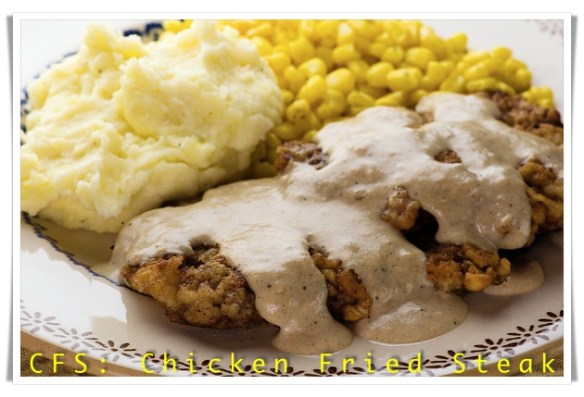
Okay, for the uninitiated, here’s a rundown on the most important thing in life: chicken fried steak at May’s cafe. Yes, May’s Cafe was the real deal, as is the Koon Kreek Klub, though it shows up on Google Earth spelled with CCCs, not KKKs. You can read about the Club here, and here, and my guess is it was a very interesting place to spend time as a kid. Anyway, for those of you not fortunate enough to know Texas culinary traditions, here ya go.

Chicken fried steak is like oxygen to most people in the American South, but the east Texas variation is a beast unto it’s own. It’s all in the breading, too:

CFS

Unlike, say, a schnitzel, an east Texas CFS is beef, usually pounded into near oblivion then dredged in an egg wash, then flour – to which salt and pepper have been added. Set to dry on a plate, the steak is then re-dredge a second time, first in the egg, then the flour, and it’s this second dredging that makes the legendary crispy texture of a real, good CFS. It is then fried, usually in peanut oil but often in pure vegetable oil, though back in the day the poison of choice was Crisco, the solid stuff. It’s got to fried crispy, too, and you check that with a fork. When you tap the steak and your fork pings like a tuning fork, it’s done.

Cream gravy is an art. Erica makes a good one, my Dad’s was better, but not by much. You take the remnants in your skillet, the crispy bits – and not too much oil should be left, then you add milk or cream and start stirring in flour once the milk is not quite simmering. Add a little more milk, then flour, stirring constantly. The stuff goes from liquid to wallpaper paste in zero point two seconds, so you can’t walk away and leave it.

Most folks like mashed potatoes, and if they’re homemade they’re not bad, but I’ll do french-fries too. Greens are a must, and though collards are the norm in the deep south, in Texas you’ll get turnip greens:

turnip greens

Cheese grits, anyone?

grits

And last but most definitely not least:

Blackberry cobbler

May was famous for her CFS but her bar-b-cued ham was legendary, too. You could find her most Tuesdays at the farmer’s market in downtown Dallas, and no, she wasn’t famous, but she was loved.

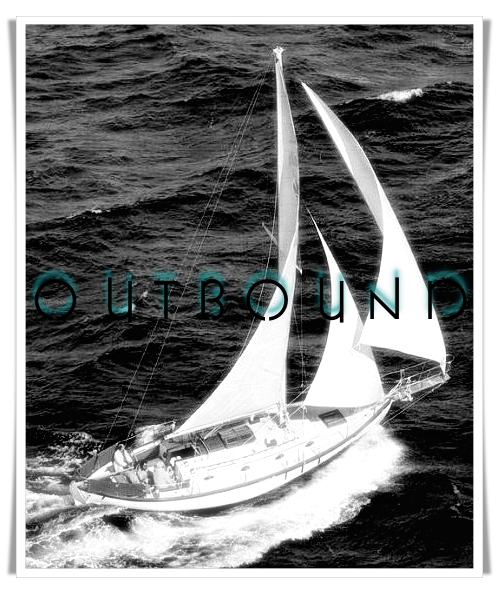
OutBound (third part)

Still not proofing work, sorry for the flubber.

outbound 3 im

OutBound – Part III

After I talked to Shelly, my lawyer, two days later, I went to LAX – on her advice – and returned to Moorea, and to Jennifer – my Jennie. I returned after three more intense encounters with Terry, who I now knew I could not, and would not ever be able to resist. Fact of life. My big flaw. She was bourbon to an alcoholic. It wasn’t incest, because it wasn’t, yet it was worse. She was a violation of every known law of nature. I watched men stare at her when she entered a room – and I understood. But I could not understand why she had chosen me. And let me be clear right here: I did not want to understand. I wanted to get as far away from her as I could, and stay there. I did not want to see her again, because I knew I’d want her again. Because I knew I would not be able to resist her again. I would not, because I could not. I could not – because I loved so much it would kill me if I denied her.

And yet when I fell into Jennifer’s arms it was the most comforting wave of emotion I’d felt in months, a homecoming so overpowering it left me breathless. She wanted me – bad – she said, and we crawled up on the forward berth – and I couldn’t get it up. I’d been drained by Terry and didn’t have anything left, and Jennie put it down to jet-lag. I’d be better tomorrow, she said, but I wasn’t. I was overcome – with all consuming guilt. I’d violated a sacred trust and I wondered, could an agnostic wandering Jew go to a Catholic church and pretend to be gentile long enough to make it through the confessional? Could I say a dozen ‘Hail Mary’s’ with a straight face – and not have a vengeful God send me straight to Hell?

Then I was worrying about Tracy, my daughter. And so I still couldn’t get it up.

We’ll get over it, Jennie said, but now I wasn’t so sure. When I closed my eyes at night I saw Terry on that bed, her legs on my shoulders, her stockinged legs resting beside my face as I plowed her fertile valleys. I could feel her all encasing warmth, my searing orgasms, the smoothness of her cool skin on my face when I dove between her thighs. So…if I couldn’t have her now I was simply going to obsess about her? She was going to take over my life – in absentia?

“Why don’t we head south, for New Zealand,” Jennie said a few days later.

“What? I thought they…”

“A replacement from France arrives Friday.”

“You ready to move on?”

“I think so. We can come back here if Mom and Dad come next summer, maybe for a week or two, but I’ve been thinking about Auckland. Maybe go to school for a semester?”

“Okay. Let’s go over to Papeete and get the bottom painted, pick up a few spares. We can go from there.”

“Okay. When can we leave?”

“I don’t know? Tomorrow too soon?”

“No. The sooner the better,” she said, and I knew then. Knew she feel Terry in this place. Terry all over me.

We set sail at sun-up; it was only a short hop, really. Just 15 miles, nothing like the 2600 miles jump to New Zealand’s North Island, and we got there late morning, got Troubadour checked in at the yard and went out to find a hotel. We got a room in one of the old places along the waterfront, hard by the Parc Bougainville, and when we got to our room it was a little difficult to feel where Paris ended and Tahiti began. I called the yard, told them where we were, and they told me it would be two days at least before they could start on Troubadour. No problem, I said as I looked at Jennie.

She wanted to go out, by herself she said, and she took off, said she’d be back in a couple of hours. I showered, stood under the water for what felt like days, called room service and had them bring me some lunch. I looked at my watch, called the Beverly Hills Hotel then hung up the phone and called Shelly, my lawyer.

“We have a hearing on the 23rd,” she told me.

“Next week?”

“Yeah. You’ll need to be here. Oh, the house is vacant now. Want me to get it cleaned up so you can stay there?”

“Yeah, might as well.”

“What about Terry? Move her in?”

“We’ll see. Maybe after I leave.”

“Oh?”

“I think she likes the hotel. I’ll check with her and see what she wants to do.”

“Oh. Well, have her call me if she needs the key.”

“Yeah. Well, I’ll try to get in on the 21st or so,” I said, and I gave her my number at the hotel then rang off. And made the call to the hotel again, asked for her bungalow.

“Hello?”

“Terry, it’s me.”

“Goodness. Missing me already?”

“I’ve got to return on the 21st for a hearing, and Shelly told me the house is vacant now. You want to move in for now?”

“Are you planning to stay there when you come up?”

“Yes.”

“Do you want to be alone?”

I took a deep breath. “No,” I said.

“Then you won’t be.”

“Alright.”

“If Jennie decides to come let me know.”

“I will.”

“Aaron?”

“Yes.”

“I love you.”

“I love you too.”

And there it was. The first time she’d ever said that to me. The first time I’d ever said anything like that, to her. No hesitation. No duplicity. It’s what I felt, and I knew it was wrong. And how could I love Jennie at the same time?

I called Air France, made my reservation to fly back to LA, and was just wrapping up the call when Jennie came back to the room. She saw me on the phone and frowned, and when I told about the hearing she nodded her head.

“Maybe I should go back to Wisconsin for a while,” she sighed. “Could you get me on the same flight?”

I called Air France again, made the reservation. One way, open return – for now – I told the agent, and Jennie walked over to the window and looked down at the waterfront.

“I like this city,” she sighed when I hung up the phone.

I joined her, stood beside her and we looked out to Moorea across the channel.

“How long will you need to be in LA?”

“I’m figuring on a week.”

“Anything I need to know?”

“No. Not really.”

“Okay.”

“What did you find out there?”

“Oh, just some girl stuff.”

“Girl stuff?”

“Yeah. I’ll show you later. You hungry?”

“I ordered some stuff from room service.”

“Stuff?”

“Guy stuff. Real food.”

She laughed. “I didn’t know they make hamburgers out here? Snails, yes, but hamburgers?”

Knock on the door, waiter rolled in a cart and after I tipped him he split. Two onion soups, escargot, broiled sea bass and huge prawns – for two.

“Perfect timing,” she added.

“I like to think I take care of you, kid.”

“You do, you know.”

“Because I love you,” I said.

“I know – I love you too. Maybe even more than you know.”

We ate in silence, then she went and took a shower. I heard her taking stuff out of her shopping bags, and she was taking her time getting dressed, then:

“Could you pull the drapes, turn out the lights?”

“Sure.”

She came out a minute later – dressed to the nines. Lingerie, heels, everything in white, and she walked over to me.

“Do you like me like this?”

I nodded my head.

“Does she…” she began, but she stopped herself, looked down at me. “Show me,” she said as she lay on the bed.

“You really are lovely,” I said after my second orgasm.

We didn’t leave the room for five days. We held hands across the Pacific, we cried when she left to fly on to Milwaukee. I drove to the house on Foothill Road and Terry was there waiting for me. Dressed in blacks and grays, the sexiest woman in the world – all mine. No questions asked. I had not the slightest problem getting up. I had not the least hesitation in my voice when I told her that I loved her. Because I did.

I was between her thighs again, my face against her warmth, then I felt her shuddering, clutching my head with fierce fingers, and as she came down I moved up and entered her. I didn’t last long; I never did when she had her legs up on my shoulders, when I felt her heels on the side of my face. When I came down I looked at her, my perfect lover, and I started to cry.

She looked up at me and smiled.

“Don’t worry about all this, Aaron,” she said as she pulled me down. She kissed me, held me close. “I’ll just be here for you when you need me,” she whispered. “I don’t want anything more. Just to know that you still love me is all I’ll ever need. Okay. You don’t have to choose. I’ll just be here for you, always. Whenever you need me.”

And I was growing inside of her warmth again, all movement involuntary now. Holding her face to mine we kissed as I fell into the movement again, and I pulled back a little, looked into her eyes as I came again. What had simply been sex before grew into something fierce and eternal in the next few minutes, yet I was more confused than ever. What could come of this, I wondered, but infinite heartbreak.

+++++

She came with me to the hearing.

I think because Shelly knew the judge was a big fan. Jennifer’s father was there, of course, and he seemed to read the expression on the judge’s face, knew he’d lost, and in the end I won temporary guardianship pending a final review once Jenn was out of the woods and able to stand on her own two feet. It was decided that I’d pick Tracy up in two months, and that I’d return to LA to pick her up after I arrived in New Zealand.

When we left Jenn’s father looked at me like I was the anti-Christ. He did, I think, because we only called on witness, one of Jennifer’s psychiatrists. She all but blamed Jennifer’s condition on her father, and pointed to him, called his behavior monstrous. The judge noted that her father perjured himself when he declared in court he’d made a good faith effort to notify me, and that he was lucky he wasn’t going to jail.

Terry, for her part, batted goo-goo eyes at the good judge, which I think made his day. Then we all went down to Newport so I could meet my daughter. It was a supervised visit at his lawyer’s office, and I couldn’t tell who she looked like. Not me, not Jenn, not either of her parents, then Terry spoke up: “She looks just like your mother, Aaron.”

And I cried. I held my daughter and cried.

Barely a year old, she held her little hand out and touched my face, my tears, and I didn’t want to let go of her. But I did, of course, then Terry and I drove back to the house on Foothill Road.

“You’d better call Jennie,” she said.

“Don’t you need to call the studio?”

“Nope. I’m not expected til the day after tomorrow, five in the morning. I’m going to go take a shower,” she said, smiling.

I called Jennie.

“Well, it looks like we’re going to be parents,” I said.

“What?”

“It’s temporary, but she’s ours.”

“Oh-dear-God. I can’t believe it!”

“Until Jenn is out on her own, anyway. Just like you said. When we get to Auckland, we can come up and get her.”

“Are you happy?” she asked.

“Yes, I am. For us all, and maybe for Tracy most of all. How’re your parents?”

“Good. Terry?”

“Same as ever. When do you want to return?”

“I, uh, well, do you want me to come back with you?”

“Yes, of course.”

“Are you sure?”

“Jennie? What’s this about?”

“If you want me, tell me when to be at the airport,” she said, and then she hung up the phone.

I went and sat in Pop’s chair, thought about Tracy and what my mother might have looked like as a child, then I heard Terry in the bedroom and I knew she was waiting for me. I walked in and looked at her on the bed, all her lingerie and shoes a light gray, and she looked like pure sexuality unleashed. I showered, found her on the bed rubbing herself and she was wet when I got to her.

The whole dressing up thing mystified me for a while, then I began to look at it as wrapping oneself up as a present. But no, I found I liked all that stuff to remain on, so I began to see it as patterning. Like as kids, people of my generation were programmed to see lingerie and heels and think sex, so seeing it now was like programming a response. And when I saw Terry dressed like this I was almost overcome with instant lust; when I slipped inside I did so with her legs, often her shoes, on my face. Feeling these things kicked off images in my mind, propelled my response, and as I entered her, as her slippery warmth enveloped me I could smell the leather of her shoes, feel her silky nylons on my cheeks, and everything was like this surreal feedback loop. She didn’t have to tell me what these thing meant, she knew what they did to me. I assumed she knew what they did to all men, but I didn’t really care by then. I was inside her and the feeling was like magic. I’d slide in quickly then pull back slowly, fast–slow over and over, then I’d pull out and just run myself over her clit then enter her again. Then she pushed me over and mounted my face, ground her clit onto my tongue until the tremors began, then her release was overwhelming. I flipped her over and entered her again, driving into her I came…then it was flow down for a while until I was ready to go again. I could usually go for two, and with a break for dinner, take her a third time in one day, and she seemed to want as much as I could give her.

And I wondered if that’s what she meant. When she said she’d always be there for me. Was she programming me to need her? Making me accept her as a main part o f my life? If so, it was working. And well.

Then she surprised me again.

“We’re getting to close, Aaron. I’m not sure I can keep doing this and not have you with me all the time. I’m addicted to you now, can’t think of anything else. I want you so much when I’m away from you it’s beginning to affect my work, and I don’t know what to do anymore…”

“Terry? Can I ask you something?”

“Oh, Aaron…anything, anytime…”

“What do you want? I mean, deep down, what would make you happiest?”

She rolled and looked at me. “In the end, I’d like you to love me no matter what, but I think I’d like you to marry Jennie, try to make a home for that little girl, the three of you. I’d like you to come see me every now and then, remind me how much we mean to each other. Maybe you and I could get married, but the cost would be enormous, wouldn’t it? But we could keep things just the way they are now and no one would be the wiser. I’d just go on loving you and, I assume, you’d go on loving me too. When you need me, I’d be there. Always. No questions asked. Just…always.”

“Okay. I accept you on those terms. Forever. I can’t not love you. And I can’t stop needing you. I can’t, Terry. I mean that. I don’t know if you’ve tried to make me need you the way I do, or whether time conspired to do this to us, but I’d rather die that know I’d never be with you again…”

She folded herself into me then, held me so tight for so long I thought we’d fuse, but a while later I felt that stirring and so did she. She went down on me, brought me back to life again and she straddled me for what felt like hours, reaching down, rubbing herself as she rocked back and forth until she’d come again and again, then she slipped down between my legs and finished me with her mouth. I picked her after and carried her to the shower and we bathed one another, then dressed and went out to dinner.

When we came back after I called Air France, then called Jennie. “Be at the airport at 10:30 tomorrow morning. American to LAX, change to Air France.”

“Okay.”

“Okay.”

“I love you.”

“I love you.”

The reality is more difficult, of course. Loving two women. I mean really, really loving them. Caring for each as you would one. Terry drove me out to LAX the next afternoon and she told me not to say goodbye. “Never, ever, do I want to hear those words from you,” she told me. “All I want to hear from you is that you want me, that you need me. You never have to tell me that  you love me because I know you do, with all my heart I know you do.”

I nodded, looked her in the eye. “And you love me?”

“With all my heart. And I’ll always be here for you. Nothing will ever change that.”

I kissed her once, gently, then got out of the car and walked into the terminal. I watched Jennie’s plane land and met her at the gate, then we walked over to International Departures, waited to board the jet for Papeete. I held her hand all the way through the terminal, and she said not one word to me until we were seated, waiting for the flight to be called.

“You feel alright about what happened.”

“Yes. I think everything’s going to work out well enough.”

“You and me? You think we’re going to work out?”

“I do. Yes.”

“And Terry?”

“I think she’s where she wants to be now, doing what she wants, anyway.”

“I see,” she said.

+++++

Troubadour was in the water, ready to load fresh provisions onboard when we got back to the yard, and we spent a day getting things loaded. We got a hundred pounds of ice in the box, then settled in for the night, had some wine and watched the sun set, then we were out light a light. The weather forecast looked grim when we checked the next morning, so we went back to the hotel to sit it out, and Jennie pulled out her lingerie our second night there – and I plowed her fields, and after that everything got back to normal, or close to it, anyway.

She talked more, we kidded around and went shopping. I bought her a ring, one to wear on her left hand, and she said it didn’t mean anything unless I did too, so she picked out a plain band and slipped it on my finger. That really seemed to calm her down and after that we slipped into our old groove. And you see, the thing is I’d taken Terry at her word. I stopped worrying about it, her, and let it slip into the background – and I focused on Jennie, making her happy.

We took off two day later and in the aftermath of the storm we had solid wind all the way to Auckland, an all too brief 16 day voyage, but with unsettled seas all the way it wasn’t exactly easy, or pleasant.

The plan was to haul the boat for winter, replace some rigging and all the sails (yes, they wear out too, and fast in the tropics), so we’d rent a house while Jennie worked on upping her nursing qualifications. I decided to take that class on diesel mechanics then, too, and we planned to start after our upcoming trip to pick up Tracy in LA. So, first things first, I called Shelly, asked if everything was still a ‘Go,’ and it was. I got tickets for the two of us headed north, and three coming back. I let Terry know the situation and she told me she was off to Morocco during that time for a shoot, and she told me she was sorry she’d miss me. Okay. Sure. I made a shopping list for boat supplies and we took off on the anointed day.

It’s a long flight, and the Air New Zealand DC-8 stopped in Papeete for fuel – which felt kind of silly. The long haul was next, and after we rolled into the house – well past midnight – we dropped into the sack and slept for days. Well, it felt like days. After we ran errands, boat stuff for the most part, we crashed again so we could wake up early to meet Shelly down in Newport the next morning.

I half expected Jenn to be there, but no. Her father was a no-show, too. He sent Tracy with a sheriff’s deputy, I think to upset her more than any other reason, but it was a vintage choice for that asshole. Tracy got to the lawyer’s office, upset, and we spent a while calming her down before heading back to the house. We took her swimming that afternoon, took her Disneyland the next day, then for a really long airplane ride the day after that.

And never a word from Mommy.

+++++

New Zealand was very quiet and most civilized in the 70s, and an ideal place to raise kids. Jennie decided to get full nursing certification there after spending a month there; she opted to go for full citizenship a few months later. I opted to remain a US citizen, yet the fact that I had some money and that Jennie and I were married gave her the opening she needed. I decided to get Tracy in the queue for citizenship too, just in case, and so she started school there two years later. Well, kindergarten, but you know what I mean, and by that point Jennie considered herself Tracy’s Mum.

In order to maintain US citizenship I had to return home periodically, roughly twice a year, and of course Terry always happened to be there. On my first trip home I upgraded to recording studio in the basement and started working on my next album and, as Jennie’s sister Niki had a helluva a voice I asked her to come down and work on a few songs. I moved into the pool house for the duration of her stay and Terry behaved herself, and after three months hard work I sent the masters over to MCA and sure enough, they liked ‘em. Serendipity released in ’76 and happily it went gold by summer’s end, and the title song included Niki’s voice – and almost overnight she became a minor sensation. She’d penned several songs and we arranged them, I played keyboards on all of them and had some friends help with the other instruments and MCA loved her album. It went platinum in a month and all of a sudden she was not only famous, she was rich as snot. She took off for Wisconsin after the masters went to Burbank, leaving me alone with Terry for the first time in six weeks. We tore into each other and only came up for air after a week, when my scheduled flight came up.

And still, no Jenn.

Jennie and Tracy met me at the airport – in Papeete – as it was time for Warren and Michelle’s annual visit to Moorea. Tracy and Michelle went on walks looking at flowers while Jennie and her father worked at the clinic, and soon enough Tracy was working at an easel, painting flowers.

I spent my days working on my biggest canvas yet, an eight foot tall by twenty four foot wide panorama of, you guessed it, a misty mountain in the fog. Framed by windblown trees and a rolling surf, however. Then I got word MCA wanted me in LA for a concert in the Amphitheater, so I called Shelly – in the middle of the night my time – to get the lo-down.

“A bunch of people want to do an Electric Karma tribute concert, Aaron. They want you there, and they want Niki to take Deni’s place. She’s asked me to represent her, by the way. It would the big time for her.”

“What? A concert at the Amphitheater?”

“No…haven’t you heard? They’re talking the Coliseum. A hundred and twenty thousand people. Some big names have signed on already.”

“What would Niki take home?”

“Maybe a half million, maybe a little more.”

I whistled. “Okay. When?”

“Does that mean you’ll do it?”

“Shelly. When?”

“October. You have three months to get ready.”

“What’s my take?”

She told me and I whistled again.

“Aaron, you can’t turn this down. It’s the chance of a lifetime for Niki, and it’ll keep you in the spotlight for a whole new generation of listeners…you’ll be set for life. Tracy will be set for life.”

“Okay, tell ‘em I’m in. You take point for now, start setting up rehearsals, probably late August, early September. See if MCA is interested in cutting an album of the concert, and ask Dean if he’ll do the stage. You do good and you can have twenty percent of my cut, on both the concert and the album, including my residuals. Got that?”

She was silent for a minute. “You mean it?”

“Shelly, my life would be shit without you. Make this work, get Niki on the fast track. Yeah, I mean it.”

“Aaron…I don’t know what to say.”

“Well Shelly? This is the best way I can thank you for everything you’ve done. But, thank you.”

“Yeah,” she said, and I could hear her voice crack a little. “Could I ask you a personal question?”

“Sure.”

“What’s going on with you and Terry? Is there anything that could blowback on you?”

“Maybe.”

“If it happens, am I authorized to do damage control?”

“Absolutely. Write that into our contract.”

“Okay.”

“Anything in the wind?”

“No, nothing. Just a gut feeling.”

“Well, if something crops up, make it go away.”

“Will do. Should I call, leave messages at that clinic?”

“For now. I’ll see about getting some kind of phone at the house.”

“Okay. Bye.”

“Yeah, bye.”

When I turned around Jennie was coming out of the OR, her dad right behind, and they were both dripping in sweat. She saw me on the phone and frowned as she came over, and Warren came up too.

“What’s up?” she asked. “You look jazzed.”

“You better sit down, both of you.”

They sat; Warren looked concerned. I told them about the concert, and about the vocals I was trying to get Niki. “I’d mean a half million in the bank, on top of what she’s made on the album, but it would put her in the spotlight. She’ll be big. Bigger than big, would be my guess. She took my advice, signed with Shelly, my lawyer.”

Warren’s hands were shaking. “My girl…will make more in one night than I do in ten years?”

“Yup.”

“Holy smokes.”

“Yup.”

“You’re doing all this for her – why?”

I looked at him, then at Jennie. “You’re my family, all I’ve got left in this life. Niki is too. I’m doing what I can for my family. Simple as that.”

I looked at Jennie. “Rehearsals in LA, end of August, concert is on Halloween, in the LA Coliseum. I think we should all be there. All of us.”

“Okay,” she said, looking me in the eye, “we will be.” I could tell me hands were shaking too, and she looked at them, then up at me. “You okay?”

“Yeah, I don’t know. Hyped, I guess.”

“Why don’t you go up to LA now. Get started. I can see it in your eyes…that’s what you want to do.”

I nodded my head. “I know. I want to be here with you guys, though.”

“So stay, head up with Mom and Dad.”

“Yeah. We’ll see. I need to finish my painting, spend some time with Tracy. Maybe a little with my wife, too.”

She came to me and we hugged, and Warren stepped outside, lit up a Camel and coughed. Then we kissed.

“You should know,” she whispered. “I’m pregnant.”

I blinked, then my eyes went wide. “Holy smokes!” I managed to say – before she kissed me.

+++++

Different people bring out different things in me.

I thought about that all the way up to LA. When I was with Jennie I painted. I painted because I became interested in the visible world, the visual world. When I was with Terry I fell into my music. I could think music because she had been a part of my life since my teens, when music became important to me. When I was around Jennie the music almost stopped. When I was even thinking about Terry music poured in from every direction, but when I was around her music grew like a tidal wave.

I’d written all of Electric Karma’s music, Deni the lyrics, so that music would always be a part of me; when I put together the first solo album all that vibe slipped away. There was nothing about Karma I wanted to incorporate. Then. Not now. Now, sitting on that 747 all I could think about was Deni and the music we made together. And flying home to Terry was opening the floodgates. By the time we landed I had written three new Karma songs. With Niki on vocals, no one would be able to tell this wasn’t Electric Karma – so why not cut a new Karma album? Get some of our old buds from San Francisco to cover guitar and bass and the sound would be as authentic as it had been eight years ago…

Warren and Michelle regarded me as some kind of sorcerer all during that flight, but when I told them what I was thinking they kind of sat back and watched – in awe, I think. I asked them to have Niki call me as soon as they got home, then we said our goodbyes. I found the baggage claim had been moved – again – and it took me a while to find my bag – then Terry – but she was where she said she’d be. She drove straight home and ran for the shower, and I ran down to the studio and put my notes on my keyboard, then ran back up and joined her.

“Do you have anything going on the next three weeks?” I asked.

“No. Why?”

“You may not leave my side, not at all.”

“You’re on fire, aren’t you? I haven’t seen you like this in years.”

“I finally put two and two together, Terry. I can’t write good music unless you’re by my side. They stuff I’ve churned out when you’re not near me is garbage. Ever since Lucy-Goosey, when you’re with me it all comes together. You are the music in my life, my love. Without you I’m a hollow shell.”

She looked at me as if I’d slugged her in the gut, then she came to me, put her arms around me and I felt her crying on my chest – then I lifted her face to mine and we kissed.

“You called me…my love? Do you realize…?”

I nodded my head. “Of course I do, because I feel that now, as surely as I ever have. You are so much a part of me it’s insane. It’s surreal. I can’t even think music without you…”

“Aaron? Are you okay?”

“No, Terry, I am not okay. I am on fire. I am on fire because you have set me on fire. You’ve set me on fire ever since I’ve been interested in writing music. I doubt that I’d ever written anything if it wasn’t for you. Do you know the first piece of music I ever wrote was named after you. A little piano concerto. For you.”

“I didn’t know…”

“I think I always wanted to impress you, to be worthy of you.”

“Worthy – of me?”

“Yes, you. The most beautiful woman in the world.”

“Aaron…you can stop now.”

“No…I can’t. I’ve got at least ten songs to write, and you’ll need to stay right by my side. All the time. Understand?”

“Alright.”

I picked her up and carried her out of the shower, then I dried her off, every inch of her.

“What color would you like me to wear for you tonight?” she asked.

“Nasty.”

She smiled. “I hoped you’d say that.”

“I know. You have for a long time, haven’t you?”

She smiled, nodded and left the bathroom. “Give me a minute, would you?”

I went to the kitchen, fixed a Perrier and looked out the window at lemon trees blossoming, and I could even smell them inside that moment, then I walked back to the bedroom. The lights were off, only a few candles blazed on a corner table, but Terry was there. Shiny black latex – everywhere. The highest heels I’d ever seen. A riding crop.

“Dear God.”

“Come here,” she commanded, then: “On your knees. Crawl to me. Crawl to me and lick my shoes!”

Yes. That was an interesting evening.

+++++

I spent the next morning on a song I called Lemon Tree, the afternoon’s effort would be titled Shining Need. Terry stood behind me almost the entire morning looking at my scribbled notations, and when noon came ‘round she pulled me to the floor and sat on my face for an hour, pulling me with her fingernails until I came – in her mouth – but I couldn’t get the night before out of my music. When I played it through for her she blushed, then I told her to shower and put on the latex again. “And Terry? You must be meaner tonight. You must take us where we’ve never been before.”

And she did. I was stunned at her ferocity, and how easily it came to her. Her need was shining now, shining right through me on a place I’d never been.

We went out to the swimming pool after, and I left the lights off. We slipped into the water and I pulled her close, pulled her onto me and I held her closer still as I entered her. We rocked in the water until I felt myself tensing then releasing inside her, still swaying gently, holding her lips to mine until she began to tremble her way through her own release – and the water was black now, faint stars danced on the surface – and I wondered who was out there watching and waiting, circling, ready to come in for the kill…

The next morning? Starlight Blood, a heavy brooding place that scared us both when I played through the final draft. “We have to go someplace lighter now,” she said after lunch, “or I may end up killing us both.”

“I’m not ready for death, but when I am, I want to die in your arms. Promise me you’ll do that for me.”

“I promise.”

“Death won’t be able to hold us apart. You know that, don’t you?”

She nodded her head.

Those two lines formed the core of the next track, Fate and Promise.

We made love in the pool that night until we could hardly move, then I carried her to the shower and massaged her back to life, and I pulled her so close to me in bed I dreamt of the way her hair smelled.

Which became Sin Scintilla in our next morning.

She reminded me she hadn’t had anything to eat – but me – for two days, so we drove down to the beach, to Gladstones, and we ate Shee Crab soup and broiled shrimp on rice pilaf, then we walked on the beach for an hour, her music beating into me as the sand pushed between our toes.

Which became Seashell, an unfolding story about eternal love

And on and on it went. Every breath she took led me deeper into her music.

Until the last track.

Deni. A ballad about Deni, and why she mattered. We were a broken soul, your music made us whole… My other love. Broken, fluttering and doomed. I broke apart and came undone when I finished those lyrics, and Terry helped me up, led me to our bed and when she lay me down I pulled her on top of my face and ate her until she wept too, then we slept.

I called Jerry and Carlos and Buddy – and Niki – and asked them to come by the house next Monday morning.

“We’re going to cut Electric Karma’s last album,” I told them.

“Far out,” Jerry said.

+++++

I could feel the changes Niki was going through, I’d seen it all so many times before. Sudden fame, almost immeasurable wealth had turned her from petite and unassuming to bigger than life almost overnight. She had that force now, the force money confers on the otherwise meek. She was a year older than I and that, in her mind, justified this new assertiveness – until Shelly pulled her aside and set her straight.

“Aaron’s done this for you,” Shelly told her. “All of this. Don’t forget that. Don’t forget to dance with the one who brung ya.”

She mellowed out, tried to accept that Deni was still bigger than she was. That Deni was one of the strongest voices of the 60s, and that the 60s still defined rock ‘n roll. People helped her understand what she was being given – a seat at the table – if she had the grace and the sense to sit quietly and listen for a while, to learn.

She was a midwestern gal, full of common sense, and it took her a couple of days but she settled down, watched and listened to Carlos and Jerry, two of the biggest of the San Francisco bigs, as they wrestled with my music. We settled into the new-old vibe again, the collaborative nature of making music. I played a passage and they interpreted what I wrote. The last thing I could do was object to someone hijacking ‘my’ music – that’s not the process. We took my framework and turned it into our version of Karma in 1968. I led Niki into that wilderness, let her phrases blend in the music, and we listened to her when she started making suggestions, because that too is the vibe. We’d take her thoughts and blend them into the whole – because that IS the vibe – and at the end of the first day I was already looking at Niki like she was part of Deni. Even Jerry, who was still devoted to Deni and what she meant to the scene, started to feel that Deni thing when Niki started singing, and at one point he looked at me and nodded his head slowly, like ‘yeah, I get it now, why you chose her.’

We came together as Electric Karma for two weeks, then we carried the tapes down to MCA and let the folks have a listen. Everyone was blown away, there were some tears, and as I’d hoped they talked about weaving this new material into the old when we played the Coliseum, and this jazzed me pretty good as I already knew this would be my last hurrah. Jerry and Carlos had their own things going, and Niki? Hell, who knew where she’d go after this, but it would be big. Me? I planned to do some serious sailing when Tracy got big enough to walk Troubadour’s decks. We were going to see the world together, and learn together.

It was September by then, time to get down to choosing the numbers we’d play, then playing them over and over until we had them in memory, and all the while I kept the recorders going, laying down tapes of our sessions.

And yeah, Terry was there. Low-key and in the background, and I had to explain to Nik what Terry meant to me – in such a way that the deeper nature of our relationship didn’t overpower her – but Niki said she got it, that she understood, and that she wouldn’t fuck it up for Jennie. I started to love Niki after that. When she came into the room I looked at her and smiled inside, and there were times – like when I fell into the old Deni vibe – that she’d come to me and talk. About what Deni really meant to me, the whole love heroin thing.

“I feel that with you,” she said. “This thing inside the old music. The tension, almost like this carnal undertone played out between her words and your music. When I sing Deni I want to reach out and hold you, then I want to fuck your brains out.”

“That’s what it was like, man,” Jerry said, coming over and sitting with us. “We’d sit around listening to her and it was like, man, I got to get inside this chick’s head, see where this power’s coming from. Then one day I knew. She didn’t simply project love, she was mainlining lust and when you watched the way she sang you wanted that lust too. You felt like you needed to take her because that’s what she wanted you to do. Now…imagine that happening in a room at the Fillmore…with hundreds of dudes getting amped up on that vibe. She was fucking with fire, I mean literally fucking fire onstage, daring people to fall into her vibe.”

It’s what happens when you fall inside music. When you make it, not listen to it. The notes start playing through your synapses and as you mold the music into your being it comes into your life like a knife. The Feel Flows through you, if you dig Brian Wilson – white hot glistening. When you’re playing you become this other thing: you, and the music in you takes over. When you come down after, down in soft blue drifting, you snap out of it and realize you’ve been someplace else. A special someplace only music takes you. You’re different. Changed.

And I watched Deni coming to life again inside Niki when she sang Deni’s words, because Deni was truly inside her now, taking Niki to that place she used to go. I watched Niki over my keyboards, watched the change come down on her, the way her body swayed, then I’d look at Terry and feel this divine thing settle inside me, the same beast I felt when I created Lucy. Terry was the constant, the universal fuck that lived inside this place, this craving penetration that rolled through me. Feel Flows, baby. Brian got it right that time. Shadowy flows.

We went out to the Amphitheater and did a run through concert to an ‘invitation only’ crowd of maybe 1500 people. No nerves, no bad vibes, and we played for two hours straight then just sat on the edge of the stage and watched everyone go nuts. This was Niki’s first taste of that electric adoration, this wall of love that rises up from the other side of the lights and breaks over you, and she started laughing, then crying, and she leaned into me.

“Way to go, babe,” I whispered in her ear.

I knew it then. I knew she loved me now. She was Deni, she was love heroin all wrapped up inside that something new, that something she didn’t quite understand yet. She was becoming music, this creature of the otherworld. She could understand what drew me to Terry now, what made Terry an imperative, and she wanted inside that part of me now.

She put her arms around me and I sighed, could feel Deni there beside me again, the spring she gave me once.

I hopped down and walked out into the surging crowd, felt the light breaking over me.

I felt immortal, if only for a moment.

+++++

I got a couple of bungalows at the BH, put Warren and Michelle in one, their daughters in the other, and Jennie and Tracy came to the house with me and Terry – and Niki.

Jennie was astonished at the change that had come over her big sister, the way she walked barefoot around the house in undies and a t-shirt. The way she draped herself over me when we were down in the studio, when the music came. Jennie couldn’t relate – but Tracy did. I started playing notes and chords with her on my lap, and I could see it taking hold deep inside this child’s mind. She’d be sitting there with her eyes open one moment, then she’d be swaying with eyes closed in a heartbeat, inside the music with me. Jennie watched that going down first in Niki, then inside Tracy, and I think she felt like she’d been on the outside for a long time – and never had a clue what was going on inside, until now.

And Jennie could feel the whole Terry thing now. Terry kept her distance but I insisted she stay with sight of me now at all times. Jennie was starting to freak out but Niki hit her like a missile, took her aside and laid it out for her.

“Terry is his muse, she always will be so don’t fuck with the vibe. You fuck it up and you’ll lose him. Simple as that.”

The thing with Jennie? She knew me, she knew my love for her was real, deeper than deep, but now she was learning my love for her existed in the world outside music, outside that springtime Deni created for me. The place Terry kept me rooted to. There were two of me, and she had one of them, but only one. She’d hated Terry before but after living with us that week she came upon the terms of her surrender. Accept what is or move on. If I lost Terry I’d lose me. I think she sensed that if she left I’d move on, but if I lost Terry I’d be wandering the ruins, lost inside a broken, melting Dali landscape.

You love a musician at your own risk. Feel Flows different here, white hot glistening.

I talked to Terry about Warren and his tongue-tied infatuation and she looked at me.

“What do you want me to do?”

“Shake up his world a little. Michelle’s taking him for granted – she needs, I think, a little jealousy in her life.”

Poor man. When Terry McKay turns on the sex appeal it’s devastating. I told Jennie what was going to go down and to take her mom out shopping – Terry could tell her where to pick up some appropriate lingerie. Surely someone into quantum mechanics could come to terms with simple attraction? Cause and effect? What’s been down a while still needs to come up? Sunrise, sunsets – ya know?

We set up at the coliseum the day before, ran through a few numbers for the media and we began figuring out a real 60s-type happening was blowin’ in the wind, that the event was SRO now with a hundred and thirty thousand tickets sold.

And we announced the new album at the press conference, that copies would be going on sale the day after the concert, but that a special edition would be available at the concert. Karma Kubed, with Niki Clemens handling vocals. Yes, we’ll be playing a few of the new songs at the concert. Yeah, the vibe is right on, it’s felt like we’re channeling Deni…very cool stuff.

We made the news, anyway.

I woke up the day of the concert feeling like pure electricity. I couldn’t keep still, went downstairs and sat in the dark listening to The Beach Boys, trying to focus on their vibe, their quicksilver moons.

I felt her then.

Tracy, my little girl. She stumbled through the dark and found her way to my lap, crawled up and cuddled in beside me, within me, and I held her close, let her inside for a while as I drifted in Brian’s music.

Jennie came down a little later, told me she was going over to the hotel, spend some time with her parents and that she’d see me at the Coliseum.

“I love you,” she whispered.

“I love you too, babe. Seeya there.”

She left me with Terry, who’d found this outrageous jade colored lingerie down on Hollywood Boulevard. Oh…did we make some outrageous music that afternoon…and she promised to sit front row center so I’d be able to focus on her during the show.

I’d had Shelly send tickets down to Jenn and her family in Newport, and while I doubted they’d show I had my hopes. Their seats would put them next to Tracy and Jennie and my family, right behind Terry and Shelly.

I was in another place by the time we met up with Carlos and Jerry. Niki and Buddy were too, but Niki was freaking out. “A hundred and thirty seven thousand people?! This is fuckin’ nuts…” she cried as she circled like a cornered animal. “I can’t fuckin’ do this…I’m scared out of my mind…”

I could see all the classic signs, so I sat down with her, gave her the talk.

“You’re night going to be able to see anything but lights,” I said. “You can’t tell if there are fifty people out there, or fifty million. You’ll hear them, yeah, but just close your eyes, let the music in, let it take you there. Give it five minutes and you’re home free, but if it gets to you just come over to, sing to me, sing into my eyes. I’m here for you, okay?”

I held her close, then Warren came inside the tent backstage and took over. A British group, 10cc, were warming up the crowd, and their I’m Not In Love was bringing down the house, then the lights went up and they left the stage.

A stagehand came in, announced “ten minutes!”

Carlos was in the zone, Jerry was standing in a corner, his eyes closed as he played through the toughest riffs in his mind’s eye. Warren left and Niki came over, melted into me, and I could feel her trembling through my own ragged heartbeat.

So I leaned into her and kissed her. Not a brotherly kiss, if you know what I mean. A curl your toes kiss, and she responded in kind, looked at me after like I’d just lit a fuse inside her guts – and she slipped into the zone after that and never once looked back. I’d just become her muse, for better or worse, but that’s the way these things go.

I walked out first and the roar was literally deafening. I felt it through the stage as I walked within the spotlight, as I walked up to my keyboards, then Carlos and Jerry came out and the crowd turned into sustained thunder. When Buddy and Niki came out I had to slip on my headphones, then I looked down at Terry, looked at her jade dress and jade stockings and I smiled, then I looked at Tracy and Jennie and blew them a kiss, ignoring the empty seats where Jenn ought to be. The I raised my fist – and stepped into the light.

+++++

The next morning’s papers said we were flawless, and I don’t know, maybe we were. What I’ll carry with me was Deni, the song, the music. The way Niki came to me then, singing my life, singing her way into my soul. I looked at Jennie and Terry, saw their tears, then I saw almost everyone was crying, even a few of the cops standing by the stage. Whatever it was, that song took us back to 1968 and made us reexamine our lives in the shattered light of her death. I played an extended interval, took the music ever downward, fluttering down to deepest octaves as Deni’s jet might have, as Deni might have while she watched her death unfolding, and Niki came up from behind, put her arms around me while I played, and I felt her leaning against me, crying, and when she stepped back into the light everyone saw what had happened to her and I felt this huge outpouring of love, pure love, the love only music conveys as it washed over her shores.

The rest was, literally, all a blur. One long blur of memory. One of Deni’s first anthems, Tiger’s Eye, pulled me in so deeply…I was in the purple paisley house adrift in a sea of patchouli again, watching her watch my hands as I played the first version of the entry. How she changed the phrasing of her words to reinforce my rolling chords, and I watched Niki watching my hands, forcing rhythm changes of her own – and it was like the three of us were out there, together, creating something new out of the past.

And I’d look from Jennie to Terry, my two touchstones, each representing polar extremes so far apart it was funny, each so intimately tied to my soul it was unnerving. Terry in her stockings, Jennie with my daughter, already showing as our first composition took form in her womb. Then I was in a limo headed for an after-concert bash at The Bistro, Jerry and Carlos still in the zone as the Lincoln fought through traffic – Niki leaning into me, biting my neck, almost purring with Deni’s lust now coursing through her veins. Drinks and dinner, family and friends, big-wigs from the studio – along with their wives and kids, teenaged girls who tell me they want to suck something and I’m like really? Get a life, and get away from me, you might be contagious.

The Fillmore was real. You could smell us up there onstage because we were in a room smaller than a basketball court. The Coliseum wasn’t real, it was spectacle. We weren’t musicians, we were being pawned off as demigods while venues like the Fillmore were disappearing into commercial oblivion. Politics in music was being reordered to fit into the marketplace, so political messaging was on it’s way out at the big studios, which only meant emerging groups would flock to small, local studios and politics in music would become regional, local, and maybe that wasn’t such a bad thing. But what would happen if ‘main street’ music became a commercial avenue?

That’s what I watched taking form that night. San Francisco nights giving way to LA glitz. What had been real was going to be trivialized, and I knew I had to get away from it or I’d die a slow, meaningless death.

Jennie and Tracy came by, took one look at the scene and disappeared. Niki remained glued to me, started holding my hand, then wrapping her arms in mine, becoming more possessive by the minute – Terry and Shelly looked on with wry smiles, while Carlos shook his head. Warren finally rescued me, took her back to the hotel and I left with Terry a few minutes later, but we drove out to Malibu and I parked down by the beach, carried her out to the sand and set her down gently while I laid out a blanket. I ate my way into her for hours, until her trembling became too much, then she finished me off and we lay there, listening to the surf while my world returned.

She’d watched me at The Bistro, she knew the score. If she was my muse, if she made the music real, what happened when I turned away from music?

“Are we over?” she asked.

“We’ll never be over, Terry. We’ll never stop making music.”

“What comes next?”

“Tracy. The next part of the symphony is all her.”

“What about me?”

“You know, Terry, sometimes I can go a few months without you, but I start to fall apart if we’re apart much longer than that. We’ll work around that.”

“What about Jennie?”

“I won’t sacrifice you for her. She either accepts what is, or…”

“No. That’s not right, Aaron. You can’t push that on her.”

“And I can’t live without you. Simple as that.”

“No, it’s not that simple. Tracy has Jennie now, they’ve bonded.”

“I won’t give you up, Terry. And don’t make me do that, either.”

“Reading my mind?”

“Look, all I know is we’ll end up together, you and I, at the end. But between now and then? I won’t live without you in my life.”

“You know, in a couple of years I’ll be getting ‘old lady’ parts, if I get any at all, and all my leading men will have white hair. It happens to all of us, I guess.”

“And won’t I have white hair too.”

“Yes.”

“And I’ll still love you, won’t I?”

“You will?”

“I’ll always love you. I’ll always need you. And I’ll always want you.”

“Unless I get fat.”

“Don’t get fat.”

“Oh, alright,” she sighed. “God, you’re so high maintenance!”

“And you’re the most beautiful woman in the world. You’ve got to take care of that.”

“What about Niki? You started something last night, you know?”

“I did, on purpose. She had to grow beyond herself last night, see the next part of her career. I helped that along. And I’ll have to help her the next few steps along the road, get her up and on her own two feet. Then she’ll be okay.”

“What if she falls in love with you?”

“She already has,” I sighed.

“Oh?”

“Complicated, isn’t it? I have a theory, though. Those deep mid-west roots will kick in, she’ll run home and get married to an old beau soon, settle down and have some kids.”

“You think? I don’t know, not after tonight.”

“How much you wanna bet?”

“I win, you have to eat me for five hours.”

“And if I win?”

“You have to eat me for five hours.”

“I’ll take that bet.”

“And do you know what I want you to do now?”

“Sun’s coming up in an hour.”

“Then you better get to work…”

+++++

So, a few weeks later Tracy and I are on Troubadour, in the marina on St Mary’s Bay, Auckland, and I’m letting her walk along the deck – roped up in a safety harness, mind you – getting her used to the whole boat thing, and Niki is sitting in the cockpit, watching us. Watching me, really, ‘cause she’s got it bad. It wasn’t a week after I got back she flew in, and it wasn’t two hours after she got to our house that Jennie wasn’t annoyed. So…I told Jennie to just chill out, that I’d take care of it. And I did.

I took Niki sailing, again.

She’d been of a mind that sailing was for her, so I just took her out for a nice four day sail, out to the Cape Reinga lighthouse and back. We talked music, we talked babies. We talked about Jennie and Tracy, Jennie and the new baby. About what it meant to be a parent. She wanted kids, too, she told me.

“Have a father in mind?” I asked.

“Yeah. You.”

“Oh? And what about Jennie?”

“Nothing. She doesn’t have to know. We fuck until I’m pregnant, then I leave.”

“Why?”

“I’m not all that into guys, Aaron, but I want a baby. And you’ve got the music genes I want.”

“So? What, no love? Just sex, babies and bye-bye?”

“Oh, I love you, Aaron. Maybe not as much as Terry, but I love you.”

“And what about me? If I’m the father, what happens to the kid? Does he know who I am?”

“Yup. And Aaron, that’s kids. Not kid. As in plural, not singular.”

“And what’s that do to Jennie?”

“Well, for one thing, all these kids will be related – to you. We’ll all be, in a way, your wives, and they’ll be brothers and sisters, not cousins.”

“You do know I’m not a Mormon? And that this whole conversation is getting weird?”

“Yeah? So? This is what I came down here for.”

“To get pregnant. For me to get you pregnant?”

“Yup.”

“You know, I’ve never had sex with someone I didn’t love.”

“So? Fall in love with me again.”

“Again?”

“Yeah, when we did Deni the first time I could feel you falling in love with me. It was real then, it’ll be real tomorrow. And I’ll have your kid, so you’ll love me all that much more.”

“You’ve got this figured out, don’t you?”

“Yup.”

“And this is what you want?”

“Yes.”

“And you love me?”

“More than you’ll ever know.”

“Why?”

“You know why. Everything you’ve done for me. Before you, the only thing a guy ever gave me was a Dilly Bar at a Dairy Queen. You gave me a life, and so much more. You’re my husband, whether you want to be, or not. And I’m all you’ve got left of Deni.”

She wasn’t a colossal fuck, but then again, neither was Jennie. Neither got anywhere near Terry on the Lust-o-meter, but Niki could hold her own and I enjoyed being inside her, the feeling of reproductive urges being met, and satisfied. By the time we made it back to St Mary’s I’d pumped about two quarts into her motor, and if that didn’t do the job I didn’t know what would.

She bought a little place in town, a three bedroom house, and when Jennie seemed put out by that I told her she didn’t need to worry; as far as I could tell Niki wasn’t into guys…

“What’s that supposed to mean?”

“She told me she’d not into guys, okay?”

“You mean she’s a…?”

“Hey, I didn’t go there…”

Which seemed to put an end to that – for the time being, anyway.

And so, there we were, down on Troubadour. Tracy walking the deck and me holding on for dear life, with Niki in the cockpit staring at my ass – or so she said – and when we came back to sit and the shade for a while Niki leaned over and said something along the lines of “I’m late.”

“Oh? How long?”

“A week?”

I shrugged. “That doesn’t mean a thing.”

“I know, but I feel it.”

“That means something.”

She grinned. “I know, Papa.”

A week later, she knew. She returned to the States, began planning for a life in New Zealand. I began dreaming of a life away from women, then remembered I had a little girl who needed a father, and another who’d join us in four months. Yes, we knew now we had another girl coming and all of a sudden it looked like the very idea of sailing away was about to be buried under a pile of soiled diapers.

Then Shelly called. Thank God.

MCA wanted to know if…

“I’ll be on the next flight up.”

And I sat on a DC-10 thinking about diapers. Cause and effect, ya know. You use it often enough and odds are you’re going to make babies. Trouble is, I know knew, I didn’t want a bunch of babies. I wanted to be on Troubadour. I didn’t want responsibility. I didn’t want to take care of any lives beyond my own, and possibly Terry. And Terry was this self-contained fuck machine whose only interest seemed to be getting me off then disappearing into the woodwork. She was, I realized, every man’s ideal playmate, and she was mine. When I wanted her. If not, just get on a plane and fly away. Come back in a few months when I needed to get laid without any head trips.

But that’s not how it works, Bucko.

You fuck someone you love, you have kids you love and you get them going down the road to finding love. You don’t find a girl and make her your pretend wife. You don’t fuck a girl and leave her in a funny farm, take her kid and then sail away, leaving all these kids with the pretend wife. Now the pretend wife’s big sister was carrying my baby too. No strings attached – “Just get me pregnant!” – and she’ll take care of the rest.

But what was Berkeley really all about?

Wasn’t it ‘Freedom!’

Free speech. Free love. Open marriages. Like hummingbirds flying from flower to flower, dipping our wicks into each new golden honey pot, depositing our seed and moving on, flying to the next flower, falling in love for a half hour then flying out the window. Who knows what I left behind?

MCA wanted me to produce Niki’s first real album.

Niki had flown straight to LA, flown to see Shelly, flown to get me to come back to LA. Flown to set her own trap. Trap the hummingbird, cage him, stop him from flying away again. I saw myself flying over the Pacific, my wings growing tired as I flew from flower to flower, then flying into a house, Niki slamming the windows shut behind me, trapping me. Then diapers everywhere. Little white surrender flags covered in shit, and out the window, in the distance, a boat, sailing away. I’m hovering on the wrong side of the glass, trying to find a way back out to Freedom, but Freedom was the trap, wasn’t it?

No, I had freedom and it trapped me.

Is freedom supposed to work like that?

What is Freedom? Why was Freedom a trap?

Someone was pushing on me and I woke up, saw downtown LA out the window, looked up and saw a stewardess telling me to get my seatback up and I shook the dream away – but it didn’t want to leave just yet. Like a bad aftertaste this dream was lingering, telling me to wake up before it was too late.

I looked out the window, saw the ground reaching up for me, saw Century City off in the distance. Home. I was home again. Terry would be home. Terry, with her silk legs opening to receive my seed, then flying from window to window, trying to see my way back to Freedom.

This fragment © 2017 | adrian leverkühn | adrianleverkuhnwrites.com

Mystères élémentaires Nº 3

Myst Elem Logo

If interested, music in the background as this one emerged: Ravel’s Rapsodie Espagnole. Jerome Moross’ score for the movie The Big Country (one of the few westerns I’d recommend, perhaps because the film is rooted in Aristotelian concepts of the good life, as opposed to comic-book snippets of pseudo-masculinity). Besides, Moross was a student of Copland. Need I say more? More: The music possesses a rare mathematical purity (re Bach, Handel) and is as emotionally satisfying as the film’s story, which makes it priceless in my book. Jean Simmons and Charlton Heston are good, but I think this was one of Peck’s best, after Mockingbird.

Anyway, here’s the third part of the mystery, about fifteen pages so a short read. More coming, but as I said the other day, things will be moving much more slowly over the next few weeks.

+++++

Mystères élémentaires Nº 3

Courir de la lune pendant que la terre brûle

+++++

From the opium of custom
To the ledges of extremes
Don’t believe it till you’ve held it
Life is seldom what it seems
But lay your heart upon the table
And in the shuffling of dreams
Remember who on earth you are…

Closer to Believing       ELP Works Vol. 1 (Greg Lake, Pete Sinfield)


+++++

Part I: Excerpt from Christine Mannon’s journal

I normally put the day’s date at the top of these entries, but in truth I have no idea what day this is, or even, for that matter, where I am.

She looked up from her desk, looked out her living room windows at the bare limbs and fog that defined this place. She felt restless, like a caged animal – penned in with little room to  move, so she looked down at her journal and resumed writing…as if words were the only place left to roam.

The boy, the pianist I met the last time I was ‘here’ said it was January, 1944, a time which troubles me more than any other. Six months before the liberation of Paris, my city – January 1944 was also the year of my mother’s rebirth, the year she and an uncle escaped from the train carrying the last remnants of my family to Auschwitz.

She looked up at one of the small pictures she kept on her desk, a picture purportedly taken inside the camp around the day of her family’s arrival. Before those last remnants were selected to take a short walk, the usual excuse being a mandatory delousing shower before being assigned barracks. They were, of course, gassed – being Jews, there were few options. Either worked to death, or gassed. But behind door number three, as her American students were fond of saying, there was the ‘escape from the train’ option.

Mannon Myst

Her uncle found a weak, rotted timber in a corner of the rail car, and he’d managed to not only pry it loose, but to make a hole large enough to crawl through. They were being transported from France to Poland by way of Holland and Germany, and several people managed to slip free in a Belgian forest when their train pulled onto a siding to let a passing troop transport by. About forty people escaped in those few moments, but her parents were not among them. Fishermen smuggled her across the channel a few weeks later, and she spent a year in England before returning home, what was left of home, anyway.

Because there was no home to go back to. She had no parents, no family but her uncle, and he had plans for New York after the war and had already disappeared, so she ended up assigned to a refuge agency that sent her to Palestine. She remained, however, a French citizen, and as soon as she was able, after she graduated college, she returned to her to the city she would always call home and she continued her studies – in the sociology of evil. She wrote a bestseller on the banality of Hitler and the ‘Final Solution’ – and achieved a kind of academic stardom in the aftermath, yet she remained, at heart, an academic.

And that is the one part of my life that troubles me still. Would I have walked quietly to my death? Would I have believed the lies and walked into the night? I look at this picture and wonder…what would I be thinking in those last minutes of my life. By 1944 everyone knew what happened in those showers. I look at these children and I wonder… 

Mannon Myst 1.1

I am, I know, a poor creature of the classroom. A person of thought, not action, and I see this tendency as the central failure of not only my life but liberalism. We are thinkers, not doers, yet all too often the ‘man of action’ simply ignores the fruits of intellect on his way to our ruin. We never progress beyond a certain point, we evolve within fixed limits, because intellect can never overcome the obstacles placed in our path by forceful, willful ignorance.

That has always troubled me. This failure of the intellect to overcome brute strength in times of unrest. Like the two have been mutually exclusive. Yet not in Israel. The Final Solution, if I must call it that, presented such a discontinuity, such a total break with the past, that Jewish intellect has been wedded to brute animal force in a way the earth has rarely, perhaps never seen before.

What troubles me now are the conflicting reports of resistance in Warsaw’s ghettos before Heydrich’s solution could be implemented. There was an organized resistance, that much is certain, yet of course the so-called academic class never seemed to rally behind this resistance. We academics, and I say ‘we’ advisedly, preferred to sit it out. To study, to analyze…to rationalize away a horror so unimaginable that inaction was the only outcome possible. And in the West today, I see the same process at work. Our willingness to enslave, to look away, to resist the very idea that evil exists. I feel as though we have not learned one rotten lesson history had to offer.

So, today Work Sets You Free once again, yet today the people are enslaved by lust for things. Does it really matter, I wonder, who our masters are – when we hand over freedom so easily?

Mannon Myst 2

She looked out the window at the fog again, and thought of the so-called ‘fog of war’ that had enraptured the world after 911. The War on Terror was everything now, after Paris and Berlin, an endless war that would engulf everything.

Things happening so quickly you can’t get ahead of them, events taking on a life of their own, with all prior reasoning is jettisoned as forceful new circumstances emerge. The Final Solution was not like that, not even a little, as even academics took part in planning murder on that vast, industrial scale. Slow, deliberate, methodical murder. No resistance to the idea. Even the clergy stood by, even the Vatican. Why? Was anti-semitism so deeply rooted that even morality died? And now, the further away these events become, the easier it is to deny they ever happened. 

Our new war is not like that. It eats away at the underbelly of our softest tissues, and we seem powerless to question motives any longer. A brown man drives through a crowd and we bomb a city in Syria. People die. We have become revenge, lost in perpetual motions of of murder and more murder, and no one asks why anymore.

What is this flaw in humanity? This willingness to embrace evil? It was not simply a German phenomenon in the 1940s. No, the same evil occurred in France, in Poland, in the Ukraine and Belarus, and especially in Russia. We’ve seen it in America with the way their blacks are partitioned off and set aside, the way indigenous peoples were slaughtered, and again, in Australia, with the aborigines slaughtered. It is almost never ending; the ethnic divisions we manufacture…our ability to create ‘others’ anew, for our hate to focus upon. 

So, is it that we cannot endure without hate? Is hate so vital to our existence we cannot turn away from our lust for blood?

She went to the kitchen, put on water for tea then realized the packaging looked familiar. She picked up the box and looked it over, saw the manufacturers address on the back, along with it’s URL, and the sight rattled her. Someone was taking great pains to convince her she was in wartime Paris, yet here, with something so simple, they had slipped up – and she wondered why? And who was this Werner, she thought? The Gestapo officer?  Every time I step outside there he is, like he’s been waiting for me.

Why?

‘And I’ve not heard a neighbor stir, or smelled a meal being prepared. Why not?’

“Why not?” she said as she turned and looked around the room. Almost perfect, she saw, yet there were differences. The windows were larger in this place, the ceilings a little lower

She went to her closet and put on an overcoat and walked down the stairs to the entry, and she looked out the narrow window into the fog, then opened the door and stepped into the mist.

“Ah, Frau Mannon,” Werner said, coming out of the fog in an instant.

She ignored him and walked off into the mist, and she heard him speak into a microphone, then run to catch up with her.

“What do you think you are doing?” he asked. Then: “Stop!”

She turned and looked at the man, really looked into his eyes, then she shook her head, bunched her fist and slammed it into the man’s neck.

He went down like a sack of bricks, coughing and gasping for air, then she turned and started running down the Rue Drevet – but she soon stopped, disoriented. ‘This is a hill,’ she thought. ‘I should be almost out of control, running down a hill.’ She put a hand out, felt the way ahead as if she was groping her way through sudden blindness, and a minute later she felt something impossibly cold and smooth – and solid – in her way. She stepped close, saw what looked like smooth white plastic – coated with condensation – and she followed it to the right for a few minutes. The surface did not change; she did not run into another building or even a car parked.

“This cannot be…”

No, and wherever she was, it was a place completely without sound. No urban noises at all, no people talking nor a dog barking. Not a car, not an airplane overhead – nothing beyond the shuddering loneliness of her own beating heart.

Then she heard him coming up behind her, still coughing a little and she turned to him, now very angry. “Just who do you think you…”

She saw ‘Werner,’ and then the little creature by his side, and she fell away from the sight of such things, backwards, into the fog.

Part II

Rehn and Rob Jeffries led the girls, on foot this time, back up the mountain and into the snow. They’d just spent a week at the Jeffries ranch, and it had taken the girls several days to come to terms with their new surroundings, yet Rehn found the time instructive.

He had not yet come of age in his old existence, had not been mated yet, but he knew – as did everyone in his village – that the chief had his eye on him. Still, that had hardly mattered to him; there were too many other important things to learn before taking a wife. He had watched boys a little older than himself fall under the spell of one girl or another, and he had looked on as these boys became more and more concerned with having sex than doing the other things that needed to be done to ensure the village’s survival. His father had, more or less, imbued Rehn with the idea that women were certainly nice in one regard, but to see them in that way only was a distraction. Life was not so simple, he said. Nor is life so free of danger.

“The village, not one of us,” his father told him one day, “can not survive without women, just as the village cannot survive without what men do, but to lose yourself to the grip of lust is to fail both yourself and the village.”

So he spent time, long stretches of time, alone with each girl – as if this was one of the most important choices he had to make here.

The girl he had noticed right away, the girl who had been sizing him up, was easily the prettiest, but he could tell she was also manipulative and self-centered. She expressed little desire to work or help out around the Jeffries place, and the room she shared with another girl was sloppy and unkempt, yet she had sized up the situation immediately. Rehn would be chief of the village, and she wanted to be in on the action. She watched Rehn watching her then started doing more, enough to not call so much attention to her sloth, anyway.

Her name was Zanna, and after only a few hours with her Rehn was uncomfortable. She was an opportunist, Rob’s father said, what he called a ‘Gold Digger,’ and wherever these girl went, trouble followed.

The remaining girls were simpler, but one of them, Tatakotay, was odd beyond description. Her features were plain, her face broad and flat, her frame large too, yet she was strong, almost as strong as he. Her hips were broad, too, something his mother once told him made child-birth less difficult, but that gave her the appearance of being larger than she was. She was cheerful when she worked, yet there was order around her, in the work she did around the Jeffries house and the in way she kept her belongings. When he spent an afternoon with her he found her very easy to talk to and her cheerfulness infectious. He was happy for the first time since he’d left to hunt the black cat, and despite her plain looks he felt a stirring in his loins that he hadn’t around Zanna.

The Other was around, of course, during all this, and Rehn knew his reactions were being observed, almost measured, yet that did not bother him at all. Indeed, after the sun went down he and Rob would go outside and look up at the stars, at a star in Orion.

“How far away is this place I will go?” he asked.

“Very far. The light you see now, right here, right now, left that star 550,000 days ago. Funny, too, as that’s about the same time you were born. The Other’s brought you about the same number of days forward through time.”

“Is that coincidence?”

“I don’t know, Rehn.”

“What do you know about them?”

“Very little. They appear to be scientists of some kind, but other times I think they’re more like engineers. They’re building something, with us, but I really don’t know much beyond that.”

“Do you know where they come from?”

“No, I don’t,” Rob said, telling Rehn the lie he’d been told to tell so many times before.

Now he looked at the way ahead, across a vast snowfield to the high cabin. Clouds were moving in, a light snow had just started falling and he turned, looked at the girls following. Heads bent down, trudging along painfully one step at a time, Zanna appeared angry – while Tatakotay still seemed cheerful, almost happy to be up here seeing something new, and he sighed, thought about the elder Jeffries description of girls like Zanna. Gold Diggers. How descriptive, but was it so? Zanna’s attractiveness was happiness in and of itself, was it not? Yet how much misery would attend that happiness?

When his thoughts drifted this way he thought of his mother. Happy, cheerful, always willing to pitch-in and get things done – very much like Tatakotay – yet she was a beautiful woman, too. Tatakotay was not, and Zanna was – and it was as simple as that. Going to someplace strange like Rigel, what would be of more importance: beauty or diligence?

He staggered to a stop under the weight of sudden vision. A howling wilderness too vast to describe, the sun a distant pinpoint at midday – the result of an eccentric orbit, he heard a voice telling him. Two hundred days of howling wind and snow, then not one hundred days of sunlight almost too hot to endure.

The meaning of the vision was clear: who do you want by your side? The choice will soon be upon you, so what kind of person will best help you survive?

And he knew just then, in that moment, that these girls weren’t accidental or random choices. They were a test, one of a series. Was he really the one to lead this new colony, or would his choices lead to another dead end?

He turned and looked at Tatakotay, asked her to come up and walk with him, and soon they walked ahead again – together.

He did not see the look in Zanna’s eye just then. The murderous intent that replaced her seething anger – yet both emotions were soon replaced by a more nuanced, calculating look.

beluga eye

Part III 

She looked out the window as the helicopter approached the tiny settlement, the sun just now slipping into the dawn sky, and she saw large, jagged peaks all around the small city. The helicopter began a rapid descent, then settled on a large landing area beside a hospital, and people rushed to open the aircraft’s door then get them inside.

Her husband was blue now, but his heart was still beating, if just barely, and she walked behind the people carrying him to the closest building. She saw, oddly enough, dozens of reporters waiting as she walked inside, but she was taken past the throng to a small emergency room.

“I am not ill,” she said to the first physician who came to see her, “but I am a physician, if I can be of any help.”

The woman looked her over carefully and shook her head a few times. “Something is not adding up,” she said when the first lab works came back. “Your white counts are…”

“I have cancer.”

“Ah.”

“Please, don’t spend anymore time on me. And, may I help?”

“No, it’s not necessary…we are adequately staffed. Do you have anyone else here?”

“My husband, Robert Edsel. I came in with him on the first helicopter. He’s been in and out of arrest. There wasn’t a defib in the raft…”

“Let me go check on his condition. I’ll be right back.”

Which turned out to be more like three hours, but by that time Norma had been moved to a waiting area outside the ER, and she was looking at a satellite newscast on the TV. A story about a man who had been rescued by a beluga two days before, about a man who lost his boat in a storm south of here, and how the whale had helped the man to the harbor, then disappeared. The first reports of the cruise ship disaster were still pouring in, and word that more belugas were involved in the rescue was sending shockwaves around the world.

Animals, whales? Deliberately helping humans on the verge of death, at sea?

What was this all about?

She heard someone come into the waiting room while she listened, then looked up and saw her ER physician, and she knew by the look in the girl’s eyes that Bob was gone.

“I’m sorry,” the girl said. “We tried…”

She looked away, then stood and went to a window and looked over the barren landscape.

“What kind of cancer do you have?” she heard the girl ask.

“Hmm? Me? Oh, pancreatic.”

“Stage?”

“Bad.”

“I’m so sorry.”

“It’s odd, you know? I didn’t want to be the one to leave first, to leave him alone, and now here we are – I will not. Yet now I have to face this alone. Tell me, do you think that selfish?”

“I don’t know how I would respond if this was happening to me,” the girl said, “but I would not like to pass by myself.”

“One of those whales helped me to the raft,” Norma said.

“What?”

“The belugas. There are dozens of them out there, helping people to the rafts. One of them talked to me.”

“Talked? What did it say?”

“Love. It said the word love, yet it meant ‘Love’ as an article, as in ‘is there someone you love out there.’ Like it wanted to know if he could help find Bob.”

“Come with me,” the girl said, and she led Norma through the hospital, to a room on the second floor, and she knocked on the door once, gently, then stuck her head inside the room.

“Bob, are you awake?”

He was. He and his son were watching the sunrise beyond the mountains, and he looked at the physician who had helped him in the ER two days ago.

“Dr Mortensen? How are you?”

“Fine, Bob. I wonder…have you been watching television this morning?”

“No?”

“Please, turn it to CNN.”

His son did, and they watched the unfolding drama taking place at sea, then Bob turned to her.

“What’s happened?”

“I have a woman with me, she’s just arrived from the scene, and she too was rescued by a beluga.”

“She what?”

“She’s just lost her husband, but I think she needs to talk to you.”

“Of course. Yes, please send her up.”

“Well, she’s with me now. May she come in?”

“Yes, certainly.”

Norma walked in, recognized the man from the news reports; he was the man rescued by the beluga two days ago, and he was not alone. “Your name is Bob,” she asked straight away.

“Yes.”

“That’s my husbands name.”

“I’m sorry.”

“It just happened.”

“What…happened?”

“Our ship hit ice and capsized, whales helped us to the rafts. Very deliberately helped us. Is that what happened to you?”

“I don’t know if anything was deliberate or simply accidental…”

“Did it speak to you?”

“The whale? Yes. And it’s a he, by the way. The one who helped me was, anyway.”

“There are dozens of them now. All of them helping.”

He shook his head, looked at his son. “What do you think now, Jim. That I’m making all this stuff up?”

“I saw what I saw, Dad. Not the things you experienced. Not the things this lady just experienced.”

“Look,” Norma said, “you two need to talk and I’ve got to go see what I need to do downstairs, but would you mind if I came back and talked with you again later?”

“I’ll be right here,” he said, a little too cheerfully.

“Okay.”

She walked back to the ER and found her husband, went and stood by his side, held his hand, then another physician came and coughed to get her attention.

“Do you need the room now?” she asked.

“Yes, if you don’t mind. Another helicopter is coming now, and there are several severe cases of exposure.”

“I understand. Who do I need to talk to about arrangements?”

“Follow me, please…”

When she finished she walked back to Bob’s room, a little unnerved he had the same name as her husband, and she knocked on the door, went in when she heard his ‘come on in.’ She saw he was sitting up now, watching TV, looking at images of dozens of white whales helping people into rafts. Some images were from helicopters overhead, some from people in rafts using phones, but all recording the same surreal scene.

“I wonder why this is happening now?” he said, his voice full of wonder. “After all we’ve done to them.”

“I don’t know.”

“I think it comes back to the idea: was my meeting deliberate or some sort of accident.”

“What? How could it have been arranged?”

“I don’t know. But why the sudden change?”

“I don’t know. Maybe this pod ran into you, felt something in the experience then ran across us. A learned response, I guess. The one you were with…did you teach it any words?”

“Yes. Why?”

“Love, perhaps?”

“How did you know?”

“I think the one who rescued me must be the one who pulled you to land.”

“This is surreal,” he said. “Oh, I took a picture of him,” he said, holding up his phone.

She looked at the dim, grainy shot taken in the night, and shook her head. “May be him, but there’s usually some kind of explanation for something like this.”

“If you don’t mind me asking, what happened to your husband?”

“Hypothermia, circulatory collapse, cardiac arrest.”

“Oh. Are you a scientist of some sort?”

“Physician.”

“Ah.” He looked away, looked out the window, drifted there for a while.

“Why are they keeping you here?”

“Hmm? Oh, my lab work was screwy, they ran a bunch of tests.”

“What did they find?”

“Cancer.”

“Pancreatic, by any chance?”

“Yes. Why?”

“I was diagnosed a few weeks ago. Pancreatic, stage 3.”

“Me too.”

She shook her head. “That just doesn’t make since. The odds are frightfully small that we’d…”

“Yes. That’s an odd coincidence, isn’t it. Like maybe he spotted us through something our cancer emits.”

“Some dogs can ‘smell’ cancer,” she said, almost in a whisper.

“Seriously?”

She nodded her head. “Yup. Prostate, testicular, ovarian, cervical.”

“Cancers located in the groin?”

“Yup.”

“Do whales smell? I mean, like the way a dog can scent out things?”

“I doubt it, but things like blood emit certain distinct electromagnetic patterns in water, and those signals can travel pretty far underwater.”

“And belugas have some kind of hypersensitive sonar, don’t they.”

“Could be something similar to an ultrasound, I suppose,” she said as ideas ran through her scientist’s mind, “but they’d have to know normal from abnormal for that to work.”

“Unless this is working on an instinctual level, you know, like ‘I see something bad here.’”

“Well, I doubt we’ll ever know one way or another. I do know one thing…I’m not ever getting near the ocean ever again.”

“I know what you mean. My sailing days over over…too much big stuff floating around out there. The Atlantic has become one huge dumping ground.”

“Really?”

“Yeah. Sailing up from Norfolk to Montauk Point, took me two days to sail around this mound of garbage floating on the surface. I mean huge, like seventy miles long. Lots of medical waste, stuff too toxic for landfills. Looks like it had been hauled offshore and simply dumped out there, and so there I was, surrounded by billions of flies – in the middle of the ocean. It was surreal.”

“Any idea where it came from…the garbage, I mean?”

“Good ole New Jack City. I saw addresses on envelopes, on shipping boxes, all from New York.”

“Still the most corrupt city in the world,” she sighed. “Things never change.”

“Yeah, you know the funniest part? Out there, like a hundred miles offshore, I’m sailing by these hills of garbage and a periscope pops up out of the water, right there in the middle of the garbage field. Russian submarine, hiding under our garbage, probably heard me on sonar and wondered what I was, so he had to come take a look. Sitting out there with their missiles aimed at our cities, using our garbage as camouflage. Man, that’s irony. Bet that skipper was having a big laugh that day.”

“Kind of sad, I think.”

“How’re you doing?” he asked, his meaning clear.

“I still can’t believe he’s gone, the whole thing, but when I first looked at that cruise ship I told Bob the thing looked unstable. How can something so top-heavy…”

“I know. It’s like they put huge apartment complexes on top of barges to make those things. Ten or more decks above the waterline. Those ships rely on stabilizers in rough weather to keep an even keel. I wonder what happens when the stabilizers fail.”

“Not my problem. I’m flying home tomorrow, and like I said, I’ll never see the ocean again.”

“Yeah, you know, since they told me about the cancer I feel liberated. Like there’s nothing to be afraid of anymore. If death is the last big adventure, as in he last thing I’ll experience, well, I’m not so sure I want to hang up my spurs just yet.”

“Oh, what will you do? Go bungee-jumping?”

“Yeah, that’s right up there with skydiving – without a parachute.” They both laughed, then looked at one another. “Ya know, I’m not real sure yet, but I’ve been sitting here thinking about it for a day or so now. Maybe go somewhere I’ve never been before, someplace real far away, then just get out and walk. Not to see things, but to meet people, talk to…”

“Are you thinking about India, someplace like that?”

“Place doesn’t matter so much, I guess. India, Mexico or even someplace really primitive, like Kansas. Just someplace new, ya know. Someplace I’ve never been before. A back road in Oklahoma or a trail in Kenya. Doesn’t matter much, I reckon, just breathe the air and talk to folks. That’s all.”

“Where did you grow up?” she asked.

“Seattle. Studied architecture in Wisconsin, practiced in Chicago. My wife, Rebecca and I, we were going to cut the cord and sail away, then she got sick…”

“Cancer?”

“Yes, that’s right. Invasive ductile carcinoma, or words to that effect. She fought the good fight, went down swinging. I ran away after that, thought I might as well run off and die somewhere, so of course I loaded the boat down with every conceivable rescue device known to man…”

She laughed again. “No sane person really wants to die, I guess, but even so, that’s kind of funny.”

“I justified it, ya know, saying I didn’t want my son to worry if I just disappeared.”

“Not knowing. That would be brutal. So, where were you going to go?”

“I was going to wander around Greenland, then work my way back to New England. Nova Scotia, that thing. Get to Maine in time to watch the turning leaves in autumn. I figured by then I’d have a good idea of what I could do on the boat…”

“So, now you’re going to do the same thing, only…”

“Yeah. All I’ll need is a really good pair of walking shoes, maybe a phone.”

“I think I’d go to France, walk the Pyrenees into Spain.”

“Oh? Why?”

She grinned. “The food.”

He grinned too. “Ya know, I’ve not been hungry in the least.”

“Give it a week. That’ll change.”

“The voice of experience?”

“Oh, yeah. I’d kill for a whole lobster right about now.”

“Drawn butter, corn on the cob?”

“Oh, man…don’t get me started.”

He turned serious, looked away for a moment, gathered his thoughts, then he turned back to her: “I’ve been having a weird dream. Twice now, the same thing. I’m swimming with a pod of those whales and I look up, see a ringed planet, something like Saturn…”

“And other planets in orbit around it,” she said. “Then all of us are looking up into the sky, looking up at that planet…” They looked at one another, then she gasped, tried to catch her breath as implications rolled over her.

“I think I saw you there, too,” he said. “Swimming by my side. Our side…” then more images began flooding into view, images of a vast sea under a strange, ringed planet. Belugas everywhere, just as confused as they were, then the sight of ship of some sort, behind a golden veil. He felt vertiginous tides then, felt completely disoriented, like his mind was one place and his body somewhere else. No ‘here’ and ‘there’ – he was in both places at once. He wanted to hold onto the bed, feel the reality of the hospital room in Greenland, but his hands felt cool water within the texture of the sheets.

“Oh dear God,” he heard Norma say.

“Where are you?” he shouted.

“In the water, that planet is overhead.”

“The planet? What colors do you see?”

“Pale blues, white bands with reddish swirls. It’s like there are a billion hurricanes on the surface…”

“That’s what I see…can you see me – in the hospital room?”

“No. All I see is…”

“Me too. What about your hands. What do you feel?”

“Water,” she cried. “What is going on!?”

“Follow the sound of my voice, swim to me…” he heard her pushing through the water, coming close… “that’s it, keep on coming, it sounds like you’re just a few feet away, that’s it, a little more…”

And when he felt her hand touch his in a blinding flash they were back in the hospital room, but she screamed now, a full throated scream as real awareness flooded into consciousness.

They heard nurses outside the room running down the corridor, then they saw the door open and a half a dozen people rush in – then they stopped, looked up at the ceiling. One nurse looked up at them both, now plastered to the ceiling with sea water pouring from their naked bodies, and she screamed as she ran from the room.

A physician walked into the room and looked up at them, then shook his head. “Some people will do anything to get attention,” he scoffed as he turned and walked away.

“Can you move?” he asked.

“No, and I don’t want to, either.”

“I see your point. I wonder what happens next?”

“I hope you aren’t asking me?”

(c) 2017 adrian leverkühn | abw | adrianleverkuhnwrites.com

Rosalinda’s Eyes (Chapter 2)

rosalinda's eyes 2 im

Rosalinda’s Eyes

Chapter Two

I needed to draw a picture in my mind – of my parent’s house and what I planned to do with her. Yes, her. She was, when all was said and done, a feminine house, full of a woman’s personality – my mother’s. Clean and austere, a Craftsman style bungalow that veered to an almost Japanese austerity. She had been overbuilt, even by 20s standards, and that’s the 1920s for those too old to remember such things, and she was originally planned and constructed with three small bedrooms and a single, smallish bath. She had a large – for the neighborhood, anyway – backyard – and almost none out front. Due to my parent’s reproductive tendencies – and here, rabbits should hop forthrightly to mind – father built – and I mean ‘he’ built, not some contractor – an addition off the back of the original structure. Their bedroom, as well as a nursery – that would, in time, become PJs bedroom – filled this addition – and left a resolutely useless backyard in it’s unplanned aftermath.

The house is vaguely L-shaped, kind of a fat rectangle near the street – the original structure – and a long extension protruding into the backyard – his addition. There are two concrete slivers of driveway that lead to the one car garage sitting on the back property line, and a rusting four foot tall chain link fencing surrounds three sides of the property. Which is, by and large, flat. Until you get about two feet from the back lot line – where things change. The heavily wooded lot was carved out of a hillside, and the rear takes off into a near vertical climb, the face of this ‘hill’ a raw wound of exposed white shale streaked with intermittent ground cover.

I say intermittent because everything living in Los Angeles exists at the leisure of, some would say the mercy of mother nature. Drought is the norm in the basin, yet when the arid plain on which the city was built isn’t parched it’s virtually a flood plain. The scorched earth could handle the rain that typically falls here – but for the mountains that line the north rim of the original city, and when the rains come the waters run down to that flat plain and cause all kinds of fun. Taken as a whole, there’s no real good reason for Los Angeles to be where it is, other than it provided a nice place to put the Hollywood sign.

So, the shaded back yard went from small to smaller, and in it’s uselessness it became an orphan, a neglected step-child that sat alone, unused. My plan was to turn it into an oasis of multi-level decks – and almost completely covered in viney trellis. When I sat back there dreaming of all the what-ifs and might-bes, maybe drinking my second beer of the evening, I envisioned a hot tub filled with nubile nymphs frolicking in the twilight, waiting for me with open arms. The next morning I would see PJ in the tepid water, begging for a foot rub, and all thoughts of a hot tub vanished in an instant.

The bones of the house were sound, but her guts were rotten. The wiring was ancient, the plumbing prehistoric, and the appliance were already dated by the time Eisenhower took office. The kitchen countertops were a brilliant white formica streaked with pale yellows and blues, accented with truly lovely gold sparkles. Fashionable in 1938, I think.

So, need I say more?

There was one original bath in the original plan, designed by troglodytes for troglodytes, and the new one father added. Father being an aircraft designer, the new bath resembled the toilet compartment in a brand new DC-6, circa 1954. The bathroom vanity and shower stall were constructed out of laboriously shaped and formed stainless steel, the work no doubt knocked off after hours at the old plant in Santa Monica. There was something almost charming about this little cabinet sized bathroom, too. You could sit on the pot in there and close your eyes, almost hear old Pratt & Whitney radials humming away at fourteen thousand feet – which was, I think, the point of the exercise. I had mixed feelings about ripping that room apart, I really did, but in the end I gutted that room too. I did not have the heart to throw that stainless work away, however, and it sits atop rafters out in the garage even now.

When the girls – Becky, Bettina and PJ – and I ripped up the fifty year old carpet, still clean and serviceable, mind you, we found floors of varnished Douglas fir, and in pristine condition. We found mould, too, and this we quickly dispatched with solutions of bleach and then lemon oil. I pulled carpet tack-strips and filled holes with putty, then wet-sanded the whole house in one long day, let her air out the next, then we set on her like locusts and applied a fresh coat of varnish on the third day. And we slept in the back yards under tarps that week, in old Coleman sleeping bags we found rolled up in the garage, while Doris Parker provided refreshments and chow. With an old Coleman lantern sputtering away in the dark, we told ghost stories while we tried to ignore sirens in the distance.

I turned my old bedroom into a new classroom, put posters on the walls of all the things you’d normally find in a flight school classroom. A couple of old tables and four chairs, two newish iMacs and a flat panel to watch instructional videos rounded out the space.

The old kitchen? Gone, in a heartbeat. Ripped apart with pry-bars and a sledge, then hauled away. A cabinet company installed the replacement in a morning, granite countertops went in the next afternoon, new appliances the day after and we were back in business. Judd and Tommy Parker helped me repaint the exterior of the house, and replace a few shaded patches of wood that had succumbed to rot, while the girls painted the inside of the house, and a livable structure emerged within a few weeks, with work on the bathrooms next up.

And during all this time, every Tuesday and Thursday afternoon, class was in session. Real, formal class. The kids wanted to talk airplanes all the time, and we did, but that wasn’t classroom time. My classroom was a Navy classroom. All business, no jokes, no war stories, and it took a few days but I turned those two kids into studying machines. Not coincidentally, their grades in school began to improve as they applied these new study skills to all their other assignments. Yeah, I’m bragging. I taught this stuff in the Navy for two years, so let’s just say I know how to teach.

We would do three weeks of classroom before our first flight together, and I wanted to stretch that time out a little to take a measure of the girls’ resolve, their interest and dedication, and I wanted the week we finished up the house to be capped off by their first flight with me – not to mention Rosalinda’s first of twelve Sunday afternoon fiestas. All in all, I was looking forward to Rosalinda’s after-church blow out almost as much as I was taking the girls up.

I’ve also avoided talking about the Second Coming of PJ and Judd. Deliberately, I might add.

It had been decades since I’d been around teenaged groping and non-stop necking – and, frankly, it was odd to see two old farts sneaking away in the middle of the day to fuck their brains out for a while, then hastily reappear with paint brushes in hand, trying not to look too smug, or too guilty. Personally, I think it was hardest on old Tom and Doris, because Judd invariably snuck into his old bedroom to hammer PJ, and despite their age they did their level best to ignore all this newfound nonsense – but I did see Tom’s smile when I obliquely referenced these goings on.

And one other funny thing happened during this time.

When the kitchen was disestablished as the center of our little universe, Rosalinda came down and invited PJ and I to dinner, at her house. We looked at one another, then at Rosalinda, and shrugged “Sure, why not…” Roughly translated, that comes out as: “Si, como no?”

As in: “I’m making empanadas tonight. Would you like to join us?”

“Si, como no?”

Or: “PJ? I’m going down to the Farmer’s Market. Want to come along?”

“Si, como no?”

Remember that old 74 Porsche 911 I bought when PJ fell in love with it? I never sold it, and now here it sat, covered under multiple layers of car covers. As I had supplemented this with various old beaters over the years, she still had less than fifty thousand on her odometer and I still used her sparingly. For everyday use I had a thirty year old Datsun pickup in the driveway, complete with lumber rack, for hardware store duties and Tommy’s runs, but when I wanted to go out and have some fun, the covers came off and I fired up the old six and popped the top.

And one night, after Rosalinda’s latest “Si, como no?” I asked her to go out on a little drive with me. I helped her into the old beast and off we went, into the valley.

“Ever been flying?” I asked, and she shook her head. “Never? Not in an airliner?”

“No, not ever.”

“Nice night out, isn’t it?”

She was looking up at the milky murk that passes for a night sky in Los Angeles and she seemed lost in memory, some place far away, and I let her come to terms with the moment, come back to me on her own. I made my way to the northwest corner of Van Nuys airport and parked, then walked with her over to the Cessna, showed her the key things about an airplane while I checked on a few odds and ends. Then I opened the passenger door.

“What are you doing?” she asked.

“Taking you up,” he said.

“Is this yours?”

“Yup.”

She looked at me and shook her head a little, then stepped up on the strut and into the cabin. I belted her in and closed her door, walked around to my side and climbed in. I talked her through the checklist, explaining everything I was doing, then yelled “Clear!” out the open window and started the engine.

She grabbed the armrest on the door – and my arm – when the entire structure started shaking and vibrating. “Why is it moving so much?” she shouted over the engine noise, and I shook my head, handed her a headset.

“No need to shout now. Sorry,” I said.

“So, why is this thing moving so much?”

“Prop-wash,” I explained. “The propellor is pushing air back over the airframe and the wings.”

She watched as I made little adjustments to knobs and levers, listened as I talked on the radio, then she heard: “Cessna 6-8 Romeo, altimeter two niner niner three, winds light and variable, ceiling and visibility unlimited, clear to taxi runway one six right” – and then we were moving. I was talking about things like ‘departure controls’ and ‘terminal control zones’ and I knew none of it made sense to her, but she seemed to relax, figured I knew what I was doing. She just nodded her head and looked out the window when we started our charge down the runway.

I talked on the radio almost all the time after that, but told her we were flying out towards Thousand Oaks, and there they would turn and fly over the mountains to Santa Monica, and from there to downtown. She would see things from up here she’d never imagined before, I told her, and she told me she felt like a bird more than once, especially when he made steep banking turns, and then she saw a black thing in the air ahead, and that we were going straight for it…

And in an instant they were inside the thing. The air grew cool and the ride very rough…

“What is this?” she cried.

“A cloud,” I told her.

“We are inside a cloud?”

“We are. Yes.” And when I looked at her she was smiling, her eyes full of wonder.

And a moment later, when we popped out of the cloud, she could see city lights ahead again.

“Are we over the mountains now?”

“Yes, that’s Santa Monica just ahead and to the left a little. We’ll turn and fly right over the airport.”

She could see the big marina ahead, and bigger airplanes coming and going from LAX, and then the freeway down below, the 10, pointing the way downtown, and I think it was the scale of the city that seemed most shocking to her from up here. Down on the streets the city feels endless, but almost always the same – flat and never-ending sameness; from up here she saw a land choked by crowded houses and buildings and endless streams of cars. People everywhere she looked, miles and miles of people, in every direction. Different, yet the same.

Another steep turn, then I pointed ahead. “Dodger Stadium,” then: “there’s our street, and the park,” and she peered through the window, looked down, saw her car in front of her house and this new perspective made more sense, if only for a passing moment, then all was as before. Endless disorientation, never ending humanity.

Yet I think then she understood I knew my way around this weird new place, this world above, and now she could understand why the girls wanted to learn about this world. He explained they had been up in the air for less than an hour, but to drive this route in a car would have taken all day.

‘And on foot?’ she asked. ‘How many days?’

I had to admit I didn’t know, but that I wouldn’t want to make the attempt.

And few minutes later she saw the ground coming up, then a bump and a chirp, braking – and we were on the earth again – and turning a little like a car, then ‘driving down a street’ to a parking lot. Familiar things, motions and concepts she understood. Then men outside guiding us to a ‘parking place,’ putting blocks of wood under our wheels, tying the wings down to the earth. A fuel truck pulled up, filled tanks in the wings while we walked back to the car, then we were sitting in the familiar again, driving down the freeway through canyons of people, surrounded by people – all of it now comforting.

“You hungry?” I asked.

“A little.”

“Tommy’s?”

“Si, como no.”

A few minutes later, sitting in the car with burgers and cokes I felt my own wave of the familiar.

“Why did you take me up there?” she asked.

“I think you needed to see the world from the perspective your daughter wants to see it from. See what it is she’s about to learn.”

“Okay.” She seemed to pause for a moment, order the words she wanted to use just so. “I’m a little afraid. Of all this.”

“Our kids grow up. They move on.”

“Perhaps, but it wasn’t always so. Bettina would stay with me, not so long ago. Even after she married. She would stay and have her babies with me, I would take care of her, then one day she would take care of me.”

“Is that the life you want for her?”

She shook her head. “No, I am jealous. I would love nothing more than to face life right now, at her age again, with so many choices. I never had such choices.”

“And she has these opportunities now because of what?”

“I know.”

“The only immortality we have is through our children.”

“What of your children?”

I turned away from that question, from her, from the memory of my boy’s death.

“And?” she asked, again.

“My son was a pilot. My daughter is a physician.”

“Was?”

“Afghanistan.”

“Oh, no,” she whispered.

“How’s your burger?”

“Terrible, but I love them, even so.”

“Nothing nastier, that’s for sure. I couldn’t face life without Tommy’s”

And thenshe took my hand in hers, held it for a moment. “Thank you,” she said, “for sharing all this with me.”

She hadn’t let go of my hand just yet, and I turned, looked at her. She was leaning back again, looking up at the sky, lost in thought. “It will never be the same,” she sighed.

“Old ways are bound to change when we tear down the walls of our experience.”

“A part of me wants to not allow Bettina to fly.”

“Understandable.”

“Yet if she must, she must with you. You will take care of her.”

“As if she were my own daughter, yes.”

And Rosalinda’s eyes? They smiled at me, and my world lurched off the rails.

+++++

Bettina folded her legs into the Porsche’s back seats, and the three of us drove to Van Nuys very early that next Saturday morning. We spent hours walking around the Cessna, opening engine cowlings and standing on ladders, peering down into fuel tanks and opening fuel petcocks, looking for water in the gas. Working controls, seeing how they worked, and why they worked the way they did. We talked engines and batteries, how they worked, why they failed. How barometric pressure effected everything from altimeters to engine performance in a climb. How ice formed on a cooling engine in a slow descent, and what that meant when it happened. Endless little things we’d covered in class were poked-at and examined out here in the real world: felt, touched, minds wrapped around, questions asked, and yet it was my job to lead them to answers they already knew.

I was teaching them to think again, for themselves, to ask a question then look for answers. Independent thinking, I think it’s called. When they ran into a wall, I showed them the door through the wall, or a way around it, but I always led them towards tools they needed to work out the answer. Give an answer, I told them, and it’s forgotten within minutes. Learn an answer and it stays with you for a lifetime.

Then I pulled out a coin and tossed it. “Call it,” I told Bettina.

“Heads!”

He revealed ‘heads’ and asked her: “Shotgun first, or coming back?”

“Coming back.”

“Back seat, then,” I said, helping her in, then showing her how the seat belt worked, then I helped Becky into the left seat, got headsets distributed and volumes checked. Becky had been up a few times before and was a little more sure of herself, but this was Bettina’s first ever flight, and her jitters were on full display. I held up the pre-start checklist and watched Becky run through the items, then call out “Clear!” before she started the motor. We talked about magnetos and how gyroscopes needed time to spin up, why there was two brakes, a left and a right, then I demonstrated how to make a really sharp left turn, then another, an even tighter turn to the right.

“Now, you try.”

And she worked the pedals and toes, with my hands and feet hovering above my set of controls all along, just in case, but she took to it naturally.

I checked in with the tower, got our runway assignment then turned to her: “My airplane,” I said.

“Your airplane.”

“You follow through on the controls, feel what I’m doing.”

“Got it.”

We taxied out to the holding area and I ran through the engine run-up procedure, then got our final clearance and moved out to the runway and applied power, started down the runway, she mirroring my movements all the way. I contacted departure control, got clearance to make the turn for Thousand Oaks.

“Okay, your airplane,” I said, “climb at 300 feet per minute for 2000, maintain heading of 2-7-0.”

“My airplane.”

“Cessna 6-8 Romeo, traffic at your eleven o’clock, 3500, Southwest 737.”

“You got him?”

She scanned, then, “Yeah, there he is.”

“Call it in.”

“Me?”

“You.”

“What do I say?”

“How about 6-8 Romeo, got him.”

She punched the transmit button and said: “6-8 Romeo, got him.”

“Now, look at your instruments. Your drifting right and in a descent.”

“Damn!”

“No, you looked outside and stopped scanning. Can’t do that, kiddo. You’ve already lost enough heading and altitude to bust your check-ride…got it?”

“Yes…” she said, looking dejected.

“And stop the pity party. Get your head back in the game, and I mean right now. Re-establish your heading and the climb. What are they, by the way?”

“300 feet per and 2-7-0.”

“Okay, try 300, not 4, and 270, not 265. See what happens to your airspeed when your climb at 400 feet per?”

“6-8 Romeo, traffic one o’clock, 5000 and descending, King Air en route SMO.”

“Got him?” I asked as she looked high and a little right.

“Yup.”

“Call it in.”

“6-8, got him.”

“Better.”

“6-8 Romeo, clear to three thousand five hundred.”

“6-8 Romeo,” she replied.

“Okay. Gimme two hundred more RPM, increase climb to 500 feet per.”

“Got it.”

He fiddled with the mixture, leaned it out a little as they gained altitude and watched the cylinder head temps until he was satisfied.

“What are you doing?” she asked.

“We’ll cover that next week,” he said. “Keep scanning your gauges, then the sky. Six-pack, sky, then again and again.”

“6-8 Romeo, maintain 3500 and cleared direct SBA, contact tower 119.7 and good day.”

“6-8 Romeo,” she replied. “Okay, now what?”

“Let’s try one the old fashioned way. Tune 113.8 on NAV 1…okay, your drifting again. Scan!” I said, then I tuned in the VOR, set the display to overlay an old style VOR needle on the main screen, then swung the needle until it centered. “Okay, come to 2-8-9 degrees, and we’re at 3500 now so cut power a little, and re-trim for level flight.”

“Me?”

“You.” She cut power a little, then reached down and turned the trim wheel until she didn’t have to fight the yoke anymore.

“Keep scanning.”

“So many things…”

“If it was easy a monkey could do it.”

They landed at Santa Barbara twenty five minutes later, and Becky almost fell out of the cabin. “My knees are shaking,” she said. “I can hardly walk!” Even Bettina was nervous now, and it showed.

So, I shadowed them as they chocked the wheels and tied-down the wings, then led them into the little terminal for private pilots, a so-called FBO, or Fixed Base Operator, and called a taxi. I sat and listened while Becky exploded in a torrent of excited recall – and anticipation – already critiquing her performance, looking for things she could do better next time. All you can do is sit and listen and watch, pick up on things, and I did until the taxi pulled up, then I took them down to the harbor and they talked all the while. We ate fish and chips and drank cokes and talked for two more hours, then rode back out to the airport and I told them to pre-flight the aircraft, then followed them, looking over every move they made. Becky sat in back this time, and I watched Bettina closely as she climbed in and buckled up. She moved with calm assurance, there was a snap in her voice and in the way she moved about once she was belted in, something I recognized in an instant.

Bettina was a born pilot, and I knew that after about thirty seconds watching her. It’s something you can spot real fast, once you know what to look for.

On our climb-out she scanned better, she could multi-task better, manage distractions better. So much better I knew this was going to become a real problem, real fast. She’d be twice the pilot Becky could be, in half the time, and with competitiveness a given their friendship might soon grow strained, or worse. When we were driving home on the freeway, with Bettina in front this time, I looked at Becky in the rear view mirror, saw the indecision in her eyes, knew it was time for ‘the talk.’

We drove to Tommy’s and got a sack of burgers and some Cokes then drove over to the park, and the three of us walked over to a picnic bench. “How’d you think the day went?” I asked.

“I can’t do too many things at once,” Becky said. “It’s like I get overwhelmed.”

“What are you thinking when that happens?”

“It’s like I’m thinking about how I’m supposed to be thinking, not doing it, and it’s a…”

“It’s a feedback loop,” I said. “First you distract yourself, and then you start questioning everything you’re doing. Pretty soon you’re not in the cockpit…you’re flying inside your head, like an a daydream. And you keep that up, pretty soon you’re dead, too.”

I paused, let the words sink in.

“So…what do I do? Quit?”

I shook my head. “Nope. We work on a few tricks I know, to help keep you focused.”

“Like?”

“Actually, driving in a parking lot.”

“What?”

“You’ll see. Tomorrow, after Bettina’s mother tries to kill me with her salsa.”

We drove home a little later, and I tried not to watch Becky watching Bettina, but it was hard not to. Recognition hits first, and hard, then envy settles in, and I knew I’d have to stop this, and fast. I pulled into the driveway and then into the garage, and the girls went in and started getting the house ready for tomorrow, and I went next door, to the Parker house – because I knew Judd was waiting for me.

“How’d it go?” he asked straight away.

“Becky ever have any issues with ADD or ADHD?”

“No,” he said, a little surprised by the question.

“Good, so it’s just nerves. I need to spend an hour with her in the car tomorrow. Some multitasking exercises. Becky and Bettina…they’re competitive and jealous, aren’t they?”

“Since kindergarten. Best friends, and always competing off one another, pushing one another.”

I sighed, knew I had to figure out a way to turn this into a lever, to help get Becky up to the next level. “Okay. About eight in the morning, my house.”

He nodded. “Yeah. Can do. What’s up with PJ?”

“I hope you aren’t asking me, Judd, ‘cause I’d be the last one to know. What’s bothering you?”

“Moody. Up one minute, down the next. She ever been to a shrink?”

“I don’t think so.”

“Mind if I take her to someone I know?”

“You’re asking me?”

“Well, seems she won’t do anything you don’t approve of.”

“Who’s your friend?”

“Not a friend. A department shrink who helps out with other problems that come up.”

“He any good?”

“She. And yes, very.”

“You have my blessing. Need me to talk it over with her?”

“Could you?”

“What are you thinking? Bi-polar?”

He shrugged. “No clue, man. Not my pay grade.”

“Okay.”

“So, Becky? You think she has what it takes?”

“I think so. This stuff comes easier to some than to others…”

“And Bettina? She’s got it nailed?”

“You’ve seen this before, I take it?”

He nodded his head again. “Still, you think she can do it?”

“If she doesn’t give up, yeah.”

“She’s not a quitter. Never has been.”

“You gonna quit on PJ?”

“Nope. Not doin’ that again. By the way, you been by your place yet?”

“No…why?”

“Madeline’s back.”

I think I raised my eyebrows at that. “Really?”

“She had suitcases. Note I used the plural.”

“Really?”

“You better go. I heard a meltdown in progress an hour ago.”

Madeline and I went way back. She was my oldest sister, born a year or so after me. If PJ was a hellion, Maddie had been the family angel. She was soft-spoken, demure, brainy as hell and not the cutest girl that ever walked down the aisle, but she’d been the first person I’d called after Brenda passed. She’d married an economist who currently taught at the University of Arizona, Tucson, and she had worked as an administrative assistant of some sort for the past twenty years, wherever her husband had happened to land a teaching gig. When I walked across our lawns I saw an Arizona plate on the back of an old Ford Focus and sighed, then walked into a Mexican restaurant.

My new kitchen had been turned into something straight out of Like Water For Chocolate. Cutting boards loaded with chopped herbs and spices, peeled avocados and chopped tomatoes, pots on the stove bubbling away, meats on the counter marinading in pyrex bowls full of complex organic compounds – and there, presiding over all this sorcery: Rosalinda.

“Sure you’ve got enough food there?” I asked, incredulous.

“I hope you don’t mind, but I have relatives in town for just a few days, so I’ve asked them over.”

“Oh, no, more the merrier,” I think I managed to say, black steam pouring out of my ears. I heard wailing from one of the girls’ rooms and took off down the hall. Bettina and Becky were vacuuming and dusting my room, casting wary glances towards PJs old digs – so I ducked that way, expecting the worst.

And there she was, Madeline, curled up on PJs bed, bawling like a three year old. With her head in PJs lap, and they looked up when I walked in – and Maddie flew off the bed and into my arms – and then the crying went off the scale, sounding like police cars in the distance, coming closer every second.

“Divorce?” I mimed to PJ, who simply, and curtly nodded her head.

Maddie’s was always the hard luck story, and I don’t know how she did it. She wanted kids, so of course he couldn’t, was as sterile as a cuckoo. He couldn’t hold down a job, something, I think, about him not being a very good teacher. She’d drifted from menial job to menial job, paycheck to paycheck, and even Dad wondered how long it would last. Implosion had been considered inevitable for years, and now it looked like things had come to pass – and the residue was all over the house now.

“Tell me what happened,” I sighed, because really, what else are big brothers for?

Something about despair and suicide and how she was dragging him down, how she had to leave now or he’d simply end it all. So, she’d packed her bags and run home to LA, for the old house, hoping someone would be here.

Boy, had she hit the mother lode.

“Come on,” I said, “I know just what you need.”

We tromped through the house and out the door, piled into the old Datsun and made the run over to Tommy’s. Let’s not mention my farts were starting to smell like chili-cheese-fries, this was an action rooted in dire human need. When a human being, even a Los Angeleno, is in such need, food is an obvious route to succor and solace, but for someone who grew up near downtown Los Angeles, there are few places that scream comfort food more loudly than Tommy’s. If you live in a certain zip code it’s Nate ‘n Al’s further out Beverly, but for the rest of us it’s Tommy’s. Trouble was, my last two meals had been at Tommy’s, and my gut was already rumbling; one more Tommyburger with chili and cheese and I was sure I’d blow like Vesuvius.

But such is the measure of a brother’s love, right?

Need I say more?

We sat in the truck’s bed and munched away, talked about all the times Mom and Dad had hauled our asses down here, wondering how many burgers we’d put down on just this spot over the decades. There were a few more Korean signs down here than in 1960, but other than that not much else had changed. They probably hadn’t changed the grease they fried their potatoes in since 1965 – ‘cause the food tasted exactly the same that night as it had fifty years ago.

So, Maddie talked and we listened. It was time, she said, for another new start, another reinvention of the self, and that’s when what she said kind of penetrated.

We’d grown up accustomed to the idea that our lives would be a little like Tommy’s. It would be the same, from one generation to the next, that our lives would be just like Mom and Dad’s. Just like Tommy’s. We’d grown up, probably one of the first generations in human history accustomed to something like this idea we had of the American Dream, but it hit me just then how rare this moment in time was. America had won the war, true enough, but we’d won the peace, too, if only for a couple of generations, and now we expected that History was just going to roll over and play dead, that change was all dead and gone. What did that guy write? The end of history?

Wow. What a moron.

This is what change feels like, I said to myself. For everyone else around the world, that train had left the station a long time ago. Change was happening again at a blinding pace everywhere else, but we’d been slow to get back on that train, happy to stay off for as long as we could. And now, here it was, Change, and we had been stupid enough, or careless enough, to think that change was about recognizable things. Predictable things, even.

Tommy’s was all about that moment, all about hanging on to the past. In my mind’s eye, I could still see crew-cut boys driving by in BelAirs, see their girlfriends’ bobby soxed feet hanging out the window, still hear the Big Bopper and Wolfman Jack on the radio, so the bangers driving by with Mac10s and trunks full of ‘product’ just didn’t register on my radar. What did register was a brown dude and black one getting into an argument in the middle of the street, words heating up quickly, then the brown dude’s friends pulled them apart and everyone drifted away. Until the brown dude got to his car.

A white guy standing there asked the brown dude what was happening, and the brown dude reached into his car and pulled out a Mac10, and then started hosing down the parking lot with 9mm bullets, hitting the white guy in the neck, and my sister Madeline in the left shoulder.

I told you her luck was never the greatest.

By the time paramedics got her to County SC she’d lost a lot of blood, and after surgery she was listed in ‘Critical’ condition. By that time, of course, Rosalinda’s first backyard party was a wash, my Sunday taking Becky driving was as well. Life happens, I guess.

We brought her home a week later, thankful she hadn’t officially quit her job – yet – and still had insurance, and as soon as her husband heard about the event he drove over. They had a tearful reunion, and it looked like there was still some hope there so I tried to help them both along as best I could.

Something else kind of remarkable happened. Well, two something elses.

The first, Judd was as good as his word. He took PJ to see the police departments shrink, and after just one meeting PJ was on a regimen of antidepressants and bi-polar medication, as well as huge doses of Vitamin C for a week and some sort of ‘hormone thing.’ Judd passed-on word that we probably wouldn’t see any changes, dramatic or otherwise, for at least a few weeks, but no, by the time Maddie came home from the hospital I could see little differences emerging.

The second was a little more consequential, for me, at least.

Rosalinda camped out in my kitchen that week. She came over early and got breakfast going before we trooped off to the hospital, and when she got in from work she came down and got dinner going. I, for my part, resumed ground school, with only one class missed. Stan Wood had about a dozen students lined up and waiting for me, but he understood, put that off for a couple of weeks.

I opened by mentioning divergent dichotomies, and I need to pause here, talk about the second divergence that came to my life that week.

In the aftermath of 911 my hate for all things Arab knew no bounds, yet for many Americans I think hatred became more pervasive, and more exclusive. Us and Them, I think, as in whites vs the world. At least that’s the way it felt to me within a few months. I percolated in that mess while my folks fell away, and then while Brenda came undone. My son’s death, on the other hand, led me to the precipice, and I could feel a palpable anger directed towards everyone after that. Seriously, I was an equal opportunity Hater, no matter the race or gender. I was burning up with Hate.

And one day I looked in the mirror and saw that Hate in my eyes, and the feeling of revulsion was overwhelming. And now, suddenly, I Hated myself, too, and I remembered looking in the mirror and wanting to claw the eyes out of that mother fucker’s skull. I was full of seething hate, and it was beginning to boil over.

That’s when the whole move back to California thing grabbed me by the throat. The California I remembered, that I knew I was longing for, had always been the antithesis of Hate, and I knew I had to reconnect with that vibe – soon. This was an act of self-preservation…nothing less than a last desperate attempt to turn away from Hate.

The first time I saw Rosalinda’s eyes all I saw was her anger, her own brand of Hate, and I slammed the door shut to keep that Hate away from me. Like an alcoholic pushes away from the bar and walks out into the night before he falls. I didn’t take time to understand her fear; I just slammed the door shut and turned away, and in a way, she gave me my second chance. She came to me, to apologize, to help set things straight.

When Rosalinda came to help after Maddie went down, when I looked into her eyes that night, love came to me – like an epiphany. Not lust or attraction. Love, the antithesis of Hate. Reaching out, caring; that kind of love. She took care of me, and us. She wrapped her soul around me, all of us, and carried us past our anger, through our despair, and by weeks end I was so profoundly in love with this other person I hardly knew it left me breathless. She left me breathless. And feeling alive, like I hadn’t in years.

And it was as Spring around the old house. Love was everywhere Rosalinda happened to be, and when she fed us, her love found it’s way into our bodies. Yeah, sure, PJ was dosed up to the gills on psych meds, but the change was in her eyes too. When Judd came over the night Maddie got back, her’s wasn’t a juvenile love anymore. It was this new, serious thing; now all manifest purpose, not simple adolescent lust. The way she held his hands, the way she listened when he spoke…we all knew something was up, some kind of big change had finally hit her where she lived. Maybe she was finally growing up, but if so I think it had something to do with whatever it was in Rosalinda’s eyes.

Rosalinda and the girls had turned Maddie’s old room into a fairyland by the time I carried her into the house. Canopies and candles, something out of the Arabian Nights, and Maddie cried when she saw the results, but the point of all this was simpler still.

When I watched that banger shooting up the parking lot across the street from Tommy’s, I watched someone shoot my history, my comfort, right in the heart, and I felt my world filling with Hate again. And I found my way away from that darkness in Rosalinda’s eyes.

Need I say more?

+++++

PJ and Judd didn’t announce any kind of engagement. They just got in the car, drove to Vegas and did the deed, came back and told our little world what they’d done. End of discussion. By that time PJ was like a cactus flower blooming for the first time. Everyone was in love with her happiness, even Becky.

Maddie went back to Tucson, in love with life for the first time in years.

Flight school started in earnest, the girls sweating academics for the first time in their lives, living for Saturday morning and all the joy that entailed.

A few days after Maddie came home I loaded Becky up in the Porsche and she drove us over to the parking lot at Dodger Stadium, Judd waiting for us by an unlocked gate, and we drove in, set up some orange cones.

“Okay, here’s the deal,” I began, once she was behind the wheel again. “See this old radio? You tune-in new stations by turning this dial. You try it.”

She turned the knob slowly, moving from station to station.

“Okay,” she said. “Got it.”

“These buttons underneath are used to pre-set a station. You punch it and hold it a few seconds, then release it. Understand?”

“Yup.”

“So, see these cones? Set in a circle? Go in and drive around the inside of the circle without hitting a cone.”

“Right now?”

“Now.”

She entered the circle and started driving round and round, and she found it wasn’t as easy as she thought it would be, but she managed.

“Now, without taking your eyes off the circle, I want you to tune in your five favorite radio stations.”

“What?!”

“Don’t take your eyes off the cones, Becky. And don’t hit one.”

Within seconds she blew the cones and we stopped, and I let her reset the cones with her father, look over the scene and take a breath.

When she was behind the wheel again I resumed. “Now, look at the radio again. Look at the buttons, think about how they function, what they do, and what you have to do without being able to look at them.”

“Got it,” she said a minute later.

“Okay, eyes closed. Now, tune in five stations, and see your actions in your mind’s eye while you do it.”

She set about tuning them, and did so quickly.

“Now, open your eyes and reset them, retune five more stations, and this time, look around out there, everywhere but inside the car.”

She did it, and a little faster this time.

“Okay, now back into the circle. Once you’ve got a nice smooth turn going, retune back to your five favorites.”

It didn’t take her a minute.

“Okay, now out of the circle, loop around and re-enter, only going in the opposite direction this time.”

This was harder, but she just managed.

“Okay, stop. Now, do it in reverse.”

“What?!”

“In reverse. Use your mirrors.”

This took several tries, and I started talking, purposefully trying to distract her, but she just managed. An hour more, changing directions, changing speed, changing stations until the poor old radio was about to bust and then we stopped.

“Now, study the NAV COMM panel on the G1000 until you know it like the back of your hand. Guess what we’re goin’ to work on Saturday?”

“Got it.”

“Yes you will.”

She laughed and Judd took her and away they went, to pick up PJ for some time together, and I drove home to the empty house, thinking about which project I might work on the rest of the day. When I walked into the house the kitchen smelled like heaven, and I could just see Rosalinda stirring pots and chopping herbs.

“Do you ever tire of cooking?” I said as I walked over.

She turned, smiled, and I could see she was in a different kind of mood. She turned down the flame, covered the pots then came over to me. She took my hand, led me to the back of the house, to my bedroom.

I think she knew me by then, knew me well enough to let me into her world just a little. She was an astonishing woman, too. Gentle, in the beginning, then as we played each other’s music she went from soft jazz to heavy metal – deep, frenzied, confusing.

We lay together after, she with her hands crossed on my chest, her chin resting there, those eyes looking into me. I’d never once considered moving on after Brenda, really didn’t feel it necessary – yet now I knew something was happening to me…

And really, need I say more?

tommy's

And here ends the second part of this little ditty. © 2017 | Adrian Leverkühn | abw | and it’s all smoke and mirrors here, ladies and gentlemen, so move along, move along.

Thanks for stopping by.

Images dans la nuit

motorjok1-1

Some memories never go away. These new ‘sketches’ are from the book, the novel I’m working on. As such, they’re fiction. Kind of, anyway, in the way that memory tends to influence fiction. I know it’s going to be aggravating, but I’ve used the pronouns – he, him and his – a lot in here. Purposefully. You can make up a name for ‘him’ if you like. Not long, perhaps 20 pages, so just a few minutes time. Hope you enjoy.

+++++

Images dans la nuit

A dream itself is but a shadow…

Hamlet

I

It is late in the afternoon. An early Spring this year, he thinks, yesterday’s air too cold, today’s too warm. Too early for this kind of warmth, too soon for storms so big – and he wonders: Is something amiss? He is driving on an Interstate, and there is a wall cloud ahead, the hanging cloud an unnatural shade of greenish-gray. Seeing a large freeway overpass ahead, he pulls over to the side of the road, just under the sheltering concrete, and watches the cloud as it falls and spreads. An instant later heavy hail pours from the sky, thunder rumbles overhead, and just a few hundred yards away lightning strikes a green highway sign, the arc transfixed in time for several seconds – before blinking out of existence.

He leans forward, peers through the hail, and grabs the radio.

“3114, I have a funnel on the ground, I-20 at Spur 4-0-8.”

“3114, at 1848 hours.”

Seconds later warning sirens pierce the evening, and when hail turns to rain he ventures back onto the highway, paralleling the funnel cloud as it heads for a residential neighborhood…

“3114, notify Duncanville PD they have a funnel working, headed for the area between Clark and Cedar Ridge Road, headed south-southeast.”

“3114, at 1851 hours.”

The sun is setting and the air radiates green – everywhere. The clouds are green, the wet streets a series of shattered green reflections, and he watches as high tension power lines twist in the green air over the Interstate, then snap – showering green sparks as they snake their way down to the grass.

“3114, power lines down at 408, on the roadway; we’re going to need to shut down the Interstate…”

“3114, at 1853 hours.”

He stops on the left shoulder of the highway, strobes flashing, power lines writhing in agony a hundred yards away, and he gets out in the rain, places large orange cones across the roadway and stops motorists with an outstretched hand. More patrol cars arrive and, like a bleeding artery, the highway is clamped off. Power crews in cherry-pickers arrive, and soon traffic is backed up for miles in either direction.

“3110 to 3114.”

“3114, go ahead.”

“Duncanville and Cedar Hill are working a reported car washed off the road, Highway 67 just south of Danieldale Road. They’re requesting a Rescue Diver, so I need you to clear and get over here.”

“3114, code five.”

“3114, at 1922 hours.”

He cuts across the wide grassy median and runs Code 3, with lights and sirens, to Highway 67, and he heads south a few miles and stops behind a crowd of police and fire rescue vehicles. 3110, his district’s evening watch shift sergeant, is waiting for him, watching as he gets out of his patrol car.

“You have your gear with you?” the sergeant asks.

“Everything but tanks,” he advises.

“FD has three. Will you need more than that?”

“I doubt it. At these depths and water temps, two will last longer than I will. What’s up?”

“Car washed off the road, about a hundred yards upstream from here. Witnesses advised it was a small car, hatchback maybe, red or dark orange. One witness states there are five people inside, two adults, three kids. Officers are walking the banks, and have found several deep holes where a car could get hung up.”

He nodded, looked at the swollen river, the fast moving currents. “I’ll need a couple of men holding a safety line…”

“Already got it rigged. But, well, there’s a lot of stuff ripping through the water, branches, things like that. And, uh, it looks like there are a bunch of water moccasins in there, too.”

“What?”

“In the first deep hole. I saw about fifty moccasins.”

“Well, shoot the goddamn things! Run ‘em off. I can’t get in the water with that many snakes…I won’t last a minute in there.”

“Can they bite underwater?”

“They can bite anywhere they want, and I don’t feel like getting’ killed by a bunch of goddamn snakes tonight, sergeant.”

A fireman, a Chief, walked up, and he was listening to their talk about snakes, then he spoke. “We can dump a few hundred gallons of gas upriver, let it run down; there won’t be any snakes in the water for days after that. Fucks up their eyes, bad.”

“As long as the EPA doesn’t find out, you mean?”

“There could be survivors in the water,” the Chief said. “We need to get you in as soon as possible. You think I care about what fuckin’ EPA is gonna do?”

“Okay. If you think it’ll work…”

“It does. Gimme about ten minutes.”

“You better gear up,” the sergeant said. “I’ll get the tanks coming.”

He went to the trunk, slid his duffel close to the edge and opened it, put on his wetsuit and booties, then his hood – and with the warm, humid air after the storm he immediately broke out in a sweat. He grabbed his mask and fins, then his regulator/vest, and trudged down the road to a steep trail that led down to the river’s edge.

“Can you have the firemen bring two tanks down to the hole?” he said to the sergeant, then he started off down the trail to water’s edge. It was another hundred or so yards to the first hole, and he looked in the water as he walked along the water’s edge, saw perhaps twenty moccasins writhing around in the watery gloom. Men started shining flashlights on them when he stopped at the hole, and he looked down at the water’s edge, saw a half dozen white-mouthed, black skinned snakes coiled up on branches just beneath his feet. A patrolman walked up next to him, looked down at the snakes and chambered a round in his 870 pump and fired five rounds into the hive, and he watched bloody chunks break off and roll away in the churning water. He heard men wrestling SCUBA tanks down the trail, hauling them through the tangled brush, and he rigged one to his vest while men started shooting into the water, killing more snakes –

– then the smell of gasoline became almost overpowering –

More lights shining in the water, no snakes on the surface, so he heaved the tanks over a shoulder and strapped the vest tight across his chest, then slipped his fins on. Someone handed him his mask, and he slipped that on too, and once he double checked his safety line he jumped into the water.

The water’s force was remarkably strong, and he felt his body being pulled away from the bank. He turned, saw three men holding the safety line and he went under the surface, turned on his flashlight. The first thing he saw was a moccasin, it’s bilious mouth snapping at his hands. He grabbed it behind the head and pulled on the line. Men pulled him to shore, saw the snake wrapped around his wrist, and someone leaned over, cut the snakes head off, and he fell back into the flow, submerged again, then kicked his way to the bottom. He saw a faint glow in the murky water below and swam for it, saw the headlights of an old Toyota in the swirling muck. He grabbed hold of the front bumper and pulled himself close, looked through the windshield, saw four people staring ahead, their eyes cold and lifeless, then he pulled himself around to the right side of the car. The back door had been pulled open and it dangled in the current by a broken hinge, so he went closer and saw an infant car seat strapped in the middle of the rear bench. It was empty, and he choked back a sob.

He swam upstream, against the current as best he could, poking into the branches and limbs that choked off the river in drier times, and after a half hour of poking through limbs he saw an infant’s leg poking up out of a tangled mass of branches and garbage. He pushed through the limbs, got hold of the little leg and pulled a little girl’s body free, then he pulled on the rope, swam for the surface, cradling the little girl’s body to his own while men pulled him to shore.

He passed the little girl’s body up to waiting hands, and he could feel the gasoline in the water working into his skin.

“Find anything else?” the fire chief called out.

He spat the regulator’s mouthpiece from his mouth. “Yup, right below me, at about twenty feet. Four bodies, still in the car. Let me bring those up, then I’ll hook up a tow line. Oh, better toss me a couple more lines while I’m up.”

Someone shot him a thumb’s up and he slipped beneath the water as soon as he had the new lines in hand, and he swam back down to the Toyota and tied one off to the bumper, then he swam around to the dangling door and reached in, cut away a seat belt and grabbed another little girl before the current could take hold and pull her free. He tied a bowline around her waist and pulled on the line, felt his body being pulled through the water until he broke surface once again, and he handed the girl up, waited for the line to be untied, then he dove, three more times, bringing up the other members of the family. He made one last dive and secured a braided metal tow line to attachment points under the front bumper, then hands pulled him free of the water. He was shivering by then, though his skin felt like it was on fire. The fumes wafted into his eyes, up his nose, causing him to wretch.

He saw them then, in all their sundered humanity. A mother and father, their three kids, laid out on the banks of the river like they were taking a nap. Firemen helped him out of his gear, then up to the highway, and they used a firehose to wash away the gasoline on his wetsuit, then from his skin, then they threw him towels. He had a spare change of clothes in his duffel and changed in the back of an ambulance, then the first bodies were brought up and he saw the little girl, the girl from the infant’s car seat, and he had to turn away.

The sergeant was waiting for him outside on the highway.

“Sorry, but you’re the only accident investigator working southwest tonight,” the sergeant  said, “and we’ve got a bad one over on Stemmons, by Love Field.”

He nodded his head, walked back to his patrol car and took out his activity sheet, then checked in with dispatch, wrote down the location of the latest accident. He looked through the windshield, past the beating windshield wipers, as firemen loaded bodies into waiting ambulances, then he checked en route to the accident.

He drove through traffic with images of that kid’s leg sticking up through branches down in the darkness, then he felt a snake wrapping around his wrist, saw it’s fangs through the green water, snapping away.

II

He is steaming mad, or he is at least acting that way.

He is sitting behind the wheel, waiting for his rookie to get her seat belt on.

“Any time now would be good,” he said, not a little sarcastically.

“Yessir.”

“I think I meant sometime today.”

“It’s hung up on my goddamn holster,” she said, almost crying.

“Jesus H Christ,” he groused, turning to help her. “Here, let me give you a hand.”

You weren’t supposed to cut rookies any slack, none at all, but this was only his second female rookie, and she didn’t look like a cop. For that matter, she didn’t act like one, either. She’d been a teacher, and a French teacher, at that, and she looked kind of like a French Poodle. Curly blond hair, deep brown eyes, skinny as hell – but she was unnaturally nice, too nice to be a cop, but that wasn’t what bothered him most. After just one night riding together, one night he’d not soon forget, he was more convinced than ever she should go back to teaching, or maybe social work.

She had been part of the first class at the academy that had focused more on a “being nice” style of policing – and less on the conventional “good ole boy” approach that had been employed for decades – a style which, to put it mildly, involved a more physically confrontational approach to dealing with criminals. Old timers regarded the new academy routine as suspect, too “touchy-feely,” and most were concerned such an approach would lead to more violence, and more officer involved shootings, not less.

But he’d been an FTO, or Field Training Officer, for a few years, and as such he was well regarded. The rookies he trained went out on their own well-grounded in the art of not just taking care of themselves, but in looking after their fellow officers as well, and that was considered a large part of the job, maybe even the most important part. The first girl he had trained was doing well, too, at least in the eyes of those who mattered most – his fellow patrol division officers – and that mattered, to him.

But Deborah Desjardins had come out of academy with with an oddball reputation. Smart as hell, cute as hell, too, she came out with an attitude, the same one she had when she went in, and that was bad.

She argued with everyone. Students, staff, instructors – it made no difference. If someone said something she disagreed with, she was off to the races. No point of law was too trivial, no street procedure mundane enough – if she thought it questionable her hand shot up and she started asking questions – and his first day with her the day before had soon grown into something approaching a living nightmare, a nonstop series of arguments.

Why this, why that, why not do it this way, shouldn’t you being doing this instead of that?

And this morning was starting off the same way, and suddenly, he had finally had enough. “Why don’t you just shut your goddamn mouth for a half hour, just shut up and listen. Pay attention, and really listen, because it’s obvious you aren’t learning a damn thing.”

“What?”

“Look, you’re too busy thinking about how you can object to something to even take in what’s being said. You get out on the street and fail to listen to every word being said, every sound in the bushes, and you’re going to get killed. And soon.”

“I resent being talked to like this!”

“And I don’t give a flying fuck what you resent. I do care about how you think. Your job right now is to learn how we do things – out here, in the real world – and not to question everything we do. If you can’t wrap your head around that one little thing, you need to let me know, and right now.”

“Why?”

“Because all I need to do to end your career in law enforcement, right here, right now, is write up one note and get it to the watch commander. You’ll be out of here within a half hour. No appeal, no due process, just gone. And as far as I’m concerned, you’re about ninety five percent of the way there. Got it?”

“But…”

“Ninety six percent.”

“We clear now? The gravity of the situation apparent to you now?”

“Yes,” she said, her voice dripping with sarcasm.

He got on the radio. “3114 to 102.”

“102,” the watch commander replied.

“Need to 25 with you about a personnel matter.”

“Red Bird Airport.”

“Code 5.”

“What’s this all about?” Desjardins said, her voice now defiant.

“I’m writing you up, terminating your training.”

“WHAT!?” she screamed.

“Are you deaf, as well as stupid?”

She crossed her arms, her lower lip jutting all the way to the little airport, and he pulled into the parking area by the old terminal building, spotted the lieutenant’s patrol car – parked under a shade tree – and drove over, parked window to window in the shade.

“What’s up?” the lieutenant asked.

“She’s not going to make it, L-T. She just doesn’t have the aptitude or the attitude, and it’s my opinion the department shouldn’t waste another dime on her.”

“WHAT!?” she screamed, again.

“See what I mean?”

“I sure do. Have you written up her 4301 yet?”

“I was going to right now, sir, but I didn’t bring one with me. Do you happen to have one handy?”

“No. Tell you what…let her finish out the day, with you, and you can turn it in after shift-change.”

“Yessir.”

“How’s your schedule look for Monday?”

“I’m free in the morning, sir.”

“Oh? Well, why don’t you save an hour for me, say around nine.”

“Will do, sir.”

“Seeya later.”

He drove away, turned back to their patrol district and resumed scanning traffic and buildings, not saying a word to her. And after a few minutes of silence, Desjardins was about to explode…

“Did he just schedule you for something?”

“Yup.”

“What, if you don’t mind me asking?” Her voice was subdued now, and she had relaxed somewhat, too.

“I’m a CFI, a flight instructor, and I’m teaching about a dozen guys in the department to fly. The L-Ts one of them.”

“No kidding? Where’d you learn to fly?”

“In the Navy, then I flew commercially for a few years, before the airline went bust. I had a mortgage to pay so applied with the department, and the rest is, as they say, history.”

“Do you like it? Being a cop, I mean?”

“Yeah. You know, I do. A lot more than I thought I would, too.”

“But you still love flying?”

“I’m a pilot. I guess that’s hard to explain, but…”

“No, it’s not. My father was a pilot.”

“Was?”

“He died, last year. Cancer.”

“Sorry.”

“I’m a lousy teacher,” she said, out of the blue.

“Why do you say that?”

“I couldn’t get along with anybody. Not students, not teachers, not admin. It’s always the same, wherever I go, too.”

“I guess you’re wondering why, too?”

“Yeah. Got any ideas?” she said, smiling.

“Yup. You don’t listen.”

“What?”

“Case in point. I think there’s this voice going off in your head all the time, and every time you hear someone talk you aren’t paying attention to what’s being said. You’re trying to find a way to dispute what’s being said, or you’re trying to remember something you did, but did better than the person talking.”

He looked at her, saw her head nodding, then a tear running down her cheek. “I think you nailed that one,” she said, “right on the head.”

“Look, I don’t mean to pile it on, but in my experience when someone cries they’re trying to distract, trying to run away from the problem, so why don’t you dry up now, try to confront the issue head on?”

“Are you, like, a closet psychiatrist?”

“No, but close.”

“Huh?”

“My parents are physicians. My father’s a heart doc, my mom’s a shrink. We couldn’t get away with shit in our house, and they always had an answer for every question.”

“So, you’re carrying on the family tradition, I see. And I bet you’re married, too?”

“Yup. She’s in med school now.”

“Of course she is. And you’ll fly away soon, too. I’d make bet on that.”

“Oh, I will one day, but I’ll stay in the reserves. It’s too much fun out here – I’d miss it.”

“I think I would have liked it too.”

“Maybe. Odds are you’d get yourself killed within a year. Or get someone else killed.”

“You think if I learned to listen better I could do it?”

“Maybe. I don’t know.”

“What would it take for you to know?”

“I’m in Traffic, I’m an accident reconstructionist and I usually work motors…”

“Motors?”

“Motorcycles. But twice a year I get a rookie, and I spend a month with them. With you, but in this case three weeks and three days don’t count.”

“Oh.”

“The point I’m trying to make is simple. I work with rookies right out of academy, but they only send me the ones that are really questionable, the ones the academy staff just couldn’t make up their minds about.”

“The borderline cases?”

“Yup.”

“That’s me, huh?”

“That’s you. I know this sounds ridiculous, but it’s nothing personal. I’m trying to save lives here, your life. Your life, my fellow officers lives, and yes, even the public. I’m part of the last line of defense, one of the guys the department looks to, to keep our ranks strong.”

“I guess flying helps with that, too. Being an instructor, huh?”

“Sure it does, but back to your question, I don’t usually make up my mind with a rookie until the end of our four weeks.”

“Yet you made up your mind this morning.”

“I did.”

“That bad, huh?”

“As bad an attitude as I’ve ever seen, yes.”

“Jeez. I’m sorry. I really am.”

“3114?”

He reached for the radio. “14, go.”

“3114, advise public service.”

“14, code 5.”

“3114 at 1700 hours.”

“What’s public service?”

“Call in on a telephone land line. Sensitive information, too sensitive to let it slip on air.” He saw a ‘stop and rob’ – a convenience store – ahead and turned into the parking lot, drove slowly by the front, looking at everyone inside, then he pulled up to a pay phone and parked. “Go in and get a couple of cokes, would you?”

“Sure.”

He went to the phone, called in and took notes, then went back to the patrol car, called the shift sergeant and the watch commander on the tactical channel, then waited for her to get back.

“They didn’t charge me,” she said, exasperated.

“I know. Store policy. We drive in, show the flag, and it’s safer for everybody. And we get fatter, too, and Coke all over the seats,” he said, sighing.

She laughed as he backed out of the parking space and turned onto the street.

“What was the call about?”

“A suspicious person, but with a twist,” he said.

“And?”

“Patience, Deborah.”

“Okay.”

He pulled back into the parking lot at Red Bird Airport, only now there were a half dozen patrol cars there, waiting. He pulled up to the group and got out of the car, then repeated what dispatch had just told him.

“There’s a male, white, 43 years old, in a silver Dodge pickup, parked in front of the Sewing Center,” he said, pointing down Camp Wisdom Road. “Just served with divorce papers, maybe two hours ago. Wife works in the store, called and advised he’s out front, has a bunch of guns with him in the truck. He’s alternately threatening and despondent.”

The lieutenant and the sergeant looked at him, the the L-T spoke.

“Okay, you two swing by the parking lot, try to ID the truck on your pass, then report what you see. Stay on tactical.”

“Yessir.”

He got back in the patrol car, and Desjardins looked at him as he buckled in. “He’s armed?” she asked.

“That’s what the wife reports.”

“Ex-wife, you mean.”

“Nope. Not until the papers are signed by the judge, kiddo.”

“Right. What if she’s…?”

“Setting him up? Been there, done that. Or, this could be a suicide by cop. Or, he’s about to storm a sewing shop full of little old ladies with an AK-47. Take your pick, ladies and gentlemen, and welcome back my friends, to the show that never ends…”

He pulled out onto Camp Wisdom Road and they drove by the shopping center.

“Did you see it?” he asked.

“I’m not sure.”

He drove another block, then turned off the main road onto a side street.

“14 to 102 on 2.”

“2, go.”

“He’s parked facing the store, two rows back, right in front of the main door. He’s sitting on the passenger side right now.”

“Okay. Two units are at the rear of the store, going in now. You and 10 are going to enter the lot at opposite ends, try to remain out of sight and close on foot at 45 degree approach angles. Start now.”

“10/4.”

He drove back to the little shopping center and pulled in, parked out of sight, then turned to Desjardins. “You take the shotgun, chamber a round here, keep the safety on. Follow me, one step behind, a little to my right. If the door opens you take cover, get ready to back me up if I have to close on foot. Sergeant will be to our left, so don’t, for God’s sake, shoot his ass. Got it?”

“Yessir.”

“Okay. Let’s do it.”

They made their approach in low crouches, and he kept his eyes on the suspect by looking through the windows of parked cars; he saw the sergeant doing the same, and in less than a minute there were only a few parked cars between the suspect and the two of them –

– then the man looked over, saw the sergeant –

– then put the barrel of a shotgun under his chin and pulled the trigger –

He heard a muffled boom, and the truck’s cab filled instantly with blue-gray smoke – and he stood, ran to the truck’s door and peered through the blood-stained glass. He opened the door and the man’s decapitated body writhed out, a fountain of blood spraying out the stumpy remains atop his chest.

He pulled out his hand unit and called in: “3114, we’ll need the medical examiner’s and CID at the scene for photographs, and call this a Signal 60 at this time, pending final investigation.”

“Signal 60?” she asked.

“Deceased person.”

“What do we do now?”

“Preserve the integrity of the scene until CID gets here, then we get information for our report and clear the scene – hopefully in time for dinner.”

“What? Dinner?”

“Fuck yeah, man. I missed lunch, and I’m starving.”

“I hear that,” the lieutenant said. “How ‘bout Whataburger? And I’m buyin’!”

III

He’d figured out once, a long time ago, that Sean O’Malley wasn’t exactly the sharpest tool in the shed, but his heart was always in the right place. They’d shared a dorm room the first six weeks of academy, and he’d helped O’Malley out with everything from simple math problems to the finer points of Vernon’s Annotated Statutes, but while O’Malley was as strong as an ox, he just wasn’t in the hunt when brainpower was called for. He’d played ball in school, football – because in Texas no other kind of ball counts for much – then he’d gone into the Army. O’Malley ended up, and he’d still never figured this out, flying helicopters over in ‘Nam. Hueys, for the most part. Slicks and Chickenhawks. O’Malley told him once that they’d figured out he was all balls and no brains, so he was perfect for the job. He got injured grunts out of the tightest, hottest L-Zs, and he did so with a shit-eatin’ grin on his face, no matter how tough the call was. If someone’s life was on the line, O’Malley got the call, and his Huey was the most shot-up – and beloved – bird between Hue and Danang.

After the sixth week of academy cadets were cut loose, allowed to commute to school from home, and O’Malley called him their first night home, asked if they could car-pool, use the time to go over homework assignments, or just shoot the shit. He said “sure, why not?” – and agreed to pick O’Malley up at five thirty the next morning.

He’d not met Micki O’Malley yet, Sean’s wife, though Sean had talked about her non-stop for the last six weeks. He got to their rented mobil home a little early and went to the door, and Micki came to the door, told him that Sean was still getting dressed.

“Can I get you some coffee?” she asked.

“Yeah, you know, that’d be good,” he said, but he was staring at the woman as she turned and walked away – because she was just about the cutest human being of the female persuasion he’d ever laid eyes on. Blond hair and blue eyes, freckles all over her nose and forehead, and bodacious legs too, but it was the enormous sense of ‘cute’ that lingered as she walked away – and he felt like he’d just looked into the eyes of every male’s idea of the perfect girl.

And he wondered just how the hell O’Malley had pulled it off. What could she possibly see in him?

Her coffee, on the other hand, was godawful stuff – not fit for the living.

Which, in the end, didn’t matter all that much.

He picked O’Malley up and they drove in to academy together five days a week, and he did so, he soon realized, because O’Malley couldn’t afford a car – not yet, Sean said – and anyway, Micki wasn’t really the ‘go to work’ type. She was a born housewife, Sean said, and was already baking their second kid in the oven when Sean made it into academy, so her getting a job just wasn’t in the picture, and that’s the way they both wanted it.

He also figured out, in short order, that O’Malley lived with the most sensuous female God had ever put on this earth, and the poor guy never really had a chance. O’Malley loved Pearl Beer and Micki, and when he got off work neither was far from his face. And if Sean had a hard time studying, Micki was the reason. O’Malley dragged his ass out to the car every morning looking like she’d fucked his brains out all night long. Some mornings he smelled like it, too.

And yes, he was jealous.

Things developed into a pattern when he got to the mobil home. He pulled up and Micki met him at the door, and every now and then she reached up and pecked him on the cheek, then O’Malley would drag his ass out of the bedroom…

And Sean would say: “How’s it hangin’, Peckerhead?”

“Down to my knees. You?”

“Pointin’ at the moon, Ace.” And Sean would point at Micki with his thumb – and they all laughed.

So O’Malley struggled, academically anyway, through academy, but he graduated – at the bottom of their class – but once he was on the street he became everybody’s favorite. He was the class clown in briefing, cracking smiles wherever he went, and whenever he had dealings with the public, even as a rookie, his supervisors got calls telling what a great officer he was, and that he was an asset to the community, and to the department.

And it was the truth. He was.

But in time his stint in helicopters called out to him, and a few years after academy he applied to and was accepted in the department’s Aviation Division. After Sean finished training on Jet Rangers, he moved downtown, to Central Division, and life for them finally seemed better than good. O’Malley bought a house and moved his family in, and they finally had a new car, a first in their lives.

He invited Sean and his family over for an afternoon Bar-B-Q after the transfer, and their kids played in the pool while the wives talked about babies, and he and Sean talked about their days together in Academy. And the thing was, he realized, he really liked Sean, missed working with him. He was a friend, despite their radically different upbringings, and pretty soon the O’Malley’s were coming over most weekends. They came over for Thanksgiving, and there were Christmas presents waiting at his house for Sean’s kids, and so over the next year they became best friends. Again, or maybe just for the first time.

One night Micki called him – in tears, begged him to come over, and when he got there she took him to their bathroom. Sean was curled up in the bathtub, crying, and he smelled like a brewery. And urine. Sean was in a fetal ball, sobbing as recollections of hot L-Zs, going in for wounded troops, coursed through veins of memory, but it was apparent there was a whole lot more going on that just simple recollections.

He called his wife, who by that time was a resident in Internal Medicine, and he asked her to come over. After his wife examined Sean, she recommended he go see a psychiatrist, even a VA shrink – if they wanted to keep the department in the dark, but in the end it didn’t matter. O’Malley’s episode that night wasn’t his first, Micki sobbed, but this one, she said, was her last. Sean apparently grew violent as his episodes lagged, and Micki showed off bruising all over her body, and they loaded Sean’s kids in his wife’s car and she drove them to their house.

When it became apparent Sean wasn’t coming out of this one, he took Sean to the ER, checked him in and then called Tom Anders, one of the assistant chiefs. Anders had been a light colonel in ‘Nam, and he knew the score. He took over and arranged for treatment with the VA, and when that fell short the department stepped in, and O’Malley went onto so-called ‘light-duty’ after he was cut loose from the hospital. He landed in dispatch, taking 911 calls and sending them to the appropriate operator, but he came to work with dark bags under his eyes, and often smelling like he hadn’t bathed in days.

Yet even the stress of taking calls proved too much, and one night Sean called him, in dire straits indeed. He got to the house just in time.

O’Malley was curled up in the bathtub again, a 45 Colt in his hand, the barrel in his mouth. He saw that and leapt on his friend, disarmed him, then called Chief Anders, and they carried him to the ER again. O’Malley spent almost a year at a psychiatric hospital after that, but Micki never filed for divorce. She and the kids stayed away, lived with he and his wife, but she never gave up on him.

When he was released this time he was put on disability, told he’d never work for the department as a sworn officer again, so Sean started applying with other departments in the region, and in the end, the County Sheriff took him on, baggage and all. After Micki agreed to move back in, they gathered all the kid’s and Micki’s belongings and drove her back to Sean’s house, but it was an uneasy, uncomfortable reunion.

Still, a new routine developed, and weekend Bar-B-Qs featured in their lives once again. Sean was sober, he was off medication and feeling good, and he was enjoying the work over at the S-O – the Sheriff’s Office.

“So, what are you doing?” he asked.

“Serving paper, for the most part. Divorce, bad checks and evictions, but sometimes arrest and search warrants.”

“Really? That sounds a little intense?”

“Only had to do a couple so far, and I think I’m dealing with it okay.”

“Cool.”

“What about you? What are you up to know?”

“Still on motors, but I just went to Tac school. The thinking is I can get to calls faster on the bike, maybe do a little recon before the rest of the team shows up, something like that.”

“Still doing the FTO thing?”

“Yup.”

“You give up on flying again?”

And he shook his head, took a deep breath and held it. “Nope,” he said, letting out his breath, “and I don’t suppose I can ignore the situation much longer?”

“Is it Annie?”

“Yeah.”

“You know, you’re a good cop, but this isn’t what you were meant to do.”

He nodded. “I know, but the thing is, it’s as fun now as it was when I started.”

“Fun? That almost sounds like the kid inside talking, ya know?”

“Maybe so. Micki looks good, Sean. Makes me happy to see you two together again.”

“I couldn’t live without her, you know?”

“I do. I think it’s mutual, too.”

And O’Malley nodded his head, looking across the yard at his wife, his ‘bestest friend in the whole world.’ “I worry about…” he started, then he stuttered to a stop, thought about what he was trying to say. “I worry about her, if something happened to me, ya know?”

“You don’t have to.”

And O’Malley looked at him. “You love her, don’t you?”

“I love you both. We both do.”

And O’Malley nodded. “I know. You’ve meant the world to us, too.”

“Come on, we better check on the ribs…”

And so time passed, several months, anyway, then one night, when he was working traffic on a summer’s evening, he got a Tac callout and rode over to a dodgy part of town, an area of run down bungalows over by Fair Park, and it turned out the Sheriff’s Office was going to try and serve an arrest and search warrant at a so-called ‘cook-house’ – a house where drugs were – allegedly – being manufactured. The warrant mentioned PCP and stolen automatic weapons, too, stolen from a National Guard armory, so a heavy Tac call-out was in progress.

He saw O’Malley standing in a group with patrol officers and other S-O deputies, and as he pulled up on his bike Sean turned and shot him the thumb’s up. “See they finally took the training wheels off that thing,” Sean said, grinning. “Do that mean you finally knows how to ride that thar thing?”

“I don’t know. This is my first day without ‘em.”

“So, how’s it hangin’, Peckerhead?”

“Down to my knees. You?”

“Pointin’ at the moon, Ace.”

And they laughed at time, at their time.

He geared up when the Tac van got on scene, and then the team discussed how to take the house. They would surround it first, then monitor windows for activity, and when they had an idea of who was where, they’d storm all the doors simultaneously, so the team spread out while patrolmen blocked off the ends of the block. People in the houses around the suspects’ house were evacuated, then the Sheriff’s deputies and Tac team members moved to the doors and windows.

He and O’Malley were teamed up and assigned the back door.

When the main team shouted “Police!” and crashed through the front door, he and O’Malley went through the back door. The way ahead was a simple, narrow hallway, with two bedroom doors about ten feet down the narrow corridor, on opposite sides of the way. There was pandemonium in the front part of the house, and they eased their way down the hall with their backs on the walls, each covering the opposite side of their approach, with O’Malley a little ahead of him.

As Sean approached the first door he saw the shotgun blast before it registered, and he saw O’Malley fall to the floor as gunfire erupted all over the house. He had an H&K MP5 and he turned, emptied the 30 round magazine through the wall and dropped the magazine, then reloaded. Moving forward, and low now, he peered around the corner into the bedroom, saw a man holding onto his belly, but with shotgun still in hand. Then the shotgun was coming up again, and he emptied the clip into the man’s chest and head. He darted into the room, checked to see no one else was hiding, then he dashed back to check on Sean.

O’Malley’s neck and face were a tangled mass of blood and sinew; buckshot had penetrated his left eye and that was simply gone, now a pulpy mess, but blood was pulsing out of two neck wounds, and foamy blood was coming out his mouth and nose. He leaned close, called out “MEDIC!” – and tried to staunch the flow coming from the neck woulds.

O’Malley grabbed him by the vest, pulled him close, and his last words were “Micki, Micki…loves you too…”

He took his friend’s hand, held on tight. “Don’t worry about her. I’ve got your back.”

He felt a last squeeze, then his friend slipped away.

He sat in that hallway for hours, holding his friend’s hand all the while, and people kept their distance.

Services were not quite a week later, at a Catholic Church over off Oak Lawn, and there wasn’t room enough for all the cops and deputies and Army buddies that came, and the procession out Hillcrest to Northwest Highway was simply huge.

Micki O’Malley stood by his side all the while, dressed in black of course, but everyone looked at her, then him, and shook their heads. It was so obvious now, wasn’t it? She’d been in love with him, and it had driven Sean to drink. That had to be it. Why else would such a great guy have had such a rough time?

IV

“241, are you clear for a call?”

He put his ticket book in the Harley’s saddlebag and clamped it shut, then reached the radio.

“241, go head.”

“Uh, 241, reports of a male, black, on the overpass, I-20 and Highway 67, witnesses advise they think he may jump.”

“41, code 5.”

“241, en route at 2245 hours.”

He u-turned in traffic, rode as quickly as he dared to an on-ramp for 67 and got on the highway, drove the half mile to the bridge and saw a man sitting on the railing, his feet dangling over the edge, as he approached. An ambulance was already on scene, stopped just ahead of the man; the paramedics were standing back from the man – and they were clearly agitated.

“41, show me code six, and let’s get a few units out here to close the ramp.”

“241 at 2248 hours.”

He walked up to the man – who turned out to be a kid, just a very big, black kid – and the kid had a pistol in his hand. It looked like a Beretta, or a Brazilian knock-off of a Beretta, but he could see there wasn’t a magazine in the stock, that it didn’t look ‘right’ – and he sighed.

“I told them,” the kid said, waving the pistol at the paramedics, “and I’m tellin’ you, mutha-fucka…keep the fuck away from me.”

“Yeah. Sure,” he said as he walked closer, but he stopped a few feet short and leaned on the heavy tubular rail, his back to the traffic roaring by fifty feet below. He looked at the kid for a minute, then slid down until he was sitting on the pavement – and he could feel the kid staring at him, not sure what the hell was going on now.

“You know, my best friend died a couple months ago. A friend, here, on the force. He was killed, and I’ve been taking care of his wife and kids ever since.”

The kid looked at him, still not sure what was going on, but he turned now, and looked down at the cop.

“You know what the real pisser is? She’s pregnant again. She just told me, a couple nights ago. The problem is, well, I’m married.”

The kid slid down to the pavement and sat next to him. “Whoa…is it, like possible the kid is yours?”

“Yup.”

“Fuck…dude…what are you gonna do?”

“I don’t know, man. I haven’t…well, you’re the first person I’ve told.”

“No way…”

“Way, Amigo. Deal with it.”

“So, like, what do you want to do? I mean, like have the kid?”

He shrugged. “I don’t know, man. It feels too big for me, like I can’t handle it.”

“You love your wife, don’t you, man. If you love her you got to step up, make it right.”

He nodded, then looked at the kid. “What about you, man? What got you?”

“My girlfriend dumped me and I got bummed at work, and the manager fired my ass?”

“Really? What the fuck for…?”

“Oh, some customer started ragging on me and I shot my mouth off, told her to fuck off…”

He laughed with the kid. “No shit? Bet that was a sight…”

The kid looked at him, shook his head. “I don’t know, man. It wasn’t right. What she said, what I did. Nothing was right.”

“Wasn’t right for your boss to shit-can you, was it? I mean, what would you have done in his place?”

The kid leaned over, put his hands in his face. “I fucked up, man. Fucked up big time. Not sure I can make it without Amy, ya know?”

“What happened with her? Do you know?”

“No, not really. She started hangin’ with another dude in study hall and before I knew what hit me they were going out, then she just fuckin’ dumps me.”

“That’s fuckin’ cold, man. Sounds to me like you’re better off without her.”

“Yeah. Maybe.”

“What about your folks?”

“They don’t fuckin’ care, man. No one cares, ya know?”

“I know it feels like that sometime. Like all the world is just hangin’ out there, waitin’ to take a shit all over you. Funny thing, though, sometimes just hangin’ back, chillin’ out for a while, finding someone to talk to, that’s all it takes to get things back in perspective. The trick is to learn how to hold on to your feelings – at least ‘til you can get to that place and talk it out.”

“I got no one to talk to, man.”

“Sure you do. You got me, don’t you?” He reached into his shirt pocket and pulled out a business card. It had his name and badge number on it, and a couple of department phones numbers printed near the bottom, but he took a pen out and scrawled another number on the back. “That’s my home number. You get in deep shit, need someone to talk to, give me a yell.”

“Thanks, man.”

“You ever been flyin’? Like in a small plane?”

“No. I ain’t been up in nothing. Never even been outta the city…”

“Well, tell you what. I’m taking a guy up this Saturday, in the morning. You want to come along?”

“What?”

“Yeah. I teach kids how to fly. You wanna come along?”

“What? You gonna teach me to fly?”

“Who knows, kiddo. Stranger things have happened.”

“So…what happens now?”

“You get in the back of the ambulance and take a ride down to Parkland. I meet you down there and we talk to a doc. If you want, I can call your folks, try to help you straighten things out. If the doc thinks you’re okay, you go home, and you go flyin’ with me Saturday morning.”

“You want this?” the kid said, handing over the ‘pistol’ – which turned out to be a squirt gun, a water pistol.

“Yeah. Better let me get rid of that…”

He got back to the station as the day shift took to the streets, at 0800, and he went to his locker and changed into his street clothes, then called Annie and talked with her about his night. He grabbed a cup of coffee after, and his notepad, then went to the briefing room and started in on his reports from the night before, but a half hour later dispatch called him on the intercom, asked him to come up to the lobby.

The kid was there, along with his father, talking to the watch commander, and when he came out into the lobby the kid’s father came over and shook his hand.

“I just wanted to thank you, for what you did last night,” the man said.

“You’re welcome, sir,” he said.

“About this flyin’ thing…did you really mean that?”

“Yessir.”

“I ain’t never been in an airplane. Is it safe, for my boy, I mean?”

“Yes, it is. There are risks, but there are risks when you cross the street, or step in a bathtub.”

The man nodded his head. “Any way I could come along?”

“Sure. I can do that.”

“When and where?” the father asked.

“Saturday morning, how ‘bout eight o’clock, at Red Bird, by the old terminal building.”

“Know it well. We’ll be there.”

“Lieutenant, I’m still working on reports and, well, I’m supposed to be on at two and haven’t been home yet…”

“Taken care of. You’re off until Monday. Go back and finish up, and see me before you head for the barn.”

“Thank you, sir.”

When he got back to the briefing room Deb Desjardins was sitting at the table, reading through his notes; she’d already read his – unfinished – report, but she looked up when he came in, and she smiled.

“I remember your handwriting, you know. Looks like a draftsman’s script. I never got how you do it, especially in a car.”

He shrugged.

“You told the kid you got Micki pregnant?”

“I needed an insurmountable problem, needed to appear vulnerable. I needed to get him to empathize with me in order to get him to trust me.”

“Jesus H Christ. And what, you just came up with that standing out there? And he had a gun in his hand?”

“I could tell something was wrong about the thing. It looked like at didn’t have a clip in it…”

“A magazine?”

“Yeah, sorry. And he wasn’t acting, well, threatening, not yet. Somebody who wants to commit suicide usually doesn’t want to take someone with him, and when I saw it was a kid, well…”

“How old is he?”

“Fifteen.”

“I saw him in the L-Ts office. Looks like a fuckin’ mountain.”

“Play’s offensive line over at Duncanville High. Made varsity his sophomore year. He’s a good student, too.”

“The shrink, at Parkland? He called the chief this morning. Said he watched you talking to the kid down there, that you saved his life. Anyway, he wanted us to know.”

He looked away, shook his head.

She shook her head, too. “I wonder if he knows how lucky he is?”

“Lucky? What do you mean?”

“Well, how many cops responding to a call like that would have seen the gun and taken him out, no questions asked?”

“Well, how many times might someone like that turn on the cop as soon as he pulled up, try to shoot him?”

“So, why did you do it?”

He sighed, shook his head. “You remember our first week? They guy in the pickup truck?”

She shook her head, too, turned back to run through the memory, reliving their approach, then that ‘boom’ – and the cab filling with smoke. Then opening the door, seeing all that stuff on the ceiling and running down the inside of the glass. “Yeah, you know, there are nights I can’t stop seeing those things. It’s like they’re never going to leave me, ya know.”

“I know. I wake Annie up in the middle of the night. Screaming, sweats, racing heart – the whole nine yards. I’m kind of resigned to them now.”

“Them?”

He laughed a little, nodded his head. “Ghosts, maybe. I don’t think they want us to forget them, forget their pain, so they come by for a visit from time to time.”

“Our last night together? You remember that one?”

“The bedroom window?”

“Yeah. That one…”

The call had come out mid-evening, around eight or so, parents called about their son, a kid in middle school. He’d fallen in with a bad group, drugs, falling grades, and they’d had a big falling out at dinner, a really big argument that quickly got out of hand, then the father had threatened to send the kid away to school, a military school, up in Indiana. When they got to the house the mother was distraught and the father livid, domineering, his blustering voice audible from the street as they got out of their patrol car.

They had gone inside, figured out the basic contours of the conflict, but the kid had locked himself in his bedroom and wouldn’t come out.

“Does he have any forearms in there?”

“Yeah,” his father advised. “A Colt Diamondback, 22 caliber, and a Winchester, model 94.”

“30-30?”

“Yes.”

He looked down at the briefing room table, at his report, then he looked up at Desjardins and nodded his head. “That may be the worst nightmare I have.”

She nodded her head, too. “I know. I know…”

Standing outside the kids room, knocking on the door. Hearing a commotion inside the room, hearing a train in the distance. The window opening, the train louder.

Something’s not right…

Kid’s not in the room anymore…

He kicked down the door, saw curtains fluttering in a strong wind, saw lightning outside, then the deep rumble of thunder…close, and getting closer…

The the train…close, and getting closer…

He ran to the window, lightning flashed and he saw the kid running across the field behind the house, towards the tracks. He crawled out the window, jumped to the ground and took off, but after days of rain the field was almost a muddy swamp and his boots sunk into the ooze with each stride, and the kid had a fifty yard head start.

He saw the train through falling rain as he ran, then he saw the kid lay down by the tracks, put his neck on the rail, and he drove his legs through the mud, running as hard as he ever had in his life, closing, closing…getting close now…

He dove for the kids legs, pulled him back as the train passed and he sat up, saw the kid’s decapitated body crumpled up by his own, twitching now – and he sat up and screamed, began crying and pounding his fists in the mud…

Desjardins ran up and gasped, got on the radio and called in, then the kid’s parents ran up.

The boy’s father looked, then turned away, walked back to his house.

But the boy’s mother looked at her son, then at him, and she knelt there by him, and hugged him. She held his head while he cried, rocked him like a baby, and Desjardins came up to him and she held his head to her thigh.

“Know what?” she said, bringing him back to the present.

“Hmm, what?”

“I fell in love with you that night. With your humanity, I guess.”

“Did you really –” he said, grinning.

“How many?”

“How many – what?”

“Suicides?”

“Me? On view? Maybe ten.”

“How many have you talked down?”

“A couple.”

“You know, there’s something I’ve always wanted to ask you.”

“Now’s as good a time as any. Fire away.”

“That form you threatened to fill out? The 4301, I think you called it? When you were going to cut me from the department?”

“Yeah?”

“I checked a few years ago. There’s no such form.”

“Yeah? How ‘bout that…?”

“Why?”

“Why? I don’t know. Just a feeling I had. Funny how things work out, isn’t it?”

© 2017 | adrian leverkühn | abw | adrianleverkuhnwrites.com

Predator VII

predator-vii-im

Here’s the last chapter in the story. About 30 pages.

Predator VII

She’d always considered herself an anarchist, and she thought that ironic – or she had, anyway – once upon a time.

Anne Rutherford left Grand Island, Nebraska for Cambridge, Mass, in a way unlike any before her. Wide-eyed and sure of herself, academically accomplished and politically naïve, she made it into Harvard on a Wadsworth scholarship, determined to make a real difference in the world. Yet she’d grown up in the Methodist Church, and had even believed some of the things she learned there, and she had been raised to become someone’s wife. But it time she picked up on some of the glaring internal inconsistencies within the Good Book, and that came to her as an awakening of sorts. She began to focus her inquiries on the internal inconsistencies she found in her home, and then, soon enough, everywhere she looked – and always through that same prism of questioning.

One of her father’s oldest friends, a deacon in a nearby church, ran a hand down her skirt one Sunday after services, and when he slipped a finger inside her he played with her physical emotions for the very first time. Far from being scared, or even upset, she was curious about the feelings she experienced, and when he pulled out his penis and almost forced her to take him in her mouth she grew only more intrigued at the man’s inconsistencies. He did the same thing almost every time he came over on Sunday after services, and in time she began to anticipate his various little comings and goings, looking forward to things she might learn by examining the man. And in time, she learned how to gauge his emotions, chief among them the need to control her, and then she used his errant feelings to tease him – just a little. She began to see how easy it was to manipulate the old man, to use his lust as a weapon, and eventually, to turn it against him to her advantage – to take a perceived strength and turn it into a weakness, to play with him, if only for her private amusement.

She began to watch people, men mostly, after that, and she began to see patterns in their behavior. She saw how men expected to be treated, and how they reacted when they weren’t. Like her little brother, she thought, only in grown-up clothes. She was twelve, maybe thirteen years old when a local city councilman did the same things to her, and she let him. She led him deeper into a relationship of her own design, then she dumped him, and she regaled as she watched the man dancing on strings she alone knew about. When he pushed back, she exposed him, and she laughed inside as the police took him away – while the world saw her tears.

And her ability to exploit men had set a pattern of sorts, when she began high school. When she had trouble with a class, when the material was just too hard to get a handle on, she went to her teachers and got all the help she needed. Men, women – it made no difference. All had their needs, and she knew how to take care of them. She began to see herself as a chameleon, able to change color in an instant, recognize danger and adjust, quickly, to the needs of the moment. To survive. That was, by that point in time, the ‘all’ of her existence.

And as a result, she didn’t have time for ‘boys’ in high school. They seemed focused on just one thing: using sex as a crude means of control, and when they couldn’t control, usually because they were so clumsily arrogant, they became jealous – and violent. One boy tried to ‘make it with her’ after a football game one night during her junior year, and she sensed, as she rejected him, that he was going to rape her. And the whole thing was so pathetic, she thought at the time. She simply laughed at the boy, made fun of the size of his penis, and he dissolved before her eyes – and then disappeared. It was just that simple. Learn the mechanisms of control, then use them.

Then one Sunday a cousin asked her to come with her to a presentation.

“About what?”

“Oh, you’ll see.”

And so she had gone along, curious why there was a need for such secrecy.

The event was held in a conference room at a local motel, and there were a few hundred people gathered there, and then a fiery pastor of some sort came out and began to exhort the gathered about how to best live their lives. Using a skillfully woven narrative, the woman related biblical passages to current events, leaving no room at all for any other conclusion that the end was nigh, that the Second Coming was at hand, and that the only way the people in that room could avoid damnation was to reach deep down into their pockets – and GIVE!

Despite the crudeness of the message, let alone the messenger, what struck Rutherford was the rapt adoration she felt being showered on the pastor. There was an unquestioning acceptance of everything the woman said, even though, to here, anyway, much that she heard was patently absurd. Still, it was hard not to be taken in. There was talk of love and brotherhood, and a community coming together through a shared love for the Lord, and for Jesus Christ.

After a few hours of this, there came a pause, and the pastor asked those in attendance to stand – but only if they had taken the Lord Jesus Christ into their heart. And people stood while the woman shouted about Christ’s love, about Christ’s willingness to forgive, to accept – and when the woman stopped speaking everyone in the room turned to Rutherford, for she alone had remained seated.

And she had never, not once in her life, felt so much hate in one room as she felt just then.

And then the pastor turned to her with something akin to fire in her eyes, and she pointed at Anne, called her out as an agent of Satan, and the hatred she felt in the room turned to something far more sinister. Men turned and faced her, and a man by the stage handed out canes, the pastor screamed for the assembled to strike out at Satan, to drive Him from their midst.

She stood and ran for a door, but the way was blocked – by more men with canes – and she turned, slipped through the converging crowd, made it to a fire escape and burst out into the night, ran all the way home – and yet as she ran all she could think about was the woman’s power, her ability to control an otherwise normal group of people, and it took years for her to get the woman’s fiery eyes out of her mind.

By the time she was a first year at Harvard she knew the stakes had increased, but the game was still the same. She could still lead men around by their needs, get what she needed from them by playing along with their game, and still use them up and spit them out, move on to the next errant fool – but she discovered something even more interesting in Boston: there were more people here, people just like her, playing the same game. And, she soon learned, the stakes grew even higher in this league, the state of play was more polished, and, not infrequently, the game was played to the death.

Her second year roommate, Julie, told her she had good legs and that she ought to wear more provocative clothing, but she simply didn’t have the money for that, or so she explained. “That isn’t a problem,” Julie explained, and she put forth a solution. They went to an underground club that next Friday, and Julie explained Anne’s problem to an older gentleman, and he said he’d be more than happy to help Anne out.

And he had been, too.

He picked her up the next morning, in a limousine, no less, and had spent the day with her. They visited the trendiest boutiques on Newbury Street, and some of the lesser known but no less trendy fetish shops on the other side of the night, then he took her to get her hair done. She had her first manicure, and a pedicure too, and by the time Saturday night rolled around she was, in his estimation, anyway, ready.

And he came by her dormitory at nine that night, in the limo again, and took her to a club “not very many people know about.” There were lot’s of limos dropping off people in an underground garage downtown, and these people were dressed, by and large, in black leather, and they carried bags in with them. They dressed inside, dressed in outlandish costumes, and they wore props like she had seen in some of the seedier shops earlier that afternoon. She saw her roommate then, with a short whip in hand, and a phallus strapped around her waist, working over a man, while another woman was doing her level best to suffocate the poor chap with her vagina.

Her escort, the old man, seemed to understand this was Anne’s first exposure to such proceedings, but he proved a gentle teacher. He was, he explained, a top, or a master, but that, obviously, not all men were tops, and as he led her from scene to scene he explained the roles on display, what  he called the transfers of power, who was doing what, and, presumably, why. And the why was suddenly of great interest to Anne, for she was seeing a new, much larger vista into the inner workings of power and control that women, in particular, exerted over men, and as suddenly she knew she wanted to be a top, too.

Yet she could feel her escort’s growing lust – for her – and she intuitively understood that she would have to play with him – on his terms. But rather that wait for him to take charge, she stopped at one point and held out her hands, wrists together, and she said four words that forever changed her life.

“Please, Master? Teach me?”

He had taken her to a room that night, and with several other women to assist him – his women, she learned – she was taken in, indoctrinated, and she became his plaything, for a while. Until, a few months later, she felt him falling in love with her. Then, and only when she was sure he was under her control, she turned the tables on him. She asserted control the next weekend at the club, she wielded the whip, wore the phallus, and she began to bend him first to her need, then to needs of his own he had long repressed.

She knew by then, of course, that he was an immensely wealthy and powerful man. He walked the corridors of power in Washington as easily as he helmed his schooner off the Vineyard; he had a jet, of course, and took her places on weekends, and she knew enough by then to not ask about his wife. He took her skiing in Austria and fishing on Scottish rivers, became her tutor, her mentor, advising which classes she should take at school, helping her some nights with her studies, and as his was an able mind she listened, and learned, about his world. When they went to the club he taught her even more, more about the inner dynamics she observed, the tormented inner psyches, the hidden impulses on open, and sudden display. There was no act depraved enough, she soon learned, no personal backstory dark enough, and in the end she understood that all life revolved around power and control – and nothing more.

She thought of all the boys in high school who had ‘come on’ to her, and she began to see their clumsy efforts as nothing more than the pathetic attempts of lost children. Children not open to or aware enough of their own cravings to assert control over their darkest needs, and she began to reclassify people. People who knew, who understood the nature of these needs, and people who remained clueless, children who let half-understood impulses control their lives. She began to see that very powerful people were, by and large, very tuned in to this part of their Selves, and that they were very tuned in to others on the same wavelength. Like neurons in a vast body, they were linked by this awareness – and in time she was, too. She began to study this connection, the way it worked, and could not work absent this special ‘awareness,’ but once the connection was made it was like whole new worlds opened up to her.

They spent a week together on his yacht the summer after her junior year, and they sailed from Boston to Southwest Harbor, Maine. He gave her a book to read their first night out – Rand’s Atlas Shrugged – and he told her it was an important book in Washington, but that the hidden parts of the story could be found in the heroine’s extraordinary submission to men. The author had been, he claimed, a complex, introverted woman, yet a very dominant presence in the world – until she was around a true Master. Then she had reverted to type, he said, and wanted nothing more than to be raped, to be physically consumed by the real Master, the World Historical Figure, the real men who moved about world creating massive societal change. She would have to be, he told her, willing to bow before these real men in her quest for power, or in her ascent they would crush her – if only in their sport.

Then one evening he had asked, and seriously, too, if she would like to get married – to him.

“Why?” she asked. “Do you love me?”

“You are the only person I’ve ever loved. I was born to love you.”

“I don’t feel that way about you.”

“Oh, I understand that.”

“Then why?”

“Because I want to help you achieve your dreams.”

And so she married him, and he guided her through the ins-and-outs of Washington until one day he was gone. She was surprised how much his passing hurt, but by then she had grown immune to such things. She in fact viewed herself now as a shark, cruising reefs in solitude, feeding when necessary, but most of all enjoying the feeling of immense, unquestioned power. She was a predator, she knew, consuming anyone and everything that got in her way, and she moved up the career ladder at FBI headquarters with patient, monotonous regularity.

She was a good cop, and she was good because she understood the repressed sexual dynamics that seemed to drive the human mind. And criminals were, after all, human beings – of a sort, anyway. The sort who had little control over such things, just the type she most loved to crush.

+++++

Over the years, one other fact of life emerged in Anne Rutherford’s world that seemed to edge out all other concerns, and that was the continuing social injustice women faced in society. The fact bothered her intellectually, and from a distance, for as a career law enforcement officer many such facts of life had been eased by federal regulation. Such things as unequal pay and sexual harassment no longer ‘obvious’ issues in the workplace, but of more importance, in her capacity as a law enforcement officer she ran into the real savagery such inequality visited upon women and children, and on an almost daily basis.

And she learned two things very quickly in her first years on the street.

The first was that there appeared to be real predators out there, predators whose crimes were not simple, accidental encounters. Their crimes were nothing less than the pre-meditated savagery of men who preyed on weak women, and who most often did so to exert control over a powerless, terrified victim. The second: that there were men in law enforcement who simply saw this predation as a part of the natural order of things, and as such, these crimes were rarely worth bothering with. She listened to agents toss off brutal jokes about women serially abused and murdered, jokes referencing mutilated vaginas or the emotional vagaries of PMS, and she wondered why some men thought these things funny. Perhaps because they knew so little about themselves?

Her first assignment, after completing her post-academy training at a field office in Hartford, Connecticut, had taken her into the bizarre realm of profiling, the reconstructive/predictive psychoanalysis of criminal behavior. With her academic background in sociology and psychology, this was a natural progression for her, and with her less well known sexual predilections an integral part of her deeper background, she discovered she had a real interest in this work.

She was sent to the field office in Cleveland, Ohio, when a series of disappearances gained national attention, and she began looking over the information gathered to date. The first things she noted were the victim’s names, names like Anna and Hannah. Palindromes. Every victim’s name was a palindrome, so instantly she knew these people had been chosen, that their disappearances were not random. So, if they weren’t random, were there other unifying characteristics?

After she posited her ‘palindrome insight’ with the SAC, or Special Agent in Charge, she found that men in the office tended to avoid her, but soon other women in the office took a more serious interest in her work, and her methodology; soon these women started working the area with her for clues, then developing ideas with her, helping her re-interview victim families, for instance, then charting the results on maps of the city, then Cuyahoga County. When all this information was collated, like the spokes on a wheel the abductions seemed to point inward to a small area in an older suburb called Brook Park. And all the victims belonged to Methodist churches, which rocked Anne’s personal world, if only a little, but perhaps her involvement became a little more personal after that.

She and her little crew of female agents visited churches in the area, developed lists of names, then cross-checked their names with other lists of known and suspected sexual predators, and they began to focus on a handful of homes in the area.

One afternoon she began watching a man who lived alone in a small house on Holland Road, and she followed him to the airport. He pulled into a parking garage but remained in his van, and an hour later he left – without once getting out or doing much of anything – except to look at two women through binoculars.

She knew then that she had found their man.

So she returned to the field office and swore out an affidavit for a search warrant and took it down to the courthouse. And it was denied. No probable cause, the judge said. Not enough to warrant such an intrusion, anyway. Get more solid information, he told her, “and don’t come back until you do, little lady.”

So she joined up with another female agent and they sat up on the man’s house, watched him for days.

And nothing happened.

He went to off work in the morning, invariably stopped off for dinner on his way home in the evening, then he went inside his home for the evening – and that was that. But then one evening he returned to the airport in his van, and he parked next to a new Chevy, and they parked almost out of sight and watched as he moved around inside the van. They waited for hours, then looked on as a flight attendant walked up to the back of the Chevy and put her bag in the trunk, then moved around to get in the car – and when the van’s side door slid open the man reached for the woman, grabbed her by the throat and put a hooded-cloth over her face, then pulled her inside the van. By the time he had sedated the woman, Rutherford and her partner had pulled their Explorer behind the van, blocking his escape, and moments later they had him on the ground, in handcuffs. Dozens of units converged on the scene after that, and the man was taken away to be interrogated, leaving Rutherford and a handful of other agents free to search the man’s house.

They found an ordinary enough home on the main floor, and a carnival or horror in the basement. Tables where women had been tied down and dissected, a butcher’s counter where the bodies had been further reduced, and vats of acid where their remains had been discarded. There were still bones in those vats, and teeth, and in the end Rutherford accounted for nineteen women who had passed through the man’s carnival of horror. Nineteen lives snuffed out by savage need, a need to control, an all-consuming need to instill fear, a need to torture.

Then they found the video recordings.

Of each victim’s last hours among the living, of the man’s twisted love for these women. For he had indeed loved them, indeed, he worshipped them, intoned Godly incantations while he kissed them and fingered them, went into fervent prayer as he slit their wrists. He drank their blood, eventually bathed in each victim’s blood, recreating a bizarre, almost medieval ritual after each murder. She saw patterns of obsessive-compulsive behavior in his rituals, and she knew these usually formed in childhood so she reached out and revisited the man’s past, reconstructing the elements within his upbringing that had helped shape and inform his extreme needs.

She found an absent father, a controlling and sexually abusive mother, alcohol and drug abuse a constant throughout his life. One neighbor recalled how the boy had enjoyed capturing dogs and cats, blinding them with sewing needles, then setting them loose on crowded streets and watching them get hit by passing cars. Another recalled stories she’d heard from neighborhood children, of how he’d brought girls home from school and tied them up in the garage behind his house, then how he’d painted them with red paint, cutting off their hair with pruning shears before releasing them.

His father was long gone by the time of his arrest, but she ran across his mother – and almost be accident. She’d been living in homeless shelters for years but had recently fallen ill, been transported to St Luke’s and diagnosed with tuberculosis. She was terminal, in an isolation ward when Rutherford interviewed the woman, and the event was transformative for Rutherford. What emerged was a portrait not of evil, or even simple weakness, but a cycle of victimization. Of sexual abuse, first by her father, then by her husband – who particularly enjoyed sodomizing her with a broomstick – yet when told of her son’s peculiar needs the woman only smiled.

“That’s all he ever wanted to do,” she told Rutherford. “He worshipped girls, from the first. When I took him to church he liked to sit behind attractive women in the pews, and when we kneeled to pray he would reach out and play with their shoes, then he would sniff his fingers. When we walked home he would confess these little sins to me, and I would beat him, then let him play with my shoes, smell my feet.”

“What role did the church play in his life?”

“We went several nights a week, because he seemed to enjoy it so.”

“What about your parents? Did your father play with you, with your feet?” Rutherford asked, and the woman had simply looked away.

Look away. Turn away. Let your impulses control you – never take control of them. Let other people control you, until there was nothing left of your life to control. That was the universal constant she found in that instant, and it reinforced all her earlier thinking.

So his crime had been part of a cycle, but Anne now suspected cycles like these were always involved. Sniffing feet, like a dog or any other predator might, was too obvious, too full of unexplored irony, but cycles of inverted lust weren’t that obvious, and control for control’s sake wasn’t ironic, and she saw this man’s love, his seriously perverted love, had developed in a youth spent surrounded by the trappings of religious order, yet such order was little more than delusion absent real understanding of both the self and the institutional order’s purpose. His mother’s serialized abuse helped create a new, unholy trinity, but what interested Rutherford most was how seemingly ‘normal’ the man’s upbringing was – from a distance, anyway. She had been on the street long enough to realize his upbringing was far from unusual, and that just a few key differences in his mother’s behavior might have changed the outcomes of an endless stream of broken lives. But because she was just part of a longer cycle playing out over time, she’d never been aware of her own role in the drama.

She returned to Washington after that and began a graduate program in psychology at Georgetown, more intent than ever of understanding the dynamics of these cycles, to unearth key differences between what might be ‘normal’ and what led to criminal psychopathology, yet her professors seemed resolutely uninterested in her line of study.

Try Sociology, one of them told her, and so she had.

When she wasn’t working on cases, she went to prisons and interviewed inmates. She went to seminaries and interviewed seminarians. She went to her husband’s clubs and participated in their minor, acted-out predations, yet she did so from then on as more of an observer, as someone interested in questions she perceived in these activities, not just the answers intuited in the needs and counter needs of play-acted passion. Yet in the end she saw, in all these settings, women and children as victims of a peculiar, predatory lust – and she saw no way out of this dilemma going forward. Nothing would change for women and children if the status quo remained, because everything was locked in ancient cycles of need and lust. A lust defined by men. A broken need that had become a self-perpetuating cycle of broken dreams and endless despair.

And yet, she soon discovered she was not alone in this thinking. She met other women running up against the same hard wall. Too often victims, and often enough, the women who helped victims. She kept note of these contacts, and over the years she was staggered to tally just how many she had met. Then she began to reach out, to discuss the framework of an idea…

So, as like-minded women, they met for years and discussed these issues, and in time they met and planned ways they might change the system. Physicians, nurses and social workers. Women in Congress, women in law enforcement and the military, women in academia and journalism. They met and planned at retreats in the country, and at more mundane political gatherings, where like minded adherents were first identified, then courted. An initial network of less than a hundred mushroomed into thousands, then the tens of thousands, and still they planned.

The group integrated with sub-groups around the country. Groups that almost always included wealthy, politically connected men. Groups that her husband had once belonged to. Clubs, little play-acting clubs, with play-acted control the goal. And soon she had the means, suddenly, to co-opt larges numbers of politically influential men all around the country. It didn’t take long for the group to realize that the same architecture could be applied globally, and so they spent a few years putting a larger network in place.

Then He came along. The latest president. The “pussy grabber,” the man who’d allegedly raped a 13 year old girl, then had his thugs threaten her with death when she decided to press civil charges. His election was a galvanic moment for the organization, and things began to move rapidly after that.

So – one day they decided to act, and they had found a perfect first target. A pedophile mixed up with Mexican drug runners who liked to make snuff videos, who lived in Dallas, Texas, and she decided to commit her protégé to this endeavor. To infiltrate law enforcement at the highest levels of the investigation, to mask the group’s activities for as long as possible.

And Genie Delaney had gone to Dallas willingly, had complete access to all the information being developed by the Dallas Police Department. She met with Delaney several times, and a key member of the department was identified for contact. A lanky, motor-jock who had flown for the Air Force, a kid named Ben Acheson.

Delaney was assigned to get as close as she could to him, to gather information that could be used to compromise him – when and if the time came.

And then some fuck-up shot Delaney, and all their plans started to unravel.

And Anne Rutherford had the last epiphany of her life.

+++++

She was sitting on a patio at a seaside estate in Estoril, a huge stone patio overlooking the sea, and she was looking at two Russian colonels and their mistresses. They looked like whores, and she laughed a little. ‘Well, maybe that’s because that’s exactly what they are,’ Rutherford said to herself. ‘They’re just like me, so who would know better?’

She had her Iridium on the table in front of her, and it chirped once, so she looked at the display, then signed on and took the call.

“Hello,” she said – tentatively.

“Anne?”

“Genie?”

“Yes. I got your message.”

“I’ve found Ben.”

“Oh?”

“He’s in a Russian POW camp, north of Lisbon.”

“What?”

“He’s in a make-shift hospital there, and I’ve heard he has a badly broken leg. I’m trying to get the Russians to let us get it fixed.”

“Us?”

“Several network people are here, have been since the election. Anyway, I think I’ve convinced a colonel to take me with him on an inspection tour of the POW camps north of the city. Do you want me to pass along a message?”

“No, I don’t think so.”

“Oh?”

“Look, it’s bad here. Ben’s grandfather is sick…well, what can I say. Cattle are falling over in the fields, too much radiation in the grass, in the rain that’s falling, and there’s no more fuel so we can’t drive into town, and anyway, there’s nothing left, even if we could.”

“The grocery stores…?”

“Bare shelves. Satellite radio was our last link to the outside, but they went off the air yesterday.”

“How are you?”

“I’ve been vomiting blood all morning. Does that answer your question?”

“Genie, I’m so sorry.”

“Sorry? Well, I guess that’s something.”

“I know.”

“Do you? I wonder? Knowing what you know now, if you could go back in time, would you do it all over again?”

“Yes, I think so.”

“I knew you’d say that. Funny, I guess.”

“Funny? No, that’s not the word I’d use. Inevitable is a word that comes to mind. Non-sustainable is another. Maybe we just sped things up a little.”

“Wow, you really are a true believer, aren’t you?”

“Yes. We could have kept going down the same road, maybe another generation, maybe not, before things fell apart…”

“And you got to make that call?”

“It wasn’t just me, was it? I recall you were all for it, too, along with a few thousand like-minded people. Before you fell in love with Ben, anyway.”

“I know,” Genie said, quietly. “Like any other cult member, I guess. In the end it all comes down to brainwashing, doesn’t it?”

“Maybe. But political parties and their handmaidens in the media have been doing that for the last fifty years. We just took it to the next level.”

“Inevitable, huh?”

“Yes, I think so. Any idea how long people over there have?”

“In this part of Texas, two weeks. Maybe three. Average exposure in town is now over 300 rem. Last word we had was the major cities in Texas are silent now, but Houston was flattened on day one. Something like four large hydrogen warheads. There was one on the west side of Fort Worth, to take out an aircraft plant there, and San Antonio took a direct hit according to one report, but all our fallout is coming from the west coast. I can’t even begin to imagine what happened out there.”

“Any snow yet?”

“About two feet on the ground.”

“How about power?”

“Ben’s grandfather put in solar a few years ago, even a small wind generator. There’s enough power to keep the lights on.”

“Any news, anything on the internet?”

“Nope. It’s down. Everywhere, as far as I can tell.”

“Yes, it is here, too. Are you sure there’s nothing you want me to pass on to Ben?”

“There’s no need, Anne. You couldn’t tell him anything he doesn’t already know.”

“Anything I can do for you?”

“I don’t know. Can you make it all go away? Like this was all just a bad nightmare?”

“If I could.”

And the line went dead a moment later – though whether intentionally or by happenstance, she had no way of knowing.

+++++

She saw the Gaz Tigr as it turned onto the ramp, as the Russian behind the wheel turned for the C-17, then, as it drove by, she could just see Ben in the passenger’s seat.

“You go now,” the GRU colonel said to her, shoving her towards the aircraft.

She nodded her head, walked towards the Tigr as it stopped by the aircraft, and when she saw Acheson climb out her heart soared. He was walking, with a cane, but he was walking on his own, and he almost seemed surprised when he saw her walking his way, but in the end he ignored her, walked up to the code panel on the C-17 and entered a code – and she saw Piskov walking up from behind, a pistol drawn.

“Ben,” she called out, “was that stuff you told me about a delayed detonation code for real?”

Acheson turned, saw Piskov, and Rutherford – and he smiled at her ‘head’s up.’ “Five hour delay, as promised.”

“What’s this?” Piskov said, clearly not believing what he’d just heard.

“Oh, come on, Leo,” Ben said. “We know all you want is access to the birds so you can try and get to Kentucky, but there’s no way this aircraft is going to get anywhere near the coast. Besides, just how many more bombs do you think you need to drop?”

“We will stop bombing your country when your country stops bombing ours?”

“Oh? When’s the last time our country bombed Russia?”

“We hear there are preparations underway for a massive strike, right here in Europe.”

“Oh. I wonder who would spread a rumor like that?”

“Rumor, truth, does not matter now. Duty is all that’s left.”

“Duty to what, Leo?”

“To the homeland.”

“Ah. Well, good luck with that, Leo. Really. Now, are you going to shoot me, or let me load up our injured and get them on their way home?”

“But you just say you will not be allowed to US airspace. You think I am fool? All of us?”

“Why yes, Leo, now that you mention it, I do think you are fools, all of you. All of us, for that matter. And do you know why, Leo? Well, let me tell you anyway, Leo, because I’m pretty sure you don’t care why. You’re a fool, all of you are fools, for thinking you could win a nuclear war. You’re fools for wanting to believe the same old tired propaganda Stalin used to sell: pure fear, all the time. You’re fools even now for believing that same old bullshit, that we’re getting ready to plaster good old mother Russia with another wave of atomic horse manure. You are, Leo, in my opinion a race of fools, and it was humanity’s misfortune to end up on the same planet with you.”

“I could say the same thing about America!”

“And you know what? You’d be correct. We’re all fools. All of us, Leo.”

“Maybe you want me shoot you in face now? Save all the pain?”

“Fine with me, Leo, but there’s a quarter kiloton nuclear warhead ticking down right now, and it’s going to go off, right here, in just about five hours.”

“You bullshit. No such thing, and we know it.”

“Yeah, sure Leo, just like you know you can win a nuclear war. But don’t take my word for it. Come here, look at the display.”

Piskov walked over, looked at the display. “So, countdown timer. Big deal. Could mean anything.”

Ben went to the panel, hit the audio annunciator button, and a woman’s voice filled the air around the door.

“You now have four hours, fifty-six minutes to self-destruct. The minimum safe distance from this device is fifteen miles.”

“What is this mother fucker bullshit!” Piskov screamed.

“Leo, it’s not bullshit. It’s a point two five kiloton fission warhead, and it’s going to go off in a few hours, right here, too. I’d suggest you get in that little jeep of yours and beat feet out of here.”

Piskov stepped close, put the Makerov to his forehead. “You disarm now!” he screamed.

“Sorry, Leo. Once it’s armed there’s no way to stop it. And oh. If you shoot the panel, the bomb goes off. No delay. It just goes off.”

“You not shitting on me?”

“Well, let’s not go overboard, Leo. After all, we hardly know one another.”

“What?”

Acheson was grateful Rutherford turned away, hid her laughter as well as she did.

“Leo, honest Indian. No bullshit. Now, can we get my people loaded. I want to get out of here.”

“But, where you go?”

“Well hell, Leo, this is the Marrakech Express. We’re going to Morocco, in case you want to come along.”

“Open ramp. We load now.”

Ben went to the panel and entered another code; lights came on, doors whirred open. Russians frog-marched the ground chief and loadmaster over, took off their hand-cuffs and ankle shackles – then ran away as fast as they could.

“Chief, go wake up my airplane, would you?”

“Sir, did you really arm that warhead?”

“Yes, Chief, I did. Now, let’s hop to!”

“Yessir!”

“So, is no bullshit.”

“No bullshit, Leo.”

“Hmmph.”

“My thoughts, exactly.”

“You think you pretty funny, no?”

“No funnier than you, Leo. And you’re a very funny man.”

The man turned, began walking off and muttered: “Fuck you, and your mother, too.”

“No thanks, Leo. Trying to quit. Causes cancer, in case you haven’t heard.”

Piskov stopped in his tracks, shook his head, then started walking again.

Rutherford walked over and stood beside him, took his hand in hers. “You know, I wonder. Is he really that fucking stupid, or was he acting.”

Acheson shrugged, then looked at her. “You have any idea where to go?”

“Yup,” she said, grinning, “think so.”

Trucks began backing up the loading ramp, then troops helped carry the injured men to the cargo deck – which was, thankfully, still set up with standard Medevac beds, respirators and IV pumps. The loadmaster came up, asked Acheson if he had any special orders, and Ben told him to make sure the men were strapped in tight, because it was going to be a bumpy ride.

The loadmaster walked away shaking his head, wondering how the hell the pilot knew that.

Acheson walked up the forward steps and then up to the flight deck, and he confirmed entries on the code panel, released a safety – and only then went to his seat. A minute later someone claiming to be a Marine F-35 pilot came up and asked if he could be of help, and Acheson looked at the man – who appeared uninjured – and asked him where he was from.

“Mississippi,” the man said.

“Oh? Where’d you go to school?”

“Ole Miss.”

“Yeah? How ‘bout them Buckeyes?”

“Yeah, they had a good year, didn’t they?”

“Better than you, Ivan. Take a hike.”

A few minutes later a heavily bandaged pilot came huffing and puffing into the cockpit, and he looked at the overhead panel and sighed. “Someone tells me there’s an airedale up here who don’t know how to fly real good, and shit, I thought since I’m Naval Aviator and therefore, by definition, a better pilot that any goddamn Air Force puke that ever lived, maybe I ought to come up here and see if I could give away some free airplane flying lessons.”

Acheson turned and looked at the man. “They take the training wheels off your Tomcat yet, hot shot?”

“Tomcat? Man, where you been the last twenty years?”

“With your mother, drilling her in the can.”

“She gettin’ any better at it?”

“Howdy. My name’s Acheson. You?”

“Bond. James Bond.”

“Right.”

“You know, I’m just as fuckin’ sorry as I can be, but my grandfather’s last name was Bond, and so was my Dad’s. And I can’t fuckin’ help it if they both liked Ian Fucking Fleming. Alright? Any questions?”

“Seriously?”

“Yeah man. Say, what are all them-thar buttons up there for?”

“Oh, those operate the in-seat dildo dispenser. Don’t touch them unless you want hemorrhoids.”

“Oh, right. Heard about them,” Bond said as he tried to slip into the seat. “Yeow. I hurt in places I didn’t even know I had.”

“What happened?”

“Ejected – at Mach 1.3.”

“Never done that. Is it as fun as I hear?”

“Funner. Man, this looks like an MD-11.”

“Kind of, but don’t let looks fool you. You flown commercial?”

“Nope.”

Acheson heard someone close by, turned and saw Piskov standing in the cockpit door.

“You decide to come along for the ride, hot shot?”

“I come to tell you your men are loaded. You now leave any time you wish.”

“Oh, well, I’ll come down and see you off.”

“As you wish.”

“Jimmy? Back in a flash.”

Before he left the cockpit, Acheson went into a locker and pulled out a Beretta 92 SB-F and slipped it into his waste-band, then followed Piskov down to the main cargo deck.

“Chief,” he said to the ground chief, “I need you to give me a hand with something,” and as Piskov turned to the chief Acheson cold-cocked the Russian with the Beretta.

“Sir?” the wide-eyed crewman said.

“Wrap his ass in duct-tape and throw him in the head, would you?”

“Yessir.”

He walked aft to a foot locker sized metal box the Russians had placed on the cargo ramp, then he went over and closed the cargo ramp. When it was closed he turned to the loadmaster and smiled: “Help me open this, would you?”

They worked for a minute, then busted the lock and opened the case.

“What is it, sir?”

“Small nuclear warhead, would be my guess.”

“No shit?”

Acheson looked at the control panel, then felt someone coming up from behind. He turned, saw Rutherford standing there. “You don’t happen to know any Russian, do you?”

“Of course.”

“Silly me, of course you do. Mind telling me what this says?”

“Push here, and kiss your ass goodbye.”

“Thanks. Want to try again?”

“The green button is a timer set/reset button. Yellow is arm. Red is detonate now.”

“And it’s set for eight hours and ten minutes right now?”

“That would be my guess – yes.”

“So, to reset to five minutes, looks like we hit the green reset button,” he said, punching the button, “then turn this dial to five minutes. Next, to begin the countdown again, hit the green button again, then hit yellow to arm the bomb, then you’d have five minutes to get the fuck out of Dodge. That about right?”

“Ben. You’re not.”

And Acheson nodded his head. “You reap what you sow, darlin. Chief, I’m gonna taxi out to the end of the runway and hang this bird’s ass out over the grass and drop the ramp. Make sure all the lights are out back here, and when I make the turn you’ve got thirty seconds to get this thing out in the grass and get your swingin’ dick back in here. I’ll be doing the run up, and don’t forget to push the green button, then the yellow. If someone shows up shootin’ then press the red one and start sayin’ your prayers.”

“Sir?”

“We’re counting on you, buddy.”

“Yessir.”

“I’ll stay with him, Ben.”

“No need. Come on up with me now.”

They met the chief coming out of the head – and Ben looked in, saw Leo trying to scream through a wad of silver tape over his mouth. “Found some handcuffs, too, sir,” the Chief said, grinning.

“Cool. Soon as we’re airborne, I want you and the loadmaster to strip him naked, put him in a parachute, and get ready to throw his ass out of here on my say-so.”

The chief laughed. “Man, did he piss you off or something?”

“Or something. That’s a nuke back there, timed to go off when we’re somewhere over the Atlantic, or close to home.”

“Roger that, sir.”

He turned and left for the cockpit, and Rutherford followed him again.

“You’re evil, you do know that, don’t you?”

“Just following the Golden Rule. Kind of. You know, do unto others before they do it to you first.”

“Ah.”

“Have a seat,” he said, pointing at the left jump-seat. “I better try and remember how to fly one of these things, and fast.”

“You know, it’s the simple expressions of competence that really warm the heart,” Bond said.

“And who is this?” Rutherford asked.

“Bond, James Bond,” both Acheson and Bond said, as if on cue.

“Ah,” she said, “dinner and a floor show. How charming.”

Acheson saw the ground chief outside making hand signals, and Acheson held up two fingers – and got a nod.

“Okay, let’s start two.”

“And you obviously think I know how to do that, don’t you?” Bond said, grinning.

Acheson shook his head, reached over and started the engine, then watched pressures and ratios until power stabilized. When the chief signaled three fingers, he started the inboard right engine – and just then another Tigr jeep drove up, and two soldiers ran up to the open boarding door. A moment later they burst into the cockpit.

“Kepitane Piskov? Where he is!?” One of them shouted.

And Rutherford, in perfect Russian, told them he had gone already, that he had exited through the aft cargo ramp several minutes ago. She went with them and showed them all the patients in their litters and, thoroughly confused, the men left. She came up to the flight deck a few minutes later, completely amused with herself now.

“They say we’re to communicate on 121.5. Does that mean anything to you?”

“Yes indeedy.” He turned COMM 1 to the frequency and and called in: “Ground, the is Air Force 60002, how do you read?”

“60002, we read five by five.”

“Any information you want to pass along?”

“0-2, such as?”

“Oh, you know, runway, barometric pressure, wind speed and direction. The basics, maybe?”

“The base commander advises you may fuck off.”

“60002, I read that as clear to fuck off, barometer is fuck off, and wind speed and direction are fuck off as well? Is that a good read-back, or should I tell you to fuck off too?”

Another voice came on after that. “Sorry about that, Air Force. You are clear to take off on runway 17, barometer is 29.95, wind out of south, speed light and variable, C-A-V-U reported to Lisbon.”

“Thanks, tower, and y’all have a good life.”

He finished starting one and four, then entered the LAT and LON from the readout on his sat phone into the INS, and then noticed he had a clear GPS signal so reactivated the system; he input Lisbon as the first “waypoint” in his route, then he turned to Rutherford.

“Where are we going?”

“Not where you think,” she said, handing him coordinates scrawled hastily on a scrap of paper.

“Interesting. Any reason why?”

“Yes.”

“And of course, you’re going to tell me, aren’t you?”

“No.”

“I see. Perhaps I should just leave that bomb onboard.”

“Fine. I know what the red button does.”

He turned back to the FMC, the flight management computer, and input the coordinates she’d given him, not sure why he was trusting her – but then he considered: without an alternate? “Oh well, any port in a storm,” he sighed.

“0-2, we are ready to taxi.”

“0-2, you will be number two, behind Sukhoi 27.”

Bond chimed in now. “Why are they sending one of those up now?”

“To shoot you down as soon as we deviate from a course towards Lajes,” Rutherford said.

“That would be my guess, too,” Acheson added.

“Gee, swell,” Bond whispered.

Acheson advanced the throttles and turned for the taxiway, followed the splotchy blue fighter out to the end of the runway, then went on the intercom as he braked. “Everyone prepare for departure, we’ll be turning on to the runway after the Russian fighter just ahead takes off. That’ll be the loud noise you hear in just a moment. Lights out now, Chief.”

The Sukhoi’s engines ran up to an incredible roar and held power for several seconds, then it leapt down the runway and vaulted into the sky. He waited several seconds then let off the brakes and the C-17 coasted into a wide turn, Acheson letting the tail, and the cargo ramp, drift out over the grass beyond the runway’s threshold. As he turned for the centerline he lowered the ramp, and started a stop watch on the panel, then he began his engine run up. He watched pressures and ratios, and the clock, and forty seconds later he raised the ramp and released the brakes.

The C-17 crawled down the runway, slowly built speed, and at 137 knots he rotated and began a very gentle climb.

“Positive rate,” Bond said. “Gear up.”

“Okay.” Acheson cleaned the wing and turned to the first heading prompt, keeping an eye on the timer now, accelerating through three hundred knots while still only a few hundred feet above the trees.

The threat panel chimed, indicating an airborne radar was painting the aircraft. He turned the ECM panel to AUTO, and two more warnings sounded.

“Here comes Ivan,” Acheson whispered.

“I know that sound,” Bond added, “and I still don’t like it.”

Acheson reached to the overhead, flipped off two safeties, then armed ‘White Eyes,’ and a deep, steady warning alarm sounded.

“What the Hell’s that?” Bond cried.

“A two billion candlepower retina scorch. Sorry about this, Ivan, but you asked for it.” He activated the system, and seconds later the threat panel erupted. “Heat-seekers!” Acheson whispered as he reefed the -17 into a tight, climbing right, flares and chaff trailing – then he slammed the pedals into a steep diving left – and saw two Russian Atoll heat-seeking missiles arc away into the night. Then he saw the Sukhoi wobbling into a shallow dive, and he watched it slam into trees a few miles away, then heard Rutherford behind him whispering “Sweet Jesus…”

“Thirty seconds,” he said.

“Til what?” Bond replied.

“Big box go boom.”

“What big box?”

“Tell ya what, Slick. Just hang on.”

A sudden sun came out, and he looked at the display, saw they were 24 miles from the runway. “Hope this is enough…”

He held onto the stick, but the expected concussion never hit so he banked into a steep left turn and looked back – and saw a wall of flame at least a mile high roaring through the hills and forests. Turning for Lisbon again, he firewalled the engines and began a max power climb.

“Was that a nuke?” Bond asked.

“I think so, but it’s generated a huge firewall, and it’s moving fast.”

Bond looked down, saw the wall moving below them now, then he looked at their airspeed. “It’s got to be moving at close to 500 miles per hour!”

Acheson looked at their altitude – 22,000 and climbing – and he saw the fire racing for Lisbon, still 60 miles distant. “What have they gone and done now?”

“Must be super-hot,” Bond said, his voice full of wonder. “It seems to be fusing everything in it’s path. Probably a cobalt encased warhead.”

“Well, it was meant for us, for the new government, supposedly in Kentucky somewhere.”

“That figures. A warhead like this would cause fires in those hills that would burn for months, maybe all the way to Kansas.”

“You got to hand it to Ivan. He’s got a death wish a mile wide.” He got on the intercom. “Chief? Can you come up here now?”

He heard the man come in a moment later. “Yessir?”

“Assuming I can get ahead of this firewall, I’ll be dropping down to 12,000. I’d like to give our passenger a parachute lesson right about then.”

“Yessir.”

“Intensity dropping off now,” Bond said, and Acheson trimmed into a shallow descent.

“Wish I knew where a convent was…”

“There is one,” Rutherford said, “near the river just beyond the financial district. There’s a gray tower, a tourist thing, very easy to spot.”

“Really? Sweet! Chief? We’re going to drop our boy on a convent. Real low like, maybe.”

“Yessir.”

“Very pretty place,” Rutherford added. “Called the Carmo.”

“Even better.”

“Wonder what they’ve got going on at the airport?” Bond asked.

“Transports and fighters, would be my guess.”

“If this was my airplane I’d get down in the weeds right about now.”

“Not a bad idea.” He trimmed for a 450 knot dive, and aimed for the river. “Chief, better get ready…”

Skimming along the river, they flew past the airport, and pulling up sharply, Acheson flew past the monastery, grinned when the air pressure popped, and then when the pressurization system restarted. The Chief came forward, told him that the Russian had seemed a little less than grateful for being dropped off by parachute, and Rutherford shook her head when Bond quipped something about the ‘fella making it to church in time for morning prayers.’

Heading almost due south now, Acheson trimmed for a fuel conserving climb and engaged the FMC, then went aft to check on his ‘passengers.’ He ran into Captain Cullwell, the physician, and saw she was shaken.

“What’s wrong?” he asked when he saw her ashen expression.

“Radiation alarms started going off in here a few minutes after take-off. What kind of bomb was that?”

“Don’t really know. Navy guy up front mentioned a cobalt casing, but I’m not up on all that stuff. How bad was it?”

She shook her head, turned away. “You don’t want to know,” was all she said.

“Well, it probably doesn’t matter a whole lot now anyway, does it? Still think you need to run an IV while I’m up front?”

“Yeah. I’ve got everything ready.”

“Okay, let me check in with folks back here, then I’ll meet you up on the flight deck.”

She nodded her head while he walked all the way aft and spoke with the airman who’d taken the bomb out to the grass. “You have any trouble getting that thing out of here?”

The boy looked grim, then shook his head.

“Okay, spill it.”

“There were houses back there, sir. I mean, families. I saw a kid at a fence with his dog, watching us. Like…up early to watch the airplanes, you know?”

Acheson swallowed hard, took a deep breath in through his nose and blinked. “They put that on here so we would carry it to our country…”

“I know, sir, but did we have to? Set it off, I mean. You’d disarmed it. Wasn’t that all we needed to do?”

Acheson shook his head. “Maybe…”

“I heard you guys talking, sir. About, well, when will it be enough, sir? They’re like crazy with suspicion, and who knows, maybe that started it all, but it’s like, well, we just can’t let it go either.”

“I know,” Acheson said. “Maybe that’s why we’re here right now, why we are where we are, spiraling down the drain.”

“I was thinkin’, sir. We’re like two boxers in a ring, with no ref. We keep pounding away on each other, and we’re going to keep on ‘til there’s nothing left. Isn’t that about it, sir? Isn’t that who we are, I mean really, deep down, all there is to us?”

“I don’t know, kid.”

“Sir, you look like hell. Maybe you better go sit down.”

Acheson nodded, turned to the cockpit – then felt the world falling away.

+++++

Someone opened his eye, shone a light in – and he tried to turn away. His hands were tingling, his feet too – then he knew he was going to vomit and tried to sit up. Someone helped him lean over the stretcher, held a bucket under his face and he let go. When he was finished he noticed the fluid was streaked with long clots of blood, and he tasted the coppery essence of hemoglobin, not the usual bile-soaked barf he remembered from nights after drinking too much.

Acheson looked up, saw Cullwell getting ready to stick him with a hypodermic.

“What’s that?” he asked.

“Sedative, and I want to get some whole blood in you. There was a fridge forward with about twenty units of your type. If I can get it in you’ll feel a lot better.”

“Not a sedative…”

“I’ve got to get your blood pressure down – it’s 155 over 110. Ben, you’re losing a lot of blood – out your rectum now. You understand?”

But he didn’t, not even a little – yet he did feel like he was falling again.

+++++

He felt a hand on his forehead and opened his eyes, saw Rutherford standing over him, looking into his. She smiled when she saw his eyes and leaned over, kissed his forehead. “About another twenty minutes,” she said, “then you can sit up.”

“What about…where are we?”

“Hey, turns out that Navy puke knows how to fly after all.”

“Pah. Nobody in the Navy knows how to fly.”

She grinned. “How do you feel now?”

“Better. Not as nauseated.”

“That’s the promethazine,” Cullwell said. “And I can’t give you any more ‘til we’re on the ground – or you won’t even be able to pick your nose without help, let alone pick out a runway.”

“Swell. That’s one of those drugs we aren’t allowed to take before flying…”

“Guess what, Ben. No FAA, so no worries, and besides, you’ve got three quarts of brand new motor oil flowing through those veins, and you’re gonna feel like a new man as soon as you get up.” Cullwell disconnected him from the IV pump, then swabbed down the shunt and put a bandage over it. “Just a few more minutes,” she said, “and you’ll be good to go.”

“How far out are we?” he asked Rutherford.

“About 800 miles – a half hour ago, anyway.”

He took a deep breath, then coughed – and he tasted blood in his mouth again. “Damn.”

“I started coughing up blood a few hours ago,” she said, wiping spittle from his chin.

“Why do I get the feeling this isn’t going to be a whole lot of fun.”

Cullwell walked up again, another syringe in hand. “Sleeves up,” she said.

“What’s this?”

“Just a little vitamin cocktail.”

“Right. Sure thing,” he said, rolling up his shirt sleeve. She swabbed his arm, then pinched and stuck him – and he let out a long sigh – as in his mind’s eye he was looking at a kid in Portugal, in his back yard, peeking over a fence at jets taking off just before his day got started, a little pup yapping at his feet.

+++++

“You sure the tower is 119.3?” Bond asked, looking at the runway and tower as it passed below on their ‘downwind.’

“That’s the latest published info I have. The VOR is still active, so I’d assume either everyone is dead down there, or they’re just not talking to us. See any traffic?”

“An old 757 at the terminal, a couple of ATRs parked out…wait…looks like three C-17s just off the ramps, covered with netting. Some troops too.”

“They’ll be mine,” Rutherford said.

“What do you mean, ‘yours’?” Bond asked, turning to look at her.

“They’re part of my group.”

“You mean…?” Bond said, looking from Rutherford to Acheson.

“We had just arrested her,” Acheson said, dropping the flaps and cutting power, “and were transporting her back to the States when all this happened.”

“Oh, that’s just great, man. So, we’re getting ready to land in a nest of these people?”

“That’s one way to look at it. You’ll get to spend the last weeks of your life surrounded by women…”

“Feminists, you mean. Not the same thing as women.”

Rutherford groaned, looked away. “Just my luck,” she sighed.

Acheson made an easy turn onto final, then put the flaps all the way down. “Gears, please.”

Bond dropped the lever, and three green lights popped. “Anything else I need to know?” he added.

“We’ve been moving stuff here for weeks, before all the excitement broke out. Kind of a refuge, I guess, in case things turned sour.”

“So, you thought this could happen?”

“It was always a possibility.”

“Man, our tax dollars at work.”

“You should experience the world, for just one day, from my perspective…”

“No thanks,” Bond groaned.

“Could y’all just shut up, please,” Acheson growled. “This is my last time in an airplane, and I’d kind of like to enjoy it, ya know?” He was gentle now, gentle on the controls, trying to store all the sensations in memory, smiling as he flared over the threshold, easing her down like he was settling on eggshells, then easy braking and light reverse thrust. He saw the other C-17s and taxied over slowly, and several women – M4 carbines in hand – walked towards them.

“I’d better go out and show my face now,” Rutherford said, and she disappeared, went down to the forward door. Ben stopped, shut-down 1 and 2, then released the lock. He saw her walk out on the ramp and the guards snapped off salutes, then ran up and hugged her.

Bond looked at Acheson and groaned again. “Figures,” he said.

Rutherford looked up at him and made “kill the engines” motions, drawing a finger across her neck, and he started the APU, then shut down the other two engines – just as the Chief and the loadmaster came into the cockpit.

“What’s the plan?” the Chief asked, looking at the women on the ramp.

“Get with them,” Ben said, pointing at the women, “see where they want to put us.”

“Sir? Word is they started all this, so ain’t they the enemy?”

“I don’t know, Chief. Are they?”

“I’d say they are,” Bond said.

“Well, that’s just great. Maybe a few hundred people left here, and we’re going to spend our last few weeks trying to kill one another. I wonder who we can get to chisel that on our tombstones. ‘Here lies the remains of a race that just could not learn.’ Why don’t y’all go get some sticks and stones, try and beat some more people to death.”

He turned and looked at them. “No, really. That’s an order. Sticks and stones, men. Kill anything that moves…right now! Go! Go forth and KILL! Do your species proud – ?”

No one moved, no one said a word.

“Well, unless you’re going to stay here picking your nose, I suggest you get out there and figure out where these injured need to go.”

“Come on, Chief,” he heard the loadmaster say. “Let’s figure it out.”

“Yeah.”

“You okay?” Bond asked when they were alone again.

“What do you think?”

“Me? I think if you lose it, a whole lot of people are going to go down with you, so maybe you ought to snap out of it.”

He saw the chief down on the ramp, watched him talking with Rutherford and the other women, and he saw the guy point up to the flight deck, then Rutherford looked up at him, nodded and spoke with the guards. He leaned back, shut his eyes then, and felt himself drifting away – but he spoke again, softly. “I think y’all are going to have to get on without me now, Jim.”

Bond tried to keep him from falling out of the seat, but failed.

+++++

Acheson woke in a long night, saw he was in a field hospital of some sort, tried to take stock of where he was, what was happening around him, but there were only a few lights on, and those few were in the distance. A nurse walked by and he spoke out, she stopped and looked into his eyes, listened to his lungs, told him she would bring him something to drink and he leaned back, looked up at the fabric structure overhead – then he remembered Portugal. Their flight – their escape – and then – the bomb. It wasn’t all a dream, he realized. It had happened, yet now everything felt like a dream. Genie and The Duke, Carol and all the others – like a jumble of crazy-hazy memory, something that had been, and now – wasn’t. He wanted to crawl inside of himself and disappear after that, but Rutherford came to him, pulled up a chair and sat by him.

Then she handed him a Coke, in a plastic cup – with ice!

He sat up for that, and drank it slowly, savoring it, chewing the ice with a kid’s grin on his face, and at one point he looked at her, really absorbed her simple beauty. The kindest, yet most complex eyes he’d ever seen, and her lips. He looked at them and wanted to kiss them, then he saw Genie in his mind’s eye and he wondered where she was.

He felt a hand on his forehead and looked up, realized he’d been sleeping again, then he saw Rutherford again. “I’m sorry,” he said. “Sorry we didn’t get to have more time together.”

She was smiling, but she was crying, too, and he wondered why.

“You belonged to someone else, Ben, but I feel so lucky I finally found you.”

“Lucky?”

She nodded her head. “Yup. You know, I never fell in love. I was too busy studying all the ways love goes bad, and why people do terrible things in the name of love – but then there was you. You came out of nowhere and for the first time in my life I knew what love was.”

“What was it, for you?”

“I don’t know, but I’ve been thinking about that for a while. Peace maybe? I looked at you once and I knew if I could just rest in your arms that everything would be okay. And that none of this would have happened. Isn’t that awful? How one person’s silly, shallow life ended up being the end of things?”

It was difficult, but he slid over on the stretcher and made room for her, then he opened his arms. “Lay with me now, would you?” he asked.

And she slid on the stretcher, let him put his arms around her, and she lay facing him – looking eye to eye, soul to soul. He was searching for something, she thought, some way to make room in his heart for her, and he kissed her once again, then she felt him ease away.

She held him close, talked and talked about all the things they’d do once they were together again, and by the time she stopped talking he was still and cool. She couldn’t let go, and she felt gentle, prying arms sometime later, and as she watched them take his body away she felt, for the first time in her life, something like loss.

+++++

I think I’d had it with sailing, really, by the time we sailed into San Francisco. The routines were getting stale, and the perpetual uncertainty about what lurked unseen in the night wore on me constantly. Still, crawling through the shrubbery when Persephone and I ran from Lajes had come almost as an epiphany, a rebirth, of sorts. When we saw that marina I think we were both filled with an endless elation: escape was at hand, and the sea would deliver us from death.

We found a decent boat, Clytemnestra, a Nauticat 371, that had just been provisioned, her tanks filled, and we found her owner down below, clutching her chest, diaphoretic, with her eyes full of panic. I got us out of the marina and rolled out the sails, and we sailed due south for weeks. Persephone’s skilled hands coaxed life back into the woman, a physician from London out to see the world after her husband passed, and we found our way to the Cape Verde Islands three weeks later. We took on water, managed to get some fuel, and continued sailing south.

A new routine developed on Clytemnestra, a routine based on washing her decks with sea water every two hours. Blackened dust fell on everything constantly, and the evil stuff got into every nook and cranny, especially down below, if we failed to keep her decks fresh – yet we noticed something rather uplifting within a few weeks. The further south we managed to get, the less fallout we accumulated on deck. At Cape Verde we took Clytemnestra’s sails down and doused them in the sea, aired them on the beach, and Sephie and I shook them out before we put them up again, then we put out to sea, aiming to get as far south as we could before winter.

Jill Armstrong was a sort of minor revelation, and, of course, in the end I fell in love with her. Persephone, being the sort of earth-mother type that blesses all love, made room for Jill in her heart and the three of us arrived at Port Stanley, in the Falkland Islands, just as winter was coming on. Being crewed by a nurse and a physician, and a Londoner at that, saw us welcomed with open arms, and Sephie and I looked at one another and knew we were home, that our journey was at an end. Not quite the voyage we set out to make, but there you go.

There has been almost zero radiation this far south, and that was the end of that, for now, anyway. There was little news about the north, only that loss of life had been extreme. The islanders didn’t really know what had happened, and really, neither did we. It was enough, in the end, to realize that man had taken a few wrong turns along the way. Survival would take precedence now, above all else, and perhaps war would be at an end.

Or perhaps not. I tend to doubt we’ll ever learn from our mistakes, but I could be wrong.

We moved into a commune of sorts, an agricultural commune at that, and we settled in for the long night as the first snows of winter fell, and we went to sleep, an easy, deep sleep, and we were soon dreaming of the Spring. But that’s another story, for another day…

© 2017 Adrian Leverkühn | abw | adrianleverkuhnwrites.com

Predator VI

predator-vi

Predator VI

He winced when the truck went over bumps and around curves, he pulled the blanket up to his chin when rain started dripping through rips in the canvas covering, and as sleep was impossible he tried to peek under the canvas and look at the passing countryside. They drove north, he thought, for about an hour, then they passed an air base and he saw troops removing EU and NATO signage, and as they slowed to turn into an newly erected prison compound he saw men lined up along a wall, a firing squad taking aim – then a burst of fire and falling bodies. He looked away, saw the tails of several Antonov 124s poking up above hangers a few hundred yards away, and two charred F-16s being bulldozed out of the way, presumably to make room for more transports.

The truck stopped outside a quonset hut and men came, pulled his stretcher from the back of the truck and carried him inside the building. The first thing he noticed was the smell inside. Disinfectant, and lots of it, overwhelmed his senses, and he saw several men on beds, bags of IVs dripping into arms as he was carried to a bed. Nurses helped transfer him to a bed, and the troops left, leaving him with even more unanswered questions.

A women, dressed in khakis and with insignia on her collars, came over to his bed and picked up the clipboard the soldiers had left laying on his belly, and she read through the pages, making notes from time to time, then she leaned close and spoke.

“Your name is Acheson?” she said, her accent southern. Georgia, maybe, or the Carolinas.

“Yup.”

“They got you in Lajes?”

“Yes’m.”

She chuckled. “Let me guess. Texas?”

“Borned and raised.”

“Jenny Cullwell, late of the Savannah Cullwells,” she said, curtsying. “And a reluctant Navy doc.”

“Navy, here?”

She shook her head. “We were en route from Italy, being evacuated. Seems we waited too long. What about you?”

“Flying an American 777 from Paris to DFW when we got the order to land.”

“Wait…you’re not military?”

“Major, Air Force reserves.”

“Oh.”

“Do you know what’s happening out there?”

“Yes, I do. You sure you want to hear about it?”

He nodded his head.

“The main attack on the US was preceded by large scale cyber attacks, came right after all that bullshit, after Air Force One went down, like it had been coordinated. Nukes hit San Diego and Puget sound, Norfolk and sub bases in Maine and New London. Missile fields too, and major air force and naval bases right after, sub-launched ICBMs, we heard. From what I’ve heard, major Russian cities took a pounding, city-buster hydrogen warheads, maybe a hundred and fifty million dead in Russia and Eastern Europe. We knocked out most of their second wave of ICBMs, targeted on cities, knocked ‘em right out of the sky, so loss of life at home was less, until their bombers hit. Cities in the south, Dallas and Atlanta, weren’t hit, but cities on both coasts are gone now, and up north.”

“What about fallout?”

“It’s bad. Getting worse. There’s a lot of rain, too. Something about dust thrown up into the upper atmosphere.”

“Nuclear winter.”

“Sure, I guess that sounds right. Now, what about you?”

“They said my knee needs surgery, I think they operated on my head, but I have no idea why.”

“Penetrating blunt force trauma,” she said, pointing at his chart. “At least that’s what the doc wrote, assuming I can read this scribbling. An Air Force doc at Lajes did the surgery, so relax, you might live. If one of Ivan’s docs did it you’d be a drooling cauliflower right about now.” She turned his head, examined the wound behind his right ear, then shined a light on it. “Think we’ll start some antibiotics, margins are looking a little iffy.”

“You have antibiotics?”

“Yup, but that’s about it. No x-ray, no imaging equipment at all, and no orthos, so we’ll cut off that cast and check it out, then recast you. So, you’re a pilot?”

“Yup.”

“Fighters?”

“C-17s”

“Really? Well, ain’t that interesting.”

“Oh, why?”

“There are two of ‘em here. MATS birds, from Charleston.”

“Pilots?”

“Shot. Not sure why, but you might keep that in mind.”

“Thanks. What about my leg? Just cast it, let it heal?”

“Probably, unless it’s a tibial plateau fracture. If that’s the case you’ll have to have surgery, or you could lose that leg if you walk on it.”

“Swell.”

“Look,  I’ll just give it to you straight. You might want to skip the antibiotics, all the heroics, and just try to check out. A Russian doc told me their estimate is three months before fallout levels become totally lethal.”

“What about the southern hemisphere? Like South Africa, or the Falklands?”

“The song remains the same, Paco. You might eke out a few months more.”

“So that’s it? Do not go gently into that good night? End of the line?”

“Yup. This is actually a damn good spot, which is why Ivan moved in here so fast. They’re digging caves in the mountains, trying to get a few hundred thousand into them, some kind of Strangelove thing, but a lot of fallout coming from the Americas falls into the Atlantic so levels right here aren’t that bad – until it rains, anyway. Then we get a spike.”

“Any TV? Any news coming from home?”

She shook her head. “Not a thing. I’m guessing it’s like medieval there now.”

“I wonder what went wrong, with our air defenses, I mean.”

The guy in the bed next to his looked up and laughed. “You’re kidding, right?”

“No, not really. You a pilot?”

“Yeah, F-22s. Look, it’s simple. Our defense contractors sold us a bill of goods. Couple of hundred million bucks for an F-22 or F-35, and they were built on a simple premise. One of our fighters had to be good enough to take out ten of there’s. Right? Got that? So anyway, Ivan decides the way to take care of that is to built twenty aircraft for every one of ours. Overwhelm by sheer numbers. And it worked. Lajes and Iceland are like giant aircraft carriers, they make it possible to resupply NATO with an air bridge from the states, so Ivan knew if he took them, that was the end of any resupply effort. So he made a maximum effort, sent about 800 aircraft from here alone, and the Stennis and Teddy Roosevelt could keep about 30 in the air at any one time. They didn’t last an hour.”

Acheson looked at the man. One leg gone, his hands wrapped in gauze. Very bitter.

“It was a good plan…for fighting maybe Saddam’s air force. But stupid for a Cold War style engagement, especially when the Russians started building really good aircraft, and cheap, too. Never learned to make good subs, though. That’s what got ‘em.”

“Oh?”

“Our missiles in Montana never got off. Every silo hit in the first wave, taken right out of action. The boomers launched, of course, and that’s like 3000 warheads right on target. War was over by then, but nobody bothered to tell Ivan. He just kept on comin’ – their bombers came in and met with zero opposition. Dropped their bombs and flew to Cuba, I guess.”

“What did you do?”

“Me? I was escorting B-2s. From Italy to Germany and Poland, dropping tactical nukes on positions northeast of Berlin.”

Acheson shook his head and Cullwell put the back of her hand on his forehead. “So, what’s it gonna be? Antibiotics, or morphine?”

He laughed. “Fuck you, ma’am. I’m getting’ better and goin’ home, and if you want to join me, you better get this leg working. And pronto, if you know what I mean.”

And she laughed too. “Right, Paco. I’ll get right on it.”

“You do that.”

And she looked at him again. “You’re serious, aren’t you?”

“Goddamn right I am. Me and Stumpy over there,” he said, pointing at the F-22 pilot with his thumb, “are going to go out and hijack us a C-17. Fly it right down Main Street, USA on our way to Alpine, Texas. Ain’t that right, Stumpy?”

“You bet, Tex. You steer that trash-hauler and I’ll work the radios. We’ll be pole dancin’ in Big Springs with the best of ‘em.”

+++++

The last time I saw Acheson, on the ramp at Lajes, he looked like a broken man. His aircraft was, for all intents and purposes, dead, and that Rutherford woman a broken vessel. She walked off into the night, leaving me and Persephone sitting there with Liz while she passed.

And what had it been?

Maybe three weeks since we’d left Puget Sound on the boat? Just a few days from San Francisco?

I looked at my best friend, Tate, lying there under the nose of the airplane, and was trying to get up and go to him when the bombs started hitting, and that’s when I saw Acheson. Flying through the air. Persephone pulled me to a ditch, and we crawled into a culvert as waves of bombs hit all around us. We crawled out an hour later and the first thing I saw was that airplane. It looked like two or three bombs had hit it dead center – the wings were askew, the cockpit pointing straight up at the moon, and I thought it looked like a moon launch, gone bad. I saw firemen loading Acheson’s body in an ambulance, and then he was gone.

And it hit me then, and hard.

How fast things can change.

How quickly things can come undone. All the things you take for granted – and bam, gone, in an instant. No time to think about it, just blink your eyes and your old life is gone. Here one minute, gone the next. Get on a plane in Paris, and presto! Five hours later we were supposed to be in Dallas. But five hours later that life was gone.

I heard that Rutherford woman say something about unintended consequences, and when I heard that I wondered what she meant. Personally, I mean. If she’d been making plans for something like this, then she’d been anticipating something like this could happen, and that got me to wondering. What kind of person does that? What kind of person sets out to destroy a world, a way of life, without thinking through the consequences for the people around them.

I’d been sitting on the plane, thinking about all that. About ideologies, and how they warp perspectives. I was talking to Liz at the time, about all those Republicans trying to kill health insurance for the poor. They knew their legislative actions would lead to tens of thousands of lives being lost, yet there they were, screaming about the rights of unborn fetuses. Or all the gays on the left, getting so ‘in your face’ about gay marriage and public displays of affection, and Trannies in bathrooms, for God’s sake. Did they really think their actions weren’t going to cause a reaction, even a violent reaction? Was that what they really wanted? ‘Cause that’s sure what they got.

And that Rutherford dame? I mean, seriously? The patriarchy had to go, a new order had to take it’s place. To me, sitting up there in that airplane, I thought she was insane, like she was trying to put a picture puzzle together – with half the pieces missing. It’s like our founding fathers got lucky once, all the right circumstances came together to make a clean break from the past, and then all these people come along – wanting to tear it all down. People on the right wanted to tear it down and build a theocracy, people on the left wanted to build a socialist utopia, and in the end it seems nobody understood just how precious and rare the United States was. It just wasn’t what They wanted, so it had to be torn down. No room for a plurality of vision, no room for compromise, just ‘Me-Me-Me.’ No room left for reason and forethought, so light that match, baby, and let’s watch it burn while we sing around the bonfire of our vanities.

The bomb’s stopped falling after dark, and Sephie and I started walking up into the hills as fast as we could. The roads weren’t bad, not steep, anyway, but they were narrow and lined with shrubs – and that was a good thing. We saw paratroopers coming down through the clouds and ducked into the undergrowth as hundreds of men landed around us, and after they’d gathered their equipment and started down the hill, running for the air base, we started walking away as quickly as we could. A few hours later we came to a town on the coast, I think on the south side of the island, and the streets were deserted, fires burning out of control everywhere we looked.

But we made it down to the harbor – and what did we see?

A marina. Full of sailboats.

Need I say more?

+++++

Acheson was laying in bed, watching a bag of vancomycin disappearing into his arm when a guard came in the hut. Cullwell was summoned, told that a high ranking member of the military was coming by for an inspection and to get the place cleaned up, ready for inspection. She nodded her head and turned back to changing the bandages on a badly burned Russian airman, and Acheson smiled at her grim determination, her stoicism.

A few minutes later there was a commotion at the door, then several Russian officers came in – and Rutherford was in their midst, hanging back from the main group. They walked through the makeshift ward to the office in the back, and she ignored Ben as she passed.

He heard shouting in the office, some asshole berating Cullwell for a perceived slight, and a few minutes later the group walked by, Rutherford still in the rear, but just before she got to the door she begged off, asked to remain for a few minutes, “to talk with a few of my countrymen,” she added.

The Russians left, and she started walking among the patients, trying to cheer the men up – but she passed Acheson’s bed once again, then walked back to Cullwell’s office and talked for a while. Acheson, however, never took his eyes off her, and he wondered what her game was now.

She came out a few minutes later, and walked straight to his bedside.

“How are you doing, Ben?”

“Fine, I think. I see you landed on your feet.”

“I may only have a couple lives left.”

“Oh, I doubt that.”

She took his hand, held it tightly. “Don’t hate me,” she whispered. “Not quite yet, anyway.”

“I don’t,” he said. “Not quite yet, anyway.”

She smiled. “Do you need anything? A new leg, perhaps?”

“That’s what the doc thinks. I guess that will have to wait until they can see me at the Mayo Clinic.”

“Oh. Well, anything else?”

“How about the code to unlock the FMC on one of those C-17s. Think you can dig that up for me?”

“Oh? Gonna make a break for it?”

“Something like that.”

“Now that sounds like an adventure.”

“Yeah, might be.”

She leaned close, her lips brushing his ear. “I want you so much it hurts,” she breathed, then, “God, how I love you.”

She pushed away from him and almost ran from the tiny building.

“What the hell was that about?” Cullwell said, standing by the foot of his bed.

Acheson shrugged his shoulders. “Not sure. Something to do with chocolate malts and cheeseburgers.”

“Is she a friend of yours?”

“I have no idea, doc. None at all.”

She looked at Acheson for a long time, wondering who the hell she was, let alone who he was, then she walked back to her office. She had a lot to do to get him ready.

+++++

Men came in at three the next morning, loaded Acheson in another truck, but he was barely aware of the world around him by that point. He was heavily sedated, finishing his last bag of vancomycin as they loaded his stretcher into a Antonov 32, and three hours later he was riding in an ambulance through Geneva to an orthopedics clinic. An hour later he was on an operating table, the surgeons regarding him fearfully. He stayed in an isolated ward post-operatively, Russian troops stationed outside his door, and a week later he returned to the Russian air base in Portugal – in the exact same An-32 – and he learned that the crew, as well as the guards, had been on detached duty all the while, free to roam Geneva while he convalesced, so they had been more than disappointed to learn he wasn’t staying a month.

His knee was stiff, but he had started light physical therapy in Geneva, and had graduated to walking with crutches by the time he flew back, and now he walked all over the air base, gaining strength every day. A Russian captain, Leo Piskov, his hands burned, and with his left leg in a cast, started walking with him, and as Piskov’s English was passable they found they enjoyed each others company. Then, after two weeks, their conversations took on an interesting new tone.

“My wife outside Vladivostok,” he mentioned that day. “Work in Navy hospital. You have married woman?”

“Not married, but yes, in Texas. I have no idea if she’s alive or not.”

“So? Call her.”

Acheson laughed. “I might, if I had a phone.”

“That is problem. So, I hear you fly 777, and C-17.”

“I was flying for American Airlines when the trouble started.”

“You go Lajes?”

“That’s right.”

“Bad luck. We makes big effort get Lajes.”

“Believe me, I know.”

“Sorry. Bad night for many people. You still fly C-17?”

“Every now and then. About once a month.”

“Ah, you reserves?”

“Yes.”

“Ever fly Afghanistan?”

“Many times.”

“My father killed Afghanistan.”

“Oh, I’m sorry. Was he a pilot?”

Leo nodded. “Helicopter. Mi-24, you call HIND.”

“Ah, the gunship. Powerful aircraft.”

“Not enough. Mujahideen took him with shoulder fire weapon. Maybe Stinger is name? I don’t know, too young remember.”

They walked towards the ramp, towards one of the C-17s, and as they got close men began watching them from the control tower.

There was a keypad by the lower door, and it was locked and armed, Acheson saw. Two attempts to unlock it had been made; one more and a large explosive charge would go off in the cockpit, effectively destroying the aircraft.

“You know code?” Leo asked, and now Acheson knew why these walks had been allowed, and why he had been allowed so close to the flight line.

“No, every aircraft has a unique code, and the code is changed every month.”

“Any way get code?”

“Sure, at the operations office in Charleston. The duty officer will have it.”

“Can you call? Get code?”

“Why? So you can use the aircraft?”

“We have no need. No, I was thinking, maybe you get all Americans here, from hospital, we load and you fly them to this Charleston. Maybe you go Texas, find girl.”

Acheson turned to the Russian, looked him in the eye. Then he saw the men in the tower, looking at them with binoculars.

“We have an audience.”

“Da. Big problem. Base commander wants to kill all Americans. I think another solution. Get you home. War over. No need kill now.”

“I see.”

“No, Ben. You do not see. Big struggle over prisoners. Many want to kill, even yesterday. If I bring you phone, can you get code? You can call Texas. If you can get code, and if I can get people to airplane, can you fly to America?”

“I can try.”

“What about woman?”

“Woman?”

“Woman who love you. Rutherford?”

“What about her?”

“She need leave this place before GRU kill her. She dangerous.”

“How many people?”

“Please?”

“How many people need to leave on C-17?”

“Twenty five on stretcher. Fifteen in seat.”

“I would need to refuel. At Lajes. Is possible?”

“Difficult, but possible.”

“Are there any other pilots here? For C-17?”

“C-17 engineer, loadmaster. No C-17 pilot, but two other pilots. F-22, F/A18.”

“What about you? You want to go too?”

He looked away, then very quietly said “Da. Maybe get to wife from Alaska. No way from here now.”

“I see.”

“I hope you do. I may need your help.”

“You can get me a phone? A satellite phone?”

“I think, yes.”

“And when do you want to leave?”

“Early. Tomorrow.”

“I think I want to walk back now.”

“Okay. You think possible?”

“Yes. It is possible, but must find engineer and ground power. Airplane has been sitting too long.”

“Yes, I know.”

“Alright. Listen Leo, I feel like shit. You understand shit? I need to lie down, now.”

Leo turned to the tower and waved his hands, and men started running when Acheson fell to the ground.

+++++

Cullwell was starting an IV when he came to, and he felt feverish, but something else bothered him about the way he felt. A little nauseated, maybe?

“Any way to figure out how much radiation we’re soaking up?” he croaked.

“Nope.”

“I feel like shit.”

“No hard feelings, Ben, but you look like shit. No, make that diarrhea.”

“Gee, thanks. I think. You really know how to make a guy…”

“I know. I feel it too, so I’m assuming we’ve passed 200 rem now. Well past lethal dose.”

“So, in pilot-speak, we’re past the point of no return?”

“Yup.”

“Oh, swell.”

“Look, there were troops in here, while you were gone, and some of them looked sicker than shit. We’re a month and a little bit out from radiation release, so people close to the blasts are already gone. I’d say that we, as a whole, were not real close but close enough. We have a month, at most. People well away from detonations, say in South Africa, or at bases in Antarctica, will be reaching 100 rem now, so they may have lifetimes expressed in months, but that’s it.”

“What’s your point?”

“You want to die at home, now’s the time to go. Some air force type came with the troops, told me to get my patients ready to go on a long flight. I’m assuming that had something to do with you and your walk with that Russian?”

“Yup.”

“Will they let us leave?”

“I doubt it. The question is, even if they do, am I well enough to make an eight hour flight?”

“I doubt it, but once we’re airborne I can keep fluids running through the line…”

“What about a catheter. I don’t feel strong enough to get up every half hour to take a leak.”

“Yeah. I can do that.” She turned away, shook her head. “Ben, I’m sorry about all this. Not having the stuff on hand to take care of people better than I have…”

“What the devil are you talking about, Jennifer? You’ve been like an angel sent directly from God…everyone in this room would be dead if not for all you’ve done.”

“It wasn’t enough.”

“And that’s not any fault of yours.”

“I just feel so…”

“Nope. Don’t go there, doc. Let’s get on with the business of living, okay? The rest can wait for another day.”

She nodded her head, tried to brighten up. “Yeah. Got it.”

Piskov walked in, an Iridium Sat-Phone in hand, and he came to Acheson’s bed and sat, beads of perspiration glistening on his forehead. “I think I feel as bad as you now,” he said as he handed over the phone. “The phone is about half charged, I think, but we have no charger for it, so talk quickly.” He turned to Cullwell, grinned. “Do you still have Coca-Cola here?”

She smiled. “For medicinal purposes only, but yes, we do. Ben, you want one too?”

“Sounds good. Don’t suppose you have any crushed ice?”

She laughed again, then walked back to her office. Piskov looked at Ben expectantly, then frowned. “You want privacy, I think?”

“I think, yes.”

“I go sit with doctor.”

Ben watched him walk away, then powered up the unit and dialed the duty officer’s desk at the 628th Air Wing, and someone answered on the second ring. “Duty Officer, Captain Nichols.”

“Major Acheson, calling from a Russian POW camp in Portugal.”

“Excuse me?”

“I’m calling from a Russian POW camp in Portugal. I’ve been told they’re going to allow us to take a C-17 and try to get a planeload of injured back to the states tomorrow morning.”

“Name, rank and full DOD service number, please.”

Acheson recited the information.

“Stand-by one, Major.”

He looked up, saw several men on the ward staring at him.

“Acheson?”

“Yes, Captain.”

“How do you expect to fly across?”

“Refuel at Lajes, direct to Charleston after that.”

“What bird?”

“60002.”

“You won’t have the range, Major.”

“What about Bermuda?”

“Unknown.”

“No refueling assets?”

“I’m not sure. Doubtful.”

“Captain, it looks like I’m going to be able to get about 50 people out of here and home. Is there anything you guys can do to help?”

“Look, buddy, things aren’t running real smooth right now. Let me see what I can do, alright?”

“Yeah, understood. This phone has about a half charge, call it an hour or so of talk time.”

“Got it, and I have your number. I’ll call you in 12 hours.”

“Signing off.”

“Roger.”

He looked at the phone, then called his grandfather’s house in Alpine, Texas. No one picked up, and he left a brief message, about where he was and how he was trying to make it home, and maybe being there in a couple of days, then he signed off and powered down the phone.

“What’s the C-17s range?” the pilot in the bed next to his asked.

“Call it 2400.”

“It’s 3000 to from Lajes to the mid-Atlantic coast, but what about Maine? Or St Johns?”

“Around 2000, assuming there are facilities up there. A nuke hit mid-coast Maine, so…”

“Well, that would get us home.”

“Yeah. Guess so.”

“What about navigation? Without GPS, I mean?”

“Some older aircraft have inertial. I think that one out on the ramp does. Or did.”

“And if it doesn’t?”

“I hear paper and pencil still works…” Acheson said, grinning.

Cullwell came out with a coke in a red plastic cup, and when she handed it to him he saw three ice cubes floating in the cup and he grinned. “Thanks, Ma’am.”

She nodded, smiled. “My secret stash.”

And he saw Piskov walk up behind Cullwell, and the Russian was smiling. “You are to leave at 0500, for Lajes. We will start moving out to the aircraft an hour before. I assume you have the code?”

Acheson smiled. “I’ll be ready.”

“I see. Well, I hope so.”

+++++

He sat up in bed when the phone chirped, a little before three, and he listened to the duty officer in South Carolina. He listened to what he had to say, how the Russians had already tried to send Medevac aircraft to Kentucky, where the latest interim government was located, but those efforts had been intercepted, the aircraft shot down. They wouldn’t be allowed into US airspace, and the man warned him to look out for anything suspicious being loaded on the aircraft, then he was gone. He shook his head, then dressed carefully, taking care not to disturb the IV shunt dangling from his arm, and then he went went outside. Piskov was out there, still grinning, waiting for him in some sort of Russian jeep; two soldiers saluted when he came out, and he saluted them as he climbed in the front seat.

“You feeling okay?” the Russian asked. “You looking kind of green.”

“I feel green.”

“Good.”

“Good?”

“That means my eyes still working.”

“Ah.”

“You have the code?”

“Of course.”

“Good. Shall we go?”

Piskov drove across to the ramp, and Acheson saw Russian ground crews huddled under the C-17’s wings – and three American airmen, hand-cuffed, under armed-guard, by the aft cargo door. There was also a large metal box sitting on the ramp by the door, with two men standing beside it.

‘So, that’s the bomb?’ Acheson said to himself as he looked at the C-17. ‘And this is the Trojan Horse.’

And then he saw Rutherford standing by a car in the shadows, watching him as they approached.

‘And I’m supposed to lead the horse inside the gate?’

© 2017 adrian leverkühn | abw | adrianleverkühnwrites.com

Predator V

predator-v

Predator V

Genie Delaney left the University of Texas Southwestern Medical School campus, driving on Harry Hines towards downtown, then north on Oak Lawn to Maple before turning onto Turtle Creek. She drove along the creek, looking at the dry winter grass along the waterway, the bare oak and pecan trees, their bare limbs hanging over the street, and she decided to drive up Preston, to look at the big pecan tree – still strung with Christmas lights – and she saw they were on now, and smiled.

Her phone chimed as she stopped at the light, and she saw a new email from Ben in her in-box, but it was a huge file so she decided to wait until she got home to open it. The light turned and she passed mansions on her right, then the country club, and she turned there, on Mockingbird Lane, and drove down to the SMU campus and turned left on Hillcrest. A few minutes later she turned onto Milton and, a block later, into the driveway at Ben’s old bungalow.

She looked at the file and decided to open it on the desktop machine in his study, so gathered her book bags and lab coat and walked to the front door, fumbling with her keys as she walked across the crunchy grass. She went through the house to his bedroom, hung her lab coat in the closet, then went to the study, fired up his Mac Pro and sat, waiting for it to load and the WiFi connection to open. She went to Mail and opened her account, then opened the email.

It was a huge video file, and she double clicked it, then waited for it to open.

She saw a darkened hotel room, with Ben sitting in a chair – and she leaned forward, looking closely at the image – then she saw a woman walk out of the bathroom, dressed provocatively in garters and stockings and heels – and little else.

She paused the file, saw this was a fifteen minute long recording and could guess what was on the rest, so the closed the file and put it in the trash – then deleted it.

They’d been expecting this, at least she had – for months. They had to compromise him, as they thought they had The Duke, and despite both their misgivings she had counseled him to let them do it. It would be safer, she reasoned, if they knew they had something on him – especially something as innocuous as this was. She looked at the time – yes, guaranteed to make her call him late at night – over there – the better to get him off-balance, and keep him that way.

She picked up her phone and opened the Cryptor app, dialed Ben’s line and waited for him to pick up.

“Hello.”

“It’s me. I got an interesting email, on your account.”

“The video?”

“Yup. Was she good, at least?”

“Not bad, but not good, either. Generic.”

She laughed. “God, how many women have you laid?”

“Laid? I don’t know. I’ve only loved a couple, though.”

“What about Rutherford? She’s dropped off the radar here, reports are she may be in Brussels.”

“That figures. The President spoke at NATO headquarters today, and he’s going to Iceland tomorrow. Something feels weird to me, Genie. Like there’s some kind of storm brewing. A big one. Different, too.”

“Like we haven’t been down this road before. Yeah. I’ve been picking up on that all day long.”

“Remember, it’s a game, a chess game, Genie. We have to try to guess their next three moves.”

“Then she’s going to try and get to you.”

“And she has to know we’re thinking that, too. So she’s already thinking of counter-moves.”

“Doesn’t matter, Ben. Just the fact she’s so compromised by her desire is enough. It’s her Achilles heel.”

“Yeah.”

“Ben? Just don’t let her be yours.”

“I hear you.”

“So, if things head south, you still want me to go…?”

“To Alpine, yes.”

“Okay. Be careful, Ben. I love you.”

“I love you, too. More than you’ll ever know.”

+++++

Acheson looked at the elapsed time on the FMC, then at their fuel state. They’d land at Lajes, in the Azores, with less than half their fuel gone, so they’d be close to the aircraft’s maximum allowable landing weight. He ran his rough mental computations through the computer once again and nodded his head, then looked at the F/A-18s off his wingtip. The pilots out there seemed focused, and he wondered what was going on “out there” – in the real world beyond this floating cocoon.

Then the closest pilot held up his hand and signaled – 1-2-1.5.

“3-8, go.”

“Back-4 here. About 160 N-M-I. When do want to start your descent?”

“‘Bout now would be good. Keep it about .83 Mach down to flight level 1-8-0, then 270 knots to 12,000. Once we have the field in sight…”

“Diamondback Lead to 3-8 Heavy.”

“Lead, 3-8, go.”

“Lajes reporting almost Cat 2 ops at this time, in heavy thunderstorms, visibility down to a half mile, wind out of the east at forty knots. You got the freqs?”

“As long as they haven’t changed them in the past month.”

“Roger. Be advised we intercepted four CONDORs east of the islands, there are some Russians trying out for an Olympic swim team down there right now, but my guess is there will be more, and soon. We have AWACs coverage now, and they’re picking up FULLBACKs over the Portuguese coast at this time. Westbound at 900.”

“Okay, so call it an hour.”

“Yeah. The Stennis and Teddy Roosevelt are now on station with a CAP over the island, so two battle groups are now mid-Atlantic. They won’t take Lajes without going nuclear.”

Acheson sighed, considered their options, then decided. “Okay, if you can stay with us to the localizer, stick around in case Ivan shows up, we’d appreciate it.”

“Back-4, out.”

Acheson flipped the radar to maximum range, saw a line of thunderstorms ahead and to the east, then he set up the descent in the computer. “Localizer set to 109.9,” he said, then he called on the radio: “Lajes approach, American 3-8 Heavy, 150 out, request permission to land, I-L-S runway 15.”

“3-8 Heavy, clear runway 15, ceiling 800, visibility 1 mile, wind 1-4-0 degrees at 38, altimeter 28.90. Be advised we are under an air raid warning at this time. Seventy, repeat 7-0 Sukhoi 34 inbound, potentially 20, 2-0 heavy transports behind this wave.”

“3-8 Heavy, got it.”

“Localizer to 109.9,” Beach confirmed.

“Beacon to 341.”

“341.”

“TAC-DME to 109X.”

“109X, got it.”

“Enter 12.5 DME and 3-5-hundred, 6.5 DME and 2000.”

“Okay, 12.5 DME to 3500, and 6.5 DME to 2000.”

“D-Back four, 3-8 Heavy, cutting power now,” he told the lead Hornet, and he eased off power, popped the speed brakes as he looked at the VOR/TAC needle and DME readout go active. “Okay, starting a gradual turn – now,” he told the Hornet as the needle started to center in the HSI. He cut power to 80 percent EGP and watched speed bleed as he increased spoilers. “Flaps 7, now,” he said as he cut power a little more.

“Flaps 7.”

He switched to NAV2 and watched the LOC flag pop in the Flight Director, then GS ARM popped in the window and he turned the Glide Slope button on the AP panel to ACTIVE and watched as the autopilot locked onto the airport’s ILS. He cut power again, dropped flaps to 15 degrees, then engaged auto-throttle. He looked up then, saw the wall of cloud ahead, then back down at the instruments.

“3-8 Heavy, if lead elements of Russian strike force break through, they’ll be here in 2-9 minutes. You are clear to land, and you’ll need to clear the runway as quickly as possible.”

“Any place in particular?”

“Air Force facilities are still at the northwest part of the field. You might want to keep as far away from there as you can.”

“Any other commercial aircraft at the terminal?”

“One KLM, one Air France. We have a BA Speedbird en route, about two hours out. There is no room at the ramp, but we’ll have stairs and buses meet you on shut down.”

“3-8 Heavy, out.”

He flew the beam, listened to the F/A 18s call out “Enemy in sight!”

“Okay. 3-8 Heavy at 12.5”

“3-8, gusts to 4-3 knots now.”

“Say heading?”

“Sorry, still about 1-4-0 degrees.”

“Okay.” He turned to Sandy. “Flaps 25, arm spoilers.”

“Got it.”

“3-8 Heavy, 6.5 out.”

“3-8, clear to land.”

“Okay. D-Back four, thanks for sticking around.”

“Got it. Seeya.” The Hornet went to burners and disappeared into the cloud.

“Flaps 33, gears down.”

“Thirty three, three down and green.”

“Okay, I got the lights.” He saw the strobes leading to the threshold and put his hands on the wheel and throttles, his feet on the pedals. “Wipers to MAX.”

“MAX.”

He followed the autopilot’s movements with his hands and feet, and as soon as the mains hit he switched off the AP, then went to reverse thrust and started to brake. He saw all the buildings were dark, the KLM A340 and Air France A330 on the ramp were as well.

“I don’t like this,” he whispered. He switched COMM 1 to 121.9, to ground control, and he called. “Ah, Lajes Ground, can you get fuel trucks and a cart out to me? I’m going to shut down over by the fire department buildings. I’d like to gas up and get the hell out of here, if you don’t mind.”

Beach and Rutherford looked at one another, then at Acheson.

“Where are you thinking of going?” Rutherford asked, her hands shaking nervously.

“Ah, 3-8 Heavy, negative, base commander advises you need to get your passengers to shelters. Buses should be there momentarily. There are two more waves of Russian strike fighters inbound, up to 120 new aircraft.”

“Yeah, tower, that’s why we want to get out of here!”

“Sorry, 3-8, commander advises we don’t have the fuel to spare right now, not for civilian OPS.”

Acheson shook his head, muttered under his breath: “Goddamn two hundred million dollar airplane is gonna get shredded, you dickwick…” then he turned to Beach. “Let’s shut her down, get everyone out of here and on the buses.”

He flipped on the intercom, switched to CABIN and spoke: “Ladies and gentlemen, Captain Acheson here. We’re going to get you off this airplane now, into buses, and these will take you to air raid shelters. There is a large Russian strike force headed this way, fighter aircraft and troop transports, and the facilities here are low on fuel. So are we, for that matter, so this is the end of the line – for now. Effective a few hours ago, civil aviation in the United States was grounded, and this aircraft was ordered by headquarters to divert to the nearest open facility and land – until hostilities are over or it’s safe to resume our flight. What we do know right now is that Russian forces are in the process of moving into Europe, but that’s all we know. Assuming this aircraft survives, and that fuel is allocated, we’ll try to get you on to your destination when that becomes possible. There are four buses pulling up on the left side of the aircraft right now, and you need to get in them as quickly as possible. Again, there are Russian attack aircraft inbound, so let’s move quickly and in an orderly manner, and we may just get out of this in one piece.”

“Shut-down checklist complete,” Sandy said.

“Okay, get the door, then head down there and help people moving to the buses.”

“I’m staying with you,” Rutherford said quietly, then she turned to her two guards. “You go, just blend in as best you can. If we survive the night, then you…” But Rutherford broke down then, her dreams at an end, and she sat in the jump-seat and waved them on. “Go now,” she whispered.

Her two ninja left, followed Sandy Beach out the cockpit door, and Woodward came in, with Tate and the two girls standing just outside the door, looking in.

“Ben?” the old cop said, his voice full of concern.

“Yeah?”

++++++

But I could see it in the kid’s eyes. He was lost now, full of concern for the aircraft, for his passengers, and even that Rutherford dame. She was stuck on him, hard, like white on rice. And the thing is, he was too. Kind of odd, too, now that I think about it.

He was a good looking kid. Kind of like Clark Kent, if you know what I mean. A real straight arrow. Think Jimmy Stewart and you’re on the right track. Tall, skinny, kind of a self-deprecating “Aw, shucks, Ma’am” kind of guy. Quiet, radiating strength sitting up there in the cockpit, a man fully the sum of his parts. Cop and pilot, you know what I mean?

Then there was this Rutherford dame. Maybe five feet tall, maybe forty five, fifty years old. Serious, a hard edge in her eyes, but a soft one, too. Like a falcon. Like a falconer had just pulled the hood off her head. Her eyes were blinking, her head swiveling, and when I looked at her the only word that ran through my mind was “machine.” A human machine, calculating, using her senses to figure out what was happening around her – and then she’d look at Acheson and melt. To my eyes, it was like she had just discovered the order of the universe – and it wasn’t what she thought it was.

And Ben? He was lost in thought, a different kind of machine..

“Ben?” I remember saying, and he looked up at me, and I saw “LOST” in his eyes.

“Yeah?”

“What’s our play, man?”

“There’s enough fuel to get us to Brazil, or west Africa somewhere, but not to the US.”

“Probably better to stay here,” Rutherford said.

“Nowhere else TO go, right now, anyway” he said, his voice almost a whisper.

“Not until this is over,” Rutherford added.

And there it was. In the blink of an eye, the world had gone from normal, what was, to upside-down-insane. What it always came down to, I guess. War.

When is war going to be at an end? But when is it ever really over? Isn’t that what we are, in the end?

I remember Ben shutting down the aircraft after that, turning off batteries and the cabin going dark. He used a flashlight to get us to the stairs, and then down to the last bus, and he was just standing there, looking up at the huge Boeing – his aircraft, I remember thinking to myself just then. He alone commanded that thing, and now he was surrendering her, walking away.

And I could tell it was eating him up.

We were standing down on the ground in heavy rain when the first missile streaked by, just over our heads, and before anyone could react it detonated a few hundred yards away, just over the runway.

+++++

Acheson heard the roar and pulled Rutherford down to the ground, then covered her body with his own. Woodward, pulled down by Liz and Persephone, watched Tate as he remained standing, looking after the missile’s passage. The bus stood between them and that first detonation, and first the concussive wave lifted it up into the air and spun it around like a children’s toy – and Tate flew through the air, skidded under the Boeing’s nose gear just as waves of shrapnel cut into the aircraft. Fuel began leaking from the wing tanks, and Acheson kneeled, surveyed the scene as two more incoming missiles hit the air force complex at the opposite end of the airfield.

“Three missiles,” he said. “Three got through…” he said as he turned and looked at the Boeing, then at fuel spilling from the wing tanks…

“We’ve got to get away from here,” he said, then he saw ‘Sandy Beach,’ her torso and legs under the bus and he ran to her, Rutherford by his side, looking at the girl.

“Is she dead?”

“Yes,” he said, feeling her carotid.

“Oh my God,” he heard Rutherford whisper, and he turned his attention to the people trying to get out of the bus.

He saw people with lacerations, burned flesh, people trying to move on broken legs, cradling broken arms, or a dying loved one, then he looked at Rutherford.

“The law of unintended consequences?” he said, his voice dripping with malicious sarcasm.

She nodded, saw pools of fire reflected in his eyes, then turned and walked away.

He ran over to Woodward, helped him sit up, saw shrapnel in the dark haired girls chest and legs, foaming blood oozing from her mouth and a gaping chest wound, and then Woodward was leaning over the girl, crying. “Liz?” the old cop sighed, “Liz, talk to me,” and Acheson watched as the girl sighed once, then slipped away.

Acheson turned, looked at the man on the ground by the nose gear and ran over, saw Woodward’s friend from Seattle, but he stopped as he got close. The lifeless body was scorched black, rippled with shrapnel, then he saw damage to the aircraft up-close: the shredded tires, engine cowlings punctured, oil and hydraulic fluid running onto the tarmac – and he knew the Boeing was mortally wounded, would never fly without serious reconstruction.

He turned and was walking back to Woodward and the other girl – when he flinched, then felt the super-sonic boom of aircraft passing through the clouds overhead, then bombs started falling like rain, slamming into the hillside on the far side of the airfield. He watched as more fell – landing closer – then he was aware of flying through the air – just before everything grew dark and quiet.

+++++

He woke up.

Tried to sit up, but couldn’t.

He tried to lift his hands to his face, but couldn’t.

He closed his eyes and felt himself drifting off.

+++++

He opened his eyes. Turned his head.

Gray. Nothing but gray. And steel? Steel walls?

A woman walked by. A nurse, and he tried to speak but everything he said was muffled, garbled, his words like hollow echoes coming from the middle of his skull. The nurse turned and spoke to him, and he saw her lips move, saw her eyes on him, but he couldn’t hear a thing she said.

“I can’t hear you,” he tried to say, but he felt the words more than heard them, and incompletely, at that – like every sound was coming from behind walls of hissing static, with an occasional high-pitched whine thrown in for good measure – then he saw her smile, then turn away.

He tried to think, imagine where he was, then he gave up and put his head down on the pillow. He felt himself drifting…then…

Someone lifted an eyelid, shined a light in his eye and he tried to turn away but strong hands held him fast. He blinked when whoever it was finished, then he felt a sting in his upper arm. He was rolling down a narrow corridor a moment later, then in a small room with bright lights overhead. A busy, worn out man leaned over and peered in his eyes, then he felt himself drifting away again.

+++++

He heard someone calling his name, pinching an earlobe and calling his name.

He opened his eyes, saw a woman eyes peering over a surgical mask. Brown eyes, warm and soothing…

“Captain Acheson? You can hear me?”

Not American, but not quite Russian, either.

“Yup.”

“Good. You know where you is, are?”

“No.”

“You know what day it is?”

“No, I don’t.”

“How about time? Know what time it are…uh, is?”

“No, no, nothing. Look, can you tell me where I am, what day it is? I’d kind of like to know, you know?”

She nodded her head, wrote on her clipboard. “You on NATO ship, hospital ship. Uh, you found three weeks ago, after attack on Lajes. Surgery one week ago, you out since.”

“Where are we, I mean…like at sea, or anchored somewhere?”

“Oh, yes, to Lisbon maybe, or Gibraltar.”

“War? Still war?”

“Oh, no, war over. Seven cities destroyed, then stop.”

“Cities? Which ones?”

She looked away, shook her head. “New York and Washington in America. Boston too, I think, someplace like that. Moscow and St Petersburg in Russia, some submarine base, too. Maybe Hamburg, in Germany, and a navy base in southern France. There are stories about Korea and China in the news, nobody knows much yet. So, you are pilot captain?”

“Yes. American Airlines, and a major in the US Air Force.”

“Oh? This I did not know. You feel pain now?”

“Yes, a little.”

“Where? Can you point where?”

He tried to move his right arm, but it felt stiff, weak, and he said “The side of my head, behind my right ear.”

“You have ringing in ears?”

“A little, yes.”

“No other pain?”

“My leg is, it feels strange. It hurts, then it goes away.”

“Break near knee. Bad fracture. Will need surgery. In cast now.”

“There were people with me. Last names Woodward, Rutherford. Any way to check on these people?”

“I try. You rest now,” she said, slipping a syringe into his IV. “We be in land tomorrow, then maybe you knows more.”

+++++

He felt himself moving and opened his eyes, saw men ahead and behind him, and he realized he was on a stretcher, moving through the corridors of a ship. He saw warnings – in Cyrillic –painted on the walls, then he looked at the uniforms the men wore, but he didn’t recognize them. They came to the main deck and he was in sunlight, being carried down a long, sloping ramp, and he looked up at the ship, saw a Russian ensign flying and he lay back, looked up at the sky and realized he’d told that nurse he was in the Air Force.

There were men at the bottom of the ramp, men in suits, and when his stretcher reached the men they looked at his chart, and one of them came over to him.

“Major Acheson?” the man said.

“Captain. American Airlines.”

“Yes, Major Benjamin Acheson, United States Air Force Reserves. C-17 pilot. We have your file now.”

“So. I’m a prisoner of war, I take it?”

“If there was a war, yes, you would be. But now you are just an enemy of the people, of the Soviet Union. You will be dealt with accordingly.”

“I see.” He heard a voice, a familiar voice, and he turned, saw Rutherford with a Russian colonel, laughing gayly now, her arm slipped inside his, and as he watched her disappear inside a black Mercedes sedan, he looked up at the sky – at a passing cloud. “The law of unanticipated consequences,” he said, laughing a little.

“What was that, Major?”

“Oh, nothing. I was just thinking. How funny life is, sometimes.”

“Da. Funny. My family lived in St Petersburg. I am sure you think that funny, too.”

And he did, in a way. He thought of Genie and The Duke, and of a butterfly sneezing somewhere on the far side of the world, and he smiled as they put his stretcher into the back of a dark green lorry.

And he smiled when he thought of all the butterflies out there, just waiting to sneeze.

© 2017 | Adrian Leverkühn | abw | adrianleverkuhnwrites.com | this is part 5 of 7, by the by.

Predator IV

The continuing saga of Woodie, Ben, and The Duke. A short, short story, maybe 12 pages. Chapter V is almost finished, too. No proofreading this time out, so buckle up and prepare to laugh.

predator-iv

Predator IV

She was looking into his eyes – and he could see fear lurking in the shadows of her mind, then he watched as the medic came up from behind and slipped the syringe into her deltoid muscle. Her eyes fluttered moments later and she fell into his lap; by then Tate and Woodward were back in the room, looking at her, then at the ninja’s on the floor – their remains splattered all over the room.

Woodward came over to Acheson, put a finger on Rutherford’s carotid as he bent over her. “We got that co-pilot at the airport; her name isn’t Beecham, by the way. Her ID is in the FAA database, but the image doesn’t match what’s on file. First run of fingerprints comes up dry too.”

“She’s polished on 777 procedures,” Ben said, “so work through foreign pilot registries, look for women with the appropriate type ratings.” Acheson ran his hands through Rutherford’s hair, and he wondered why he felt such a strong attraction to this woman…then, “where did you pick her up?”

“International departures,” Tate said, walking into the room.

“Surprise, surprise,” Acheson added, then he looked at this new man: “Do I know you?”

“He’s my partner,” Woodward said. “Richard Tate, retired from CID, Seattle PD; he’s working under a private ticket now. Dick, this is Ben Acheson.”

“Anders told me about you,” he said, shaking Acheson’s hand. “Good work on that stuff last summer.” Tate looked at the woman on Ben’s lap and grinned. “Is it just me, or does it look like that dame’s giving you a blowjob?”

Acheson looked at Tate, then Rutherford. He shook his head, tried to hide from his feelings again. “Can we get her off now?” Ben said.

“Poor choice of words, Amigo,” Woodward said, and everyone laughed. Everyone, that is, but Acheson.

+++++

Acheson rode in a caravan to de Gaulle with Tate and Woodward and several FBI agents; they walked into Terminal 2E and were instantly overwhelmed by a sudden, massive increase in security. The group passed a bank of television monitors tuned to news outlets from around the world, and images of a wide debris field, floating in the sea off Iceland’s west coast, filled the screens one minute, then switched to images of the US Capitol Building the next. Flames and black smoke were pouring out of shattered windows, then the camera shook, the cameraman trying his best to keep his footing as he wheeled around, trying to frame the source of the explosion in his viewfinder. A huge fireball was rising from the White House, and another, across the Potomac – over the Pentagon…

And Acheson stopped, stared as an image of the new President of France filled the screen. The woman was giving a fiery speech, had just declared a new order was beginning when she turned and screamed as troops stormed the studio. She turned, tried to run and was gunned down, several cameras capturing her horrendous death on live feeds.

“What the hell is going on?” Acheson said as the screen switched to surveillance feeds coming from a subway platform. A large explosion could be seen lighting up a distant subway tunnel, then flames filled the platform. Another feed flickered to life, smoke pouring out of subway entries all around the Kremlin filled the screens, then as quickly changed to images from Beijing and Tokyo, then Aukland and Sydney – the images always the same. Political landmarks, and politicians, exploding or being gunned down. Globally. In real time.

“There’s no way any one network could have these feeds,” Acheson said. “Someone’s taken control of television networks, globally. They know where the next strike is, and are tying into the feeds…”

One of the FBI agent’s phones started chirping, and several of the men took out phones and began reading out the text message. “The Vice-President is dead,” one said. “Major blasts at the Capital Building, the Pentagon, FBI Headquarters, the Supreme Court Building…”

“No shit, Sherlock,” Acheson said, pointing at the live feeds. Airport control towers around the world were next on the list. Video feeds from Los Angeles to Lagos began showing the exact same thing: large detonations toppling control towers, streaming live on-screen…then the fact registered…

“Oh, fuck!” Acheson said. “Everybody! Get down…!”

A concussive series of explosions rippled through the terminal; he heard glass breaking and then screams filled the air, walls falling in every direction – then Acheson felt himself flying through the air, thudding off a far wall, coming to rest on a pile of steel beams and shattered glass.

“Got to out of here…” Acheson said as he climbed to his feet. He ran to the dispatch office, tried to open the door – but there was no power – and the electric security lock had tripped – then gone offline. He banged on the door with his fist, heard someone trying to open the door from inside. It opened and a dispatcher stood there, her scalp bleeding, blood coming from her ears, then she fell back and landed on the floor, gasping for breath.

Acheson went to her, helped her into a chair, then went to the dispatch board and looked at gate assignments and fueling status; he grabbed the crew’s clipboard and memory cards for the flight to DFW, then made his way through the terminal to his gate. The ramp chief was talking to gate agents, and they turned to Acheson as he walked up.

“What’s the status of the aircraft?” he said to the ramp chief.

“Fueled, ready to go, but no bags yet.”

“Fuck the baggage. Get everyone onboard, now.”

He pushed through the crowded departure lounge, walked down the Jetway, heard people running up from behind and turned, saw Woodward and Tate, and two girls running beside Woodward, holding him up.

“Get on, now,” he yelled, then he ran past the flight attendants gathered by the main door, ran straight for the cockpit. He slammed the door shut, engaged the locks then turned around.

He saw Sandy Beecham, or whoever the hell she was, sitting in the FOs seat – turning to look at him, and two ninjas standing behind her seat, little Sig pistols pointed at his gut. He heard moaning, looked down and saw Rutherford on the floor behind his seat, blood coming from a scalp wound, debris all over her clothes.

“Did you just get here?” he asked Beecham.

“Yes.”

“Anyone done a walk-around?”

She shook her head.

“Go!” he commanded. “We’ve got a full fuel load out, and no squawks on the cheat sheet, but check the holds are locked and crossed.”

She looked at him, not sure what to do.

“Look, either you do it, or I do. This way one of  your girls can keep an eye on me. Got it?”

“Yes, Captain,” ‘Beecham’ said. As she left the flight deck he turned to the ninja: “There’s a First Aid kit in there. Get it, please.” One of the girls holstered her weapon and opened the closet, handed the kit to him and he opened it, took out some gauze pads and a little bottle of saline. “Give me a hand, would you? Pour the saline in her hair,” he said as he picked little bits of glass from her scalp with tweezers. “Good, now take a fresh gauze pad and tamp it dry.” He taped a fresh gauze over the wound, then took out a penlight and shined it in her eyes, saw little pinpoint pupils, but they were equally reactive.

“Help me sit her up, then go out and get some water, a couple of bottles at least.”

One of the girls bent to help him lift her, then left for the galley – just as Beecham came back in.

“I think she’s okay,” he said to her. “Are they ready for us to start two?”

“Da…I mean, yes.”

“Okay, Comrade. Let’s get to work on the checklist, shall we?”

“Yes, Captain.”

“So, tell me…how’d you get roped into this little caper?”

“Excuse me?”

“They chose you, how?”

“I am captain rated on this model. Apparently they could not recruit any US pilots.”

“Oh. So not simply because you’re a world class fuck?”

“I did not know this would be asked of me.”

“Odd.”

“Why odd?”

“Seemed like you enjoyed yourself, I guess.”

She looked at the ninja, then looked ahead. “I did,” she whispered, “very much, yes.”

“Well, just so you know where we stand, I enjoyed you, too. Very much, yes.”

She looked at him and smiled. “Ready for push-back?” she said as she climbed in her seat.

He put on his headset as he climbed in, then he called for the ramp chief.

“Oui?”

“We’re about ready to go up here.”

“Oui, capitain, but we have no authority from ground control.”

“I really don’t care, chief. Push us back and get us away from this building, and I mean right now. There are fires in there, and they’re spreading!”

There were, he knew, multiple ground control towers at de Gaulle, and the first two he called were offline, but he heard one after he dialed in 121.675.

“de Gaulle ground, Swiss 332, we are VFR OPS only at this time, and all airway routing is down.”

“Ah, 332, roger. You advise a straight in approach for runway 27 left is approved?”

“de Gaulle ground, Swiss 332, that’s affirmative.”

Acheson keyed the mic. “de Gaulle ground, American 3-8 Heavy at 2E-1-0, ready for push-back.”

“de Gaulle ground, American 3-8 Heavy, standby one.”

“3-8, standing by.”

“de Gaulle ground, American 3-8 Heavy, clear to push back.”

Acheson switched to the ramp intercom. “Chief? We’ve got the go from ground.”

“Roger. I picked it up too. We’re ready down here.”

“Thanks, chief. Ready when you are.”

Acheson watched the terminal fall away, then looked at Beecham when the 777 stopped. “Start two.”

“Starting two.”

“American 3-8 Heavy, de Gaulle ground, we’re ready for read back.”

“de Gaulle ground, American 3-8 Heavy, taxi R-Robert to Whiskey-one-one. You will be number two for departure on runway 2-6-right. Wind is calm, altimeter 2-9-9-2. This will be a VFR only departure, and departure control is offline. London is offline, but Shannon is currently on the air. New York and Dulles are off the air, but La Guardia is still on the air. Denver and Dallas Fort Worth are on the air, but Houston Intercontinental and Hobby are off the air. ATL, FLL and MIA are reporting limited VFR OPS. KDFW reporting thunderstorms, ceiling 2500, winds out of the southwest at 2-0 knots. ILS OPS currently restricted.”

Ground, 3-8 Heavy, Robert to Whiskey 1-1, number 2 for 26 right, two niner niner two. VFR to DFW.”

“3-8 Heavy, be advised we have no radar, no ATC at this time. Rennes, Brest and Plymouth are attempting to coordinate. Contact Rennes approach on 122.25, and you are clear to taxi.”

“So,” Acheson said as they began rolling, “where are we going? I mean, really going?”

“To DFW?” Beecham said, shrugging.

“Flaps seven,” he said. “So no grand plan now?”

“Seven, check. No, Captain.”

An Emirates A380 was ahead of them, just turning onto the active runway, and Acheson could see landing lights in the distance, yet “the tower” – such as it was – hadn’t mentioned any incoming traffic.

“Uh, 3-8 Heavy, de Gaulle, we see several aircraft lining up for all runways. Do you know who they are?”

“3-8, you are cleared for immediate take off. We are getting word these could be Russian troop transports. Berlin just reported dozens of Russian transports landing, then went off the air. Air Force units now report Russian incursions, air combat near Liege.”

“Okay, 3-8 Heavy, we’re rolling.”

‘Good luck! Bon chance!”

Not quite at the end of the taxiway, Acheson guessed the first transport was two miles out, then he started his turn. “Damn…wish we were in a C-17 today…”

“Captain, you are going a little fast for this turn, are you not?”

“Fuck it.”

“What about the 380s wake turbulence?”

“Fuck it.”

“This could be interesting, Da?”

“Da, Comrade,” he said as he pulled out on the runway and applied full take off power – and he watched as four Sukhoi-35s streaked low over the airfield – on their way to the city. “Oh, this just isn’t funny. Not one little fucking bit…” he whispered.

“80 knots,” Beecham called out. “V-one – and rotate!”

He barely pulled back on the stick, and when the radar altimeter read 150 feet he called for “Gear up!”

“What are you doing?” Beecham cried.

“Staying down in the trees until we’re away from those goddamn fighters.” He looked at the city off the left wingtip, saw explosions in the distance, then dark smoke trails rising into the sky. “This can’t be happening…”

“Da, it can be. Russian leadership is opportunistic. They seek weakness, they exploit weakness. US politically neutralized, Germans and French now too. Russian Army will move into Eastern Europe and Baltics in one move, into Iraq and Saudi Arabia in other.”

“So, you’re Russian? Aren’t you happy now?”

“No, not Russian. Ukraine.”

“Ah, so not happy.”

“No, now we have new Soviet monster.”

“The bear slips out of his cage again, I guess?”

“Da – Power lines!”

Acheson pulled up sharply on the yoke, and the 777 vaulted into a steep climb – just clearing a set of high-tension power lines hanging over the Seine. “Okay, enough of this. Clean the wing, configure for a maximum speed climb, then look up the numbers for Shannon.”

“Shannon? Why?”

“Because,” they heard Rutherford say, “he’s the captain, and he knows what he’s doing.”

He turned around and saw the woman looking at him, then he reached around and took her hand, felt her kiss his fingers. “You feeling groggy?”

“A little, but what’s going on down there?”

“It looks like our Russians friends are getting adventurous again. They’re taking European capitols right now.”

“Damn,” Rutherford said.

“You were not expecting this, I take it?”

“It is not completely unexpected, but it means the entire North American command and control network remains compromised.”

“Well, you did infiltrate it? You did try to compromise it? What were you expecting?”

“A quicker transfer of power. Consolidation of our assets in Washington and Omaha.”

“Do you honestly expect members of the military to fall in line with you?”

“Yes, when they see the current order collapse, and sudden threats emerge to our control of the larger world order.”

A light on the overhead panel started blinking, then chiming.

“What’s that?” Rutherford said, looking at the light.

“SELCAL. Company broadcast.” He flipped the light, selected the main cabin speaker.

“Repeat. EWO-EWO-EWO. Emergency War Order case Baker. Repeat. EWO-EWO-EWO. Emergency War Order case Baker…” He flipped off the channel, shook his head. “Goddamnit all to hell…” he sighed.

“Ben?” Rutherford said, her voice now unsettled. “What is it?”

“Oh, in plain English it means the Civil Defense network has been activated, that nuclear hostilities are considered imminent, and all airborne aircraft are free-agents now. We’re to get our aircraft and passengers out of harm’s way, any way and any where we can.”

“That means the…”

“This order, Baker, is supposed to go out when missiles are being fueled in their silos, when launch is imminent.” He looked at Beecham, then shook his head. “What’s your name, anyway?”

She turned, startled, and looked at him. “I – don’t…”

“You don’t remember your name?”

“No, of course I do, but I think I like this Sandy Beach name.”

“Sandy Beach. Yeah, I get it. Well, okay Miss Sandy Beach, get the numbers for Bermuda into the FMC, and a heading as soon as you can.” He settled on 270 degrees, looked over the panel, saw the Scilly Isles ahead and to the right, then checked their current altitude. He changed frequencies, listened to eastbound commercial traffic trying to check in with London…

“Delta 003, is anyone on this frequency?”

“American 3-8 Heavy, go ahead Delta.”

“Geez, all our COMMS are dark. What’s going on?”

“Russian transports moving into European capitols right now. We have an EWO broadcast. Did you get that yet?”

“Negative.”

“I’d get down on the ground as fast as you can. There are Russian fighters over Paris.”

“What about London?”

“Been off the air for an hour or so. Shannon is supposed to be on the air.”

“Uh, Speedbird-2 here, did you advise London is off the air?”

“Affirmative 2, advised by controllers on the ground at LFPG.”

“Well, Delta, Dublin is a better facility for heavies. Ah, 3-8 Heavy, where are you off too?”

“Over the channel now, heading for Bermuda.”

“I say, I wish we had enough fuel for that.”

Acheson heard knocking on the cockpit door and flipped on the closed circuit camera, saw Woodward standing out there, with two of the flight attendants. He unlocked the door, then turned to one of the ninja. “Let them in,” he commanded.

The girl looked at him, then at Rutherford.

“He’s the captain. Follow his orders.”

Woodward walked in, saw the ninja, then Rutherford, and he sighed. “Ah. Things have changed again, I see.”

“Captain?” one of the flight attendants said. “What should we do back there? People are getting restless, getting phone calls from home. There’s a lot of confusion…”

“What’s the food situation?”

“We have enough.”

“How many passengers did we end up with? The manifest says 220…”

“We’re full up front and in Business Class, but coach is almost empty. Maybe 150.”

“That figures. Well, get meals out fast, free booze for everyone. Tell them I’ll have an update in a half hour.”

“Yes, Captain.”

“Woodward? We’re headed for Bermuda, that’s about all I can tell you right now. We’ll get on the ground as fast as we can, then…”

“Why? Why aren’t we going to the States?”

“Again, I’ll tell you more in a half hour. Things aren’t real clear right now.”

“Speedbird-2, 3-8 Heavy, are you still on the air?”

“3-8, go ahead.”

“Reports coming into Dublin advise Russian forces have moved into Norway and Finland, and that an American carrier battle group has been attacked in the GIUK gap. There is apparently a large air engagement taking place off the Yorkshire coast, NATO forces trying to stop a Russian air strike on petroleum facilities near Rotterdam.”

“So, you’re saying it’s World War Three? Right?”

“It rather looks that way. We’re tucking into Shannon, try to refuel, then head your way.”

“Okay. We’ll stay on this frequency, our ETA is about four hours.”

“Right-o. See you there.”

“Did he mean – war has broken out?” Woodward asked.

“It’s the law of unintended consequence,” Rutherford said. “Do one thing, expect one set of consequences, then another materializes, upsetting all prior calculations. Our movement critically weakened the West, to the Russian mind, anyway, and this is the opportunity they’ve been waiting for, patiently, since 1945.”

“So,” Woodward asked, “what happens next?”

“The war either remains conventional, and protracted, or it ends quickly, via nuclear exchange.” Rutherford added. “Our military will be assuming command absent civilian leadership. They’ll be least likely to resort to nuclear war, until they see a direct threat to the homeland or NATO, then they’ll strike out, fast and hard. If a carrier group has been attacked while rushing to reinforce Norway, submarines will be getting their firing orders soon.”

“Fallout patterns,” Acheson whispered.

“Da,” ‘Sandy Beach’ added. “We must go south.”

“South?” Woodward asked.

Rutherford stood. “Could someone get me some water, please?” One of the ninja left for the galley, and Rutherford came up behind Acheson, put her hands on his shoulders. “Bermuda can house thousands, but it hasn’t the agricultural base to support such a massive influx of permanent residents. Nor do any of the Caribbean islands, except perhaps Puerto Rico, or the Dominican…”

“Too close to fallout,” Sandy said. “If war breaks out, we must get as far south as possible.”

“I can’t handle this,” Woodward said, leaving the flight deck, mumbling as he went.

“Many people will react like this,” Rutherford said as she watched Woodward leave. “Many will want to go home, regardless, others may simply lose the will to live. You need to be mindful of this, Captain.”

Acheson was more mindful of something else he heard in her voice. She had just surrendered to him, in effect submitted to his authority. She had told her girls to obey not her commands, but his. She was depressed, perhaps from the tranquilizer, but she was compromised emotionally, and he needed her strength right now.

“Your airplane,” he said to Sandy, then he motored back in his seat while he undid his harness. “Come with me,” he said to Rutherford, and he took her by the hand, led her aft to the toilets by the forward galley. He pushed her inside, felt her flaccid response, then turned her face to his –

And he slapped her, hard.

He saw the sudden fury in her eyes, the trembling lips of uncertainty, then he bent to her and kissed her with all the passion he could muster. She responded instantly, and as passionately, digging her fingernails into his back.

“You know me so well,” she whispered in his ear. “It’s like we were born to love one another. I feel it in my bones.”

He held her close, then he felt her fumbling with his belt, pushing his trousers down. He knew where this was going, felt himself falling over the edge of the abyss, then he was entering her, helping her legs encircle his waist. Her mouth open beside his, he heard her breath mingle with his own, felt all his fear turn to inverted lust, then he put his mouth on hers, driving into her, fear to lust, lust to need, then an infinite release.

“I need you,” he heard himself say, a coarse whisper at first, and he felt her shuddering orgasm as he added “I want you.”

“I am yours, forever,” she sighed, her legs pushing him deeper as they came down.

“And I need your strength, so don’t leave me again,” he said as he kissed her a few minutes later.

“You need to call Genie,” she said. “Warn her, get her headed south,” then she went to her knees and began cleaning him with her mouth, taking him in, swirling his need with hers, and a minute later his knees began to buckle, his back arched – and he felt himself coming undone in her mouth, and he held her head while she cleaned him again, then his hands went out to the walls, holding himself up against all the contradictions he felt flowing through his veins on the way – into her.

+++++

It doesn’t take a brain surgeon to figure out some things, and when I looked at that Acheson kid I could see it all over his face. Mid-30s, in command of an airliner, re-captured by the very same women we thought we’d captured just a few hours before. That Russian girl up there? How did they do it? I told Tate as soon as I got back to my seat, then Liz and Persephone were leaning close, listening to every word that came out of my mouth – like it was the last thing they were ever going to hear.

Then Acheson comes out of the cockpit with that Rutherford woman, his face set in stone, like anger, only worse, then that bitch. Like she’s in heat. Lips puffed up, breathing deep, then he’s in that bathroom and then the walls start shaking. Like the fucking starting gate at the Kentucky Derby. Then he walks out of there a minute later and the front of his slacks look like Monica Lewinsky’s little blue dress. Then she crawls out of there, cum running down her legs and looking like she’d gone ten rounds with Ali. I swear, I’d do anything to be thirty years old again.

Then Tate’s looking at me – like ‘what the fuck?’ – as in: what’s going on up there?

Then Liz leans over, tells us to be cool, some kind of dominance game was going down, that Acheson was taking control of Rutherford, and it hit me then. We’re like dogs and cats, the birds and the bees. We’re nothing but hormonal drives and dominance dances, not a helluva lot different than Frigate Birds on Midway Island, or gorillas in an African mist.

Anyway, Liz starts looking at me all goo-goo eyed and hands me a Viagra, and I’m like, ‘Really? World War Three is breaking out, and you want to get laid?’

Then I’m thinking about it. Yeah, you know, if the human race wants to go out with a bang, well then, what the fuck. Why not get a woody and duck into the head, join the Mile High Club? Then Sephie is looking at me, her lips all puffed up and I’m wondering, like, if there’s room for three in there…and will my heart be able to take it?

But really? Why the fuck not?

Know what I mean, Jelly-Bean?

+++++

Acheson climbed back in his seat, noticed the SELCAL light chirping away and slipped on his harness, then put on his headset. He scanned the panel, then he flipped the circuit and listened to the message – through the headset this time. Headquarters had activated Case Epsilon. War, probably nuclear war, was considered imminent, and all pilots were now ordered to land at the nearest open airport. He listened to The Lord’s Prayer coming over the circuit, then shut it down and took off his headset.

“What was it?” Rutherford asked.

Acheson shook his head, bent over the keypad on the Flight Management Computer and entered ‘LPLA’ – then watched data stream onto his PFD, the Primary Flight Display. A prompt came up: “Execute?”

He sighed, hit the button on the keypad, and the aircraft banked hard to the left, then settled onto the new course.

“Lajes?” Beach asked. “Why?”

“We’re two thousand miles from Bermuda, six hundred from the Azores. We’ll lose GPS signal any time now, they’ll be encrypted. There’s a storm off the east coast, it’ll sock in Bermuda by the time we get there, and without GPS I’m not sure we can shoot an approach there.”

“Why will we lose GPS?” one of the ninja said.

“It’s SOP when launch of ICBMs is considered imminent.”

“Oh sweet Jesus,” he heard the girl whisper.

“Yeah, if you’re the praying sort, now’s the time to get on your knees and pull out your rosary. Sandy, write down our coordinates, the coordinates for Lajes and start a DR plot, the faster the better.”

“Okay,” she said, her hands shaking now.

He scanned the horizon, saw something far off to the left. “You see that?”

“What?” Sandy said.

“Ten o’clock, a little high.”

She peered around the center-post, squinting just a little and he smiled, then turned back to the panel.

“You know, I see three aircraft, maybe four…”

An alarm sounded, then another.

“Alert! Collision imminent, turn right!”

Acheson toggled the autopilot and pushed the yoke down and to the right.

“Something’s not right,” he said as he re-engaged the autopilot, then the alarm sounded again. “Alert! Collision imminent, turn right!”

He looked out the windshield again, looked aft as far as he could, then he smiled, relaxed – as four F/A-18F Super Hornets pulled up alongside the port side of the 777. He signaled 121.5 to the lead pilot and switched COMM 1 to the emergency frequency.

“American 3-8 Heavy to Diamondback Lead.”

“Lead here. What’s with all the evasive maneuvers, Captain?”

“Collision alert sounded. Sorry about that.”

“You headed to Terciera?”

“Yeah. How many of you are there out here?”

“Whatever’s left of the air wing from the Papa Bush. We had about half my squad up when she was hit. Low yield nuc, torpedo we think. Subs in the Atlantic were ordered to MFD about twenty minutes ago.”

“What’s MFD?” Rutherford asked.

“Missile Firing Depth.”

Another alarm hooted, and Acheson looked as the GPS SIGNAL LOSS banner flagged on his PFD. “Fuck,” he whispered, then he toggled his mic, “Okay, D-Back lead, we just lost GPS. You have encrypted sets in those birds?”

“Yup. I suppose you want to follow us?”

“You got enough gas?”

“Yeah, we just tanked. Another section is tanking east of here. You military?”

“Air Force, reserves now. C-17s.”

“Rank?”

“Major.”

“Well hell, look who just assumed tactical command?”

“Swell. Okay lead, why don’t you scoot up ahead, leave a couple back here with me.”

“Alright, 3-8 Heavy. Out.”

He turned to the ninja, looked them over and shook his head. “You know, where we’re going, if you get off this airplane dressed like that you’re likely to be run out to the nearest wall and shot.”

The girls looked at each other and nodded, then peeled off their suits.

“What about me?” Rutherford said.”

“What do you mean?”

“What are you going to do about me?”

“I haven’t the slightest idea. What do you think I should do with you?”

She frowned. “I think you should try to get in touch with Miss Delaney.”

And he smiled…which, he could tell, seemed to bother her – a lot.

© 2017 Adrian Leverkühn | abw | adrianleverkuhnwrites.com | this is fiction, all fiction, and nothing but the fiction…so help me Bill. Bill the Cat, that is.

bill-the-cat

The Coffee Cantata

So, here it is. Let’s call this version 1.0 of the completed piece. It’s about 135 single-spaced pages, so put on some Bach, or the Stone Temple Pilots, and put your Doc Martens up and have a read.

coffee-cantata-cover

The Coffee Cantata

“The separation between past, present and future is only an illusion, though a convincing one…”
Albert Einstein.

Feet tucked in close, she sighed, picked up the newspaper and looked over the front page, settled on a story and started reading. From time to time she picked up her coffee, took a sip, a little grin crossing her face here, the shadow of a frown there. She found herself in the employment pages at one point, and her hands shook a little as contrary images flew through her mind, but she ventured inside, started scanning – and daydreaming.

She was a bright girl – too smart, some said – and she was something of an empath, which, she thought, had at times doomed her to a life of unwanted insight. Born and raised in West L.A., she had gone to UCLA, then to graduate school at USC, her life ahead always centered on journalism, and then writing. She went to work for the Times a few years after Bill Clinton took office, and the first waves of cynicism broke over her shores as she watched the President lie about Lewinsky and that whole blue-stained affair. She threw away her blinders after that and became a real reporter, or so her friends said, after she won a Pulitzer for her coverage of events at a prison in Iraq a few years later.

She had become, over the intervening years, an outspoken critic of the rich and powerful, and by the time she wrote her first book – a scathing, fact-based look at what it meant to be poor in America – she had, of course, made more than a few enemies. Back at the Times after a year off for research, she continued to report on human issues raised by the contradictory impulses she found within America, and she made more enemies. So many her friends weren’t too surprised when they heard she’d been summarily fired by the Times one Friday morning. She had packed her Pulitzer in a little cardboard box and walked out into the world with a smile on her face, but then she sold her house and bought a one-way ticket to China – and she started walking. Walking to the west, always. Her friends didn’t quite know what to think about her after that.

She walked most of the time, though sometimes passing trucks stopped and she hopped aboard, but she always did so with her reporters eyes and ears open. She took notes, wrote little penciled sketches of the people she ran across – and descriptions of her empathic response to other’s misery soon filled the pages of her little red notebook. Sketches of pain, but as she walked away from the huge cities of southeastern China, more often of happy contentment, portraits of farmers in Tibet’s Racaka Pass, of riverboat operators ferrying passengers, and eventually, about the serene smiles she encountered when she talked to herdsmen in Bhutan. She fought a cobra one morning in the eastern reaches of Bhutan, and lived to write about the encounter, but a few days later she slipped and tumbled down a rocky slope, knocking the wind out of her and hurting her left leg. Badly, she discovered. She was afraid it was broken, and though she knew she was close to her destination, she had never felt more alone, or more vulnerable.

A red-robed monk happened along and introduced himself, and Lindsey told him her name, where she was from, and the ancient man just smiled, nodded his head as he helped her stand. Her left leg buckled as he helped her up, so he helped her up again and shouldered her weight this time, and they climbed back to the path and began walking along the trail again. It took them two days, but they finally arrived at the base of a cliff, and she looked up, saw a monastery in the clouds. They struggled up a steep trail through deep woods, scaled rock walls that led even higher, then he helped her along the last stretch, out along a vast ledge that ended at a cluster of white buildings perched on the edge of forever – and she lived within that mountainside community for weeks. She lived in a wholly improbable world, an ancient place carved into the side of a sheer face of rock, the waters of a wild river roaring hundreds of feet below – and she thought about that river for days without end. Where it went, the people who’s lives depended on it, and what would happen if the water stopped flowing. In time she saw the river as a metaphor, as a mirror held up to life, human life, her life.

As all things must, she considered, have a beginning, and come to an end.

And one day she realized she had fallen in love with the mountains and the trees, and even the men who lived in solitude with the clouds. She wished she was different – so she could stay – but she wasn’t. One day the same monk, the same man who helped her that broken day, walked with her down to the river and helped her board a little boat. She watched him recede into the passing landscape with despair, then hope, before she started walking again, still to the west.

She came to a village a day later and fell ill, seriously ill, and deep delirium came for her. In a fevered dream she saw herself being loaded in the back of a truck, then in a hospital of some sort – at one point she saw brown men in white coats doing things to her she didn’t understand – then one day she woke up and saw the world as it was, perhaps.

A little man, no taller than she, stood by the side of her bed looking at a chart, and she looked at him.

“You are most very ill,” he said to her.

“And?”

“I think you must go someplace else. We do not have the resources to care for you.”

“What’s wrong with me?”

“You have a disease I can not understand,” he said, struggling to find the correct words. “I am not sure I may care to you.”

“You can’t care for me?”

“Adequately, I think is the word I seek.”

“Ah. So what must I do?”

“You must take us to Paro. When you are strong enough. When we have a truck.”

She drifted away again, and when next she woke she felt a rough road underneath an ancient truck, and through flapping canvas sides she watched a dusty road pass by, just out of reach, and she wanted to be down there, walking. Walking and listening. Sketching portraits of lives she didn’t understand.

“Do I understand my own life?’ she thought once. ‘The purpose of my life?’

She saw the outskirts of a city pass beyond the tattered canvas, and she recognized the hospital for what it was. Careful men came for her and carried her inside, and she felt IVs being started, then doctors or nurses at the foot of her bed talking in hushed, excited tones. She could feel her sweat-soaked gown when chills came, then as suddenly she could feel she was being baked alive – and she would call out for help, for water.

And one morning an American was standing beside her, looking at her almost ruefully.

“Hello.”

“Yes, hello there. My name is Carter Freeman, and I’m from the consulate. How are you feeling?”

She shook her head. “Not good.”

“I’m not surprised,” Freeman said. “You’ve picked up a bad bug, and apparently you broke your leg recently. It wasn’t set properly and there’s some sort of infection in the bone, and that’s when they called us.”

“What do they need you for?”

“They think you should try to get home, to a more well equipped facility than this, anyway. They’re afraid you’ll lose your leg otherwise.”

“Ah.”

“So, you’re Lindsey Hollister. The writer?”

“I’ve heard that rumor too.”

He smiled, tried not to laugh. “Well, I’ve come to get you, to take you home.”

“What if I want to stay here?”

“That’s your call, Miss Hollister, but frankly, I’d want to know why?”

“Because these mountain, and these people feel like home now.”

He nodded his head. “Understandable. There’s magic in the air up here.”

She remembered turning and looking out the window just then, looking to the mountains as if looking for an answer to the most important question of her life.

The question. What was it? She had seen it, but now it was gone…

“You feel it too?”

And he had nodded his head. “Impossible not to, I guess. You came through China, walking all the way?”

“Yup.”

“You landed in Shanghai, eighteen months ago. That’s the last recorded entry on your passport. Have you been walking since.”

“Yes, aside from the two months I rested after I hurt my leg.”

“Where was that?”

“A monastery, I think it was in Bhutan but I’m not sure.”

“I came by yesterday,” he said, suddenly a little nervous. “I went through your things, read through one of your journals, trying to figure out where you’d been.”

She looked at him like he was a thief who’d stumbled into her room.

“I found myself weeping at one point,” he continued, “weeping at the beauty you found. I wanted to read more, but I couldn’t. I felt like I was walking where I shouldn’t. Not without your permission, anyway. Do you plan to write about all this?”

She looked away. “I don’t know.”

“You should…I mean, I hope you do. I was lost in your words, in the things I saw through your eyes. I wanted to know more, too. About those things, and – you.”

“Me?”

“I fell in love with you, I think – or with your ability to perceive the human, I suppose.”

“Nothing so personal as a word, I assume.”

“Yes. Exactly.”

“So? What have you planned for me?”

“Lufthansa, tomorrow morning. To Frankfurt, then Los Angeles.”

“I see. No choice, eh?”

“It’s the recommendation of your government. Mine, too. Unless, of course, you want to die here.”

And so early the next morning they moved her to the airport, and Freeman was there, waiting, and he went to the airplane with her, saw her settled in her seat then he asked her to write, to share, and then he was gone. She seemed to sleep and sleep, and never saw Frankfurt come or go. She woke up on a gurney, another IV flowing, and she realized she was in another aircraft – and she thought that strange – then sleep came again.

She woke up one morning and felt wonderful, completely refreshed, and she looked out the window in the room she was in and saw palm trees in the distance, swaying in a Santa Anna, and in an instant she knew she was home. The brown air seemed familiar, even the color of the sky seemed to scream ‘Home’ – and she felt an unexpected surge of happiness.

A mountain of a man came to her a little later – he looked like a football player, or a wrestler, but he said he was an infectious disease specialist and that he had been treating her for ten days…

“I’ve been here ten days?”

“You have.”

“And just where is here?”

“UCLA.”

“I thought the air smelled familiar. Is that a Santa Anna blowing?”

“Yup. For a few days now.”

“So, what’s blowing through my veins right now.”

“Oh, a cocktail of Vancomycin, prednisone, fluconazole, and acyclovir. Maybe a little Red Bull, too,” he said, grinning.

“Is that why I feel so ‘up’?”

“Your white counts were in the basement yesterday, so you got another transfusion last night. That accounts for the feeling of energy. What did you do to your leg, by the way?”

“I fell down a mountain.”

“Oh? Where?”

“Bhutan.”

“Bhutan? What on earth were you doing there?”

“Taking a walk.”

“A walk?”

“Yes.”

“Uh, yes, admissions wanted me to ask. We can’t find a home address for you?”

“I don’t have one?”

“But you have insurance. How’d you work that out?”

“I have friends in low places.”

“Well, they’re going to need an address. Some place to send correspondence.”

“Bills, you mean.”

He chuckled. “Yeah. Probably a few of those, too.”

“Well, as soon as I find a place to live I’ll let you know.”

“Are you looking? For a place, I mean?”

“I suppose I might as well.”

“Well, my parents have an apartment building over on Gayley. It’s surrounded by frat houses, but it has a pool. Kind of nice, and it’s close to the hospital.”

“Sounds nice. Tell ‘em I’ll take it.”

He looked taken aback. “You don’t want to look at it first?”

“No, not really.”

“Do you have any furniture, any thing at all?”

“No, I burned all those bridges a while ago.”

“So, you really want me to call them?”

“Yes. How long will I need to stay in here?”

“As soon your counts stabilize and the fever abates,” he said. “Maybe a few days.”

“What’s your name, by the way,” she asked.

“Oh, sorry. Doug Peterson.”

“You grow up around here?”

“Yup. You?”

“Beverly Hills High,” she said.

“Small world, isn’t it?”

She looked at him and laughed. “Never smaller than now.”

And he helped her move over to her new place that weekend, and when she went inside the little apartment she found the place furnished. Clean-lined Scandinavian furniture, bright fabrics on the sofa and teak chairs, very modern, almost cheery.

“I hope you don’t mind,” he said, “but I didn’t think walking into an empty place would be all that fun. I had this stuff in storage,” he added, wistfully, “and it needs a good home.”

“Oh?”

“When my wife and I got married I, well, Madeleine didn’t like the way this stuff looked so I put it all in storage. Out of sight, out of mind, I guess.”

“You couldn’t part with it?”

“No, I guess not.”

She walked around the little place, found plates and silverware and pots and pans all set up in the cupboards, and the ‘fridge was stocked with a few necessities too. She walked into the bedroom, found the bed made and toiletries on the bathroom counter; her eyes welled with tears and she turned to him.

“Why, Doug? Why did you do all this?”

“I don’t know, really. I think I want you to be happy.”

“Happy?” she asked, as she looked at the need in his eyes.

“I have an old Mac set up in here,” he said, leading her back into the living room. “All the software has been upgraded, my old stuff’s been cleaned off so there’s nothing on it. A blank slate, I guess you could say. In case you want to write or get caught up on email.” She went over to the little sofa and sat, a line of perspiration beading on her forehead, and he came to her, felt her with the back of his hand.

“Do you know where my stuff is?” she asked as he went into the kitchen. He came back with his little black bag and sat in the chair next to the sofa.

“Yeah. I put it in the closet, over there,” he said, pointing to the entry closet, but he had a thermometer out and he rubbed it across her forehead.

He looked at the readout, shook his head. “Time for bed, Lindsey,” he said as he helped her stand. They walked to the little bedroom and he helped her go into the bathroom, then helped her into the bed. He pulled the sheets up around her neck and tucked her in, and he ran his fingers through her hair once before he left.

She had a difficult time falling asleep.

+++++

She scanned the ads, looking at jobs in the Westwood area, preferably something mindless and uninvolved, and she saw one at a coffee place just a few blocks away. She looked at the time and went to the bathroom to shower, then she dressed and walked down the hill into the old village. She found the place and went inside, ordered an iced coffee and sat, looked out the broad windows at people walking past on the sidewalk.

The place had, she thought, kind of a cool vibe, a mellow hipster thing going as she watched people come and go, and at one point a girl came out to clean tables and she asked her a question.

“Do you like working here?”

“Yeah,” the girl said. “It’s never the same day twice, ya know. Something different every morning.”

“It seems laid back.”

“Yeah, I suppose so. Uh, are you here for the job?”

“I was thinking about it.”

“Oh. Okay,” she said, then the girl disappeared into the office behind the counter. A few minutes later an older woman came out, and Lindsey watched her approach through a reflection in the window, trying not to smile…

“Excuse me,” the woman said, “but Melody told me you might be here about the job?”

“Hello, Sara.”

“Oh my God!” Whiteman almost screamed. “Lindsey?! Is that you?”

And she stood, hugged her old friend from high school.

“What in God’s name are you doing here?” Sara whispered. “I read about you in the paper a few weeks ago…about that walk you took, and getting sick. What on earth were you thinking?”

“So, does this mean I get the job?”

“What? Lindsey? What’s going on?”

“I need to get out of the house, be around people. I haven’t been in a while, and it’s eating away at me.”

Sara sat down by her old friend. “Really? You want to work here? Why? I mean, why don’t you go downtown, get a real job? Do what you do best?”

“I want to do what I do best, Sara. I want to talk, and listen, to people.”

Whiteman sighed, shook her head. “It’s counter work, minimum wage, no benefits for three months. Is that what you want?”

“Sounds good.”

“When can you start?”

“Tomorrow soon enough?”

“You sure? Sure you want to do this?”

“I think so, yes.”

“Next question. Are you up to it? It’s not hard manual labor, but it does entail some physical work. Clearing tables, preparing orders. Are you ready for that kind of thing?”

“Yup. My doc thinks it would be a good thing.”

“Nothing infectious, right? You’re safe?”

Lindsey nodded her head. “Yup. Clean as a whistle.”

“God, I can’t believe this, Lindsey. It’s so good to see you, but this too? Wow…I’m just blown away.”

“Me too. Look, do I need anything weird in the clothing department, anything like that?”

“No, not really. Comfortable shoes, only arms and hands visible, per health codes, as you’ll handle food. That means slacks and shirts, but shoes are the big thing.”

“Would these be okay?” she asked, pointing to her jeans and scuffed hiking boots.

“As long as they’re clean, sure.”

“Cool. What time should I be here?”

“Only time the shop is open is five to one, so it’s an early morning shift. Are you a morning person?”

“Not a problem.”

“Well, how ‘bout I see you tomorrow morning?”

“Front door?”

“Yup. Bright and early.”

“Okay, I’ll be here.”

They hugged, then Lindsey walked out into the flow of people on the sidewalk, and Sara Whiteman watched as she disappeared. Melody, her assistant, came and stood by her side then, and they watched her leave.

“She’s so skinny, like she’s been sick or something,” the girl said.

“She has been,” Sara Whiteman sighed. “Since the day I met her.”

+++++

And a week later there’s was a new, if an almost familiar routine. Not quite like school decades ago, but close enough. Friends are just that, after all, and it felt like they started up again where they’d left off, as good friends often do.

Unlock at five, tidy the place up and get coffee going, set out baked good in the counter and get specials marked-up on the chalk board. Open the doors at six and get to work. Within a few days she’d learned how to use the most complicated brewing machines, and the techniques to satisfy even the most hardened caffeine junkies, and she worked the counter efficiently, even gracefully, and soon people came in and said their ‘hellos’ and ‘goodbyes’ on their way through her day, and new patterns developed in her morning.

In the very early morning, when commutes began and sometimes ended, the shop filled with harried executives dashing off to work, and coveys of nurses unwinding after long nights on the floor. Professors from the university across the street constituted the next onrushing wave, often before lectures – yet usually after, and students came on this riptide, lingering long after their coffee grew cold, lost in lecture notes or lining textbooks with bright yellow highlighters.

Lunchtime in the shop was a mad rush. Iced coffees and cold, house-made sandwiches flying over the counter at a breakneck pace, then she was helping to clean up as the shop closed for the day. Her day done, she walked up the hill to her apartment, and soon she was grateful for the swimming pool. On sunny days she sat under the sun for hours and hours, often watching her legs dangling beneath the water’s surface – lost in thought. There was a table by the gate and she liked to sit by a eucalyptus tree there, notebook in hand, eyes focused on distant memories – and one day she was sitting by the cool blue water, adrift in a conversation she’d had with a boatman almost a year ago, when like a passing cloud a welcome break came by.

“Doug?”

“Hey, it’s my favorite patient! How’s the sun treating you?” he asked as he sat across from her.

“It feels a little like heaven today. The air is just crisp enough, you know, yet the sun bakes the cool away. I could sit here forever.”

“Nothin’ like LA on a day like this. It’s the cream in my coffee.”

“So, what brings you to the neighborhood?”

“My dad. He’s got COPD, he’s in CHF, uh, emphysema and heart failure. He’s not doing too well, I guess you’d say.”

“Oh, I’m sorry to hear that. How’s your mom taking it?”

“Oh, she’s strong. Old world, know what I mean?”

“No, not really.”

“She was a kid when they came over, refugees, during the war. They had relatives in LA, made it here in ‘43. I think the journey was something else, Greece to North Africa, then Brazil and over the Andes, finally up to California on a freighter.”

“How old was she?”

“I think around ten, when she got here, anyway. Took them years, I think.”

“She met your dad here?”

“Yeah, in college,” he said, pointing at the campus across the street. “He went into business, she went into medicine?”

“Oh?”

“Yup, she taught general medicine for years, supervised residency for internists, had a practice in the village. She was the bright one, and they’re still devoted to each other, always have been.”

“She came from Greece?”

“Yup, her family left when the Italians and Germans moved in. You want to talk to her about all this, I’m sure she’d love to.”

“Yes, maybe, if she feels like it?”

“She misses working, so any excuse to get out and shoot the breeze is a welcome distraction. So, what are you doing these days?”

“Oh, I’m working at that little coffee shop down on Weyburn.”

“No kidding? How long have you been doing that?”

“A couple of weeks? Not quite, but…”

He turned professional, his eyes serious. “Any fever, any night sweats?”

“Some night sweats, yes. But not often.”

“Okay, you’re coming with me. Time for some lab-work.”

“Oh, do I have to,” she said, purposefully pouting – just like any other five year old girl.

“You can tuck that lower lip back in. Now come on,” he said, looking at his watch, “let’s get you dressed.”

He helped her up and walked with her to the little apartment, and he waited for her while she dressed, looking out the window of her apartment – watching his mother across the way, looking down at the pool, then at him. She was standing by the window in their living room, and he could see the scowl on her face from here, that scowl etched in oldest memory – her lips always curved just so – when she knew he was about to do something really stupid.

+++++

She felt much better the next morning, and one of her regulars stopped by the register on his way out – and he smiled at her. “You look really good this morning, Lindsey,” he said.

She looked at the man; he was really fat but she thought she recognized him, something about his eyes, then she remembered she’d never mentioned her name to him. She went to clear off his table, saw he’d left a little note and a fifty dollar tip, and she went to the window, watched him disappear down the sidewalk.She noticed he was wearing shorts, and she saw a scar on his leg. Pale and waxy-pink, like a long snake standing up the side of his leg, and she thought it looked angry, like a bad memory that just wouldn’t go away.

She finished cleaning his table and went back to the counter, the fifty dollar bill he’d left in her hand. She walked over to Sara, gave her the fifty, and she listened while Lindsey told her about the exchange.

“You really don’t get it, do you?” Sara sighed. “About half the men who come in here every morning come here to see you.”

“What?”

Sara shook her head. “You know, since second grade every boy around seems to look at you just once and decide life would be a whole lot better if you were a part of it.”

“Sara? What are you talking about?”

“God, you are so clueless. Go put on some French roast, would you?”

So she got back to work, getting ready for the mid-morning, professorial rush, but at one point she saw a student come in and sit by the window – and something caught her eye. He pulled a book out of his weatherbeaten rucksack, it’s red slipcover instantly recognizable. Her book, her book about the economic realities of life in working class America, and she turned away from the memory of the time she’d spend ‘undercover’ doing research. He was reading the book, she saw, her photo on the back sleeve standing out like a light house on a dark night, and she tried to ignore the boy. Perhaps an hour later he left, yet he never stopped to say anything to her. She wondered if her appearance had changed all that much and decided she really didn’t care.

And a little after noon, Doug came in.

He came up to the counter and looked around, studiously trying to ignore her.

“I didn’t know you make sandwiches here. What’s good?”

“I like the chicken salad. It’s got undertones of curry, and pecan.”

“Okay. What should I have with it?”

“Iced coffee and tabouli.”

“Done.”

“I’ll bring it out to you.”

“Gracias.”

“Por nada.”

He took a seat at a table by the windows and pulled out a phone, scanned his email and she made his coffee, fixed his sandwich, then took it out to his table.

“How you feeling today?”

“Good.”

“You look good. Your color’s better, too. You kind of had me spooked yesterday.”

“Did I?”

“Could you sit for a minute? While I eat, anyway?”

She looked at Sara – who motioned “SIT!” – and she laughed, sat in the chair by his side.

“Damn, this ain’t half bad,” he said after he took a bite.

“I hope not. I made it.”

He looked at her, thought for a moment, then turned away.

“Doug? What’s on your mind?”

“You, actually.”

“Me?”

“I finally finished your book a couple nights ago. Wasn’t quite what I expected, either.”

“Oh?”

“Mississippi? You moved to Mississippi for six months, then West Virginia? Lived in flop-houses and worked all that time, in laundromats?”

“That’s the epicenter, Doug. Where things are bad. Real bad. You don’t learn by standing on the outside, looking in. You have to live the life to really understand it.”

“Yeah, I get that.”

“Have you ever practiced medicine out in the boondocks? Or overseas?”

He shook his head. “I’ve only been outside of LA on vacation, and only a couple of times, at that.”

“Ever thought of going to the front lines? West Africa maybe, or Southeast Asia?”

“No.”

“Do you want to? Did you ever want to?”

“Once,” he sighed. “Yeah, once upon a time I really wanted to do all that.”

“What happened?”

He snorted, turned away. “I got married, then applied for a mortgage and found I had three kids under the Christmas tree one morning. Should I go on?”

“No,” she smiled, “not unless you want to.”

“Everything changed, I guess, after all that. All my hopes and dreams.”

“Everything changed? I wonder…did you change, too?”

“You’re not, like, a shrink or something, are you?”

She laughed a little. “No, but I could probably use one.”

“Oh?”

“I could never stand to see injustice, social injustice, and just turn away. I’ve always wanted to understand it. Not just how people endure living in an oppressed state, but how other, more fortunate people can look at that reality – then turn away.”

“And, what have you learned?”

“That I’ll never understand humanity.”

He laughed again, then looked at her. “You’re not joking, are you?”

“No. I’m not.”

“So, what’s next? Are you going to write some more?”

“I am.”

“About your walk?”

“Yes, in part.”

“And after that?”

“I don’t know. Learn something useful. Go back to Bhutan.”

“And do what?”

“Build a hospital, maybe.”

“Something really touched your soul out there, didn’t it?”

“Life finally reached into me and took a look around. I think it found me wanting.”

“And how would you fix that?”

“I think I’ll learn to listen better.”

“You’re going to hate me for saying this, but I have to. I’m madly in love with you.”

“You’d have to be a little mad to say that, I guess.”

He nodded his head. “I know.”

“Why?”

“I wish I knew. Something to do with moths and flames, I suspect.”

“Or, perhaps, Icarus?

“Or Icarus.”

“Tell me about your wife. Madeleine, is that her name?”

“Yes. She’s, well, she likes to play cards. She likes to shop on Rodeo Drive. She likes her Jaguar.”

“And she’s sexy as hell, too. Isn’t she?”

He nodded his head. “Of course she is.”

“Oh, how have the mighty fallen. Is that it?”

“No.”

“Of course. She’s what you always wanted.”

“Until I didn’t. Yes.”

“That’s a helluva place to find yourself in.”

She watched him finish his sandwich, and she liked watching him. There was something innocent, almost boyish in his movements, and she smiled when he finished. “Can I get you some more coffee?”

“No, I’ve got appointments in an hour, then rounds. Will you be home around four?”

She nodded her head.

“How much to get square with the house?”

“I’ll get it – this time,” she said, smiling.

“And I’ll get the next one?”

“Sure. If you like.”

“Well. Gotta go.”

“Yup. Seeya.”

She cleaned the table after he left, then walked back to the counter – only to find Sara and Melody waiting for her. Impatiently, it seemed to her.

“Well?” Sara said, leaning on the counter.

“Well what?”

“How’d it go?”

“He’s my doctor, Sara.”

“He couldn’t take his eyes off you,” Melody said.

“Yup,” Sara added, “he’s got it bad.”

“Jeez,” Linsey sighed, “he’s married, you guys.”

“And did I hear him say,” Melody said, almost giggling, “that he’s madly in love with you?”

“He said that about my book.”

“Uh-huh, sure,” Sara grinned, “like I believe that, too.”

“Can I help with the dishes?”

Sara turned, looked at the clock. “Nah, I got it. Why don’t you head home, get some rest.”

“I need to go to the grocery store,” Lindsey said, “if you have time to run me over.”

“Why don’t you buy a car?” Melody asked.

“I don’t need the hassle, or the headache,” she said.

“But you need a ride to the grocery store?”

“Never mind.”

“Oh, come on,” Sara said. “I need a few things too. Melody? Can you hold down the fort ‘til I get back?”

“Sure.”

They went out back, to Sara’s Audi, and they rode over to Century City in silence. She got a few necessities and a couple bottles of wine – and a bunch of flowers – then they got in the car to drive back to her apartment.

“I know Doug,” Sara said a few minutes into the drive.

“Oh?”

“I know his wife, too.”

Lindsey looked at her friend, wondered where this was going.

“She’s pretty, but real mercenary. She was a cheerleader, of all things, and sweet as could be. He never knew what hit him.”

“And she just doesn’t understand him, I guess.”

“Oh, no, she understands him alright. My guess is she’d like nothing more than to catch him having an affair, too. But then again, I think she fucks every twenty year old pool man, every tennis instructor, and every plumber she can get her mouth on.”

“What? How do you know all this?”

“Same country club, sweetie. The jungle telegraph doesn’t lie. And I’ve known them both for years.”

“What about Doug? I don’t really know him.”

“He played linebacker here, was an All American, played in two Rose Bowls. Went straight on to med school, again, here, finished his training downtown, at County SC. He’s been on the front lines of the AIDs epidemic, made his name there. Liz Taylor loved him, thought he walked on water. He fights for his patients, and if he doesn’t know something, he finds the answer, fast. He’s kind of famous around here too, in some circles, anyway.”

“What does that mean?”

“Well, he’s not a social animal. He’ll help raise money for charities, but he doesn’t go to the balls, if you know what I mean.”

“Madeleine doesn’t like that, I guess.”

“Like I said, she’s mercenary. She’s in it for the money, and whatever prestige she can wrangle off him. I’m pretty sure he’s miserable, from the little I’ve heard, anyway. My advice? Be careful, be careful of her.”

Lindsey laughed a little. “No need. I can’t imagine getting involved with anyone at this stage of life?”

“Yeah? Tell me, when was the last time you were involved with anyone?”

Lindsey looked out the window, shrugged her shoulders.

“Yeah,” Sara said. “That’s just about what I thought.”

+++++

She heard the knock on the door a little before five, and she went to let him in.

“Are you cooking,” he asked.

“A little something, in case. I have some wine, if you’d like.”

“I didn’t want you to go out of your way.”

“I was going to fix something for dinner anyway. I made a little extra.”

He went to the sofa and sat, then leaned back and sighed.

“Tough day at the office, dear?”

He laughed. “Kind of. It’s like the hard cases never end, never stop coming. Like yours. The bugs you had running around in your system were exotic, stuff we never see over here. I was online talking with docs in London ten hours a day, for a week, too, trying to get to the bottom of it. Trouble is, it seems like that’s happening with more frequency now, and with new antibiotic-resistant bugs popping up almost daily, it’s just getting worse.”

“Sara told me you’re like that. Tenacious, I think, was the word.”

“Sara?”

“She owns the coffee shop.”

“Oh. Whiteman. Yeah, I’ve seen her at the country club. And what else did Little Miss Sara have to say?”

“She gave me the rundown. Your wife, what she knows, anyway. And a little about you.”

“Well, hell, you opened the door so it can’t be all that bad.”

She laughed.

“You want the unvarnished version?”

“Sure.”

“She fucked around, a lot. Then she tested positive.”

“Oh.”

“Yeah. Oh.”

“You’re treating her?”

“Nope. Ethically not possible. We live on opposite sides of the house, her treatment is supervised by a colleague in my department.”

“Your kids?”

“Two in college, one,” he said, looking away, “is still in high school.”

“I mean, do they know – about the HIV?”

He nodded his head. “Yup. We told ‘em a few years ago.”

“What they must have gone through,” she whispered.

“They’re good kids. Better than good, really.”

She looked him in the eye, and she could see his honest love for them, feel his concern. “Well, I’ve made a Caesar salad, sliced some apples and cheese, and broiled a little steak. You want to open the wine?”

“You know, that sounds really good…”

When they finished the dishes and put away the leftovers, he went to the sofa again and stretched out, and before she knew what had happened he was out for the count – on his side and breathing heavily. She went to the closet and covered him with a blanket, then sat in the chair by the sofa and watched him sleep – until she too fell away.

+++++

He came in early the next morning…the man in shorts with the long, waxy scar on his leg…and she watched him as he came to the counter…

“Good morning, Lindsey,” he said when it was his turn. “Howya doin’ this fine day?”

“Good,” she said, “and I’ll be a whole lot better as soon as you tell me your name!”

Yet he seemed hurt by that, and almost looked away. “John Asher? Ring any bells?”

“John!” she said, then she ran out from behind the counter and into his arms. “My God, that beard! I can hardly tell it’s you!” She hugged him for all he was worth, her joy genuine, her surprise complete. “Now…what on earth are you doing here?”

Asher had been in the Overseas Bureau at the Times, and might have been considered a world class journalist if not for his comically ironic anti-intellectualism. His book, unmasking the origins of right wing death squads in El Salvador – and America’s hidden role in the assassination of Archbishop Óscar Romero – had garnered his first Pulitzer – yet the paper let him go a year later, claiming that his choice of subject matter was dangerously disingenuous, his investigative methods frequently incendiary, and not altogether ethical.

Yet while they were at the Times together they had renewed a personal relationship that had been killed a long time ago – and they remained friends until she went ‘undercover’ – doing research for her own book. By the time she came back he’d been discharged, and then disappeared – to the Middle East, some said, while others claimed he’d gone to ground in Middle Earth – and was tripping out on magic mushrooms. Still, she remembered him now for what he had always been.

A friend. And more than a friend – from the earliest moments of her life. She remembered Asher – Asher the class clown – yet he had also been the agent-provocateur, the saboteur who taped condoms all over blackboards in the religious studies classroom – just before a local evangelical group was due to arrive for a lecture. Who covered all the toilets with clear plastic wrap – in the faculty restroom – causing a mess of near biblical proportions to spread out across the floors. Who flushed waterproof blasting caps down toilets, blowing up pipes and sending tidal flows of raw sewage into first floor classrooms. He’d been an anarchist, and to school administrators, the anti-Christ – yet he was brilliant, and had – at times –an endearing, compassionate soul.

And like Lindsey, he had possessed a passion for exposing injustice, for shining bright lights on the dark underbelly of power. When he taped condoms over chalk-borne words, it was because he wanted to the world to know the preacher giving a talk that day was a pedophile. When he covered toilets with clear plastic wrap, he wanted teachers to know he could see the shit they were trying to peddle as truth. And when he filled the school with sewage? Well, perhaps, Lindsey thought, Asher was simply telling it like it was.

He’d gone on to Columbia, to it’s famed Journalism School, then had come home. He covered the downtown beat for the Times, everything from politics to the struggles faced by the homeless, but he stirred up so much trouble the publisher had him promoted to the national desk. That lasted a year, lasted long enough for the White House to send a note to the publisher asking that Asher be sent to the North Pole, or perhaps Antarctica. So he had ended up in El Salvador, ostensibly to cover the simmering conflict in Nicaragua, then he discovered the conflict between the Salvadoran government and Óscar Romero. He photographed bodies of murdered nuns, and the savaged bodies of teenaged protesters when they were discovered in landfills.

Then one night he discovered links between the Salvadoran military and US Special Forces, rivers of dark money siphoned from obscure political organizations in Florida and Delaware being used to pay squads of mercenaries operating in Salvadoran villages. Mercenaries who rounded up protesters in the middle of the night, who drove them into fields and gunned them down. When he photographed a series of massacres, and got them published in the United States, assassins tried, and failed, to take him out. The bureau’s office in San Salvador was firebombed, and reporters from all news organizations fled the region until the government issued assurances they wouldn’t be targeted. And assurances were issued, with one notable exception: Asher was now persona non grata, unwelcome in the region.

By the time his chronicle of Romero’s assassination came out, the Times had had enough. He was trouble, a born troublemaker, and his antics had apparently compromised the paper’s integrity, not to mention reporters’ lives. When governments applied pressure, and that was that.

He had languished as a freelancer after that, but the 90s were not, in general, a good time for investigative journalists of any ilk. Corporate takeovers reduced the moral integrity of editorial offices, and reportorial skills began to slip away as papers began to focus on delivering content suitable to advertisers, and not to the needs of an informed populace.

And yet, the early 2000s were something else entirely.

The internet happened – and as suddenly came of age at the end of the Clinton era, and then W, or George W Bush, was selected as President – by judicial coup d’état in Asher’s opinion – and with that moral imperative in mind he launched one of the first independent news journals on the web. Called Veritas, Asher and several like-minded journalistic firebombers now had the venue of their dreams, and in Bush, a subject worthy of their impressive, and impulsive, investigative talents.

And Lindsey watched these developments from the sidelines, often content to look on passively when Asher’s exposés tilted to anarchic narcissism, yet a couple of times she reached out to him, wondered what his motives really were.

“At heart,” he told her once, “I’m a Leninist. I want to weaken the foundations of the state, make truth a subjective commodity, weaken the current reality in the minds of the people – until I can replace it with what’s needed to bring the state down.”

“But…why?”

“Because the state is corrupt. Life in this country is corrupt, it’s been corrupted by greed, by an overwhelming lust for money and power. I’m going to use that greed, use that lust and turn it against the establishment. I’m going to get inside, then I’m going to light the match, start the fire and burn the whole fucking thing to the ground. I’m going to do it because that’s the only way we’ll ever change the course we’re on.”

“Fight evil with evil, then?”

“What’s evil?” he said. “I mean, really, what is it? It’s a word, Lindsey, that’s all. And the only thing that’s ever worked against evil is either pure force or subversion from the inside. War is pointless now, so you have to get inside, subvert from within…and that’s all that’s left now. The state is too powerful, the truth is what the state says it is.”

And he had done just that, too. He was no longer an outsider.

And now, here he was, looking into her eyes – and she looked in his, saw fires raging in his soul, and she wondered what he wanted from her now.

+++++

She was sitting on the monastery wall, her legs dangling over the abyss, and she was watching the sun come to the day through amber clouds below and around the stones and trees. She took a deep breath, looked at her leg and wanted the pain to stop – but the pain reminded her of a lesson she had been slow to grasp. Go slow, take care where you put your feet, and understand the next step you take might be your last. She had found peace in the lesson, too. Move slowly through life, the monk said, understand the world around you, understand the consequences of your actions – and act only when you must.

She heard a tiger’s roar that morning, and she thought it sounded forlorn, lonely. Like it was looking for it’s mate, and she felt that loneliness as her own.

She thought of loneliness when she looked at the men living in isolation on this cliff, and she thought such enforced isolation was something of an oddity – at first. Then she realized men had developed systems of religious interpretation around the world, independently of each other, and each had arrived at a similar conclusion: the best way to understand the nature of life – and the infinite – was to isolate oneself, and the more extreme the isolation the better. Work – and think – in silence, consider the nature of the self, and even the nature of reality, in extreme solitude. Existence, in this monastic framework, became the conceptual basis for introspective self analysis – and the interesting thing is all this started happening around two thousand of years ago, it happened in several places around the world, and it happened almost concurrently in wildly different belief systems.

Why? She wanted to know – why had this happened? What caused them to flee? What had caused her to flee?

She had known that one group of desert fathers had wandered off into the Sinai, another into the scorched lands west of the pyramids, a few even before the time of Christ, and in the monastery she learned that the same impulse had enveloped the peoples of Southeast Asia – and at very nearly the same time.

Why?

Why had a few people separated by impossible distance experienced the same desire for cultural dissolution? Why did John Asher yearn for dissolution? Was it just in the nature of some men to question these things, or had something happened, something fundamental to man’s understanding of the world? The first large cities developed during that era, the first systems of laws were implemented, and nomadic man increasingly became domesticated man.

And she thought of John Asher that morning as she watched the sun rise from the monastery wall, about the rage burning in his eyes, and his burning desire to tear everything down.

Had he become a desert nomad too, forced into a life of wandering solitude – compelled to turn away from teeming hordes of greedy merchants, forced to endure injustice in the name of an all-consuming lust. Was the choice Asher confronted now just as it had been two thousand years ago – and would that choice endure, as man searched for ways out of the mazes human fallibility imposed? If man is condemned to endure endless failures of the human imagination, would the choice always be to endure – or flee? Submit, or flee into the desert? Run – from the world of the possible into the world of – what? – An anarchist’s oblivion?

From a world of man-made cages into endless halls of mirrors?

The monk who found her, who helped her climb the mountain and who had tried to set her leg, sat beside her in the sunrise, and she thought of the moment as the most sublimely perfect of her life.

+++++

“So, what have you been up to?” Asher asked.

She shook her head. “Not much.”

“I read about your trip, in the Times. About how ill you were when you got home.”

“Touch and go for a while, or so they told me. How do you like D.C.?”

“It’s getting warm, isn’t it?”

“I suppose you’re happy now?”

“Not quite, but we’re getting there.”

“I thought about you once, in a monastery – of all places.”

“You thought about me?”

“Yes, you. And Lenin, and Ayn Rand.”

“Really?”

“Yes. I thought of a passage in Atlas Shrugged, where Reardon and Taggart are looking out over a ruined industrial landscape, and they look down on destitute workers as vermin to be swept aside, when their utility was gone.”

“And that made you think of me?”

“Yes. And isn’t that odd? But then again, I’ve always wondered why you gave in to such an easy hate.”

He grinned. “I told you once before. Hate works. Hate is powerful. Hate is readily molded into an easily exploitable energy. And more than anything else, hate is the truth of human existence.”

“Ah. Well, I’ve seen you in here several times the last week or so. Anything I need to know about?”

“Oh, I just wanted to ask you out. To dinner.”

“When?”

“Tonight?”

“Alright. I get home around two.”

“Could you be ready by four?”

“Of course. I would imagine…”

“Yes, of course, and I’ll pick you up then.”

“I assume you know where I live?”

He grinned.

“I see. Well…”

“Yeah, I’ll see you then,” he said as he picked up his coffee, then he stopped and put sugar in his cup then walked out the door.

“My God,” Sara whispered. “Is that who I think it is?”

She watched Asher walk out to the now-ancient Land Rover, yet she turned away before he drove off.

“Why did you agree to go out with him?”

She turned to her friend and saw the shock in her eyes. “Because,” Lindsey said, “I have to.”

“You have to? I wonder…could you, like, tell me why?”

“No. I don’t think there’s any way I could ever explain.”

Sara shook her head, and wondered why Lindsey always seemed to choose the road to ruin. It was so easy for her, and always had been.

+++++

He knocked on her door a few minutes ‘til four, and she went out rapidly, closed the door behind her. “You still have the Rover, I see.”

“I can’t stand the idea of parting with her, for some reason.”

“So, where’d you want to go.”

“I know a guy with a food truck, makes outrageous tacos. He’s supposed to be down in Venice this evening.”

“That sounds right.”

And because the terrain they inhabited was a scorched land of hard, barren secrets, she knew the choice was anything but random. For once upon a time, in a land just down the road a few miles, they had come into this world together – in a most unusual, and slightly troublesome way.

+++++

And this troublesome world came to be some forty years before they were born.

At a high school, in Hollywood, California.

When a boy and a girl, not yet fifteen years old, fell in love. They had, for all intents and purposes, been in love since second grade – when they were seven years old, but love wasn’t what they called it.

Ben Asher ran into Sophie Marsalis, literally, one morning during recess, when the entire second grade was out on the playground. Ben was being chased by two neighborhood bullies, running in blind panic; Sophie and a handful of friends were blowing bubbles, looking up at their creations as they drifted away on a mid-morning breeze. The collision was accidental, unanticipated, and both of them claimed to see stars after. Parents were called, trips to doctors hastily arranged, yet both were fine. The next day life resumed where it had left off, only Ben began spending more and more time with Sophie.

No one could explain it, but from that moment on their lives seemed intertwined, like shoots of ivy on an old stone wall, and over time the structure of their lives began to revolve around one simple fact. They were together, and as far as either was concerned, they always would be. The feeling was mutual, and it became bedrock.

And this feeling changed not at all over the years. Not through grade school, not through junior high school, and not even in high school. What did change did so in their fifteenth year, when Ben openly declared his love, in Mrs Graham’s Social Studies class, that he loved Sophie and that he always would. And to the astonishment of his classmates, and we’ll not even mention Mrs Graham’s reaction, Ben produced a ring and asked his Sophie to be his wife.

And not to put too simple a spin on things, Sophie said yes.

And then they kissed one another – which earned them both a quick trip to Mr Spradlin’s office. Mr Spradlin was the vice-principal, and though he was in charge of disciplinary matters, he was a kind-hearted old man; when Mrs Graham frog-marched the star-crossed young lovers into his office he listened to the teacher’s explanation and smiled, then asked if he could speak to the two of them – “and alone, Mrs Graham, if you please?”

When they were alone in the old man’s office, he looked at them and sighed.

“Ben, do you understand the solemn nature of what you’ve just asked of Sophie?”

“Yessir, I do.”

“Sophie? Anything to say?”

“No, not really. I’ve loved Ben all my life, and I’ll love him ‘til the day I die. And there’s not a whole lot more I think needs to be said.”

And old man Spradlin had looked at the girl’s earnest integrity and nodded his head. “Okay,” he said. “Why don’t you two wait around in here, ‘til the bell rings anyway, then head on to your next class.”

Yet by that point word had spread far and wide – even the librarians were all abuzz with the news – and everywhere they went people whispered behind little sidelong glances. Until one day, a few weeks later, a handful of the school’s bullies tried to taunt Ben Asher about his peculiar brand of lunatic audacity.

And then Ben Asher went ballistic on the bullies.

And bullies being bullies, they fled in terror after two of Ben’s right jabs connected, breaking one boy’s nose and splitting another’s lip.

And, oddly enough, no one ever taunted Ben or Sophie again.

They went to dances together, and to the Senior Prom together, yet by that point they were considered by one and all a married couple – even if they were just seventeen years old. Classmates, particularly girls in their class, looked at them and sighed, seemed to recognize something ‘Serious’ about them both, something in their eyes that just seemed settled, and committed – and they grew envious of her. Boys just assumed Ben was ‘gettin’ some’ on a regular basis, so they were simply jealous as hell – and that was that.

They stayed in West LA, and started UCLA in 1962; Sophie went pre-Med, while Ben majored in aeronautical engineering, and they planned to marry as soon as they graduated.

Then JFK was murdered, and Ben began to take his studies more seriously, enrolled in ROTC. On graduation day he told Sophie he was reporting to a Naval Aviation Induction Center in Beeville, Texas, to begin flight training, and she was as proud of him as she had ever been. She started her first year of medical school, in Palo Alto, soon after he left.

And she was still proud of him when, four years later, Ben’s parents received a telegram from the Secretary of the Navy informing them that their son had been killed over North Vietnam.

And even though this was the swinging sixties, Sophie had changed not at all. She took an internship in Washington DC, at Georgetown, and she met a man, an editor at the Washington Post, a man a few years older than herself. A man named Prentice Hollister. He seemed in a hurry from the first, indeed, almost anxious to marry Sophie, and after a brief courtship they did indeed tie the knot.

And then one day, several months later, her parents called. It was a bleak December day, Sophie told Lindsey once, a day full of gathering snow and silent remorse, and her father told her that Ben had come home. His jet had been shot down but he had made it to Laos, had spent weeks evading capture on a wild trek that saw him chased through the western mountains of North Vietnam by NVA regulars, and they kept up their pursuit of him into Laos – and he had, somehow, ended up in a country she had never heard of before. A place called Bhutan.

+++++

Lindsey remembered Venice. A destitute, ramshackle little village forty years ago, barren, polluted and sickly, yet now the vibe was trendy, almost punch-drunk. Mature trees adorned tight little streets, the canals no longer gave off a fetid, oil-soaked stench, and hipsters walked her streets now, usually to marijuana dispensaries but occasionally to one of the endless upscale eateries that popped up or passed away with comical regularity. Bikini-clad roller-skaters were as common a sight as transsexuals sunbathing on the beach – because in Venice the current vibe was ‘anything goes’ – and so it was.

John found a parking place for the Land Rover and they took off on foot – down well-established and long forgotten streets and sidewalks – and they found a covey of food trucks and ordered tacos and giros and bottles of ginger beer before they walked over to the sidewalk along the beach. They went to a bench they been to a hundred times before and they sat in time to see the sun slip behind clouds far out to sea.

They tipped their bottles, said an ancient toast – ancient to them, anyway – then ate in silence, savoring memories they’d made here, together, along the way, then he gathered up their wrappers and bottles and took it down to a rubbish bin. She waited for him, waited for this meeting to begin, while the last of the sun’s heat washed over her, and when he got back to her he draped his windbreaker over her shoulders before he sat.

Then he sighed. A long, labored sigh.

“I’d like you to come work for me. In D.C.,” he began.

And she looked at him, shook her head. “No, thanks.”

“I’m not going to take no for an answer.”

“You’ll have to, I’m afraid.”

He snorted. “Let’s see. Your book netted a million…”

“I wish.”

“You put that into the house, and you held on to the house for years. You sold it for two point five, put the proceeds into secure, conservative investment portfolios, and your net worth right now is a little south of five mill. Not bad, considering. Now, will you come to work for me in D.C.?”

She looked at him, a blank expression in her eyes, on her face.

“Well, I’ll take that as a no. So, tomorrow morning the IRS will place holds on all your accounts…”

“And I’ll be on an airplane by then.”

“But Lindsey, your Passport has been revoked.”

She laughed. “Then I’ll start up the Pacific Crest Trail. I’ve always wanted to walk it.”

“Ah, well then, I’ll have the US Marshals concentrate their search for you in that area.”

“It wouldn’t matter.”

“I know, but I had to ask.”

“So…why?”

“Why? Because I still need you – I’ll always need you. You’ve always been my conscience, the bedrock my life was built around.”

“Funny how things turn out sometimes.”

“No. It’s not. And it never was, not in the slightest. That was the darkest day of my life, and to me it always will be.”

+++++

They were in school together, from the beginning. Beverly Vista, off Rexford in Beverly Hills. They’d walk home together in autumn, their feet kicking through swirls of golden leaves as they danced along perfect sidewalks – and her mother, Sophie, baked oatmeal cookies with walnuts and raisins in them every Saturday morning. By that time, John’s parents lived just blocks away, on Foothill Road – and the Ashers and the Hollisters spent a fair amount of time together.

One of John’s enduring memories of those years was of Lindsey’s mother, Sophie, who seemed to become unusually sad anytime she was near his father, and he never understood why, though in a way he saw that he and Lindsey were echoes of other children, and other days. They seemed unusually close for kids so young, like there was a link as yet undiscovered between the two, yet by the time high school came around, and when they first voiced an interest in dating, they were suddenly cut off from one another. There was talk of sending him away to a boarding school, or moving to another school district.

And so perhaps it was John who first thought things through. Sophie Hollister, always sad around his father. Then there were the persistent rumors that Prentice Hollister liked men – a lot. He watched the way his father ignored Sophie when they were together, and the tender resentment he saw in his own mother’s eye whenever Sophie was around.

He was with his father one Saturday morning, driving to the hardware store, when the question came, out of the blue.

“Dad? Is Lindsey my sister?” he asked.

And his father just looked at him, no evasions necessary now, then said, simply, “Yes.”

And that was almost all that was ever said about the matter. Lives fluttered and drifted on currents of innuendo and embarrassment, but in truth all that remained between the families over time was silent and dark, like a rough little beast that lurked outside his room, just out of sight.

And despite his misgivings, he told Lindsey a few nights later, when they snuck out of their rooms and met up at the little park north of Santa Monica Boulevard.

“Yes, of course,” Lindsey said after he told her, “I think I knew that.”

“I feel terrible,” he said. “I’ve loved you all my life, and now…”

“John, you’ll love me all your life, because that’s what you were born to do.”

And then they laughed. They laughed because for the very first time in their lives they felt uncomfortable around one another, like the cogs and gears turning the universe had slipped and fallen away, and were now forever out of reach. But then they drifted apart, too. Gently, at first, but in time more insistently.

No one suspected anything, of course. Just two teenagers who came to a crossroads in the night, and made the only choice they could.

+++++

But uncertain gravities pulled at them from time to time over the years. They called each other when confronted by inconsolable problems, and more than once one leaned on the other’s shoulder when grief beckoned.

Yet when Ben Asher died, for instance, their’s was a common grief, and they came together not as friends-in-need but as brother and sister, and their grief was real, overwhelming – and all too real. And when her mother held onto them both at the service, with a fierce possessiveness that surprised many of those gathered, John’s mother Becky seemed the least surprised.

And yet this bench, this bench of all the places in the world, had become their touchstone, the one place that the universe allowed them to be what they truly wanted to be. Intimate, in a place beyond brother and sister. They talked about life and their world, dashed hopes and broken dreams, and their darkest fears – still waiting in the shadows.

A month before graduation from high school John announced he was taking Lindsey to their senior prom, and when parents squirmed under the weight of so much confusion he asked his father to come with him, for a drive.

And John drove that evening, a subtle change of orientation, perhaps. Drove his father down to Venice Beach, and they walked out to the promenade, the sidewalk along the beach. Sophie and Lindsey were there, waiting for them on the bench, and for the only time in their lives all four acknowledged the truth. In fact, they reveled in their truth of their existence. They talked for hours, they got up and walked along in the evening as a family, as, perhaps, the family they should have been.

“I remember the night,” John said a few minutes into this passing sigh, “when we walked here. How they held onto each other. How the truth of the universe came to them in those few hours.”

“That was the only time I ever saw them together – when my mother wasn’t terrified, and lonely.”

“I never liked Prentice,” John said. “There was something…”

“Dishonest, John, is the word. He was a pretender, a chameleon. I never knew where I stood with him…”

“No one did. Do you miss him?”

“Not really. I miss watching our parents right here, together. He never fit into that world.”

Asher nodded. “I miss you. I miss us.”

“I know.”

“We could live nearby, at least. See each more more often.”

“No, we couldn’t. That’s the truth, John, and you know it.”

“It’s not a physical thing, you know. I just feel like half my soul has been cut away…”

“It was, John. That’s always been our truth.”

“Is that why you left, the reason why you went on that little walk?”

“Part of it, yes. But I don’t understand the world we live in, this life – not like I think I should, anyway.”

“And you’re still searching, aren’t you?”

She nodded her head. “Yes.”

“I’m sorry,” he whispered. “For saying those things…”

And she took his hand, kissed his fingers then looked into his eyes with a ferocity that shook him to his core: “John, you never need to apologize to me for a thing – not now, not ever.”

“Life is a cruel joke, isn’t it?” he said.

“No, it’s not. It’s anything but. It’s a gift, John. The most precious gift in the universe.”

He nodded his head slowly. “Can you tell me about him?”

“Who?”

“The doc. Peterson? Has anything happened yet?”

“No.”

“Do you think it will?”

“Yes. Someday.” She laughed a little, then looked away. “Not yet, though.”

“Do you love him?”

She nodded her head, “Maybe.” But she squeezed his hand and he smiled.

“I thought so. What are you going to do now?”

“I’m not sure.”

“Bhutan?” he said, his voice lost among his fears. “You’re going back, aren’t you?”

“Yes.”

“Soon?”

“I don’t know. There are a few things I need to finish here, but yes, soon enough.”

“Will you ever come back?”

“No.”

A tremble passed between them, a shaking in the universe, and he squeezed her hand. “I’m not sure I can deal with that.”

“I know I can’t, but that’s…”

“Why you have to go.”

“Yes.”

They walked back to the Rover a few minutes later, and as they approached the old beast he stopped and looked at the truck’s weathered lines. He drifted back to that day, in those days after he was let go from the Times. He was almost broke, needed a car, and she’d picked him up and driven him around, looking at cars. Then she saw this one and smiled. “It suits you,” she said, then she bought it for him.

‘That day, this car, sums up our life, doesn’t it,’ he thought. ‘And it always will.’

He drove her up to Westwood, the little Rover an echo all the way, and when he stopped in front of her apartment on Gayley he looked up at the smoggy dome of the night and shook his head.

“Will you at least call me? Before you leave?”

“I can’t do that to you.”

“Why do I think this is our goodbye?”

“I don’t know.”

“Is it?”

She shrugged. “Who knows what’s waiting out there? Behind all the shadows?”

He turned cold, his voice full of menace. “It doesn’t matter. I’m going to tear it all down, start all over again.”

She saw him walking down Rexford after school, kicking at swirling piles of leaves – lost in time – and she smiled, tried not to laugh at the little boy by her side in the dark.

+++++

She tried not to smile when, in the usual professorial rush early the next morning, she saw the boy with the rucksack come in and sit by the window again. He pulled out her book and put it on the table, then came up and ordered coffee from her, then he went back to his table and sat. Then he picked up the book, looked at the back cover – then at her. He shook his head, but when she called his name and he came up to get his coffee, he looked at her again, slowly this time, carefully now.

“Excuse me,” he said – holding the book up, “but is this you?”

She nodded. “I’m sorry, but yes, it is.”

“Holy crap,” he muttered under his breath.

She sputtered through a happy laugh. “Wow,” she said, shaking with repressed laughter, “I’ve never had such a glowing review.”

“This is one of our textbooks,” he said, “but it’s much more than that.”

“Oh, what’s it like…to you?”

“It’s been, I don’t know, more like a call to arms.”

“Ah.”

“Is that you meant it to be? A manifesto?”

“No,” she sighed, still smiling. “Just a little slice of truth, a voice in the wilderness, perhaps.”

“We have to write a research paper…and I was just wondering, could I interview you?”

“Me? Good heavens…why?”

“Why? Are you kidding? You’re called like, I don’t know, the conscience of a generation…”

“Really?” she said, suddenly feeling like she was back in high school – and the principal had caught her reading Lolita behind the gymnasium. “Good God, that’s silly.”

“So? Could I?”

She shrugged. “Well, I get off at one. Could you come by then?”

“Yes, Ma’am, I sure can.”

“Okay. Now go drink your coffee, before it gets cold.”

Sara had ignored her all morning but she came up now. “Seems a little young for you,” she said. “Maybe you should throw this one back.”

“Yeah. Maybe.”

“So how’d last night go?”

“Gently, quietly into that good night, my dear Sara.”

“What?”

“Nothing.”

“You know, I never understood you. Not back in high school, and certainly not now.”

“Really? You didn’t?”

“You two were so close, then – poof – nothing. Then you show up at the prom together, now he’s in the White House, he’s mister know it all, then he shows up here all goo-goo eyes – and anyone can tell he’s…”

“No, he’s not, Sara.”

“Yeah, sure – whatever you say. So what happened?”

“We said goodbye.”

“Really?”

“Yes.”

“Oh. Well, I guess I’m sorry then.”

+++++

He was waiting outside when she got off at one, and he walked beside up the hill to her apartment, but she walked over to the swimming pool and sat.

“You live here?” he asked nervously.

“Yup.”

“Oh.”

“I’m going to go get some lemonade. Want one?”

“Sure.”

She went inside, changed out of her work clothes and poured two glasses, then went back to the pool. “Here you go,” she said as she put his drink down, then she sat in the shade of a dusty umbrella. “So, fire away?”

“You know, I just want to know about you right now. Where you’re from, that kind of thing?”

“Me? I grew up a few miles from here, went to school and worked here.”

“Were your parents poor?”

“No. Not at all.”

“Isn’t that an inherent contradiction?”

“Why would it be?”

“You were writing about poverty, about inequality. But aren’t those foreign to your upbringing?”

“So? I’m a reporter. A researcher. I look for facts to reveal an as yet undefined truth, not the other way around.”

“How so?”

“I wasn’t looking to write something to help define a pre-existing agenda. I was hoping to find a few undiscovered truths out there, maybe employ them to help make sense of what I found. By the way, what’s your name?”

“Pete, but my dad calls me Bud. Could you, too?”

“Call you Bud? Sure.”

“Oh, God. Here he comes.”

“Who? Your father?”

She turned, saw Doug coming through the gate, and she watched him coming up the stairs, then saw recognition in his eyes – when he saw her, and his son.

“Bud? What are you doing here?”

“Hey, Dad. Working on a research paper, I guess. Do you know…”

“Yes, I’m her physician. How are you doing today, Lindsey?”

“Not bad,”she said, trying not to smile at his obvious discomfort. “And you?”

“Mom called. Wants me to look-in on Dad, and I was running up now. You going to be long?” he said to his son.

“I don’t know? Maybe.”

“Well, I’ll be down in a minute. Why don’t we go out to dinner. The three of us.”

Bud looked after his father when he walked away. “Am I missing something?” he said to her.

“Such as?”

“I don’t know. I felt some kind of weird energy between you two.”

“Really? Well, he saved my life. We’ve talked a few times.”

“Has he told you about my mother?”

“Very little. Why?”

“I don’t know. It just seems like our lives have been defined by the wars between them?”

“Wars?”

“Yeah. It’s like she decided, somewhere back in time, that the purpose of her existence was to tear him down. I don’t know why he stuck it out with her.”

“Perhaps love had something to do with it?”

“You know, I kinda doubt it.”

“Maybe he needed someone to tear him down.”

“What? Why? Why would you say that?”

“Maybe she kept him focused on what was most important to him. Medicine. Healing.”

Bud seemed to have trouble absorbing that; he sat back and looked up into the sky, shook his head. “You, like, see into people, don’t you? Like empathy, only deeper.”

“Do I?”

“It comes through in here,” he said, holding up her book, “like in every page.”

“Maybe you’re confusing empathy with insight.”

“No, I don’t think so. Do you like my dad. I mean, like him – that way?”

“I think I could.”

“I see. Are you working on a book now? I mean, working at that coffee shop can’t be your idea of…”

“Fun? Work isn’t about fun, Bud. It’s about self-respect.”

“So, it’s not, like, research?”

She shook her head. “Groceries and rent come to mind as good reasons to work.”

He chuckled. “Yeah. Guess so.”

“You’ll know so, soon enough.”

“But, are you working on a book right now?”

She sighed, looked at her hands sitting on her lap, then into his eyes. “I’m not sure yet. Maybe.”

“I kind of hope you do.”

“Interesting times, aren’t they? Why don’t you work on a book?”

“Me?”

“Why not?”

“Because I don’t know squat. I haven’t had any experiences of my own yet.”

“Ah. Well, maybe that ought to be your first priority right about now.”

“It doesn’t feel like the right time…”

“It never feels like the right time.”

“Oh.”

“Yes. I see, said the blind man.”

He nodded, then pinched his brow. “How’d you get sick?”

“I went on a walk.”

“A walk? Where?”

“Started in Shanghai, walked north, to Tibet, then south, to the Himalaya, and I crossed into Bhutan last summer.”

His eyes went round as saucers. “You did? Why?”

“Oh, in a way I was following in my father’s footsteps. I was trying to escape.”

“Escape? From what?”

“Inevitability.”

“I don’t understand.”

“Neither do I. Not yet, anyway.”

“So. You’re going back out there? To keep walking?”

“I don’t know. Maybe – someday.”

They turned and looked at Doug when he came out of the main building, and they both watched his eyes as he sat down in the sun.

“I think Mother needed a little pat on the shoulder,” he said. “How are things going here?”

“Good,” his son said.

“You reading that for Portman’s class?” Doug said, pointing at her book.

“Yes, that’s right.”

“What did you think of it?”

“It’s an anthem generator, a call to arms,” the boy said, looking into his father’s eyes.

“And?”

“And, it’s an eye-opener, but confusing, Dad. It’s the why of things I don’t understand yet.”

“Oh? Are we still talking about the book?”

“Maybe, but sometimes there’s no clarity – until you see things with your own eyes.”

“And what do you see, Bud.”

“You two are in love.”

Lindsey put her lemonade on the table – fearing she she might cough it out. “Jumping to conclusions, Bud?”

“I don’t think so. Not from where I’m sitting, anyway.”

“Bud, that’s not appropriate. We haven’t even…”

“Dad, you know, I don’t want to hear it. Because, well, if you haven’t, well then, shame on you. You’ve denied love all your life, and now, here it is, right in front of you, waiting. And still you’re waiting? For what, I wonder? Maybe so mother can come and tear her apart, right in front of your eyes?”

Father looked at son, friend looked at them both, each lost in the moment.

“So, just when did you get so smart?” Doug asked quietly, looking down at his hands.

“I don’t know, Dad. Maybe you just thought we’re blind, but you know something? We’re not.”

“Doug?” Lindsey said, blissfully ironic now. “Need something to drink? Lemonade perhaps. A little hemlock on the side?”

And the three of them just looked at one another, then laughed.

+++++

She fell into their new routine.

She worked in the morning, then Doug came by in the middle of the afternoon and they talked for a while, before he went up to check on his father, and then, with her little red journals open on the desk she would fire up the Mac and start writing. She wrote about herdsmen and farmers, monks and monasteries, and when she wrote about her father’s desperate journey from North Vietnam to Bhutan she tried to remember his words, his recollections – his feelings – and she felt them come to her again as eternal echoes.

But it all came down to mountains and valleys, the sun rising – and setting. Running from your fellow man, then falling into the arms of good people who were willing to help. Highs and lows, good and evil. She had focused on inequality in her first book, and while she didn’t want to revisit those themes in her writing, she found it an inescapable burden to not do so. To turn away now would, she knew, be her greatest defeat.

Some days Bud knocked on the door, wanted to talk – about this or that – his research paper one day, what she found so mesmerizing about Bhutan the next.

“Mesmerizing?” she said when he asked her that. “Do I appear hypnotized?”

“Sometimes,” he said – almost evasively. “You never appear anxious, but when you talk about that monastery it’s like someone has opened the floodgates, and you’re dancing with Prince Valium.”

“Holy cow…Prince Valium?”

“Oh, sorry. That’s my mom’s weapon of choice.”

“Weapon?”

“How she beats back the world.”

“Ah.”

“I’m curious, how do you beat back the world?”

She looked at him, curious now, about what he was trying to get at. “I’m not sure you can. Why?”

“Can you stop with the Zen riddles for a moment?”

Riddles, she thought. Am I a riddle? “I can try,” she replied. He always seemed despondent one moment, curious the next, but she thought something was different today, some little spark was in his eyes that hadn’t been there the last time she saw him. “What is it you want to say?”

He looked away, lost in his thoughts. “You know, you’re like a statue, maybe a lonely goddess in a cool garden, chiseled of pure white marble. You’re this gorgeous thing, like God started in on you and decided to make you his idea of perfection. When I talk to you I feel myself falling in love with you, and I can’t help it,” he said, his lips trembling. “I can’t help looking at you and feeling the way I do.”

“Then why are you hiding?”

“Hiding?”

“Yes. Your feelings.”

“Because I think it’s wrong.”

“To love someone?”

“Yes.”

“Oh,” she said, “are you’re confusing love with sex?”

“I – what?”

“You feel love, but you feel in conflict with the idea, but is that because the idea of sex is bound to your idea of love?”

“No, I don’t think so. I mean, I see you as one set of things – a writer, say, but I look at you and I pretty much want to crawl in the sack and get it on with you, too.”

“Really? Well, good luck with that.”

“I know, but that’s not what I’m trying to get at, so don’t worry.”

“What are you trying to get at, Bud?” She watched his fingers now, fidgeting a little, his eyes not making contact.

“I’m afraid. Afraid of Bhutan. Afraid you’re going to leave one day, and Dad will go with you.”

“That’s an awful lot of fear, don’t you think?”

“No, it’s not hardly enough. My mother’s sicker than hell, and I wonder what will happen to us – if Dad leaves after she dies.”

“I don’t know, but what makes you think he’d leave? For that matter, why do you think I’m leaving?”

“You’ve as much as told me that before, Lindsey. And Dad sure thinks you are.”

“Really? How strange. I’m not sure what I’m having for dinner, let alone if I’m moving half way around the world. But it’s curious.”

“Curious?”

“Yes. So much fear over something that isn’t? But, it’s more than just odd, to me, anyway. Like it’s kind of odd that you’d tell me you’d like to take me to bed. Kind of like there are no boundaries any more. Know what I mean?”

“Yeah. I know I shouldn’t have said that…”

“But you did. Why, I wonder?”

“Sometimes I think there just isn’t time for all that anymore.”

“All that? What do you mean?”

“Civility, maybe, the remnants of decaying social conventions.”

She looked away from his words, yet she had to consider a potential truth in his idea – consider them a partial truth, anyway, perhaps a universal truth, waiting to be explored. And, she thought, maybe, just maybe, such collapses in norms had precipitated the flight of the desert fathers, perhaps been a force that informed that earlier monastic impulse, and she wanted to turn and write – and then it hit her.

Writing wasn’t the same thing as living, just as living in fear isn’t the same thing as being afraid. One is contemplation, the other – experience – so why was he afraid of something so nebulous? Or was he, really?

“I wonder, Bud, has time become so precious? Civility exists to smooth out the rough edges, to help create a little harmony. Is that such a bad thing? Or have we come to that point again?”

“Again?”

“Oh, nothing. Just a thought.”

“Do you know how beautiful you are? I mean, do you ever think about it?”

“What?”

“I’m sorry, but it’s a simple question? Do you?”

“I’m not sure I can answer that, Bud. Physical beauty is not something I’ve ever given a great deal of thought to, in anyone, and especially not when it concerns me.”

“I think that’s what I’m trying to get at, in a round about way. Yet you seem to write about ugliness all the time. Not physical ugliness, but, well, maybe moral ugliness. Do you ever wonder what the results would be if people were bombarded with tales of ugliness day-in and day-out, so much so that they forgot what beauty was? Real beauty, I mean?”

“That’s a good question, Bud. But what is real beauty?”

“I’m not sure I know. I know it’s not necessarily manufactured beauty, the Hollywood formula of beauty, anyway. That kind of beauty is packaged and sold, but then again, maybe the most beautiful sunset in the world isn’t really beautiful after all. It’s here one minute, gone the next.”

“So, beauty must be permanent?”

He shook his head. “Maybe ethereal is a better word? Or otherworldly?”

She heard a knock on the door, saw Doug come in and she wanted to turn away, sigh in relief.

“So, have you two solved all the world’s problems?”

“We were talking about beauty,” Bud said.

“Oh? What about it?”

“I think,” she interjected, “I’m getting hungry. Anyone ready for dinner?”

And Doug looked at his son, then at her, and he saw the relief in her eyes. “Yeah. You know, I am. Bud? You too? Or do you need to get to work on something for school?”

“I need to go to the library, see if something’s back on the shelf, then do some calculus homework. We have an exam on Friday.”

“Okay, Lindsey, I guess you’re stuck with me.

She felt so uneasy she could hardly eat, and he picked up on it almost immediately. “You know,” he said, “Borderline Personality is a spectrum disorder, from mild to severe. I think he’s in the middle somewhere, but I’m not sure. He doesn’t understand boundaries, that much I do know.”

“No kidding.”

“He crossed a few today, did he?”

“Nothing I can’t handle.”

“Jesus. That bad?”

She shook her head. “No, but thanks for telling me. I wasn’t sure what to think.”

“He’s fragile, Lindsey. Always has been. I found out a few years ago there were no boundaries between Bud and his mother.”

She nodded her head. “I suspected as much. He seems very confused. He also seems afraid you’ll abandon him.”

“Oh? Well, I’m not surprised.”

“Yes. Running off to Bhutan with someone seems high on his list. I would say if you did so after his mother passed, well, he might be in real trouble.”

“I know. But the real trouble, Lindsey, isn’t with Bud.”

“Oh?”

“It’s his sister.”

“She’s the one still in high school?”

He nodded his head. “Yes. Except she’s not. She’s in an in-patient psychiatric hospital, up in Ojai. Paranoid schizophrenic, and in very bad shape.” He was looking away, trying to keep it together. “Some mistakes we never stop paying for, I guess.”

“Where’s your oldest? Did you say in Boston?”

“Yes, Andrew. Boston College. He escaped the worst of it, I think. Madeleine had perfected her technique by the time Lacy came along. Her psychiatrist refers to Madeleine as ‘that monster’ – if that’s a good indicator of disposition.”

“I saw a good deal of it in Mississippi. Except there are no mental health facilities when you’re broke.”

“I know.”

“They’re lucky to have you, Doug. Someone to help pick up the pieces.”

“There are no pieces to pick up where Lacy is concerned, Lindsey. She’ll never get better than she is right now. They tell me as she ages things will only get worse.”

“Is it that bad?”

“It’s worse.”

“Could I go up with you sometime, when you visit?”

He shook his head slowly. “I’m not sure. I’d have to ask first. Fragile doesn’t even begin to describe what’s going on with her right now.”

“How about you, Doug? How are you coping?”

He snorted a little, tried to keep his irony in-check. “Me? I write the checks, try to keep the fires from spreading, life from spiraling out of control.”

“And your mother calls you about your dad how many times a day?”

He shrugged.

“And now I’m just throwing fuel on the fire, aren’t I? With Bud?”

“I knew it was coming. I should have prepared you.”

“You can’t do everything, Doug. If you try all the time, you might just makes things worse.”

“I probably already have.”

“Knock it off. The self-pity thing doesn’t suit you. Keeping it together, keeping focused helps. Keeping me in the loop might help, too. Letting me pick up some of the load when you don’t feel you can.”

“I can’t ask that of you.”

“Okay, so don’t ask. I’m telling you this right now: I’m here, and I’m willing to help.”

He nodded, turned to look at her eyes. “I wish I wasn’t so in love with you?”

“Oh? Why?”

“Because you have no idea how impossible this all is.”

And she laughed. “Oh, is that right? Listen, one day I’ll tell you all about impossible, but for now, please, stop with all the goddamn self-pity, would you? Really, you’re embarrassing me, so stop acting like a two year old.”

“Yeah. Okay.”

“Good.”

+++++

She began to listen to the people in the coffee shop after that night, to the miseries of affluence, as she began to call it, for she soon understood that the people of West LA were often as miserable as the people in poorest Mississippi or Appalachia, and frequently more so.

But why, she wondered?

She had gone on the assumption, twenty years earlier, that money was the root of inequality, that a certain lack of material affluence was the primary cause of human misery in poorer regions of the country. And clearly it was, in a material sense anyway, but what she was seeing now was a poverty of the soul, a depreciation of the spirit that had nothing at all to do with material prosperity. So, what she was witnessing was an entirely new, to her, anyway, kind of inequality – and it troubled her.

Clearly, having money helps, she knew. Doug could get high quality mental health care for his daughter, while most people in rural Mississippi didn’t even know what a psychiatrist was. Yet by almost any measure she could think of, Doug, and Doug’s family, were miserable in ways very similar to the desperately poor.

So, she watched and listened, as she had twenty years before. To the customers who came in and out of a coffee shop in West LA, one of the most prosperous enclaves in one of the most prosperous cities in the world. People came into the place and thought nothing of spending five dollars on a cup of coffee – an amount of money that could feed a family in West Africa for a month, or a family in Mississippi for, perhaps, a few days. She began to pay attention to facial expressions and the tones of voice she heard. To expressions of happiness, or anxiety – and even to how people paid for their coffee, and how much they tipped when they left the shop. She took notes in a new journal, and she parsed her observations when she got home, tried to make sense of her day…

She remembered the studies John Calhoun conducted in the late 40s with rats, looking at population pressure and how increasing population affected species survival, and she wondered: could it be as simple as that? Did packing millions of people into cities like LA and New York, or London, Shanghai or Rio de Janeiro cause immense breakdowns in the ability to experience happiness?

And could this be the same, or similar to the dissolution of trust that spurred disparate monastic impulses two thousand years earlier? Was this, instead of being an aberration, more an inevitable component of the human condition? If Hobbesian capitalism lead inexorably to Malthusian population pressures, which seemed to be a common criticism from Descartes to Marx, where was the payoff to civilization? Where was the ultimate good? If being poor was bad for the human psyche, where was the payoff if being rich made you equally as miserable, if only in a different way? If the common denominator was money, what was it about modern society that allowed a medium of exchange to exert so much influence over emotional well-being?

Simple inequality?

She began to read more about experiments in guaranteed minimum incomes being tried in the Netherlands and Sweden, but there just wasn’t enough data yet. She moved on to anthropological studies of almost prehistoric tribes discovered early in the twentieth century, in places like New Guinea and deep within the Amazonian basin, places where mediums of exchange were more primitive than had existed in China and Europe three thousand years ago, but all the data she found was inconclusive at best, more likely too speculative to be of any use.

She began to reread the works of C Wright Mills, particularly his work on the emasculation of the middle class found in his book White Collar. That work had formed the basis of her early research on inequality, so she turned to it once again, thinking she might find a new way to look at the problem – but no, she was onto something subtly different now.

Maybe the problem was too obvious, she thought, to even be considered a ‘problem’ – maybe the issue she had latched onto was more basic still, more like simple human nature.

But human nature is far from simple, she chided herself, then she spilled coffee on her hand, dropped a cup to the floor. “Damn!” she muttered as she bent to clean up her mess, and when she stood she saw Bud walking in the door, and an older man who stood by his side across the counter seemed to be with him.

“Hey, Bud,” she said, wiping coffee from her wrist, “haven’t seen you in a while. What can I get you?”

“Oh, the usual,” meaning a two liter 100 octane jolt. “Lindsey, this is my sociology prof, Dr Portman, and after reading my research paper he wanted to meet you.”

She looked at this man, this friend for so many years, and she tried to gauge his mood – yet she thought of shadows, always shadows, when she saw him. Still, in his bow-tied way, in his round, tortoise shell glasses and chalk-dust-covered jacket, he was even now every bit the harried, ironic academic. “Good to see you,” she smiled slyly – if duplicitously, while holding out her damp hand. “Oh, piffle!” she added, wiping her hand completely before taking his.

“Yes, indeed. So, Peter tells me he interviewed you several times while writing his paper. I wondered if you’d have a moment to talk about some of the issues raised?”

Sara came and took over the counter, told her to go sit and talk for a while, so she took off her apron after she made their coffee, then went out and sat with them at Bud’s favorite table.

And it was funny, because she really wasn’t sure what the thesis of his paper was, only that he’d asked questions and she’d talked with him for hours and hours about her experiences in Mississippi and Bhutan. Beyond that, she was in the dark, and she told Portman just that.

He smiled, told her he understood. “Still, you see, I’ve used your book in class for several years now, and many of my students have, over the years, chosen to focus on that work, but none has ever taken the approach Peter has. He has found his way into the thicket, I think, into an intellectual conundrum, perhaps.”

“Oh? Well, good for him.”

“Yes, precisely. He seems to have stumbled onto something quite unusual, namely that a diffuse cultural dissatisfaction permeates modern life, but this anomie has left breadcrumbs through history, back to the desert fathers in Egypt and the Sinai.”

“Oh, how interesting?” she said, trying to force calm into her voice, yet she noted how intently Portman peered into her eyes just then.

“Yes, just so, but no need to bother with all that just now. I simply wanted to meet you, and to thank you for your book. It has been a godsend, in it’s way, over the years, and I wanted to talk with you, later, perhaps, about a few lingering questions I have. So…I wondered if you might have some time?”

“Of course. I get off at one, so if you want drop by then, and if you’d like we can walk up to my place and have tea.”

“Excellent! Would this afternoon work out, by any chance?”

“Yes, certainly.”

“Fine,” he said, turning to Bud. “Well, let’s not keep this young lady from her appointed rounds.”

“I’ll see you later,” she said, looking at Portman, then she walked off – livid – and she was still simmering when he came by at the end of her shift. He slipped in and waited for her while she cleaned up and took off her apron again, then they stepped out into the sun and began walking.

“I assume I should have a talk with young Mister Peterson about plagiarism?” he said straight away.

“Perhaps I should first,” she replied.

“No, from the look in your eye I fear you might strangle him, at the very least, or beat him over the head, perhaps, with a baseball bat. Best let me, I suppose, as anyway, it’s my purview.”

“Alright.”

“A pity, still. I can see he’s been quite engaged by this whole thing. I hate to throw cold water on him now.”

“Perhaps he could rewrite his paper,” she suggested.

“Perhaps. Yes, and perhaps you could review his work before he resubmits it? Just a quick run-through, I think.”

“I’d be happy to.”

“You’ve done well, Lindsey. I’m proud of you.”

“Thank you, Professor.”

“So many come through my door, yet so few rise to the challenge. And fewer still meet expectations. You’ve exceeded mine, by the way.”

“You always exceeded mine too, Professor.”

“Franklin, my dear. After all these years, perhaps you should call me by my given name.”

“Thank you.”

“Now, what’s all this angst about,” he said, as they came to the gate that led to the swimming pool. “Young Peterson has done nothing but show me the way to some deeper concern of yours. What’s troubling you? Is it John again?”

She sighed, looked at her friend and mentor closely, then shook her head. “Shall I fix tea?” she asked. “And sit out here, in the shade?”

“You know, I feel a chill. Perhaps we could sit inside today.”

“Okay.”

They went to her apartment and he sat on the sofa, looked at her desk, then out the window – and she asked him what he’d have.

“Have you any Port about?” he asked.

“You know, I think I do. One finger?”

“Two, I think.”

She poured two glasses and went to the chair by his side, and he took a sip. “Ah, thank you. It’s been a long time.”

“How are you doing?”

“Tired. And I think this will be my last term.”

“Oh. I’m sorry to hear that.”

“I do wish you had taken my advice, gone for your PhD. I’d like to turn the department over to someone I trust, someone who cares about things as you do.”

“Other roads beckoned.”

“They still do, I see,” he said, looking at her desk. “Are you writing again, at least?”

“Yes.”

“Ah, finally! Hope springs eternal!”

They laughed.

“So, this impulse young Peterson refers to, this monastic impulse of the desert fathers? Where are you going with this?”

“Actually, I’m not sure. I thought I was going down the same path as Mills and Weber, but in the end, I think that will lead to a…”

“A paradox. Yes, it will. What is your basic assumption?”

“That societies experience a kind of collective anomie when certain thresholds are crossed. The dictates of Law, the imposition of endless bureaucracies on the routines of life, and the results are the same across time. That much is obvious to anyone, but these times feel different.”

“Yes. They do indeed.”

“But humanity has been here before.”

“Yes. It has. Do you forget Joseph, and the well?”

“We’re turning inward again.”

“Yes. We are.”

“Mysticism. Irrationalism.”

“The pendulum swings, Lindsey. There’s nothing we can do to stop that, as you well know.” He sighed, took a sip of his port, then leaned back. “There’s nothing finer, you know, than a smooth port on a cool afternoon.”

“A fireplace would be nice.”

“Ah, well, let’s make it a stone fireplace at my old home in the Cotswolds. That would be something to experience again. My father and his dogs, by the fireplace. Listening to Winston on the radio, telling us how the Germans had been turned back over Dover.”

“God, what a life you had. The things you experienced, the things you shared with us. You opened so many doors, so many minds.”

He pinched away a tear, rubbed his eye. “Did I, indeed?”

“I wish Mary was still with us.”

“I do as well. Not a day passes when I don’t think of her.”

“What about the Cotswolds? Will you return now?”

“I’ve thought about it, but in a way this is home now. Even now. The fight is here, waiting to be joined, yet I feel that night calling even now.” He sighed, shook his head. “This all started in Bhutan, did it not? This angst of yours? It is your father’s, I suppose?”

“Yes. In a way I think it’s continuation. The past is prologue.”

“Your assumptions. When you find yourself at a dead end, so you must challenge all your assumptions. And yet, why is it that I fear you have been looking for answers in all the wrong places, my friend. You so often have, I think.”

“Oh? Have I?” The look she saw in his eyes troubled her deeply, yet she did not turn away.

“The answers you seek will not be found in the musing of dead academics. The way ahead is over there,” he said, pointing at the campus just across the street, “in Bunche Hall.”

“The Buddhists?” she said – incredulously.

“You have been on that path a long time, Lindsey. Even if you walked unawares. And I think it time you come to terms with that, and with your father.”

“My father? But he’s…”

“No, he isn’t. Not in here, Lindsey,” he said, pointing to his heart. “In fact, you’ve been following in his footsteps all your life. Your brother has, too, though he’d be the last to admit such a thing.”

She looked at him, wondered where he was going with this.

“It’s such a pity, too. He’s courted ignorance and fear all his life, exploited weakness in others all his life – even yours – and yet I fear he’ll never rest until he’s burned the pillars of our world to the ground. And the sad thing, Lindsey, is that he’ll never understand why he did – yet I feel almost certain that when he walks over the rubble the only thing he’ll have left in his heart is a profound sorrow for all the things he killed.”

“Deep is the well of the past,” she sighed.

“Yes, my dear. Exactly so.”

+++++

She walked between rough juniper and smooth-skinned eucalyptus, the planters along her way full of ivies and discarded political leaflets, and from time to time she looked at wide-eyed students darting between classes, so serious, still so much like she had been. The campus was the same, too, yet different. Everything had seemed new when she first walked along narrow pathways between buildings twenty something years ago, but what had once been new felt old this morning. Old and almost worn out – like bread past it’s expiration date – and she wondered why such an enclosed, tempered world might feel this way.

Maybe, she thought, because school itself had been a gateway. A means to an end, yet today she felt that the place itself had become an end – in and of itself. If it had been, almost thirty years ago, a place to study the world before she moved out seeking experiences of her own, she felt that now, today, it had become a safe harbor, a place to run away from experience, to study it from afar – without getting your hands dirty.

Had life grown so preternaturally – ugly – since Clinton? Had an enlightened approach to the world only opened minds to all it’s horrors? With our ability to peer deeply into every facet of human existence, had we finally seen and learned enough? Did we not want to see any more?

She by-passed the Asian Studies building, shook her head and walked up into the sculpture garden beyond; she looked around, found a bench – yet passed that by too. She walked around, looking for just the right spot, then she sat on the grass – her legs crossed ‘indian style’ – looking up at passing clouds, then she laid back and let the sun fall on her face.

And with the sun guiding her, she felt herself drift away…

Falling into the dream…a dream of shadows and rivers.

Then a fresh shadow loomed, remained fixed overhead, cooling her brow – and she opened her eyes – saw fields of red fluttering in the breeze. A monk, she saw, standing over her, looking down. Then she saw her book in the monk’s hand, and she smiled – if only to herself.

“Lindsey?”

“Guilty.”

“Oh? Of what?”

“Original sin.”

He laughed. “And along came concupiscence…”

“No…and then came the Stone Temple Pilots,” and then her eyes brightened when she saw her old friend laugh.

“You will never change,” the monk said, laughing again. “May I sit with you?” he asked a moment later.

“Of course, Tschering,” she said, swinging around to sit up, keeping the sun on her face as she turned to face him. “Interesting choice of books,” she sighed.

“I had a question, but Dr Portman called a few minutes ago,” he said, seriously – nervously, “and he told the director you’d be coming by. So of course, he asked that I talk with you.”

“Of course. How have you been?”

“Busy, I suppose, would be the charitable way to describe my life here. And you? I heard about your illness, but nothing after.”

“I’ve been recuperating, and writing a little, too.”

“About time.”

“So, you’re going to jump all over my case, too?”

“No, I love you too much to do that.”

She looked at him for a moment, then nodded her head gently. “I –.”

“You found your way to the monastery, I take it?”

“Yes.”

“And how was my father?”

She nodded her head, acknowledged the question, but she looked away without answering.

“Ah,” he said. “I understand. How is his health?”

“Good.”

“Did you tell him…about your father?”

“I did, but I think he already knew. He disappeared after that, was gone for days.”

“There’s was an impossible song.”

“Yes. It was.”

“What about you? Do you still sing?”

She smiled, looked at the memory for a moment, then shook her head. “No, that music left too. It became impossible.”

“The recital? Bach, wasn’t it?”

“Yes, The Coffee Cantata. You remember?”

“I will never forget that night.”

“No. I suppose some moments take on a life of their own. Who knows, perhaps they live forever.”

Her father had come to watch, and to listen, that night – Ben Asher, her real father, but so had John – her real though make-believe brother – and Tschering had been there too. He remembered that night all too well. Tschering had looked on as – like atoms fusing in the night – the universe turned in on itself – pressure building around the room as the music faded – until worlds ruptured and screamed away in the night, dying in the last words of her music…

Where John was concerned, Tschering thought, death was always close by.

+++++

“Boomer 5-0-5, feet dry” Ben Asher told the controller in the E-2.

“5-0-5, come right to 3-0-2 degrees.”

“3-0-2.”

Boomer 5-0-5 was an A-6e, and Ben Asher had just flown over a line of small, jagged islands that dot the coast west of Cam Trung, North Vietnam; it was three in the morning and he was threading Boomer 5-0-5 between violent thunderstorms, looking at developing cells on his radar – feeling their currents through the stick. Looking at his instruments, feeling his way through the mountains, flying a few hundred feet over unseen mountaintops in the clouds below; Asher was threading Boomer 5-0-5 through the mountain east of Hanoi – at almost 400 knots. The aircraft was carrying four two thousand pound HE bombs, the most most powerful air-dropped, non-nuclear weapon then in the US Navy’s arsenal. His target: an airfield located southwest of the city, an air force facility where two squadrons of new, Soviet built Mig-21s had just been activated. Boomer 2, a flight of four Intruders was part of the opening move in a much larger assault on the north that would start later that morning, and his flight’s success was critical to the overall success of the operation.

An E-2B trailed 5-0-5, relaying information about enemy air movements and search radar sites, guiding the Intruders around potential threats on their way to the target, all while searching for the best way to get the aircraft back out to the sea, and to the USS Constellation.

“5-0-5, alpha search picked up, 30 miles at your eight o’clock.”

“5-0-5, we’re jamming.” Asher looked at the threat panel and toggled the pod to active, knowing that would alert operators on the ground that Intruders were in the area now. “What’s our time?” he asked his BN, his bombardier/navigator.

“Call it eight minutes.”

“5-0-5, come right to 3-1-0 degrees, increase speed to Buster, repeat Buster.”

“310, Buster.”

“Uh, 5-0-5, looks like a sector patrol of four Mike 1-5s returning to San Bay. I don’t think they have you.”

“Roger. Lead to flight, lets get down in the weeds,” Asher said, moving the four aircraft to the lowest altitude he could. Burning fuel at a prodigious rate so low, he concentrated on the terrain ahead – through the instruments on his panel…

“5-0-5, the Migs are overhead now, looks like 2500 AGL, heading 2-0-7 degrees.”

“Roger.” He resisted the impulse to look up, pulled up sharply to clear some power lines then dived back to the ground. “Talk to me, Dale. How far now?”

“Four minutes.”

“5-0-5, ground radars active ahead, get ready for SAMs.”

“Okay, got it.” He coaxed the aircraft over a small hill, and Hanoi lay ahead, enveloped by a huge thunderstorm. The Intruder entered heavy rain, then tiny hail hammered the windshield, the world inside the cockpit now a deafening roar.

“Arming now,” his BN shouted. “Sixty seconds.”

The threat panel lit up like a Christmas tree.

“5-0-5, multiple SAM launches,” the controller in the E2 said calmly, “at your 10, 2 and 4 o’clock.”

“Thirty seconds.”

“5-0-5, the Migs are turning, diving now.”

“This is getting interesting,” Asher sighed. “Uh, Archer, let me know if anyone gets on our six.”

“5-0-5, roger. SAMs have not picked you up, repeat, they are not in active. MIGs are breaking off.”

“They can’t see shit in this weather,” his BN said. “Okay, come to fifteen hundred AGL…stand-by one, right two degrees, five seconds – and – bombs away!”

Asher felt the load release, but the left wing dipped horribly and he dialed in aileron trim. “I think we’ve got a hanger,” he said, and he pulled up a little more, looked out at the wing, saw one of the huge bombs fluttering in the slipstream. “Shit,” he said, “number one pylon didn’t release. Pickle it again.”

+++++

Just as he heard the air raid sirens, Colonel Vo Nguyen Bao looked up into the storm, saw the four aircraft streak by – almost within arm’s reach, he thought – and he saw their bombs fall away, arc through the rain towards the revetments on the far side of the field. The Migs were being fueled and fresh air-to-air missiles being placed on their pylons, and he shook in fury when he saw the first bombs slam into the area – then the first concussive waves hit – knocking him to the ground. Several more, in rapid succession, hammered him to the concrete and he felt ashamed of himself – for this failure.

He heard another roar, this time SAMs fired by base defense batteries, and they streaked by – then he saw flares falling from the trailing enemy aircraft – before they disappeared in the rain. A flight of Mig 15s screamed-by overhead, after the enemy, he hoped, then he felt another concussive blast – but this one far to the west – and he wondered if one of the enemy had been hit, before he turned to assay the damage here.

He drove across the field, found four aircraft destroyed and three severely damaged, two with minor damage and the rest untouched, then he went to the fuel storage bunkers and sighed when he found these unscathed. Reports came in, over one hundred casualties on the ground, including ten pilots dead, and the main runway cratered. It would take a half day to repair, he was told, and he ordered repair teams to muster.

Then a call came in from a civil defense team.

A single bomb had fallen west of the air base, and hit the regional hospital. Initial reports claimed that over 500 were dead, but that number would increase, he was told. He summoned his car and drove through the rain until he was on scene.

The building, a sprawling, three story structure made of concrete and brick, was almost completely gone. Not simply destroyed – it was gone, like it had been erased from the earth – and the only reminder of it’s existence was a huge, flaming crater perhaps a hundred meters wide and ten deep.

Bao looked at the ruins and shook with molten rage, then an air intercept officer radioed.

“Colonel, one of their aircraft was hit, and it is not turning towards the sea.”

Looking at the ruins, he turned to the radio.

+++++

“Talk to me, Dale.”

“I can’t get power to the instruments, period. Hydraulics are about gone.”

“You know, like, where we are, maybe?”

Asher looked out the windshield, swiveling his head, saw the sky turning lead gray aft. “We’re still heading west,” he said again, and he tried to move the stick again. Nothing…no control at all – except through the trim tabs – and the instrument panel was a wreck. Even the stand-by compass had been hit by shrapnel, and now even it dangled uselessly from it’s mounting post, knocked from the center of the windshield by the blast.

At least that bomb had dropped, he sighed.

‘Let’s see,’ he said to himself, ‘about an hour and twenty minutes since we dropped the load, heading, maybe, due west at a little less than 200 knots.’ They had broken out of the clouds a half hour ago and now Boomer 5-0-5 was almost casually puttering through the mountains of North Vietnam, heading for, he assumed, Laos – and hopefully not into China. He was ‘flying’ by controlling the aircraft with throttles and trim tabs, so control was minimal, at best. But, he sighed inwardly, they were still in the air, and getting further from Hanoi by the minute – and that was a good thing. He didn’t want to spend the rest of the war in an internment camp, or worse.

He saw another road ahead, maybe headed west, and he saw a few small villages below. He advanced the right throttle, began a creeping turn to the left, then he backed off and tried to settle the wings again. He looked at the hydraulic pressure, watched it fall, knowing as soon as it was gone the game was up.

They’d have to eject.

And then what?

Then he saw a wall of mountains ahead, and his BN looked up when he said “Fuck!” – a little too loudly.

“Can we get over that?” Dale McMasters asked.

Aster advanced both throttles, dialed in as much elevator trim as he dared, then dropped flaps and slats. He guessed their climb was around 500 feet per minute, and he knew they wouldn’t make it. “See a pass? Any way around this shit?”

“Maybe right, about two o’clock,” McMasters said, and he looked, cut back the right throttle and re-trimmed the wing.

“Maybe,” Asher grimaced, now willing the aircraft to make the turn.

Then the engines sputtered and spooled down slowly.

“Outta gas, Amigo,” he said. “Time to say bye-bye.”

“500 AGL. Gonna be a hard landing,” Mc Masters said.

“Eject, eject, eject!”

The shattered canopy blew away, and their seats launched into the early morning light, blowing away the remnants of the night.

+++++

“Colonel, radar at Điện Biên Phủ has a possible contact, still heading west at very low speed”

Bao nodded his head. “He is injured, damaged, can not turn. Get a company of ground troops assembled, drive them by to pick me up, let them see what this dog has done. Get three helicopters ready to go at first light. I want to find that aircraft. The American will try to get to Laos, maybe Air America will attempt to pick him up there.”

“They can not operate that far north, Colonel.”

“Perhaps, but it does not matter. We will get to this animal first.”

“Yes, Colonel.” The captain turned his little truck and drove back to the air base, and Bao turned and looked at the smoldering ruins, shaking inside now. It would take many hours, he knew, to count the dead, yet he was sure his wife was in that crater. A physician, a surgeon trained in Moscow, she had been called in at midnight, and though she had promised to see him later that morning – he was sure that world was gone now. Vanished, in an instant. And now he was disappearing too, into a sunless sea of molten hate.

+++++

They gathered their parachutes and buried them under leaves, McMasters jumping back once when a cobra slithered through the undergrowth, then they gathered what supplies they had and took off up the hill.

“Let’s find some high ground,” McMasters said. “See if we can get a signal.”

“There’s a big air base at Điện Biên Phủ,” Asher said. “My guess is they spotted us on radar, that they’ll send troops.”

“Okay, so – what should we do?”

Asher sighed, stopped to rub out a cramp in his thigh – but his hand came up bloody and wet.

“What the hell?”

“Here,” McMasters said, “let me take a look.” He felt around, then asked Ben to pull his pants down. “Little laceration, but it’s deep. I can bandage it, but keep out of water.” He finished a few minutes later, and Asher thought about their best course of action.

“If we can make it to Laos, we might run across some Special Forces types…”

“Yeah, but Charlie is all over this area.”

“Yeah, but there are trains running, and the Mekong runs from China all the way south, past Saigon. If we can cross the border we can make our way south. Simple as that.”

“Nothing’s ever that simple, Ben.”

They crawled up a rocky crag and looked around, and McMasters darted back from another snake, this one aggressive. “Goddamn, the fuckers are everywhere,” he cried, then he took out his 45 and shot this one, in the head. “Look at the size, would you?”

Asher shook his head, looked around, suddenly seeing snakes everywhere.

“There are tigers out here, too,” McMasters added.

“Yeah, well, okay, I see a big city to the north, some air traffic too, so lets assume that’s Điện Biên Phủ. That puts the border about twenty miles,” he sighed, pointing to the west, “that-away.”

“South too, but I think you’re right. West is closer. Should we wait until it’s dark to move?”

“Fuck, are you kidding? Snakes hunt at night, Amigo. Tigers do, too. All things considered, I think I’d rather be in Bangkok tonight, chasing pussy, maybe, or just getting tanked.”

“Is there anything you’d rather do than chase tail?”

McMasters looked around, thought about that one for a minute, then shook his head. “No, not really.”

“I didn’t think so.”

“I do know, when we get out of this fucking hell-hole, I’m moving someplace with no snakes. I mean zip, nada, none…” He had stopped in mid-sentence, and his head was cocked to one side now. “Hear that?”

Asher turned his head, tried to ignore the pain in his thigh, the he heard it too. “Flutterbug,” he said. “We’re not a mile from where we came down, too.”

“Wonder where the bird came down?”

“No telling. No fuel, so no fire. They’ll have to fly right over to see it, in this jungle, anyway.”

“Which way do you think they’ll think we would run?”

“West.”

“So? Do we run west?”

“Yup. We’ll keep west, use terrain for cover. Looks like this valley runs southwest, so let’s keep just under this ridge line, through those trees. Ready?”

“Let’s do it.”

They walked all day and into the night, stopping to eat once and to sip their water rations when they felt they absolutely had to, then they rigged hammocks and slept in a tree that first night – and Asher woke with a start at one point when McMasters shot another snake – on a limb just overhead.

“I’m tellin’ ya, man, them fuckers is everywhere.”

“I wonder if they’re safe to eat?”

“Tell ya what, slick. Help yourself. Let me know how it works out for ya, ya know?”

Asher laughed, fiddled with the SAR radio, then looked up through the trees at the stars until he felt sleep coming…

He felt something kicking his leg, lifted his head and saw McMasters looking at him.

“Sh-h-h.” When his BN pointed at the ground he heard it too. Men talking, working their way along the trail.

‘Are we high enough?’ he wondered. They’d rigged the hammocks maybe thirty feet off the jungle floor, then cut some branches to break up their lines, and he listened as the patrol came closer and closer, then he heard the men’s voices receding down the hill.

Before the sun was up they climbed down the tree and kept heading west, staying high on the ridge line through the morning – until they came to an overlook.

There was a road in the valley far below, a red sandy gash through the jungle, and they saw four heavy trucks on the road, waiting. After a half hour they watched a few dozen men emerge from the trees and climb in the trucks, then all the trucks drove off.

“Well,” Asher said, “I guess that’s that.”

“No way,” McMasters said. “This is a trap. They know we’re in this valley, somewhere. Now they make us think they’re pulling out, wait for us to make our move, then catch us in a pincer.”

“Makes sense.”

“They’ll be down there,” McMasters said, pointing along the ridge, “waiting. We’re too easy to pick off there.”

“So? What next?”

“Get back up in the trees, wait ‘em out. They’ll give up and move on in a day or so.”

They found two large trees and set up their hammocks as high as they safely could, then they camouflaged the limbs before they snacked, and McMasters fell asleep before the sun set for the day. Asher took out his SAR radio and tried to make contact…

+++++

Early the next morning, Colonel Bao looked over the wreckage from the helicopter, then turned to the captain. “And they went in this direction? To the west?”

“Yes, Colonel.”

“Have you notified the Pathet Lao?”

“Yes, Colonel, they have every bit of information we have.”

“How many more men do you need?”

“I have been advised we need two more companies on the ground, and perhaps a half dozen additional helicopters are needed to cover the search area.”

“What about the Americans?”

“They have noted our efforts. RA-5C have been over the area several times this morning, and an RB-57 is en route from Yakota.”

“Damn. Who is the pilot? Do we know yet?”

“No, Colonel, but this level of engagement is not unusual. They do not turn away from downed airmen until they have confirmed information regarding death or capture.”

“Perhaps we should put out such information?”

“Colonel?”

“Find some bodies, put them in the wreckage and take photographs. We can put the information out through one of the French wire services.”

“Yes, Colonel.”

“Now, fly me along this ridge, where they were spotted.”

+++++

“There it is again, Dale.”

“Okay, I hear it now.”

The heavy rotors of an Mi-8 suddenly beat the air as it appeared, then moved down the ridge slowly, crabbed heavily to one side. A lone gunner leaned out the door, scanning the trees and forest floor – shooting indiscriminately here and there as it moved along.

“Jesus,” Asher said, “look at the size of that bastard!”

“You go ahead. I’m going to take a nap now, get caught up on my sleep.”

It was a hundred yards away now, higher up the hillside, slipping along the ridge line – and it passed slowly – but it passed – and they remained motionless under their ponchos and camouflage until the helicopter flew down valley and landed on the red sandy road. Dozens of hidden troops came out of the trees, and the four trucks returned, dropping off the troops they’d just picked up.

“Whew. I think it’s gonna be a long night,” McMaster sighed.

“I’ve got to take a shit,” Asher replied.

“You ever had trouble holding it, now’s the time to learn.”

“Crap.”

“Please don’t.”

They watched as about six hundred men, many blowing whistles, began moving up the hill towards their tree.

“5-0-5, Red Dog, do you read.”

“Go ahead, Red Dog.”

“Sit rep.”

“About five hundred gomers below us, headed our way. Along the road, moving up.”

“Sounds kind of fun. We have some company coming, so keep your head down.”

Moments later eight A-6Es came over the ridge-line and dropped close to forty tons of napalm on the assembling NVA companies – before screaming out over Laos and returning to the Constellation, then a formation of Air Force B-57s carpet bombed the roadway.

“Well, fuck me in the ass!” McMasters shouted – as he watched fire sweep away the NVA regulars, then they watched the helicopter lift off through the flames and turn to the north, heading for Điện Biên Phủ.

“5-0-5, Jolly Green about five minutes out. Puff smoke when you hear him.”

“5-0-5, got it.” He turned to McMasters. “Time to get the fuck out of Dodge, Amigo,” and they had just started down the tree when they heard the huge Sikorsky beating up the valley. Asher took out a green smoke grenade and tossed it through the trees, watched the lime colored smoke rise through the trees into the twilight.

“5-0-5, he’s got you, so – uh, stand by one.”

Asher heard it first…

Jet aircraft approaching…

“Okay, 5-0-5, some Migs inbound, CAP overhead moving down to engage, this is going to be a hot extraction.”

Then they heard small arms fire, behind the ridge-line.

“Red Dog, we’ve got company coming, other side of the ridge.”

The Sikorsky CH-3E appeared overhead, it’s final approach unheard when mortar fire started landing on the hillside, and the heavy jungle penetrator landed with a grating thud a few feet from Asher.

“Get on,” he yelled, pushing his BN into the webbing. He shot a thumbs-up the airman watching above and McMasters disappeared through the trees – and Migs roared by, spraying the hillside with machine gun fire.

Asher saw troops moving through the woods a hundred yards away, then took off – running down the hill into the safety of the fires raging after napalm ignited the forest below.

+++++

Bao watched the rescue operation unfold from a hilltop five miles away, staggered that the Americans had staged an operation this far north, and furious that this pilot had now caused such a large additional loss of life. He watched one airman hoisted into the so-called Jolly Green Giant, then he saw it taking fire. He watched as it abandoned the attempt to lift the second airman aboard and turn south, then he watched as a US Navy Phantom shot down one Mig, then another, and he only grew more determined to get this pilot, whoever the hell he was, and bring him to justice.

+++++

Alone now, in the middle of the night, and suddenly cut off from his supplies, he circled back to his tree and watched the area for a while, then, just before dawn he climbed back into his hammock redoubt and promptly fell asleep. McMasters had left his food and water and, more importantly, his spare radio batteries behind, and he gathered these belongings during the afternoon and made an inventory. He figured, with real care, he had enough food and water on hand to get by for three weeks. He had three extra magazines for his Colt 1911, and an extra K-Bar knife, too, and as the sun set he considered taking off on foot – but decided to stay put one more night.

He heard trucks and men on foot all through the night, and he watched as they reloaded into the trucks again the next morning, and drove off.

Again, he considered leaving but decided to hold fast to his tree one more day, and his decision was vindicated. He saw more troops walking the hillside during the night, even using flashlights as diversions, trying to flush him out.

He packed his gear the next morning and took off down the hill, moving quietly between two converging formations, then he slipped across the road and quickly ascended the hill on the other side of the valley – and he never looked back as he crossed open land, moving west now very quickly. He stopped near a farm at midday, tried the radio but got no reply, and only static that night.

He was on his own now, he knew.

There was no fence, no border to mark when he crossed into Laos, and he kept pushing west. He came to a small river and swam across, picked leeches off his legs and chest on the far side, and still he pushed west. Days passed quickly now, and one evening he entered a dense forest, but soon he came upon a paved road. A very elegant paved road, with low bollards casting pools of light at regular intervals up the pavement.

Keeping to the shadows, he followed the road up a hill until he came upon a house in a clearing, and he saw an old Rolls Royce out front, gleaming in the night under several spotlights. Moving through brush, he approached the house, circled behind to the rear – and there he staggered to a halt.

He saw a swimming pool, large, elegant, the water lighted, and he saw two women in the water. Naked women. One a blond, the other a redhead, and they were staring at him.

Then he heard a man’s voice, the accent English.

“Well, come on, then,” the man said, “you might as well come on in, get out of those clothes. Dinner will be on in a bit, but I suppose you’ll want to shower first.”

Asher turned around, saw an older man standing in the shadows, a Walther PPK in his right hand, pointing right at his face.

“Yes, well,” the man continued, “we’ve been expecting you, after all.” He lowered the Walther and stepped forward, holding out his right hand. “The name’s Bond. James Bond,” the man said, then he started laughing.

And Asher, the wound on his leg severely infected after crossing the river, simply fell to the ground in fevered delirium.

+++++

He woke in the middle of the dream, tried to stand but found he couldn’t move, that his wrists and ankles had been tied to a bed of some sort. He felt something between his legs and lifted his head, and he saw a bright light – and a man – a surgeon, perhaps – suturing his thigh.

And the Englishman. He was still standing – in the shadows – looking on.

“Ah, you’re still with us,” the old man said, walking over to the side of the bed.

“Where the hell am I?” Asher said.

“The easy answer, old boy, is here, at my home, and let’s keep it easy for now, right?”

“Am I in Laos?”

“Oh yes. You’ve made it this far, farther than I suspected you might, in fact. The Pathet Lao are turning over every bush looking for you, too.”

“What? Why?”

“You’ve caused quite a stir, old boy. Dropping a bomb on that hospital and all, half the goons in Southeast Asia are out looking for you.”

“What? What hospital?”

“Hanoi. Apparently your group bombed an airbase there, but it seems a stray bomb landed on a hospital. A rather large hospital, as it happened. Killed about 800 people, women and children mainly. Jane Fonda is outraged, by the way, you might like to know.”

“What?”

“There’s a reward out for you, and Sheriff Bao and his posse are still looking for you, I’m afraid.”

“Look, I’m sorry, but this isn’t making any sense to me, at all.”

“Well, I’m not surprised. You’re running a fever, 1-0-2, or so the good doctor tells me. And as soon as we get this leg on the mend, you and I will have to have a little talk, but it’s frightfully late and I’m very hungry, so if you’ll excuse me now…”

Asher tried to speak but put his head down, winced as the doctor continued suturing his thigh, then thought better of it and fell asleep – again.

+++++

He felt the sun streaming through an open window, opened his eyes and saw draperies fluttering in a gentle breeze, then smelled bacon frying and coffee brewing.

He sat up, tried to understand why he wasn’t swaying in his hammock, and why he was in a room that looked like it belonged in a Doris Day movie – then realized he needed to go and wondered where the bathroom was. “It should be right there,” he said out loud, and he walked over to a door. “Voila!” he said, stumbling into the bathroom. He looked at his reflection in the mirror, saw dried mud etched into his skin and looked at the shower – blood red tile, deep red grout, what’s going on here? – then turned on the water, waited for it to warm. He stepped in and moaned, then jumped out.

“Oh, the doctor advised you not get his knitting wet for a day or so,” the old Englishman said from to doorway. “Here’s some plastic wrap. You might put some over the wound.” Asher stood halfway behind the wall, caught the box as it tumbled through the air.

“Right. Thanks.”

When he finished his shower, he went out into the room and found his clothes gone, even his flight boots and gloves, and the only thing even remotely suitable was a white terry robe – replete with logo – the robe obviously stolen from the Peninsula Hotel in Hong Kong. He put it on and walked out of the room, and into some kind of fairyland.

Red everywhere. Blood red walls, a darker red on the floor, a tight Berber carpet, he saw, yet deep red. Black and green floral upholsteries, with deep red trim, and then, in the kitchen, red appliances and red slate countertops, and then, the old Englishman, standing at the stove working on the bacon, in khakis and a red shirt.

“Ah, there you are? Feeling clean, are we?”

“Yes. Thanks.”

And two girls bounced into the living room, the blond and the redhead. Perhaps mid-twenties, still naked – and he looked at them, found he couldn’t take his eyes off either of them.

“Stacy! Becky! Clothes on around guests! Off with you, now!”

The girls pouted and made mewing noises during their retreat, and Asher shook his head, tried to push away the stiffness he felt growing under the robe.

“I suppose I’m used to it by now,” the old man said, “but it just wouldn’t do to have you sitting around having breakfast with an erection, would it?”

“I don’t suppose you’d care to tell me who you are, where I am? Anything like that would be appreciated.”

“Hmm, yes. Well, help me get the food on the table, wot?” He handed two plates to Asher, who carried them to an ornately set table in a dining room that overlooked the pool – and the jungle beyond – and he remembered the well-kept driveway, the manicured lawns he’d stumbled on in the night.

The old man carried three more plates to the table and the girls came back in – wearing red lingerie, complete with bright red slip-on high heels.

“Well, that’s not exactly what I had in mind,” the old man sighed, turning to Asher. “We don’t have many guests here, as you might imagine. I suppose they’re hungry.”

“Hungry?” Asher said. “You mean, like cannibals, maybe?”

“What?” the old man said, then he laughed a little. “Yes, just so. So, dig in, as your countrymen are fond of saying. It’s American bacon, too, by the by. Get it from Danang.”

Asher did in fact dig in, though he ate as slowly as he could, savoring every bite, but the tabletop had little glass inserts set in the wood, and all he could see was the redhead’s legs. He crossed his own, tried to concentrate on his toast and jam.

“So, I think you were still a bit groggy last nite, but the North Vietnamese and the Pathet Lao are looking for you. There’s a Colonel Bao leading the charge, so to speak; you apparently killed his wife, among others, when one of your bombs hit the hospital where his wife was working.”

“Excuse me, but how do you know all this?”

“Oh, the BBC world service. Shortwave radio, old boy.”

“I see.”

“And I, well, I have contacts in the local military, the resistance, as well. They keep me well informed. Given where your aircraft came down I assumed the possibility existed you might make it here, too.”

Asher sat up when he heard that. “If you did, I take it this Colonel Bao might too?”

“Oh, he has, he has. But not to worry, you’re quite safe.”

“Why?” Asher sighed. “Why – what do you have that’s so important?”

“Me? Oh, I run one of the largest opium distribution and processing networks in the Golden Triangle, my boy. Have for years and years. How are your eggs, by the way?”

+++++

Colonel Bao, still in his Mi-8 helicopter, circled the compound and watched the pilot line up to land, and moments later he saw an American Jeep, an old WWII model, come down from the house on the hilltop. The old man himself, Clive Martin, was behind the wheel, the American sitting by his side. Bao clinched his teeth in anger, felt for the Makerov in his holster and tried to restrain the murderous impulse threatening to overwhelm his senses – but with little success.

The helicopter settled on the ramp, and Bao sneered at the drug-runner’s vast array of aircraft. The transports and the Lear Jet, all the trappings of capitalism run amok, and he wanted to kill this round-eye, too. Right here, right now – both of them, they were symbols of everything wrong with this world, now coddled by the rebels, his supposed allies. The money this vile creature generated financed the rebels’ war with the royalists which, like his own people’s struggle, was nothing more than a larger struggle between two competing sets of ludicrous European ideologies.

‘This is madness,’ he heard an inner voice whisper. ‘You must resist this madness, in all it’s forms.’

‘Means and ends,’ another voice sighed, pulling him back to his anger. ‘People everywhere have to come together to solve problems. War is necessary to achieve that end,’ the voice said, and he believed this one, too. Pulled in so many ways, now his only link to sanity done, her body charred, laying in the bottom of a molten crater.

But he took his hand off the pistol, decided to listen to what the old Englishman had to say. For now, anyway.

The gunner opened the door and Bao hopped down to the concrete, walked over to the Jeep. The American looked like a preening cat, he thought, sitting in the sun, licking it’s wounds – yet he saw the molten rubble of the hospital in the American’s eyes, his wife entombed by the seeping flow – and he struggled to contain his fury for a while longer.

The ‘round-eyes’ got out of the Jeep and came to him; he saw the American was still armed – and he smiled as hot lust blooded his eyes. ‘Yes, I will kill this man,’ he sighed inwardly, smiling as he turned away from the Gate.

“Ah, lieutenant, may I introduce you to my good friend, Colonel Vo Nguyen Bao. Colonel, my new friend, Lieutenant Benjamin Carter Asher, of the United States Navy.”

He looked down as this barbarian held out his hand, and he scowled – then took the man’s hand in his own. “Lieutenant,” he said, bowing his head slightly.

And when the barbarian nodded his head he saw sorrow in the man’s eyes. Understanding, and sorrow. ‘How odd,’ he thought. ‘I did not expect this.’

“I think some tea would be good, Colonel. Would that be of interest?”

“Yes,” he said, wondering why anyone would drink tea in this heat. “Thank you, my friend.”

The American gave up his seat, hopped in the back of the Jeep, and Martin drove up the hill, but he passed the opulent house and parked by a wooden wall. They got out and walked through a concealed gate, and into a magnificent Japanese garden. Bao sucked in his breath, had never seen such harmony, and he stared in wonder, lost to the reality that such a place could exist in this jungle, then they walked along a raked gravel path, over a little wooden bridge to a tea house that seemed to float above a pond.

They took off their shoes and went inside, and he saw an old woman sitting on her heels, her head bowed. Japanese? he wondered, then Martin sat, bid him and the lieutenant to join him on the tatami.

Then the old woman poured tea and left.

“So, lieutenant,” Bao said after he took a sip. “Tell me about your mission?”

And Asher told him. About the Migs, about their approach through the storm, the actual bomb-run, then the hung bomb after the release, trying to trim the aircraft and losing control, the SAMs passing overhead, slamming into the building on the hillside just ahead, the bomb releasing, regaining control then passing through falling debris, his aircraft now damaged, the struggle for control…

“The air defense missiles?” Bao asked, focused now. “You say they hit a building? Can you describe it – the building, I mean?”

“Yes, large, made of brick, dark brick. The first missile hit and I couldn’t believe the size of the explosion.”

“It is a new, Soviet-made high-explosive,” Bao said, shuddering inside. “Very powerful.”

“The second hit moments later. Debris from the building fell on my aircraft; that’s when we began to lose control.”

“Karma,” the old Englishman said.

“You did well,” Bao said, his eyes filling with sudden tears, “to make it as far as you did.”

“Are you a pilot, Colonel?”

“Yes. I understand now.”

“I understand you lost your wife. I’m sorry for your loss.”

‘Are you?’ Really?’ he wondered, but yes, he could see it in the American’s eyes.

“Thank you,” he said. “Nothing good comes from misunderstanding.”

“War is the greatest misunderstanding, I think,” Martin sighed. “So much life wasted. So much time.”

“Did you fly, in the war I mean,” Asher asked Martin.

“Yes, in Burma. Light bombers. I was shot down, managed to land in a clearing, walked out and ended up in Bhutan. That was late in ‘44. Ended the war in a monastery.”

“A monastery?” Bao asked. “How do you mean – ended?”

“Oh, it’s not important, but I came to this valley, you see,” yet Bao could see it in the Englishman’s eyes. They had now stumbled upon the most important moment of Martin’s life. “I came upon a bhikkhu, a monk, and I was sick. He helped me into the mountains, to his monastery, and they cared for me. I have never in my life felt so content, so at peace with myself.”

“I would like to find this place,” Bao said, “someday. I have never been content, have not experienced contentedness. I wonder now if it even exists.”

“Oh, it does.”

“I feel content,” Asher said, “when I’m in the air.”

“Yes,” Bao said, “that is a contented moment. I used to feel that way, too.”

Martin looked at the exchange and smiled inside. Nothing like common ground, he sighed. “More tea, Colonel?”

+++++

They ate sandwiches later, in the main house, simple things of cucumber and herbs, and Bao looked at the pool and the gardens and wondered why this man had turned to evil to build his dreams. His actions tore down reality, burned it to the ground, carried relentless waves of pain and suffering to the innocent, then he considered that, perhaps, in some cases you had to accept hate before you could understand love. Then he looked inside, considered another impossibility. Why had he wanted to kill this American, without really knowing all the facts? Why did he want to fight an endless war, over the imposition of an ideology he really found childlike, almost idiotic. Wasn’t he evil, too? How many lives had he ended. How many dead sacrificed on the altar of need, how many ends from dubious means.

Then he heard the American again.

“I’d like to see this place, this monastery.”

“I would, as well,” Bao said abruptly – and the words surprised him, and Martin, as well.

“Indeed,” the old Englishman said. “Colonel, that surprises me.”

“Does it, old friend? I wonder why?”

“You come from a Buddhist tradition…”

“No. I come from a communist tradition.”

“Ah. You replaced one religion with another.”

And Bao nodded his head. “Man always seeks order, does he not? Out of chaos? When man grows blind to such things, one God is as powerful as the other.”

And Martin smiled. “But what if all such order is an illusion? What then?”

“Then all life is an illusion.”

And with his hands steepled under his chin, Martin looked at Bao. “Is it, now? How interesting.” The two looked at one another for the longest time, then Martin leaned back, looked at the ceiling for a moment. “I suppose we could go up for a little ride today. Play among the clouds for a while. What do you think, Colonel?”

“Yes. It would be good to feel the sky again.”

+++++

Asher walked around the aircraft, clearly perplexed. “You sure it will fly,” he asked Martin.

“Oh, yes. I took it up last week. Tested the new engine. It’s all good.”

‘It’ was a Pilatus PC6 Porter, it’s Air America ‘N’ registry freshly scrubbed away, the once bare metal fuselage freshly painted in mottled grays. Patched bullet holes were still evident under the paint, and welds to reinforce damaged struts on the left wing stood out like livid wounds, still trying to heal.

“So, you can fly this thing?”

“Oh, yes. The engine procedures may be a little more complicated, but she flies like an old Cub.”

“I’ve heard about these things,” Asher said, “but this is the first one I’ve seen.”

“Strange looking,” Bao said. “Short take off, correct?”

“Needs about a hundred meters,” Martin said, and Bao’s eyes bugged a little, his neck rose and his chin tucked down on his chest. “Well, you want to come along, Colonel?”

Asher could see the indecision in Bao’s eyes, then he watched as the Colonel jogged to the helicopter and said something to the pilot. Asher looked at Martin just then, saw the grin spreading on the old man’s face, then Bao returned, carrying a little flight bag over his shoulder.

“Okay,” Bao said, “we go.”

The Garrett turbine spun up smoothly, and while Martin taxied out to the end of the runway the Vietnamese Mi-8 lifted into the air and turned to the northeast, for Điện Biên Phủ – and Bao ignored it. Martin applied throttle and the aircraft jerked down the runway and vaulted into the air, climbing at a thirty degree angle.

“What’s our airspeed?” Asher said nervously.

“Oh, 48 knots, why?”

“Fuck.”

Martin laughed; Bao and Asher looked at one another, clearly not amused, then the old Englishman pushed the nose over and undid his seatbelt. “Colonel, 3-0-3 degrees. Your airplane,” Martin said as he climbed out of his seat.

Bao grabbed the controls and found the heading, started trimming for level flight, instantly consumed with the realities of flight, while Martin plopped down in a seat and produced a deck of cards. “A little rummy, perhaps?”

“Yeah, sure. Uh, how fast can this crate go?”

“Oh, about 110, or thereabouts.”

“Geez, we could walk faster.”

“Not over these mountains,” Martin said, pointing at the spires off to the right. “And not with all the snakes down there.”

“I’m familiar with those goddamn things.”

“Oh, have a run-in or two?”

“About once an hour, or so it seemed.”

“There are more venomous snakes here than anywhere else in the world, and crocs in the rivers, too.”

“I think a tiger was stalking me one night.”

“Oh? Where? I mean, how close were you to my place?”

“The night before. Call it ten miles.”

“Really? How interesting.” Martin shuffled the deck then dealt. “So, you crossed the river?”

“Yeah. Leeches all over when I got out of the water.”

“Lucky.”

“Lucky? How so.”

“More crocs in that river than any in Southeast Asia. People don’t go near it anymore.”

“Swell.”

“Maybe someone’s looking out for you, lieutenant. Ever considered that? A few hundred yards off course and you might have walked right past my place, fallen down in the night and passed from that infection. What are the odds, eh?”

“Meeting you, and Becky…well, that was something else.”

“She seems quite taken with you. Odd, too, that she’s from Los Angeles, don’t you think?”

“Yes,” Asher said, thinking about her. The way she came into his room, playfully at first, like a kid, then how she grew so serious, so quickly, when she slipped into his bed. How she played him like a fish, reeling him in, letting him go until all the months he’d spent on the Constellation seemed to drift away. How everything – before – seemed to slip from his grasp. He thought about her, and what she meant to him now, about the promises they made – meaningless, he knew – but promises nonetheless.

“Is it serious?” Martin asked.

“What?” Asher said, falling back into the present.

“This thing between you and Becky? Is it serious?”

He shook his head, frowned. “I don’t know…suppose it could be.”

“I’ll get her to Los Angeles, then. You two can work it out there.”

Bao called out just then. “Clive? Fuel getting low.”

“Oh, bother. That’s the problem with this bird…very short legs.” He crawled forward and tuned into a beacon. “Okay, I’ve got it.”

Asher watched as Martin circled a little clearing, then he saw an old C-47 and armed men come out of a line shack and realized the clearing was an airport – of sorts. Martin landed and the men refueled the Pilatus, then it was time to leave – again.

“Alright, Ben, your turn. Tune the ADF to 1490 and follow it in.”

“Okay.” Ben took off and trimmed for level flight, and he followed the ADF. Two hours later the needle started to swing and he looked down, saw another clearing, two C-47s tied up by another line shack, and he swung around, lined up for his final. Flaps down, throttle back, he settled into his approach, felt Martin over his shoulder.

“You’ve got it, I’d say. Hold about 53 over the numbers, then slip to idle.”

“You’re right. Feels like an old Cub. Docile.”

“It’s a wonderful airplane.”

“Okay, trim a little nose up now, let her resettle.”

“Yup,” Asher said, and he pulled back on the stick, flared a little and he felt her settle onto the grass runway.

“Easy on the brakes,” Martin added, “or you’ll stand her on her nose.”

“Got it.” He pulled up to the line shack and cut the engine; men came out and fueled the bird – and Martin went out and talked to his men for a moment, then he stuck his head in the main cargo door. “Mai Ling’s here today, and she’s cooking. Lunch time!”

They ambled over to the shack and went inside, had an impossibly good meal of soup and noodles, and some kind of sandwich Asher’d never heard of before, and Bao was deferential to the woman.

“She is legendary among the Pathet Lao,” he said. “Her husband was a leader of some repute…”

“Well, a king,” Martin said, “if you must know.”

“Yes. Just so. Now she travels around, rallies the troops.”

“She could rally me, with this chow,” Asher said, but he noticed the Colonel studying the woman. Maybe forty or so, like him, and Asher had to smile, but a moment later Bao turned to Martin.

“We have traveled four hundred miles? Are we in China now?”

“Close, but you’re correct. We’ll cut over China now, then Burma and Assam. We’ll get our last fuel there, and sleepover. We’ll take off early, cross over into Bhutan around sunrise tomorrow morning. I won’t be able to get you too close to the monastery, so you’ll have a little walk, Benjamin.”

“A lot of snakes there, too, I suppose?”

“A few, mainly cobra, but mainly at lower elevations, and nothing like my hills. It’s just too cold there.”

“Swell.”

“More tigers, though,” Bao said. “Many more in foothills of Himalaya.”

“Yes,” Martin added, “there are. Not sure a 45 would take one out, but it might scare the Dickens out of it.”

“I don’t suppose we could just keep on flying? Paris, maybe? I’ll buy dinner?”

“I have been to Paris,” Bao said, wistfully, “with my…” Then he stopped, turned away.

Martin looked at Asher, shook his head; Ben looked at the floor.

“It is not your fault, Lieutenant,” Bao said, putting a hand on Asher’s shoulder. “I understand, but the pain is just so,” he said, touching his heart, “difficult to understand.”

“It’s still my fault, Colonel. Those missiles wouldn’t have…”

“And those missiles wouldn’t be in my country unless the Soviet Union wanted them there, and the Soviets wouldn’t want them there unless there was a greater conflict between your two countries. We could go back infinitely, Lieutenant, and still never arrive at the real cause. It is karma, I think, but I do not understand this.”

“There’s no way, my friend,” Martin added. “There’s only acceptance.” The old man looked around and clapped his hands. “Well, time to move, I think. Mai-Ling?”

The woman appeared out of a back room, came over to their table. “Yes, Clive?” she said in a perfect Cambridge accent.

“Going to Bhutan…feeling like joining us?”

She seemed to hesitate, then nodded her head. “Yes, I need some chiles. I would appreciate the opportunity.”

“Well, we’re off, if you want to grab anything first.”

The woman walked back into her kitchen, then returned with a burlap shoulder bag and they walked out to the Porter.

“You take her,” Martin said to Asher as they climbed in. “I’ll need to look at a few charts now.”

“Anything I need to know?”

“Oh, yes, 90 percent and pull back at 60 knots, climb around 800 feet per, come to 3-0-3 again.”

Bao helped Mai Ling buckle in, then sat beside her, and Asher taxied out to the end of the runway and took off, turned to northwest.

“Take her on up to 12,000, settle in at 115 knots,” Martin said while he opened up an Indian aeronautical chart of the region. He tuned in another ADF, then started working a few VORs. “Gets a little tricky here,” he said. “The Chinese and Indians are squaring off over a border region up ahead, and everyone’s staying away from East Pakistan right now, too.”

“You say we’re in China?”

“Yes, and our last fuel stop was technically in China, too.”

“Technically?”

Martin shrugged. “I have an arrangement,” he said, grinning, “with one of the local air force types. I’ve not been so lucky in Burma. There’s an air base near Myitkyina, and we’ll need to stay under their radar umbrella.”

“You’re pretty familiar with this area, aren’t you?”

“Well, yes. I started flying Blenheims here in ‘41, but I’d been flying air cargo in the region for a few years when war broke out. I was born on a plantation near Rangoon, went to school back home, but came back after university – then the war started up in earnest. Anyway, after all that I bought a bunch of C-47s on the cheap and started an air taxi service. One thing led to another and I started carrying produce of another sort. Within a few years I had partners and by that time there was no way out, really. So I’ve made the best I could out of a sorry situation.”

“How did you get to Bhutan? Shot down – then what?”

“Oh, I chased a Jap formation northwest, managed to get shot down over India. I managed to crawl over some mountains and wound up down into a valley one morning, found myself on a trail, dozens of prayer flags flapping away in the wind. That’s what I remember most, those flags, in the wind. A boy found me, apparently, and I came to a few days later.”

“In the monastery?”

“Yes.”

“How long did you stay?”

“A few years.”

“Years?”

Martin nodded. “Biggest mistake I made in this life was walking out that door. I should have stayed.” He looked out the window, took a look around, then changed a frequency on the VOR. “Let’s drop on down now, get right down in the weeds.”

“Okay. Any kind of threat receiver?”

“No,” Martin said, shaking his head.

Asher tuned the ADF into the 3K band, and the gauge rocked once – to 340 degrees – then settled back to null. Ten seconds later it rocked to 340, then settled back. “There he is,” Asher said.

“The ADF is picking up radar?”

“Kind of, but not really. There’s a sub-carrier band broadcast when the radar pulses; it’s kind of a ‘come home to momma’ signal, and some newer ADFs can pick it up.”

“I’ve never heard that one, before.”

“You ever tried to pick apart Russian search radars, Clive?”

“Ah. Good point. So that’s Myitkyina?”

“If that base is around 340 True, it is. Signal will get stronger the closer we get.”

“Just an assumption here, but if we’re picking up that signal are we not visible on their radar??”

“Maybe, depends on how powerful it is. Is it British stuff?”

“I don’t know. Probably.”

“Probably low power setting now, two hundred fifty mile range at high power.” He looked at a mountain range ahead and began to fly like an Intruder pilot once again, looking for a way through the valleys that would help obscure their passage. “You fly through this area often?”

“Not much these days.”

“What about these mountains? Any air defenses?”

“Not that I’m aware of.”

Asher got down to a few hundred feet above the treetops and inched forward in his seat, looked over the long cowling and saw a road winding through the jungle, then low gray clouds ahead. Five minutes later they were in heavy rain, and visibility dropped to a few miles – Martin grew nervous and Asher looked over at him.

“You do much instrument flying?” he asked.

“No,” Martin said. “Never.”

“Well, I have – so relax.”

“Easy for you to say,” the old man said – as lightning flashed outside his side of the aircraft.

Asher cut power a little, dropped airspeed down to about 80 knots and he added a notch of flaps, a little nose up trim. “I wanna be trimmed for a climb if we hit some wind-shear,” he explained, and Martin nodded – then he saw they were over a ridge, and sunshine lay ahead.

“You know, if you want a job I’d be most happy to…”

Asher laughed. “I have one, assuming I can get back to it.”

“What will you do when you get back? After the war, I mean?”

“I was an engineering major, took a minor in accounting. I always thought I’d join my father’s company. Make specialized high pressure pumps for hydraulic systems, mainly aircraft.”

“So, aircraft are in your blood, I take it?”

“Kind of. I’d like to go to med school, though.”

“What about Becky? Any room for her in your life back there?”

“I don’t know. I have a girl, we’re so close it’s like she’s a part of me, but there’s something about Becky…?”

“Perhaps it’s simply because you’ve been away so long.”

“Yeah, maybe, but there’s something in that girl’s eyes. Magnetic, know what I mean?”

“Yes, I’ve still got a pulse too, Ben.”

He chuckled. “How’d they land with you?”

“Long story. Something to do with smuggling and getting arrested, but my guess is they were framed, set up and framed.”

“And you just happened along?”

“Like I said, Ben, it’s a long story.”

Asher saw reluctant anger in Martin’s eyes and let it drop. “Okay, ADF now at 0-0-5 degrees, so I assume we’re past Myitkyina now.”

“Remarkable.”

“Update all your ADFs to units that pick up the 4K bands and you’ll get the capability, but if newer Soviet systems are installed this little trick won’t work anymore. So, where to now?”

Martin dialed in an Indian VOR station and listened to the Morse identifier, then another on NAV2. “Come right to 3-3-0. When NAV two centers look for a clearing.”

“Got it.” Still flying just off the treetops, he saw a highway ahead, then a bridge – then troops on the bridge, jumping out of trucks and lining up an anti-aircraft gun. He dove for the deck – the Porter’s wheels now just inches from the pavement…

“What are you doing?!” Martin asked casually.

“Guns like that can’t deflect lower than 5 degrees,” Asher said as he jinked right, then left, then up and back down – and as they passed the troops he dropped down towards the river; the troops disappeared behind a bluff and were gone in an instant.

“Remarkable,” Martin said again.

“What?”

“You. You seem to be a born warrior, yet more like an eagle. Like you were born to fly – in war.”

“Funny. That’s what my girlfriend said, before I left.”

+++++

Sophie Marsalis Hollister took the news of Ben Asher’s resurrection with grace. She flew back to Los Angeles, went to his parent’s house, went to face the music. He knew by then all about her flight to D.C., about her marriage to Prentice Hollister, and though everyone seemed to dread their coming together again, like people fear two air masses coming together, it turned into a gentle affair. She came to him and kissed him, he hugged her with all the passion his soul could muster, and they went to Venice walked along the beach, then to their bench.

She told him of her life with Prentice, that he was coming back to Los Angeles to work at  the Times. She was going back to UCLA, to teach surgery, start a practice.

“What are you going to do, Ben?”

“I don’t know yet. I always assumed I’d go to work for Dad, but now, well, I’m not so sure.”

“What’s changed?”

“Me, I guess.”

“What do you want to do?”

“I’ve applied for medical school, next fall, but with a few airlines too.”

“Oh? I think you’d be an excellent physician.”

And that was pure Sophie. Love, understanding, acceptance – ‘whatever you choose to do, you’ll be the best there is.’

“I suppose you know,” he said, “I’ll always love you.”

“Yes,” she said, “as I’ll always love you. What happened over there?”

“You mean, getting shot down?”

“Yes. We read the part about the rescue operation, getting McMasters into the helicopter. What happened after that? Why were you gone so long? Did you walk all the way to Bhutan?”

“Not hardly,” he laughed. “I ran into a drug runner about a week later. I was hurt, my leg infected, and he had a doc stitch me up, got me on penicillin. Then this North Vietnamese colonel shows up, chasing me, hot on my trail. We talked, then all of us hopped in one of the drug runners airplanes and we flew to Bhutan.”

“We?”

“Yeah, the, well, Clive Martin and the Vietnamese colonel, Vo Nguyen Bao’s his name. We picked up this woman along the way…”

“You what?”

“I know. It was like clown car lost on a road trip. Mai Ling. Widow, educated in London, studied economics, a real fire-breathing Marxist. She married a local warlord who wanted to turn Laos into a Marxist paradise, got himself killed and she was going around rallying the guerrillas. She and Martin were friends and we met up with her, by accident – I think – but I’m still not sure about that. We nearly got shot down in Burma but made it into India, then into Bhutan. We landed in a clearing in the middle of nowhere, and we tied up the airplane and started walking.”

“All of you?”

“Yeah. Wasn’t supposed to work out that way, but Bao…”

“Bao?”

“The Vietnamese colonel?”

“Oh.”

“He wanted to see this monastery…”

“Monastery?”

“Yeah. Well, see, Martin had started talking about, well, he was a pilot in the war, got shot down and ended up in this monastery, and he’s been helping them ever since…”

“A drug runner helping a bunch of Buddhist monks? This is surreal?”

“Oh, darlin’ – you got no idea.”

She laughed, and he laughed with her.

“So, what happened next?”

“Well, see, it was like this…”

+++++

The Porter’s wings tied-down securely, they gathered their stuff and followed Martin down the road. Asher fell-in behind them, watching new patterns form in the air. Martin, on the ground once again, was a natural leader, while Bao was, he saw, the patient observer – his eyes moving everywhere, taking everything in. Mai Ling was, however, a lush symphony, in love with the natural world, stopping to look at flowers, pointing out trees and berries, and as he watched her that morning he grew captivated by her lust for life.

And so too did Colonel Bao.

They walked along the dirt road for hours, until the road stopped at a river. There was, perhaps, a ferry to carry people across in the rainy season, or after the snows melted, but that morning the river was almost dry, just a few meandering streams remained, the rest a jumble of dry, white rocks. Then Martin pointed to the far side of the valley, to a cliff above the pines, and to a trail that led up from the river.

“There it is,” he said, and Asher had to look hard to see what it was Martin was pointing at.

“Where?” Mai Ling said, looking up at the cliff.

“There,” Bao said, moving close to her side.

The cliff was at least a thousand feet tall, a sheer granite wall of light gray streaked black in places where, presumably, water ran down fissures in the monsoon, and about halfway up the face he pointed out a crack that ran, roughly, from one side of the face to the other.

“See,” he said, pointing, “like a string of whitest pearls, just there. Those are the buildings…”

And she looked, she saw what he saw with his own senses, then she looked into Bao’s eyes, and she discovered a truth.

“There’s the trail,” Martin added, “through the trees on the right side, over there. It leads up through the trees to the ledge, and from there we will make it out to the monastery.”

“Will we be welcome up there?” Asher asked.

“No traveler is ever turned away from a monastery, lieutenant,” Bao said. “Though he may stay a day, or a lifetime – .”

“A lifetime?”

“To begin the journey, anew, lieutenant, or to resume one’s journey along the path.”

“Ah.”

“Well,” Martin sighed, pointing to the trail, “what’s it going to be, Ben?”

And Asher looked at the trail for a while, then at the old Englishman, unsure what to do.

“Ben, you can walk back down the valley, about forty miles. There’s a bus that will take you to a UN facility, from there you may call whomever you wish.” Then Martin held out his hand. “Good luck to you.”

“No.”

And both Asher and Martin turned to Colonel Bao, to the sound of his voice. They watched as he took off his military clothing. His jacket, festooned with military insignia, was cast aside; his belt, with the Makerov in it’s brown leather holster, dropped to the ground – and he kicked it away. Then he sighed and took off his shoes and socks, left them in a rattled heap.

Then he turned to all his things on the earth and he scowled. “No,” he repeated. “I can not go back to that life.” Bao then looked up, looked at Asher, then at Martin. “I have talked with this woman for hours, and I may be mad but I have listened to her words. It is time for me to choose another path, and I choose this one.”

They watched as Bao started across the dry riverbed, picking his way carefully through the stones, then they turned to Mai Ling. She had knelt to his things and was carefully folding Bao’s trousers now, neatly folding everything – except the pistol, which she left on the ground – then she stood and without saying a word followed Bao across the riverbed.

“Well,” Martin said, “I suppose there’s nothing for it now. Let’s go.”

And when Martin started across the white stones, Asher followed.

When they were all on the other side they walked along the banks of the river until the outlines of a trail appeared, but Bao stopped.

A cobra lay in the path, it’s head up, fanned and ready to strike. When Asher stopped, he looked at the snake, then up at monastery – but the mountain was shrouded in cloud now – and then it started to rain.

+++++

“A cobra?” Sophie said.

“Yeah. And Bao just stares at the thing. We’re standing there in this heavy rain, and Bao just stares at this snake. Like he was communing with the thing – then off it went, into the grass.”

“Snakes can’t handle the rain, cold rain, anyway.”

“Neither could I, but the whole thing was so weird. Anyway, it took about two hours to walk to the ledge, but by the time we got out on the rocks the rain had turned to snow. The rock was icy in places, but there were trees along the way and we held on to them, and Bao was shivering like mad, I mean really cold.”

“The woman didn’t give him his clothes?”

“He didn’t ask. I think it was like a ritual of some kind. Purification, maybe, because she walked right behind him, whispered what sounded like encouragement. It took about an hour more, but we came to this gate, and there was a little bell set inside the cliff, a little alcove, like a shrine set into the stone. Martin and I watched as Bao rang it, but Sophie, I was clueless. I had no idea what was behind that gate…”

+++++

Tschering looked at Lindsey’s hands, her fingers, and he remembered the way he felt when she touched him. The little waves of excitement, the sudden, overwhelming tension. The enchantment he felt when he watched her play Bach, the utter peace when she sighed through Debussy. He would sit beside her in class and watch her hands while she took notes, the precision of her movements as she crafted her words – big, egg-shaped letters, always in purple ink. He had wanted nothing more from life than to sit and watch her hands.

‘The universe is right there, in her hands,’ he thought, once. ‘Everything I love about life is right there, waiting to explode into being.’

And one day, in one of the music rooms, he had watched those fingers until he couldn’t any longer, then he had sat beside her and taken one of her hands in his, then he had closed his eyes and let the feeling of birth wash over him.

‘To begin like this,’ he sighed. ‘To hold creation in my hands.’

And she had taken him then. Right there in the music room, beside the piano, on the floor. She had kissed and coaxed him, played with him until instinct took over. He entered her and felt the universe open up to him – like the petals of a vast flower parting to reveal a deeper truth, a hidden life – and when the clouds and rain came he felt he had broken free of this life and was destined to fly away.

He remembered the way she held him, her legs wrapped around the moment, pulling him closer, taking him deeper, and how she was slow to let go, after. She wanted him too, he knew then, but something kept her apart and away from that feeling, from the truth he thought they’d found..

As he looked at her now, in the sculpture garden behind Bunche Hall, she seemed so different – yet curiously enough, still the same. He looked at her fingers, then at the curve of her neck – where it turned to the shoulder – and he felt the same insistent pull. Like a specific gravity between them – inescapable, and most enduring. Something borne of physical recognition, he assumed, yet something deeper still.

“I miss your father,” Tschering said.

She nodded, tried to smile, to hide from the pain in his words.

“How is your mother?” he asked, and he could see her recoil from images that washed over open wounds.

“We haven’t spoken. She left after…”

“I’m sorry, I shouldn’t have…”

“No, that’s alright.”

“Portman said you had some questions? That I might be able to help?”

“Do you ever wonder what might have happened? If that night had played out differently?”

He sighed. “Perhaps once a day? Maybe a couple of times a day?”

She laughed a little, then returned to her sorrow.  “Me too.”

“So, you have an academic question? About Buddhism?”

“Yes. You’ve read that, I take it?” she asked, pointing at her book in his hand.

“Many times.”

“When I was walking, in China, I was struck by an apparent paradox, between urban workers and rural farmers. By a profound anomie in the attitudes expressed by factory workers, and a more relaxed state of mind in farmers. That’s nothing new, but it got me thinking about this shift as a trajectory, of sorts, that almost all cultures have experienced as they’ve moved from hunter-gatherer to farmer/herder to urban dweller. I know we both missed it, but there was a saying in the sixties, ‘turn on, tune in, and drop out.’ It’s the dropping out thing that interests me…”

“Said the writer with no small amount of irony…”

“I know, I know. Anyway, I started thinking about the old pre-Christian desert fathers, how they fled cities and retreated to the wilderness. To think about God. An unruly god, tired of being shunned.”

“Guru Padmasambhava and the Taktsang Senge Samdup cave.”

“What?”

“The same impulse was at work, in Bhutan. When a Buddhist teacher from the south came into the mountains to escape the forces you speak of. He flew to this cave on a tiger’s back, meditated for three years, three months, three weeks, three days and three hours. I think we are talking about the same force.”

“Yes, well, I’m thinking this is much more than coincidence.”

“What are you thinking?”

“Yeah, that’s the question. These inward treks tend to come just before an explosion of dormant evangelicalism, then a long period of religious rule follows. Existing bureaucracies are incorporated in the new religious order, long periods of repression and persecution follow, and this leads to periods of enlightenment.”

“You remember reading Mann’s Buddenbrooks?”

“Yes. Enlightenment leads to decay, decay to collapse.”

“The Hegelian dialectic. It is everywhere, in every thing. Collapse leads to renewal.”

“Maybe it’s that simple, but that’s what I’m not so sure of.”

“What, then, if not renewal?”

“Maybe there will be a final collapse someday.”

“But that is foretold in every religion, Lindsey. An apocalypse of some sort, an eventual reckoning. This is nothing new. Shiva, in the Hindu trinity, is the destroyer, yet destruction brings renewal to the universe. Harmony, the Zen concept of Wa. When an order grows imbalanced, the universe seeks to reimpose balance. Harmony, balance is the natural state of being. When an organism is in imbalance, the organism seeks to re-establish balance, or it…”

“Dies.” She looked at Tschering, at the sorrow she had carried so close, for so long, and she wondered when it, too, would kill her.

+++++

Sara was finishing a roast when she walked in the shop, and the aroma was rich and heady, heavenly so. “It’s your day off!” Sara said. “What are you doing here?”

“I wanted some coffee. Seemed like the place to go.”

“Well, you’re in luck. Jeff just delivered ten pounds of Jamaican Blue Mountain.”

“Ah, that’s what that is…”

“Want to try some?”

“I can’t afford that, Sara.”

“Bosh. Let’s just sneak a little. Time to close, anyway. Why don’t you go lock up and I’ll make two cups.”

They sat with their coffee and drifted, then Sara turned to her. “So? How much time do I have?”

“What?”

“You’re leaving soon. I can feel it.”

“You know, I haven’t thought about it recently.”

“Doug? Is that what’s getting you down?”

“He’s complicated.”

“He’s a disaster, Lindsey. He’s like this tower of strength, but his strength causes everything around him to crumble.”

“Buddenbrooks,” she sighed, thinking about her conversation with Tschering.

“What?”

“I’m not leaving anytime soon, Sara. I have too many unfinished things to take care of before I can even think about leaving.”

“How long will you stay? I only ask because you’ll be so hard to replace.”

“I doubt that.”

“Are you writing again. I mean, really writing?”

“Yes.”

“I thought so. I can see it in your eyes. You’re engaged with the world again.”

“Engaged? How do you mean?”

Sara sighed, then took a deep breath. “When you first came in, a few months ago, it was like your eyes were dead, almost lifeless. It’s been like watching you come back to life, watching you watching customers, finding your way back among the living. Rediscovering yourself. But you always seemed to be like that, Lindsey, even when we were kids.”

“Like what? Rediscovering myself?”

Sara nodded her head, took a sip of coffee. “That’s right. Like when you and John broke up, then came to the prom together…”

“Sara, John is my brother.”

“What?” she croaked, her eyes going wide.

“Ben Asher was my father.”

Sara looked away as all the tumblers suddenly fell into place, then she just slowly nodded her head. “And no one else knows?”

“John does.”

“Why did you tell me?”

“I don’t know, really. Maybe you need to know.”

“We were never really friends, you know. I used to resent you, especially after the book came out.”

Lindsey nodded her head. “Maybe I knew that. Still, I always considered you a friend. You have been, the past few months. It meant a lot to me. You mean a lot to me.”

Sara turned away, laughed a little. “It was mercenary on my part. I knew you’d bring in more customers.”

“I still don’t get that,” Lindsey said, grinning.

“Oh? Well, look at me. We’re the same age, but I’ve got a Michelin steel belted radial around my gut, while you still look like January’s Playmate of the Month. My hair is gray, and my skin looks like crocodile hide. And you? You still look just like a goddamn Playmate of the Month. Red hair, no gray – not one streak. Skin clear, not one goddamn wrinkle. You write a book then take off to walk around the world. You intimidate the hell out of me, because you’re like catnip to men – and you’re fucking clueless. It’s like you haven’t noticed a fundamental principle of the universe…”

“Noticed? Like what, for instance?”

“Hell, girl, half the men come in here just to stare at your legs. I mean it. I’ve never seen anything like it. And Melody pointed it out to me. She’s nineteen, and I thought cute as hell, but all these guys come in and ignore her…they ignore her because they’re going all goo-goo eyed over you.”

“You’re exaggerating.”

“No, I don’t think so. On your days off we do half the business we do when you’re here. Melody pointed that out to me, too, then I looked at the books. We do forty percent less business when you’re not here. Because guess what? These guys know your schedule. They come here to bask in your glow, to say ‘Hi!’ to you, to see you smile at them and bring them their coffee.”

“Are you…jealous?”

“Am I jealous? Fuck yes, you moron, I’m jealous as hell. It’s been ten years since a man looked at me like they look at you – every morning. Ten years, at least, since I got banged like these guys want to nail you, but then, oh no, wait a minute. Lindsey goes out and latches on to the most depressing human being in Los Angeles.”

“Doug? Depressing?”

Sara snorted, looked away again. “You know about his daughter?”

“Only that she’s hospitalized.”

“For what? Did he tell you that much, at least?”

“Schizophrenia.”

“You ought to go look her up, on Google? Or do you want this short version?”

“Sara, you seem angry about all this. Why?”

“I don’t know. Maybe because the bastard hasn’t told you.”

“About his daughter?”

“Yeah,” she snorted derisively, “about his daughter.”

“What’d she do?”

“She tried to kill him.”

“What? Why?”

“I don’t know. Why don’t you ask the bastard?”

+++++

Doug picked her up early, and they drove down Sunset Boulevard to the Pacific Coast Highway, then he turned north, heading for Ventura.

“Want to put the top down?” he asked.

“If you want.”

He pushed a button and the hard-top danced and folded itself into little pieces, then stuffed itself in the trunk, and he seemed to wait for her to ooh and ah but she had leaned back and seemed to be staring at the sky.

“You okay?” he asked.

“Yes. Sorry, I was up late writing. Was I zoning out?”

“You seem distant.”

“I feel distant. Far away.”

“You sure you want to do this?”

“Yes. What can you tell me about what happened to her?”

“I don’t know the whole story, and the trouble is I don’t think even she knows the whole thing. She seems to inhabit a dream world one minute, then she’s attacked by demons the next.”

“Attacked?”

“Yeah. If she has one while you’re there you’ll understand. It’s like she’s being physically attacked, by beings of some sort, using knives.”

“Beings?”

“What she’s described to her doctors is surreal. Whatever it is she sees, they’re not human.”

“They attack her, with knives?”

“Yup. They cut her up, then throw her into fires, piece by piece.”

“How long has it been going on?”

“Four years, almost five ago. One night she wakes up screaming, I mean real blood-curdling howls. A few minutes later the police were at the door, banging on it, getting ready to knock down the door.”

“Jesus. Do you know what set her off?”

He sighed, put some heat on. “Let me know if you get uncomfortable.”

“Okay.”

“So. What set her off…well, the first thing that happened…she was with her mother at the grocery store and she was putting stuff on the conveyor at the check-out counter. This woman in the line ahead objected to Lacy putting things on it before she had finished unloading her own cart, and the woman really lit into her. Well, Lacy just crumbled, fell to the floor, then just sat their, almost catatonic. She wouldn’t move, either.”

“Wouldn’t, or couldn’t?”

“I don’t know. Paramedics took her to Country SC.”

“How old was she?”

“Fourteen. Anyway. Once we got her out of the ER we had an appointment with a psychiatrist, and she started seeing him regularly, but she just seemed to get worse after that. I mentioned it to a friend of mine here, a shrink at the medical school, and she wanted to know who Lacy was seeing. So, I told her and the next thing she wanted to do was examine Lacy. Then she hypnotized her. My friend had long suspected this other doc was molesting patients, very young girls, usually, and hypnosis revealed that. Not good enough to press charges, but she confronted the guy. And later that afternoon he killed himself.”

“Oh, no.”

“Lacy internalized all that, blamed herself, assumed she had seduced the guy so was, therefore, responsible for his death…”

Lindsey shook her head. “Was she ever promiscuous? Before that?”

“Yeah,” he said, shaking his head. “She used to come into our bedroom when we were asleep, get up on the bed and straddle me, in my sleep. On top of the covers. She told me once that’s what mommy did to the men who came over.”

“I think I’m going to be sick…could you pull over?”

He flipped on the turn signal and pulled over to the shoulder, then helped her out. She walked away, taking deep gulps of air, then she stood and looked up into the sky…

+++++

Asher heard the morning call to prayer and shook his head, rolled off the pallet where he slept and walked outside, down the ledge to the privy, kicking snow off his feet before he went inside. He watched monks filing into one of the prayer rooms and smelled tea when he came out into the morning, and he walked to the kitchen, saw Mai Ling working her magic and smiled.

“Good morning, Ben,” she said in her sing-song voice.

“Morning. How’d you sleep?”

She smiled, feigned pelvic discomfort and rolled her eyes, and he laughed. He had never seen two people fall so deeply in love, so quickly, and he was happy for her. For Bao, too.

She had only the simplest ingredients to play with up here, but she worked wonders with what she had and produced miraculous meals, two a day. A small breakfast and a smaller lunch. The monks eschewed anything but a simple vegetable broth after noon, so by the time morning rolled around Asher was ready to eat a yak. He said he was starving this morning, and Mai Ling handed him a plate with a little extra on it.

“Bless you, my love!” he crooned, and a moment later Martin came lumbering in.

“I think I slept on a rock last night,” he said, stretching his back.

“Well, you sure slept like one,” Ben said. “Only you were farting like a water buffalo.”

Martin rolled his eyes. “Nonsense. I did no such thing.”

“Oh? Well, you say so.” Asher sniffed the air. “Or maybe you should go change your shorts.”

“What ever are you talking about?”

“Well, you either brought a few along with you, or you’ve shit your britches.”

“Bah!”

“Humbug.”

Then Martin leaned over and whispered in Asher’s ear: “Say, did you hear those two going at it last night?”

Asher nodded his head, grinned. “Eight rounds. She won by a knock-out.”

Martin howled at that. “By God, I’m going to miss you. You’re sure I can’t talk you into staying and working for me?”

“Maybe in my next life, Clive.”

“You know, it’s funny you say that, but it’s felt to me like I know you. Like I always have. Isn’t that strange?”

“Clive? I think it’s the methane. Breathing it in all night like that…I’m tellin’ ya, it’s fucking with your head.”

Martin shook his head. “You’re a miserable sod, you know that, don’t you?”

“Yup.”

“Well, even so, I’m going to miss your irreverent self around these parts.”

“You going back to Laos?”

“No choice, mate.”

“Why not fly me to India, fly home from there?”

“There’s no way out, Ben. They’d find me in a week.”

“We could get a raid…”

“Ben. If I’m not back soon, those girls will be gone. As in, forever. I let people know I’d be gone a few weeks. Any more than I have, and, well, things will become dangerous.”

“Okay.”

“Have you talked to the colonel?”

“Yup. He’s staying.”

“Mai Ling?”

“I can’t see those two splitting up. Not now.”

“She’ll have to shave her head, too.”

“I think I’m ready for that,” Mai Ling said, putting a bowl of food down for Martin.

“Had enough war, have you?”

She nodded her head. “I’ve had enough of all that,” she said, waving her hand to indicate ‘everything’ out there.

“You should shave your head, Martin, and stay. They wouldn’t come for you here.”

“Not sure I’d be very good at all this,” Martin said, “being an atheist and all.”

“Oh?” she said. “What do you think comes next? After all this is over?”

“I think I’ll just close me eyes and be done with it.”

“Yes. You are ready. You should stay.”

He laughed, then he saw the look in her eye and took a deep breath, reached into his pant’s pocket. He fished around for a moment, then pulled out a couple of keys.

“Ben? This first key is to the Porter. The second is to a safety deposit box. I’ll give you the particulars in a bit. There’s an aeronautical chart under my seat that will get you into India. Tell the authorities you found this aircraft and are repatriating it. Officially, it still belongs to those Air America chaps of yours, so you haven’t stolen anything.”

“Martin? You sure you want to do this?”

“Yes. With any luck at all, those girls are in California already. I told them to leave, and who knows, maybe they got out. Maybe you tell the authorities in India I was killed in Burma, or that I had contacts in the military?”

“That would do it.”

“At any rate, I doubt they’d try to enter Bhutan, even if they knew I was here.”

“What about Bao?”

“Tell them we all got out in Burma, that you came back and borrowed the Porter after I was killed.”

Bao came in when prayers were over, and they filled him in on the morning’s decisions. The colonel nodded his head, then turned to Martin. “I will walk with the lieutenant to the aircraft,” he said, then he left, apparently very angry.

“Now what’s that all about?” Martin said, and Mai Ling smiled, then turned away.

“I’m going to get my things,” Ben said, looking from Martin to Mai Ling and back again. He stood, went to the woman and hugged her. “Thank you,” he whispered, “for everything.”

She kissed him on the cheek. “You will not forget us, will you?”

“Never.”

“Go now, before I shave your head and make you stay.”

He kissed her and walked quickly from the room, and Martin followed a moment later, but not before he looked at Mai Ling and grinned.

+++++

The three of them walked up to the Porter and stopped, looked at one another, then Martin took the key and opened the door. “Here are the charts you’ll need. There’s some cash in this envelope, a few Sterling and some Swiss francs. You’ll have just enough fuel to carry on to Bagdogra airfield,” he said, pointing it out on the chart. “And here are the ADFs and VORs you’ll need.”

“Alright.”

“Now, about the second key. USB, main office, Zurich. You can only access it on 7 July. 7-7, got it?”

“Okay.”

“And Ben? Don’t lose the fucking key.”

He grinned. “I’ll try.”

Martin handed him another scrap of paper. “Here’s what you’ll need to sign in for the box.”

“Okay, but Martin, what the hell’s in this thing?”

“An envelope, old boy. You want to leave the bank immediately, by the way, and get to London as soon as you can. Follow the instructions inside the envelope to the letter, as lives may depend on it.”

“Alright,” Asher said, noting the serious expression he saw in the old Englishman’s eyes.

“Well, this is it, Ben. I’m so glad you dropped by…”

They laughed, then hugged – the old man slapping Asher’s back.

“Colonel? Shall we go?” Martin said.

“I must have a word with the lieutenant, please,” the colonel said, and Asher could see the emotion brimming in his eyes as he walked up. “Lieutenant,” Bao said, addressing him as a superior officer, and Asher snapped to.

“Yes, sir.”

“I came to you with nothing but evil in my heart. I came to kill you. Now I understand you. Now I see you as my friend. As my good friend. And as a friend I ask you a favor.”

“Yes, Colonel?”

“Mai Ling will have my son,” he said. “In seven years, I want you to return, to come – here. Right here. I want you to take my son to America. Fly by the monastery, rock your wings, and I will bring him.”

“Alright, Colonel. Seven years from today. I’ll be here.”

They looked one another in the eye for a long time, then Bao turned and walked away; Martin let slip the wing tie-downs then helped Ben with his walk-around. They shook hands and he climbed in the Porter and started the engine; he watched the gauges for a moment, then lined up on the clearing and took off. He circled the riverbed once, flew over the trail and rocked his wings, and he saw Bao standing on large rock, saluting, as he passed.

+++++

She felt better now, with the wind in her hair and the sun higher in the sky, but she felt unsure of herself, of her footing in this strange new landscape. She watched him handle the car, listened to him talk about his daughter, about his other son in Boston. About Madeleine and her lingering HIV, and the promiscuity that had been her downfall. Their downfall.

And she felt like a foreigner, like a stranger in a strange land, like the ground kept shifting under her feet, trying to slide out from under her. Then she thought of Portman, and his first lecture – before she lurched back to the present.

They turned of the coast highway onto old Highway 33 and climbed into the oak crusted hills that looked over the Pacific, and he set his course to the hospital where his daughter lay waiting. She listened to him talk about Lacy’s disease warily now, like she really couldn’t believe something so vile and pernicious could still exist in the 21st century, but the more she listened the more she believed. And the more she believed the more afraid she became.

“I had no idea,” she said at one point. “I thought anti-psychotics had all but wiped it out?”

“It’s an insidious disease, Lindsey. Medication can help alleviate symptoms, some symptoms, anyway, while others percolate just under the surface, just out of view. The underlying mechanism, the inability to the brain to correctly encode and retrieve memory, makes it feel as though what’s experienced is real. In other words, what the patient experiences does not feel unreal, it’s not a hallucination to them. When Lacy’s being attacked by knife-wielding demons, it’s real to her. When she tries to recall something from childhood, say a memory of Christmas, the memory may come back in the form of an attack. Think of the brain as a computer, if you can. Memory’s are stored in something like a hard drive, but instead of binary coding the brain uses chemical coding. In a schizophrenics mind, the ability to address memory, and to retrieve it intact, is corrupted. It’s confounding, too, because some regions may be intact, may offer some semblance of order, then some other mechanism distorts the ability to recall. No one can tell with much certainty why this happens, let alone how, but when you look at Lacy she appears normal. She speaks normally. You just can’t let your senses be your guide here, because you and I want to see normal. We want to see progress. We want to see hope.”

“Are you’re saying there isn’t any?”

“With the current state of the art? Doubtful. And again, it’s the nature of the beast. There isn’t just one ‘kind’ of schizophrenia, Lindsey. There are a whole bunch of them, yet they’re not all separate and distinct diseases. There’re crossovers and permutations, too, a little bit of this one and little bit of that one over there. One med may work well for this combination and be completely ineffective for one that looks the same, but maybe that’s because there’s just one subtle little difference between the two. And guess what? It’s hit or miss, trial and error.”

“But the news coverage…”

“The meds are only effective at quieting the noise, Lindsey. They turn off the hallucinations, for a while, anyway, but the side effects are not inconsequential. Sleeping twenty hours a day isn’t uncommon, and uncontrolled weight gain the norm. Then all the other components of weight gain join the parade. Hypertension, diabetes – then liver toxicity creeps in as the meds take their toll. Lacy weighed 115 when we brought her here. She weighs 250 now, she’s on insulin and beta-blockers, and she’s not even twenty.”

She saw him wipe away a tear and she put her hand atop his arm.

“Well, here we are,” he said as he turned off the highway.

“It looks like a country club, Doug. Look at that view…”

“It was. Went out of business in the crash, a group of docs in LA bought it and rebuilt the main building. A lot of the land was sold off to developers, and that allowed them to add buildings, increase space. There’s a year long waiting list to get in now.”

“But if there’s no cure?”

“The goals are simple where Lacy is concerned. Get her stable enough to move into assisted living, maybe with a roommate.”

“Not home?”

“Doubtful. I can’t see moving her back into an environment that may have been the primary cause of all this? And when I’m not around? In the office all day?”

“I see. Any other options you can think of?”

“Well, we’ll meet with her docs first, then if she’s up to it we’ll go see her. Then you tell me what you think.”

They walked inside, to the reception desk, and then were escorted to a conference room, and after a few minutes wait a lab-coated physician and two nurses came in and sat. Lindsey looked at the physician, a psychiatrist, she assumed, and thought he looked troubled; the nurses looked harried – worn out and at their wit’s end.

The physician looked up from his chart and at Lindsey: “This is your visitor?” he asked.

Doug spoke first: “Yes, Doctor Tremble, this is Lindsey Hollister, a friend…”

“The writer? You wrote A Pound of Flesh?”

“Yes, I did?”

“Are you here in a professional capacity? “The pound of flesh which I demand of him is deerely bought, ‘tis mine, and I will haue it.” Does that about sum things up? Are you here for your pound of flesh?

She thought the question paranoid, and almost wanted to laugh. “Well, no actually, Doug is a friend, and I want to know what he’s facing.”

“Ah, well then. And here I had hopes of becoming the evil villain in a taunting exposé vis-à-vis the ills of modern psychiatry?”

“Are you an evil villain?” she asked – and the man snorted.

“Yes, of course. Just ask any one of my patients.”

“I see your point.”

“Good,” Tremble said, chewing on a ball point pen. “Now, Doctor Peterson, a lot to report this week, I’m afraid. She’s refusing food and water again, which is causing all kinds of problems with her sugars. We started an IV to hydrate her and she ripped the line out last night, so she’s in hard restraints this morning. Another 24 hours and we’ll need to insert a gastric tube again. Miss Hollister, for your benefit…”

“To feed her,” Lindsey said, cutting him off. “Yes, I’m familiar with the concept.”

“Are you? Well, good. As we discussed last time this occurred, we’ve started Haloperidol IM, so we’re anticipating major GI issues if we restart her on a feeding tube…”

“Excuse me,” Lindsey said, and Tremble put down his pen, looked exasperated, “but you’re saying Lacy is tied down, refusing to eat or drink, that you’re giving her medications that will cause GI issues if you start to force feed her? Is that about it?”

“Yes, Miss Hollister, that’s about ‘it’,” he said, hanging quotation marks in the air with his fingers.

“Okay,” Doug said, “why do I get the impression you’re holding something back this morning.” Then he looked at the two nurses. “What’s going on? Talk to me.”

The nurses looked at Tremble, then at Peterson, then one of them spoke: “Doctor Peterson, Lacy exists in two states of mind now. She’s either asleep, a very restless sleep, or she’s awake and fully engaged in her hallucination. She writhes in agony, screams out as her demons assault her, cutting her with knives. She screams when they throw her into fires. She screams when the demons bring innocent babies before her and cut them up, throw them into the fires. I think the point I’m trying to make is this…”

“And let me say I disagree with this assessment, but they are a part of her treatment team so have a right to speak.”

The nurse looked intimidated, but continued. “The point, Doctor Peterson, is simply this. She’s suffering, and treatment doesn’t appear to be working. After five years, she’s symptomatically worse. She is clinically depressed on top of everything else, has given up hope of getting better, and her nurses are of the opinion we should DC life sustaining measures…”

“DC means discontinue?” Lindsey interjected.

“Yes, sorry.”

Doug looked down, nodded his head. “I was afraid of this,” he whispered.

Lindsey looked at Tremble again. “Doctor? What do you think of this position?”

“I’m against it. I simply can’t give up.”

“Why? I mean, an oncologist fights a cancer until there’s no longer any benefit to further treatment? Are you saying you think there’s a chance for improvement?”

“There’s always a chance, Miss Hollister.”

“Well then, let me rephrase. Is their a reasonable likelihood, with current medical knowledge and with the tools you have on hand now, today, of your altering the trajectory of this illness?”

“No, not really.”

“So,” she sighed, “what possible motive could you have for continuing treatment, other than, say, a financial motive?”

“Now look here, I resent the implications of that statement…”

“As do I,” Lindsey said, “but nothing else comes to mind. What you’ve described to me this morning is a portrait of unmitigated suffering, suffering without chance of remission. Could I ask you one more question, doctor, before you stab me with that pen?”

Tremble looked at the mauled pen, then put it down. “Yes, of course.”

“What would you advocate if Lacy was your best friend in all the world? Or your daughter?”

He sighed, looked down at his hands. “I don’t know. I might try a Hail Mary Pass, but at this point, I just don’t know.”

Doug looked up. “Such as?”

“ECT,” Tremble said.

“Jesus,” he sighed. “I didn’t think…”

Tremble sighed. “Like I said, Doug, this would be a Hail Mary play.”

“Doctor,” Lindsey said, “I’m not blind. I can see that you care, that you’re frustrated and feel the same hopelessness your nurses feel, but when is enough enough?”

“When I’ve tried everything, I’ll let you know.”

“Logistics?” Doug said.

“Only place worth trying is Spokane, Sacred Heart.”

“Air ambulance?”

Tremble nodded. “Probably around a hundred grand. Insurance won’t cover.”

“How about ECT? Is that covered?”

“No.”

“Any guesses?”

“Two to three hundred thousand?”

“Any idea of a success rate?” Lindsey asked, incredulous now.

“No, but not very good.”

“So,” she said, “3-4 hundred thousand for an unproven treatment with little chance of success? On top of five years and how much money?”

“Close to a million,” Doug said, “out of pocket. So far.”

“Well,” Lindsey sighed, “I just found the topic for my next book. This is incredible. Your money or your life.”

Tremble looked away.

“I’m curious,” she added. “What about the people who can’t afford this. I mean, seems to me that’s about 99 percent of the people in the country. What do they do?”

Tremble looked at her. “They cut almost all mental health funding for public treatment programs back in the mid 80s. It’s been downhill ever since.”

“The Reagan cuts, you mean?”

“That’s right. They tried to address that with the ACA, but you saw how popular that was, I suppose.”

Doug stood. “Could we see Lacy now?”

+++++

Driving down 33 again, the blue Pacific filling the way ahead, Lindsey tried to shake the sight of the girl from her mind’s eye. The lifeless eyes, the muted conversation between an infant and a Spanish speaking woman.

“So, you’re saying she was holding a conversation – between a baby girl and a Spanish demon?”

“She fragmented into Multiple Personality Disorder two years ago, and there are several demons involved now. The Spanish demon tends to be a mediator, asks the baby version of Lacy to repent for her sins, then she leads the punishment phase, calls out all the other demons, with the knives.”

“That’s when the screams started?”

“That’s right.”

“What did you think about the whole ECT thing?”

“I read the relevant journal articles months ago.”

“And?”

“Promising for unipolar depression. A waste of time for psychotic disorders, including schizophrenia.”

“So, it’s a Hail Mary?”

“No, it’s not even that. Tremble knows she’s going to fail, to die, and he wants to pass the buck to another institution. If she dies here, or goes to hospice from here, it’s a mark on his record, a possible investigation. Patients in mental facilities rarely die, so the state often looks into these types of events.”

“But it’s not his fault?”

“Doesn’t matter. It’s a statistic, an unwelcome one at that.”

“This is like Kafka. Every one in sight runs from the bureaucrats and their lawyers, and somewhere along the line doing the right thing becomes impossible.”

“It’s easy to fall into that kind of thinking, but actually a lot of good comes out of our system. It could be better, but the political will just isn’t there, let alone the money.”

“You know, the amount of money an F-15 uses in fuel, in fuel alone, to fly one bombing mission would pay for her treatment…”

“And that F-15 might fly a mission that keeps a hospital from being bombed, saving hundreds of lives.”

“It’s complicated, isn’t it?”

“If it was easy they’d have fixed it years ago.”

“I read a story recently, about a man from Boston who flew to Copenhagen…”

“Yeah, I read that, too. Every month, month after month, Americans get on airplanes and fly to Scandinavia, walk off the airplane and fall down. Free medical care. I get it.”

“Don’t you think we should feel some sort or remorse for that?”

“Remorse? Maybe, but look at it another way. Politicians take actions all the time that lead to people dying. And what’s the definition of murder? To intentionally or knowingly, by act or omission, act in such a manner that causes the death of another. So, are those politicians murderers? Are politicians who cut medical benefits to the needy nothing more than remorseless murderers?”

“Strictly speaking, yes. But it’s not so simple,” she said.

“No, it isn’t. You have to fall back on simple utilitarianism, you have to try to achieve the greatest good for the greatest number, and sometimes that involves making tough choices.”

“So, insurance isn’t going to get involved in cases like Lacy’s…”

“Of course not. Because their doing so doesn’t do society any good – to pump millions into treatments with poor outcomes. That just won’t work out in the long run, and everyone knows it. She’s gotten the best care money could buy, but it’s been my money, not the states, and not some insurance consortium.”

“I tend to side with the nurses. It looks like suffering to me. Suffering without end.”

“I know. It is.”

“What did you tell Tremble?”

“Offer her solid food and water for another day. If she continues to refuse, they’ll move her to hospice.”

Lindsey looked away. Away from the enormity of the decision, of the personal implications he must have had to deal with over the years. “So, enough is enough? Is that it?”

“I can’t afford it any more, Lindsey. I have to take care of Madeleine, of Bud, and somewhere in there, maybe even me, too. I have to make the same calculation everyone else does, the greatest good for the greatest number.”

“But if you lived in Denmark, or…”

“But I don’t, so let’s not turn this into a political wrestling match. I know the pros and cons of both sides, believe it or not.”

“It’s not a humane system, is it?”

“Like I said, Lindsey, our system produces some miraculous outcomes, but it’s not perfect. And it’s not, strictly speaking, humane, because it’s more often concerned with the economic realities of trying to care for 300 million people, not their pain and suffering…”

+++++

She stared at her computer, trying to think about all the things she’d experienced in Ojai. The reality of one person’s suffering, and another person’s almost Quixotic attempt to influence an all but certain outcome…to divert an onrushing wall of water before it smashed over a family and drowned them all.

“So why wouldn’t he let me help?” she wondered. She had the money sitting in her accounts, idly earning interest, and she was earning enough at the coffee shop to meet expenses – just – as she simply didn’t live extravagantly. So why had he refused? Male pride – was it that simple?

No, he had repeated “Enough is enough, Lindsey.” If, he said, there was a reasonable chance of success he’d make whatever sacrifice was necessary, but after talking with associates in the medical school they’d said the same thing. ECT won’t alter the outcome. So he asked her to help any other way she could – but to keep money out of it.

“I feel so helpless,” she’d told him as they drove down the highway.

“I know. At this point I feel almost numb; you’re still in the denial stage. Like everything I tried to do meant nothing, like it was a waste of time. That all she’s done is sit through five years of torture. The IVs and feeding tubes, the endless punctures for lab work – and all that time she’s sitting in a dungeon with demons hacking away at her, throwing her bit by bit into raging fires.”

She looked into his eyes, thought she could see the fires raging inside…

“She was my baby girl, Lindsey. The way she used to cuddle-up on my chest, when she was just a spud? She’d reach up and pull on my beard, look up at me with those little baby-blues and I just knew everything was going to be alright. That I’d always be there for her. And then the demons came for her.”

“Why do you say that?”

“What? Demons?’

“Yes. It implies something external to herself, that something or someone is punishing her. For what? This line of thinking leads to ‘what did she do to deserve this?’ Well, obviously, to me anyway, no one “deserves” this, but especially not a child.”

“No one is certain whether schizophrenia is an inherited disorder, and even if it is, to what extent other factors may act as trigger. Back to ‘nature vs nurture’ again. My guess is there’s an inherited genetic predisposition, and certain conditions my set it off. A sadistic parent or sibling, perhaps, or some life event. Or a combination of events and people. But I think using ‘demons’ is a little simpler than explaining all that.”

“I’m beginning to distrust simplifications, like using vitamins to treat…”

“What?”

“Huh?”

“Did you say vitamins?”

“Yes?”

“Google something for me, would you? Linus Pauling, and orthomolecular medicine. I think I read once he set up a medical research group when he was at Stanford, to look into…”

“Okay, got it.”

He put on the turn signal again, pulled off the highway and started reading, then he called Tremble…

+++++

Sophie looked him, then at the beach. “So, tell me about Becky, and her friend?”

“She’s from Laguna Beach, was, like, some kind of a ‘surf princess.’”

“What?”

“You remember those cheesy flicks, the beach movies?”

“Franky and Annette, those things?”

“Yup. She was in a few of those, even one with Elvis, then she dropped out, went to school. Claremont, religious studies. And she met some guys while she was there, they planned to go to Thailand to surf. She learned that had gone to score some opium. I mean, a real shitload. She claims she didn’t know anything about it.”

“You believe her?”

“Yeah, why not?”

“So, the two of them end up in the Laotian outback with the old British drug runner?”

“Yeah, and don’t ask me, ‘cause I don’t know and I didn’t ask. I come out of the jungle, an infection raging in my leg, and I see these two girls, in a really nice looking swimming pool.”

“Don’t tell me. They were naked?”

“As the day they were born.”

Sophie laughed. “This is too rich. So, you got it on with her?”

“Just before I left. Yes.”

“You know, Ben, you could have just not told me.”

“I never could lie to you, Sophie. And it’s not something I want to get in the habit of doing.”

“Okay. So, you’re seeing her?”

“Yup.”

“You think you love her, or, do you love her?”

“Not like I love you. But, yes, in a way.”

“So, what are you going to do now?”

“I’m going to a job interview tomorrow, in Denver.”

“Denver? Ben?”

“Yeah, United Air Lines. TWA next Friday, in New York. I’ve got to do something to pay the bills while I work on getting into med school.”

+++++

He got off the train from the airport and walked through the train station, the Hauptbahnhof, out into the center of Zürich, then he looked around, got his bearings and took off on foot. He’d made a few dry runs, if only because he wanted to know his way around if he had to make a run for it, and he looked at his watch, double-checked the time.

“Okay,” he said aloud, “ten minutes til they open, and an eight minute walk…”

He walked across the Bahnhofplatz to the Löwenstrasse, and he stopped from time to time, looking to see if anyone was following him, then he darted into the unmarked door off the Reitergasse, into the tiny “Privat Banking” office Clive had instructed him to visit on the seventh day of the seventh month. He handed the receptionist a number, and the girl called a manager.

A small, tidy man came to the reception area and looked at his uniform. “Guten Morgen. Wie kann ich dienen?”

“Sorry, but I don’t speak German well,” Asher said.

“Ah. What can I do for you this morning, Captain?”

“Captain? Oh, no, sorry, First Officer, and I need to access a safety deposit box.”

“Of course. I’ll need the number, please?”

Asher handed him a piece of paper with the number.

“One moment, please.” The man came back with a book and opened it. “The code, please?”

“Lucy In The Sky.”

“Just so. You’ll sign here, please.”

Ben signed the agreed upon name, which was Eleanor Rigby, the second level codeword. The banker looked at the response and nodded. “Passport, please?”

“No thanks.”

“Correct. Follow me, please.” Asher followed the banker into a small ante-room, and, once the vault was opened, into a viewing cabin. A moment later a metal lock-box appeared, and the cabin door closed behind him.

He pulled out the key and opened the box, and felt light-headed when he saw the contents.

He saw the expected envelope, and he saw ten sealed plastic containers, which were completely unexpected. He took out the manilla envelope and undid the metal clasps, shook out the letter inside – and another key fell out onto the table.

“To whom it may concern,” the letter began, “take this key to number 21 Half Moon Street and give it to the clerk at the reception, then ask to speak to Donald Duck. Take the containers for expenses, use as needed.”

He picked up a container and opened it. Ten coins, silvery Krugerrands slipped out, and he shook his head – because the color was off. ‘How the devil do I get these through customs?’ he asked himself, and he slipped five into each jacket pocket. “That won’t do,” he said when he saw his jacket sag off his shoulders, so he knocked on the door.

“Yes, sir?”

“Could you change these into francs please,” Asher said, handing five containers to the banker.

“Certainly sir. Large denominations?”

“Yes.”

“One moment, please.”

He came back several minutes later carry a silver attache case, a Zero Halliburton; he set it on the table and opened it. Asher had never seen so much cash in his life, and the man handed him a receipt. “One point two million francs,” he said. “Not quite five hundred thousand dollars.”

“Seems a lot.”

“Here’s the current spot on platinum, sir.”

“Ah. Yes, I see.”

“Will you be going through customs, sir?”

“Sooner or later, yes.”

“I’ll put these bundles in envelopes, then. Just put a newspaper on top, they’ll not look any further.”

“Thanks.”

“Of course. Will there be anything else?”

“A taxi, perhaps.”

“Of course.”

The banker walked him to the door a few minutes later; “Thank you for coming in today, sir.”

“Vielen Dank für Ihre Professionalität,” Asher replied, grinning. “Es wurde geschätzt.” He stepped into the waiting taxi and told the driver “Flughafen, bitte. TWA,” and he checked his surroundings very carefully until he boarded the 727 for Heathrow.

+++++

He walked into his apartment two days later, put the case under his bed, then jumped in the shower and changed clothes after he dried. He took the case and went downstairs, hailed a cab, went downtown to Republic National Bank and then to his own safe deposit box. He put the francs and the five remaining containers in the box and changed some currency, then left the bank, took a cab to Tiffany’s and looked at engagement rings, bought one and got in another taxi.

“166th and Broadway, please.”

“Right.”

He always picked her up when he got in from London, but today would be fun, he thought. He walked over to the little garden on the west side and had just sat down – when he saw someone look at him, then turn away quickly. ‘White, early-30s, dark hair, tall and thin, dark suit, sunglasses.’ He stood and went inside the lobby area and took a seat, watched the area more closely until he saw Becky come out of the elevator. She came to him, and in moments like this he saw her standing in Martin’s pool, naked, staring at him as he came out of the Laotian jungle.

But not this afternoon.

He stood and folded her into his arms, but he kept looking around.

“Hey, do I get a kiss, at least?” she said, biting his chin.

He kissed her, then came up for air and looked into her eyes. “Sorry,” he said, “busy day. Had to run a few errands. Feel like going to Mamma Leone’s?”

“Geez…did someone get a raise?”

“I feel like spaghetti tonight.”

She poked him in the belly… “Funny, you don’t feel like spaghetti?”

He groaned, then saw the same guy looking at him, only now there were two of them, and they were both walking towards him.

“Benjamin Asher?” the first one he’d seen said, holding out a badge.

“Yes?”

“Peter O’Malley, FBI, New York Field Office. Would you come with us, please?”

“Sorry, but am I under arrest?”

“No sir, you are not?”

“Well, we’re going to Mamma Leone’s. You’re welcome to join us, and we can talk there all you want.”

The agents looked at one another, then shrugged their shoulders. “Sure. Why not. You wanna ride with us?”

“Hell yes,” Asher said. Becky looked pale, and very unsure of herself as she followed the men out to their Ford, and she sat quietly, looking to Ben for assurance that all was well, but he seemed strange just then. Like he was keeping a secret, or a bunch of secrets – and she didn’t like the feeling. She followed him into the restaurant, which had just opened and was empty, and the four of them went to a corner table and sat.

An ancient man came by with menus and announced “No meatballs for thirty minutes. Something with the oven…” then asked what kind of wine they wanted. The agents just shrugged, begged off and asked for water – causing the old waiter to sigh – while Asher asked for the best Champagne in the house – causing the old waiter to grin. He ambled off and the agents looked knowingly at Ben, then grinned.

“So, what can I help you guys with today?”

“Eli Rosenthal? Name ring any bells?”

“Nope.”

“Marco Trontoni?”

“Nope, sorry.”

One of the agents tossed a photo of Clive Martin on the table. “What can you tell us about this gentleman?”

Asher picked up the 8×10 and looked it over, looked at those familiar eyes and wanted to smile, but he looked at the agent. “Who is he?”“

“You know him as Clive Martin, I think, but we’re more interested in this fellow right now,” he said as he put another picture down on the table.

Asher picked it up and looked at it. The image showed a door on Half Moon Street in London, yesterday morning, with him coming out of the door at Number 21. “We’re interested in why you were seen going into the headquarters of British Intelligence yesterday. Care to shed any light on the matter?”

“Nope.”

“How ‘bout you, Miss Sawyer. Would you like to talk about the two months you spent in Laos with Mr Martin?”

“Who?” she said.

The agents laughed, the waiter carried over an iced bucket and stood it on the floor by the table, then disappeared again. “Who?” one of the agents chuckled. “You sound like an owl. But I thought owls were wise, and you know what? Who is not a very wise answer.” He tossed several more images of her, coming out of a prison in Vientiane, on the table, with Stacy in two images, and with Martin in four.

“So, how much were you being paid?”

“Sorry,” she said, “paid? For what?”

“For attempting to smuggle forty pounds of uncut heroin to Los Angeles,” the agent said, tossing one more photo on the table. “Your suitcase. Martin’s heroin. And a few days after your arrest there you are, with him and, by golly, there’s your suitcase. Was the heroin still in the bag, Miss Sawyer?”

The waiter came to the table and opened the bottle, poured two glasses while he looked nervously at the photos on the table, then he scurried away – disappearing into the kitchen.

“What heroin?” Becky said.

“That heroin,” the agent said, pointing at her suitcase.

“That,” she said, pointing at the prison, “was a mistake. The government apologized for that, and the case was closed.”

“Oh?”

“Yes, my boyfriend knew Mr Martin, and when we were arrested Mr Martin worked to get us out. That’s all I know.”

“You mean Sean Keaton? Your boyfriend?”

“He was.”

“Do you know he died in that prison, a week after your release?”

“No,” she said, pursing her lips, “I didn’t.”

“Yes, what I did on my summer vacation, by Becky Sawyer, drug runner.”

“Listen guys,” Asher said, “let’s keep it friendly, okay?”

“Oh yes. Ben Asher, airline pilot, British secret agent. He flies to London three days ago, and as soon as your aircraft hits the gate he’s off to Zürich, yet seven hours later he’s waltzing up Piccadilly, then slipping into MI6. Do you have any idea how much trouble you’re in, sport? Any idea at all?”

An old man, very dark and clever looking, slipped out of the kitchen and came over to Asher’s table, and he pulled up a chair and stared at the agents. Two men joined him, and stood behind the old man’s chair. Asher assumed they were heavily armed.

“You boys are making too much noise,” the old man said to the agents, “and I don’t like the tone of disrespect I hear in your voice.” He paused, took a deep breath. “So get the fuck out of my restaurant. Now.”

The agents got up to leave, began gathering the photos on the table…

“Leave ‘em,” the old man said, with a wave of his hand.

The agents left, and the old man turned to Becky. “How’s your Champagne, young lady?”

She reached for her glass, her hands shaking, and he reached out, put his hand on hers. “It’s alright,” he said. “It’s over now, so relax.”

Asher looked at the old man, then the old man looked at him.

“And who did you see in London, young man?”

“Donald Duck.”

“And I’m Mickey Mouse,” he said, holding out his hand, “pleased to meet you. You gotta name?”

“Snow White.”

The old man nodded his head. “Well, you got balls, that’s for sure,” he said as he gathered up the photos, handing them to one of the men standing behind his chair. “You got something for me?”

Asher fished the envelope out of his jacket and handed it over. The man put the envelope into his pocket without looking at the contents, then adjusted his position in the chair.

“Would you like to join us for dinner?” Ben asked.

“Yeah. You know, I could eat. You wouldn’t mind?”

“No, please. This is an important night, and I’d enjoy the company.”

The old man stood and signaled a waiter. “Set two more places, please,” he said, then he turned to Ben. “Important? How so?”

But Ben was staring into the shadows, at a hazy memory – stepping out of memory and into the present, and his hands began to tremble.

Clive Martin stepped into the light and came to the table, and Ben stood then flew into the old Englishman’s arms.

“Goddamn!” Asher said. “What? No flowing robes? How the hell are you, Amigo?”

“Good to see you, too, Ben.”

Ben and Martin sat, Becky looked on – amused – and the old Italian man, Mickey Mouse, beamed. “So, you gonna tell me what’s so important about this night now?”

And Ben looked at the men, then at Becky while he pulled the little blue box from his jacket.

“Yeah,” he said, placing the box in the light. “Becky? This is it. The rest of my life, right here, right now. I want to spend it with you by my side. Will you marry me?”

He opened the box and took out the ring, and he held it before her hand.

She looked at the ring, then at him – and nodded her head. “Yes,” she whispered, and when she looked up she saw both Martin and Mickey Mouse were smiling, and the old Italian was crying a little, but Ben was staring into her eyes, breathing deeply. He slipped the ring on her finger and they kissed.

The party did not break up until the wee hours, and the FBIs surveillance teams did not leave until dawn.

+++++

“So, what is she on now?” Doug asked Tremble.

“3500 units of C, and an ungodly amount of Niacin. When we put the gastric tube in, we just ground up a ton of broccoli and beets and dumped it in. Two days of that, and well, she started coming out of it. She’s also flatulent, and I do mean farting up a storm, but she’s semi-lucid now.”

“How’re her kidneys and liver dealing with that much acid in her system?”

“That’s my biggest concern right now. Not sure how long we can…”

“What did they advise?”

“Keep it right at the line until the lab works screams ‘back off’ – my guess is we can keep her at this dose one, two more days, then we’ll have to back way off.”

“What about long term?”

Tremble shook his head. “Unknown, but their stats show about a 90% chance of moderate to severe symptoms returning within weeks.”

Lindsey shook her head. “This is a nightmare.”

“I think,” Tremble sighed, “we take this opportunity to see what she wants to do going forward. Anyway, she was up and talking last night. Went to the bathroom on her own, but I have to warn you – she’s fragile, and she seems almost pre-adolescent right now. Like she…”

“Lost the last five years of her life,” Lindsey said, guessing at the implications.

“What about the typical anti-psychotics?” Doug asked. “Did you DC?”

“No, tapered back to a low maintenance dose, try to cut back on the side-effects. Still, the Tardive dyskinesia has not abated, and my guess is it will not, so she’s having a difficult time expressing herself now. The orthomolecular regimen seems to have had some success knocking back these movements, but it’s just too soon to say.”

“Can we go back now?” Doug asked.

Tremble grimaced. “Yeah. Let’s go.”

Lindsey followed them back to Lacy’s room, not sure what to expect, but when she walked into the room she was overcome with despair. Lacy was, or had been, she could see, a simply gorgeous girl: blond haired and blue eyed, a kind, impish grin, long arms and fingers, but she was a bloated caricature of beauty right now, her eyes puffy and red, rolls of fat hanging under her chin. Her lips and tongue were swollen from the antipsychotic medications, and she was smacking her lips repeatedly, like her mouth was dry.

And she looked at her father when he came in the room.

“Daddy?” she said.

“Oh, baby,” he cried, and he rushed to her side. “Yes, it’s me.”

“Oh, Daddy, it’s so good to see you…”

And Tremble motioned to her with his head – ‘Let’s leave them alone…’ he seemed to say, and she nodded as she followed him out.

“I don’t know whether this is a miracle or a curse,” the psychiatrist said, and Lindsey nodded her head.

“I wonder what I would want, under the circumstances?”

“As the parent, or the child?”

“I can’t even begin to imagine what her life is like, but right now I think it would be very confusing.”

“Exactly. Her mind has had no frame of reference, little connection to external reality for months at a time. I think it must be like falling asleep and waking up a few months, or even years later. Always trying to play catch up, to grab hold of all the things she missed before she falls asleep again…”

“But knowing it will be the same next time?”

“Terrifying, isn’t it?”

“I’m not sure I’d want to live that way.”

“Perhaps because you have a frame of reference that’s a bit different from Lacy’s. This is all she’s known for years, and though I suspect this life is as precious to her as yours is to you, we judge her expectations through the prism of our own experience. We can’t imagine living as she does, but maybe she can’t imagine living as we do.”

“A different reality…”

“Precisely. Her’s is generated internally, but she describes places and experiences she can’t possibly know, like the inside of a cathedral in Spain where many of these rituals she experiences occur. I’ve taken her under hypnosis several times, examined these experiences, and her ability to recall detail is shattering.”

“Are you saying she was actually…?”

“I’m not saying anything, Miss Hollister. I have no explanation – period. You could claim she’s seen images in books or online, but again, the level of detail troubles me. If I didn’t know better I’d say she’d been there – and made a thorough examination of the building.”

“And you know the details are accurate?”

“No, not without actually going, and comparing my notes of her recollections to what’s on site.”

“Interesting. Do you plan on making such a trip?”

“I would like to, yes. Actually, I have notes from several patients I’d like to examine.”

“I’m curious. How many involve, well, sacred spaces?”

“Nicely put,” Tremble said, smiling at the irony of her choice. “I don’t suppose it would surprise you to learn that all of them do.”

“Not really. When I was in Mississippi, most of the really, well, the delusional sorts, were buried knee deep in religious symbolism. Crosses on walls…”

“Let me guess. Russian Orthodox iconography.”

“Yes. How’d you know.”

“The Russian Orthodox, probably more so than the Greek, is the most rigidly adherent of the Christian ideologies.”

“Rigidly adherent?”

“They stick closely to the original, central mythologies. Modern American Evangelicalism is much more syncretic, readily incorporating, for instance, such things as the Prosperity Gospel, overlaying these concepts on Christ’s teachings. Most Christian theologians would view this as subverting Christ’s message, and this diminution of Jesus’ teachings has not gone unnoticed to many who’ve come of age – away from the suburban evangelical impulse that informs the prosperity adherents. And as those people – who may for whatever reason be susceptible to psychotic manifestations – encounter external splits in their belief system, such fragmentation of their core beliefs may lead to…”

“Wait a minute…just wait a minute…” Lindsey sighed, her eyes almost fluttering with excitement, “are you implying that ‘culture’ can become schizophrenic. That society can, in effect, experience a collective psychotic break?”

“Isn’t that obvious?”

“What? No, it isn’t. Not at all.”

“Ah. Ever read Jung?”

“Just Man and His Symbols.”

“Ah, coffee table Jung, but good enough. You recall the concept of the collective unconscious?”

“Sort of. Kind of like Freud’s Id?”

“Not really, but that’s not the point. Jung held that some parts of the unconscious mind were informed by a collective force, and before you roll your eyes just think of something as banal as instinct. Most people would hold that when you see a coiled snake readying to strike, you simply don’t walk up to it and try to pet it, or pick it up. Even a child sees that danger – and instinctively, yes? Jung added another layer, however, when he posited that a snake, for example, takes on a deeper meaning through our instinctual understanding of such things as symbols. A woman, for instance, taking off a stocking resembles a snake, shedding it’s skin.”

“And these symbols, our understanding of these symbols, is inherited?”

“It’s been almost impossible to prove, Miss Hollister, but advances in the neurosciences are leading us closer to a real understanding of this role. One neuroscientist, Antonio Damasio, believes that the brain stem, even the so-called reptilian brain, may be the locus of human consciousness, and not the forebrain. If that proves to be the case, all psychiatry, indeed, our understanding of neuropharmacology and psychobiology in general may be turned on it’s ear, but if it does we’ll be moving psychiatry right back into the Jungian realm.”

“So, these collective elements are shared…?”

“Across humanity, yes. And Jung was concerned, later in his life, that splits in a culture’s collective unconsciousness could occur as easily as they do in individuals. When looked at in this way, phenomenon as disparate as paranoia and delusion can become cultural phenomenon, and one look at events in the 1930s, as well as recent events, tends to bear this out.”

Doug came out of the room, his eyes filled with tears, and he walked quickly down the hall and into a bathroom.

“Oh, no…” Tremble said, and he ducked inside Lacy’s room, closing the door behind him as he disappeared, and Lindsey walked down the hall, waited outside the bathroom – for Doug – and all his impossible dilemmas.

+++++

He took the backroads, heading west until he wound through the streets of Santa Barbara, then he turned up the hill to the mission, then crossed over to the El Encanto. He parked and helped Lindsey out of the car, and they walked in and waited for a table.

“You ever been here,” he asked as they walked out on the terrace.

“No. Heard about it a long time ago, but I rarely come to Santa Barbara.”

“This is my favorite place in California,” he said as the hostess put menus on the table and left them.

“The view is incredible. What do you usually get?”

“The King Salmon. Every time.”

Their waiter came by and took their order, then he turned and looked at the ocean, still not talking about Lacy. Not one word, since they’d left the hospital…

“Do you love me?” he asked, out of the blue.

She looked him in the eye. “Yes.”

He nodded. “Would you like to get a room?”

She nodded her head. “I think so.”

He sighed. “It’s a lot to take in, to process. Thanks for coming with me.”

“You’re welcome.”

“She told me she’s done. That she doesn’t want to go on like this. She told me she could feel herself slipping away. Like she could hear the voices standing just outside her room, waiting for her.”

Lindsey looked away, then reached out and took his hand. She felt his flesh on hers, the warmth inside, the strength – and she wondered when he was break down, fall apart and shatter into a million pieces.

“The thing is, my love, I think I understand her now. What she’s been through, what lies ahead.”

“She’s decided?”

“Yes,” he said, his lip quivering. “You know what?” he added, brightening a little. “My birthday is this coming Friday. What say you and I run down and get a blood test, maybe get a marriage license?”

“Get married…run away from it all…” she sighed. “Wouldn’t that be fun?”

“Oh, I’m serious.”

“And the laws against polygamy have been suspended?”

“We’re moving Madeleine to hospice tomorrow.”

“What? When did this happen?”

He laughed, an edge of hysteria creeping in. “It’s been happening, all my life.”

The waiter came by and put salads on the table, and Doug looked at the waiter. “You know, could you bring me a dark rum collins – a big one?”

“Of course.”

“Thanks,” he said, then he turned to Lindsey again. “Either you’re driving or were staying here. I’m going to drink about ten of those things, then go find a bed and sleep for a few years.”

She smiled.

When the waiter brought the drink she took it from him and tossed it off in one long pull, then handed the glass to the waiter. “Better bring another,” she said, and after the waiter left she turned and looked at Doug. “You know, I don’t drink hard stuff. For a reason.”

“Oh?”

“I get horny as hell, Doug. I mean, the proverbial, insatiable she-bitch from hell kind of horny.”

“Do you, indeed? I wish you’d told me sooner.”

“I’m telling you now. What are you going to do about it?”

“What do you want me to do about it?”

She saw a few diners at a couple of the closer tables turn and look at her. “I want you to start on my cunt, Doug. I want you to eat me raw. Maybe for an hour or so. And I really want you to eat out my ass, get it nice and loose, then I want you to fuck me up the ass.”

A man sitting behind Doug wiped sweat from his brow, the woman by his side grinning wildly.

“Oh?” Doug said, his voice cracking.

“Yes, and I want you to shoot your load up my ass. Think you can do that for me?”

“I think I could give it a try…”

“Nope,” she said, “not good enough.” She flipped off a shoe and put her bare foot on his crotch, began massaging him. “Not good enough, at all.”

He wiped the sweat from his forehead now.

“Is it warm out, Doug? Or is it just me?”

“No, it’s getting warm.”

A woman at another table looked at Lindsey’s leg stretched out under the table and grinned, pointed it out to the man with her. He looked, then nodded his head, and the woman slipped off her shoe and moved her foot up into the shadows. The man leaned back and started laughing, then he grew focused, and he too wiped sweat from his brow.

“Things getting – hard, Doug?”

“Uh…yup.”

The waiter brought the second drink and she took it, tossed it down, then handed the empty glass to him.

“Madame would like another?” he said, trying not to smile.

“Madame would, yes.” She kept her eyes on Doug’s now. “You know, that thing sure feels awfully hard to me. You think he’s getting ready?”

“Uh-huh.”

She stroked faster now, and he held on to the edge of the table. “Would you like me to stop now, Doug?”

“No…please God, no…”

“Ooh. You know what Doug? I think he’s ready? What do you think?”

He leaned back, began to groan…

“Yup…he’s ready…” she said – and she began a frenzied, staccato burst, then watched his back arch, felt him pulse beneath her foot, then the spreading stain of warmth that soaked through his pants. “Good boy,” she said to him – as the waiter arrived with her third drink.

“Your entrees will be out in a moment,” he said, smiling now as he handed her the drink.

“Yes, I’m sure they will,” she said, biting her lower lip – trying her best not to laugh.

+++++

She went to work early the next morning, yet when she saw Sara she wanted to turn away from her friend. Why had she implied Doug had done something improper to Lacy? Had there been a rumor going around? Was there something going on between them she hadn’t picked up on? Still, the more she thought about it the more she wanted to just let it go – to move on – yet she felt a layer of anger lingering just underneath the surface of the day.

“How was your weekend,” Sara asked – with a wink and a nod – at one point.

So Lindsey told her, first about their second visit with Tremble, and then of Lacy’s decision to move on to hospice.

“Oh my God,” Sara whispered.

“But that’s only fitting,” she added. “Madeleine’s moving to hospice, as well. Later today, I think.”

And Sara blinked, then turned away without saying another word.

Lindsey got on with making coffee, setting out baked goods in the counter display, and began taking care of customers when the first early morning caffeine hounds started dragging in just after six. Not long after she heard an altercation break out between customers.

“You goddamn liberals brought it all on yourselves!”

“And what? You want to live in a theocracy…like Iran, maybe?”

She moved over to quiet them down, and as soon as she drew near the men stopped talking. “What’s going on?” she said. “Why the shouting?”

The ‘liberal’ picked up the LA Times and showed her the front page: “Theocracy!” – it shouted.

“What happened?” she asked.

“The goddamn president signed another executive order late last night – all publicly funded universities must sign an oath of allegiance to the Christian church, must center their academics on an approved Christian curriculum – or face a total withdrawal of public support…”

“What? That’s ridiculous,” she said.

“And why is that ridiculous?” the ‘conservative’ cried. “Universities don’t teach anymore, they indoctrinate! All the president is trying to do is level the playing field.”

“Well,” she said, “if you want to fight, go outside and fight on the sidewalk or, better yet, try congressman Wellburn’s office – it’s just three doors down. Go fight in there, if you have to fight, but stop shouting in here. Understood?”

She heard their grumbles as she walked away, yet all she could think about was John, her brother John, and his desire to burn down the world, and as she worked through the morning she could hardly think of anything else. She saw her first book as an attempt to shine a light into the darkness, as an attempt to help illuminate the problems people face in a society that seemed driven to succeed at any cost, even if millions of people were pushed aside in the rush – and crushed. And people, even ‘important’ people read her book, they studied her results, carried her observations into everyday conversation – yet in the end had such shared knowledge really made a difference? Well, now the people pushed to the wayside had stood up as one, and in their righteous anger they wanted to stop progress in it’s tracks – to ‘burn the fucker down’ – and John had seized the moment. And there was no quicker way to tear down the Enlightenment than to bring back the Church.

Everything wrong with John’s world, the world that started to go wrong when love was taken from him, would be sacrificed on the alter of his need to extract his own ‘pound of flesh’.

What, she wondered, would it take to sate his dark need. Could she move to Washington, be by his side, be the conscience he claimed she was. Could she stop the howling madness that threatened to seep into the fabric of American life? But she had seen the darkness in his eyes, and she knew better. Like Doug, enough was enough.

No, his madness would overwhelm even her presence. He would turn their love into something dark and perverted, burn even that to the ground. And then what? Would he do what he had always promised to do? Turn liberal against conservative in one final push – to outright war? Would he go behind the scenes, again, and motivate ‘liberals’ to march on Washington – and then orchestrate an even bigger push by ‘conservatives’ – and then set up open confrontation? Would he bring the military in, set in motion the final repudiation? Tear the very heart and soul from America?

Had America finally split in two, suffered it’s own psychotic break? Had division replaced unity?

She saw the country as a family in that moment, a family riven by disparate needs, a family unable to cope with it’s own inherent contradictions, and the image she saw in her mind’s eye just then was of burning cities and endless war, of fathers and sons at each others throats, clawing each others eyes out – until blind and unable to breathe – both laid down and died.

‘Nothing lasts forever,’ she heard herself say at one point in the morning. “Maybe John’s right. Maybe all this needs to be burned to the ground – maybe something new and stronger will grow in the ashes.’

She looked around the coffee shop and she saw this little world as a slice of life, frozen in time. A snapshot of America, and of an age. Coffees from around the world, from literally every corner of the globe, all within easy reach, and people coming together here to enjoy the fruits of their labors. What would happen when all that was gone, she wondered, when people pulled back from the world. When inward looking fathers and sons lay gasping in their final throes – would they stop even then, take one last look around before darkness fell?

Yet she knew in her heart that nothing good could come of dissolution, that darkness would come just when humanity needed all the light gasping minds could lay their hands on, if only to pull crushing hands from humanity’s throats – and daggers from their backs.

+++++

Clive Martin looked out the window, at people walking on the sidewalks far below, at an airliner clawing it’s way back into the sky over Flushing Bay, at the Empire State and Chrysler buildings uptown. All that freedom, all that movement…all that energy…

And he felt like a prisoner, locked in a gilded cage.

When he heard a knock on the door, he turned as the condemned might on his last morning. He went to the door and looked through the peephole – then relaxed and opened the door.

“I thought you were off to London today?” he asked as Ben came in the room.

“I am. Have to be out at Kennedy around three-thirty.”

“The brothers at the bureau still hounding you?”

“Nope. I went in yesterday with a friend from the embassy. They set things straight.”

“Who? Who came?”

“Thomas Eden. Know him?”

“Sir Tommy? Hell, yes.”

“He knows you’re walking a tightrope.”

“He’s a good man, Ben,” he said as he read the note Ben handed him.

“Well, I just wanted to drop by, see if you need anything before I head out.”

“No, doing fine old top. I’ll see you when you get back.”

Ben took the note back and read the scribbled numbers, then took the note and tucked it inside his hat before he walked from the room. He walked down to the elevator and dropped his hat by the elevator door, and a man picked it up, handed it to him.

“Thanks,” Asher said.

“Not at all,” the Englishman said, pocketing the note.

He got in a taxi and told the driver to go to JFK, and the driver turned to him. “Is he ready?”

“Be down in about five.”

“Righty-O! Well done, Ben,” the driver said, pulling out into traffic.

Asher got out and walked inside the terminal building, went to the newsstand and picked up an International Herald Tribune, then walked to the counter to pay for it. He left the line and met a Captain, and they walked off to the dispatch office together.

“You look pretty good in that uniform. Maybe you should apply for a job?”

“I hope this works,” Clive said.

“Me too. If it doesn’t, I’ll be applying at BOAC…”

“After we get out of prison.”

“Oh. Yes, well, there is that…”

+++++

Doug came by the coffee shop just before she got off, and he looked careworn and tired, not at all like he had after she finished cleaning his clock in Santa Barbara. She smiled when she thought of him in bed, falling into her diversion, letting her pull him back from the abyss, but today was a brand new day. Today – he had to confront all his demons – come to terms with his past, and their futures.

“I see Bud’s not here yet?” he said as he walked up to the counter.

She shook her head. “Haven’t seen him today.”

“Damn,” he said, looking at his watch, “I want him to see his mom this afternoon.”

“Is she…?”

“Yes, I got her settled in early this morning. She’s off her meds now, and all supportive fluids.”

Lindsey shook her head. “I don’t know how you’re doing this.”

“Cops and docs do pretty much the same thing, I guess. You put a wall up, between your feelings and perception. You hide behind the wall until you can’t any longer.”

“What happens when the wall comes down?”

He shook his head, shrugged his shoulders. “Hey, I’m dancin’ as fast as I can…”

And Bud walked in the door – with Professor Portman. A very agitated Professor Portman. She looked at the clock and took off her apron, then sighed as her old teacher came up to the counter.

“Do you happen to have any whiskey here?” he asked.

She shook her head.

“Barbaric. No place should serve coffee with also serving Irish Whiskey.”

“I agree,” Doug said. “Let’s boycott this place.”

Sara came out with a bottle of Dewar’s – “For medicinal purposes only,” she said – as Lindsey started brewing cups for everyone, and then Sara moved over and locked the door, put the CLOSED sign up in the window. They moved to a large table largely out of view and sat – with the bottle in the middle of the table.

“I, for one,” Portman sighed, “am not standing on ceremony today. Today, of all days.”

“Oh?” Doug said.

“You’ve heard about the cuts to university funding?”

“Yes, but just in passing,” he said. “Is it bad?”

“Well, this administration has been moving, since day one, towards turning public schools into Christian indoctrination centers, so perhaps there’s a logic to all this. From disestablishing the Department of Education, to defunding the National Endowment for the Humanities and the National Endowment for the Arts, there’s been a single-minded pursuit of this radical Christian agenda, yet the last lines of defense were the public university systems around the country, and we held this line as inviolable. Yet by year’s end, this line will be a thing of the past – undone with the stroke of a pen and a compliant congress. Can you imagine what the consequences will be for industry, for science in general, within just a few years?”

Doug sighed. “We came here, all of us, to escape religious persecution…”

“And can you imagine being persecuted for being a non-Christian? That’s the next step, you know? Join us, or perish.”

“That would have sounded far-fetched just a few years ago, I suppose? I just came from a hospice facility, by the way, and they told me that starting next month all hospice admissions will have to signed off by a member of the clergy. No religious grounds to object, I was told, will be the new standard for admissions. I heard earlier today that similar conditions are being considered for admission to hospital.”

“What?” Sara cried. “What do you mean?”

“A religious oath sworn before admissions. All physicians and nurses to sign an oath of what’s being called religious fealty. Perform no procedure that’s not been approved by a board of religious overseers. Pretty drastic stuff.”

“They can’t do that!” Sara spat, pounding the table.

“They can,” Portman said, “if the people don’t stop the politicians.”

“But what about the system of checks and balances?” Bud asked. “I mean, it was designed with just this situation in mind, wasn’t it?”

“No system of checks and balances,” Portman replied, “can endure when the sides collude to achieve an end.”

“But what end could be worth that?” Bud sighed.

“Eliminate your political opponents, first,” Portman said. “Insure your party’s hold on power. Systematically disenfranchise the populace until only the people who agree with you remain eligible. Mexico did that for decades, so did the National Socialists, for that matter. Once that’s accomplished there are no checks on power. The Soviet experiment proved that, and now this country has too.”

“What are you going to do now, Professor?” Lindsey asked.

“I’ve maintained my dual-nationality status for just this eventuality, and I think I’m going home now. I’ve seen enough. Leaving tonight, as a matter of fact.”

“Where’s home, Professor?” Doug asked.

“Oh, a little farm near Moreton-in-Marsh. Closer to Stow-on-the-Wold, actually. I don’t imagine that such radical evangelicalism will be far behind there, but at least there’s still a chance to put it off. This country is done now. You crossed the tipping point this morning.”

“You’re exaggerating,” Sara said, “and you know it!”

“Am I? Political opposition to this agenda has been muted, at best, for decades. Christians are ‘good’ – therefore their political aims are ‘as good.’ That’s been the salient argument, since the 80s, anyway. Cross the evangelical bloc and lose elections, so the opposition didn’t cross them, indeed, they would not – directly, anyway, because the lesson was had been learned: win evangelical support and win elections. The thing worth remembering, Madame, is that the people voted to support this impulse, even when it was clear their aims were completely antithetical to your constitution. As a result, your policy debates have become farcical. Politicians don’t debate serious policy proposals anymore, they’ve taken sides in an almost perpetual series of skirmishes in a culture war whose battle lines were drawn up by suspect theologians. Don’t debate the merits of infrastructure spending when we can have a rousing quarrel about gay marriage, or heaven forbid, abortion rights. Polarize the people, pump them full of fear – then watch them fall in line. Constitutional protections don’t mean a thing when you’re constantly being told to be afraid of these brown people over here or those yellow ones over there. Omnipresent surveillance is for your own good! Don’t you know that? No? Well then, let’s see what you think after the next terrorist attack!”

“Osama Bin Laden must be smiling in his grave,” Doug said.

“Well, at the bottom of the Indian Ocean, but yes, that’s the point, exactly. Bin Laden wanted to destroy the United States, and he knew he couldn’t do that, not in a military sense, so he attacked America’s symbolic understanding of itself. Why? So Americans would begin to undo all there vaunted civil protections, destroy themselves from within. And think of it, the sheer brilliance of it all. Bin Laden sacrificed eleven men, and look at what he’s accomplished!”

“But what else could President Bush have done?” Sara asked.

“He could have gone on television and looked Bin Laden in the eye – and forgiven him. One simple act of forgiveness and the entire radical islamist impulse would have imploded under the weight of all it’s religious inconsistencies, under the power of Christ’s imploring cry to ”Forgive!” That word would have resounded around the world, and everyone would have seen Christianity living up to it’s highest ideals. Bin Laden would have been crushed. Instead we moved into an alternate universe, we targeted memory and dissent, we tossed aside our history of appealing to common sense to solve problems, and into a world of alternative facts, where such simple things as truth are regarded with contempt. Facts are reduced to ill-conceived slogans, and so of course science is confounded by pseudo-science. Measles epidemics rage because religious ignorance runs wild – again.”

“I don’t see that. Bush would have lost his chance for re-election if he’d forgiven Bin Laden,” Doug said.

“In the world militant evangelicals have built here, yes, that’s probably true. But can you imagine a world where Christians held true to the teachings of Christ?”

“So you’re saying evangelicals aren’t really Christians?”

“I doubt the Christ would look at them and see anything familiar, anything vaguely Christian about their gospels, but who am I to say? Just a lowly academic, a heretical teacher, and sadly, that was never enough for such a sustained assault against reason. I should have built a crystal cathedral and preached sociology as any other television preacher might. Sold salvation for a monthly donation, while filling my flock’s mind with hate for the enlightenment project.”

“That’s a little pessimistic, don’t you think?” Sara said, turning away.

“Oh, I don’t know. Academics are not a combative sort. We were ill-suited to hold the line against a militant religious adversary, but then again, neither were journalists. Neither could hold illiberal, irrational mystics to account when their unholy alliance with politicians took hold. That will be democracy’s epitaph, I suppose”

“What do you think we should do?” Bud asked. “I mean now, right now?”

“Preserve knowledge over the long term, for perhaps the pendulum will swing the other way once again. You know, it’s a subtle irony of history, perhaps, that when the Christian evangelizing impulse first joined with the Roman bureaucracies there was little to keep the darkness of pure mysticism at bay. Such a light was found in the teachings of Aristotle, of course, yet that flame was kept alive, nourished through the dark ages by the earliest Muslim scholars who, oddly enough, felt it their religious duty to preserve knowledge, if only to advance their understanding of God’s world. Christian scholars of the modern world have concluded, apparently, that unfettered knowledge and Christianity can not coexist, so they have chosen to go to war with knowledge once again. The American Republic will go the way of Rome, I’m afraid, and with her military might there’s no telling how long this new night will last. Now, I need a little more coffee, and a lot of that whiskey…”

+++++

Martin and Asher crossed the park and walked down Piccadilly towards Half Moon Street, their meeting with Edward Heath over.

“So, you’re telling me Becky was a courier, getting information from London to you out there in the sticks.”

“Yes. Once we affected her arrest she was no longer considered suspect, and they allowed her access to the outside world. That I simply couldn’t achieve any longer, and she was a Godsend.”

“You know, when you said that Bond, James Bond thing, you weren’t kidding, were you?”

“James Who?”

“Right. Got it. Never heard of you.”

Martin laughed. “It’s not that bad, old boy. I’ll be around – if you need me.”

“You mean after the FBI gets through with me, then the mafia?”

“The FBI won’t bother you, and they’ll warn the mob off as best they can. In the meantime, you should consider leaving New York. I won’t be able to help you there.”

“Any suggestions?”

The west coast, I should think, LA or Seattle work best for me. I’ll be in Vancouver, and Peru, for the most part.”

“If I stay with TWA it’ll have to be LA or San Francisco.”

“LA, then. The mob’s all over San Francisco.”

“Gee, swell.”

“This’ll all die down in a few months, and besides, I might need you to help out with a few ongoing projects from time to time.”

“Do I get a license to kill, maybe?”

“A what?”

“Forget I asked.”

“I will. I thought you were going to go to medical school. What happened?”

“I don’t know. Flying, I guess. I need the money now if I’m going to start a family, not ten years from now, and it’s something I know how to do.”

“You do enjoy it, don’t you?”

“Flying? You know, yes, I do. It’s not my first choice, but I’m happy enough.”

“I often wished I’d kept at it…after the war.”

“Yeah…but Clive Martin, Secret Agent has a nice ring to it…”

They stopped outside the Fleming’s Mayfair and Martin held out his hand. “I couldn’t have pulled this off without you, Ben. I’m eternally grateful, and so is Her Majesty’s government. We’ve shut down one of the largest opium rings in the far east, and a source of income for illicit regimes all over the area.”

“Well, you did save my life, so I guess we’re even, eh?” Asher scowled, shook his head when Martin held out his hand. “So, this is it?”

“Afraid so. You’ll let me know the wedding date?”

“I will.”

“You’ll need help with an aircraft, I suppose?”

“Yup.”

“Well, best leave that to me.”

+++++

“There he is,” Doug said, pointing at a bearded, long haired freak walking up to the baggage claim carousel.

“The tall one?”

“Yup.”

“He looks like Jesus, Doug!” Lindsey whispered. “Good God, he’s even wearing socks with his Birkenstocks!”

“That’s my Andrew,” Bud said, smirking as his brother walked up, “the biggest nerd ever.”

Son walked up to father and they hugged, clapped each other on the back, then Doug leaned back and took him in: “You alone, or bring any disciples with you?”

“Dad,” Bud added, “should we get on our knees and pray?”

Andrew groaned, shook his head. “Shut up, asswipe, or I’m tellin’ Dad where you stash your porn.”

Bud turned crimson and looked away, and Andrew looked at Lindsey. “And this is?”

“Andrew? This is Lindsey, she’s become a real friend the past few months.”

“Pleased to meet you,” he said – looking her over from head to toe as Lindsey took his hand.

“You too,” she said. “Nice socks. You don’t often see Snoopy on footwear these days?”

“You like ‘em? I found them online…I’m a Peanuts fanatic so I just had to have them. Want me to get you some?”

“Thanks, yes. I love them.”

Doug looked at this exchange and wondered what the hell was going on, then just shook his head. “How many bags did you bring?”

“Just one. The BIG one.”

“Swell.”

“What car did you bring?”

“The SMALL one.”

“Frak.”

“Frak?” Lindsey asked, her face scrunched up now.

“Dad? She’s not a BSG fan? What’s up with that?”

Doug shook his head, turned red.

“BSG?” Lindsey added, hopefully.

“Battlestar Galactica. Dad?”

“Hey, Dork,” Bud said, “cool it. She’s a big liberal writer, not a TV critic…”

“Dad? A liberal? Now I know something’s out of whack. That’s like totally bogus, Dad, you know?”

Doug groaned when he saw a huge blue bag slide down the carousel, then he turned to his son. “Is that it, Jesus?” he said, pointing at the elephant sized duffel.

Andrew looked, nodded. “Yup.”

“We’re gonna need a fork lift to get it out to the car,” Bud sighed, looking at the overweight stickers plastered all over the side of the thing. “I feel a muscle spasm coming on just looking at it.”

Lindsey looked at them, these three boys, trying their best to ignore the reality of this hastily arranged visit, falling back to a familiar, more comfortable place, and as she watched them she couldn’t blame them. The two women central to their lives were fading away, and now they were facing an unlikely future, together, as three – not five. Taking comfort from one another and, she assumed, from her. She was about to assume a new role in these boy’s lives, and the thought struck her as odd, out of place. Fast approaching fifty, fast leaving the the possibility of motherhood behind, she looked at Bud and Andrew in that moment and felt something like a tectonic shift underfoot.

Then she noticed Doug looking at her.

“Are you alright?”

“Yes. I just can’t imagine how much clothing is inside that bag…”

The boys turned to her and laughed. “Clothing?” Bud said. “He’s probably wearing everything he owns…”

“Then what’s in the bag?”

And everyone laughed – but her – and she knew then she would always be on the outside, looking in, and that the joke was on her.

She turned away and began walking to the car, Doug trying to catch-up as she began running.

+++++

Ben and Becky moved into a little bungalow on the corner of Maple and Charleville, courtesy of a loan his father secured, two weeks before their planned wedding, four months before Becky’s due date. The house was small and, having been built in the 20s was well past it’s prime, but the little Spanish style thing was in the Beverly Hills school district – and that was all that mattered.

They moved in on a weekend, a Saturday morning, when the moving van pulled up early in the morning, and they piled a year’s worth of New York into plastered rooms and had just begun unpacking boxes when Becky heard a knock on the door. She looked at Ben, who shook his head.

“You expecting anyone?” she asked.

“Nope.” He went to their bedroom and got his little Walther, then went to the door and opened it…

“Holy cow!” he cried. “Sophie! Becky, come here! It’s Sophie and Prentice!”

Sophie was carrying a casserole, the foil covering smooth and radiating heat. “Happy House Warming!” she cried. “We thought you could use some real food!”

Ben opened the heavy grated iron outer door and let them in, and he had his first look at Prentice Hollister in that moment – and he wanted to turn away. The first words that came to him were prissy and effeminate: pressed khakis and a pale pink, button down oxford cloth shirt, complete with prancing polo pony and a lavender plaid bow tie.

“Prentice! So nice to finally meet you!”

And Becky looked at Sophie as they walked in, then at Ben – and it was all right there, plain as day. He was still completely smitten by his old girlfriend, and she knew then he always would be. Circumstances, and grief, had intervened, pushed them off course – and now she understood that she had come between them as much as Prentice had. She followed Sophie into the kitchen – and realized she knew the way – when Sophie walked straight to the refrigerator.

“How interesting…” Becky sighed.

“What?” Sophie said, suddenly seeing her mistake.

Or was it, Becky wondered, a mistake? Maybe his past was just laying down new ground rules?

“Chicken,” Sophie said, smiling. “Chicken enchiladas on Spanish rice.”

“Ah,” Becky said. “Thanks so much.”

“One of Ben’s favorites.”

“Of course it is. Well, at least the furniture is here…come, let’s have a seat, get to know one another…”

“Oh, we don’t want to intrude,” Sophie said.

“Not at all. Please, we need to take a break, and anyway, I’ve heard so much about you…”

“Okay…”

“So,” Becky said as she cleared off the sofa, “Ben tells me you’re in medical school?”

“Yes, one journalist in the family is enough.”

“Ben was thinking of med school for a while, weren’t you?”

“I was, but the idea of not flying anymore was just too much…”

“Oh,” Prentice said, interested now, “I didn’t know you were a pilot. Are you flying commercially?”

“Yes, for TWA.”

“Really? Fascinating. Where are you flying to these days?”

“LA to Heathrow now. I’ve been flying Kennedy to London, occasionally Paris, the past couple of years.”

“What? Are you flying 747s?”

“I am.”

“Fascinating. I wonder. Do you suppose I could get a guided tour of one?”

Asher looked at Sophie, who only shrugged – as if to say this was all news to her. “I don’t know why not, but would this be for personal, or professional reasons?”

“Well, frankly, I’m putting together an article on getting from LA to Europe, and this couldn’t come at a better time.”

“Well, yeah, sure, but let me call corporate and see what kind of strings I can pull.”

“Could you?” Prentice said, clapping his hands like a little girl. “That would be just marvelous! Perhaps you’d have time for an interview?”

“Not sure why, Prentice. There are lots of people more interesting than me you could talk to.”

“Well, just a thought.”

“He’s shy,” Sophie said – for Prentice’s benefit, Becky assumed – and then the four of them spent an hour talking about the best local pre-schools and the best places to shop and flying here and there, then Prentice leaned forward and asked a most unusual question.

“I’m curious,” he began, speaking to Ben. “It seems to me that you and my wife were once very close. Am I missing something?”

“Oh,” Sophie said, looking pained – yet speaking a little too breezily to ignore – “we were friends in high school. It’s no big deal, Prentice.”

“Good friends,” Prentice added, “I assume?”

Becky, her eyes blinking rapidly, smiled and turned to the reporter. “Why Prentice? Didn’t you know – we all were best friends in high school?”

“Were you indeed. Well, this must be quite the reunion!”

His curiosity defused, Sophie looked at Becky like she had indeed become her new best friend – and wondered why she intervened…

+++++

He seemed older now, old beyond his years, and Ben watched Clive Martin walk across the tarmac to the brand new Pilatus PC-6 with a mix of admiration and rage. There was, of course, no air conditioning in the aircraft – and it was 104f outside – contributing to his seething anger. So he was dripping in sweat, his shirt soaked through now and sticking to the seat’s black vinyl covering. But Martin had kept him waiting out here for almost an hour now, and mild annoyance had soon turned to seething fury.

“I’m going to fucking kill the bastard!” he whispered as the old man walked up the Porter and kicked the wheel chocks away. Then he turned and walked back to the terminal building.

“Oh, God damn it all to Hell!”

He flung open the door and undid his seat belt, then climbed down to the ground and stomped off to the terminal building.

“And where are you off to?” he heard Martin ask.

“Get a goddamn Coke.”

“They don’t have any. I just checked.”

“What?”

“Nothing. There’s a cart out front, some chap making tea. That’s it.”

“No fucking water?”

“Nope. We’d better get going. It’ll be cooler over the mountains.”

Ben wheeled around and stomped back to the cockpit, climbed back in and fastened his seat belt, and waited until Clive was belted in beside him, then he finished the pre-start checklist and started the PT6, watched the gauges while he finished the checklist.

“This seems a nice improvement over the one I borrowed from Air America,” Clive said.

“It is. Better avionics, more range. With the external tanks, over a thousand miles.”

“We’re only going, what? Two hundred?”

“Each way. Is Bao expecting you to show up today?”

“Hardly. We left on bad terms.”

“He was expecting you to stay, wasn’t he?”

“He was.”

“Any idea who you were working for?”

“No, of course not.”

It had been, almost to the hour, seven years since he’d flown from the valley, from the monastery where he’d left Bao and Martin. Seven years since he’d promised Colonel Bao he’d return, for his presumed son. But now Asher was full of questions: was Bao even alive? Had he and Mai Ling had a child? What had possessed the colonel to make such impossible demands – with so little to go on? And why had he agreed to such impossible conditions?

He turned onto the active and ran up to take off power, then adjusted the pitch until the prop bit into the air – and the Porter began it’s less than spirited run down the runway.

“This thing has the aerodynamics of a pickup truck,” he groused as he rotated and began his climb out to the northeast.

“I rather think that’s what this is, you know? A pickup truck, with wings?”

“At least there’s radar now.”

“Really? Well, there you have it. Progress. So, where to?”

“VOR near Paro,” he said, dialing the VOR/DME to 108.4.

“Any air traffic control?”

“Yup?”

“You going to check in?”

“Nope.”

“Good lad. I do believe you’re still sweating. Would you care for a Coke?”

“WHAT?” Ben turned and saw Martin pulled two iced Cokes from a small cooler. “Why, you goddamn son of a bitch! Give me two…and I mean right now!”

“My. Crabby when we’re warm, aren’t we?” Martin took out a Swiss Army knife and popped the cap off, then handed one to Ben – who slammed to bottle down in one go. “You weren’t kidding, were you?”

Ben let slip a long, deep burp, letting the last of the gas seep out between clinched teeth. “Oh, damn, that feels good…”

Martin handed him a second bottle, then started in on his first. “Brings back memories, you know? Flying over this part of the world?”

“Yeah, me too. None of them good.”

“How’s Becky doing?”

“The miscarriage really hit her hard, Clive. It was touch and go for a while.”

“She working again?”

“Yeah, new job. At the medical school’s library, something to do with microfilm, or microfiche, I don’t know. She seems resigned, like it’s fate or something, that she won’t have kids.”

“I was hoping you two would, well, you know.”

“Me too. She’s devastated, however.”

“How’s your other wife?”

Ben turned and looked at Martin. “My…what?”

“Sophie. Your other wife.”

“Clive, what makes you even think that?”

“Becky. She and I talk, you know?”

“Do you?”

“We do.”

“And she thinks of Sophie as my second wife?”

“As do you, I’m afraid.”

Ben turned up the volume of the VOR, tried to pick up the morse identifier…

“Ah, there it is.” He turned the compass card, centered the needle and looked at the fuel transfer gauge. “You think so too?”

“I’ve seen you when you look at Sophie, and Becky isn’t blind. So tell me? Do you still love Sophie?”

“I’ll always love Sophie. I have since I was ten years old.”

“Do you think that’s fair?”

“Fair? Do I think that’s fair? Well let me see, do I think it’s fair I got shot down and the Department of Defense told her I was dead? Do I think it’s fair I crawled through the jungle and wound up in your back yard, and the first thing I saw was a, naked, mind you, redhead in a goddamn swimming pool? Do I think it’s fair Sophie married a flame-throwing journalist when she learned I was dead? Gee, Martin, let’s talk about fair for a while, okay?”

“You shouldn’t have married Becky if you still loved her, Ben.”

“Is this why you came along? To beat my ass about Sophie?”

“In part, yes.”

“Clive? Sorry, but there aren’t any parachutes in this crate.”

“Do tell.”

“Well, one thing I need to say, right now. I’ve been with Becky for almost seven years, day in, day out, and I love her more now than ever. Simple as that.”

“I don’t think she knows that, Ben. Maybe she should, but she doesn’t.”

“Okay, I read you loud and clear.”

“What about Sophie?”

“It is what it is, Clive. Not loving Sophie is a little like not breathing. Okay?”

Martin sighed, looked out the window for a while, watched a team of elephants being herded across a jungle clearing by two boys, then he nodded his head. “I fear this will end badly for you, Ben, but I think I understand.”

“Don’t think I don’t think about this, like all the time. I do. It worries the hell out of me.”

“Do you…well, I don’t quite know how to say this…but are you two intimate?”

“Who am I talking to, Clive? My friend? Or Becky’s?”

“Alright. My ears only.”

“Yes. We have since I moved back.” He shook his head, tried to wash away a memory. “You know, Prentice, her husband…”

“They chap who’s a little light in his loafers…?”

“Yup, but the point is, he’s a real asshole about it. Expresses zero interest in her, Sophie, physically, brings his boyfriends by for dinner all the time, and likes to flaunt his homosexuality – is in her face about it. Years ago he asked me to help him work on a travel article, tour a 747, take a look in the cockpit – and he came on to me. I mean, right up there in the cockpit. Kept calling it the COCK-pit, like it was some sort of gay playroom…”

Martin chuckled, shook his head…

“Then the bastard asked I wanted some head. Right there. I was stunned, but then he started in on Sophie. How she was frigid, how she was no fun to be with, and at one point he told me to have at it with her, ‘fuck her all you want,’ he said. ‘Better you than me.’”

“Sounds like a classic set-up.”

“Huh, what?”

“Lot of gay men marry, then entice a straight man to impregnate their wives. Improves their cover, or so they must think. I tend to think that if gay men could just come out of the closet there would no longer be a need for such bullshit – it’s all just an exercise in power and control.”

“You sound angry?”

“I am.”

“Are you…?”

“As a three dollar bill, as you Yanks are so fond of saying.”

“Well goddamn. My best friend is a fag. I will be dipped in shit.”

Martin turned to him, looked at him for a long time. “Am I?”

“What?”

“Your best friend?”

“Yeah, ya know? You are. I never thought of it before, that just kind of slipped out, but yes. You are. How does that strike you?”

Martin grinned. “I like the idea, Ben.”

The VORs needle swung and Ben looked off to the left, saw a small town carved out of the jungle. “There’s Paro,” he said as he picked up the chart and read off his new heading. He swung the compass card and came to 0-7-2 degrees, watched the needle center as they flew from the station, then he looked at the altimeter and shook his head. “12,500 feet above sea level, and we’re not even a thousand feet above the trees.”

“Burma wasn’t this high. I flew Spits for a while. Wonderful airplane – light as a feather at twenty thousand. How much further?”

“Call it fifty five miles to the clearing – where we landed last time.”

“Jungle reclaims land here with remarkable efficiency. Ah, the river is flowing, too. That should prove interesting.”

Ben flew lower now, following the river, every bend it took until the hills ahead took on a more familiar feel…

“There it is,” Clive said, pointing down to the right.

“Okay. Yeah, the river is bending to the left, okay, I see the cliff ahead. Yeah, there it is…”

+++++

In a place where time had little meaning, this was the day.

Bao woke early to prepare for this auspicious morning; he helped Mai Ling to the kitchen then woke his son. Always slow to rise, he chided the boy before they went out into the pre-dawn darkness to collect wood for the stove, then the two washed their hands in the running cistern. When the first call to prayer echoed across the valley, they made their way into the main building and sat on the creaky old wood floor and waited for the room to fill.

Elders came by after, asked him if the machine he had seen in his vision would come, and Bao said he had seen it again in his sleep, that a man was coming to carry his son to a new home, to a place far away.

So when, a few hours later, in a place where time has little meaning, all the people were not surprised when they heard a strange buzzing noise echoing off the canyon walls, nor were they shocked when the metal bird flew by the monastery.

They were, perhaps, a little surprised when they looked down and saw Bao and his son walking down the trail to the river. They watched him stop for the old snake, but they could not hear the words Bao spoke, they prayer he spoke to the spirit snake, but they watched the two souls disappear into the jungle, and they turned to Mai Ling.

She was very brave, they saw.

Trying not to cry.

Then the elders turned back to the river below, and wondered if he would return, or if he too would fly away to the place far away.

+++++

Ben looked at the clearing, saw that brush had recently been cleared, and stones marking a threshold piled at one end. He dropped flaps and cut pitch a little, then turned on his final approach. He double checked the flaps and looked at the fuel level – still more than a half – and he looked the stones on the threshold and adjusted his angle of attack, began his flare well back from them. Working the condition lever, he settled over the rocks at 43 knots and stopped within a hundred feet, then he circled back to the stones and chopped the power. Martin hopped out and chocked the wheels with stones, then scooted into the trees to relieve himself.

Ben climbed down and stretched, then walked over and watered some bushes, keeping an eye out for anything slithering on the ground.

“You know,” Martin sighed, “there is nothing more useless than a prostate. I have to take a leak every hour, on the hour.”

“But we were up there for almost two hours…”

“And don’t I know it…the past sixty minutes have been pure agony.”

“You ought to get that looked at.”

The air split with the sound of a mighty roar, then a deep, guttural rumble.

“Tiger…” Martin whispered.

“Oh, this is just fucking great. Take a week of vacation and get eaten by a fucking tiger…”

“When did you start cursing so much?”

“You’re too fucking much, you know it?”

“Ah, there’s Bao…”

And they saw Bao, and, they assumed, his son, walking along the trail – then Ben pointed to the trees above the trail.

“There it is?”

“What?”

“Big fucking cat,” Asher croaked, and they both looked on as the cat roared again, then ran from the trees – straight at Bao and the boy.

The boy turned, held out a hand and the tiger stopped in front of them, then lay down on it’s back. The boy went to the cat and put his arms around it’s neck, and as Asher looked at the unfolding scene he had to shake himself, make sure he wasn’t dreaming. Then Bao leaned down and talked to the cat, and the boy, rubbing heads and saying, apparently, soothing words, for a moment later the boy stood, crying now, and the three of them turned to face the river.

There was a way across, hopping stones, but one misstep would prove fatal. Asher looked upstream and down, could see no better option, and neither could Martin.

Bao pointed and the cat sprang across space, landed on the first rock then hopped to the second. It turned and watched the boy jump across, and Martin spoke then.

“It’s a pet, Ben. The boy has a fucking tiger, for a goddamn pet!”

“Clive?”

“Yes, Ben?”

“You’re cursing, Clive.”

“Ah. Just so. Right you are.”

Bao followed them across, and Ben watched as they walked across the clearing, keeping a close eye on the tiger as it approached. Martin farted, and Ben turned to him.

“Not cool, Amigo.”

“I may have just shat myself.”

“Shat?”

“To shit, verb, past tense.”

“Oh. Learn something new every day.”

Bao walked up, wrinkled his nose and sniffed the air, then shook his head. “Seven years,” he said to Ben, ignoring Martin. “Promise kept.” Bao brought his hands together and nodded his head as if in prayer, then he turned to the boy. “This is my son, his name is Tschering.”

“Tschering?”

“Yes, the name means ‘Boy who talks to the stars.’”

“And the tiger?” Martin said. “Does he have a name?”

“He is a she,” Bao said, still ignoring Martin. “She has no name.”

“I take it the cat is staying here?” Ben asked – hopefully.

“Yes, lieutenant, the cat will stay here with me, and wait.”

“And wait?”

“For Tschering’s return.”

“Wait,” Ben said, exasperated now, “I’m supposed to bring him back? In seven years?”

Bao shook his head. “Tschering will know when to return, and you will too.”

“I will – what?”

“You will return.”

“Did he bring anything?” Martin asked. “Any clothes? Belongings of any sort?”

“Why are you here?” Bao said now, turning to Martin.

“I came to see Mai Ling. Is she well?”

“Yes.”

“Would you tell her I came, that I asked after her?”

Bao nodded, then turned to Ben. “Lieutenant, you must leave now, before I…”

But Ben was watching the cat – who was watching the interaction between people, then looking at the boy. Tschering turned to the cat and hugged it once again, then turned to Ben, holding out his hand.

“Come, second father, we must go.”

Ben recoiled under the weight of words, looked at the boy, then at Bao.

“He is your son now, lieutenant. He will learn your world. He cannot achieve understanding here, with me. My discontent will never leave this place, so he must.”

The cat stepped forward, nudged his leg, pushed Ben towards the airplane, and he heard Martin whisper “What the devil’s going on here?” – but Ben planted his legs, faced Bao and spoke.

“Colonel? This is what you want? This is what’s in your heart?”

But all he could see was sudden fury in Bao’s eyes. The same fury he’d seen seven years before – when the colonel first saw him – when Ben was seen as the murderer of Bao’s wife. “Do not ask me this, lieutenant,” Bao said, now imploringly. “Please go, now, before I break.”

Ben turned and picked up Tschering, opened the pilot’s door and placed him in the seat beside his, and he turned to see Martin walk up to Bao, his right hand extended.

“Go now, my friend,” Bao said, before he turned – and walked back towards the river. The cat turned and walked off, too, and Martin turned to the Porter, kicked the stones from the wheels before he too climbed inside. He buckled in, looked at Ben up front taking care of the boy’s seat belt, then their eyes met.

Ben shook his head, seemed at a loss.

‘I know,’ Clive wanted to say with his eyes, ‘I don’t understand, either.’

After he took off, Ben circled the area, then flew upriver to the monastery and back along the river, but Bao had vanished. He banked the Porter into a steep turn over the clearing once again, saw the cat sitting atop an outcropping of golden rock below – staring up at them, he saw – and then he saw Tschering, his hand on the glass as the known world passed from his grasp. Then he was wiping away a tear, and he realized it was his own.

+++++

She heard knocking on the door and looked at her words on the screen.

More knocking, and she ignored the sound, tried to finish her thoughts on the page.

Insistent knocking, infuriating.

She pushed back her chair and walked to the door, opened it, saw Bud standing there, crying.

“She’s gone,” he said, his words tumbling away on a gust of wind.

“Your mother?”

He was nodding his head, shaking like a leaf – and she opened her arms.

He fell into them, the dam breaking instantly.

She held him close, cupping his head in her hand, whispering soothing sounds until he began to relax, then she looked up, saw Doug and Andrew standing on the patio outside her door, under an umbrella, out of the rain.

“Come in, all of you,” she said, and she took Bud by the hand and led him to the little sofa. Andrew came in and looked around the room, his eyes full of latent curiosity, and Doug followed, his eyes evasive, haunted. “Who wants coffee? Tea?” she said.

“Do you have any of that Good Earth tea?” Bud asked.

“Yup. Who else?” It turned out they all did, so she went to the kitchen and put on the water, got four cups down from the cupboard, and she opened a package of Scottish shortbread cookies she kept on hand for such emergencies and put them on a plate. She finished the tea and carried a cup in to Bud, and Andrew carried the others – without being asked.

“She went easily, I think,” Doug said out of the blue, and Andrew nodded his head.

“I’ve never seen anyone die before,” he said. “I thought I’d be scared, but it was kind of peaceful.”

“She’s not suffering now,” Doug sighed, but he was looking at Bud.

Wide-eyed, staring ahead into nothingness, like standing waves of guilt were battering his shore – and the boy seemed lost, and alone.

Lindsey went to the sofa and sat by his side again, and he instinctively went to her shoulder. She saw Doug in that moment as a tower of strength, these two boys his foundation, and yet the foundation was crumbling beneath his feet.

‘But it’s not his fault!’ she sighed, feeling another wave of grief slipping from Bud’s grasp. What had he said once? ‘Some mistakes we never stop paying for?’ Well, payment had come due this morning, and all three of them were paying now.

She moved down a little, put a little pillow on her lap and Bud lay there, his head on the pillow, and she traced little circles through his hair until she fell asleep; Doug got a blanket out of the linen closet and and covered his son, then looked at her.

“I think he needed that,” he whispered.

“I do too,” Andrew said. “Got room for another?”

She laughed, silently, then shook her head. “You are a world class character,” she whispered, and Doug nodded in agreement. “Any word on Lacy?”

“We were heading up,” he said, “but Bud insisted we stop by.”

“Would you like me to go with you?”

“Could you? I mean, do you have the time?”

“Of course.”

He looked at his watch, then went to the bathroom and washed up, splashed water on his face, then Andrew went in after his father.

“I’m sorry about the other day,” she said.

“I think I understand.”

“Okay. Do you need to wash up before we go?”

“No, I’m good.”

He grinned. “I know you are. I wish I was as strong.”

“You will be, when you need to be.”

“I’m not sure I can do this, Lacy.”

She looked at him, wondered if he knew what he’d just said, but she decided not to correct him. “You were very close, weren’t you?”

“In a way.”

“There’s something strong between fathers and daughters.”

“She always wanted a peculiar intimacy, extreme physical proximity, like it was hard-wired into her system, and I couldn’t give her that.”

“You’re not supposed to, you know.”

“Oh, I don’t mean that. It’s not like she wanted to take Madeleines place someday…”

“You sure about that, Dad?”

Lindsey looked at Andrew, looked at his question hanging in the air, apparent. “What do you think, Andrew?” she asked.

“She hated mother, more than any of you will ever know.”

“What makes you say that, son?”

“That’s about all we ever talked about, Dad. She wanted to take care of you, that’s all she ever wanted out of life. I think when she realized that wasn’t possible she fractured, she lost her will to live.”

Doug swallowed hard, looked down at the floor.

“It’s nothing you did, Dad. It’s who she was, what she was born to do.”

“But that’s not right,” Doug said.

“I’m not talking about right and wrong, Dad. I’m telling you what is. Or – was.”

“But how…?”

“How or why doesn’t matter, Dad. Again, I think that was her destiny, what she saw as her destiny, and when that destiny became impossible she just checked-out.”

“Odd,” Lindsey said.

“Odd?” Doug asked. “How so?”

“In Asia, that’s a role many daughters assume, and quite naturally, too. It’s an assumed duty, true, but one that many daughters seem born to assume. Maybe it was hard-wired into Lacy, in a way.”

Doug shook his head, turned in on himself for a moment, then shook it off. “We’d better get going,” he sighed, moving to wake Bud, and a few minutes later they were headed north on the 405, then west on the Ventura Highway, heading for Santa Barbara – and to the hospice where Lacy lay dying.

+++++

He looked out the window, looked down on an endless sea, and then ice – sheets of ice stretching off to infinity.

“What is that?” Tschering said, his face turning from the little window.

Ben looked at the boy, wondered what he was referring to. “What?”

“What is that white below?”

“Ice. That’s the polar ice sheet. We should be off the coast of the Soviet Union right now.”

“What?”

Ben picked up his glass and picked an ice cube out of his little plastic cup. “This is ice. When water gets very cold, it turns from water into ice.”

The boy looked at the ice, then at him. “How can this be?”

“Here, put a piece of ice in your mouth and hold it there, on your tongue.” He helped him get a little sliver, then he took one out too and put it in his mouth. “Now, just let it sit there, and see what happens.”

“It is gone!” he said, excited now. “It has turned to water!”

“Yes, and if we took water and made it very cold, it would turn to ice.”

“You mean, if it was very cold inside my mouth, water would turn to ice?”

“Yes, and it’s very cold down there,” he said, pointing outside the aircraft, “so cold that the water turns to ice.”

“All that ice,” Tschering said, “must be very cold.”

“It is. You and I would turn into ice if we stayed out there too long.”

“Truly?”

“Yes, very much truly,” Ben said, smiling.

“When I think about so much ice I feel cold.”

“I know. Me too.”

“How much longer? To this California?”

“We’ll stop in Alaska. The airplane needs food, then we have another five or so hours, so call it eight more hours.”

“I am still not sure what an hour is.”

He held out his wristwatch. “Again, when the big hand goes all the way around, it’s an hour?”

“And the little hand…”

And on and on it went, endless questions, endless explanations. At one point Martin stepped in to take over, letting Ben escape to the sanctuary of the toilet, but the boy grew restive when he disappeared, seemed almost afraid Ben wouldn’t come back. Martin drew pictures of the earth, showed where ice was found and he described why that happened, and this lead to another round of endless questions.

As the 707 landed in Anchorage, Tschering looked out the window, at snow covered peaks in the distance. “Is that ice?” he asked.

“That’s called snow. It’s like ice, but it falls from the sky.”

“Truly?”

“Yes.”

“So the sky must get very cold, too.”

“Yes, it can.”

“I have seen snow before. Many times.”

“And it’s cold outside when that happens, isn’t it?”

“Yes, very cold.”

“Same thing here.”

“I do not see trees here, just those strange gray things.”

“Those are buildings. They are full of people, just like the ones in Hong Kong.”

“So many people. India was full of people too, was it not?”

“Yes, many people.”

The jet lined up on the runway and the engines roared; Tschering grabbed Ben’s hand again and tried to hide his eyes, but Ben leaned over…

Look out the window now. You can see the wing now. Watch it as we go faster, watch how the tip curves up…right now…feel that? In your seat, how you got heavy?”

“Ooh, yes…what is that…?”

And he heard Martin laugh again. “You’ve opened a can of worms now, haven’t you? Good luck explaining that, wot?”

“Gee, thanks.”

They pulled up to the house a little after noon and Ben helped Tschering out of the taxi and into the house, while Martin carried their suitcases in. Becky was in the kitchen when the bell rang, and she came out in her apron and high heels, looking every bit the All-American Housewife…

“So, you must be Tschering,” she said.

“Yes, and you are my new mother.”

Becky went wide-eyed, then looked at Ben – who casually looked away. She looked at Martin next, accusingly, and Martin glanced at the ceiling, began whistling the tune from The Bridge over the River Kwai. “Don’t look at me?” his eyes seemed to say.

“My son? My, very own boy – how sweet…and just think,” she said, now looking at Ben, “I didn’t even have to go through labor. That was so very thoughtful of you, Ben,” she said, adding, “of you both” as another pointed barb –her eyes now projecting fierce death-rays, hideous anger flaming out of her smoking skull, burning Asher and Martin’s flesh from the bone.

+++++

They approached Santa Barbara as dusk was coming on, and they noticed an acrid, burning scent in the air, then smoke rising from the UC Santa Barbara campus…and Doug turned on the radio.

“There must be ten thousand students out here, Leslie,” they heard the tense announcer say, “and at least two buildings are on fire, both fully involved, with dozens of firetrucks on hand, and two more alarms going out now.”

“Tucker, we’ve heard, here in our Atlanta studio, that the president has ordered a federal response, that the Marines are being called in. Are you hearing anything like that down on the ground?”

“Leslie, no. There’s a rumor the National Guard is responding, but we’ve had no official word one way or another. We have seen reporters being arrested and hauled away, and there are no video feeds anywhere, we’re told.”

“Yes, Tucker, we’re getting Face Time feeds from people on the scene, and we’re trying to process those feeds, get those to our television audience as soon as we can. We’re hearing, too, that regular radio broadcasts in the area are being interrupted, jammed in some way, but as you know we’re beamed direct via satellite.”

“This is getting out of hand,” Andrew said. “It’s going to be like Kent State, all over again.”

“Kent State was a few hundred people,” Lindsey said. “Not ten thousand.”

“And that was the National Guard, not the Marines,” Doug added.

“What was that thing, with Herbert Hoover in 1932?”Andrew asked. “Didn’t he use the military on people?”

“WWI veterans,” Lindsey said. “Against the Bonus Army. Veterans and their families marched on DC, demanding to be paid for the service in the war…”

“Wait. The war ended in 1917, didn’t it?”

“Yup, and they still hadn’t been paid by ‘32. They marched, demanded payment and the Attorney General ordered the police to intervene. Two vets were killed at that first skirmish, then President Hoover called-in the Army. Douglas MacArthur led those forces, literally bulldozing the marchers out of the city. Not a good day in American history.”

“So, there’s precedent for this kind of response?” Doug asked.

“I wouldn’t want to be down there tonight,” Andrew said.

They arrived at the hospice facility as a wave of dark, bronze colored soot settled over the city, and the air smelled burned, almost putrid. Police cars and fire trucks could be heard wailing in the distance, then Lindsey looked up, saw several military helicopters converging on the campus.

“Let’s get inside,” Doug said, looking at the sky.

The receptionist took them to the door to Lacy’s room, and the four of them looked at one another, then walked in.

The room was surprisingly home-like, like an old, Mission Style bungalow. Dark oak walls, a few lamps casting deep amber pools of light from verdigris fixtures, Stickley furniture and Prairie style drapes and bedspread. There was a guitar on a stand in the corner, and the receptionist said it belonged to a volunteer.

“Can I play it?” Andrew asked, and the girl looked at him.

“I don’t know,” she smiled. “Can you?”

Andrew went across and picked it up, flipped the strap over his shoulder and began playing The Sounds of Silence, singing beautifully as he walked to Lacy’s bed. He sat on the foot, kept playing, his voice mesmerizing, then he drifted into Paul Simon’s Something So Right, Doug crying openly as the music of his memories with Lacy slipped past his crumbling walls.

He bent close, tried to ignore his daughter’s yellowing skin, her sunken eyes, and he looked into her eyes.

“Baby? It’s Daddy. I’m here now.” Lindsey stood behind him, watched her as the music pulled them deeper into the moment. “I’m here, and I wanted to tell you how much I love you, how much I’m going to miss you. I wish you’d stay with me, I’m going to need you so much now.”

Lindsey saw a slight reaction, maybe a twinkling in the eye, and Andrew stopped playing as the flickering wraith said “Oh, Daddy,” then closed her eyes for the last time.

Bud was standing in a dark corner, and he heard those two words and slid down the wall, pulled his knees to his chest and started rocking back and forth. Andrew put the guitar down and went to his brother, sat beside him and held him close…

Lindsey felt it first, deep in her chest, then a rumbling ‘boom’ rolled across the landscape. She looked out the window, saw an immense fireball boiling into the evening sky, then isolated bursts of gunfire. Another boom, another fireball, automatic weapons fire, screams.

Then the receptionist, running into the room. “The area is being evacuated, all of you have to leave, right now!” Then she was gone.

Doug got up, went to the window and looked at the mounting conflagration, then at his kids. “We’d better leave,” he said. “Something’s not right.”

Lindsey went over and pulled Andrew from the floor. “Come on,” she said, “let’s get Bud to the car.”

“Yeah, sure.”

“Andrew. Snap out of it. Get him by the arms…”

She watched as Doug bent over and kissed his little girl one last time, then he followed them to the parking lot. They were loading in the car when a military vehicle rolled up behind them and stopped.

“State your business here!” the soldier said as he got out of the Hummer, and Lindsey walked over to him.

“Our daughter just passed away,” she said, and the soldier looked at the building, saw the hospice sign and nodded his head. “Look, my husband’s a doctor, at UCLA, and he needs to get back there. Can you help us?”

The boy got on the radio, spoke hurriedly for a moment, then came out and yelled. “We’re pulling back to the freeway. I can get you that far, but after that you’re on your own. You might try the PCH. From what I hear, West LA is on fire…”

“What?”

“Riots, ma’am, everywhere. Almost every major city, a coordinated wave of violence, started on campuses about a half hour ago, and it’s spreading everywhere. Half of Chicago is on fire, Philly and Boston, too.”

Doug was by her side, listening, then he looked at the soldier’s arm. “Are you hurt?” he asked.

“I’m okay, doc. Think it’s just a flesh wound.”

“Better let me take a look.”

The kid pulled off his flak jacket, then his shirt, and his white t-shirt was soaked with blood. Doug palpated the bone, nodded his head. “I can feel the bullet, bone’s intact, but we need to get you to surgery.”

“What?”

“You’ve been shot, son.”

“We won’t have trouble if we stay in my vehicle, sir.”

“Okay, let’s go,” he said to Lindsey, and they loaded the boys in the back of the Hummer, then took off for the 101. Waved past checkpoints, the Hummer made it on to the highway, and Doug drove while the soldier talked on the radio. Soon they were on the Pacific Coast Highway, headed for LA; there was a wall of traffic headed out of the city, and soon they seemed to be the only people headed into LA.

‘This can’t be good,’ Lindsey thought, then she looked at the two boys by her side, and she knew what she had to do.

+++++

Ben paced the floor, looking at the clock on the wall. She’d been in labor for nine hours now, and he was anxious.

Tschering sat beside Martin, playing chess on a waiting room table, and Ben looked at the two of them – now almost inseparable. Martin had retired from MI6 after their return from Bhutan, then rented an apartment in Westwood. When Becky and Tschering were home, he could be found reading with the boy, playing logic games and chess, or working on math problems.

One night, while the boy was asleep, Ben found Becky more amorous than usual and they had done the deed which, by that point, was a fairly rare occurrence. Two weeks later she missed her period, a month later the pregnancy was confirmed. She went into low-stress mode, ate carefully – and Martin positively doted on her, staying in the house whenever Ben was out of town. Which meant about four nights a week, at a minimum.

Perhaps the oddest thing about the timing of her pregnancy, he thought, was the math. He talked it over with her obstetrician, and he’d been out of town on the most likely date of conception. And Martin had been with Becky. More odd still, he’d never once seen Martin with another man. Not ever.

And perhaps one last complication roiled his mind. On the day in question he had been with Sophie, in London, and within a month of her return she was experiencing morning sickness. Still, when he asked Becky’s obstetrician to perform a paternity test, he had come back as the father. Blood types precluded Martin, so if it wasn’t Martin, it had to be him. Right? Right?

And while Martin had been interested in Becky’s pregnancy, he hadn’t doted on her like an expectant father might. No, he still seemed oddly attached to Tschering, like there was some karmic connection between the two of them, and Ben wasn’t one to complain, especially when the results were so plain to see.

Tschering was turning into a polymorphic genius. He was already testing off the charts in math, and was doing well on the piano. He was beating Clive in chess about one time in three, but the other two were real struggles; that was something considering Clive was a ranked master. However, it was Tschering’s destiny, Clive said, to study astronomy, and soon the four of them were off to visit observatories all over the southwest, then Hawaii. By the time most boys his age were showing a serious interest in driving cars and going out with girls, Tschering was at MIT – working on his second PhD.

He returned to UCLA, to begin work on a DARPA research project when, one sunny afternoon, he saw a man in flowing orange robes walking across campus. A chord struck in the universe, he followed the man to Bunche Hall and, by late that week, Tschering had decided to become a monk.

The other side of Tschering’s life revolved around his contentious relationship with the boy growing up in the room next to his own, his “brother” John. He never felt jealousy after John’s arrival, never once. His second father seemed to have arrived at a certain distance as far as John was concerned. They were not close. And in time Tschering realized the problem lay with his second father’s distrust of Becky, his second mother. He did not think to ask why, he only accepted what was and moved on.

He did not think of John as his brother, yet he took pains to understand why John thought of him that way. Tschering could not see that when John tried to confront his father’s emotional distance, the boy compensated by growing closer to him. Tschering was supposed to be John’s big brother, yet because he had lived such an unbalanced life he didn’t really understand what that meant. He could discuss cosmological problems all day and into the night, but the problems of a ten year old boy were beyond him.

Yet about the time he began studying Buddhism, John became friends with a girl. Lindsey Hollister. The girl his ‘second father’ always doted on, and he wondered why he found this so disturbing.

+++++

Smoke hovered over the west side of Los Angeles, isolated pockets of fire could be seen spreading in the hills above BelAir and Westwood. News crews in vans seemed to have been targeted by automatic weapons fire, and they passed several dead reporters and cameramen as they got closer to campus. The village seemed deserted as they turned off Sunset, but they saw hundreds of dead and dying people in the streets. Students, civilians, but a few soldiers too, everywhere. Doug stopped in front of her apartment, said they needed to get inside, said he would be back as soon as he could – and the boys looked at him when he told them to ‘get out and go with Lindsey.’

“But Dad?” Bud cried. “You can’t leave us now…!”

“Bud, I’ve got to get this soldier to the ER. I’ll be right back.”

Andrew grabbed his brother and pulled him from the Hummer when heavy gunfire erupted a few hundred yards away, and they stood on the sidewalk, watching as the gray-green lump disappeared into drifting waves of acrid smoke.

“Do your grandparents have a car?” she asked.

Bud nodded. “Yeah, an old crate, a Buick, I think.”

“Where?”

“There’s a garage in back, for tenants.”

“Bud? Do you know where the key is?”

“I think so.”

“Andrew? Take your brother, go check on your grandparents, then get the key and come back here.”

“Why?”

“In case your father loses that Army truck.”

“Oh, okay.” She watched them scurry off by the pool, then disappear inside the main building, then she ran to her door and went inside.

Everything seemed normal, nothing seemed touched, but the power was off. She went to the bathroom, turned on the light – cursed when it didn’t come on – then she took out her phone and turned on it’s flashlight, went to the toilet and reached around the backside for the key she’d taped there, then she went to the bedroom and stuffed some clothing in a small bag, then she went and got her new laptop.

Bud came in the apartment, crying, and she went to see what had happened.

“They’re dead,” he said.

“Dead? How? What happened?”

“Laying on the bed,” he got out between sobs. “Pills, I think.”

“Where’s your brother?”

“Right here,” Andrew said, running into the room – as gunfire rang out just down the street. “It was seconal,” he said as he ducked low. “There are troops coming up the street,” he whispered. “Looks like they’re shooting anything that moves.”

“What?” she said. “Why?”

“I don’t know…you want to go out and ask, feel free.”

More shots, closer now.

“Into the bathroom,” she whispered, “now!” Andrew pulled Bud into the little room, clamped his hand over his brother’s mouth, then he heard more gunfire, very close now, and breaking glass. He saw Lindsey’s contorted body lying on the floor by the sofa, flashlights outside on the porch – moving in, so he gently closed the bathroom door – and held his breath, waiting for this to all be over.

+++++

He started coming over in the middle of the night, tapping on her window with a penny. She would come over and look at him through the glass and smile, then crank the window open and help him in. They would whisper those nights away, talking about things they wanted to do together, talk about the gossip making it’s way through school that week, the usual stuff.

But one night her mother tapped on the door and came in without asking, and she found John trying to hide under the bed and asked him to come out.

“What are you doing here, John?” Sophie asked.

“I come over, we talk,” she remembered John saying, but he was nervous and evasive.

“You know, John, talking isn’t wrong, but coming over in the middle of the night isn’t right. Can you see the difference?”

“Yes, ma’am,” he had said, but Lindsey could tell from the wary sarcasm in his voice: he either couldn’t tell the difference, or didn’t want to.

+++++

She was sitting on a wall, her feet dangling over the edge of a vast precipice, and she was looking at a river far below, a tiger walking along the water’s edge, stopping from time to time, it’s head low – peering into the water – looking for fish, she thought.

Then it had turned and looked up into the sky.

She looked on breathlessly as, without warning, the cat took off running up the hillside and into the trees, and a few minutes later she heard a crashing wave rolling up the hillside. She looked straight down into the trees as the noise died away, and she saw the cat standing there, looking up – at her.

+++++

Andrew was driving the Buick. No traffic on the streets. Smoke everywhere. Bodies on sidewalks, no police. To Lindsey’s storage unit off Sepulveda, by the airport. No longer a possum, she goes into the little storeroom, digs out the box, opens it. The case still there, her father’s Zero Halliburton, still unopened.

She’s behind the wheel, driving into LAX, and helicopters roam – like sharks cruising a reef. She parks by the International Departures building and they run inside. There are people behind the Qantas desk, and troops stare at them as they walk up to the counter.

“Are you still taking passengers?” she asks.

“We are, but cash only, no credit cards, and no dollars,” the woman said, apologetically.

“How about Swiss francs?”

The woman brightened. “Yes, of course.”

“”Three of us, please.”

“Destination?”

“Paro.”

“Paro?”

“Bhutan.”

“Oh, well, let me see what we can do.” She flipped through pages in a book, made a call on a satellite phone, then wrote out three tickets – by hand. “That will be 24,000 francs.”

Lindsey opened the case and handed her five bundles of 100 franc notes, and the woman handed her three tickets – and some change, in Australian dollars. “These men will escort you to the gate,” she said. “Have a nice flight.”

Bud seemed catatonic, Andrew a broken shell, but they walked with the Australian SAS trooper down to the A380. Ten minutes later the airplane pushed back from the gate, and when they were airborne she looked over the city below, fires burning out of control beneath floating strata of streaky-gray soot.

She saw UCLA in the distance as they climbed away, and she thought of Doug once, but Tschering most of all, and waves of guilt rolled over her, pushing her under – again and again. She looked at the airplane – and at these two boys, so alone now, so lost, and she thought of the day – almost fifteen years ago now – when she had looked on in mute horror at another airplane.

A TWA airliner, CNN said that day, had taken off from London an hour earlier, then, after a few frantic calls were heard over radios, the 747 disappeared from radar over the Irish Sea. Debris was found, far beneath the sea, but her father’s body never was, and she had driven home from work after listening for an hour, then sat with her mother into the evening. They called Becky but she never picked up the phone.

There were services, of course, and Clive Martin came. He seemed chalky and withered that day, a tree blown over in a storm, but he held on to Tschering, looking for strength. He disappeared after that day, like blowing leaves in autumn. Scattering, waiting to be covered by the coming of snow.

It took a week, but she and the boys made it Paro. From Los Angeles to Sydney, then Hanoi. A day on the ground then a Bhutanese airliner arrived and carried them non-stop to the mountains, and as the pilot shut down the engines he announced that their flight was the last, that fuel shortages were simply clogging off the remnants of commercial aviation. He opened the door and walked down a steep ladder to the ground and walked away, into the deserted terminal building, leaving the passengers to fend for themselves.

They walked into town, found the US Embassy building. There were people inside, a few Americans, a few others, and she found Carter Freeman, asked about home.

“From what we know, the military broke up into factions. Some supporting the president, several others fighting him. Russian troop transports were seen over Canada, then word came they took the missile fields in Montana. After that we lost contact with Washington.”

“Any word on California?”

Freeman shook his head. “Is that where you’re coming from?”

“Yes.”

“Well, the Bhutanese are closing their borders. Word is they may expel all foreigners soon, and we’re supposed to register all Americans in-country.”

“I see.”

“I think that means you need to get out of here as quickly as possible.”

“I understand. Good luck to you,” Lindsey said.

“Yeah. Sure. You too.”

She led the boys to the main road out of town and they started walking east, and they came to a farm as the sun fell behind a towering range of mountains. She asked the farmer if they could sleep in the barn and he nodded his head. The farmer’s wife brought them buttered tea and rice a little later, and they fell asleep as heavy rain fell on the bare slate roof.

They drank water from streams but found nothing to eat the next day, and they slept in the open that night, the temperature falling into the 40s. They huddled together, sharing warmth, and she woke the next morning when she felt something poking her arm.

She looked up, saw an old woman with a stick in her hand, poking Andrew on the shoulder.

“What are you doing?” Lindsey asked.

“I was going to ask you the same thing,” the old woman replied – in a precise Oxford accent. “Are these boys with you?”

“Yes.”

“Well, come along then,” the old woman said. “We have a long walk, and I wish you had remained at the airport.”

“Excuse me,” Lindsey said, “but do I know you?”

“Yes, of course. I am Mai Ling, and a monk saw your coming. He sent me to you.”

“He sent you?”

“Yes, of course.”

“I remember now. You helped take care of my leg, you helped me to the aid station.”

“Yes. Was it so long ago?”

“No, not really, not quite a year ago. Bao…the monk’s name is Bao, isn’t it?”

“Yes. That is his name.”

“Is he well?”

“Yes, but his dragon is no longer fierce, the dragon’s flames not so easy to find.”

“What?”

The old woman held up a finger, pointed it to the sky – then let it droop slowly.

“Ah, yes,” Lindsey said. “I understand.”

“Yes, it is the nature of time, I suspect, that all things grow soft, but come, we have a several hours walk ahead of us. And one bad mountain trail. Oh, and keep your eyes on the grass – there are snakes everywhere in this heat.”

They boys stood, stretched away their stiffness as she spoke, then lurched and looked at the grass, instantly following the old woman advice.

Lindsey turned, looked into the trees, thought she felt someone, or something, looking at her, but all she saw was lost in shadow.

+++++

She opened her notebook, took out her pen and wrote on the top line of the page: ‘Sociology 101, Week 1 Day 1,’ then decided to add ‘Prof F Portman’ at the very top of the page. A sandy-haired man, perhaps 40 years old, strode in and placed a stack of notes on his lectern, then he turned to the class and coughed, gently, looking out at the 350 or so first year students.

“Deep is the well of the past,” he said. “So deep, should we not call it bottomless?”

He looked at the eyes that looked up from their notebooks, most on the first one or two rows, and he memorized them, took comfort in the inquisitiveness he saw reaching out to his own.

“We are going to spend the next three months learning from one another,” Portman continued. “I am going to stand up here and lecture for 90 minutes, three times a week, and every Thursday afternoon you are going to be tested, in your lab session, on how well you’ve understood my lectures. On Tuesday afternoon’s lab, you will get to ask questions and compare notes with your TA. There will be approximately 300 pages of reading per week, two short research papers and one VERY long paper due right after Thanksgiving, in addition to weekly tests, a midterm exam, and of course, the final exam in early December. Many of you – football players, perhaps – signed up for this class thinking it would be an easy A. Let me advise you, now, that if this was your thinking, I will sign your ‘Drop Class’ forms tomorrow, during office hours.”

He looked around the classroom, saw grins and shell-shocked frowns all over the room.

“So, the well of the past. A quote from Thomas Mann, from his four part story, Joseph and His Brothers. It is a story about the biblical Joseph, and the story nominally takes place 2400 years ago. In your reserve reading this week, you will read three sections from this work, relating three key symbolic events, and in your lab next Tuesday you will be examining several pieces of art relating to your reading. Finally, you’ll read several key passages from Robert Heinlein’s Stranger in a Strange Land.

“So, a novel about the biblical Joseph, and a science fiction story. Your reserve reading assignments will lead you to one unifying element, but you’ll not be able to fully understand that element without first gaining a little understanding of psychiatry. We’ll start developing an understanding of what Sociology is, and is not, by looking at a few key moments in the development of psychiatry in the 20th century.

“‘Everyone carries a shadow through life,’ Carl Gustav Jung wrote almost a hundred years ago, ‘and the less that shadow is embodied in an individual’s conscious life, the blacker and denser it is.’ When you begin reading Mann’s Joseph, and Heinlein’s Stranger in a Strange land, you will encounter worlds full of shadows, of people living in the shadows, and Jung was a master explorer of the shadowlands. In Jung’s world, the shadow embodies everything that a person refuses to acknowledge about himself, a ‘tight passage, a narrow door, whose painful constriction no one is spared who goes down to the deep well.’

“The world of shadows exists for any given society, as much as it does for any one person, and when we examine Joseph’s world, the world of the Old Testament, as well as Valentine Smith’s return to Earth, we will be looking at people on the outside, looking in. We will be looking at the hated, and the hater. We will, in the end, be examining the lives of Jews in Germany, for when Mann wrote Joseph, he was writing of the Jewish experience in the 1930s and, oddly enough, he wrote most of this work about 15 miles from here, in Palos Verdes.

“In order to understand Sociology, you must begin to understand that literature and music and chemistry and physics and-and-and are all intertwined. The sociologist can not distinguish one endeavor from another, because all are expressions of the complex interactions of people who stand in the light, and those who dwell in the shadows…”

+++++

Walking along the trail, watching Doug’s boys, watching Mai Ling as she picked her way between rocks and along ledges, pushing the grass ahead to the side – to see if a cobra lay sunning on an unseen rock, Lindsey pushed aside the horrors of the present, reached back into the well of her past, grasping Portman’s meaning for perhaps the first time in her life.

Shadows had defined her life. Her real father’s shadows had too. And she had never once stopped to examine them. How dense, how deep were they? He had loved her all his life, yet they had lived apart for most of it. ‘Then, what about me?’ she wondered. ‘Had they never renounced their love for one another? Did Ben and mother still discuss things, all that time? Make plans? Dream their dreams together? But – what about me…what about me…what about me…?’

At one point they came to the old UN Aid station, where the monk had carried her when she grew fevered and ill; they passed in silence but she looked at the progress the jungle had made reclaiming the space. She looked at the crumbling walls and imagined hives of bundled snakes lurking under piles of brick and fallen wall, and at first she wanted to turn away from the decay – and then a second impulse hit. She wanted to stop and rebuild the place, to make better, to restore it’s usefulness – and she knew that was the American in her. The builder, the believer-in-progress.

That had been the light, the beacon that guided the city on the hill, but too, she knew Americans had never believed in examining their shadows. They had never confronted their demons, and had instead let them fester and turn gangrenous – until not even amputation was enough to save her.

No, the soul of America had been in her people, a people now scattered remnants drifting around the world, people who might keep ideals alive, fan the flames, but the host was dead.

They left the clearing, the Aid Station, and walked for hours along the trail beside the roaring river, passing farms and tiny villages every now and then, herdsmen tending their flocks and artisans working under the midday sun. She had a vision of America four hundred years ago, similar people doing similar things, and she smiled at the incongruity. Bhutan wasn’t a city on the hill, a light trying to shine out and light the way ahead. No, this was a reclusive nation, a religiously reclusive people that had turned away from the ways of the world. The calamity befalling the world beyond these mountains was irrelevant to these herdsmen and farmers; nothing that happened “beyond the gate” hardly ever mattered. Time had remained immaterial here, while the rest of the world grew obsessed with time.

And she thought of harmony after that, about balance. Life had grown so out-of-balance it simply had to fly apart. There was, in the end, no stable equilibrium in America, in most of the world; too many extreme inertias took hold and began pulling the fabric of civilization apart. Polar extremes, cultivated to maintain an unsustainable political dynamic; division, packaged and sold in thirty second sound bites, leaving people cornered, striking out. Dreams turning into nightmares as elected representatives ignored duties and sold out to the highest bidder. Real wealth concentrated in the hands of only a few, while homeless starved and died in the streets, mere bodies piled in landfills – awaiting incineration.

All that hate, waiting in the shadows, unexamined, unexplored. Repressed, burning, infecting. Shadows consuming shadows, until nothing was left but darkness.

They came to a clearing and Mai Ling stopped, pulled out a canteen full of juice, as well as a few apple-like pieces of dried fruit, and she passed those around. “This is where your father came, with Clive Martin, to pick up Tschering.”

The boys shrugged their shoulders, didn’t have a clue what she was talking about, but Lindsey walked around the field, looked at stones piled at one end and she knew what they were, what they had guided, and she walked to them, put her hands on them and felt a sudden connection to her father. She could see through his eyes in that moment, see him up there, lining up to land, guessing his distance to these rocks, and she wondered what he had really felt that day.

Duty most of all, she guessed. Friendship, perhaps. Curiosity, too? A perilous train of events, from bombing an airbase to a frantic chase through the jungle, then sudden, unexpected friendship, a final renunciation of hate and a retreat to the cliffs.

And she thought of The Coffee Cantata.

+++++

She loved to sing, loved the feeling of expression music afforded, and she had ever since Tschering became a part of her life. When her mother came home from the hospital, harried and lonesome, often still in her surgical scrubs, they had – the four of them – gathered around the piano to sing. Tschering on the piano, Sophie by his side, turning the pages, while she and John looked over their shoulders and sang. Those were the happiest moments of her life, she knew now, and they had never been bettered. Coming together in song, in the music of the spheres had seemed to tighten the molecular bonds between them…

Then dissolution came, and John spun off on his own, his orbit a series of blistering decays. Music left their little group, and her life, as events splintered and carried them all in new directions. Then she started singing in the high school chorus, and became very good, and when she went to UCLA her singing, like her interest in music, only increased. She loved journalism, yet at one point she considered changing her concentration to music.

And then John intervened.

He refocused her on journalism, on an exigent need for real journalists. After twelve years of Republican rule, when the rallying cry of “It can’t happen here” had taken on new life, the Clinton era promised new life for Progressivism. It would be a new Golden Age of Athenian Democracy, and reporters needed to be on the front lines to document these changes.

Then John focused on the lingering cancers in Central America and Iran. Oil companies hiring mercenary armies to wipe out indigenous peoples in Indonesia, Burma and Angola. Russian arms merchants selling Soviet tanks and machine guns to children in the Sudan. Then, eventually, on the US effort to shore up the extreme right in El Salvador, and the murder of Archbishop Romero.

He told everything to Lindsey, everything he learned about the shallow emptiness of the Left’s hypocrisy, of their mendacious ‘selling out’ to the military-industrial complex. She saw it then, of course, but the real change happened when the music finally stopped.

In the music recital hall on campus. Sophie and Prentice sitting beside Ben and Becky, John and Tschering. How she sang that night, her penultimate moment, the realization of a dream. How she looked at Tschering as she sang, his child in her womb.

She was five months pregnant that night, just beginning to show, and in the aftermath John came to her. To congratulate her. Then he saw her, saw the baby, and he looked at Tschering, then at his father.

His father, who had first crossed the line and brought Lindsey into the world, and now, once again, how he had brought this heathen to America. Now the heathen possessed what he could not, and he exploded, like a coiled snake, into the night. He attacked his father, then turned on Lindsey. His arms wailed in arcs of sudden fury, and when Lindsey fell to the ground he kicked her belly three, maybe four times, then he ran into the night, disappeared for days.

And Lindsey lived that night once again as they came to the cliff. She looked at the monastery again, adrift above a sea of timeless cloud, and she looked at Doug’s boys looking at the white stain on the side of the rocks.

“That’s a monastery?” Andrew sighed. “It looks like a fort…”

“It is,” Mai Ling said, “in a way. It is a fortress of solitude. A place to struggle with the demons of human existence. You will stay there tonight, and tomorrow we will take you to the farm.”

“The farm?” Lindsey asked.

“Yes. You have not been there yet. It is above the monastery, on a small plateau above the clouds,” Mai Ling said, pointing.

They walked to a V-shaped rope bridge that had been set up between trees on the river’s edge, and she led them across the roaring water to the other side. The boys looked at the river, and at the rope bridge they had just crossed, and Lindsey felt some elemental switch had been turned in that crossing. The boys knew there was no going back to Los Angeles now, that there was only a narrow, constricted path ahead, yet if anything Bud suddenly seemed more fragile, even more ripped apart by events.

Yet Andrew seemed more like his father now; he seemed possessed by an innate stoicism, an acceptance of the way things were that Bud simply could not accept – yet – perhaps because Andrew had walked beside Mai Ling more often during this journey. Or perhaps not. Bud lingered now, drifted away from his brother and settled closer to Lindsey as Mai Ling began walking up the trail into the woods…

And Lindsey looked into the shadows once again, felt something, or someone, watching her as she followed Mai Ling up into the pines. A light drizzle began falling, then fine snow, and she heard a limb snap in the woods behind, well away from the trail, and she turned – saw a tiger in the shadows, motionless, looking at her. When she started to move, the tiger began to move again, and when she stopped again, the cat stopped.

“Mai Ling!” she whispered, and when the old woman turned Lindsey pointed at the tiger in the shadows. “Look!”

Mai Ling looked at the tiger and sighed, shook her head and walked through the woods to it’s side, and the boys stood by Lindsey’s side, openly aghast at the sight, waiting for the inevitable.

Then Mai Ling walked back to them, saw their fear and gently laughed.

“When Tschering was a little boy, he was walking in these woods,” she began, “and he found a little cat in a cave, just there,” she said, pointing at a dark opening near the base of the cliff. “The little cat was alone, and starving to death. Tschering carried food and milk down to her, then the cat started following him home, up into the monastery. They were inseparable, and now she is inconsolable.”

“Inconsolable?” Bud asked. “What do you mean?”

“There is a rock below, by the river, a large rock that overlooks the clearing – where Tschering left. She sits there most days when the sun is out, and she searches the sky. For her love, I think, but she is very old now, and tired of waiting. I think she will leave us soon.”

Lindsey looked at the cat, at her white muzzle and cloudy eyes, and she nodded, felt the animals sorrow more clearly now, then they turned to the trail, picked their way between snow covered rocks – and when she turned the cat had begun following them again.

She turned and walked back towards the cat – heard Bud say “No!” once – but she kept on, walked through snow covered trees to the tiger, and she stopped a few feet short of it – and sat on a rock. The cat sniffed the air now, it’s pink and black nose larger than her clinched fist, and then the animal stepped close and rubbed it’s cool, dry nose along Lindsey’s jeans, then the skin on her arms. They looked at one another for several minutes, then the cat turned away and walked up through the rocks to the base of the cliff.

Lindsey’s hands shook now, and she looked at the boys on the trail as a surge of insight ripped through the air. How would she feel if Doug’s boys left her now? How would she reconcile their going without their father by her side. And how had she survived all these years without Tschering? Without their son?

Accept.

Endure.

Keep going – push on through the shadows – and she ran up against the limits of the moment, realized that when you ask memory to talk to you about distant days and forgotten nights, sometimes memory turns away, has nothing more to say to you.

She caught up with them and Mai Ling resumed picking her way through snow covered rocks, then they came to the switchback, and a really hard climb up a thirty foot face. She remembered the old monk struggling to get her up this part of the climb, how her ankle had screamed in sudden pain, and she watched Bud as fear gripped him now.

“I can’t do this,” he whispered, his upturned eyes now cataracts of doubt.

She came to his side, put her arms around his shoulders, and she felt an echo, her father’s words calling out across time, passing through her soul again. She spoke to the boy now, as he had spoken to her once, yet she couldn’t tell her voice from her father’s…

“Do you know what the two most overused words in the world are?” a father asked his daughter one morning.

“No.”

“I can’t.”

“What?”

“I can’t…those are the two most overused words in the world.”

“But…”

“But, you can,” Ben Asher said. “That’s the simple truth. The only limits on where you can go in life are the limits you place on yourself. And fear places the biggest limits on you of all. But Lindsey, here’s the honest truth. You can. You can do anything…all you have to do is turn away from your fear. Now, put your left hand here, your right foot there.”

“Are you sure?” she heard Bud ask.

“Your left hand, put it here,” she said, putting her hand on the rock first. She took Bud’s hand, felt her hands trembling in her father’s, then she helped him pull, guided his right foot to the first foothold. “Now, put your weight on the right foot, and bring your left up. Good, now look up, always look up, look where you want to go. Good. Now reach up, never stop reaching, never stop looking ahead…”

She remembered a day when he took her flying, turning like a bird in the sky – out over the ocean. How he told her to put her hands on the wheel, how he let her bank the wings, how afraid she’d been, how tentative her motions were. She remembered his hands on hers, turning the wheel, and she felt her body lean against the side of the airplane as the turn got steeper and steeper, how she’d wanted to just let go and fall, and she felt Bud against her now, leaning into her.

“You can’t let go now, Bud. Look up. Focus on where your hands go next, where you’ll need to put your feet. That’s right. Look up. I’m here. I right here, with you.”

And he was, she knew. He was right there, with her.

Coda

She went into her room, the room she knew so well, and Mai Ling sat with her, waiting. Bao came after evening prayers and smiled when he saw her, and he came to her and they hugged.

“You look well,” he said.

“I am happy to see you,” she replied.

“I have finished,” he said. “Would you like to see your son?”

“Yes. What about the snow?”

“It is no matter for concern. Come.”

They walked outside and Bao found a crack in the rocks behind the monastery, began pulling himself up the first ledge, then higher, to a second, narrower ledge. He helped Lindsey stand, then they edged along the rock until they reached an shallow alcove, and the urn rested on a man-made ledge, hollowed out of living rock.

“The sun hits this part of the rock first thing, every morning,” Bao said, looking at his grandson’s urn. Holding it to his heart.

She turned, looked down at the monastery a hundred feet below, and she saw the boys standing there, looking up at her – Mai Ling by their side – then she turned to Bao.

“You chose well. I’m sure he would have loved this place.”

“Perhaps,” the old man said. “It grows dark. We should go down now.”

She followed him and they had a simple meal of soup and rice then went to sleep.

She woke in the morning after a dreamless sleep, and after Bao left for prayers she woke the boys, showed them where the bathroom, such as it was, could be found, and then she took them to the kitchen. Mai Ling was cooking and the boys ate, and Mai Ling forced Lindsey to have something too, then Bao came and ate.

“You slept well?” he asked the boys.

“Yessir,” they said, and Bao laughed.

“They sound like soldiers,” he said, then he smiled at them. “You must call me Bao, or most honorable, wise one,” he added, laughing. “The sun is coming out now, so I will take you up to the farm when the snow loosens it’s grip.” He rubbed Andrew’s unruly hair on the way out, and Andrew turned to Lindsey.

“Who is he?”

“Colonel Bao,” Mai Ling said. He was in the North Vietnamese air force, and he wanted to kill Lindsey’s father very very much.”

“What?” Andrew said, his eyes wide now. “Why?”

“Because Bao did not know truth. His heart was barren, unable to accept truth.”

“Truth?” Bud asked. “You say that like truth is a person?”

“Yes, very much like a person,” Mai Ling said. “Bao knows truth like a person now. Yes. I like that. You will be very wise, Bud.”

They left the monastery along the ledge, walked along until rock gave way to earth again, and then they walked on a trail that led up the mountain – through patches of snow and worn trails among rocky outcroppings, and after two hours the sun came out and warmed the ground. Bao rested once, looked at the boys breathing hard and smiled, then he looked at Lindsey. She radiated something like contentment, and he wondered why.

“You smile with a brave heart,” he said to her, “but I wonder. Is it braveness you feel?”

“No, not at all. I feel my father here. Everywhere I look.”

“And do you wonder why?”

“Yes.”

“I would too,” Bao said, but he laughed and began climbing between another set of rocks. The way was harder here, steeper, and she kept by Bud’s side, worked with him as he gained confidence, and then, suddenly, they stood on a vast plateau.

“There,” Bao said, pointing to a ridge-line a few miles distant. “There is the farm.”

She looked, saw three towering wind generators, and a solar array covering perhaps five acres, and two beige brick buildings nestled in the trees behind the array.

“What on earth…?” she sighed.

She saw dozens of houses now, modern houses, almost American, and more buildings further out along the ridge line. Antennae towers and satellite dishes, then an airplane sitting in a hanger, and she turned to Bao. “What is this?”

“A dream.”

They walked across the plateau, through wild grass and blooming wildflowers, then through pasture and around cultivated fields, fenced off from grazing livestock. Bao led them to the largest building, and she shuddered to a stop, read the name off aloud as it came into focus.

“Asher and Martin Clinic” she said, and then she saw her mother walk out the door, then Clive Martin – in a wheelchair – rolled out onto the deck, and before she realized what she was doing she was running. Her mother walked over to Clive’s wheelchair and pushed him into the sun…

…then her father walked out the door…

…and she fell to the ground, crying, because just then she knew she was dreaming, that this wasn’t real, couldn’t be real. She was still in the monastery, waiting for the early morning bell to chime, calling the monks to prayer…

But then she saw him running. Down the steps, onto the grass, running to her.

And then she was in his arms, surrounded by him, a million questions crowding, pushing inward, waiting to be asked.

+++++

“Clive called,” he said over lunch, “needed me to go to Zürich, so I called dispatch, had them replace me on the flight, but it turned out we had a couple dead-heading back and Guy Saunders took my place. No idea, of course, all that stuff was going to happen, but Clive saw it as an opportunity.”

“An opportunity?”

“Yes, well,” Clive interjected hastily, “let’s not get into all that, Ben, shall we? I just thought it time for your father to disappear, and given the circumstances he agreed.”

“So, what is all this?” Lindsey said, sweeping her hands around the plateau. “This didn’t just happen overnight?”

“No, we decided to build a clinic up here, and a couple of years ago, when things started to look unsettled, we expanded the concept a little.”

“A little? It looks like you’ve spent tens of millions of dollars up here!”

“Swiss francs,” her father mumbled, “for the most part.”

“But…”

“Now, now,” Clive said hastily – again. “Let’s just say we liberated some excess funds from a few over-indulgent Italian boys who were involved in the pharmaceuticals trade, shall we? Let’s just leave it at that, wot?”

Lindsey looked at Martin, shook her head. “You’re too much…” she sighed.

“We have about five hundred scientists and teachers up here now,” Ben said, quickly changing the subject, “and a state of the art medical facility. Kind of a Noah’s arc, I guess you might call it.”

She and the boys moved into a small house near the teaching building, and soon Andrew was involved with getting ready for the school’s first class of medical students. Most were local Bhutanese children, but there were a few kids from Europe and America there as well. Bud busied himself herding animals, and Lindsey tried to get over her father essentially abandoning her, but soon she saw the logic of their plan.

And in time she moved down to the monastery, spending her time listening to monks at prayer, reading what she could on Bhutanese Buddhism, listening, really listening to Bao when he talked about life. Visitors came to the monastery from time to time, outsiders still, people from Australia at first, then a few from Europe, and she was put in charge of showing these visitors around.

One morning she was sitting in the sunrise, her legs dangling over the edge of the cliff and she saw men far below, coming up the trail, and she sighed. Bao came out a while later and sat beside her.

“You are resting in shadows this morning,” he asked. “Why?”

“I was wondering how the boys are doing.”

“When were you last at the farm?”

“It’s been a few weeks.”

“Ah. Well. Perhaps it is time for a visit. But I think we have visitors coming this morning.”

“Yes, I saw them on the trail.”

“Well,” he said, smiling, “I think they are here.”

She turned, saw Doug on the ledge, then she looked at Bao. “You knew, didn’t you? You knew he was coming…?”

“So did you, Lindsey.”

She stood, looked at Doug – and then saw Becky Asher behind him – and she wanted to laugh. “Here comes trouble,” she sighed, then she saw Tschering bringing up the rear and her heart leapt. Bao stood and looked at his son, his smile brighter than the brightest sun, then Tschering stopped and looked at his father, and the love of his life, then he walked onto the rock patio and went to his father, then his mother, before he turned to Lindsey.

They fell into an infinite moment, then he sat on the ledge and let his feet dangle, waiting for Lindsey to do the same – and when she didn’t he turned and looked at her – then saw his oldest friend in the world walking along the ledge.

She came to him and sniffed his head once, then lay down by his side. With her face on his lap, she watched the sun come to the treetops – and sighed –

The Coffee Cantata © 2017 Adrian Leverkühn | abw | adrianleverkuhnwrites.com

The Coffee Cantata, composed by J S Bach in the 1730s is referenced, but no other persons or places developed herein are “real.” ‘The Coffee Cantata’ was also a restaurant located in San Francisco, scenes of the interior show up in the 1968 movie Bullit (Steve McQueen, car chase, etc.), and The Coffee Cantata is also a coffee shop in San Francisco, not to be missed if you’re in The City by the Bay – but this story has no relationship to either of those entities, and should not be confused with them.

Many thanks to Rightbank for reading through drafts the past few days, helping with my atrocious grammar and non-existent spell-checking. Hopefully we caught the worst offenders.

Happy trails, and thanks for reading.

taktshangtigersnestmonasteryparovalley