
Revisions are becoming necessary to smooth the progressions of intersecting timelines. Sorry, but that’s unavoidable now. And more will likely be made as TimeShadow takes flight. This is like 180 pages typed double spaced, so you’ve been warned. A pot of Peet’s coffee, anyone?
Music? Are you kidding? George Harrison. Beware of Darkness. What else could it be?
Beware of Darkness
Part I: Photons
Leaves of poplars pick Japanese prints against the west.
Moon sand on the canal doubles the changing pictures.
The moon’s good-bye ends pictures.
The west is empty. All else is empty. No moon-talk at all now.
Only dark listening to dark.
Carl Sandburg Moonset
It had been, oddly enough, a quiet moon floating through a tree that first captured the little boy’s imagination. Hanging up there in the sky as he waited for sleep, waiting in the shadows of dreams yet to be, yet soon enough he talked of little else.
“A man in the moon? Oh, really? Where?” he cried, once upon a time.
“It’s right there! Can’t you see him?”
“No! What are you talking about?!”
Even then the myths so casually passed along made little sense to the boy. Because, he realized, the people who pretended to know everything really didn’t seem to know very much at all.
But then, in what would come to define the little boy, his curiosity blossomed. “…There has to be more I can learn –” became his mantra.
Because there always was more, and you could find ‘more’ when you pushed yourself hard enough to uncover it.
Then he had an odd encounter – with, of all things, a telescope. On a camping trip in the Sierras with his fellow Cub Scouts.
The encounter came in the form of a kindly old man with a pristine four inch refractor set-up on the simplest alt-az mount imaginable, yet when he first set his eyes on the moon through that telescope he felt his entire universe shift underfoot. He’d stared at the crescent orb for so long his eyes hurt, and he found he was trying to memorize everything he saw. He realized sometime important during that night, namely that he never wanted this journey to end. Perhaps just as important, the boy’s father saw the explosion of real interest and watched with great interest.
Books followed, leading to his first steps beyond imagination. Simple books with big, colorful pictures on them because, after all, he was only a second-grader. An Atlas of the Moon waited for him under the tree the very next Christmas, and just five months later he watched as Alan Shepard and Freedom 7 kicked off a mad decade of exploration and experimentation – everything coming into sharp relief when the boy was in high school, when Neal Armstrong and Buzz Aldrin took a stroll on his beloved moon.
His father was a physicist; his mother a physician; both worked and taught at Stanford University in Palo Alto, California. He grew up not far from the university, on a narrow tree-lined street in Menlo Park, California, and in schools teeming with bright students he was considered the brightest star of them all. He’d developed a profound love of and intuition for advanced mathematics, especially for the calculus, by the time he left grade school, and he’d learned to play the piano simply in order to explore the mathematical possibilities within music notation. By the time he turned ten he was considered something of a prodigy – until he realized that the planets and stars didn’t sing all that much.
And so he turned his attention to the sky, but still almost always to the moon.
Until one night, on a field trip to the Mount Lick Observatory just east of San Jose.
The boy had, of course, seen pictures of globular clusters, and he’d even looked at M13 through a small telescope before, but the experience of seeing a pale smudge in the sky had been less than underwhelming – and so he’d thought little of them since. Until that first night up at Lick.
One of the twenty-inch astrographs was being collimated that night, so no cameras were attached as technicians and astronomers aligned and realigned set screws on the delicate front objective, and actual eyepieces were being used to fine tune the ‘scopes final alignment. At one point, and when the boy happened to be standing nearby, this team of astronomers pointed the ‘scope at Eta Herculis, then at M13 – the primary globular cluster in the Hercules asterism – and then one of the astronomers looked down and asked the boy if he might want to look at something interesting.
“Of course,” the boy said as he made his way up to the viewing platform.
“Well then, try this out for size.”
Eugene Sherman made his way to the eyepiece and after just a few seconds observing he knew his world had shifted once again, then he turned to the other astronomer up there with him and he smiled.
“Do you have a bigger telescope?” Eugene Sherman asked.
The boy was only a little surprised when his question caused all the other astronomers to break out in gales of raucous laughter, for that was, and is, the professional astronomer’s mantra.
+++++
School was still school, which meant that Saturday mornings, especially in autumn, were best of all.
Because from the time he just big enough to sit on his father’s knee, when the Stanford Cardinals were playing at home he and his Old Man made their way over to the stadium to watch the game. And when “Gene” Sherman was just starting out in elementary school, he and his Old Man started throwing the football in the park, and by the time he went to middle school he was good enough to play quarterback, and oddly enough he only improved over time. By his junior year of high school, by the time he was ready to think about college, schools like Harvard and MIT wanted him enough to offer his football scholarships. So did Berkeley and even Princeton.
Only…Gene Sherman had decided he wanted to go to Annapolis, because by then he’d decided he wanted to be an astronaut. He wanted to walk on the moon, just like Armstrong and Aldrin had. He wanted to build an observatory up there, too, and he figured he was probably the best person for the job. But getting into Annapolis wasn’t as straight forward a thing as getting into Harvard or MIT. Getting into a service academy meant getting appointed by a member of congress, so this he set out to do…in the same patient, methodical way he’d always turned to – at least whenever he really wanted to get something done right the first time.
And so few were surprised when Sherman won his appointment to the Naval Academy, and he reported for duty in the summer of 1973.
He played football. He studied astronomy and physics, and because this was the Naval Academy he studied aeronautical engineering. When it became more than apparent there was no way into the astronaut corp without first completing test pilot school, which of course meant becoming a Naval Aviator, he set out to do this, too – though there were some in the great scheme of things who were disappointed by his choice. They’d seen him working in more advanced, theoretical realms, more than likely working to develop a new sort of satellite based navigation system, but they had decided to let him pursue his dreams – for now. He’d earned that much respect and consideration, they said.
So…off the boy went, to Pensacola – because, by his best calculation, that was still the best way to the stars.
+++++
April, 1979 Strait of Hormuz.
Sitting in the cockpit of an A-6E on Cat 1 aboard the Coral Sea. Three in the morning and the temperature was almost ninety degrees; with the canopy retracted and the night air dripping with humidity, sweat was pouring down his face, rolling down his neck and into his flight suit, pooling in the small of his back.
Gene “Tank” Sherman was flying ‘Texaco’ this morning, waiting for the word to launch and get airborne so his Intruder could refuel the ready flight that had launched fifty minutes ago. Iranians had been holding the US Embassy in Tehran for almost three months, and tensions were high, the mood on the streets of Tehran ugly. And his squadron – VA-165 – had been tasked to bomb airfields in and around Tehran…should the need arise…and everyone on board hoped the need was there. Because they were ready. And, because everyone wanted revenge, blood was in the air – all the time now.
‘Even I want revenge,’ Sherman had to admit, if only to himself. ‘But why? Why another war when there’s so much else we need to be working on…?’
He leaned back in the ejection seat and found Hercules up there in the early morning sky, and out here hundreds of miles from land he could see M13 with his naked eyes…a faint little smudge hanging up there – almost right where Hercules’ heart should be…but no, that didn’t make sense.
Nothing made sense. Not now.
Apollo…canceled. No more moon shots. Just another war – Vietnam, and now this. And the moon had been replaced by something they were starting to call a space shuttle, but this latest thing looked like just another black hole, another government boondoggle designed to spread pork all over the aerospace industry. Damn! Even Stanley Kubrick could see the future better than the morons at NASA. We needed infrastructure…up there – in space…in orbit – so we can built things up there…and not a taxi to nowhere! And that Apollo-Soyuz bullshit? How ‘bout no more ‘meet ’n greets’ with the goddamn commies! They aren’t our friends and they never will be!
‘Two years of my life…spent out here,’ he thought, sighing as he watched M13 slide behind another wall of cloud.
“Well, ain’t life grand?” his navigator said – just as the carrier sailed into a wall of deep fog. “I didn’t think fog got this far north?”
“An eddy in the current,” Sherman said, “but it won’t last.”
Then the CAG up in Pri-Fli came on over the radio. “Our Phantoms just reported two Bogeys airborne, lighting them up. Launch the tanker, standby to launch Alert Three and Four.”
“They be playing our song, Tank,” Pete “Putter” Masters, his navigator, said. “Time to go!”
Sherman secured the canopy and checked lock on the wings once again, and when he got the all clear from the deck-ape he started engine one, watching the tape come up to 40% and hold steady. He looked right and got the all clear and rolled two, watching power come up and stabilize. After the JBD, or the Jet Blast Deflector came up he added power slowly to FMP, or Full Military Power, before dropping back down to 60% for the hold. The F-4N on Cat 2 ran up to FMP and as suddenly cut back, and that was that. Now it was his turn.
Power to FMP again and watch the tapes for ten seconds, then he looked at the ape crouching out there almost on the edge of the flight deck, the wands in his hands beating out the rhythm of the fight. He saluted as he flipped the nose gear light on and off, then pushed back in his seat, waiting for the…
…slam in the back…that kick in the ass…and he fixed his eyes on his panel because out there on the other side of the glass there was nothing but black. Pure, solid black.
‘Positive rate,’ he said to himself, ‘gear up, trim up, flaps and slats up. Check vertical rate, start a gradual turn ten to the left and climb to Angels Zero Five. Okay, watch your angle of attack…’
“Outta the fog,” Masters said a moment later.
“Got it,” he said, still not taking his eyes off the panel, not yet. Heading 340, angle of attack five degrees up, climb at 215 KIAS. “Man, this pig is wallowing,” he said a minute later, when he could finally breathe easy.
“Feel heavy?”
“Yeah man. We there yet?”
“Call it thirty seconds, then start your track.”
“Got it,” Sherman said as he zeroed out his clocks, keeping one eye on the altimeter and the other scanning the sky…then he started his hack and began a slow 180 to the left.
Then the E-2B from VAW-117 came on the net. “Boomer 5-0-2, Banger-3, come right to 0-3-0, signal Buster, repeat Buster, inbound flight Bingo.”
“5-0-2 to 0-3-0 Buster,” Sherman replied, turning hard and adding power.
“502, 3, Reaper 2-0-2 reports three Bandits now up and heading for the merge. Ready Three and Four have the intercept. 2-0-2 took a hit, needs a visual for BD.”
“5-0-2 roger.”
“5-0-2, make it Angels 010.”
“5-0-2 to 10.”
“5-0-2, call it fifty miles now.”
“5-0-2, got it.” Sherman replied as he started his climb from five to ten thousand feet.
“Picking up two airborne sets,” Putter said, “and they look like that new AWG-9 set in the -14,” – indicating there were at least two hostile aircraft up right now with advanced search radars operating, because Iran now had four operational squadrons of F-14As – all of them fully armed with the latest American air-to-air weaponry…and all of that vastly superior hardware courtesy of the now-deposed Shah of Iran – and his cozy relationship with the Pentagon. Coral Sea’s Phantoms in VF-21 were F-4N models, with 60s vintage avionics and radar, and were no match for the Tomcat’s Phoenix long range fire control system.
“5-0-2, come right to 1-7-5, speed 220, set pos lights now.”
“5-0-2 right to 175, 220 and we’re lighting up now.”
“5-0-2, Reaper 2-0-2, got your lights, gimme 1500.”
“Reaper 2-0-2, 1500 set, drogue one out, advise…”
“Banger-3…Break-break! Two launches, I think they’re…check that…two confirmed AIM-54s in the air, track while scan mode active…”
“Reaper 2-0-2 breaking right!”
“Boomer 5-0-2 going left,” Sherman added, launching chaff and flares as his Intruder broke formation. He climbed left and rolled inverted, starting a dive to the hard deck and sending out packets of chaff along the way when he felt heat all along the left side of his body, then Putter shouting “Eject…eject…eject!”
Then…darkness. Everywhere. Slamming echoes, stuttering time. Discontinuity. He was falling and nothing made sense, especially not the pain in his left leg.
Then salt, in his mouth, and in his eyes. Salt water. Sea water. And he was still falling…!
Then an explosion around his neck. Life vest. Follow the bubbles, swim for the light. Hold your breath until…
He opened his eyes when he felt air on his face, tried to turn his head but everything hurt.
Then he saw Putter talking as he swam up to him with a life raft, but he realized he couldn’t hear a thing.
“I can’t hear,” he managed to say – just before another echo slammed into him, just before the hovering lights came for him.
+++++
He recognized the lights overhead and the green tiles on the walls. He was in an operating room, and people in green were moving him from a gurney to an operating table.
‘This can’t be good,’ he thought, then he saw people talking before he realized he couldn’t hear a damn thing they were saying. Then he realized his left leg really hurt and he tried to lift his head to take a look…
…then explosions of hot light filled his mind’s eye, and as suddenly he started vomiting salt.
‘Sea water? I’m barfing up sea water?’
Helping hands held his face while others turned him on his right side, and waves of pain crushed him and pushed him down under waves of an impossible weight. Then people were helping him onto his back again, and a mask went over his mouth and nose. Probing fingers came next, on his arm, and an IV was inserted in his left forearm. He was awash in enveloping warmth after that, so he was never aware that his left leg was being amputated just above the knee.
Part II
Incident Light
That place among the rocks–is it a cave,
Or a winding path? The edge is what I have.
Theodore RoethkeIn A Dark Time
Boston, Massachusetts October, 2001
Most days he walked to class, though he still found the experience painful – some days more than others. And when those days came he used a wheelchair, and his students knew better than to cross swords with him when he rolled into the classroom – almost always a few minutes late. They knew his reputation – everyone on the MIT campus did. The stricken warrior, the aura of the Annapolis grad and the Naval Aviator never far from anyone’s mind, so when Professor Sherman came into a room everyone turned and looked and judged the man by the shadow of his past, and maybe because this spry, fifty-something year old man still looked like an actor called up from central casting to play the part of the warrior. Lean, and still muscularly so, only now with close-cropped steel gray hair, Sherman still had both the peregrine eyes of a pilot and the withering, caustic wit that almost always kept everyone at a respectful, if somewhat fearful distance. When students got him talking “about things” they learned about his years at Annapolis and of his three years quarterbacking the Midshipmen, and afterwards the hushed, whispered awe surrounding his mystique only grew more intense, and as is usually the case with the passage of time, this aura was a little more exaggerated with each new retelling.
He was late today, and yes, because he was in his chair. Students in the first few rows – the bright ones – could see the pain in his eyes, the thin bead of sweat on his brow, and they could only guess he’d had a rough night. And that could only mean one thing…
Pop quiz. The inevitable, and painfully difficult pop quiz.
Unless one of them could refocus his energy and somehow get him talking. Get him to tell one of his legendary “war stories,” because he lost track of time when he fell into that trap – and, if they were clever enough, they might get him to forget about a last minute quiz.
Hey, it’s always worth a try, right?
But he wasn’t even wearing his leg today, which meant he wouldn’t even try to stand and address the class…and that was something his students dreaded most of all. Instead, and as usual, he switched on the overhead projector and laid a transparency on the panel…and there it was. A huge, daunting problem in celestial mechanics almost – but not quite – like the one from the textbook, and to arrive at the solution everything from radial velocities to doppler shifts would be needed.
“I’m assuming everyone finished chapter three over the weekend?” Sherman said, and he smiled at the chorus of groans spreading across the classroom. “Good. Let’s take a moment to go over any questions you have before we break off into groups. And, oh, by the by, your answers will need to be on my desk by the end of office hours on Friday…”
Groans were followed by startled gasps and rolling eyes.
Their questions were more involved than expected and this part of class lasted longer than he’d wanted, though he smiled inside when a couple of kids tried to get him talking about g-forces in jet aircraft for the umpteenth time. Five minutes before class ended he reminded them that their TAs would be on hand to help with any questions during tomorrow’s lab sessions, and as he sent the class on their way he looked down and closed his eyes, pinching the bridge of his nose when another wave of pain grabbed him by the throat.
His hands were shaking by then, because the shattered remnants of his left femur felt just like glass shards tearing into his thigh muscles – it’s ‘just the nature of the injury’ – or so his doctors kept saying, implying there was nothing more they could do to help. But just where did that leave him, he asked his learned physicians? Vicodin? Or Percocet? Get strung out on pain meds until he blew his liver out – or worse, before the inevitable overdose took him out. Then what? He knew one thing: there was no way he’d be able to keep teaching if he was strung out on pain meds, yet with so much lingering pain for how much longer could he keep real focus in the classroom. How much longer could he be worthy of teaching at this level.
“Professor Sherman? Are you okay?”
He looked up, saw one of those young bright faces from the front row looking down at him, her soulful eyes full of infinite concern. “I’m fine, Beth,” he sighed. “Really.”
“You don’t look so fine, Doc,” she said, her voice laden with a mother’s concern, and a fair amount of maternal sarcasm, too.
He shrugged. “It is what it is. Now, is there something I can help you with?”
“Are you going to your office?”
“Yes. Office hours today.”
“I’ll push your chair, if that’s okay…”
“I don’t suppose my asking you not to would make the slightest difference, would it?”
“No, not in the least.”
He shook his head and looked away. “Well then, please, lead on…oh, great ship of state!”
She shouldered her book-bag and got behind his wheelchair and started for the hallway, then she pushed him down to the elevators. Once inside she hit the L button and they rode down to the ground floor in silence; once out of the building, a crisp autumn sun hit them and she stopped for a moment and turned his chair to face the sun.
“Better take advantage of the sun now,” Beth Cohen sighed, “because a month from now it’ll be long gone.”
“And is that your answer to our little problem in radial velocity?”
But no, just then Sherman closed his eyes and leaned back, letting the sun wash over his face for a few minutes – and the funny thing about it was how good the heat felt, and how he felt a little better for spending this little hidden moment out there on the quad – but then she started to push him over to Maclaurin Hall, and from there on up to the Physics Department offices on the fourth floor.
She pushed him to his office, clearly a little winded by the time she got there. “Maybe you should think about getting one of those motorized chairs!” she said, grinning a little.
“Are you saying I weigh too much?” he snickered.
“Who? Me?” she replied, laughing along with him a little as she maneuvered his chair behind the old steel desk. “No, but I did have a few questions for you…”
“Well, then, take a seat and tell me all about the universe,” he sighed, though he smiled at the girl because – honestly – he liked her. She was obviously smart but he could see beyond that. It was like she had a good…well, a good soul.
“Actually, I wanted to ask if you were going to be around this weekend?”
“It’s Homecoming Weekend. I have to attend the game, so of course I’ll be around.”
“Well, you see, the thing is…my parents wanted to meet you, and my mom wanted me to ask and see if maybe you’d like to join us for dinner after the game on Saturday…?”
“I don’t have any other plans, so I can’t see any reason why not. Unless something unexpected comes up, let your parents know I’d love to join them – and you, of course.”
“Really? That’d be swell! I’ll call dad and let him know.”
“You’re from New York, aren’t you?” he asked.
“Yes. How’d you know?”
“I actually read up on all my students, strange as that may seem. I like to know your backgrounds and expectations, if nothing else.”
“How do you…”
“Oh, I read your admissions packets. Grades, scores, activities and that horrible essay…”
“Oh dear God…” Beth sighed. “You didn’t…?”
“Interested in observational astronomy since you were seven years old. Math Club, Physics Club, Chess Club, Debate Team, and you even played lacrosse. And the piano, I seem to recall…”
“You remember all that?”
“My dear, it does no good to read something and to not remember what you’ve learned.”
“It’s just that…”
“Bosh! You train your mind! You read, you recall. You test yourself constantly.”
“You do that with…”
“Yes, with all my students. I owe them, and you, no less. Now, you didn’t push me all the way over here because of my charm and good looks, so what else is on your mind?”
She looked away, lost – for a moment, anyway. “I’m not sure, really. I saw you and something looked wrong…”
“Wrong?”
“Pain? Like I saw you’re in pain?”
He smiled. “I think you could call it that, yes.”
“From your accident?”
He nodded, still wondering where this was going.
“How long ago did it happen?”
“Oh, something like twenty five years ago,” he said, looking her in the eye. “Beth? What are you getting at?”
“Like I said, Professor Sherman, I’m not sure. I just had a feeling…”
“A feeling like…?”
But the girl shook her head again. “I better go now. I’ve got class next period,” she said as she stood and made for the door…but she stopped and turned and looked at him for the longest time, clearly conflicted. “Don’t forget about Saturday, after the game, okay?”
He nodded. “Just let me know when and where.”
She smiled at him, and then she was gone.
‘Now, just what the devil was that all about?’ he sighed, even as an owl’s blinking eyes popped into view…
+++++
“I am Dr. Deborah Eisenstadt,” the owl said, her amber-gray eyes blinking rapidly as she peered at Sherman through thick glasses. “And please, do not stand on my account.”
Sherman knew her, of course. Everyone in the department did. The youngest Nobel laureate in physics ever, and a woman at that, her field was quantum theory and by reputation her personality was colder than absolute zero.
“Yes, please,” Sherman said, standing, “do come in.”
She watched as he winced and scowled. “Please! Sit! I cannot bear to see you suffer so…”
Sherman plopped back down into his wheelchair and let slip a long sigh.
“Men are so stupid!” Eisenstadt added. “Or perhaps I should say vainglorious!”
“I really wish you wouldn’t,” Sherman smiled. “What would the neighbors think?”
“Ah, and so the fighter pilot has a sense of humor, too?”
He coughed at that and shook his head. “We don’t know each other well enough to trade insults like this…”
“Insult? How was that an insult?”
“I wasn’t a fighter pilot, Ma’am. I flew attack aircraft, not fighters.”
She smiled. “I see. Perhaps you will forgive me, but the distinction is lost on me.”
Sherman leaned back and steepled his hands on his chest. “Well, let’s see here. How can I best describe the difference…? Well, see, a fighter pilot shoots down other fighter aircraft, while an attack pilot drops bombs on people, occasionally on troops and tanks but usually on women and little children. My own personal favorite was to drop bombs on orphanages and whore-houses, all things being equal.”
Her lip quivered a little, then she broke out into deep laughter, laughing so hard she started to cry a little. “Oh, dear, and here I heard you were an angry, embittered stick in the mud!” the owl said as she slapped her leg between gales. “And now it turns out you are just a garden variety, run of the mill asshole!”
Which made Sherman laugh. Harder than he had in weeks. As he stopped he had to clear his eyes, then he leaned forward in his wheelchair and grinned. “So, one asshole to another, what can I do for you this morning, Dr. Eisenstadt.”
“Well, I was recently presented with a rather interesting dilemma, and my moral compass may need a little bit of recalibration before I proceed any further. Do you think you could lend me an hour or so of your time, because I’d like to, well, we may need to proceed beyond the limits of common imagination? But first, do you, by chance, happen to play the piano?”
“I do, yes. Why?”
“Well, there is a young woman I’d like you to meet. This evening, perhaps? At your home, if you please?”
+++++
As happened almost every football season, the Columbia Lions waxed the floors with the MIT Engineers for yet another Homecoming Weekend humiliation, but that usually tends to be the case when one team shows up to play football and the other team shows up with slide-rules. Sherman sat in the faculty section of the stands with Deborah Eisenstadt and Elizabeth Bullitt, a Harvard undergrad, glad that at least the temperate fall weather had held and the game had been played under ideal conditions. More than ideal, really. It had been positively hot down on the field.
Leaves that in years past would already have turned orange and reddish-gold were on this October afternoon still a deep, verdant green, and there was a hurricane tracking northwest near the Azores that the National Hurricane Center was watching; word was out that this storm might make landfall between New York City and Boston, and the climate scientists on campus were nervous. Both were unheard of events, or at least they would have been twenty years ago, but now only a few scientists bothered to think about the implications of such profound change.
Then there was Elizabeth Bullitt – and her startling presentation.
For…while what she had demonstrated wasn’t exactly time travel, the implications of being able to go back in time and view events from a bystanders perspective had left him speechless.
But perhaps that was because he had chosen to go back and examine, in detail, the night he had been shot down near the Strait of Hormuz. How odd it had been to see the Phoenix missile arcing in from below, then detonating just off his left wingtip. He’d watched himself at work in the cockpit completely oblivious to what was coming – but just as the missile detonated he broke contact with Miss Bullitt and pulled away from the piano, and Deborah had helped him into his wheelchair as he wept.
But that wasn’t the end of it. That wasn’t the crux of the moral dilemma Dr. Eisenstadt faced.
Because, no, she had changed the paradigm.
“What if I told you, Dr. Sherman, that I could send you back to that aircraft of yours again. Not as an observer, but as a participant? Would you know what to do this time? Would you know how to avoid the missile that changed the direction of your life?”
And though Sherman had tried to wrap his head around what she was suggesting, in the end he rejected the proposition out of hand.
“I’m not a particularly religious person, but I do feel that things happen for a reason…”
“Really?” Eisenstadt said. “I would have never taken you as a determinist. Someone with your pedigree, a mystic? …Well, this is most unexpected…and a little unsettling.”
“So,” Liz Bullitt said, interrupting Eisenstadt, “if you could go back and kill Hitler when he was a baby, you wouldn’t do that?”
“Because if you maintain such a position,” Eisenstadt added, “aren’t you saying that six million Jews died for some inscrutable reason? In other words, because God deemed their deaths necessary?”
Sherman’s mind had almost blacked-out as he contemplated the implications as he worked the problem. “Take it a step further,” he added. “Would you be undoing God’s will if you did?”
But Eisenstadt simply smiled, the smile of someone who had watched an unwary traveler fall into an easily set trap. “But Dr. Sherman,” she sighed, “once you follow that path, who’s to say it isn’t God’s will that you undo the past? Perhaps this is a test. God is testing you, right now. Do you not see the central fallacy of this position?”
“Everyone who’s taken Ethics 101 sees this fallacy, Dr. Eisenstadt, but that doesn’t make the contours of the argument any less perplexing, or, for that matter, real.”
“But you are a scientist!” Eisenstadt cried. “You of all people have embraced a unique worldview!”
“And I am a human being, Deborah. A being acutely attuned to the wonders of the universe, yet not so sure of my place in it that I am willing to turn my back on any of the possibilities I might stumble upon.”
“So…you are willing to consider the possibility of such travel?”
“Of course I am, but I am also more than willing to tell you that you are crossing a line that perhaps you shouldn’t. And I am telling you that right now because I think you should consider your next moves very carefully, certainly before you go any further with this. If your hypothesis proves workable, that such travel is indeed possible, you should consider doing so only if you do not disturb an established order.”
“Well then,” Liz Bullitt said, “tell me this. From your perspective, has the future already been written?”
“I tend to think that it has,” Sherman said, even as he considered the impossibilities of his answer, “but let me explain. Time is, as I understand it, a continuum. Time’s arrow, I think, is the most common descriptor, so if you put two people along that line, say two people separated by a thousand years, and you have an event at the midpoint between these two people, the event is viewed relativistically, or from each viewer’s perspective. To one such person the event is in the future, yet to the other the event is in the past – okay? But, and this is the tricky part, all three are on that line, they are elements along that continuum. The person in my future is there because of me, because of us, but also because of the event happening along the continuum, just as the same event is in the other person’s past.”
“I had never considered such a thing,” Eisenstadt sighed.
“You need to spend more cold nights at the eyepiece looking at stars,” Sherman told them both, grinning. “Your imagination tends to roam among the most esoteric thoughts.”
“What are those?” Liz asked, pointing at three huge square framed prints on Sherman’s living room wall.
“Globular clusters. The one on the left is M13, the so-called great cluster in Hercules. The center image is of 47 Tucanae, in Tucana…”
“Tucana? What’s that?”
“The toucan bird. That’s a constellation in the southern sky so most people up north are unfamiliar with it. The image on the right is the grand-daddy of all the globulars, Omega Centauri, in Centaurus, and it’s the biggest globular in our Milky Way galaxy.”
Liz stood and walked over to the image of Omega Centauri and instinctively she peered into the center of the cluster. “Geez, how many stars are in this thing?”
Sherman chuckled. “The best current estimate is ten million.”
“What the fuck!” Liz cried, astonished. “You can’t be serious!”
“Well, yes, I can be. There are only ten thousand in 47 Tucanae, while M13 has just a few hundred thousand stars.”
“And these things are just floating around out there in space? Did we just discover them or something?”
“Not really, but our understanding of them is growing. We don’t know why yet, but these structures are all located in our galactic halo…”
“Our…what?”
“Well, our galaxy, the Milky Way, is a big spiral galaxy, and the galaxy’s spiral arms come together at a central region, like the nucleus of a cell, and there’s a big cloudy halo around this nucleus. All of these globular clusters are located in this halo, but the strange thing is we’ve found the same halo structures around other nearby galaxies, and these halos are populated by globular clusters, so they actually appear to be fairly common.”
“Maybe I should take a class or two in astronomy,” Liz sighed.
“You know,” Eisenstadt said, “it occurs to me that molecules have a nucleus and that electrons orbit these structures, and some of us have begun to call these orbital clouds halos. Could these globular clusters be some sort of analog?”
“I’ve tried to think of them in that way,” Sherman said – a little reluctantly, “but I’m just not sure the analogy holds. The assumption is that there is a huge black hole in the galactic nucleus, and there is contradictory evidence that there might be smaller black holes in the central regions of globular clusters. Now…the curious thing is that Omega Centauri shows up on an HR diagram as 13 billion years old, but that would make it one of the oldest structures in the universe, which is kind of odd.”
“Unless the small black holes in these clusters are somehow mediating the central black hole,” Eisenstadt replied.
“The thought has crossed my mind,” Sherman sighed.
“And you two have totally lost me…” Liz Bullitt said, though she was still staring at the image of Omega Centauri – and wondering why all of a sudden she knew this thing was going to be very important to them all.
+++++
Beth Cohen had left a message on Sherman’s home telephone that dinner reservations had been made for six-thirty that evening. They didn’t want to presume but had made reservations at the Chart House out on the old pier past the Marriott Long Wharf Hotel, and for an instant he thought about calling and cancelling, but then he reconsidered. He needed a night out with non-academic types every now and then and tonight, he reasoned, would fit that bill perfectly. He recalled her father was some sort of stock-broker in New York City and that her mother was a physician of some sort, so they’d be interesting, articulate people, and perhaps worth getting to know, certainly worth spending a Saturday evening with. So…he’d left the stadium – and Deborah and Liz – and returned home to change clothes – and his leg – then he called for a taxi and waited down on the street for the cab to arrive.
He’d not been to this Chart House but had always enjoyed the one in Annapolis, and this one was similar – yet different. Dark woods and vibrant tropical prints defined the interior, and this restaurant appeared to be scattered up multiple floors, while it seemed every window looked out on Boston Harbor. He was early and waited in the bar off the entry, but Beth showed up moments later – looking pale and quite upset.
“Is something wrong?” he asked when she took a seat across from him, though he noticed she no longer looked like the frumpy Jewish academic and had dressed up for the evening. He had to admit she looked lovely, too.
She nodded to his question. “Something’s up between mom and dad,” she’d said, describing lots of shouting in their hotel room as she looked on in horror one more time, “so I told them I’d come on over without them.”
“I see. Is this a new development?”
She shook her head, though tentatively, almost embarrassed to be admitting all this to a stranger. “No, not really. It usually just simmers along at a low-boil, but occasionally things get out of control.”
“Should I leave, or am I needed for moral support?”
She smiled, but even so he could tell she had recently been close to tears, if her reddened eyes were a reliable indicator, anyway. “If you don’t mind, moral support sounds real good right now.”
“Then here I am, m’Lady, the wounded warrior in all his faded glory! I stand ready to support you! Now…are you 21 or did you bring fake ID?”
“Neither. I don’t drink.”
“Now that is indeed curious, Beth Cohen. An undergrad, and in Boston no less, who doesn’t drink. Surely you know you are a statistical impossibility?”
She laughed and he enjoyed the change that came over her. “I hate to admit it, but I’m a Diet Coke fiend.”
He scrunched up and contorted his face before he let slip a long “E-e-e-w-w-w-w, no, not that foul brew!”
“Sorry, but there it is. I’m an addict!”
“Why don’t you take a walk on the wild side and have a plain old Coke?”
She took out a small vial from her purse and handed it him, and when he turned it over in his hand he saw it was some kind of insulin – and he handed it back a little sheepishly. “Sorry ‘bout that,” he whispered.
“No apologies, please. I just wish I’d brung a camera! Those faces! Those would make excellent blackmail material!”
“I doubt you’ll need any. Your answers were perfect.”
“Really? You graded our papers already?”
“Every group, yes. Last night, as a matter of fact. And your group did very well.”
“When are we going out to the observatory?”
“If the weather cooperates, still next week – as planned.”
He watched as Beth’s parents walked into the bar just then; her father appeared to be an imperious, overbearing oaf used to pushing people around, while her mother seemed to be, predictably enough, an easy-going, gracious woman who was also rather easy on the eyes. Tall, almost willowy, Betty Cohen looked – on this first glance, anyway – like a pure-bred Manhattan socialite. Austere, almost Japanese infused couture that seemed lifted right out of a film-set from the 40s, and though she had deployed make-up for the evening nothing about her face appeared garish or over-done.
Marcus Cohen, on the other hand, was bordering on the fat side of the equation, and his Brooks Brothers tie looked a little like a hangman’s noose. As it was still warm out, Marcus had donned khaki slacks and a light blue shirt under an old navy blazer – complete with some kind of bogus crest sewn on the left pocket – and Sherman did his best not to laugh out loud when he saw that.
“Our table’s ready,” Marcus Cohen snarled, letting everyone in the bar know that he really didn’t want to be there, and that he’d much rather have been somewhere, indeed, anywhere else. Beth cringed under the weight of too many years of such oafishness, and even Betty seemed to turn inward and away from the scene – for a moment, at least – until a hostess appeared by her side, waiting to take them to their table.
Which turned out to be on the second floor.
And there was no elevator.
And Sherman’s chafed leg was already hurting.
He made it to the stairs, big, wide open wood things designed by an architect well-steeped in 70s excess, and as he grabbed the rail he sucked in a little breath and started up, one painful tread at a time. And Beth, bless her heart, came and took his free arm in hers and walked with him the entire way up. Which, as it happened, lasted what felt like a solid half hour, maybe longer, and Marcus had already ordered a scotch and soda by then, though Betty had graciously decided to wait.
And the paternalism continued unabated through cocktails, then their salads came and Beth reached under the table and delicately took Sherman’s hand in her’s when her father, who had been droning on and on about some deal he was working on, decided to change tacks.
“So tell me, Sherman, what’s with the leg? Born that way, or did you get clipped in an accident?”
Sherman looked at Beth as her father spoke, at her innocent shrug and casual smile and he knew she’d not told them all that much about him, and so he turned to face Marcus Cohen.
“I’m not sure I’d call it an accident, Mr. Cohen, but no, I wasn’t born this way.”
“So? What happened?”
“An Iranian tried to kill me. He almost succeeded, too.”
“What?” Cohen said, startled.
“An Iranian F-14, Mr. Cohen. The pilot tried to kill me.”
“Are you saying you were shot down? By an Iranian F-14?”
“I am, because I was.”
“And what were you in? I assume an airliner or something?”
“No, sir. I was flying an A-6 Intruder.”
“You a naval aviator?”
“I was indeed, sir.”
“I don’t seem to remember anything in the news about a shoot-down. When did this happen?”
“In ’79, a few months after the embassy takeover.”
Cohen nodded. “Yeah, I bet Carter swept that under the rug as fast as he could.”
Sherman did not dignify that comment with a reply, he simply stared of Cohen.
“Where’d you go to school?” Cohen asked, sitting back in his chair, the noose around his neck tightening just a little.
“Annapolis.”
“Oh? Good sailing program down there.”
“I played football.”
“Really? You don’t much look like football material…”
“Quarterback. Three years.”
The noose tightened a bit more as Cohen’s face darkened, and a line of sweat appeared along his upper lip. “And now you’re teaching astronomy? What’s with that?”
Sherman simply shrugged, though his eyes were tightly focused on Cohen’s darting eyes.
“I see,” Cohen said as he patted his face with his napkin. “Well, here come the steaks. Hope everyone’s hungry!”
Beth Cohen squeezed Sherman’s hand once again before she let him go, and for some reason he immediately missed the reassuring touch of her skin on his. But Marcus Cohen wasn’t through just yet, not by a long shot. Unable to bully Sherman, the stockbroker then decided to turn on his wife – at least when he wasn’t stuffing massive slabs of red meat into his mouth – and Sherman watched the unremitting assault not really understanding why the woman was sitting there quietly, just taking it. Perhaps because she was used to it? Too gracious to make a scene, perhaps? Or was she just a slave to this boorish stockbroker’s sweat-soaked money?
They skipped dessert, though Marcus insisted on glasses of port all around.
Sherman didn’t argue, but neither did he drink – and he passed on the obligatory cigar, too. And then, suddenly and suspiciously far too soon, Cohen announced that he needed to head back to New York and that he had a limo waiting downstairs. This came as a surprise to Betty Cohen, yet just as she was about to stand and protest another woman approached their table.
“Are you Mrs. Marcus Cohen?” the stranger asked…and everything seemed to slip into slow motion after that innocent question had settled – like dust on broken dreams.
Sherman couldn’t believe what he was watching, and he looked at Beth, then at her mother while divorce papers were served right there in the middle of this packed restaurant. People at surrounding tables stopped what they were doing and watched, the room growing infinitely still within the span of a single heartbeat, and when Beth started to cry Sherman stood, glowering at Marcus Sherman, remembering that at all cost he would remain an officer and a gentleman but wanting more than anything in the world to get his hands around the fat bastard’s oily neck.
But by then he was gone.
Betty Cohen sat in shell-shocked silence, staring straight ahead in wide-eyed despair, all the questions she must have had about the choices she’d made in her life beating in the air overhead like some kind of pitiless vulture circling over the table, just out of sight.
Sherman instinctively went to Beth and put his arms protectively around her, held her close when the tears came…
Then their waiter came with the bill. “Who gets the bad news?” the blond-headed surfer dude in white polo shirt and madras shorts said, and for the first time that evening Sherman had felt like laughing.
+++++
When she came into class that next Monday morning, Sherman saw her eyes were puffy and red-rimmed, so he had to assume the rest of Beth’s weekend had turned into a total bust. Still, it was hard to imagine how it could have been worse than what he’d already seen – and experienced – on Saturday. He passed out the next assignment and gave a short lecture before he handed out their graded lab assignments from last week, then he dismissed class.
And he waited.
And when she just sat there, still in shocked silence, he rolled over and waited next to her. He waited for her to come to him.
But still she sat, lost in the silence of her grief.
“Does it ever go away?” she finally whispered.
“In time, if you meet things head-on, the pain won’t be so overwhelming.”
“I’m not sure I even know what that means.”
He sighed. “May I ask you something?”
She looked up at him, her face now a streaky mess, but she nodded.
“Were they ever happy together? Your mom and dad?”
She shrugged, hesitated as she sifted through fields of memories, then she picked one and looked it over. “No. Probably not.”
“For how long?”
“For as long as I can remember.”
“You don’t have any happy memories with them?”
“Not together,” she sighed. “Only when I was with…” she thought as her voice trailed off into her very own field of memories.
“When you were with your mom, right?”
She nodded, but then she really began to cry.
“And never with your father?” Sherman added, almost regretting the question but knowing it had to be asked.
“When I was little…”
“What changed, Beth?”
“I did,” she said, her head falling with her tears. “I got fat…then I needed glasses…and all of a sudden I wasn’t his little baby girl anymore…I then, I was – became frumpy old Beth…”
“So, let me see if I’ve got this straight, okay? Your mom and dad weren’t happy together and your father is, just to make matters a little more clear, an asshole?”
She sat up abruptly, trying to decide whether to laugh or to be offended, but in the end she just looked at Sherman – not quite sure how she felt.
“And that, Beth,” Sherman added, “is what you’ve got to come to terms with.”
“What?”
“Your feelings, Beth. For your father – as a human being, and for this thing we like to call ‘family’ – because right now you’re grieving for the loss of something vitally important, and the important questions aren’t going to be easy to see for a while.”
“Do you have a family?”
“My parents.”
“You never got married?”
He shook his head. “After I lost my leg I never really felt whole, and I’ve always kind of assumed it would be a turn off for people…”
“Man…are you serious? Mom thinks you’re hot!”
“Beth, your mother probably needs to go see someone for a serious vision problem.”
“So…how’d you get to be so smart about people? You like some kind of wise man or something?”
“I am old, therefore I am wise.”
“Bullshit.”
“True, but it sounds so professorial, don’t you think?”
“She wanted me to thank you again for Saturday night…”
The three of them had walked – slowly – back to her hotel over at Rowe’s Wharf and he’d stayed with them when they’d opted to go to the bar for Irish coffees and Crème Brûlée. They sat by a fireplace full of glowing embers and he’d listened to Betty, wondering once again how someone could do what Marcus had done to his family, but deciding to help them focus on happier times. So, in the end they’d sat by the fire for several hours, as it happened talking about life and families and just about anything other than what was coming next.
And then they’d talked about skiing.
How they had – all but Marcus, really – enjoyed skiing when Beth was still quite a kid. Or younger, in Beth’s case. And then Betty had talked about learning to ski when she was in high school, on a trip out to Colorado over spring break her junior year. How scared she’d been, then how exhilarated. Beth recalled learning to ski up at Stowe on a middle school trip, which led Sherman to talk about a place near Tahoe called Sugar Bowl and how he and his father had gone skiing there almost every weekend – together.
“What about your mother?” Betty asked. “She never joined you?”
“Rarely. She was almost always in the lab or out on the floor seeing patients.”
“What’s her specialty?”
“Infectious diseases and oncology, but when HIV first hit San Francisco she was on the front lines, and HIV was a new kind of war back then…”
“I remember. San Francisco was ground zero – in the beginning, anyway.”
“That’s right…you’re a physician, too. Mind if I ask what your specialty is?”
“Oncology,” Betty replied, and that was usually the end of that line of questioning, but not so with Gene Sherman. No, he’d asked pointed, informed questions and she’d been impressed with the depth of his knowledge. so much so that she’d soon forgotten all about Marcus Cohen…
‘So that’s what he’s up to,’ she said to herself. ‘Getting us to think about anything other than…’
“Why’d you go into astronomy, Professor Sherman?” Beth asked, changing the flow of the conversation.
“She was my first true love,” he replied, shrugging sheepishly as he turned and grinned at her. “Looking up at the stars, in a way, set the course for the rest of my life. That, and watching Neal Armstrong and Buzz Aldrin walk on the moon. I wanted to be an astronaut after that, and so I went to Annapolis, got my wings, and I was on my way…”
“And then you got shot down,” Beth whispered, so many things coming into focus as she looked at the mechanical remnants of his left leg.
“Yes, and then I got shot down, but that’s the point of all this, Beth – the point I’m trying to make, anyway. Life is change, and it always has been, and as smart as we like to think we are we just can’t prepare for every eventuality. If we tried we’d never get anywhere so we have to become resilient, we have to learn to roll with the punches. To get up when we get knocked down, to smile and learn from the experience and then move on…”
Fate. Destiny. The flow of time, and then he was back in the lecture hall…
…and then a knock on the classroom door and one of his teaching assistants came in and handed a note over to Sherman. ‘Urgent you call home ASAP’ said the note from the faculty secretary, and he sighed as he read through the words on the yellow post-it note, dreading what he realized had to be coming next.
“Beth, I need to head over to the office and make a few calls now…”
“Okay. Mind if I push you over?”
“Oh, that’s really not necessary…”
“I’d like to, if you don’t mind,” Beth said. “I find it kind of relaxing.”
Sherman shrugged – because he liked being around her – and they followed the TA back to the main Physics building, and when they got to his office Sherman asked his TA to hang around for a few minutes – “Just in case…”
So Beth and the TA waited in the anteroom while Eugene Sherman called his mother back in Menlo Park. His father had recently been diagnosed with Alzheimer’s, and while he’d tried to read up on the disease, nothing he’d found had proven at all encouraging…
Now he dialed the same number they’d had for more than fifty years, a telephone number almost ingrained in his brain.
“Hi, Mom,” he said when she answered. “What’s up?”
“It’s your father, Gene. He’s had a stroke, and I think you’d better come home.”
He held back the tears he’d always known would come when his father left, but even as he processed those words he almost instantly felt like he was suffocating. “Today?” he managed to ask, just as constrictions grabbed his neck.
“Yes, as soon as you can get here.”
“I’m on my way. I’ll see you in a little bit, Mom.”
He put down the phone and punched the number for his secretary.
“Liz, I’m gonna need…”
“Professor, I have you booked on the twelve-thirty to San Francisco. You just have time to get home and packed. I already have TAs assigned to cover your classes, so you’d better get going…”
Beth pushed him downstairs and onto the shuttle that took him over to EastGate, and she went up to his flat and helped him pack, and all of this simply happened – kind of out of the blue and very unexpected. He didn’t ask for her help because he didn’t have to. But then she went with him over to Logan and helped him get his bag checked, and she pushed him over to the security checkpoint after that, too.
“I’m afraid I’m beginning to depend on you a little too much, Beth,” he told her while they sneaked along to the metal screening stands.
“Glad I could be here for you, Professor.”
He held his left hand out and she took it, and he felt a little electric jolt when her skin touched his. “I don’t suppose there’s anything wrong about all this, but I have to admit I enjoy your company.”
She squeezed his hand then, and gently kissed him on the forehead before she handed him a little note, then she turned and walked off through the meandering crowd queuing up behind his chair.
He pushed himself up to the screening agent, who was nice enough to call a RedCap to take him on out to the gate, and he looked at the Delta L-1011 waiting out there on the ramp, waiting to take him home, then he looked at Beth’s note.
“Professor Sherman,” she wrote, “here’s my number at the dorm. Please call and let me know when you’re returning and I’ll tick you up at the baggage claim area. Also, my mom wanted to talk to you, and here’s her number. I’ll be thinking about you. L, Beth.”
“Extraordinary,” he said – just under his breath – and then they called for those needing assistance to come and pre-board the flight so he pushed himself over to the door and another RedCap helped him down the Jetway and into the waiting jet. They took his wheelchair at the main door and he hopped to seat 1A, breaking out in a sweat as a result of the exertion, but then a flight attendant brought him a glass of champagne and a hot towel to freshen up. He sat there breathlessly, with his pulse pounding in his forehead when, a few minutes later, the doors closed…and the jet began pushing back from the terminal.
And then he saw Beth standing up there on an observation platform – and as he realized who it was it looked to him like she was staring right into his soul. Then he saw her smile and blow a feathery kiss his way – just before she turned and disappeared – once again. ‘This is so wrong,’ he said to the reflection in the window. ‘I will stop this now, before things get out of hand.’
Part III
Ambient Light
Dark, dark my light, and darker my desire.
My soul, like some heat-maddened summer fly,
Keeps buzzing at the sill. Which I is I?
A fallen man, I climb out of my fear.
The mind enters itself, and God the mind,
And one is One, free in the tearing wind.
Theodore RoethkeIn A Dark Time
October 2001 Palo Alto, California
Eugene Sherman was sitting in a hard plastic chair in the waiting room outside of the Radiology North imaging suite at Stanford University Medical Center. He was slumped over in the uncomfortable chair with his face in his hands, and he hadn’t slept in over 30 hours. He’d just driven his mother home to get some rest and had returned in time to learn that his father had thrown another clot and that he’d been rushed to imaging for an updated diagnosis. He’d been sitting in the same prickly chair for almost an hour when his dad’s neurologist came out with news…
“I’m sorry, but he’s definitely had another CVA,” the neurologist said in answer to the question he found waiting in Sherman’s eyes. “I don’t think, well, hopefully this one wasn’t as bad as the other two, but we’ll know more later this afternoon.”
“So, he’s going back to the ICU?”
The neurologist nodded.
“Did you make the initial Alzheimer’s diagnosis?”
Again the neurologist nodded. “I did, yes. We’re still in the early stages, so with any luck at all he will have a few, well, he may still get to make a few more good memories before everything slips away.”
Sherman shook his head and looked out a nearby window. “I never saw this coming, Doc. I never saw my old man going out this way…”
“Would you like to talk with someone about it? Maybe an end of life counselor?”
Sherman shook his head again, still looking out the window. “No, I’m not ready to go there yet.”
“Understand. I’ll see you up in ICU in an hour or so. They should be moving him back up in just a few minutes, and I’ll have a better idea of what comes next by then.”
“Okay. See you there,” Sherman said, then he walked to the window and looked out over the campus and at all the old oaks leaning into the hot, dry wind coming in off the bay – just before he saw the old football stadium in the distance. Gauzy memories of Saturdays with his father came rushing back and he felt light-headed for a moment, so he made his way over to the hard plastic chair and sat, face in hand once again as honey colored memories of throwing the football with his old man found their way back to these very same hands. Then memories of his last Army Navy game his senior year at Annapolis, after he’d driven the Midshipmen down the field for a desperate last minute score to win the game, and his dad had been there on the sideline, cheering him on – just like he’d always been. When he graduated at Pensacola and got his wings, his dad was there, and when he came home from Germany – minus one leg – his father had stayed by his side all the while…getting answers and finding solutions to each new problem that came along.
Always there. He’d always been there for me, hadn’t he?
But…what now? What can I do for him now? I can’t let go, I don’t want to let go…
What can I do for mom?
He felt more than saw a girl walk up and stop in front of him. “Are you Dr. Sherman?” the candy-striper said.
He looked up and tried to smile at the girl. “Yes, that’s right.”
“I have a message for you,” the girl said as she handed him a note scrawled out on a post-it note.
“Thanks,” he said – but the girl was already off so he looked down and read the note – from Betty Cohen: “Please call ASAP.”
“Well, isn’t that a kick in the pants?” he sighed, and as there was a phone in the waiting room he walked over and dialed the number, entering his own phone number when prompted for payment information.
“Hello?” Sherman heard Betty Cohen say.
“Hi there. Gene Sherman here. I just got your message.”
“Oh, Gene! Thanks for getting back to me so quickly.”
“No problem. What’s up?”
“Listen, I’m on my way to Kennedy now, but I just wanted to let you know I’m going to be in San Francisco through the weekend, and I wanted to know if you think you might have time to get together for dinner sometime?”
He shrugged, even if the gesture was only to himself, because just then he saw his father in his mind’s eye. “Things are kind of fluid here right now, Betty. Do you have my number at the house?” She read off what she had and he confirmed that was the best number to reach him. “When were you thinking of meeting up?” he added.
“Oh, I thought I’d leave that up to you,” she replied.
“Okay. Well, where are you staying?”
“I’m downtown, at the Stanford Court. I’m slated to speak at a conference on Friday morning, so I’m kind of free until then, and after, for that matter.”
“When does your flight get in?”
He heard her fumbling through papers, then: “Scheduled arrival is eight-ten this evening, on American.”
“Okay…well, how ‘bout I pick you up at the baggage claim and I’ll take you into the city. We can grab a bite and talk over things then?”
“You know, I hate to put you out like that…”
“You’re not. Matter of fact, I kind of need to get out of here right now, if you know what I mean.”
“How’s your dad?”
“Getting another MRI right now; he threw another clot.”
“I’m sorry, Gene. I know this is a tough patch, so if…”
“Betty, a friendly face would be great right now, so don’t…”
“You’re sure?”
“I am. I’ll see you at the airport. Now – go, catch your airplane!”
She rang off and then he smiled – though as he thought about the incongruity of the timing he shook his head and chuckled a little. “Well, I’ll be damned,” he whispered, rubbing the top of his left thigh to get the circulation going again before he made his way back to the ICU.
+++++
Betty Cohen’s flight was ten minutes late, which worked out well enough as traffic had been heavier than expected, but even so he made it to the baggage claim before she arrived – and he was more than a little surprised – once again – by how overtly elegant she appeared. Most of the men gathered around the carousel cast little covert, sidelong glances her way, their eyes lingering on her legs a little longer than what might have been considered polite, and the first thing that popped into his mind again was that Marcus Cohen was a pure-bred idiot.
“How’s the leg?” she asked as she walked up and kissed him on the cheek.
“A little stiff today. I’ve been walking on it more than I have in a while.”
“Maybe we can get some exercise,” she said, grinning, “maybe work out the kinks?”
He cleared his throat as he met her grin: “Well, I have to say I’m up for anything.”
“Good,” she said as she turned to the carousel, suddenly darting over to the slowly spinning ramp and grabbing a medium sized tan leather suitcase.
“Can I get that for you?”
“Nope. You just work that cane,” she said, her accent now like something out of the Deep South. “I can handle this thing just fine.”
“Okay, I’ll bite. You originally from Georgia, or South Carolina?”
“Oh? What gave me away?”
“Seriously?” he chuckled.
“Savannah,” she answered, though she was laying it on thick now. “Pure low country, I think they call it. Shrimp and grits for breakfast, don’t you know.”
“Never been,” Sherman said, “but I hear the food’s decent.”
“Decent? Decent? Those are fightin’ words, Sherman!” she said, laughing gayly.
“Well, I’d think with a name like Sherman…”
“Ooh, that’s right. Say, you ain’t related, are you?”
“He was my great, great grandfather.”
“You’re kidding, right?”
“Well, yes, I am…but it was worth it to see the look on your face.”
She slapped his arm, playfully, then she fell in beside him as he began walking for the day lot, and they made idle chit-chat all the way out to his mother’s car.
“Your mother drives a Porsche?” Betty exclaimed when she saw the old dark green ’78 911 Targa.
“Yup. She’s the original ‘Little Old Lady from Pasadena,’ if you get my drift.”
“Pardon my asking, but how do you manage?”
“Oh, a bit of luck, really. Porsche had the Sportomatic transmission back then, a forerunner of the current Tiptronic version, and Mom just had to have it. It’s kind of complicated, but once you get used to modulating the throttle it’s a decent system.”
“So…no clutch?”
“That’s right, and that means it was just made for people modified just like me!”
“Oh, Gene, I didn’t mean to make fun…”
“You didn’t, Betty. I did. Maybe that’s just the way I deal with it these days, but let’s not tip-toe around my leg, okay? Just say what you’re thinking, because I can handle it.”
“Got it.”
“So, heard from your girl?” he asked as he opened the front boot.
“You do know she has a little crush on you, don’t you?”
“Yeah, I kind of figured something like that was going on, maybe a kind of ‘daddy-transference’ thing…in a Freudian manner of speaking.”
“Ooh, I’m impressed. You speak Freud?”
“Sure. Doesn’t everyone?” he sighed.
“Not really. In fact, you’d be surprised how far he’s fallen out of favor.”
“Doesn’t mean he was wrong, Betty.”
“You’re probably right. Say, can we pop the top, ride into the city with the top off?”
He reached in and popped the levers, then collapsed the top and put the top into its bag and then into the boot. “Ready when you are,” he said as he opened her door for her.
“I’ll let you do this just once, okay?” she said.
“Yes, Ma’am. Anything you say, Ma’am.”
Again she slapped his arm, again playfully, but then she turned and faced him and kissed him full on the lips, and she wasn’t being particularly shy about the way she kissed him, either.
And so, when they came up for air a few minutes later, Gene Sherman kind of settled back against the car and grinned. “Wow. Where’d that come from?” he asked as he looked into her eyes.
“I didn’t want all our baggage hanging around waiting for us, Gene. I wanted to get this out there in the open so we can see if there’s something there…”
“Well Hell, darlin’…I felt that one in my toes, so if that means something…”
“You think we could head on over to the hotel right now? I kind of feel something going on down there, too.”
“Let’s do that,” he said as he helped her into the low-slung seat, then, ignoring an uncertain stiffness in his groin, he went around and hopped behind the wheel. “So,” he continued, “what did Beth have to say?”
“Well, she did say she thought that you and I would make a cute couple…”
“Cute, huh? Well, I’ve heard worse…”
“I can’t tell you how much you impressed her at dinner last weekend. Her father knocked her for a loop, she was really off balance, but there you were. You knew what to say, what to do, and instead of a horrible night she said it turned out to be almost hopeful.”
“Hopeful?” he said. “Now that I did not expect.”
“My guess is you have no idea how you make people feel, Gene. Not really.”
He accelerated onto the 101, heading north into the city, and with the top off the buffeting grew too loud for casual conversation, but he was conscious that Betty was looking at him as he drove, and at one point she leaned over and slipped her hand around his arm…and he felt that same electric messaging between them.
A half hour later he pulled up to the valet stand in front of the hotel and, as she went up to the lobby, he put the top back on and instructed the attendant on the intricacies of the transmission before he joined her in the reception. A few minutes later they were in her room, and he was suddenly so nervous, so unsure of his appearance and his ‘self’ that he began pulling away from her.
Yet she seemed to have anticipated this reaction and took over from there. She guided him to the precipice and then let him decide whether he wanted to make the leap with her.
It was, he decided, not so far to fall.
+++++
“Hi, Mom. How is he?”
“We had a good night. He managed to say a couple of words, so maybe there’s hope.”
“Oh, that’s so good to hear. How are you this morning?”
“Okay. Are you home now?”
“No, still up in the city.”
“Well, when you come I’ll just go home and get cleaned up a little then come on back. Maybe he’ll recognize you this morning.”
“Maybe so. I’ll be there in an hour.”
“Okay. Just come on up when you get here.”
He rang off and turned to Betty. “You sure you want to come with me?”
“Yes, Id like to meet your mother, and I’d like to have a picture of your father in my mind, so, if you don’t mind?”
“No, not at all. You ready?”
When they were back in the Porsche he turned to her once and looked at her, still not sure how to think about last night. Was she on the rebound? Had that bastard really been having one affair after another for the past ten years, and had she truly been – essentially – leading a celibate’s life…? If all that was so…perhaps that explained the explosion of sexual energy he’d experienced. Yet the truth of the matter was simple enough: he’d never experienced anything like last night ever before, and he suddenly felt more unsure of himself than ever before. Sex had never been all that important to him – yet it obviously was to her. She’d been simply insatiable and had only grown more so as the night wore on, yet now, sitting here beside him, she was acting in the most demure way imaginable, almost pensive and bordering on the contrite – like last night had been a pleasurable thing, but a guilty pleasure nevertheless.
“So, did you call Beth?” he asked.
“I did. She sends her love.”
“Her love?”
“Hey…her words, not mine,” she said, grinning sheepishly.
“She is a sweetheart.”
“She always has been, but that’s been her achilles heel, too. Her father was merciless, always taking advantage of her eagerness to please. Kind of like Charlie Brown and Lucy holding that football.”
“Really. I’d imagine she’s got trust issues after going through all that…?”
“You have no idea.”
“Geez, I’m sorry she had to grow up like that.”
“I feel like a lot of it was my fault, but like most physicians I was never around to mitigate.”
“I know. My mom was the same. Dedicated, in love with what she’d chosen to do with her life.”
“Did you feel that way? Like she loved her work more than you or your father?”
“No, not really. I think I found her passion more inspiring than anything else, and I know my dad certainly did. It’s a calling, Betty. I understand that, and what’s more, I respect the nature of the passion, too.”
“Do you?”
“Yeah, I think so. When you get out there on the floor time just disappears. You can help people, they need you, and you really make a difference. Maybe some people can’t see that, maybe they even get jealous, but that doesn’t take away from the nature of the calling…what you’ve chosen as your life’s work.”
“Marc hated me for it.”
“And yet he married you. Why do you think that happened? Was it love?”
“Mark has never loved anybody, or anything for that matter, other than money.”
“And did you know that going in?”
She looked away. “I saw it in him, but I thought I could…”
“What? Change him?”
She nodded her head. “Yeah.”
“We can’t change what people are, Betty. I’m not really sure such elemental change is even possible. You set yourself up for infinite struggle if you do that, as a spouse, I mean. Yet sometimes we fall in love, or think we do, when all we’re really feeling, or want to feel, is a little less lonely.”
“Is that what you’re feeling right now? A little less lonely?”
“Me? Hell, Betty, I feel like a teenager right now. I feel like I’m in love for the very first time.”
She took his hand in hers as she nodded and smiled. “Me, too,” she cried. “And the sun is out and shining on my face and I’m in love with life for the first time in my life, too! Oh, God, I feel like a slave who’s just been cut loose and set free! Oh, Gene, you’ve made me feel this way and I love it. I love you, and I love the way I feel right now.”
“Gee,” he added – a little sheepishly, “why don’t you tell me how you really feel?”
“Say, Beth reminded me. She had an idea and I want you to hear me out, think it over before you answer. Okay?”
“Sure. Fire away.”
“We planned a trip for Christmas vacation this year, the three of us, to go skiing in Switzerland. Beth still wants to go, only she wanted me to ask and see if you might like to come with us?”
“What? Skiing…in Switzerland? Are you serious?”
“You know how to ski, don’t you?”
“I did, yes, but that was…”
“And Beth has already checked. There’s a ski school there set up to teach people with all kinds of challenges – even blind people, for heaven’s sake – and besides, we booked two rooms so you would have your own space and everything…”
He shook his head while he grinned, then he took a deep breath and stepped right up to the edge. “Well, who am I to argue with the two most headstrong women I know? So sure, I’ll go. Let’s do it!”
“You will!? Really?”
He squeezed her hand and marveled at the returned pressure, the way the feel of her hand in his made his heart sing. “You know, the way I’m feeling right now, Betty, I’d do just about anything to see you smile like that…”
+++++
Looking out the 757s window on final to Logan, dark splotches of Massachusetts appearing between variegated openings in the low hanging layer of slate blues clouds just below – then the world redefined by pulsing white strobes inside blue softness. Five hours since he’d left her at the airport in San Francisco, five hours since he’d cried when the reality of leaving her slammed home. What an impossible week. What a soft cascade of unsung emotion.
Finally breaking through to his mother, finally talking to her about all the things they’d never talked about before. His father in and out, little lucid flashes of recognition between variegated splotches of the dark landscape that waited just ahead. And when his father wasn’t lost inside all those mesmerizing cloudscapes, he was finding his own way through the lofty softness of Betty Cohen’s entrancing eyes, more often than not his lips grazing the infinite softness of her enveloping smile.
Then lining up for 4-Right, flaring just after clearing the ship channel and the soft runout after touchdown, and he suddenly realized just how much he missed flying…because this whole Swiss vacation had snapped him out of the silken reveries of silent denial. ‘Goddamn! If I can ski…what else can I do? Could I pass the physical, get my license and start flying again? And if I can do that, what would keep me from…”
All these renewed possibilities were suddenly intoxicating in the extreme, and in a very real sense he had Beth Cohen to thank for this expansive new view. As the jet turned off the runway he looked at the terminal building and he was struck by the thought – about the how and the why of this girl asking him out to dinner with her parents. Life turned on a dime, didn’t it?
What did you call that? Fate? Destiny? Mere coincidence? Dumb luck…?
“You just never know when it will come,” he muttered, just under his breath – as the airliner pulled up to the gate and stopped. Doors opened, his wheelchair produced, a RedCap called. After everyone else deplaned he was pushed up the Jetway and down to the baggage claim area, and yes, there she was – and with the same blissfully aware eyes her mother had bestowed. Even the same smile graced her face.
And he was surprised how glad he was to see those echoes.
So as she walked up he stood and held out his arms. She fell into his embrace, buried her face in his chest and wrapped her arms around him, and perhaps everyone in the area – if anyone even bothered to notice such things – might have thought this just another heartfelt reunion between father and daughter, because that’s exactly what it looked like.
And in truth, maybe in their innocence that’s exactly what had sprung up between these two lost souls, yet there were other things floating in the air between them, tiny little things in new orbits around halos rarely seen and never heard.
+++++
Two months later, Sherman and Beth Cohen checked their bags at the Swissair counter in Logan’s Terminal 5, then they went upstairs to wait for the boarding call. Sherman had grown increasingly worried about the choice to fly Swissair as they’d declared some sort of bankruptcy earlier, back in October, but then again almost every carrier was struggling in the wake of events on September 11th. He walked up to the huge expanse of glass that looked out over the busy ramp and saw their jet, a wide body MD-11, was already at the gate, then he recalled this was the same aircraft that Swissair had lost back in ’98 due to an unconfined electrical fire…
“You okay?” Beth asked. “You look kind of worried…?”
“Oh, not really worried, but I’ve found that more and more I feel edgy when I fly commercially, like I’m not the one flying and I can’t see what’s happening on the flight deck and that just bugs the shit out of me.”
“Is that called being a control freak?”
“Probably,” he said, grinning madly from ear to ear.
“Maybe you need something to drink…like a stiff belt of bourbon and something…?”
He looked at his wrist and shook his head. “Nah…I want to keep close to the gate.”
She nodded. “How’s your leg?”
“You know, not too bad. Those exercises have really helped. So did the new padding.”
“Good. Do you remember what time Mom’s flight left?”
“Twenty minutes ago…that is, if they left on time. I’m going to go pick up a couple of magazines or something. Want anything?” he asked.
“Maybe a bottle of water?”
He nodded and started to walk off, but the announcement for pre-boarding their flight came over the PA and he stopped and turned to Beth, shrugging as she came up and took his arm in hers.
“Goodness, but you are as antsy as a cat in a room full of rocking chairs!” she sighed.
“I guess its been a while since I took an honest-to-Pete vacation…”
“Maybe you should take more, you know?”
The gate agents checked their boarding passes and waved them on, and Sherman held on to Beth with one arm while they walked out the Jetway, and they made their way to seats 4A&B and he stood aside in the aisle and waited for her to get her small carry on stowed. “You want the window or the aisle?” he asked.
“I took a water pill,” she whispered. “You take the window…not that it matters much.”
“Oh?”
“Yeah. It’ll be dark all the way, so what’s to see?”
Sherman grinned. “Stars, for one thing, and there’s a good chance we’ll have a strong aurora tonight, and we’re on the left side of the aircraft so we might catch it.”
“Don’t wake me, okay?”
He chuckled at her lack of enthusiasm. “Got it,” he said as he got himself buckled into his seat.
“Did you finish grading our exams?”
“I did.”
“So? I’ve been dying to ask. Are you going to keep me in suspense until we get back?”
“Yup.”
She shook her head and groaned. “No preferential treatment, huh?”
“Nope.”
“Good for you, Professor Sherman,” she said – with a straight face.
Yet about all he could do was shrug – though maybe he grinned just a little. “How did that ethics paper come out?” he asked.
“I don’t know. I felt kind of lost trying to defend my final position, like I was grasping at straws, ya know?”
He nodded. “Ethical dilemmas are like that. No clear cut solution, so what matters most is the justification you construct to support your decision. But hey, life is kind of like that too, I guess.”
“So you think Ethics is good preparation for life?”
“Hardly. It might be a good framework to employ when you’re confronted with an unusually complex ethical dilemma, but common sense and a decent moral compass are really all you need to get by in life. Spending hours to work out the moral underpinnings of a questionable situation is a luxury most people just don’t have.”
“I’m surprised to hear you say that.”
“Oh really? Why’s that?”
“Well, you strike me as very ethical…”
“Common sense, remember? And a strong moral compass?”
“So, you’re saying, in effect, that some people are born better able to handle difficult moral problems?”
“I didn’t say that.”
“Sure you did. Because it seems to me that lots of people lack both those things and who knows, maybe they’re born that way. You know about Piaget and Kohlberg?”
“Of course.”
“So, people aren’t born with those things, they develop over time, and that implies that a person’s environment…”
“Beth?”
“Yes?”
“Are you sure you really want to talk about this for the next ten hours?”
She smiled and shook her head. “Oh, crap! I’m sorry…I’ve been arguing about all this stuff for the past two weeks and…”
“And it’s hard to shift gears. Yeah, I get that, but it’s time to decompress now. Just shake your hands and muss up your hair, do whatever it takes to leave school behind for the next two weeks…”
“But I’m going to stress about my grade the whole time, so how do you expect me to…”
He leaned over and whispered in her ear, and she smiled.
“Really?” she asked.
“Yup,” he said as a flight attendant walked up with hot towels and champagne. “And this is exactly what you need to cut the cord, Beth.”
“A hot towel?”
“Yup.”
+++++
They were early and met Betty when she deplaned in Geneva, and they grabbed a shuttle to the main train station in the city center where they caught an express that rounded the north shore of Lake Geneva on its way to Lausanne and Montreux. The train turned south and east here and proceeded up the narrow Rhone valley to Visp, where they transferred to the much smaller line that led directly to Zermatt, and Sherman seemed to spend the entire trip from Geneva with his face pressed to the glass, turned to face the mesmerizing landscape…
“My, my, my,” Betty Cohen said after about a half hour of this, “you sure are quiet this morning. Did you get up on there wrong side of the bed or something?”
He turned and looked at Betty, then at Beth. “No sleep last night,” he said as he yawned. “Someone decided she really wanted to stay up and talk.”
“I slept like the dead,” Betty said, grinning guiltily. “At least I did after they served dinner.”
“Did they roll a cart down the aisle?” Beth asked.
“Yes,” Betty replied, “and it was loaded with roast beef and Beef Wellington, carved right there in the aisle.”
“We had creamed spinach,” Beth added, “and Yorkshire pudding! It was almost surreal!”
“Same on our flight,” Betty sighed. “Then it was lights out for yours truly…”
“Not on our airplane,” Sherman growled. “We talked…ethics…all the way to Ireland, then we switched over to what it must be like near the center of a supper massive globular cluster.”
“Oh?” Betty said, casting a quizzically sidelong glance Beth’s way while she wondered what was going on. “Now that must have been…interesting.”
“Interesting?” Sherman said as he turned back to the passing landscape. “You should play chess.”
Betty caught the sinking inflection in Gene’s voice and immediately understood. After she’d told Beth that she and Gene would share a room once they arrived in Zermatt, her daughter’s whole demeanor about the trip had changed. Beth had, in fact, gone from open and excited to walled off and almost combative, and things had only grown worse in the weeks since. And now that she knew Gene understood the state of play she decided it was time to act.
But just then Gene turned to Beth and patted her on the knee. “You know, I’m so tired I think I’ll be a real drag on you two for a day or so. Why don’t the two of you take the big room so I can catch up on some shut-eye?”
Betty watched her daughter brighten up instantly, yet she wasn’t exactly sure what had flipped her switch…the import of his words…or was it the familiar pat on the knee – but then she looked at Sherman, sure she was reading him well enough but not at all sure why he’d caved so easily. She was sure he’d never get involved with a girl Beth’s age, but then again they’d just spent almost four months ‘together’ – albeit in a classroom setting.
“The cities look like Bauhaus run amok,” he said at one point, to no one in particular, “but as soon as you get out in the country everywhere you look you see another mountain chalet, even on flat farmland. I wasn’t expecting that.”
They passed through smaller mountain towns, stopping just once at Sierre before the express departed on the last stretch to Visp. Once there, Gene followed Betty and Beth across to the narrow gauge Visp-Zermatt Line, and they boarded the small First Class carriage and settled in for the final 80 minute ride – and almost as soon as Sherman sat he fell into a deep, dreamless sleep.
When he opened his eyes he realized the train had stopped, and Beth was shaking his shoulder.
“Come on, Sleepy-head. Time to get up…we’re here!”
He sat up, wondering how – or why – his mouth felt like a horse had slept in there, but he stood and as suddenly recoiled as a piercing, knife-like pain arced from his stump up his spine.
“You alright?” Beth asked, automatically getting under his right arm and holding him up, maternal concern clear in her eyes, and in her voice.
And this complex set of reactions was not lost on Betty Cohen who, nevertheless, pretended to be oblivious to the exchange as she walked out of the carriage and into the thin mountain air. She waited for them out there, watching as her daughter helped Sherman get settled with his cane once he was on firm pavement, then she noticed he was sweating and in real pain and she went to him.
“Do you need anything?” she whispered in his ear.
“May be an early night for me,” he groaned. “I gotta get this contraption off my leg ASAP. How long a walk do we have?”
“You stay right here,” Betty said to Sherman, then she turned to Beth: “Come with me, and I mean right now,” she snarled, more than a little cross now.
She found the horse-drawn carriage from the hotel and instructed the driver to get their luggage loaded then help get Herr Professor Sherman into the carriage. When they arrived at the Grand Hotel Zermatterhof, Betty checked them in and made sure that Beth was put in the single, ground floor room and that she and Gene Sherman shared the large top floor suite, then she had the hotel staff get his wheelchair and bring it up to their suite. After their luggage was delivered she helped Sherman out of his clothes and into the jacuzzi-tub, and she took her time rubbing his shoulders, then his left thigh. She examined his stump as she dried the chafed skin and helped him into bed, then she stormed off to her daughter’s room, by now seething with barely contained fury.
Beth was unpacking in her room, her lower lip protruding in full pout mode, when her mother knocked on the door. By the time Betty left her daughter, and that was almost a half hour later, Beth was in tears and one more time Betty regretted the day she’d met Marcus Cohen. She asked the concierge where a certain private ski school was located and took off in that direction, because she had work to do if this vacation was going to go according to plan.
Because Betty Cohen planned literally everything – with the precision of General George Patton’s final North African campaign – and she’d be damned if she was going to let her daughter interfere. This vacation WAS going to come off as planned, but as was always the case, it was going to be up to her to make it past all of her daughter’s drama!
She arranged for time early the next morning so this specialized ski school could get equipment fitted to Gene’s special needs, and with that done she walked over to a ski shop close to the hotel to pick up her’s and Beth’s ski’s for the morning. She looked at her watch and noted their dinner reservation was an hour off so she walked back to the hotel and went back to Beth’s room.
“Are you ready for dinner?” Betty asked.
“I’m not hungry,” came her daughter’s sullen reply. And she was already under the duvet, another bad sign…
“It’s not like you to pull this kind of nonsense, Beth. Do you want to tell me what’s going on between you and Dr. Sherman?”
“What’s going on? Are you kidding, Mom? Nothing’s going on! Can’t you see that?”
“And that’s the problem, isn’t it? You want something from him, right? Something more?”
Beth nodded, then she sat up on the side of her bed, clearly scrapping for a fight. “You’re goddamn right I do. I’m nineteen years old, Mom, and I’ve never had a father…not a real father…and I want one who isn’t going to treat me like a punching bag, ya know? Someone who’ll actually love me for who I am…you know, the fat kid who always gets the highest grade in the class…because that’s me, Mom! The fat girl with the big red zits on her forehead. The fat kid who eats too much. The fat kid who’ll never do anything good enough. That’s me, Mom. That’s the way my father treated me, and you know what, Mom? I’m glad he’s gone! I’m glad I don’t have to watch him verbally beat you up whenever he doesn’t get his way, and I’m glad I don’t have to go to sleep at night hoping he won’t come to my room and humiliate me before he runs off somewhere, probably to his fucking mistress’s place… So yeah, Mom, I want something more!”
Betty Cohen stood there in shock, her arms crossed protectively over her chest, then she pursed her lips and shrugged. “Okay. Get dressed now. We’ll meet you in the dining room in a half hour.”
“Right. Sure thing, Mom. Whatever you want, ya know, ‘cause I sure don’t want to disappoint you, ya know?”
She went to the elevator in a dizzy huff and hit the call button, not really wanting to wake Gene up but needing him tonight, of all nights, to be there for Beth. She rode up in silence, barely looking at a spry French couple who seemed to be studiously ignoring her, then she walked down to their suite and slipped into the room…
…only to find Gene up and ready for dinner, dressed in black and already with his leg on!
And she ran into his arms and burst into tears. “I just had a run-in with Beth…”
“I can only imagine…” Sherman sighed as he ran his fingers through Betty’s hair.
“It seems she wants a father, Gene. She said things she must have been repressing for years.”
“I know.”
“Has she talked to you about Marcus?”
“Yup. Every Wednesday night for the last two months.”
“Every…what do you mean?”
We go out to dinner on Wednesdays, usually to the Chart House, and she vents.”
“She…vents?”
“Yeah, about her dad, about her anger, about you?”
“Me? What on earth do you two talk about concerning me?”
“Anger, for the most part. How alone she felt, how – in her words – you didn’t stand up for her.”
“That’s not exactly true, Gene.”
“And believe me, I get that. A lot goes on behind closed doors that kids don’t see, that they aren’t supposed to see or hear, but Betty, she needed someone to listen to her and she chose me. I wasn’t then and I’m not going to turn away from her now.”
She kissed him just then, hard, on the lips. “Oh, God, how I love you,” she whispered.
“Ditto, Kid. Now, think they serve up decent grub in this place, or is there a McDonald’s around here we can hit?”
+++++
“You were a good skier once, no?” his instructor remarked.
“I could usually get down the mountain in one piece,” Sherman sighed, adjusting to the unusual pressure of the ski on his prosthetic leg.
“I still think we are rushing things just now, Herr Professor. Outriggers and one ski would be…”
“Would make me look like a gimp, Hans. And I’m not into the whole gimp thing, ya know?”
His instructor shook his head but knew stronger skiers often had trouble adjusting to getting out onto the snow again. They pushed and pushed until they finally broke down and settled on lowered expectations, but after two hours on the mountain with this navy pilot he wasn’t so sure this was going to happen. Stubborn and hard-headed weren’t adequate words to describe this man, but he was also much stronger than he at first appeared.
But after two runs without a fall on the very short, very easy run under the Sunnegga chairlift, his instructor decided to take Sherman up to the midway station on the Blauherd lift, and try the longer though still easy run down to the Finoeln chair; if he could handle that run a few times today the crusty old pilot might be ready to tackle the Gornergrat in another day or so.
“Are you ready to try a longer run, Herr Professor?”
“Please, call me Gene. The whole professor thing was never my bag, if you know what I mean.”
“I do, yes. I taught engineering, then quit to come home and make specialized skis for special needs skiers.”
“You’re from Zermatt?”
“Yes.”
“Have you climbed that?” Sherman said, pointing up the valley to the hulking Matterhorn.
“Seventy five times. I am a guide when the weather turns warm.”
“Any people like me ever make the summit?”
“A few, yes, but Gene, this is not recommended. It is a very difficult achievement for even dedicated climbers.”
“My dad and I climbed a lot when I was a kid. Yosemite, mainly, but we did Shasta, Hood, and Rainier one summer.”
“So you have experience on ice?”
“Yup.”
“If you are serious about this, Gene, I will get you to the top, but you will need to be in the best shape of your life. You understand this?”
“Define this, please?”
“You must be able to run at least ten kilometers at sea level, and be able to complete fifty chin-ups. You know these?”
“I do a hundred, three times a week.”
Hans looked at Sherman anew. “Your leg still gives you trouble?”
Sherman nodded. “Yeah, sometimes a lot, but Betty thinks I need a better prosthetic, and she’s found a lab in New York that makes legs for people running marathons.”
“Then start work at a climbing wall when you get home, and work on your rope skills too. If this is something you really want to do, please let me know by the end of March. The best times fill up rapidly after that.”
“When is that? July?”
“Usually the last two weeks, yes, but the crowds can be daunting if the weather is good. Guides are not required, so tourists come up and try…”
“How many die?”
“Usually ten or so. Sometimes a few more, but it depends on the weather.”
“When I was a kid I looked at pictures of this mountain and wondered…”
“It starts that way for most. With me, the mountain was outside my window and my father was a guide, so…”
“You’re a lucky man, Hans.”
“You know, after hearing all the things you have accomplished I would say that you are the lucky one, but isn’t it always that way?”
Sherman nodded. “Yeah, the grass is always greener on the other side of the fence.”
“Exactly. Just so. It is a human thing to never feel contentedness, even when contentment is all around.”
Sherman looked up at the mountain and sighed. “Ain’t that the truth, Hans. Ain’t that the whole truth, and nothing but the truth.”
+++++
Though breakfast and dinner were included with their rooms, after a full day skiing their second day Betty announced they were headed out to a hut near the bottom of the Sunnegga area that served a very special fondue in the evening, and at five-thirty a horse drawn carriage came for them.
How’s your leg?” Beth asked after she watched Sherman almost hop up into the carriage.
“Good. You know, I think I’ve been taking it a little too easy on the thing. What a wake up call, ya know? Time to really start pushing. Time to get in shape again, ya know?”
“Hans tells me you’re doing well enough to come up the Gornergrat tomorrow,” Betty remarked. “Would you mind if we joined you?”
“Would I mind?” Sherman cried, “would I mind! Hell, darlin’…I’m countin’ on it!” He took a deep breath and turned to Beth, smiling now. “Damn, but this place sure must agree with you. You’re as pretty as a peach,” he said, taking her hand and giving it a little squeeze.
She smiled too, even if she was a little unsure of his unusually upbeat performance. “I hear you’re doing pretty good up there. What did you do today?”
“Well, Hans wasn’t sure, but I talked him into going up the Rothorn and we skied up there all day, then we came down all the way to the village. Man, I was whupped. Never felt so tired, then the endorphins hit. What a rush!”
“You skied all the down the Rothorn?” Beth said, incredulous. “To the base?”
“I did, and I feel great!”
“We were going to try,” Betty added, “to ski all the way down past Riffelalp but there’s just not enough snow yet. Maybe this next storm will drop enough.”
“What do you think about doing Cervinia?” Beth asked. “I hear it’s a pretty long run?”
“I’d love to do that one at least once,” Betty added.
“I’ll ask Hans, see what he thinks.”
“See if he can come along with us?” Betty said. “He sounds really dialed in.”
“He is. You know, he takes people up the Matterhorn in the summer,” he said, watching their reaction.
“You mean, people climb that thing,” Beth said, turning around and looking at the mountain. “Why?”
“Good question,” Sherman sighed. “When I think of a reason I’ll let you know.”
Betty watched this exchange with interest, because she could see it in Gene’s eyes. He wanted to do it. He wanted to make the climb.
But then again, for that matter so did she. In fact, she’d wanted to all her life. That’s why she’d decided to come to Zermatt in the first place, and that’s why she’d hooked Gene up with an instructor who was also a guide. And it really didn’t matter to her if Beth came or not. She turned and looked up at the mountain and smiled. It seemed to speak to her just then, to call out her name, and yet she never wondered why…
+++++
The next morning they took the Gornergratbahn up to the old weather station and observatory and skied the gentle slopes up in the sun all through the morning, then once again the group – Beth, Betty, and Gene, as well as Hans and Peter, their instructors – skied all the way back down to the village, an exhausting slog that sent everyone straight to bed…with the proviso that everyone would rise early so they could start the very long day needed to make it to Cervinia and back.
They woke at six and had a lite breakfast of ham and poached eggs, and met their instructors at the entrance to the Trockner Steg lift, and the began the almost hour-long journey to the Theodulpass, and Hans liked to boast this was the only ski run in the world with a passport control checkpoint at the summit – though it was often unmanned. After the group arrived at the pass everyone stretched and cried out as an icy torrent of air bit into their soft, tired muscles, so Hans led them all in a series of exercises to loosen up all their knots and kinks. Because the sun had barely cleared the mountains to the east, when they took off they were skiing in deep shade. The terrain around the pass was wide open with no trees in sight and depth perception was limited, and so when Beth fell she tumbled to a flailing stop, covered from head to toe with powdered-sugary snow, and she sat there in a ragged heap suddenly completely disoriented.
And when Gene slid to a stop just under her and helped her stand, she grabbed onto him and held him close – and tight – and he seemed to feel she was crying…
“Hey, kiddo, you alright?” he asked…gently.
“No, not really. I’m cold and I can’t tell which hurts more, my thighs or my feet.”
“My head,” he sighed, “feels like an elephant is sitting on it.”
She laughed and held on to him tighter still, and right then and there, deep down she had to admit she loved him so it hurt – but what hurt most of all was she could never tell him.
She let go and stood up straight and he helped brush the snow off her back and legs, then they skied down to the others.
“Bad fall?” Betty asked.
“No, not really,” Beth said, and probably more cheerfully than she felt. “I just got disoriented and lost my balance.”
“Try to look further down the mountain,” Pete, her instructor said helpfully, “and look where you want to start your next turn.”
Beth nodded and blew out a deep breath. “Ready when you guys are,” she said.
They took the long way down the valley, the entire run devoid of trees but the sun finally cresting the ridge behind them – and dramatically warming them up – and they made a few more runs before they skied down into Cervinia for lunch.
And there was no fondue over here, no raclette or other Swiss mainstays. The menus in this village were heavy, four course pasta and veal feasts that took hours to complete, and they simply didn’t have enough time for that. Hans took them to a small basement bistro that served hearty mountain fare to instructors and guides, and when she saw a huge stone fireplace roaring away in a corner Beth went right to it and sat on the stone hearth, unbuckling her ski boots while her back soaked up the heat.
Her mother came over and sat next to her, wrapping an arm around her daughter’s shoulders and pulling her close. “You did really well this morning,” Betty said encouragingly.
“Mom, I’m really beat. Could we take a day off tomorrow, maybe just hang around the village and check things out?”
“That’s why I booked the room for two weeks,” Betty said. “I think we could all use a day off!”
“Oh thank God,” Beth sighed. “I really didn’t want to let you guys down.”
“That would be impossible,” Gene said as he sat in a chair he’d just pulled over. “I can’t believe how good you’re doing up on that steep stuff, Kiddo! For an intermediate skier, you’re doing great!”
“Me?” Beth cried. “I’ve got two legs, Professor Sherman…and I look at you and know I can’t let you down. I’ve got to keep up, ya know?”
Gene nodded as another tumbler fell into place. “Listen, Beth, I raced in high school so you need to realize that once upon a time I was actually a pretty good skier, and though it’s been a while it’s all coming back to me. Sure, I’ve got to relearn things because of the leg thing, but sports have always come easily to me. And in my book, Kiddo, you’re doing fantastic.”
Beth nodded but she looked up into his eyes just then. “You think you could do me a favor?” she asked.
“Sure,” he nodded. “Name it.”
“Stop calling me ‘Kiddo,’ okay?”
He looked into her eyes, saw the hurt inside and he nodded. “Done,” he said. “Now…Hans tells me they make a mean lasagna here. Wanna go for it?”
By the time lunch settled and they’d made it all the way back up to the Theodulpass, the group had just enough time to ski back down to the village before darkness settled over the valley, but as they reached the lower slopes – which turned out to be little more than trails cattle had worn through the trees over the ages – they ran into icy patches and even a few rocks, so before they reached the hotel they’d each fallen at least once. Hans and Gene more than once.
When they reached the hotel Gene told Hans they were going to take the day off tomorrow…
“Oh, thank goodness!” Hans said. “My knees could use a complete day in the hot-tub! What about the day after? Do you want to continue with the lessons?”
“Yes, I do. At least for another three or four days, but I was wondering. Could you meet me in the climbing center sometime tomorrow? I want to study up on the mountain, get some reading material…?”
“Absolutely! Why don’t we meet there just before noon, and we can get some lunch after and talk.”
They shook hands and Gene joined Beth and Betty in the ski room, telling the technician they were taking the day off tomorrow so they’d not need their skis in the morning, then they took the elevator up to their rooms, agreeing to meet for dinner in an hour or so. After they made it to their room, Betty threw off her parka and muttered “You know, Gene, I think I’m too tired to screw tonight. What about you?”
But Gene Sherman was already curled up on the bed, gently snoring away, his ski boots still on.
Betty went over and helped him sit up and undress, but by then he was ready for dinner. “Geez, I’m sorry, Betty. I must’ve just passed out or something…”
“You’re exhausted, Gene. And so am I. The last mile, up in those trees, I thought I was going to just quit. My legs were burning so bad they were shaking, and I was sure if I fell I wouldn’t be able to get up…”
“I need to check my stump. I think it may be bleeding.”
She helped him out of his pants and he undid the harness that held the prosthesis to his “residual leg,” and when she pulled the sock off his leg she shook her head. “You’re blistered, alright,” she said. “Let me get some gauze, and I’m calling for the wheelchair.”
He shook his head. “Goddamnit,” he snarled. “How bad does it look?”
“It’s been worse,” she sighed. “Maybe we should take a couple of days off?”
He looked at her and nodded. “You know, I don’t think Beth will put up much of a fight about that.”
“She seemed pretty upset up there – for a little bit, anyway. What did she say to you?”
“She really didn’t say much, Betty. It was more like a physical thing, the way she was hanging on to me. I felt need, real need on her part, like she needed me to hold her just then… I don’t know…does that make any sense?”
She nodded. “It does, because I need you to hold me, too. Sometimes it hits me real hard, Gene. And yes, it’s a physical reaction. Sometimes I feel that if I can’t grab hold of you and hold you tight there’s some kind of invisible hand out there that’s going to yank you away from me, and keep you away…”
He looked at Betty, not really knowing what to say or how to meet this most immediate need, but instinctively he held out his arms and she came to him. “Nothing’s going to take me away from you, Betty. I love you, and there’s no force in the universe that’s going to change that.”
She buried her face in his neck and held on tight, yet in that instant he was hit by echoes of Beth’s clinging needs and the thought hit him…were these two women really so very different? He loved Betty and by now that was an unquestioned fact, yet at the same time he had feelings, even strong feelings for Beth. Were these the feelings a father usually had for his daughter? He didn’t know the answer to that question yet, yet in his inexperience he could hardly grasp the implications of so many conflicted, and conflicting emotions. What made the whole thing particularly confusing was the sensation of touch, because when he held either of them there was almost no way to distinguish Beth from Betty. Their skin was identical, even the so-called galvanic response of their skin on his own. Their eyes were identical, so to their mouths. Betty was a little taller, Beth was indeed a little fuller-bodied, yet the differences were trivial, and he imagined that in ten years Beth would be indistinguishable from her mother. So, he wondered – while he clung to Betty – would he ever really be able to think of Beth as some kind of daughter?
Or was he simply fooling himself?
The phone rang and Betty picked it up.
It was Beth, down in the lobby: “Mom? Are you guys coming down?”
“I’m putting some gauze on Gene’s leg, and as soon as his wheelchair gets here we’ll be down.”
“You want to eat here or go out for fondue?”
“I take it fondue sounds good to you?”
“Uh-huh, if you guys don’t mind?”
“Okay. Ask someone at the front desk which restaurant we should try and make a reservation, will you? Someone’s at the door now, so we should be down in a minute.”
“Help me with my leg, would you? I don’t want to use the chair tonight…”
“It looks pretty angry, Gene. You sure?”
He nodded. “Yeah, I’ll just pop some naproxen, see if that won’t get me through the night.”
“Everyone else I know would be mainlining opiates by this point. Gene, I don’t think you ought to push yourself so hard…”
“I’ve been wimping out the last ten years, getting soft. Time to change all that.”
“Is that what this whole Matterhorn thing is all about? Pushing the limits?”
He looked at her and shook his head. “You sure you’re not a shrink?”
She smiled. “Sorry, but I really enjoyed my psychiatry rotation. I gave it more than a passing thought…”
With his leg now securely attached, he grabbed his cane and stood, gradually shifting weight onto his raw left stump. “Yeow! Now that smarts!”
“Want the chair?”
“Hell no!” he growled as he walked to the door. “So, we doing fondue tonight?”
“I think that’s what Beth wants.”
“Good, good. Nothing better than a bunch of bread and a hog trough full of oily cheese. Yum!”
+++++
He met Hans at the Climbing Center late the next morning and they went over the basics: conditioning, equipment, and of course, the direct costs of securing his services as a guide, not to mention all the ancillary costs like lodging on the mountain and expendables like rope and such.
“It won’t be inexpensive, Professor, but most people who undertake such a climb are rarely concerned about the cost.”
“What do most of your clients say is the main reason they come here?”
“The challenge of climbing one of the most difficult mountains in the world, and certainly one of the top five in Europe. It is not the Eiger North face, you understand, yet nevertheless the Matterhorn presents unique challenges, of which the most difficult is the mental challenge associated with making the entire ascent on a razor sharp ridgeline. As such, it is best to remember that the summit is one of the most terrifying places on earth.”
“From what I’ve read so far that route isn’t all that technically demanding…”
Hans laughed. “That is true enough…for the ascent. Yet what most people fail to adequately consider is that you come down the mountain by exactly the same route, and here is the thing. When you are climbing up you are looking up, and you are slowly pulling yourself up one step at a time. Yet when you are coming down you are looking down, but recall you are coming down a knife edge and gravity is now working against a slow descent. Gene, the simple truth is that the descent is much more difficult, and most people find this part of the affair much more challenging psychologically.”
“Yeah, I can see that. There isn’t exactly an elevator to take you back down to the bottom, is there?”
“Yes, our mountain is very unlike the Eiger in that regard. There are many easy routes down after you gain the Eiger’s summit, including the train. Not so with Matterhorn. In fact, it is an odd truth that here almost all accidents happen on the descent. The saying is, when you are on the summit, anyway, that if you feel yourself falling yell out “I am falling – to the right!” so that your guide may have time to jump to the left and keep you from taking the Matterhorn elevator, which is a thousand meter nonstop free-fall down to the rocks. And Gene, here there are almost always accidents, and every summer, too. And so we usually see many serious injuries, and also many fatalities. You must consider this as you make plans.”
“Cheerful thought, Hans.”
The guide shrugged. “This too is part of the allure, Gene. There are no great challenges without equally great risks.”
“Are you familiar with the concept of Death Wish?”
“I am indeed, Gene. The greater question you might consider here and now is how familiar are you with the concept? Now, I see two women waiting for you out on the street. Shall we take them to lunch?”Part IV
Refracted Light
“More light, more light! Open the window so that more light may come in!”
Goethe Last words spoken before his death
The sun was out, the air on the mountain remarkably warm. Snow and ice were melting off the Matterhorn’s north face, something that was happening with more frequency in recent years. Two climbers the day before had gained the summit without employing a guide, and both had fallen to their deaths just after they started their descent – and these were the fifteenth and sixteenth to die so far this summer. Two weeks before Sherman arrived in Zermatt so many people reached the summit at almost the same time that guides had had to act like traffic cops, keeping several group from making the summit so that groups ready to start their descent could safely do so. Things were getting out of hand.
But, Gene mentioned to Betty after they’d checked-in at the Zermatterhof, the same thing was happening on Everest, and even on the Savage Mountain – K2. A carnival atmosphere prevailed when the weather cooperated on these mountains, and now huge groups made mad dashes for the summits of these most dangerous mountains. So many people with almost no climbing background had summited Everest that the allure was beginning to fade, causing the real extreme climbers to look for even more extreme challenges on even less forgiving peaks.
“It’s almost like the adrenaline junkies are taking over the world,” Beth Cohen said – as she took another bite from her kale salad at lunch.
“Some people need challenges like this to feel like they’re really still alive,” Betty said.
“Do you feel that way, Mom?”
“Sometimes I think I do,” Betty said, sighing as she looked up at the Matterhorn from her seat on the patio outside the hotel. “I kind of hate to admit it, but I deal with death so often, you know, on a day-in and day-out basis, that in a way I almost feel – sometimes, I guess – like I’m just shuffling in slow motion towards my own shallow grave.”
Sherman looked up from his salad, not quite sure he’d heard her correctly. “What do you mean, Betty?”
“I’m not sure, Gene, not really, but I think it all goes back to what you’ve been saying all along, about facing new challenges and feeling alive. You know, I move from one case to the next and one day blends into the next and it feels like my life has turned into an endless parade of people facing death.” Betty looked down at her plate of untouched food and shook her head. “Yet through it all I remember seeing pictures of this crazy mountain when I was little and it’s funny but even then I wanted to know what it would feel like to stand up there with the wind in my face and look out over the world…”
When she looked up again there were tears running down her face, and Gene reached across and wiped them away. “You don’t have to do this, you know? Just because I…”
“You have nothing to do with it, Gene. I decided to come to Zermatt last Christmas because I wanted to see this mountain for myself. I wanted to hear her call, see if her call to me was true and clear. I did, and it is. She’s calling me, Gene.”
“She?”
“I’ve been seeing her in my dreams, and before you look at me like that you need to hear me out.”
Beth looked at Gene then at her mother, but Gene simply nodded and in effect told her to go on…
“The dream starts the same way every time. I’m falling through darkening clouds and then into a forest. It’s dark out. Dark trees, like trees in winter. Bare limbs. Cold air. Black leaves, moldy black leaves,” she said, yet she decided to leave out the skulls waiting for her under all that decay, “then I see an old lamp, like a streetlight really, glowing in the distance. I go there and she’s waiting for me.”
“She?” Gene asked. “As in…the mountain?”
“No. A woman. A woman in a deep red cape, and she leads me to a stairway. The stairway leads me, every time, to a mountain. I climb into the mountain, literally inside the mountain. To a beating heart within the stone, Gene, and that stone calls out to me…”
“What does it say, Mom?”
Betty looked at her daughter and smiled. “I think that’s between me and the mountain,” she sighed.
“I know this is gonna sound weird,” Beth said, “but I’ve had the same dream. Only in mine there are moldy black skulls under the leaves, like an ocean of skulls under there, calling…”
Betty felt an icy grip fall on her chest, tightening with every new breath she made. “Skulls?” she said, her voice tumbling as she lost her grip and started to fall.
“Uh-huh. Skulls.”
“Me too,” Betty added. “Gene? What about you? Have you had dreams like this?”
He shook his head. “No, but this is getting pretty goddamn weird. Mind if we talk about something else?”
“I thought Hans and Peter were meeting us for lunch today?” Beth said.
“They’re going to come by at four, and we’ll have tea with them here while we go over the training climb.”
“Is all this really necessary?” Betty asked.
“They do it with all their clients, and they seem to think it’s vital. First we’ll do the Breithorn, then we do some ice climbing on a glacier, then, if the weather cooperates, we head up to the lodge on the mountain.”
“So, two days of training before we make the climb?” Beth asked. “Don’t we need more time to get acclimated to the altitude?”
“If we have trouble up on the Breithorn then yes, we’ll spend a few more days walking around up there, around the Klein Matterhorn area, and work some more on our rope skills.”
“I’m ready,” Betty said, her voice a cold, matter-of-fact remnant that Beth suspected came from within that very uncertain dreamscape.
+++++
“You know,” Hans said to Betty at tea later that afternoon, “I was surprised to learn that you and Beth had decided to join the Professor. May I ask why?”
“It has been a dream of mine for some time,” Betty said.
“Well, I am most surprised at the change I see in your daughter. Beth? You almost look like a different person. How much weight have you lost?”
Beth cringed inside, still tired of being judged because of her weight, only now from the opposite vantage. “My weight didn’t change all that much,” Beth said. “I think because muscle weighs more than fat.”
“What did you do to accomplish this?” Peter asked.
“Running, weight training, climbing walls…you know, the usual. So, Peter, you will be guiding my mother and me?”
“Yes, that is correct.”
“And you’ve been doing this a while?” Beth asked.
“This will be my sixtieth ascent.”
“You will be in most capable hands,” Hans added. “Peter has been a member of the mountain rescue team for more than ten years, so he has lots of experience dealing with complex situations as well as simple guiding up the mountain.”
“Oh, I know,” Beth said. “I was just curious.”
Hans and Peter exchanged looks, but it was Hans who spoke now. “Do you have any concerns?”
“I don’t,” Betty said.
“I don’t either,” Beth added, smiling.
“What about equipment?” Sherman said, trying to focus on tomorrow. “What do we need to bring?”
“You will need your crampons and both ice axes, only make sure you have a walking length axe, in addition to the shorter length axe you will use on your ascent.”
“So,” Betty said, “we will need to bring two axes on the climb?”
“Yes. The shorter length is preferred on the ascent, but it becomes useless on your descent. Some experienced climbers can make do with a long shaft, but then again most experienced climbers will bring two, because this is optimal. Gene? What will you do about crampons?”
“Ah, Hans, this is the really cool part. I had a couple of engineering students design a leg with multiple spring pre-loads, but, no, well, here’s the cool part. The foot detaches and I can, in effect, attach a dedicated crampon foot, one that is optimally suited to ascents on rock, and I have another optimized for descents on rock or scree. While you guys are putting on crampons I’ll just need to change feet!”
“Really!” Han and Peter both said. “But this is amazing!”
“Yeah, part of my conditioning routine was to load up a pack with sixty pounds of rock and step up and down on an eighteen inch step. The spring pre-load on the ascent foot actually helps stabilize the motion, and the descent module has a shock absorber!”
“Cool!” Hans shouted. “When can I see these?”
“I’ll bring all of them with me tomorrow?”
“Excellent, but what about the all the extra weight?”
“Oh, that’s the best part, Hans. They’re titanium and they weigh almost nothing! MIT and I patented the design and a company in California is going to put them into production, because it turns out they’re really good for all kinds of activities, even skiing.”
Hans and Peter both shook their heads, and both were grinning knowingly, because they understood how this could impact the disabled climbing community – which was a lot larger than most people knew.
“Did you design an axe, too?” Peter asked.
“We did, and I brought it with me, but I’m not sure how practical it is. I’ll bring it along tomorrow and you can look it over.”
“Excellent!” Hans said.
Betty and Beth had quietly watched this exchange, and though Betty had crossed her arms sullenly over her chest. “Hans, perhaps you could come with Beth and I and help us get the best axes for the Matterhorn.”
“What about our crampons, Mom? You wanted to have him check out the ones we got in New York, didn’t you?”
“Bring what you have tomorrow morning,” Hans said. “We will have plenty of time to make changes after we return from our training climbs.”
“I wanted to pick up a camera,” Sherman said, out of the blue. “Is there a good shop here in town?”
“Yes, there is an old, established shop next to the Mont Cervin Hotel. Tell Max I sent you and he will be more than accommodating.”
“Perfect. Betty? Beth? I’ll leave you to it and see you back at the hotel in a couple of hours. Hans? See you in the morning?”
“Yes, we will meet in the lobby of the hotel at 0500. We will have a special breakfast there and then go up the mountain and begin our walk after the sun has been up for a while.”
“Sounds good to me,” Sherman said. “See you then.”
He turned and left Betty and Beth standing there with their mouths hanging open, but he was a little tired now and wanted to get away from the drama before he upset one of the girls. And now, suddenly, he wasn’t exactly sure that having both Betty and Beth together on a climb like this was the best thing to do.
‘But why the second thoughts, and why now?’ he asked himself as he walked down the main street to the huge old Mont Cervin Hotel. They’d seemed perfectly attuned to each other on their three practice climbs in California over spring break, and there’d been no friction at all.
At least none that he’d seen.
“Hi!” he heard Beth say as she jogged up to him. “Mind of I tag along?”
“No, not at all. What about your mother?”
“She said she was going shopping. Climbing pants, I think she said.”
“Climbing pants?” Sherman sighed. “Shit. I was gonna wear an old pair of Levis.”
“Mom’ll kill you if you do.”
“Really? Why?”
“Won’t look good in photographs.”
“Blue jeans? No shit?”
“No shit.”
“Well, pardon my french,” Sherman growled, “but what the fuck are you going to wear?”
“Levis. I mean…I will if you will,” she grinned.
“Well fuck-a-doodle-do…I guess we better go look for some climbing pants.”
“Add that to the list, you mean?”
“Yeah.”
“So, what kind of camera are you looking for?”
“Simple and light, but super high quality.”
“Well,” she said as they walked up to the camera store, “this place ought to have what you need.”
Sherman looked at the red Leica logo and sighed. “Well, you can’t take it with you, so I might as well spend it now.”
+++++
“I hope you have slept well,” Hans said to Betty as he walked into the lobby. “Any signs of altitude sickness?”
“No, no, we slept well,” Betty said cheerfully, “all of us.”
“Excellent! Now, I have taken the liberty of ordering breakfast ahead, so let us be seated and go over the next two to three days.”
They walked into the dining room and Beth noticed their usual table was ready for them, their places already set with plates of poached eggs and smoked salmon, as well as a huge salad of carrots, beets, and…pineapple?
“These are all optimal foods for the day ahead, so load up now as we will only have a small midday meal, and our supper at the hut this evening will be very spartan indeed.” Hans looked at the spread he’d ordered, satisfied that all was as it should be. “And before I forget, no caffeine from now until after we return from the Matterhorn. If you need a hot beverage we will drink herbal tea only!”
“I stopped a month ago,” Betty said. “I tried to get these two off of the stuff…” she added.
“But I had finals, Mom.”
“And I had to grade finals, Mom,” Sherman added, grinning.
Hans shrugged. “So, this morning we ride up the Klein Matterhorn. From there we will rope up, with Peter, Betty, and Beth leading the way, while Professor Sherman and I follow. We will be making what is called the Breithorn Traverse, from west to east, and we will summit all three peaks and then retire to the Breithorn hut, which is located under the eastern summit. Tomorrow we will return to the central peak and make a lengthy trek across the ice face, then we will return here by gondola, to the village, and hopefully return in time for supper. We will rest at least two days and closely examine the weather forecast before we decide on making an ascent of Matterhorn, but I must warn you. Rain down here in the valley often means heavy snow on the mountain, and by heavy I mean that a meter or more is not at all unusual, even in July. After such an event it usually takes at least four days until the route is clear enough to make an attempt.”
“Oh, swell,” Betty said.
“Yes,” Hans sighed, “as you say, swell. You see, there is a big storm coming up from Genoa, and a cold front from the north is also possible. If that happens this will be the end of the season. No climbing until next summer.”
Sherman looked up. “Why not come back tomorrow and make our attempt the next day?”
“Even if everyone does well on the rocks today and tomorrow, we will have equipment issues and even health issues to deal with, and believe me, you will want all the rest possible before we make our climb.”
“Yeah, I know. And me most of all,” the oldest in the group, Sherman, added.
“The mountain is not going anywhere,” Peter said. “Many an effort has come undone because of racing to beat the weather. Flexibility is key to not only success, Herr Professor, as even your survival is at stake, as well.”
“What an optimist!” Betty sighed.
“Mom…take it easy, okay?”
“Well,” Han concluded, “let’s finish eating and get our gear. The tram opens in twenty minutes and we want to get to the top as soon as possible.”
+++++
“Shit! It’s almost impossible to tell how far away things are up here!” Betty said. “I’ve got no depth perception at all!”
“Keep probing with your axe as you walk,” Peter advised. “If you stumble upon a crevasse you will only fall as far as the amount of rope between us.”
Gene Sherman, standing ten meters behind Betty’s group, had been listening to her nonstop griping for at least a half hour, as almost as soon as she exited the tram her nervous complaining started in earnest. Even Beth had moved away from her mother, embarrassed again for a parent losing control, and after a moment watching this she asked Peter to take-up the position between herself and her mother. And soon enough even Sherman was beginning to feel a little embarrassed for Betty. Peter, on the other hand, appeared to have the patience of a saint and was handling her outbursts perfectly. Instructing patiently, calming her gently, helping with new ideas, keeping her focused on the plan, not allowing her outbursts and rants to gain momentum…
As the sun rose and cleared the mountain range to the east, right on cue the Breithorn’s long shadows appeared – and Beth thought the mountains shadows rose like a dark claw spanning the vast white plain they had to cross to reach base of the first summit.
But even this innocuous looking plain was littered with hidden dangers. Crevasses barely covered with loose snow were everywhere, their presence betrayed by only the slightest depressions in the otherwise flat white snow. One step into a crevasse meant a sudden fall, with sudden injury or even death being averted only by being roped-up to the person or people with you.
So one of the first drills they practiced was how to use their ice axe to stop a sliding fall. Left hand on the bottom of the axe, right covering the crossing of the T and pulling it into the chest, and they practiced falling on moderate slopes then digging the long, sharp part of the T into the snow – while keeping the bottom anchored to the hip. If, as Hans intimated, one of them fell into a crevasse it would be up to the others roped onto that chain to get down and anchored to the snow – in order to keep everyone from disappearing into the maw.
The first summit appeared, from some distance anyway, to be little more than a brooding shoulder of snow, but as they closed on this first summit the trail narrowed until they were making their way up along a long knife edge, with a thousand meter sheer drop to their left, and a long, sloping fall to the right. And the further the two groups progressed the narrower the trail became – and the more irritating Betty Cohen’s complaints grew. First her feet hurt, then her hands were too cold. She was tired of leading. Her eyes were watering. Her gripes became a constant refrain, the music they marched too, and as the morning wore on Gene Sherman began to react to his growing doubts. Not his first doubts, as it happened, but these latest outbursts were fueling a growing fire.
He’d run into Pretenders everywhere, of course. When he learned to ski, when he and his father first started climbing and taking SCUBA diving lessons, and at Pensacola. Such pretenders were there, always there, their fragile egos just waiting to implode under duress. When they barely knew how to ski they showed up with ‘pro’ racing skis. When he went to star parties with his simple four inch refractor the Pretenders came with enough equipment to stock a professional observatory. They were everywhere, yet they were nowhere – and what was sad was most never found the relationship between patience and understanding. Ultimately, such people did little but get in the way – but, by golly, they were good for business, and yet more and more it seemed that the Pretenders were extending their reach into matters where they simply had no business getting in the way. Like going into politics or becoming physicians, and now it seemed that their poisoned reach was beginning to pollute everything they touched. Only now, the Pretenders were taking to the mountains.
But the mountains didn’t care. Because mountains don’t care who they kill.
And that morning Sherman watched Betty Cohen as she griped her way up the Breithorn and now he wondered if she too was a Pretender. By mid-morning he was sure that she was…until they’d made their way across to the rock-faces of the central peak…and all of a sudden, when the going became incredibly tough and then outright dangerous, Betty seemed to fall into an unsuspected groove. She climbed with the dexterity of an animal raised on sheer mountain faces and her complaints simply fell away as the danger increased – and his eyes met Hans’ at one point and the guide merely shrugged, as if to say “Hey, you never know…”
Because, really, you never do until the going gets tough.
The key to deciphering this performance, he decided, must lay with Beth…so he started watching how she reacted to her mother’s rants. Yet if anything Beth had become a master of concealment, and in a way Sherman realized she’d probably learned to conceal her emotions simply in order to survive around two toxic parents. When he caught fleeting glimpses of the pained expression in her eyes he realized he might as well have been looking at another inscrutable rock face.
Yet he soon realized that Beth was not really at home on the sheer rock face. She was struggling with fear of her own, and that realization hit him hard. She was, he thought, the last person he’d ever considered being a Pretender – so why was she pretending now?
He came up right behind her at one point, perched on the rock face by her side.
“How you doing, darlin’?” he asked.
“I’m okay,” she answered, her voice quavering a little, “but I sure wasn’t expecting the gut punch I feel up here.”
“What? The sheer face? The drop-off?”
“Yeah. I mean, it’s one thing to look at drops like this in a book or on TV, but when there’s nothing under your feet but a thousand feet of air…”
“Butterflies in the stomach, right?”
“Big time.”
“Do you feel anything, well, like vertigo?”
“What do you mean?”
“Like there’s an invisible hand pushing you, or pulling you down, something you can’t control.”
“No,” she said, shaking her head – but not avoiding eye contact, “nothing like that. It’s more like I really don’t like looking down right now,” she said, laughing a little, “at anything.”
“Want to stop? Ready to go home?”
She turned and faced him. “You gotta be kidding, right? Man, I’ve never had as much fun in my life, and we just got to the good part!”
“Okay. I had to ask. But if that’s what you want to do, don’t let me be the last to find out, okay?”
“Don’t sweat it. Ain’t gonna happen, Gene.”
+++++
Sherman was sitting on a boulder near the mountain hut’s stone patio, his good knee pulled up close to his chest, maintaining his balance on the rock with an outstretched left hand. The sun was still about a fist above the horizon, and the last of the day’s warmth felt good on his face – even if his observations about the day’s lack of progress had unsettled him. He was nursing a precious bottle of Evian, and at this altitude he thought he could feel his cells soaking up the water. After he finished the bottle he put it down then rubbed the bridge of his nose, even his eyes – just a little – because they were still tearing up in this ultra dry air.
“I am surprised to see you out here, Professor,” Peter said as he walked up, sitting on another boulder just a few feet away. “I had thought you would go right to bed after our meal.”
“Sunset looked too good to pass up,” Sherman said, holding up his Leica.
“Ah. The golden light. One never knows when it comes…”
“I think about ten minutes more and it will put on a good show. The clouds look about right.”
“So tell me, what did you think of our day on the rocks?”
Sherman shrugged. “You saw the same thing I did.”
“Indeed. They are both technically competent, but I worry about the emotions we observed. I am curious, but why do you think Beth is here? To compete with her mother?”
“Compete? For what?”
“For you, Herr professor. For your attention, for your affections.”
Sherman shook his head. “That’s never been a part of the equation, Peter.”
“Ah, well, then perhaps my observations lack clarity.”
“Did you grow up in the village too?”
“Too? Oh, you mean Hans. In a way. I grew up in a smaller village just down the valley. I went to seminary, became a priest and returned to our parish.”
“You? A priest? Now that I didn’t see coming…”
“Thank you. I will take that as a compliment.”
“Oh?”
“Yes, you see I have never experienced God in a church, or inside a cathedral, yet every time I climb a difficult mountain He and I usually have extended conversations.”
“And you’re sure this isn’t hypoxia?” Sherman said, chuckling a little.
“Reasonably so, yes, but of course, one never really truly knows, does he?”
“So,” Sherman remarked – pointedly, “you were a priest – with doubts. That sounds somewhat reasonable to me.”
“Perhaps so, yet my superiors failed to understand such a position.”
“Only true believers need apply?”
“Something like that, yes.”
“Well, understandable when you consider the Church is just another money making enterprise.”
Peter shrugged. “Perhaps you have not experienced the good the Church can accomplish, Professor…”
“And yet, here you are.”
“Yes, here I am. May I tell you a story, a kind of parable, really?”
Sherman held up his camera and metered the horizon. “Sure, fire away.”
“Two thieves, perhaps they were bank robbers, got away after a – oh, what is the word…?”
“A heist? Yes. With Robert De Niro in a hockey mask, perhaps?”
“Yes, just so. Heat. Well, the two thieves have been friends since childhood, best friends, yet one of them is apprehended and eventually he is taken to prison, and for a very long time. The other thief is actually a decent enough fellow, and so he has hidden the money, and quite well, and had even promised to never spend any of the money they had stolen.”
“Ah, so we’re talking real fiction here.”
Peter chuckled. “Perhaps. Anyway, after forty years the friend is released from prison and he returns to his village and of course he goes to his friend’s house and wants to know about the money. ‘I have not spent a single franc, my friend,’ the other man said to his friend, to which the other replied ‘That is good.’”
“And, I assume, this story has a point?” Sherman asked, framing a shot through the Leica’s rangefinder.
“Indeed. So the friend took the released prisoner to see the money, and all was as the man said it was. The money was all there, undisturbed, so the released prisoner asked his friend how he had managed to avoid the temptation of so much easy money so close at hand, and the friend replied that only his faith in God had prevented him from taking all the money and running away. ‘Faith in God?” the other friend replied. ‘How is this so?’ Well, the other friend replied, because you were in prison and it must have felt as though God had forsaken you, but then one day God came to me and told me that if I kept the money safe I would restore your faith in Him, and that after that happened we could take the money and go live the life we had always dreamed of living.”
“Indeed,” Sherman said, as he composed an image and tripped the shutter.
“Yes. Indeed. But then the man just released from prison walked over and stabbed his friend, very nearly killing the man, but it turned out the police had followed both men and they swooped down and arrested the man just released from prison, and they took the other man to the hospital. And of course the just released prisoner went back to jail.”
“There, you see,” Sherman sighed as he advanced the frame and took another picture, “justice after all.”
“Truly? I think not, for once the injured man was well enough he too was sent to prison, only now all the money was gone, taken by the police and returned to the rightful owners. But now the two men were together again, sharing a cell in the very same prison, and the man who stabbed his friend asked his friend one day, ‘Now, what do you think of your God?’ to which the other man replied, ‘God? What has this to do with God?’ ‘So, you haven’t lost your faith?’ the first friend asked. ‘I haven’t lost a thing,’ the other man replied– just before he turned and stabbed his friend in the back, killing him. ‘You stole my life, just as you stole the life of my friend,’ the murderer said to his dying friend, ‘and now I will spend the rest of my life in this living hell.’ And his dying friend spoke his last words just then, saying to his friend: ‘And you will spend those days alone,’ the friend said as he died. And after his friend was taken away he sat in his cell and smiled, because he was not alone. He never had been, and he never would be.”
“So, he was with God? Is that the point of your story?”
“Perhaps that is the point of religion, Herr Professor.”
Sherman shook his head. “It all sounds rather pointless to me, Peter.”
“And perhaps that is why I am no longer a priest, Professor. You have found the perfect picture here on the side of this mountain. I hope you are able to capture the essence of the moment.”
So Sherman turned and took a picture of Peter on the side of the mountain.
And spread out before the two men was an orange sky fading to deepest purple overhead, the summer stars overhead just coming out to play, and yet deep within an ancient globular cluster a faint pulsing light arrived, after having crossed the gulf of space and time for millions of years, and astronomers around the world watched, fascinated, knowing that only one astronomer might truly understand what was happening.
“Do you see that?” Peter asked, pointing up into the night sky – as the pulsing light had caught his eye. “What on earth could that be?”
Sherman followed the man’s hand to an old friend, yet when he saw the pulsing light he was at a loss. “This doesn’t make any sense,” he whispered.
“God seldom does, Professor,” the man who talked to God on mountaintops replied.
Part V
Reflected Light
It is said that before entering the sea
a river trembles with fear.
She looks back at the path she has traveled,
from the peaks of the mountains,
the long winding road crossing forests and villages.
And in front of her,
she sees an ocean so vast,
that to enter
there seems nothing more than to disappear forever.
But there is no other way.
The river can not go back.
Nobody can go back.
To go back is impossible in existence.
The river needs to take the risk
of entering the ocean
because only then will fear disappear,
because that’s where the river will know
it’s not about disappearing into the ocean,
but of becoming the ocean.
Kahlil Gibran The River Cannot Go Back
He struggled to find his way to sleep, but it never came his way. Too excited? Perhaps. Or maybe it was something else? Something else pulsing in the night sky?
Sherman finally gave up just before 0200. He’d showered earlier, before hitting the sheets, hoping the heat and the water would ease the way ahead, but no, sleep was simply not to be. There was nothing to do now but wait for the rest to wake up, so he dressed and walked down to the restaurant, scents of freshly baked bread filling his mind’s eye with comfortable memories of other, more distant climbs.
He soon found he wasn’t the only person unable to find sleep. A dozen or so climbers sat alone at tables nursing cups of herbal tea, no one wanting to drink so much that they’d have to stop and pee on the mountain. But really, everyone knew that at this altitude dehydration was the bigger danger. Any perspiration that managed to appear on your skin up there on the mountain evaporated almost instantly, and between the sun and the wind your body was constantly fighting a losing battle with hydration. Why? Well, a gallon of water weighs more than six pounds, and that’s six pounds you have to balance with other, more immediate needs…
Sherman saw Father Pete sitting by himself as if lost in a trance, staring out one of the huge panoramic windows that looked through the darkness to the valley below, and to the Klein Matterhorn region where they’d practiced on the Breithorn earlier that week. How odd, he thought, that everything they’d done right over there now seemed like it had happened in another lifetime.
‘Time is so fluid up here,’ he said to the passing memory of his father. ‘Isn’t that what you always used to say…before time came and stole all your memories?’
And how odd that, of all things, he and this priest full of doubts had fallen into one extended conversation about God, a drawn out affair that always picked up where it left off – always after another ascent or the next traverse. Which always seemed to circle back to the mysterious pulsing light coming from Messier 22.
“Really, Gene, what do you think the light means?” Father Pete asked just before they made it back to the tram to ride back down to Zermatt.
But Sherman had simply evaded the question like any trained astronomer might. “It’s hard to ascribe meaning to something we haven’t had time to study, and as far as meaning goes you might remember that the photons tickling your retina got started on their little journey almost eleven thousand years ago…”
“So? Maybe God wanted to send you a message, and knowing where you’d be he snapped his fingers and there you have it…!”
“Do you really think like that?” Sherman remembered asking, and he remembered the impish grin spreading across Father Pete’s sun-drenched face, and the twinkling in his eyes.
“I told you, Professor Gene, about my doubts. Do you not have any of your own?”
“About globular clusters?”
“About belief, and your non-belief.”
They had just stopped outside the gondola station and were taking off their packs, and Father Pete had taken out a fresh bottle of water – yet he handed the bottle over to Sherman, smiling as he did, as if the water was a kind of peace offering.
“I’ve studied the stars my whole life,” Gene said as he took the bottle, “and I have no idea what it is.”
“And so you’ve had no time to study your fellow man?”
“My fellow man? What has man got to do with beliefs, and God?”
Which made the smile on Pete’s face spread even wider. “But Professor Gene…of course they are one and the same thing. Man is God, and God is man, and to study one is to study the other.”
Sherman scowled and nodded. “Then I understand why you turned your back on the priesthood.”
“Ah? How so?”
“Your story about the two thieves. Human nature guides our destiny, and if that is so then our destiny is inescapable.”
“True enough, Gene, and yet I am not so sure that we can only perceive the surface of the question. Still, I think that further study will require a trip to the other side, and this I am not sure I am ready to undertake just yet.”
“Perfectly rational point of view, Father Pete. I understand that much completely.”
Now, up here at the Hörnli hut and with the start of their climb up the Matterhorn due to start in an hour and a half, Father Pete was still looking deep into the heart of Sagittarius, into the pulsing globular cluster flailing away to the beat of a distant, unseen drummer.
“She’s still doing her thing?” Sherman said as he walked up to Pete’s table. “Mind if I sit?”
“No, please. I see you too did not sleep well.”
“Not much, maybe a couple of hours.”
Pete shrugged. “It is not so unusual. We are now at 3300 meters; the air is very thin. Do you have the headache?”
“No, I drank a bunch of water at dinner, and that seems to have done the trick. I hope I am not intruding, but you seem worried. You okay?”
“Me? Yes, I am fine. If I have any concerns it is about Beth. I think perhaps she has a touch of acrophobia.”
“Then she shouldn’t make this climb,” Sherman said.
“I have watched her, and I have talked to her about this, yet she remains adamant she is going to make this climb. In truth, Gene, this climb is not so difficult. The summit ridge will be the worst for her, and this can be easily avoided.”
“Are you certain?”
“Yes, I think so. I mention this now as you will be ahead of us today, so you will be able to talk with her as we climb. So, yes, I think it will be important that you do.”
“Do you have a contingency plan in mind?”
“Yes, of course, and Hans and I have gone over this. If she has a problem then Betty will join you and I will bring Beth down here to the hut. I will then return to assist with your descent.”
Sherman shook his head. “Man…I’m not sure this is worth the risk.”
“Well, apparently she does. Gene, I am still not sure why she is making this climb, not really, but again, I think she is doing this for you.”
“What are you saying, Pete?”
“I am not saying anything, Gene. Yet, perhaps, if because you were not able to sleep you feel that it would be unsafe for you to make the climb, then perhaps she would stay here with you.”
“Oh no, Goddamnit,” Sherman cried, “don’t you dare put this on me! If you see danger you and Hans are being well paid to help us avert trouble. Clear? If she’s not ready, just say so!”
“Yes, Gene, of course, but there is no need to shout. It was only a suggestion that came to me just now. We will proceed as planned, but you keep an eye on her too, please, and let me know what you think. So far, as you have seen, she is an able climber, and I think she will do well, but again, I would keep her off the summit ridge.”
A moment later Betty and Beth came into the dining room and Betty waved at Gene and Pete before she went for tea. Hans followed a few minutes later and they sat together and ate their recommended small snacks in silence, each lost inside that other world, that singular space where dreams and reality so often run into one another…
+++++
“Damn!” Betty screeched. “It’s fucking cold out here! What time does the fucking sun come out?”
“It is 38 Fahrenheit right now, and we climb in darkness for more than two hours,” Peter said gently as he checked their headlamps once again, “and don’t forget, there may be ice on the rock…usually a thin layer this time of the year…so make sure your hand has a solid grip before you shift weight.”
“Gene!” Betty shouted up into the darkness. “What’s it like up there?”
Sherman looked down at the three headlights gathered about twenty meters below him: “Easy going so far. It’s not as steep as it looked yesterday, and the rocks are almost spaced-out like stairs.”
“Cool!” she replied.
“Okay,” Peter said, “now we begin. Again, I will lead, Beth will come next and Betty, you will follow. Beth, stay close so you can see where I place my feet, and Betty, do not fall behind as I do not want to let-out so much rope. And again, whatever you do, do not step on the rope.”
“Got it!” Betty said…a little too loudly. She turned and looked at the hut, still tantalizingly close, still only about fifty meters below, then she turned and looked up at the long string of headlights marching up the mountain like luminescent ants – because there were already a hundred and forty climbers making the ascent and now they were strung out at dizzying intervals. And because of Gene, and his leg, their little group had elected to go last, which had only made sense – at the time.
The rock under lamplight was the same mottled rusty grey-yellow-brown it had been yesterday when they’d made their hike up to the hut, only now they weren’t walking on a well-worn trail. Betty watched Beth make her first few tentative steps, aiming her own lamp to aid with hand placement, then she reached up and began.
“One hand after the other,” she sighed, gritting her teeth as the stark terror of the moment finally began to fade.
+++++
One hour in and finally Hans stopped.
“Time for a sip of water, Herr Professor. How is the leg?”
“Better than expected. How much further until we need crampons?”
“Another hundred or so meters and then we will stop and see. You still have good water left?”
“Yes, plenty.”
“Your hands are warm enough?”
“Yes. Why?”
“Look,” Hans said, pointing across the valley.
“Sweet Jesus,” Sherman sighed as he took in the night sky – and that pulsing light in Sagittarius – but then he could just make out the thinnest orange light defining the eastern horizon and the sight was gorgeous. “That’s just outrageous!”
“No camera will ever capture such beauty, Professor, so look now so that you may remember this moment.”
Sherman nodded as he scanned the eastern horizon, purple blending to orange and just now an amber tinge was appearing out of the misty line, the horizon line suddenly a serrated jumble as he looked out over the alps – now stretching all the way to Austria – and just then it seemed like visibility was at least a hundred miles, maybe more.
“Gene!” he heard Betty call out. “What is it? Are you okay?”
“Turn and look at the sunrise! I’ve never seen anything like it in my life!” he replied. He soon heard their appreciative gasps and he took another sip of water, then put his bottle away and turned to Hans. “Ready when you are.”
Hans nodded and turned back to the rock. “A very steep pitch is next, Professor, but there is a rope in place. Check that your gloves have a good grip before you shift weight, okay?”
“Got it!” he said as he watched figures within the rock begin to morph through shades of red and orange and a strange, mottled purple-black, then he reached up with his right hand and found the next perfect handhold, then he pulled his rigid left leg up until he sort of felt it slide solidly into the foothold he’d chosen, his eyes always on the rock overhead, his mind stepping away from the hole in his life left by his absent leg. Next, he said to himself, bring the right leg up again and push the body up, then reach up with the left hand and find a solid hold and get stabilized again, then do it all over again. And again.
A moment later he saw the rope Hans had indicated and he reached up for it, getting his right foot stabilized…again…then his grip, and once again he pulled his way up to the next foothold…
+++++
Beth watched Peter’s ass. She had since the sun came out, and now she was sure this priest had the best looking ass on planet fucking earth. Yet there was something almost magical about the way he moved up here, too, like he was some kind of Buddhist monk at one with the rock. His motions were both spare and fluid, and there was never any hesitation, either. He reached out and he moved up, simple as that. He never retreated, he never made a mistake. When she remembered hearing him say he had only ever known God up on top of these mountains…well…now she understood what he he had been trying to tell her.
And then the funniest thing had happened. As she watched Peter move, as she moved where he moved, she felt all her fear just sort of wrap itself in a ball and fall away. She leaned out from the rock and looked down the ridge and felt not the slightest whiff of fear, only a deep need to see what was up ahead, and what they had just climbed.
“You are climbing nicely,” Pete said as she came up to him. “Very strong.”
“I’ve never felt better in my life,” she said as she took out her water bottle. “God, it’s magic up here, ya know?”
“I do,” Pete said before he took another sip of water. “The next segment is rope all the way. Very, very steep but there are excellent holds for hands and feet. One warning, however. Grasping the rope for so long leads to cramping, so switch hands if you can,” he said as Betty came up from below. “If you feel your hands cramping get your weight on your feet and shake it out. Wrap the rope around a forearm and just shake it out. Now Beth, just pay attention to where my feet go and try to follow me exactly…
“Exactly,” she sighed. “Can do!”
+++++
‘My serum potassium must be low,’ Betty said as another cramp wracked her left thigh, this one leaving her breathless as the pain crushed her will to move – yet again.
‘It’s not your fucking potassium, you fucking wimp,’ the tormented inner voice screamed at her once again, ‘it’s you! You! You’ve been running from me all your life, haven’t you? Running from me, from my fear! But you know what, you stupid low country cunt? You’ll never gonna get away from me! Never, and do you know why?’
“No. Why?’
‘Because this is the day I’ve been planning for us all our life!’
She stretched her left leg by pointing her toe towards the emptiness below, then she brought her knee up to her waist. She rotated her foot as she took a deep breath, before she reached up and felt for the next handhold. She looked up again and saw Beth on the rope, and she was filled with love and hope. Again.
‘And fuck you,’ she said to the fear crawling up the hard face of her gut. ‘You ain’t ever gonna beat me so just shut the fuck up and leave me the fuck alone!’
+++++
“How is the crampon?” Hans asked.
“Better, but I wish we’d made the two front blades a little longer.”
“That’s what everyone says when they are on the ice,” Hans said, smiling. “Well, the next fifty meters are not so steep but it is all hard snow, and there is no rope already there for us so I will lead and point out the anchors in the ice, and from perhaps ten meters up I will go ‘on belay.’” Peter was below Sherman, and now both Beth and Betty were close behind, listening and looking where Hans pointed. “We move slowly here as we are exposed to sudden wind gusts now that we are close to the summit. Remember, use both axes now as you would use your hands and I will keep the rope tight and out of your way.”
Then Pete spoke: “And once Professor Sherman is ‘off belay’ I will move up and get the rope ready for you. For Beth first. Betty, you will wait here until I send the rope down to you, then it will be your turn.”
“And this is the summit?” Beth asked.
“Yes, we are almost there. This is the steepest part of the final pitch, what is called the ‘Icefield.’ Once we get to the top of this steep pitch we will walk up the final pitch using our axes. It is not so steep, but we will be approaching the summit ridge so do not get ahead of my rope. There is already much wind.”
“Why didn’t they run a rope up this stretch, Hans? It looks like the worst part of the whole climb.”
“Leaving rope exposed in the snow and ice does not work. Chain has been tried but it rusts quickly and is hard on the hands. Just keep your eyes on where I place my feet and stabilize yourself with your axes before you take the next step. I will not rush here, and neither should you, and let me check the anchors before you begin. Again, I will call out ‘On Belay!’ – and you reply with?”
“Belay on. Climbing.”
“Correct. Now watch closely, and be very careful before you begin.”
“That’s the understatement of the year,” Sherman sighed, staring up the sheer wall of ice overhead – and knowing that there was a sheer thousand meter drop-off just a few feet away, off his right, really didn’t help.
“Are you okay, Professor?” Peter said, just now reaching him, Beth and Betty still a few meters below.
“Oh, I was just wondering what the fuck I’m doing up here. No big deal.”
Peter laughed a little. “I think the Icefield as also called the What the Fuck Am I Doing Here part of the climb. Everyone reacts this way, so don’t feel despair. It is actually easier than it looks, and you have already finished the worst parts of the climb.”
“Ah. And, this is called the Bullshit Pep Talk, right?”
“Yes. Exactly. Just so,” Peter said, chuckling again. “You are too well informed, Professor.”
“When are you going to start calling me Gene?”
“When we become friends, Professor.”
“And when will that be?”
“When we get back down to the hut, of course. I think Hans is ready now.”
“That’s just fucking swell, Pete. I was so enjoying out little talk…”
“You’ll do fine. Get your right axe up and set, then your left.”
“On Belay!” Hans called out from fifty feet above.
“Belay on, climbing,” Sherman called up the mountain, then he muttered: “Yeah, yeah, yeah, I got it. Right foot up and get the crampon set, then pull the left leg up and get it set.”
“See, you are already the expert!” Pete said, maybe a little too jovially.
“Pete? Any idea how hard it is to get one of these ice axes out of your ass?”
“We will discuss these difficulties over dinner this evening. Now, get your left leg set before you transfer the weight.”
Beth climbed up to Pete, easily handling the mix of ice and snow and now feeling very happily confident. “Looking good, Gene!” she said as she watched Sherman’s hesitant ascent with a growing sense of alarm. She watched him take a minute to move up to the next foothold, and it should have taken him just a few seconds. “I wonder if his leg is bothering him,” she whispered to Pete.
“I have seen a spot of blood on his pants,” he replied.
“Shit.”
“He is determined, but his spirit is flagging. The next hundred feet will be critical.”
“Should we start up now, get behind him?”
“No, no. If he falls we might cause a new problem. We will set our own belay, you see.”
“You guys do know I can hear every fucking thing you’re saying, right?” Sherman growled. “And I am not going to fucking fall, okay?”
“Oops,” Beth said, chuckling with Pete.
“What’s up?” Betty said as she climbed up beside Beth.
“Oh, nothing,” Pete said.
“Actually,” Sherman added, “I was warning Pete not to come up too close behind me. Must have eaten something real bad last night, ya know? Fartin’ up a storm.”
Betty shook her head. “And here I thought it was just me,” she added.
“We are turning the entire mountain green this morning,” Pete sighed, not taking his eyes off Sherman for a second. “Okay Professor, ten more feet and the worst is behind you. Slow and easy now, do not feel tempted to rush!”
They watched Sherman reach Hans and everyone cheered.
Then he farted.
“Damn. I thought he was kidding,” Peter sighed. “Oh well, this is one morning I am glad the wind is blowing.”
+++++
There is a little bronze statue of Saint Bernard near the summit of the Matterhorn, and in order to insure a safe trip back to the base it is said climbers must pat Bernard’s head a couple of times before starting back down the mountain. The area around the statue is about the only place on the summit where an exhausted climber can sit, and Sherman had planted himself firmly on top of a snow covered rock right beside the statue – ostensibly to pull out his Leica and blow through a couple of rolls of Kodachrome – and so he was able to photograph Peter and Beth and Betty as they made their way up the last snowy pitch. And, he hoped, these few images would define a completely undefinable moment for them all, because he was coming to realize that words alone could not begin to express what he was seeing, and feeling.
Beyond his feet, just a few feet away, was a sheer thousand meter drop. Behind him, again just a few feet away, was another thousand meter drop. To his right and below…the Icefield pitch he had just climbed. And to his left, the last real part of the climb – because about ten meters to his left was the official summit. And between the statue of Saint Bernard and the official summit there was a short ridge-line, perhaps twenty feet in length.
Yet this ridge is narrow, and way across the ridge is composed of ice and snow that has settled on a razor thin knife-edge of finely crenellated rock. There is a path across the snow and ice that crosses the ridge but it is less than a foot wide, and on either side of this ridge is the very same thousand meter drop that ends on boulder-strewn fields of fractured glacial moraine. Even the most experienced mountaineers approach this little ridge was extreme caution, because overconfidence reigns supreme on that last serrated blade.
“Herr Professor, do you want to cross to the summit?”
Sherman stood and looked at the knife-edge and grinned. “You’re like a crazy person, right?” he said to Hans.
Who shrugged. “You paid me to bring you to the summit,” he said, pointing at the ridge. “So? What is it to be?”
“You know, I think this works for me, right where I am.”
Peter, Beth, and Betty walked up to Sherman and then they looked at the knife-edge.
“Holy shit,” Beth muttered. “Is that for real?”
“That’s about as real as it gets, Beth,” Sherman said. “And I ain’t about to go out on that fucker. No way.”
Betty came up and put her arm around her daughter. “Well, we gonna do it?”
“Seems a shame to come all this way and to not at least try.”
“Hey,” Sherman snarked, “when you shit your pants, don’t blame me…”
“Oh, Gene…!” Betty sighed. “Come on, give it a shot!”
“No thanks, Ma’am, I already gave at the office,” Sherman said, grinning. “But you go right ahead…knock yourself out!”
“You’ll take our picture, right?”
“You bet. I got two more rolls just ready to go.”
Hans set up their ropes while the girls took off their packs, then he held belay for Pete while he walked slowly across the ridge. When Pete rigged their lines he called “On Belay” to Beth as she walked up to the edge. “Just go slow, and do not look down. Focus a few feet ahead – where you want to place your feet, and remember, if you feel unsteady I’ve got you.”
Yet Beth scuttled across like a mountain goat, like this ridge was just another part of her world, and after she crossed she hugged Pete and grinned for the camera, and Sherman obligingly shot off a dozen or so images, including her trip across the ridge.
Then Betty inched across the ridge, literally almost one inch at a time, but she made it across and then beamed for Gene’s camera. They walked over to the actual summit – and it might have been a foot higher over there, but if it was Sherman could hardly see any real difference…beyond a small cairn that had been placed there. He took several more shots and then took off the base-plate to reload his camera, leaving only Hans with him now.
“You have more film?”
“Yeah, two more rolls, 36 exposures each.”
“Slide film?”
“Uh-huh. Kodachrome 64.”
“Is that a polarizer?”
“Yup. Pretty bright up here. Thought it might come in handy.”
Peter grabbed the line he’d used to cross with and started back across the blade, and Beth came out on the ridge right behind him – just as a colossal burst of wind came up the south face. The wind slammed the summit, picking both of them up and then, in effect, knocking them off their feet, and by the time Hans could react both Peter and Beth had disappeared off the ridge, going down the north face, while Betty, still roped-up to Beth, was pulled off the summit. By the time Sherman looked up from his camera she just falling out of his field of view, and he dashed for the edge, reaching out –
But Hans pulled him back, pushed him down to the snow. “Be still. Stay right here,” Hans said as he grabbed a rope and his ice axes. He made his way to the ridgeline and looked down into the abyss, and then he turned to Sherman and shook his head. “They are gone,” Hans said, his voice suddenly cracked and dry.
He came back to his backpack and pulled out a radio and called some sort of dispatcher, and he advised the people down in the village what had just happened.
Sherman was balled up on the snow, his eyes wide, full of shocked fear, yet he was otherwise completely unaware of what was going on around him. He did not hear the approaching helicopter, nor did he react when helping hands lifted him into the passenger cabin. Hans buckled him into the helicopter’s middle seat and still his eyes remained fixed on some unseen point off in the mist, and on the flight down to the village he heard another pilot say that they had found one body so far.
And Sherman came out of it then.
“We need to go and help them,” he said to Hans.
“There is nothing we can do now, Gene. Let the experts handle this. This is what they do.”
“Experts,” Sherman mumbled. “There are experts in this?”
“Oh, yes.”
Sherman leaned back, closed his eyes. “Pete was a good friend, was he not?” he asked.
“Yes. The best.”
“I’m so sorry, Hans. So sorry.”
“This has been a bad result, Gene. A day we will never forget.”
“No. Never.” Sherman turned and looked at the village – so close now, buildings coming into sharp relief, then he saw the Air Zermatt base and curiously realized there was no one down there waiting for him. ‘And now I am alone again,’ he sighed, unaware that he was crying.
+++++
Hans walked with him to the hotel and Sherman went up to his room, made two telephone calls then got his belongings and the relevant paperwork from the safe. He looked around the room and shook his head, then he carried his things and the papers down to the lobby. “These are our evacuation and repatriation policies,” he said to Hans as he handed over copies of the documents. “The helicopter company will need these, and the hospital I assume.”
“We do not need to talk about these things now.”
“I’m leaving, Hans. Now. Right now. We retained a lawyer in Bern a couple of months ago. His card is in the envelope,” he said as he extended his right hand.
Hans took it. “Are you sure you are alright?”
“I am not alright, Hans. I will never be alright. Not ever again.”
“Herr Doctor Sherman,” the concierge asked as he walked up. “I have a communication for you, from your mother, I believe.”
He took the note and quickly read through it. “Would you change my flight for me, please. I’m currently on the nine thirty flight in the morning, Swiss I think it is now. Geneva to Boston. I’ll need to change that to San Francisco. and could you book me a room in Geneva for tonight, please?”
“Of course, sir.”
“Thanks.”
“Trouble at home?”
“My father just passed.”
“Today?”
Sherman nodded and looked away for a moment, then he walked over to a huge picture window that looked out over the village, and the Matterhorn stood there silently in all her mocking majesty, the setting sun bathing her golden spire in purple shadow.
Part VI
Darkness
Cold hearted orb that rules the night
Removes the colors from our sight
Red is gray and yellow white
But we decide which is right
And which is an illusion
Graeme Edge & Justin Hayward Nights in White Satin
How strange, he thought as he looked at the passing landscape below. Strange, because he could see Yosemite down there through the clouds, and for a moment he was sure he’d just seen Half Dome. Strange, because his father had always wanted to climb that one. Funny. He’d mentioned wanting to climb the Matterhorn, too. Strange, because his father had asked that his ashes be spread from Clouds Rest – “so I can can spend eternity watching over my favorite place on earth,” he’d often said, at least he had whenever the subject came up.
Strange, indeed. Because even now, descending over the Sierra Nevada, Sherman had two more mountains to climb. The first with his father. So first he had to come full circle with his most distant past, then he’d have to get back to Boston and be there when Betty and Beth arrived. At least, if everything went according to plan, their ashes would arrive and, as they’d all discussed a few months before their return to Zermatt, Betty and Beth wanted their ashes spread from the summit of Long’s Peak, in Colorado’s Rocky Mountain National Park.
“Now that’s an odd one,” he remembered saying to them at the time.
“We both went to summer camp there, Gene, at Cheley, and we both climbed Long’s when we there, when we were twelve. So I guess you could say that’s where it all began for us.”
Sherman had heard about Long’s Peak, of course. About the so called Diamond Face and the more accessible Keyhole route, but he’d never actually seen it and his father had had no interest in climbing there, so he’d simply never gone.
“But now I guess I will finally go,” he sighed to the passing clouds under his Swiss A-340. “Lucky me,” he added wistfully, just as a flight attendant came on and advised they’d be landing in ten minutes…
“Yes, lucky me.”
+++++
His mother met him at the airport but she insisted he drive home.
“I can barely see now, Gene.”
“It’s just cataract surgery, Mom. It takes ten minutes and doesn’t hurt, but you know all that so why don’t you tell me what the real problem is…?”
But she’d simply shrugged and hugged him again. “It’s so good to see you again, to feel you in my arms. Even under the circumstances.”
Sherman looked away. “Circumstances?” he sighed.
“What an awful thing,” she added, “but let’s not talk about all that now, not on this trip. We have other things to take care of concerning your father.”
“Concerning Dad? Really?”
“Oh, yes, and I mean beyond Yosemite. How long can you stay?”
“I have to be in Boston on the tenth, so call it a week.”
“Good, that will be enough, and by then you will be quite tired of me…as you have always been,” she said happily, though a little carefully.
“I’ve never ever been tired of you, Mom.”
“But I was never a part of your life, either. You were your father’s son, and I know that.”
He looked at her as he put his carry-on onto the shelf behind his seat and sat down behind the wheel, and he wasn’t sure where she was going but he knew her well enough to be on guard now. She slapped on her seatbelt and sighed, and again he got the distinct impression she was hiding something.
“What is it, Mom? What are you not telling me?”
“I have a glioblastoma, and it is metastasizing aggressively,” she said as she slammed her door shut.
He nodded, and he fully understood the implications. “Six months?” he asked.
“Maybe, but I am foregoing treatment, so probably a little less.”
“I guess I can understand that.”
She shrugged again. “Surgery, chemo, then radiation and go through all that and possibly add two months to the balance sheet? No thanks. I have seen the outcomes of these treatments and at my age I have no interest in such things.”
“Okay. What do I need to do to help?”
“You need to start the car, Gene, and I haven’t had anything to eat today so please, head straight to the Oasis. I feel a strong need to have an extended coming to terms with a hot pastrami sandwich!”
A half hour later and they were in the same booth they’d always tried to get, and he could still find where he and his dad had carved their initials into the table – now almost forty years ago – then he looked at his mother looking at his hand on the initials in the table.
“You remember those days too, don’t you?” she asked fondly.
“I’ll never forget. You were perfect parents, you know?”
She smiled at that. “Hardly perfect, Gene, but we always tried to do right by you, to lead…”
“…By example. And you did, Mom. You taught me the value of being committed to your work while at the same time loving your family. You two were always so much in love…”
“And that eluded you, until Betty came along?”
He nodded. “That’s right,” he sighed. “Until she came along.”
“I’m sorry I never met her daughter. What was she like?”
“Mom…I think she was a survivor, at least she had to be, to have been able to get through that kind of childhood.”
“Was it a mixed marriage?”
“I guess. Marcus Cohen, Betty’s husband, is from a prominent manhattan family, investment bankers one and all…”
“A Jewish family?”
“I assume so, but I never asked. They met up at Dartmouth and she went on to med school at Columbia, did all her post-grad work in New York City…”
“Where was she from?”
“Charleston.”
“Do you think you would have married her?”
He nodded. “She wanted to, very much, and I think Beth wanted that to happen, too.”
“But…what about you? What did you want?”
“I guess I’m not sure, Mom.”
His mother’s right eyebrow arched, a sure sign she was growing a little perturbed. “You’ll never be sure, will you, Gene. I feel this is the one place we let you down. You say you saw how much your father and I loved one another but I am left to wonder – if this was indeed what you saw, why have you never felt this way yourself?”
He resettled in his seat, felt uncomfortable in his skin as he tried to formulate an answer, then he gave up and looked down. “I’m not sure I’m capable of feeling love, Mom. At least I pretty sure I haven’t, not yet, anyway, and at my age if it hasn’t happened I don’t think it’s ever going to.”
“Well, at last we have the truth!” his mother said. “So much for setting a fine example!”
“Don’t say that, Mom. It isn’t true and you know it.”
“Oh? I do? So tell me, Mr. Genius Astronomer, just what did we teach you about life?”
“You taught me humility and determination. You taught me self-respect and empathy. Dad taught me the value of curiosity, and he developed within me the patience to explore. All in all, Mom, those aren’t bad things.”
“No, surely not. Those are each noble things, at least they are in and of themselves – yet, I wonder what these things are worth in a life absent real love. I mean a deep, abiding love. A love worth living your life for. Ah…they are calling our number! Would you go get our sandwiches?”
“Sure, Mom.”
They ate in silence, Sherman marveling at the consistency of the memories this place engendered. The table: the same. Their sandwiches: the same they had been for the past forty five years. Even the air smelled the same, and the memories that followed were echoes bouncing off the same walls, the only thing missing now – his father and the giant shadow he’d cast over all their lives.
“Four of your father’s friends will join us when we go up to Yosemite, if that’s alright with you,” his mother said when she finished half her sandwich – and as she had for the past forty five years, she wrapped the other half in a couple of napkins to take home and have a few hours later.
“Of course I don’t mind. Who’s coming?”
“Neal and Patricia, as well as Beverly and her son,” she said – a little evasively.
“Her son? Have I met him?” Beverly had been his father’s secretary for at least the past thirty-five years, maybe more, and a more dedicated soul he’d never known.
“No…no you haven’t, but I think now it is time that you did.”
“Oh?”
“Well, he is your brother, after all.”
Sherman felt an icy claw grip his chest as his mind stammered through the implications. “Brother?” he just managed to say.
His mother smiled. “Yes, your brother. Because, or so it seems, your father was indeed just a man after all, and not the paragon of virtue you might have imagined he was.”
“Well…I be damned.”
“You? Saint Gene? Oh, surely not. But your father? Well, the jury is still out on that one, oh son and heir to the throne.”
+++++
And now, here he was, sitting in yet another airliner – this time a Delta 757 headed to Boston. He looked out at the city as it slid by a few miles below, the TransAmerica Pyramid still the most easily identifiable icon within the constantly growing skyline, and he had to admit that, once you scraped away a little surface paint, things hadn’t changed all that much. Silicon Valley had changed the nature of the game just a little, but San Francisco had always been about making money, and a lot of it, and as fast and with as little risk as possible. San Francisco was the “sure thing” city, where West Coast new money went after easy old money, and Sherman scoffed when he recalled that when the “right coast” mob decided to move out west, the first stop on their easy money train was Frisco.
Yet the other side of that equation was dark. Real dark. As in the mob had moved in.
Because San Francisco was the West Coast’s version of Manhattan, she had quickly become another ‘City of Broken Dreams,’ and there were a lot of desperate people living in an exceptionally small city, with all the usual, predictable results that came with desperation. And the mob was there to feed off despair.
And who knows, maybe Beverly Bishop had been one of the good ones, one of the good girls that had gotten swooped-up in all the drama that swirled around the whole Silicon Vally thing. She wasn’t really all that bright, and with just (barely) a high school diploma in hand, she sure wasn’t well educated, yet she sure was cute as hell and she’d had really nice legs – and for a young girl just striking out on her own and trying to find work as a secretary in the late-70s, those were her most valuable assets. And it goes without saying she knew how to exploit those assets to her greatest advantage. Her high school education had certainly taught her that much.
Then again, Neal Sherman had proven to be the antithesis of who or what she had expected to run into. As a ‘boss’ and, more importantly, as a human being.
True, he was a physics professor and there was usually a pocket protector tucked neatly inside his shirt pocket. True, an HP-41 graphing calculator always hung from his belt. And, yes, true, his trousers were hemmed about two inches too short. He was also nice. He never ‘bossed’ her around. He was always empathetic, always let her have some time off when her ‘little friend’ hit too hard and the cramps became almost unendurable. And on the rare occasions when the Sherman’s went out to dinner in The City, or when they went to academic conferences of some sort, Beverly Bishop stayed at the Sherman house in Menlo Park, ‘babysitting’ for Gene, making sure he didn’t get into too much trouble.
The trouble with this arrangement was simple enough to understand. Gene Sherman was, by the time Beverly entered the picture, already a teenager. He was a little nerdy, too, but he was a good looking kid, AND he was the quarterback over at Palo Alto High, which made him a real BMOC, or Big Man On Campus, and not a Pretender. And Beverly was cute. And if anything, Beverly was a little oversexed, which is a polite way of saying that when she saw Gene Sherman she got a little moist down there where the sun don’t shine. And one night, when the Shermans were up in The City, she taught Gene all about kissing, and all the other little ins-and-outs that usually attend such studies. And, as he was with everything else he did, Gene Sherman was a quick study and he began to look forward to his parents heading out to dinner.
And then he was gone. Off to college, to some place called Annapolis, and all Beverly Bishop really understood was that Gene Sherman was on the far side of a very big country and that she was now also very, very pregnant.
+++++
And of course Gene Sherman was good at arithmetic. He could add and subtract, and he could count months and years and the passage of time and the numbers in his head always tended to work out neatly. The sums he arrived at were inescapable.
So when Neal and Patricia Hefti and Beverly and Jordan Bishop met up at the Sherman house on Arbor Road, Gene Sherman was a little on edge. Nervous might even have been a better descriptor. Because, while he knew on a visceral level he was headed to Yosemite to spread his father’s ashes on the wind, he also understood he had reached one of those turning points in life that had been concealed from him, and that a reckoning had been too long denied.
Because he understood that he was, quite probably, about to meet his son.
But the boy wasn’t really a little boy anymore. He was a young man in twenties and he worked at H-P designing circuit boards and chips. And Jordan Bishop was, for all intents and purposes, a knock-off of Gene Shepard, and standing side by side that interesting fact became instantly, and embarrassingly clear. They were the same height. Their hair color was identical, eye color too. And it was the eyes that gave it all away, because Jordan and Gene looked exactly like father and son.
Yet if this was some kind of revelation it seemed that Gene Sherman was the only one who really hadn’t been keeping score over the intervening decades. The Heftis certainly knew, and when he looked at his mother he realized that she too had probably known all along.
And so, when it came time to divide up into cars for the drive over to the park, Gene asked if Beverly could ride with him for a while. Beverly graciously consented, because of course she had been waiting for just this exact moment for more than two decades.
+++++
“Your father was worried that, well, that if it came out it might wreck the whole Annapolis thing, and then everything just sort of spun out of control from there. Your mom and dad took care of me, Gene. And they have ever since.”
“This is kind of hard to believe, Bev,” Gene growled. “I mean…that’s my son, my boy, and I might have died last week and never known a thing about him…”
“I know. When you came back last year, once we learned about Betty we decided to put it off again. It wasn’t some kind of grand conspiracy, Gene. It all just kind of happened, and everything developed a momentum…”
“Now you’re talking like Dad.”
“Maybe because I’ve been around him all my life, Gene. I loved him too, ya know. Like a father, because in the best way possible that’s exactly what he was to me…”
“And a grandfather…?”
“Yes,” she whispered, “that too.”
“So…I have a son.”
“You do.”
“A son I don’t know. Now, ain’t that ducky…”
“Look, I know how bitter you must…”
“No, you don’t, because I’m not, Beverly. Not really. Shocked? Hell yeah, but not bitter. I can see my old man, ya know? Was he there for the delivery?”
She nodded. “He held my hand, Gene. He even took pictures, because he knew that one day you’d want to see…”
“Jesus H Christ on a motorbike. Yeah, I get it. Hell, I can almost see it all happening…”
“Of course you can. Because he was decent and honorable, and he did everything so that you could stay focused…”
“Stay focused?” Sherman cried. “Focused on what? Playing football? Looking at the stars? Is all that supposed to be more important than being a father? For being there, for my kid?”
She looked at him and shook her head. “You still don’t get it, do you?”
“Get what?”
“You’d just left home, Gene, and now they were alone, but then all of a sudden along came Jordan and all that magic came back into their lives. Do you realize we spent the first three years of Jordan’s life living with your parents, and you never came home, not once. Your dad went out to your graduation at Annapolis, and again he went to Pensacola, but you never once came home…”
Sherman’s eyes filled with tears and he started to pull over to the side of the road but managed to wipe them dry.
“Then the thing with your leg and you came home for that. You came home when you needed them and they were there for you, weren’t they?”
“And where were you?”
“Oh, we’d moved out by then. Your dad took out a second and bought us a little cottage over by Menlo College.”
“So…he kept you close?”
“Wouldn’t you have done the same thing, Gene? The most important thing was always protecting you and your career, but taking care of us became a real focus for them once you were gone.”
“I assume he knows I’m his father?”
“Of course. You’ve been like some kind of God to him, Gene. He’s terrified right now; I don’t think I’ve ever seen him more upset. Afraid of being rejected, afraid you’ll push him away, push all of us away…”
And that was it. All Gene Sherman could take. First Betty and Beth, then his father, and now this. He pulled over to the side of the road and their little convoy pulled over, too.
“Are you okay, Gene?”
“No,” he said, staring off into space. “No, I am not okay. I have never been okay.”
“You come on over and sit in this seat,” she said, opening the Porsche’s right door and stepping out onto the road’s shoulder. But he hadn’t moved, not even a little, so she went and got Jordan and together they moved him, and got him buckled in.
And then Jordan got behind the wheel, and once his mother was in the Hefti’s station wagon off they went, onward to Yosemite.
+++++
“You know how to drive this thing?” Gene asked the boy by his side.
“I learned to drive in this car, Dad. I even took my driving test in it.”
“Of course you did.” Sherman sighed as he sat there in a state of shock, not quite realizing that this stranger had just called him Dad, or that this otherwise unknown human being was in fact his son.
“I can’t even begin to imagine how difficult this must be for you,” Jordan said.
“Really?”
“Really. What happened over there, Dad?”
“Over there?”
“On the Matterhorn?”
“Strong wind out of nowhere, just like this.”
“Like this? You mean, as in meeting me?”
“Unexpected,” Gene Sherman whispered. “Everything has been so unexpected. So, losing my dad must be like…”
“Yeah,” Jordan sighed, and that was all he said.
“I’m sorry. That was insensitive of me.”
“Doesn’t matter, Dad. Like I said, I don’t know how you’re able to process all this?”
“Process? What does that mean?”
“So many conflicting emotions coming at you so fast.”
“Oh. So, did you and my father come up here a lot?”
“Yosemite? Oh yeah, sometimes every weekend.”
“He taught you to climb?”
“Yeah, and to ski, up at Tahoe usually.”
Sherman nodded, the picture becoming much more clear. “Did you play football?”
“Yup, but I was nowhere near as good as you. I played two years at Berkeley then blew out my knee.”
“Quarterback?”
“Yeah.”
“Which knee?”
“My left, why?”
“Oh, just wondering. Does it bother you much?”
“Not too much these days,” Jordan added. “Why? What’s on your mind?”
“Betty and Beth are coming back next week and they asked that I spread their ashes from a mountain in Colorado. If you have some time you could take off, I’d appreciate the help.”
“Really? I’d love that, Dad.”
Sherman ignored the incongruity of the boy’s response, wondering if the tacit selfishness was innate, or something a little more…peculiar…? But then again, he said to himself, how would it be to grow up within an expanding web of deceit and evasion?
+++++
Another Delta 757. Coming into Logan about an hour after sunset, Jordan in the seat next to his. And now, after almost a week together, he had to admit the boy was good company. They got on easily enough, at least once all the tiptoeing around worlds of hidden landmines was over and done with. Or maybe that was the point. There’d never be enough time to skirt around the baggage of all the inherent drama, because now it seemed as if both their lives, the entirety of both their lives, had finally been revealed to be nothing more or less than a tissue of barely concealed lies.
And how did you overcome something so pernicious?
Was something so intricately woven into the fabric of time subject to such understanding and empathy? He found himself looking at this stranger, his son, not really able to put the context of life as he’d known and understood it into the ever expanding subterfuge of Jordan’s existence.
But was it really fair to look at the boy’s life through that lens? Parsing meaning out of emotions he’d never witnessed, or experienced? Other than as echoes, perhaps? His father guiding them both…?
The 757 was circling out over the bay, lining up to land with the downtown skyline glittering behind the airport, and he realized that almost all his memory of Beth and Betty was tied up in this city. Like a gayly wrapped Christmas present, complete with festive bows and ribbons. To: Gene – from: Santa Claus – they’d come together here, like atoms pulled by an uncertain gravity into the nucleus of life as defined by this particular city. Then again, flying over the United States at night was kind of like looking down on a series of globular clusters spread out across an unseen starscape.
“I wanted to apply to a couple of schools here,” Jordan said.
“Why didn’t you?”
“No scholarship money. Wasn’t good enough, I guess.”
Which, Sherman knew, was just a part of their ever growing fabric of lies, their own private tapestry. He’d probably just moved to Boston around that time, had just started teaching at MIT, and Jordan’s sudden emergence might have interfered with that, too. Because once the lie began it had developed a momentum all its own until, and like some kind of hideous runaway fission reaction, the lie consumed truth as easily as it devoured innocence, just like the Cheerios both of them had eaten for breakfast all their lives. They were living in a hall of mirrors, their lives a series of distortions, even the one basic truth they shared had withered under the weight of this tapestry.
“You seem to have done well at Berkeley,” he replied, continuing the charade.
“It’s a good school.”
“You got your Masters, right?”
“Stanford. Double-E.”
Now here was a minefield best avoided. ‘Did Dad pull a few strings to get him in?’
“Lot of good connections, good networking opportunities. Is that how you got hooked up at H-P?”
It was all so easy, like all you had to do was hitch up your trousers and follow the good old yellow brick road, so yeah baby, just Sing, Dorothy! Sing! – and Toto will just follow along faithfully.
The jet touched down and he was pulled forward into his seatbelt as reverse thrust kicked in, then they were spit out of the belly of the beast and into the beating heart of his memory. Beth and Betty had been his truth for almost a year, yet all that waited for him now was Dorothy and her red slippers – in the shape and form of this stranger by his side.
“You live over by MIT?” Jordan asked as they took an escalator down to the T.
“Yeah. It’s not a bad walk from the Red Line, so it’s convenient.”
“Any good places to eat around here?”
“You hungry?”
“Always.”
“Steak sound okay?”
“You bet.”
So yeah, of course the yellow brick road goes right by the Chart House, doesn’t it? I can get two birds with one stone tonight, so on to the Blue Line we go and off at Long Wharf and yeah, maybe I’ll have a Mai Tai with my salad, and make mine a double, would you?
‘He’s a good kid, ya know?’
“So Dad, I have to ask. What was it like to fly off a carrier?”
And Gene Sherman didn’t really know how to respond to that question anymore. That was the first question just about everyone asked once they learned he’d been a Naval Aviator, but he’d found that, more and more often recently, that his leg got in the way of any answer that came to mind…but then again this was his son and his son deserved an honest answer, especially given the circumstances…
“I hate to say it, Jordan, but carrier aviation and mountain climbing have an awful lot in common. You have to balance the equations, that’s all. In the beginning, when you’re learning and still a nugget, the equation is fear versus confidence. Later on, say after you’ve got a couple hundred hours logged, the equation changes on you little by little. It becomes arrogance versus self awareness. The word is that the most dangerous person in the world is a naval aviator with 200 hours of flight time, because by that point he’s sure he’s God’s gift to the aviation world and can therefore make no mistakes…”
“What did you fly?”
“The A-6.”
“That’s the Intruder, right?”
“Yup.”
“What’s the deal with flying the A-6?”
“Something called DIANE, which means Digital Integrated Attack/Navigation Equipment, which all-in-all is nothing but a convoluted way of saying the aircraft could take off and land from a carrier in zero visibility and then fly to a target in the middle of the night, and in the worst weather imaginable, and put bombs on targets no larger than a mouse’s ass.”
“No shit? But I thought the Intruder was designed back in the 50s?”
“Yup, it was. And one of the guys working on the original design also developed the F-14 and the lunar descent module, so those guys knew a little something about computers, even way back then.”
“Could you, I mean, did you ever carry nukes?”
Sherman shrugged. “The Intruder was capable of that, yes.”
“How’d you get shot down?”
Sherman tried to maintain eye contact but somehow he knew the kid was going to ask the one question he just didn’t want to answer – and now there was nothing to it but to answer him. “An Iranian F-14, well, there were four known F-14s ahead of us but another came in low and got past our Hawkeye. That one launched from down on the deck, from my six, and we never had a chance. Funny, ya know, because we trained their pilots. They knew our doctrine, our ROEs, and man…did they catch us with out pants down.”
“That happened during the hostage thing, right?”
Sherman nodded as he took a long pull from his Mai Tai. “Yeah, that’s right.”
“So…landing at night on a carrier? Is that as hard as it sounds?”
“Remember that equation? Arrogance versus awareness?”
“Yeah?”
“Well, there are very few arrogant Naval Aviators, Jordan, but none that are afraid of landing at night in a storm on a carrier. The training is all about getting you to the point where you are confident in your skills. If you don’t get there you don’t get your wings, simple as that. Now, how’s your steak?”
“Good. GrandPa said you wanted to try for the astronaut program?”
He nodded. “Yeah. I lost that when I lost my leg.”
“I’m sorry, Dad. I mean, I’m sorry about everything that’s happened this summer…”
“You learn to roll with the punches, and if you go down you have to get back up on your feet and get going again.”
“Is it really that simple, Dad?”
Sherman looked away for a moment, lost inside the question. “I’m not sure yet, Jordan. I’m still down on the ground, still trying to figure out where or if I’m going to find the strength to stand up again…”
+++++
He wasn’t sure what or who or how Betty and Beth were returning, only that someone from Switzerland was accompanying their remains and that they’d be on the noon-thirty flight from Zurich, so both he and Jordan were waiting outside of the main Customs exit at noon two days later when he saw Hans walk out into the concourse. He waved and Hans smiled as he walked over.
“Professor, you look surprised to see me?”
“Actually, I think I am. Hans, how are you doing?”
“Better. Still not one hundred percent, but better. Now, who is this with you?”
“Hans, this is Jordan Bishop. Jordan, this is Hans Castorp.”
“A friend or a student?”
“My son.”
“Indeed. Well, Jordan, nice to meet you.”
“Did you eat on the plane, or would you like to grab a little something now? What are your plans?”
“Maybe we could find someplace quiet to talk? I am curious about some things.”
So, one more time…follow the yellow brick road…
+++++
“So, this is a Mai Tai? It is somewhat strong? Rum, I think?”
“Yup, rum. And a lot of it, too.”
“I think I like it,” Hans said after he downed the glass – in one long pull. “Yes, I think I like this very much.”
“So, what’s on your mind, Hans?”
“You are going to Colorado. To Long’s Peak. This is correct?”
“This is correct.”
“I want to go with you.”
Sherman inhaled sharply. “Really?”
“Is this a problem?”
“No, not at all. I’m just curious, that’s all.”
“Well, I have brought Father Pete with me, as well. I think he would have liked this, no? To be with Beth and Betty up there on this mountain. You see, he climbed the Diamond Face twice, and I think this was a special place for him.”
“I’m not really familiar with it, Hans, only that Betty wanted me to take a trail called the Keyhole. Something to do with how both she and Beth made the climb when they were kids.”
Hans shrugged. “The way to the summit is irrelevant, only that we gain it together. And I must tell you, Professor, that I have set aside some of the, well, you know…”
“Please tell me you’re kidding?”
“No, no, not at all. I have set a little of each aside, in case you might care to return to Zermatt next summer and carry them to the summit again.”
Sherman tried to pretend he hadn’t heard the remark and casually turned to signal their waiter. “I think we’re going to need a shitload of these,” he said once the kid made it to their table, and then, pointing to their empty Mai Tai glasses with a grin, he added: “so keep ‘em coming ’til one of us cries uncle or I pass out.”
“Gee Dad, this sounds like fun,” Jordan said, grinning a little too madly.
“Fun? Gee, you know what, kid? You and me, we got real different opinions about what constitutes fun. Know what I mean?”
“Does this mean,” Hans said, lost in reveries all his own, “that we are going to get to take a road trip? A Great American Road Trip?”
“Maybe,” Sherman sighed. “But first, well, I don’t quite know how to say this, but, well, first thing is we’re gonna need a car.”
“Alright!” Hans cried, slapping the table. “Fuckin’ A!”
“And what’s the next thing?” Jordan asked as he watched his father down his second drink.
“I’m gonna need another fuckin’ Mai Tai,” Gene Sherman said – just before he started giggling.
Part VII
Coherent Light
Had I the heavens’ embroidered cloths,
Enwrought with golden and silver light
The blue and the dim and the dark cloths
Of night and light and the half light,
I would spread the cloths under your feet:
But I, being poor, have only my dreams;
I have spread my dreams under your feet;
Tread softly because you tread on my dreams.
William Butler Yeats Aedh Wishes for the Cloths of Heaven
There were errands to run, of course.
He’d needed to drop off all the rolls of Kodachrome he’d shot – on the Breithorn and on the Matterhorn – even if he wasn’t sure he’d be able to look at them.
He needed a car, and it had to be the perfect car, didn’t it?
But what was the perfect car for a cross country road trip? Jordan wanted a Beemer, and of course it had to be a ragtop. Hans voted for a Mustang, preferably a ragtop but it had to be, of course, red, and it had to have a huge engine. Sherman was leaning towards a Volvo wagon, which prompted jeers and a solid round of hoots and jeers. And that was while they were still at the Chart House, too.
Then, of course, the unexpected came calling. Again.
“The lawyer in Bern wanted me to give you this,” Hans said as he passed over an envelope. “He said it is important.”
And suddenly no one was laughing anymore.
Gene opened the letter and read through it once, all three pages, then he went back and read it again.
“What is it, Dad?”
“A note from Betty. She wasn’t close to her family, and these are her instructions for the call.”
“You mean,” Hans asked, “they don’t know?”
Sherman shook his head and shrugged. “If the lawyers didn’t call then they probably have no clue. I don’t have any contact information and Betty said they only talked when Beth went down for a visit.”
“Which means,” Jordan sighed, “that Beth was close to the people there. Shit, Dad, that blows.”
“Jordan?” Hans said. “You have a talent for understatement, so already I like you. We will be simpatico, no? That is the correct word?”
“That’s the one,” Sherman sighed. “Well, fuck. I’m not drunk enough to make this call. At least not yet.”
“How many have you had, Dad?”
“Not enough.”
“You know,” Hans said to Jordan, “I am with your father for a week, maybe more, and I see him drink maybe one beer. And now this. Who would have thought this possible?”
“You obviously don’t know many navy pilots,” Sherman grinned. “I can puke and hit the ten ring from five meters.”
“What is this ten ring?” Hans asked.
“Never mind. I got to go phone a find,” Sherman said as he pushed himself up unsteadily from the table. He wobbled a couple of times as he compensated for his left leg, then he marched off in the general direction of the front desk, and when their waiter came by Jordan asked for the check.
“So, no more drinks?” the boy asked.
“I think he’s had enough, don’t you?”
The boy shrugged. “I haven’t ever seen anyone put down that much rum. Never.”
“Uh-oh, I think he is headed for the bathroom,” Hans cried, then – a belated: “Oops!”
“I’ll go find a mop,” the kid sighed.
+++++
He called Heather Sutherland later that evening after a short nap and some strong coffee revived him – at least enough to see the telephone. Still, he was not happy about having to make the call and so was more than a little nervous when he dialed the number Betty had provided.
He asked for Heather Sutherland and introduced himself, then told her the nature of the call – and this was met with cold silence.
Then: “I know a little about what happened. A lawyer in Switzerland called and let us know she was gone, Beth too, but I don’t know the details.”
So Gene Sherman spent the next ten minutes going over his relationship to Betty, and Beth, and then the climb itself, the details of which were being met with incredulous shock.
“Are you saying my sister climbed the Matterhorn? Are you serious?”
“I am. And your niece made the summit, too. It was really just a freak accident…”
“No such thing, Mr. Sherman. There’s no way she was qualified to make a climb like that, so I’d like to know what she doing up there?”
“Chasing a dream, Miss Sutherland.”
“What?”
“She told me she’d wanted to climb the Matterhorn ever since she was a kid, back at that camp in Estes Park…”
“You mean Cheley?”
“I do indeed. As a matter of fact, we’re headed that way in a couple of days. Betty and Beth wanted their ashes spread from up on top of…”
“Don’t tell me. Long’s Peak, right?”
“Yup.”
“And you’re gonna do it?”
“I am.”
“You flyin’ across, or drivin’?”
“Driving. Why?”
“I’d like to make that trip, if you can handle it.”
Sherman took a deep breath and leaned back on his sofa, closing his eyes then slowly letting all the air out. “Oh, sure, why the Hell not,” he sighed.
“Where are you? New York?” she asked.
“Boston. Recall I mentioned that Beth was a student of mine?”
“Oh, right. So you teach, uh, and that would be at MIT?”
“I do.”
“Then it’s Doctor Sherman, right?”
“Yup.”
“What do you teach, if you don’t mind me asking?”
“Astrophysics and Cosmology.”
“Well goodness, I’m not sure what either of those things mean.”
“Neither do I.”
That was worth a laugh, and at least the sound of her laughter didn’t grate on his nerves too much.
“So, let me see if I can get a reservation and how ‘bout I call you right back?”
“I’ll be right here. And try for the day after tomorrow, or even the day after that. We’re still picking up the pieces around here.”
+++++
Early the next morning found the three of them, Jordan, Hans and Sherman, at a Cadillac dealer in Brookline, Mass, and there was a brand-spanking new Eldorado convertible just sitting there on the lot waiting for someone the exact opposite of Gene Sherman to come along and snap it up. The beast was fire engine red with a sparkling white soft top and the soft tufted leather interior was white with red piping here and there.
“It’s a goddamn pimp-mobile!” Sherman whispered when he saw the thing. “All it needs is some shag carpet on the dash.”
“It’s fucking perfect!” Hans cried as he rubbed the miles long hood.
Jordan’s eyes were saucer-like, full of disbelief. “Can’t we go to a BMW dealership?” he pleaded – again. “This thing looks like something out of Thelma and Louise.”
“I don’t know, Jordan,” Sherman said. “Its kind of got something special going on, ya know?”
“Like what? Herpes? Or maybe a good case of the clap?”
“Exactly!” Sherman said as a salesman approached.
“Want to take her out for a test drive?”
“Sure,” Sherman said. “Why the fuck not.”
Jordan rolled his eyes. Hans started jumping up and down, just like any other five year old might. And somewhere up in the clouds Betty Cohen was probably getting ready to hurl a couple of thunderbolts at Gene Sherman.
+++++
They went to a camera store while the car was being readied for delivery, and Sherman picked up his slides from the climb, and while they were there Gene put the slides out on a light table and Hans stood with him, slowly going through the stack, then picking out the best shots. Then Sherman asked the tech if they could make some eight-by-tens of their selections by tomorrow, and the tech hesitated – until “he decided” to buy two new lenses for his Leica, a 21mm and a 75mm – “for the trip!” he said before they headed back to the dealership. The tech got right to work after that…
The Caddie was hideous, exactly the kind of car a hooker – or her pimp – would lust over, yet with the top down Sherman’s new car took on a completely different look…because now he thought it looked like something made especially for a Gene Wilder – Richard Pryor movie. Like Silver Streak, only this time their cross-country trip would take place in a full-blown pimp-mobile. Jordan looked at the car like it carried the plague, while Hans was in love – because the dealer had thrown in white pin-striping – at ‘no xtra charge.’
So, Jordan drove the Caddie to his building and the parking attendant didn’t quite know what to say when he found staid old Professor Sherman sitting in the back seat.
“That yo car, Doc?”
“Sure is, Mal. Like it?”
“Like it? Like it? He-he. You boyz gonna go out looking for some girls tonight?”
“Nope. Road trip. Tomorrow.”
“No foolin’? Where y’all headin’?”
“Colorado, Mal. We’re going to the mountains. We’re gonna go climbing.”
“I thought you just come back from climbin’, Doc. You goin’ climbin’ again already?”
“Sure am, Mal. We all are, but first, it’s back to the Chart House, ‘cause we didn’t get near drunk enough yesterday.”
+++++
By the time he found Heather Sutherland and got her out of the baggage claim area and out to the car, she would have been happy to find Sherman had a rickshaw – but it seemed the red Caddie was a bridge too far.
“What the Hell is this!?” she cried when she saw the thing.
“My new car,” Sherman said. “Like it?”
“Like it? Hell, I love it! You just get it?”
“Picked it up yesterday.”
“It’s perfect!” she bellowed with perfect low country bellicosity.
Jordan rolled his eyes. Again.
“So, you ready to roll, or do you need to make a pit stop?” Gene asked, trying his very best not to stare at Heather Sutherland.
“Nope, pissed on the plane so I’m ready to roll.”
“Okay, let’s get this road on the show,” he added after he got her suitcase loaded in the cavernous trunk.
Hans and Jordan took the back seat; Gene hit a button on the dash and the top retracted, then it was on to the Mass Pike westbound, with Hartford their first planned stop – for gas. Sherman continued to ignore Heather as best he could, but it was not going to be easy. She looked just like Betty, but maybe that was because they were twins. As in identical twins.
He handed her a big white envelope after they made it out of the city, and she opened it and pulled out the pictures Gene had taken in Switzerland. She looked at each one for the longest time, lingering longest over images of Beth, and when he looked at her once she was crying just a little. She put the pictures away as they passed Sturbridge on their way to Hartford, then she turned to Gene Sherman and just stared at him for about twenty minutes, maybe like she was trying to memorize his features.
They stopped at a diner about halfway between Hartford and New York City and that was really the first opportunity they’d had to talk – because talking with the top down had proven impossible. And when he walked up the steps into the diner that was when she realized Sherman had only one leg.
“Excuse me, but did you know you only have one leg?” she said, exasperated.
“No? Really? Gee, I never noticed that before.”
“I mean, Gene, you aren’t supposed to climb mountains with just one leg, are you?”
“You know the pictures you were just looking at? The ones on top of the Matterhorn?”
“Yes?”
“I took ‘em, Heather. All of ‘em. Any questions?”
“I am amazed, Gene Sherman,” she cooed, her accent a mix of Deep Carolina and Antebellum Georgia, kind of like a Dior gown covered in cream gravy.
“You and Betty? Twins, I take it?”
“Yes indeed. What was the first clue?”
Sherman grinned. “I’ve been trying my best not to stare. Sorry.”
“Dad?” Jordan said from the back seat. “Are you saying Betty looked just like Heather?”
“Almost. You’re a little taller, right?”
She nodded. “By about half an inch, and I’ve got more freckles, too.”
Sherman looked at her face and once again he tried not to stare. “Uncanny,” he whispered at last.
And Jordan could see the love his father had felt for Betty just then. In fact, anyone looking at the man sitting across from the woman at that table would have assumed he was very much in love with her. It was obvious, as obvious as it was incorrect.
Yet Jordan found it curious that the Caddy’s top stayed up for the balance of that first day, and Jordan was able to listen as his father began to fill in all the blanks about the trip to Zermatt. And, as it happened, an accidental son began to feel a sense of wonder as he listened to the many changes that came over his father as he spoke to Heather. It wasn’t really love, was it, but then again…what was lurking in their conversation if not love? An echo? Was Heather an echo of her sister, and if so was it possible that his father was speaking to an echo? And as he listened he thought, just for a moment really, that he was getting a handle on this whole love thing, but the complexities were subtle – though still real enough to feel. Watching his father and Heather soon felt a little like watching a chemical reaction, or maybe even an electric discharge, though maybe in slow motion. Because most of all, he soon realized, love was most like gravity. An uncertain, tentative gravity – true enough – but a force to be reckoned with – and ignored, he soon felt, at great peril.
Like a gust of wind on a mountaintop?
At one point Jordan asked to see the pictures his father had taken up on the summit of the mountain and he looked at them again and again, one by one, but this time going slowly through each captured emotion, taking his time to see beyond the obvious. And in time Jordan studied everything he could about Betty and her eyes. While there really wasn’t a lot to see, besides all the obvious climbing gear, he most often found a studied determination on her face, yet when he focused on her eyes he thought he saw a deep, uncompromising love.
‘But of course she felt love,’ Jordan told himself. ‘She was looking at the photographer, at my father, so why wouldn’t she?’ Yet he saw other emotions in her eyes, as well. Subtle things, complex and confusing, too, like maybe the things only two lovers know about one another?
But…then he saw the same thing in her daughter’s eyes. Love. Pure and uncompromising.
What was that all about?
Could it be…? Was something like that even possible…?
They stopped for the night outside of Pittsburgh and Jordan thought saw the same look in Heather’s eyes when she looked at his father, but by then he really wasn’t all that surprised. Chemistry, gravity, whatever you wanted to call this thing…he had to assume the look was the same here in Pittsburgh as it had been over there on top of that mountain. So he had to wonder – maybe because Jordan had just seen almost the very same impish, secretive look in Heather Sutherland’s eyes – his father seemed almost happy when he climbed out of the Caddie and stretched.
And that had to be a good thing, right?
Even if his father had been listening to an echo?
+++++
Hans and Jordan sat up front on the second day of the trip, Hans proving to be a capable driver and Jordan an attentive listener. Heather and Sherman sat in the back seat, and once the sun was well over the horizon she asked that the top be retracted, so for the next several hours they cut a swath through Ohio and Indiana, finally relenting and putting the top back up when the afternoon proved too warm and the insects too numerous. Not to mention gooey.
Jordan tried to keep an eye on his father but with the top down that proved impossible, so he passed the time talking with Hans as best he could, usually about climbing, but they also talked about the places they liked to ski. It turned out the only time he got to listen to Heather and his dad that day was when they stopped to eat, and he learned that Heather was a lawyer practicing in Charleston and that she like the mountains too. She had recently hiked the entire Appalachian Trail over the course of two autumn treks, and he began to think of her as a little more complex than he had initially thought. And of course Heather had gone to the same summer camp in Estes Park that both Betty and Beth had, and that she too had climbed Long’s Peak. Twice, as a matter of fact, but not the Diamond Face. Sane people, she said, didn’t do much more than look at that face.
Jordan handled the driving chores that afternoon, and they wound up stopping on the east side of Kansas City. Sherman was unusually quiet that evening, and Jordan could tell something had changed over the course of the day. An unseen switch had tripped somewhere in the afternoon, and the train had changed directions, because his dad seemed distracted and almost distant when they sat down for dinner. Heather, too, seemed different.
Then it hit him.
Heather and his dad were acting just like teenagers. Maybe like they were trying to hide something big…from…who?
And sure enough, about an hour after lights out his father slipped out of their room and he didn’t come back. When Jordan and Hans finally woke up they found a note from Sherman telling them to come to the restaurant across the parking lot and join them for breakfast, and they both grinned.
“Maybe this will end up being a good trip for your father, you know?”
“Yeah. Maybe. Don’t you think it might be too soon to get involved again?”
Hans had stopped brushing his teeth and seemed to consider an answer, then he shook his head and started brushing again.
“What’s wrong, Hans?”
“Does something feel strange today? To you I mean…does it feel strange? Like we have been here before maybe?”
“I felt something weird last night at dinner. I kept thinking something felt like an echo.”
“An echo. Yes, that is what I was thinking. Exactly so, yes.”
And it was the same at breakfast. Jordan’s father was doing his best not to act like a sixteen year old who had just got laid for the first time, and Heather appeared to be even more distanced and distracted than she had been at dinner the evening before. Everyone ate a big breakfast then they loaded up in the Beast, as Hans had taken to calling the Caddy, with Heather driving, Gene riding shotgun, and the boys in back. Heather, of course, had put the top down before they left the parking lot.
“So, where to today, Professor?” Hans asked, looking at the big book-like road atlas, now open to show all of Kansas.
“We ought to make Estes Park today, but we won’t get in ’til late if we do.”
“Why don’t we stop early,” Heather said, “and maybe not beat ourselves into the ground?”
“What?” Gene sighed. “You mean…like Sherman’s march to the sea?”
“Exactly,” she said. “We need to find a place with a nice pool to just lay back and relax for a day.”
So the next time they pulled off the highway for gas, Sherman made a few calls.
“So? Did you find something?” Heather asked.
“I’ll never tell,” Gene said, grinning as waves of echoes bounced all around them.
+++++
The little group made a slight detour to Colorado Springs and ‘camped out’ at the Broadmoor Hotel. They ice-skated the next morning and then went swimming under the hot noonday sun, and on a lark they hopped in The Beast and drove over to The Garden of the Gods, getting out and walking a few of the most popular trails, even running across a rattlesnake along the Cathedral Valley trail. And Jordan hung back a little on these walks, now more than ever a little perplexed because these echoes were – if that’s what they were and if something like this was even possible – growing stronger and stronger, as if the closer the group came to Estes Park, and to Long’s Peak, the more intense these echoes became.
+++++
“Man, look at those stars!” Jordan said, his voice now husky with excited anticipation. “It almost looks like you could reach out and grab onto one!”
Sherman looked up and nodded. “It’s colder than I expected,” exhaling and looking for vapor. “Too dry,” he added.
“I am surprised so many people are here already,” Hans said.
It was just after three in the morning and they’d left the trailhead parking lot for their ascent up Long’s Peak about ten minutes earlier. They carried daypacks large enough to stow the layers of clothes needed, and Hans had insisted on bringing along all kinds of gear – just in case. Heather had made sandwiches to enjoy on the summit, with black forest ham, Dijon mustard and Gruyere cheese on pumpernickel her weapon of choice, and though she’d made two for everyone she was pretty sure that wouldn’t be enough. This was a nine mile walk and climb and out of necessity the trek was best made on an empty stomach. Starting out at nine thousand feet and ending up over fourteen thousand, a full stomach used up too much vital oxygen on the long walk across the Boulder Field, so it was best to eat on the summit.
And Gene Sherman carried Beth and Betty Cohen in the bottom of his backpack. He would be responsible for them once again, and see to their rest – as he’d promised to do. When ‘if something happened…’ had been a humorous, remote possibility.
And because that something had happened he was now on this trail, making this one last climb. Because he was sure now this would be the last time he ever set foot on a mountain. Talking with Heather for the past week had been a necessary part of this journey, but in the end little more than an unexpected diversion. She was indeed beautiful, perhaps even more so than Betty, and she was an articulate, energetic dynamo, opinionated in the extreme but even so a decent listener. She’d also been married – twice – and had just broken up with a boyfriend after three years of living together, and it wasn’t hard to understand why. She’d been raised in a hyper-competitive family and was chronically insecure – and in ways Betty never had been, because Betty had been the winner of that contest. Betty made it into Dartmouth, Heather had just barely made it into Clemson. Betty went straight to medical school at Columbia while Heather took a year off after graduating – because her board scores weren’t good enough to make it into a decent law school.
And she was still competing with Betty even now, always trying to sell herself as the more accomplished, and Sherman knew where any relationship with her would end up. It took a few days but she was transparent enough, and after their stay at the Broadmoor he started spending more time with Jordan. And she was bright enough to know the score, and to move on gracefully.
But Sherman didn’t feel any sense of loss, despite their sudden fall. He liked her, well enough to want to keep in touch with her when all this was over and put away for good, and he didn’t have any lingering issues with her now that they were on the trail. On the contrary, she had been telling them about the summers she and Betty had spent at Cheley, about the many mountains in the park they’d climbed together and the trail horses they ridden to secluded campsites high up in the surrounding mountains. Tales of camping in covered wagons and roasting hot dogs on sticks over roaring campfires, and of fishing for trout in high alpine lakes then dipping the cleaned fish in cornmeal and frying them in butter.
She was, when all was said and done, a good companion to have along on the trip.
The trail was relatively flat at first, but then a series of sharp switchbacks took them up out of the pine forests and onto rougher, boulder-strewn terrain, and their headlamps illuminated the sandy-granite trail as it wound around large boulders dotting the grassy landscape. They talked less as they gained altitude, and by the time the first amber traces of dawn arrived they were deep into the Boulder Field. There was no grass here, and rarely enough dirt for even the hardiest wildflower, but there were rocks, lots of rocks – and marmots. There were boulders as big as cars scattered here and there between others merely cow-sized, but soon enough the trail pointed relentlessly up across sheets and slabs of even more rock. There were no more switchbacks, barely even a trail now, just painted trail markings pointing out the way up through the boulders – and to the sky beyond.
And Gene Sherman was content to let Hans and Heather lead the way now, and he followed Jordan now, too, content to watch these people. People who had come together to celebrate the life and death of the two people he now knew would be the only two people he would ever really love.
He watched Jordan and tried to understand the boy’s life as anything other than an echo of his own. Essentially born and raised by his parents and a girl who probably had no real idea how she’d been manipulated by a well-intentioned boss, Jordan had been the glue that held his parents together after he left home.The question rattling around in Sherman’s mind was simpler still: knowing that he was soon leaving home, had his father kept Beverly around as a ‘babysitter’ so that, well, so that she could have a baby? A blood relative, who would amount to another son?
It wasn’t beyond his father, he knew.
Maybe his father had toyed with the idea of fathering a child with Beverly, but perhaps he recognized the dangers to his marriage if he did. Using his own son to get Beverly pregnant, on the other hand, ensured that his wife would be an enthusiastic participant in the scheme. And that also explained why his parents had kept Jordan out of sight until after his own father passed. Dead men tell no tales, right? Hold on to no further responsibilities?
His mind set adrift on this raging sea of rocks, he slowly played in the countercurrents of thoughts like these, not really sure where these swirling interpretations were taking him, only accepting that he – somehow – needed to be thinking about these things.
So by the time the sun began to show itself he was like a castaway washing up on an unknown shore. Alone and not really sure of anything anymore, it dawned on him that of all the people with him now, he’d known Hans the longest. Hans had taken part in the most momentous moments of his life; indeed, without Hans perhaps he too would have perished on the mountain.
He sighed inwardly, wishing there was some way to turn off his mind, to stop the endless flow of tortured memory from washing through his conscious thoughts, but just then he felt besieged by a new, brightly shimmering assault of memory. No, what he felt now was more like a series of echoes, but of…what?
“Dad! Look at the horizon!”
He looked up, saw Jordan pointing to the east, so he turned and looked…
…and furious echoes of the sunrise on the Matterhorn slammed into him, pushing all other thought from his mind. He was aware, for a moment, that he was looking out over Loveland and the great prairie beyond Interstate 25, yet he felt the rope in his hand from the Matterhorn climb, then of steadying himself against the ridge while he pulled his camera from his pack, then composing images, setting the aperture and shutter speed and fiddling with the focus to get everything how he wanted it to be, then he looked around and saw he was standing in a field of boulders and that some strange kid was calling him ‘Dad’ and none of it made the slightest bit of sense to him…
“Dad? You alright? The altitude getting to you?”
He shook his head, tried to clear the cobwebs, and then he recognized Betty up ahead…
‘…but that’s not right…she’s coming up from below, under Pete and Beth…so, what’s she doing with Hans…?’
“What the fuck is that?” Hans screamed as Sherman fell to his knees, and then Heather hopped down the rocks to help him.
“Dad? What’s going on? What’s happening to you? Hans? What’s going on?”
Sherman realized he was on his knees, hanging on to a…to a rock…clinging to it…hanging on for dear life…
…and then he was falling through parting mists of jet fuel…as fire blossomed around his wrecked Intruder…just before he began the long fall…
Part VIII
Blinding Light
Sun turnin’ ‘round with graceful motion
We’re setting off with soft explosion
Bound for a star with fiery oceans
It’s so very lonely, you’re a hundred light years from home
Mick Jagger / Keith Richards 2000 Light Years From Home
Boston, Massachusetts September 2002
His hands were still shaking, eyes closed and his head bowed forward, sweat running down his face – now resting in outstretched, cradled hands. His hands holding onto errant, fleeting thoughts – again. ‘I think this is what you call an existential crisis,’ he muttered into the thin air surrounding the palms of his hands.
But then he leaned back and looked at his skin, wondering if it really was his – or maybe it belonged to someone else, like maybe to the echo that just wouldn’t stop?
He was sitting in his faculty office and had just started sitting for his daily office hours session, but already he felt like getting up and leaving. It was only the first week of the term and surely no one would drop by after just a few days of classes…?
But no, he heard someone knocking on his door.
“Come on in,” he groaned. “Door’s open.”
But no, the head of the department stuck her head in the door to see if he was alone, then she came in and shut the door behind her. Then, without saying a word, she came and sat across from him.
“Gene? How’re you doing?”
“I’m not sure, Susan. Matter of fact, I’m not really sure of a whole lot right now.”
She shook her head and looked out the window: “You should’ve taken the term off, Gene. It’s just too soon, and I’m not even sure how you’re functioning right now.”
“Habit,” Sherman muttered, as he looked down into his hands.
“Do you want to talk to someone?”
“You mean, like a shrink?”
She shook her head. “Do you think you need a psychiatrist?”
“No. No I don’t. Of course I feel bad about what happened but I don’t feel responsible, or even guilty, for that matter,” he said, trying his best to keep a lid on what had happened two days ago, just after he’d returned from his trip out west. “But things happened, Susan, bad things. I watched them happen and I can’t get the image – of them falling – out of my mind.”
“I couldn’t either, not if I’d seen something like that. In fact I’m not sure how you made it down off the mountain…”
“In a helicopter,” he said sarcastically, scowling as another memory came flooding back. “Hans and I came down in a helicopter.”
“That was a good call.”
“Do you climb?”
“A little. Nothing like what you’ve done.”
He nodded. “I’m done. With climbing, that is.”
“That’s understandable, Gene.” She hesitated, looked at him for a while then decided to ask the question that had been bothering her since she learned of the accident. “Gene? Do you believe in God?”
He shrugged. “Oh, I suppose like most of us I try to keep an open mind, Susan, but by and large I haven’t given the matter a whole lot of thought.”
“Well, teaching cosmology…I’d assumed you’re at least conversant in the basics…?”
“I am, at least I think I am. But Susan, what are you driving at?”
“You seem confused, Gene. And I don’t want to intrude but you are, in a very real sense, my professional responsibility, and I need to be sure that you’re able to meet the needs of our students.”
“And what do I need to do to assure you I’m still competent.”
She took a deep breath, hovering over the edge of her own indecision, then she stepped into the heart of it: “If you don’t think you need to speak with a psychiatrist, what about a, well, what about a theologian?”
“A priest? Excuse me, but are you fucking serious?”
She looked him in the eye and nodded. “There’s someone I know over at BC. He’s a historian but he also teaches a series on the history of science, religion and science, those kinds of courses.”
“And – he’s a priest, I take it?”
“Kind of,” she said, chuckling a little. “He’s a Jesuit but he’s also the most open minded…well, he’s so open-minded he’s almost an atheist, and, well, in this city that’s saying something. Anyway, he’s developed a reputation around the community of being a good listener.”
“Listener? Is he a counselor? Is that what you’re telling me? That I need to speak to this Jesuit in order to keep my job?”
“No, actually, he’s not a counselor, and no, you don’t have to talk to anyone about this if you don’t want to. As long as you’re meeting our students expectations…”
“Okay, I got it. So, this priest. Why him? What about him makes him…”
“Gene,” she said, passing over a post-it note with a name and telephone number written on it, “give him a call…but only if you want. You don’t need to tell me anything from here on; it’s all up to you. But Gene, I hope you do.”
She got up and let herself out, and as soon as she was gone he looked at the post-it note sitting on his desk, then picked up the phone on his desk and dialed the number.
+++++
He didn’t really know where else to meet the priest so he settled on The Chart House. It was the most relevant place he knew to the events in question – and it still felt like a safe space.
Father Andrew Kerrigan, SJ, arrived a few minutes early and walked up to Sherman, who was then at the hostess’ desk checking in. “You Sherman?” Kerrigan asked.
“Yup,” he said, holding out his right hand.
“Would you like to sit outside?” the hostess asked.
“I’d rather not,” Sherman said quickly, perhaps a little too quickly. “I’ve had a little too much sun this summer, if you know what I mean.”
Kerrigan shrugged. “Suits me, but you might regret that decision come, say, next January.”
“On second thought,” Sherman said as he grinned at the girl, “outside sounds good.”
“Either of you care for a cocktail?” the hostess asked as she seated them close to the patio’s edge, and they had a semi-unobstructed view of the harbor and Logan airport beyond. Sherman watched a group of small sailboats rounding a big orange buoy in the middle of the inner harbor and he almost smiled.
“I never learned to sail,” he sighed as he looked up at the hostess. “That almost looks fun. I guess I’ll have a MaiTai, please.”
“Never too late to learn,” Kerrigan said before he turned to the hostess. “I’ll have the same.”
She walked off and Kerrigan turned to Sherman. “So, you never learned to sail?”
“No, I was into football and skiing, and summers I usually spent with my dad up in the mountains.”
“Camping?”
“Climbing. He was addicted to hot showers and camping wasn’t really his thing.”
“Sounds sensible to me; I like him already. Is he still around?”
Sherman shook his head. “Passed a month ago.”
“Sorry. Did I read something about you in the Globe? A climbing accident in Zermatt?”
Sherman nodded. “Yup.”
“I noticed your leg walking in. You made the climb with a prosthetic limb?”
“I did.”
“Pardon my French, but that takes balls – like big brass ones. So, what happened up there?”
Echoes buffeted him and he tried not to grab hold of the table, but then he realized his eyes were clinched tight and when he opened them again Kerrigan was looking away, looking at the boats on the water.
“Sorry about that,” Sherman said.
“Flashbacks?” the priest said.
And then Sherman took a deep breath, deciding then and there that he had to trust someone and that someone might as well be a priest. “Tell me, do multiple people experience the same, well, call it a flashback, only at the same time? And to the same degree that the experience leaves them, and I mean all three of them, physically exhausted by the experience?”
And Kerrigan shrugged, turning back to look at Sherman: “Who am I to dispute what you say?”
Sherman seemed taken aback by that, like he was expecting this priest to roll his eyes and get up and leave.
“You know,” Kerrigan added, watching the expression on Sherman’s face, “why don’t you start at the beginning and get me up to speed on all this?”
And so, for the next hour Gene Sherman did exactly that, covering the entire year – from when he first met Beth Cohen to the accident on the Matterhorn’s summit – and did so in as much detail as he could muster. Yet it turned out that Kerrigan was not simply an attentive listener, he had a prosecutor’s eye for detail and he kept backing up, asked probing questions in search of repressed emotions, especially concerning the guides on the climb and about their role as guides – but also as de facto climbing instructors.
“Is this the sort of climb rank amateurs routinely make,” Kerrigan asked, suddenly perplexed. “This whole climb seems rather strange to me.”
“Well, I take it Europeans are somewhat more lax regarding personal choice, especially when it comes to mountaineering. I think they look at it as something like: ‘Well, it’s your life, so…’”
“How many people have died on that mountain?”
“Oh, I think it must be close to 400 now. Usually about ten to fifteen every summer. Falls, of course, but most accidents that happen usually involve people with no experience, and those trying to make the climb without a guide. The results are predictable, I think.”
“And it’s legal? Is that what you’re saying?”
“Again, I don’t think the people over there are into that kind of regulation, but the fact of the matter is the same situation exists over here, even in our national parks. Lot’s of people try to climb Half Dome in Yosemite every summer, and more than a few don’t make it. All that’s required these days is filling out a permit and off you go, no background checks, no nothing.”
Kerrigan shook his head. “Extraordinary,” he sighed. “Reckless, too. Did you feel that Beth and Betty were qualified to make the climb?”
“Yup. And both guides evaluated each of us before we set out. They would have stopped any one of us from making the climb if we weren’t fit enough, or not competent enough, for that matter.”
“Well, that’s that, then, isn’t it?”
“No, it isn’t.”
“I see. The flashbacks. When did these start?”
“You know, I’m more comfortable calling the phenomenon an echo.”
“An echo? How so?”
Sherman looked down and clinched his fists, then he looked at the priest again. “I’m trying to be precise now because words matter, and it gets weird from here on, Father. Okay?”
Kerrigan shrugged. “I can handle weird. I teach at BC, remember?”
Sherman nodded. “We’ll see. Anyway, turns out about the time the accident happened on the summit my old man died. I mean like almost down to the minute, okay? Hans, my guide, called a helicopter to take us down to the village and after that I packed up and left the hotel. I mean right then. I had a cable from home, my mom telling me that dad was close and to hurry home…”
“But I thought you said…”
“Yup, the cable was about eight hours old by then. Anyway, I flew straight home, to California, and once there I learned exactly when Dad passed. And a few hours later I also learned I had a son, a 30 year old son…”
One of Kerrigan’s eyebrows arched. “Indeed. How unsettling that must have been, given these circumstances, I mean?”
“Yeah. Understatement of the year, but yeah. After we spread my dad’s ashes we, my son and I, came back here to Boston to pick up Beth and Betty’s ashes and to take them to Colorado. My guide, Hans, shows up at Logan with their ashes and he wants to go too…”
“Go…where?”
“To Long’s Peak, in Colorado.”
“They wanted their ashes spread from…?”
“Yup. We spelled all that out before we left for Zermatt, by the way. And then Hans gave me the contact information for Betty’s surviving family, which turned out to be her twin sister…”
“And don’t tell me, she decided to come along, as well?”
“Yup.”
“And how did that go?”
“Strange. That’s when the echoes started, but my son, Jordan, was the first to experience them. While we were driving west. These things started with visions, nausea, unsettled dreams.”
“And you?”
“Not until, no, well, we were in Colorado Springs, at the Broadmoor.”
“And you experienced the same things?”
“I did, yes. And Hans did as well, but his started on the day we set out for the summit, and that’s when everything went all to hell…”
“Explain?”
“It’s difficult to put into words, but I felt like I was phasing into another time and I was back up on the Matterhorn one second and then I was back on the Boulder Field…”
“Boulder Field?”
“Part of the climb up Long’s. About a mile or so of hopping from boulder to boulder on your way up to something called the Keyhole.”
“And phasing in and out? You saw both places?”
“Yup.”
“And all three of you did?”
“At first, yes, then all four of us…”
“You mean Betty’s sister?”
“Heather. Yes.”
“She experienced this as well?”
“Parts of it, yes.”
“Okay. So, what’s the weird part?”
“Well, then we were falling then, falling towards some kind of ocean…”
“An ocean? Really?”
Sherman closed his eyes and grabbed the table as another echo crashed through his conscious mind.
“Excuse me,” the priest said, now staring at Sherman’s right hand, “but is it happening again? Now, I mean?”
Sherman shivered, his head shaking. “Just an echo,” he said, grimacing.
“Look at your hands, Doctor Sherman.”
He opened his eyes and looked down, and he saw blueish static discharges arcing off his fingertips.
“Does this usually happen?” Kerrigan asked.
“Nope. First time.”
“Up on the mountain, you were falling? What happened next?”
Sherman kept staring at his hands, only now several people at nearby tables were staring at them, too. “In a sense nothing happened. I was aware we were hovering over the rocks…”
“Hovering? The Boulder Field, you mean?”
Sherman nodded. “That’s right. Like maybe ten feet up, then we woke up. Only we were surrounded by a bunch of other people making the climb, and all of them told pretty much the same story. They saw us inside a blue sphere, hovering over the rocks…”
“A blue sphere? Surrounded with blue discharges like these?” Kerrigan said, pointing at Sherman’s hands.
“Yup.”
“Okay. You said something happened a couple of days ago. What happened?”
“Well, oddly enough I think all this started then…”
“But, this all happened a few weeks ago, did it not…?”
“That’s right, but I understand the confusion. But first, tell me, Father, just for purposes of this discussion, do you think that time travel is possible?”
Kerrigan stiffened then slowly leaned back in his chair. “Why do you ask?”
“A simple yes or no will suffice here, Father. Do you think it’s possible?”
“No, I don’t imagine I do, but I think that perhaps we ought to pay up and get the fuck out of Dodge, Professor, before those hands of yours get us onto the cover of the National Enquirer…”
“Know anywhere we can talk for a while?”
“Are you kidding?” Kerrigan said, smiling as he grabbed the check.
“No, please, let me,” Sherman asked.
“No way, Professor. If you reach into a pocket you’ll probably burn the clothes right off your ass!”
+++++
They sat inside the nave inside St Mary’s Chapel, across from the Jesuit residences on the Boston College campus, and Sherman’s hands were still simmering, now glowing an iridescent cobalt blue.
“So, what has time travel got to do with all this?” the priest asked.
“We climbed up Long’s,” Sherman sighed. “Hans said a prayer for Pete.”
“The priest?”
Sherman nodded. “Yup. The odd thing about it, Father, is that there were maybe thirty people up there with us, and they’d all seen the sphere. Once they learned why we were there a kind of mystical aura surrounded our climb…”
“You mean a visible aura?”
“No, no…sorry. Poor choice of words. Maybe ‘purpose’ is a better word. Anyway, most of the people up there were serious climbers and a few had heard about our Matterhorn climb, so there was a kind of reverence, if you know what I mean…?”
“I do.”
“Well, everyone of us, I mean the four of us as well as this entourage we’d acquired, made it back down the mountain and then we went our separate ways. We went to Palo Alto and dropped my son off, then Hans, Heather and I drove over to the Grand Canyon. I also asked Heather if she knew of a way to send the car back to Europe with Hans and that gave her something to work on while we drove back to Charleston.”
“The car?”
“Oh, yeah. The Beast. A flame red Eldorado convertible with a white interior…”
“Dear God in Heaven,” Kerrigan grinned, crossing himself. “You mean, like, a real honest to goodness pimp-mobile?”
“Exactly. And Hans loves the thing. Anyway, by the time we got to South Carolina Hans and Heather were screwing like rabbits and madly in love so I dropped them there and flew back here, and that pretty much brings us up to the events of a few days ago.”
“And this is the part of the affair that involves time travel, you say?”
“Yup. First, a little back-tracking. An associate of mine at MIT, and she’s a Nobel laureate…”
“Her area?”
“Quantum mechanics, quantum field theory…”
“So, not exactly a crackpot – isn’t that what you’re really saying…?”
“Yup. She came to me with a Harvard undergrad, music theory, a pianist I think, with the usual crackpot BS about ‘if you could go back in time and kill Hitler, would you?’ Well, I said it was improbable at best but that I thought that if something happened once that was probably it. You couldn’t change time…”
“That’s a remarkably theological point of view, Sherman.”
“That’s what she said, too.”
Kerrigan nodded. “Basic Determinism, pure and simple.”
Sherman nodded. “Yeah, well, that wasn’t what drove my answer…”
“Not consciously, anyway.”
Sherman shrugged. “Anyway, a couple of days ago she came by my apartment with this kid and they asked if I could go back to the Matterhorn and change the outcome, well, would I?”
“Would you what?”
“Go back and change the outcome.”
“You didn’t. Tell me you didn’t.”
“I did.”
“Shit…”
“You just about got that right, Father.”
+++++
His left hand on the large fixed rope, his right getting the Leica out of his pack, Gene Sherman knew in an instant he was back on the Hörnli Ridge, not far from the icefield and the final stretch to the summit, and then, without looking down he realized that Peter and Beth were just below him, Betty still climbing up to reach them…
…and yet his mind knew, really knew on every level imaginable that the three of them had been dead for weeks – and that he was in the living room of his apartment…
…then he was photographing something and repacking his camera…
…and following Hans up the icefield to the summit…
…waiting at the statue of Saint Bernard, digging the camera out of his pack again, shooting the same images again as Beth, then Betty gained the summit…
But this time, when Hans asked him to cross the ridge he did. And he insisted on holding a solid belay when Pete and Beth and Betty crossed. When it was time to cross again, back to the lower summit, he again insisted that Hans lead, but that Pete bring up the rear in order to maintain a solid belay on the girls while they crossed.
And this time the same gust tore into Pete, now bringing up the rear, and this time he pulled Betty and then Beth over the edge.
Same outcome, only the order of their return to death had changed, and yet this change in order was, he suspected, what had caused a spreading series of changes that, like ripples spreading across a pond, were reverberating across time.
“Only there’s absolutely no way to know which actions or what results belong to what timeline,” Sherman sighed.
“I’m curious, Sherman. When you returned to the Matterhorn this second time, what was happening to your quantum mechanic and her musician friend?”
“They never left my apartment.”
“So, you think these echoes happened as a result of your second trip to the mountain?”
Sherman shrugged. “I have no idea, not really, but it’s the only thing that’s come to mind.”
Have you noticed your hands?” Kerrigan whispered.
And Sherman looked down, saw his hands were ‘normal’ again, just the usual pale flesh of his usual self.
“I’ve been watching them as you talked,” Kerrigan said. “The more you talked, the more you recounted those events, the brighter they became, then they just stopped.”
“When?”
“When you were describing your second visit.”
Sherman began to shiver and he felt like crying. “Something is happening to me, Father. Something inside me has changed.”
“Oh? How so?”
“I feel like I’m on the wrong heading, going the wrong way…”
“Wrong? What makes you say that?”
“Obviously something won’t let the past change, and obviously that something has to be God.”
“That seems obvious to you?”
“Doesn’t it to you?”
“Not in the least, Sherman. You might just as well have stumbled upon some new law concerning the nature of reality, or even of the universe, and that doesn’t necessarily imply divine intervention. Tell me, if you don’t mind, what is your academic background?”
“Annapolis, naval aviation…”
“You were a pilot? In the Navy?”
“That’s where I lost the leg, Father.”
“Oh, okay. Then what?”
“I thought about going to med school but settled on astronomy, got my Ph.D…”
“Where?”
“Stanford, then I came here, to MIT, to work on a post-doc.”
“Why medicine? Or really, why didn’t you go into medicine?”
“My dad, I think. We were both into astronomy.”
“What did your parents do?”
“Dad taught physics at Stanford, mom was a physician and a lecturer at the medical school there.”
“Ah, of course. You mentioned being on the wrong heading, so that of course comes from your background as an aviator, but I’m really rather curious now. If you could change your heading again, which way would you go now?”
“I’ve been thinking of little else since the Matterhorn, Father.”
“And?”
“I, well, I’ve been thinking about medicine again, at least I was until…”
“Your second trip to the summit? Yes, I can only imagine. And now?”
“I’ve been thinking about seminary.”
Kerrigan nodded. “Yes, of course. I think I would too, under the circumstances. But why not do both?”
“Both? What do you mean?”
“Are you catholic? Ever been married?”
“Yes, and no. What are you saying?”
“Get your medical degree while you work on your studies as a seminarian.”
“What? Here? Is that even possible?”
And Father Kerrigan laughed at that, he laughed long and hard. “After what you’ve just been through, what you’ve experienced, you’re asking me if that’s possible?”
“What do you mean?”
“I mean simply this, Professor Sherman. With you the line between the possible and the impossible seems to have been blurred a bit. By what or by whom I have no idea, but in light of this I feel that the rest of your life will be rather meaningless unless you are looking for an answer to why that line has been muddied. And, well, I could be wrong about this, but you don’t really strike me as the sort who simply throws his hands up in despair and gives up.”
Flickers of blue erupted from Sherman’s fingertips and he held his hands up, looked at the glow as torrents of fear and awe washed over him.
“And frankly, Professor, I don’t think this is the type of decision you can put off. Not for long, anyway.”
Part IX
Moonlight
The moon is distant from the sea,
And yet with amber hands
She leads him, docile as a boy,
Along appointed sands.
Emily Dickinson The Moon is Distant From the Sea
Los Angeles, California Twenty years later
He seemed to feel the concussive gunshots almost before he heard them, the loud wump-wump sound coming through the clinic’s insulated windows in staccato bursts, causing several patients to automatically dive to the floor. But, Gene Sherman knew, people all around west LA were used to taking cover whenever a ‘drive-by’ went down, so he wasn’t exactly surprised.
But he had a kid on a gurney right now, a kid found almost comatose in a nearby alley. A kid with the needle still dangling from his arm, the filthy insulin syringe still loosely in the boy’s cephalic vein. His lips and nail beds were deep blue and the kid – he guessed the boy’s age was around 16 – was barely breathing.
“What’s his BP now,” he asked the paramedic standing-in for their usual nurse that evening.
“65 over 40, pinpoint pupils,” Jim Turner replied.
Sherman was sure the kid had overdosed on heroin but needed to make sure so he soaked a 4×4 in Betadine and swabbed the area around the syringe before he gently slid it free. He held the syringe up to the light and looked at the brownish gray fluid and nodded, then he injected a tiny amount onto the NarcID test kit and watch the fluid react.
Then he heard one of their volunteer receptionists on the PA: “Multiple GSWs in the street! Doctor Sherman, you are needed out front, STAT!”
Sherman guessed the kid’s weight and filled a syringe with Naloxone, then injected the opioid antagonist into the kid’s upper arm, then he turned to the paramedic: “Jim, get him cleaned up and see if a social worker can get to him while we’ve got him here.”
“What’s that around his mouth, Doc?”
Sherman shook his head. “Me guess is it’s semen. Kid’s been using his mouth to earn enough for his next hit.”
“You want me to do a draw for HIV? Or maybe an STD panel?”
“Not without consent, Jim. Sorry. Good instincts, but we can’t.”
Turner nodded. “Doesn’t seem right, ya know?”
Sherman looked towards the street and shrugged. “Hardly anything right about what’s going on out there,” he said as he walked to the supply room, grabbing a couple of trauma kits as he passed.
Next, he knew, came the screams.
The mothers and the girlfriends caught in the crossfire as two rival gangs shot up the neighborhood. This first casualty of the afternoon was a little girl riding home from school on her bicycle, the nine year old taking a round from an AK-47 in her upper thigh. Not far away, a young woman had been pushing a baby stroller and now she was on the ground holding her belly, though she was quite still now.
Sherman went to the little girl on the bike first. Blood oozing, not pulsing, strong pulse and decent respiratory rate, so he moved to the woman laying next to the baby stroller. Sucking wound just under the sternum, strong pulsing arterial flow so probably hit the aorta. He knelt and started an IV, running blood expanders wide open. Without getting her on by-pass, and fast, she had less than a minute left, and the sirens he heard were probably five minutes out – in this heavy evening rush hour traffic.
Then…a cop car pulled up and two patrolmen – and another paramedic – hopped out and ran up to him.
“Man, I’m glad to see you guys!” Sherman said. “We need to get this gal to an OR, STAT, or she’s a goner…”
And seconds later the cops and the medic had loaded her in the back of their patrol car and were off, running code as they left, and at the same time he saw Jim Turner coming out of the Westside Free Clinic with a gurney, stopping by the little girl still in the street.
“Can you get a BP and sats?” Sherman asked as he walked back to the girl, helping Turner lift her onto the gurney, and only then looking at the wound more closely. “No exit wound,” he sighed as he started a line, “so the bullet probably took out the femur.” He taped the line down and looked at Turner, then down the street as LAFD paramedics approached, with pulsing strobes and sirens blaring away …
“Looks like 90 over 65, 16 and shallow, O2 is 92.”
“Okay, thanks. Get a mask on her, I’ll start fluids.”
Then he saw the look in Turner’s eyes. Fear, anger, fight or flight. Then he felt someone coming up from behind, and he turned and saw a teenager with some kind of short-barreled carbine – like maybe an Uzi or a Mac-10 – and the kid was pointing the gun right at Sherman.
And as Sherman turned and faced the boy, the boy saw the priest’s collar and his eyes went wide.
“You a doctor or a priest?” the kid asked Sherman.
“Both.”
“Then could you come with me please, Father?”
“Is someone hurt?” Sherman asked.
“Yeah. My momma, she been shot.”
Sherman turned back to Jim Turner. “Get her loaded then come on over.”
Turner didn’t like the looks of this armed banger and smelled trouble, but he turned back to the girl and got her ready for transport…
And Sherman, or Father Gene – as he was known around Venice Beach – followed the banger along a dirt path between two run down houses, and there, slumped alongside a roaring air conditioning condenser, he found a middle aged Black woman with a gaping gunshot wound that had shattered the left side of her face. “Jim! I need a kit over here, STAT!”
“Father?” the banger said, openly weeping now, “That’s my momma. She gonna die or what?”
“You wanna put that gun down and give me a hand?”
“What?”
“I need to get your mother on the ground but I want to keep her head elevated, okay? Then we’re going to start an IV…”
“She gonna die, man. Don’t you need to say something? You know, like to God?”
Turner came running up and skidded to a stop when he saw the woman’s wound. “Shit,” he whispered under his breath…
“Jim, go find me a couple of paramedics,” Sherman said as he took the trauma kit. “What’s your name, son?” he asked the banger.
“LaShawn,” the boy said.
“Okay, help me get your mom down,” Sherman said softly, wanting to calm the kid down, walk him back from the edge a little.
“You think you can help her?”
Sherman looked over the wound, then, using his fingertips, he worked his way up her neck and then palpated around the base of her skull. “It looks worse than it really is, LaShawn. So my guess is your mother will be fine, but you’ll find out more in a couple of days. But, and this is important, her recovery is going to take a while, and it will be painful. Now, what say you and me get to work, okay?”
+++++
“Did you ask him about the gun?” one of the detectives investigating the shootings asked.
Sherman shook his head. “As soon as I go down that road they shut up. My value here is as an honest broker. They need to trust me or they won’t come in for help.”
“Yeah, but,” the detective added, “that might work out okay for you but it makes my job that much more difficult.”
“I understand,” Sherman said. “And I know you understand that we’re walking the straight and narrow down here, Andy. One false step, one bad move and if we even appear to be taking sides, you know as well as I that we’re the next target on the next drive-by.”
Andy Ainsworth had been with the LAPD for almost fifteen years, and he’d been working homicide for six. He was a good cop, a cop who’d worked a beat down here and who knew what the score was: civilization was falling apart south of the I-10, from South Central all the way out to Venice Beach. Cops held an advantage during the day, but once the sun went down the balance of power shifted and the cops were suddenly outmanned – and outgunned. Cops had airpower, sure, but after two helicopters were shot out of the sky in a three week period, and at a loss in excess of twenty million bucks per, the department was hesitant to risk those assets anymore, unless a truly dire emergency existed. Besides, from a PR perspective, helicopters were much more useful as Medevac and rescue assets.
Ainsworth was still working the westside, yet because of ongoing recruitment shortages his beat had expanded to include the movie studios in Culver City, the marina district, as well as the area around Venice Beach. There were now also twenty percent fewer officers assigned to CID than there’d been as recently as 2010, and yet the numbers were falling more and more with each passing year. As a result of this ongoing shortfall, detectives were doing their best to recruit snitches and other informants all over the city, but the danger these informants faced if they were blown was as ongoing as it was severe. And because the gangs in LA had nationwide affiliates in almost every city and town across North America, there was literally no place informants could hide. Even the FBI wasn’t as well organized, or anywhere near as lethal, as the Gangs of South Central.
And while Ainsworth knew that Sherman, like all the other priests working down here, was walking a tightrope, he still tried to cultivate ties with the physicians and nurses working the free clinics. They heard stuff, got good intel all the time, and the priests working the clinics had no qualms with going out for a beer and shooting the shit, even with a cop. Still, Ainsworth knew better than to push…
“I know, Father Gene, I know, but I gotta ask, you know?”
Sherman was working once again on the heroin overdose, getting more fluids onboard and trying to get a sample of sputum from the boy’s lungs so he could get a culture going. “How many dead today, Andy?”
“Four. Assuming that woman shot in the face doesn’t die.”
Sherman nodded. “We’re losing the war, aren’t we?”
“Sure feels that way. You know, some group from the mayor’s office was down here making a count of the homeless people, and I mean just right around here, at the beach. Almost ten thousand people, Father. Living either on the beach or sleeping on the sidewalks, and man, I just don’t get it.”
“What don’t you get, Andy?”
“Why so many? Why here? And what happens when more people come, Father? Where are they gonna go? We’ll end up with a hundred thousand people down here, sleeping on the beaches from Malibu all the way down to PV. Then what?”
Sherman looked in the boys mouth and found a likely bit of puss and took a bit on his swab and transferred it to the petri dish, then he put the dish into the culture ‘oven’ and marked the time on his clipboard. “Well, at that point we’ll be knee deep in feces down here, which’ll mean massive outbreaks of cholera. Rats will move in after that, plague will follow and pretty soon you’ll be burning bodies on the beach just to keep all these diseases from spreading inland.”
“Oh, I see. Gee, thanks. Now that’s a happy thought.”
“Really? Well, our politicians can’t fix things anymore, Andy, because they’ve boxed themselves in by making promises they can’t keep. Poll numbers on one side, polarized constituencies on the other, and anytime they try to innovate a radical new solution and, by the way, simply try to get something done, another aggrieved party calls forth one of the infinite legion of waiting lawyers to stop it, and endless appeals make any kind of meaningful progress impossible.”
“But it wasn’t always that way…”
“Once the courts were swept up in all the partisan bickering, all hopes of meaningful democratic participation in government fell by the wayside, because up until then we had relied on courts to act as impartial referees. They’re gone now, the courts are full of partisan hacks and so no one believes in the courts anymore. No one, Andy, not even the lawyers. It’s all a racket now. Which makes me wonder…how will you enforce laws no one believes in? Especially when laws are seen only as protecting the economic interests of the wealthiest people, like, say, the one percenters? What then?”
“Father, I have four murders to make sense of…”
“Make sense of? Really?”
“You know what I mean.”
“Oh, do I? How do you make sense of the senseless, Andy?” Sherman opened the sleeping boy’s eyes and, using the wall-mounted ophthalmoscope, peered into his eyes – then he groaned and shook his head.
“What’s wrong?” Andy asked.
“First signs of jaundice showing up.”
“What’s that mean?”
“Liver failure. Which, if it is what I think it is, he needs a transplant. But because he is who he is he’ll never qualify for the transplant list.”
“So, what happens to him?”
“We throw his body on the funeral pyre, Andy. Probably by next weekend, too.”
“Where’d he come from?”
“A homeowner found him passed out behind his garage, needle still in his arm. Some kids carried him here. And here’s the real nice part, Andy. His mouth was full of cum, crusted up around his mouth, too.”
“So turning tricks with his mouth to pay for his…”
Sherman nodded. “Sure looks that way, doesn’t it? Oh well, he wouldn’t be the first, would he?”
“So, you got nothing for me?”
“The kid? The one whose mother took a round in the face? I’m not sure he’s a banger. Could be, but I’m not sure.”
“But he had a gun…”
“Said it’s his father’s. Keeps it in the house for times like these.”
“So you’re saying I shouldn’t go after him?”
“I don’t think he’s a bad kid, not really. Why waste your time putting away one of the good ones?”
“You know him?”
Sherman nodded. “No, not really. I’ve seen him around, though, from time to time. He helps out around the camps every now and then. Cleaning up, helping some of the older people down there, little things like that.”
“You know his mom?”
“Never met her.”
“Say, you know that movie producer? William Taylor?”
Sherman stood up and stretched. “Taylor? Yeah, sure, I’ve heard of him. Why?”
“He moved out onto the beach last night, started organizing food trucks to start feeding the homeless down on the beach.”
“No kidding? That’s going to stir up some shit in a hurry…”
“Yeah. Our Watch Commander told us ‘Hand’s off’ at briefing this morning, I think they want us to back off for a week or so and see what happens.”
“You say he’s in a tent down there? You know where?”
“Yeah. Not too far from the old aid station, by the life guard shack. You working the aid station any this week?”
Sherman nodded. “Tomorrow night, and I’ll be there all weekend.”
“Then you’ll see him. He’s hard to miss, has an entourage and groupies, all the usual Hollywood bullshit.”
“I wonder what he’s up to? Think this is a political move? Maybe against the mayor?”
Ainsworth shrugged. “Yo no se, Amigo.”
“Pues…porque así es, Andy. We’ll just have to wait and see, but thanks for the heads-up.”
“Yeah, well, from what I hear this Taylor and Father Kerrigan are pretty tight, so maybe you should talk to him about it.”
“No kidding? Kerrigan?”
“Yup.”
Sherman hesitated, hovering over the edge of indecision, then he spoke slowly – but very quietly: “Scope out the pink house at Andalusia and Grand, maybe around two this Sunday morning.”
Ainsworth nodded, then the cop abruptly turned and left the clinic. ‘Welcome to the war,’ Ainsworth sighed as he walked out to his unmarked car. “Where, like it or not, everyone has to take sides.” He checked into service then made his way to the intersection to take in the details.
+++++
Sherman made it back to the Jesuit House at Loyola Marymount in time for dinner, and he found that, as was their custom these days, Andrew Kerrigan was waiting for him. They went to their table and sat, then poured iced tea from the pitcher on their table.
“Looks like a bad day,” Kerrigan observed, looking at Sherman’s hands – which were shaking a little more today than they had in weeks.
“A drive-by right outside the clinic while I was working an OD,” Sherman replied. “It never ends, does it?”
“What? The War?”
“Yeah, the war, good and evil, whatever you want to call it. It’s never going to end, is it?”
“Maybe you should reread Revelations again, Father.”
“No thanks. I’m trying to quit.”
Kerrigan chuckled. “If only we could.”
A waiter came by and dropped off several bowls of food and Sherman groaned. “Ah, if it’s Tuesday this must be pot-roast.”
“I’ll take your word for it,” Kerrigan sighed as he ladled a spoonful of the goop onto his plate.
“I hear some kind of big-wig movie type has set up camp down on the beach. What’s up?”
Kerrigan looked up and smiled. “Yes, William Taylor, a producer over at Fox, I think. He’s working on a new project, a cop movie.”
“So…this is research?”
“You know, I’m not really sure what he’s up to, Gene. He’s got some new actress parked at a house down on the beach and the next thing I know he’s down there trying to organize food for ten thousand people…”
“No kidding?”
“I’m having breakfast with him tomorrow. Why don’t you join us?”
“Tomorrow?” Sherman sighed. “Won’t work. I’m filling in for Wittgenstein while she’s out on maternity leave.”
“That’s right. Tuesdays and Thursdays. I keep forgetting.”
“I’ll be at the aid station from noon on, so I…”
“By the old life guard station? I’ll see if I can get him to drop by. He’ll like you.”
“Me?” Sherman asked. “Why’s that?”
“He loves anyone that plays the piano, and the better they play the more he loves them.”
Sherman groaned. “Where’d you meet this one? Beverly Hills?”
“Hamburg. An old jazz club over off the Reeperbahn.”
“Really?”
“Yeah. I learned a pianist I’ve known for years – from San Francisco, by the way, and a real master – was playing at the club while I was teaching at that Vatican and did the Holocaust seminar.”
“Oh yeah. Last year around Christmas, right. Who was playing?”
“Callahan…Harry Callahan. Know him?”
Sherman nodded. “Yeah, of course. The cop. My mom worked with a doc at Stanford who was supposed to be real tight with him. He took us to hear him play at a club up by the wharf one night. He’s good.”
“High praise coming from you. Still, I don’t think he’s as good as you.”
“I need to practice more.”
“Yeah. In your spare time.”
Sherman laughed. “We make our choices and then we live with the consequences.”
Kerrigan wondered if Sherman really understood the layers of irony he’d just let slip. “Why don’t you play tonight? Maybe some Bach? A little Brandenburg? Before bed, perhaps?”
Sherman leaned back in his chair and looked at the sun falling behind the Santa Monica Mountains, then his eyes fell to the city stretched out along the base of the mountains. “All those people, all this – life,” Sherman sighed, exasperated, “yet we always seem to be caught up in endless wars. The odd thing, Andrew, to me anyway, is that most of ‘em don’t even know the stakes.”
“What’s troubling you, Gene? What happened today?”
“Oh, I don’t know. Another drive-by, another overdose, a couple more lost souls in an endless cycle of suffering, and yet I’m always on the sidelines, always wondering where all this suffering is taking us, what does all this suffering lead to?”
Kerrigan nodded. “I have to assume we’re nearing the end.”
“The end? And then what, Andrew? What happens after that?”
“I don’t know, Gene. Maybe it starts all over again.”
“So, an endless enigma? Is that what you’re saying? Is that the only answer there is?”
“You can always go over to the chapel and have a talk with the Old Man.”
Sherman shrugged, then looked at the piano across the room. “Last couple of times I did that I felt like, I don’t know, kind of empty.”
“I still think you’re simply depressed, Gene. Two big heart attacks in as many months and, well, I don’t know what you expect of yourself.”
“Really? Me? I was always so sure I’d live forever.”
“We all do, Gene. Then we grow up.”
“Or you have a big fuckin’ heart attack.”
“Yes,” Kerrigan sighed, “nothing get’s you in touch with your own mortality than ten tons of pressure on your chest.”
“You really want me to play tonight?”
“Would you? I know Father Rolfs would appreciate hearing the Bach.”
“Which one?”
“The Third Brandenburg, the allegro. He loves that.”
“You don’t want much, do you?”
“Gene, if you stop using your hands the arthritis will get you before your heart gives out.”
“Did I ever tell you that you’re really a very pleasant, upbeat dinner companion, Andrew.”
“Yes. Last night, as a matter of fact.”
“Damn. I wonder what’s next…Alzheimer’s, or dementia?”
“Are you looking for sympathy tonight, Gene?”
“No. Besides, there’s only one place you can find sympathy.”
“Oh?”
“Yeah, in the dictionary, between shit and syphilis.”
“Of course. I knew that.”
+++++
Sherman took a taxi over to his bank and transferred the excess funds into savings, then he hopped onto a local bus and sat in silence while the other passengers stared at his collar – some reverentially and yet more than a few eyes were laden with reflected suspicion. He understood both but had long since given up caring about the suspicious eyes he passed on the street; Kerrigan liked to say that such people were beyond help, but Sherman saw them in a different light.
If he had learned one thing on his journey it was that there truly was something to the notion of fate, or destiny. Too many coincidences created a simple kind of math, at least in his mind it did. Watching Betty Cohen fall not once, but twice, had only sealed the deal.
He looked at the passing cityscape almost warily now; over here in Westchester there weren’t so many homeless camped on the sidewalks, but the closer the bus came to Venice Beach the more signs he spotted. The ubiquitous blue plastic tarps draped over a fence, forming a makeshift sun shelter, was the usual outlier, and this was the shelter of choice for the newly homeless. As you moved into more densely settled encampments you saw more tents, even makeshift latrines – and then the bus turned onto Grand and the real action was unmistakeable here. Within a block of the beach about all you could see was a sea of blue tarps covering tents, the tarps providing a little extra measure of cooling shade or room to move around and maybe set up a chair just outside your tent.
When he’d finished seminary Sherman had been assigned to teach at a Navaho reservation school in eastern Arizona, but because he was also a teacher and a physician he taught and then worked in the local IHS health clinic. Finding heart wrenching poverty the norm during his first frigid, windswept winter there, he’d begun to feel a kind of pity for the men and women who drank themselves into diabetic comas or overdosed on opioids or heroin.
Until he realized that pity was generally just another paternalistic tool to put some distance between his comfort zone and the suffering he encountered. And for Sherman that was a kind of epiphany, even if a small one. As both physician and priest he simply couldn’t afford to place even more insulating layers between his secondary roles in the community and his official position as parish priest. Being their priest was paternalism personified, and he’d had to find a way, and quickly, of being able to teach and work as a clinician – as both required trust.
For him it all came down to listening and not judging. Maybe that’s what Christ was really all about, he told himself over and over again. Let God be the judge, and just let me do what I can to ease human suffering.
Which led to another epiphany, Sherman’s second. Now assigned to a small parish church in western Cameroon, he soon understood that all the patience or empathy in the world could not ease the suffering of others – unless the person in question wanted help. Soon after he arrived he learned that guerrillas and other assorted ‘freedom fighters’ were more likely to come to his clinic in the middle of the night than mothers with sick children in the full light of day.
Because that all came down to trust, too.
And the collar didn’t guarantee trust anymore, if it ever had.
Trust had to be earned, and if people didn’t know you well enough to understand what you were doing there, they certainly weren’t going to trust you, and perhaps that was Sherman’s third epiphany. This he learned in the Appalachian mountains of West Virginia, which proved to be his most dangerous posting ever.
He was pulled into a dispute involving two rival families there. Both were involved in the ‘meth’ trade, producing and distributing product all over the region, from the Carolinas to Kentucky, and once he appeared to have taken sides his life was in danger. Within days the church had pulled him out and sent him to South Bend, Indiana, and he started teaching Astronomy again, this time at Notre Dame. He was reunited with Andrew Kerrigan at that time and, in a sense, they’d been together ever since. When Loyola Marymount requested Sherman come teach astronomy and astrophysics, Kerrigan managed to secure a teaching position there too. Now they were considered too old for further postings, so this was it. They’d both finish their teaching careers in Los Angeles, spend their last years in the Jesuit residence on the hill overlooking the west side of LA.
Then Kerrigan was instrumental in opening a new free clinic near the beach in Venice, primarily to augment the basement clinic at the nearby parish church of St Mary’s, and he asked Sherman to seek permission to work at the new clinic – as a physician – when not teaching.
And so, by the time Sherman started working at the new clinic he was both a tested priest and a physician well equipped to handle the poorest people living in the area. Low level drug dealers and prostitutes were his usual patients, and while these people came to trust Father Gene, he never pressed anyone for information and rarely passed along what little he did hear to the police – unless lives were at stake. Within a year the word was out: ‘You can trust Father Gene.’
Then came the explosion in the number of homeless people in Los Angeles, and then the rapid concentration of homeless encampments in and around Venice Beach. Sherman was soon working seven days a week, serving an estimated population of more than ten thousand homeless people, a huge number of which were children. He recruited paramedics and pre-med students to help out, found a ready pool of talent in local convents, then he put the word out that any retired nurses or physicians were welcome and pretty soon the clinic was a real going concern.
Then came Sherman’s first heart attack.
He was at the clinic when it hit or otherwise he might not have survived.
His second occurred in the Jesuit residence while he was asleep, and only Andrew Kerrigan had heard his cries for help – but that had proven to be the margin between life and death. Now he was on a half dozen medications for his heart alone, but now his hips were shot, as was his right knee. Arthritis in his hands was becoming an issue too, but he could still suture the usual minor lacerations they typically saw at the clinic, and that would have to do – for now. Still, what he needed most and more than anything else was an able-bodied replacement who could take over the day to day supervision of the clinic, because he feared that when he was gone the clinic would simply wither and die.
He stepped off the bus and into the usual maelstrom that was the street scene in Venice Beach, and the ongoing war was everywhere though just out of sight. Rich kids on skateboard rattled by, clutching fruit smoothies that had cost at least ten bucks…while passing destitute kids surviving on what their parents could scrape together – or steal. That was LA – in a nutshell, Sherman sighed. The haves and the have-nots, us vs them.
Then from somewhere in the crowd he heard someone calling his name and he turned to see Father Kerrigan on a sidewalk waving at him. And with him, an impossibly dapper gentleman who simply had to be the movie producer Kerrigan had mentioned at dinner. ‘But who is that woman with him?’ Sherman asked himself as he returned the wave and then walked over to join them. ‘She must be an actress,’ he mused – because he thought she had the look of someone used to being in front of the camera.
And the producer leaned into his handshake, his grip firm, his eyes direct and penetrating.
“William Taylor, Father, and this is Angel. She’s here getting ready to start work soon.”
Sherman smiled and took this Angel’s hand in his, intrigued by the look in her eyes. “Gene Sherman,” he said before turning back to Taylor. “I understand you’re organizing some services down here. Very generous of you.”
“Yes, yes, and we’re off to lunch now, if you’d care to join us?”
Sherman noticed a pale little girl holding onto Taylor’s hand and it only took one glance to realize the girl was one of the residents down here at a camp. And now, suddenly, he was curious.
“Yes, I’d love to, and thanks,” Sherman added as he fell in beside this Angel. “And you, Angel? You aren’t from Los Angeles?”
“No,” she said, turning her head just a little and looking his way. “I’m from Palo Alto.”
“Indeed. I graduated from Palo Alto High.”
“Oh? So you’re a Paly?”
“Indeed I am. What about you?”
“I graduated from Castilleja, then went to Stanford.”
“Oh? What did you study?”
“Philosophy, then medicine.”
“Really? My mother used to teach at the medical school there.”
“Meghan Sherman? Was she your mother?”
“See, it’s a small world after all,” Sherman said, grinning a little.
“How is she?” Angel asked. “Everyone still talks about her, you know?”
“Well, for one she just turned ninety seven, but all things considered she’s doing rather well.”
“She wasn’t full-time when I was there,” Angel added, “but she dropped by from time to time.”
“I think she still tries to. She hated the idea of retirement, fought it tooth and nail even after she finished all the treatments.”
They walked up to a huge food truck and Taylor lifted the little girl up and helped her pick out something to eat, then Kerrigan and Angel ordered – but Sherman passed on food. “I had a late breakfast,” he said by way of making an excuse.
“Bosh!” Taylor cried. “At least get some coffee, would you?”
Once they found seats at a cluster of picnic tables, Taylor seemed to focus on the little girl – yet Sherman could see the man was lost in thought, struggling with the reality he’d discovered within and around the sprawling homeless encampments. Taylor helped the girl eat then held her in his lap as she fell asleep, and as touching as the scene appeared, at least on the surface, again Sherman sensed that something much deeper was – much like origami taking shape before his eyes – enfolding within the producer’s mind. Then, out of the blue…
“Father? Something’s bothering me. Did you play football?”
“Yes. Quarterback. At Palo Alto and at Annapolis.”
“Linebacker. SC and the Forty Niners.”
“Grow up around here?” Sherman asked.
“Montana. Ranch outside of Billings.”
Sherman nodded, but he could tell Taylor was struggling with demons. “Something else seems to be troubling you, Mr Taylor. The situation here, perhaps?”
“How could it not be troubling, Father. I’ve only run across scenes like this in Third World countries, and frankly, well, I never expected to run across anything like this…”
“So close to home?”
“Exactly. So close to home.”
Sherman smiled. “There were few safety nets left intact, Mr Taylor, as I’m sure you recall. Most were systematically dismantled back in the 80s, and these days the remaining bureaucracies often do little more than impede possible solutions.”
“I see so many young people, families as well, but there are a lot of older people out here, too. I keep wondering about Social Security, things like that…?”
“Hard to get benefits without a physical address. Harder still without access to a computer. And it’s impossible if you’re in the grips of Alzheimer’s or dementia.”
“But aren’t there people whose job it is to…”
“Systematically dismantled, Mr Taylor. Those are the operative words you need to remember, but really, that’s not where the real war is taking place.” Sherman caught an admonishing glance from Andrew Kerrigan but decided to press on. “You know the Bloods and the Crips?”
“The gangs? Yes, of course, but what have they to do with all this?”
Sherman shrugged away the indifference such questions represented, then he sighed. “Nature abhors a vacuum, Mr. Taylor. And complex systems in nature always seek balance. Call it homeostasis if you like, or even harmony, but a profound imbalance currently exists in nature. Here, in Los Angeles, and in cities like LA., these homeless encampments are just one manifestation of that imbalance, though they are very much one of the most visible elements. And remember, nature abhors a vacuum…”
“But what do the Bloods and Crips have to do with all this?” Taylor said, his arms sweeping wide to take in this sprawling human mass along the waterfront.
“Because the gangs are organizing politically, Mr. Taylor. The Bloods and The Crips are going after the hearts and minds of the people, and they are doing so systematically, neighborhood by neighborhood. They’ve already backed several people running for office…”
“You’re not serious!” Taylor growled. “Once word got out…”
“Hearts and minds, Mr. Taylor. Once you have the support of the people on a neighborhood level the game is afoot and all bets are off. And that’s kind of how things stand right now, as a matter of record. But what you, as an outsider, have to wrap your head around is what happens when gangs, or even organized crime families, begin to tackle lingering societal ills like homelessness and even drug addiction? Because here’s the kicker? What happens when these gangs do a better job serving the people than our currently elected government does? Then what? Care to extrapolate the long term consequences of that? Care to think about who might be running the show ten years from now? Or twenty?”
“I can’t believe it,” Taylor said, his voice now a coarse whisper. “How could such a thing…”
“Things fall apart, the center can not hold.”
“That’s Yeats, isn’t it?”
Sherman nodded. “That’s right. The Second Coming.”
“So, what you’re saying is…”
“That’s right. Moderation in politics has given way to the extremes, only the extremes turned out to not simply be limited to the usual left wing and right wing malarkey. Turns out that politics, like nature, abhors a vacuum. Gangs are learning with the times, moderating their impact on families and neighborhoods, using their massive reserves of cash to undermine established political discourse and back their own representatives.”
“Sweet Jesus. And you’ve seen this process? The gangs, I mean. Organizing politically?”
“Every day. The process is well underway”
“Do you work down here?”
“I teach,” Sherman said as he pointed in the general direction of LMU, “up on the hill, but I also work in the clinic,” he added, pointing to the free clinic on Grand Avenue.
“So, you are a physician – as well as a priest?”
Sherman nodded. “I am. And I also teach astrophysics and astronomy, if that makes any sense to you. And, oh yes, in my spare time I help undergrads in the dorms learn how to separate and do their own laundry, too. And sometimes I even stick around and help them fold.”
Everyone at the table laughed at that, but Kerrigan had been growing visibly nervous as Sherman brought up the moves being made by the Bloods and the Crips. With all the seismic epistemological challenges these shifts would bring to ongoing political discourse, disbelief was sure to be a common first reaction. And because these changes weren’t really open knowledge, not yet anyway, talking about these shifts to someone like William Taylor might, perhaps, piss off all the wrong people. And that usually meant unanticipated consequences. And Andrew Kerrigan hated unanticipated consequences.
“Well, that’s laudable of you, Father Sherman,” Taylor said. “Too many of us talk a good game these days, but then we retreat to our McMansions and nothing ever gets done.”
“Oh,” Sherman began again, “things are happening, Mr. Taylor. Just not what you expect, or want, to happen.”
Taylor coughed abruptly. “If I might change the subject, this little girl seems a little under the weather to me. I’ve been looking after her for a day or so, while her mother is in the hospital, but she seems…”
Sherman leaned over and felt her pulse while she slept, then he felt her neck and forehead. “Do you have time to bring her by the clinic this afternoon?”
“I’ll make time, Father.”
“Okay. Well, I’m headed that way now if you’d care to join me.”
“May I come along?” the actress said. “I don’t want to intrude, but I do have an M.D.”
“Indeed,” Sherman said. “Please, the more the merrier – I always say.”
Taylor easily stood while still cradling the little girl in his arms, and he carried her to the clinic without breaking a sweat – and Sherman absentmindedly noted this, filing it away for future reference – but as soon as they walked inside the clinic the antiseptic smell hit the little girl and she woke up in Taylor’s arms, then she looked around the exam room, suddenly quite alarmed.
Father Kerrigan sat in the waiting room – as he still needed to talk to Taylor about a few ideas for the homeless project Taylor had in mind, yet now Kerrigan felt the timing now was all wrong. All Sherman’s talk about Bloods and Crips had to have upset Taylor, yet as he’d watched Sherman and Taylor interact he’d soon felt a shadow pass over them. A shadow…like death passing overhead.
A shadow, because the South Central Bloods were using homelessness as a cudgel to beat the mayor into submission, to chip away at his political legitimacy. And it was working, too. And as the problem compounded, as homeless encampments spread up and down the west coast, broadcasters aligned with the right were attacking liberals as out of touch, their misguided policies contributing to the problem, and the huge sums of money thrown on the fire not solving a thing.
Typical liberal constituencies had been holding fast, until recently that is. Then more radical activists joined the fight for elected office, yet when their public fundraising appeared minimal several investigations quickly found the source. Gangs were underwriting these campaigns, gangs were slipping into the mainstream, and it didn’t take much imagination to see where this could lead, and when Father Kerrigan learned about the growing depth of concern in the mayor’s office he’d began to take this latest shift more seriously.
Because Jesuits had been mediating these types of conflicts for almost five hundred years, Kerrigan knew he had to get the Church out in front of the problem. The Church had never just found itself in positions of power; no, to the contrary, Jesuits had over the centuries learned how to identify and manipulate factions best seen as amenable to the Church’s long term goals, to shape discourse and help eradicate ideologies at odds with the Church. Kerrigan was a teacher, true enough, but first and foremost he was a Jesuit, literally a Soldier of and for Christ, and as a soldier it was his duty to advance Christian ideology in a heathen world. That was why he’d recruited Gene Sherman; he’d been an effective voice in the years ever since.
But now?
Was Sherman becoming a danger?
And what if Sherman ‘infected’ William Taylor, one of the few Catholics in the top echelons of Hollywood producers? Would all his work recruiting Taylor be undone?
And just then an LAPD detective walked into the clinic, a man Kerrigan had known for years.
“Andrew!” Father Andrew Kerrigan cried – in mock surprise.
“Andrew!” Detective Andrew Ainsworth replied – in his ritually feigned indignity. “How dare you steal my name! Again!”
Kerrigan stood and embraced the detective, as they’d been friends for more than ten years now. “How are you? The children?”
“We’re well, Father. You?”
“Ah, the burdens are heavy, but…”
“Someone’s got to do it!” they both added, laughing at an old, inside joke.
“So…what brings you to the clinic today?” Kerrigan asked.
“Oh, maybe nothing. Father Sherman mentioned a possible drug deal going down this weekend and I wanted to know if he’d learned anything more.”
“Ah. Well, he’s in with a little girl right now, but I’m sure he won’t be long.”
“Well, would you tell him I dropped by? Maybe he could give me a call later today?”
“Of course. So, will you be taking the girls out for ‘Trick or Treats’?”
“I hope so. Depends on how busy it is.”
But Kerrigan was hardly listening now. Sherman had violated their own precious neutrality, given the detective privileged information. And if word got out, well, there was no way to see all the unintended consequences, was there?
Part X
Starlight
Going abruptly into a starry night
It is ignorance we blink from, dark, unhoused;
There is a gaze of animal delight
Before the human vision. Then, aroused
To nebulous danger, we may look for easy stars,
Orion and the Dipper; but they are not ours…
William Meredith Starlight
Sherman listened to the lab tech as she read through the results over the phone, but the wildly elevated white blood count and high lymphoblast count all but confirmed his initial impressions: the little girl clinging to William Taylor more than likely had ALL, or acute lymphoblastic leukemia. Confirming the diagnosis would be painful as hell – and costly – and Sherman almost questioned whether Taylor would want to get involved. But he’d seen the love in Taylor’s eyes, the suspiciously irrational commitment of one human being to another under particularly questionable circumstances, so there really wasn’t any doubt at all. Of the thousands of kids living out here on the beach this one little girl had piqued Taylor’s interest. She’d drawn the lucky number. And who knew, maybe if he’d caught the diagnosis early enough, and with truly aggressive intervention, she might be one of the lucky kids that made it through to the other side. Still with a white count as off the charts as hers, he had his doubts.
He picked up the phone and hit intercom and waited for someone at the front desk to pick up, and when no-one did he looked up at the clock on the wall and sighed. “Of course no one is answering, you idiot! They went home two hours ago!”
Then he heard someone banging away on the front door, and he knew what that meant.
He walked out of the exam room to the front door and saw the boy from yesterday, the kid whose mother had been shot in the face. He was standing out there holding a towel to his gut, and blood was running down his pants onto the sidewalk.
Sherman unlocked the door and helped the kid into the first trauma room, if you could indeed call it that, but he helped the boy up onto the table then called 911 and asked for paramedics to come by for a pickup.
“LaShawn, isn’t it?” he said to the kid. “What happened?”
“I don’t know, man. They was waitin’ for me in the house. Two of ‘em, and one started cuttin’ on me soon as I was in the door.”
“You know them? Recognize them?”
“No, Father. Never seen ‘em.”
“You’ve lost a lot of blood, LaShawn,” Sherman said as he worked on getting a pressure dressing in place, “so I’m going to start an IV, but a surgeon will need to look at this wound,” he added, pointing at the kid’s right side.
“Why? What’s wrong?”
“I’m most concerned about this cut here, this one on your right side. Too much bleeding here, so I’d like for them to look over your kidney.”
“Can’t you just sew me up? I mean, I gotta…”
Sherman shook his head. “Not a kidney laceration, LaShawn. You could be in real trouble if that’s not fixed just right, and I can’t do that kind of work here, not by myself.”
Ten minutes later LaShawn was on his way and Sherman went to the locker room to change out of his scrubs, and he was surprised to find Taylor’s actress-friend waiting for him outside the clinic door.
“Angel, right? My, my, what are you doing out here now?”
“Why? Is that a problem?”
Sherman shrugged. “Not if you know how to take care of yourself. Now, what can I do for you, Angel from Palo Alto?”
“Father Kerrigan told us that you’re looking for another physician to work here at the clinic.”
“I am. You interested?”
“Me? No, not really, but I have a close friend you might be interested in talking to.”
“Oh? Tell me more.”
“She went to Stanford, but before me. She’s been working with MSF in Sudan and Ethiopia for the last couple of years, but she’s back here in California now and she’s looking for something new.”
“Something new? What on earth does that mean?”
“Work. She’s looking for work.”
“I think I understand that, it’s just that they way you said that, well, it almost sounds as if this girl is out collecting experiences.”
“Collecting experiences? Really? I’m sorry,” the Angel said. “No, she’s just dedicated to helping the poor and the disenfranchised.”
“The disenfranchised? Really? How extraordinary,” Sherman sighed, trying not to sound too overtly sarcastic. “And does your altruistic friend have a name?”
“Dana. Dana Goodman. Could you meet with her tomorrow, maybe let her see your clinic?”
“Is she here in Venice now?”
“She should be here tonight.”
“Well then, I’m working at the aid station tonight, then again over the weekend.”
“So, you’ll be working here on Halloween?”
“Yes. Lucky me.”
“Are you headed down there now?”
“As soon as I lock up a few things, yes.”
“Could I lend a hand?”
And Sherman could tell then…Father Kerrigan had told this Angel about his recent heart attacks. She was too…solicitous. Too…attentive. “Sure, if you have the time.”
It took them just a few minutes to walk through the clinic and secure all the pharmaceuticals and surgical equipment, then Sherman locked the main doors on their way out and then he turned to face the flooding tide of humanity shuffling along the street bound for the boardwalk, and the beach beyond.
She took his arm in hers and they stepped out into the current, and they were carried along in the human wave, gently but inexorably to the beach. She helped him out of the flow and they walked over to the old life guard shack, then to the huge white canvas tents flying red cross flags.
And of course there were already a dozen or so people lined up and waiting.
“Need me to stick around?” the Angel said.
“Oh, only if you have time. This is nothing unusual…”
“How long have you been working today?”
He turned and looked at her, then gently shook his head. “That’s not how it works, Angel, at least not in my world. I work until all the work is done.”
“Surely you know…”
“Know what? That I’m burning the candle at both ends?”
“Yes.”
“Of course I do.”
“You’ll die if you keep this up.”
“I suppose I will, yes. Yet I think I’ll leave when I’m supposed to.”
“You mean God…”
“Call it whatever you like. I rather the like the idea of cosmic tumblers falling into place.”
“Prosaic. I didn’t take you for a poet.”
“Yes, and I’m a Leo who enjoys rock climbing and progressive rock…”
She laughed a little at that. “Instant karma, huh?”
“Something like that. Life’s what you make of it,” he said as he opened the aid station by flipping over a little placard that featured an image of Lucy from the Peanuts gang, along with her archetypal note: ‘The Doctor Is Real In’ emblazoned in a bold red comic book font.
The first two people had dry, crusting sores on their lips and around their chins and nostrils, but their eyes were clear so he gave them tubes of Bactroban to treat their impetigo and he let the Angel make new charts for both of them. “Remind me to let the clinic staff know we have an impetigo outbreak working now,” he added – before he remembered this Angel wasn’t working at the clinic.
Yet she was writing up a note in his notebook and he smiled as he addressed her: “Why don’t you take the next one?” he said, looking her over, gauging her interest and enthusiasm.
And she did, without hesitation. An older man walked into the tent and sat. He told her about a lump behind his knee and she looked it over before she turned to Sherman, unsure how to proceed down here on the beach.
So Sherman bent over and had a look. He palpated the margins of the suspected tumor and felt the increased distal vascularization and sighed. “You know the clinic up on Grand?” he asked the man.
“Yeah, I tried to go once. Lines were too long and nobody gives a shit.”
Sherman nodded. “You come here to the tent first thing in the morning, say around seven thirty, and you and I will walk over and get to the bottom of this.”
“You know what it is?”
“I’m not certain, no, but a blood test and some imaging will give me a better idea.”
“Is it a tumor?”
“It could be, yes.”
“A bad one?”
Sherman nodded. “Yup. Could be.”
“If I just let it go, will it be painful?”
Sherman looked the old man in the eye. “Very. You wouldn’t want to go out that way.”
The old man looked down. “I got no one. Got no reason to go on, ya know? What would you do, Doc?”
“Me? If I was in your shoes I’d go down to the church and have a talk with the Old Man. Maybe he has something to say about things, ya know?”
“Don’t you be blowin’ no sunshine up my ass, Doc. I got no use for that…”
“I’m not. You asked me what I’d do, but you asked me, a priest, didn’t you? What did you expect me to say?”
The old man shook his head, then he looked at the Angel. “You a doc, too?” he asked.
And she nodded. “Yup. And I am not a priest,” she added, smiling a little, trying to put the man at ease.
“What would you do?” he asked.
“Me? If I was you?”
“Yup.”
“I’d come over here about seven and let me take you to breakfast, then you and I could walk over to the clinic and get some answers.”
“Answers. Then what?”
“If you’re not sure what to do, ask somebody who cares.”
“I told you…I got nobody.”
“But the Father told you who you could talk to, didn’t he? Because maybe there is someone who cares, you know?”
“Do you believe, you know, in God?” the old man asked, his lower lip quivering.
“Me?” the Angel replied, surprised at the question – yet she didn’t answer it, either. Instead, she placed her right hand on the man’s forehead and within a few seconds he went limp and fell to the tent’s floor.
Sherman had watched her, of course, yet he wasn’t sure what he’d just witnessed. He shook his head and went to the man and lifted him from the floor, and the Angel helped him get the old man on the cot they used as an exam table. “Mind of I ask what you just did?”
But when she looked at him he saw pure confusion in her eyes, and he knew then that she had absolutely no idea what had just gone down.
“Interesting,” Sherman whispered as he took her right hand in his. He palpated her fingers then the palm of her hand – and the tingling that started was at first quite subtle, yet within a second or so he felt the world slow and grow dim…before he too fell to the floor.
+++++
He was adrift in fog, a dry leaf drifting across a field covered in snow. Icy cold and shivering, he felt immense pressure in his chest and in an instant he knew what was happening. He was having his third heart attack, and this was the big one.
He forced his eyes open and saw the Angel working on him, but someone else was there now too. Another woman, and she was hooking up EKG leads then slipping an oxygen cannula over his face and into his nostrils.
“Your rhythm is good, Father,” the stranger said, her eyes smiling confidently, “so no worries right now.”
“Feel pressure,” Sherman said, “right here,” he added, placing his hand over his sternum.
“Do you take nitro?”
He nodded. “Pant pocket, right front.”
She got one and slipped it into his mouth; he manipulated the tiny tablet under his tongue and closed his eyes as the easing came on.
“That better?”
He nodded. “How’s the old guy?”
“Fine. He left a few minutes ago,” the Angel said. “I think we’ll see him in the morning.”
“Good,” Sherman sighed. “Now, who are you?” he asked the stranger.
“Oh, right. I’m Dana. Dana Goodman,” she said as she held out her right hand.
He took her hand and he marveled at the soft warmth, not to mention the delicate strength he sensed in her fingers. “You have a surgeons hands,” he said. “Angel tells me you’ve worked with MSF – in the Horn region?”
“Yes, that’s right.”
“With whom?”
“Do you know Jean Paul Duvalier?”
“The thoracic surgeon? Yes. I spent a few months with him in Cameroon.”
“I know. He sends his regards,” she said. “He wanted me to ask how you feel about snakes these days.”
“He would ask that,” Sherman said, smiling. “That was a bad night.”
“He told me. You were very brave,” she said, smiling while she ran her fingers through his thinning hair – and yet he was stunned by the simple humanity of the gesture and his first impulse was to pull back.
Yet he couldn’t. Because in the next instant he felt an overwhelming attraction to this woman, a completely immersive feeling beyond anything he had ever known in his life. He understood another shift had just taken place, that something transcending the sexually mundane had occurred and that something more purely considered metaphysical had found him out here on the beach – and that just didn’t make sense.
“So tell me, Dana…why are you here?”
She leaned close and whispered in his ear: “I’m just here to lend a hand, Father.”
The words were startling in their clarity, unnerving in their preconceived import, and he felt hollow, unsure of himself. “Lend a hand? But how…”
Yet now she placed her left hand on his chest, her right on his forehead, and when this circuit was complete he felt pulsing warmth flooding through his veins – before the echoes began again.
“To help you see,” she whispered again.
“See?”
He was falling again, falling towards the sea – then he remembered – no, not remembering – he was seeing another echo of the morning when he had walked through the Boulder Field. When he had carried Betty and Beth to the summit of Long’s Peak. They had seen the sea below, all of them had, then they were inside that sphere, weren’t they? Then back on the boulders, drenched in sea water.
How cold they’d been. The sun had just been seeping over the horizon, her warmth still far away, still becoming. Sitting there in a ragged heap, shivering, going into shock…
Then the sphere had enveloped them again – even as people ran up to them – and they had disappeared – again.
Only to return seconds later, each of them completely confused.
Then the sphere was gone and they had no memory of what they’d experienced.
But the other people on the Boulder Field saw, and they remembered.
And now Sherman realized he was falling towards the same sea and he looked around, saw Hans and Jordan and Heather – just as they had been twenty-five years ago…
But why the sea – again? Why this sea – now?
He looked up, saw 502 – his A-6E Intruder – disappearing inside an expanding ball of flaming fragments, then he saw his ejection seat tumbling away, felt the searing pain in his left leg.
‘I’m falling – after I was shot down – that’s the Strait of Hormuz down there…’
Then he was in the sea, treading water.
Only now, this Dana Goodman was by his side.
And the water was cold, too cold to be the sea off the Omani coast.
He turned and realized this was California, they were a few hundred yards off Venice Beach, and it was night. The thought filled him with dread, then a feeling close to outright panic followed.
“What’s wrong?” Dana Goodman said, smiling.
“Are you kidding? These waters are a nursery for young male Great Whites this time of year. There are probably hundreds of them out here…”
“It’s okay,” she said. “They won’t let anything happen to us.”
“Who? What are you…” he started to say, but just then he saw four huge black dorsal fins slicing through the moonlit water and he swallowed hard, his mind filling with images of sharks feasting on him as he tried to swim to shore…
…then the first orca surfaced a few feet away…
…and the water around his shivering body grew warm…
…and when Gene Sherman looked into the orca’s eye he saw a great globular cluster – with a faintly pulsing light in the center of the formation filling the womb of the night.
Part XI
Hydrogen Alpha
The starry midnight whispers,
As I muse before the fire
On the ashes of ambition
And the embers of desire,
Life has no other logic,
And time no other creed,
Than: ‘I for joy will follow.
Where thou for love dost lead!’
Bliss Carman The Starry Midnight Whispers
Sherman sat up in the middle of the night, his chest still tight and heavy, his breath coming in short, ragged gasps – even as he pushed the wildest remnants of the dream from his mind. He felt his forehead and wiped away a little sweat as he reached for the bottle on his bedside table, and after he got the bottle open he slipped another nitroglycerin under his tongue and sighed. He checked the time on his watch and started the five minute countdown timer, then started to lay back on his cot – when he saw two people sitting in camp chairs just outside the tent. He put on his scrubs and pushed aside the flap and stepped outside into the cool night air, surprising William Taylor and – yet another woman?
“Ah, you’re up?” Taylor said, apparently a little surprised to see him. “How’re you feeling?”
“Okay, I think. There were two women here with me a while ago…”
“Angel and her friend, Dana. They ran up to the house an hour ago and Dana asked if we could stay here until they got back.”
“I see.”
“You look as pale as a ghost, Father. Should I call them?”
“No, no…I’ll just go and see if I can’t fall asleep again.”
“Well, okay, but just call out if you need a hand.”
“Will do,” Sherman sighed. “Thanks.”
“Say, I hate to ask, but did Gretchen’s lab work come back?”
“Gretchen?”
“Gretchen Marlowe. The little girl with me this morning? That I carried over to the clinic?”
“Ah. Yes, it did. Did you want to talk about all that just now?”
Taylor looked at his companion and then shook his head. “I’ll talk to you in the morning, okay?”
Sherman nodded and slipped back inside the tent and went back to his cot, his mind racing. ‘Who is that with him?’ he asked himself. ‘She looks so familiar, I know her, but from…where? She’s like someone’s – what, daughter? Ah, that’s it, that’s where I remember her from. Debra Sorensen. Ted Sorensen’s daughter. She was working at Universal or Paramount, I think, but where is Ted these days? Or did I hear he’d retired…?’
But then Dana Goodman stepped into the tent, and there was a dog with her this time.
“You’re feeling better, I see,” she said as she came inside and sat on the folding camp chair by his cot. The dog came in too, and it came up and sniffed his hand, then licked his fingers.
He looked at the dog and smiled, scratched behind an ear. “I woke up a few minutes ago, took a nitro…”
“Another one? That’s three so far this evening. One more and it’s off to UCLA we go…”
He looked at her again, now feeling a little annoyed with her easy familiarity, then images from his last dream came back… “I had the strangest dream. We were in the ocean, then we were surrounded by a bunch of orcas,” he said.
“We? As in you and I?”
“Yup.”
“Should I be flattered, or maybe embarrassed?”
“Would you check my carotids, please?” he asked, watching her closely as she leaned close. She felt both sides of his neck and shrugged. The dog jumped up on the edge of the cot and sniffed his neck, too.
“They feel clear to me,” she said. “Did you feel something unusual?”
“Just curious, but what’s with the dog?”
“I’ve had her for a while; she joined me in Ethiopia.”
“Really? Now I bet that would make for an interesting story or two.”
“She’s a sweetheart,” Dana said, rubbing her friend’s back.
“She’s a Golden, I take it?”
“Yes. I named her Bonnie.”
“Speaking of names, is that Debra Sorensen out there with Taylor?”
“Out there?” Dana said, pointing to the two people out front. “Gee, I’m sorry but I don’t know either of them. Angel will be here in a minute; maybe she’ll know?”
“Maybe,” he sighed. “Could I tell you a story?”
“Sure.”
“You know Orion, the nebula?”
“The archer in the winter sky? Sure. Even the people I met in Africa know about him.”
Sherman nodded. “We see one version of him. With our eyes, through our telescopes, but we see something entirely different when we look at him in a different light.”
“A different light? What do you mean?”
“We see one spectrum of light, and we get used to seeing the world that way, but there are other spectra out there we can’t see. And we couldn’t until we invented new ways of seeing. And one of the first new ways was to isolate the Hydrogen Alpha line. One night my dad and I took pictures of Orion using a Hydrogen Alpha filter, and the results blew us away.”
“Oh? What was so different?”
“Well, Orion wasn’t alone up there. He was surrounded by hundreds of other structures, not just alone in the darkness. Then we took more images, we increased our exposure times to hours, not minutes, and we resolved all those structures surrounding Orion.”
“And what did you find?”
“Flames. Red flames. Orion is up there awash in a sea of wispy red flames. Alone, making his stand against the flames of Hell. Forever.”
She looked in his eyes, looked at the lost, helpless man making his last stand and she understood.“Sit back. I want to hook up the leads and run another strip.”
Sherman nodded and leaned back, closing his eyes to better see the lingering flames, then he felt this stranger hooking up leads and running another EKG, holding the paper up to the light in silence. “I think you may just be going into heart failure, Doctor Sherman.”
“That wouldn’t surprise me,” he sighed as he recalled other images of Orion and then the memory of falling through the flaming sky to the sea below.
She sat back beside his cot and took his hand, then she looked him in the eye as she started to speak: “It would surprise me. Are you really so resigned to death?”
Sherman lifted his head a little and grinned: “Me? Resigned? Hell, darlin’, I’ve been cheating death my whole life. He was bound to catch up to me sooner or later.”
“But…are you really ready?”
“What? To die? Hell, no, I’m not ready to die! I’ve got a To Do list about three and a half miles long and it’s getting longer every day, so no, I’m far from ready, but that’s not really the point, is it?”
“What’s the point, Gene?”
“And you know my name – how?”
“Angel told me, and nice try but I’m not so easy to distract. So, tell me, what’s the point?”
“We all have to contend with fate, Dana, with our destiny – whatever that may be.”
“Meaning what? That you’ll pass away when some benign deity up there in the sky says you’re ready, that it’s your time?”
“That’s one way of looking at it, yes,” Sherman sighed.
“You know, when I was in Sudan I probably held a couple hundred kids in my hands as they passed – usually from starvation. Was that their destiny, Gene? Was all that death a part of God’s divine plan?”
“I think you’re missing another point, perhaps an even bigger one, Dana,” Sherman said, sitting up in the stillness and rubbing his burning eyes.
“And that point would be?”
“That there’s a war playing out in real time, playing out all around us, and it has been since the beginning of time. You could call it a war between Good and Evil.”
“Between God and Satan, you mean?”
“Oh, of that I’m far less certain,” Sherman sighed, his voice trailing off to a faint whisper…
Then he felt a stethoscope on his chest, heard the faint whirring sound of the EKG spitting out another strip, then he heard more voices – faraway and insistent, as the pressure returned…
…but by then he was falling again, down to his sunless sea – yet now so full of rising stars.
+++++
He felt convulsive-shaking movements, then his body sinking in warm water. An eye, huge and full of stars, surrounded him, and he reached out to touch a pulsing super nova in the center before he realized he was flat on his back. Lying on sand, warm sand. No pressure. No pain from his prosthetic left leg. He was suffused with absent external sensations – like existing within pure nothingness, and he was terrified.
Then he realized he was spread out on sand, now motionless and still utterly terrified. His eyes were clinched tight, closed off from whatever was happening around him now, and to make matters worse he could hear absolutely nothing in this stillness.
“Is this death?” he asked the void. “Are you here now?”
But no. That wasn’t quite right, either. “I hear the wind. Faraway, like the wind in swaying pines.”
He sniffed tentatively, thought he smelled pines and he turned to face them.
Then he opened his eyes.
The atmosphere was different, the sky too. The sky was reddish blue, more red along the far horizon but almost an earth-like blue overhead, and there was a huge, ringed gas giant overhead, almost like another Jupiter-sized world but with a methane saturated blue atmosphere like Neptune’s, and he saw huge lightning bolts in the blue giant’s atmosphere. And rings, just like Saturn’s. Huge, omnipresent, divided.
He lifted his head and saw a globular cluster – but this cluster was closer than close. He could see tens of thousands of individual stars within the cluster with his naked eye, and that just wasn’t possible, was it? You’d have to be very close to resolve those with the naked eye. Yet…nothing he saw in this sky made even the slightest sense. He saw not one familiar constellation and so this most basic part of his knowledge was unmoored from his experience and he suddenly felt very alone, lost…and adrift again. Adrift in his life raft in the Arabian sea. Adrift – when he was helpless to stop a powerful gust on the Matterhorn’s summit. Adrift, as when he finally understood his son had pulled away with finality when he entered seminary.
He pushed himself up, saw that he was sitting in a white sandy track, almost like a road made by primitive two-wheeled carts, like something used in ancient times…but even the Romans had paved their roads. But not here. Why?
Always I try to understand why.
Always I set about analyzing the contours of the problem.
Is that all that I am?
Then a passing shadow crossed the fields to his left. Were these fields cultivated? Were those crops, or just random plants? The closest rows almost looked like wheat. And beyond – was that corn? Yes, those must be edible plants, and there are a lot of them, too. Enough to feed…a village?
His eye followed the shadow to his left and he saw the forest he thought he’d heard and smelled in his darkness; but as he looked at this forest he could see that was peculiar about the trees – like the colors were all wrong. Conifers were cobalt blue, leafy deciduous trees that looked more like a patchwork of blues and greens, but then, deep inside the forest he saw a blindingly white light, and there was something flying in the air above this light source. More than one, actually. But what had made the shadow that passed overhead? And what was that light? A forge, perhaps?
He was, he realized, analyzing this new environment using the same intellectual toolkit he’d always relied on. Some of his tools might work here, but some might not. No, without first finding a proper context, the tools of experience might betray him. But then conflicting emotions hit him, so hard he felt dizzy. He felt both excited and scared and now, and not for the first time in his life, he felt alone.
Alone, yet with his intellect intact.
“Well pardon the fuck out of me,” he finally said out loud, “but we ain’t in Kansas anymore, are we?”
He turned a bit and saw a fairly large mountain range. Snow covered, maybe fifty or so miles away. Sky color intense red in that direction, but in the opposite direction the sky was purplish-red closer to the horizon over…was that the sea? The color was right, deep blue – but he didn’t see any clouds, anywhere. So maybe blue light from the gas giant refracted in the upper atmosphere? But why no clouds? No evaporation? If that was so, then from where did the plants find water?
He tried to stand and in an instant realized his left leg was intact, like it had never been amputated, yet he still felt the muscle memory of climbing the Matterhorn with a metal leg. “Okay. I can get into this,” he sighed, smiling as he pushed all his toes into the sandy loam of the cart track. He held up his hands and looked at the skin he felt there – no age spots, no wrinkles. And no goddamn arthritis!
“Okay, whatever this place is, it ain’t Heaven, but it sure ain’t Hell,” he said as he turned his face into the wind. He looked down the road into the distance and thought he could just make out a house quite far away, far away and down by the sea. It looked like a Greek house. White stucco, flat roof. What does that tell me? Rain catchment? Salt water in the seas? So, this is an earth-like planet. Okay, so how’d I get here? It felt like I was awake during the entire transit so it couldn’t have been all that far away? So…what happened? Trans-dimensional movement? Or…is this Earth in another time period? But…am I still on earth? Because, if this Earth, even in another time, that gas giant and the stars patterns are crazy wrong…?”
Then the shadow was passing overhead again, and someone was calling his name.
Warmth, warm darkness, then the cold pinpricks of rebirth.
Open eyes.
Back inside a tent. The aid station, on the beach.
But what beach? Venice? Or…there, on the planet with the blue gas giant overhead?
Then he was anchored to the sound of two voices just outside the tent. Two men. Two angry men, one subordinate. Pleas and threats. Implored logic, the pain of love too long denied. An oath broken, promised retribution coming. Bargains offered, bargains pushed aside.
He recognized William Taylor’s voice. Heard his anguish, felt his desperation.
The other man had to be Ted Sorensen. Sherman could feel the other man’s power – even laying here in this darkened tent, safely isolated and well away from the caustic fury burning in the other man’s soul.
Taylor had promised something. Something about hurting Sorensen’s daughter. He’d hurt her and had to stay away from her, let her go. With assurances made Sorensen had helped Taylor, mentored him, but now, tonight, Taylor had betrayed this oath. Taylor begged then he threatened, his position too weak for anything else because he’d betrayed his own love. Sorensen left Taylor sputtering by a pit full of glowing embers, his anger spent, their path ahead now painfully clear once again.
Sherman could just make out Taylor’s fading silhouette through the tent’s heavy fabric, but even so he could feel the other man’s pain. Trapped by events beyond his control, Taylor had reached out for the only thing left that mattered. His love, the love he’d bargained away during a danger-filled afternoon a long, long time ago. Then that love was tantalizingly close once again, but like Icarus he’d reached for his sun-drenched love far too late. Or…had it been too soon?
And Sherman knew the poor man would never know. That poor men who bargained away their love would never know anything but anguish and torment. ‘I should know,’ Sherman sighed as his mind filled with images of the two women he loved falling like leaves to the waiting maw of the earth.
A few minutes later Taylor stood and walked off into the darkness, and Sherman lay there in the tent, lost in the wonder of the moment.
“But I never even reached for the sun, did I?”
He thought of Betty Cohen chasing him up that mountain. In her own enveloping darkness.
“Because I never reached out to the one person whose love for me was as pure as the love I felt for her,” he sighed as he remembered the love he’d felt for Beth as he watched her on the Ice Field, making that tortured final ascent to the summit. To St. Bernard, wasn’t it? Where we last touched hands?
So pure. And I denied her too, didn’t I? How am I a better man than William Taylor?
And then the wind was lifting her once again, carrying her away. From me. Forever.
So pure.
And then the falling, but always down to my own tainted sea – surrounded by my life’s flaming wreckage.
“All because I failed to see…”
Part XII
Absence of Light
I had a dream, which was not all a dream.
The bright sun was extinguish’d, and the stars
Did wander darkling in the eternal space,
Rayless, and pathless, and the icy earth
Swung blind and blackening in the moonless air;
Morn came and went—and came, and brought no day…
Lord Byron Darkness
Sherman was sitting at an old steel desk in his classroom, looking out one of the windows at the infinite stretching sigh that was the Santa Monica Mountains, and he was lost again, foundering after trying one more time to make sense of recent events. William Taylor – dead. Jennifer Collins, the cop and writer – dead. Two photographers and two more cops killed in action. And yet, both Andrew Kerrigan and Angel, the physician-actress-star of Taylor’s next movie, had both survived.
Why?
Kerrigan had retired to the residence and locked himself away, coming out only for meals and not even making eye contact when he did. And Angel had simply disappeared, here one minute and gone the next.
Why?
What the devil had happened in South Central? Had the bargain been sealed? Had Sorensen exacted his pound of flesh? But no, the more he thought of that the more he realized that made no sense at all. Too much collateral damage. Or had the mayor, as Kerrigan suspected, felt threatened by Taylor’s concerted efforts to take action on the homeless problem? If so, the political risks of such an operation were so extreme as to border on the psychotic. So, had the South Central Bloods been the most threatened of all? Had they seen Taylor’s work as undermining their own efforts to win over the ‘hearts and minds’ of local residents pissed off by the huge throngs of homeless people overrunning their neighborhoods?
Or had some kind of insane synergy taken hold of events? Had everything simply spiraled out of control?
He knew what he had to do, really – if only for his own peace of mind, and perhaps for Andrew Kerrigan’s, as well.
He turned his gaze to Venice Beach and his thoughts to Dana Goodman. She was a good physician and a good listener, and already he felt a growing attachment to her easy going empathy – yet there was something about her that pulled at him – like the uncertain gravity of a new star gently tugging at her forming planets. There was something odd about her, too. Like she was a little too perfect to be roaming around in rural Ethiopia shoveling pills and sympathy in bombed out villages. No, that didn’t add up, and he decided he’d call hid mother as soon as he could and check up on this Dana Goodman…because he trusted her, and he had to know if that feeling was justified.
He looked at his watch and nodded, then walked from the classroom building to the Jesuit Residence, then after signing in he took the stairs up to Andrew Kerrigan’s apartment. He knocked on the door and waited for the obligatory “Go away!” – but when none was forthcoming he tried the knob and, when finding the door unlocked, he stepped inside.
Kerrigan was standing at a window that looked out over the marina – and Venice Beach beyond – apparently still lost in the events of last weekend.
“Have you eaten yet, Andrew?”
Kerrigan crossed his arms protectively over his chest and shook his head dismissively.
“Well, come on. Let’s head up to Santa Monica and grab a schnitzel and a couple of hefeweissen.” These were Kerrigan’s favorite things in life and if he refused then Sherman knew he had a real problem on his hands. But no, he saw the indecision, the subtle nod of the head, and he knew he had Andrew by the short hairs.
“Okay,” Kerrigan said. “Let me grab a coat.”
“Don’t forget your keys.”
“When are you going to buy a car, Gene?”
“Been there, done that. Once was enough.”
“That was funny the first fifty times you said that.”
“Okay. Don’t forget your keys.”
Kerrigan sighed and shook his head. “You really should buy a car, Gene.”
“Why? So I can have a heart attack and die on the 405? Would that make you happy?”
“No, not really.”
“Look, you’re going to live another twenty years – at least. How ‘bout we go buy you a car?”
“Because I’m broke,” Kerrigan chuckled. “Will that do?”
“Really? Well, I’ll buy it, then.”
“As long as it’s not another red Cadillac.”
“Let me go find my checkbook.”
+++++
“You sure about this?” Andrew Kerrigan said, grinning.
“Yeah, sure, why not.”
They were in Kerrigan’s ’78 Oldsmobile Cutlass Supreme, and had just pulled into the customer’s lot at Ferrari of Beverly Hills, and already Sherman had his eye on a new F8 Spyder parked just outside of the showroom; two salesmen had taken one look as Kerrigan’s copper colored Oldsmobile pulled into the lot and had as quickly disappeared. Sherman was out the door and made his way to the Spyder like a heat-seeking missile; Kerrigan sidled over to the Ferrari and took one look at the sticker and turned as white as a Klansman’s sheet.
But then a neatly pressed girl came out of the dealership and walked right up to Sherman – hesitating only once – when she spotted the priest’s collar.
“I think we need a Rabbi,” the girl said, smiling as she walked up to Sherman.
“I know that one,” Sherman sighed, “but there are never any around when you need one.”
“I’m curious,” the girl said, laughing. “Two priests looking at a Ferrari. What’s the punchline?”
“You in sales here?” Sherman said, his voice all business now.
“I am, yes.”
“What’s your best price on this thing?”
“Excuse me?”
“The price. You know, as in Me Want Buy Car. You Sell Car Me. Earn You Big-Big Commission? Comprende?”
“You really priests, or is this some kind of gag? Like, the studio sent you over?”
Sherman looked at Kerrigan: “Are we priests, Andrew? I keep forgetting?”
“We still were last Sunday, as if that matters.”
“I think we’re still priests,” Sherman said, turning to face the girl again. “Now, can you tell me what a good deal on this car looks like?”
“I’ll be right back,” the girl said, clearly shaken. “Let me go and ask my sales manager.”
The girl walked inside and Kerrigan walked over to Sherman. “Look, I said no red…”
“No red Cadillacs, Andrew. And this isn’t a Cadillac.”
“It sure as Hell is not a Cadillac. Did you see the sticker price, Gene?”
“I did. Ain’t life grand?”
“I’m not sure it’ll clear the speed bumps on campus.”
“I have my doubts, as well.”
“It’s not practical, Gene.”
“Okay…look at it from my perspective, would you? I mean…we gave up on the whole sex thing, right? Does that mean we sold out on the idea of ever having fun in cars again?”
“No, I suppose not. I do like the color. It kind of grows on you.”
“Yeah. Red and tan. Classic.”
“You know, it is kind of sexy.”
“See!? See?! A priest driving a Ferrari is what I call having your cake and eating it too.”
“It’s the American Way, I guess,” Kerrigan said, grinning a little.
“You understand me now, don’t you, Andrew?”
“Yes, yes, I think I do, but Gene, I see an even bigger problem here?”
“And that is?”
“I don’t know how to drive with a manual transmission.”
“Well…damn. I didn’t think of that…”
+++++
They returned to the residence in time for dinner, in Kerrigan’s ’78 Olds Cutlass, and as luck would have it they arrived just in time for…pot roast Tuesday.
“I’m glad I finished my schnitzel,” Kerrigan sighed as he looked at the dollop of oily brown goop on his plate.
“Yup. There’s method to this madness of ours. There has to be.”
“I wish you’d bought the Ferrari, Gene.”
“I’m glad I didn’t. They weren’t coming down on the price enough to even vaguely interest me.”
“You mean, if they do you still might…?”
“Andrew? I do believe I hear a little Greed in your voice this evening. Or is it Envy I hear?”
“I think it’s Lust, Father Gene.”
“See, I told ya! Cars and sex are pretty much the same thing, ya know?”
“I do now. Once I got behind the wheel I was a total goner.”
“We were blessed with testicles, Father Andrew. How could we feel otherwise?”
They both broke out laughing.
“Next time,” Sherman added, “we’re bringing Rabbi Fleischmann with us.”
Kerrigan rolled out of his chair, laughing all the way to the floor.
Father Rolfs was not amused, but after delivering a serious scowl he resumed eating his pot roast.
+++++
“I’ve always wondered what you keep in here,” Kerrigan said as he walked into the little study off Sherman’s living room.
“Just a few odds and ends. Eye of newt, pickled bat’s wings…you know, the usual.”
“Of course.”
Sherman walked over to a large black vinyl cover and pulled it free, folding it neatly as he revealed a small Yamaha Clavinova against the wall – with a pair of over the ear headphones attached to bypass the external speakers.
“So this is how you practice,” Kerrigan said as he picked up the headphones. “I wondered about that.”
Sherman took a seat at the keyboard and unplugged the headphones, then he powered up the Yamaha while he opened the book of sheet music on the sturdy rack above the eighty eight keys.
Kerrigan leaned forward a bit and looked at the music. “The Fourth Piano Concerto,” he read, “by Imogen Schwarzwald.”
“Know it?” Sherman asked.
“I know of it, but I’ve never been to a performance. It’s the concentration camp piece, right?”
Sherman nodded, but he wasn’t smiling now. “That’s correct,” he sighed.
“You seem, well, a little troubled, Gene. Is there something about this music that bothers you?”
“You could say that…yes. Andrew, you’d better sit down. I need to tell you a story, and it concerns that pianist you enjoy so much up in San Francisco.”
“You mean…Callahan? ”
“Yeah. Harry Callahan, the same pianist you like, and that, apparently, William Taylor liked as well. And I don’t think coincidences like this should be ignored, Andrew.”
“This story you want to tell me? It concerns Harry Callahan?”
“Yup. And maybe this is also just coincidence, but, as it happens this Callahan is Imogen Schwarzwald’s son.”
“Interesting,” Father Andrew Kerrigan said. “Small world, I guess.”
“Oh, you could say that…”
+++++
“So, what you’re telling me is, well, that you’ve done this before? You’ve gone back and witnessed things?”
“I have. Yes.”
“And playing Schwarzwald’s Fourth is the key?”
“This last passage,” Sherman said as he pointed to the last page of the sheet music, “right here.”
“Can anyone do it?”
“I can play, you can guide us.”
“This is preposterous, Eugene. Completely and totally idiotic.”
“It is, yes. However, it does work.”
“And this professor at MIT, she discovered…”
“No, no. Schwarzwald, from what this girl told me, stumbled upon it. The cop, this Callahan up in San Francisco, he taught the girl…”
“Her name again, please?”
“Elizabeth.”
“And she told the professor about this thing that Callahan stumbled on?”
“Yes, Professor Deborah Eisenstadt.”
“Quantum mechanics, you said?”
“Yup.”
“What if I wanted to go witness Christ’s birth, or his crucifixion?”
“Well gee, Andrew, why not go for the gold and try for the resurrection?”
“What you’re saying is what happens if there wasn’t a resurrection? What happens if that’s the case?”
“I assume you might want to think through the repercussions of your choices, Andrew.”
“I feel nauseated, Gene.”
“Nauseated? Really? But we haven’t…”
“And I’m not sure I ever will, Gene. The implications of such a thing are beyond me. The idea is terrifying.”
“As a historian I’d think you’d find the whole thing quite, well, maybe gratifying?”
“Gratifying?”
“You could at least verify that certain obscure events actually happened. Think of the books you could write!”
“Taylor. William Taylor. Could we find out who was responsible for his death?”
“His murder, you mean?” Sherman said, setting the trap.
“Just so. Yes, his…his murder. Oh, God no, Gene. This is obscene. Simply obscene.”
“It certainly could be – but I’m curious, Andrew. What would you do with the knowledge if you found out who was responsible. For Taylor’s murder, I mean…?”
“What do you mean?”
“You couldn’t actually go to the police with information like this.”
“Why not? Why not bring a detective here, you know, the one who always drops by the clinic. Play the music and let him see, then let him figure out what to do with the information.”
“Do you see where this is leading?”
Kerrigan bowed his head – but then he gently nodded. “Yes, of course. Like ripples spreading across a pond. Soon everyone would know how to do it, and soon enough everyone would be darting around in the past, trying to change events…”
“And in the process changing the present. Not to mention our future.”
“And then what?”
“There are times, Andrew, when I’m not really sure the present is unfolding the way it’s supposed to. Those echoes I told you about?”
“Yes? In Yosemite?”
Sherman nodded. “Concerning events on the Matterhorn, yes. These echoes…you can actually feel them, almost like disrupted time leaves a wake, just as a ship might on a calm sea.”
Kerrigan shook his head again. “And the more you tell me the more convinced I become that this is something you should turn away from. Now.”
“Oh, I have, Andrew, I have. But every time I sit here and practice…well…it’s a temptation.”
“I couldn’t handle that, Gene. I don’t know how you do it.”
“I saw something else, Andrew. When I was down at the aid station.”
“When the new physician came by?”
“Yeah. Later that evening I woke up and heard Taylor and another man arguing.”
“What about?”
“A broken promise, and I gathered that it was a personal matter, but they also talked about the situation down at the beach, with all the homeless encampments, and Taylor wanted this man’s help…”
“And then they argued?”
“Yup.”
“Do you know what about?”
“Yup.”
“And?”
“I think the other man was Ted Sorensen, and I think they were arguing about his daughter.”
Kerrigan leaned back in his chair and slowly looked away, and Sherman was amused by how pale his friend had grown.
“What is it, Andrew? What’s wrong?”
But Kerrigan stood and slowly walked over to a window, almost as if he was lost in thought.
“Andrew? What am I missing here?”
Kerrigan turned and looked at Sherman, his eyes hooded with fear. “There’s no one more dangerous in Los Angeles, Gene. No one. If William Taylor crossed Sorensen then he was a marked man. Dead. No one messes with Sorensen.”
“Andrew, you’re talking like he’s some kind of mob boss…”
“Gene, the mafia won’t touch Sorensen. Do you understand?”
Sherman felt curious now, yet he acted as if he was still almost – puzzled. “No? What am I missing here, Andrew…?”
“You do know that the east coast mob, the so-called mafia, has branches in almost every major city in the country. Every city but Los Angeles.”
“Uh…no, not actually…but I’m not really up on these things, Andrew.”
“Well then, let me be blunt. The mafia tried to break into the LA area but another, well, another organization stopped them. Think of this group as located here on the west side…”
“You mean Beverly Hills, right?”
“I do, yes.”
“Dear God. And so what you’re saying is that Ted Sorensen is…”
“He is.”
“And he was right outside my tent, Andrew.”
“I hope he thinks you were asleep, Gene. And whatever you do, be very careful about who you speak to about this, and trust no one. Especially not the police.”
“Do you think he could have ordered a hit on Taylor?”
Kerrigan shook his head. “Not his style. Too exposed.”
“Could he have gotten the Bloods to do it?”
“Easily.”
“Shit.”
“Precisely. Shit.”
“So there’d be no way to tell the police even if we found out by…”
“If Sorensen was involved? You’d be signing your own death warrant, Gene.”
“And you think we shouldn’t try to…”
“We’re better off not knowing, Gene.”
Sherman nodded, then he yawned. “Long day,” he said. “I’m about ready to hit the sack.”
“When are you at the clinic next?”
“Day after tomorrow, but I’ve got the aid station later tonight and all day tomorrow.”
“What about that new physician?”
“She’ll be with me at the clinic.”
Kerrigan sighed. “Don’t do it, Gene. Leave it alone.”
“Well, like you said, there’s no point, nothing to be gained.”
“And there’s a lot to be lost,” Kerrigan said. “Well, I’ll see you at breakfast.”
“You will if you want to join me down at the beach.”
“Ah. Right. Well, see you later.”
“Sleep well,” Sherman sighed as he let his old friend out.
When Kerrigan was gone Sherman walked into the kitchen and put on water for tea, then he went to his bedroom and called his usual Uber driver. He ran his fingers through his hair, then pulled an old suitcase out of the closet before he went back to the kitchen. He put a teabag in his cup and poured the water, and he watched the bag float around for a while before he took a deep breath and looked around his little apartment one more time. He took a sip of tea then put the cup down before he got his suitcase and left the building.
His Uber was waiting for him and he asked the driver to take him to his favorite Indian place over on Lincoln, and he paid the kid and grabbed his suitcase and waited on the sidewalk, taking care to see if anyone was following him.
A few minutes passed before a new Ferrari F8 Spyder pulled up to the curb, Dana Goodman behind the wheel. He put his suitcase in the tiny boot then got in the passenger seat.
“Nice night,” he said. “Let’s put the top down.”
“You don’t want to wait til we’re out of town?”
“No point.”
She hit a button and the top retracted. “Better?”
“Yup.”
“So, Kerrigan was the one who told Sorensen?”
“He was,” Sherman said, looking up the hill where he’d lived the last several years of his life.
“I found Callahan. He’s up north of San Francisco, little house on the beach.”
Sherman nodded. “Figure out how to work the NAV system yet?”
“Yes. The address is entered. Do you want to take the 5 or the 101?”
“The 101. Seems fitting, I think.”
“Fitting? How so?”
But Sherman just shrugged as Goodman pulled away from the restaurant, lost in the moment, and soon they were northbound on the 405, passing Interstate 10 and coming up on Sunset Boulevard.
“Where have you gone, Joe DiMaggio?” Sherman said, then he started singing the rest of the verse: “Our nation turns its lonely eyes to you, What’s that you say, Mrs. Robinson? Joltin’ Joe has left and gone away…”
“What’s that from?”
“Oh, nothing, just a song I used to know. It somehow seemed relevant right now,” he said – as they passed the exit for Beverly Hills.
“I got all your prescriptions filled, by the way,” Goodman said, all business now as she maneuvered the Ferrari through the usual heavy traffic.
“Good. I’ll probably need them.”
They merged onto the 101 a few minutes later, the Ventura Highway, and he was soon lost in another slice of music, inside another chain of unbroken memory. “No, this town don’t look good in snow,” he sang as he ran down the glittering halls of dancing memory – then he leaned back in his seat and looked up at the stars…from the bridge of his very own starship.
Perhaps a mile behind a dark sedan followed, watching and waiting.
And high overhead a pale blue sphere followed the two cars as they sped into the waiting darkness.
Cracks in the Sidewalk
The old man enjoyed his morning walks more these days than he had in years, if only because time somehow felt a little more precious…and yes, life a little too fragile. There was nothing new about the feeling, of course, this feeling he’d felt more acutely of late. Life had always been fragile and more dear than anyone imagined, yet few could see or hold on to even that most singular truth. Even less so now that life was moving so fast. “Youth is wasted on the young,” he muttered under his breath, smiling at the cliché as he watched a kid on a skateboard rumbling his way. He stepped aside as the boy sailed past, then he shook his head and rolled his eyes at the utter impossibility of youth.
He could smell fresh roasting beans on the morning breeze and for some reason that made his morning brighter still. And then, as if right on cue, the conjoined smells of bacon and eggs on a hot-top hit and he almost felt like that kid on the skateboard again. But no, not quite.
“No skateboards for me,” he sighed. “At least not today.”
He was, of course, not at all aware that he was talking to himself, and quite loudly, too. He could see his destination now, and that was a good thing.
The Spotted Zebra Coffee House, just off Ocean Boulevard in Venice Beach, obviously had their roasters going this morning, and just the thought of a smooth double café au lait was enough to jumpstart his day. He walked into the place and smiled once again when he saw that Ellie was working the counter, and he sniffed around once, his nose leading him to the pastry counter.
“Fresh scones this morning, I see,” he said to the girl, and she returned his smile as she came over to him.
“The usual today?” Ellie said.
“Think you’d better make it a double,” he grinned. “And I think that blackberry scone right there has my name all over it.” He looked at her with practiced ease, noted the thin bead of perspiration on her forehead and then the red eyes, and he could hear her nasal congestion was worse today.
She rang it up and he rummaged around in his coat pocket for some money, then went to his favorite table to wait for the coffee, picking up a discarded LA Times on the way. He read through the front page, shaking his head from time to time, then Ellie brought over his coffee and the scone. “Thank you,” he said, smiling up at her, but he could see how terrible she felt today.
She was, he guessed, about twenty-five. Maybe. She’d told him once that she had grown up in South Central but that she’d been on her own for years — and that hadn’t surprised him. She was Black and a little on the pudgy side of the equation but she had an adorable round face and a great smile, and he came here more and more because of her. She was a little down today and that bothered him — if only because, in his way, he cared about her.
When Ellie had the floor she was also in charge of the bakery side of the operation too, and her scones were the stuff of legend. Come autumn she started making cheesecakes, and her sweet potato cheesecakes sold out within minutes. Hollywood types called ahead to reserve whole cheesecakes, a fact she was proud of.
The old man made his way through the sports section and he read up on the Rams and the Chargers and their rookies progress at training camps. He finished up his coffee and left a five on the table before he stood again, and his hips and knees barked at him pretty good so he stood there a moment and let the pain subside a little, then he walked up to the counter again.
“You running a temperature, Ellie?” he asked casually.
“Whew, I don’t know…but I been runnin’ around like a chicken with his head cut off since four in the a.m. so I wouldn’t be at all surprised.”
The old man rummaged around in his coat and dug out a scanning thermometer. “Lean over this way,” he said gently, and he ran the scanner over her forehead twice, then her left temple before he looked at the readout. “101.4,” he growled, shaking his head as he looked over his reading glasses at her. “You need to get off your feet for a day or two, before you get yourself really sick.”
“Sure wish I could,” she sighed. “But if I do that I don’t eat.”
“What time do you get off?”
“S’posed to be around noon, but ya never know.”
The old man looked at his watch and nodded. “I’ll be back at noon-thirty. We’re gonna take a little walk,” she said, smiling disingenuously.
“Noon-thirty?”
“Twelve-thirty,” he replied.
“Aw-right,” she said as he turned and walked out into the morning. She darted over and cleared his table, pocketing his generous tip before the owners could see the money and take it for themselves.
He started back to his place, the pain in his leg getting worse after two blacks, so he stopped along the boardwalk, sat on a low concrete wall to rub his good knee for a moment. Youngsters on rollerblades drifted by with AirPods dangling from their ears, oblivious to the world around them, consciously ignoring the hundreds of tents and lean-tos set up on the beach and lining all the nearby alleyways. Over the last ten years the situation had grown intolerably worse, and the old man was in a better position now than most to understand the true dimensions of the problem.
He stood again and rubbed his upper thighs, wishing he’d used his cane this morning but resenting the damn thing all the more because of the incipient decline it implied, then he walked down to Breeze and turned inland. Out of habit he turned and checked his six for a tail, but in truth those days were long gone. The pain settled in again and he felt a little winded now, but this was the home stretch so he pushed on.
His tent was in the disused corner of an old asphalt parking lot about halfway between Ocean and Pacific, and he’d left Darius out front to stand guard while he went for coffee. As he walked up he could see he already had about a half dozen patients lined-up and waiting; he nodded to himself and sighed as he got close enough to recognize a few of them.
Everyone smiled at the old man as he approached, and they parted to let him pass — yet they guarded their places in the queue, some more possessively than others. His “office” was a fairly old Coleman three room tent, kind of an ‘L-shaped’ affair, with one of the rooms a dedicated storeroom, the big central area an exam room, complete with a discarded exam table, and with the third room set aside as his personal space — which was where he slept most nights.
The city had closed all the free clinics in the area, and only his tent and the ‘illegal’ clinic set up in the basement of the nearby Catholic Church were all that was left to serve a population that at times numbered twenty thousand or more souls. The church clinic was closed most weekdays now, leaving his tent the only available option for these people, but as the old man dared not advertise his services most of the homeless in the area had no idea he was even around.
He kept his patient charts on an old iPad, and though several nearby practices kept him stocked with everything he needed, if the city ever discovered what he was up to down here they’d have had him drawn and quartered. That led the old man to move his tent every few weeks, but he got the word out and his patients never had any trouble finding him. He’d only been ‘discovered’ once, but by the time code enforcement officers arrived he and his tent were long gone.
And this morning’s patients represented the usual assortment of issues found in homeless encampments everywhere. Scurvy and even malaria weren’t uncommon now, even in California, as with increasing temperatures mosquito-borne illnesses were on the rise everywhere, and by the time he wrapped up this morning’s queue about the worst thing he’d dealt with was a little girl with a bad cut on the bottom of her foot.
Another one of his ‘foot-soldiers’ stood guard while he walked back to the Zebra, and as Ellie was still tied up in the bakery he asked for some hot tea. Two LAPD bicycle cops came and ordered coffee and as they knew the old man rather well they sat with him.
“How’s it hangin’, Doc,” Bud Kurzweil asked as he sat across from the old man.
“Down to my knees. You?”
“SSDD,” Kurzweil said, wiping a little sweat from his forehead after he pulled off his headgear. “Anything we need to know?”
“I’m running tests on two possible TB cases,” the old man said. “I’ll let you know if they come back positive.”
The other cop, a rookie just getting familiar with life outside of police academy, simply shook her head.
A slight tremor passed through Kurzweil’s hands. “Damn, not that shit again. Man, you know if it pops again they’ll start the sweeps.”
“I know, I know,” the old man said. “Yet, if you really think about it that’s probably the wrong way to contain an outbreak. You can’t contact trace if you don’t know where the infected people are hanging out.”
“You don’t get it yet, Doc. It’s all optics. There ain’t no policy anymore, there’s just politics.”
The old man nodded. “Same as it ever was. Say, I’ve been meaning to ask…how’s the screenplay coming along?”
Kurzweil nodded. “My agent got a good response from DreamWorks, so who knows…”
“Really? Bud! That’s fantastic!”
Kurzweil grinned. “Thanks, Doc. I appreciate all you’ve done. Really.”
The old man smiled at that, but then he saw Ellie and his smile vanished. She looked beat, and if anything her eyes were even more red now. Then he noticed she was a little unsteady on her feet and he got up to help her as she came out from behind the counter. “I’ll see you guys later,” he said to the cops as he helped her out the door. He’d brought his cane this time so he had her hold onto his left arm and lean into him as they walked back to his tent.
Darius was manning the fort now and when he saw the Doc and his latest patient he unzipped the tent’s opening and helped them inside. And perhaps not surprisingly Ellie had no idea this old man was a physician, or that he was one of LAs seemingly infinite supply of homeless men and women.
“I heard about you,” she said, her voice now quietly unsteady. “You the doc everyone always talkin’ ‘bout. Like you was a ghost or something, ya know?”
He smiled as he took her vitals and then he let her ramble for a while before he got down to business. He asked easy, direct questions about her sweats, about where it hurt, and if she’d been coughing much…
“Not much, usually at night,” she said as he palpated the lymph nodes in her neck and under her arms.
“Night sweats?”
She nodded. “Yeah. Pretty bad, too.”
“What’s your pee look like?”
“Oh man, kinda like iced tea, ya know?”
“Pain in the lower back?”
“Yes.”
“Can you point to where it feels the worst?”
She reached around and pointed to her right kidney.
“Any pain in your spine, like maybe when you bend over?”
“Yeah, a little.”
He listened to her lungs, her heart and then for bowel sounds. “You eating okay?”
She shook her head. “Ain’t been hungry, ya know?”
He nodded. “You live with anyone?”
“My grandmother and my little brother.”
“Your grandmother…has she been sick recently?”
“She’s had a bad cough all summer.”
“Does she still work?”
“Uh-huh. She work at a nursing home, making beds and stuff, sometime she work in the kitchen.”
“Oh,” he smiled innocently, “where’s that?”
“Shady Acres, over on Pico.”
“She on Medicare?”
“Nope, not yet?”
“Health insurance?”
“You kiddin’, right?”
“How’s your brother feeling?”
“Okay, I guess.”
“Any cough?”
She looked down and nodded.
“I take it you don’t have insurance?”
“Oh, I got it alright, but we gotta pay something like the first six thousand bucks first…”
“I know,” the old man sighed.
“You know what I got, Doc?”
The old man shook his head. “Gonna have to do a few tests first, but has your grandmother had a TB test recently?”
“TB? What’s that?”
The old man shook his head. “Don’t worry about it, Ellie,” he said as he pulled over a tray. “I’m going to draw blood now, then we’re going to see if you can cough up some crud for me, ‘cause I want to run some tests on that stuff too. And I’ll need a urine sample, too.”
“Hey Doc, like you know I can’t pay for none of this shit, right?”
“Not a problem, Ellie.”
“What you mean, not a problem? Who gonna pay for this stuff?”
The old man just shrugged. “You won’t owe anything to anybody, okay? Ellie, you hearin’ me? And I want to see your grandmother and brother tomorrow.”
“She be workin’ tomorrow.”
“No problem. Y’all come on down after she gets home. I’ll be here.”
She nodded uneasily as he put what looked like a large rubber band around her upper arm…
+++++
He saw a dozen more patients after Ellie left and about half past six an old slate blue Land Rover pulled into the parking lot; Darius carried a cooler full of blood and culture samples from the tent and put it on the floor behind the front seat, then he got into the front passenger seat. Once he was buckled-in the old Defender took off into the last of the day’s rush hour traffic.
The old man took off his exam gloves and finished up his patient notes on the iPad before scrubbing his hands with a foaming cleanser, then he walked out of the tent and pulled up a folding lawn chair and stretched out. He opened the fresh cooler Darius had left for him and popped the top on an ice-cold Diet Dr. Pepper, downing the can in one long pull. He pulled out his iPhone and checked his messages and then his email, hoping the caffeine in the soda would keep him alert for another hour or so…just as Bud Kurzweil pulled up on his bicycle.
“Hey doc, you done for the day?”
“You know, for some reason I feel certain that’s not the case.”
Kurzweil chuckled at that, but he quickly did an about face and turned serious: “What are the symptoms of TB?”
“Generally speaking, persistent cough, fatigue, fever, night sweats and loss of appetite. Blood in the sputum is also a pretty good predictor. So, what’s goin’ on?”
“I think we might have a cluster down by the north jetty.”
“Isolate ‘em. Call Public Health.”
“Doc, you know if I make that call they’ll just make a sweep and push ‘em off into the weeds.”
The old man sighed and pointed to another lawn chair. “Want a DDP?”
“Sure,” the cop said as he opened the chair and sat. He took the offered can and popped the top, then he slammed it down, waiting about thirty seconds for the desired effect to take hold — which started out as a low hiss before it burst out into the open as a plaster-cracking belch. “Goddam, I love this crap.”
The old man nodded as he burped. “You know it,” he added, as a little extra hiss-burp slipped out his nose. “No better cure for bloating out there.”
“So?” Kurzweil sighed. “Do I make the call?”
“I can’t walk that far, Bud.”
“No problem, Father. We got ya covered.”
“See if you can get me a couple of paramedics down there. Better yet, call Daniel Freeman and get some kids in training. They could use the experience.”
“Anything else?”
“A nurse and a lab tech to do lab draws wouldn’t hurt my feelings any.”
“Got it. Where’s Darius?”
“With Deb, off to the lab.”
“How’s he doin’?”
The old man shrugged. “Oh, you know. Good times, bad times.”
Kurzweil shook his head. “Man, he was good. One of the greats, ya know?”
The old man nodded. Darius Jenkins had played with the Rams for seven years — before a career ending block wrecked his right knee. He’d been a wealthy man for a few years after that, until the hangers on slowly but surely bled him dry. The old man had found him living in a tent down here a few years ago; now he worked for a friend of the old man and was getting his life back together, piece by slowly broken piece.
“You had anything to eat today?” Kurzweil asked.
“A scone, I seem to recall. When do you two get off?”
“Off? Hell, we’re on OT now — but then again we’re off for two whole days — starting at midnight, I do believe.”
“Where’s the rookie? Down at the jetty?”
“Yup,” Kurzweil nodded. “Got a car down there with her.”
The old man sighed. “You got someone in mind to drive me there?”
“They should be here any minute.”
“Am I that predictable?”
Kurzweil grinned as he shrugged. “Yo no se, Amigo…”
“Pues…porque asi es.”
“Truer words, Father. Truer words.”
The old man fired off a text just as a black and white squad car pulled up beside the old man’s tent, and a rookie stepped out to stay with the tent until Darius returned. “You going to ride with us?” the old man asked Kurzweil.
“In this traffic? No way!”
+++++
He finished up after midnight and walked back to the beach parking lot at the end of Speedway, and he smiled when he saw the blue Land Rover was already there and waiting. Kurzweil and his rookie were long gone now, but Bud had promised to drop by in the morning and check on him, maybe grab lunch if the old man had time. Hopefully he’d have results from the lab by then, because Gene Sherman had a very bad feeling about what was happening down here.
+++++
Sherman woke earlier than usual; Roscoe hopped off the berth and made for the companionway, wagging his tail and waiting for him there. Sherman strapped on his leg and put on coffee then hooked up the spaniel’s leash before he set off up the companionway and into the dawn.
Roscoe was a Sussex Spaniel, a low-slung, long brown-haired fluff ball, and he was also a born show off. He hopped off the boat’s bulwarks and pulled Sherman towards the nearest patch of grass, still a good fifty yards away.
“Not so fast,” Gene Sherman growled, and Roscoe let up…a little, but he’d held it long enough and time was now of the essence. They made with just moments to spare and Roscoe watered the grass before he circled twice and got down to the real business at hand. With those chores out of the way, Sherman took the pup for a long walk before heading back to the boat.
Debra was up and futzing around in the galley by the time they got back to the boat, and she had Roscoe’s kibble ready to go as they trundled down the steep steps. The pup dove in and wolfed down his chow; Deb handed a mug of tea to Sherman before he made it to the salon table.
“I’m glad you could stay last night,” she said, smiling. It hadn’t taken a whole lot to convince him to stay, but the hot shower had probably sealed the deal. Sherman insisted on sleeping in the tent most nights, though it was unnecessary at this point. Her father had completely disappeared from LA years ago, and in a matter of months his malign influence had evaporated. Sherman, however, still wasn’t so sure what was going on, so he felt better keeping to the shadows.
After the night of the signal — when the fate of the planet had been revealed — Deb and Sherman had slowly grown close. First in the underground research facility and then, after Daisy Jane passed, she had started to lean on him as soon as it became crystal clear that Henry Taggart was gone, that he’d never come back to her.
When Sherman became aware of her abilities he was curious for a while then he just took it for granted. And about that time Debra finally realized Gene Sherman never lied, and he didn’t even try to keep secrets, so he never had anything to hide — from her, or from anyone else, for that matter. His aura was always cool blue and the only time she sensed anger in him was right after he’d smashed his thumb with a hammer.
Was that, she kept asking herself, why Henry left her? He had too many secrets?
If so, she couldn’t imagine how difficult it must have become for him. And so never once had she intuited how impossible his situation had grown. ‘Why not?’ she kept asking herself. Had she become so blind to his reality? Did she lack simple human empathy? But even before he left she’d felt greater changes within them both. Still, something changed when Henry left, like his departure had triggered a release of some sort…
…and yet Gene Sherman had proven to be the exact opposite of Henry Taggart. He fit in, he understood seemingly everything, and her only regret was that he was so much older than she was — because he’d have made a perfect husband. And yet when she mentioned that once he’d not rebuffed her; he simply smiled in his own self-deprecating way.
“Why would you want to hang around with an old fart like me?” he’d finally said, with his characteristic, easy-going chuckle.
“Because…you didn’t run away.”
And he’d turned and looked into her eyes then, his somewhat reserved love manifest in the gentle, soft light of his aura. He’d reached out and cupped the side of her face in his hands, stroked her hair as he looked into her soul.
“If that’s what you want,” he’d said, “let’s do it.”
So they’d run to Vegas and done the deed, yet it wasn’t long before he told her he wanted to return to Venice Beach, and then he’d told her what he had in mind. So she’d picked up a new boat and moved back to the marina, and he’d helped her find a new pup along the way. Soon enough her new life looked a whole lot like the one she’d hoped to share with Henry, and soon enough she’d even begun to feel a little of the happiness she’d always longed for.
Every now and then Ralph Richardson dropped by — “Just to say hi!” — but he wasn’t fooling anyone, least of all her. He’d made a Faustian bargain somewhere along the way and she knew he had been creating clone-like beings, but for what purpose? She’d met one the night of the signal, the red cat-suited blond in Gene’s Ferrari, yet even Sherman had no idea what she really was. The strangest thing about her was she seemed to “belong” to Sherman, and though he’d plainly rejected the relationship she was never really that far away from him. When he had dozens of patients lined up at the tent she’d simply show up and start taking care of the next one in line, and from the first Gene had just shrugged and let her do her thing — whatever that was. Soon enough she had grudgingly accepted the clone’s unwanted appearances as inevitable, just another part of Gene Sherman.
She pulled bagels from the toaster and spread a thin layer of cream cheese, then slivered red onions and freshly sliced Scottish gravlox, each carefully layered before she sprinkled a few capers on top, and she had to admit once again that she loved doting on Sherman. Because, unlike her father, and yes, even Henry Taggart, Gene really seemed to appreciate her efforts, and yet his ongoing appreciation continued to surprise her. Though of course he always pulled aside a few choice pieces of salmon and slipped them under the table to an equally appreciative little spaniel.
“After you drop me off,” he said that morning, “could you take Darius and run down to the lab?”
“You think they’ll have results this early?”
“They might have Ellie’s…”
“You’re really worried about her, aren’t you?”
And he’d nodded his head carefully — though slowly, like he was reserving further comment just yet. “Yes. There are too many vectors in that household. If her grandmother is the source, I’ll have to get the public health department involved…”
“And people will start losing their jobs,” Debra replied. “Again.”
“That’s what it’s going to look like from now on. Culling the sick and the weak from the main herd…”
“Stop with the Darwin, would you? It’s too early in the morning for all that.”
“It’s inevitable now,” Gene said as he took a bite of his bagel. “Oh, what’s the weather look like? Any word on the high today?” She turned on the television and flipped over to The Weather Channel, and soon enough the local forecast popped up and Sherman whistled: “Geesh, 115 in the valley and 98 at the beach,” he said as he shook his head.
“I should bring the extra cooler, and load it with ice,” Debra said helpfully.
“Yeah. Maybe the blue cooler with bottled water and the big white one with Gatorade. It’ll hit a one-ten on the pavement. Oh, I’ve been meaning to ask…how’s Darius doing?”
She shrugged. “Still moody but he’s cleaned up his act. No hangovers and he’s not as angry.”
Sherman shrugged. “That’s the bupropion kicking in.”
“So, you think that group on the beach has TB?”
He nodded. “My guess is we’re going to have a major outbreak down here…what’s that on the TV…something about Russia…?”
She flipped the channel over to CNN and breathless reporters were describing a major Russian ground advance into Poland, and one reporter came on an advised that air raid sirens were going off in Berlin and Hamburg…
“What the hell?” Sherman sighed as he leaned over, turning up the volume. “Did I miss something? When did this start?”
Deb looked away, suddenly very afraid. Henry was over there right now, and he’d emailed last week, told her he was already very ill and making for Paris as quickly as he could.
“Oh man, this is so Crazy Eddie,” Sherman grumbled.
She nodded. “Why now? I mean, weren’t things bad enough?”
He shook his head and sighed. “Well, it is what it is, and whatever happens it won’t stop people from getting sick. I’m going to change. Can you be ready to go in five?”
“Yes, of course.”
He leaned over and kissed the top of her head. “Don’t worry. He’ll be alright.”
“What?” Deb said, startled now. “Who are you…who will be alright?”
But he just smiled at her before he slowly turned away and walked aft to the head.
+++++
The old man made his way to the Coffee House and he wasn’t too surprised when he found that Ellie had already called in sick. He nodded and asked for his coffee ‘to-go’ – then made his way to the tent, only to find Bud Kurzweil and his rookie already there — waiting for him. So of course all his homeless patients had disappeared into the woodwork.
“You’d better pack up, Doc,” Kurzweil said as Sherman walked up.
He nodded. A large TB vector in the area would certainly drive a massive Public Health Department response in the area, and that had to mean that the lab results from last night’s exams at the north jetty had already been received downtown. “How long?” he asked Bud.
“The dump trucks are on the way. Call it twenty minutes.”
Sherman fished his iPhone from his coat pocket and sent the emergency pickup signal to Deb. “Thanks for the head’s up, Bud.”
“Can we give you a hand?”
Sherman shook his head. “No. You two can’t be seen here.”
“Where are you going to set up?”
Sherman sighed. “The garage, I reckon. Give us a couple hours.”
“Okay,” Bud said. “Did you hear about the crap going on in Europe?”
Sherman nodded. “I guess someone figured we needed another world war. Odd timing, though.”
“Odd?”
“Yeah. I mean, it seems kind of pointless right now, ya know? Floods and droughts and crop failures everywhere, and now on top of all that it seems like people from equatorial regions are heading for cooler climates. So, yeah…why now?”
Kurzweil nodded. “Well, we’ll drop by later this afternoon. We gotta go check on that encampment by the jetty.”
Sherman sighed. “I should have results by noon, or a little after. Hopefully all those people won’t be scattered on the four winds. If that happens, a new outbreak in the city is just about guaranteed.”
“I hear you,” Kurzweil said. Deb pulled up in the Rover just then and she smiled at the cops then she and Darius started breaking down the tent and loading it in the back, and ten minutes later the ‘clinic’ was gone — and now it was like the tent had never been there. They drove over to Deb’s old house on the boardwalk and Sherman helped them set up the clinic in the garage, then he sat and read through Ellie’s lab results. “Positive on both blood and sputum,” he grumbled, and he knew what that meant. Chest and abdominal imaging to confirm involvement in the lungs and to see if the kidneys were involved, then patient education on proper adherence to protocols during long term antibiotic therapy. Next up? Get labs working on Ellie’s grandmother and brother.
And just then Didi Goodman drove up to the garage — in a small mobile CT scan rig. She slipped out of the truck’s cab and walked into the garage, and Sherman had to admit he was glad to see she’d finally given up on the red leather catsuits and was now wearing green scrubs and gray felt clogs. Even so dressed, she was still sexy as hell, and he found that amusing.
“Well,” Sherman said, smiling, “long time no see.”
Goodman appeared to ignore the comment. “I assumed you’d need this today.”
“Where’d you dig this up? At the mobile cat-scan store?”
“I borrowed it.”
“Did you borrow a technician to run the thing, too?”
“I read all the relevant materials. That should suffice.”
He shook his head and grinned. “No doubt.”
“Where is your patient? Ellie, isn’t it?”
“A no show, so far at least.”
“Would you like me to find her?”
Sherman shrugged. “Sure. Why not…? And bring her family, would you?”
“Of course.”
It would have been so much easier to simply have kept the clinic operating out of Deb’s old house but the city, and her neighbors, would have nothing to do with such a venture in a ‘high rent’ neighborhood like this. Even operating here for a day or two at a time was fraught with risk, because anything that encouraged the homeless to remain in the area was tantamount to treason – at least as far as the local homeowners were concerned – and Sherman had no problem understanding their point of view. When swarms of the homeless settled in an area, all types of problems exploded almost exponentially. There was the usual problem of urine soaked sidewalks, but soon human feces would appear on sidewalks and roadways, then in the alleys behind houses. Far from a trivial concern, outbreaks of cholera and dysentery might follow as these encampments grew, and without aggressive management of these diseases they could, if left unchecked, spread rapidly to the general population. Of course property crimes increased, with petty theft and home invasions spiking rapidly with each new relocation. Trash accumulated in public spaces, rendering these areas useless, or even dangerous. Homeowners and shopkeepers soon demanded enforcement action and the unhoused would be pushed on to the next neighborhood, and the cycle would begin again.
Yet being homeless was itself a risky proposition. Aside from being broke all the time, most homeless were elderly and disabled – either mentally or physically, and many were disabled veterans. A surprising number these elderly people had recently lost homes after compounding medical debt led to confiscation of their homes, and suddenly cast out into the wilderness and now without a physical address, they lost what little retirement income they had as they fell into the cracks. Every morning the police were called to the tents of these elderly men and women to deal with the aftermath of yet another suicide, and public crematories discarded the remnants of dozens of these sundered lives early every weekday morning, before normal business hours. As in: out of sight, out of mind.
Yet for some reason Sherman felt drawn to these people, and he had since his time in seminary, yet he found their situation uncomfortably close to home. ‘There but for the Grace of God go I’ always came to mind, of course, but there was also something about the way so-called organized religion had turned on these people, and that ecclesiastical overreaction had both unnerved and revolted him. As the evangelical movement had grown increasingly political, and as this movement became more closely aligned with the ‘prosperity gospel’ that had sprung up around Houston, Texas in the 1980s, it seemed that more and more the teachings of Christ had been removed from Christianity. And yet in time the Church fell in line as the lure of political power became overwhelming.
And yet Sherman was also an astronomer, and he was one of the few people around that understood what the signal had revealed. In a very real sense, he knew the truth of human existence in a way that few others could, or ever would. Life on this planet would perish in roughly fifty years, and there was literally nothing anyone in the world could do to stop that from happening.
Unless…
But no. Best not think that. Best not make that bargain.
So now, it seemed to Sherman that the best use of his remaining life would come from alleviating human suffering, and right here in Los Angeles, the City of the Angels. This hideous, debauched place was as good a place as any to start down the path to redemption.
He had turned his back on the Church when he married Debra Sorensen, and then the two of them had set about tending his new flock in the only way they knew — by tending to peoples’ infirmities. With Ted Sorensen gone, neither Deb nor he had enemies left in the city, and so there was no time for anything other than his mission.
As he was setting up for the morning a sleek black Lexus SUV rolled to a stop and a woman opened the driver’s door and quietly fell to the pavement; Sherman ran to her side and began to assess her situation. She was weak and trembling but otherwise appeared healthy; a few questions revealed that her long term memory was intact but short term was affected. She convulsed and he observed fresh diarrhea running onto the pavement, then she started coughing and she produced large amounts of phlegm.
“Short term memory loss,” he muttered absently, his mind sifting through possibilities as he took her temperature. There had been numerous sea lions washing up onto nearby beaches recently…and that meant a possible algae bloom and a red tide. That meant shellfish, or anything edible near the bottom of the food chain, so she had possibly ingested a psuedo-nitzschia diatom, which led to domoic acid poisoning in mammals that ate impacted shellfish, and which could in extreme cases produce a rare reaction known as Amnesic Shellfish Poisoning. There were no treatment options beyond fluid support, allowing the body to flush out the toxins as quickly as possible.
Darius and Debra arrived and helped Sherman get the woman onto a cot, then he started an IV and set an aggressive flow rate. “Better call for an ambulance,” he said to Debra, but she was staring at the woman, and Sherman noted the look of concern in her eyes. “What’s wrong?” he asked.
“Her aura. It’s solid black, Gene. I’ve never seen anything like it.”
“Do you think…you could see her thoughts?”
“I’m not sure I want to,” Debra said as she stepped closer to the woman. She closed her eyes and drifted inside the currents of the woman’s aura – until she was in – and then she felt her father, and now he was probing her thoughts.
Part III
Sherman and Didi Goodman sat outside the tent, now located a few blocks in from the boardwalk but still near the North Jetty, going over the latest vectors. The TB outbreak was gaining serious momentum now, despite the health department and CalTrans dispersing the latest encampments. Most had fled to Culver City, though some of the homeless made it as far north as Santa Monica. Daytime temperatures were still in the F-115 degree range, or Category 4, though the beach was still relatively cool at F-95 degrees. Still, as nighttime temps were still almost F-90 near the beach, the remaining homeless populations were suffering. And now that the Colorado River was a shadow of its former self, hydro power from Hoover dam was sporadic at best, so rolling blackouts were the norm now. When they hit gasoline powered generators fired up, fouling the air even more. Calls for wind and solar farms in the city were escalating, but conservatives always managed to beat back these efforts.
Didi had located Ellie, and Sherman had tested her family; when they all tested positive he’d had to notify the health department. The problem now, at least as far as Sherman was concerned, was that TB was spreading too rapidly in some neighborhoods, and not fast enough in others. And there was nothing predictable about these vectors. If he’d been paranoid and susceptible to the conspiracy theories currently spreading around the WestSide, he’d have jumped to the conclusion that “someone” was seeding ghetto neighborhoods with the bacterium, but the simple fact of the matter was that wealthier neighborhoods on the west side had been equally hard hit. Yet because clusters of localized infections was the norm, when entire city blocks fell to the bug something new had to be at work. Yet how could one block fall and the next one over have zero cases? It just didn’t make sense.
“Any new ASP cases today?” Sherman asked, referring to the Amnesic Shellfish Poisoning passed along by consuming infected shellfish.
“Two clusters. San Pedro and Newport Beach. There’s also a new cluster of cholera patients at a camp near Griffith Park.”
“Cholera? Damn.”
“The Eagle Network affiliate is making noise again,” Goodman replied.
“What…the internment camp solution?”
“Yes.”
Bud Kurzweil pedaled up just then, and he looked spooked. “Have you heard?”
“Heard what?” Sherman said, taking a Diet Dr Pepper out of the cooler and handing it to the cop.
“At least two bombs hit in the Netherlands,” Kurzweil said. “The word is NATO has launched on Russia.”
“Bombs?” Sherman sighed. “I assume you mean nuclear bombs?”
The cop nodded as he opened the can of soda and gulped it down. “Yup. The one that hit near Amsterdam was a big city-buster, at least that’s what CNN is saying.”
Sherman remembered nuclear doctrine. He knew what came next.
“Say, weren’t you in the Navy?” Kurzweil asked. “Were you ever around any of that stuff?”
Sherman nodded. “Yes. To both your questions.”
“So, how long until the bombs hit?”
Sherman shrugged as he pulled out his iPhone and dialed Debra’s number.
“You back on the boat?” he asked when she picked up.
“Watching CNN. Amsterdam and Rotterdam are gone. One missile has hit St Petersburg, another is headed towards Moscow. The president is about to address the nation.”
“Better fire up the engine and fill the water tanks,” Sherman said softly. “I’ll be there as soon as I can.” He rang off and put his phone away.
“Where you headed, doc?” Kurzweil asked.
“Back side of Catalina. Didi, better bring the car around.”
“Got it.”
Kurzweil shook his head. “Think you could make room for me?” he finally asked.
Sherman looked at the cop for a moment, then nodded. “You won’t be missed?”
“All things considered, Doc, I’d rather be alive.”
Kurzweil knew engines so he’d be good to have around, and besides, he owed the cop that much. After the solar-magnetic anomalies of the past couple of days the entire electrical grid had been down for hours, and engines of every kind had been fried. After switching out solenoids and logic boards, however, Kurzweil had revived the Rover and the boat’s diesel in one afternoon, so Sherman didn’t hesitate. “Well, of course. There’s plenty of room, and we’d be happy to have you.”
Didi pulled up in Debra’s old Land Rover and they loaded all the medications in the rear and then took off for the marina. When they got to aquaTarkus Deb was filling the water tanks, and she had Roscoe leashed up and ready for one last walk, so Sherman and Kurzweil took the pup up to the grass. Cars were streaming into the parking lot now, and boat owners were loading supplies as quickly as they could, and there was a sense of real panic in the air as they walked back to the boat.
“I wonder how many people got there engines sorted out?” Deb asked after they cast off their lines and motored for the breakwater. And as if on cue, a little sailboat entered the fairway under sail, and in the disturbed, light air it was hardly making headway. “Gene, you think everyone will be headed for Catalina?”
“It’s the safe call. Two good harbors on the backside, and the only other option is San Clemente, but it’s too close to San Diego.” They were the first boat to make the breakwater, but Sherman halfway expected the flash of a detonation at any moment. He looked at the chartplotter and noted their course, 197 magnetic, as he synced the autopilot – watching it kick-in when engaged.
“Isn’t there another one out past Catalina?” Kurzweil asked.
“Yup. San Nicolas, but the Navy owns that one. And Santa Barbara Island is closer, but it’s too small to offer any protection from a blast.”
“I can’t believe we’re having this conversation,” Debra said, as she and Darius came up from below.
“Everything stowed?” Sherman asked.
Debra nodded while Darius stared at an Airbus trying to line up for a landing at LAX. “Man, that don’t look right,” he grumbled, and Sherman turned his attention to the A380 still about five miles out, coming in from the west. The left wing was low and the huge aircraft seemed to be wallowing, then he suddenly realized he didn’t hear any sound coming from the engines and he looked at the aircraft’s position relative to their own.
Sherman swung the boat into a hard right turn and then chopped the throttle, letting speed bleed off as the boat arced in a smooth circle.
“What’s wrong, Gene?” Debra asked, but Didi answered before he could.
“The jet is out of fuel and in a glide. It will not make the runway,” she added unnecessarily, because now it was quite obvious the huge jet was too low and too slow to even make the beach.
“Bud, you got your radio handy?” Sherman asked Kurzweil.
“On it,” the cop said, taking his radio out of its holster. “Two VictorPaul to all units vicinity LAX, looks like an inbound A380 is going to land in the water.” Since the solar flares and magnetic anomalies of the day before, LAX had been closed so the tower and fire services were unmanned, and that meant that the county’s emergency services would have to respond…
And as everyone looked on, the A380s drooping left wingtip sliced into the water about a half mile short of the beach and, horrified now, they looked on helplessly as the aircraft started spinning towards the breaking surf. Sherman pointed the bow at the disintegrating airliner and pushed the throttle to full while Kurzweil started giving updates to responding units from both the fire and police departments. One doorway on the right side’s forward upper deck opened and an emergency slide deployed, just as the entire left side of the airliner slipped beneath the waves.
“Looks like the port wing spar snapped,” Sherman said, “but it’s still partially attached to the fuselage, so it’s pulling the passenger cabin down!” And as he spoke the right wing started rising higher and higher, until it was pointing almost straight up into the midday sky. People started climbing up and out of the lone open doorway and onto the side of the fuselage, and Kurzweil kept sending updates to emergency responders all the while. A couple of firetrucks appeared but as very few vehicles had been repaired after the recent geomagnetic anomalies, it looked like the response would be inadequate, at best…
“Better break out the Zodiac,” Sherman said to no one in particular. “Deb, you’d better take the helm while we get it ready to go.”
“Got it,” she said, and then: “Gene, have you been keeping an eye on our depth?”
He nodded. “Yeah. It’s gonna be tight. When we get to fifteen feet indicated turn away from the beach and circle around.”
It took about five minutes to get the inflatable boat in the water and the little Yamaha running, and Sherman ran Kurzweil over to the fuselage. The aft end of the airliner had sunk rapidly so people had moved that way, to where the water met the fuselage, and because he was still in uniform Kurzweil’s gun and badge prevented panic from overtaking the crowd. They loaded five injured passengers the first time and ferried them to just outside the surf line, where paramedics and firefighters were standing by to carry the injured ashore. Two more sailboats arrived and soon two more Zodiacs joined the operation, and between the three inflatables everyone was evacuated from the Airbus within a few hours.
And by that point it was obvious no hydrogen bombs were on their way, so Sherman looked around and asked everyone on aquaTarkus what they wanted to do. And everyone wanted to go back to the marina.
“Well, Hell, that was an interesting day,” he said as he pointed the boat at the breakwater and added power.
Then Darius came up and showed him his iPhone. Turned out he had captured the A380s approach and water-impact on his phone and he smiled. “Betcha I get a million hits on YouTube!” he beamed.
+++++
There was nothing on the news now other than updates from Seattle. Mt Rainier and Mt Baker had erupted late yesterday evening, Mt St Helens and Mt Hood before daybreak, and now the first reports were coming in about Mt Shasta. Geologists in Portland and Palo Alto were being interviewed, and they were warning of imminent seismic activity up and down the West Coast. Tsunamis were a real possibility up north, they said. Everyone needed to make preparations.
Debra had gone to the hospital and visited the woman with the black aura more than once in the days just before the two-day war, and she soon came to a startling realization. The woman remembered nothing about her life, nothing at all, and her physicians expressed concerns about her neurological condition.
“Her short term memory will be impaired, perhaps permanently, but this toxin has no reputation for affecting long-term memory.”
“So,” Debra said, looking at the young Vietnamese woman, “something else is going on?”
“Every test we’ve run is negative, even an fMRI came up negative.”
Debra looked at the woman through the small window that looked into the ICU; her aura was still a swirling obsidian mass, and she still felt her father’s malign presence when she walked closer to the glass, but how on earth could she relay this information to a neurologist? “Could this be a mental disorder, I mean like a psychotic episode?”
The physician shook her head. “No evidence of that.”
“Idiopathic, then,” Debra sighed. “That just doesn’t fit,” she added.
“Fit what, exactly?”
“Next time you talk with her, ask her if she’s been to Argentina recently.”
“Argentina? What do you think’s going on?”
But Debra shook her head. “Just a hunch,” she said – quietly. “But ask her about Argentina. And see if she responds to the name Ted Sorensen.”
“Sorensen? The movie guy?”
Debra nodded, but she was upset now. She looked at the woman again, studied her aura and recoiled when she felt her father still reaching out to her, but after a moment more of that she turned and walked from the hospital. Darius was waiting for her with the Land Rover, and he could tell something was wrong as he watched her approaching – because he knew that look, and he knew not to ask questions.
“Father Gene, he needs us to to get more of them TB drugs, he said to get the starter paks if they still got ‘em.”
She nodded. “Okay. That means we head over to La Cienega. Feel like driving?”
“Yeah, sure,” he said, helping her into the high cabin then walking around to get in behind the wheel. “Ain’t much traffic out yet,” he added.
She sighed. “No more solenoids, no more motherboards. A lot of people are going to have to learn to like public transit.”
“Radio was sayin’ they got no power from the Bay Area all the way up to Vancouver. No word out of Seattle and the closed the airport in Portland just now, too.”
She turned on the air conditioner and basked in the cool air as they drove through the recovering city; most small businesses were still not open but the big chain stores were doing alright. She could see just one or two cars when the crossed Pico and Santa Monica, and that felt beyond weird. They had just picked up several boxes of antibiotic stock bottles and had started back to the marina – when the sky turned unnaturally bright and the engine died. She saw people out on sidewalk cover their eyes but within a few seconds they started falling to the pavement, then her eyes were drawn to the Land Rover’s hood – because the paint was beginning to sizzle and crack. She picked up her iPhone but it wouldn’t turn on, and when she looked outside the car again all she saw was bodies writhing on steaming pavement.
And the sky turned an impossibly bright white for a few seconds and spidery cracks appeared all over the windshield – then everything went back to ‘normal’ – whatever that was, for just a moment. She started to open the door and step out onto the pavement when the earth heaved – as if taking in a deep breath – then the ground fell out from under the Land Rover. The air filled with the sounds of breaking glass and feral screams and then everything fell quiet.
Darius experimentally held his hand up and placed it on his door’s glass window – but he quickly yanked it back and whistled in startled pain as the intense heat registered. “Must be a hundred and fifty out there,” he said as he looked at the skin on his fingers. “What happened?”
“Probably another solar flare, then an earthquake. We may need to wait for the temperature to stabilize before we try to get out there.”
“Then whatta we do?” Darius asked.
“We get the folding bikes down from the Thule box and head for the marina…but we’ll have to wait for the pavement to cool down some.” She pulled out her iPhone again but it still wouldn’t ‘wake up’ – she shook her head in dismay. “Looks like this is fried too,” she sighed. She held her hand up to the glass but she too quickly pulled it away, now amazed that people were getting up and making their way to any shade they could find.
But after a few minutes sitting there in the line of stalled traffic, the temperature inside the Rover was rising quickly, and Darius was beginning to sweat profusely.
“Okay,” she said, “let’s get the bikes and see if we can make it down to the boat.”
Once the bikes were down and unfolded, she tentatively rolled the tires and they moved freely enough so they took off down Venice Boulevard, weaving between stalled cars and around dazed people wandering around in the streets until they made it to Lincoln. She heard someone screaming then, and saw flames coming out of a building, then people smashing glass storefronts and grabbing anything of value before they took off down the street. The air was beginning to small like propane, or LPG, or whatever there was running under these neighborhoods.
“We best hurry along now, Miss Debbie,” Darius said – just before a huge fireball erupted at the Chevron station they’d just passed. The concussive explosion knocked them both to the ground, and when Debra stood she saw that Darius was having a hard time just sitting up so she went to his side to help. He’d tried to stop his fall with an outstretched arm, and she could see that both the radius and ulna were fractured, their disjointed forms stretching the skin above his wrist, and he appeared to be in a lot of pain. She helped him stand but he was looking at her like he really didn’t know what to do, so she picked up his bike. Then, before she reached for her own, he tried to speak but still seemed too confused.
“What’s wrong, Darius?”
“I ain’t no good now, Miss Debbie. Can’t protect you, can’t drive you nowhere…”
“Don’t you worry about that,” she said, watching his aura wilt before her eyes, turning from deep blue to silver gray as his depression came back for him. “Come on, let’s keep moving…we’ve only got a few blocks to go.”
They pushed their bikes along, watching as the world went mad all around them. More windows shattered and television sets disappeared down alleyways. Gas built up in houses and random sparks lit them off; soon dozens of homes were ablaze. Someone tried to rob a liquor store and the owner chased the robbers out into the street, shooting at them as they ran between cars and completely oblivious to the danger he was himself creating. A large condo building was on fire a couple of blocks away and a huge column of black smoke was rising into the cloudless sky above the flame-filled structure, joining the fire and smoke from the blazing gas station behind them, then she saw smoke coming from the marina – and a lot of it, too. She picked up their pace a little, suddenly wondering where Gene had been when the solar flare hit – and if he was okay now.
As they got closer to the marina she could dozens of boats fully engulfed in fuel-soaked flames, but most appeared to be on the far side away from where her boat was tied up. She turned and looked back towards downtown and was shocked to see walls of fire and dozens of columns of black smoke rising into the afternoon sky, but what was most surprising was the utter silence of the scene. No cars, no airplanes or helicopters, and most worrying of all, no sirens. No cops. No firefighters and no paramedics.
When they made it to the pier where her boat was tied off she saw Gene and Bud Kurzweil were already there, waiting for them, and as they pushed the bikes out the pier Gene came out to meet them, stopping when he saw Darius’s wrist – then nodding his head in unspoken understanding.
“Get him down to his cabin,” Sherman said. “I’ll get to him after we get past the breakwater.”
“So, you got the engine running?” Deb asked.
“Yup. You and Bud will need to stow the bikes after we cast off the lines.”
She stared at him for a moment – as she was not quite sure what she was seeing in his aura – but whatever it was he seemed seriously alarmed, so she helped Darius into his berth and told him they’d be with him soon, then she went topsides, in time to help coil and stow the lines Gene and Bud had just pulled aboard.
Gene went to the helm and backed out of the slip – again, and this time he took note of the mass of other boats entering the fairway. “Lot of people having the same idea,” he said to Deb as she came and sat by him. “How bad is out there,” he asked.
“People were looting within a minutes, and I think some were trying to steal gas by cutting the nozzles from their hoses. That’s what caused the Chevron station to go up, I think. Knocked us right off our feet.”
Sherman shook his head as he listened to her tale, then he watched as kids in a Zodiac took off from a nearby pier and headed for the closest boat to them – which happened to be aquaTarkus. Then he realized the guy in front of the little boat had an assault rifle. “Bud,” he said, “you see what I see?”
“Yup. On it,” Kurzweil sighed, keeping his right side out of view as he unsnapped his holster.
When the Zodiac was about twenty feet away the kid with the rifle brought it up to his shoulder but Kurzweil drew down and fired first; this kid fell back into the inflatable and the other boy in the boat picked up the rifle and started to aim at Kurzweil; two more shots and this kid went down, and now it was obvious both were badly wounded and writhing in pain.
Sherman backed off the power and circled around to the boys’ boat – just as automatic weapons fire erupted from Chase Park – causing instant havoc throughout the huge marina. Bud jumped down into the inflatable and he found the boy in the back was already dead, while the first boy was wounded and crying out as he went into shock.
Sherman tossed a line to Bud and as soon as the boy was hoisted onboard and their little dinghy tied off, Sherman moved away from the gunfire at full throttle. As aquaTarkus motored out the breakwater he could see the large homeless encampment by the North Jetty and he flipped a button on the plotter and looked at the current outside air temperature.
“One eighteen,” he sighed, “and that’s down here at the beach.”
Bud lifted the wounded boy into the cockpit and Sherman looked at Deb and pointed at the wheel. She nodded and he went below to grab an IV setup and his go-bag, and he dropped in to check on Darius.
“How’re you doin’ down here, Amigo?” he asked, and when Darius shook his head Sherman took out an pre-filled morphine syringe and shot him in the arm.
“Did I hear shootin’ up there, Doc?” Darius asked.
“Yup. Things are breaking down real fast now. No cops, no fire department, so I’d guess the next thing will be troops. I don’t think we want to be around for that.”
Darius nodded. “Thanks for taking care of me, Doc.”
Sherman nodded. “Darius, you’ve been taking care of me for years. It’s about time I returned the favor, okay? We got a kid in the cockpit with a gunshot wound, and as soon as I’m done up there I’ll try and set your arm.” Darius nodded and Sherman turned to go topsides – and there in front of him was Didi Goodman.
He jumped back, completely startled. “How’d you get here?” he asked, looking her over suspiciously.
Yet true to form she simply shrugged away his question with an enigmatic little flip of her hand, then she turned and walked to the companionway. She picked up Sherman’s equipment as she walked up the steps – only to have to face down the shocked expressions from Deb and Bud Kurzweil. But she ignored those adroitly by turning to the boy with the gunshot wound in his belly – and she sighed when she saw the damage in his upper right quadrant.
“Let me guess,” Goodman said sarcastically, “hollow points…right?”
“45 ACP, Silvertips,” Kurzweil nodded with apparent satisfaction. “Great stopping power,” he added – a little unnecessarily.
“Yes, you stopped him, alright,” she said as she leaned over and palpated his belly. The boy writhed in agony and Kurzweil turned away and walked forward, leaving Goodman and Sherman alone to deal with the consequences. “He might survive a day,” she said to Sherman, “even in a well equipped hospital. But he’s going to need a new liver, Gene. Think that will happen if you turn around and go back?”
“What?” Sherman sighed.
“What do you want to do? Drop him over the side, perhaps?”
Sherman recoiled from the question. “We can give him morphine, I think…”
“And just how much do you have, Gene? Enough to help both Darius and this kid? Because that’s what it’s going to come down to, and you know it.”
Sherman turned and looked shoreward, as if there was a morphine store right around the next corner – but the sharp-edged reality of the situation came into hard relief as he looked at the surreal number of coiling back clouds rising over the city. “It’s all coming undone,” he whispered – more to himself than to anyone else. “I thought we’d have longer, you know?”
“Maybe it was all just a house of cards,” Debra said as she turned and looked at whole blocks of houses and condos being consumed by walls of towering flames.
“That doesn’t matter now,” Goodman said stoically. “Gene, what matters is this kid. What are you going to do for him, right now?”
Sherman caught the tone in her voice as he turned to face her, his eyes full of wonder: “Why is it that I get the impression we’re being judged?”
“What makes you think that you aren’t?” Goodman said with the faintest hint of a smile on her face – yet in the next moment her form wavered a little before it disappeared.
Sherman turned and looked skyward, then he stared into his bag of tricks before he turned and started to work on the boy.
+++++
Debra Sorensen watched Sherman’s exchange with Didi, this unwanted companion of his – her heart filling with cold running dread. This – thing’s – aura was still confounding to her; it had always looked less like a fluid than an electric field, and as such what she saw had always been meaningless. But now Didi Goodman’s shimmering aura looked malevolent, and ominously so. The ‘aura’ looked like a pulsing electro-magnetic field hovering over it’s skin, the field the color of a raging fire – yet the entire structure seemed lined with oozing blackish-blue plasma – but Debra simply couldn’t make sense of the shifting patterns. Even as it spoke — “What makes you think that you aren’t?”
Debra watched as the thing disappeared, then she turned to Sherman – and he seemed almost too stunned to speak, even as he turned to examine the wounded boy’s belly. She watched as, without thinking, he took a syringe of morphine and jabbed it into the boy’s arm, then she felt a sense of wonder as he ran his fingers through the boy’s hair, speaking words of comfort as the morphine broke over the boy, and as his breathing slowed.
Bud Kurzweil came back to the cockpit and looked down at the boy, the disgust in his eyes in an instant turning to soaring empathy, then a raging compassion — and Debra watched this transubstantiation with a growing sense of understanding. Humans, she realized, were chemical beings. They responded to the ebbs and flows of their hormones, yet they couldn’t control these reactions. When a certain kind of stimulus washed through them a prescribed chain of responses began to take form, yet this response was – almost always – impossible to stop once the reaction got underway. It was like a lightning bolt still in the cloud, all limitless potential before coalescing in deadly potential.
“What would you do, Gene,” she asked as she watched him watching the boy, “if you could change what had just happened?”
He shook his head, then he looked at Bud Kurzweil’s pistol and Deb understood.
And in the next instant they were back in the marina fairway, the two boys were approaching aquaTarkus again. Bud was slow to draw his pistol this time and the first boy got off a clear shot – that struck Sherman in the chest. He felt searing pain as he fell over the wheel – and inside the next shimmering instant he was back in the original timeline, leaning over the wounded boy as he lay dying…
“What the fuck just happened?” Kurzweil moaned.
But Sherman turned and looked at Deb. “Don’t do that again,” he growled. “You promised.”
And in the next instant Sherman and Kurzweil and Debra were on the summit of the Matterhorn, watching as Beth led Betty and Father Pete along the knife-edge back to him. He knew the massive gust was coming and he tried to yell out a warning but he watched helplessly as they were picked up like leaves and scattered on the wind, only to begin their fall – again. He saw Hans and turned away, only to find he was back in the cockpit, still leaning over the dying boy. But Kurzweil was covered in snow and he was wordlessly transfixed by what he too had just experienced, and now utterly terrified.
“Stop it, Deb,” Sherman snarled.
“I didn’t do anything, Gene,” she whispered.
“What? What do you mean?”
“You did that, Gene,” she sighed. “Only you knew those things.”
Kurzweil’s body twitched into deep spasm as understanding fell away, and Sherman took a deep breath and stood again, but he reached out for the binnacle as if he was unsure of his footing in this life and he suddenly needed to steady himself. “What are you saying, Debra. What are you not telling me?”
“You took us there, Gene.”
“I can go back?”
“You can.”
“I can change what happened?”
“You can. But you must learn to see before you try again.”
“To see? See what?”
She took his hand and they were back on the Matterhorn, but time was as frozen as the rocks now. Beth was suspended in the sky as the last moments of her life became clear, but Debra led Gene to her unseeing eyes and then she put his hands on the young girl’s face.
And he could see.
Like branches of a tree reaching for the sky. Like tendrils of lightning falling to earth. Memories of a life that had never taken shape formed in his mind and he could see everything. All that never was suddenly coming to pass – but then she took him to another tendril and let him see inside. Endless. Infinite. Yet everything impossible because it had never happened — and yet it had, for how else could he have seen such things?
“This is madness!” he screamed. “Pure insanity! Get me away from here!”
And then they were both back in the cockpit, the boy still slowly bleeding to death.
“And this isn’t madness?” she said to him, her question not really a question. She swung around and held her arms out wide. “Your planet is burning up before your eyes, Father Sherman, and yet all your species sees is another opportunity for war. Can you explain that to me, please?”
Sherman felt as if the fabric of reality was unravelling underfoot as he turned and looked at Debra again, but now there was something very wrong with what he saw. She was more than ten feet tall and her skin was glowing from the inside with a fierce magenta-pink light, then feathers replaced skin and bright amber eyes came into sharp relief.
The creature went over to the wounded boy and placed her hand on his bloody shirt and something like an arc of electricity passed from her into the boy. She turned again and stood tall, and then huge wings unfolded from behind her muscular shoulders, and she stood there basking in the glow of human understanding for a moment, while Sherman stood there staring at humanity’s utter failure.
The he heard Bud Kurzweil coming close. “Where’s Debra!” Bud shouted, drawing his pistol from the leather holster on his belt and pointing it at the tall, feathered creature. “Bring her back! Now!”
Yet the creature turned and looked at the police officer dispassionately, like it was regarding something completely inconsequential, then it looked at the weapon in the man’s hand before it slowly shook its head.
Kurzweil pulled the trigger, and the Sig P-220 roared one more time, the Winchester SilverTip bullet striking the creature in the upper chest.
And then the creature disappeared as Debra Sorensen slowly reappeared – only now with a massive chest wound spreading across her upper chest, and as she began bleeding to death Gene and Bud ran to her as she began her final falling away. Sherman caught her and cradled her head in his arms as she tried to say something, and her pup, Roscoe, came up the companionway just then and he looked around until he found her, then he walked over to Debra and licked her chin. Sherman took her hand and cried as she passed.
Roscoe curled up beside her with his nose on her neck, and then he looked up at Sherman – now very confused.
+++++
No one remembered when the old man arrived. When the first wave of refugees from the north arrived. Some made it as far as the Marquesas and the other atolls, but this old man had made it all the way to Papeete. There had been little room for these people in the city, and soon there were hundreds, then a few thousand spread out down the beach south of the old port.
When others in the encampment spoke of the old man in the gray tent they spoke in hushed whispers, some almost reverentially, but more often than not they let him be. Some even protected the old man, though few knew any reason why this was so.
He rarely spoke to anyone, not even to the people who protected him, though every now and then he could be seen walking among the tents with an old brown dog, usually at night. He walked to the beach and watched the breaking surf, then, on cooler nights, and usually in winter, he could be seen laying on the sand looking up at the stars, the old brown dog curled up by his side.
The police checked the encampments near the beach every morning, for it was their sad duty to find the dead and send their remains to the lone crematory on the island, and one morning the old man’s body joined those headed to the furnace.
The officer who found the old man thought it odd, however, when she found an old brown dog curled up on the old man’s chest – for it too had passed in the night. And no one, it seemed, knew the man’s name – but that wasn’t so surprising, in the end. Few people in these camps had names, after all.
© 2022-24 adrian leverkühn | abw | and as always, thanks for stopping by for a look around the memory warehouse…and note this story is fiction, pure and simple.
© 2021-24 adrian leverkühn | abw | adrianleverkuhnwrites.com | and here ends Beware of Darkness; this was a work of fiction, pure and simple. All rights reserved, all poetry and lines from Simon & Garfunkel’s Mrs Robinson quoted under provisions of the Creative Commons scheme.








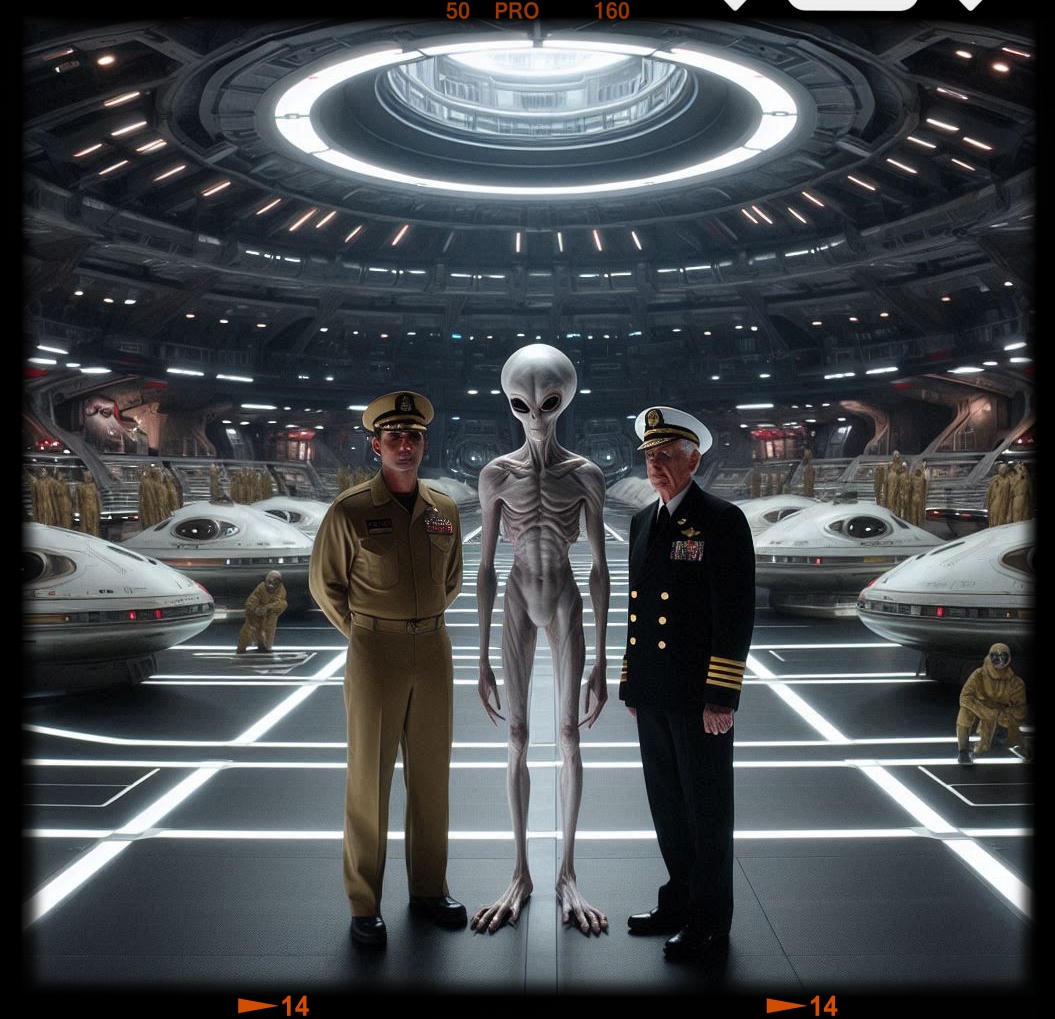



 Adrian Leverkühn Writes